
Watching birds in your backyard is one of life’s simplest pleasures. Their colors, movements, and songs can turn even a small balcony, patio, or garden corner into a vibrant, lively space. While traditional bird feeders offer enjoyment and the chance to observe wildlife, automatic bird feeders elevate the experience, providing consistent nourishment for your feathered visitors while minimizing daily maintenance. Whether you live in a city apartment, suburban home, or countryside retreat, an automatic bird feeder allows you to enjoy nature effortlessly while supporting local wildlife.
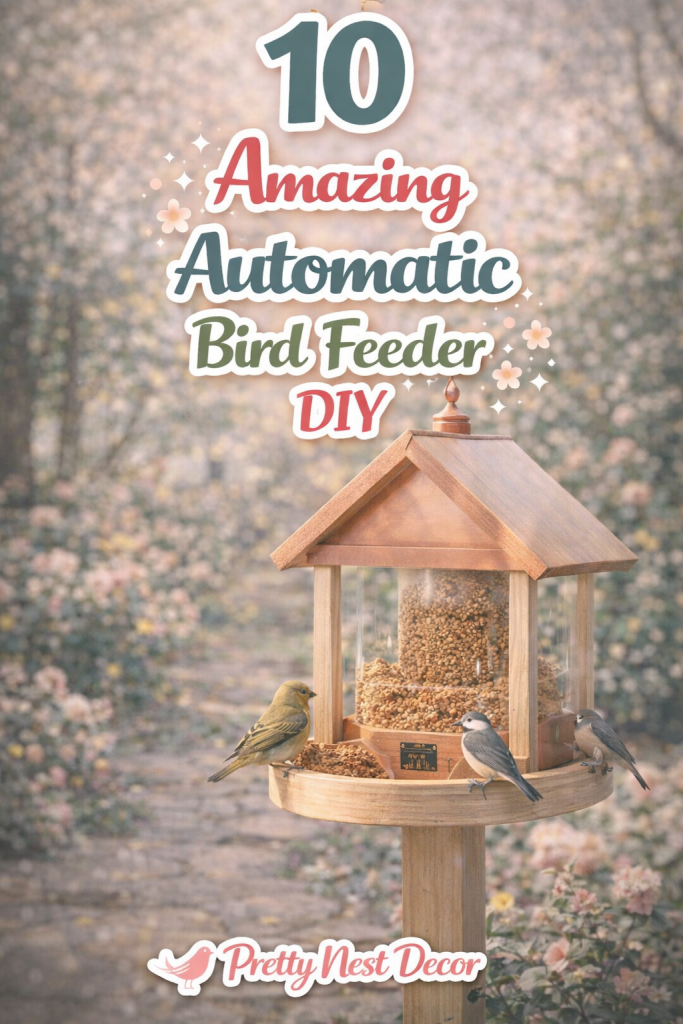
An automatic bird feeder is essentially a system designed to dispense seeds, grains, or nectar on a schedule or as needed, depending on the mechanism. Unlike standard feeders that require manual filling and monitoring, these feeders deliver food reliably, ensuring birds have a steady supply. This consistency is particularly important for small bird species, such as finches, sparrows, or chickadees, who thrive on regular feeding. For busy homeowners or families, the convenience of automation removes the stress of daily upkeep while maintaining a healthy feeding routine for local birds.
The beauty of DIY automatic bird feeders lies in their versatility. With a few readily available materials—recycled containers, wooden boards, small motors, or simple gravity-fed dispensers—you can create a fully functional feeder tailored to your space and bird population. Beginners can start with basic gravity feeders that release seeds as birds peck, while advanced DIY enthusiasts can incorporate solar-powered mechanisms, timers, or electronic dispensers for precise feeding intervals. This hands-on approach allows for creativity, customization, and innovation, transforming a simple garden accessory into a functional piece of engineering and art.
A major advantage of building your own automatic bird feeder is customization. You can select materials that match your outdoor aesthetic—natural wood for rustic charm, brightly colored plastic for a playful vibe, or sleek metals for modern minimalism. Design elements such as perches, roof covers, seed trays, or rain guards can enhance functionality and ensure birds remain safe and comfortable while feeding. You also have the freedom to adjust the feeder’s capacity to match the number of birds you aim to attract, ensuring there’s always enough food without waste.
Automatic feeders are not just about feeding birds—they are about creating an interactive, educational, and ecological experience. By attracting a variety of species, you can observe different bird behaviors, nesting patterns, and feeding habits up close. For families with children, this can be a wonderful educational opportunity, teaching them about biodiversity, bird anatomy, and wildlife care. Photography enthusiasts can also capture stunning images of birds in motion, making your DIY feeder both functional and visually rewarding.
From a sustainability perspective, DIY feeders allow you to repurpose and recycle materials, reducing environmental impact while creating something long-lasting. Old jars, plastic bottles, wooden pallets, or scrap boards can be transformed into a high-quality automatic feeder, combining ecological responsibility with creative craftsmanship. Many DIY designs are weather-resistant and durable, ensuring they last for multiple seasons, protecting seeds from rain, wind, and pests, and reducing the need for frequent replacements.
Bird feeders also provide essential support for local wildlife during critical times. In urban areas, where natural food sources may be limited, feeders ensure birds have access to nutrition year-round. During winter months, when seeds and insects are scarce, or during migration periods, when energy demands are high, an automatic feeder becomes a lifeline. It supports local ecosystems and encourages biodiversity, helping birds survive and thrive while bringing natural beauty closer to your home.
The DIY process itself is immensely satisfying. Planning the feeder, choosing materials, constructing the mechanism, and adding decorative touches all foster creativity, problem-solving skills, and hands-on craftsmanship. This process allows you to blend design, functionality, and ecological awareness into a single project. Once installed, the feeder is both a conversation piece and a practical addition to your outdoor space, offering daily enjoyment for you and a safe, reliable food source for birds.
There are multiple styles and mechanisms to explore when creating an automatic bird feeder. Gravity-based feeders release seeds gradually as birds consume them. Motorized or solar-powered feeders dispense measured amounts on a timer. Tube-style dispensers, hopper feeders, and seed drums each offer unique advantages depending on the types of birds you want to attract and the space available. By experimenting with different designs, you can tailor your feeder for small songbirds, larger finches, or even hummingbirds, creating a diverse and engaging wildlife environment.
Furthermore, automatic bird feeders enhance your outdoor space aesthetically. Thoughtful designs, combined with decorative elements such as colored wood, painted accents, or natural finishes, create a visually appealing focal point for your garden, balcony, or backyard. Functional features, such as overhangs to protect seeds from rain, anti-squirrel mechanisms, or perch designs that accommodate multiple birds, blend practicality with style, making the feeder a beautiful and sustainable garden accessory.
In this guide, we will explore 10 creative and practical automatic bird feeder DIY ideas. Each idea includes step-by-step instructions, a materials list, and styling tips to ensure your feeder is safe, functional, and visually appealing. From simple gravity feeders to advanced motorized systems, these designs are suitable for beginners and experienced DIY enthusiasts alike. You’ll also learn tips to attract a variety of birds, maintain your feeder, and integrate it seamlessly into your outdoor space.
By creating an automatic bird feeder, you’re not just crafting a garden accessory—you’re building a small ecosystem. You invite local wildlife into your home environment, support ecological balance, and enjoy the calming presence of nature daily. Whether you’re a bird lover, a DIY enthusiast, or someone seeking a serene outdoor retreat, an automatic bird feeder is a perfect project that combines functionality, beauty, and sustainability.
1. Simple Gravity-Fed Bottle Feeder
A gravity-fed bottle feeder is one of the easiest and most beginner-friendly automatic feeders you can create. It relies on the natural pull of gravity to dispense seeds into a tray as birds eat, making it completely mechanical and energy-free. This type of feeder is ideal for small balconies, garden spaces, or apartment windows. Despite its simplicity, it can be highly effective for attracting finches, sparrows, chickadees, and other small birds.
The advantage of a gravity-fed system is that it prevents overfilling, keeps seeds contained, and reduces waste. Using a recycled bottle makes this design eco-friendly, budget-friendly, and customizable. You can decorate the bottle with natural wood accents, paint, or waterproof markers to blend with your outdoor aesthetic. The feeder can also be mounted on a railing, balcony hook, or garden stake, giving you flexibility for placement.
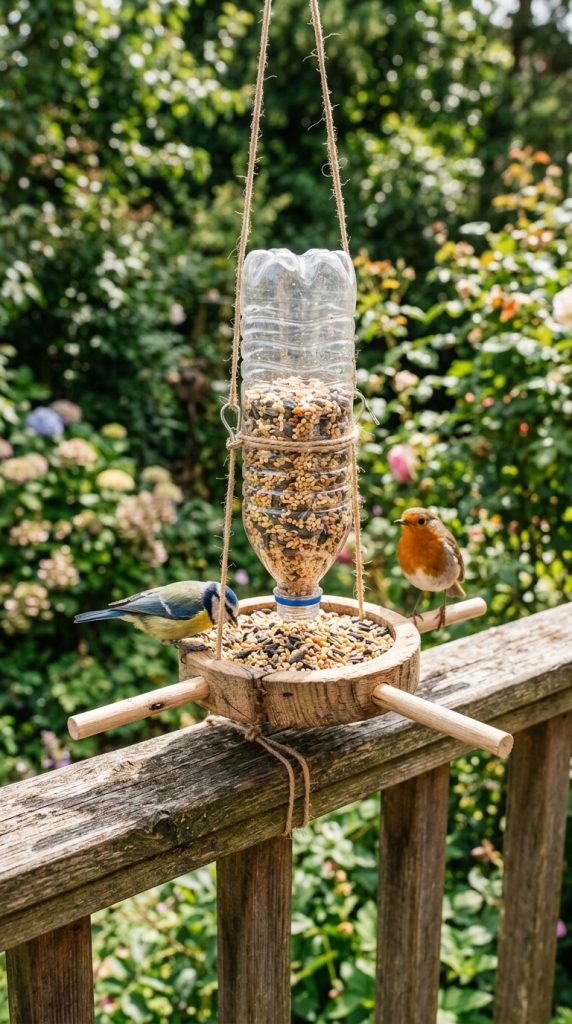
How to Make It Step-by-Step
- Take a clean, large plastic bottle (1–2 liters) and remove the label.
- Puncture small holes near the base for the seeds to exit.
- Insert small wooden dowels or sticks horizontally through the bottle to act as perches.
- Attach a tray at the bottom to catch falling seeds.
- Fill the bottle with birdseed and hang or mount it in a shaded area.
Materials / Items Needed
- Large plastic bottle
- Small wooden dowels or sticks
- Tray (plastic or wood)
- Hook or mounting bracket
- Birdseed
2. Wooden Hopper Feeder with Sliding Mechanism
A wooden hopper feeder is a slightly more advanced DIY option that can hold a larger quantity of seeds and release them gradually using a sliding mechanism. This style mimics commercial feeders but allows for complete customization. Its rustic wooden look fits perfectly in garden spaces or apartment balconies with natural décor. The sliding mechanism ensures that seeds are dispensed only when birds perch on the feeder, keeping them fresh and minimizing spillage.
Hopper feeders are particularly great for attracting larger birds such as cardinals and finches. You can paint or seal the wood to protect it from rain and moisture, extending the feeder’s lifespan. The design also allows you to adjust the flow of seeds, giving you complete control over feeding frequency and portion size.
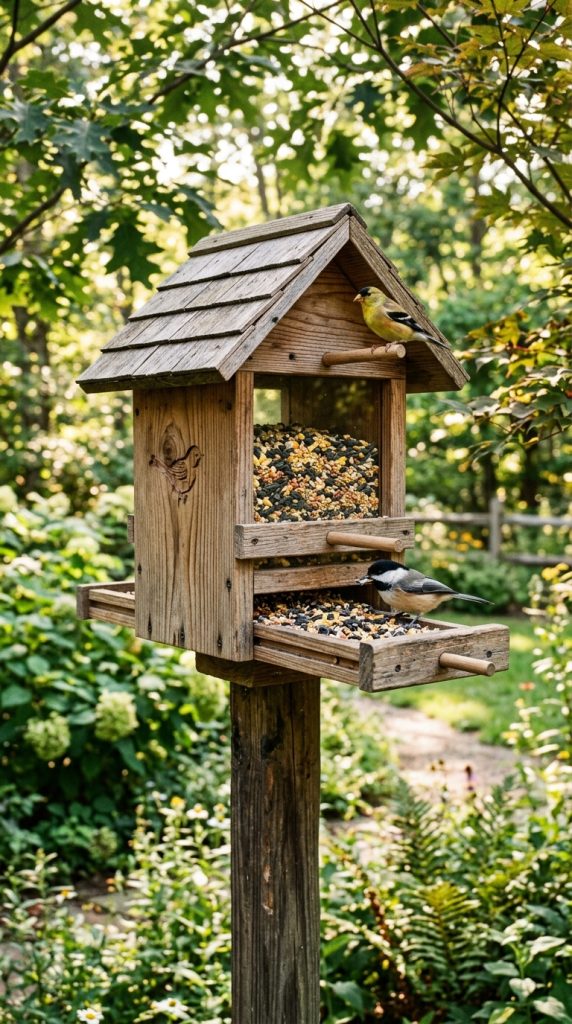
How to Make It Step-by-Step
- Cut wooden panels for the base, sides, roof, and sliding mechanism.
- Assemble the panels into a small box-like hopper.
- Install a sliding platform at the bottom to release seeds slowly.
- Drill perch holes or attach dowels for birds to sit.
- Fill with seeds and mount on a pole, tree, or balcony hook.
Materials / Items Needed
- Wooden panels or scrap wood
- Small nails or screws
- Sliding platform or thin wooden panel
- Wooden dowels for perches
- Birdseed
- Paint or wood sealant
3. PVC Tube Feeder with Rotating Cap
A PVC tube feeder is an excellent modern approach to automatic bird feeding. By combining a cylindrical tube with a rotating cap mechanism, seeds are dispensed gradually as birds peck at the openings. This design is sleek, weather-resistant, and highly durable. It is perfect for urban apartment balconies, patios, or small backyard gardens.
The rotating cap ensures that seeds remain fresh and protected from rain while controlling how much is dispensed at a time. PVC feeders are lightweight, easy to clean, and easy to mount, making them a practical choice for DIY enthusiasts. You can also decorate the tube with waterproof paint or wraps to match your outdoor style.
How to Make It Step-by-Step
- Cut a PVC pipe to desired feeder length.
- Drill small holes near the bottom for seed dispensing.
- Create a rotating cap that slightly opens and closes the holes as birds perch.
- Attach a perch near each dispensing hole.
- Fill the tube with birdseed and mount it vertically using hooks or brackets.
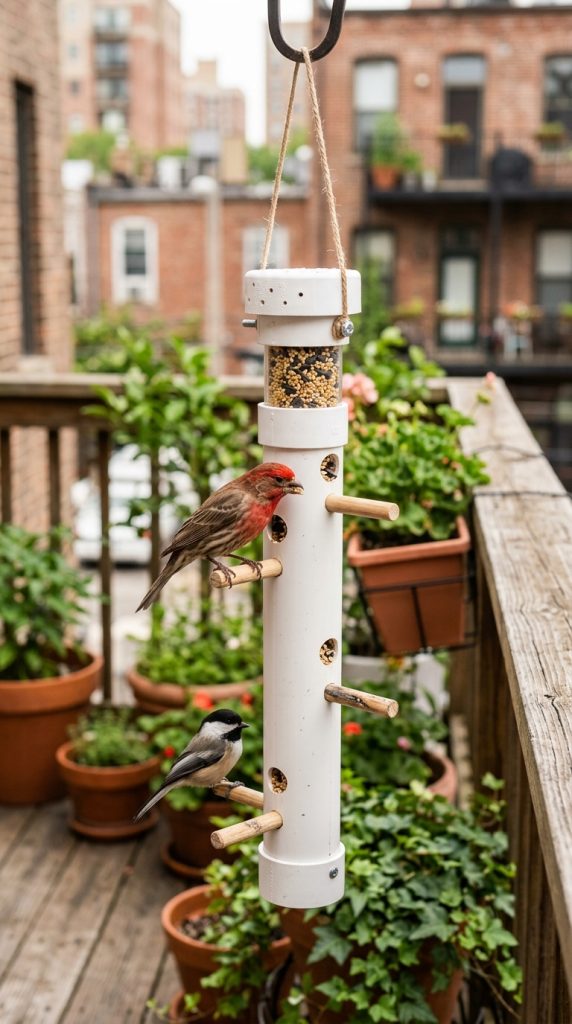
Materials / Items Needed
- PVC pipe
- Rotating cap (plastic or metal)
- Drill for holes
- Wooden dowels for perches
- Birdseed
- Waterproof paint or tape (optional)
4. Solar-Powered Automatic Dispenser
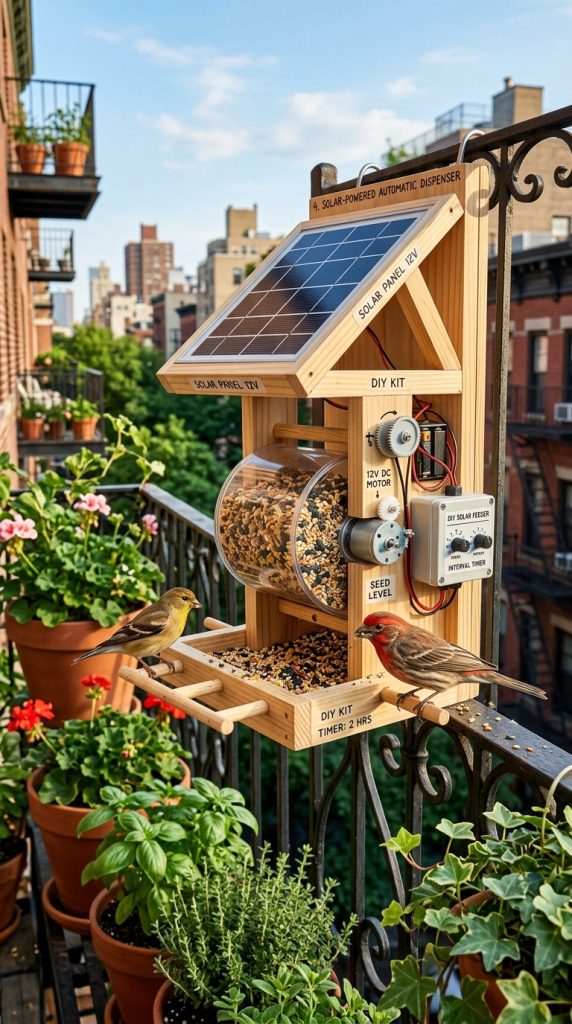
For a high-tech approach, a solar-powered automatic bird feeder provides timed seed dispensing without daily attention. This DIY feeder uses a small motor connected to a solar panel to rotate a seed drum or open a flap at set intervals. It’s perfect for busy homeowners or anyone who wants a “set it and forget it” solution.
Solar feeders are particularly useful in apartment settings with ample sunlight. They combine sustainability with convenience and are suitable for attracting a wide range of bird species. By programming the dispenser, you ensure birds are fed consistently, even if you are away on vacation. Many DIY enthusiasts enjoy incorporating colorful designs and decorative elements to blend the feeder with their garden or balcony décor.
How to Make It Step-by-Step
- Use a small motor connected to a seed drum or sliding flap.
- Attach a solar panel to power the motor.
- Design a container or tube to hold seeds above the mechanism.
- Install perches for birds around dispensing points.
- Program the motor to release seeds at chosen intervals.
Materials / Items Needed
- Small electric motor
- Solar panel
- Seed container or tube
- Perches (wooden dowels or metal rods)
- Birdseed
- Wiring and battery (if needed for storage)
5. Hanging Jar Feeder with Gravity Valve
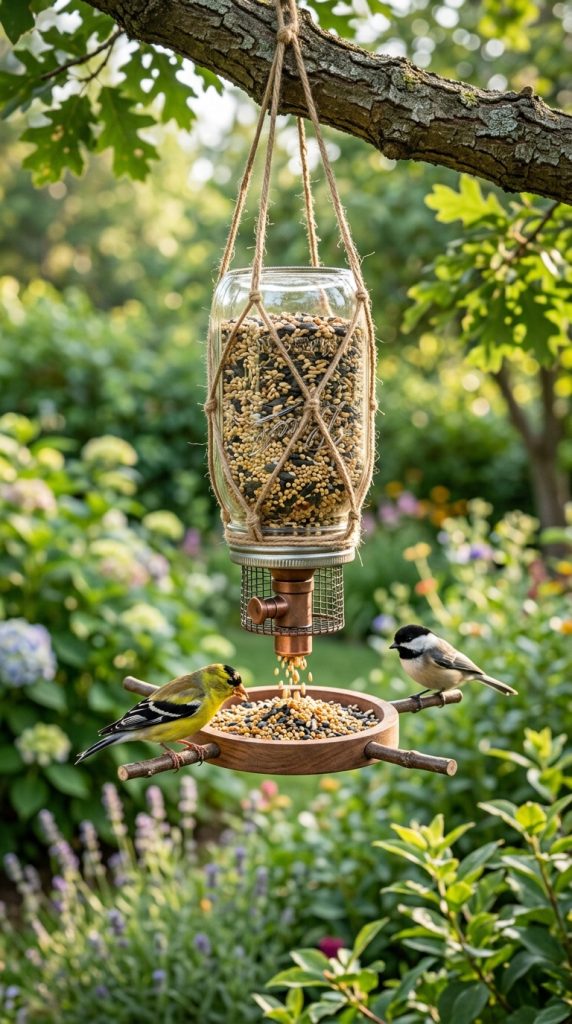
A hanging jar feeder with a gravity valve combines simplicity, elegance, and automation. This DIY uses a glass or plastic jar suspended upside down with a small valve at the bottom. Seeds are released gradually as birds perch, making it perfect for balconies or small outdoor spaces. It’s cost-effective, easy to assemble, and highly customizable.
The jar feeder is particularly charming for apartment gardens because it can be decorated with paint, ribbon, or small hanging ornaments. Its clear container also lets you monitor seed levels easily. Gravity ensures consistent feeding without electricity or complicated mechanisms.
How to Make It Step-by-Step
- Clean and label a glass or plastic jar.
- Attach a small valve or spout at the bottom for seed release.
- Suspend the jar from a hook or ceiling mount using strong twine or wire.
- Place a small tray beneath the spout to catch seeds.
- Fill the jar with birdseed and test the flow to ensure smooth dispensing.
Materials / Items Needed
- Glass or plastic jar
- Small spout or gravity valve
- Hanging twine, wire, or chain
- Small tray to catch seeds
- Birdseed
- Optional paint or decorations
6. Recycled Milk Carton Feeder
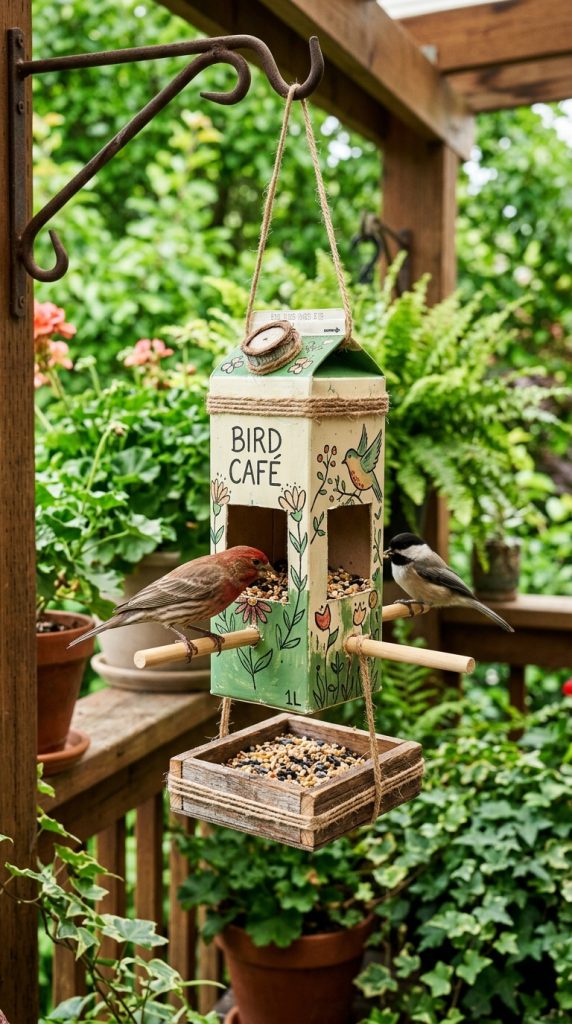
A recycled milk carton feeder is an eco-friendly and budget-friendly option that turns waste into wildlife magic. This DIY uses a cleaned milk carton as the main container for seeds, with openings cut for birds to perch and feed. Its lightweight design makes it ideal for hanging from balcony railings, tree branches, or hooks in small apartment gardens.
Using recycled cartons reduces environmental impact while offering a creative way to craft functional feeders. The carton can be decorated with waterproof paints or waterproof markers for a personal touch. Gravity ensures a consistent flow of seeds into the feeding tray, keeping birds nourished without daily intervention.
This feeder works especially well for attracting small songbirds like sparrows, finches, or chickadees. Its simple design and accessible materials make it a perfect beginner-friendly DIY, allowing you to create multiple feeders for different locations around your home.
How to Make It Step-by-Step
- Clean and dry an empty milk carton thoroughly.
- Cut two small openings on opposite sides for perches and feeding.
- Insert wooden dowels or sticks below the openings as perches.
- Hang the carton using sturdy string or wire.
- Fill with birdseed and place a tray underneath to catch any spilled seeds.
Materials / Items Needed
- Clean milk carton
- Wooden dowels for perches
- String or wire for hanging
- Tray to catch seeds
- Birdseed
- Waterproof paint or markers (optional)
7. Bottle Feeder with Adjustable Flow
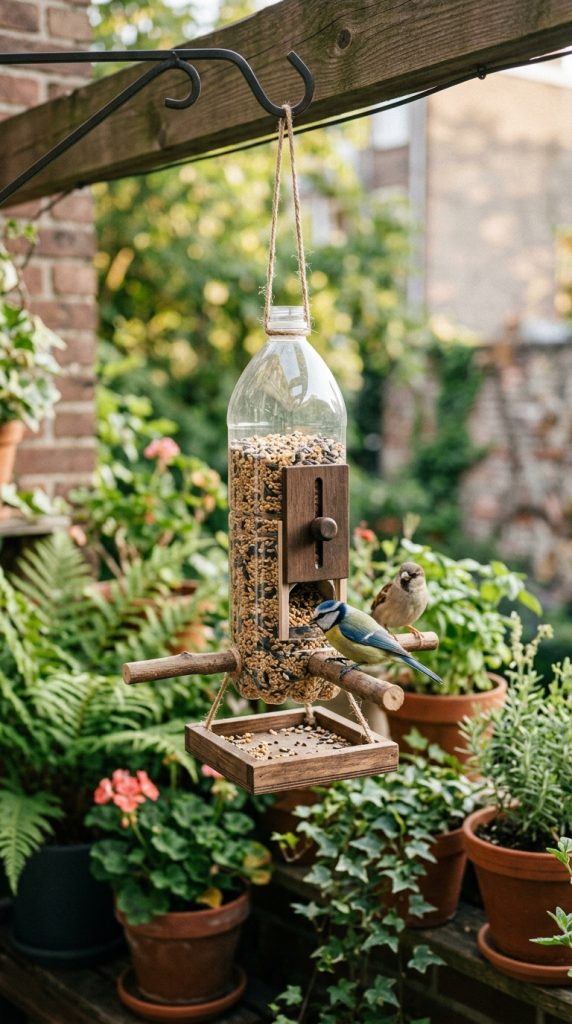
A bottle feeder with an adjustable flow feature allows you to control how many seeds are dispensed at a time. This ensures that food remains fresh and prevents waste, making it ideal for apartments or urban balconies. This DIY is simple but highly functional, providing consistent feeding while attracting small and medium-sized birds.
By adjusting the hole size or the dispensing mechanism, you can customize the flow for different types of seeds. Clear plastic bottles let you monitor the seed levels easily. Adding a small tray or perch beneath the opening ensures birds have a comfortable landing space.
This feeder works great for beginners who want a more controlled, hands-off feeding experience. Its compact design fits in small spaces and can be hung from hooks, railings, or tree branches.
How to Make It Step-by-Step
- Take a clean plastic bottle and drill a small hole near the bottom for seed dispensing.
- Insert a small wooden dowel under the hole as a perch.
- Add a tray to catch any spilled seeds.
- Optionally, attach a sliding cover to adjust the flow of seeds.
- Fill with seeds and hang the feeder in a shaded, accessible location.
Materials / Items Needed
- Plastic bottle
- Wooden dowel for perch
- Tray to catch seeds
- Sliding cover for flow adjustment (optional)
- Birdseed
- Hooks or string for hanging
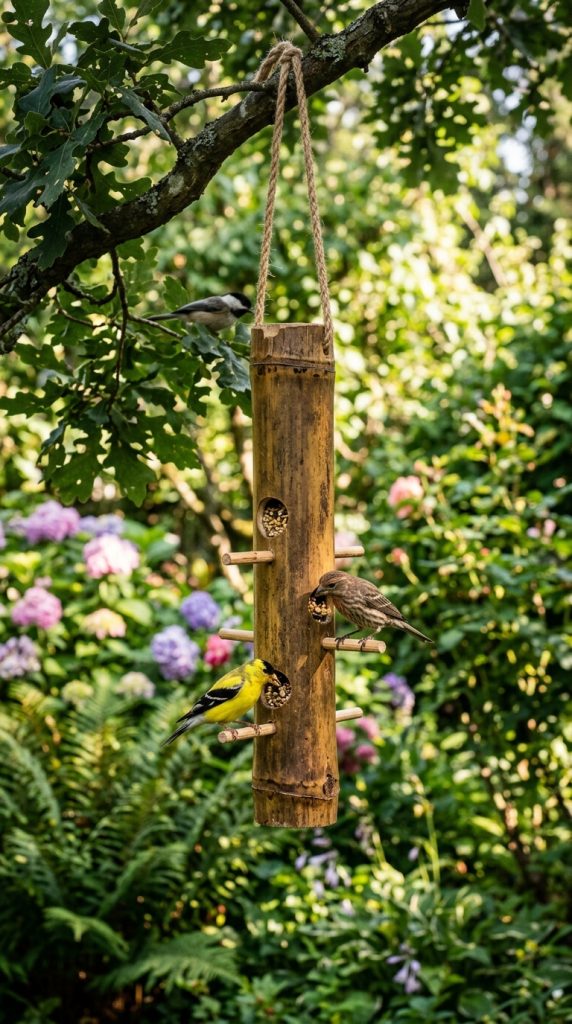
8. Hanging Bamboo Tube Feeder
A hanging bamboo tube feeder is natural, sustainable, and visually appealing. Bamboo is lightweight, weather-resistant, and eco-friendly, making it ideal for DIY bird feeders. Its hollow cylindrical shape creates a perfect container for seeds, while small holes at strategic points allow gradual dispensing as birds feed.
Bamboo feeders are especially charming for apartment gardens, balconies, or backyard patios. The natural look blends beautifully with greenery and outdoor décor. Additionally, the lightweight design allows for easy hanging, repositioning, or removal for cleaning.
This feeder works well for attracting small songbirds and finches. By customizing the number and size of holes, you can control how seeds are released, preventing waste and ensuring the feeder lasts longer.
How to Make It Step-by-Step
- Cut a bamboo tube to the desired length.
- Drill small holes at intervals for seed dispensing.
- Attach small wooden dowels as perches near each hole.
- Hang the bamboo tube using string, wire, or hooks.
- Fill with birdseed and ensure the feeder is balanced.
Materials / Items Needed
- Bamboo tube
- Drill for holes
- Wooden dowels for perches
- String, wire, or hooks for hanging
- Birdseed
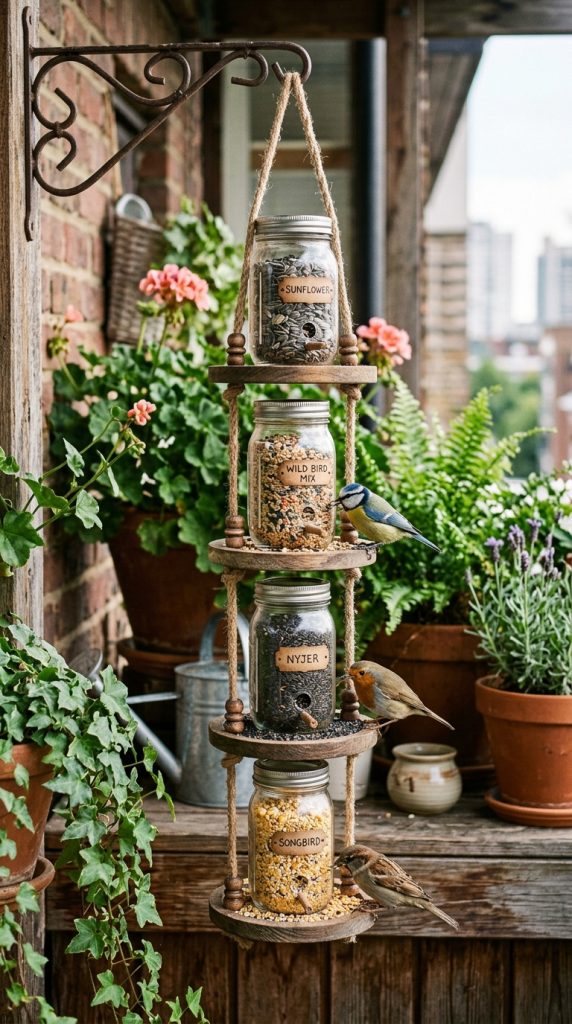
9. Tiered Hanging Jar Feeder
A tiered hanging jar feeder is a creative and elegant way to provide multiple feeding stations for birds. Using several jars stacked vertically with small trays and perches, you create a feeder that can accommodate multiple birds at once. This design is perfect for apartment balconies or small gardens where maximizing space is important.
Each tier can be filled with different seeds to attract a variety of species, making it interactive and visually dynamic. The clear jars let you monitor seed levels easily, and the vertical design reduces the footprint, making it ideal for compact spaces.
This DIY also offers an opportunity for customization: jars can be painted, adorned with ribbons, or decorated with weather-resistant materials to match your garden décor. It’s a practical, aesthetic, and functional solution for urban bird enthusiasts.
How to Make It Step-by-Step
- Clean multiple glass jars and remove labels.
- Drill small holes at the bottom of each jar for seeds to exit.
- Attach small trays beneath each jar to catch seeds.
- Suspend the jars vertically using strong string or wire.
- Insert perches near each hole and fill jars with seeds.
Materials / Items Needed
- Glass jars
- Drill for holes
- String or wire for suspension
- Small trays to catch seeds
- Wooden dowels for perches
- Birdseed
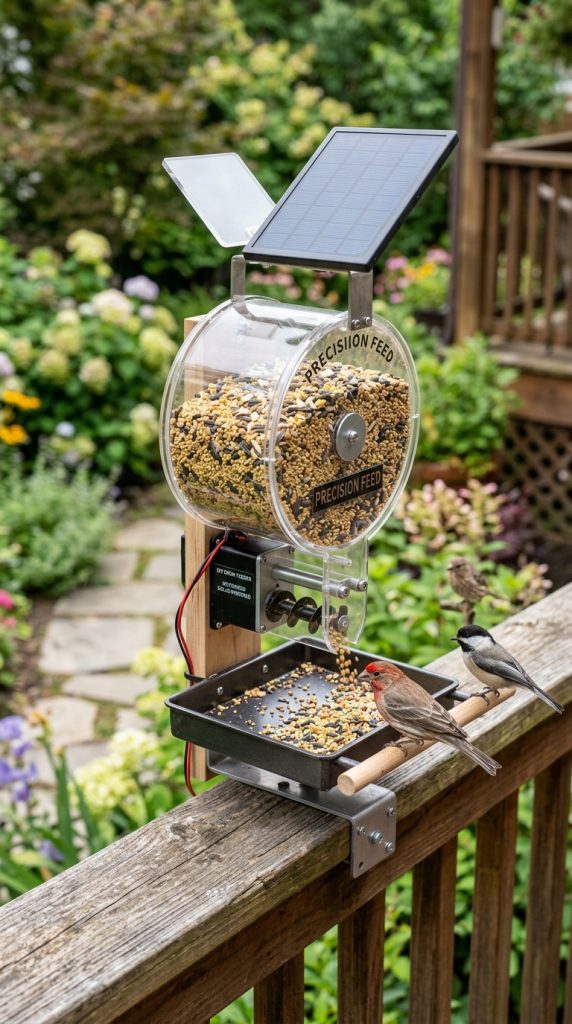
10. Motorized Drum Feeder for Precision Feeding
For a high-tech, fully automated approach, a motorized drum feeder allows precise control over seed dispensing. A small motor rotates a drum or cylinder that releases a measured amount of seeds at predetermined intervals. This feeder is perfect for bird enthusiasts who want a “hands-off” solution while attracting a variety of bird species.
Motorized feeders are excellent for apartments or urban balconies with access to sunlight if combined with a solar-powered setup. You can program feeding times, control portion sizes, and even create a visually appealing focal point in your outdoor space. Adding perches and decorative elements ensures both functionality and aesthetics.
This design is more advanced but highly rewarding for DIYers who enjoy combining engineering and creativity. It’s particularly useful for attracting medium-sized birds or multiple birds at once without overfeeding.
How to Make It Step-by-Step
- Build or repurpose a small drum or cylinder to hold seeds.
- Attach a small motor to rotate the drum at intervals.
- Set up a container or tube to guide seeds to the dispensing area.
- Add perches and a small tray for bird landing.
- Fill with seeds and test the motorized dispensing to ensure smooth operation.
Materials / Items Needed
- Small drum or cylinder
- Electric motor (optional solar-powered)
- Seed container or tube
- Wooden dowels for perches
- Tray for seeds
- Birdseed
- Wiring and battery (if needed)