
Luxury design in Minecraft has become one of the most exciting ways for players to express creativity, organization, and aesthetic vision within the game. While Minecraft is often known for survival gameplay, resource gathering, and building functional structures, there is a growing trend toward combining practicality with visual appeal—especially when it comes to farms. A farm in Minecraft is no longer just a place to collect crops, breed animals, or generate resources; it can also be a centerpiece of your world, reflecting style, sophistication, and intentional design.
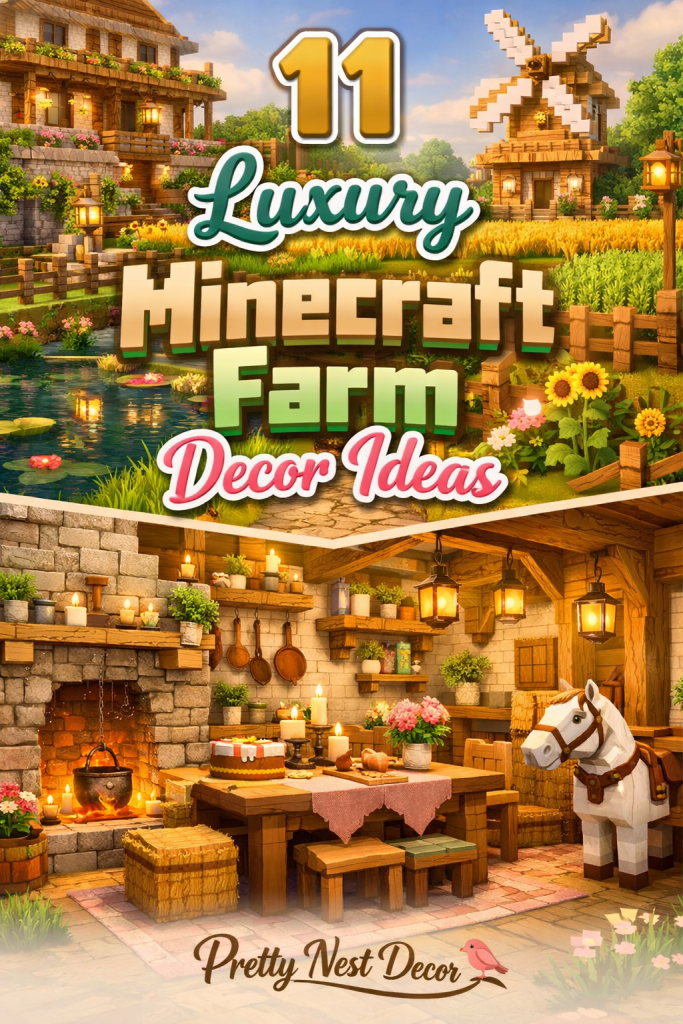
A luxury Minecraft farm is defined not only by its efficiency but also by its architectural beauty, landscaping details, material choices, lighting, and overall theme consistency. Players who focus on luxury farm designs aim to create spaces that feel immersive, organized, and visually impressive while still maintaining full functionality. This includes incorporating modern architecture, medieval elegance, rustic charm, or futuristic aesthetics depending on the player’s preference. The goal is to elevate a simple farm into something that feels like a curated environment rather than a purely utilitarian build.
One of the most important aspects of luxury farm design is attention to detail. Small elements such as pathways, fences, lighting fixtures, water features, greenery placement, and decorative blocks can significantly transform the appearance of a farm. Instead of plain dirt rows and basic enclosures, luxury farms often include layered terrain, custom landscaping, symmetrical layouts, and decorative structures that enhance the overall experience. Even the placement of crops, animal pens, and storage areas is carefully planned to maintain both accessibility and visual harmony.
Another defining feature of luxury Minecraft farms is material selection. High-end builds often incorporate a combination of blocks such as stone bricks, quartz, polished andesite, dark oak wood, copper, glass, and terracotta to create contrast and depth. These materials are used not just for durability but also for their aesthetic qualities. Mixing textures and colors thoughtfully allows builders to avoid flat or repetitive designs and instead create rich, dynamic environments that feel alive and polished.
Lighting also plays a crucial role in luxury farm designs. Instead of using basic torches scattered randomly, players often integrate lanterns, glowstone, sea lanterns, or hidden lighting systems to maintain a clean and elegant look. Proper lighting not only enhances the beauty of the farm but also ensures safety by preventing hostile mob spawns. Strategic placement of light sources can highlight pathways, accent architectural features, and create a warm, inviting atmosphere during both day and night cycles.
Functionality remains at the core of any farm, but in luxury designs, it is seamlessly blended with aesthetics. Crop farms, animal pens, automated systems, and storage areas are often hidden or integrated into the design in a way that does not disrupt the visual flow. Redstone mechanisms may be concealed beneath floors or behind walls, and storage rooms may be styled as decorative barns, greenhouses, or modern utility spaces.
Landscaping is another essential element that distinguishes luxury farms from basic ones. Natural features such as trees, ponds, hills, flowers, and custom terrain shaping help create a realistic and immersive environment. Many players terraform their surroundings to match their farm’s theme, ensuring that the entire area feels cohesive rather than fragmented. Paths made of gravel, stone, or custom mixtures often connect different sections of the farm, guiding movement while adding to the design.
In addition to aesthetics and functionality, luxury Minecraft farm builds often reflect a sense of personal style and creativity. Whether inspired by real-world architecture, fantasy themes, or modern design trends, each farm becomes a unique expression of the builder’s vision. Some players prefer minimalist designs with clean lines and open spaces, while others opt for highly detailed and intricate builds with multiple layers and decorative elements.
Ultimately, creating a luxury Minecraft farm is about balancing beauty, efficiency, and creativity. It requires planning, resource gathering, and thoughtful execution, but the result is a visually stunning and highly functional space that enhances the overall gameplay experience. In the following sections, we will explore 20 detailed luxury Minecraft farm decor ideas, starting with the first 10 ideas, each designed to help you transform your farm into a sophisticated and visually appealing masterpiece.
Idea 1: Modern Minimalist Crop Farm Design
Introduction
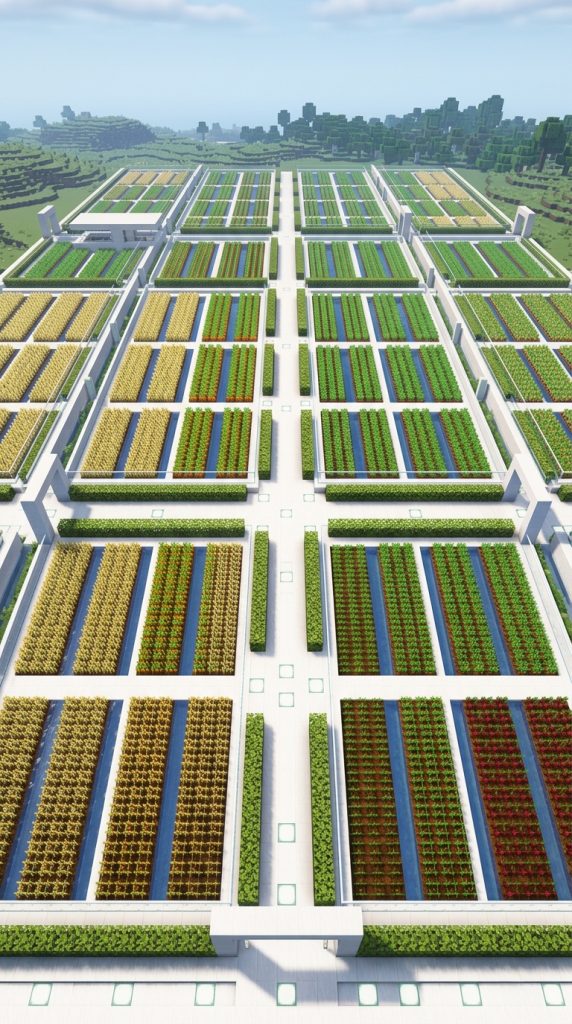
A modern minimalist crop farm focuses on clean lines, open spaces, and a clutter-free layout that emphasizes simplicity and elegance. This type of farm is ideal for players who prefer a sleek and organized aesthetic rather than overly decorative or complex builds. The concept revolves around using a limited color palette, symmetrical patterns, and carefully chosen materials to create a visually balanced environment. Instead of overcrowding the space with excessive decorations, the design highlights structure, spacing, and functionality in harmony.
In a luxury Minecraft setting, minimalist crop farms often resemble modern architectural landscapes with geometric layouts and refined detailing. The crops themselves become part of the decor, arranged in neat rows or grids that enhance the visual appeal. Water channels, lighting, and pathways are integrated seamlessly into the design, ensuring that every element serves both a functional and aesthetic purpose.
Definition / Explanation
A modern minimalist crop farm is a farm design that prioritizes simplicity, symmetry, and efficient use of space while maintaining a clean visual appearance. It typically uses materials such as quartz, glass, concrete, and smooth stone to achieve a polished look.
Step-by-Step How-To
- Choose a flat or terraformed area for symmetry.
- Outline the farm in a grid pattern.
- Use quartz or concrete blocks for borders.
- Add water channels between crop rows.
- Install hidden or recessed lighting.
- Use glass panels for separation if needed.
- Plant crops in organized rows.
- Add pathways using slabs or polished blocks.
- Incorporate small decorative accents like planters or benches.
- Ensure balance and repetition across the layout.
Materials Used
Quartz blocks, glass panes, white concrete, slabs, water buckets, lighting blocks (lanterns or glowstone), crops (wheat, carrots, potatoes), and trapdoors for detailing.
Idea 2: Medieval Luxury Farm with Stone and Wood Themes
Introduction
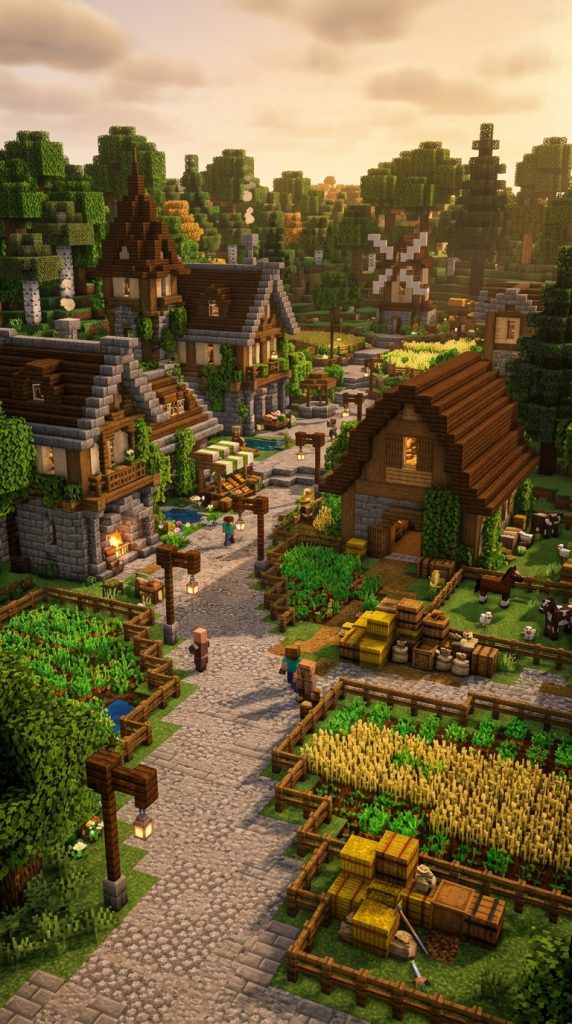
A medieval luxury farm brings a rustic yet elegant charm to your Minecraft world by combining traditional materials such as stone bricks, oak wood, and cobblestone with intricate detailing and structured layouts. This style is perfect for players who enjoy fantasy-inspired builds that feel grounded in a historical aesthetic. The farm typically includes wooden beams, stone foundations, and decorative rooftops that resemble medieval architecture.
In a luxury context, medieval farms go beyond simple rustic builds by incorporating layered designs, arches, towers, fences, and ornamental elements. These additions give the farm a grand and immersive feel while maintaining a cohesive theme. The environment is often enhanced with greenery, lantern lighting, and natural terrain integration, making the farm feel like part of a larger medieval village or estate.
Definition / Explanation
A medieval luxury farm is a farm design inspired by historical European architecture, combining durability and decorative elements using stone and wood materials.
Step-by-Step How-To
- Build a stone foundation for the farm area.
- Add wooden framing using oak logs and planks.
- Create fenced crop sections using spruce or oak fences.
- Design barns or storage buildings with pitched roofs.
- Add lanterns for lighting.
- Include pathways made of gravel or coarse dirt.
- Decorate with barrels, hay bales, and crates.
- Surround the farm with stone walls or hedges.
- Add small towers or arches for visual appeal.
- Incorporate vegetation like vines and flowers.
Materials Used
Stone bricks, cobblestone, oak logs, spruce wood, fences, lanterns, hay bales, barrels, gravel, and leaves.
Idea 3: Automated Luxury Redstone Farm Hidden in Design
Introduction
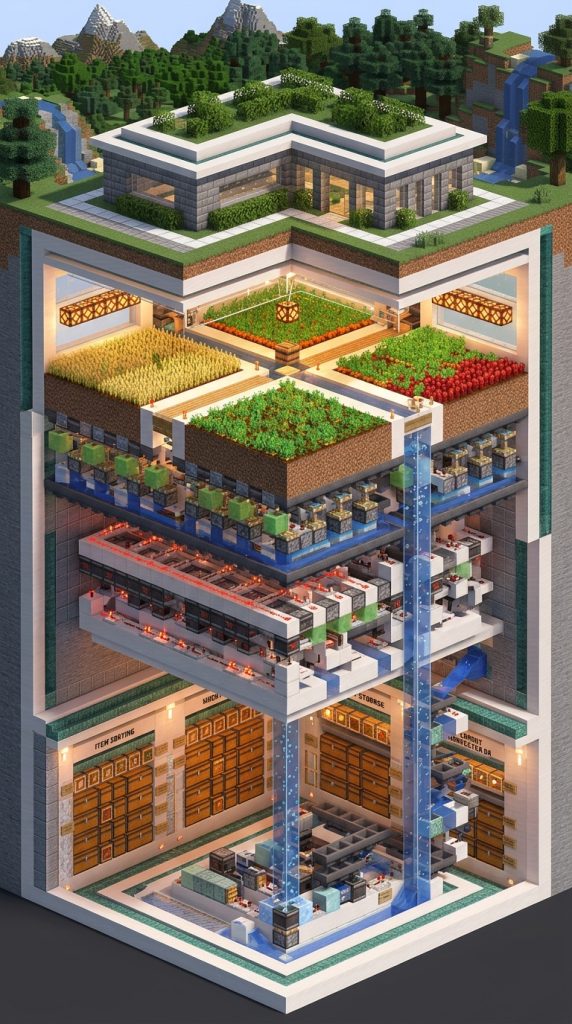
An automated luxury farm combines functionality with hidden mechanisms, allowing players to harvest crops, breed animals, or collect resources efficiently without manual effort. What makes this design luxurious is the seamless integration of redstone systems into the aesthetic structure. Instead of visible machinery, everything is concealed within walls, floors, or underground sections.
This type of farm is ideal for players who want both efficiency and elegance. The exterior design can follow any theme—modern, medieval, or futuristic—while the internal systems handle automation. Doors, pistons, dispensers, and hoppers are carefully arranged to remain invisible, ensuring that the visual appeal of the farm is not compromised.
Definition / Explanation
An automated luxury farm is a farm that uses redstone mechanisms to automate farming processes while maintaining a visually appealing exterior by hiding technical components.
Step-by-Step How-To
- Plan the layout and redstone system first.
- Build crop or animal sections.
- Install hoppers and dispensers underground.
- Use pistons for harvesting mechanisms.
- Hide redstone circuits behind walls or floors.
- Add a decorative exterior structure.
- Include access panels for maintenance.
- Integrate storage systems with chests.
- Use water flows for item collection.
- Test and optimize automation.
Materials Used
Redstone dust, pistons, hoppers, dispensers, observers, chests, building blocks, water buckets, and crops or animal entities.
Idea 4: Japanese-Inspired Zen Farm with Natural Aesthetics
Introduction
A Japanese-inspired Zen farm emphasizes harmony, balance, and natural beauty. This design incorporates elements such as wooden structures, stone pathways, water features, and carefully placed vegetation. The goal is to create a peaceful and visually calming environment that reflects traditional Japanese landscaping principles.
Luxury in this context is expressed through minimalism, symmetry, and thoughtful composition. Every block placement contributes to the overall atmosphere, with attention given to spacing, alignment, and flow. The farm may include small bridges, ponds, bamboo gardens, and pagoda-style buildings that enhance the theme.
Definition / Explanation
A Japanese Zen farm is a themed farm design inspired by traditional Japanese gardens, focusing on tranquility, natural materials, and balanced aesthetics.
Step-by-Step How-To
- Shape the terrain with gentle slopes.
- Add a central pond or water feature.
- Build wooden structures with dark oak or spruce.
- Create stone pathways with slabs and stairs.
- Plant bamboo, cherry blossom trees, or custom trees.
- Add lanterns for soft lighting.
- Use fences or walls for boundaries.
- Incorporate small bridges over water.
- Place decorative rocks and gravel.
- Maintain symmetry and spacing.
Materials Used
Dark oak wood, spruce wood, stone, gravel, lanterns, water, leaves, bamboo, slabs, and stairs.
Idea 5: Greenhouse Luxury Farm with Glass Domes
Introduction
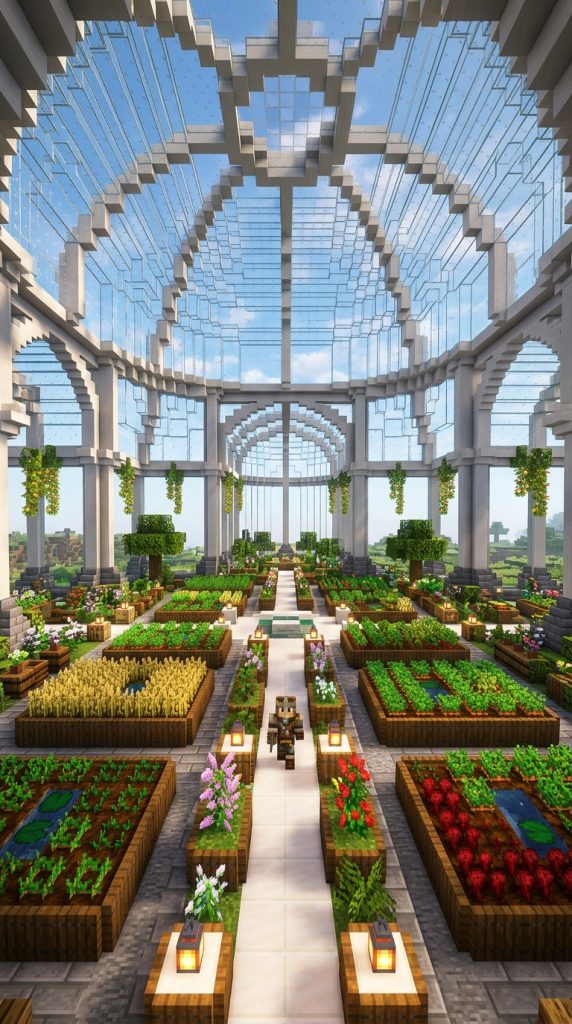
A greenhouse luxury farm uses glass structures to create controlled environments for crops while maintaining a visually stunning appearance. These farms often feature domes, tunnels, or large glass enclosures that allow natural light to illuminate the interior. The transparency of glass adds elegance and openness to the design.
Luxury greenhouse farms combine functionality with architectural beauty by organizing crops inside structured layouts surrounded by glass walls. These farms often include decorative interiors such as pathways, planters, fountains, and seating areas, making them feel more like botanical gardens than traditional farms.
Definition / Explanation
A greenhouse farm is a farm enclosed in glass structures that simulate real-world greenhouses while enhancing visual aesthetics and crop organization.
Step-by-Step How-To
- Build a dome or rectangular glass structure.
- Use a sturdy frame of stone or quartz.
- Create internal crop sections.
- Install water channels for irrigation.
- Add pathways between crop rows.
- Include lighting inside the greenhouse.
- Decorate with plants and flowers.
- Add ventilation-style openings or roof details.
- Incorporate seating or decorative elements.
- Maintain symmetry and clarity.
Materials Used
Glass blocks/panes, quartz, stone bricks, water buckets, crops, lanterns, slabs, and decorative plants.
Idea 6: Floating Luxury Farm Platform Design
Introduction
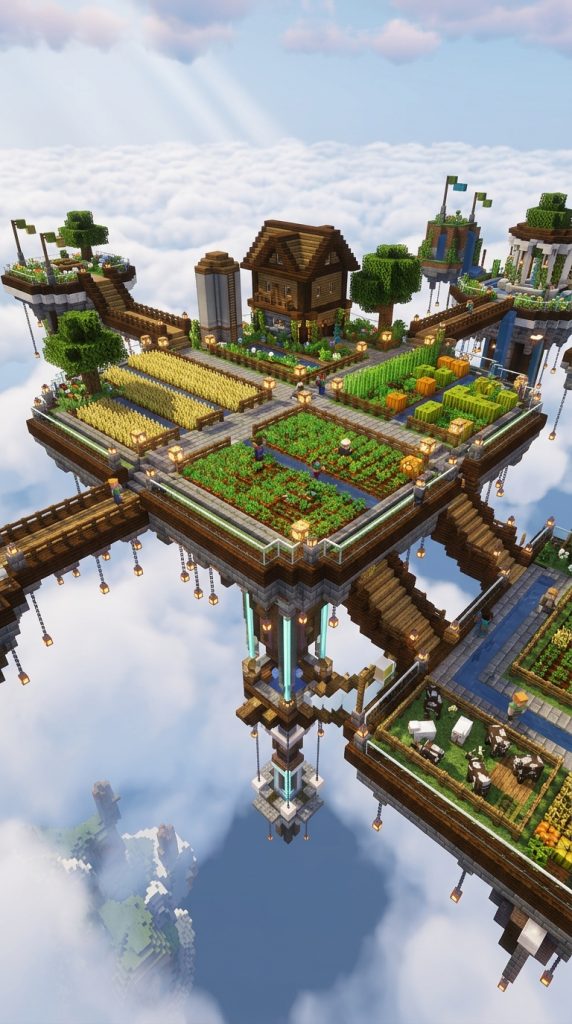
A floating farm design elevates your Minecraft world—literally—by placing farm structures on elevated platforms in the sky or above water. This creates a futuristic and visually striking aesthetic that stands out compared to traditional ground-based farms.
Luxury floating farms often use bridges, suspended platforms, and layered levels to create depth and complexity. The open space underneath can be used for additional builds, or left empty to emphasize the floating effect. Lighting and railings are essential to ensure both safety and elegance.
Definition / Explanation
A floating farm is a farm built above ground level, typically supported by platforms, bridges, or invisible structures to create a levitating appearance.
Step-by-Step How-To
- Choose a high altitude or build above water.
- Construct stable platforms.
- Connect platforms with bridges or walkways.
- Build crop or animal sections on each platform.
- Add railings for safety.
- Use lighting underneath and around edges.
- Include ladders, stairs, or elevators for access.
- Decorate edges with slabs or fences.
- Maintain symmetry across platforms.
- Add decorative elements like hanging plants.
Materials Used
Planks, slabs, fences, glass, lanterns, ladders, water, crops, and decorative blocks.
Idea 7: Luxury Animal Barn with Themed Interior Design
Introduction
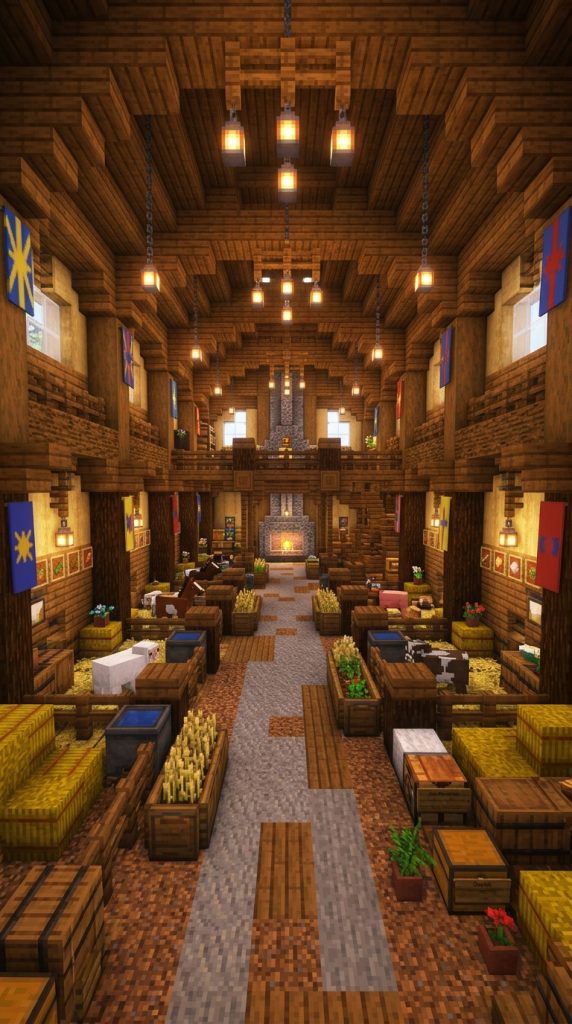
A luxury animal barn is more than just a functional enclosure for livestock; it is a carefully designed space that blends comfort, organization, and aesthetic appeal. Unlike basic animal pens, luxury barns include structured interiors, decorative stalls, lighting, and thematic elements that enhance immersion.
These barns often resemble real-world architectural designs with spacious interiors, wooden beams, and segmented areas for different animals. Attention is given to ventilation, lighting, and accessibility, ensuring that the barn is both practical and visually appealing.
Definition / Explanation
A luxury animal barn is a farm structure designed to house animals in a visually appealing, organized, and themed environment.
Step-by-Step How-To
- Build a large rectangular barn structure.
- Add wooden beams and supports.
- Divide interior into animal sections.
- Install fencing or gates for enclosures.
- Add hay bales and feeding areas.
- Use lanterns for warm lighting.
- Include storage areas for supplies.
- Decorate walls with banners or item frames.
- Create pathways between stalls.
- Add exterior landscaping.
Materials Used
Oak logs, planks, fences, hay bales, lanterns, chests, trapdoors, and slabs.
Idea 8: Futuristic High-Tech Farm Base Design
Introduction
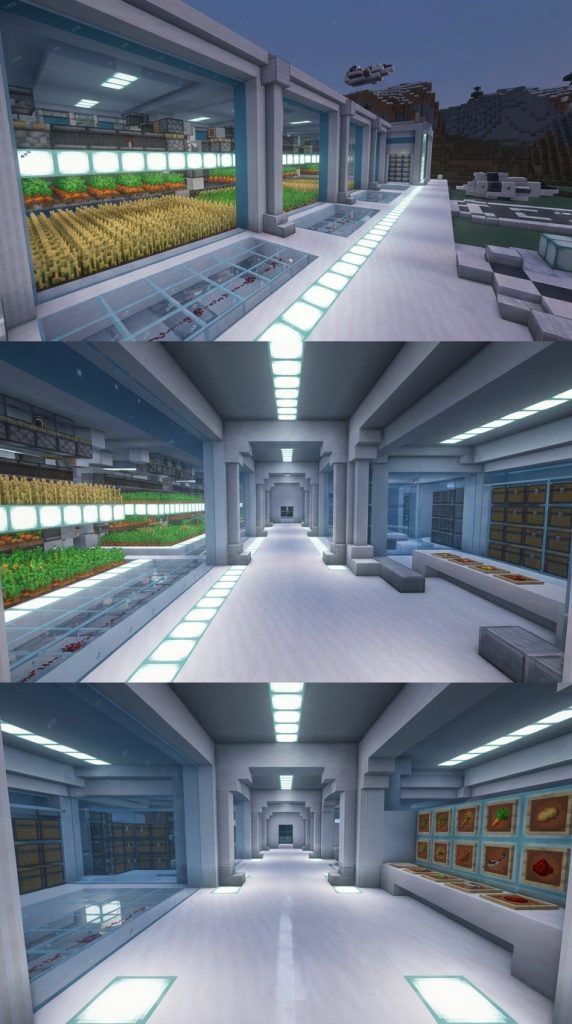
A futuristic high-tech farm design embraces modern and sci-fi aesthetics with sleek materials, glowing accents, and geometric structures. This type of farm often resembles advanced research facilities or space-age bases, combining functionality with a cutting-edge visual style.
Luxury in futuristic farms is achieved through the use of clean surfaces, metallic tones, glass panels, and integrated lighting systems. Redstone automation is often incorporated but hidden within the design, maintaining a smooth and uncluttered appearance.
Definition / Explanation
A futuristic farm is a modern-themed farm that uses advanced-looking materials and structures to create a sci-fi inspired aesthetic.
Step-by-Step How-To
- Choose a flat, open location.
- Build structures using quartz, concrete, or metal-like blocks.
- Add large glass panels.
- Design geometric layouts.
- Integrate hidden lighting systems.
- Include automated farming mechanisms.
- Add corridors and modular sections.
- Use symmetrical design principles.
- Incorporate glowing accents.
- Keep interiors minimal and clean.
Materials Used
Quartz, glass, concrete, sea lanterns, redstone components, iron blocks, and slabs.
Idea 9: Rustic Cottage Farm with Cozy Details
Introduction
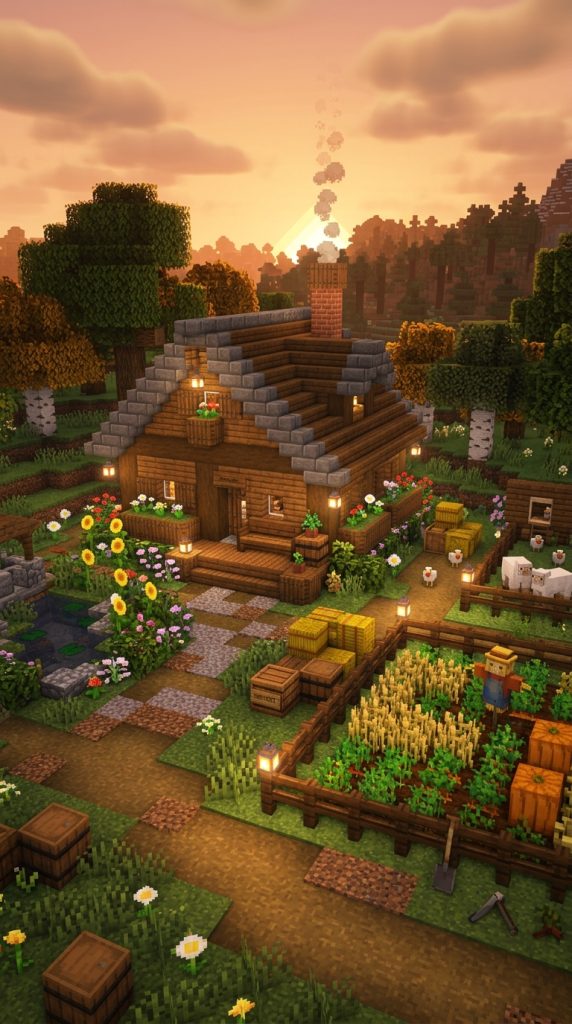
A rustic cottage farm creates a warm, cozy, and lived-in atmosphere that feels inviting and charming. This design is ideal for players who enjoy a homely aesthetic with natural textures and soft details. The farm typically includes small wooden cottages, garden patches, flower beds, and decorative fencing.
Luxury is achieved through thoughtful detailing such as layered roofs, window designs, chimney structures, and carefully arranged gardens. The environment feels organic and slightly whimsical, often blending into natural surroundings like forests or meadows.
Definition / Explanation
A rustic cottage farm is a farm design inspired by countryside homes, focusing on comfort, natural materials, and cozy aesthetics.
Step-by-Step How-To
- Build a small cottage-style house.
- Add a sloped roof using stairs.
- Create adjacent crop gardens.
- Surround the area with fences or hedges.
- Add flower beds and decorative plants.
- Place lanterns for lighting.
- Include a small storage shed.
- Add pathways using gravel or dirt.
- Decorate with barrels and crates.
- Blend the farm into natural terrain.
Materials Used
Oak wood, spruce wood, stone bricks, flowers, fences, lanterns, gravel, slabs, and glass panes.
Idea 10: Multi-Level Tiered Farm with Landscaping
Introduction
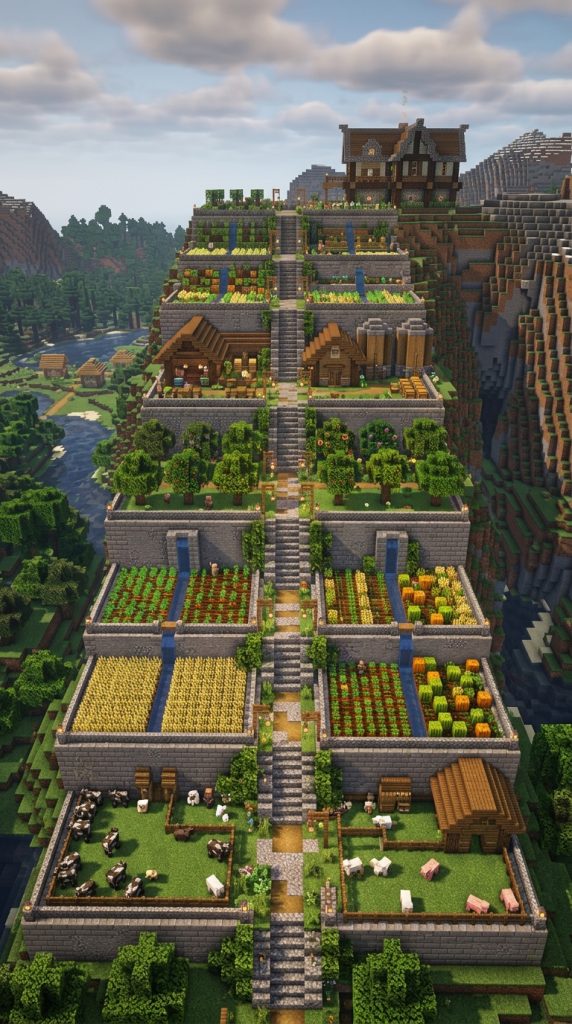
A multi-level tiered farm design uses vertical layering to maximize space while creating a visually dynamic structure. Each level can serve a different purpose, such as crops, animals, storage, or decorative gardens. This approach is especially useful in limited spaces or mountainous terrain.
Luxury tiered farms emphasize structured landscaping, where each level is carefully designed with retaining walls, pathways, and decorative elements. Waterfalls, staircases, and bridges often connect different tiers, adding both functionality and visual appeal.
Definition / Explanation
A tiered farm is a vertically structured farm with multiple layers or levels, each serving a specific function while enhancing visual depth.
Step-by-Step How-To
- Choose a hillside or create layered terrain.
- Build retaining walls for each level.
- Assign functions to each tier (crops, animals, etc.).
- Connect levels with stairs or pathways.
- Add water features between levels.
- Include lighting throughout each tier.
- Decorate edges with plants or fences.
- Maintain symmetry where possible.
- Add storage and utility areas.
- Integrate landscaping across all levels.
Materials Used
Stone bricks, dirt, grass blocks, slabs, stairs, fences, water, lanterns, and crops.
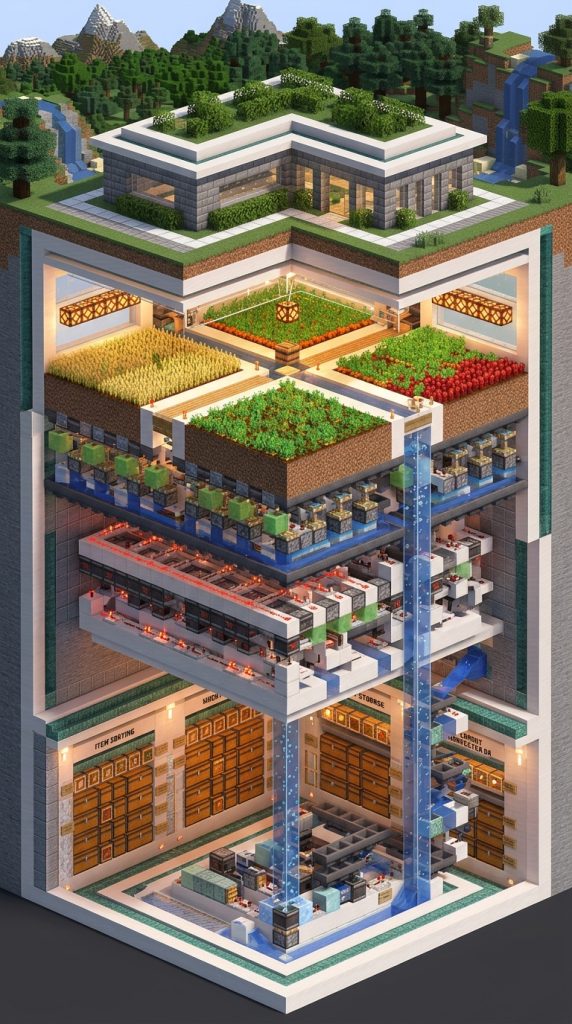
Idea 11: Luxury Underground Hidden Farm Base Design
Introduction
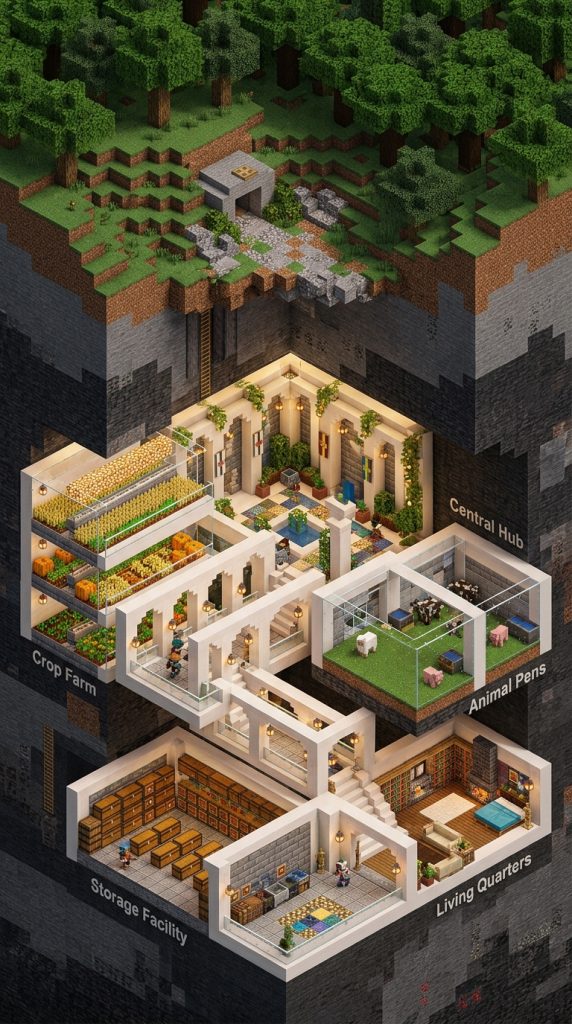
In Minecraft, underground builds are often associated with survival efficiency and protection, but when designed with a luxury approach, an underground farm can become one of the most impressive and immersive builds in your world. A luxury underground hidden farm base focuses on concealing functionality beneath the surface while presenting a polished, elegant interior that feels like a secret high-end facility. Instead of exposing farms to the outside world, everything is integrated below ground level, creating a private, secure, and visually refined environment.
This type of design is perfect for players who value both aesthetics and practicality. The hidden nature of the farm adds a sense of mystery and exclusivity, while the interior can be customized into themed chambers, corridors, and specialized rooms for crops, animals, storage, and automation systems. Lighting plays a crucial role in preventing the underground space from feeling dark or cramped, while material choices help elevate the overall atmosphere. With the right combination of textures, layouts, and decorative elements, an underground farm can feel like a luxurious bunker, laboratory, or subterranean estate rather than a simple farming area.
Definition / Explanation
A luxury underground hidden farm base is a concealed farming structure built below the surface, designed to combine high functionality with an elegant, themed interior that prioritizes aesthetics, organization, and secrecy.
Step-by-Step How-To
- Select and Mark the Location
Choose a discreet area and mark a central entry point. Ideally, use a hidden entrance such as a piston door, trapdoor, or disguised hatch to maintain the secrecy of the base. - Excavate the Underground Space
Dig a large, multi-room underground area. Plan sections in advance for crops, animals, storage, and pathways to ensure a structured layout rather than a random hollow space. - Design the Central Hub
Create a central chamber that acts as the main access point. This area should feel spacious and well-lit, using materials like quartz, polished stone, or concrete to establish a luxury aesthetic. - Create Dedicated Farm Sections
Divide the underground base into specialized zones:- Crop farming room with organized rows
- Animal breeding pens
- Automated farming systems
- Storage and resource rooms
- Install Lighting Systems
Use lanterns, sea lanterns, or hidden lighting behind blocks to ensure full brightness while maintaining a clean look. Avoid cluttered torch placement. - Incorporate Pathways and Corridors
Connect each section using well-designed hallways. Use slabs, carpets, or patterned floors to guide movement and enhance visual appeal. - Add Decorative Elements
Include pillars, arches, wall detailing, plants in pots, water features, or glass partitions to break monotony and add depth to the underground environment. - Integrate Hidden Automation
Conceal redstone systems behind walls or beneath floors. Automated harvesting, item collection, and storage systems should remain invisible but fully functional. - Design Storage and Utility Rooms
Build organized storage areas with labeled chests, item frames, or shulker box stations. Keep these rooms tidy and aligned with the overall theme. - Polish and Final Touches
Add finishing details such as ceiling designs, accent lighting, symmetry adjustments, and decorative flooring patterns to elevate the luxury feel.
Materials Used
Stone bricks, polished andesite, quartz blocks, glass panes, concrete, lanterns, sea lanterns, hoppers, chests, redstone components (pistons, observers, redstone dust), slabs, stairs, carpets, trapdoors, and decorative blocks like leaves or plants.
This underground luxury farm concept not only maximizes space efficiency but also creates a hidden, high-end base that feels immersive, secure, and visually stunning—perfect for players looking to combine secrecy with sophisticated design.