
Patios are more than just outdoor extensions of your home—they are spaces where life unfolds. Whether it’s enjoying a morning coffee, hosting evening gatherings, or simply soaking in the sunshine, a well-decorated patio enhances your home’s aesthetic and functionality. Despite being outdoor spaces, patios offer incredible opportunities to experiment with design, combining comfort, style, and personal touches to create a unique oasis that feels both relaxing and inviting. From small urban balconies to sprawling backyard terraces, thoughtful patio decor can transform any outdoor area into a vibrant and memorable retreat.
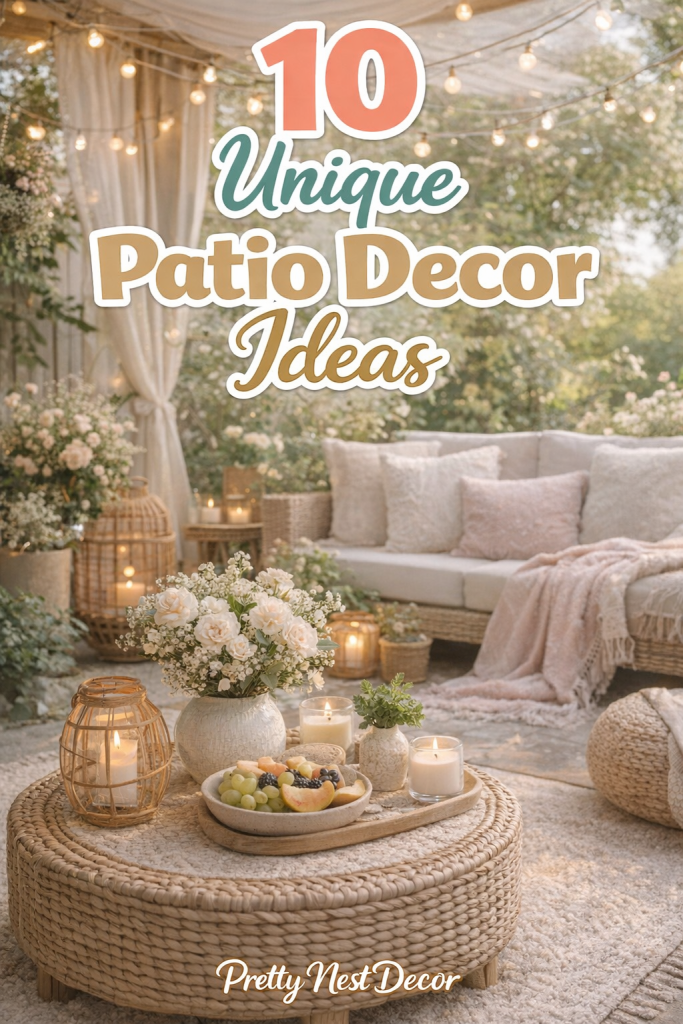
The beauty of patio design lies in its versatility. Unlike interior spaces, patios bridge the indoors and outdoors, offering an opportunity to merge natural elements with modern decor. From elegant seating arrangements to charming lighting setups, every element contributes to creating a harmonious and functional outdoor living space. Patio decor allows for a blend of textures, colors, and materials that can reflect personal style while accommodating practical considerations such as weather resistance, sunlight, and airflow. With careful planning, even a small patio can feel expansive and luxurious.
A unique patio doesn’t require extravagant renovations. Simple yet creative ideas—such as adding cozy seating, decorative planters, or layered textiles—can elevate the space dramatically. Incorporating elements like hanging lights, outdoor rugs, or stylish side tables can make a patio both functional and Instagram-worthy. Moreover, patios can serve as multi-purpose areas, combining dining, relaxation, and entertainment in one cohesive space. This means homeowners can design a patio that fits their lifestyle, whether it’s a quiet retreat for reading and meditation or a lively space for social gatherings.
Materials and textures play a crucial role in patio decor. Wood, metal, stone, and natural fibers can be mixed and matched to create a visually appealing and durable space. For instance, wooden decking paired with wrought-iron furniture and colorful cushions can achieve a rustic yet modern look, while sleek concrete floors with minimalist furniture can evoke a contemporary, sophisticated feel. Layering rugs, throws, and cushions introduces softness and warmth, ensuring the patio is both stylish and inviting. Outdoor fabrics that are water-resistant and fade-proof enhance longevity without compromising comfort or aesthetics.
Lighting is another essential factor in patio design. Properly selected lighting not only makes the space usable after dark but also adds ambiance and highlights key design elements. String lights, lanterns, solar-powered lamps, or wall-mounted sconces can illuminate seating areas, pathways, and greenery, creating a warm and cozy atmosphere for evening relaxation. By combining lighting with natural elements like plants and decorative accessories, patios can achieve a magical and unique vibe that encourages spending time outdoors throughout the year.
Patio decor also provides an opportunity to incorporate greenery and natural elements. Planters, vertical gardens, hanging baskets, and even small trees bring life and color to the outdoor space. Greenery softens hard surfaces and adds texture, creating a sense of tranquility. Even in urban environments with limited space, vertical planting or potted arrangements can infuse the patio with a lush, vibrant look. Mixing flowering plants with foliage and ornamental grasses ensures visual variety while attracting wildlife, such as birds and butterflies, enhancing the overall outdoor experience.
Another key aspect of a unique patio is personalization. From statement furniture pieces and bold color palettes to DIY decor projects and cultural accents, every choice reflects the homeowner’s personality and tastes. Incorporating vintage finds, handcrafted items, or travel-inspired accessories makes the patio one-of-a-kind and memorable. Outdoor artwork, sculptures, or decorative lighting elements can further emphasize individuality, transforming a standard patio into a truly personal outdoor haven.
Functionality is just as important as aesthetics in patio design. Choosing furniture with multi-purpose uses, adding storage solutions, and designing comfortable seating arrangements ensures the space is practical for everyday use. Modular furniture, foldable tables, and stackable chairs maximize flexibility, allowing the patio to adapt for intimate gatherings or larger social events. Weatherproof materials, such as treated wood, resin wicker, or powder-coated metals, ensure durability while maintaining style.
In this guide, we will explore 10 unique patio decor ideas that are practical, stylish, and beginner-friendly. Each idea includes a clear definition, step-by-step instructions, a list of materials, and actionable tips designed to inspire readers to transform their patios into extraordinary outdoor spaces. Whether your goal is to create a cozy reading nook, a chic dining area, or an Instagram-worthy backyard, these ideas will equip you with the tools and inspiration to make your patio a true extension of your home.
By the end of this article, your patio will no longer be just an outdoor space—it will become a sanctuary of style, comfort, and creativity. From small, intimate corners to expansive backyard terraces, these ideas will empower you to design a patio that is both functional and visually stunning. Every element, from furniture and lighting to plants and textiles, contributes to creating a cohesive, inviting, and unique outdoor space that leaves a lasting impression on family, friends, and guests.
Idea 1: Create a Cozy Outdoor Seating Nook
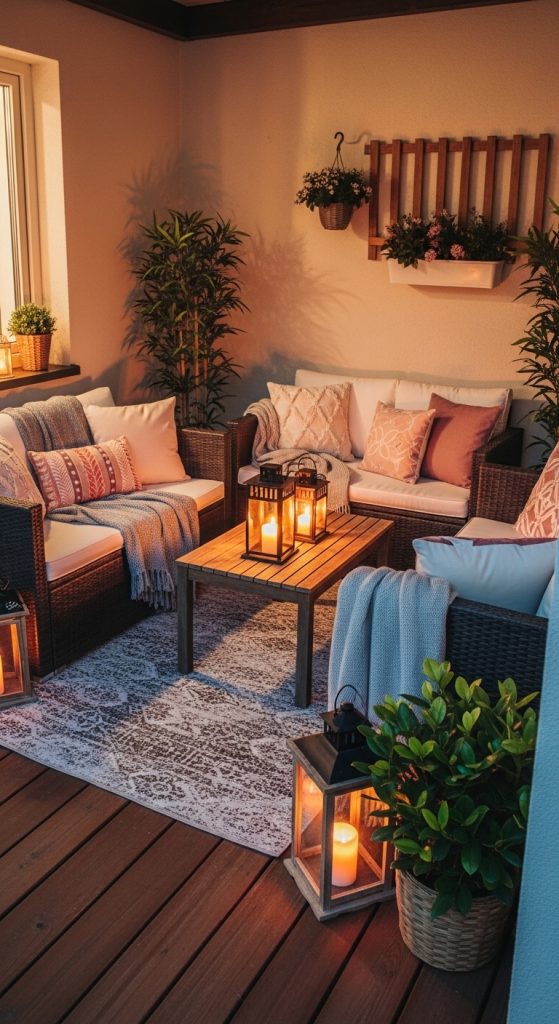
A cozy outdoor seating nook transforms your patio into a serene retreat where relaxation and comfort are prioritized. Even small patios can benefit from a designated seating area, which encourages spending more time outdoors. By carefully selecting comfortable furniture, soft textiles, and thoughtful lighting, you can create a corner that invites you to unwind with a book, enjoy morning coffee, or gather with friends in a warm and welcoming atmosphere.
Explanation:
A seating nook is defined by its focus on comfort and style. It can be achieved with a mix of seating options—such as cushioned chairs, a loveseat, or a small sofa—paired with accent tables and outdoor-friendly accessories. The goal is to create an intimate area that feels inviting and personal. Layering textures with cushions, throws, and outdoor rugs enhances the cozy vibe. Additionally, using natural materials like wood, wicker, or rattan seamlessly connects the patio to its outdoor surroundings, while weather-resistant fabrics ensure durability and longevity.
Step-by-Step How-To:
- Select Your Space: Identify a corner or section of your patio that can be dedicated to seating without obstructing pathways.
- Choose Furniture: Pick weatherproof chairs, benches, or a small sofa that fits your space and style.
- Add Cushions and Throws: Layer cushions and outdoor blankets to create comfort and visual interest.
- Include a Small Table: A side table or coffee table provides a functional surface for drinks, snacks, or decorative items.
- Incorporate Lighting: String lights, lanterns, or solar-powered lamps enhance the ambiance during evenings.
- Add Greenery: Small potted plants or vertical planters bring life and freshness to the nook.
Materials Needed:
- Weatherproof seating (chairs, loveseat, or bench)
- Cushions, pillows, and outdoor throws
- Small side table or coffee table
- Outdoor rug to define the space
- String lights or solar lamps
- Potted plants or hanging planters
A cozy seating nook transforms a patio into a personal retreat. By combining comfort, style, and a touch of greenery, you can create a welcoming space that encourages relaxation and outdoor enjoyment.
Idea 2: Add a Vertical Garden Wall
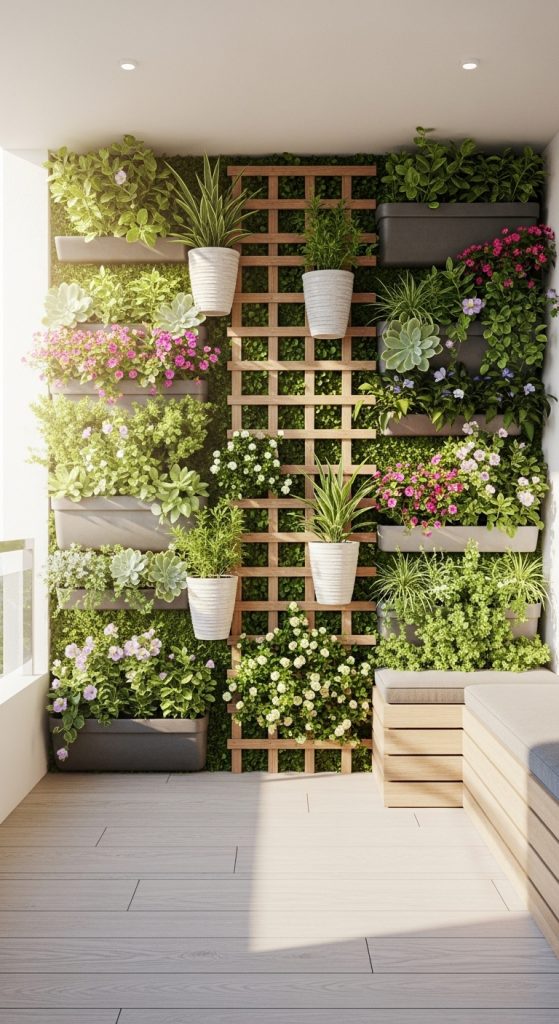
Vertical gardens are an innovative way to bring nature into your patio without sacrificing floor space. Also known as living walls, these installations allow plants to grow vertically using shelves, pockets, or trellis systems. A vertical garden not only maximizes limited patio space but also creates a stunning visual focal point that adds color, texture, and natural charm to the outdoor area.
Explanation:
Vertical gardens are especially effective for small patios, balconies, or urban terraces where horizontal space is limited. They can include a mix of flowering plants, greenery, succulents, or herbs, providing both aesthetic appeal and practical benefits. Vertical gardening can also help with air purification and cooling, making your patio more comfortable during warm months. Arranging plants with varying colors, shapes, and heights creates depth and dimension, making the wall visually engaging.
Step-by-Step How-To:
- Choose the Wall: Select a patio wall that receives adequate sunlight for your chosen plants.
- Select a Vertical System: Options include pocket planters, modular shelves, or trellises.
- Pick Plants: Choose plants suited to your patio’s light conditions—sun-loving, partial shade, or low-light tolerant.
- Arrange Plants: Mix textures and colors for visual interest. Taller plants at the top and cascading plants below create a natural flow.
- Install Irrigation (Optional): Consider drip irrigation or self-watering systems for low-maintenance care.
- Maintain Regularly: Water, prune, and fertilize plants as needed to keep the vertical garden lush and healthy.
Materials Needed:
- Vertical planter system (pockets, shelves, or trellis)
- Plants (succulents, flowering plants, herbs, or foliage)
- Potting soil and fertilizers
- Watering system or tools
- Mounting hardware
A vertical garden transforms a patio wall into a living artwork. It combines natural beauty with efficient use of space, making your outdoor area feel fresh, vibrant, and uniquely yours.
Idea 3: Incorporate Ambient Lighting
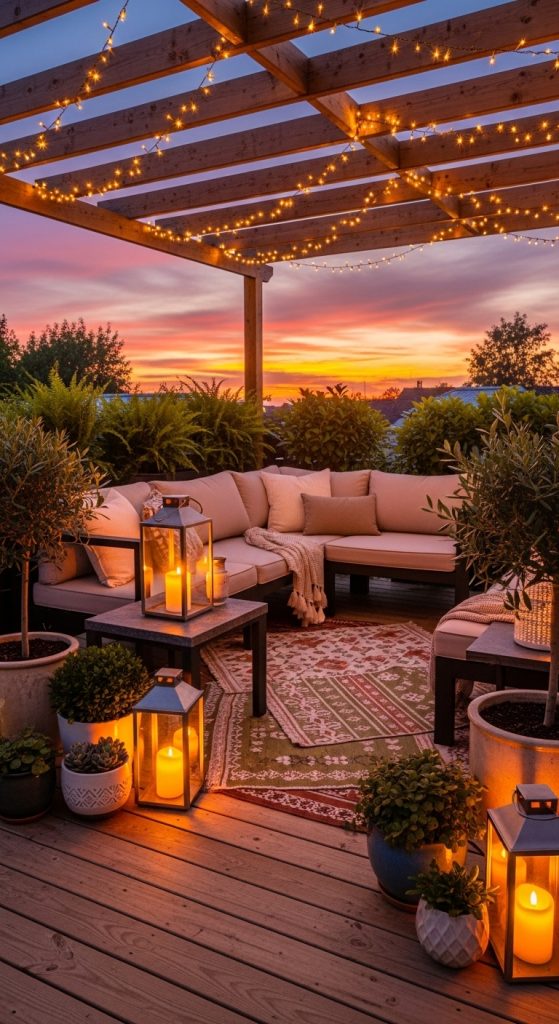
Ambient lighting sets the mood and enhances the visual appeal of any patio. Proper lighting extends the usability of outdoor spaces into the evening, creating a cozy and inviting atmosphere. From string lights and lanterns to solar lamps and LED fixtures, lighting can highlight architectural features, plants, and seating areas, turning your patio into a magical retreat after sunset.
Explanation:
Lighting is more than functional—it’s a decorative element that contributes to the overall aesthetic. Soft, warm lights make patios feel intimate and relaxing, while strategically placed spotlights or uplights draw attention to plants, art, or structural features. Layering lighting types—overhead, task, and accent—ensures that every corner of your patio is illuminated without being harsh or overwhelming. Additionally, energy-efficient solar lights or LED bulbs provide eco-friendly solutions without compromising style.
Step-by-Step How-To:
- Assess Your Patio Layout: Identify seating areas, pathways, and focal points to determine where lighting is needed.
- Choose Lighting Types: Combine string lights, lanterns, wall sconces, or solar lamps based on your design vision.
- Install Fixtures: Follow safety guidelines for electrical installations or use battery/solar-powered options for convenience.
- Layer Light Sources: Use a mix of ambient, task, and accent lighting to create depth and dimension.
- Test Ambiance: Adjust brightness and positioning to achieve the desired mood.
Materials Needed:
- String lights, lanterns, or wall-mounted lamps
- Solar lamps or LED fixtures
- Extension cords or batteries (if needed)
- Mounting hardware for walls, fences, or pergolas
- Optional dimmers or timers
Ambient lighting enhances your patio’s charm while increasing functionality. A well-lit patio encourages evening relaxation and creates a magical, Pinterest-worthy outdoor space.
Idea 4: Install an Outdoor Rug for Texture and Color
Outdoor rugs are a simple yet transformative addition to any patio. They define seating or dining areas, add warmth underfoot, and introduce patterns, colors, and textures to an outdoor space. A carefully chosen rug makes the patio feel like an extension of your indoor living space, blending style and comfort seamlessly.
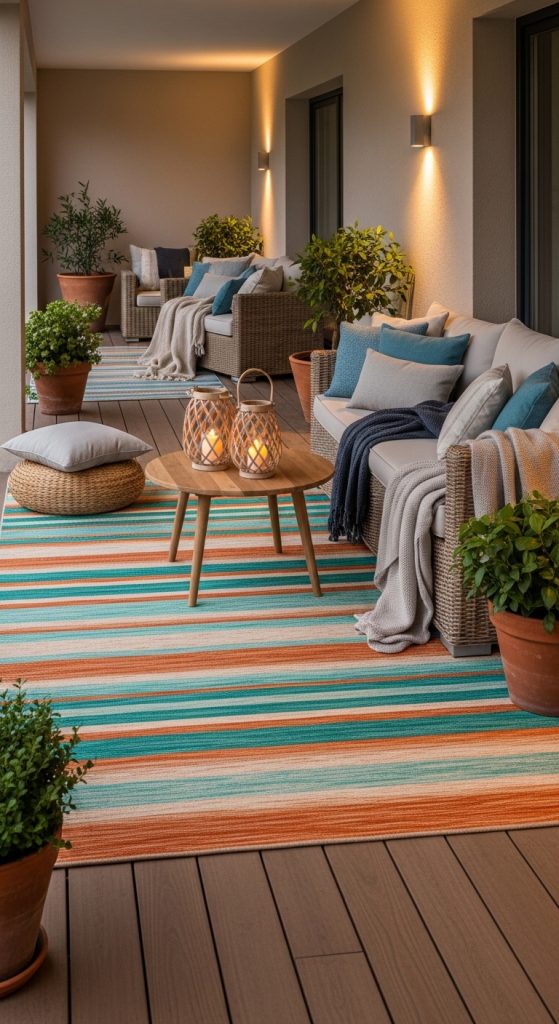
Explanation:
Outdoor rugs are designed to withstand sun, rain, and high foot traffic, making them perfect for patios. They can anchor furniture arrangements, create visual zones, and soften hard flooring surfaces like concrete, tile, or stone. Patterns and colors can range from bold geometric designs to muted, natural textures, allowing homeowners to express their style while complementing existing decor. Layering rugs or combining them with cushions and throws creates depth and a cozy, inviting feel.
Step-by-Step How-To:
- Measure the Area: Ensure the rug fits your patio space and furniture layout.
- Select Material: Choose durable, weather-resistant materials like polypropylene, jute, or outdoor cotton blends.
- Pick Colors and Patterns: Coordinate with furniture, cushions, and overall patio theme.
- Position the Rug: Center the rug under seating or dining arrangements, leaving some perimeter space.
- Secure the Rug: Use outdoor rug pads or non-slip mats to prevent sliding.
- Add Accessories: Complement the rug with cushions, planters, and lighting to complete the space.
Materials Needed:
- Outdoor rug of appropriate size
- Non-slip rug pad or mat
- Patio furniture (seating or dining)
- Cushions, throws, and decorative accessories
- Optional potted plants
An outdoor rug transforms your patio by adding comfort, style, and cohesion. It’s a cost-effective way to create a defined, cozy, and visually appealing outdoor space.
Idea 5: Add a Water Feature for Serenity
Water features—such as fountains, small ponds, or wall-mounted waterfalls—introduce a sense of tranquility and natural beauty to patios. The gentle sound of flowing water creates a soothing ambiance, enhancing relaxation and making your outdoor space feel like a private oasis. Even a small patio can benefit from a compact, self-contained water feature that adds visual and auditory interest.
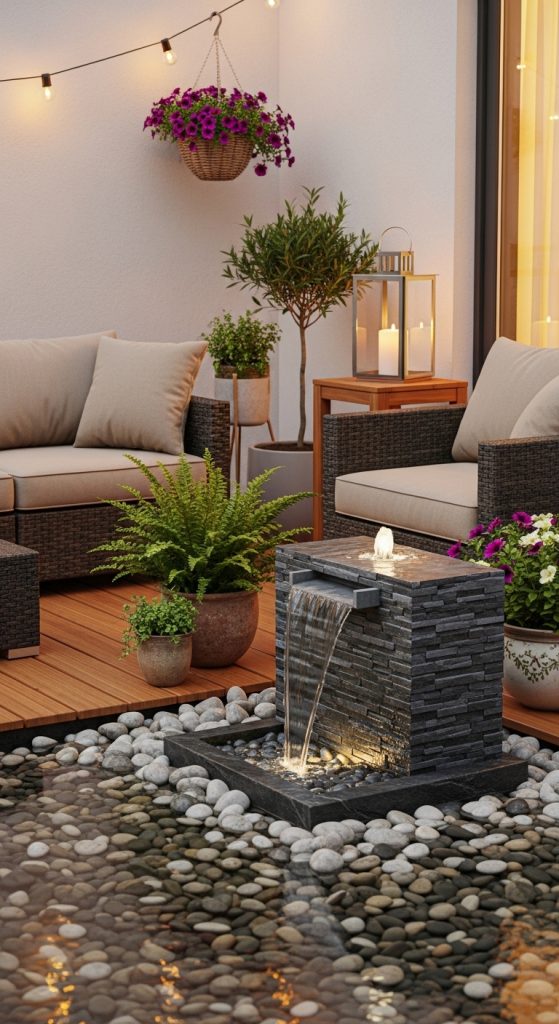
Explanation:
Water features combine aesthetics with the calming influence of nature. They can be standalone or integrated with planters, seating areas, or outdoor art. Materials like stone, ceramic, or metal complement both modern and traditional patios. The sound of water masks background noise, making patios feel more secluded and peaceful. Water features also attract birds or butterflies, further enhancing the natural feel.
Step-by-Step How-To:
- Select the Feature Type: Choose between tabletop fountains, wall-mounted waterfalls, or small floor fountains.
- Position the Feature: Place where it’s visible from seating areas and has access to electricity or solar power.
- Install and Fill: Set up the water feature according to manufacturer instructions and fill with water.
- Enhance Surroundings: Add plants, stones, or decorative elements around the base for a natural look.
- Maintain Regularly: Clean pumps, refill water, and remove debris to ensure smooth operation.
Materials Needed:
- Water feature (fountain, pond, or waterfall)
- Electrical or solar power source
- Decorative stones or pebbles
- Potted plants or moss for surrounding
- Optional lighting for evening ambiance
A water feature adds movement, sound, and serenity to your patio. It transforms the outdoor space into a calm, relaxing, and visually captivating retreat.
Idea 6: Hang a Pergola with Drapes
A pergola with flowing drapes elevates any patio by combining structure, style, and shade. Pergolas not only define outdoor seating areas but also add vertical interest, creating a sense of enclosure without fully blocking sunlight or air. Drapes add softness, movement, and a touch of elegance, making the patio feel like an outdoor living room.
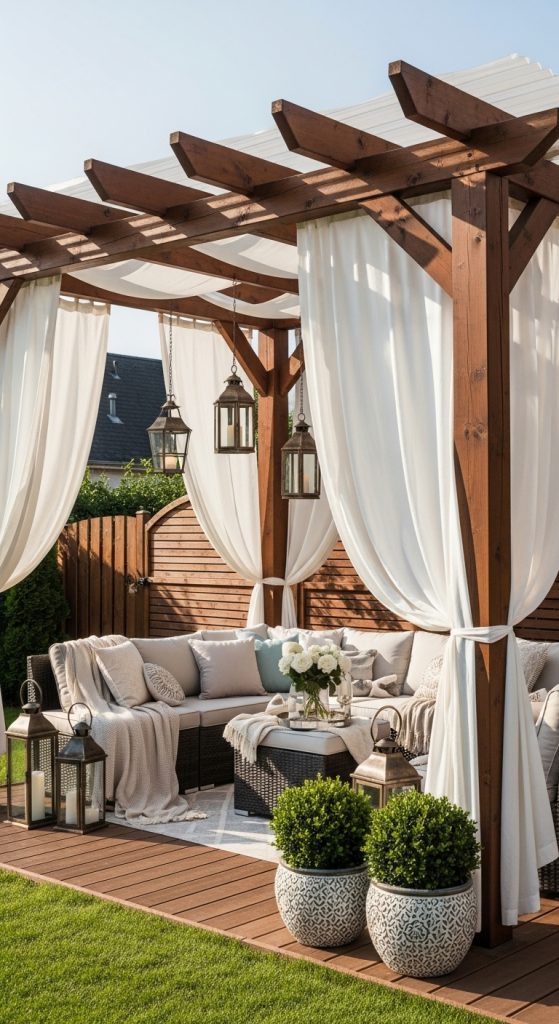
Explanation:
Pergolas provide both functional and aesthetic benefits. They define spaces for dining, lounging, or entertaining while offering partial shade, which increases comfort during sunny days. Drapes, in light, weather-resistant fabrics, create intimacy and can act as a barrier from wind or insects. They can be tied back during sunny mornings or left flowing in the breeze for a romantic and cozy ambiance. Pergolas can be wooden, metal, or composite, allowing customization to fit both modern and traditional patio styles.
Step-by-Step How-To:
- Select the Location: Choose a flat area of the patio with enough space for seating underneath.
- Choose the Pergola Style: Decide on wood, metal, or composite materials that match your patio decor.
- Install the Pergola: Follow manufacturer instructions or hire a professional for large structures.
- Hang Drapes: Use weather-resistant hooks, rods, or curtain ties to attach flowing drapes to the pergola.
- Arrange Seating: Place chairs, sofas, or a dining set under the pergola.
- Add Accessories: Incorporate hanging lanterns, string lights, or potted plants to enhance ambiance.
Materials Needed:
- Pergola kit or custom-built structure
- Weather-resistant drapes or curtains
- Curtain hooks, rods, or ties
- Outdoor seating or dining furniture
- String lights, lanterns, or potted plants
A pergola with drapes transforms your patio into a stylish, shaded retreat. It combines architecture, comfort, and elegance, creating an Instagram-worthy outdoor living area.
Idea 7: Install Outdoor String Lights
String lights are a simple yet transformative decor element for patios. They create a magical, cozy atmosphere, perfect for evening gatherings or quiet nights under the stars. Properly placed string lights enhance the ambiance and highlight the patio’s features, making it feel inviting and intimate.
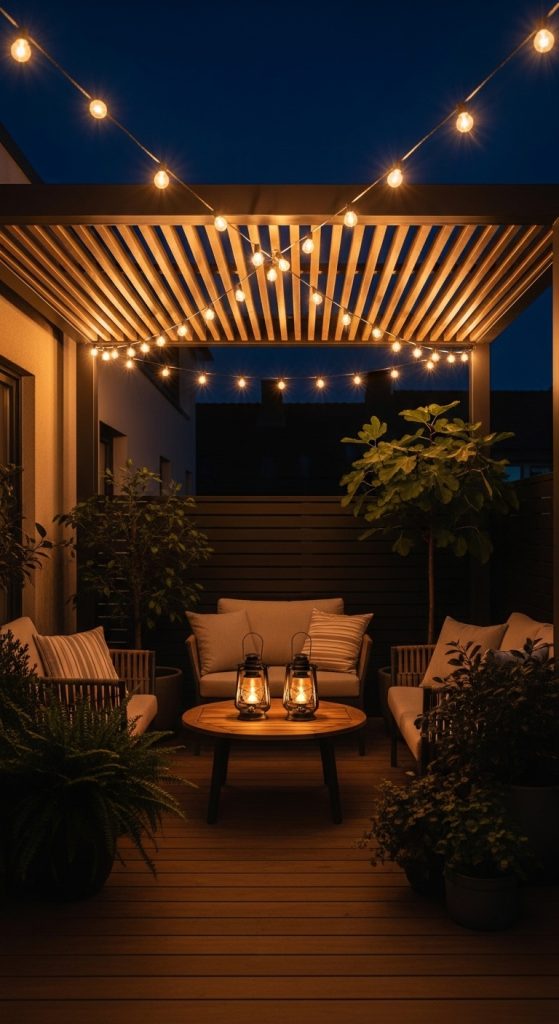
Explanation:
String lights are versatile and can be draped across pergolas, fences, or trees, or suspended above seating areas. Warm-toned bulbs evoke a cozy, festive feeling, while clear or fairy lights add a whimsical touch. Outdoor-rated string lights ensure durability against rain, wind, and sun. Additionally, string lights can complement other decor elements like plants, rugs, and furniture, tying the entire patio aesthetic together.
Step-by-Step How-To:
- Plan the Layout: Decide where to hang lights—over seating areas, along fences, or from pergolas.
- Select Lighting Type: Choose outdoor-rated bulbs, LED string lights, or solar-powered options.
- Measure and Install: Measure the distance for coverage, secure lights with hooks or clips, and ensure safety.
- Layer Lighting: Combine string lights with lanterns, table lamps, or solar stake lights for depth.
- Test Ambiance: Adjust brightness or positioning to achieve the perfect mood.
Materials Needed:
- Outdoor-rated string lights or fairy lights
- Hooks, clips, or mounting hardware
- Extension cords (if needed)
- Optional solar-powered stakes or lanterns
String lights instantly make a patio feel warm, inviting, and festive. They are an easy, cost-effective way to create a dreamy, Pinterest-ready outdoor space.
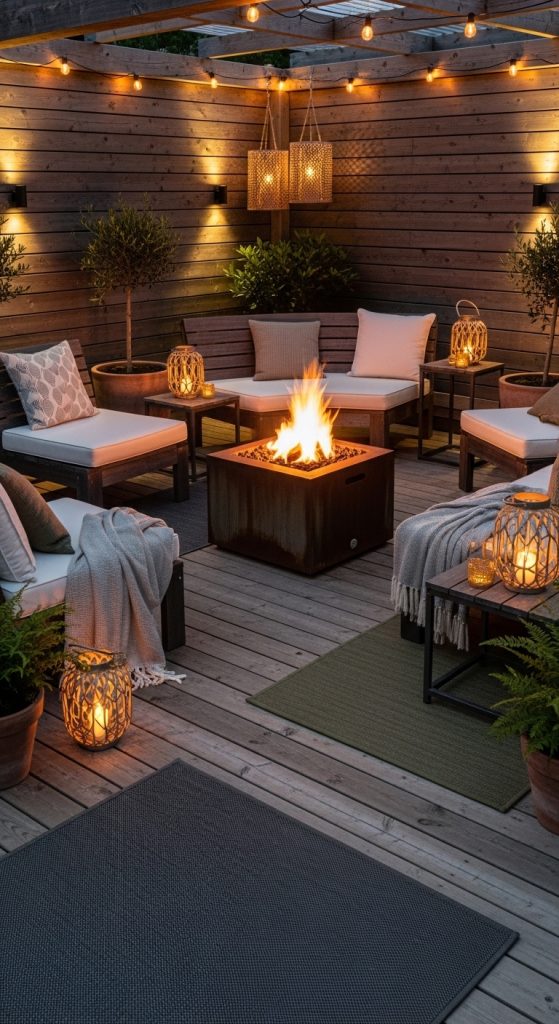
Idea 8: Add a Fire Pit for Warmth and Focal Point
A fire pit provides warmth, ambiance, and a natural focal point for patios. It encourages outdoor gatherings, extends usability into cooler evenings, and creates a cozy atmosphere perfect for intimate conversations or family bonding. Fire pits can be traditional wood-burning, gas-powered, or modern electric, depending on your preferences and safety considerations.
Explanation:
Fire pits are both functional and decorative. They anchor the patio, offering a central feature around which seating can be arranged. Modern fire pits come in a variety of designs—stone, metal, concrete, or ceramic—allowing customization to suit rustic, modern, or eclectic patios. Accessories such as fire-resistant rugs, lanterns, or cushions complete the cozy and stylish vibe. Safety precautions are essential, including proper ventilation, distance from flammable objects, and fire tools for maintenance.
Step-by-Step How-To:
- Select the Location: Place on a level, non-flammable surface, away from overhead obstructions.
- Choose Fire Pit Type: Wood-burning, gas, or electric depending on your needs and patio size.
- Arrange Seating: Position chairs or benches around the fire pit for comfort and social interaction.
- Add Safety Measures: Keep a fire extinguisher nearby and maintain a safe perimeter.
- Enhance Ambiance: Add cushions, rugs, or small side tables for functionality and style.
- Maintain Regularly: Clean ashes or check gas connections to ensure safe operation.
Materials Needed:
- Fire pit (wood-burning, gas, or electric)
- Outdoor seating (chairs or benches)
- Fire safety tools (extinguisher, poker, ash bucket)
- Cushions and outdoor rugs
- Optional lanterns or decorative stones
A fire pit transforms a patio into a warm, inviting gathering space. It combines functionality, comfort, and style, making the patio a year-round retreat.
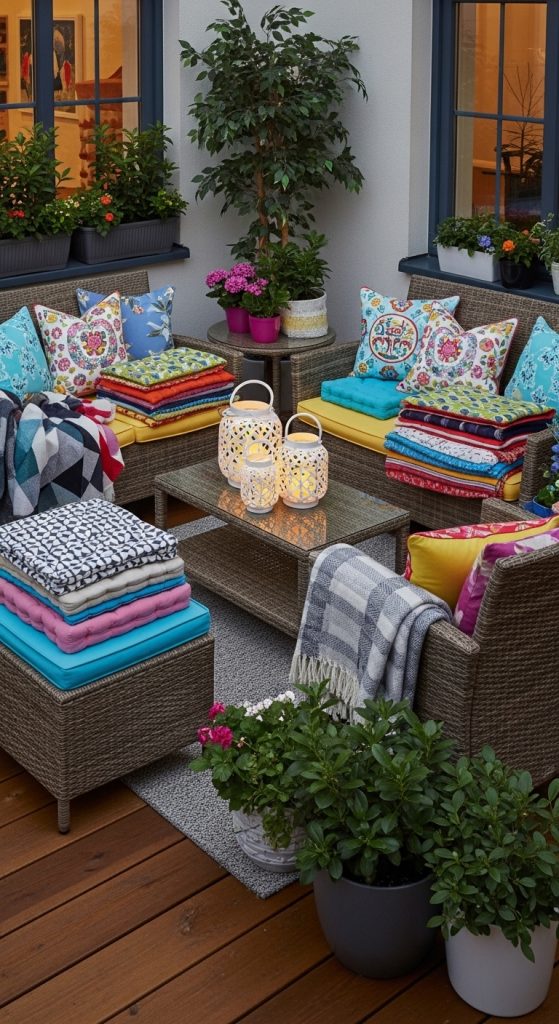
Idea 9: Incorporate Colorful Outdoor Cushions and Pillows
Outdoor cushions and pillows add personality, comfort, and style to any patio. By layering different colors, patterns, and textures, homeowners can create a playful, inviting space that encourages lounging and relaxation. Cushions also allow for seasonal updates, making it easy to refresh the patio’s look throughout the year.
Explanation:
Cushions and pillows soften seating areas while adding visual interest. Weather-resistant fabrics ensure durability against sun, rain, and humidity. Mixing bold prints, textures, and complementary colors enhances the patio’s aesthetic without overwhelming the space. Pillows can be arranged in seating nooks, on benches, or around fire pits, providing both comfort and design impact.
Step-by-Step How-To:
- Measure Seating Areas: Ensure cushions and pillows fit chairs, benches, or sofas comfortably.
- Select Fabrics: Choose outdoor-rated fabrics that resist fading, moisture, and mildew.
- Pick Colors and Patterns: Mix complementary hues and textures for a layered, visually appealing effect.
- Arrange Strategically: Place large cushions first, then add smaller pillows for depth and comfort.
- Update Seasonally: Rotate colors and patterns to refresh the patio style throughout the year.
Materials Needed:
- Outdoor cushions and pillows
- Weather-resistant fabric covers
- Throw blankets (optional)
- Seating (chairs, benches, or sofas)
- Decorative trays or small tables for coordination
Colorful cushions and pillows instantly elevate a patio. They are a cost-effective, versatile way to combine comfort with style, creating a vibrant, inviting outdoor space.
Idea 10: Integrate a Small Outdoor Dining Area
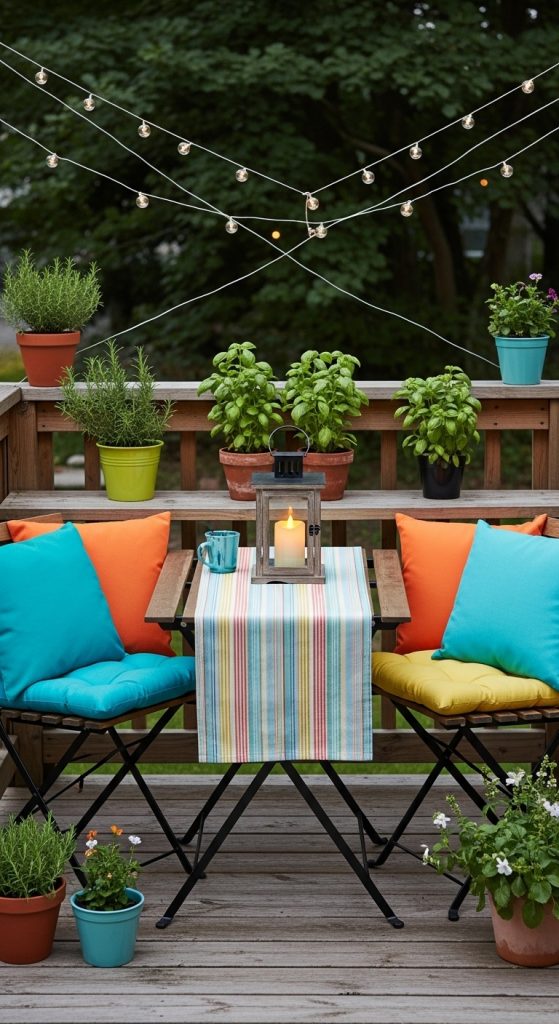
A small outdoor dining area transforms a patio into a multifunctional space, perfect for meals, social gatherings, or morning coffee rituals. Even compact patios can accommodate a bistro table and chairs or a foldable dining set, maximizing functionality without sacrificing style.
Explanation:
Outdoor dining areas provide both comfort and practicality. Selecting appropriately sized furniture ensures walkways remain clear while allowing space for dining. Weather-resistant materials, such as metal, teak, or resin wicker, provide durability. Accessories like table runners, cushions, lanterns, or potted centerpieces enhance visual appeal. By designing a dedicated dining corner, patios become not only visually attractive but also practical for entertaining or daily use.
Step-by-Step How-To:
- Measure Patio Space: Ensure the dining set fits without obstructing movement.
- Choose Furniture: Select weatherproof tables and chairs, foldable if space is limited.
- Arrange Seating: Create comfortable spacing around the table for ease of use.
- Add Accessories: Table runners, placemats, lanterns, or centerpieces enhance the setup.
- Include Lighting: Hanging string lights, lanterns, or small lamps make the dining area usable after dark.
- Maintain Furniture: Clean regularly and cover when not in use to prolong lifespan.
Materials Needed:
- Outdoor dining table and chairs (weatherproof)
- Cushions or seat pads
- Table runner, placemats, or decorative centerpiece
- Lighting (lanterns, string lights, or candles)
- Optional outdoor rug
A small outdoor dining area makes your patio functional and stylish. It encourages outdoor living and entertaining while enhancing the overall charm and uniqueness of your space.