
VBS decorating ideas in 2026re moving in a bold and immersive direction, especially when it comes to jungle and safari-themed environments. Vacation Bible School (VBS) is no longer just about simple classroom decorations or basic craft corners—it has evolved into a full experience where storytelling, environment, and visual design work together to create a memorable atmosphere for kids. Among all themes, jungle and safari backdrops are becoming one of the most popular choices because they naturally bring energy, excitement, and curiosity into the space.
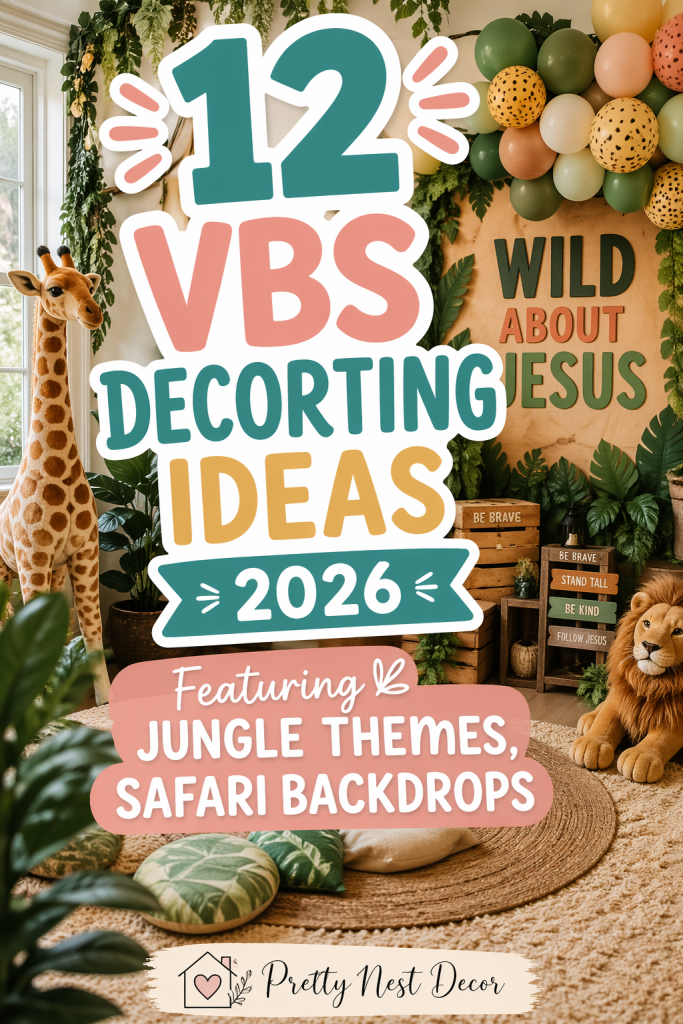
A jungle-themed VBS setup instantly transforms an ordinary hall or classroom into an adventurous environment. Instead of plain walls and simple seating arrangements, you get layered greenery, animal cutouts, textured backdrops, and nature-inspired details that make children feel like they are stepping into a real-world expedition. Safari themes take this even further by adding exploration elements like maps, trails, tents, binocular stations, and “mission zones,” turning learning into an interactive journey instead of a traditional lesson.
One of the biggest reasons jungle and safari VBS decorations are trending in 2026 is because of their high engagement factor. Children naturally respond to environments that feel alive and interactive. When they walk into a room filled with vines, trees, animal footprints, and themed stations, their attention is instantly captured. This helps improve participation, focus, and overall excitement throughout the program. Instead of feeling like a structured classroom session, it feels more like an adventure camp.
Another important factor is versatility. Jungle and safari themes can be adapted to almost any space, whether it’s a small church hall, a large auditorium, or multiple classrooms. Even with a limited budget, simple materials like paper leaves, cardboard animals, fabric backdrops, and printed scenery can create a powerful visual transformation. On the other hand, larger setups can include 3D props, stage designs, lighting effects, and immersive walkways that take the experience to another level.
Modern VBS decoration trends are also focusing heavily on storytelling environments. Instead of decorating randomly, each area now serves a purpose in the theme. For example, a “jungle entrance gate” can represent the start of the journey, a “safari trail” can guide children between stations, and a “mission zone” can be used for activities or learning sessions. This structured approach makes the environment feel organized while still maintaining creativity.
Lighting also plays a major role in 2026 VBS designs. Warm, natural tones combined with green and earthy colors help create a realistic jungle feel. Soft lighting behind foliage, glowing animal eyes, or sunset-style backdrops can dramatically improve the visual depth of the setup. Even simple lighting changes can turn basic decorations into immersive environments.
Another growing trend is interactive décor. Instead of static decorations, many VBS setups now include hands-on elements like movable jungle leaves, hidden animal cutouts, treasure-style discovery boxes, and themed activity corners. This makes children feel like active participants in the environment rather than just observers.
Safari-inspired VBS designs also introduce educational elements in a fun way. Animal stations can be used to teach Bible lessons, jungle maps can guide storytelling sessions, and themed props can reinforce key messages. This combination of fun and learning is what makes jungle and safari VBS setups especially effective in modern programs.
Budget-friendly creativity is another reason these themes are so popular. Even without expensive materials, organizers can create impressive jungle environments using recycled items, craft paper, natural branches, and printed designs. The key is layering—combining simple elements in a structured way to build depth and atmosphere.
This guide will explore 12 VBS decorating ideas for 2026 featuring jungle themes and safari backdrops, focusing on realistic, practical, and visually impactful setups. Each idea is designed to help you transform ordinary spaces into immersive adventure environments that are both meaningful and memorable for children.
Because in modern VBS design, decoration is not just background—it is part of the experience itself.
1. Jungle Entrance Gate Arch (First Impressions Safari Portal)
Explanation (What it is)
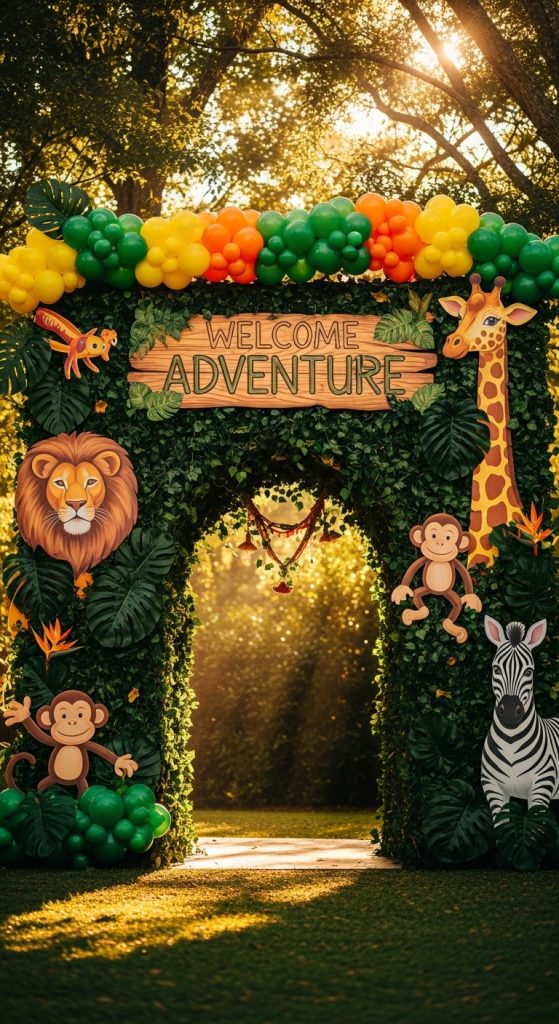
The jungle entrance gate arch is the main entry point of your VBS setup, designed to instantly transport children into a safari or jungle world the moment they walk in. It acts like a “portal” that separates the real world from the themed adventure environment.
This idea is powerful because first impressions decide engagement. If the entrance feels exciting, everything that follows automatically feels more immersive. A well-designed jungle gate sets the tone for the entire VBS program, making kids feel like they are entering a real expedition zone instead of a classroom or hall.
The gate is usually decorated with vines, leaves, animal prints, wooden textures, and welcome signs that reflect exploration and adventure.
How to implement (Practical steps)
Start by building a simple arch structure using PVC pipes, cardboard frames, or wooden supports.
Decorate using:
- Artificial vines and hanging leaves
- Green, brown, and earthy fabric drapes
- Cardboard animal cutouts (lions, giraffes, monkeys)
- Safari-style welcome board (“Welcome to Jungle Adventure VBS”)
Enhance the effect by:
- Adding balloon clusters in green and gold tones
- Using rope or netting for a jungle explorer feel
- Placing footprints leading inside the entrance
Lighting can also be used with warm yellow tones to create a sunset jungle effect.
If space is small, a wall-mounted entrance design can replace a full arch.
Best for
- Main entrance areas
- Large halls or church entryways
- Creating strong first impressions
Pro tip
Add layered leaves at different heights to create depth instead of flat decoration.
Mistake to avoid
Do not overload the arch with too many elements. It should feel natural, not crowded.
2. Safari Trail Pathway (Guided Adventure Walkway)
Explanation (What it is)
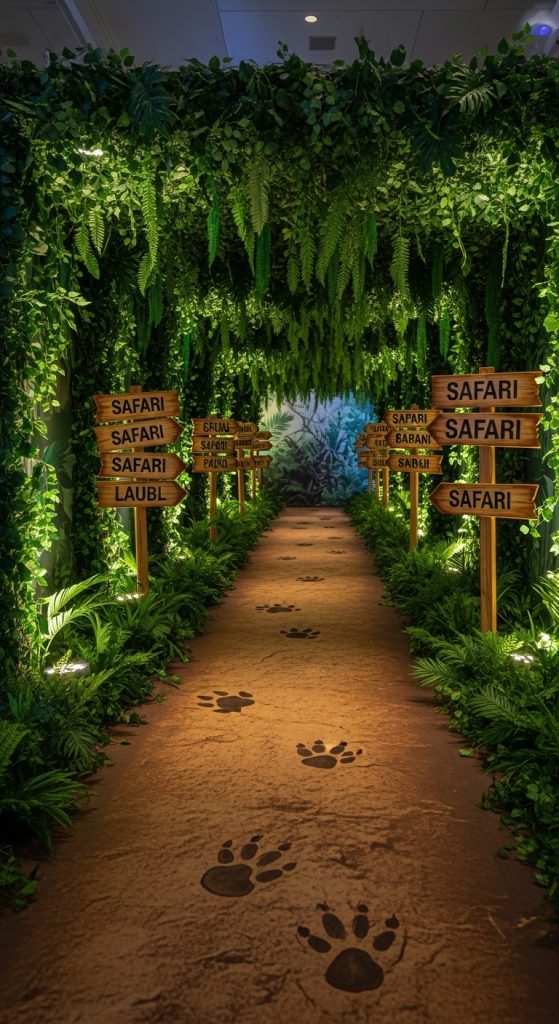
The safari trail pathway is a decorated walkway that guides children from one activity area to another while maintaining the jungle theme. Instead of plain walking space, the floor becomes part of the storytelling experience.
This idea works because it keeps the theme continuous. Children don’t just enter a jungle—they travel through it. It turns movement between stations into part of the adventure, making the entire VBS feel more interactive and structured.
The pathway often includes animal footprints, directional signs, jungle props, and themed markers.
How to implement (Practical steps)
Start by marking the main walking route using tape or floor markers.
Decorate the path with:
- Animal footprint stickers (lion, elephant, zebra)
- Green leaf borders along the sides
- Small cardboard trees or bushes
- Direction signs like “Mission Zone Ahead” or “Safari Station”
Enhance immersion by:
- Adding rope barriers or mini wooden posts
- Using jungle sound effects (birds, animals, forest ambience)
- Placing surprise cutouts like hidden animals along the path
For larger setups, divide the path into zones like “Rainforest Area” or “Safari Zone.”
If space is limited, a single straight trail with light decorations still works effectively.
Best for
- Connecting different VBS stations
- Medium to large event spaces
- Creating immersive movement experience
Pro tip
Use alternating footprints and greenery patterns to keep children visually engaged while walking.
Mistake to avoid
Do not leave the path too plain or empty. It should always feel like part of the theme.
3. Jungle Learning Station Booths (Interactive Theme Corners)
Explanation (What it is)
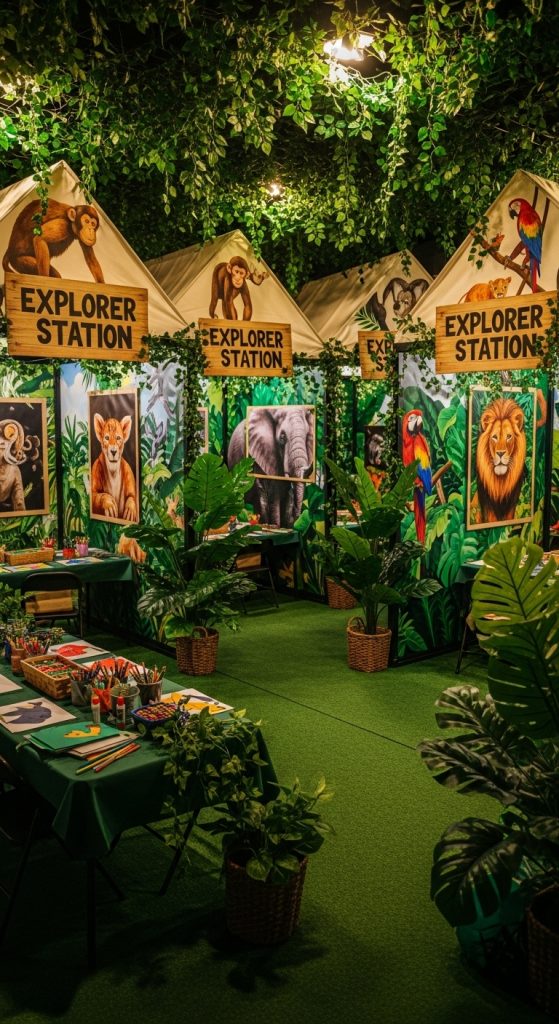
Jungle learning station booths are themed activity corners designed like small safari outposts where children participate in lessons, crafts, or games. Each booth represents a part of the jungle environment and helps turn learning into an interactive experience.
Instead of sitting in one classroom setup, children rotate through different stations, each with its own jungle identity. This keeps attention high and prevents boredom during activities.
Each booth can represent something different—like animal care, Bible story station, craft jungle, or exploration zone.
How to implement (Practical steps)
Divide your space into multiple small zones.
Decorate each station using:
- Themed backdrops (trees, jungle vines, safari tents)
- Animal props or cutouts relevant to each station
- Table coverings in green, brown, or leaf patterns
- Signboards naming each zone (e.g., “Explorer Craft Station”)
Examples:
- Animal Station → teaches about animals with jungle props
- Story Zone → Bible storytelling with forest backdrop
- Craft Zone → kids create jungle-themed crafts
Enhance engagement by:
- Adding explorer hats or badges for kids
- Using themed baskets or containers for materials
- Creating small “mission cards” for each station
If space is limited, combine two stations in one decorated area using vertical signage.
Best for
- Structured VBS programs
- Interactive learning environments
- Medium to large groups of children
Pro tip
Keep each station visually different so children immediately recognize where they are.
Mistake to avoid
Do not make all booths look identical. Each one should feel like a new jungle discovery area.
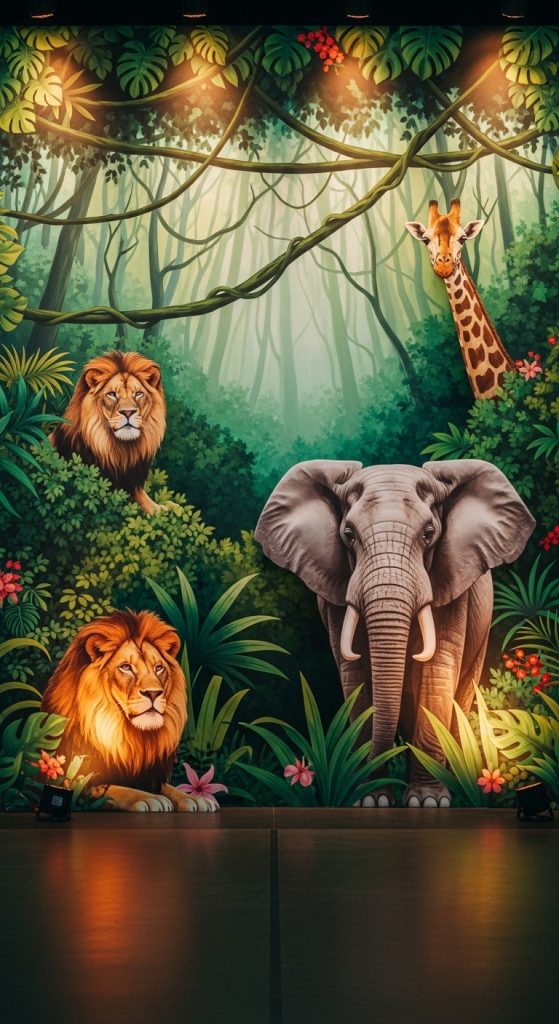
4. Safari Animal Backdrop Wall (Photo Zone & Story Scene)
Explanation (What it is)
The safari animal backdrop wall is a dedicated visual feature designed to create a strong jungle atmosphere and serve as a photo or storytelling zone during VBS. It usually features large-scale jungle scenery combined with animal illustrations such as lions, giraffes, elephants, and zebras placed within a forest or safari landscape.
This setup is important because it becomes a focal point of the entire decoration theme. Children naturally gravitate toward visually rich spaces, and a well-designed backdrop makes the environment feel immersive and memorable. It also works as a storytelling tool where lessons or activities can be visually supported by the scene behind the speaker or stage area.
How to implement (Practical steps)
Start with a large wall or stage background.
Build the base using:
- Green jungle backdrop sheets or printed forest scenery
- Blue sky gradient paper or fabric for depth
- Artificial vines and leaf garlands for layering
Add animals:
- Large cardboard or foam animal cutouts
- 3D animal figures if available
- Positioned at different heights for depth effect
Enhance the scene with:
- Fake trees or bamboo sticks on the sides
- Layered bushes at the bottom for realism
- Safari signs like “Wild Adventure Zone”
Lighting:
- Warm spotlighting or soft yellow lights to highlight animals
- Green lighting accents for jungle mood
If space is limited, use a flat wall but add strong layering for depth illusion.
Best for
- Stage backgrounds
- Photo corners
- Main storytelling areas
Pro tip
Place animals at different distances (foreground and background) to create a realistic jungle depth effect.
Mistake to avoid
Do not keep all elements flat on one level—it will look like a poster instead of an immersive jungle.
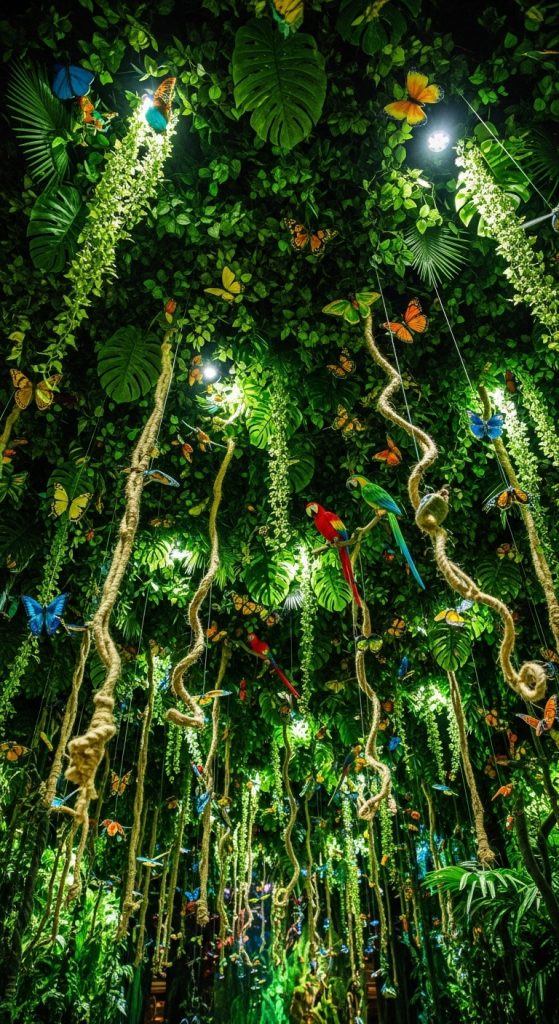
5. Jungle Canopy Ceiling Decor (Immersive Overhead Experience)
Explanation (What it is)
The jungle canopy ceiling decor transforms the overhead space into a dense jungle roof filled with hanging vines, leaves, and natural elements. Instead of leaving the ceiling plain, it creates the illusion of being inside a rainforest with layers of greenery above.
This idea is powerful because it surrounds children completely in the theme. When they look up and see hanging vines and leaves, the environment feels fully immersive rather than just decorated at eye level.
It also helps reduce the visibility of plain ceilings, which often break the themed experience.
How to implement (Practical steps)
Start by attaching lightweight hooks or tape to the ceiling grid or beams.
Decorate using:
- Artificial vines hanging at different lengths
- Green leaf garlands and paper foliage
- Hanging butterflies, birds, or jungle animals
- Rope nets or jungle-style mesh
Enhance the effect by:
- Layering multiple vine heights for depth
- Mixing dark and light green tones for realism
- Adding soft fairy lights hidden within foliage
For larger spaces, create canopy sections instead of covering the entire ceiling.
If ceiling access is limited, suspend decorations slightly below the ceiling using strings.
Best for
- Large halls and church ceilings
- Main VBS activity areas
- Immersive themed environments
Pro tip
Mix hanging lengths instead of keeping everything uniform—it makes the jungle feel natural and wild.
Mistake to avoid
Do not overcrowd the ceiling with heavy decorations. It should feel lush, not overwhelming or blocking visibility.
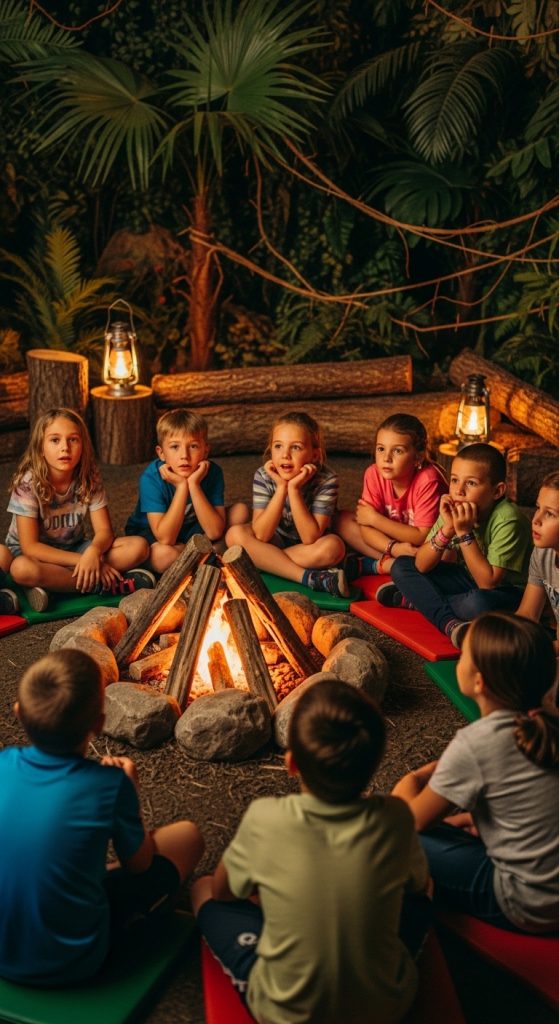
6. Safari Campfire Story Circle (Group Learning Zone)
Explanation (What it is)
The safari campfire story circle is a themed seating area designed to look like a jungle campsite where children gather for storytelling, singing, or group lessons. It mimics an outdoor safari camp experience with a central “fire” element and seating arranged around it.
This setup is effective because it creates a focused, intimate learning space within the larger jungle theme. It encourages attention, participation, and emotional connection during storytelling sessions.
The campfire circle also adds warmth and community feeling, making it ideal for shared VBS moments.
How to implement (Practical steps)
Create a circular seating arrangement using:
- Cushions, mats, or small chairs
- Logs made from cardboard or foam for seating props
In the center:
- Fake campfire using LED lights, orange/red cellophane, or paper flames
- Stones or painted foam blocks around the fire
Surrounding decor:
- Small jungle plants or artificial bushes
- Safari lanterns or warm lighting
- Tribal-style or wooden signboards
Enhance immersion by:
- Adding soft campfire sound effects
- Using explorer hats or props for kids
- Creating themed storytelling scripts or “mission stories”
If space is limited, use a half-circle arrangement against a wall.
Best for
- Storytelling sessions
- Group discussions
- Singing and interactive lessons
Pro tip
Keep lighting slightly dim around the circle so the “campfire” becomes the visual focus.
Mistake to avoid
Do not place seating too far apart. The circle should feel connected and intimate for better engagement.
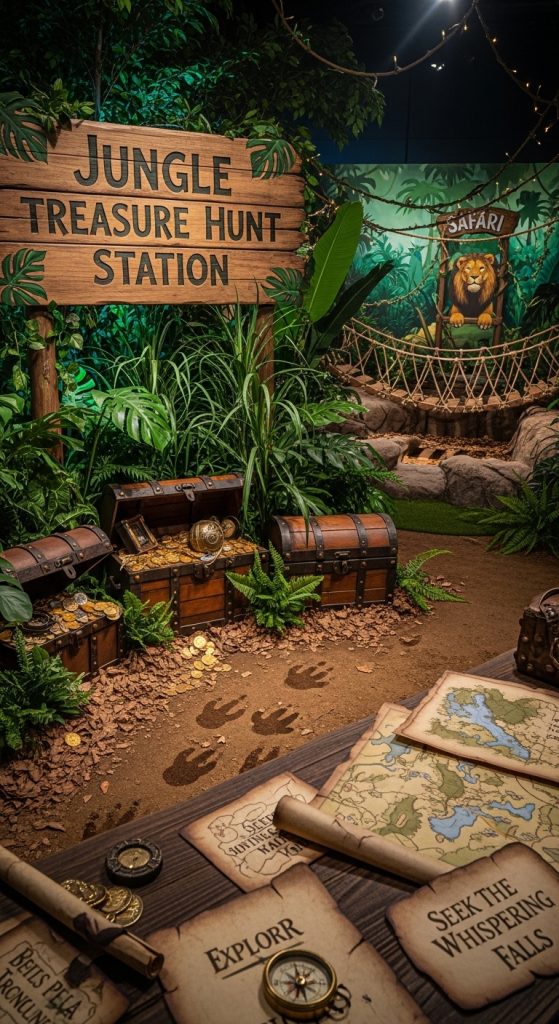
7. Jungle Treasure Hunt Station (Adventure Challenge Zone)
Explanation (What it is)
The jungle treasure hunt station is an interactive VBS area designed like a safari exploration zone where kids complete small challenges to find hidden “treasures.” It turns learning into a game-based experience, keeping children engaged through movement, discovery, and problem-solving.
This setup works because it shifts attention from passive learning to active participation. Instead of just listening or sitting, kids become explorers searching for clues hidden inside a jungle-themed environment. It builds excitement and makes the VBS experience more memorable.
The “treasure” can be Bible-related messages, tokens, or small rewards tied to lessons.
How to implement (Practical steps)
Design a designated area as a jungle exploration zone.
Decorate using:
- Artificial bushes, vines, and jungle plants
- Wooden crates or safari-style boxes
- Animal footprints leading to clues
- Maps printed on aged-style paper
Add interactive elements:
- Hidden clue cards inside plants or containers
- “X marks the spot” treasure markers
- Small chests or baskets as reward stations
Enhance immersion by:
- Giving kids explorer badges or safari hats
- Using jungle sound effects in background
- Creating a simple mission map they follow
If space is small, make a tabletop treasure hunt with layered props instead of a full room setup.
Best for
- Interactive learning activities
- Group games and challenges
- High-energy VBS sessions
Pro tip
Make clues progressively harder to maintain excitement without frustration.
Mistake to avoid
Do not make the station too cluttered—clarity is needed so kids don’t feel lost.
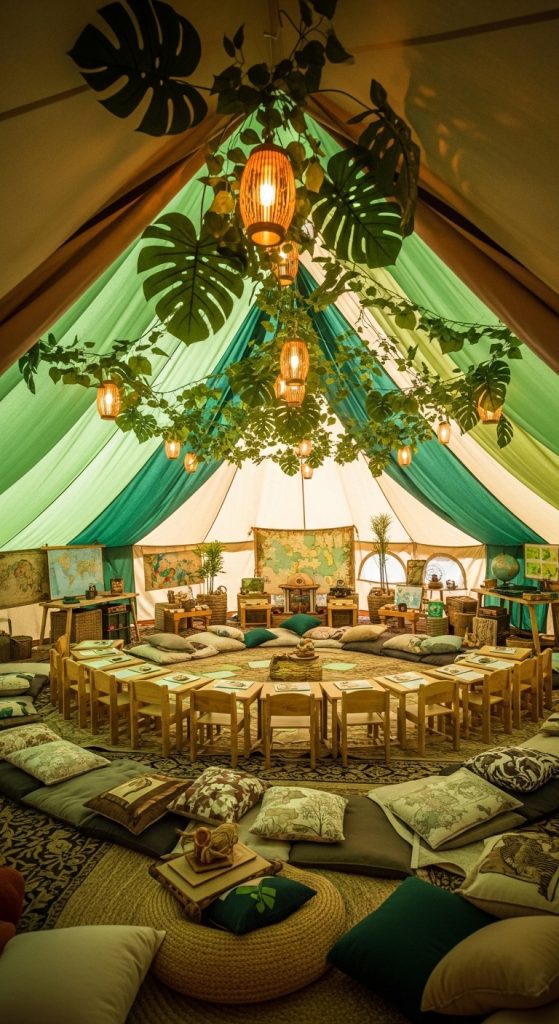
8. Safari Tent Teaching Area (Outdoor Classroom Feel)
Explanation (What it is)
The safari tent teaching area is a themed classroom setup designed to look like an outdoor jungle camp tent where lessons and activities take place. It creates a relaxed, adventure-style learning environment instead of a traditional classroom feel.
This idea is effective because it changes the mood of learning. Sitting inside a “safari tent” makes children feel like they are on an expedition, which increases curiosity and attention during lessons.
It also helps separate different learning groups or sessions in a visually organized way.
How to implement (Practical steps)
Build or simulate a tent using:
- Fabric sheets in beige, green, or brown tones
- PVC pipes or lightweight frames
- Rope or bamboo-style supports
Interior setup:
- Mats, cushions, or small chairs for seating
- Low tables for activities or crafts
- Simple teaching board or visual display
Decorate with:
- Jungle vines hanging from tent edges
- Safari lanterns or warm lighting
- Animal prints and exploration maps
Enhance experience by:
- Naming the tent (e.g., “Explorer Learning Tent”)
- Adding flags or banners for identity
- Using themed props like binoculars or compasses
If space is limited, create a small corner tent instead of a full structure.
Best for
- Teaching sessions
- Small group activities
- Rotational learning stations
Pro tip
Keep the tent semi-open so airflow and visibility are maintained while still feeling enclosed.
Mistake to avoid
Do not make it too dark or closed off—it should feel inviting, not cramped.
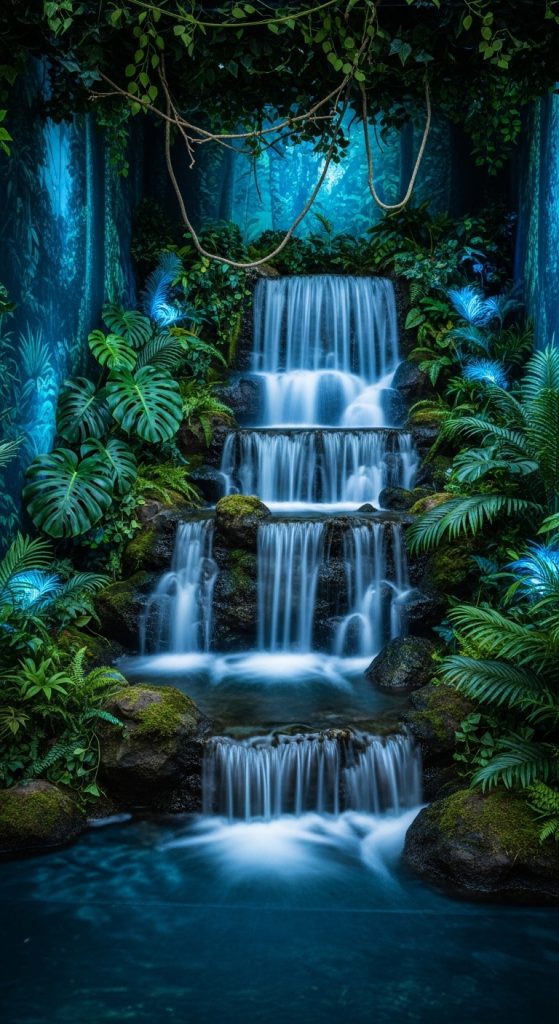
9. Jungle Waterfall Backdrop Zone (Calm Scenic Feature)
Explanation (What it is)
The jungle waterfall backdrop zone is a visually calming decorative area designed to resemble a flowing waterfall inside a jungle environment. It adds a natural, peaceful element to the VBS setup and can be used as a visual highlight or relaxation corner.
This idea stands out because it introduces motion and tranquility into the space. While most jungle decorations focus on energy and adventure, the waterfall zone provides balance by creating a soothing focal point.
It also works well as a photo spot or quiet reflection area during VBS activities.
How to implement (Practical steps)
Create a backdrop using:
- Blue and white fabric or plastic sheets to simulate water flow
- Green jungle vines around the edges
- Rock-style props made from foam or cardboard
Enhance realism with:
- LED blue lighting behind the waterfall
- Reflective materials for shimmer effect
- Layered greenery to frame the waterfall
Add surroundings:
- Small jungle plants or bushes
- Animal cutouts near the water (birds, deer, etc.)
- Stone-style seating or decorative rocks
If space is limited, a wall-mounted waterfall design works effectively.
Best for
- Photo corners
- Calm reflection areas
- Decorative focal points
Pro tip
Use soft lighting behind the waterfall to create a glowing, flowing illusion.
Mistake to avoid
Do not overdecorate the area—simplicity is key for a realistic waterfall effect.
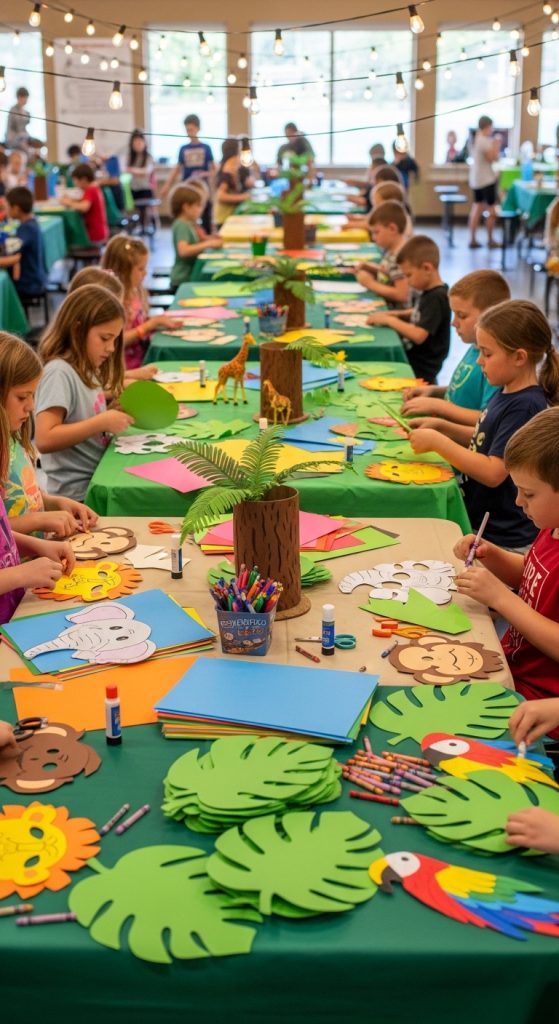
10. Jungle Craft Creation Zone (Hands-On Activity Station)
Explanation (What it is)
The jungle craft creation zone is a dedicated VBS area where children make themed crafts inspired by the jungle and safari environment. Instead of just observing decorations, they actively participate in creating items like animal masks, leaf art, binoculars, or jungle scene collages.
This setup is important because it turns creativity into learning. Kids don’t just experience the jungle theme visually—they interact with it through hands-on activities. This improves engagement, focus, and retention of VBS lessons while keeping the environment fun and interactive.
How to implement (Practical steps)
Set up tables or activity stations with clear organization.
Decorate using:
- Jungle-themed table covers (green, brown, leaf patterns)
- Small animal cutouts on tables
- Craft station signboards like “Jungle Art Lab”
Provide materials:
- Colored paper, glue, scissors, markers
- Leaves, cardboard, and recycled materials
- Stickers of animals and jungle elements
Enhance experience by:
- Assigning each table a mini-theme (lion zone, jungle leaf zone, safari craft zone)
- Displaying sample crafts as inspiration
- Using storage baskets styled like explorer crates
If space is small, combine all crafts into one central table with rotating activities.
Best for
- Creative learning sessions
- Younger children engagement
- Interactive VBS programs
Pro tip
Pre-cut difficult shapes to save time and keep activities smooth.
Mistake to avoid
Do not overload tables with too many materials at once—it creates confusion instead of creativity.
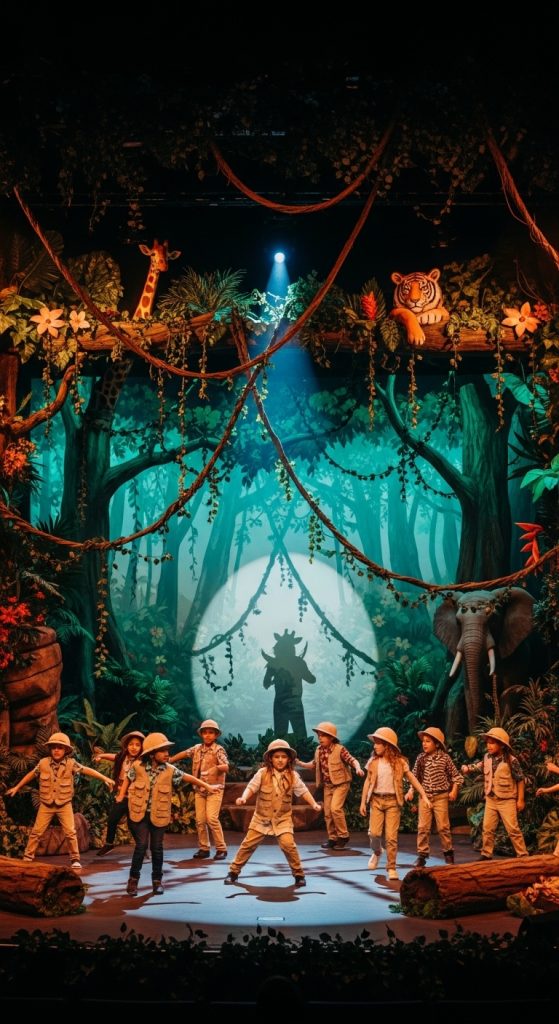
11. Jungle Stage Performance Area (Story & Drama Zone)
Explanation (What it is)
The jungle stage performance area is the central platform where VBS dramas, Bible stories, songs, and presentations take place. It is designed with a jungle safari theme so that every performance feels like part of an adventure story rather than a formal stage event.
This area is crucial because it becomes the emotional and storytelling heart of the entire VBS setup. Children connect more deeply when stories are presented in a visually immersive environment that matches the theme.
How to implement (Practical steps)
Design the stage backdrop using:
- Large jungle forest prints or green fabric layers
- Animal cutouts placed at different heights
- Hanging vines and safari props around the frame
Stage setup:
- Wooden or raised platform if available
- Open space for movement and drama
- Clear center focus area
Enhance atmosphere with:
- Spotlights or warm stage lighting
- Jungle sound effects (birds, wind, animal calls)
- Themed props like explorer boxes or maps
Add visual depth:
- Layer plants and trees on both sides of the stage
- Create a “jungle entrance” for performers
- Use different lighting colors for scene changes
If space is limited, a wall-mounted stage backdrop with floor marking works well.
Best for
- Drama performances
- Worship and singing
- Storytelling sessions
Pro tip
Keep the center stage area clean and open so performances are not visually blocked.
Mistake to avoid
Do not overcrowd the stage with too many props—it reduces focus on performers.
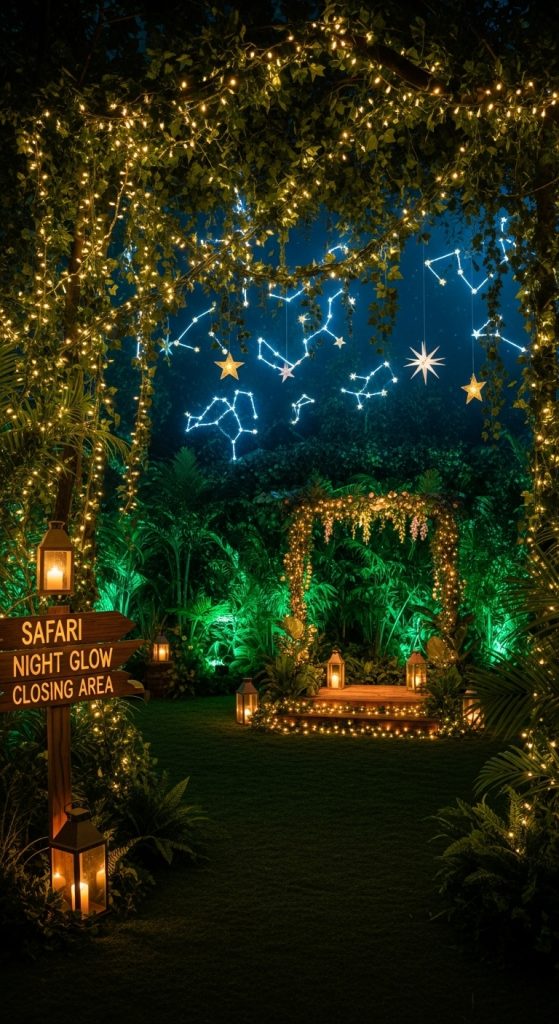
12. Safari Night Glow Closing Area (Evening Highlight Zone)
Explanation (What it is)
The safari night glow closing area is a specially designed VBS space used for final sessions, closing ceremonies, or evening gatherings. It transforms the jungle theme into a magical nighttime safari experience using soft lighting, glowing elements, and calm decorative setups.
This idea is impactful because it creates a memorable ending to each VBS day. The shift from bright jungle adventure to a glowing safari night atmosphere helps children wind down while still staying engaged in the theme.
How to implement (Practical steps)
Choose an open or central area for gathering.
Decorate using:
- String lights or fairy lights wrapped in vines
- Glow-in-the-dark stars or animal outlines
- Dark green and blue fabric for night jungle effect
Add focal elements:
- Glowing campfire prop or LED light centerpiece
- Silhouettes of trees and animals in background
- Soft stage or seating arrangement for group gathering
Enhance mood with:
- Soft jungle night sounds (crickets, wind, distant animals)
- Dimmed lighting for calming effect
- Gentle pathway lights guiding children in
If space is small, create a corner glow zone with lights and backdrop only.
Best for
- Closing ceremonies
- Evening gatherings
- Reflection or group bonding sessions
Pro tip
Use warm and cool light contrast to create depth in the night jungle effect.
Mistake to avoid
Do not make the lighting too dark—visibility must remain clear and safe for children.