
Hallways are often overlooked when it comes to home decor, yet they serve as the first impression of your living space. A well-decorated hallway can instantly set the tone for the rest of your home, creating a sense of warmth, style, and personality. Whether you live in a cozy apartment, a modern house, or a traditional family home, hallways offer a unique opportunity to blend functionality with aesthetics. Despite being primarily transitional spaces, hallways can become one of the most visually appealing areas of your home when decorated thoughtfully.
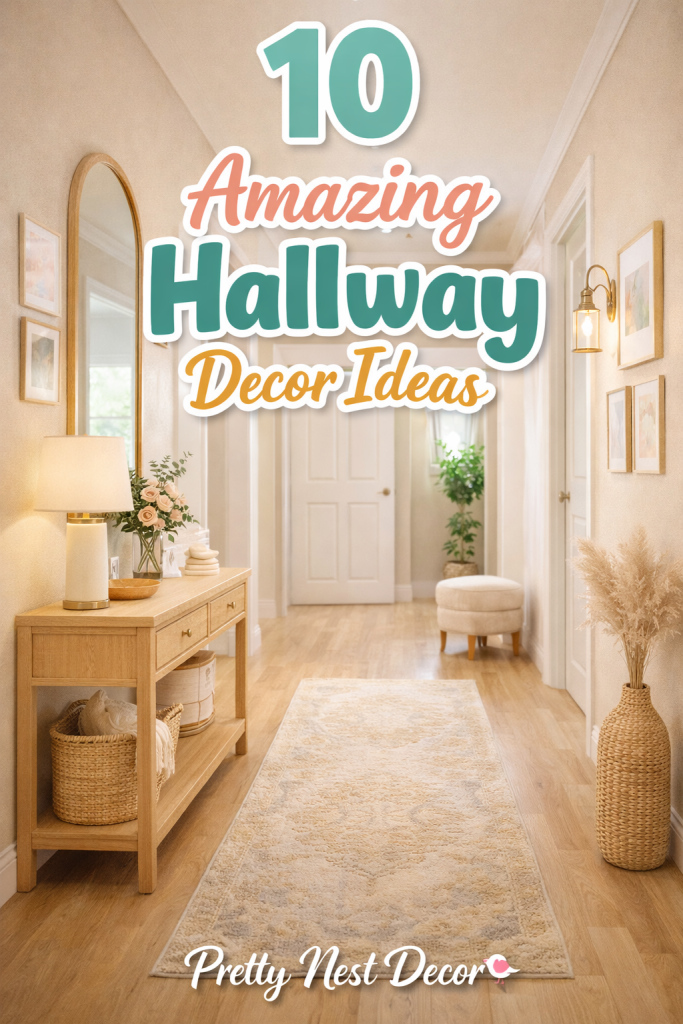
The key to hallway decor lies in striking the perfect balance between style and practicality. Since hallways are narrow and often serve as passageways, every design choice must optimize space, light, and accessibility. From wall treatments to flooring, lighting solutions, storage ideas, and decorative accents, a hallway can reflect your personal style while remaining functional. Minimalist, cozy, modern, vintage, or eclectic—the possibilities are endless, and each approach allows you to infuse your personality into even the smallest corners.
One of the most exciting aspects of hallway design is its versatility. Unlike larger rooms, hallways offer the freedom to experiment with bold patterns, striking colors, unique lighting fixtures, or eye-catching art pieces without overwhelming the space. A gallery wall of family photos, mirrors to create an illusion of depth, or textured wallpaper to add dimension—these small yet impactful changes can completely transform a mundane corridor into an Instagram-worthy space. Additionally, hallways serve as the perfect canvas for seasonal decor, allowing you to rotate accents and accessories throughout the year for a fresh look.
Functionality is equally important in hallway design. Storage solutions like floating shelves, console tables, wall hooks, or hidden cabinets ensure that your hallway remains clutter-free while maintaining an organized aesthetic. Lighting plays a critical role in highlighting decor elements and improving the overall ambiance. From recessed lighting to statement chandeliers or wall sconces, the right light can make a hallway feel spacious, cozy, and welcoming. Flooring choices, including rugs, hardwood, or tiles, add texture and warmth while guiding visitors through the space.
Hallway decor also presents a unique chance to merge creativity with personal storytelling. Using artwork, decorative mirrors, indoor plants, or accent furniture, homeowners can showcase their tastes and hobbies in a small, concentrated area. Even simple touches, such as stylish doormats, statement light fixtures, or patterned wallpaper, can elevate the look and feel of the corridor. By carefully curating elements that resonate with your style, a hallway can become a statement space rather than just a passageway.
In this comprehensive guide, we will explore 10 amazing hallway decor ideas that are practical, aesthetically pleasing, and easy to implement. Each idea will include a clear definition, step-by-step instructions, a list of necessary materials, and actionable tips designed to inspire both beginners and seasoned DIY enthusiasts. These ideas are perfect for those looking to maximize the potential of their hallways, whether it’s adding functional storage, creating a welcoming entrance, or showcasing a stylish, modern aesthetic. By the end of this guide, you’ll be equipped with everything you need to transform your hallway into a beautiful, functional, and inviting space that leaves a lasting impression on anyone who enters your home.
From classic design elements to creative, contemporary touches, these hallway decor ideas are designed to spark inspiration while remaining practical for everyday living. Whether you want a cozy, inviting hallway that complements your home’s overall aesthetic or a bold, statement-making corridor that wows guests, the ideas in this guide will cover all bases. We’ll explore how to use color, lighting, artwork, furniture, and accessories strategically, ensuring every choice contributes to a cohesive and stylish design. The goal is not only to enhance the visual appeal of your hallway but also to make it a functional, organized, and enjoyable space for your daily routines.
With careful planning, attention to detail, and a little creativity, hallways can evolve from simple walkways into dynamic areas that reflect your personality and elevate your home’s interior design. Each of the following 10 ideas is designed to be beginner-friendly yet sophisticated, incorporating both practical solutions and decorative flair. By the time you implement these ideas, your hallway will not only feel more welcoming but also serve as a design highlight that sets the tone for the rest of your home.
Idea 1: Create a Cozy Gallery Wall
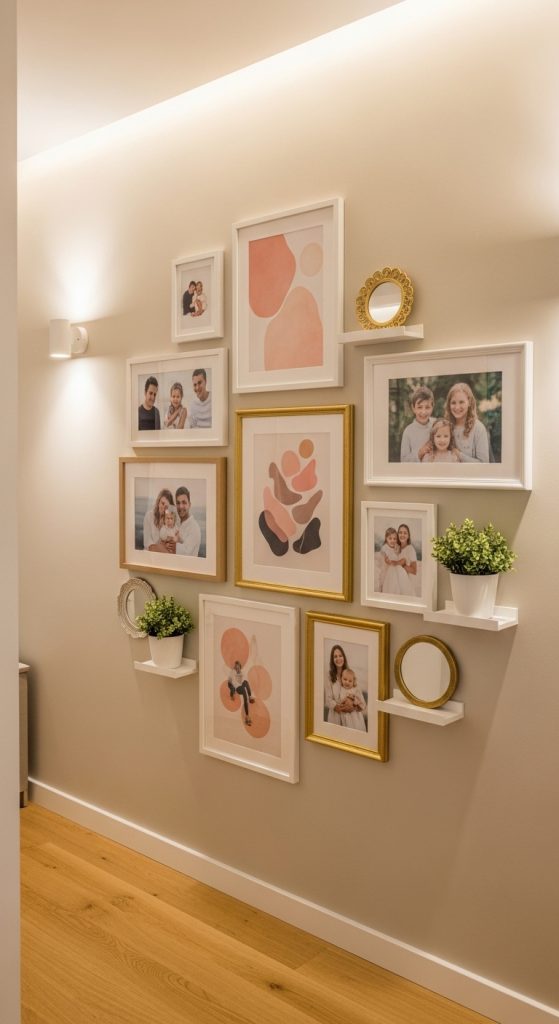
A gallery wall is one of the most impactful ways to personalize a hallway and make it visually captivating. Hallways are transitional spaces, which means people pass through them quickly. However, a thoughtfully curated gallery wall can turn this fleeting walk into a moment of inspiration. By arranging artwork, photos, and decorative pieces along a hallway wall, you can create a focal point that reflects your personality and style. Whether you prefer family photos, abstract prints, or a mix of mirrors and framed quotes, a gallery wall adds depth, color, and interest without taking up floor space.
Explanation:
Gallery walls are versatile and adaptable to any hallway size or shape. They allow homeowners to experiment with symmetry, layout patterns, and color schemes. A cohesive theme—like black-and-white photography or botanical prints—creates visual harmony, while a mix-and-match approach conveys an eclectic, artistic vibe. Adding small shelves or shadow boxes can further enhance the look and provide space for small decorative objects.
Step-by-Step How-To:
- Select Your Wall: Choose a prominent hallway wall with enough height for the display.
- Pick Your Artwork: Choose 6–12 pieces based on a theme, color palette, or varying sizes.
- Plan the Layout: Lay pieces on the floor first or use paper cutouts on the wall to visualize arrangement.
- Start Hanging: Begin with the central piece and work outward, keeping consistent spacing.
- Add Finishing Touches: Integrate small shelves, wall sconces, or accent mirrors to complete the gallery.
Materials Needed:
- Picture frames (varied sizes/styles)
- Wall hooks or nails
- Tape measure & level
- Artwork, prints, photos, or decorative objects
- Optional: small floating shelves
A gallery wall transforms a plain hallway into an artful passage that feels curated and personal, making every walk through it an aesthetic experience.
Idea 2: Add Functional Console Tables
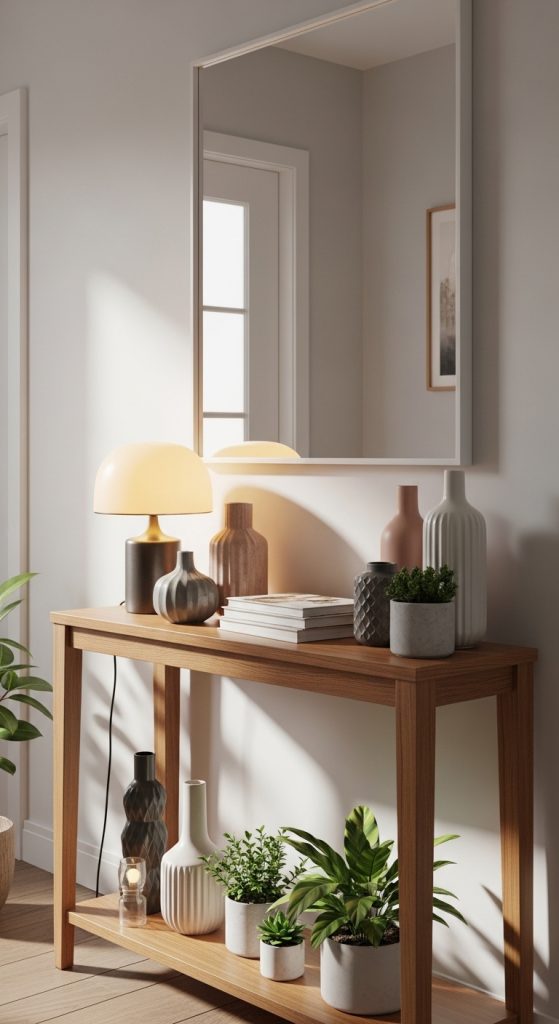
Console tables are both practical and stylish, providing storage and display options for hallways. A narrow table can hold keys, mail, or decorative objects while adding elegance and sophistication to a corridor. With the right styling, a console table serves as a welcoming focal point at the entrance or along a long hallway, combining utility with décor.
Explanation:
Console tables are ideal for small spaces because they are narrow yet functional. They can complement wall decor, hold decorative vases, lamps, or trays, and even support storage baskets underneath. Choosing the right style—modern, rustic, or minimalist—enhances the hallway’s character. A well-styled console table not only looks appealing but also prevents clutter, keeping your hallway organized.
Step-by-Step How-To:
- Measure the Hallway: Ensure the table fits comfortably without obstructing traffic flow.
- Select Your Table: Choose a design that complements your hallway’s style.
- Position the Table: Place against the wall, leaving enough space for walking.
- Style the Table: Add a lamp, decorative objects, a small plant, or framed photos.
- Organize Storage: Use baskets or trays underneath for shoes, mail, or essentials.
Materials Needed:
- Console table (narrow width)
- Table lamp or small accent lighting
- Decorative objects (vases, sculptures, books)
- Storage baskets or trays
- Wall decor (mirror or artwork above table)
A console table is perfect for combining practicality with design. It keeps your hallway tidy while creating a visually appealing focal point that’s both stylish and functional.
Idea 3: Install Statement Lighting
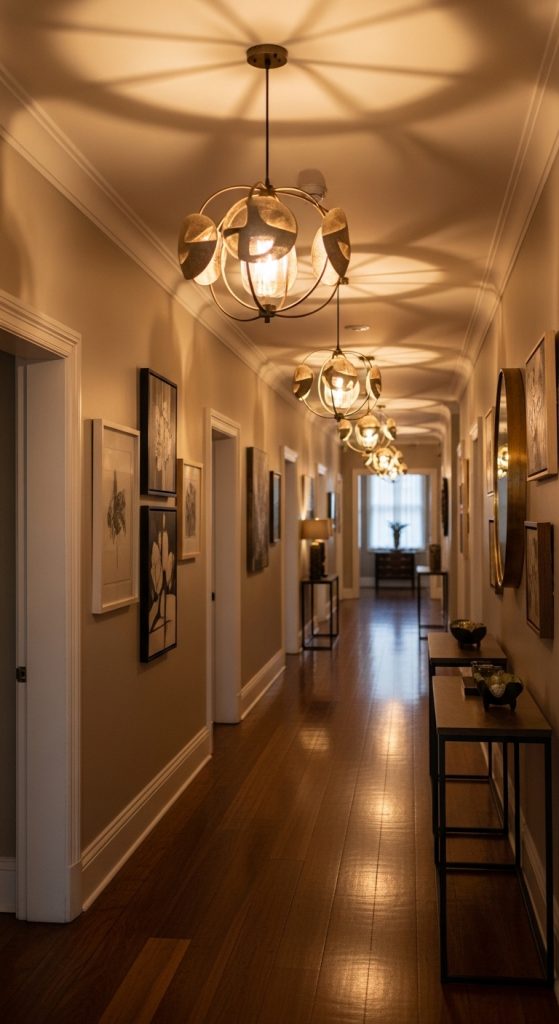
Lighting transforms a hallway from dull to dramatic. Statement lighting fixtures like chandeliers, pendant lights, or modern wall sconces can make a hallway feel bright, spacious, and inviting. Well-chosen lighting not only illuminates the space but also serves as a decorative element that complements your overall design theme.
Explanation:
Hallway lighting sets the mood and enhances architectural details. Layered lighting, combining overhead and accent sources, adds depth and dimension. Modern LED lights or warm-toned pendants can create a cozy ambiance, while bold fixtures act as artful statements. Proper lighting highlights artwork, furniture, and décor elements, elevating the hallway’s aesthetic without overwhelming the space.
Step-by-Step How-To:
- Assess Lighting Needs: Measure hallway length and ceiling height to determine fixture size.
- Select Fixture Style: Choose lighting that complements your décor style.
- Install Overhead Lighting: Ensure even illumination along the hallway.
- Add Accent Lights: Use wall sconces or LED strips to highlight artwork or architectural features.
- Test Ambiance: Adjust brightness and color temperature to create the desired mood.
Materials Needed:
- Overhead light fixture (chandelier, pendant, or flush mount)
- Wall sconces or LED accent lights
- Electrical wiring & installation tools
- Dimmer switch (optional)
- Decorative bulbs
Statement lighting elevates a hallway from functional to stylish, creating a welcoming, visually striking passageway.
Idea 4: Use Mirrors to Expand Space
Mirrors are a powerful hallway design tool, creating the illusion of more space and reflecting light to brighten narrow corridors. A well-placed mirror not only serves a functional purpose for quick appearance checks but also acts as a decorative feature that makes hallways feel larger and more inviting.
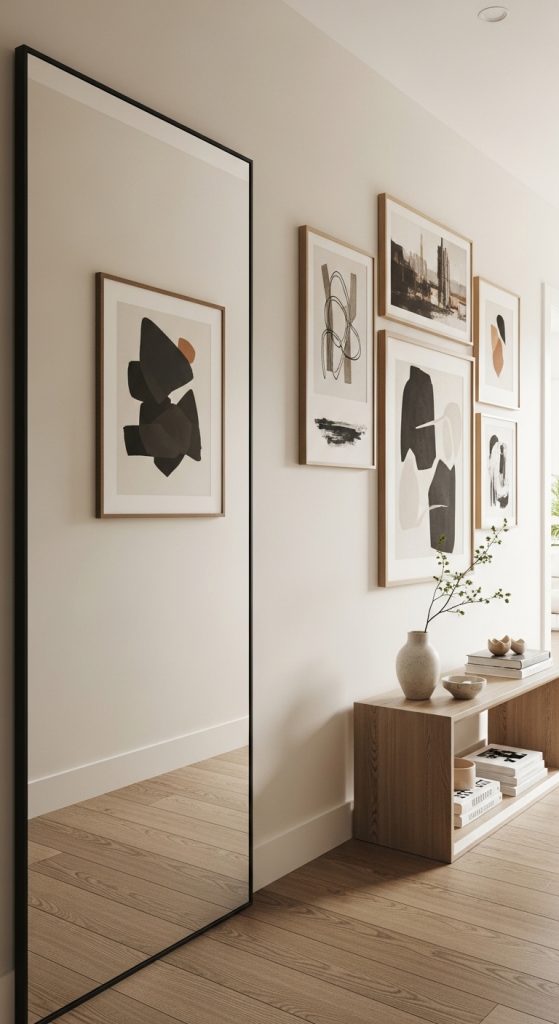
Explanation:
Mirrors enhance visual depth in small hallways and can complement any design style. Large floor mirrors, clustered wall mirrors, or framed decorative mirrors add personality while reflecting surrounding décor. Strategically placed mirrors also bounce natural light, making the space feel airy and open. Combining mirrors with console tables, rugs, or artwork amplifies the hallway’s aesthetic impact.
Step-by-Step How-To:
- Choose Mirror Type: Decide between full-length, wall-mounted, or multiple small mirrors.
- Determine Placement: Hang mirrors opposite windows or artwork to reflect light and visuals.
- Secure Properly: Use appropriate mounting hardware to ensure stability.
- Style Around Mirror: Add a console table, plants, or small decorative objects nearby.
- Maintain Cleanliness: Keep mirrors streak-free for maximum effect.
Materials Needed:
- Mirror(s) of desired size and style
- Mounting brackets, screws, or adhesive
- Level & measuring tape
- Decorative accents (optional)
Mirrors make hallways feel brighter, more spacious, and visually dynamic, creating a polished and stylish atmosphere.
Idea 5: Incorporate Area Rugs for Texture
Adding area rugs to hallways introduces warmth, color, and texture, instantly enhancing a space’s visual appeal. Rugs also define the hallway, reduce noise, and protect flooring while creating a cozy, welcoming atmosphere. Patterned or colorful rugs can serve as a focal point and tie the hallway’s design elements together.
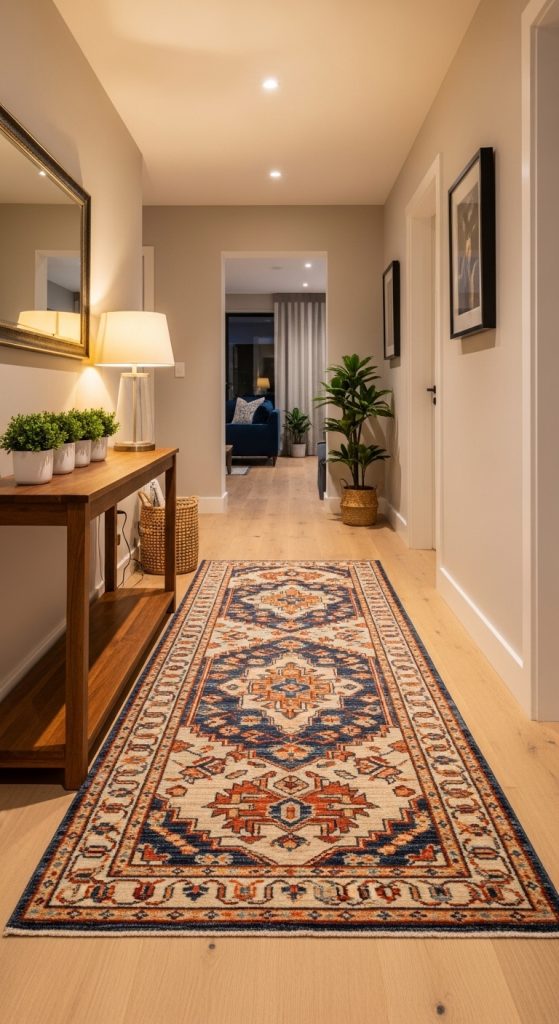
Explanation:
Rugs offer both functional and aesthetic benefits. A long runner rug elongates the hallway, creating a sense of depth, while plush textures add comfort underfoot. Choosing patterns, colors, or materials that coordinate with wall colors, furniture, and accessories ensures a cohesive look. Rugs can also soften a narrow corridor and introduce seasonal or trendy accents.
Step-by-Step How-To:
- Measure Hallway Dimensions: Select a rug slightly shorter than the hallway length.
- Choose Material: Opt for durable, stain-resistant materials suitable for high-traffic areas.
- Pick Color/Pattern: Complement wall and furniture colors for a harmonious look.
- Lay the Rug: Center the runner, leaving equal space on each side.
- Secure for Safety: Use rug pads or anti-slip tape to prevent sliding.
Materials Needed:
- Hallway runner rug (size & material based on traffic)
- Rug pad or anti-slip mat
- Optional: decorative floor accents (small baskets or planters)
A well-chosen rug adds color, comfort, and cohesion, transforming a plain hallway into a warm and inviting space that feels thoughtfully designed.
Idea 6: Install Floating Shelves for Stylish Storage
A hallway can easily become a clutter hotspot if you don’t have proper storage, but floating shelves provide a stylish, space-saving solution. These shelves attach directly to the wall, offering display and storage options without taking up floor space. They are perfect for narrow hallways where bulky furniture might feel obstructive. Floating shelves can display small decorative items, framed photos, plants, or even hold keys, mail, and other essentials, making them functional and visually appealing.
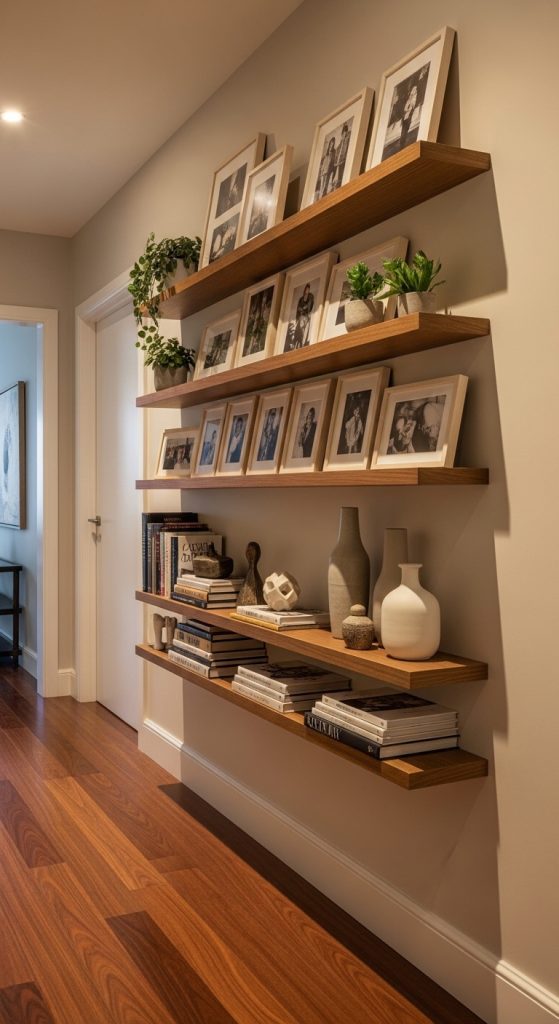
Explanation:
Floating shelves are ideal for both short and long hallways. Their clean, minimalist design ensures the hallway remains open and uncluttered while allowing you to add personality through decor. They can be arranged symmetrically for a formal look, or asymmetrically for a more dynamic, modern feel. Using a mix of materials—wood, metal, or painted finishes—can complement your hallway’s style, whether it’s rustic, contemporary, or Scandinavian.
Step-by-Step How-To:
- Measure Your Wall Space: Determine the number and length of shelves that can fit without overcrowding.
- Choose Shelf Material: Select sturdy wood, MDF, or metal depending on your style and the items you plan to display.
- Mark Placement: Use a pencil and level to mark where each shelf will go, ensuring even spacing.
- Install Brackets or Anchors: Secure brackets or wall anchors appropriate for your wall type (drywall, concrete, etc.).
- Mount Shelves: Carefully attach the shelves, making sure they are level.
- Style Your Shelves: Add decorative accents like potted plants, candles, framed photos, small sculptures, or storage baskets.
Materials Needed:
- Floating shelves (wood, metal, or MDF)
- Wall anchors or screws suitable for wall type
- Drill, level, measuring tape, and pencil
- Decorative objects (plants, photos, small sculptures, books)
- Optional baskets for additional storage
Floating shelves provide a practical yet decorative solution for hallways. By combining storage and style, they keep essentials organized while creating visual interest along the corridor.
Idea 7: Add a Statement Accent Wall
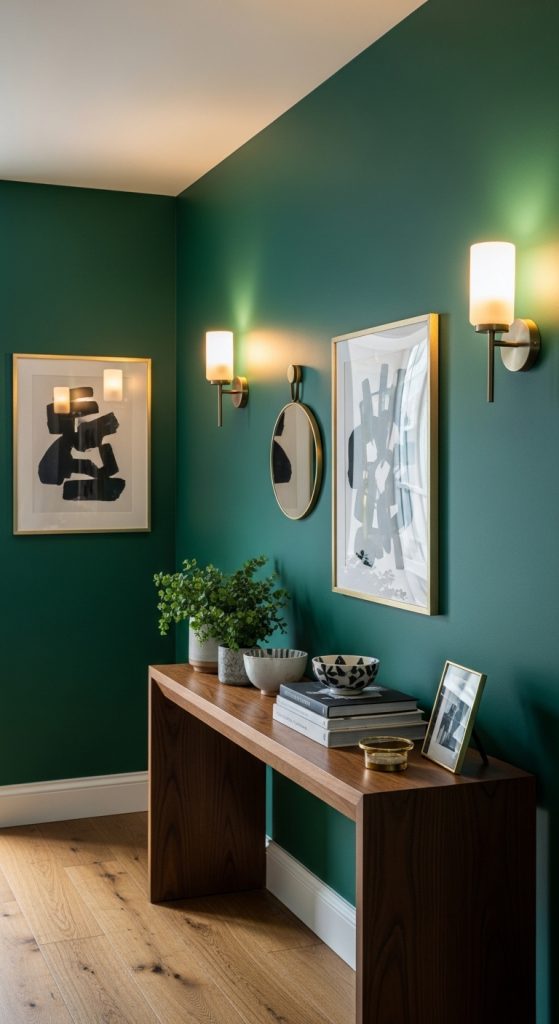
Transforming a hallway with a statement accent wall instantly creates visual intrigue. Accent walls break up monotony and allow homeowners to experiment with bold colors, wallpaper, or textures in a space that otherwise may feel narrow or plain. An accent wall can serve as the hallway’s focal point, complementing other decor elements such as lighting, mirrors, or furniture.
Explanation:
Accent walls are versatile and can be adapted to any style. For a modern look, consider matte or glossy paint in a bold color, geometric patterns, or textured panels. For a cozy, traditional vibe, wallpaper with subtle patterns, floral motifs, or textured finishes can make the space feel inviting. A well-chosen accent wall adds depth and dimension, especially in narrow hallways, creating an illusion of width or height depending on placement and pattern choice.
Step-by-Step How-To:
- Select the Wall: Usually the longest or most visible wall in the hallway works best.
- Pick Your Medium: Paint, wallpaper, wood panels, or decorative tiles.
- Prepare the Surface: Clean, sand, and prime the wall if necessary.
- Apply Paint/Wallpaper: Follow instructions carefully, ensuring smooth, even coverage.
- Add Complementary Decor: Hang artwork, mirrors, or lighting to enhance the accent wall’s impact.
- Maintain Balance: Keep the opposite walls neutral to ensure the accent wall stands out.
Materials Needed:
- Paint, wallpaper, wood panels, or decorative tiles
- Primer and painting tools (rollers, brushes, painter’s tape)
- Measuring tape, level, and pencil
- Optional: artwork, mirrors, or wall lighting for added dimension
An accent wall transforms a hallway from simple to striking, providing a bold design statement that draws attention while enhancing the space’s aesthetic.
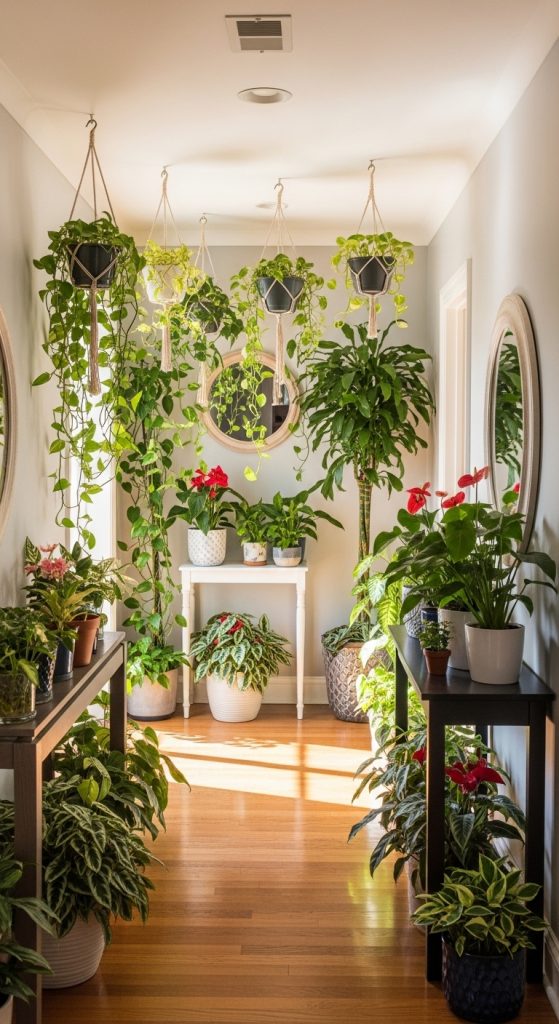
Idea 8: Incorporate Indoor Plants
Indoor plants breathe life into any hallway, adding color, texture, and freshness. A hallway with greenery feels inviting and connected to nature, even in small urban apartments. Plants also improve air quality, reduce stress, and create a calming atmosphere. Whether you use floor plants, hanging planters, or small tabletop arrangements, greenery is a versatile decor solution suitable for any hallway style.
Explanation:
Plants can be used strategically to fill empty corners, line a narrow hallway, or decorate shelves and console tables. Low-light tolerant plants like snake plants, pothos, or ZZ plants are ideal for hallways with minimal natural light. Hanging planters or wall-mounted plant holders save floor space while adding a vertical design element. Grouping plants of varying heights and textures creates visual interest and a natural flow.
Step-by-Step How-To:
- Assess Light Conditions: Determine how much natural light your hallway receives.
- Choose Plants: Select low-maintenance plants suited to your lighting conditions.
- Select Containers: Use pots, planters, or hanging holders that complement your hallway style.
- Arrange Plants Strategically: Place taller plants at the end of the hallway, smaller ones along shelves or tables.
- Maintain Plants: Water according to each plant’s needs and ensure proper drainage.
- Enhance Decor: Add decorative trays, pebbles, or plant stands for extra visual appeal.
Materials Needed:
- Indoor plants suitable for light conditions
- Pots or planters (ceramic, terracotta, or hanging planters)
- Potting soil and drainage materials
- Optional plant accessories (stands, trays, decorative stones)
Indoor plants transform hallways into vibrant, life-filled spaces. They bring warmth, color, and texture while making the corridor feel welcoming and refreshing.
Idea 9: Use Creative Wall Hooks
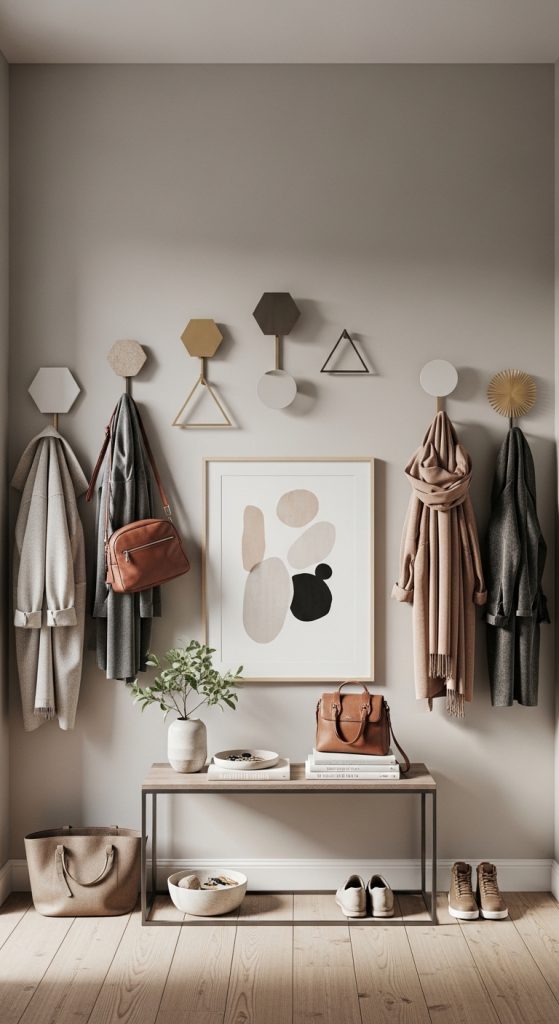
Wall hooks are a practical and decorative hallway solution. They help organize coats, hats, bags, scarves, or keys while adding a design element to the corridor. Creative hooks in interesting shapes, colors, or materials can double as wall art, making functionality part of the decor.
Explanation:
Wall hooks are perfect for small hallways where floor space is limited. Grouping hooks in patterns, staggered arrangements, or along a single row can create both organization and visual interest. Materials like brass, wood, or ceramic allow customization to suit modern, rustic, or eclectic aesthetics. Hooks can also work alongside a bench, console table, or shelf to complete a functional entryway setup.
Step-by-Step How-To:
- Determine Placement: Decide where hooks are needed—by the entrance, along the hallway, or near a console table.
- Choose Hooks: Select materials, styles, and shapes that complement your design theme.
- Mark and Mount Hooks: Use a level and measuring tape for even spacing.
- Organize Items: Hang coats, bags, hats, and accessories in an organized manner.
- Combine With Decor: Pair hooks with mirrors, small shelves, or framed art to enhance visual appeal.
Materials Needed:
- Wall hooks (metal, wood, or decorative materials)
- Screws, wall anchors, and mounting tools
- Level and measuring tape
- Optional: complementary decor like mirrors or shelves
Creative wall hooks turn a functional necessity into an opportunity for design, keeping your hallway organized and visually appealing.
Idea 10: Layer with Textiles and Rugs
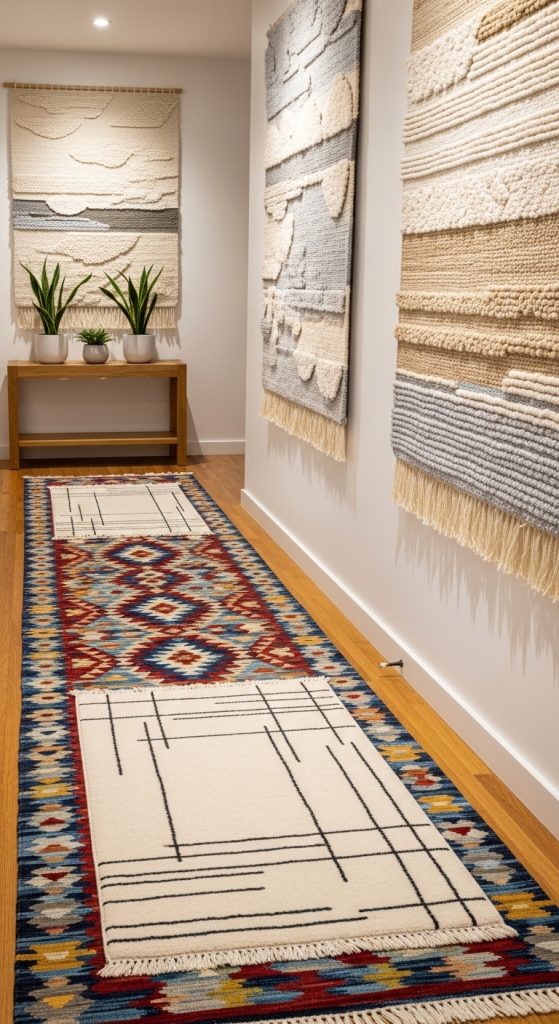
Textiles like runners, rugs, and wall hangings enhance warmth and texture in hallways. They not only make the corridor feel cozy but also reduce noise, define pathways, and bring color or patterns into the space. Layering textiles strategically transforms an ordinary hallway into a sophisticated and inviting area.
Explanation:
A long runner rug helps elongate a hallway while adding comfort underfoot. Wall hangings, tapestries, or fabric panels introduce texture and dimension without cluttering the space. Mixing materials like wool, cotton, jute, or silk can create layered visual interest. Coordinating textiles with wall colors, furniture, and lighting ensures a cohesive and elegant look.
Step-by-Step How-To:
- Measure Hallway Dimensions: Choose a runner rug that fits lengthwise with some space at ends.
- Select Materials and Colors: Pick fabrics that complement your existing hallway palette and style.
- Layer Rugs: Consider layering smaller rugs over a long runner for added texture and interest.
- Add Wall Textiles: Hang tapestries or decorative fabric panels to enhance vertical space.
- Maintain Cleanliness: Regularly vacuum or spot-clean rugs to keep hallway inviting.
Materials Needed:
- Runner rug(s) suitable for hallway dimensions
- Wall hangings or fabric panels
- Non-slip rug pads or anti-slip tape
- Optional decorative accents (pillows on benches or small cushions)
Layering textiles adds warmth, comfort, and sophistication. With rugs and wall fabrics, hallways become visually rich, cozy, and welcoming spaces.