
Basements are often one of the most underutilized areas in a home, frequently left unfinished, cluttered, or used only for storage. However, in 2026, homeowners are reimagining basements as functional, stylish, and modern living spaces that add both comfort and value to their homes. With the right design approach, a basement can be transformed into anything from a cozy family lounge to a sleek entertainment area or even a productive home office. Modern basement decor focuses on maximizing space, enhancing lighting, and creating a warm, inviting atmosphere that feels just as beautiful as the rest of the house.
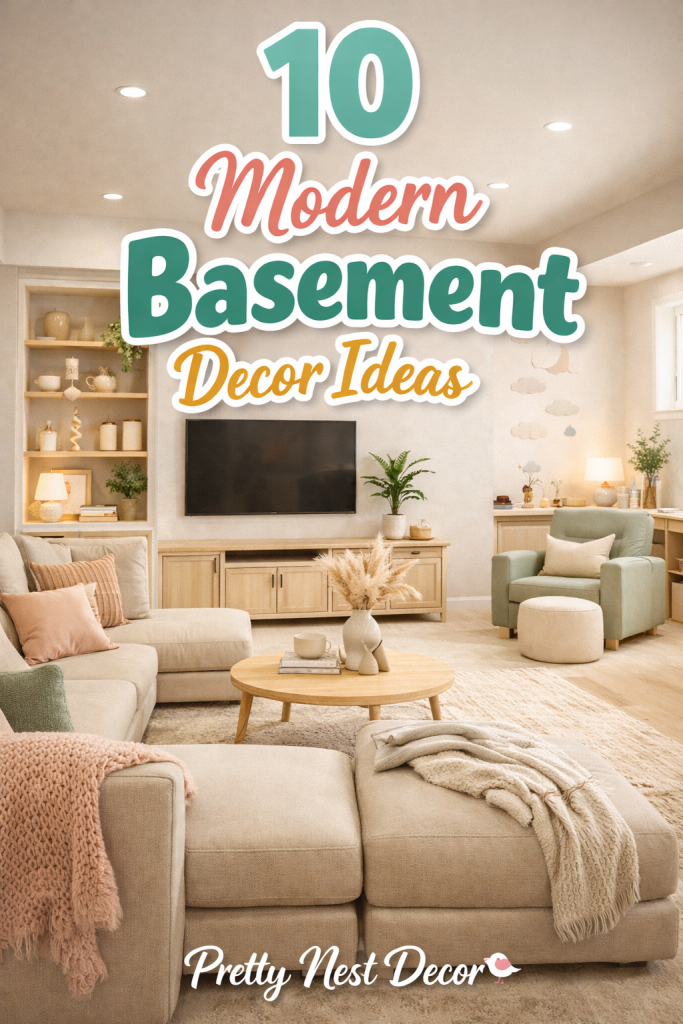
One of the biggest challenges with basement design is overcoming the natural limitations of the space. Basements often have low ceilings, limited natural light, and cooler temperatures, which can make them feel dark or uninviting. However, modern design trends in 2026 are all about turning these challenges into opportunities. By using smart lighting, light color palettes, and carefully selected decor, you can create a basement that feels bright, open, and welcoming. The key is to approach the space with intention and creativity, ensuring every element contributes to a cohesive and comfortable design.
Modern basement decor emphasizes clean lines, simplicity, and functionality. Instead of overcrowding the space with furniture or decor, the focus is on selecting pieces that serve both practical and aesthetic purposes. Multi-functional furniture, such as storage ottomans, modular sofas, and foldable tables, is especially popular in basement designs. These pieces help maximize space while maintaining a sleek and organized look. A modern basement is not just about appearance—it’s about creating a space that works for your lifestyle.
Lighting plays a crucial role in transforming a basement. Since natural light is often limited, incorporating layered lighting is essential. This includes a combination of overhead lights, floor lamps, wall sconces, and accent lighting to create depth and warmth. In 2026, LED lighting and smart lighting systems are widely used to enhance both functionality and ambiance. Soft, warm lighting can make the basement feel cozy and inviting, while brighter lights can be used for work or activity areas. Thoughtful lighting design can completely change the mood of the space, making it feel more like a main living area rather than a secondary one.
Color selection is another important factor in modern basement decor. Light and neutral tones such as white, beige, soft gray, and warm taupe are commonly used to make the space feel larger and brighter. These colors reflect light and create a sense of openness, which is especially important in basements. In 2026, there is also a growing trend of adding subtle accent colors—such as deep blues, forest greens, or muted terracotta—to create contrast and personality without overwhelming the space. The goal is to strike a balance between brightness and warmth, ensuring the basement feels both modern and comfortable.
Texture and materials play a significant role in adding depth and character to a basement. Since basements can sometimes feel cold or flat, incorporating soft textiles and natural materials helps create a cozy atmosphere. Rugs, cushions, throws, and upholstered furniture add warmth and comfort, while materials like wood, metal, and stone bring a modern edge to the design. Layering different textures is a key trend in 2026, as it adds visual interest without cluttering the space.
Another important aspect of modern basement decor is zoning. Instead of treating the basement as one large, undefined area, it’s more effective to divide it into functional zones. For example, you might create a lounge area for relaxation, a workspace for productivity, and a play area for children. This approach makes the space more organized and ensures that each part of the basement serves a clear purpose. Zoning also helps make the basement feel more like a complete living area, rather than just an extension of the house.
Storage is essential in maintaining a clean and modern basement. Because basements are often used for multiple purposes, it’s important to keep clutter under control. Built-in shelves, hidden storage units, and stylish cabinets are popular choices in 2026. These solutions allow you to store items efficiently while maintaining a sleek and organized appearance. A well-organized basement not only looks better but also feels more functional and enjoyable to use.
Personalization is what truly brings a basement to life. While modern design emphasizes simplicity, it also allows room for unique and meaningful touches. This could include artwork, decorative accents, or themed areas that reflect your interests and lifestyle. Whether you want a cozy movie room, a stylish bar area, or a creative workspace, adding personal elements ensures the space feels authentic and inviting. The key is to incorporate these details thoughtfully, so they enhance the design rather than overwhelm it.
In 2026, basements are no longer just extra space—they are becoming multi-functional hubs that adapt to modern living needs. With more people working from home and spending time indoors, having a well-designed basement can significantly improve your quality of life. It can serve as a place to relax, entertain, work, or spend time with family, making it one of the most valuable areas in your home.
This article will explore 10 modern basement decor ideas that will help you transform your space into something truly special. Each idea is designed to be practical, stylish, and easy to implement, even for beginners. From cozy lounge setups and minimalist designs to entertainment zones and creative layouts, these ideas will provide inspiration and guidance for every type of basement.
Whether you’re starting from scratch or looking to upgrade your existing space, these ideas will help you create a basement that is modern, functional, and Pinterest-worthy. With the right approach, your basement can become one of the most beautiful and enjoyable areas of your home.
Get ready to unlock the full potential of your basement and turn it into a space that reflects your style, meets your needs, and enhances your everyday living experience. ✨
Idea 1: Cozy Modern Basement Lounge
Introduction
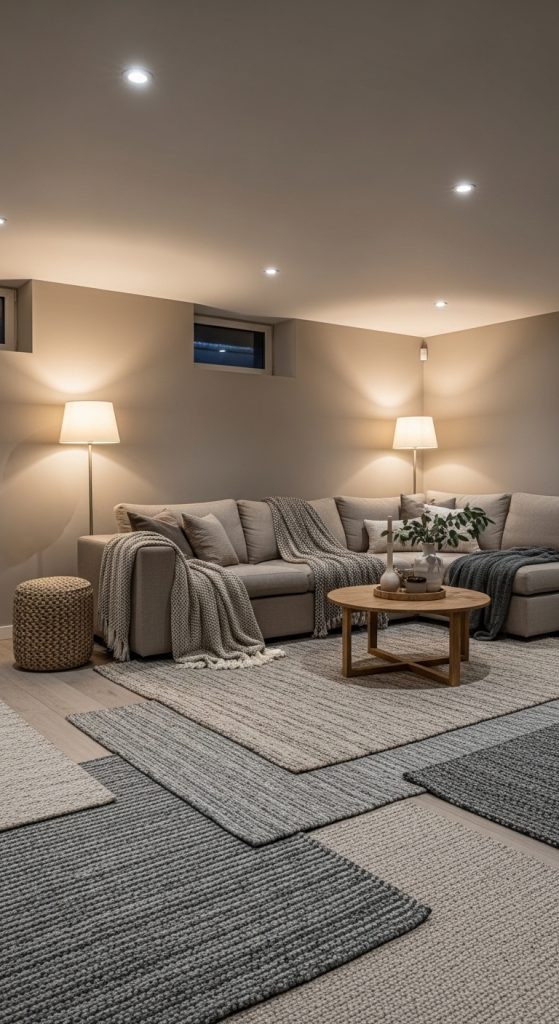
A cozy modern basement lounge is one of the most popular ways to transform an unused basement into a welcoming and functional living space. In 2026, homeowners are focusing on creating comfortable environments that feel just as inviting as their main living rooms. Since basements naturally feel cooler and darker, designing a cozy lounge helps counterbalance those characteristics. This idea revolves around soft textures, warm lighting, and comfortable seating that encourages relaxation and socializing. Whether you’re watching movies, spending time with family, or simply unwinding after a long day, a well-designed lounge can become your favorite spot in the house. The key is to blend modern design elements—like clean lines and neutral tones—with cozy touches such as plush rugs, throw blankets, and layered lighting.
Definition/Explanation:
A basement lounge is a relaxed seating area designed for comfort, featuring sofas, soft lighting, and decor that creates a warm, inviting atmosphere.
Step-by-Step How-to:
- Choose Comfortable Seating – Opt for a sectional sofa or cozy armchairs.
- Add Soft Textures – Include rugs, cushions, and blankets.
- Use Warm Lighting – Combine floor lamps and soft LED lights.
- Select Neutral Colors – Keep palette light and calming.
- Incorporate a Coffee Table – For functionality and style.
- Add Wall Decor – Minimal art or framed prints.
- Keep Layout Open – Avoid overcrowding the space.
Materials/Things Needed:
- Sofa or sectional
- Rugs and cushions
- Lighting fixtures
- Coffee table
- Wall decor
Idea 2: Modern Basement Home Theater
Introduction
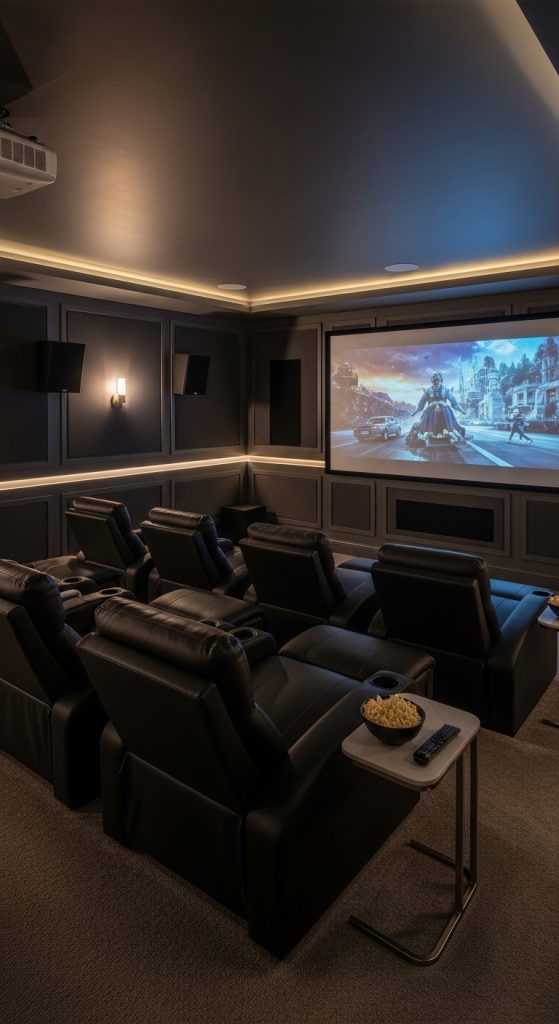
A modern basement home theater is a dream setup for movie lovers and entertainment enthusiasts. Basements are naturally suited for theater spaces because they are darker and quieter than other parts of the home. In 2026, home theaters are becoming more accessible, with advanced technology and stylish design options available at various budgets. This idea focuses on creating an immersive viewing experience while maintaining a sleek, modern aesthetic. From comfortable seating to high-quality sound systems, every element contributes to the overall experience. A modern home theater doesn’t have to be overly complex—it can be designed with simplicity and functionality in mind while still delivering a cinematic feel.
Definition/Explanation:
A basement home theater is a dedicated entertainment space designed for watching movies or shows, featuring a screen, sound system, and comfortable seating.
Step-by-Step How-to:
- Choose Screen Type – TV or projector setup.
- Install Sound System – Surround sound for better experience.
- Select Comfortable Seating – Recliners or sofas.
- Control Lighting – Use dimmable or blackout lighting.
- Add Acoustic Panels – Improve sound quality.
- Organize Wiring – Keep cables hidden.
- Decorate Minimally – Focus on functionality.
Materials/Things Needed:
- TV or projector
- Sound system
- Seating furniture
- Lighting controls
- Acoustic panels
Idea 3: Minimalist Basement Workspace
Introduction
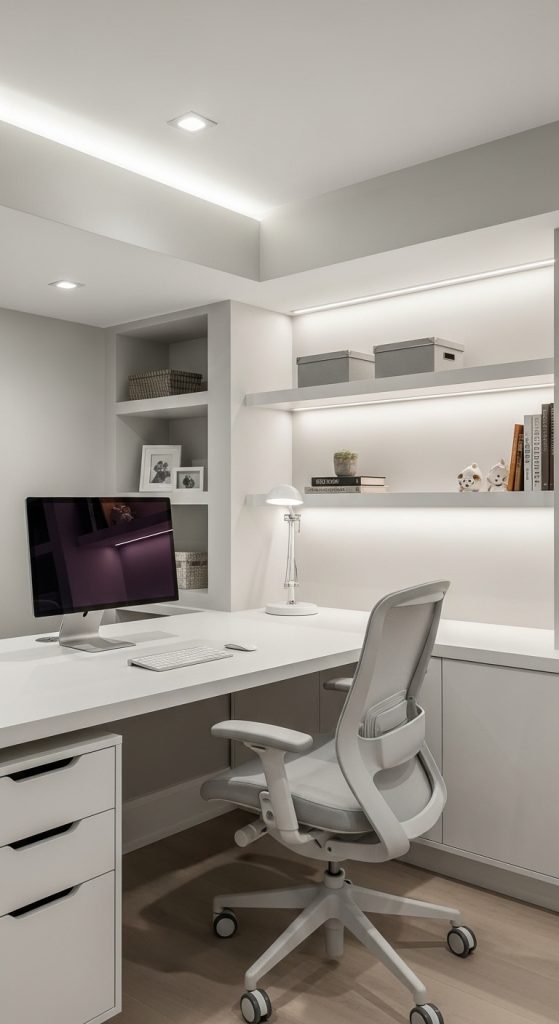
A minimalist basement workspace is perfect for those who need a quiet, distraction-free area for productivity. With remote work continuing to grow in 2026, creating a dedicated workspace at home has become essential. Basements offer a secluded environment, making them ideal for focus and concentration. This design emphasizes simplicity, organization, and functionality. By keeping the space clean and uncluttered, you can create a work environment that enhances efficiency and reduces stress. A minimalist workspace doesn’t mean boring—it means intentional design with only the essentials. With the right setup, your basement can become a productive and inspiring place to work.
Definition/Explanation:
A minimalist workspace is a clean, organized area designed for productivity, featuring essential furniture and minimal distractions.
Step-by-Step How-to:
- Choose Desk and Chair – Ergonomic and simple design.
- Keep Layout Clean – Avoid unnecessary items.
- Add Task Lighting – Bright light for work.
- Use Storage Solutions – Keep documents organized.
- Incorporate Neutral Colors – Promote focus.
- Add Personal Touch – Minimal decor for inspiration.
- Maintain Cleanliness – Regularly declutter.
Materials/Things Needed:
- Desk and chair
- Storage units
- Lighting
- Office supplies
- Minimal decor
Idea 4: Basement Bar and Entertainment Area
Introduction
A modern basement bar and entertainment area is perfect for hosting guests and creating a lively social space. In 2026, home entertainment areas are becoming increasingly stylish and functional, allowing homeowners to enjoy gatherings without leaving their homes. A basement bar can range from a simple setup with a counter and stools to a fully equipped entertainment hub. This idea focuses on combining modern design with practical features to create a space that feels both fun and sophisticated. With the right lighting, seating, and decor, your basement can become the ultimate hangout spot for friends and family.
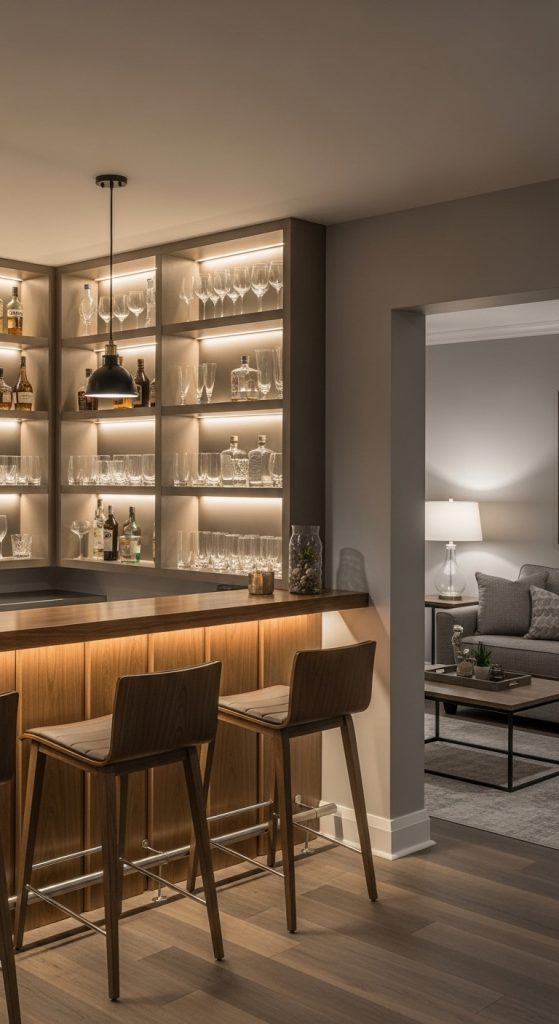
Definition/Explanation:
A basement bar is a designated area for serving drinks and entertaining guests, often combined with seating and social space.
Step-by-Step How-to:
- Install Bar Counter – Choose durable material.
- Add Seating – Use stylish bar stools.
- Include Storage – Shelves for glasses and bottles.
- Use Accent Lighting – Highlight bar area.
- Add Decor – Keep modern and minimal.
- Create Seating Area – For socializing.
- Maintain Organization – Keep space tidy.
Materials/Things Needed:
- Bar counter
- Bar stools
- Shelving
- Lighting
- Decor items
Idea 5: Family-Friendly Basement Play Area
Introduction
A family-friendly basement play area is a practical and fun way to utilize your basement space, especially for households with children. In 2026, parents are focusing on creating safe, engaging environments where kids can play, learn, and explore. A basement play area keeps toys and activities organized while giving children a dedicated space to enjoy themselves. This design combines functionality with creativity, ensuring the area is both enjoyable and easy to maintain. With the right setup, it can also grow with your children, adapting to their changing needs over time.
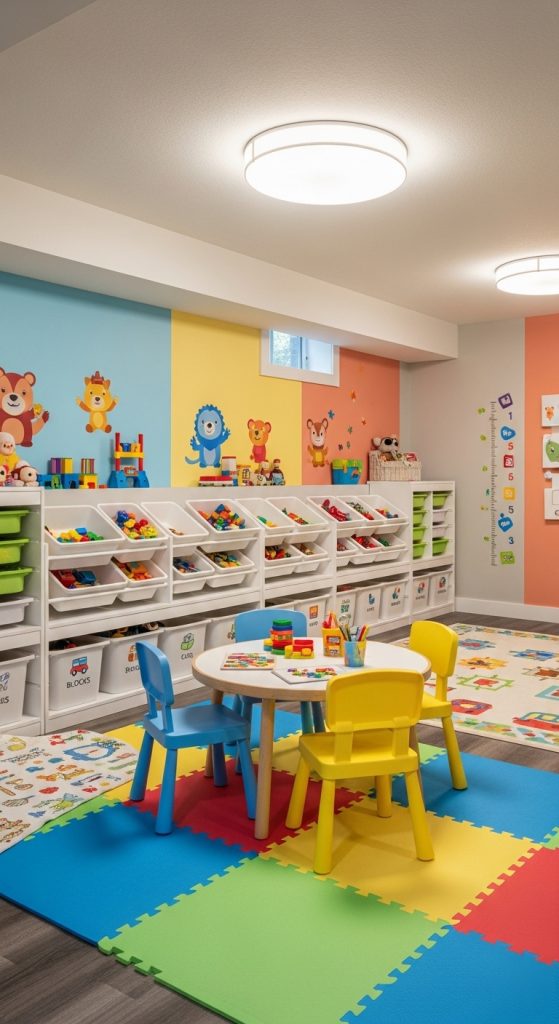
Definition/Explanation:
A basement play area is a designated space for children’s activities, designed to be safe, organized, and engaging.
Step-by-Step How-to:
- Define Play Zone – Allocate specific area.
- Add Soft Flooring – Use rugs or foam mats.
- Include Storage – Organize toys in bins.
- Add Activity Furniture – Small tables or chairs.
- Use Bright Accents – Keep space lively.
- Ensure Safety – Secure furniture and edges.
- Maintain Cleanliness – Regularly organize toys.
Materials/Things Needed:
- Foam mats or rugs
- Storage bins
- Kids furniture
- Decorative items
- Safety accessories
Idea 6: Modern Basement Guest Bedroom
Introduction
A modern basement guest bedroom is one of the most practical and valuable upgrades you can make to your home. In 2026, homeowners are transforming basements into comfortable, hotel-like spaces that offer privacy and relaxation for guests. Since basements are naturally quieter and more secluded, they provide the perfect setting for a cozy sleeping area. The key challenge is to ensure the room doesn’t feel dark or confined. This can be solved with smart lighting, light color palettes, and carefully chosen furniture. A well-designed guest bedroom should feel welcoming, clean, and stylish while still maintaining a modern aesthetic. By focusing on comfort, functionality, and subtle decor, you can create a space where guests feel at home.
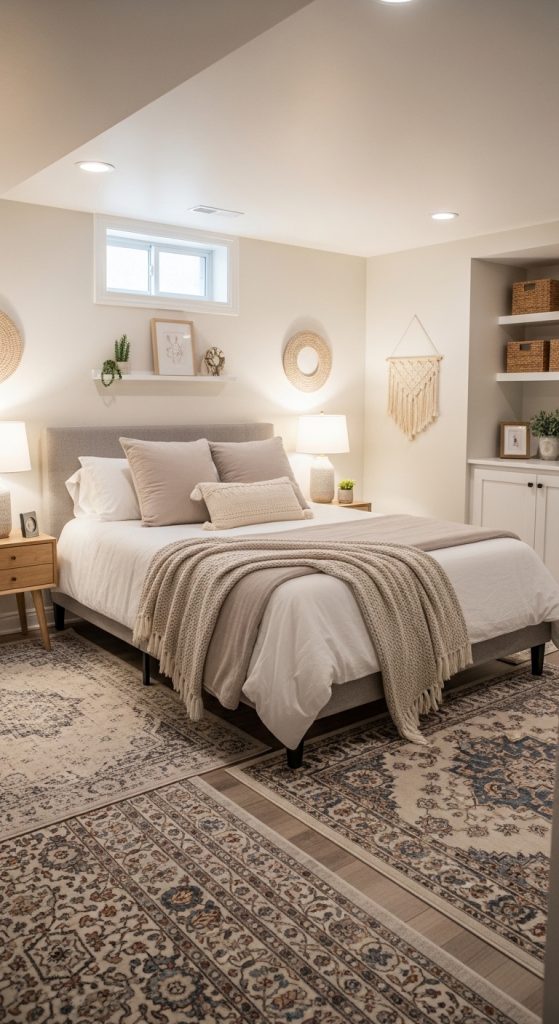
Definition/Explanation:
A basement guest bedroom is a dedicated sleeping space designed for visitors, combining comfort, privacy, and modern decor elements.
Step-by-Step How-to:
- Choose Light Color Palette – Use whites, creams, or soft grays to brighten the room.
- Select Comfortable Bed – Invest in a quality mattress and simple bed frame.
- Add Layered Lighting – Use ceiling lights, bedside lamps, and soft accent lighting.
- Incorporate Storage – Add a small dresser or closet space for guests.
- Use Cozy Textiles – Include soft bedding, blankets, and cushions.
- Add Minimal Decor – Keep wall art simple and calming.
- Ensure Ventilation – Use fans or dehumidifiers if needed.
Materials/Things Needed:
- Bed and mattress
- Bedding and pillows
- Lighting fixtures
- Storage furniture
- Neutral decor items
Idea 7: Industrial Style Basement Design
Introduction
An industrial-style basement is a bold and modern design choice that embraces raw, unfinished elements. In 2026, industrial decor continues to trend for its edgy and urban aesthetic. Basements are naturally suited for this style because they often feature exposed pipes, concrete walls, and structural elements that can be turned into design features rather than hidden. This approach celebrates materials like metal, wood, and brick, creating a space that feels both rugged and stylish. The industrial look is perfect for those who prefer a more masculine, modern, or loft-inspired vibe. With the right balance of textures and lighting, you can transform your basement into a unique and visually striking space.
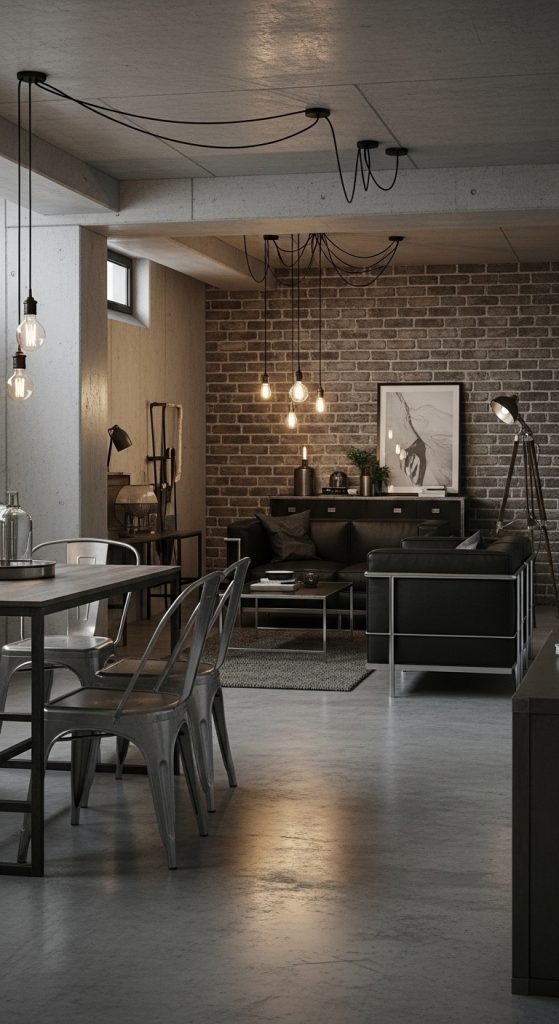
Definition/Explanation:
Industrial basement decor highlights raw materials and structural elements, combining them with modern furniture for a stylish, urban look.
Step-by-Step How-to:
- Expose Structural Elements – Highlight pipes or beams if safe.
- Use Neutral Dark Tones – Grays, blacks, and browns.
- Incorporate Metal and Wood – Furniture and decor pieces.
- Add Industrial Lighting – Pendant lights or exposed bulbs.
- Keep Furniture Minimal – Avoid clutter.
- Use Textures – Combine rough and smooth materials.
- Balance with Warm Elements – Add rugs or cushions for comfort.
Materials/Things Needed:
- Metal and wood furniture
- Industrial lighting fixtures
- Rugs and textiles
- Concrete or brick finishes
- Minimal decor
Idea 8: Bright and Airy Basement Design
Introduction
A bright and airy basement design focuses on overcoming the common issue of dark and enclosed spaces. In 2026, homeowners are prioritizing light-filled interiors that feel open and refreshing, even in basements. This idea is all about maximizing brightness through color, lighting, and layout. By using light tones, reflective surfaces, and strategic lighting placement, you can completely transform the feel of your basement. The goal is to create a space that feels as open and inviting as any main-level room. This design is perfect for those who want a clean, modern look that feels uplifting and spacious.
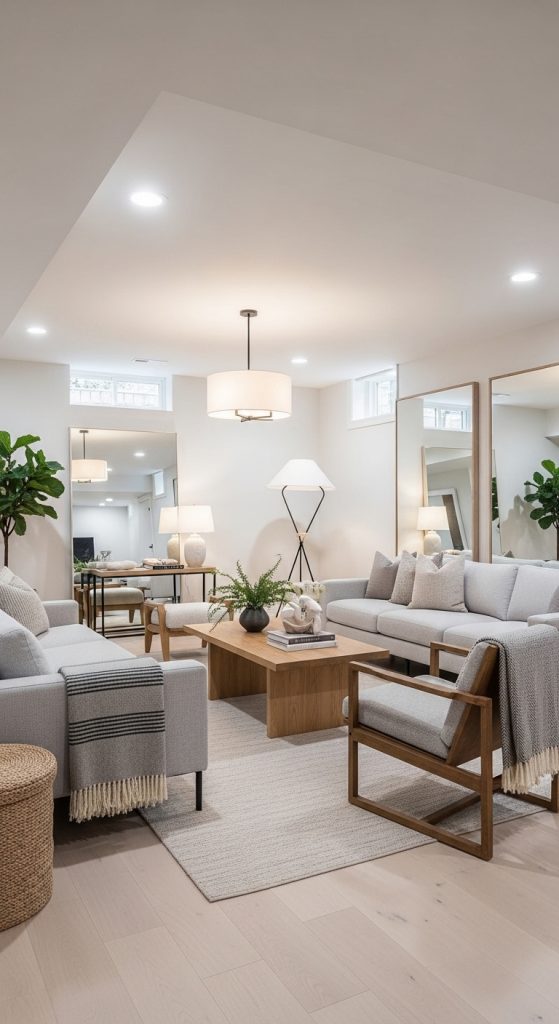
Definition/Explanation:
A bright and airy basement uses light colors, reflective materials, and layered lighting to create an open and spacious atmosphere.
Step-by-Step How-to:
- Paint Walls Light Colors – White or soft neutrals.
- Use Reflective Surfaces – Mirrors or glossy finishes.
- Install Bright Lighting – Layered LED lights.
- Keep Furniture Light – Choose light-colored pieces.
- Minimize Clutter – Maintain open space.
- Use Sheer Curtains – If windows are present.
- Add Subtle Decor – Keep design simple.
Materials/Things Needed:
- Light paint
- Mirrors
- LED lighting
- Light furniture
- Minimal decor
Idea 9: Basement Gym Setup
Introduction
A modern basement gym is a practical and motivating addition to your home. In 2026, home fitness spaces are more popular than ever, allowing people to stay active without leaving their homes. Basements provide an ideal location for a gym because they offer privacy and enough space for equipment. Designing a modern gym involves more than just placing machines—it requires thoughtful layout, proper lighting, and a motivating atmosphere. With the right setup, your basement gym can feel professional, organized, and inspiring. This idea is perfect for those who want to prioritize health and fitness while making the most of their space.
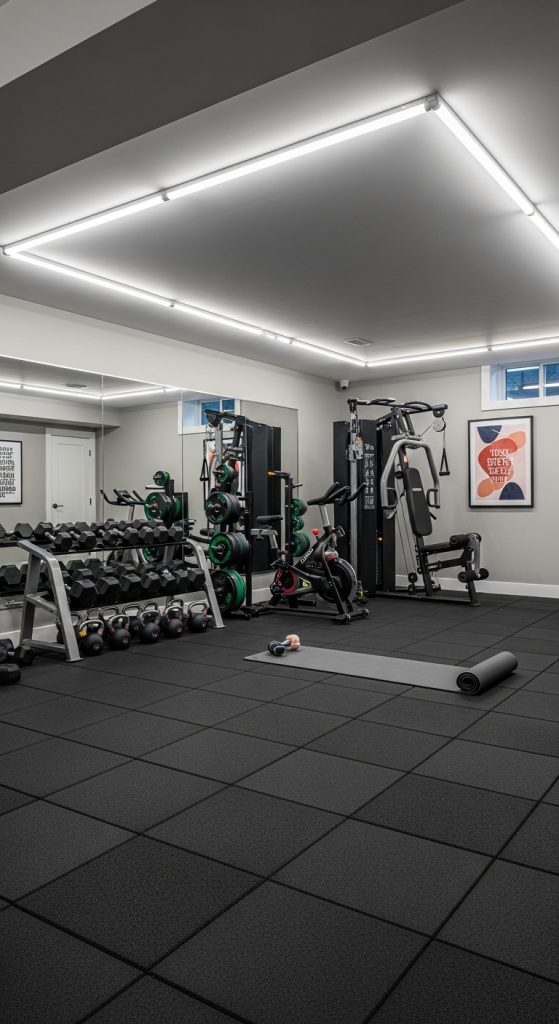
Definition/Explanation:
A basement gym is a dedicated fitness area designed with equipment, flooring, and layout that supports exercise and movement.
Step-by-Step How-to:
- Choose Workout Area – Allocate enough space.
- Install Proper Flooring – Use rubber mats for safety.
- Add Equipment – Dumbbells, treadmill, or yoga mats.
- Use Bright Lighting – Keep space energizing.
- Add Mirrors – Improve visibility and motivation.
- Ensure Ventilation – Keep air fresh.
- Organize Equipment – Use racks or storage.
Materials/Things Needed:
- Gym equipment
- Rubber flooring
- Mirrors
- Lighting
- Storage racks
Idea 10: Multi-Purpose Basement Living Space
Introduction
A multi-purpose basement living space is the ultimate solution for maximizing functionality in modern homes. In 2026, flexibility is key, and homeowners are designing spaces that can adapt to multiple needs. Instead of dedicating the basement to just one purpose, this idea combines different functions—such as a lounge, workspace, and entertainment area—into one cohesive design. The challenge is to maintain organization and flow while ensuring each area serves its purpose effectively. With smart zoning, multi-functional furniture, and a consistent design style, you can create a basement that feels both spacious and versatile. This approach is perfect for families or individuals who want to make the most of every square foot.
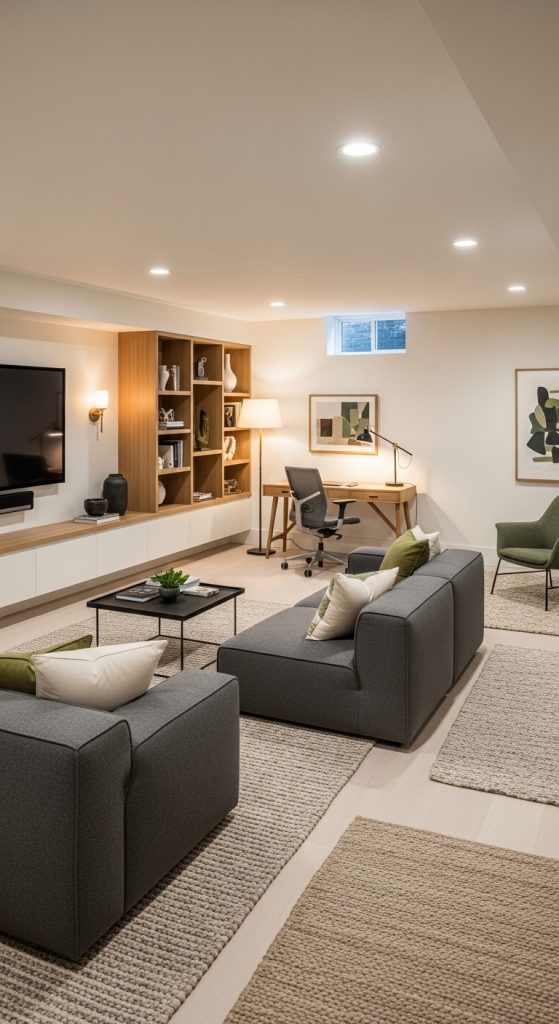
Definition/Explanation:
A multi-purpose basement integrates multiple functions into one space, using smart design to maintain organization and style.
Step-by-Step How-to:
- Divide Space into Zones – Lounge, work, and activity areas.
- Use Multi-Functional Furniture – Convertible or modular pieces.
- Maintain Consistent Design – Same color palette throughout.
- Use Rugs to Define Areas – Visually separate zones.
- Keep Layout Open – Avoid overcrowding.
- Add Storage Solutions – Keep everything organized.
- Adapt Over Time – Adjust based on needs.
Materials/Things Needed:
- Modular furniture
- Rugs
- Storage units
- Lighting
- Decor items