
Medium-length hair looks easy on the surface, but in reality, it’s one of the hardest hair lengths to manage properly. It doesn’t have the weight of long hair to naturally fall into place, and it’s not short enough to stay structured on its own. That’s why so many people with medium hair constantly feel stuck—no matter what they try, it either looks too flat, too bulky, or just… unfinished.
If your hair often feels awkward, hard to style, or different every single day, the issue is not your hair type. The issue is the haircut sitting underneath it.
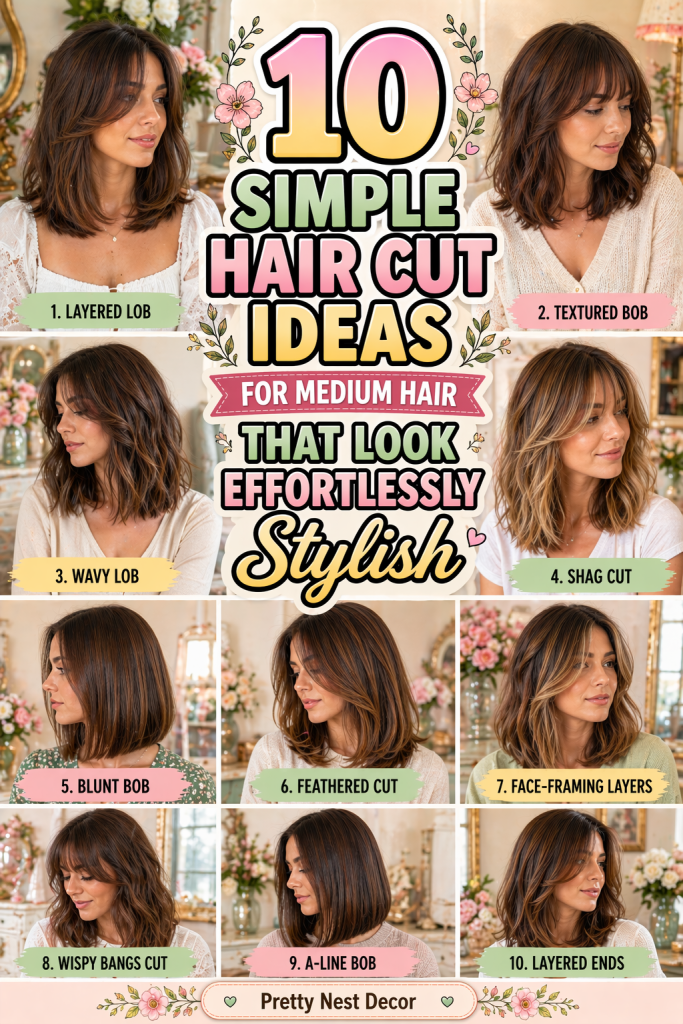
Most people make the same mistake: they choose a haircut based on how it looks in photos instead of how it behaves in real life. A style might look perfect in a salon or on Pinterest, but once you wash it at home, it becomes difficult to manage. It doesn’t fall the same way, it needs constant heat styling, or it simply loses shape within days. That’s not a good haircut—that’s a temporary look.
Medium hair needs structure. Without proper shaping, it becomes heavy at the ends, flat at the top, and unpredictable overall. You might notice your hair looking puffy on some days and completely lifeless on others. This inconsistency happens because the cut is not working with your natural texture—it’s fighting against it.
Another major problem is maintenance. If a haircut requires daily straightening, curling, or excessive product just to look presentable, it’s not realistic for most people. You don’t need a haircut that demands effort every morning. You need one that still looks good even when you don’t have time.
If you have a small room in your daily routine, your haircut should support that—not make things harder. A well-done medium haircut should fall into place naturally, require minimal touch-ups, and still look polished throughout the day.
Texture plays a huge role here, and this is where most people go wrong. Straight hair often looks flat without layers, but adding too many layers can make it appear thin and uneven. Wavy hair can become bulky if the weight is not balanced properly. Curly hair, on the other hand, can expand too much if it’s not shaped with intention. Yet many people ignore these differences and go for one generic cut, expecting it to work for everyone.
Then there’s the issue of over-layering. It sounds like a good idea—more layers, more volume—but in medium hair, too many layers can actually ruin the shape. Instead of looking full and bouncy, the hair starts to look frizzy, disconnected, and harder to control. On the flip side, keeping everything one length can make it look heavy and lifeless. The key is balance, and most people don’t get that right.
A good haircut should do most of the work for you. It should guide your hair into place, control volume where needed, and create natural movement without forcing you to style it every day. When the cut is right, even a simple brush-through can make your hair look put together.
This is exactly what you’ll learn in this guide.
These are not random haircut ideas. Each one is chosen based on practicality—how it looks after washing, how easy it is to maintain, and how well it adapts to different hair textures. You’ll understand which cuts add movement without making your hair look thin, which ones reduce bulk without flattening your style, and which options actually save you time in your daily routine.
Because the reality is simple—if your haircut makes your life harder, it’s not a good haircut. The right one should make everything easier, from styling to maintenance to overall confidence in how your hair looks every day.
1. Soft Layered Lob (Long Bob)
Explanation (What it is)
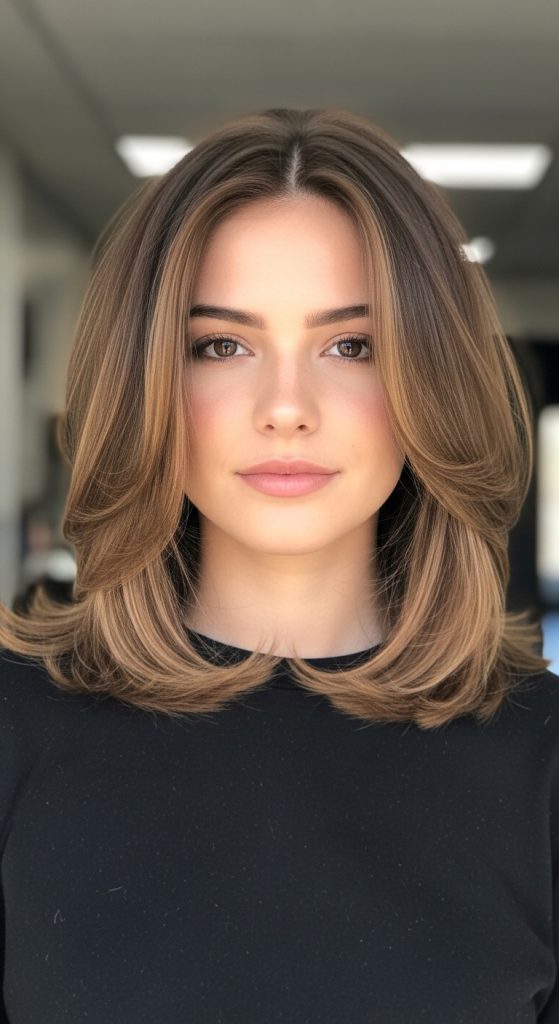
The soft layered lob is one of the few medium haircuts that actually works in real life without constant styling. It sits between the shoulders and collarbone, with subtle layers added throughout the length to create movement without removing too much weight. The goal here is not dramatic layers—it’s controlled softness.
Most people think layers mean visible, choppy sections, but that’s exactly what ruins medium hair. This cut uses blended, almost invisible layers that allow the hair to fall naturally while still having shape. It prevents the “triangle effect” (flat top, bulky ends) and gives your hair a balanced look from root to tip.
How to implement (Practical steps)
When asking for this haircut, be specific. Don’t just say “layers”—that’s how you end up with uneven results. Ask for:
- A lob length that sits just above or slightly below the shoulders
- Soft, blended layers starting below the chin
- Light face-framing pieces (not too short)
After the cut, styling should be simple. You don’t need heat tools every day. A basic routine works:
- Apply a light leave-in conditioner
- Blow-dry roughly or air-dry depending on your texture
- Use a round brush only at the front if needed
If you have a small room of time in the morning, this cut still holds its shape without full styling.
Best for
- Straight to slightly wavy hair
- People who want movement without losing thickness
- Anyone tired of flat, lifeless medium hair
Pro tip
Less layering is better than more. You can always add more layers later, but you cannot fix over-layered hair quickly.
Mistake to avoid
Do not allow short top layers. That’s what creates frizz, puffiness, and uneven volume. Medium hair needs weight control, not excessive removal.
2. Blunt Cut with Slight Textured Ends
Explanation (What it is)
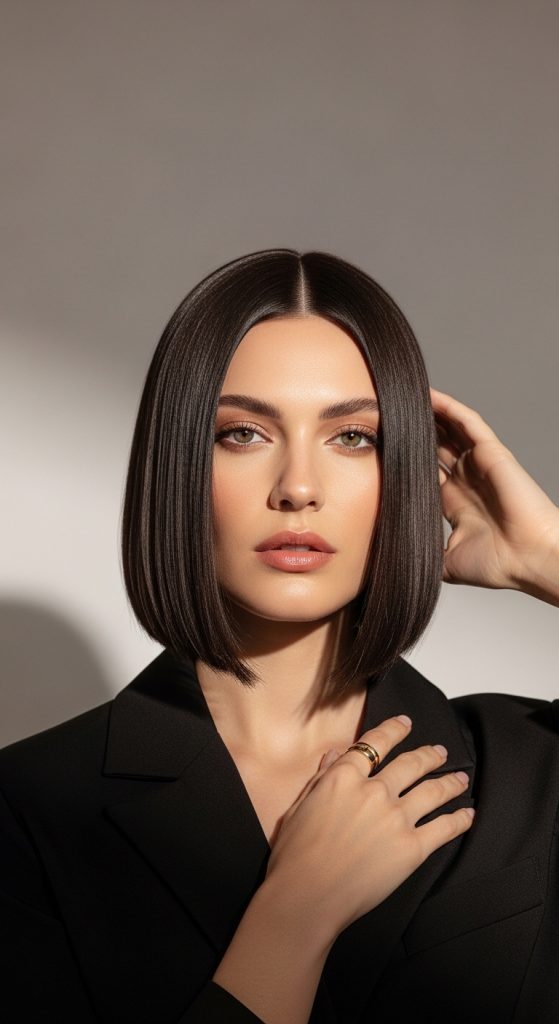
This is a clean, sharp haircut where the hair is mostly one length, but the ends are slightly softened to avoid a stiff or heavy finish. Unlike layered cuts, this style focuses on density and structure, giving your hair a thicker and healthier appearance.
A completely blunt cut can sometimes look too rigid, especially on medium hair. That’s why slight texturizing at the ends is important—it breaks the harsh line just enough to add movement without losing fullness.
How to implement (Practical steps)
Ask your stylist for:
- A straight, one-length cut at shoulder or collarbone level
- Minimal to no layers
- Soft texturizing only at the ends (not throughout the hair)
At home, this cut is extremely easy to manage:
- Use a smoothing serum or light oil
- Blow-dry straight or let it air-dry for a natural look
- Use a flat iron only if you want a polished finish
This works best when you don’t overcomplicate styling. The structure of the cut does most of the work.
Best for
- Fine or thin hair (makes it look thicker)
- Straight or slightly wavy textures
- Anyone who wants a clean, polished look with minimal effort
Pro tip
Regular trims every 6–8 weeks are necessary. Since the shape is clean, uneven ends become noticeable faster.
Mistake to avoid
Do not add random layers later. That destroys the entire purpose of this haircut, which is thickness and structure.
3. Face-Framing Layered Cut
Explanation (What it is)
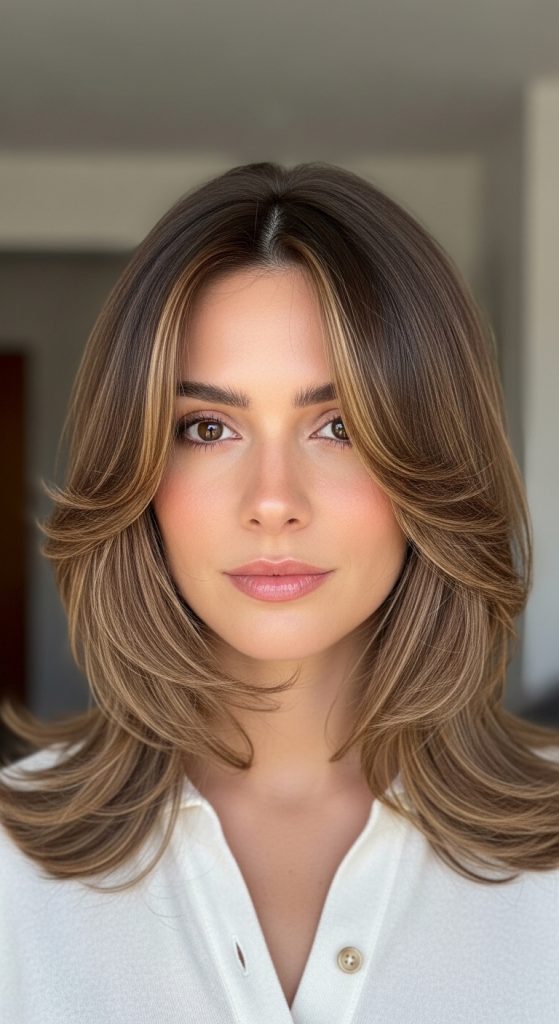
This haircut focuses on enhancing the front sections of your hair while keeping the rest relatively simple. The layers are concentrated around the face, creating softness, shape, and movement without affecting the overall length too much.
This is ideal if you feel your medium hair looks “plain” or lacks dimension but you don’t want a fully layered cut. The front pieces add style and personality, while the back remains easy to manage.
How to implement (Practical steps)
When getting this cut, ask for:
- Face-framing layers starting around the cheekbone or chin
- Minimal layering at the back
- A smooth transition between front layers and overall length
For styling:
- Blow-dry the front sections with a round brush for shape
- Let the rest air-dry if you’re short on time
- Use a curling iron only on front pieces for a more styled look
This works best when you focus effort only on the visible front area instead of the entire head.
Best for
- Round or square face shapes (adds definition)
- Medium hair that feels flat around the face
- People who want a styled look without full effort
Pro tip
If you have a small room of time, style only the front layers. It creates the illusion that your entire hair is styled.
Mistake to avoid
Do not cut the front layers too short. That leads to awkward regrowth and limits styling options.
4. Textured Shag Cut (Modern, Soft Version)
Explanation (What it is)
The modern shag is not the messy, overly choppy cut people used to get years ago. When done correctly, it’s a controlled textured haircut that adds movement, volume, and shape to medium hair without making it look wild or unmanageable. It combines light layering with a slightly undone finish, which works especially well if your hair naturally has some wave or body.
This cut removes heaviness from the ends while keeping enough structure so your hair doesn’t collapse into flatness. The key difference between a good shag and a bad one is balance—too many layers and it turns frizzy, too few and it looks like a regular cut with no personality.
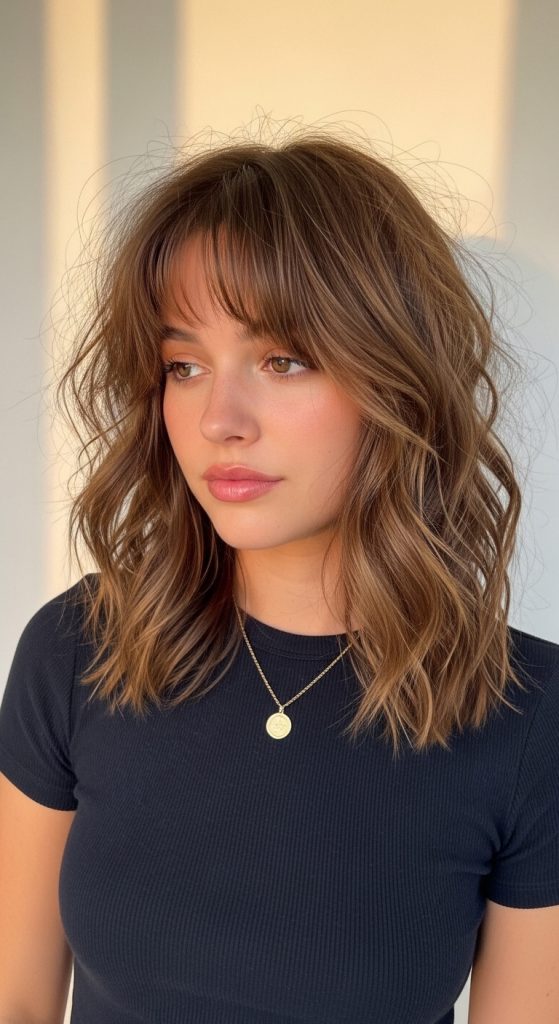
How to implement (Practical steps)
Ask for:
- Medium length (shoulder to collarbone)
- Soft, uneven layers throughout (not sharp or choppy)
- Slight volume at the crown
- Optional light fringe or curtain bangs
Styling should stay simple:
- Apply a lightweight mousse or texturizing cream
- Scrunch lightly if your hair is wavy
- Air-dry or diffuse for natural texture
If you have a small room of time, skip full styling—this cut is meant to look slightly undone.
Best for
- Wavy or slightly curly hair
- People who want volume without heavy styling
- Medium hair that feels flat or lifeless
Pro tip
Let your natural texture do the work. Over-styling this cut actually ruins the effect.
Mistake to avoid
Do not over-layer. Too many layers will make your hair look thin, frizzy, and difficult to control.
5. U-Shaped Layered Cut
Explanation (What it is)
This haircut creates a soft “U” shape at the back instead of a straight or blunt line. It keeps the length in the center while slightly shortening the sides, which adds natural movement and flow without aggressive layering.
The advantage of this cut is that it gives you shape without sacrificing fullness. Many layered cuts remove too much weight, but the U-shape maintains density while still preventing the hair from looking heavy or boxy.
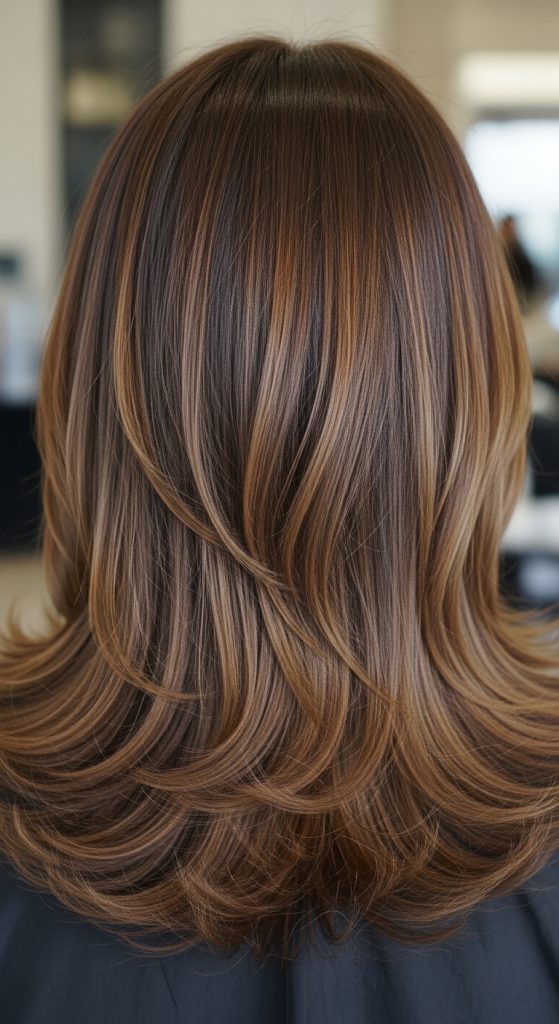
How to implement (Practical steps)
Ask your stylist for:
- Medium length with a U-shaped back
- Long, blended layers starting below the shoulders
- No short layers near the crown
At home:
- Use a leave-in conditioner for smoothness
- Blow-dry or air-dry depending on your routine
- Lightly curl the ends if you want more definition
This cut works well even with minimal styling because the shape is built into the haircut.
Best for
- Thick or medium-density hair
- People who want movement but still want their hair to feel full
- Anyone who dislikes flat or straight-across cuts
Pro tip
This works best when the ends are slightly styled inward or outward—it enhances the natural shape.
Mistake to avoid
Avoid cutting the U-shape too dramatic. A subtle curve looks natural, while a sharp one looks outdated.
6. Collarbone-Length Straight Cut with Internal Layers
Explanation (What it is)
This is a smart, low-maintenance haircut where the outside looks like a clean, straight cut, but hidden internal layers are added underneath to reduce bulk and improve movement. From the outside, it appears sleek and simple, but internally it’s structured for better control.
This is ideal if you want your hair to look neat and polished but still behave well without constant styling. The internal layering removes weight from inside the hair instead of the surface, which keeps the overall look smooth.
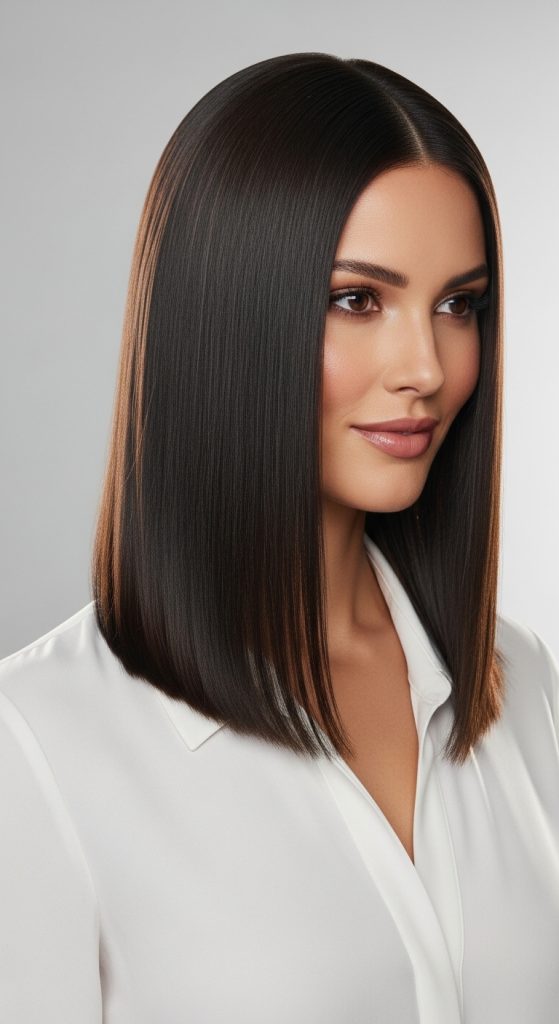
How to implement (Practical steps)
Ask for:
- A straight cut at collarbone length
- Hidden/internal layers underneath (not visible on top)
- No heavy layering on the outer surface
For styling:
- Apply a smoothing cream or serum
- Blow-dry straight or let it fall naturally
- Minimal heat styling is needed because the cut already reduces bulk
If you have a small room of time, this cut still looks clean without effort.
Best for
- Thick or bulky medium hair
- People who want a neat, polished appearance
- Anyone who struggles with hair feeling too heavy
Pro tip
This cut grows out very well, meaning you don’t need frequent trims compared to heavily layered styles.
Mistake to avoid
Do not confuse internal layers with regular layers. If done incorrectly, you’ll lose the clean outer shape and end up with uneven texture.
7. Curtain Bangs with Medium Layers
Explanation (What it is)
This haircut combines soft, face-opening curtain bangs with light medium-length layers. The bangs are parted in the middle (or slightly off-center) and sweep outward, framing the face without fully covering it. Unlike heavy fringes, curtain bangs are flexible—they blend into the rest of the hair instead of sitting as a separate block.
The purpose of this cut is to break the flatness around the front while keeping the overall length manageable. Many medium haircuts fail because they ignore the front section, which is the most visible part. This style fixes that by creating movement exactly where it matters.
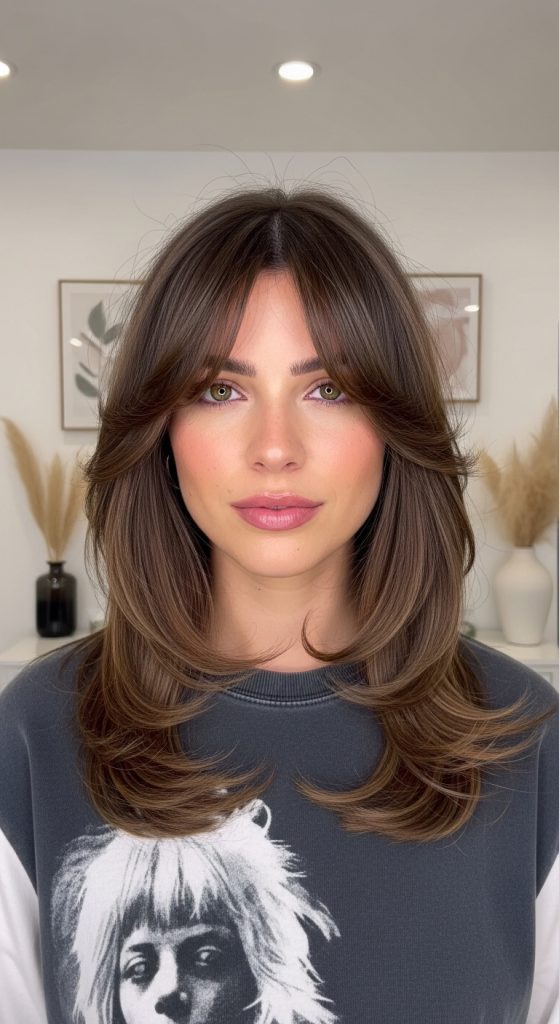
How to implement (Practical steps)
Ask your stylist for:
- Curtain bangs starting around cheekbone or jaw level
- Soft layering throughout the mid-lengths
- A smooth blend between bangs and the rest of the hair
Styling approach:
- Blow-dry the bangs using a round brush, directing them away from the face
- Keep the rest of the hair simple—either air-dried or lightly styled
- Use a small amount of serum to keep the front smooth
If you have a small room of time, focus only on styling the bangs. That alone makes your entire haircut look intentional.
Best for
- Medium hair that looks flat around the face
- People who want a soft, trendy look without full commitment to short bangs
- Straight to wavy textures
Pro tip
Train your bangs early. If you consistently style them in the right direction after washing, they’ll start falling naturally with less effort.
Mistake to avoid
Do not cut curtain bangs too short. If they sit above the cheekbones, they lose their flow and become harder to manage.
8. Layered Cut with Flipped Ends
Explanation (What it is)
This haircut is designed to create movement specifically at the ends, where medium hair often looks the heaviest. Instead of keeping the ends straight or overly thinned, this style encourages a slight outward or inward flip, giving the hair a more dynamic and styled appearance.
The layers in this cut are subtle and mainly support the movement at the ends rather than dominating the entire haircut. It’s a controlled way to make medium hair look styled without requiring full curls or waves.
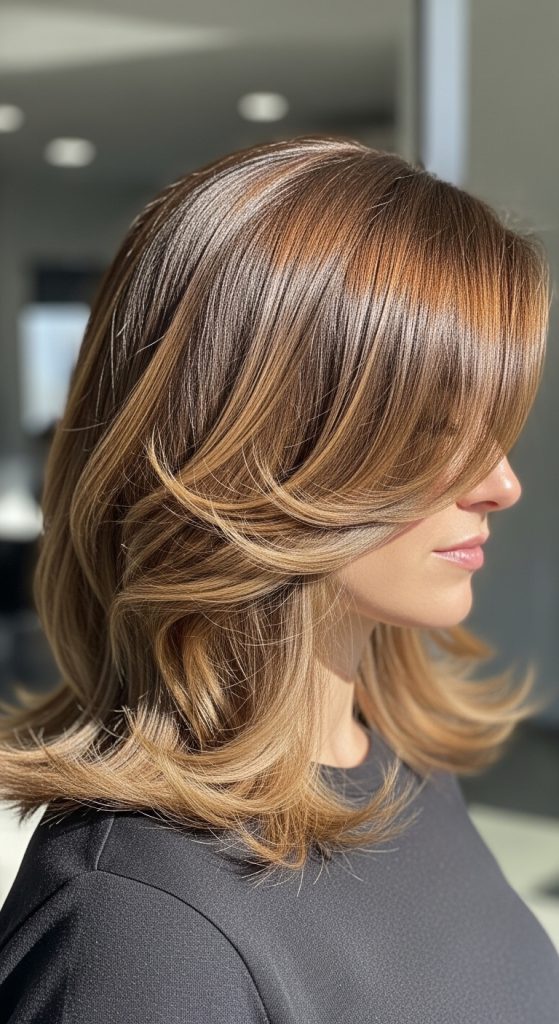
How to implement (Practical steps)
Ask for:
- Medium length with soft layers concentrated toward the ends
- Slight texturizing to help the ends move easily
- No aggressive layering near the crown
For styling:
- Use a round brush while blow-drying to flip the ends outward or inward
- Alternatively, use a flat iron to create a soft bend at the tips
- Keep the top section smooth to maintain contrast
This works best when the ends are the focus, not the entire length.
Best for
- Straight or slightly wavy hair
- People who want a styled look without full curls
- Medium hair that feels heavy or lifeless at the bottom
Pro tip
Flip direction matters. Outward flips feel more playful and voluminous, while inward flips look polished and controlled.
Mistake to avoid
Do not over-layer the top. If the upper sections are too light, the flipped ends will look disconnected instead of flowing.
9. Minimal Layer Straight Cut (Low-Maintenance Classic)
Explanation (What it is)
This is one of the most practical haircuts for medium hair. It keeps the overall length straight and clean, with very minimal layering just to prevent stiffness. The goal is not to create volume or texture—it’s to maintain simplicity, control, and ease of maintenance.
This cut works because it doesn’t try to do too much. Many haircuts fail because they overcomplicate the structure. This one keeps everything balanced, making it reliable for everyday life.
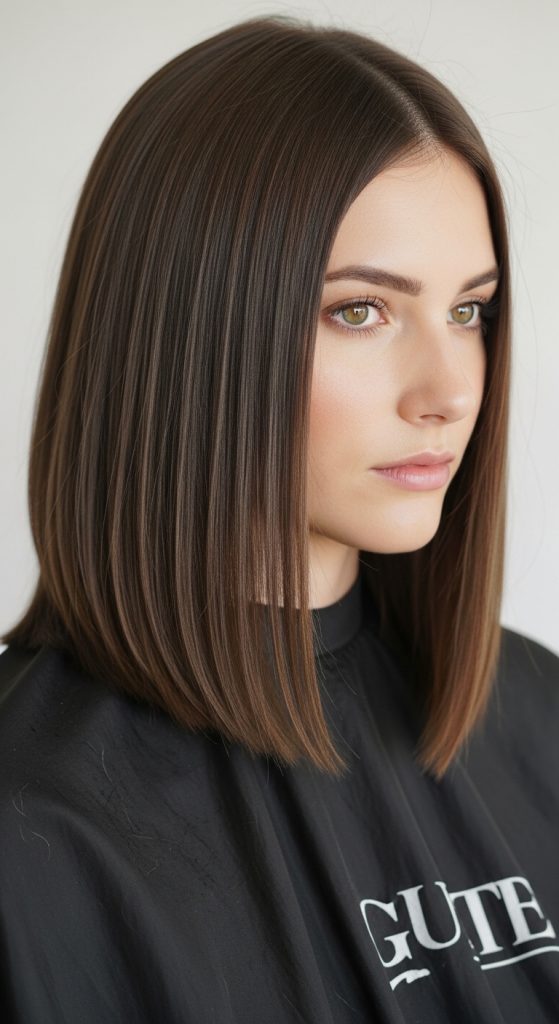
How to implement (Practical steps)
Ask for:
- A straight, even length at shoulder or collarbone
- Very light layering only if needed
- Clean, sharp ends with slight softening
At home:
- Apply a basic leave-in conditioner or serum
- Let it air-dry for a natural look or blow-dry quickly
- No detailed styling required
If you have a small room of time, this is one of the easiest cuts to manage daily.
Best for
- Busy routines with little time for styling
- Straight or slightly wavy hair
- Anyone who prefers a clean, simple appearance
Pro tip
Consistency is what makes this cut look good. Regular trims keep the shape sharp and prevent it from looking uneven.
Mistake to avoid
Do not add random layers later out of boredom. This cut works because of its simplicity—changing that ruins its effectiveness.
10. Angled Lob (Slight A-Line Cut)
Explanation (What it is)
The angled lob is a structured medium haircut where the hair is slightly shorter at the back and gradually longer toward the front. It’s not a dramatic angle—it’s subtle and controlled. The purpose is to create a natural forward movement that frames the face while keeping the back neat and manageable.
This cut works because it gives direction to your hair. Instead of sitting flat or spreading outward, the hair naturally falls forward, which makes it look more styled even when you haven’t done much. It also solves a common medium hair problem—bulk at the back and lifelessness at the front.
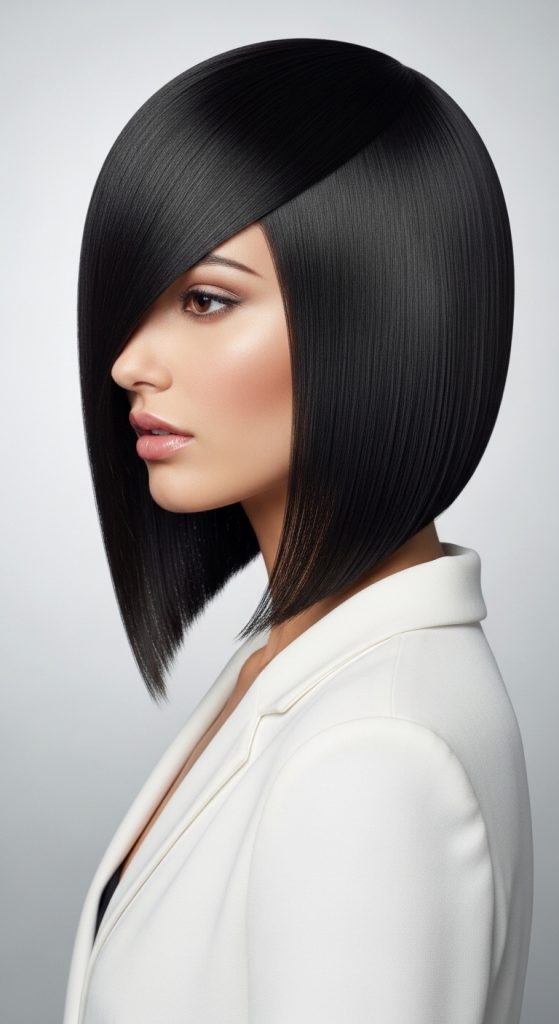
How to implement (Practical steps)
When asking for this haircut, be clear:
- Request a soft angled lob, not a sharp A-line
- Keep the length around collarbone level in the front
- Ask for a clean, slightly shorter back
- Minimal layering (this cut relies more on shape than layers)
For styling:
- Blow-dry forward using a round brush for natural direction
- Use a flat iron to slightly curve the front inward
- Keep the back simple—it should sit naturally without effort
If you have a small room of time, you only need to style the front sections. The angle already creates a polished look.
Best for
- Straight to slightly wavy hair
- People who want a structured, modern look
- Medium hair that feels heavy at the back
Pro tip
Keep the angle subtle. A slight difference between front and back looks elegant and wearable, while a sharp angle can feel outdated and harder to maintain.
Mistake to avoid
Do not combine this cut with heavy layers. Too many layers will break the clean shape and make the angle look uneven instead of sharp and intentional.