
Kids’ hairstyles in 2026 are not just about keeping hair neat anymore—they’re about finding the balance between comfort, practicality, and style that actually lasts through a real day. School runs, playtime, sports, heat, movement, and constant activity mean one thing clearly: a hairstyle that looks good but falls apart in an hour is useless in real life. And this is where braids quietly outperform almost every other option.
Braids have always been around, but the way they’re used for kids today is very different from the old, tight, uncomfortable styles many people remember. Modern braid hairstyles are softer, more creative, and much more adaptable. They are no longer just “two plaits and done.” Instead, they now include creative sections, mixed textures, buns, ponytail blends, and protective styling techniques that actually make life easier for both kids and parents.
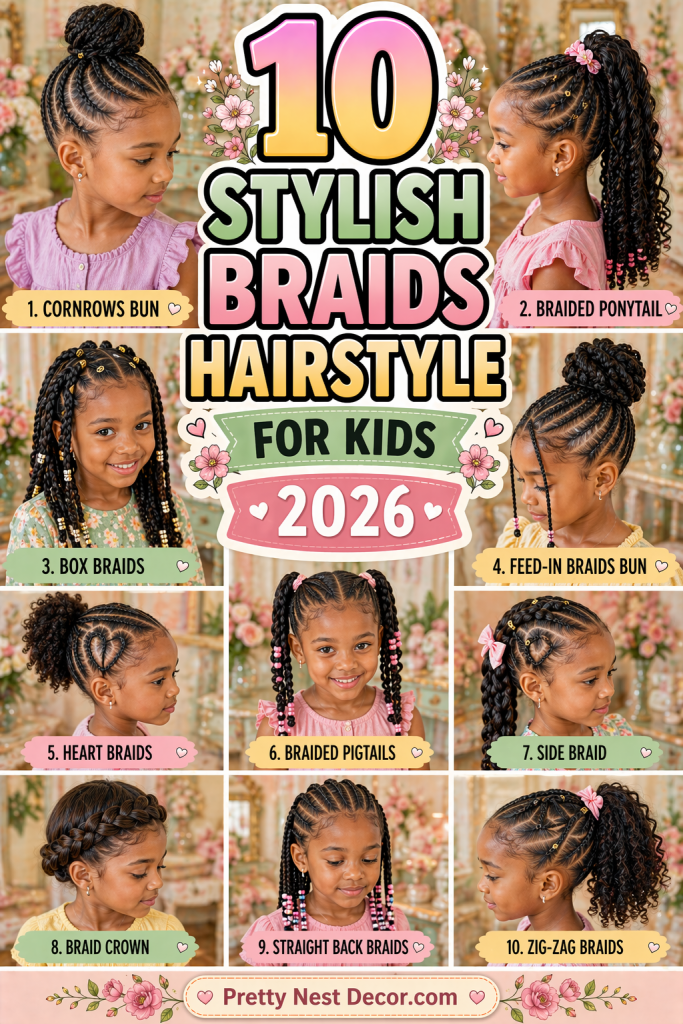
The biggest challenge parents face is not choosing a “cute” hairstyle—it’s choosing one that survives the day. If you have a small child, you already know how quickly neat hair can turn into chaos. Loose hair gets tangled, ponytails slip, and simple buns often fall apart during activity. This is why braids are still one of the most reliable solutions. They hold structure, reduce tangling, and stay in place even when kids are running, jumping, or playing outside.
But here’s where most people go wrong: they assume all braids are the same. They are not. A tight, uncomfortable braid might technically last long, but it can cause irritation and make kids hate hairstyling altogether. On the other hand, a loose, poorly secured braid may look pretty at first but won’t survive a school day. The real skill is choosing braid styles that are both secure and comfortable—without sacrificing appearance.
Another important factor in 2026 is individuality. Kids today are more expressive, and even simple hairstyles are expected to have a bit of personality. Small details like colorful elastics, ribbon integration, zigzag parts, bubble braid combinations, or braided buns can completely change the final look. The goal is not to overcomplicate things, but to make everyday hairstyles feel special without adding stress to the routine.
You also need to consider hair type, which most generic hairstyle lists ignore. Fine hair behaves differently from thick hair. Curly hair needs different handling compared to straight hair. A braid that works perfectly on one child might completely fail on another if texture, density, and length are not considered. This is why copying random styles from social media often leads to disappointment in real life.
Comfort is another non-negotiable factor. If a hairstyle pulls too tightly at the scalp, it may look neat, but it will not be sustainable for a child. The best braid styles are the ones that feel light, distribute tension evenly, and do not require constant fixing throughout the day. A good hairstyle should support the child’s routine, not interrupt it.
In this guide, the focus is not just on making hair look “pretty for photos.” The focus is on real-life wearable braid hairstyles that actually work in school environments, play environments, and daily routines. These are styles that can be done in reasonable time, maintained without constant effort, and still look stylish by the end of the day.
You’ll see braid ideas that range from simple everyday school looks to slightly more creative styles for special days. Each one is designed with practicality in mind—because a hairstyle that looks amazing but takes 45 minutes every morning is not realistic for most families. The goal here is efficiency, durability, and child-friendly styling that doesn’t create stress in the morning routine.
By the end of this guide, you won’t just have hairstyle ideas—you’ll understand how to choose the right braid based on hair type, daily activity level, and comfort needs. That’s the difference between random inspiration and actually useful styling knowledge.
Now let’s go into the braid styles that genuinely work in real life, not just in pictures.
1. Classic Double Braids (School-Ready Everyday Style)
What it is
Classic double braids are the most reliable and practical hairstyle for kids, especially for school routines. The hair is divided into two equal sections and braided down both sides of the head. It looks simple, but this style is one of the strongest in terms of durability and comfort. In 2026, it’s no longer just a basic “old-school” look—small upgrades like soft parts, neat sections, and decorative elastics make it more modern and stylish.
This hairstyle works because it keeps hair fully controlled. No strands fall on the face, no tangles form during the day, and it survives movement, weather, and play without constant fixing.
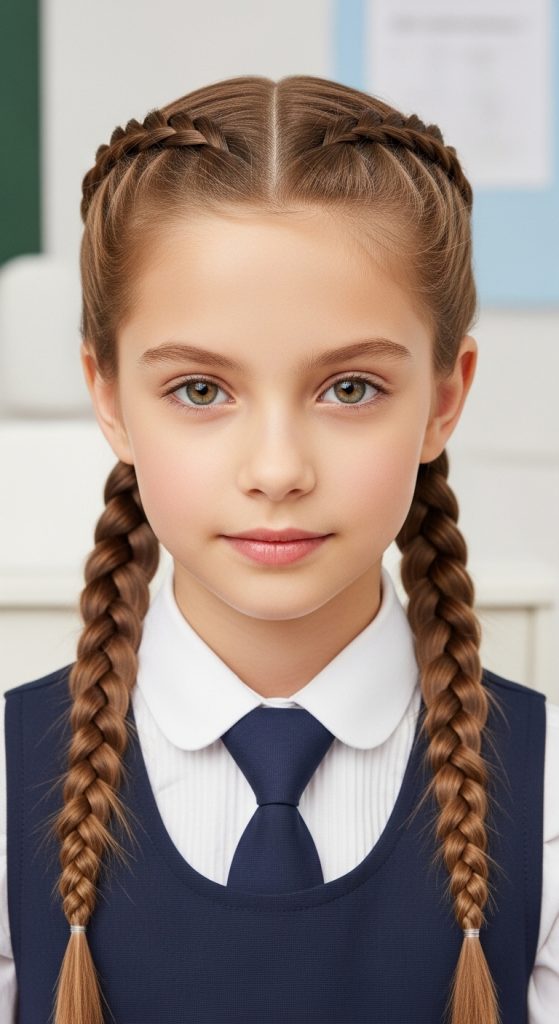
How to implement (practical steps)
Start with detangled, smooth hair. If the child has curly or thick hair, lightly dampen it or use a leave-in conditioner for easier control. Create a clean center part using a comb. The parting should be even because it sets the foundation for balance.
Divide the hair into two equal halves. Secure one side temporarily so it doesn’t mix. Start braiding from the top of the head, not halfway down, because starting higher ensures better hold and neatness throughout the day.
Keep the braid medium-tight—not too tight to cause discomfort, and not too loose to fall apart. Continue braiding down to the ends and secure with a soft elastic band. Repeat the same process on the other side.
For a more modern look, gently pull each braid slightly apart after finishing. This creates a fuller appearance without loosening the structure.
Best for (who should use it)
This style is best for school-going kids, especially those with medium to long hair. It works perfectly for active children who run, play, or participate in sports because it keeps everything locked in place.
It also suits parents who want a quick, reliable morning hairstyle without daily stress.
Pro tip
If the child has fine hair, lightly spray water or use a small amount of hair cream before braiding. This prevents flyaways and helps the braid stay smooth longer.
Mistake to avoid
Do not braid too tightly at the scalp. Tight braids may look neat initially but can cause discomfort, headaches, and irritation during long school hours.
2. Braided Ponytail with Ribbon Tie
What it is
The braided ponytail with a ribbon tie is a stylish upgrade from a normal ponytail, combining structure and softness in one look. Instead of leaving hair loose in a ponytail, the hair is braided after being tied up, and finished with a ribbon or decorative tie at the base. This adds a playful, polished touch that feels more modern than a basic braid.
This hairstyle is especially popular in 2026 because it blends practicality with a bit of personality—perfect for kids who like simple but pretty styles.
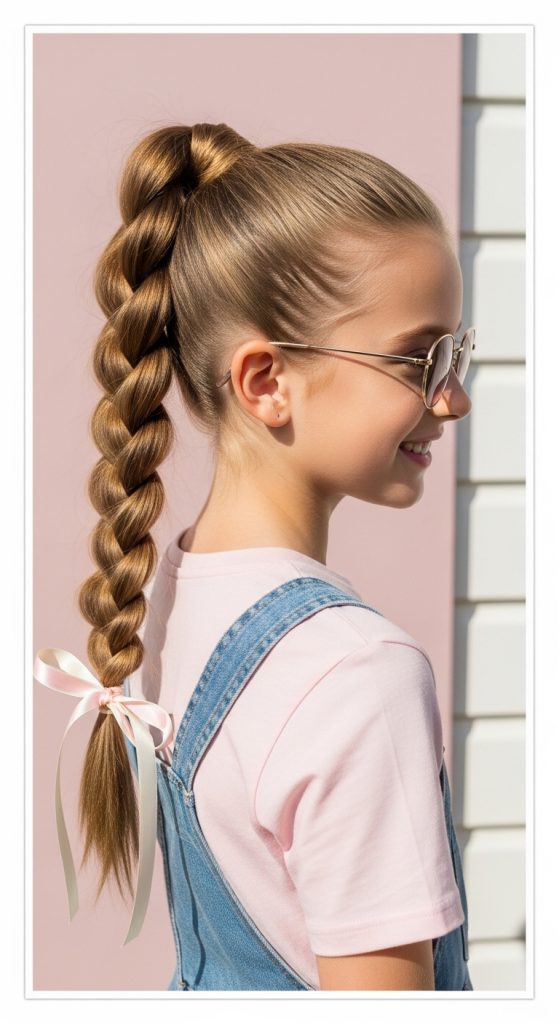
How to implement (practical steps)
Start by brushing the hair thoroughly to remove knots. Gather the hair into a mid-height or high ponytail depending on preference. Make sure the ponytail is secure using a strong elastic band.
Once the ponytail is fixed, divide it into three sections and begin a standard braid. Keep the tension even throughout so the braid looks smooth and structured. Continue until the end of the hair and secure it tightly.
Now comes the styling detail: wrap a ribbon around the base of the ponytail where it begins. You can either tie it into a bow or let the ribbon tails hang freely for a soft, decorative effect. Choose soft colors like pastel pink, white, or light blue for a more child-friendly aesthetic.
For extra neatness, lightly smooth the top of the head before tying the ponytail so there are no bumps.
Best for (who should use it)
This style is best for school events, casual outings, or days when you want something slightly more styled than everyday braids. It works well for medium to long hair and suits both straight and slightly wavy textures.
It’s ideal for kids who like a “cute” look without complicated styling time.
Pro tip
If the hair is very silky and slips easily, lightly tease the ponytail before braiding. This gives grip and helps the braid stay intact throughout the day.
Mistake to avoid
Avoid using overly tight elastics or stiff ribbons that pull at the hair. This can make the hairstyle uncomfortable and reduce how long the child can wear it without irritation.
3. Side Swept Loose Braid
What it is
The side swept loose braid is a softer, more relaxed hairstyle that brings hair to one side of the head and braids it loosely for a natural, flowing look. Unlike strict double braids or tight ponytails, this style focuses on comfort and gentle structure. It looks slightly undone but still organized, making it perfect for both casual and slightly dressed-up days.
In 2026, this style is trending because it feels effortless while still being practical enough for daily wear.
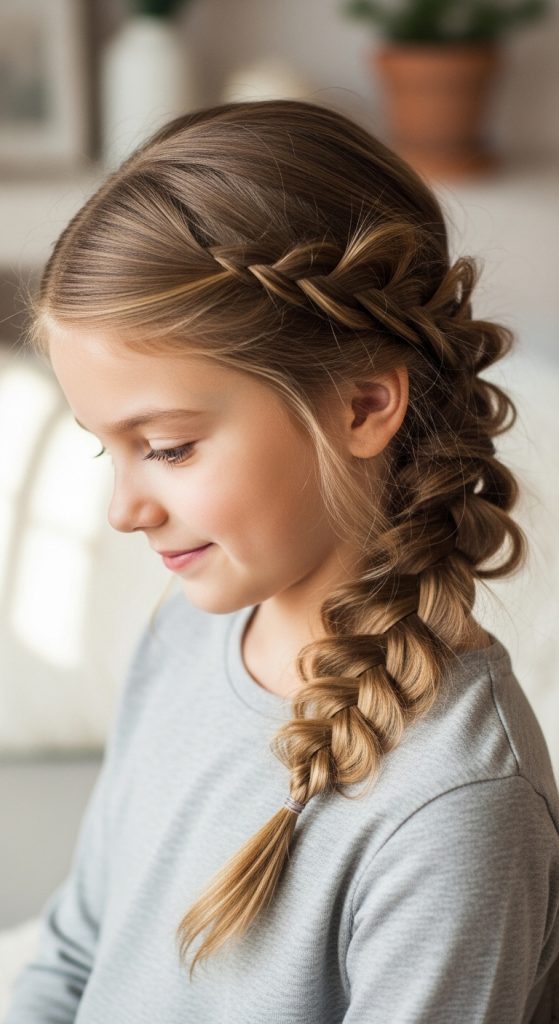
How to implement (practical steps)
Start by brushing the hair and deciding which side the braid will fall on. Most people prefer the natural falling side of the hair, but you can choose either based on face shape or comfort.
Gather all the hair to one side and loosely hold it near the shoulder. Before braiding, you can lightly curl or wave the hair for extra texture, but this step is optional.
Begin a simple three-strand braid from the top section and move downward along the side of the body. Keep the braid loose instead of tight—this is what gives it its soft, flowing look. Do not pull too hard while braiding.
Once you reach the end, secure it with a soft elastic band. Gently loosen sections of the braid by pulling them outward slightly to create volume and a relaxed finish.
You can also leave a few soft strands near the face for a more natural, youthful appearance.
Best for (who should use it)
This style is best for relaxed school days, family outings, or kids who dislike tight hairstyles. It works well on medium to long hair and is especially flattering on slightly wavy or layered hair.
It is also a good option for children who are sensitive to tight hairstyles or scalp pulling.
Pro tip
If you want the braid to last longer without tightening it, lightly spray a small amount of water or leave-in conditioner before starting. This improves grip without making the hair stiff.
Mistake to avoid
Do not braid too tightly thinking it will last longer. In this style, tightness ruins the soft aesthetic and makes the braid look stiff instead of naturally flowing.
4. French Braided Twin Pigtails
What it is
French braided twin pigtails are a more advanced and secure version of classic double braids. Instead of starting the braid from a simple ponytail, the braid begins at the scalp and gradually collects hair as it moves downward. This creates a clean, structured look that stays tightly in place all day.
In 2026, this style is especially popular because it solves a real problem: kids moving constantly. Whether it’s school, sports, or outdoor play, this hairstyle keeps hair controlled without needing adjustments. It looks neat, but still feels youthful and playful.
The key difference from basic braids is that the braid is “fed” with hair as it moves down the head, which gives it stronger hold and a more polished finish.
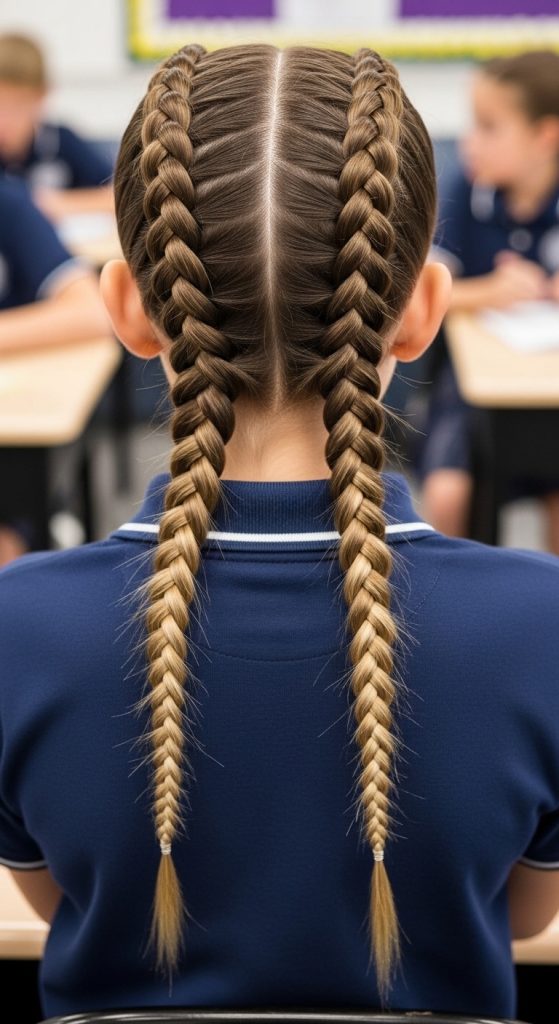
How to implement (practical steps)
Start with detangled hair and create a precise center part from forehead to the back of the head. Clean parting is important because uneven sections will affect the final look.
Clip one side away and focus on the other half first. At the top front section, divide a small portion into three strands to begin the French braid. Start braiding close to the scalp.
As you continue braiding downward, gradually add small sections of hair from both sides into the braid. Keep the tension even—not too tight to cause discomfort, but firm enough to hold structure.
Continue until you reach the nape of the neck, then finish with a normal braid down the remaining length. Secure with a soft elastic band. Repeat the same process on the other side.
For a slightly softer look, gently loosen the braid edges after finishing, but avoid over-pulling or the structure will weaken.
Best for (who should use it)
This style is best for active school days, sports activities, and long hours outside. It works especially well for thick or medium hair because the French braid holds better with volume.
It’s ideal for kids who need a hairstyle that stays perfect without brushing or fixing throughout the day.
Pro tip
If the hair is very slippery, add a light mist of water or a tiny bit of styling cream before braiding. This improves grip and prevents strands from slipping out during the day.
Mistake to avoid
Do not take large sections while adding hair into the braid. Large sections create uneven tension and make the braid look bulky and messy instead of smooth and controlled.
5. Braided Bun with Secure Wrap
What it is
The braided bun with secure wrap is a practical yet elegant hairstyle that combines braiding and bun styling into one strong, long-lasting look. The hair is first braided and then wrapped into a bun, making it extremely secure and perfect for full-day wear.
In 2026, this style is widely used for school events, performances, and active days because it keeps hair completely off the face while still looking neat and stylish. It’s a step up from a regular bun because the braid adds structure and prevents the bun from loosening.
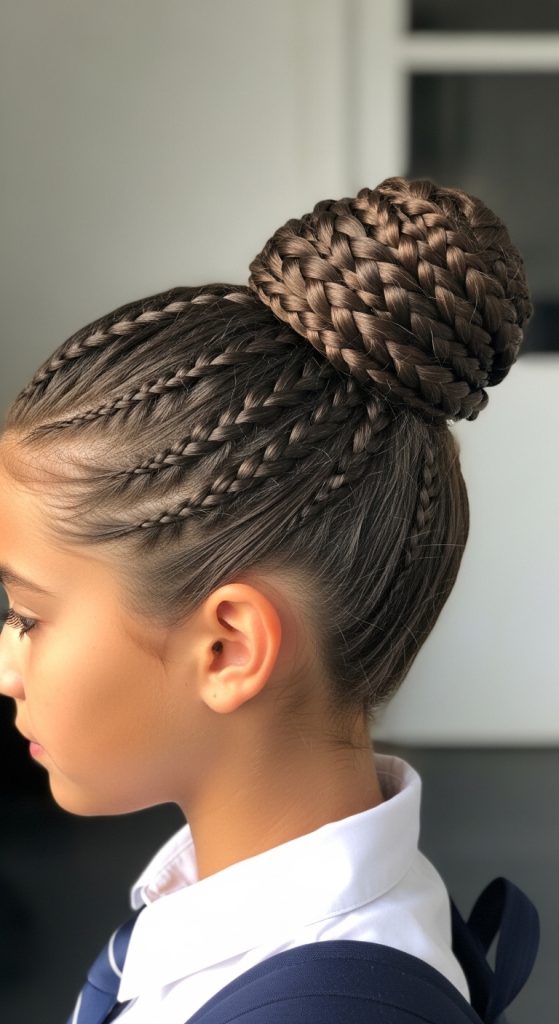
How to implement (practical steps)
Start by brushing the hair thoroughly and gathering it into a mid or high ponytail depending on preference. Secure it tightly with an elastic band.
Divide the ponytail into three sections and braid it all the way down. Keep the braid firm but not too tight, so it stays comfortable for the child.
Once the braid is complete, twist it around the base of the ponytail to form a bun shape. Wrap it evenly so the braid forms a circular structure.
Secure the bun using multiple bobby pins, placing them from different directions to lock the style in place. Press gently to ensure the bun feels stable.
For extra safety during active movement, you can wrap another elastic around the bun or use a small hair net for stronger hold.
Best for (who should use it)
This style is best for school days that include physical activity, dance practice, or long outdoor time. It works well for medium to thick hair because the braid helps control volume.
It is also ideal for parents who want a no-maintenance hairstyle that does not need fixing during the day.
Pro tip
If the hair is very thick, split the ponytail into two braids and wrap them together into a bun. This reduces bulk and makes the bun sit more comfortably.
Mistake to avoid
Do not leave the braid too loose before wrapping. A loose braid will cause the bun to collapse or loosen during movement, especially in active environments.
6. Zigzag Part Braided Style with Double Plaits
What it is
The zigzag part braided style with double plaits is a creative and modern variation of traditional braids. Instead of a straight center part, the hair is divided using a zigzag pattern, and then braided into two plaits. This small detail instantly makes the hairstyle look more stylish and fun without increasing difficulty.
In 2026, this style is trending because it adds personality to everyday school hairstyles without making them complicated. It is especially popular among kids who want something “different” but still practical.
The zigzag parting is the main feature—it transforms a basic braid into a more visually interesting style.
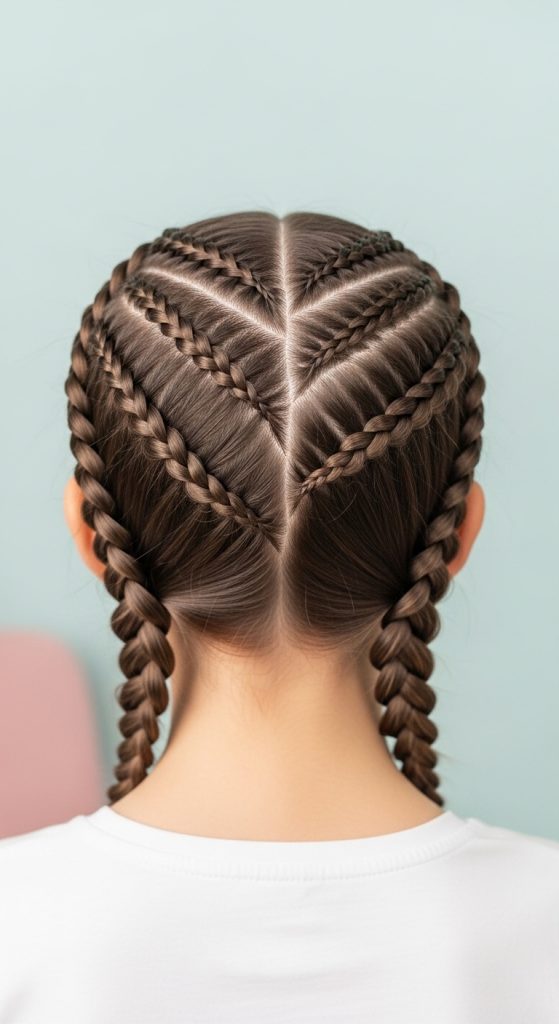
How to implement (practical steps)
Start by brushing the hair smooth to remove tangles. Using a tail comb, create a zigzag part starting from the front hairline going straight back. The zigzag does not need to be perfect—slight irregularity actually makes it look more natural.
Separate the hair into two equal sections based on the zigzag part. Clip one side away to keep it clean while you work on the first braid.
Begin a standard three-strand braid from the top of one section. Keep the braid medium-tight so it stays neat but comfortable. Continue all the way down and secure with an elastic band.
Repeat the same process on the other side.
For a more stylish finish, gently pull the braid edges outward slightly to add volume and softness. This prevents the style from looking too strict.
Best for (who should use it)
This style is best for school days when you want something neat but slightly more playful than basic braids. It works well for all hair types and is especially good for medium-length hair.
It is ideal for kids who like small creative details in their hairstyle without extra time in the morning.
Pro tip
If you want the zigzag part to stay visible all day, lightly dampen the hair before parting. This helps the pattern stay defined and reduces flyaways around the parting.
Mistake to avoid
Do not rush the zigzag parting. If the sectioning is messy or uneven, the entire hairstyle loses its clean and stylish effect, even if the braids are well done.
7. Bubble Braid with Mini Elastics (Braided Effect Style)
What it is
The bubble braid is not a traditional braid, but it creates a similar visual effect using sections tied with elastics. The hair is pulled into a ponytail and then divided into “bubbles” along the length, giving a playful, modern, and structured look. In 2026, this style is extremely popular for kids because it looks creative without requiring actual braiding skills.
It’s also one of the safest styles for beginners because there is no complex weaving involved, yet it still looks detailed and trendy.
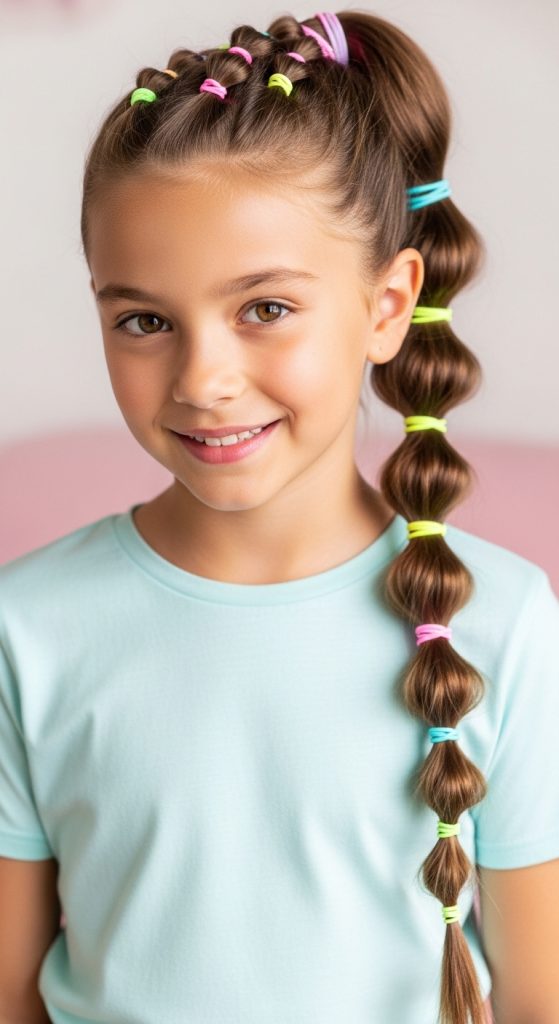
How to implement (practical steps)
Start by brushing the hair thoroughly to remove all tangles. Gather it into a high, mid, or low ponytail depending on preference. Secure it tightly with an elastic band.
Now, take small sections down the length of the ponytail and add elastics at equal intervals—usually every 2 to 3 inches. These sections will form the “bubbles.”
Once all elastics are placed, gently pull each section outward between the bands to create rounded, puffed shapes. Be careful not to pull too hard, or the structure will collapse.
Continue adjusting each bubble until the full ponytail has a balanced, evenly spaced look. You can add colorful elastics for a more fun, kid-friendly appearance.
Best for (who should use it)
This style is best for school days, casual outings, and kids who want a fun hairstyle without sitting for long styling sessions. It works especially well for long hair because bubbles are more visible with length.
It is also ideal for parents who want a quick, creative hairstyle that stays neat without braiding skills.
Pro tip
If the hair is thin, gently tease each section before pulling it into a bubble. This creates the illusion of thicker, fuller hair.
Mistake to avoid
Do not space the elastics unevenly. Irregular spacing makes the style look messy instead of intentional and stylish.
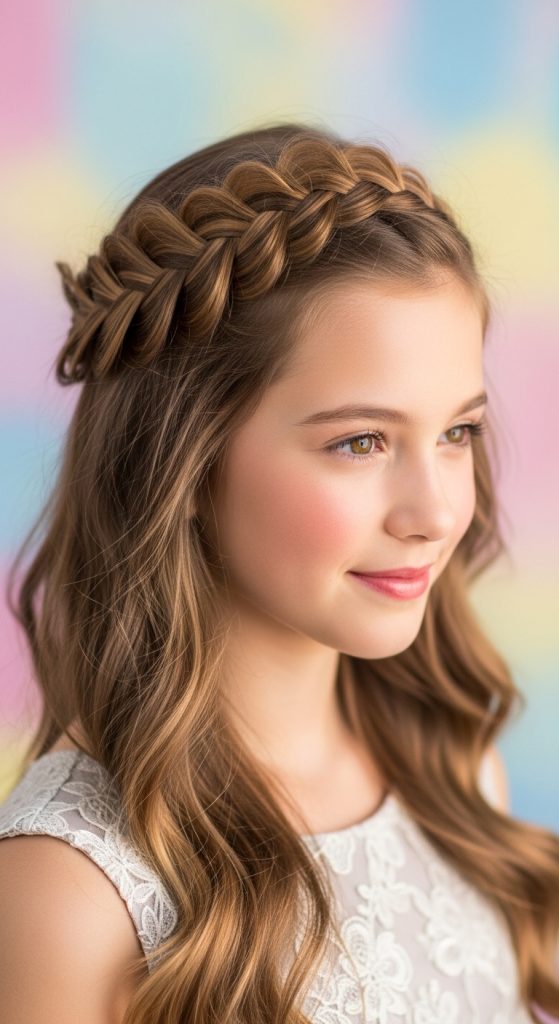
8. Half Crown Braid with Loose Hair
What it is
The half crown braid is a soft and elegant hairstyle where braids are created on both sides of the head and wrapped across the crown, while the rest of the hair is left loose. It combines structure and freedom, making it one of the most balanced styles for kids who don’t want fully tied-up hair.
In 2026, this style is trending because it looks pretty and styled, but still keeps the hair partially free, which many kids prefer.
How to implement (practical steps)
Start by brushing the hair and creating a center or slight side part. Take a section from one side near the front hairline and begin a simple braid or French braid depending on desired hold.
Repeat the same on the other side of the head. Keep both braids similar in thickness for balance.
Once both braids are complete, bring them across the top of the head like a crown and pin them securely with bobby pins. Cross-pinning helps keep them stable throughout the day.
Leave the remaining hair loose. You can curl it slightly or keep it natural depending on the look you want.
Adjust the crown area slightly by loosening the braids for softness, but keep them secure enough to stay in place.
Best for (who should use it)
This style is best for school events, birthday parties, and casual special days. It works well for medium to long hair and suits children who don’t like fully tied hairstyles.
It is especially good for slightly wavy hair because it blends naturally with loose texture.
Pro tip
If you want a more polished look, curl the loose hair in soft waves before creating the crown braids. This adds contrast and makes the hairstyle look more complete.
Mistake to avoid
Do not place the braids too tightly on the scalp. Over-tight braiding removes softness and can make the style uncomfortable for long wear.
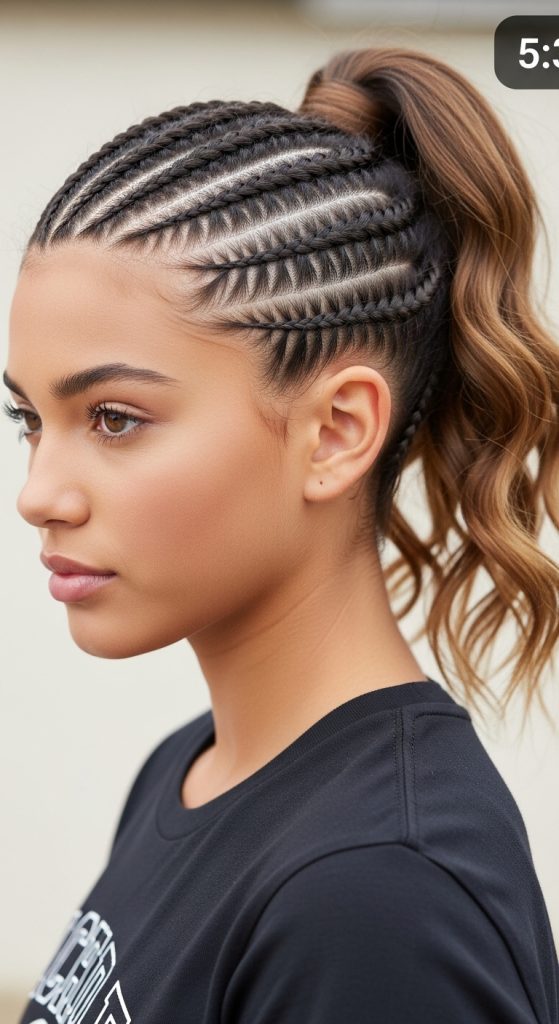
9. Side Cornrow-Inspired Braids with Ponytail
What it is
Side cornrow-inspired braids with a ponytail combine small tight braids along the sides of the head that feed into a single ponytail at the back. It’s a protective, long-lasting hairstyle that keeps hair fully controlled while adding a stylish edge.
In 2026, this style is valued for its durability and sporty aesthetic. It works especially well for active kids who need a hairstyle that will not loosen easily during movement.
How to implement (practical steps)
Start by parting the hair into sections. On one or both sides of the head, take small portions of hair and begin tight braids close to the scalp. These braids should follow a straight or slightly curved line toward the back.
Continue braiding until you reach the point where all sections will gather. Secure the ends temporarily if needed.
Gather all remaining hair, including the ends of the braids, into a ponytail at the back of the head. Secure it tightly with an elastic band.
You can leave the ponytail straight, braid it further, or curl it lightly depending on preference.
For a cleaner finish, smooth the top section with a light gel or styling cream to reduce flyaways.
Best for (who should use it)
This style is best for active school days, sports practice, and hot weather because it keeps hair fully controlled. It works well for thick or medium hair textures.
It is also ideal for kids who need long-lasting hairstyles that don’t require midday fixing.
Pro tip
If the hair is very thick, do multiple smaller side braids instead of one large section. This distributes tension and makes the style more comfortable.
Mistake to avoid
Do not braid too tightly at the scalp. While hold is important, excessive tension can cause discomfort and make the style unpleasant for the child to wear all day.
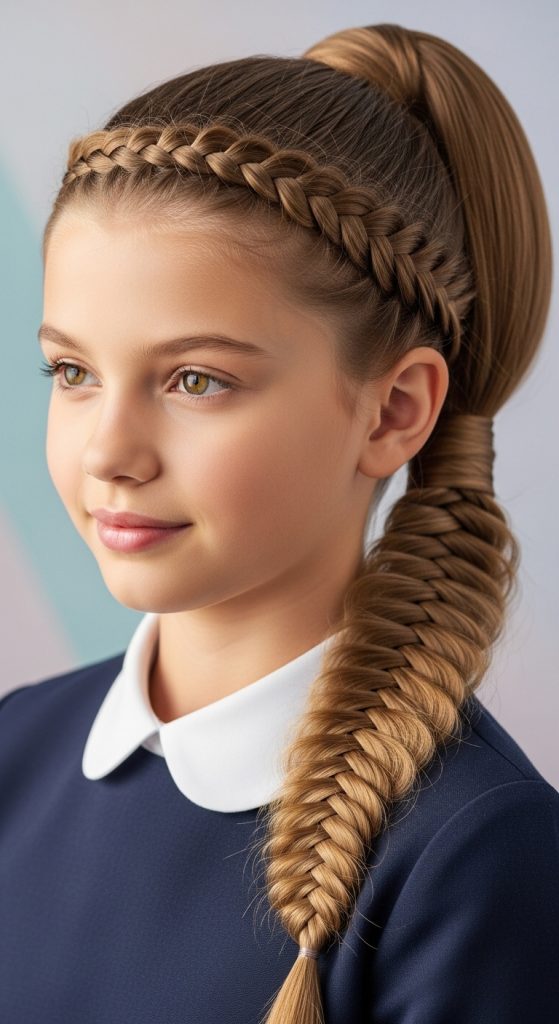
10. Fishtail Braided Ponytail (Elegant School-to-Event Style)
What it is
The fishtail braided ponytail is a more detailed and visually striking braid style that looks complex but is actually built from a simple weaving pattern. Instead of three sections like a normal braid, it uses two main sections with small pieces crossed over repeatedly, creating a textured “fishbone” effect.
In 2026, this style is popular for kids because it looks polished enough for special events but is still practical enough for school use. It gives a slightly more “styled” appearance than basic braids without being uncomfortable or overly complicated.
It works especially well when you want a hairstyle that feels a bit special but still stays controlled all day.
How to implement (practical steps)
Start by brushing the hair thoroughly to remove any knots. Smooth hair is important because tangles make fishtail braiding messy and uneven.
Gather the hair into a ponytail at your preferred height—low for a softer look or mid/high for a more energetic style. Secure it firmly with an elastic band.
Now divide the ponytail into two equal sections. This is the base of the fishtail braid.
Take a very small strand from the outer edge of the left section and cross it over to join the right section. Then take a small strand from the outer edge of the right section and cross it over to the left. Repeat this pattern slowly and evenly.
Continue this alternating pattern down the entire length of the hair. Keep the tension consistent so the braid looks clean and structured.
Once you reach the end, secure it with an elastic band.
For a more stylish finish, gently pull the edges of the braid outward. This step creates volume and makes the fishtail pattern more visible and fuller-looking.
Best for (who should use it)
This style is best for school days when a slightly more refined look is desired, as well as birthday parties, family events, or photo days.
It works especially well for medium to long hair because the fishtail pattern becomes more visible with length. It suits straight or slightly wavy hair textures best.
It’s also ideal for kids who want something different from basic braids but still practical enough for daily wear.
Pro tip
If the hair is very smooth or slippery, lightly mist it with water or a light styling spray before braiding. This adds grip and prevents strands from slipping out of place during the weaving process.
Mistake to avoid
Do not rush the strand crossing. If the sections are too large or uneven, the fishtail pattern will lose its sharp, clean texture and start looking messy instead of detailed and elegant.