
A garden is not just a space with plants—it is a living environment that reflects personality, creativity, and lifestyle. But most gardens today look incomplete. They have flowers, maybe a few pots, some seating, but they still feel like something is missing. That “missing element” is often life, movement, and natural charm that goes beyond decoration.
Bird houses solve this problem in a surprisingly powerful way.
When you introduce bird houses into your garden, you are not just adding decor—you are creating a living ecosystem feature. Birds bring movement, sound, and natural energy that completely changes how a garden feels. A still garden becomes active. A quiet space becomes alive. A decorative space becomes emotional.
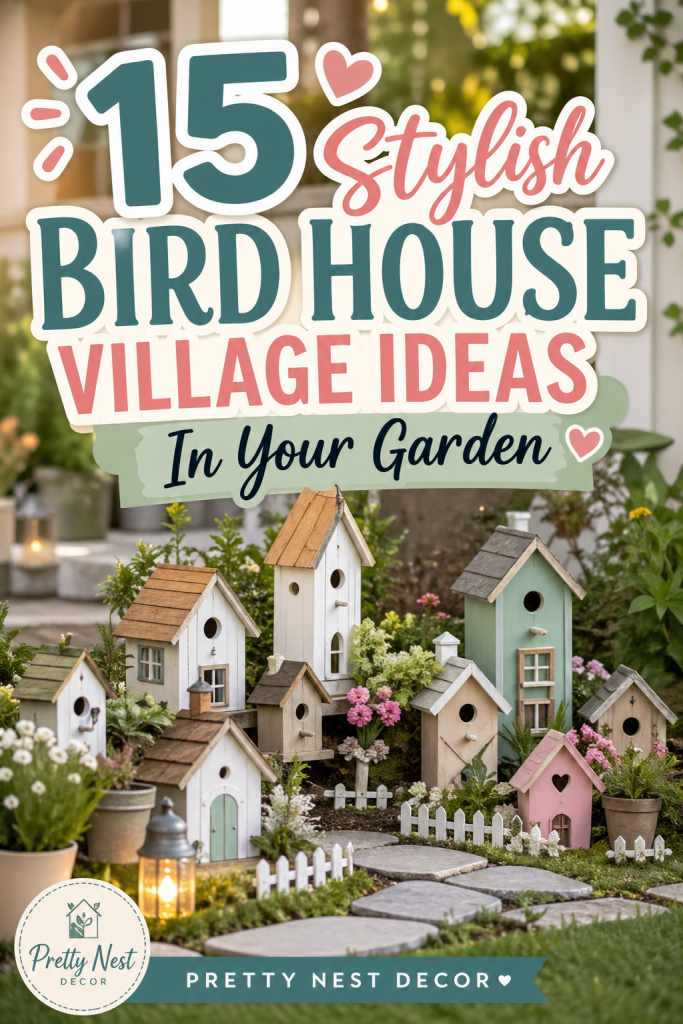
But here’s where most people go wrong: they treat bird houses as random hanging boxes or basic wooden structures with no planning. The result looks messy, disconnected, or purely functional. That’s not what a “bird house village” is meant to be.
A bird house village is something more intentional.
It is a curated arrangement of multiple bird houses designed like a miniature settlement inside your garden. Instead of one isolated structure, you create a cluster of bird-friendly spaces that feel unified, aesthetic, and natural. Think of it as designing a tiny world within your garden where birds are not just visitors—but part of the environment.
The idea is inspired by how villages in nature often appear: layered, varied, and organically placed rather than perfectly symmetrical. When done correctly, a bird house village doesn’t look artificial. It looks like it belongs there.
This concept has become increasingly popular in modern garden design because it combines three things people now value deeply:
- Aesthetic outdoor decor – visually appealing garden structure
- Nature connection – inviting wildlife into daily life
- Relaxation experience – sound and movement that reduce stress
Unlike static garden decor, bird houses evolve. Seasons change how they are used. Birds come and go. Light and weather affect how the setup looks. This creates a dynamic environment that feels different every day.
However, building a stylish bird house village is not just about placing random designs together. Without planning, it becomes clutter. With planning, it becomes a focal point of your entire garden.
There are a few key principles that define a well-designed bird house village:
- Variation in height and structure (not all houses at one level)
- A mix of materials like wood, ceramic, or natural textures
- Balanced spacing so it feels organic, not crowded
- Integration with plants, trees, and natural elements
- A clear visual theme (rustic, modern, fairytale, boho, etc.)
When these elements come together, the garden starts to feel like a story instead of a space.
Another important point is that bird house villages are not only decorative—they are functional. They provide shelter for birds, encourage biodiversity, and support local ecosystems. In simple terms, your garden becomes part of a larger natural system rather than just an isolated design space.
But functionality alone is not enough for modern garden aesthetics. Today’s homeowners want beauty and purpose together. That is why design matters just as much as structure.
A well-designed bird house village can completely transform:
- A plain corner into a focal point
- A simple garden into a themed landscape
- A quiet yard into a lively natural retreat
And the best part is, it doesn’t require massive space. Even small gardens can support compact bird village setups if planned correctly.
In this guide, you will explore 15 stylish bird house village ideas for your garden, each designed to balance aesthetics, practicality, and natural harmony. These are not random decorative suggestions—they are structured concepts that show how to build visual storytelling within your outdoor space.
Each idea will help you understand how to:
- Arrange bird houses in a visually pleasing way
- Choose the right style for yo
- ur garden theme
- Combine natural elements with structure
- Avoid common design mistakes that make setups look cluttered
Because the real goal is not just to place bird houses.
The real goal is to create a garden that feels alive, intentional, and beautifully connected to nature.
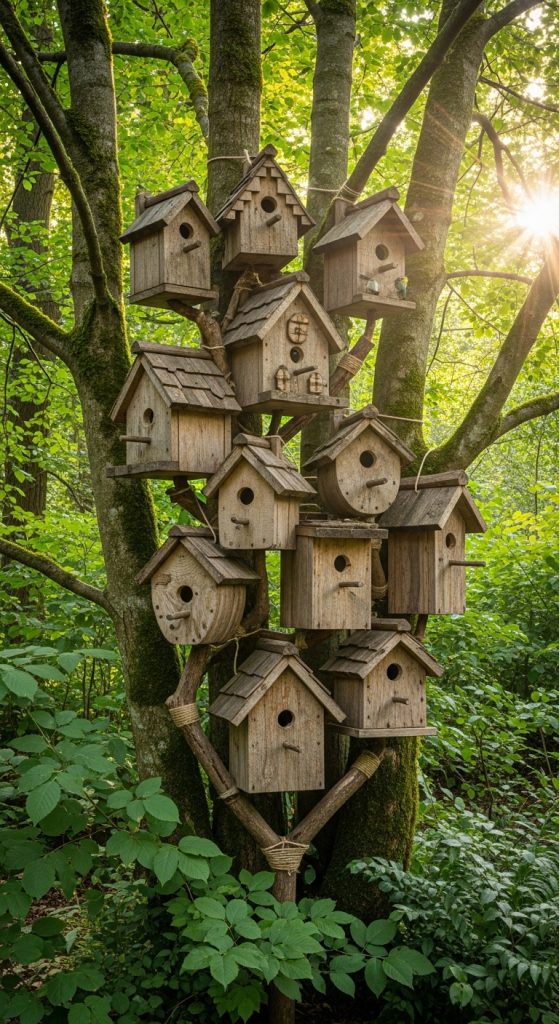
1. Rustic Wooden Tree Cluster Village (Natural Forest Style Setup)
What it is
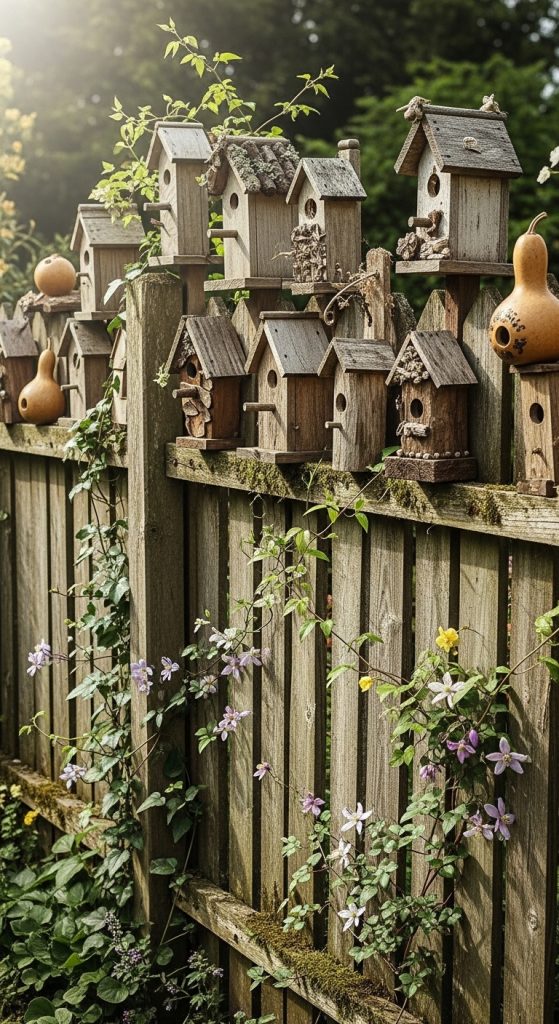
A rustic wooden tree cluster bird house village is a natural-looking arrangement of multiple wooden bird houses placed around or within a tree grouping. Instead of one isolated bird house, you create a layered “mini forest village” where each house feels like part of a living ecosystem.
The design focuses on blending into nature rather than standing out. The wood is usually untreated, slightly textured, and weather-friendly, so over time it develops a natural aged look. This makes the entire setup feel like it has always existed in the garden.
It works especially well in gardens that already have trees, shrubs, or green corners because it enhances what is already there instead of competing with it.
How to implement (practical steps)
Start with location:
- Choose a tree cluster or shaded garden corner
- Prefer areas with natural greenery and quiet surroundings
Select bird houses:
- Use simple wooden houses in different small sizes
- Avoid shiny paint or artificial plastic finishes
- Keep design natural and minimal
Placement structure:
- Hang bird houses at different heights on branches
- Attach some directly to tree trunks if safe
- Keep uneven spacing for a natural forest feel
Layering effect:
- Mix hanging houses with small wooden platforms
- Add subtle rope or natural twine for suspension
- Avoid perfect alignment
Environmental blending:
- Surround base with plants, stones, or mulch
- Let vines or small plants grow naturally around setup
Best for
- Large or medium gardens with trees
- Nature-inspired or rustic garden themes
- People who want natural wildlife attraction
This works best when you want a garden that feels like a small forest habitat rather than a decorated space.
Pro tip
Use different wood tones instead of identical bird houses. Variation makes the “village” feel organic and real.
Mistake to avoid
Don’t place all houses at the same height or spacing. That destroys the natural forest illusion and makes it look artificial.
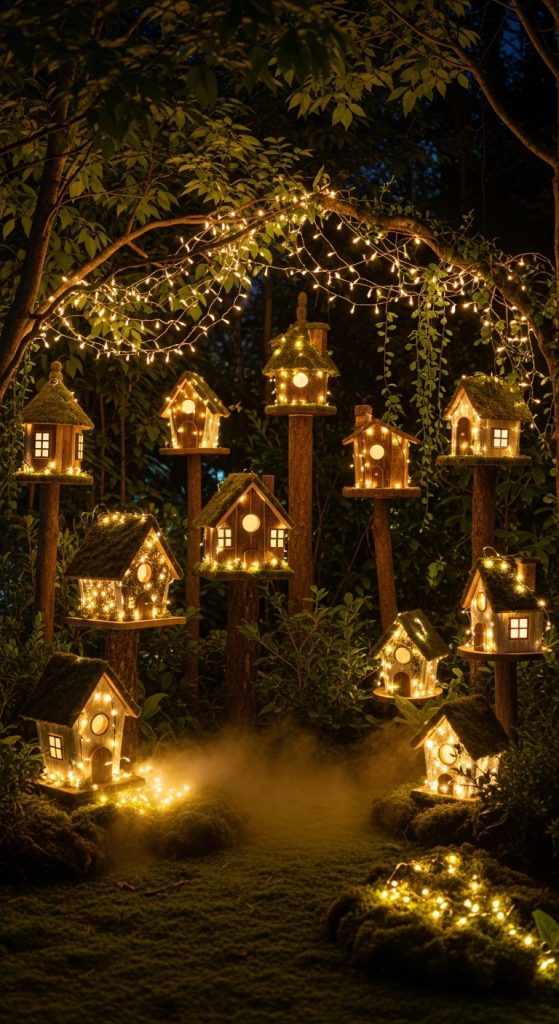
2. Fairy Light Bird House Village (Magical Evening Garden Theme)
What it is
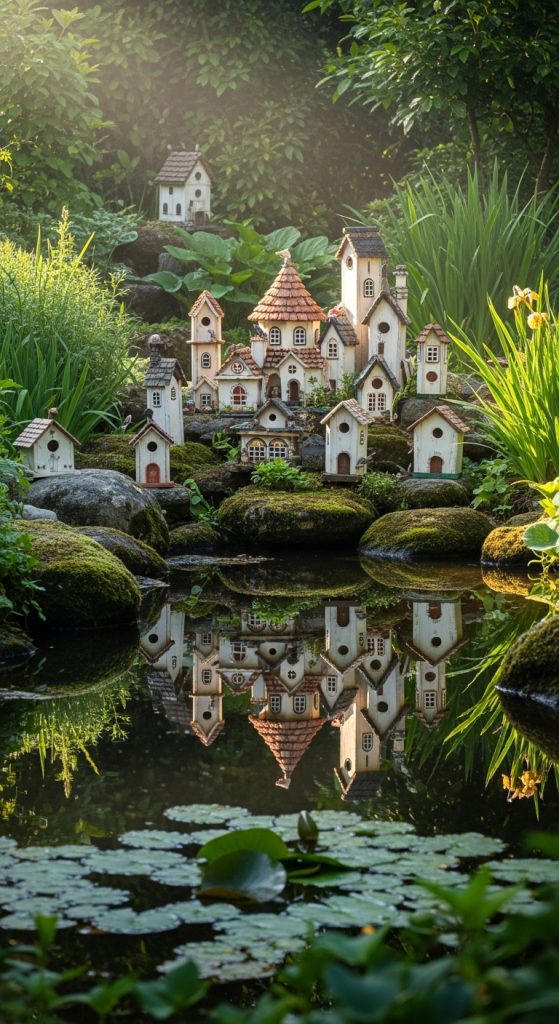
A fairy light bird house village is a decorative nighttime garden setup where bird houses are combined with soft lighting elements to create a magical, glowing environment.
Unlike purely natural designs, this concept focuses on atmosphere. During the day, it looks like a charming garden village, but at night it transforms into a glowing, dreamy landscape.
It blends functionality with aesthetic storytelling—your garden becomes both a wildlife space and a visual experience.
How to implement (practical steps)
Choose base structure:
- Small decorative bird houses (wood, white, pastel, or neutral tones)
- Simple designs that allow light to enhance them
Lighting setup:
- Wrap warm white fairy lights around branches or poles
- Place solar lights near bird house clusters
- Avoid harsh or colored lighting
Arrangement style:
- Place bird houses in a semi-circle or layered corner
- Combine hanging and pole-mounted houses
- Keep focus on central glowing area
Supporting decor:
- Add small garden lanterns or glass jars with lights
- Use soft greenery or climbing plants around setup
- Keep background simple to highlight glow
Safety consideration:
- Ensure lights do not block bird entry points
- Keep wiring hidden or safely secured
Best for
- Evening garden enjoyment
- Decorative outdoor seating areas
- Romantic or aesthetic garden themes
This works best when you want your garden to feel alive at night, not just during the day.
Pro tip
Warm light tones create a more natural, calming effect. Avoid bright white or flashing lights.
Mistake to avoid
Don’t overload the setup with too many lights. Over-lighting removes the soft, magical atmosphere.
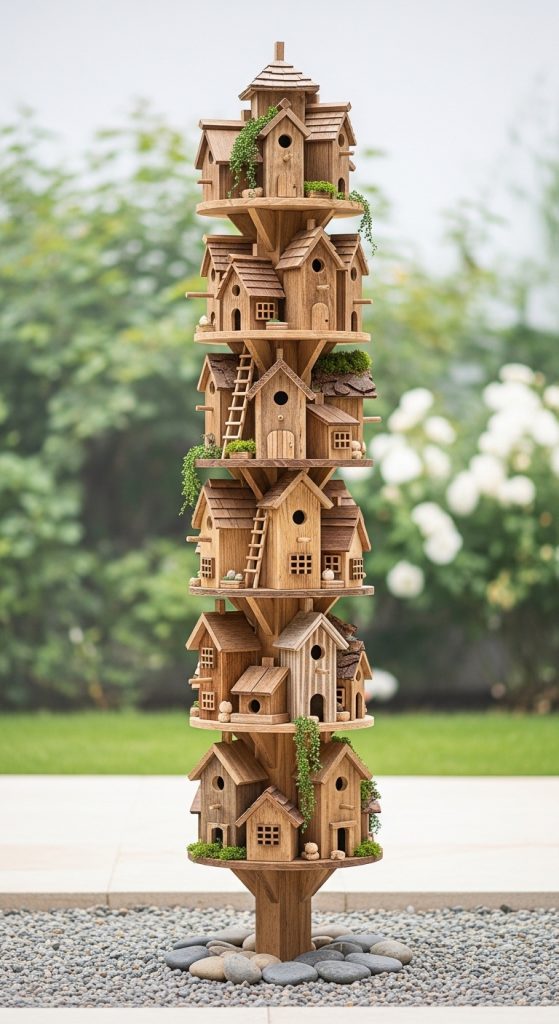
3. Multi-Level Bird House Tower Village (Vertical Garden Structure)
What it is
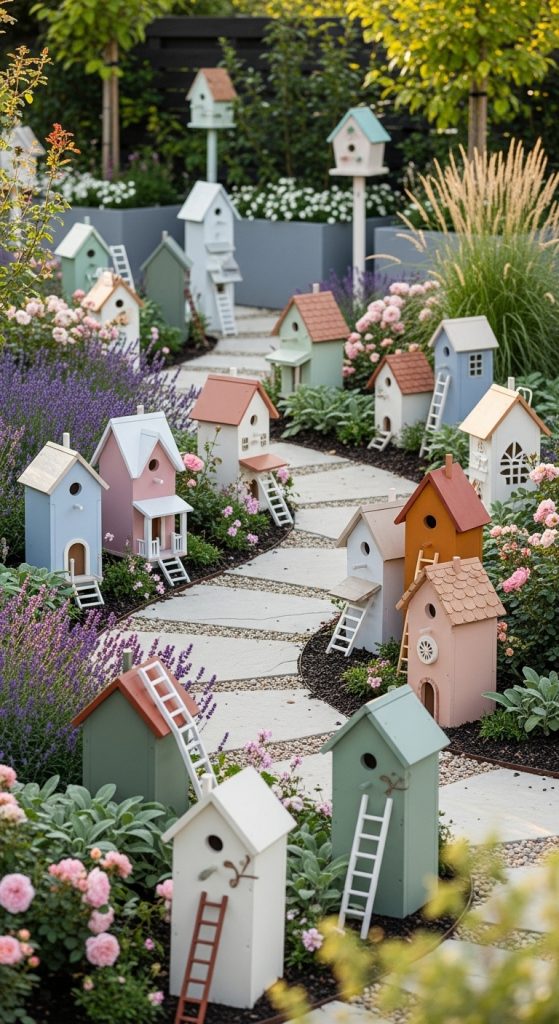
A multi-level bird house tower village is a vertical garden-inspired structure where multiple bird houses are arranged on different stacked levels or platforms, creating a tower-like village effect.
Instead of spreading horizontally, this design focuses on height variation. It mimics the idea of a small bird “community building” with multiple layers, similar to apartments or stacked cottages in a village.
It is ideal for compact gardens because it uses vertical space efficiently while still creating visual impact.
How to implement (practical steps)
Build structure:
- Use a wooden stand, pole system, or garden tower frame
- Ensure strong base for stability
Arrange levels:
- Place bird houses on 3–5 different heights
- Mix small and medium houses for balance
- Keep each level slightly offset
Design balance:
- Avoid overcrowding one side
- Distribute weight evenly for stability
Materials:
- Wooden bird houses preferred for durability
- Neutral or earthy tones for cohesive look
- Optional rustic metal accents for structure
Surrounding design:
- Add small hanging plants or pots between levels
- Place stones or garden decor at base
- Keep background uncluttered
Best for
- Small gardens needing vertical design
- Modern structured garden styles
- People who want organized yet decorative setups
This works best when ground space is limited but you still want a strong visual feature.
Pro tip
Mix closed bird houses with small open platforms to create visual variety and better realism.
Mistake to avoid
Don’t overload one side of the tower. Uneven weight makes the structure unsafe and visually unbalanced.
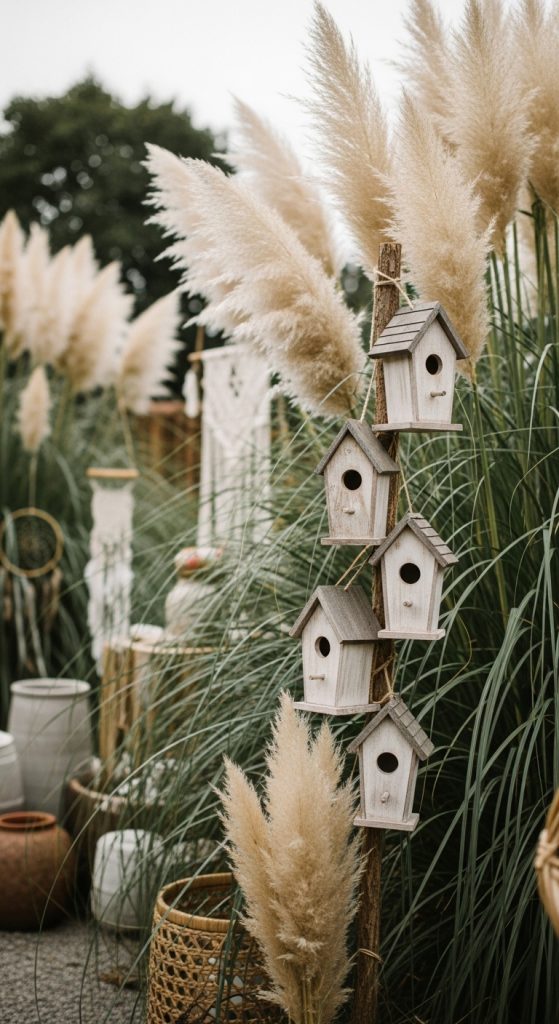
4. Boho Hanging Macramé Bird House Village (Soft Aesthetic Style)
What it is
A boho hanging macramé bird house village is a soft, artistic garden setup where bird houses are suspended using macramé ropes, cords, or natural fibers, creating a floating, layered aesthetic.
Instead of rigid placement on trees or stands, this style focuses on movement, softness, and texture. The bird houses gently hang at different levels, creating a relaxed, free-flowing “bohemian village” feel.
It works especially well in gardens that already have a boho, cozy, or aesthetic theme, where natural textures and handmade elements are already present.
How to implement (practical steps)
Choose bird houses:
- Lightweight wooden or coconut-shell style houses
- Neutral, white, beige, or soft earthy tones
- Avoid heavy or overly decorative designs
Set hanging structure:
- Use tree branches, pergolas, or wooden beams
- Attach strong hooks or rings for support
- Ensure safe spacing between hanging points
Macramé arrangement:
- Use macramé ropes or jute cords
- Hang bird houses at different lengths
- Add knots or woven patterns for visual detail
Styling balance:
- Mix short and long hanging levels
- Keep spacing uneven but intentional
- Combine with hanging plants if possible
Surrounding decor:
- Add pampas grass, soft greenery, or vines
- Keep background natural and uncluttered
Best for
- Boho-style gardens
- Aesthetic outdoor seating areas
- People who prefer soft, artistic decor
This works best when you want a relaxed, Pinterest-style garden vibe instead of structured symmetry.
Pro tip
Stick to neutral tones. Boho style loses its charm when too many bright colors are added.
Mistake to avoid
Don’t hang bird houses too closely together. It removes the airy, floating effect and makes the setup feel crowded.
5. Vintage Cottage Bird House Street (Mini Village Path Design)
What it is
A vintage cottage bird house street is a garden design where bird houses are arranged along a small pathway or edge, like a miniature village street lined with tiny cottages.
Instead of floating or stacked arrangements, this style focuses on horizontal storytelling. Each bird house becomes like a small “home” in a tiny street, creating a nostalgic, fairytale village atmosphere.
It works beautifully in gardens with walking paths, flower borders, or stone edges.
How to implement (practical steps)
Choose bird houses:
- Cottage-style wooden or painted houses
- Soft pastel or rustic faded colors
- Slightly varied designs for realism
Placement layout:
- Line bird houses along a garden path or border
- Keep uneven spacing (not perfectly straight lines)
- Alternate left and right placement
Ground design:
- Add small stones, gravel, or wooden edging
- Plant flowers or low greenery around houses
- Create a “street-like” visual flow
Detailing:
- Add miniature fences or tiny decorative signs
- Mix heights using small stands or logs
- Keep overall theme slightly weathered for vintage look
Lighting optional:
- Soft lanterns or warm ground lights
- Avoid harsh modern lighting
Best for
- Cottage-style gardens
- Decorative pathways or walkways
- People who love fairytale aesthetics
This works best when you want your garden to feel like a tiny storybook village.
Pro tip
Slight imperfections in alignment actually improve the natural village illusion.
Mistake to avoid
Don’t place houses in a perfectly straight line. It looks artificial and removes the “village street” feeling.
6. Tree Trunk Bird House Spiral Village (Vertical Natural Flow Design)
What it is
A tree trunk bird house spiral village is a creative vertical arrangement where bird houses are attached around a tree trunk in a spiral or circular upward flow.
Instead of random placement, this design follows a flowing spiral movement, making the tree look like the center of a living bird community. It feels dynamic, structured, and naturally integrated with the tree’s shape.
This style turns a single tree into a centerpiece of the entire garden.
How to implement (practical steps)
Select tree:
- Strong, healthy tree with visible trunk
- Prefer medium or large trunk surface
Bird house selection:
- Lightweight wooden houses
- Small to medium sizes for balance
- Natural or earthy colors
Spiral arrangement:
- Start placing from lower trunk area
- Move upward in gentle spiral pattern
- Keep consistent spacing between each house
Attachment method:
- Use tree-safe straps or hooks
- Avoid damaging bark or cutting into tree
- Ensure strong but gentle support
Enhancing elements:
- Add small vines or creeping plants around trunk
- Mix in natural rope or fiber accents
- Keep base area clean but natural
Best for
- Large gardens with mature trees
- Nature-inspired landscapes
- People who want a strong focal point feature
This works best when you want one tree to become the visual center of your garden village.
Pro tip
Follow the natural curve of the tree instead of forcing a perfect spiral. Organic flow looks more realistic.
Mistake to avoid
Don’t overcrowd the trunk. Too many houses make it visually heavy and unhealthy for the tree structure.
7. Mini Rooftop Bird House Village (Layered Roofscape Design)
What it is
A mini rooftop bird house village is a layered arrangement of bird houses placed on small roof-like platforms or stepped wooden structures, designed to look like a tiny town built on rooftops.
Instead of attaching bird houses randomly in the garden, this concept organizes them into mini “roof levels” that create a structured skyline effect. It feels like looking at a small village from above, where each house sits on its own miniature roof.
This design is especially effective when you want a more architectural, planned aesthetic rather than a natural forest style.
How to implement (practical steps)
Build structure:
- Use wooden planks, crates, or tiered stands
- Create 2–4 staggered “roof levels”
- Ensure strong base for stability
Bird house selection:
- Small to medium houses for proportional balance
- Mix simple cottage styles and modern mini designs
- Keep color palette cohesive (white, brown, muted tones)
Placement layout:
- Place bird houses on different roof levels
- Avoid overcrowding each platform
- Leave small gaps for visual breathing space
Design styling:
- Add fake shingles, wood textures, or rustic finishes
- Use mini ladders or fence-like details for charm
- Keep edges slightly uneven for realism
Best for
- Modern or structured garden designs
- People who like architectural aesthetics
- Small gardens needing compact vertical setups
This works best when you want a “mini city skyline” effect in your garden.
Pro tip
Keep roof levels slightly offset instead of perfectly aligned—it creates a more natural village skyline feel.
Mistake to avoid
Don’t place identical bird houses on every level. Repetition removes the village illusion and makes it look flat.
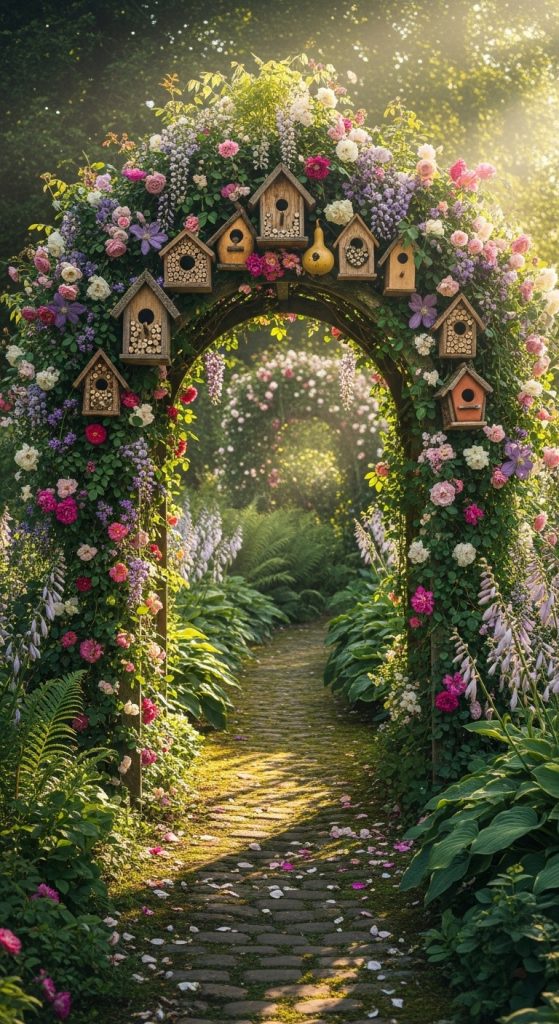
8. Flower Arch Bird House Village (Garden Entrance Feature)
What it is
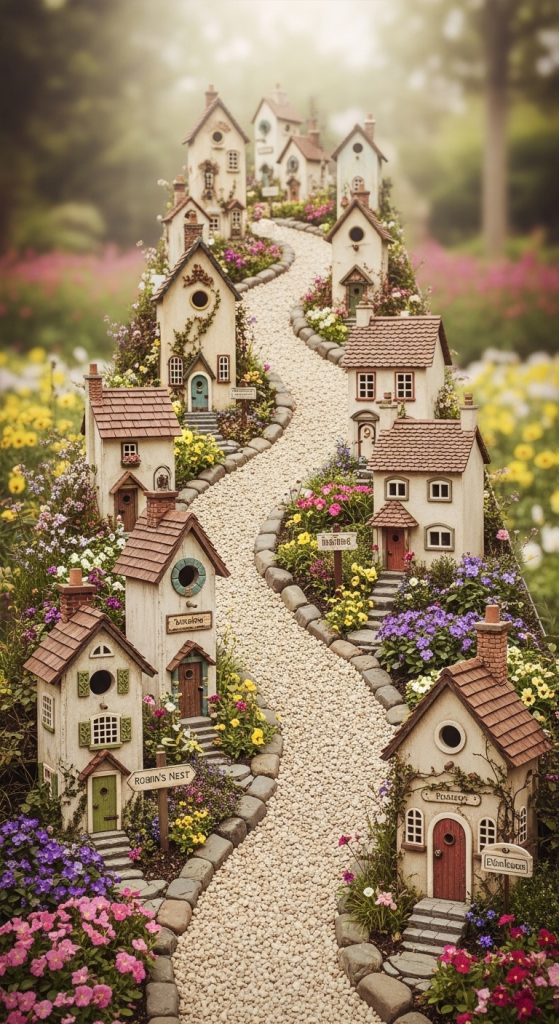
A flower arch bird house village is a decorative garden setup where bird houses are integrated into or around a floral arch structure, creating a romantic entrance-style village display.
Instead of spreading bird houses across the garden, this design focuses everything into one statement arch area, making it a focal point that feels like a gateway into a mini natural world.
It combines vertical florals, hanging elements, and bird houses into one unified aesthetic structure.
How to implement (practical steps)
Build arch structure:
- Use metal or wooden garden arch frame
- Ensure stable ground anchoring
Bird house placement:
- Hang small bird houses from arch top and sides
- Attach some at mid-height for layering
- Keep spacing balanced, not crowded
Floral integration:
- Add climbing plants or artificial floral vines
- Wrap greenery around arch frame
- Mix seasonal flowers for variation
Design balance:
- Place bird houses at different heights on both sides
- Keep central arch opening clear
- Avoid blocking entrance space
Finishing touches:
- Add soft hanging lanterns if desired
- Keep color palette natural and soft
- Ensure bird access points remain open
Best for
- Garden entrances or walkways
- Romantic or fairytale-themed gardens
- Decorative event-style outdoor spaces
This works best when you want a dramatic first impression in your garden.
Pro tip
Balance flowers and bird houses equally—too many flowers hide the structure, too many houses reduce softness.
Mistake to avoid
Don’t block airflow or entry points with heavy decoration. The arch should remain functional and open.
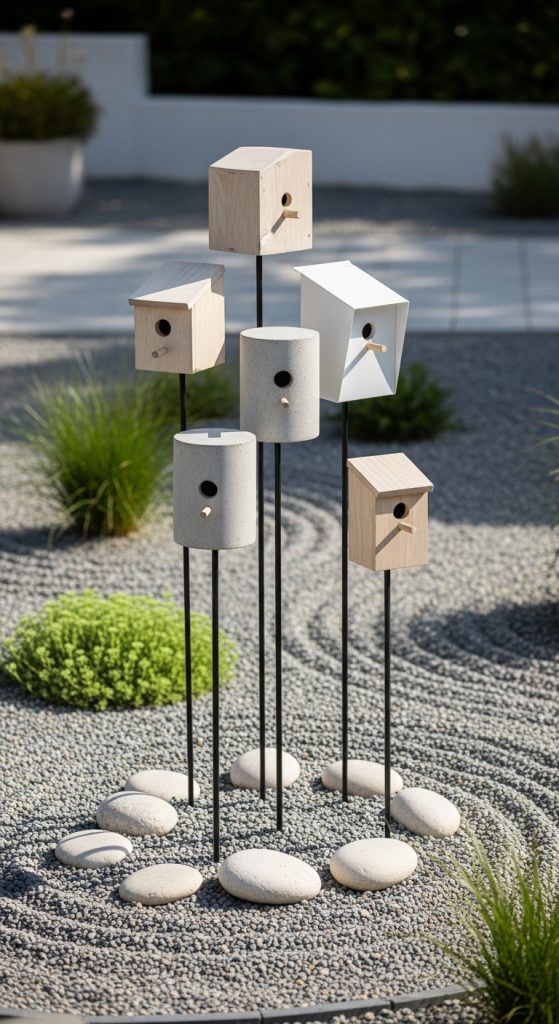
9. Floating Pole Bird House Village (Modern Minimal Vertical Style)
What it is
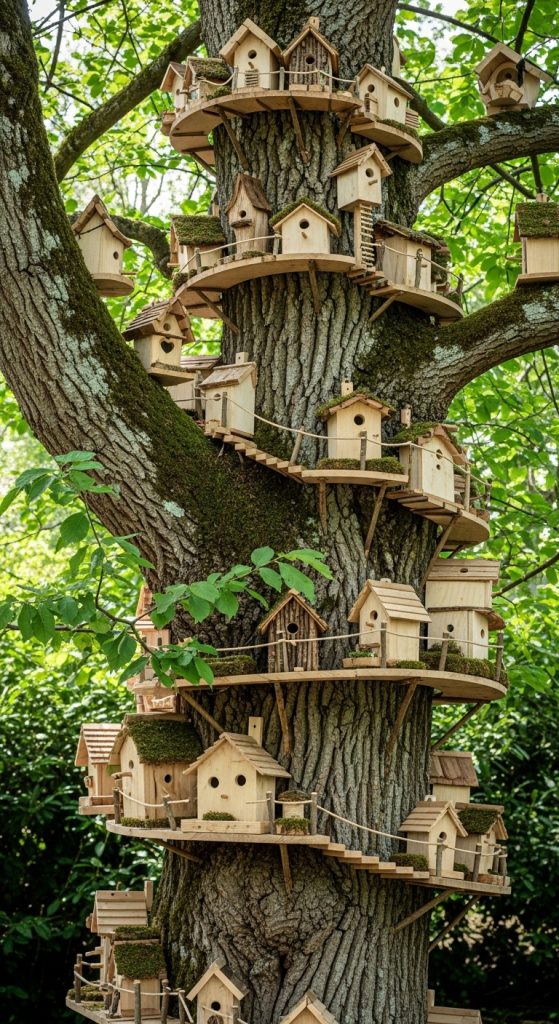
A floating pole bird house village is a modern vertical setup where bird houses are mounted on tall poles or slim stands at different heights, creating a clean “floating” effect in the garden.
Unlike natural tree-based designs, this style is more structured and architectural. It gives the illusion that bird houses are gently suspended in space, forming a modern garden installation.
It is ideal for minimal or contemporary outdoor spaces.
How to implement (practical steps)
Install poles:
- Use metal or treated wooden poles
- Fix securely into ground for stability
- Vary pole heights for visual depth
Bird house selection:
- Sleek, simple designs (box-style or geometric)
- Neutral colors: white, grey, black, or wood tones
- Avoid overly decorative elements
Arrangement layout:
- Place poles in small clusters, not straight lines
- Mix tall and short poles for rhythm
- Keep spacing consistent but not rigid
Styling approach:
- Keep garden floor minimal around setup
- Add gravel or simple greenery base
- Avoid cluttered surrounding decor
Optional enhancement:
- Add small spotlight lighting for evening effect
- Use matte finishes for modern aesthetic
Best for
- Modern gardens and patios
- Minimalist outdoor designs
- Small spaces needing vertical interest
This works best when you want a clean, gallery-like garden feature.
Pro tip
Less is more. The strength of this design comes from simplicity and spacing, not decoration.
Mistake to avoid
Don’t mix too many styles or colors. It breaks the modern floating illusion and creates visual noise.
10. Mirror Reflection Bird House Village (Illusion Garden Design)
What it is
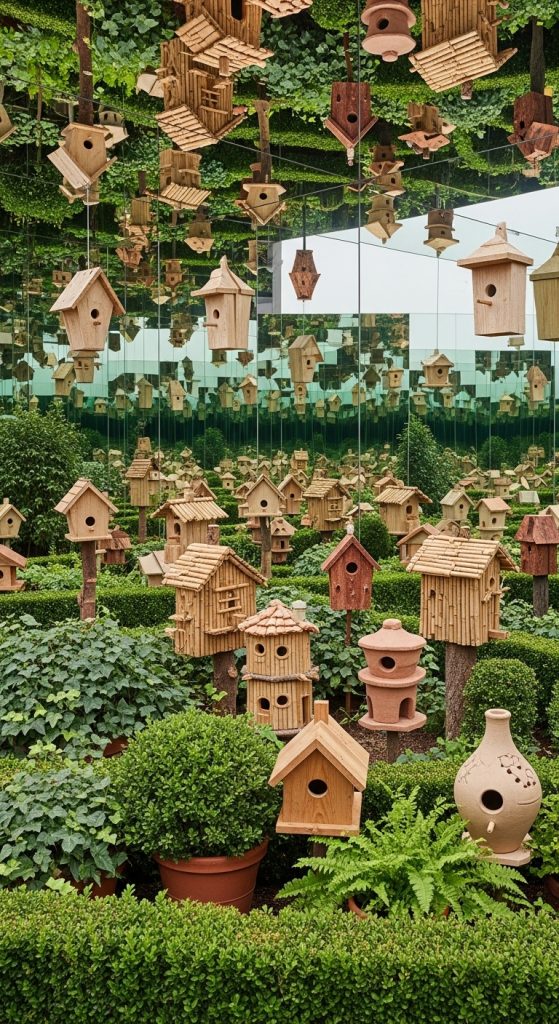
A mirror reflection bird house village is a creative garden setup where mirrors are used behind or between bird houses to create depth, reflection, and visual expansion. It gives the illusion that the bird house village is larger, more layered, and almost endless.
This design is not about adding more bird houses—it is about changing how the space is perceived. Even a small garden corner can look like a rich, extended bird habitat when reflections are placed correctly.
It works like a visual trick: the garden feels bigger, more alive, and more dynamic without actually increasing space.
How to implement (practical steps)
Choose mirror placement:
- Use outdoor-safe mirrors or reflective panels
- Place them behind bird house clusters or along walls
- Avoid direct harsh sunlight reflection
Bird house arrangement:
- Keep 3–6 bird houses as a focused cluster
- Mix heights and small variations in design
- Place some slightly in front of mirrors
Framing style:
- Surround mirrors with wood frames, vines, or greenery
- Blend edges so mirrors don’t look too obvious
- Keep reflection subtle, not overpowering
Garden balance:
- Add plants or stones in front for natural layering
- Avoid overcrowding reflective area
- Keep a clear focal point
Best for
- Small gardens needing visual expansion
- Modern or artistic garden designs
- People who enjoy illusion-based decor
This works best when you want depth without physically adding more structures.
Pro tip
Angle mirrors slightly instead of placing them flat—angled reflection creates more natural movement and depth.
Mistake to avoid
Don’t overuse mirrors. Too many reflections make the garden feel confusing instead of aesthetic.
11. Hanging Lantern Bird House Village (Soft Evening Glow Concept)
What it is
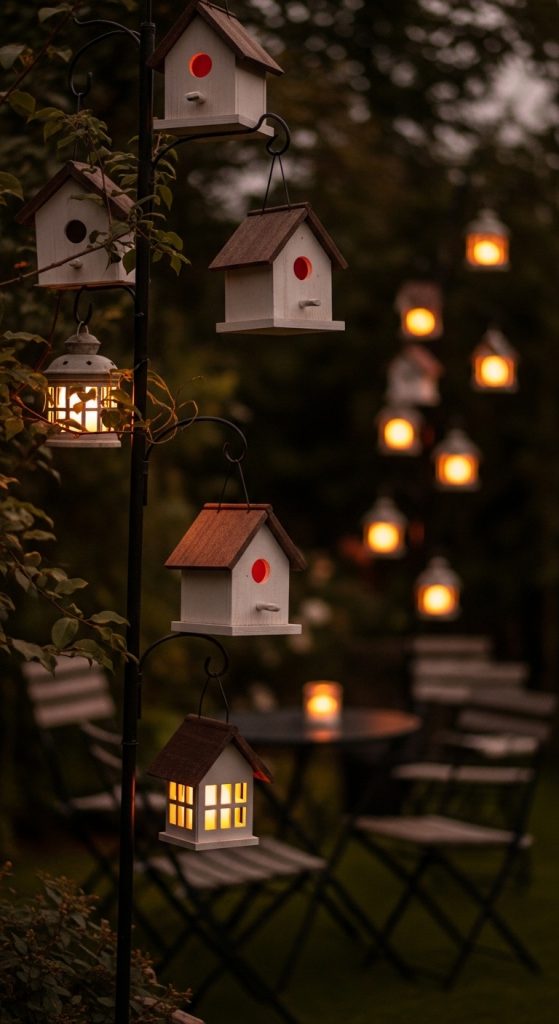
A hanging lantern bird house village is a cozy garden design where bird houses are combined with lantern-style lighting elements to create a warm, glowing nighttime atmosphere.
Unlike purely decorative setups, this design focuses on evening transformation. During the day, it looks like a calm bird village. At night, it becomes a glowing, story-like space filled with soft light and shadow.
The purpose is to make the garden feel alive even after sunset.
How to implement (practical steps)
Choose bird houses:
- Wooden or cottage-style houses
- Soft neutral or warm tones
- Simple shapes for better lighting effect
Lighting setup:
- Hang lanterns near bird house clusters
- Use warm white LED lights only
- Mix hanging lanterns and ground lanterns
Arrangement style:
- Create small grouped “lighting zones”
- Place bird houses between lantern points
- Keep spacing balanced for glow distribution
Garden integration:
- Add soft greenery or climbing plants
- Place lanterns at different heights
- Keep background minimal to highlight light
Safety and function:
- Ensure lights do not block bird entry
- Use weather-safe outdoor lighting
- Keep wiring hidden and secure
Best for
- Evening garden relaxation spaces
- Outdoor seating or patios
- Aesthetic, cozy garden themes
This works best when your garden is used at night and you want a calm, glowing environment.
Pro tip
Warm light tones (yellow/orange) create a more natural and relaxing effect than bright white or colored lights.
Mistake to avoid
Don’t overcrowd lanterns and bird houses together. Too much light removes the soft, peaceful atmosphere.
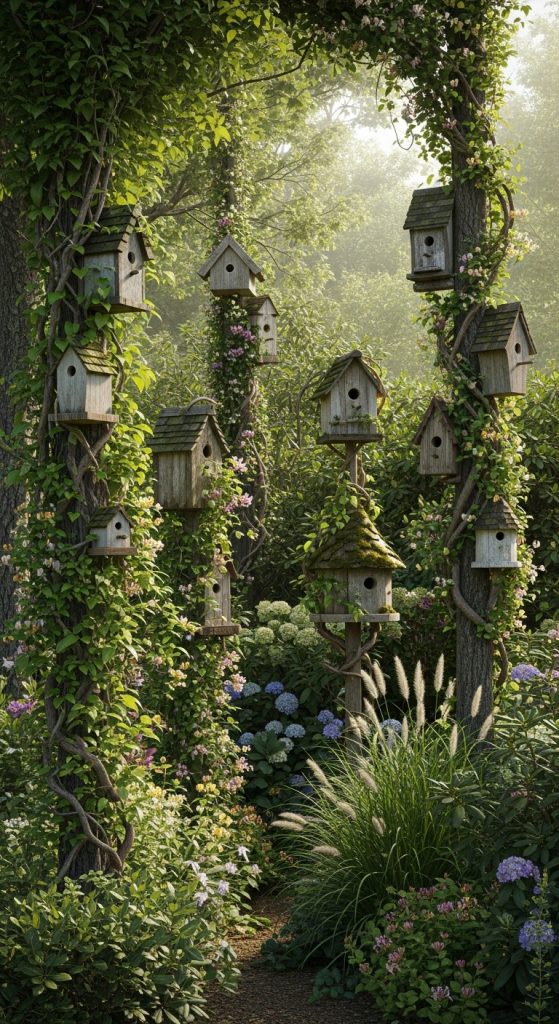
12. Wild Nature Overgrown Bird House Village (Organic Growth Theme)
What it is
A wild nature overgrown bird house village is a garden design where bird houses are intentionally integrated into natural overgrowth—vines, shrubs, and climbing plants are allowed to grow around and through the structures.
Instead of keeping everything clean and controlled, this design embraces a more natural, slightly untamed look. It creates the feeling of a hidden bird village that has existed in nature for years.
This style is about controlled wildness—not neglect, but guided natural growth.
How to implement (practical steps)
Select location:
- Choose a garden corner with existing greenery
- Prefer areas where plants naturally grow or can climb
Bird house placement:
- Mount houses on trees, fences, or wooden posts
- Place at different heights within greenery
- Ensure accessibility for birds remains clear
Plant integration:
- Add climbing plants like vines or creepers
- Let plants gradually wrap around structures
- Use shrubs and ground greenery for layering
Design approach:
- Avoid straight lines or perfect spacing
- Allow uneven growth patterns
- Blend structures into natural surroundings
Maintenance balance:
- Trim only when necessary for bird access
- Let nature fill empty spaces over time
- Monitor safety of nesting areas
Best for
- Large gardens with natural vegetation
- Wildlife-friendly outdoor spaces
- People who prefer organic, forest-like aesthetics
This works best when you want a truly natural, evolving garden village.
Pro tip
Let the garden “take control” slowly over time instead of forcing immediate perfection. The beauty increases as it grows.
Mistake to avoid
Don’t over-control the plants. If everything is trimmed too perfectly, the natural village illusion disappears.
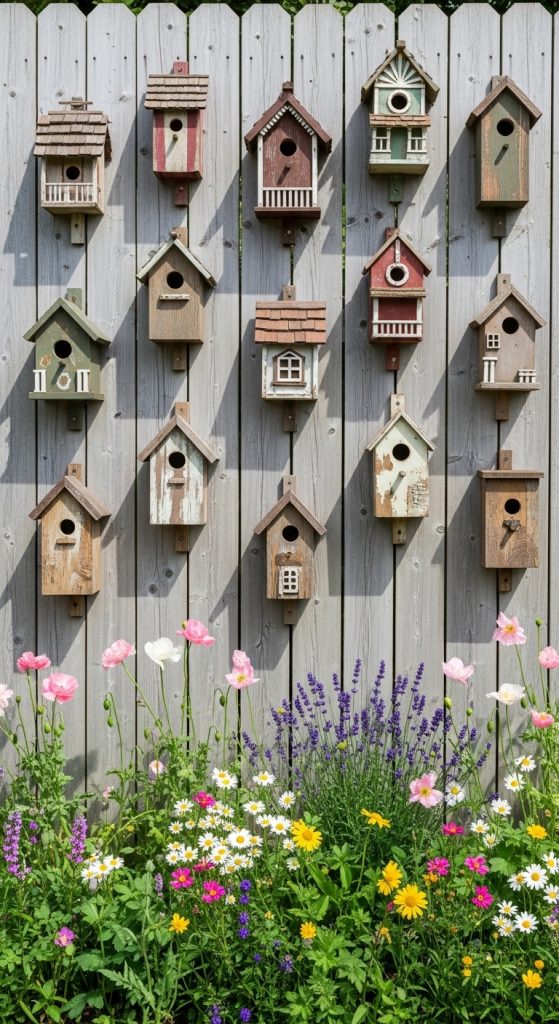
13. Rustic Fence Line Bird House Village (Border Story Design)
What it is
A rustic fence line bird house village is a structured garden design where bird houses are installed along a fence boundary, turning an ordinary border into a continuous “mini village street”.
Instead of placing bird houses randomly in open space, this idea uses the fence as a visual backbone. Each bird house becomes like a small home along a living border, creating a rhythmic and organized village effect.
It is especially powerful because it transforms something functional (a fence) into something decorative and alive.
How to implement (practical steps)
Choose fence type:
- Wooden or metal fence works best
- Ensure it is stable and weather-safe
Bird house arrangement:
- Attach bird houses at regular but slightly varied intervals
- Mix heights instead of keeping them in a straight line
- Alternate designs for visual variety
Styling approach:
- Use rustic wooden bird houses for natural look
- Add small hanging elements between houses (lanterns or plants)
- Keep color palette earthy and soft
Integration with garden:
- Plant flowers or shrubs along fence base
- Allow slight greenery overlap onto fence
- Avoid overcrowding lower area
Best for
- Long garden boundaries
- Narrow outdoor spaces
- Cottage or rustic garden themes
This works best when you want to turn a plain fence into a decorative feature.
Pro tip
Small variations in spacing make the fence feel like a real village street instead of a manufactured row.
Mistake to avoid
Don’t align everything perfectly. Too much symmetry makes it look artificial and flat.
14. Garden Pond Reflection Bird House Village (Water Harmony Design)
What it is
A garden pond reflection bird house village is a serene setup where bird houses are placed near water bodies like ponds or small water features to create reflections and natural harmony.
The combination of water, reflection, and bird activity creates a calm, almost meditative garden experience. The bird houses appear twice—once in reality and once in reflection—making the space feel larger and more peaceful.
It blends wildlife, water, and structure into one unified aesthetic.
How to implement (practical steps)
Choose location:
- Place near a pond, water bowl feature, or small water garden
- Ensure safe distance from water edge for stability
Bird house placement:
- Install bird houses on nearby trees, poles, or stones
- Position them where reflection is visible in water
- Vary heights for natural layering
Water integration:
- Keep water clean and still for better reflection
- Add aquatic plants or stones for natural look
- Avoid disturbing water surface too much
Design balance:
- Keep surrounding area minimal and uncluttered
- Use natural materials like wood and stone
- Let reflection remain the main visual focus
Best for
- Large gardens with water features
- Relaxation or meditation garden spaces
- Nature-inspired luxury garden designs
This works best when you want calm, reflective, and visually soothing environments.
Pro tip
Still water equals better reflection. Even small ripples reduce the aesthetic impact.
Mistake to avoid
Don’t overcrowd the pond area with decor. The reflection needs space to breathe visually.
15. Color-Themed Artistic Bird House Village (Designer Garden Concept)
What it is
A color-themed artistic bird house village is a highly curated garden design where all bird houses follow a specific color palette or artistic theme, creating a unified visual story.
Instead of mixing random styles, this idea focuses on intentional design consistency. The result is a visually powerful garden that feels like an outdoor art installation.
Examples include:
- All white minimalist village
- Pastel fairy-tale village
- Earthy rustic brown tones
- Blue coastal-inspired village
How to implement (practical steps)
Choose theme:
- Decide one clear color palette before starting
- Stick to 2–3 main tones maximum
Bird house selection:
- Use consistent shapes or controlled variations
- Paint or select pre-designed houses in chosen colors
- Avoid mixing unrelated styles
Arrangement strategy:
- Group bird houses in clusters for visual impact
- Balance colors evenly across garden space
- Avoid placing same colors too close together
Supporting elements:
- Match plants, pots, and decor to theme
- Use coordinated stones, benches, or fencing
- Keep background aligned with color story
Best for
- Aesthetic-focused gardens
- Pinterest-style outdoor setups
- People who enjoy design consistency
This works best when you want a strong visual identity for your garden.
Pro tip
Limit your palette. The more controlled the colors, the more premium and aesthetic the final look appears.
Mistake to avoid
Don’t mix too many themes. Random colors destroy the visual story and make the garden look cluttered instead of curated.