
Braids have always been more than just a hairstyle—they’re culture, identity, creativity, and self-expression woven into one. But in recent years, one variation has been getting a lot of attention for its versatility and natural finish: back weave braid hairstyles.
If you’ve ever wanted a protective style that looks neat from the front but still gives you endless styling options from the back, back weave braids are exactly that.
At first glance, they might look simple—just braids flowing toward the back. But when done properly, they create one of the most elegant, low-maintenance, and long-lasting hairstyles you can wear. Whether you’re going for a sleek everyday look, a bold statement style, or something soft and feminine, back weave braids adapt beautifully to different personalities and occasions.

The Real Problem Many People Face with Braided Styles
If you’ve ever gotten braids before, you probably know the struggle:
- Styles that look great at first but lose shape too quickly
- Braids that feel too heavy or uncomfortable after a few days
- Lack of styling flexibility once the hair is installed
- Front styles that look nice but don’t match the back
And the biggest issue? Many braided styles don’t balance aesthetic + practicality. They either look amazing but are hard to maintain, or they’re easy to maintain but lack style impact.
This is where back weave braids stand out.
What Makes Back Weave Braids Different
Back weave braids are designed with a focus on direction and flow. Instead of braids being styled in all directions or random patterns, the hair is woven or braided toward the back, creating a smooth, structured, and elegant finish.
This direction-based styling gives several advantages:
- A clean and polished silhouette from all angles
- Easier maintenance because braids stay aligned
- A natural “flowing back” effect that looks neat and intentional
- More room for creative patterns, parting, and styling variations
This works especially well if you have a busy lifestyle and need a protective style that still looks put together without constant effort.
Why This Style Is So Popular Right Now
Back weave braids have become especially popular because they fit perfectly into modern beauty trends that focus on natural-looking, low-maintenance, and protective hairstyles.
People are moving away from overly complicated styles and leaning toward looks that:
- Last longer
- Require less daily manipulation
- Protect natural hair health
- Still look stylish without effort
Back weave braids check all these boxes.
They also photograph beautifully, which is why they’re trending heavily on Pinterest, Instagram, and TikTok. The way the braids flow backward creates a natural symmetry that looks clean in both casual and formal settings.
Versatility That Works for Every Occasion
One of the biggest strengths of back weave braids is how adaptable they are.
You can wear them:
- In a simple straight-back style for everyday wear
- In detailed patterns for a more aesthetic, styled look
- Pulled into ponytails or buns for special occasions
- Combined with beads, cuffs, or accessories for personality
If you have a small face or soft features, this style helps frame your head shape beautifully without overwhelming your look. If you have thicker hair, it helps manage volume in a controlled and stylish way.
This works best when the braiding pattern is customized to your hair density and face shape, not just copied from a generic style.
A Style That Protects and Enhances
Beyond aesthetics, back weave braids are also a protective hairstyle. They help:
- Reduce daily heat damage
- Minimize breakage and tangling
- Protect natural hair growth
- Retain moisture when properly maintained
This makes them ideal for people who want both beauty and hair health at the same time.
And unlike some protective styles that feel restrictive, back weave braids still allow creativity—you can switch parts, add designs, or change styling direction without reinstalling everything.
What You’ll Learn in This Guide
In the following ideas, you’re not just going to see random braid styles. You’ll get detailed, practical breakdowns of how each back weave braid idea works, how to achieve it, and who it suits best.
You’ll learn:
- How different braid patterns change your overall look
- Which styles are best for casual vs. formal settings
- How to maintain braids for longer wear
- Styling tricks that make braids look more modern and aesthetic
- Common mistakes that ruin braid longevity or appearance
Each idea will go beyond surface-level inspiration and help you understand how to actually bring these styles to life in real situations.
Before You Choose Your Style
The key to a great braided hairstyle is not just the pattern—it’s the intention behind it.
Back weave braids are powerful because they give you structure without sacrificing beauty. They’re not loud, but they are noticeable. They don’t try too hard, but they still stand out.
If you’ve been looking for a hairstyle that feels:
- Clean
- Long-lasting
- Stylish without effort
- And adaptable to different moods
Then you’re in the right place.
Now let’s explore the best 11 braid hairstyle ideas in back weave styles that will completely upgrade your next look.
Idea 1: Straight-Back Classic Weave Braids (Clean Everyday Protective Style)
What it is
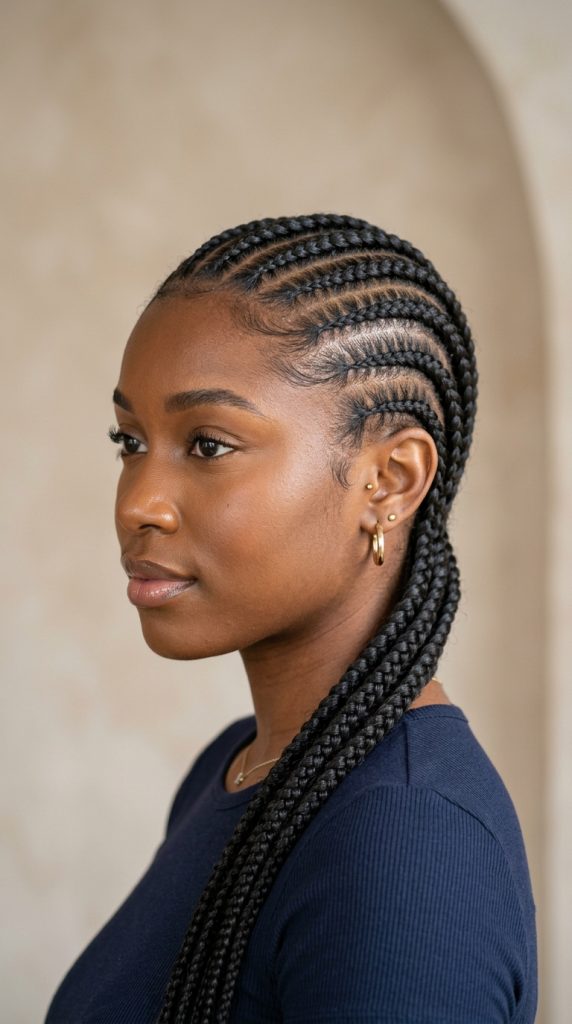
Straight-back classic weave braids are the most timeless and foundational version of back weave braid hairstyles. In this style, the hair is neatly parted and braided straight toward the back in evenly spaced sections, creating a clean, structured, and symmetrical look.
What makes this style so popular is its simplicity. There are no complex patterns or dramatic designs—just smooth, consistent braids that flow backward in a natural direction. This gives a polished appearance while keeping the scalp protected and low-maintenance.
It’s the kind of hairstyle that works in almost every situation: school, work, casual outings, or even more formal settings depending on how it’s styled.
How it is done and styled
The stylist begins by:
- Creating clean, even partings from the front hairline to the back
- Ensuring sections are symmetrical for a balanced look
- Braiding each section tightly but comfortably toward the back
The key is consistency—each braid should follow the same direction and thickness for a uniform finish.
Styling options:
- Wear it fully down for a sleek, classic look
- Add beads or cuffs for subtle decoration
- Pull into a low ponytail or bun for variation
To maintain the style:
- Use scalp oil to prevent dryness
- Wrap hair at night with a silk scarf
- Lightly moisturize braids to reduce frizz
If you have a small face or soft features, this style works best because it elongates the head shape and creates a clean visual frame.
Best for
- First-time braided styles
- Professional or everyday wear
- People who prefer minimal, clean hairstyles
Pro tip
Ask for slightly curved partings instead of rigid straight lines if you want a softer, more natural-looking finish.
Mistake to avoid
Don’t make the braids too tight at the scalp. Over-tight braiding can cause discomfort and damage edges over time.
Idea 2: Feed-In Back Weave Braids (Natural Gradual Thickness Look)
What it is
Feed-in back weave braids are a more advanced and natural-looking version of classic braids. Instead of starting with full thick sections, hair is gradually added (fed in) as the braid moves backward, creating a smooth transition from thin to full thickness.
This technique makes the braids look like they are naturally growing from the scalp rather than being attached or separated. The result is a very sleek, lightweight, and realistic finish.
It’s especially popular for people who want a more polished and modern braided look without the heaviness of traditional thick braids.

How it is done and styled
The stylist starts with:
- Very small sections of natural hair at the front
- Gradual addition of extension hair as the braid moves backward
- Even tension to ensure smooth blending
Each braid is carefully built layer by layer, which creates a seamless and natural gradient effect.
Styling options:
- Wear braids straight back for a clean aesthetic
- Pull into a high ponytail for a lifted look
- Style into a low braided bun for elegance
Maintenance:
- Keep scalp moisturized with lightweight oils
- Avoid heavy buildup products at the roots
- Wrap hair at night to preserve neatness
If you have a small room in your styling routine (limited time), this works best because it stays neat longer and requires less daily adjustment.
Best for
- People wanting natural-looking braids
- Medium to long-term protective styles
- Fashion-forward yet practical hairstyles
Pro tip
Choose hair extensions that closely match your natural texture so the feed-in effect looks completely seamless.
Mistake to avoid
Avoid making feed-in sections uneven. Uneven feeding breaks the smooth gradient and makes the style look patchy instead of blended.
Idea 3: Zig-Zag Back Weave Braids (Patterned Statement Style)
What it is
Zig-zag back weave braids are a more creative and eye-catching variation where the parting is designed in a zig-zag or geometric pattern instead of straight lines. The braids still flow toward the back, but the scalp design itself adds visual interest and personality.
This style is perfect if you want something that stands out while still maintaining the structure and practicality of back weave braids. It turns a simple protective style into a fashion statement.
Even though the braids themselves may be similar to classic styles, the parting design completely changes the overall look.

How it is done and styled
The stylist begins by:
- Creating zig-zag partings across the scalp instead of straight lines
- Ensuring consistent spacing for balance
- Braiding each section straight back following the pattern
The key is precision—the pattern must stay even across the head to maintain symmetry.
Styling options:
- Wear braids down to showcase the scalp design
- Pull into a ponytail for a hidden-pattern effect
- Style into buns to highlight clean parting lines
Maintenance:
- Keep scalp clean to highlight the design
- Avoid excessive product buildup in parting lines
- Re-oil scalp lightly to maintain neatness
If you have a small face or minimal features, this style adds dimension and makes your hairstyle more visually interesting without adding bulk.
Best for
- People who want bold, trendy hairstyles
- Special occasions or fashion-forward looks
- Those who like detailed braid designs
Pro tip
Keep the zig-zag pattern consistent in size. Small uneven sections can make the design look messy instead of intentional.
Mistake to avoid
Don’t overcrowd the pattern with too many tight zig-zags. Overcomplicated parting can reduce clarity and make the design hard to see.
Idea 4: Side-Swept Back Weave Braids (Soft Asymmetrical Flow)
What it is
Side-swept back weave braids are a stylish variation where the braids are not directed strictly straight back, but instead angled slightly toward one side before flowing backward. This creates a soft asymmetrical effect that looks more relaxed, feminine, and modern.
Unlike strict straight-back braids, this style adds movement to the overall look. It gives the illusion of flow and direction, making the hairstyle feel less rigid and more natural. It’s especially popular for people who want something neat but not overly “tight” or structured.
This works best when you want a protective style that still has personality and softness without going into complex patterns.

How it is done and styled
The stylist begins by:
- Creating angled partings that gently shift toward one side
- Braiding each section diagonally back instead of straight down
- Maintaining even tension for a smooth flow
The angle can be subtle or more dramatic depending on preference.
Styling options:
- Wear braids all back to show the side-swept direction
- Pull into a low side ponytail for elegance
- Gather into a loose bun with visible angled braids
Maintenance:
- Keep scalp moisturized, especially along angled parts
- Wrap hair at night to preserve direction
- Re-adjust stray edges gently with styling gel
If you have a small face, this style works best because it creates a soft framing effect that adds dimension without overpowering your features.
Best for
- People who want a softer braided look
- Oval, round, or heart-shaped faces
- Everyday wear with a stylish twist
Pro tip
Choose a slightly deeper side angle instead of a harsh shift to keep the style balanced and wearable long-term.
Mistake to avoid
Don’t make the angle inconsistent across sections. Uneven direction can break the flow and make the braids look unorganized.
Idea 5: Back Weave Braids with Curved Parting (Flowing Sculpted Design)
What it is
Back weave braids with curved parting are a more artistic version of the classic style, where the scalp sections are designed in soft curved or arched lines instead of straight or zig-zag patterns. The braids still flow backward, but the parting creates a flowing, sculpted effect.
This design adds elegance and softness while still keeping the structure of back weave braids. It’s perfect if you want something visually interesting but not too bold or complicated.
The curved parting naturally enhances head shape and makes the style look more custom and high-end.

How it is done and styled
The stylist starts by:
- Drawing curved parting lines across the scalp
- Ensuring curves are symmetrical and balanced on both sides
- Braiding each section straight back following the curve flow
The key is precision—curves must be smooth, not sharp or uneven.
Styling options:
- Wear braids down to highlight the curved scalp design
- Pull into a bun for a sculptural effect
- Style into a ponytail to emphasize clean parting flow
Maintenance:
- Keep parts clean and visible
- Lightly oil scalp to maintain shine
- Avoid heavy buildup that hides parting design
If you have a small face, curved partings help soften facial structure and create a more balanced look.
Best for
- Elegant and aesthetic braid lovers
- Special occasions or styled everyday wear
- People who prefer soft, artistic designs
Pro tip
Ask for symmetrical curves that mirror each other on both sides of the head to maintain harmony and professional finish.
Mistake to avoid
Don’t rush the parting process. Uneven curves can make the entire hairstyle look distorted instead of intentional.
Idea 6: Chunky Back Weave Braids (Bold, Low-Maintenance Statement Style)
What it is
Chunky back weave braids are a bold and practical variation where the braids are larger, thicker, and fewer in number, creating a strong visual impact while reducing installation time.
This style is perfect for people who want a protective hairstyle that is both stylish and low-maintenance. Because the braids are thicker, they are easier to manage and often last longer with less daily effort.
The overall look is confident, clean, and slightly more dramatic compared to finer braid styles.

How it is done and styled
The stylist begins by:
- Creating larger, evenly spaced sections
- Ensuring consistent thickness from root to end
- Braiding each section straight back for a uniform finish
Because the braids are thicker, tension must be carefully controlled to avoid scalp discomfort.
Styling options:
- Wear braids down for a bold, full look
- Pull into a high ponytail for volume
- Style into a large bun for a statement updo
Maintenance:
- Moisturize scalp regularly to prevent dryness
- Keep edges neat with light gel if needed
- Wrap at night to reduce frizz and tension
If you have thick hair, this style works best because it manages volume without requiring many small sections.
Best for
- Busy lifestyles needing low-maintenance hair
- Thick or dense hair textures
- People who prefer bold, simple styles
Pro tip
Keep braid size consistent across the head. Even slight differences in thickness can make the style look uneven.
Mistake to avoid
Don’t make braids too heavy at the roots. Excess weight can cause tension and reduce comfort over time.
Idea 7: Feed-In Heart Part Back Weave Braids (Aesthetic Romantic Design)
What it is
Feed-in heart part back weave braids are a creative and highly aesthetic variation where the scalp parting is designed into a heart shape or heart-inspired curve pattern before transitioning into back-flowing braids. It combines the smooth, natural look of feed-in braids with a decorative parting that adds personality and softness.
This style is especially popular for people who want something expressive and feminine without going too extreme or complicated. The braids still flow neatly toward the back, but the heart design adds a hidden “wow factor” that becomes visible depending on angle and styling.
It works best when you want your hairstyle to feel both protective and visually artistic.

How it is done and styled
The stylist begins by:
- Creating a heart-shaped parting at the crown or front section
- Gradually adding hair (feed-in technique) to maintain smooth thickness
- Braiding sections straight back while preserving the heart outline
Precision is very important here—the heart shape must be symmetrical and clean for the design to stand out properly.
Styling options:
- Wear braids down to highlight the heart parting
- Pull into a ponytail to reveal the design more clearly
- Style into a bun for a subtle hidden-heart effect
Maintenance:
- Keep parting lines clean and free from buildup
- Moisturize scalp lightly to maintain shine
- Avoid disturbing the heart shape when styling edges
If you have a small face, this style works best because the curved design naturally softens facial structure and adds visual balance.
Best for
- Romantic, aesthetic braid lovers
- Special occasions or styled everyday wear
- People who enjoy creative parting designs
Pro tip
Ask your stylist to lightly sketch the heart outline first before braiding. This ensures proper symmetry and prevents uneven shaping.
Mistake to avoid
Don’t make the heart too small or too detailed. Overly intricate designs can lose clarity once braids are added.
Idea 8: Straight-Back Braids with Beaded Ends (Cultural Accent Style)
What it is
Straight-back braids with beaded ends are a classic back weave style enhanced with decorative beads or accessories at the ends of each braid. This adds personality, cultural expression, and movement to an otherwise clean and structured hairstyle.
The braids themselves remain simple and straight-back, but the beads create visual interest, sound, and texture. This makes the hairstyle feel more dynamic and expressive without changing the core structure.
It’s a perfect blend of tradition and modern styling.

How it is done and styled
The stylist begins by:
- Creating evenly spaced straight-back braids
- Ensuring consistent tension and clean partings
- Securing ends before adding beads
Once braids are complete:
- Beads are carefully threaded onto each braid end
- Small elastic bands are used to secure them in place
Styling options:
- Wear braids down to showcase bead movement
- Tie into a ponytail for clustered bead effect
- Style into a bun with beads hanging subtly
Maintenance:
- Check bead security regularly to avoid slipping
- Keep braids moisturized to prevent dryness
- Wrap hair at night to reduce frizz around roots
If you have a small face or delicate features, beads can add balance and draw attention downward in a flattering way.
Best for
- Cultural or expressive hairstyle lovers
- Casual, everyday wear with personality
- People who like decorative protective styles
Pro tip
Choose bead colors that match your outfit or skin tone undertone for a more coordinated and aesthetic look.
Mistake to avoid
Don’t overload braids with too many beads. Excess weight can strain roots and make the style uncomfortable.
Idea 9: Back Weave Braids into High Ponytail Flow (Lifted Sleek Look)
What it is
Back weave braids into a high ponytail flow is a stylish variation where braids are initially installed flowing backward, but are designed to gather smoothly into a high ponytail shape. This creates a lifted, energetic, and modern silhouette.
Unlike loose braids, this style is structured with movement in mind. It gives the illusion of height, sharpness, and confidence while still maintaining the protective benefits of braiding.
It’s especially popular for people who like sporty, sleek, or fashion-forward hairstyles.

How it is done and styled
The stylist begins by:
- Installing straight-back or slightly angled braids
- Ensuring clean tension so braids can be gathered upward
- Leaving enough length for ponytail formation
Once complete:
- Braids are gathered at crown level
- Secured into a high ponytail base
- Optionally wrapped with one braid for a polished finish
Styling options:
- Wear high ponytail for bold, lifted look
- Add curls or braided extensions for extra volume
- Wrap ponytail into a high bun for formal style
Maintenance:
- Keep edges smooth with light gel or styling cream
- Retighten ponytail base if needed over time
- Moisturize scalp to prevent dryness at tension points
If you have a small face, this style works best because it lifts facial features and creates an elongated silhouette.
Best for
- Active or sporty lifestyles
- Fashion-forward braid looks
- Medium to long braided lengths
Pro tip
Wrap one braid around the ponytail base to hide the hair tie and create a cleaner, more professional finish.
Mistake to avoid
Don’t tie the ponytail too tightly. Excess tension can cause scalp discomfort and break the sleek flow of the style.
Idea 10: Back Weave Braids into Low Bun (Elegant Protective Updo)
What it is
The back weave braids into a low bun is a refined and elegant variation where the braids are installed flowing backward and then gathered into a smooth, low-position bun at the nape of the neck. This style blends the structure of braids with the softness of an updo, creating a polished and timeless look.
Unlike loose braided styles, this version feels more formal and controlled, making it perfect for occasions where you want your hairstyle to look neat, intentional, and slightly sophisticated without being overly complicated.
It’s also one of the most practical braided styles because it keeps hair fully secured while still looking stylish.

How it is done and styled
The stylist begins by:
- Creating straight-back or feed-in braids
- Ensuring braids are uniform and smooth from root to end
- Leaving enough length for bun formation
Once braiding is complete:
- All braids are gathered at the nape of the neck
- Twisted or wrapped into a low bun shape
- Secured with pins or a strong hair tie
- Optional: wrap one braid around the base for a clean finish
Styling options:
- Sleek low bun for formal occasions
- Slightly messy bun for casual aesthetic look
- Add edges styling for a polished finish
Maintenance:
- Keep scalp moisturized to avoid dryness
- Re-secure bun if it loosens over time
- Wrap hair at night to maintain neatness
If you have a small face, this style works best because it elongates the neck area and creates a balanced, elegant silhouette.
Best for
- Formal events or special occasions
- Professional or clean aesthetic looks
- People who prefer secure, low-maintenance updos
Pro tip
Apply a light styling gel or mousse before forming the bun to reduce frizz and keep the surface smooth for longer wear.
Mistake to avoid
Don’t make the bun too tight at the scalp. Excess tension can cause discomfort and reduce the softness that makes this style elegant.
Idea 11: Half-Up Half-Down Back Weave Braids (Soft Versatile Style)
What it is
The half-up half-down back weave braids style is a balanced and versatile braid design where the top section of the braids is pulled up while the rest flows freely down the back. It combines the structure of braided styles with the softness of loose hair movement.
This style is especially popular because it gives you the best of both worlds:
- A neat, styled top section
- A relaxed, flowing back section
It feels youthful, stylish, and adaptable, making it perfect for both everyday wear and more dressed-up occasions.

How it is done and styled
The stylist begins by:
- Installing straight-back or feed-in braids
- Ensuring consistent braid direction and spacing
- Leaving full length for styling flexibility
Once braiding is complete:
- The top half of braids (from temples and crown) is gathered
- Secured into a small bun, ponytail, or twist
- The remaining braids are left hanging freely
Styling options:
- High half ponytail for a lifted look
- Half bun for trendy aesthetic style
- Twisted half-up for soft elegance
- Add beads or cuffs for extra detail
Maintenance:
- Keep edges smooth and neat with light gel
- Moisturize scalp regularly
- Wrap at night to prevent frizz at the top section
If you have a small face, this style works best because it lifts facial features while still keeping length for balance.
Best for
- Casual and everyday styling
- School, outings, or social events
- People who like flexible hairstyles
Pro tip
Add volume to the top section by slightly loosening the braids before securing them—this creates a fuller, more aesthetic silhouette.
Mistake to avoid
Don’t pull the half-up section too tightly. It can flatten the style and remove the soft, effortless look that makes this hairstyle attractive.