
Decorating a small sitting room can feel overwhelming at first glance. Limited space, narrow layouts, and fewer furniture options often make people believe that cozy, stylish, and functional design is impossible. However, small sitting rooms offer unique opportunities to experiment with layout, lighting, textures, and multifunctional furniture to create a space that feels intimate and inviting. In fact, a small space, when decorated thoughtfully, can feel more cozy, personal, and stylish than a large, open room that lacks intentionality. This article will explore 20 highly practical, beginner-friendly ideas for creating a warm, functional, and aesthetically pleasing sitting room even in a tiny footprint.
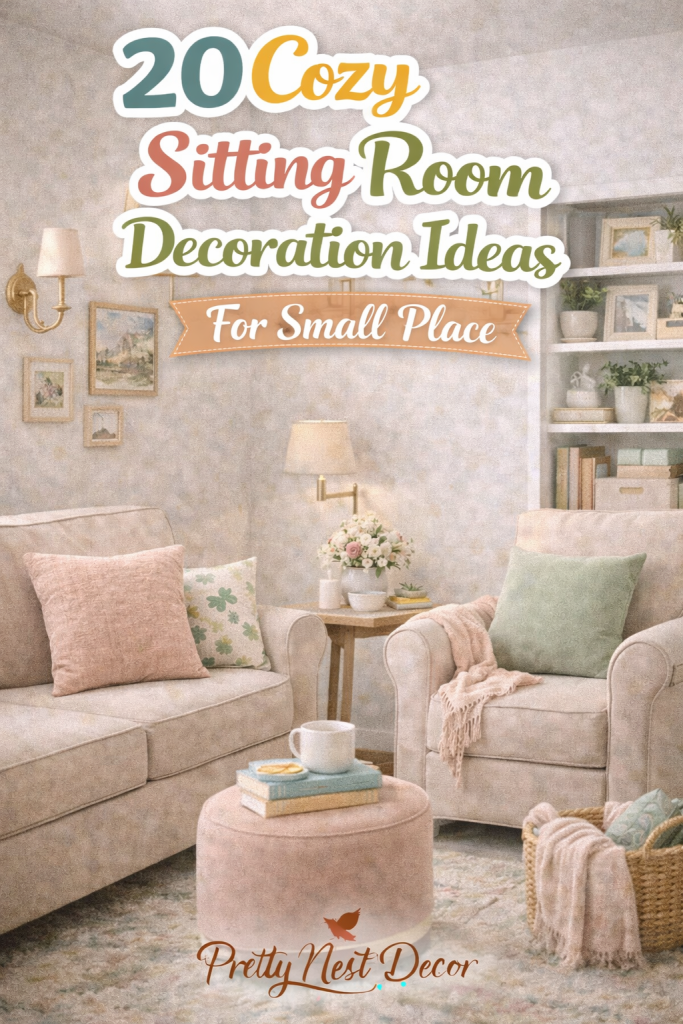
The key to decorating a small sitting room is balance. You need to prioritize comfort, maximize utility, and avoid overcrowding. Multifunctional furniture is a cornerstone of this approach. Pieces like storage sofas, ottomans, or foldable chairs provide essential seating without taking up unnecessary space while also offering hidden storage for blankets, books, or other living room essentials. The strategic use of vertical space is equally important. Floating shelves, tall bookcases, and wall-mounted lighting can visually lift the room, making it feel more open and less cluttered. When it comes to color, lighter tones are your ally—they make small spaces appear larger and more inviting. Neutral walls, soft pastels, or muted shades paired with accent colors on pillows, rugs, and décor create visual depth and warmth.
Texture also plays a major role in crafting a cozy atmosphere. Layering soft rugs, knitted or velvet throws, and decorative cushions can instantly transform a small room into a sanctuary of comfort. Natural materials such as wood, wicker, or rattan bring an organic touch that balances clean, minimalist lines. Complementing textures with plants, woven baskets, and personal décor items makes the space feel lived-in and welcoming. Lighting, too, dramatically affects the room’s mood. Maximizing natural light with sheer curtains, mirrored reflections, or light-colored surfaces helps the room appear more spacious. Strategically placed floor lamps, table lamps, or wall sconces create a soft glow that enhances warmth without overwhelming the area.
Storage is another crucial factor in small sitting rooms. Clutter can easily overwhelm a tiny space, making it feel chaotic and uncomfortable. By integrating storage solutions into furniture and décor—like storage ottomans, multi-tier shelves, or under-sofa bins—you keep essentials within reach while maintaining a clean, organized look. Flexible layouts further enhance functionality. Movable furniture allows you to adapt the room for multiple activities: reading, relaxing with family, or hosting a small gathering. Scale is equally critical; choosing furniture that’s proportionate to your space prevents overcrowding and ensures the room feels open yet cozy.
Decorating a small sitting room is not just about maximizing space—it’s about creating a sanctuary that reflects your personality. Personal touches like framed photographs, favorite books, small art pieces, or decorative objects make the space uniquely yours. Thoughtful placement of décor items, combined with a cohesive color palette and well-chosen textures, ensures the room feels both stylish and practical. Over the course of this article, we’ll explore 20 practical, Pinterest-worthy ideas that cover every aspect of small sitting room décor: furniture, lighting, colors, storage, texture, and personal touches. Each idea includes a clear explanation, a step-by-step how-to guide, a materials list, and practical tips for beginners. By following these ideas, you’ll have a blueprint for transforming your small sitting room into a cozy, inviting, and highly functional space that feels much larger than its actual size.
Idea 1: Use a Compact Sofa with Storage Underneath
Definition/Explanation:
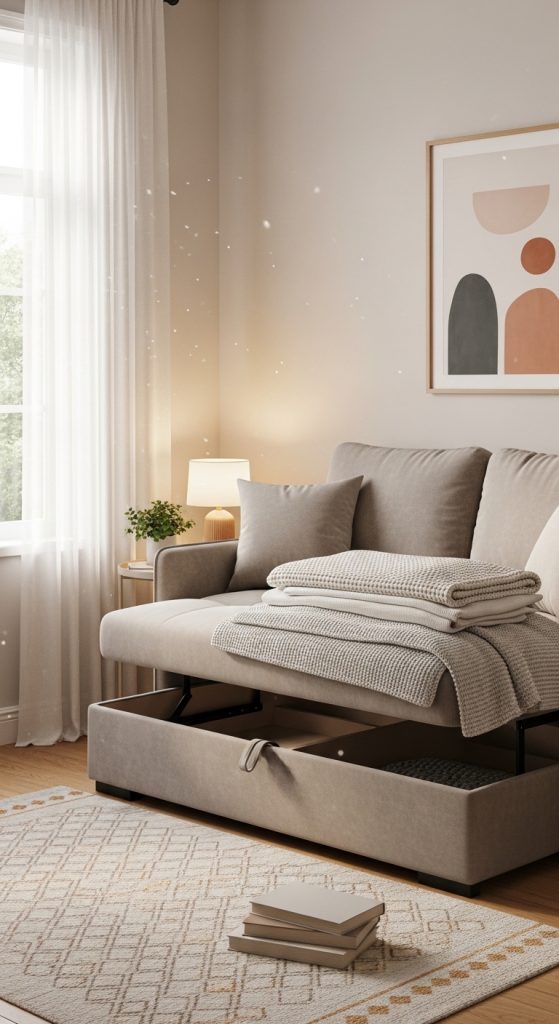
A compact sofa with built-in storage solves two challenges in small sitting rooms: providing seating and offering a place to store essentials. Blankets, cushions, magazines, or children’s toys can all be tucked away neatly, reducing clutter while maintaining comfort. These sofas are designed specifically for small spaces, often narrower and lower in height, making them ideal for cozy layouts.
Step-by-Step How-To:
- Measure your room carefully to ensure the sofa fits without crowding other elements.
- Choose a sofa with a lift-up seat or drawers underneath. Prioritize quality mechanisms for durability.
- Place the sofa against the wall to maximize floor space and create a central focal point.
- Organize stored items using baskets or fabric organizers inside the storage compartment.
- Add cushions and a soft throw on top for additional comfort and warmth.
Materials/Things Used:
- Compact storage sofa
- Fabric baskets or small bins
- Cushions and throw blankets
Practical Tip:
Neutral-colored sofas help open up visual space, while patterned cushions or throws can add personality without overwhelming the room.
Idea 2: Incorporate a Corner Reading Nook
Definition/Explanation:
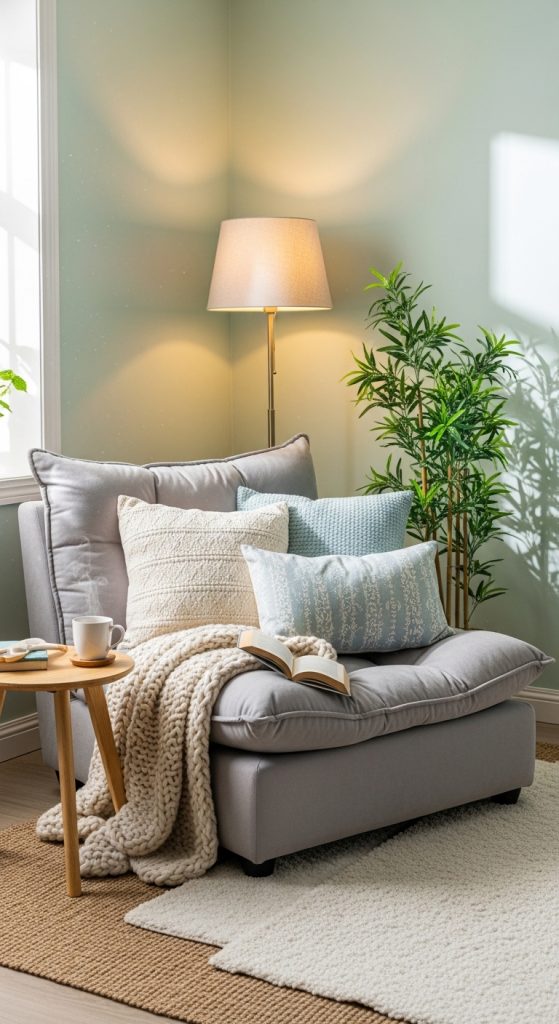
Even the tiniest corner can become a cozy reading nook. By designating a small area specifically for relaxation, you create a peaceful retreat while utilizing underused space efficiently.
Step-by-Step How-To:
- Identify an unused corner of your sitting room.
- Place a small armchair or cushioned bench in the corner.
- Add a floor lamp or wall-mounted reading light to ensure adequate illumination.
- Include a small side table for books, tea, or decorative items.
- Layer cushions, throws, and a soft rug to make the space inviting.
Materials/Things Used:
- Small armchair or cushioned bench
- Floor lamp or wall-mounted light
- Side table
- Cushions and throw blankets
- Small area rug
Practical Tip:
Use warm lighting and soft textures to make the nook feel intimate. Plants or framed art above the chair enhance coziness and visual appeal.
Idea 3: Floating Shelves Instead of Bulky Bookcases
Definition/Explanation:
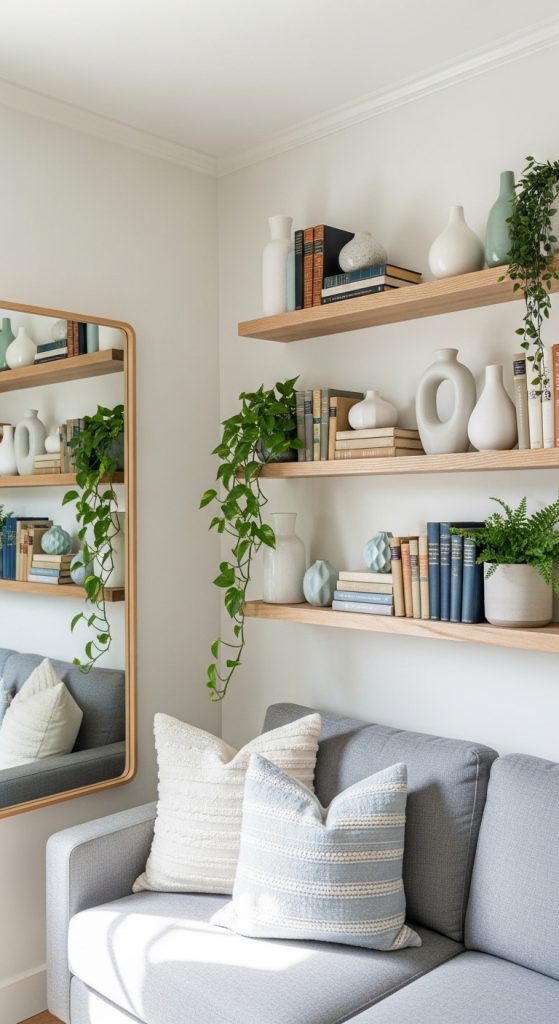
Floating shelves maximize vertical space, leaving floor areas free. They offer storage and display options for books, décor, and personal items while keeping the room airy and organized.
Step-by-Step How-To:
- Measure wall space and determine shelf spacing for visual balance.
- Install floating shelves at varying heights to create depth and interest.
- Arrange books, plants, and decorative items with a mix of heights and textures.
- Avoid overcrowding; leave some negative space for balance.
- Optional: add LED strip lights underneath for ambiance and visual appeal.
Materials/Things Used:
- Floating shelves
- Wall anchors and screws
- Decorative objects, books, plants
- Optional LED lighting
Practical Tip:
Vertical storage not only creates functionality but also draws the eye upward, making a small sitting room feel larger.
Idea 4: Small Coffee Table with Storage
Definition/Explanation:
A coffee table that doubles as storage keeps your sitting room tidy and functional. It allows you to store magazines, remotes, or blankets out of sight while maintaining an essential surface for drinks or décor.
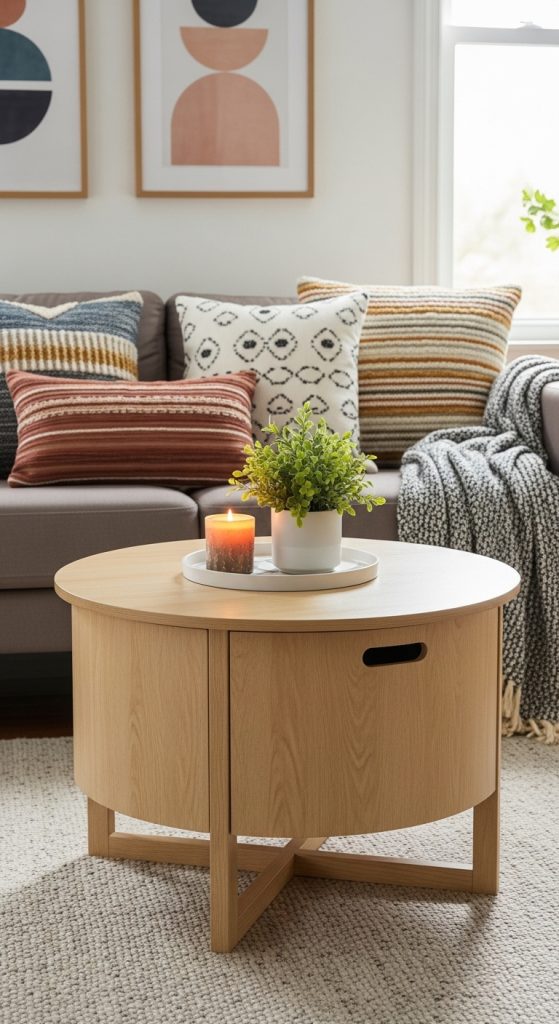
Step-by-Step How-To:
- Measure your space for a compact, proportionate coffee table.
- Choose a table with drawers, lift-top storage, or open shelving underneath.
- Use baskets or trays to organize stored items neatly.
- Decorate the table minimally with a plant, candle, or tray.
- Ensure there’s enough space around the table for walking and comfort.
Materials/Things Used:
- Compact storage coffee table
- Baskets or trays
- Candles or small plants
- Magazines or books
Practical Tip:
Select a table with neutral tones or natural wood to complement the sofa and existing décor.
Idea 5: Layer Textures for a Cozy Atmosphere
Definition/Explanation:
Texture is key to making a small room feel warm and inviting. Layering rugs, cushions, throws, and baskets creates a tactile and visual sense of comfort.
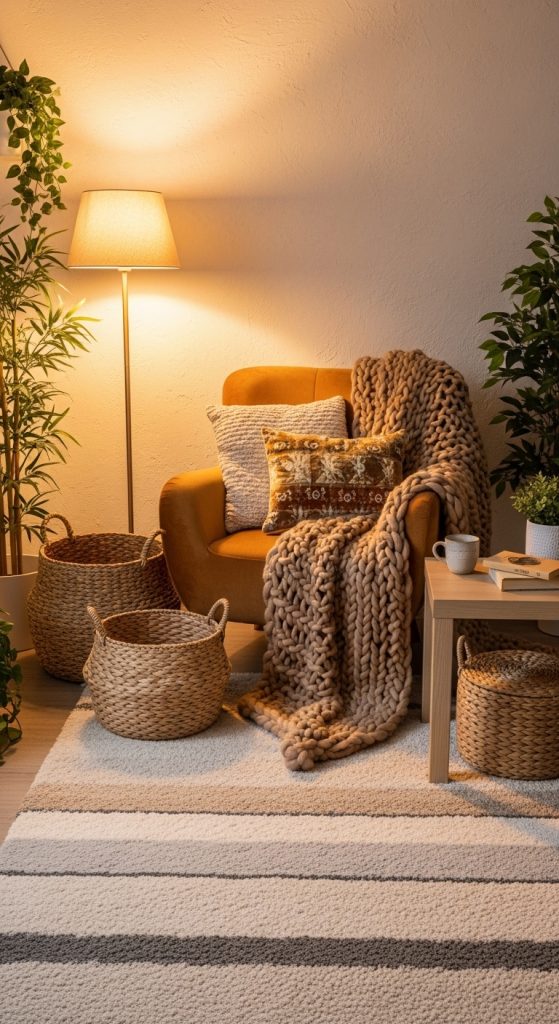
Step-by-Step How-To:
- Start with a soft area rug as a base.
- Add cushions in varied materials like velvet, knit, or faux fur.
- Include a throw blanket on seating for added warmth.
- Use woven baskets for storage to add an organic touch.
- Mix in metallic or wooden décor accents for contrast.
Materials/Things Used:
- Area rug
- Cushions and throws
- Woven baskets
- Small decorative accents
Practical Tip:
Keep color palette consistent to prevent textures from overwhelming the space visually.
Idea 6: Mirrors to Expand Visual Space
Definition/Explanation:
Mirrors reflect light and create the illusion of a larger room. Strategically placed, they make a small sitting area feel bright, open, and airy.
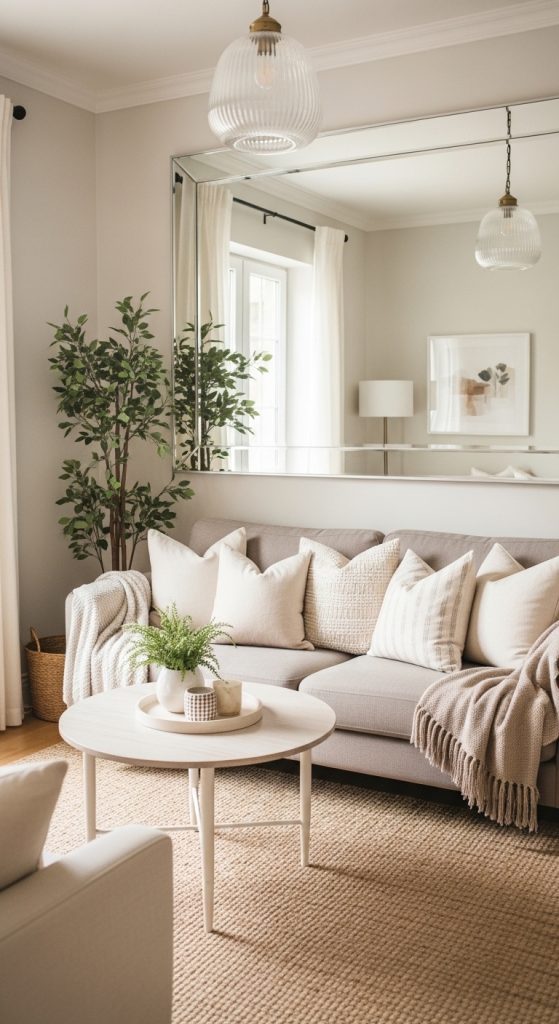
Step-by-Step How-To:
- Choose a medium-to-large mirror suitable for your wall.
- Place it opposite a window or light source to reflect natural light.
- Hang at eye level to optimize the illusion of space.
- Decorate around the mirror with small plants or art for added interest.
- Consider multiple small mirrors arranged in a gallery style for a modern look.
Materials/Things Used:
- Mirror(s)
- Wall hooks or anchors
- Optional surrounding décor
Practical Tip:
Avoid ornate frames for small spaces—simple, sleek frames expand the room visually.
Idea 7: Light-Colored Walls
Definition/Explanation:
Light-colored walls instantly make a small room feel larger and more welcoming. Soft neutrals, pastels, or warm whites create a calming backdrop for furniture and décor.
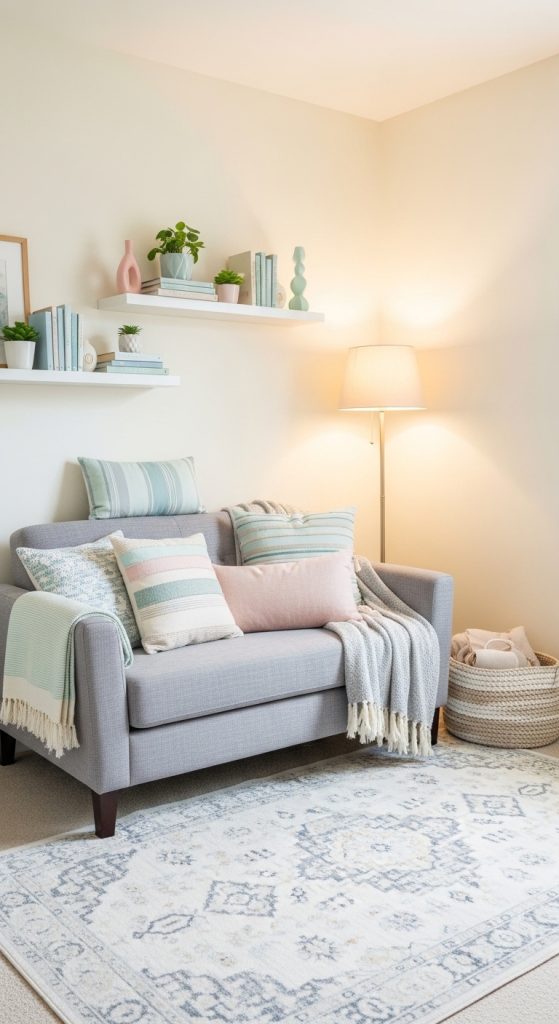
Step-by-Step How-To:
- Choose a light, neutral paint color.
- Prep walls by cleaning and applying primer.
- Apply two coats of paint for even coverage.
- Pair with complementary furnishings and décor accents.
- Optionally, create a subtle accent wall for added depth.
Materials/Things Used:
- Paint in light neutral tones
- Primer
- Brushes or rollers
- Painter’s tape
Practical Tip:
Light walls make it easier to swap accent décor seasonally without clashing with existing colors.
Idea 8: Add Indoor Plants
Definition/Explanation:
Indoor plants enhance air quality and inject life into small sitting rooms. They create a natural, calming environment while filling empty corners effectively.
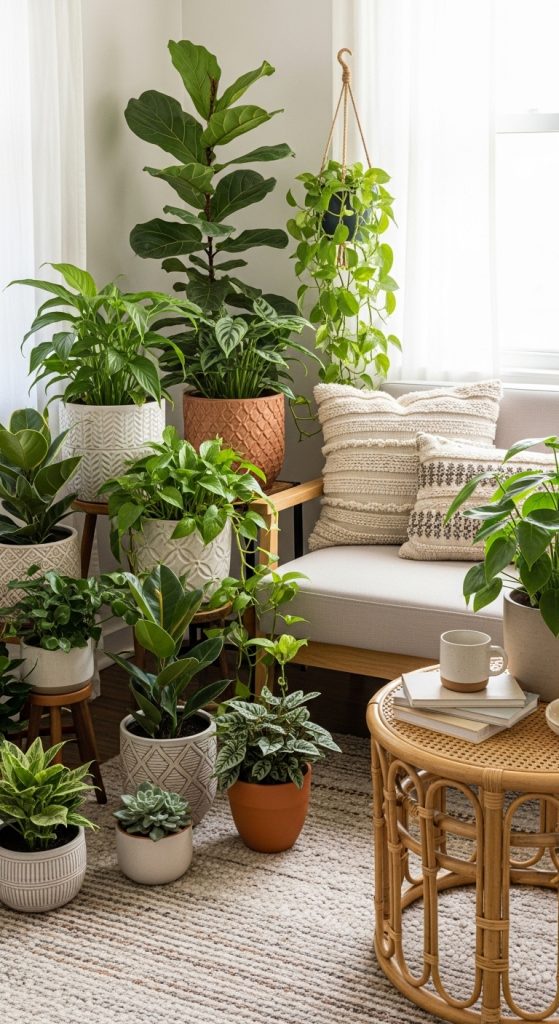
Step-by-Step How-To:
- Choose small to medium plants suited for indoor light conditions.
- Select decorative pots that match the room’s style.
- Place plants on shelves, side tables, or floor corners.
- Maintain watering schedules and occasional fertilization.
- Combine various plant types for visual variety.
Materials/Things Used:
- Indoor plants (succulents, snake plants, pothos)
- Pots or planters
- Watering can
- Optional fertilizer
Practical Tip:
Use plants to define small areas or corners, giving each zone a distinct purpose while maintaining cohesion.
Idea 9: Foldable Armchair or Ottoman
Definition/Explanation:
Foldable or compact furniture offers flexible seating without permanently occupying floor space. A foldable armchair or ottoman can provide extra seating when needed and be stored away otherwise.
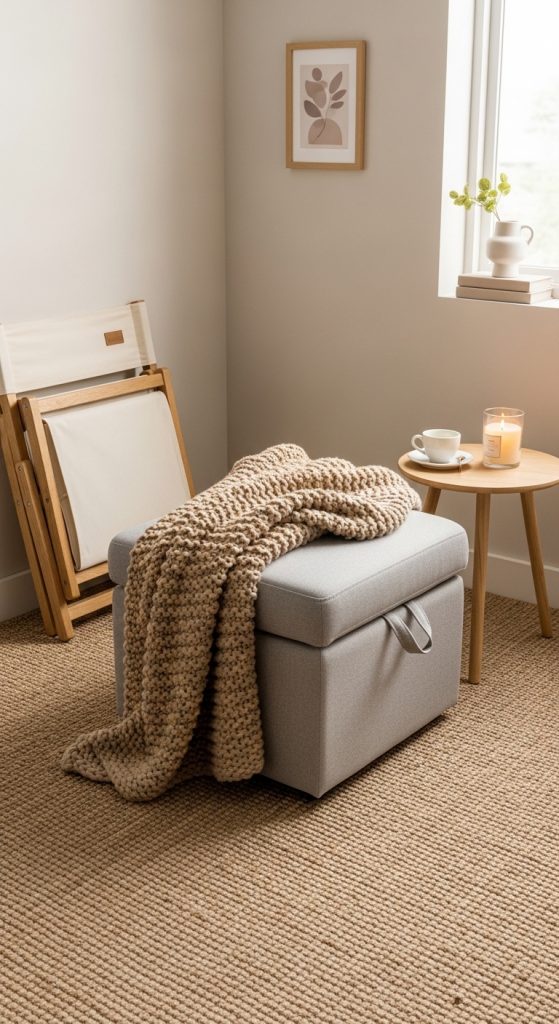
Step-by-Step How-To:
- Select lightweight, foldable seating suitable for your décor.
- Position near your main seating area.
- Fold or move the piece when not in use.
- Add cushions or throws for comfort.
- Optional: use ottoman as a side table for versatility.
Materials/Things Used:
- Foldable armchair or ottoman
- Cushions or throws
- Optional storage basket
Practical Tip:
Choose neutral colors for flexibility and lightness in the space.
Idea 10: Wall Gallery with Personal Photos
Definition/Explanation:
A wall gallery adds character and personal touch to a small sitting room. By displaying framed photos, prints, or artwork, you create a focal point without taking up floor space.
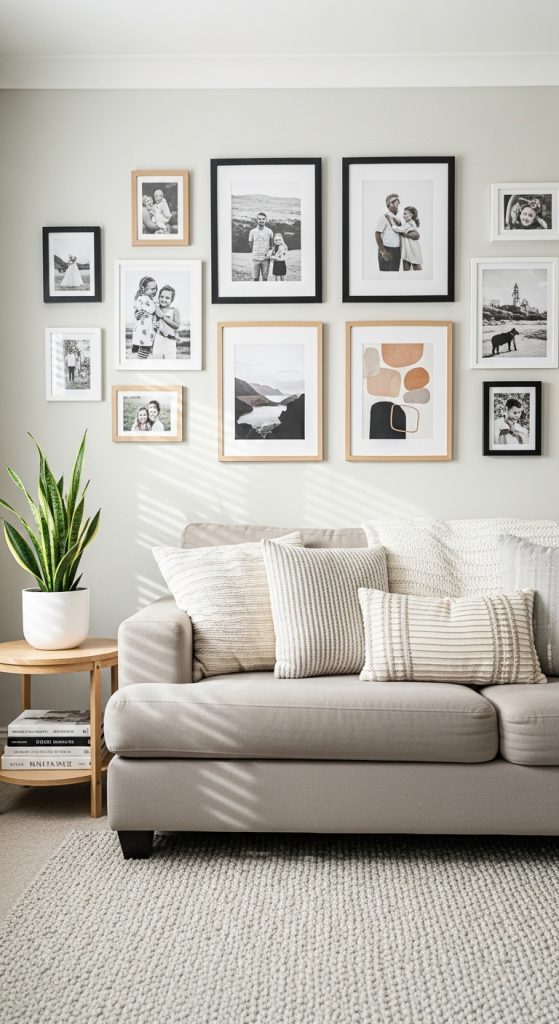
Step-by-Step How-To:
- Select favorite photos, prints, or artwork.
- Choose matching or complementary frames for cohesion.
- Plan layout on the floor before hanging for balance.
- Hang frames at eye level for visual impact.
- Enhance with small decorative accents like floating shelves or plants.
Materials/Things Used:
- Frames and photos/artwork
- Wall hooks, nails, or adhesive strips
- Optional shelves or small décor items
Practical Tip:
Maintain a consistent color palette or theme to prevent visual clutter while keeping the gallery appealing and cohesive.
Idea 11: Layer Rugs to Add Depth and Warmth
Definition/Explanation:
Layering rugs in a small sitting room creates visual depth, texture, and warmth, making the space feel cozy without crowding it. Using multiple rugs of different sizes or textures can define zones, highlight focal points, and add style without compromising functionality.
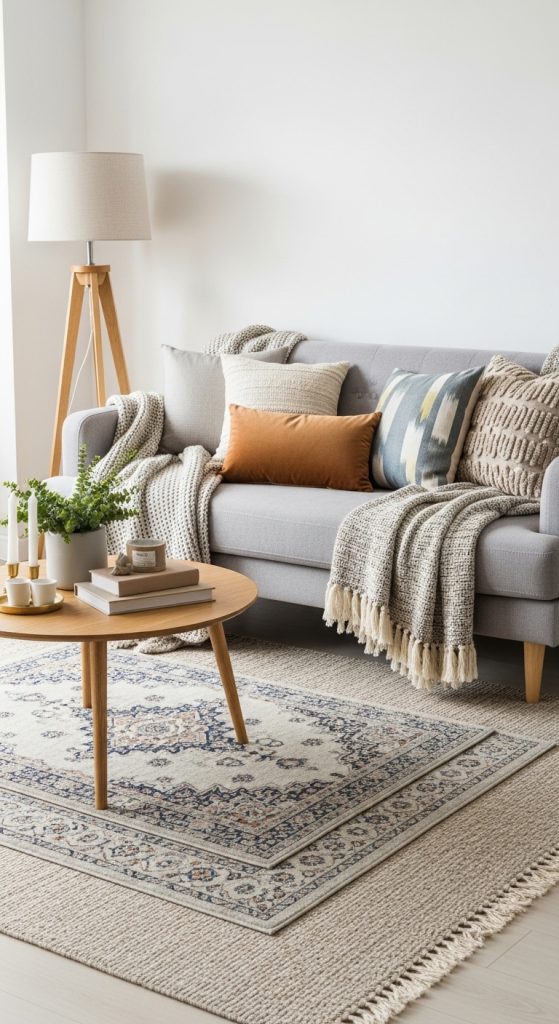
Step-by-Step How-To:
- Start with a base rug that covers the central seating area. Neutral tones work best for small rooms.
- Place a smaller, patterned or textured rug on top to create visual interest.
- Ensure the top rug complements the base rug’s color palette for cohesion.
- Anchor the layered rugs by positioning furniture partially on the rugs.
- Maintain balance by leaving some floor visible around the rugs, preventing a cramped feel.
Materials/Things Used:
- Base area rug
- Smaller, patterned/topper rug
- Cushions or throws to coordinate
- Furniture to anchor rugs
Practical Tip:
Layered rugs work best when colors and textures are complementary, avoiding overcomplicated patterns that may overwhelm a small space.
Idea 12: Use a Slim Console Table Behind a Sofa
Definition/Explanation:
A slim console table is perfect for small sitting rooms, adding surface space for décor or lighting without taking up precious floor space. It also creates separation between the sofa and other zones in open layouts.
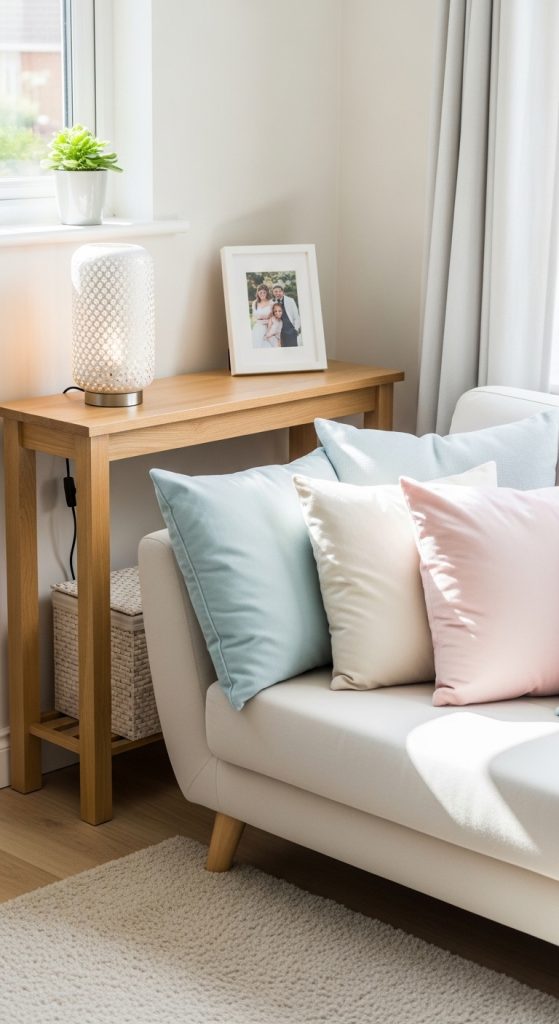
Step-by-Step How-To:
- Measure the width of your sofa to choose a proportionate console table.
- Place the table behind the sofa, leaving space for legroom and movement.
- Decorate with a lamp, framed artwork, or small plants.
- Use the console for storage baskets underneath if needed.
- Keep décor minimal to maintain an airy feel.
Materials/Things Used:
- Slim console table
- Table lamp or small décor
- Baskets for storage
- Framed photos or small art pieces
Practical Tip:
A console table in light wood or neutral tones prevents visual heaviness and enhances room brightness.
Idea 13: Introduce a Folding Screen for Visual Separation
Definition/Explanation:
A folding screen can create zones in a small sitting room while adding style. It separates seating from other areas, provides privacy, or becomes a decorative statement when not used for functional separation.
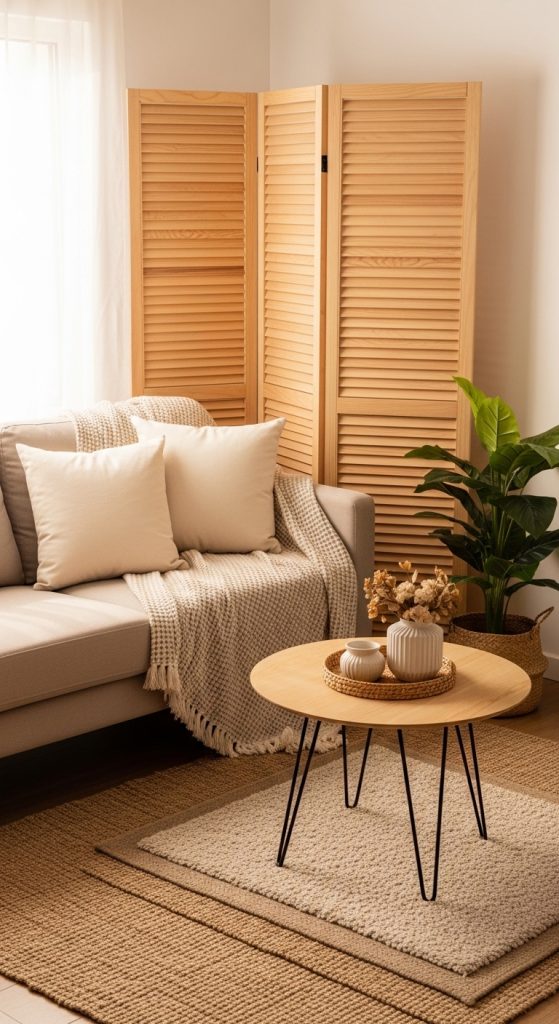
Step-by-Step How-To:
- Select a folding screen that complements your room’s colors and theme.
- Place it to define a small reading nook, workspace, or entry area.
- Ensure it is lightweight for easy repositioning.
- Optionally, use the screen as a backdrop for wall art or plants.
- Keep adjacent furniture and décor minimal to avoid visual clutter.
Materials/Things Used:
- Folding screen or room divider
- Optional small décor like plants or framed art
- Area rug to anchor the screen
Practical Tip:
Lightweight or semi-transparent screens allow light flow while still defining zones effectively.
Idea 14: Incorporate Multi-Purpose Ottomans
Definition/Explanation:
Ottomans in small spaces can serve multiple purposes: seating, a footrest, storage, or even a mini coffee table. Multi-purpose furniture is ideal for maximizing functionality without overcrowding.
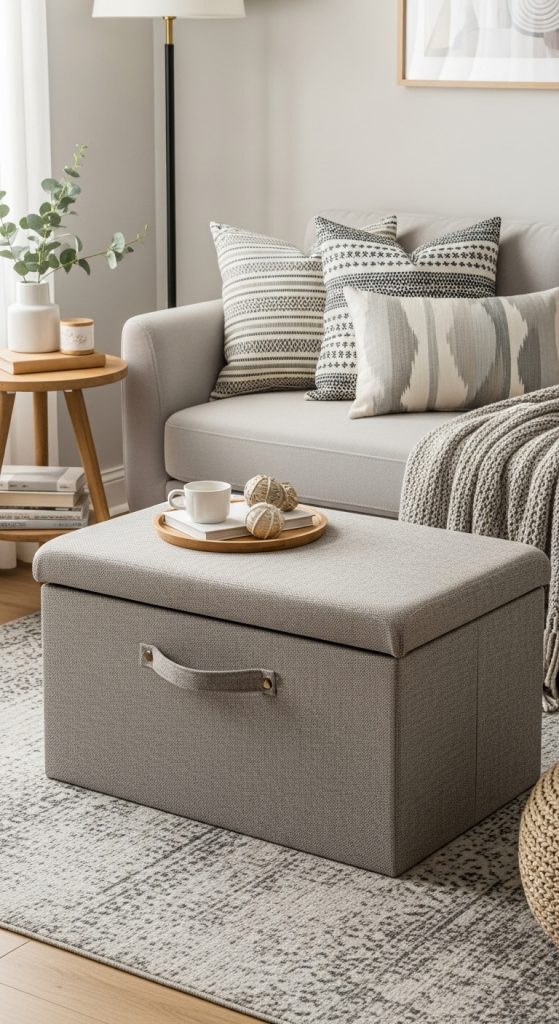
Step-by-Step How-To:
- Select an ottoman with hidden storage or a flat surface for versatility.
- Place near the sofa or armchair for easy access.
- Use as a coffee table by adding a tray for drinks or décor.
- Store blankets, magazines, or toys inside for clutter-free living.
- Add cushions or throws to increase comfort and visual appeal.
Materials/Things Used:
- Multi-purpose ottoman
- Decorative tray
- Cushions or throws
- Storage bins inside ottoman
Practical Tip:
Choose a neutral color ottoman that blends with your sofa for seamless design, and use soft textures to maintain a cozy vibe.
Idea 15: Add Wall-Mounted Lighting Instead of Floor Lamps
Definition/Explanation:
Wall-mounted lighting saves floor space and creates a layered lighting effect, which is crucial for small sitting rooms. Sconces or wall lamps provide direct or ambient light without cluttering surfaces.
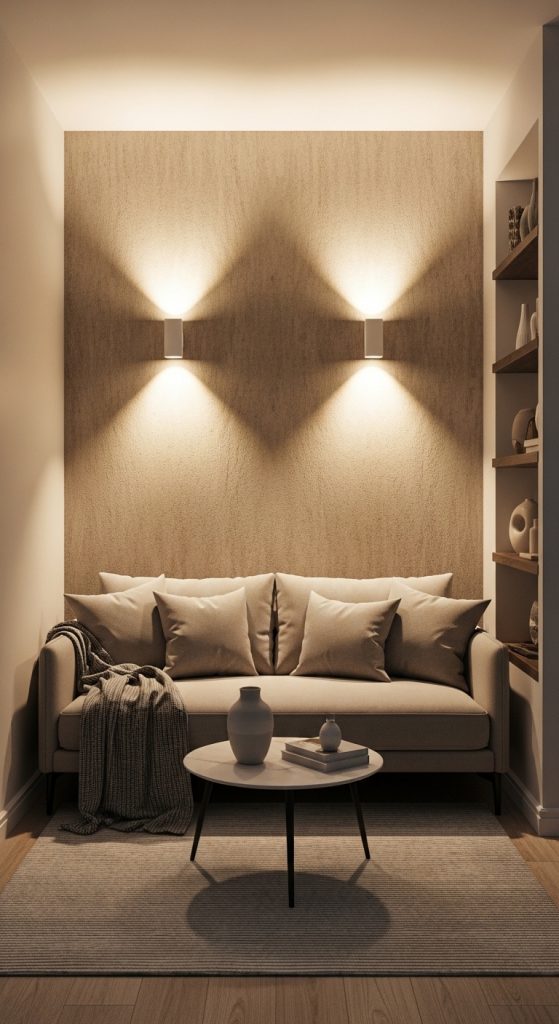
Step-by-Step How-To:
- Identify key areas requiring lighting, such as seating or reading corners.
- Install wall sconces or adjustable wall lamps at eye level.
- Choose designs that complement your room’s theme, like sleek modern or vintage styles.
- Use dimmable bulbs to adjust ambiance.
- Pair lighting with a mirror or reflective surface to amplify brightness.
Materials/Things Used:
- Wall-mounted sconces or lamps
- Screws, anchors, or mounting hardware
- Dimmable light bulbs
Practical Tip:
Keep cords hidden or integrated into walls for a clean, minimalist look.
Idea 16: Use Narrow Shelving Units for Vertical Storage
Definition/Explanation:
Tall, narrow shelving units make excellent use of vertical space without taking up much floor area. They provide storage for books, décor, or plants while maintaining a light, open feel.
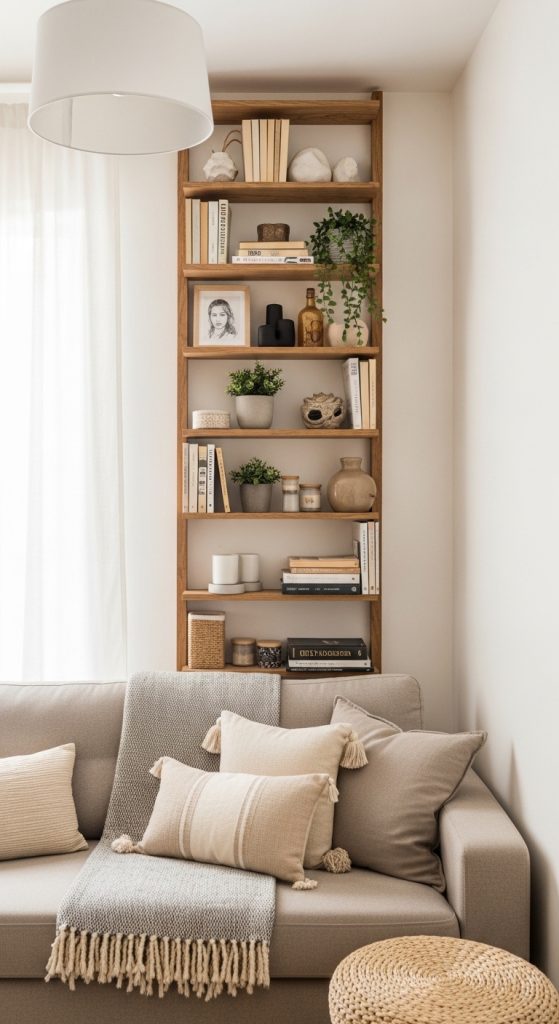
Step-by-Step How-To:
- Measure height and width for the shelving unit to fit tight spaces.
- Install or place a freestanding unit against a wall.
- Arrange items with visual balance—heavier items at the bottom, lighter on top.
- Combine functional storage (baskets) with décor for style.
- Avoid overcrowding to maintain an airy look.
Materials/Things Used:
- Tall, narrow shelving unit
- Storage baskets
- Decorative items, books, plants
Practical Tip:
Open shelving keeps a small room from feeling boxed in, unlike bulky cabinets.
Idea 17: Opt for a Compact Round Coffee Table
Definition/Explanation:
Round coffee tables improve flow in small sitting rooms by removing sharp edges and creating a softer visual line. They also maximize movement space around the table.
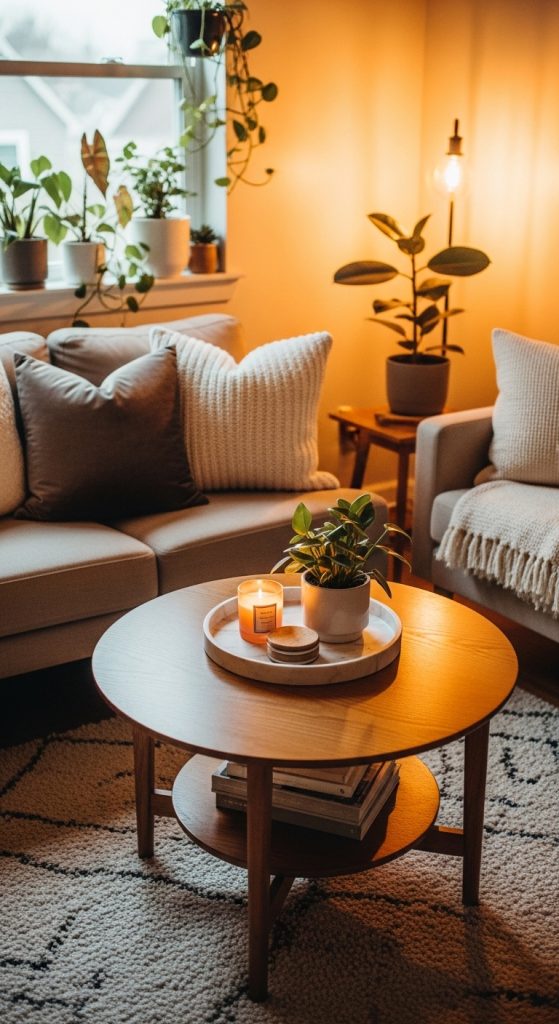
Step-by-Step How-To:
- Measure available floor space to select the right table diameter.
- Position in front of seating while leaving ample walking space.
- Decorate minimally with a small tray, candle, or plant.
- Choose a table with under-shelf storage for added functionality.
- Match the table style to existing furniture for a cohesive look.
Materials/Things Used:
- Compact round coffee table
- Decorative tray or small plant
- Optional under-shelf storage
Practical Tip:
Round tables are ideal in tight spaces because they prevent accidental bumps while keeping the area open.
Idea 18: Integrate Accent Pillows and Throws Strategically
Definition/Explanation:
Pillows and throws instantly enhance warmth and coziness in small sitting rooms. They add color, texture, and personal style while softening furniture edges.
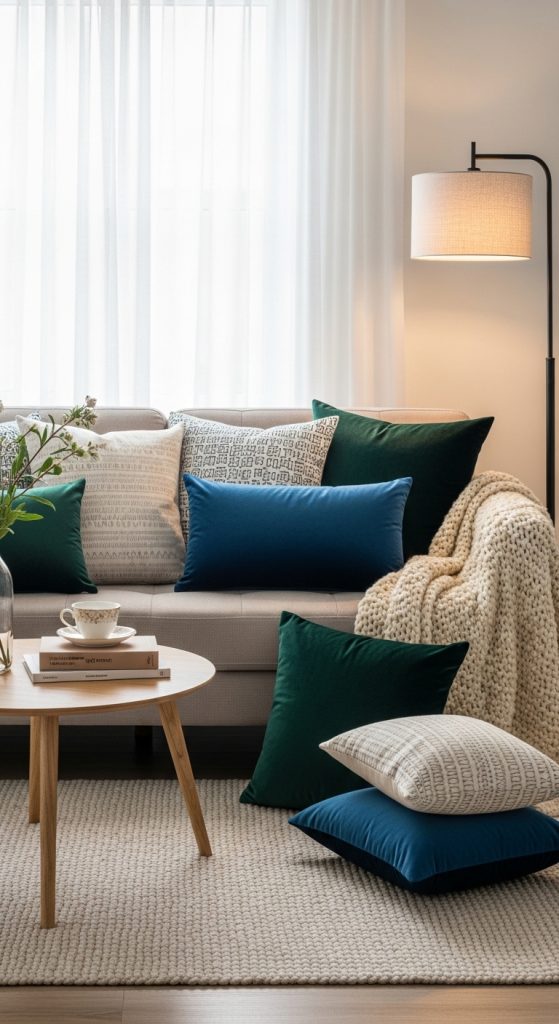
Step-by-Step How-To:
- Select 3–5 accent pillows in complementary colors or patterns.
- Arrange pillows on sofas and chairs for symmetry and comfort.
- Layer a throw blanket over seating for tactile warmth.
- Change seasonal colors for variation without redecorating.
- Mix textures—velvet, knit, faux fur—for depth.
Materials/Things Used:
- Accent pillows
- Throw blankets
- Optional decorative cushions
Practical Tip:
Stick to a limited color palette to avoid visual clutter and maintain cohesion in a small room.
Idea 19: Add a Statement Art Piece Above the Sofa
Definition/Explanation:
A bold, statement artwork becomes a focal point, draws attention upward, and anchors the sitting area without taking up floor space.
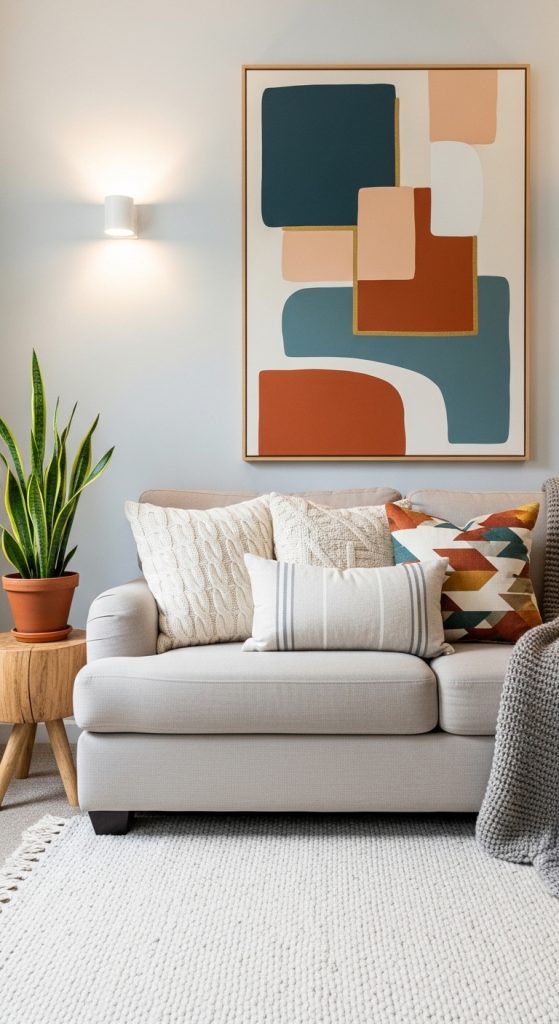
Step-by-Step How-To:
- Choose a single piece of artwork that complements the room’s palette.
- Hang it centered above the sofa at eye level.
- Ensure the size is proportionate—large enough to create impact but not overwhelming.
- Optionally, pair with subtle wall décor around it.
- Use lighting to highlight the art piece and create ambiance.
Materials/Things Used:
- Statement artwork
- Wall hooks or brackets
- Optional accent lighting
Practical Tip:
Avoid multiple small frames in a cluttered pattern; one large piece maintains openness in small spaces.
Idea 20: Use Lightweight, Movable Furniture for Flexibility
Definition/Explanation:
Lightweight and movable furniture allows you to adapt your small sitting room for different activities. Modular or easily repositionable pieces make the room multifunctional without feeling cramped.
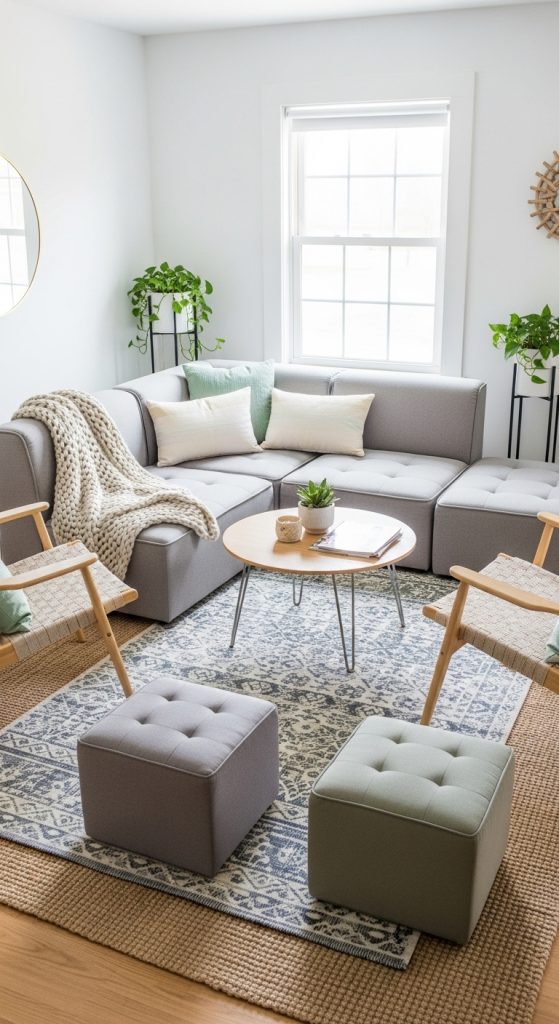
Step-by-Step How-To:
- Choose lightweight chairs, stools, or modular seating.
- Place main seating along walls to free central space.
- Move furniture as needed for gatherings, reading, or relaxing.
- Combine with multi-purpose pieces like ottomans or side tables.
- Keep pathways clear for effortless movement.
Materials/Things Used:
- Lightweight chairs or stools
- Modular seating pieces
- Multi-purpose ottomans
- Optional folding side tables
Practical Tip:
Neutral-toned, lightweight furniture creates visual flow, while flexibility ensures maximum utility without overcrowding.