
School mornings are not calm, organized, or flexible—and pretending they are is why most hairstyles fail. You don’t have time for complicated braids, perfect sections, or styles that need constant fixing. At the same time, you don’t want your child going to school with hair that looks rushed, messy, or uncomfortable. That tension—between speed and neatness—is where most people struggle.
The real issue isn’t time. It’s choosing hairstyles that don’t match real life.
Most “cute school hairstyles” you see online are built for photos, not routines. They look good for five minutes but fall apart by recess. They require tools you don’t have time to use or steps that are unrealistic when your child is already getting impatient. That’s not practical—it’s wasted effort.
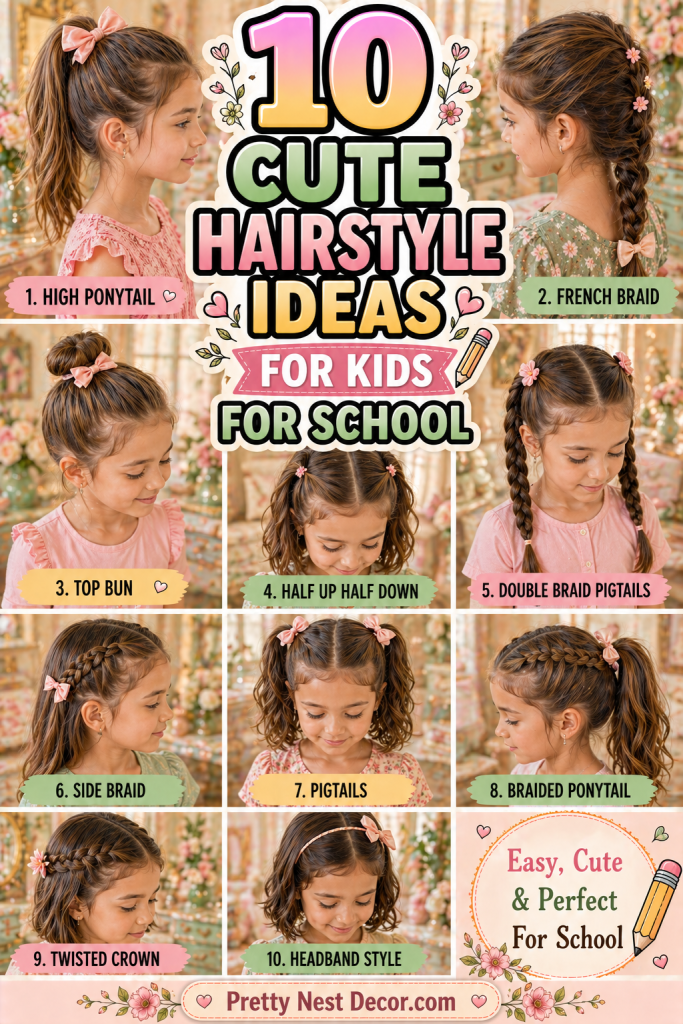
A proper school hairstyle needs to meet three conditions. First, it must be fast. If it takes more than a few minutes, it won’t be repeated daily. Second, it must be secure. Kids run, play, and move constantly, so the style has to stay in place without needing adjustment. Third, it must be comfortable. If it pulls, feels tight, or distracts your child during class, it’s not a good style no matter how neat it looks.
Another thing people overlook is hair behavior during the day. Freshly washed hair can be too soft and hard to control. Slightly second-day hair often holds styles better. Instead of fighting natural texture, the smarter approach is to use it. A little grip, a little volume, and slightly imperfect texture actually make hairstyles last longer.
Face framing also matters more than people think. Even a simple ponytail or braid can look neat or messy depending on how the front is handled. Flat, uneven front sections ruin the entire look, while soft, controlled framing makes even the simplest hairstyle look intentional.
Hair length and thickness also change everything. Short hair needs smaller sections and clips instead of full ties. Medium hair works best with partial styles like half-ups. Longer hair allows braids and buns but still needs to be secured properly. Trying to use the same hairstyle for every length is where things start going wrong.
Accessories can either solve your problem or create new ones. The right elastic, clip, or headband can save time and improve hold. The wrong one slips, pulls, or breaks the style within hours. You don’t need more accessories—you need the right ones used correctly.
Another common mistake is overdoing it. People assume “cute” means complicated. It doesn’t. Cute comes from neatness, balance, and small details—not from adding five different elements into one hairstyle. In fact, the more steps you add, the more chances there are for something to go wrong.
If you have a small room or limited space while getting ready, this becomes even more important. You don’t have time to set up tools or go back and fix mistakes. You need styles that work quickly, with minimal movement and maximum reliability.
The goal is not perfection. The goal is consistency. You need hairstyles that you can repeat every morning without thinking, without stress, and without wasting time. Once you have a system, mornings become easier—not just for you, but for your child as well.
This guide focuses on hairstyles that actually survive school days. They are quick, practical, and designed for movement, comfort, and real routines. No unnecessary steps. No unrealistic expectations.
Now let’s go into the hairstyles that make school mornings simpler—and still keep your child looking neat, cute, and ready for the day.
1. Simple High Ponytail with Soft Front Strands (Clean School Classic)
What it is
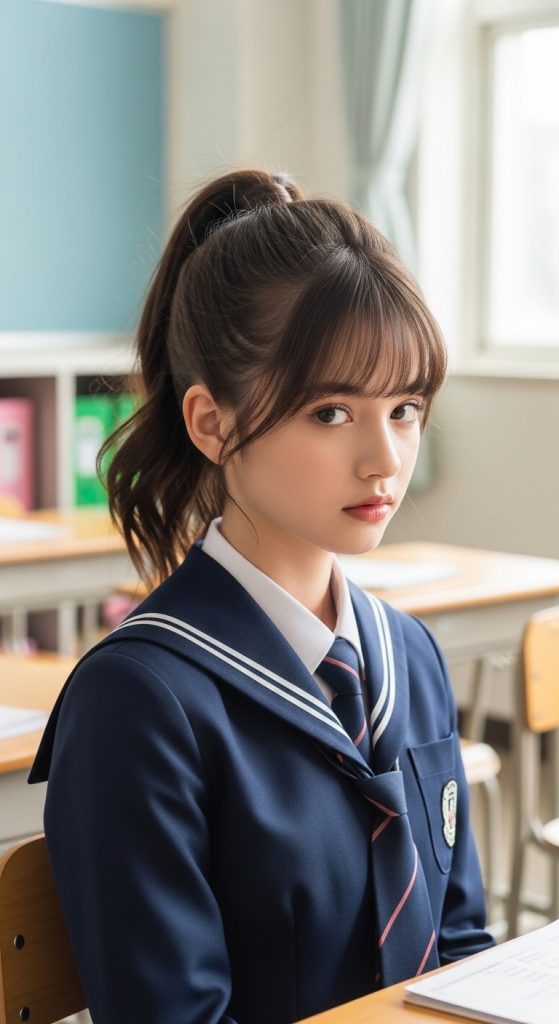
The high ponytail is the most common school hairstyle—but most people don’t do it properly. A well-done version is not just “hair tied up.” It’s a balanced, lifted style that keeps hair secure all day while still looking soft and child-friendly.
The difference between basic and cute is detail: crown lift, smooth sides, and soft face-framing strands.
How to implement (practical steps)
Start by brushing the hair quickly to remove knots, but don’t over-smooth it—slight texture helps it stay in place.
Gather the hair high on the head, around crown level. Avoid pulling it too low or too tight.
Secure it with a soft elastic band.
Gently adjust the crown by lifting it slightly with your fingers for volume.
Pull out two small strands at the front to frame the face softly.
Make sure the ponytail sits evenly without bumps on one side.
If needed, wrap a small section of hair around the elastic to hide it.
Best for (who should use it)
This works best for medium to long hair. It is ideal for active school days, sports, or when you need a quick, secure style that lasts.
Pro tip
If the hair is too slippery, slightly dampen it or use a tiny bit of leave-in conditioner for better grip before tying.
Mistake to avoid
Do not pull the ponytail too tight. Over-tightening causes discomfort and makes the hairstyle look harsh instead of soft and cute.
2. Double Low Ponytails (Balanced Cute Look)
What it is
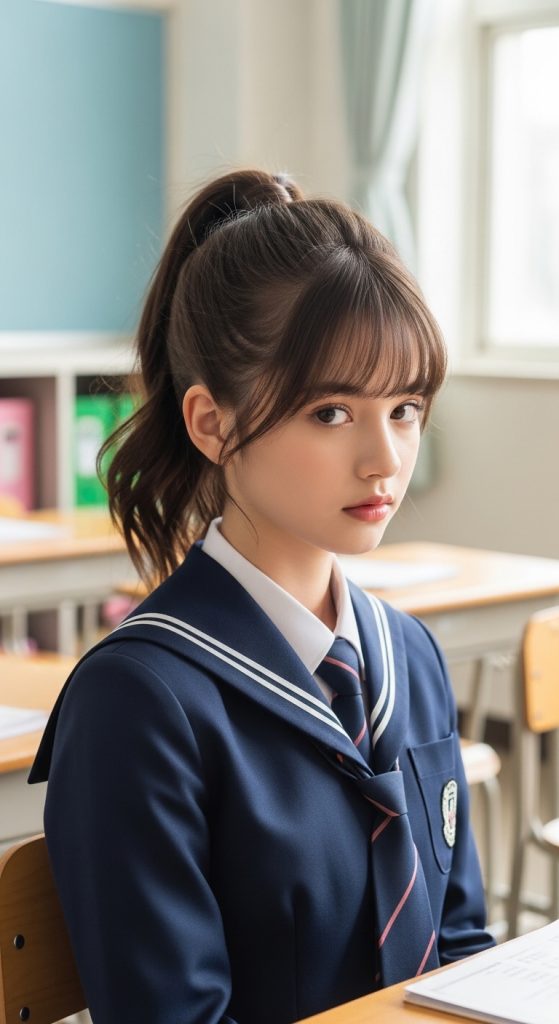
Double low ponytails are a simple yet very cute hairstyle where the hair is divided into two equal sections and tied low on each side. It gives a balanced, playful look and is one of the easiest school styles for short to medium hair.
It works especially well because it distributes hair evenly, making it more comfortable and secure for long school hours.
How to implement (practical steps)
Start by parting the hair straight down the middle from forehead to nape.
Take the first section and gather it just below the ear.
Secure it with a soft elastic band.
Repeat the same on the other side, making sure both ponytails sit at the same height.
Gently adjust both ponytails to make them soft and rounded instead of tight.
Pull a few tiny front strands loose for a softer face frame.
Check symmetry in the mirror so both sides match evenly.
Best for (who should use it)
This works best for short to medium hair that may not hold a full ponytail. It is ideal for younger kids and school routines where comfort is important.
Pro tip
Use small colored elastics or matching bands to make the style look more fun and intentional without extra effort.
Mistake to avoid
Do not make the ponytails too tight or too high. Tight placement can cause pulling and makes short hair stick out unevenly.
3. Half-Up Clip Style with Loose Hair (Soft Everyday School Look)
What it is
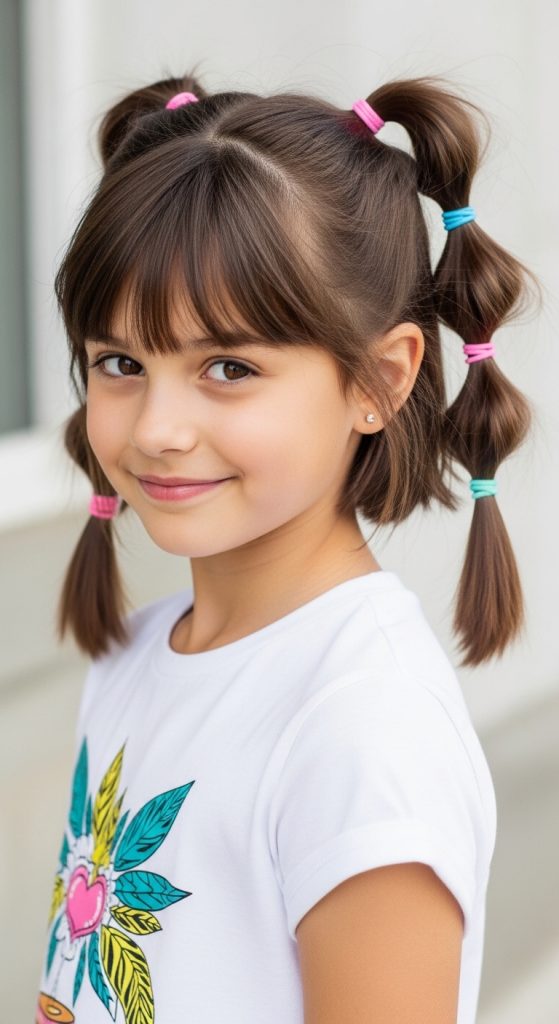
The half-up clip style keeps the top section of hair neatly secured while the rest stays loose. It is one of the easiest ways to look tidy without fully tying the hair back.
It works because it removes hair from the face while still keeping a natural, soft look.
How to implement (practical steps)
Take the top section of hair from both sides of the head (temples to crown).
Gather it gently at the back of the head.
Secure it with a small clip or soft elastic.
Let the rest of the hair fall naturally.
Adjust the top section slightly to add volume at the crown.
Make sure the front strands are smooth but not flattened.
If needed, add a light wave or natural texture to the loose hair for a more polished look.
Best for (who should use it)
This works best for medium to long hair. It is ideal for school days when you want a neat but relaxed hairstyle that doesn’t feel tight.
Pro tip
Use a decorative clip instead of a plain one. It instantly upgrades the look without any extra styling time.
Mistake to avoid
Do not take too small a section for the half-up. A weak top section makes the style look incomplete and unstable during school activities.
4. Side Braid Tuck (Neat All-Day School Style)
What it is
The side braid tuck is a simple hairstyle that adds structure to school hair without taking much time. Instead of braiding the entire head, you only braid a small side section and tuck it back. It keeps hair controlled, out of the face, and still looks cute and intentional.
This style is especially useful for busy mornings because it gives a “finished” look even when the rest of the hair is left natural.
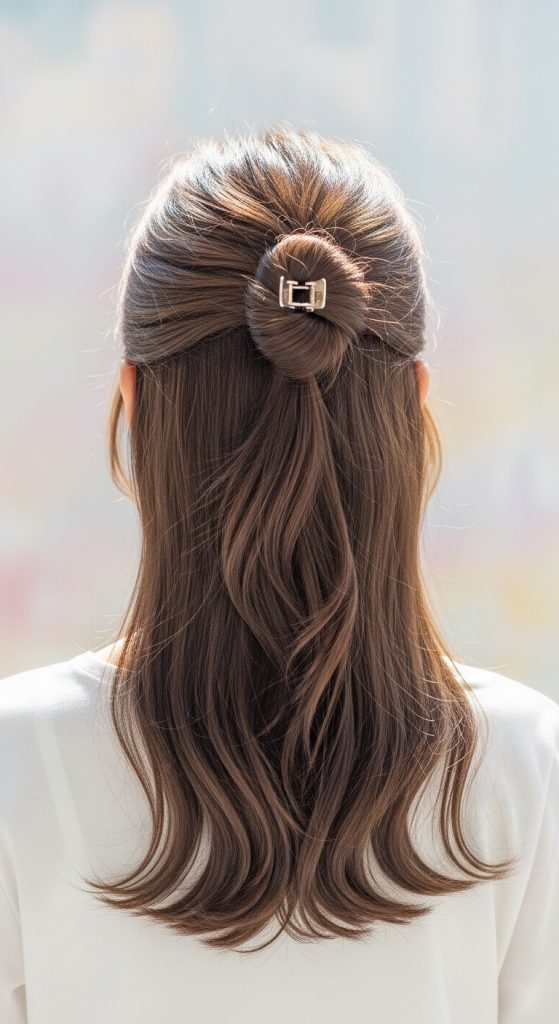
How to implement (practical steps)
Start by brushing the hair lightly so it’s easy to section.
Take a small section of hair from one side of the head near the front hairline.
Create a simple three-strand braid going backward along the side.
Secure the end with a small elastic.
Bring the braid toward the back and tuck it behind the ear or pin it at the back.
Let the rest of the hair remain loose and natural.
Gently loosen the braid by pulling it slightly so it looks soft and not too tight.
Best for (who should use it)
This works best for medium to long hair and is ideal for school days when you want a neat hairstyle that lasts all day without needing fixing.
Pro tip
Loosen the braid slightly before tucking it. A soft, fuller braid looks more natural and cute than a tight, stiff one.
Mistake to avoid
Do not make the braid too small or too tight. Tight braids disappear into the hair and don’t add any visible style impact.
5. Bubble Ponytail (Fun Secure School Hairstyle)
What it is
The bubble ponytail is a playful yet structured hairstyle where a normal ponytail is divided into “bubble” sections using multiple elastics. It looks fun, stays secure, and works really well for active school days.
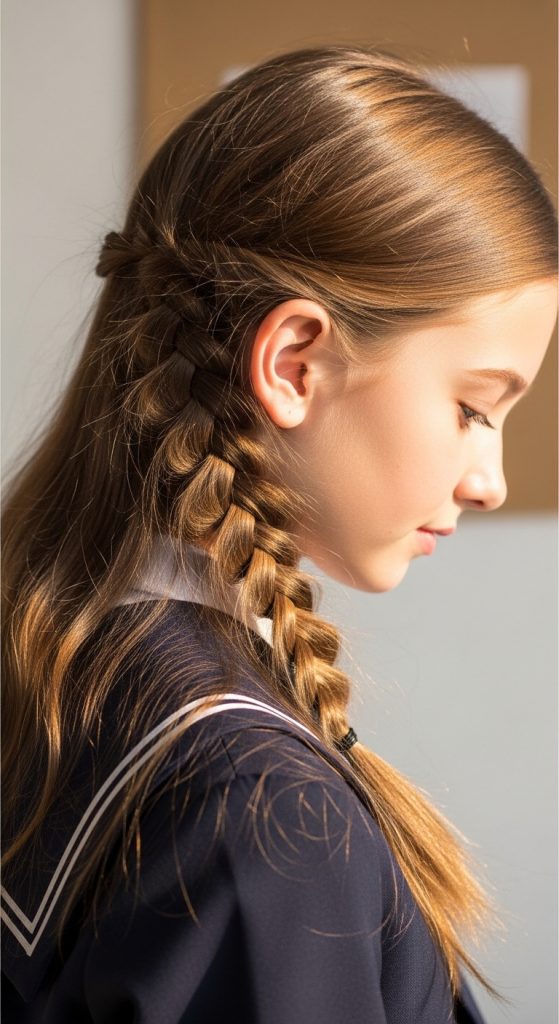
It’s a great upgrade from a basic ponytail because it adds visual interest without extra effort.
How to implement (practical steps)
Start by tying a normal ponytail at mid or high level.
Place another elastic a few inches down the ponytail.
Gently pull the section between elastics outward to create a rounded “bubble.”
Repeat this process down the length of the ponytail depending on hair length.
Adjust each bubble so they look even and soft.
Make sure the top is not too tight to keep it comfortable.
Best for (who should use it)
This works best for medium to long hair. It is ideal for school, sports days, or when you want a fun but secure hairstyle.
Pro tip
Use small colorful elastics between sections. It makes the hairstyle look more playful and kid-friendly without extra styling time.
Mistake to avoid
Do not skip loosening the bubbles. If you leave them tight, the hairstyle looks flat and loses its “bubble” effect.
6. Twin Mini Braids with Loose Hair (Cute Balanced Style)
What it is
This hairstyle uses two small braids on either side of the head while the rest of the hair stays loose. It adds detail without fully tying the hair up, making it both cute and practical for school.
It’s one of the easiest ways to make simple hair look styled in under a few minutes.
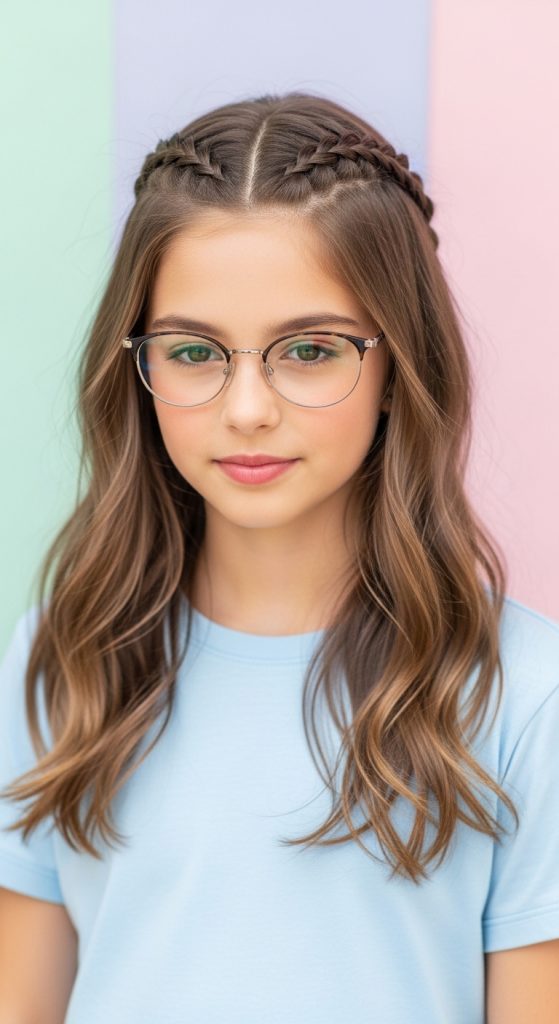
How to implement (practical steps)
Part the hair in the middle or slightly off-center.
Take a small section from the front on one side.
Create a simple loose braid and secure it at the end.
Repeat the same on the other side.
Let the rest of the hair stay open and natural.
Gently pull both braids slightly to make them look fuller.
Adjust front strands so they frame the face softly.
Best for (who should use it)
This works best for short to medium-long hair. It is ideal for school mornings when you want something quick, neat, and slightly detailed.
Pro tip
Keep both braids loose and slightly messy. Perfect braids can look stiff—soft braids blend better with natural hair.
Mistake to avoid
Do not make the braids uneven in size or placement. Asymmetry makes the hairstyle look rushed instead of cute and balanced.
7. High Half-Up Pony (Neat Front Control Style)
What it is
The high half-up pony is a quick school hairstyle where only the top half of the hair is tied into a ponytail, leaving the rest loose. It keeps hair away from the face while still allowing length and movement at the back.
It looks simple, but when done correctly, it gives a clean, lifted appearance that stays neat through the school day.
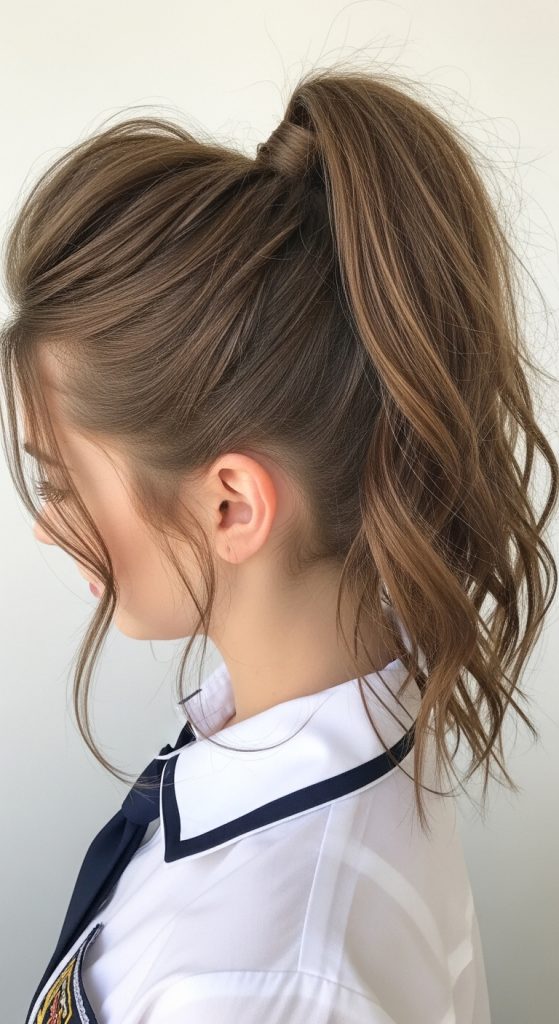
How to implement (practical steps)
Start by separating the top section of the hair from temple to crown.
Gather this section slightly higher than a normal half-up position (closer to the upper crown).
Secure it with a soft elastic band.
Gently adjust the top area by lifting it slightly with your fingers for volume.
Let the bottom half of the hair stay loose and natural.
Smooth the front lightly so it looks neat but not flat.
If needed, curl or slightly wave the lower section for a softer finish.
Best for (who should use it)
This works best for medium to long hair. It is ideal for school days when you want a tidy front look without fully tying the hair back.
Pro tip
Flip the head upside down before tying the half section. This adds natural volume at the crown without any extra tools.
Mistake to avoid
Do not take too small a section. A weak half-up pony looks unbalanced and doesn’t hold well during school activities.
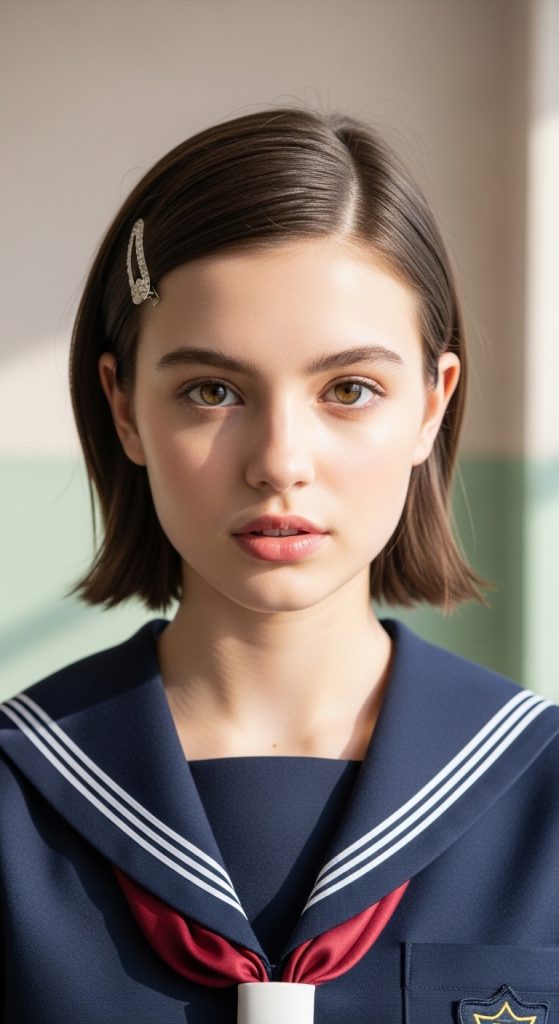
8. Soft Side Clip Hairstyle (Quick No-Tie Style)
What it is
The soft side clip hairstyle is one of the fastest ways to keep short or medium hair neat. Instead of tying or braiding, one or both sides are simply clipped back to keep hair away from the face.
It is extremely practical and perfect for rushed mornings because it takes less than a minute.
How to implement (practical steps)
Choose one side of the hair or both sides depending on preference.
Take a small front section and gently sweep it backward.
Secure it with a small snap clip or decorative hair clip behind the ear.
Make sure the clip sits flat and comfortable.
Leave the rest of the hair open and natural.
Slightly adjust the front strands so they don’t look too stiff.
If needed, use matching clips on both sides for symmetry.
Best for (who should use it)
This works best for short to medium hair that doesn’t easily tie into ponytails. It is ideal for school mornings when time is very limited.
Pro tip
Use decorative clips (bows, pearls, or pastel designs) to instantly make the hairstyle look more polished.
Mistake to avoid
Do not place the clip too far back or too tight. Poor placement makes the style look uneven instead of neat and intentional.
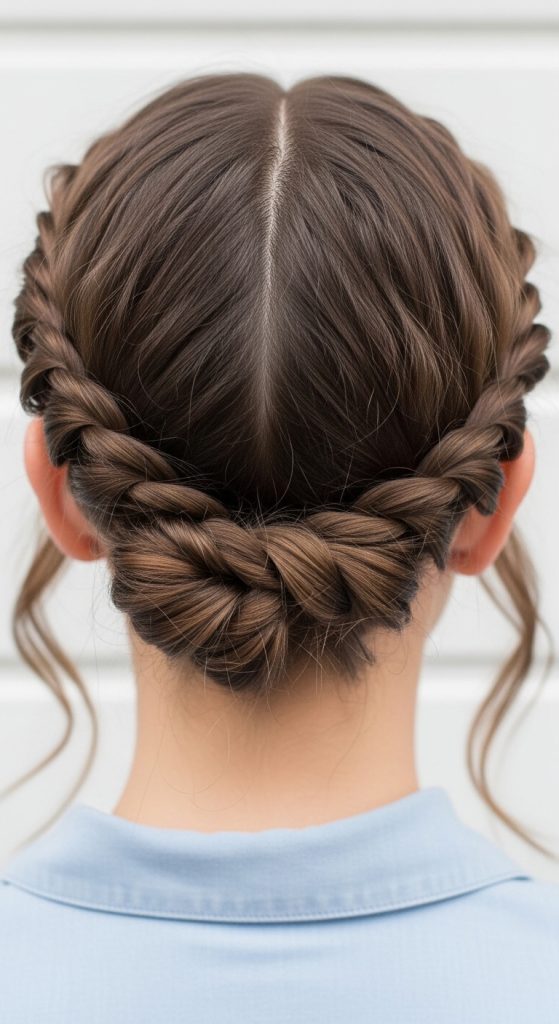
9. Low Double Twists (Comfortable Secure Style)
What it is
Low double twists are a simple hairstyle where both sides of the hair are twisted and secured at the back. It keeps hair controlled without tight pulling and works well for active school days.
It is a great alternative to braids for mornings when you want something quick and gentle.
How to implement (practical steps)
Part the hair in the middle or slightly off-center.
Take a small section from one side near the front.
Twist it gently backward toward the nape of the neck.
Secure it with a small elastic or clip.
Repeat the same process on the other side.
Bring both twists toward the back and secure them together or separately.
Adjust the twists slightly to keep them soft and not tight.
Let the rest of the hair remain loose or lightly styled.
Best for (who should use it)
This works best for medium hair and is ideal for school days where comfort and neatness are both important.
Pro tip
Loosen the twists slightly after securing them. Soft twists blend better with natural hair and look more relaxed.
Mistake to avoid
Do not twist the hair too tightly. Tight twists pull on the scalp and make the hairstyle uncomfortable during long school hours.
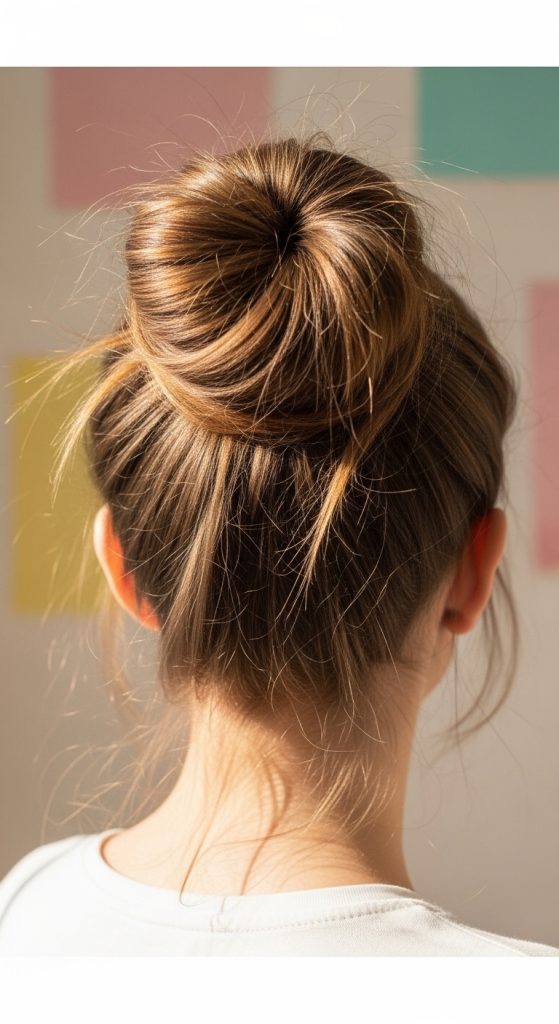
10. Quick Messy Bun (Fast School Rescue Style)
What it is
The quick messy bun is the ultimate “running late but still need to look neat” hairstyle. It gathers all the hair into a soft bun without requiring perfect sectioning or precision. For school mornings, it works as a reliable backup style that still looks intentional when done correctly.
The key is controlled looseness—not a tight ballerina bun and not a falling mess. It should look soft, slightly imperfect, and secure enough to last the full school day.
How to implement (practical steps)
Start by gathering all the hair using your fingers instead of a brush. This keeps natural texture and avoids a flat look.
Pull the hair into a mid or high ponytail depending on preference.
Secure it with a soft elastic band.
On the last loop of the elastic, don’t pull the hair fully through—leave it folded to form a bun shape.
Take the remaining ends and wrap them loosely around the base.
Secure with pins or tuck them under the elastic.
Gently pull sections of the bun outward to add volume and softness.
Loosen a few strands around the face for a natural, cute finish.
Best for (who should use it)
This works best for medium to long hair. It is ideal for school mornings when time is very limited or when hair is not freshly washed.
It suits almost all face shapes because it can be adjusted in height and softness.
Pro tip
If the bun keeps looking flat, flip your head upside down before tying the ponytail. This instantly adds natural volume without extra tools or effort.
Mistake to avoid
Do not over-tighten the bun. A tight bun removes the “messy” softness and makes the style look harsh instead of relaxed and cute.