
Minimalist living room design in 2026 continues to evolve as one of the most sought-after interior styles, combining simplicity, functionality, and comfort into a cohesive and visually calming space. At its core, minimalism is not about having less for the sake of restriction, but about creating intentional spaces where every element serves a purpose. In modern homes, especially those influenced by urban lifestyles, the living room acts as a central hub for relaxation, social interaction, and personal expression. The minimalist approach enhances this space by removing unnecessary clutter and focusing on clean lines, balanced layouts, and thoughtfully chosen décor.
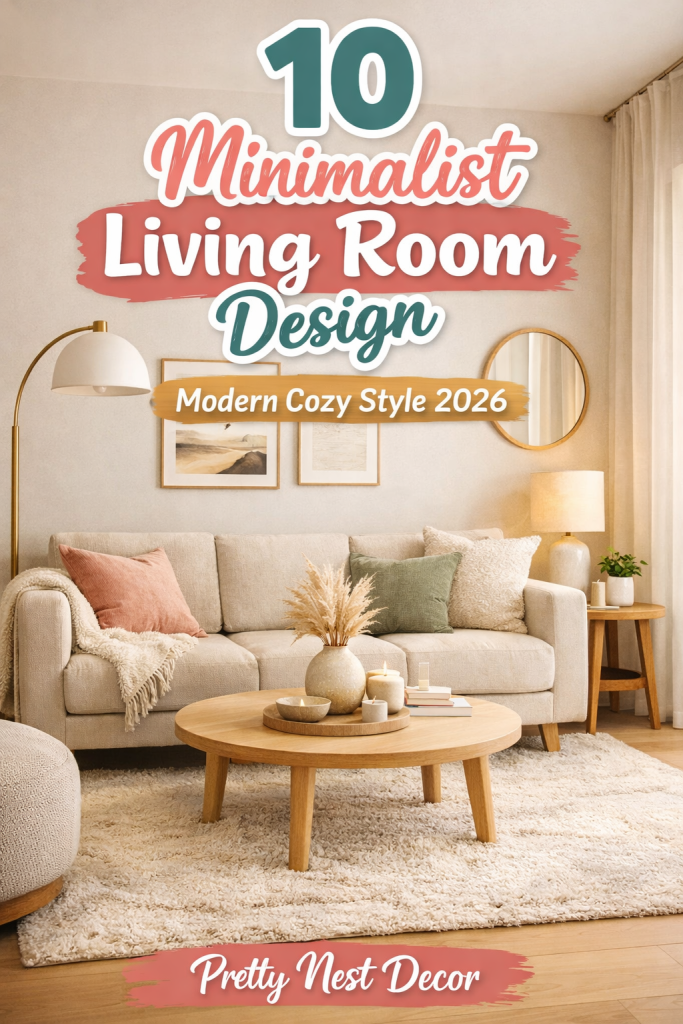
The concept of a minimalist living room has shifted over time from being purely stark and monochromatic to a more warm and inviting interpretation known as modern cozy minimalism. In 2026, this trend emphasizes softness, texture, and subtle layering while maintaining a clutter-free environment. Neutral color palettes such as whites, beiges, creams, warm grays, and earthy tones dominate the scene, creating a soothing visual foundation. These colors help reflect natural light and make the room feel more spacious, airy, and open. The addition of organic materials like wood, linen, cotton, stone, and rattan further enhances the cozy atmosphere while maintaining the minimalist ethos.
A key principle of minimalist living room design is functionality. Every piece of furniture and décor is selected with intention, ensuring that it contributes to both aesthetics and usability. For example, a sofa is not just a seating option but also a focal point of the room, often chosen in neutral upholstery with clean silhouettes. Similarly, coffee tables, shelving units, and lighting fixtures are selected based on their practicality as well as their visual harmony with the overall design. Multi-functional furniture is especially popular in minimalist spaces, as it allows homeowners to maximize utility without overcrowding the room.
Another defining feature of modern minimalist living rooms is the emphasis on open space. Negative space, or the empty areas between objects, plays a crucial role in creating a sense of balance and calmness. Rather than filling every corner with furniture or accessories, minimalist design embraces breathing room. This not only improves visual clarity but also contributes to mental relaxation, as a less cluttered environment is often associated with reduced stress and improved focus. The layout of the room is carefully planned to ensure smooth movement and clear sightlines, allowing the space to feel organized and harmonious.
Lighting is another essential component of minimalist living room design. Natural light is highly prioritized, with large windows, sheer curtains, or open layouts that allow sunlight to flow freely into the space. Artificial lighting is used strategically to complement natural light and enhance the ambiance during evening hours. Modern minimalist interiors often incorporate layered lighting, including ceiling lights, floor lamps, and subtle accent lighting. Fixtures are typically simple in design, with clean geometric shapes and neutral finishes that blend seamlessly into the environment.
Texture plays a significant role in preventing minimalist spaces from feeling too plain or cold. In 2026, cozy minimalist living rooms often incorporate a variety of textures to add depth and warmth without introducing visual clutter. Soft area rugs, knitted throws, upholstered cushions, and textured wall finishes all contribute to a layered yet restrained aesthetic. These elements create visual interest while maintaining the simplicity that defines minimalism. The careful balance of textures ensures that the space feels inviting rather than sterile.
Décor in minimalist living rooms is intentionally curated rather than excessive. Instead of multiple decorative items, a few carefully selected pieces such as a statement artwork, a sculptural vase, or a single plant can make a strong visual impact. Indoor plants are particularly popular in modern minimalist interiors, as they introduce a natural element that enhances both aesthetics and air quality. The placement of décor is strategic, ensuring that each item complements the overall composition of the room without overwhelming it.
Color psychology also plays an important role in minimalist living room design. Neutral and earthy tones are favored because they evoke a sense of calmness and stability. Soft contrasts are used to define different areas of the room without creating visual noise. For instance, a slightly darker sofa against a light-colored wall can create a focal point while still maintaining harmony. Accent colors, when used, are typically muted and applied sparingly to preserve the minimalist feel.
In addition to aesthetics, minimalist living room design aligns with a lifestyle philosophy that values mindfulness and intentional living. By reducing excess and focusing on quality over quantity, individuals can create environments that support clarity, relaxation, and productivity. This approach encourages homeowners to be more selective with their purchases, investing in pieces that are durable, timeless, and versatile. As a result, minimalist living rooms often feel more curated and personal, despite their simplicity.
In 2026, technology integration is also seamlessly incorporated into minimalist living spaces. Smart home devices, hidden storage solutions, and integrated entertainment systems are designed to remain unobtrusive, maintaining the clean and uncluttered look of the room. Cables, wires, and bulky equipment are minimized or concealed, allowing the design to remain visually cohesive. This blend of functionality and aesthetics reflects the modern homeowner’s desire for convenience without compromising style.
Overall, minimalist living room design in modern cozy style represents a perfect balance between simplicity and comfort. It is a design approach that prioritizes intentional choices, clean layouts, and subtle elegance while incorporating warmth through textures, lighting, and natural elements. By focusing on essential elements and eliminating unnecessary distractions, this style creates living spaces that are not only visually appealing but also emotionally calming and highly functional. As trends continue to evolve in 2026, minimalist living rooms remain a timeless choice for those seeking a harmonious, stylish, and comfortable home environment.
Idea 1: Neutral Color Palette Living Room
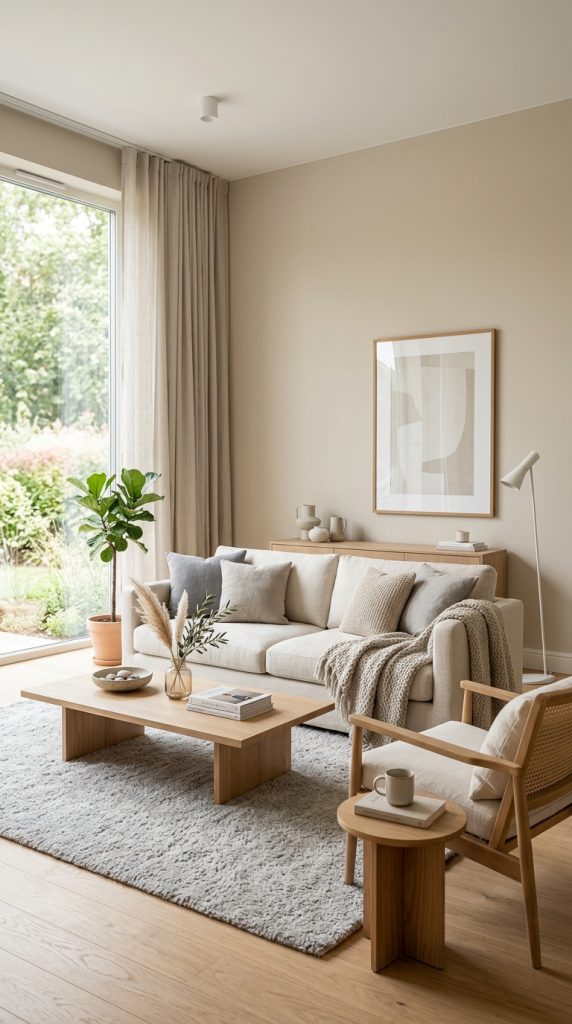
A neutral color palette is the foundation of minimalist living room design within Interior Design, especially in modern cozy styles for 2026. This idea focuses on using soft, muted tones such as beige, cream, ivory, warm gray, and taupe to create a calm and cohesive environment. Neutral palettes help eliminate visual noise, allowing the space to feel open, airy, and balanced.
This design approach works well because neutral colors naturally reflect light, making even smaller living rooms appear more spacious. The absence of bold or overly saturated colors allows furniture, textures, and layout to stand out subtly rather than compete for attention. It also creates a timeless aesthetic that does not easily go out of style, making it a practical long-term choice.
In a cozy minimalist setting, neutrals are not flat or boring—they are layered through different shades and textures. For example, a beige sofa paired with a slightly darker rug, cream curtains, and off-white walls creates depth without introducing clutter. The key is to maintain variation within a controlled color family.
How to Create:
Start by selecting a primary neutral base color for walls, such as soft white or warm beige. Choose furniture in complementary neutral tones, ensuring contrast through light and dark variations rather than bold colors. Add texture through rugs, cushions, and throws in similar tones but different materials like linen, cotton, or wool. Keep décor minimal and within the same color family to maintain harmony. Avoid overusing accent colors; instead, introduce subtle variations to maintain visual interest.
Materials Used:
Neutral wall paint, neutral-toned sofa and furniture, textured rugs, linen or cotton cushions, light curtains, wooden or matte finishes, minimal décor pieces.
Idea 2: Minimalist Furniture Layout with Open Space
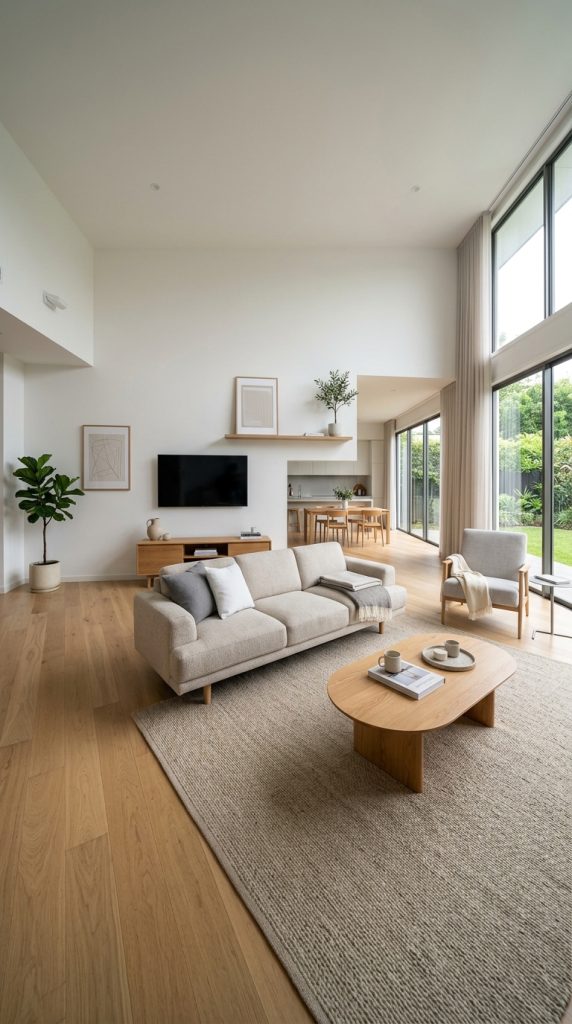
A minimalist furniture layout emphasizes open space and functionality, a key principle in Interior Design. In this idea, furniture is carefully arranged to maximize movement, visual clarity, and comfort while avoiding overcrowding. The layout is designed to feel breathable, with each piece serving a clear purpose.
This concept is essential in modern cozy minimalist living rooms because it prevents the space from feeling cramped or cluttered. Instead of filling the room with multiple sofas, chairs, or tables, the design focuses on a few essential pieces arranged in a balanced and practical way. The spacing between furniture allows light to flow freely and creates a sense of openness.
The layout often includes a central seating area with a sofa, one or two accent chairs, and a coffee table. The positioning is symmetrical or intentionally asymmetrical but always visually balanced. Negative space around furniture is just as important as the furniture itself, contributing to the overall aesthetic.
How to Create:
Begin by identifying the focal point of the room, such as a TV, fireplace, or large window. Place the main sofa facing or aligned with this focal point. Add accent chairs or additional seating at angles that encourage conversation. Keep pathways clear and ensure there is enough space between furniture pieces for easy movement. Avoid pushing all furniture against the walls; instead, create a central arrangement that feels cohesive. Use a rug to anchor the seating area and define the layout visually.
Materials Used:
Sofa, accent chairs, coffee table, area rug, side tables, minimal shelving units, layout planning tools (optional).
Idea 3: Cozy Textured Layers in Minimalist Style
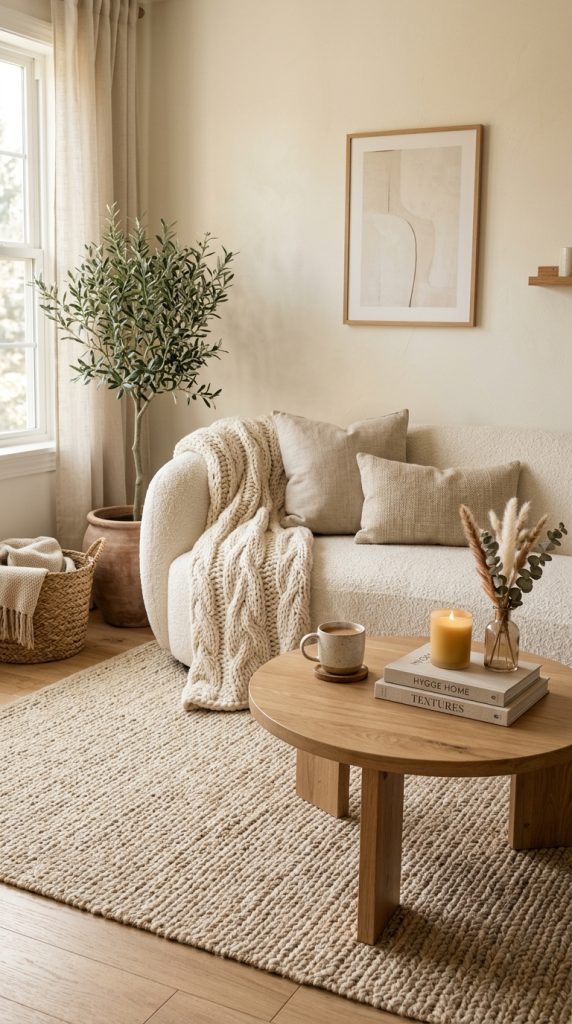
Textured layering is a key element in modern cozy minimalist living rooms within Interior Design. While minimalism emphasizes simplicity, texture adds warmth and depth to prevent the space from feeling flat or sterile. This idea focuses on incorporating different materials and surfaces while maintaining a clean and uncluttered look.
Textures can be introduced through fabrics, furniture finishes, and décor elements. Common materials include soft wool throws, linen cushions, boucle upholstery, woven rugs, and wooden surfaces. These textures create subtle contrast and visual richness without relying on bold patterns or colors.
The combination of textures enhances the cozy atmosphere, making the living room feel inviting and comfortable. For example, pairing a smooth leather sofa with a chunky knit blanket and a textured rug creates a layered look that is both modern and warm. The key is to keep textures within a neutral color palette to maintain minimalist consistency.
How to Create:
Choose a neutral base for the room and layer different textures through soft furnishings and décor. Start with a textured rug as the foundation, then add a sofa with a tactile fabric such as linen or boucle. Incorporate cushions with varying materials and a throw blanket for added softness. Use natural materials like wood or stone for tables and shelving. Avoid over-decorating; instead, focus on a few well-chosen textured elements that complement each other.
Materials Used:
Textured rug, fabric sofa, cushions (linen, cotton, boucle), throw blankets, wooden or stone furniture, woven baskets, minimal décor items.
Idea 4: Minimalist Coffee Table Styling
Coffee table styling plays an important role in Interior Design, especially in minimalist living rooms where every element must be intentional. A well-styled coffee table acts as a subtle focal point without creating clutter. The goal is to keep the arrangement simple, balanced, and visually appealing.
In minimalist design, coffee tables are often styled with just a few carefully selected items. These may include a small stack of books, a decorative tray, a candle, or a single vase with greenery. The arrangement is usually asymmetrical but balanced, ensuring that the table does not appear overcrowded.
The materials and colors used in coffee table styling should align with the overall room theme. Neutral tones, natural textures, and simple shapes work best. Glass, wood, or marble coffee tables are commonly used, as they blend seamlessly into minimalist spaces while adding subtle character.
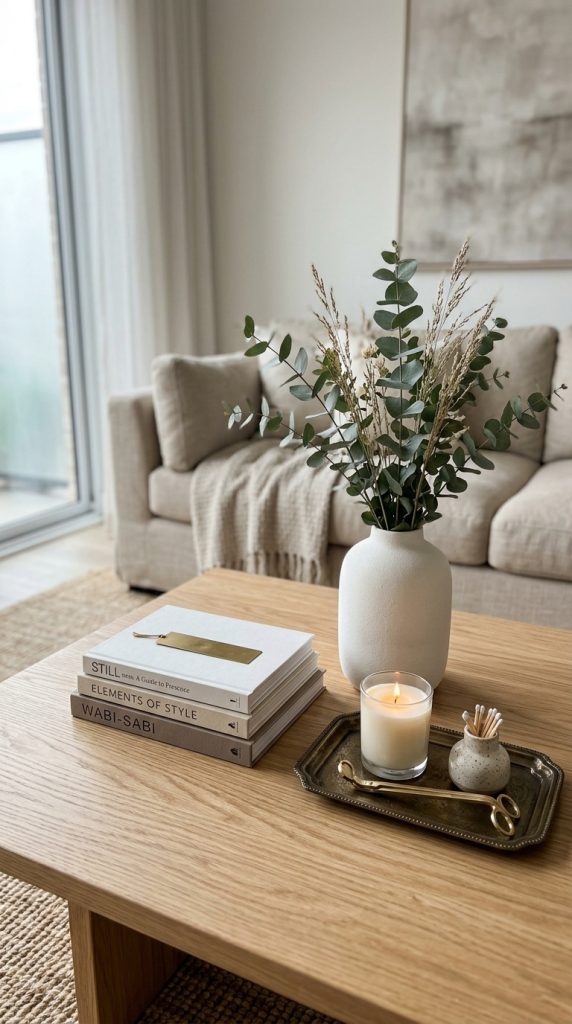
How to Create:
Start with a clean, uncluttered coffee table. Choose a base element such as a tray to organize smaller items. Add a stack of books or magazines for height variation. Place a decorative object such as a candle, sculpture, or vase with a small plant. Keep the arrangement limited to a few items to avoid visual clutter. Ensure that the styling complements the surrounding furniture and color palette.
Materials Used:
Coffee table (wood, glass, or marble), decorative tray, books or magazines, candles, vase or small plant, minimal decorative objects.
Idea 5: Statement Lighting in Minimalist Living Room
Statement lighting is a powerful design element in Interior Design that enhances both functionality and aesthetics in a minimalist living room. In a modern cozy style, lighting fixtures are chosen not only for illumination but also as subtle design statements that complement the overall space.
In minimalist interiors, lighting fixtures typically feature clean lines, geometric shapes, and neutral finishes such as black, white, brass, or matte textures. Pendant lights, floor lamps, and wall sconces are commonly used to create layered lighting that enhances depth and ambiance. A single statement chandelier or pendant light can serve as a focal point without overwhelming the room.
Lighting plays a crucial role in creating a cozy atmosphere, especially during evening hours. Warm-toned lighting is preferred, as it softens the environment and makes the space feel more inviting. The combination of natural light during the day and layered artificial lighting at night ensures that the living room remains functional and visually appealing at all times.
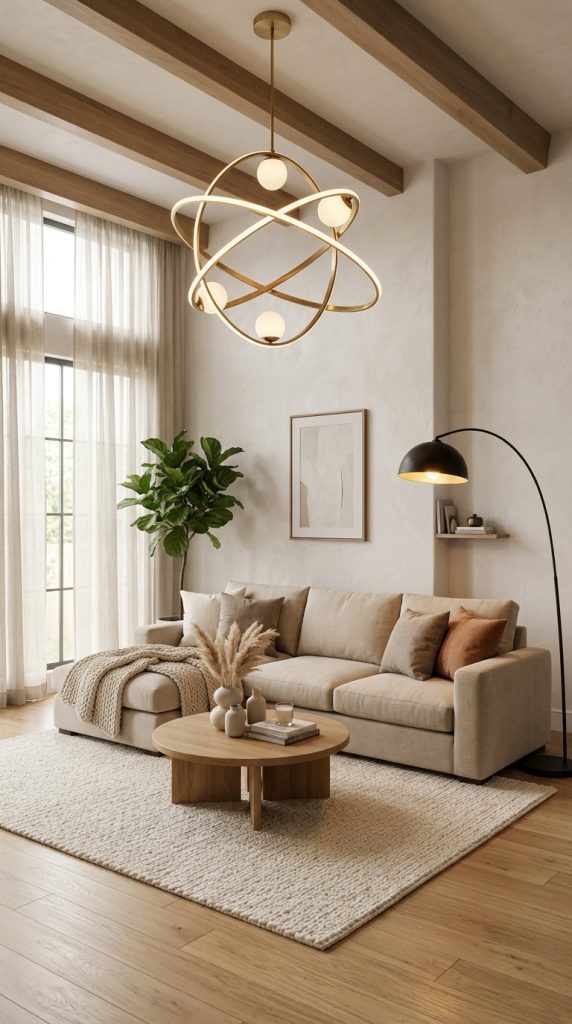
How to Create:
Select a primary statement lighting fixture such as a pendant light or chandelier that matches the room’s minimalist theme. Install it in a central position, often above the seating area or coffee table. Supplement with additional lighting sources such as floor lamps or table lamps to create layered illumination. Use warm white bulbs to maintain a cozy ambiance. Avoid overly decorative or ornate fixtures; instead, choose simple designs that enhance the space without dominating it.
Materials Used:
Pendant or chandelier lighting, floor lamps, table lamps, warm LED bulbs, dimmer switches (optional), minimalist fixtures with clean finishes.
Idea 6: Wall Art with Minimal Frames
Wall art is an essential element in Interior Design that adds personality to a minimalist living room without overwhelming the space. In a modern cozy minimalist style, wall art is kept simple, often featuring abstract designs, neutral tones, or black-and-white compositions framed in thin, clean frames.
The goal of this idea is to enhance visual interest while maintaining a clutter-free environment. Instead of filling walls with multiple decorative pieces, a few carefully selected artworks are displayed with ample spacing. This creates a gallery-like effect that feels intentional and balanced. The frames are typically slim, made of wood or metal, and finished in neutral tones such as black, white, or natural wood.
Wall art in minimalist spaces often reflects themes of simplicity, nature, or abstract expression. It helps break the monotony of plain walls while still aligning with the overall calm and cohesive aesthetic. The placement is usually symmetrical or aligned at eye level to maintain visual harmony.
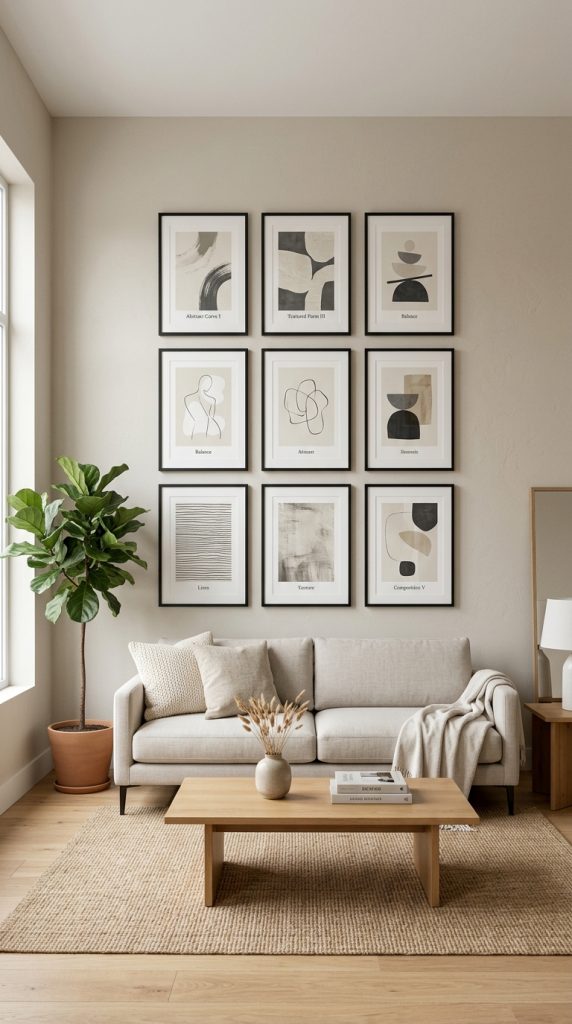
How to Create:
Choose one to three pieces of artwork that match the room’s color palette. Select frames that are minimal and do not distract from the artwork itself. Hang the pieces with adequate spacing between them to avoid overcrowding. Align them at consistent heights or in a structured arrangement such as a grid or linear layout. Ensure the wall art complements the furniture below it, such as a sofa or console table, to create a unified composition.
Materials Used:
Minimal frame wall art, abstract prints or neutral artwork, thin frames (wood/metal), hanging tools, wall hooks, measuring tape.
Idea 7: Indoor Plants for Natural Minimalist Touch
Indoor plants are a popular feature in Interior Design that bring life, freshness, and a natural element into minimalist living rooms. In modern cozy styles, plants are used sparingly but strategically to enhance the overall aesthetic without creating clutter.
Plants introduce organic shapes and subtle color contrast against neutral interiors. Common choices include fiddle leaf figs, snake plants, monstera, rubber plants, and small potted succulents. These plants not only improve air quality but also add a calming, biophilic element that enhances the sense of relaxation within the space.
In minimalist design, the placement of plants is carefully considered. Instead of filling the room with multiple small plants, one or two larger statement plants are often used as focal points. Alternatively, a few small plants can be grouped together in a clean, organized arrangement.
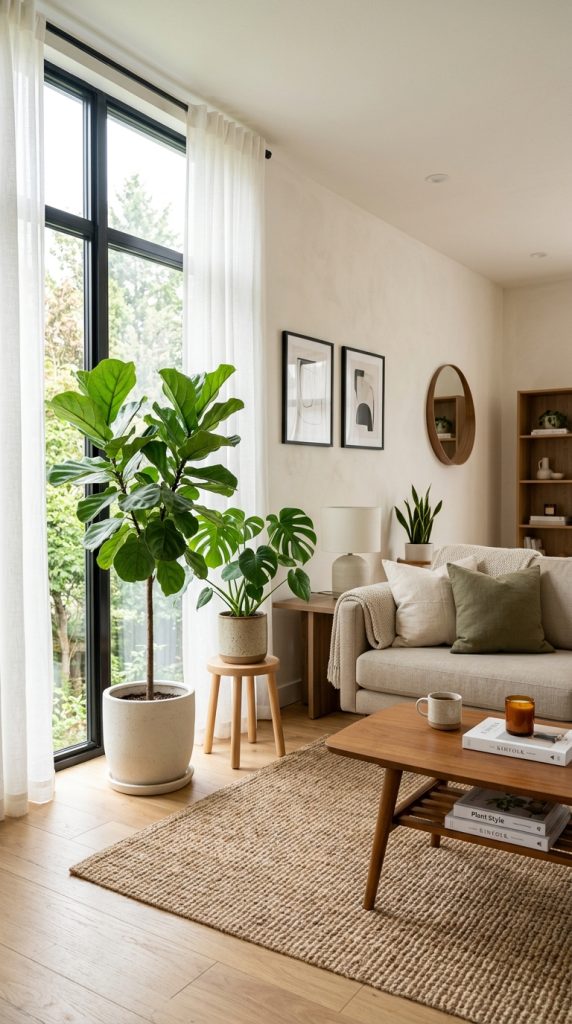
How to Create:
Select plants that suit indoor lighting conditions and require low maintenance. Choose simple planters in neutral colors such as white, beige, or terracotta. Place larger plants in corners or near windows to create balance and visual interest. Use smaller plants on shelves, coffee tables, or side tables in minimal arrangements. Avoid overcrowding and maintain spacing between plant elements to preserve the minimalist feel.
Materials Used:
Indoor plants, neutral planters, plant stands (optional), watering tools, natural light source, decorative trays (optional).
Idea 8: Floating Shelves for Clean Storage
Floating shelves are a functional and stylish solution within Interior Design that support minimalist living room organization. They provide storage and display space without taking up floor area, making them ideal for maintaining an open and uncluttered environment.
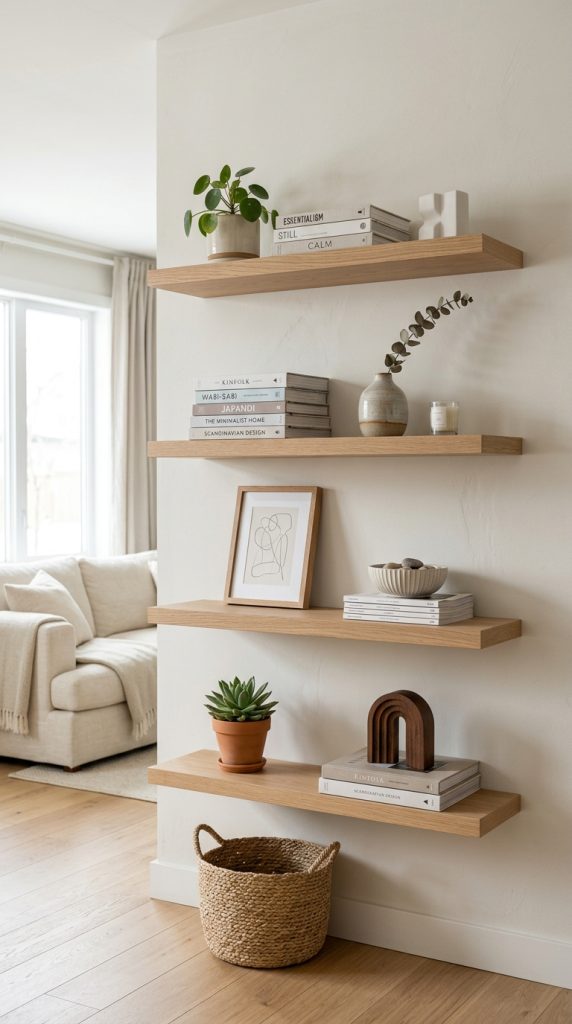
In minimalist design, floating shelves are used sparingly and styled with restraint. Instead of overcrowding them with items, they are decorated with a few carefully chosen objects such as books, small plants, vases, or decorative sculptures. This ensures that the shelves remain visually light and organized.
Floating shelves are typically installed in neutral finishes such as white, black, or natural wood to blend seamlessly with the wall. Their clean, bracket-free design enhances the minimalist aesthetic while providing practical storage for everyday items.
How to Create:
Install floating shelves on a clean wall space, ensuring proper alignment and spacing between each shelf. Choose a limited number of decorative items that match the room’s color palette. Arrange items in small clusters rather than filling the entire shelf. Maintain balance by mixing vertical and horizontal elements such as books stacked horizontally and upright décor pieces. Leave negative space on the shelves to avoid clutter and maintain a clean visual flow.
Materials Used:
Floating shelves, wall mounting hardware, decorative items (books, plants, vases), level tool, drill, anchors.
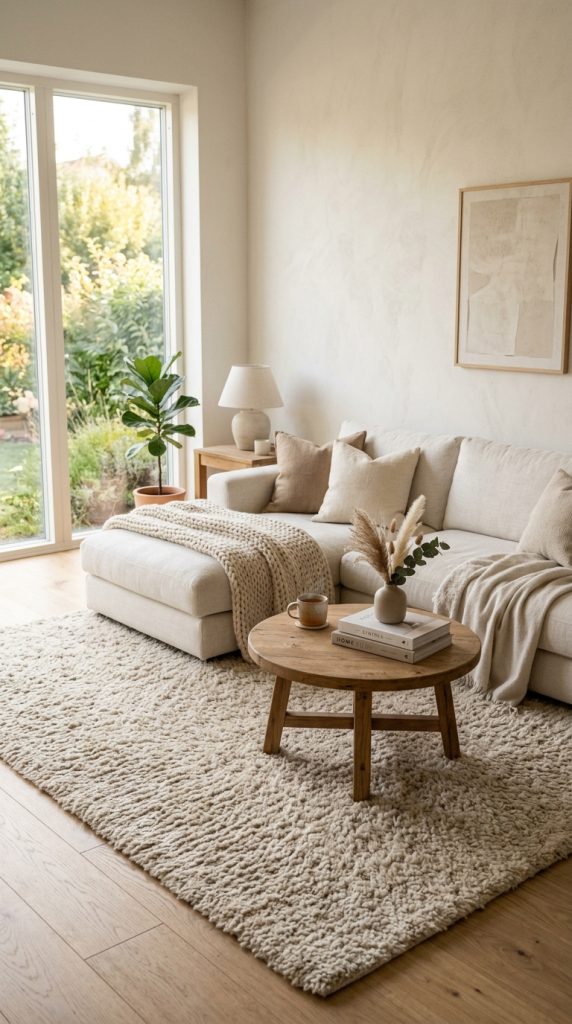
Idea 9: Soft Rugs for Warm Minimalist Comfort
Rugs play a significant role in Interior Design by adding warmth, comfort, and definition to a minimalist living room. In modern cozy minimalist styles, rugs are used to anchor the seating area and introduce texture without disrupting the simplicity of the space.
Neutral-colored rugs in shades like beige, ivory, gray, or soft brown are commonly used. Materials such as wool, cotton, or woven fibers are preferred for their natural texture and durability. The rug helps visually define the living area, especially in open-plan spaces, while also contributing to acoustic comfort by reducing noise.
The size of the rug is important in maintaining balance. A properly sized rug should fit under the main seating arrangement, tying the furniture pieces together into a cohesive layout. Patterns, if used, are typically subtle and understated, such as soft geometric designs or tone-on-tone textures.
How to Create:
Select a rug that complements the room’s color palette and is large enough to fit under the main furniture arrangement. Place the rug centrally under the sofa and coffee table, ensuring that at least the front legs of the seating are on the rug. Choose a texture that adds depth without introducing bold patterns. Keep the rug clean and free of excessive layering to maintain the minimalist look. Adjust placement to ensure symmetry and visual balance within the room.
Materials Used:
Area rug (wool, cotton, woven), rug pad (optional), vacuum or cleaning tools, furniture alignment guides.
Idea 10: Hidden Storage Solutions for Clutter-Free Space
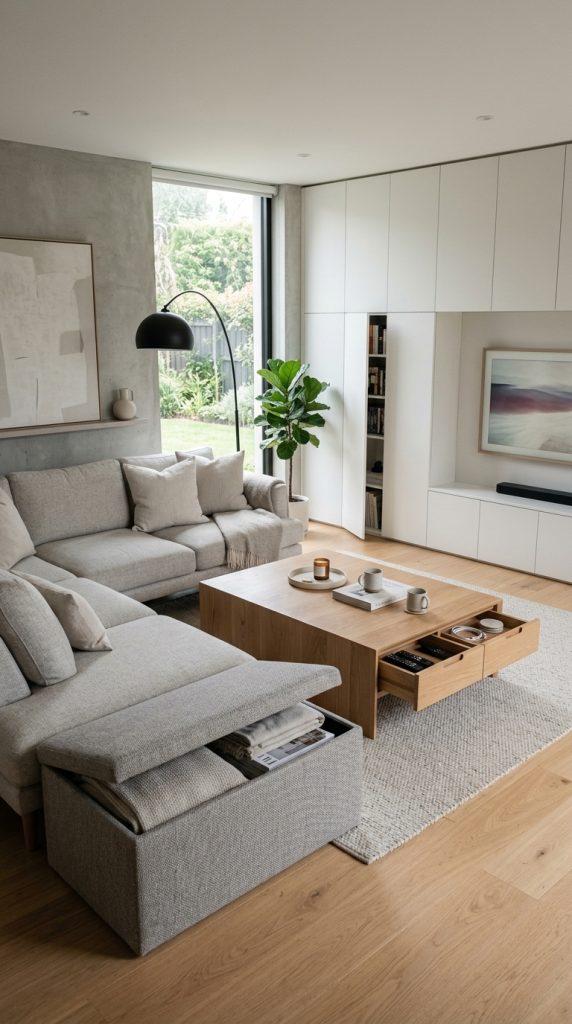
Hidden storage is a key component in Interior Design that supports the minimalist philosophy of keeping spaces clean and organized. In modern cozy living rooms, hidden storage solutions help maintain a clutter-free environment while still providing practical functionality.
This idea involves using furniture and design elements that conceal storage compartments, such as ottomans with internal storage, coffee tables with drawers, built-in cabinets, or wall units with concealed sections. These solutions allow everyday items like remote controls, books, blankets, and electronics to be stored out of sight.
Hidden storage contributes significantly to the visual simplicity of a minimalist living room. By eliminating visible clutter, the space appears more open, calm, and organized. It also improves usability, as items can be easily accessed without disrupting the overall aesthetic.
How to Create:
Incorporate multi-functional furniture pieces that include built-in storage compartments. Choose coffee tables, sofas, or benches that open or include drawers for storage. Use closed cabinets or wall units to store items that are not frequently used. Keep visible surfaces clear and only display essential décor items. Regularly organize and declutter stored items to ensure the storage remains efficient and functional.
Materials Used:
Storage ottomans, coffee tables with drawers, closed cabinets, shelving units with doors, baskets or bins, organizers for internal storage.