
Creating a welcoming backyard is about more than just landscaping or outdoor furniture—it is about designing a space that feels alive, peaceful, and connected with nature. One of the simplest yet most rewarding ways to bring life into your backyard is by attracting birds. Birds add movement, color, and beautiful natural sounds that instantly make an outdoor space feel relaxing and vibrant. For homeowners who enjoy spending time outside, watching birds visit the yard can become a calming daily ritual. One of the best ways to invite birds into your outdoor space is by installing bird feeders, and modern bird feeder designs are now more stylish and functional than ever before.
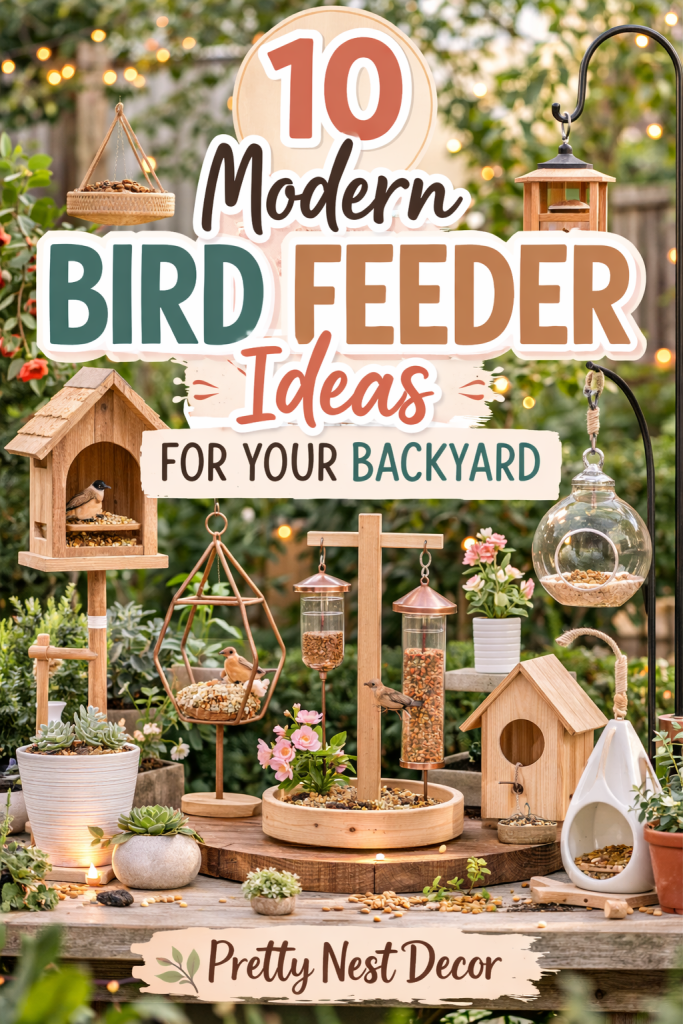
In the past, bird feeders were mostly simple wooden boxes or plastic containers that served a basic purpose—holding bird food. While these traditional feeders still work, modern backyard design trends have introduced a wide variety of bird feeder styles that combine functionality with aesthetic appeal. Today’s bird feeders are designed not only to attract birds but also to complement outdoor decor. Whether your backyard features a minimalist patio, a cozy garden space, or a contemporary landscape design, there are modern bird feeder ideas that can seamlessly blend with your outdoor style.
Modern bird feeders focus on clean designs, durable materials, and thoughtful placement. Many of them use materials like wood, metal, glass, acrylic, and recycled plastic to create sleek and elegant structures. These feeders often feature geometric shapes, transparent containers, or minimalist frames that look more like decorative garden accessories than traditional feeders. Because of their stylish appearance, modern bird feeders can become a beautiful focal point in your backyard while still serving their practical purpose.
Another important advantage of modern bird feeder designs is improved functionality. Many contemporary feeders are created with features that make feeding birds easier and cleaner. For example, some feeders include weather protection to keep birdseed dry during rain, while others have built-in drainage holes to prevent moisture buildup. Certain designs also include squirrel-resistant mechanisms that protect the bird food from being stolen by other animals. These practical features help ensure that birds can enjoy the feeder safely while homeowners spend less time maintaining it.
When choosing a bird feeder for your backyard, it is also important to consider the types of birds you want to attract. Different birds prefer different types of food and feeder styles. For instance, small songbirds may enjoy tube feeders filled with sunflower seeds, while larger birds may prefer platform feeders that provide more space. Hummingbirds are attracted to nectar feeders with bright colors, and woodpeckers often prefer suet feeders. Modern bird feeder designs often accommodate these preferences while still maintaining a stylish look that fits seamlessly into backyard landscapes.
The location of your bird feeder is another key factor that influences its success. Birds need a safe and comfortable environment where they can feed without feeling threatened. Ideally, feeders should be placed in quiet areas of the yard, away from heavy foot traffic. Placing feeders near trees, shrubs, or garden plants provides birds with natural shelter and perching spots. However, it is also important to keep feeders visible from your home so you can enjoy watching the birds as they visit.
Modern bird feeders also offer opportunities for creative backyard decoration. Instead of simply hanging a feeder from a tree branch, many homeowners now incorporate feeders into decorative garden structures. For example, bird feeder stations can be mounted on stylish metal poles, attached to pergolas, or integrated into garden walls. Some feeders even resemble small architectural pieces, miniature houses, or artistic sculptures. These designs turn bird feeding into both a hobby and a decorative outdoor feature.
Sustainability is another reason modern bird feeder designs are becoming increasingly popular. Many homeowners are now interested in creating eco-friendly outdoor spaces that support local wildlife. By providing birds with food and water, you help support bird populations while encouraging natural pest control in your garden. Birds feed on insects, which helps keep your plants healthy and reduces the need for chemical pesticides. Additionally, many modern feeders are made from recycled materials or responsibly sourced wood, making them an environmentally friendly choice.
Building or installing a bird feeder can also be a fun DIY project. Many modern bird feeder ideas are surprisingly simple to create using basic materials such as wood boards, mason jars, or metal pipes. DIY feeders allow homeowners to customize designs that match their backyard style while saving money compared to store-bought options. Crafting your own bird feeder can also be a rewarding activity for families, encouraging children to learn about birds and nature.
Another reason modern bird feeders are trending is their ability to enhance outdoor relaxation spaces. Many people now design backyard areas specifically for relaxation, including patios, reading corners, or garden seating areas. Placing a bird feeder nearby adds a natural element to these spaces, making them feel peaceful and enjoyable. Imagine sitting on your patio with a cup of coffee while colorful birds visit your feeder just a few feet away. This simple experience can transform your backyard into a tranquil retreat.
Lighting can also enhance the beauty of bird feeder setups. Some modern feeder stations incorporate solar lights or decorative lanterns that illuminate the area in the evening. While birds typically feed during daylight hours, these lighting features make the feeder area visually appealing even after sunset. Combined with plants, garden stones, and outdoor furniture, bird feeders can become part of a carefully designed backyard landscape.
In addition to attracting birds, feeders also encourage homeowners to become more aware of local wildlife. Many people develop an interest in birdwatching after installing a feeder in their yard. Observing different bird species, learning about their behaviors, and identifying their colors and songs can be both educational and relaxing. Over time, your backyard may become a small sanctuary where birds return regularly because they recognize it as a safe and reliable feeding spot.
Modern bird feeder ideas for backyards are not just about feeding birds—they are about creating a harmonious outdoor environment where nature and design work together. By choosing stylish feeders, placing them thoughtfully, and maintaining them regularly, you can transform your backyard into a lively and inviting habitat for birds. At the same time, these feeders enhance the visual appeal of your outdoor space, making it more enjoyable for family and guests.
In the sections that follow, you will discover a collection of creative and modern bird feeder ideas that are perfect for backyard spaces. These ideas range from simple DIY projects to elegant decorative feeders that can become stunning garden features. Each idea will help you create a bird-friendly backyard while adding charm, personality, and natural beauty to your outdoor environment.
1. Minimalist Wooden Hanging Bird Feeder
Introduction
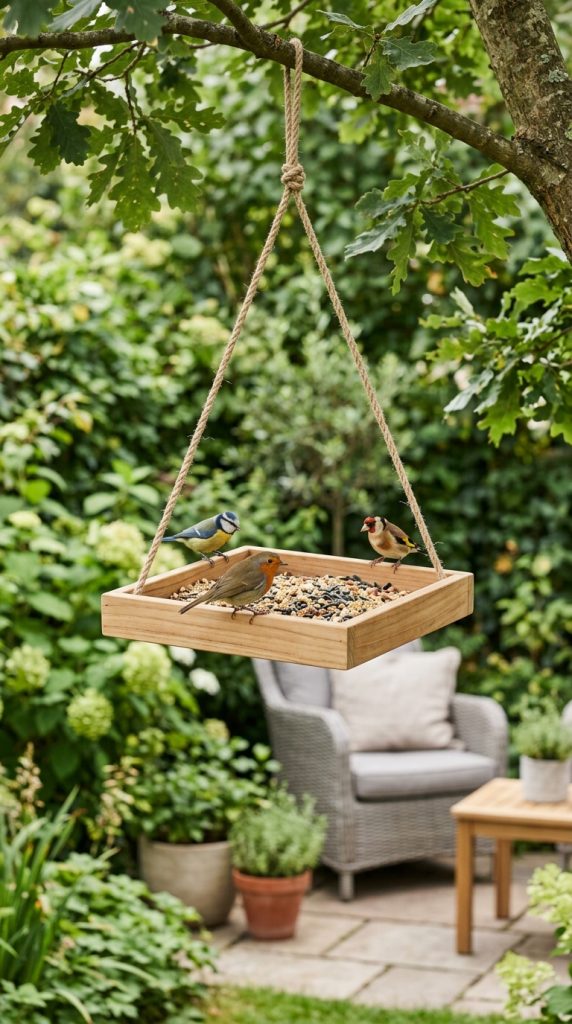
A minimalist wooden hanging bird feeder is perfect for homeowners who want a clean, modern aesthetic in their backyard. This type of feeder focuses on simple lines, natural materials, and functionality. The minimalist design allows the bird feeder to blend seamlessly into a variety of backyard styles, from contemporary patios to cozy garden corners. Despite its simplicity, a hanging wooden feeder can attract a wide range of birds, especially small songbirds, because it is lightweight, accessible, and easy to maintain.
The beauty of a wooden hanging bird feeder lies in its versatility. The feeder can be suspended from tree branches, hooks, or pergolas, making it adaptable to any backyard layout. Its natural wood finish complements green spaces and creates a warm, inviting look. Additionally, the open design allows birds to perch comfortably while feeding, creating a visually appealing backyard scene for homeowners to enjoy from their windows or patios.
Minimalist wooden feeders are also easy to clean and maintain. Unlike enclosed plastic feeders that can accumulate moisture and mold, a simple wooden tray allows for good airflow, keeping birdseed dry and fresh. This type of feeder is ideal for homeowners who value both aesthetics and practicality.
Explanation
This bird feeder features a wooden tray suspended by ropes or chains. Its minimalist design emphasizes clean lines, natural wood, and unobstructed feeding space.
Step-by-Step How-To
- Choose a Wooden Base
Select a smooth, untreated wooden board of suitable size (e.g., 12×12 inches) for the feeding platform. - Attach Suspension Points
Drill four holes at the corners of the board for ropes, chains, or wires. - Cut and Secure Ropes
Cut four equal lengths of rope or chain and thread them through the holes. Tie secure knots or attach hooks. - Hang the Feeder
Suspend the feeder from a strong tree branch, ceiling hook, or backyard pergola. - Add Birdseed
Fill the tray with a mix of seeds suitable for your local birds, such as sunflower seeds, millet, or safflower. - Maintenance
Clean the tray weekly to remove old seeds and droppings.
Materials Needed
- Untreated wooden board
- Rope, chain, or wire
- Drill and drill bits
- Birdseed
- Ceiling hook or tree branch for hanging
2. Modern Acrylic Tube Feeder
Introduction
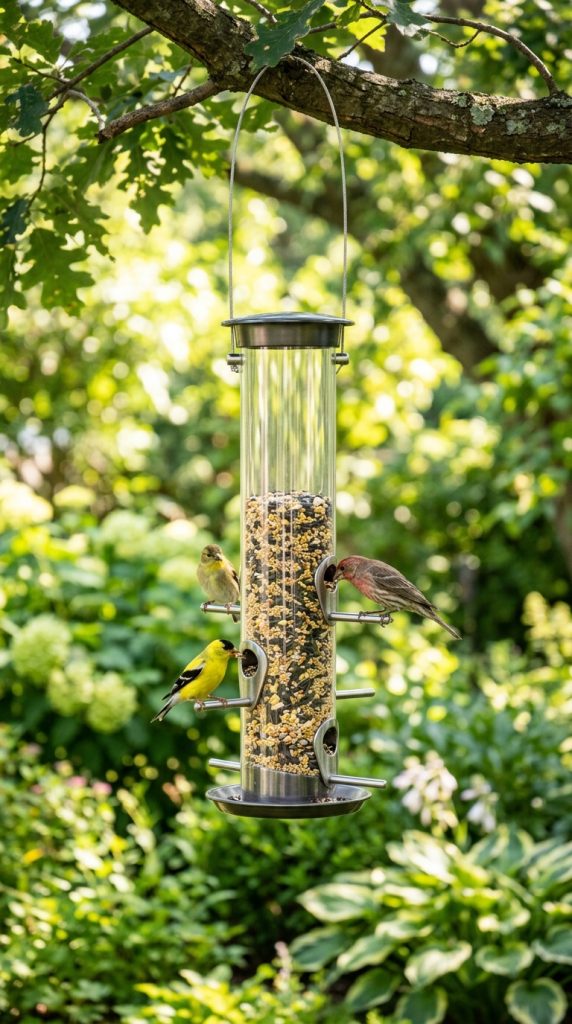
A modern acrylic tube bird feeder is sleek, lightweight, and perfect for small backyard spaces. The transparent design allows homeowners to monitor the birdseed level easily, while the minimalist tube shape provides perches for multiple birds at once. This feeder is especially suitable for small songbirds like finches, sparrows, and chickadees.
Acrylic feeders are weather-resistant, making them ideal for areas that experience rain or humidity. Unlike traditional wooden feeders, acrylic does not warp, crack, or absorb moisture. Its modern appearance adds a stylish element to any backyard while maintaining functionality.
The tube design often includes small feeding ports with perches, which ensures birds can access the seeds without letting squirrels or larger birds monopolize the feeder. This combination of aesthetic appeal and practical design makes acrylic tube feeders a popular choice among modern homeowners.
Explanation
This feeder consists of a clear acrylic tube with feeding ports and perches. Its modern design allows birds to perch and feed while giving homeowners a clear view of the seed level.
Step-by-Step How-To
- Purchase or Prepare Acrylic Tube
Use a transparent acrylic tube approximately 12–18 inches long. - Drill Feeding Holes
Drill small holes spaced evenly along the tube for birds to access seeds. - Install Perches
Insert small dowels or metal rods under each feeding hole to act as perches. - Seal Tube Ends
Cap the top and bottom to prevent water from entering. - Mount or Hang Feeder
Suspend from a tree branch, pole, or ceiling hook. - Fill with Birdseed
Fill the tube with birdseed and observe as birds come to feed.
Materials Needed
- Acrylic tube
- Drill and small bits
- Metal or wooden dowels for perches
- End caps for tube
- Birdseed
- Hooks or mounting hardware
3. Geometric Metal Frame Feeder
Introduction
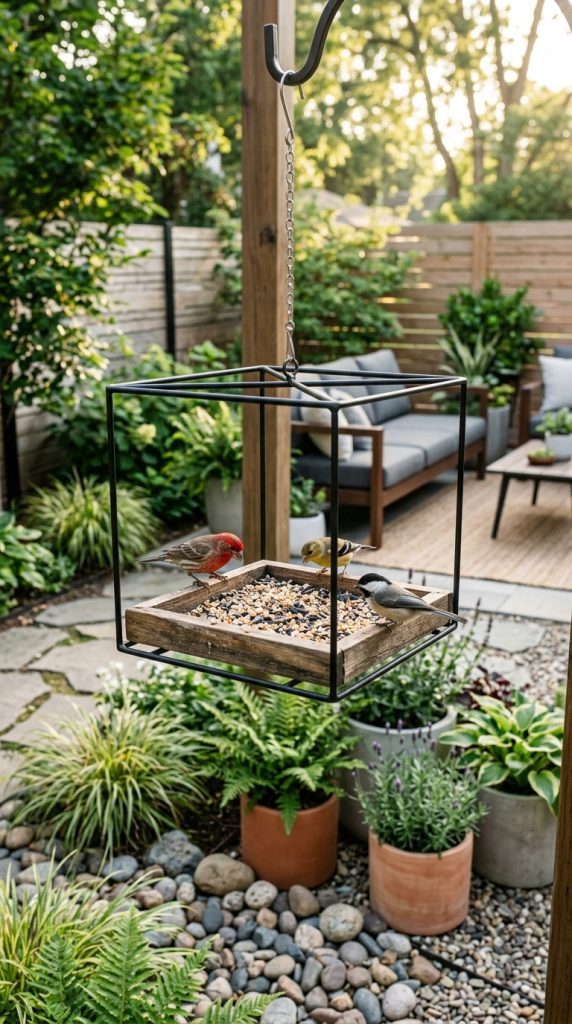
A geometric metal frame bird feeder adds a contemporary, architectural element to any backyard. Its clean lines and angular design make it visually striking while providing functional feeding space. This feeder is ideal for homeowners who enjoy modern garden aesthetics and want their bird feeder to serve as a decorative focal point.
Metal frame feeders are often weather-resistant and durable. They can be paired with glass, wood, or acrylic trays to hold seeds, combining functionality with a sleek, industrial appearance. This style works well in both small and large backyards, especially when placed near patios or seating areas where birds can be observed.
The geometric shape attracts birds by offering perches and protected feeding areas. Additionally, metal feeders are easier to clean than some traditional wooden feeders because the material is smooth and resistant to mold.
Explanation
The feeder features a geometric metal frame, such as a cube or pyramid, with a platform or enclosed tray for seeds. It balances modern design with practicality.
Step-by-Step How-To
- Select a Metal Frame
Choose a metal shape, such as a cube, triangle, or hexagon. - Add Seed Tray
Attach a wooden or metal tray inside the frame to hold birdseed. - Provide Perches
Attach small rods or dowels for birds to perch while feeding. - Optional Hanging or Stand
Either hang the feeder with chains or place it on a decorative garden pole. - Fill with Seed
Add birdseed appropriate for your local birds. - Regular Maintenance
Clean tray weekly to remove old seeds and debris.
Materials Needed
- Metal frame (cube, pyramid, etc.)
- Wooden or metal seed tray
- Small rods for perches
- Hooks or pole for mounting
- Birdseed
4. Suet Cage Feeder with Modern Twist
Introduction
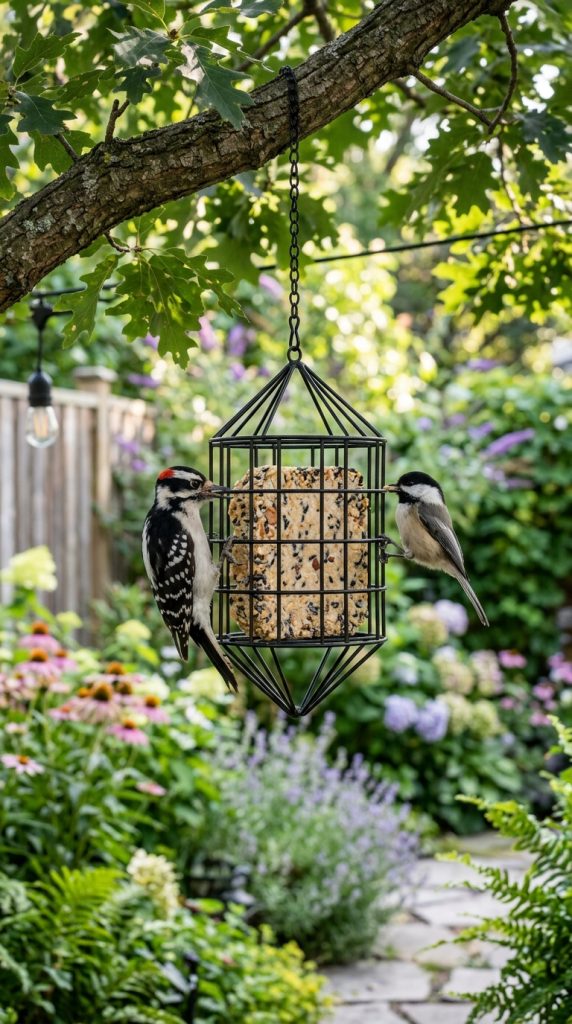
A suet cage feeder is perfect for attracting insect-eating birds like woodpeckers, nuthatches, and chickadees. Modern versions of this feeder use sleek metal cages or colorful acrylic to blend seamlessly into contemporary backyard designs. Suet provides high-energy food for birds, especially during colder months, making it both functional and attractive.
Modern suet feeders are often designed to be squirrel-resistant, with cages that only allow smaller birds to access the food. This ensures the suet lasts longer while still providing nourishment to your feathered visitors. Aesthetic design is equally important, with minimalist frames, matte finishes, and geometric shapes that add style to the backyard.
Installing a suet feeder is also easy and low-maintenance. The cage design allows for quick replacement of suet cakes while keeping the feeder clean and tidy.
Explanation
This feeder consists of a metal or acrylic cage holding suet cakes. Birds can cling to the sides of the cage to feed, and the design is both functional and modern.
Step-by-Step How-To
- Choose Cage Material
Select a durable metal or acrylic cage with openings for birds. - Insert Suet Cake
Place a suet cake inside the cage. - Add Hanging Mechanism
Use a hook or chain to hang the feeder from a tree or pole. - Position in Safe Spot
Hang in a quiet area away from heavy foot traffic. - Refill as Needed
Replace suet cakes weekly or when consumed. - Clean Cage Regularly
Rinse and scrub to prevent mold buildup.
Materials Needed
- Metal or acrylic suet cage
- Suet cakes
- Hooks or hanging chains
- Optional decorative cover
5. DIY Mason Jar Bird Feeder
Introduction
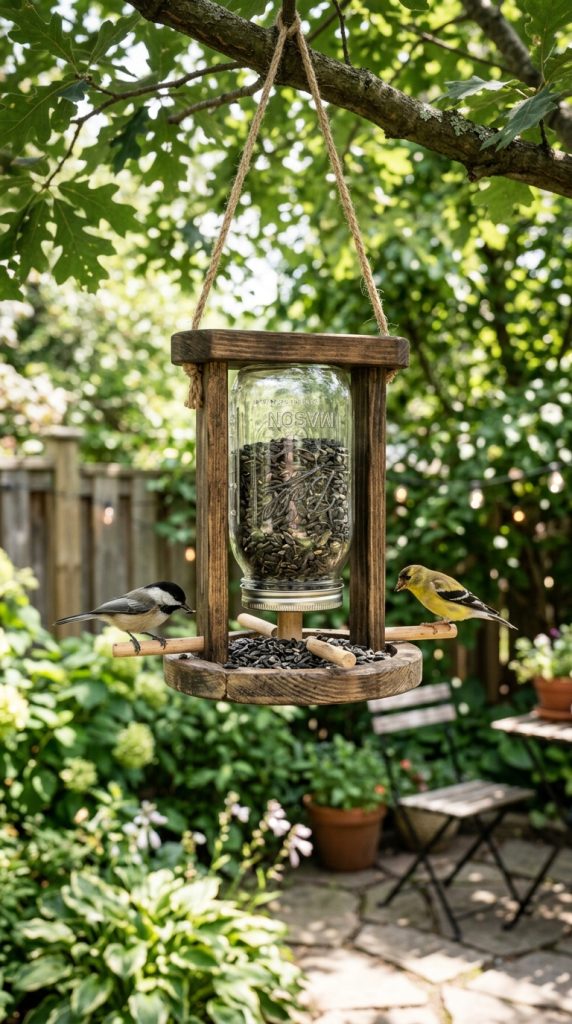
A DIY mason jar bird feeder is a charming and modern solution for small backyards. It combines rustic charm with functional feeding, and its compact size is ideal for homeowners with limited outdoor space. Mason jar feeders are highly customizable: they can be painted, decorated, or paired with wood and metal frames for a sleek modern look.
These feeders are simple to make, inexpensive, and beginner-friendly, making them perfect for DIY enthusiasts. They can attract a variety of birds depending on the type of seed used, and their clear glass or plastic body allows you to monitor seed levels easily. Mason jar feeders also blend well with modern and rustic backyard aesthetics alike, making them versatile additions.
Explanation
The feeder consists of a mason jar inverted over a wooden or metal base, allowing seeds to flow gradually as birds feed.
Step-by-Step How-To
- Select Mason Jar
Choose a standard mason jar with a lid. - Prepare Base
Use a wooden or metal platform with holes to allow seeds to fall. - Attach Jar to Base
Secure the jar upside down on the base. - Add Perches
Attach small dowels around the base for birds to perch. - Fill with Seed
Fill the jar with birdseed suitable for local bird species. - Hang or Mount Feeder
Place on a pole, hook, or railing in your backyard.
Materials Needed
- Mason jar with lid
- Wooden or metal base
- Small dowels for perches
- Birdseed
- Hooks, chains, or mounting hardware
6. Modern Solar-Powered Bird Feeder
Introduction
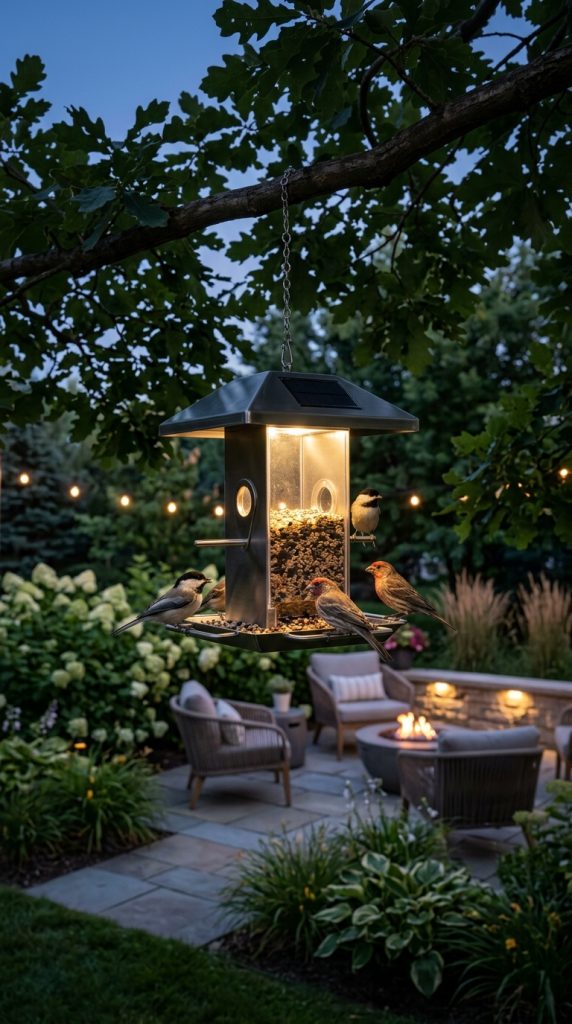
A modern solar-powered bird feeder combines innovation and functionality, providing food for birds while incorporating sustainable energy. These feeders often include a small solar panel that powers LED lights, creating a soft glow around the feeder in the evenings. This design is perfect for homeowners who want to enhance the aesthetic of their backyard while also creating a safe, illuminated space for birds.
Solar-powered feeders attract birds during daylight hours and provide ambient lighting at night, adding charm and visibility to patios or garden corners. Many designs feature sleek acrylic or metal panels, giving the feeder a modern appearance while remaining weather-resistant. This combination of sustainability, style, and practicality makes solar-powered feeders highly popular for contemporary backyards.
Additionally, the LED lighting can highlight the feeder as a decorative focal point, allowing you to enjoy the backyard even after sunset. These feeders are low-maintenance, as the solar panels charge automatically during the day, reducing the need for external power sources.
Explanation
The solar-powered feeder is made with weather-resistant materials and features a solar panel that powers integrated LED lights, providing both feeding space and soft evening illumination.
Step-by-Step How-To
- Choose Feeder Design
Select a feeder with a built-in solar panel and LED lights. - Fill with Birdseed
Add your preferred seeds based on local bird species. - Install Solar Panel
Ensure the solar panel is positioned to receive maximum sunlight. - Mount or Hang Feeder
Place on a backyard pole, railing, or hook where birds can easily access it. - Check LED Functionality
Verify that LED lights turn on automatically after dark. - Maintain Feeder
Clean the seed compartment weekly to prevent mold.
Materials Needed
- Solar-powered bird feeder
- Birdseed
- Hooks, poles, or mounting hardware
- Basic tools for installation
7. Hanging Glass Bottle Feeder
Introduction
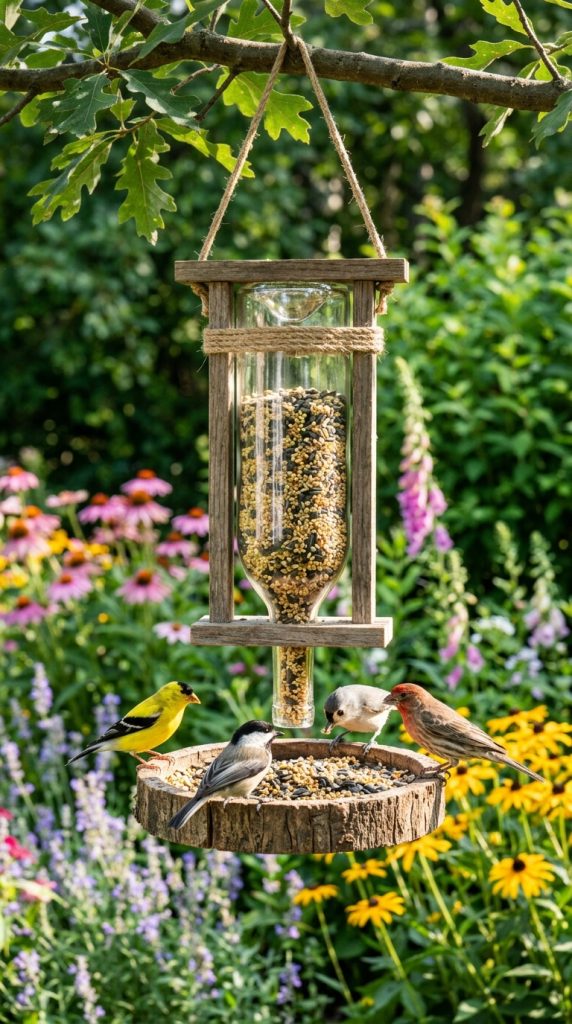
A hanging glass bottle feeder is a modern DIY-friendly option that looks sleek and stylish while providing food for small birds. This design uses a repurposed glass bottle inverted over a feeding tray, allowing seeds to flow gradually as birds eat. Its transparency lets you easily monitor seed levels, and its unique shape adds visual interest to your backyard.
Glass bottle feeders are ideal for homeowners who enjoy creative projects and want an eco-friendly solution. They can be customized with painted patterns, colored bottles, or decorative wooden bases to match your outdoor decor. The compact size makes this feeder perfect for small backyards, balconies, or patios.
This design also attracts small perching birds such as finches, sparrows, and chickadees. The sleek, minimal design ensures the feeder looks modern and elegant, blending beautifully with plants, garden furniture, or other decorative elements.
Explanation
The feeder uses a repurposed glass bottle inverted over a base platform with perches, allowing controlled seed dispensing.
Step-by-Step How-To
- Select a Glass Bottle
Choose a sturdy, clean bottle with a wide opening. - Prepare Base Tray
Use a small wooden or metal tray to catch falling seeds. - Attach Bottle to Tray
Secure the bottle upside down over the tray. - Add Perches
Install small dowels or rods around the tray for birds to perch. - Fill with Seeds
Pour seeds into the bottle. - Hang the Feeder
Suspend with rope, chain, or hooks from a tree branch or pergola.
Materials Needed
- Glass bottle
- Small wooden or metal tray
- Dowels for perches
- Rope or chain for hanging
- Birdseed
8. Minimalist Wall-Mounted Feeder
Introduction
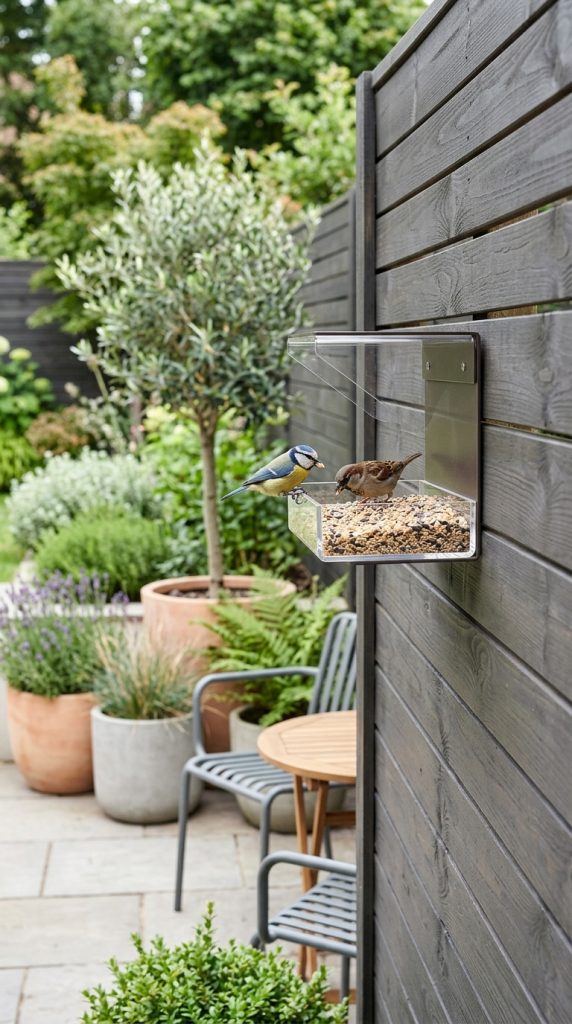
A wall-mounted bird feeder is perfect for homeowners with limited backyard space who still want to attract birds. These feeders attach directly to fences, walls, or balcony railings, providing a modern, space-saving solution. The minimalist design ensures that the feeder complements outdoor decor while remaining functional and accessible for birds.
Wall-mounted feeders are ideal for small spaces because they eliminate the need for additional poles or hanging hardware. Modern designs often use metal or acrylic materials with clean lines, creating a sleek appearance. Many models include small trays or enclosed compartments for seeds, ensuring a tidy and organized feeding area.
This type of feeder is also excellent for birdwatching. Placing it near a window or patio allows homeowners to enjoy observing birds up close without disturbing them. Its elevated position keeps seeds away from pests like squirrels and makes maintenance easier.
Explanation
The feeder is mounted directly to a wall or fence, featuring a small tray or seed compartment with a modern, minimalist design.
Step-by-Step How-To
- Choose a Location
Pick a secure wall or fence that is visible from your backyard seating area. - Select Wall-Mount Feeder
Use a metal or acrylic feeder with a seed tray. - Install Mounting Hardware
Drill screws or hooks to attach the feeder securely. - Attach Feeder
Hang or secure the feeder to the hardware. - Add Birdseed
Fill the tray or compartment with seeds suitable for small birds. - Regular Cleaning
Remove leftover seeds and clean the tray weekly.
Materials Needed
- Wall-mounted bird feeder (metal or acrylic)
- Screws or mounting hardware
- Drill
- Birdseed
9. Multi-Level Platform Feeder
Introduction
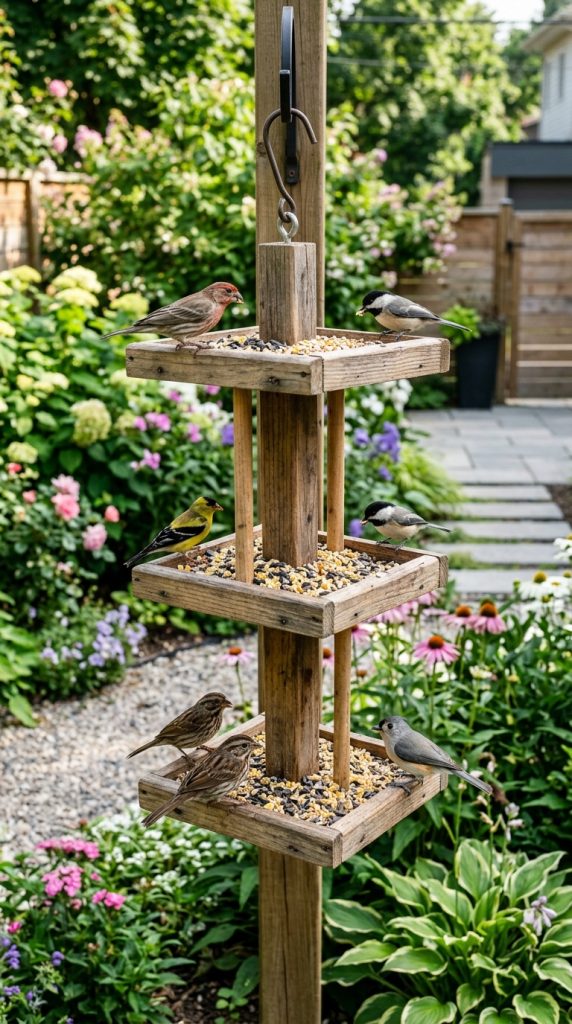
A multi-level platform bird feeder is an excellent modern solution for attracting a variety of bird species. This design features stacked platforms at different heights, allowing multiple birds to feed simultaneously without crowding. The layered structure is visually interesting, adding depth and style to your backyard while providing ample feeding space.
Platform feeders are particularly versatile because they can accommodate seeds, suet, and even fruit. Modern designs often use weather-resistant wood, metal, or acrylic to ensure durability and longevity. Placing the feeder near shrubs or trees adds shelter for birds, encouraging frequent visits.
The multi-level design also creates a decorative focal point in the backyard. It can be used as part of a garden arrangement or mounted on a central pole, providing a clean, organized feeding station that enhances outdoor aesthetics.
Explanation
This feeder consists of stacked platform trays at varying heights, made from wood or metal, providing multiple feeding areas in a modern design.
Step-by-Step How-To
- Choose Base Platform
Use a sturdy wooden or metal tray as the base. - Stack Additional Platforms
Install smaller trays at different heights using metal rods or wooden posts. - Secure Structure
Ensure each level is balanced and stable. - Add Perches if Needed
Attach small dowels or rods for birds to perch comfortably. - Fill Each Level with Food
Use birdseed, suet, or fruit depending on local birds. - Place in Safe Location
Position near trees or shrubs to provide shelter.
Materials Needed
- Wood or metal trays for platforms
- Posts or rods to support each level
- Screws or fasteners
- Birdseed or suet
- Optional dowels for perches
10. Hanging Bamboo Tube Feeder
Introduction
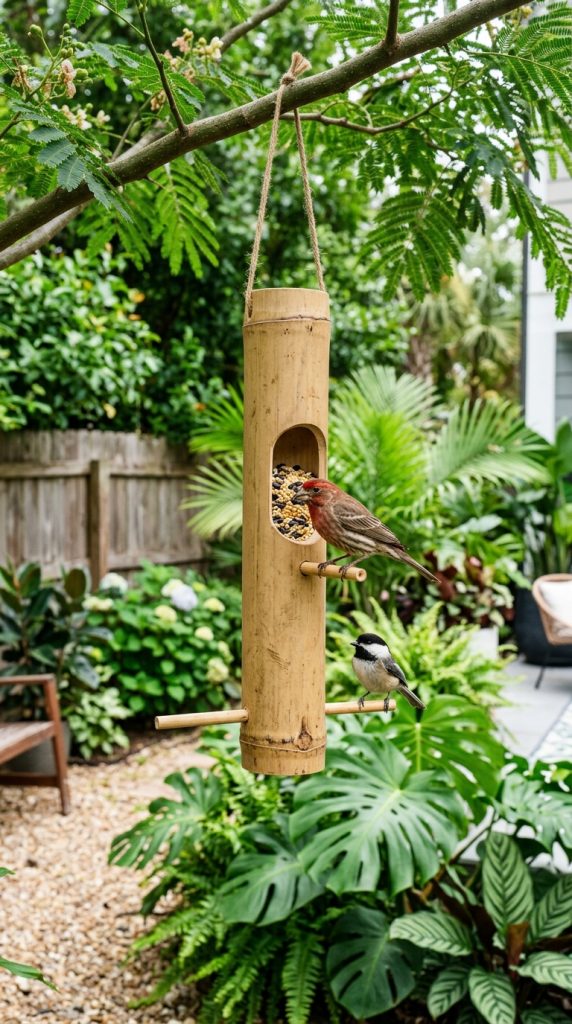
A hanging bamboo tube bird feeder combines natural aesthetics with modern design principles. Bamboo is lightweight, eco-friendly, and durable, making it an ideal material for backyard feeders. This feeder is perfect for homeowners who want a natural-looking design that complements gardens, patios, and tropical-style landscapes.
Bamboo tube feeders are easy to hang and often include multiple feeding ports for small birds. Their hollow structure provides excellent protection for seeds while allowing birds to access them comfortably. The organic texture of bamboo adds warmth and charm to modern backyards without looking out of place.
This type of feeder attracts a variety of songbirds and works well when combined with perches or small trays. It is also environmentally friendly, as bamboo is sustainable and biodegradable.
Explanation
A hollow bamboo tube with feeding holes and optional perches, suspended from a tree or hook, creating a natural and modern bird feeder.
Step-by-Step How-To
- Select Bamboo Tube
Choose a hollow bamboo section about 12–18 inches long. - Drill Feeding Holes
Drill small holes along the sides for birds to access seeds. - Add Perches
Insert small dowels or sticks below the holes for birds to perch. - Secure Hanging Mechanism
Tie rope or attach chains to suspend from a tree branch or hook. - Fill with Seeds
Pour seeds into the tube, ensuring holes allow gradual flow. - Maintenance
Clean periodically and refill as needed.
Materials Needed
- Hollow bamboo tube
- Drill
- Dowels or sticks for perches
- Rope, chain, or hook for hanging
- Birdseed