
Staircases are no longer just functional elements in a home—they have become central design features that can define the aesthetic and atmosphere of an interior. In modern home design, staircases are celebrated as architectural focal points, blending form and function to create a sense of style, flow, and sophistication. Whether you live in a compact apartment, a suburban house, or a spacious contemporary villa, a well-designed staircase can dramatically transform the visual impact of your home, turning an everyday element into a statement piece that is both practical and Pinterest-worthy.
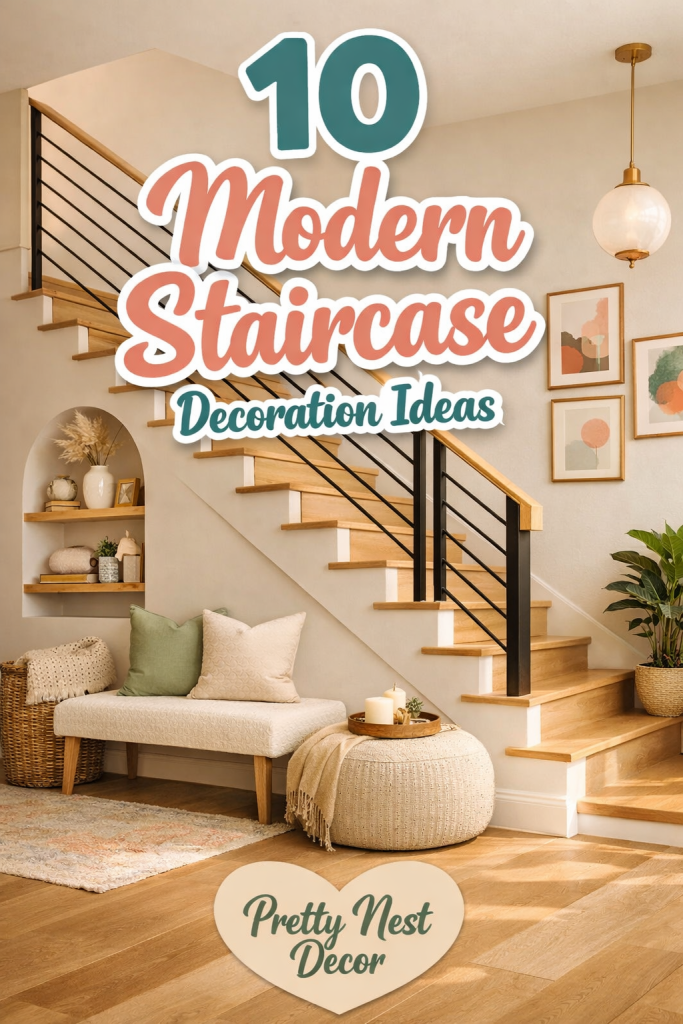
Modern staircase decoration focuses on simplicity, clean lines, and a balance between aesthetics and usability. Unlike traditional staircases that often rely on ornate detailing, modern designs prioritize minimalism, material innovation, and thoughtful integration with the surrounding interior. From floating stairs with sleek metal railings to wooden staircases accented by geometric patterns or glass panels, contemporary stair design emphasizes openness, light, and visual continuity. By decorating your staircase with modern touches, you can enhance the architectural beauty of your home while expressing your personal style in a sophisticated, curated way.
A key aspect of modern staircase decoration is material selection. Designers often mix materials like wood, metal, glass, and concrete to create contrast, texture, and visual interest. Light-colored woods can bring warmth to a minimalist interior, while metal and glass provide sleek, industrial elegance. Concrete staircases with polished finishes offer a minimalist, contemporary look that is both durable and stylish. By combining different materials thoughtfully, a staircase can become a centerpiece that balances strength, functionality, and aesthetic appeal.
Lighting is another crucial element in modern staircase decor. Proper illumination not only enhances safety but also highlights architectural features, textures, and finishes. Recessed lighting along steps, LED strips under railings, or pendant lights above the stairwell can create a dramatic, elegant effect. Layered lighting allows homeowners to adjust ambiance, from bright and functional for daily use to soft and ambient for relaxing evenings. Strategically placed lights can transform a simple staircase into a sculptural piece, making it an eye-catching feature in interior photography, Pinterest boards, or social media showcases.
Decorative elements can further personalize and elevate the staircase. Artwork, wall-mounted installations, plants, and strategically placed furniture can enhance the visual flow and create harmony with the overall interior. Minimalist railings, floating treads, and open risers contribute to a sense of openness and continuity, making small spaces appear larger and more inviting. For homeowners looking to combine style with practicality, storage solutions under the stairs—such as built-in shelves, drawers, or display niches—offer functional décor opportunities while maintaining clean, uncluttered lines.
The staircase also serves as a transition point between spaces, making it an ideal canvas for creative interior ideas. For instance, a gallery wall along the stairwell can tell a story, showcase personal style, or highlight curated artwork. Greenery like potted plants or hanging planters adds freshness and life, while strategically chosen accent pieces can complement the overall color palette and design theme. With attention to proportion, scale, and texture, homeowners can turn staircases into focal points that elevate the entire living space.
Another essential factor in modern staircase decoration is safety and ergonomics. Sleek glass railings, anti-slip treads, and sturdy handrails ensure the staircase remains practical while maintaining visual elegance. Contemporary designs often balance aesthetic innovation with safety, ensuring that even striking floating or cantilevered staircases are secure and functional. By integrating these considerations with stylish decoration, homeowners can achieve a staircase that is both visually impressive and practical for daily living.
In this article, we will explore 10 modern staircase decoration ideas that combine creativity, style, and functionality. Each idea is carefully curated to suit different home styles, sizes, and budgets, offering practical steps, materials, and inspiration. From minimalist floating stairs to industrial metal designs, wooden treads with artistic railings, and smart lighting solutions, these ideas showcase the versatility and impact of staircase decor. Whether you are renovating, redecorating, or designing a new home, these ideas will help you transform your staircase into a statement feature that is stylish, modern, and Pinterest-ready.
By embracing modern staircase decoration, homeowners can enhance not only the visual appeal of their interiors but also the overall experience of moving through their home. A thoughtfully designed staircase adds elegance, functionality, and personality, turning what was once a simple architectural necessity into a centerpiece that resonates with style-conscious homeowners. With clean lines, innovative materials, creative lighting, and curated décor, modern staircases become more than just passageways—they become living, dynamic design elements that reflect your taste, lifestyle, and vision.
In conclusion, modern staircase decoration is about more than aesthetics; it’s about creating a cohesive, functional, and visually striking centerpiece that complements the rest of your home. By carefully selecting materials, lighting, and decorative elements, you can elevate your staircase from a mere functional structure to a focal point that enhances the interior flow and sets the tone for your home. The following 10 ideas will inspire you to explore new possibilities, combining modern design trends with practical tips, creative solutions, and Pinterest-worthy aesthetics that will make your staircase a highlight of your living space.
Idea 1: Floating Staircase with Minimalist Railings
Introduction
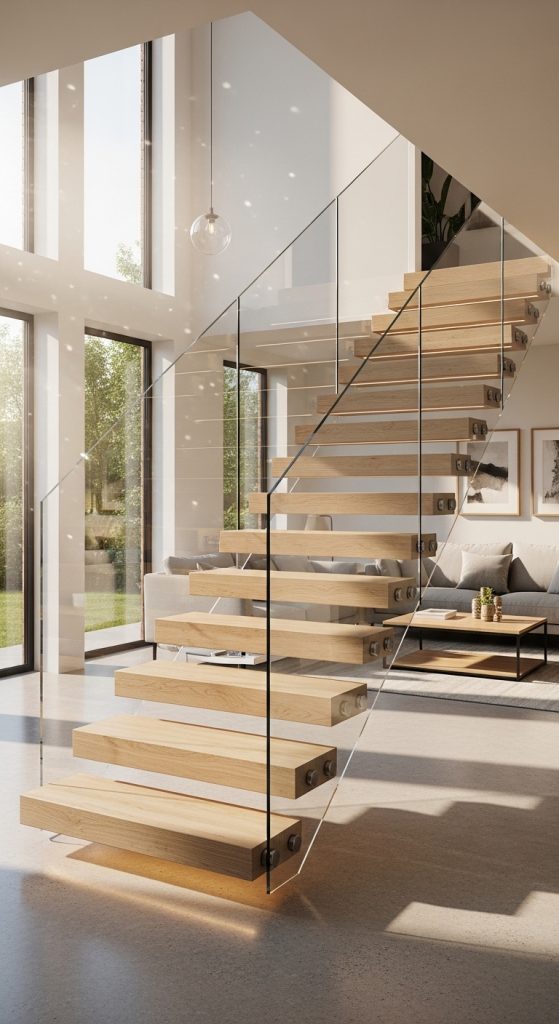
Floating staircases are the epitome of modern elegance, offering a sleek, airy, and visually striking design. Unlike traditional staircases that rely on visible supports, floating stairs appear suspended, creating a sense of openness and fluidity in the home. Minimalist railings, such as thin metal bars, frameless glass, or cable systems, complement the floating effect, ensuring safety without compromising the clean aesthetic. This design is perfect for contemporary homes with open floor plans, as it allows light to flow freely and visually enlarges the space.
Floating staircases are ideal for homeowners seeking a statement piece that is both functional and visually captivating. The combination of floating treads and minimalist railings creates a seamless integration with modern interior elements like polished concrete floors, neutral color schemes, and sleek furniture. Adding subtle lighting under the treads or along the railing further emphasizes the floating effect, enhancing the staircase’s aesthetic appeal. With proper installation and maintenance, floating staircases not only become a central design feature but also provide a Pinterest-worthy look that elevates the overall interior of your home.
Step-by-Step How-To:
- Measure the staircase area accurately to plan dimensions and spacing.
- Select materials for treads: wood, glass, or composite.
- Install hidden steel supports within walls or stringers.
- Add minimalist railings (frameless glass, thin metal bars, or cables).
- Install under-tread or side LED lighting for accent.
- Regularly maintain treads and railings for safety and longevity.
Materials Needed:
- Wood, glass, or composite treads
- Steel supports or wall-mounted brackets
- Minimalist railing materials (glass panels, metal bars, cables)
- LED strip lighting
- Mounting hardware
Idea 2: Staircase Gallery Wall
Introduction
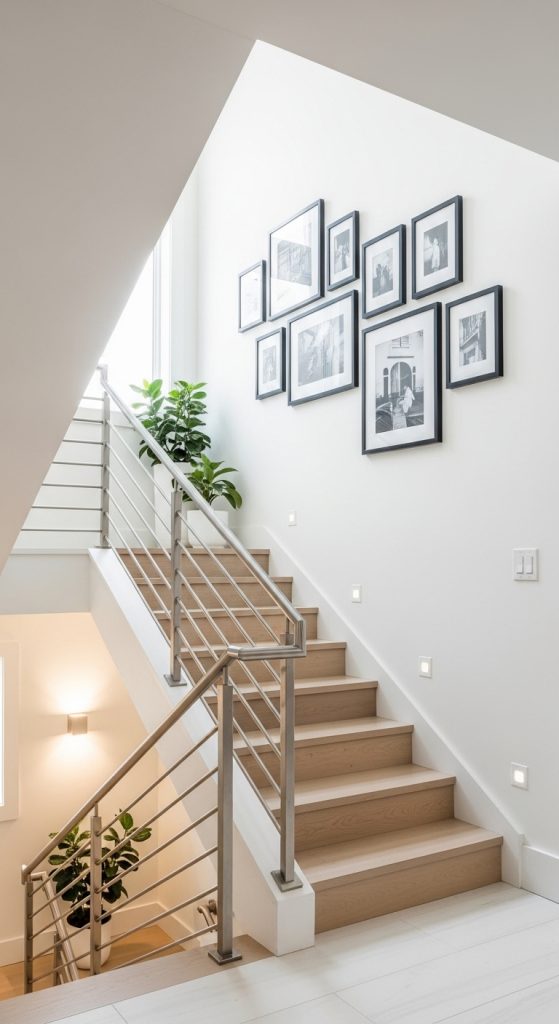
Turning a staircase into a gallery wall is a creative way to combine function with personal expression. By using the stairwell walls to display artwork, photographs, or curated decor, you create a visually engaging focal point that draws attention upwards. This approach works beautifully in modern interiors, where clean lines and neutral backdrops allow the displayed pieces to pop without overwhelming the space. A staircase gallery wall adds personality, tells a story, and transforms an ordinary transition space into a Pinterest-worthy design feature.
The key to a modern staircase gallery wall is balance and consistency. Frames should have uniform colors, shapes, or materials, or carefully curated differences that complement the overall aesthetic. Art can be arranged in straight lines for a minimalist look, or in geometric or staggered patterns for dynamic visual interest. Adding subtle lighting, such as wall-mounted LEDs or spotlights, enhances the artwork and creates ambiance. This design is perfect for homeowners looking to personalize their staircase while maintaining a contemporary, elegant style that is both practical and stylish.
Step-by-Step How-To:
- Choose a wall along the staircase for the gallery.
- Select artwork, photos, or decorative pieces with cohesive colors or themes.
- Decide on an arrangement (linear, geometric, or staggered).
- Measure and mark placement to ensure balance and spacing.
- Install frames or mounts securely, considering weight and height.
- Add accent lighting to highlight key pieces.
Materials Needed:
- Frames or wall-mounted displays
- Artwork, photographs, or decorative pieces
- Wall hooks, nails, or mounting hardware
- Measuring tape and level
- Accent lighting (LED strips or spotlights)
Idea 3: Wooden Tread with Metal Railings
Introduction
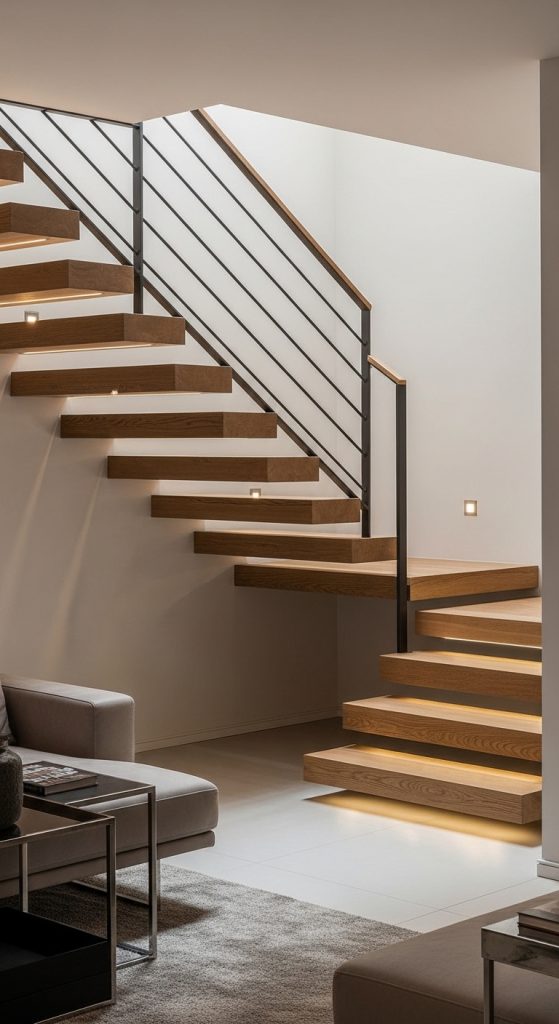
A staircase featuring wooden treads paired with metal railings combines warmth and industrial modernity. Wooden treads bring natural texture and warmth, while metal railings add strength and a sleek, contemporary edge. This combination is versatile and works in both traditional and modern homes, creating a focal point that feels grounded, functional, and stylish. By incorporating contrasting materials, the staircase becomes a design centerpiece that enhances the overall interior aesthetic.
This design emphasizes clean lines, open space, and durability. Wooden treads can be left natural, stained, or painted to complement your home’s color palette, while metal railings can be powder-coated in black, gray, or metallic finishes. Lighting along the railing or beneath the treads can add dramatic visual interest, emphasizing texture and depth. This combination ensures both safety and elegance, creating a Pinterest-worthy staircase that merges functionality with modern design.
Step-by-Step How-To:
- Measure staircase dimensions for precise tread and railing installation.
- Select durable wood for treads (oak, maple, or teak).
- Install wooden treads securely on stringers or wall supports.
- Choose metal railing design (bars, cables, or geometric patterns) and install.
- Apply protective finishes to wood and metal for durability.
- Add lighting along the railing or treads to enhance aesthetics.
Materials Needed:
- Wooden treads (oak, maple, or teak)
- Metal railing (steel or aluminum)
- Mounting hardware
- Wood stain or protective sealant
- Powder coating for metal railings
- LED strip or accent lighting
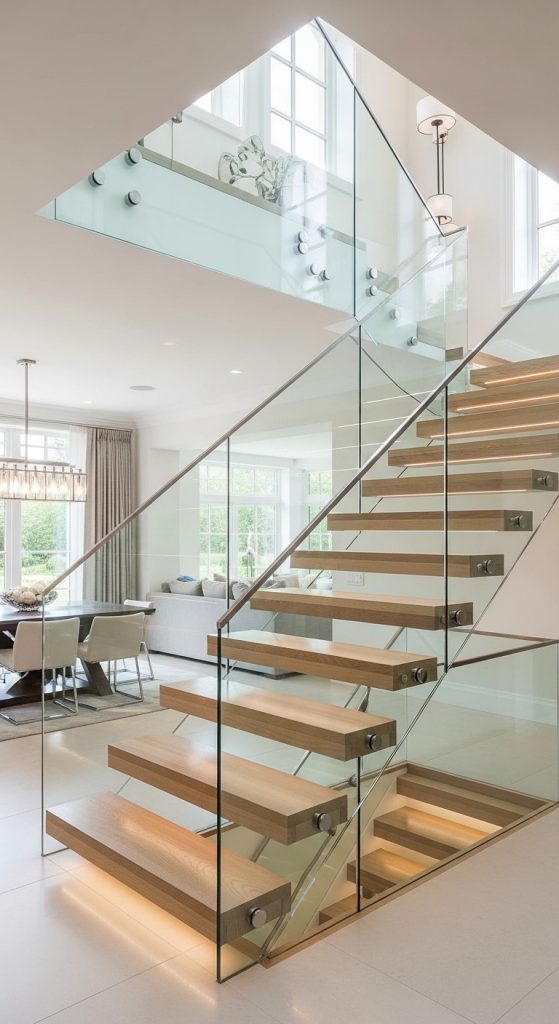
Idea 4: Floating Steps with Glass Panels
Introduction
Floating steps paired with glass panels create a luxurious and modern staircase that feels light, open, and visually striking. Glass panels replace traditional railings, allowing uninterrupted sightlines and enhancing the sense of spaciousness. This design is ideal for contemporary homes with open floor plans, where the staircase serves as both a functional feature and an artistic centerpiece. The transparency of the glass adds elegance and allows natural light to pass through, brightening the stairwell and adjacent spaces.
Glass panel staircases are versatile, pairing beautifully with materials like wood, stone, or metal. Frosted or tempered glass ensures safety while maintaining a modern, clean aesthetic. Subtle LED lighting along the base or edges can accentuate the floating effect, creating a dramatic focal point that’s Pinterest-worthy. This staircase style blends innovation, safety, and elegance, making it an excellent choice for homeowners seeking a high-impact, contemporary look.
Step-by-Step How-To:
- Measure the staircase space to plan step placement and panel dimensions.
- Select treads (wood, stone, or composite) and tempered/frosted glass panels.
- Install hidden brackets or supports for floating treads.
- Secure glass panels using clamps or mounting hardware.
- Apply protective coatings if needed.
- Add LED lighting beneath treads or along glass edges for effect.
Materials Needed:
- Treads (wood, stone, or composite)
- Tempered or frosted glass panels
- Mounting clamps or hardware
- Hidden supports for floating steps
- Protective coatings
- LED strip lighting
Idea 5: Staircase with Built-in Shelving
Introduction
A staircase with built-in shelving combines modern design with functionality, offering storage and display options without sacrificing style. This idea is perfect for small spaces, as it utilizes the area under the staircase efficiently while maintaining a clean, contemporary aesthetic. Shelving can be customized to fit your home’s décor, whether for books, decorative objects, plants, or art pieces, transforming the staircase into a multi-functional feature.
Built-in shelving enhances visual interest and allows personalization, making the staircase a design focal point. Open shelving creates a sense of openness, while closed cabinets maintain a minimalist look. Materials like wood, metal, or glass can be combined to suit modern interiors. Proper lighting, such as recessed LEDs or accent lights, can highlight the shelves and staircase, creating a Pinterest-ready feature that balances beauty and practicality.

Step-by-Step How-To:
- Measure the space under the staircase for shelves or cabinets.
- Choose materials (wood, metal, or glass) that match the interior.
- Install supporting brackets or built-in cabinetry.
- Arrange shelves with decorative items or storage solutions.
- Add accent lighting to illuminate the staircase and shelves.
- Maintain clean lines and uncluttered arrangement for modern aesthetics.
Materials Needed:
- Wood, metal, or glass shelving
- Brackets or built-in cabinetry
- Decorative items (books, vases, art)
- LED or recessed lighting
- Mounting hardware
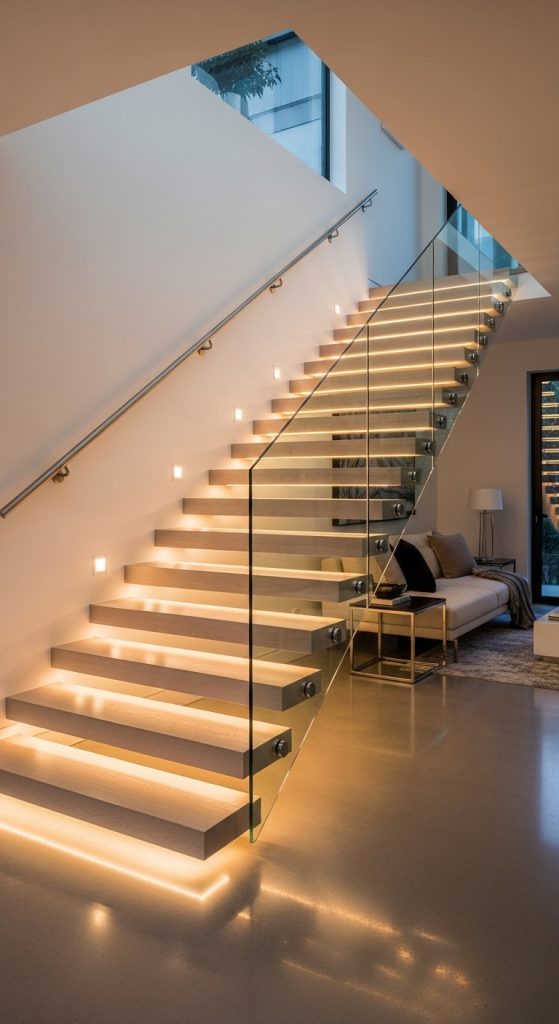
Idea 6: Staircase with LED Strip Lighting
Introduction
LED strip lighting has revolutionized modern staircase design, turning a functional element into a visually striking focal point. By integrating subtle lighting along the steps, handrails, or underneath the treads, homeowners can create dramatic ambiance while enhancing safety. LED lights not only illuminate the stairs but also accentuate architectural features, making a staircase look futuristic, elegant, and Pinterest-worthy.
LED lighting works with virtually any modern staircase style, whether it’s a floating design, wood-and-metal combination, or minimalist flush stairs. The versatility of LED strips allows for warm, cool, or color-changing lights that can be customized to suit mood and interior style. Strategically placed lighting also creates depth and highlights textures, such as wood grains, metal finishes, or stone surfaces. For homes with open staircases, lighting can draw attention upward, enhancing the sense of space and connecting multiple levels seamlessly.
Step-by-Step How-To:
- Measure the length of stairs for LED placement.
- Select LED strips suitable for indoor use and staircase safety.
- Attach strips under treads, along handrails, or recessed into the wall.
- Connect to a dimmer switch or smart lighting system for control.
- Conceal wiring for a clean look.
- Test lighting and adjust brightness or color as desired.
Materials Needed:
- LED strip lights (warm, cool, or RGB)
- Dimmer switch or smart lighting controller
- Mounting clips or adhesive
- Concealed wiring and connectors
- Power supply
- Measuring tape
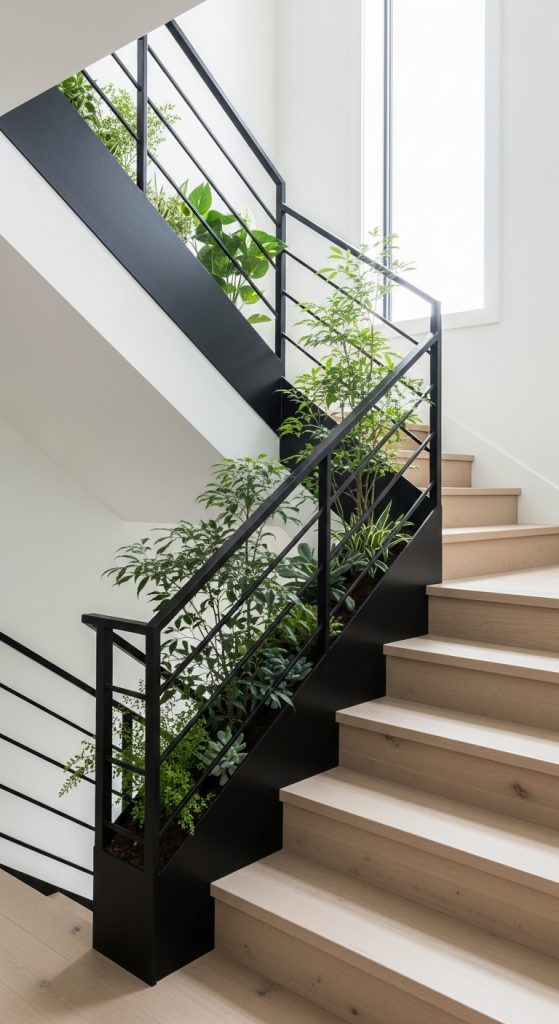
Idea 7: Staircase with Planters and Greenery
Introduction
Incorporating greenery into staircase design brings life, freshness, and natural beauty to modern interiors. Planters and plants can be strategically placed along steps, railings, or beneath floating treads to soften architectural lines and introduce color and texture. This approach works well in minimalist, contemporary, or eco-inspired homes, creating a Pinterest-worthy feature that feels organic and inviting.
Modern staircase plant arrangements can range from small potted succulents to cascading vines or sculptural indoor trees, depending on space and style. Planters can be integrated into the staircase structure or placed alongside steps for a layered effect. Combining greenery with natural wood treads, glass panels, or metal railings creates contrast, warmth, and a dynamic visual impact. Proper lighting, either natural or artificial, ensures plants thrive while highlighting the staircase as a design centerpiece.
Step-by-Step How-To:
- Choose suitable plants for indoor conditions (low-light or low-maintenance options).
- Select planters that complement staircase materials and colors.
- Arrange plants along steps, side rails, or built-in niches.
- Add drainage solutions if necessary to prevent water damage.
- Incorporate accent lighting to highlight greenery.
- Regularly maintain plants to keep the staircase fresh and inviting.
Materials Needed:
- Indoor plants (succulents, ferns, small trees)
- Planters (ceramic, metal, or wood)
- Soil and drainage materials
- Watering tools
- Accent lighting (optional)
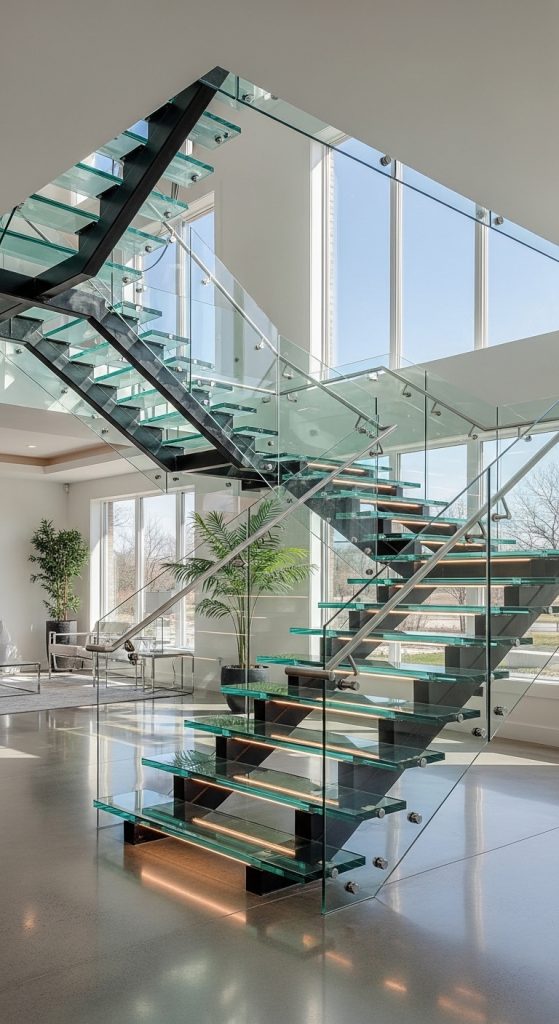
Idea 8: Glass Staircase with Metal Frame
Introduction
A glass staircase with a metal frame is the ultimate modern design statement, combining transparency, strength, and elegance. Glass treads or panels create a floating, open appearance, while a sleek metal frame ensures stability and durability. This design is ideal for contemporary homes with open-plan interiors, offering a clean, minimalist aesthetic that feels light and airy.
Glass and metal staircases highlight architectural precision, creating a luxurious and futuristic look. Tempered or laminated glass ensures safety, while powder-coated metal frames in black, gray, or metallic finishes enhance the modern vibe. Lighting can be incorporated underneath steps or along the frame to emphasize transparency and elegance. This staircase style is perfect for homeowners seeking a high-impact, visually impressive feature that serves as both a functional element and a design centerpiece.
Step-by-Step How-To:
- Measure staircase space for precise glass and metal frame dimensions.
- Select tempered or laminated glass for treads or panels.
- Install a metal frame with secure connections to walls and flooring.
- Fit glass panels onto the frame with clamps or specialized mounting hardware.
- Add protective coatings or anti-slip treatments to glass surfaces.
- Install LED lighting along treads or frame edges for dramatic effect.
Materials Needed:
- Tempered or laminated glass panels
- Metal frame (steel or aluminum)
- Mounting clamps and hardware
- Protective coatings or anti-slip treatments
- LED lighting strips
Idea 9: Curved Modern Staircase
Introduction
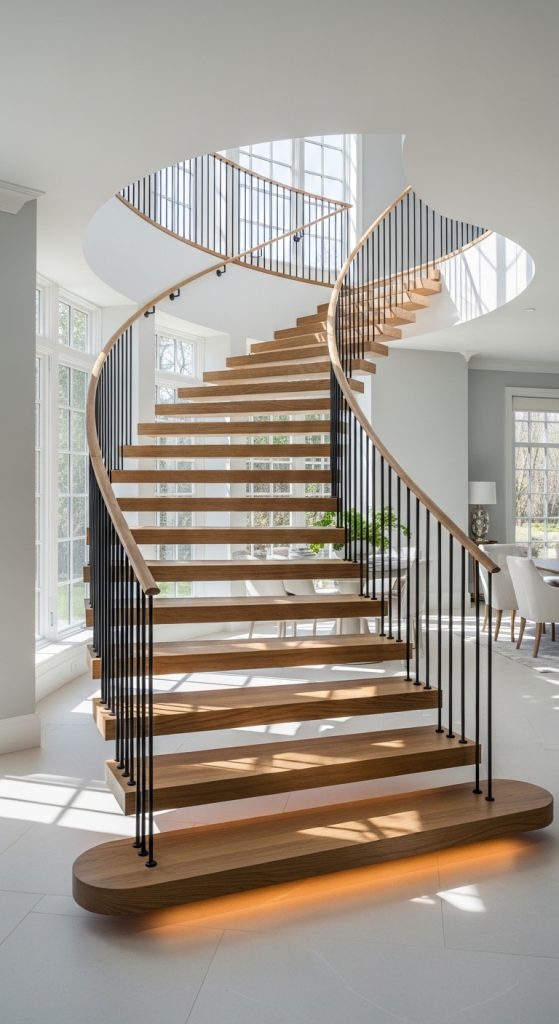
Curved staircases are a luxurious way to elevate modern interior design, adding elegance, flow, and movement to your home. Unlike straight staircases, curves create a sense of drama and architectural sophistication, making the staircase a true focal point. When paired with modern materials like wood, metal, or glass, curved staircases become Pinterest-ready features that combine style and functionality.
The design of a curved staircase emphasizes proportion and fluidity. Floating curved treads, minimalist railings, or glass panels enhance the modern aesthetic while maintaining safety. Lighting plays a key role in accentuating the curve, with LED strips, recessed step lights, or pendant lights highlighting the staircase’s shape. Curved staircases work beautifully in open-plan spaces, entryways, or loft-style interiors, creating a seamless transition between levels while serving as a sculptural centerpiece.
Step-by-Step How-To:
- Measure staircase area and plan curve radius and dimensions.
- Select materials for treads and railings (wood, metal, glass).
- Build or purchase curved treads and secure them to stringers or hidden supports.
- Install railings or glass panels along the curve.
- Add lighting to emphasize the curve and provide safety.
- Regularly maintain finishes and hardware for durability.
Materials Needed:
- Wood, metal, or composite curved treads
- Minimalist railing or glass panels
- Mounting hardware and supports
- LED or recessed lighting
- Protective finishes
Idea 10: Staircase with Built-in Seating or Reading Nook
Introduction
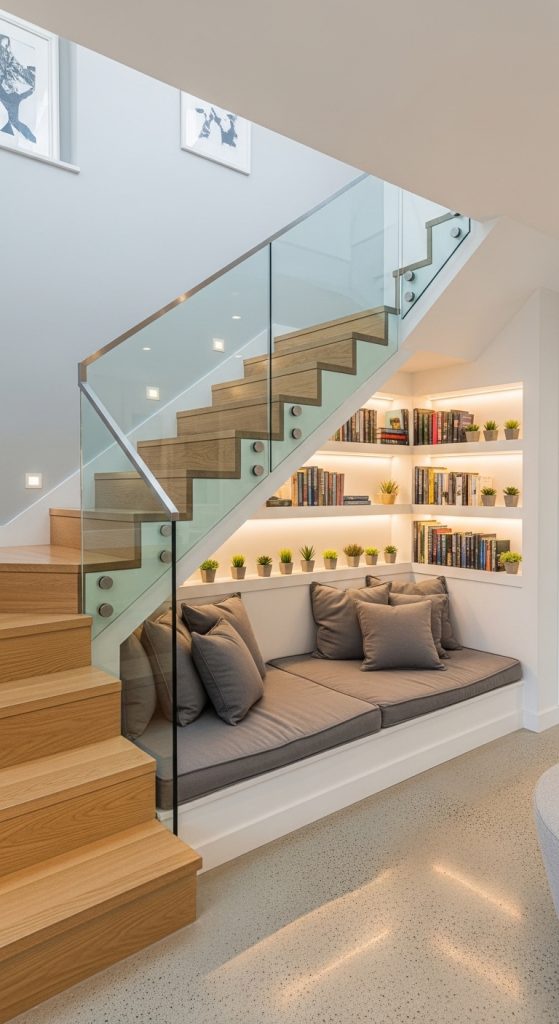
Transforming your staircase into a multifunctional space with built-in seating or a reading nook is both practical and stylish. This modern idea utilizes the area beneath the stairs to create cozy, functional spaces without compromising aesthetic appeal. A built-in bench, cushioned seat, or small nook with shelves can serve as a reading corner, storage area, or relaxation spot. This approach maximizes space while adding a unique design feature that is Pinterest-worthy and contemporary.
Built-in seating works particularly well in homes with open floor plans or compact spaces, where efficient use of every square foot is essential. Materials like wood, metal, or upholstered cushions can be chosen to complement the staircase and interior. Accent lighting and decorative accessories like throw pillows, books, or plants further enhance the ambiance, creating a modern, inviting, and functional focal point. This design merges practicality with aesthetics, offering homeowners a creative solution to elevate their staircase while adding everyday usability.
Step-by-Step How-To:
- Measure space beneath the staircase for seating or storage.
- Select materials (wood, metal, cushions) that match the staircase design.
- Build or install a built-in bench or nook.
- Add shelves or storage compartments if desired.
- Decorate with cushions, throw blankets, or small accessories.
- Install accent lighting for comfort and ambiance.
Materials Needed:
- Wood or metal for bench or structure
- Cushions, pillows, or upholstery
- Shelves or storage compartments (optional)
- Decorative accessories (books, plants)
- Accent lighting (LED strips or wall sconces)