
A well-designed mudroom is no longer just a drop zone for shoes and coats — it has become a highly functional, style-forward space that plays a critical role in keeping the rest of the home clean, organized, and stress-free. At the heart of every successful mudroom is one essential feature: smart, well-planned cabinetry. Mudroom cabinets are the backbone of organization, offering structured storage for everything from outerwear and backpacks to cleaning supplies, pet gear, sports equipment, and seasonal accessories.

In today’s homes, mudrooms are expected to do much more than simply store shoes. They often serve as secondary entrances, laundry overflow spaces, family command centers, and even mini pantries or pet stations. Because of this, cabinet design in a mudroom must balance three key elements: functionality, durability, and visual appeal. Cabinets need to withstand heavy daily use, be easy to clean, and still complement the overall style of the home.
Pinterest trends show a growing demand for mudroom designs that feel both cozy and high-end. Homeowners and renters alike are looking for cabinet solutions that maximize vertical space, hide clutter, and create clearly defined zones for each family member. Custom built-ins, semi-custom cabinet systems, and modular storage units are becoming increasingly popular because they allow homeowners to tailor their mudroom to their specific lifestyle needs.
Another major shift in mudroom cabinet design is the focus on personalization. Instead of one-size-fits-all storage, modern mudrooms often include labeled cubbies, dedicated lockers, adjustable shelving, pull-out drawers, and specialized compartments for shoes, bags, and accessories. This not only improves organization but also encourages every family member to maintain the system, making long-term tidiness much more achievable.
From small apartments to large family homes, mudroom cabinets can be adapted to fit any space. Narrow hallways, laundry room combos, garage entries, and backdoor foyers can all be transformed into efficient mudroom areas with the right cabinet design strategy. Even compact spaces can benefit from tall cabinets, slim shoe storage, and wall-mounted units that keep floors clear and create a more open feel.
In this guide, you’ll discover practical, beginner-friendly mudroom cabinet design ideas that are both stylish and highly functional. Each idea is designed to help you create a mudroom that supports your daily routines while also enhancing your home’s overall aesthetic. Whether you’re planning a full renovation or simply upgrading a small entry space, these mudroom cabinet design concepts will give you clear, actionable inspiration you can save, plan, and implement with confidence.
Idea 1: Floor-to-Ceiling Mudroom Cabinets for Maximum Storage
Introduction
Floor-to-ceiling mudroom cabinets are one of the most effective ways to maximize storage in both large and small spaces. By extending cabinetry all the way to the ceiling, you eliminate wasted vertical space and create a built-in look that feels custom and high-end. This design approach is especially useful for families who need to store seasonal items, bulky outerwear, and household supplies that aren’t used daily but still need a dedicated place.
This style also helps create a visually clean mudroom by hiding clutter behind closed doors. Tall cabinets make the space feel more organized and intentional, reducing visual noise and making the mudroom easier to maintain. For homes with limited square footage, floor-to-ceiling cabinets can replace multiple smaller storage pieces, resulting in a more streamlined layout.
Definition / Explanation
Floor-to-ceiling mudroom cabinets are tall cabinet units that extend from the floor all the way to the ceiling, offering maximum vertical storage and a built-in, custom appearance.

Step-by-Step How-To
- Measure ceiling height and available wall space
- Choose cabinet systems designed for tall installations
- Plan upper cabinet sections for seasonal storage
- Use lower cabinets for daily-use items
- Install crown molding for a seamless built-in look
- Add soft-close hinges for durability
- Label interior shelves for easy organization
Materials / Supplies
- Tall cabinet units
- Crown molding
- Adjustable shelving
- Soft-close hinges
- Cabinet anchors
- Measuring tape and level
Idea 2: Mudroom Lockers with Cabinet Doors for a Clean Look
Introduction
Mudroom lockers combine the best of open cubbies and closed cabinetry. This design gives each family member their own designated storage zone while keeping the overall space visually tidy. By adding cabinet doors to locker-style storage, you can hide clutter while still maintaining easy access to everyday items.
This design is perfect for busy households with kids, pets, or multiple daily routines. Lockers help create accountability, as everyone has their own space for shoes, backpacks, coats, and accessories. Adding cabinet doors elevates the look, making the mudroom feel more like a designed interior space rather than a purely functional storage area.
Definition / Explanation
Mudroom lockers with cabinet doors are individual storage sections assigned to each person, featuring enclosed cabinets, hooks, and shelves.

Step-by-Step How-To
- Measure space for individual locker widths
- Design equal-sized cabinet sections
- Install coat hooks inside each locker
- Add upper cabinets for personal storage
- Include bench seating below
- Label each locker for easy identification
Materials / Supplies
- Custom or modular locker cabinets
- Coat hooks
- Bench seating unit
- Cabinet doors
- Name labels or tags
Idea 3: Built-In Bench Cabinets with Shoe Storage
Introduction
A built-in bench with cabinet storage underneath is a mudroom classic for a reason. It provides a comfortable place to sit while putting on or removing shoes while also offering concealed storage for footwear and accessories. This dual-purpose design makes the mudroom more functional and user-friendly for all ages.
Bench cabinets are especially helpful for keeping shoes organized and off the floor, reducing mess and improving cleanliness. They also help define the mudroom as a transitional space, making daily routines feel smoother and more organized.
Definition / Explanation
Built-in bench cabinets combine seating with enclosed or drawer-style storage beneath the bench.
Step-by-Step How-To

- Measure seating height and depth
- Choose bench cabinet base units
- Add pull-out drawers or flip-top storage
- Install cushioned seating
- Add wall hooks above the bench
- Organize shoes by family member
Materials / Supplies
- Bench cabinet base
- Drawer organizers
- Seat cushion
- Wall hooks
- Shoe dividers
Idea 4: Tall Pantry-Style Mudroom Cabinets
Introduction
Pantry-style cabinets in a mudroom provide deep, vertical storage perfect for cleaning supplies, bulk household items, and utility storage. These cabinets are ideal for homes where the mudroom also functions as a secondary storage area for pantry overflow, pet supplies, or laundry essentials.
This design keeps less-attractive items hidden while still being easy to access. Tall pantry cabinets also help reduce clutter in kitchens and laundry rooms by relocating overflow storage to a dedicated mudroom zone.
Definition / Explanation
Pantry-style mudroom cabinets are deep, tall cabinets with adjustable shelves for bulk and utility storage.

Step-by-Step How-To
- Select deep cabinet units
- Install adjustable shelving
- Use pull-out baskets for small items
- Group items by category
- Label shelves clearly
- Add door-mounted organizers
Materials / Supplies
- Pantry-style cabinets
- Adjustable shelves
- Pull-out baskets
- Door organizers
- Labels
Idea 5: Open and Closed Combo Cabinet Design
Introduction
Combining open shelving with closed cabinets creates a balanced mudroom that feels both functional and stylish. Open shelves allow for quick access to frequently used items, while closed cabinets hide clutter and less-used supplies. This hybrid approach is perfect for households that want both convenience and a clean aesthetic.
This design also adds visual interest and prevents the mudroom from feeling too heavy or boxy. By mixing cabinet styles, you create a layered, designer-inspired look that works well in modern and transitional homes.
Definition / Explanation
An open and closed combo cabinet design blends open shelves with enclosed cabinet storage.

Step-by-Step How-To
- Design layout with alternating open and closed sections
- Install floating shelves for daily items
- Use closed cabinets for bulk storage
- Style open shelves neatly
- Keep visual clutter minimal
- Adjust shelf heights as needed
Materials / Supplies
- Wall cabinets
- Floating shelves
- Storage baskets
- Decorative bins
- Shelf brackets
Idea 6: Mudroom Cabinets with Integrated Charging Station
Introduction
Modern mudrooms are no longer just for coats and shoes — they are becoming true family command centers. Adding an integrated charging station inside your mudroom cabinets helps manage phones, tablets, laptops, and other everyday devices in one organized location. This design reduces clutter in kitchens and living rooms while creating a designated tech zone that supports daily routines.
A charging station cabinet keeps cords hidden, devices protected, and surfaces clear. It’s especially helpful for busy families, students, and remote workers who need a reliable place to charge multiple devices at once. This design also adds a future-proof element to your mudroom, making it more functional for today’s connected lifestyle.
Definition / Explanation
A mudroom charging station cabinet includes built-in outlets and USB ports hidden inside cabinets or drawers for organized device charging.
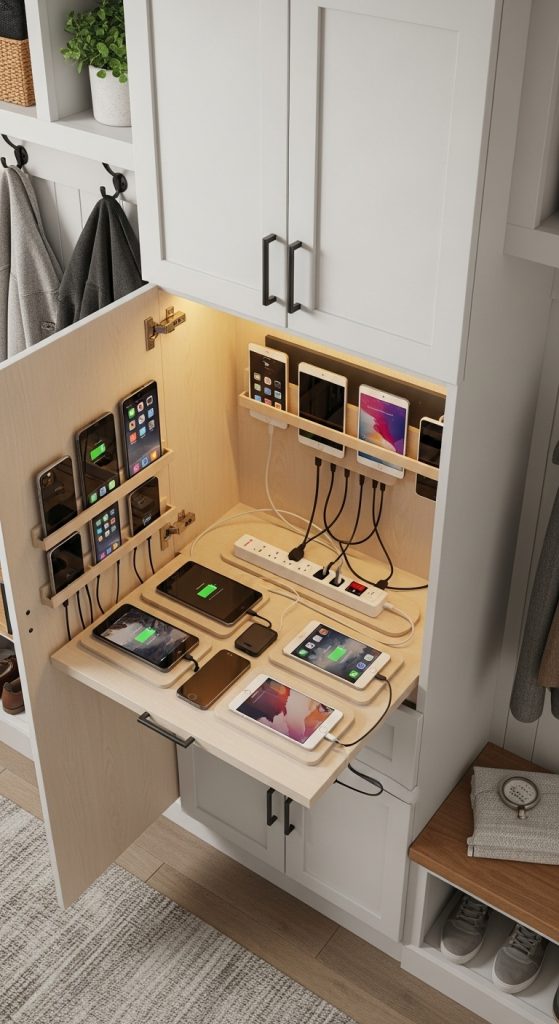
Step-by-Step How-To
- Choose a cabinet near an electrical outlet
- Install a power strip or USB outlet inside
- Drill cord holes in cabinet back
- Add shelf dividers for devices
- Label charging spots for each family member
- Add ventilation openings if needed
Materials / Supplies
- Cabinet with interior shelf
- Power strip or USB outlet
- Cord grommets
- Shelf dividers
- Label maker
Idea 7: Mudroom Cabinets with Pet Storage and Feeding Station
Introduction
For pet owners, mudrooms are the perfect place to store pet supplies and create a feeding or grooming station. Incorporating pet-friendly cabinets keeps food, leashes, treats, and grooming tools neatly organized while reducing mess in kitchens and living areas.
This design also helps create a consistent routine for pets by giving them a dedicated space. Built-in pet drawers, pull-out feeding stations, and sealed food storage cabinets make daily care easier and more organized. It’s a smart way to blend pet needs seamlessly into your home’s design.
Definition / Explanation
Pet-friendly mudroom cabinets include built-in storage and feeding features designed specifically for pet care.
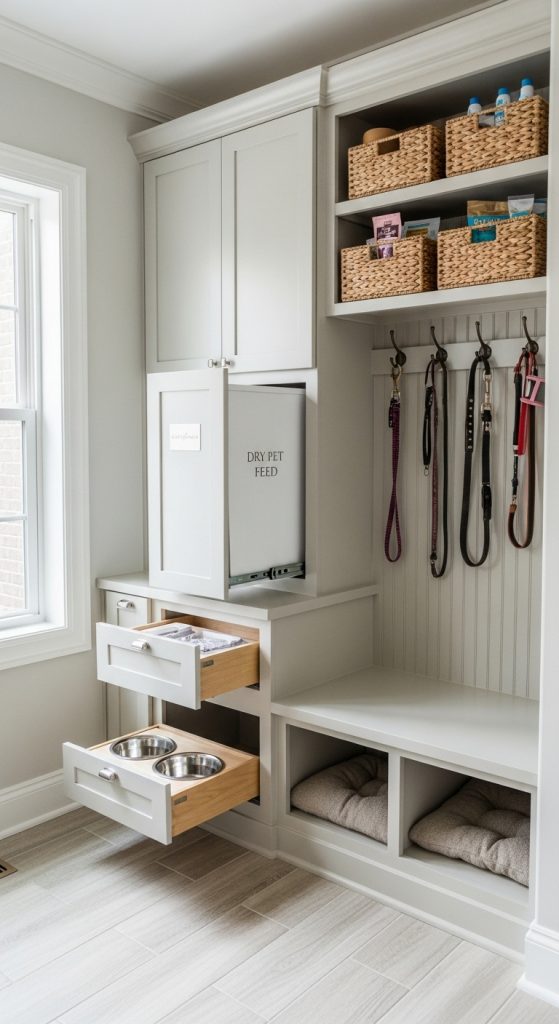
Step-by-Step How-To
- Install lower cabinets for pet access
- Add pull-out feeding drawer
- Store food in sealed containers
- Add hooks for leashes and collars
- Create a grooming supply cabinet
- Label pet storage areas
Materials / Supplies
- Lower base cabinets
- Pull-out drawer hardware
- Sealed pet food containers
- Leash hooks
- Storage bins
Idea 8: Slim Mudroom Cabinets for Small Spaces
Introduction
Not every home has a large mudroom, but even the smallest entryway can benefit from smart cabinet design. Slim mudroom cabinets are perfect for narrow hallways, small laundry room combos, and tight garage entries. These cabinets provide essential storage without overwhelming the space.
Slim designs help keep walkways clear while still offering space for shoes, bags, and daily essentials. They are ideal for apartments, townhomes, and compact homes where every inch matters. With the right layout, slim cabinets can feel custom and intentional rather than cramped.
Definition / Explanation
Slim mudroom cabinets are shallow-depth cabinets designed for tight or narrow spaces.

Step-by-Step How-To
- Measure wall depth and walkway clearance
- Choose shallow cabinet units
- Install vertical storage for coats
- Use pull-out shoe drawers
- Add wall hooks for bags
- Keep cabinet doors minimal
Materials / Supplies
- Shallow-depth cabinets
- Slim shoe drawers
- Wall hooks
- Narrow shelving
- Door hardware
Idea 9: Laundry + Mudroom Combo Cabinets
Introduction
Combining laundry and mudroom functions in one space is a popular trend, especially in modern homes. Cabinets designed for laundry + mudroom combos help keep both functions organized and visually cohesive. This setup allows you to store cleaning supplies, laundry products, and outerwear in one centralized area.
This design is ideal for busy households that want to streamline chores and entry routines. By integrating cabinet systems for both purposes, you create a multi-functional space that feels efficient, tidy, and well-planned.
Definition / Explanation
Laundry + mudroom combo cabinets are storage systems designed to support both laundry tasks and entryway organization.

Step-by-Step How-To
- Design zones for laundry and entry use
- Install upper cabinets for detergents
- Add tall cabinets for brooms and mops
- Include folding counter space
- Add coat and shoe storage
- Label cabinets by function
Materials / Supplies
- Upper and base cabinets
- Countertop surface
- Tall utility cabinet
- Storage bins
- Hooks and rods
Idea 10: Custom Color-Coordinated Mudroom Cabinet Design
Introduction
Color-coordinated mudroom cabinets can completely transform the look and feel of your space. By choosing a consistent color palette, you create a cohesive, designer-style mudroom that feels intentional and inviting. Color can also be used to define zones or assign storage areas to different family members.
This approach is perfect for homeowners who want their mudroom to feel like a true extension of their interior design rather than a forgotten utility space. Soft neutrals, bold accent colors, or two-tone cabinet designs can all elevate the overall aesthetic while maintaining functionality.
Definition / Explanation
Color-coordinated mudroom cabinets use a consistent or two-tone color scheme to create visual harmony and organized zones.

Step-by-Step How-To
- Choose a primary cabinet color
- Select an accent or secondary color
- Apply colors by zone or cabinet type
- Match hardware finishes
- Use color-coded bins and labels
- Keep wall and floor tones complementary
Materials / Supplies
- Painted or pre-finished cabinets
- Cabinet hardware
- Matching storage bins
- Paint samples
- Color-coded labels