
Birdwatching is a wonderful way to connect with nature, and there’s no better way to introduce children to the joys of wildlife than through a hands-on bird feeder DIY project. In 2026, creating simple and classic bird feeders has become an increasingly popular activity for families, combining education, creativity, and outdoor fun. Not only do bird feeders encourage kids to explore the natural world, but they also teach responsibility, patience, and the importance of caring for wildlife. This guide is designed to provide parents, teachers, and caregivers with engaging ideas that are both safe and beginner-friendly, making it easy to inspire a lifelong love of nature in young learners.

DIY bird feeders come in many shapes, sizes, and materials, making them an ideal craft for children of all ages. From simple recycled containers to wooden and natural designs, the possibilities are endless. What makes these projects particularly valuable is that they foster creativity while teaching practical skills such as measuring, cutting, assembling, and problem-solving. In addition, children can learn about different bird species, their feeding habits, and seasonal needs, transforming a simple craft activity into a meaningful educational experience. Bird feeders can be tailored to attract local birds, helping kids learn about their environment and the delicate balance of ecosystems in a hands-on way.
One of the most compelling aspects of classic bird feeder DIYs is their simplicity. Unlike complex crafts that may overwhelm younger children, these projects focus on clear, achievable steps that encourage success and satisfaction. Materials are often inexpensive, easy to find, and safe for children, such as cardboard, recycled bottles, pinecones, or popsicle sticks. Even small tweaks—like adding a splash of color or a personalized decoration—allow kids to take ownership of their project, making the experience highly rewarding. Simplicity does not mean boring; in fact, classic designs often have a timeless appeal that is visually pleasing and highly functional for both birds and young creators.
Safety and supervision are important considerations when guiding children through DIY bird feeder projects. In 2026, most recommended crafts for kids emphasize non-toxic adhesives, rounded edges, and lightweight materials to prevent accidents. These projects are designed to be age-appropriate, allowing children to participate fully in crafting while learning safe handling of tools like scissors, glue, or string. Adults can act as facilitators rather than doing the work for the children, encouraging independence, critical thinking, and creativity. This approach not only builds confidence but also strengthens parent-child or mentor-child bonding through shared accomplishment.
Bird feeders also provide ongoing engagement long after the crafting session is complete. Once hung or placed outdoors, children can observe and document visiting bird species, count feeding visits, or even sketch the birds they see. This creates a continuous learning loop that extends beyond a single activity. Children can experiment with different seeds, feeder locations, and feeder designs, learning through trial and observation. In addition, maintaining the feeders by refilling them and keeping them clean instills a sense of responsibility and routine, helping children understand the importance of caring for living creatures in a practical, hands-on way.
Another benefit of bird feeder DIY projects is their environmental impact. Using recycled or natural materials reduces waste while teaching children about sustainability. Projects that incorporate pinecones, sticks, or seed balls highlight the value of natural resources and creative reuse, showing kids that crafting doesn’t require purchasing expensive items or generating unnecessary trash. Children also begin to understand the relationship between humans and wildlife, appreciating how small actions—like feeding birds responsibly—can positively affect local ecosystems. These lessons are especially important in today’s world, where environmental awareness and stewardship are becoming central to education and lifestyle.
From a developmental perspective, bird feeder crafts encourage fine motor skills, hand-eye coordination, and planning. Measuring, cutting, assembling, and decorating all contribute to the refinement of these skills. Older children can take on more complex projects, like building wooden feeders or creating elaborate hanging designs, while younger children can focus on simpler tasks such as spreading peanut butter on pinecones or threading string. This flexibility makes bird feeder DIYs a versatile and inclusive activity suitable for a range of ages, interests, and skill levels.
In addition to skill-building, bird feeder DIYs are highly Pinterest-friendly, making them perfect for sharing on social media, classroom boards, or community workshops. The visually appealing nature of these crafts, combined with their educational value, ensures they are save-worthy and highly shareable. Simple, classic designs with colorful decorations, easy-to-follow instructions, and clear results tend to attract engagement and inspire others to try the activity. For parents and educators looking to create content, these projects offer a perfect combination of aesthetics, functionality, and educational purpose, making them an evergreen topic for blogs, Pinterest boards, and classroom resources.
Ultimately, the appeal of classic bird feeder DIY projects lies in their combination of fun, education, and accessibility. Children can experience the joy of making something with their own hands, witness the immediate impact of their efforts in the form of visiting birds, and develop an early appreciation for wildlife and nature. These projects are not just crafts; they are gateways to curiosity, observation, and learning. In 2026, as families continue to seek activities that are meaningful, hands-on, and eco-friendly, classic bird feeder DIYs stand out as a highly engaging and rewarding option.
This guide will provide 10 simple and classic bird feeder DIY ideas that are perfect for kids. Each project includes step-by-step instructions, a materials list, and tips for ensuring success and safety. From easy-to-make pinecone feeders to charming wooden and recycled designs, these projects are designed to foster creativity, responsibility, and a love of nature. By the end of this article, you’ll have a wealth of ideas to inspire children, create memorable learning experiences, and bring joy to your backyard or garden while supporting local bird populations.
Creating bird feeders with children is more than a craft; it’s an opportunity to spark curiosity, teach patience, and nurture environmental stewardship. The simplicity of these designs ensures that even beginners can participate and succeed, while the classic appeal guarantees that each project remains aesthetically pleasing and functional. By combining creativity, education, and outdoor interaction, these bird feeder DIYs offer an ideal activity for families, schools, or community programs, making them a perfect fit for the modern, eco-conscious, and creative home.
Idea 1: Pinecone Peanut Butter Feeder
Introduction
The pinecone peanut butter feeder is one of the easiest and most classic DIY bird feeders for kids. It combines simplicity with creativity, making it perfect for young crafters and beginner DIYers. This project not only introduces children to the basics of crafting, but it also teaches them about birds’ diets and feeding habits. With minimal materials and mess, it’s an ideal project for a backyard or classroom activity. The natural texture of pinecones adds a rustic charm while attracting a variety of birds, making it both fun to make and educational.
Kids love spreading peanut butter and rolling the pinecone in birdseed, which engages their fine motor skills while fostering a sense of accomplishment. Once hung outdoors, children can observe birds visiting, learning to identify different species and appreciating nature. This project is safe, eco-friendly, and highly interactive, combining craft time with real-life wildlife interaction, which makes it a perfect activity for weekends, school projects, or family bonding.
What It Is
A simple bird feeder made from a pinecone coated in peanut butter and rolled in birdseed, designed to hang from a tree.

Step-by-Step How-To
- Gather a Pinecone: Choose a large, open pinecone.
- Apply Peanut Butter: Spread peanut butter evenly into the crevices.
- Roll in Birdseed: Cover the peanut butter with birdseed.
- Attach a String: Tie a piece of twine to the top of the pinecone.
- Hang Outdoors: Place on a tree branch or hook.
- Observe Birds: Watch the variety of birds that visit and enjoy.
Materials List
- Pinecones
- Peanut butter (unsalted)
- Birdseed mix
- Twine or string
- Spoon or butter knife
Idea 2: Recycled Bottle Feeder
Introduction
Creating a bird feeder from a recycled bottle is a fun way to combine sustainability with craft skills. This project teaches kids the importance of reusing materials while making a functional feeder that birds will enjoy. By using an empty plastic bottle, children learn that ordinary household items can be transformed into something creative and useful. The design is simple enough for kids to follow but versatile enough to attract multiple bird species.
This activity also introduces children to basic engineering skills, such as cutting, measuring, and balancing the feeder so it hangs correctly. It encourages problem-solving and patience while also instilling environmental consciousness. Parents or teachers can supervise the cutting and attachment of feeding perches, while kids handle decoration and filling. Once complete, the feeder becomes an ongoing interactive project, allowing children to refill seeds and track visiting birds.

What It Is
A simple bird feeder made from a recycled plastic bottle, with holes and perches for birds to feed safely.
Step-by-Step How-To
- Clean Bottle: Remove labels and rinse thoroughly.
- Cut Feeding Holes: Use scissors to cut small holes on the sides.
- Insert Perches: Slide wooden spoons, sticks, or dowels through holes.
- Attach String: Tie a strong string or wire to the bottle top.
- Fill with Birdseed: Pour seed into the bottle.
- Hang Outdoors: Choose a tree branch or hook to hang the feeder.
Materials List
- Empty plastic bottle
- Wooden spoons, sticks, or dowels
- Scissors (adult supervision)
- Birdseed
- String or wire
Idea 3: Popsicle Stick Bird Feeder
Introduction
The popsicle stick bird feeder is a classic kids’ craft that combines simplicity, creativity, and hands-on fun. This project is perfect for indoor crafting sessions and introduces children to building basic structures. The bright, colorful popsicle sticks allow for personalized designs, making the feeder visually appealing for kids and birds alike. Beyond crafting, this project teaches geometry, balance, and problem-solving skills as children assemble the structure.
Once assembled and decorated, the feeder can be filled with birdseed and hung outdoors. The popsicle stick design is lightweight but sturdy enough to withstand visits from small birds. It also provides a tactile experience for children as they glue, stack, and decorate. Parents or teachers can supervise the use of glue guns if needed, making it safe and interactive. The end result is a visually charming and functional feeder that introduces children to wildlife observation while encouraging creativity and environmental responsibility.

What It Is
A small bird feeder constructed from popsicle sticks, designed for kids to assemble and decorate.
Step-by-Step How-To
- Collect Popsicle Sticks: Gather at least 20 sticks per feeder.
- Create Base: Arrange sticks side by side and glue together.
- Build Sides: Stack sticks vertically to form walls.
- Add Roof: Use sticks or cardboard for a simple slanted roof.
- Decorate: Paint or add stickers for personalization.
- Add String & Fill Seeds: Hang outside and fill with birdseed.
Materials List
- Popsicle sticks
- Non-toxic glue
- Paint or stickers (optional)
- String or yarn
- Birdseed
Idea 4: Orange Half Feeder
Introduction
The orange half bird feeder is a natural and classic DIY project that connects children with nature while teaching them about organic materials. This eco-friendly feeder uses simple fruit, like an orange, as a base for seeds, offering birds a sweet snack and a visually appealing feeding option. The activity is fun and safe, requiring minimal tools, which makes it perfect for preschool and elementary-aged children.
This project encourages children to explore textures, colors, and natural smells, fostering a sensory experience while crafting. It also teaches responsibility, as kids learn to refill feeders regularly and monitor visiting birds. The bright orange color attracts birds and adds a cheerful visual to the garden or backyard. Overall, it’s an engaging, educational, and environmentally conscious activity that merges crafting with wildlife observation.

What It Is
A bird feeder made from a halved orange filled with seeds, designed to hang outdoors.
Step-by-Step How-To
- Cut Orange in Half: Scoop out the fruit inside carefully.
- Fill with Birdseed: Pack the hollow with birdseed.
- Attach Hanging String: Poke holes and tie twine or string.
- Hang on Branch: Choose a safe spot in the garden.
- Observe Birds: Encourage kids to watch which species visit.
- Refill as Needed: Keep seeds fresh and monitor feeder.
Materials List
- Fresh orange
- Birdseed
- Spoon for scooping
- Twine or string
Idea 5: Toilet Paper Roll Feeder
Introduction
A toilet paper roll bird feeder is one of the most classic and accessible DIY projects for children. It transforms a simple household item into a functional and educational feeder, introducing kids to sustainability and creative reuse. This craft is highly interactive, allowing children to spread peanut butter, roll seeds, and even decorate the roll for a personal touch. It’s ideal for classrooms, rainy day activities, or backyard projects.
The simplicity of the design teaches children sequencing and basic construction skills while encouraging fine motor development. It also offers immediate feedback, as birds quickly discover and use the feeder. Parents or teachers can guide kids in rolling the seed-coated tube and hanging it securely, creating a safe and satisfying experience. This project fosters a connection to nature, responsibility, and eco-consciousness while delivering a fun, hands-on activity for children of all ages.

What It Is
A simple bird feeder made by covering a cardboard toilet paper roll in peanut butter and birdseed.
Step-by-Step How-To
- Collect Toilet Paper Roll: Use empty cardboard tube.
- Spread Peanut Butter: Coat the outside evenly.
- Roll in Birdseed: Cover peanut butter with birdseed.
- Insert Hanging String: Thread twine or yarn through roll.
- Hang Outdoors: Place on a tree branch or hook.
- Refill & Observe: Monitor visiting birds and refresh seeds.
Materials List
- Empty toilet paper roll
- Peanut butter
- Birdseed
- Twine or yarn
- Spoon for spreading
Idea 6: Milk Carton Bird Feeder
Introduction
A milk carton bird feeder is a classic DIY project that turns recycled materials into a practical backyard tool. This project is ideal for teaching kids about sustainability, repurposing household items, and helping wildlife. The sturdy carton provides a stable structure, while its size allows for plenty of seed storage, attracting a variety of birds. Children enjoy decorating the carton, cutting out feeding openings, and choosing where to hang it, making the activity interactive and engaging.
Using a milk carton encourages creative thinking, as kids can paint, add stickers, or even create themed designs. The project also provides lessons in basic construction and spatial reasoning, as children measure, cut, and assemble the feeder. Once hung outside, kids can watch the birds flock to their creation, learning about different species and their behaviors. This activity is perfect for home, classroom, or community garden projects, combining craft, science, and environmental responsibility in a fun, hands-on way.

What It Is
A bird feeder made from a recycled milk carton, cut and decorated to hold seeds and allow birds to perch and feed.
Step-by-Step How-To
- Clean Milk Carton: Rinse thoroughly and remove labels.
- Cut Feeding Holes: Cut small openings on sides.
- Create Perches: Insert sticks or dowels below holes.
- Decorate: Paint, add stickers, or designs.
- Add String: Punch holes on top for hanging.
- Fill with Birdseed & Hang: Choose a safe outdoor spot.
Materials List
- Empty milk carton
- Scissors (adult supervision)
- Sticks or dowels
- Paint or stickers
- Birdseed
- String or twine
Idea 7: Wooden Spoon Bird Feeder
Introduction
The wooden spoon bird feeder is a clever and simple DIY project that combines everyday materials with creativity. Perfect for kids, this feeder introduces children to the concept of perches and feeding platforms while allowing them to craft a functional bird feeder. Wooden spoons act as a base for seeds, and multiple spoons can be used to create tiers, increasing the feeding area. This project encourages kids to experiment with design while observing how birds interact with their creation.
This craft is particularly suitable for fine motor skill development, as children balance spoons, secure them with glue or rubber bands, and fill them with seeds. It also teaches patience and planning, as kids determine the arrangement and placement. Once completed, this feeder offers a hands-on educational experience that combines engineering, creativity, and nature observation. It’s lightweight, easy to hang, and visually appealing, making it a perfect backyard addition.

What It Is
A simple feeder using wooden spoons attached to a hanging structure to hold seeds for birds.
Step-by-Step How-To
- Gather Materials: Collect wooden spoons, string, and glue.
- Attach Spoons: Stack or arrange spoons with glue or tape.
- Secure Structure: Use string or wire to hold spoons together.
- Fill with Birdseed: Place seeds on each spoon.
- Attach Hanging String: Ensure it is balanced for outdoor hanging.
- Hang Outdoors: Choose a branch or hook where birds can safely feed.
Materials List
- Wooden spoons
- Strong glue or rubber bands
- String or wire
- Birdseed
- Small tray or base (optional)
Idea 8: Teacup Bird Feeder
Introduction
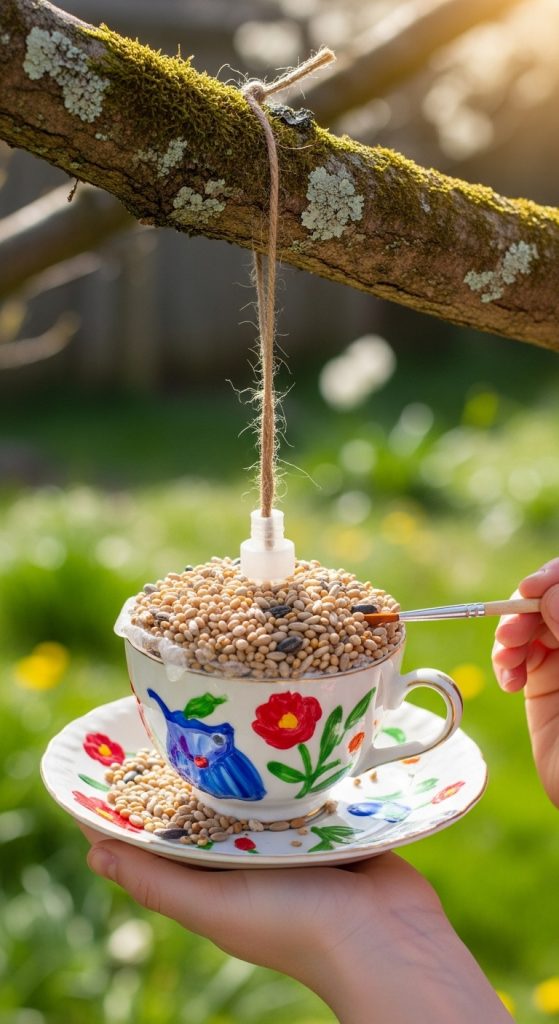
The teacup bird feeder adds charm and whimsy to any backyard. Using an old teacup and saucer, children can create a miniature feeder that doubles as a decorative garden piece. This project introduces kids to the concept of repurposing items while making a functional feeder. The design is elegant yet simple, and children enjoy personalizing the cup with paint or stickers. Watching birds perch delicately in the teacup provides an interactive and magical experience.
This feeder is perfect for teaching balance and stability, as the cup must be securely fastened to prevent tipping. It also encourages children to think creatively about placement and decoration. Beyond crafting, kids learn responsibility as they refill seeds and maintain the feeder. The teacup feeder merges aesthetics with function, creating a visually appealing and educational project suitable for small spaces or patios.
What It Is
A miniature bird feeder made from a teacup and saucer, designed to hold birdseed and hang or sit on a platform.
Step-by-Step How-To
- Choose Teacup & Saucer: Select a sturdy cup and matching plate.
- Attach Cup to Saucer: Use non-toxic glue or wire for stability.
- Add Hanging Option: Drill or tie string if it will hang.
- Decorate (Optional): Paint or add stickers.
- Fill with Birdseed: Place seeds inside the cup.
- Place Outdoors: Hang or place on a flat, stable surface.
Materials List
- Teacup and saucer
- Non-toxic glue
- String or wire
- Birdseed
- Paint or stickers (optional)
Idea 9: Wooden Crate or Box Feeder
Introduction
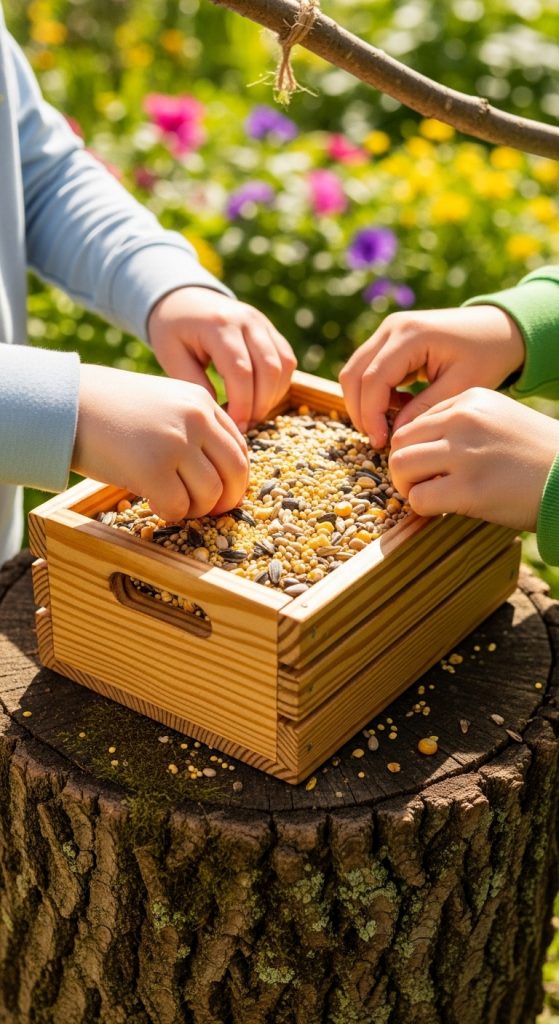
Using a small wooden crate or box to create a bird feeder is a classic and sturdy DIY option. This project allows children to assemble a larger feeding station that can accommodate multiple birds simultaneously. Kids learn basic construction skills, such as measuring, sanding, and assembling wooden pieces, while creating a functional piece that blends into the garden naturally. The box design also allows for flexibility in placement and seed type.
This project encourages teamwork and problem-solving as kids design the box and determine how to secure it. They also learn about outdoor safety, balance, and weight distribution. Once complete, this feeder can be hung, mounted on a post, or placed on a flat surface, making it highly versatile. Watching birds use the feeder over time teaches children observation skills and encourages ongoing engagement with nature.
What It Is
A bird feeder made from a small wooden crate or box, designed for easy filling and multiple birds.
Step-by-Step How-To
- Choose Wooden Box/Crate: Ensure it’s clean and safe.
- Sand Edges: Smooth rough areas for safety.
- Attach Hanging String or Hooks: Prepare for placement outdoors.
- Fill with Birdseed: Add a variety of seeds.
- Place in Garden: Hang or place on a post or flat area.
- Observe & Refill: Monitor visiting birds and refill regularly.
Materials List
- Small wooden crate or box
- Sandpaper
- Hooks or string
- Birdseed
- Optional paint or decorations
Idea 10: Hanging Seed Ball Feeder
Introduction
The hanging seed ball feeder is a creative and eco-friendly DIY project that combines fun, nature, and education. Seed balls are made by combining birdseed with a sticky base, such as gelatin or peanut butter, and rolling them into balls. Kids enjoy shaping, decorating, and hanging these feeders, creating an engaging tactile experience. Once hung outdoors, birds are drawn to the colorful and aromatic seed balls, providing hours of observation and learning.
This project is perfect for teaching children about nutrition and sustainability, as they learn what birds eat and how to create a natural feeder. It also encourages creativity, as kids can add small decorations or different seeds to make unique designs. Hanging seed balls in clusters helps attract multiple species and creates a visually appealing backyard display. Overall, this DIY is a combination of craft, science, and outdoor play, making it highly engaging and educational.

What It Is
A bird feeder made by forming birdseed into balls using peanut butter or gelatin, then hanging them outdoors.
Step-by-Step How-To
- Mix Ingredients: Combine birdseed with peanut butter or gelatin.
- Shape Balls: Roll mixture into small balls.
- Add String: Insert string or loop for hanging.
- Decorate (Optional): Add colors or small decorations.
- Hang Outdoors: Place on tree branches or hooks.
- Observe Birds: Watch as different species enjoy the feeder.
Materials List
- Birdseed
- Peanut butter or gelatin
- String or yarn
- Bowl and spoon for mixing
- Optional decorations