
Living in a rental apartment comes with unique challenges, especially when it comes to decorating and personalizing your space. Unlike homeowners, renters often have to work within strict lease agreements that limit painting, renovations, permanent fixtures, and structural changes. Because of these restrictions, many people assume they have to settle for bland walls, outdated finishes, and uninspiring interiors until they move into a place they own.
The truth is that a rental apartment can feel just as stylish, cozy, and personalized as a permanent home. In fact, some of the most impressive home transformations featured on Pinterest and interior design blogs are rental makeovers created with temporary, budget-friendly solutions. With a little creativity and strategic planning, you can completely change the atmosphere of your apartment without risking your security deposit or violating your lease agreement.
One of the biggest misconceptions about apartment decorating is that major improvements require major spending. While large-scale renovations can certainly transform a space, many of the most effective upgrades are surprisingly affordable. Small changes such as updating lighting, incorporating textiles, improving storage, and adding removable décor can dramatically impact how a room looks and feels.
Another common challenge renters face is dealing with outdated features. Many apartments come with builder-grade finishes, basic lighting fixtures, neutral paint colors, and standard flooring. These elements often serve a practical purpose but lack personality and style. The good news is that there are countless renter-friendly ways to work around these limitations and create a space that reflects your personal taste.
Modern rental makeovers focus heavily on flexibility. Instead of making permanent changes, renters are increasingly turning to removable wallpaper, peel-and-stick tiles, temporary shelving, adhesive hooks, and furniture-based solutions. These upgrades allow you to customize your apartment while maintaining the ability to restore it to its original condition when it’s time to move.
Comfort is another important reason to invest in a rental makeover. Your apartment is where you relax after work, spend time with family, entertain friends, and recharge from daily life. A thoughtfully designed environment can positively impact your mood, productivity, and overall quality of life. Even small improvements can make your home feel more welcoming and functional.
Pinterest has played a major role in changing how people approach rental decorating. Instead of focusing on expensive renovations, today’s apartment makeovers emphasize practical solutions that combine beauty and functionality. From cozy reading corners and stylish storage systems to budget-friendly accent walls and lighting upgrades, renters now have access to endless inspiration that works within real-world limitations.
One of the most valuable aspects of rental makeovers is their ability to maximize small spaces. Many apartments have limited square footage, making efficient design especially important. Strategic furniture placement, multifunctional pieces, vertical storage, and thoughtful décor choices can help make even compact apartments feel larger and more organized.
Budget considerations are also important. Most renters want improvements that provide significant visual impact without requiring a large financial investment. Fortunately, many renter-friendly upgrades offer excellent value. Rearranging furniture, upgrading textiles, adding plants, and improving lighting can often produce dramatic results at a fraction of the cost of traditional renovations.
Another advantage of rental-friendly decorating is portability. Unlike permanent renovations, many makeover elements can move with you to your next home. Furniture, lighting, mirrors, rugs, artwork, and decorative accessories become long-term investments that continue providing value long after you leave your current apartment.
Functionality should never be overlooked during a makeover project. A beautiful apartment is important, but a truly successful space also supports your lifestyle. Whether you work from home, entertain frequently, need extra storage, or simply want a more relaxing environment, your makeover choices should solve practical problems as well as improve aesthetics.
It’s also worth remembering that apartment makeovers don’t have to happen all at once. Some of the best transformations occur gradually over time. By focusing on one area at a time and making intentional improvements, you can create a cohesive and polished space without overwhelming your budget.
In this guide, you’ll discover 11 Rental Apartment Makeover Tips that can help transform your living space without requiring permanent changes. These ideas are designed specifically for renters who want stylish, functional, and affordable upgrades that respect lease restrictions while delivering maximum visual impact.
Whether you’re moving into your first apartment, refreshing a long-term rental, or simply looking for ways to make your home feel more personalized, these makeover tips will help you create a space that feels comfortable, inviting, and uniquely yours. The goal isn’t just to decorate your apartment—it’s to create a home you’ll genuinely enjoy living in every day.
1. Transform Walls with Removable Wallpaper
What it is
One of the most impactful rental apartment makeover tips is using removable wallpaper to completely change the look of a room without making permanent alterations. Traditional wallpaper is often prohibited in rental properties because it can damage walls during removal, but modern peel-and-stick wallpaper is specifically designed for renters.
Removable wallpaper comes in countless styles, including modern geometric patterns, faux brick textures, botanical prints, minimalist designs, wood panel effects, and luxury-inspired finishes. Because it can be removed without damaging the wall underneath, it allows renters to personalize their space while staying within lease guidelines.
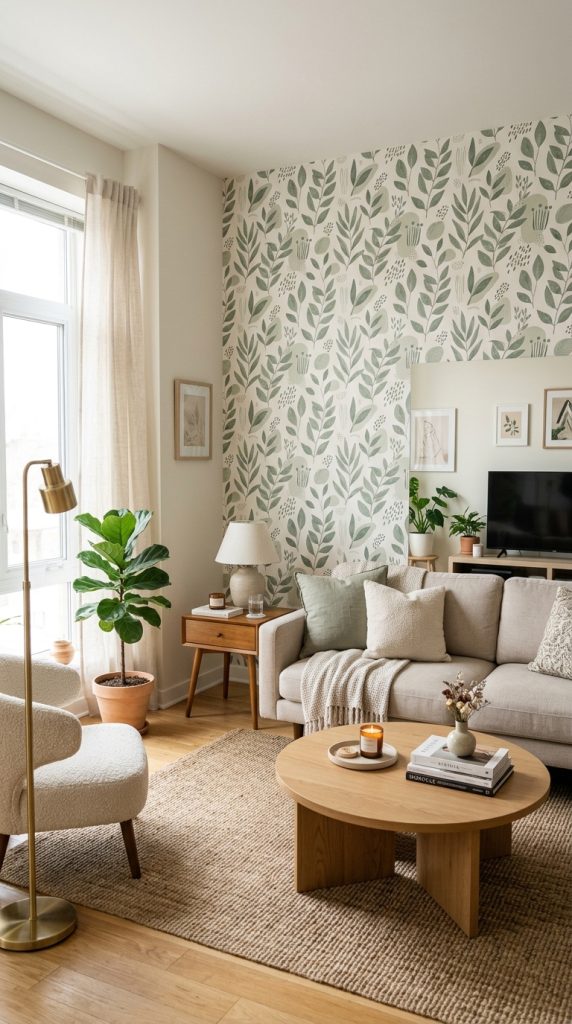
Many apartment walls are painted in basic shades like white, beige, or gray. While neutral colors appeal to landlords, they can make a home feel generic and uninspiring. A carefully chosen wallpaper can instantly create personality, warmth, and visual interest.
Even a single accent wall can dramatically transform a room. A bedroom headboard wall, living room focal wall, dining nook, or home office backdrop can become a statement feature without requiring a full-room makeover.
How to implement (step-by-step)
Start by selecting a wall that naturally draws attention when entering the room.
Measure the wall carefully and calculate how many wallpaper panels are needed.
Clean the wall surface thoroughly and allow it to dry completely before installation.
Begin applying wallpaper from one corner, smoothing out air bubbles as you work.
Use a plastic smoothing tool for a professional finish.
Trim excess wallpaper around outlets, windows, and corners using a precision knife.
Step back periodically to ensure patterns remain aligned throughout installation.
Best for
This makeover works best for renters who want maximum visual impact without major expense.
It is ideal for bedrooms, living rooms, home offices, entryways, and dining spaces.
Pro tip
Choose large-scale patterns for bigger rooms and smaller patterns for compact spaces. This helps maintain visual balance and prevents rooms from feeling crowded.
Mistake to avoid
Avoid covering every wall in a small apartment with bold wallpaper. Too much pattern can make a space feel busy and visually overwhelming.
2. Upgrade Lighting Instead of Buying More Décor
What it is
Many renters focus on furniture and decorations while completely overlooking lighting. However, lighting has one of the biggest influences on how a room looks and feels. Even expensive furniture can appear dull under poor lighting, while a modestly furnished apartment can feel warm and inviting with the right lighting setup.
Most rental apartments come with basic overhead fixtures designed for functionality rather than ambiance. These fixtures often create harsh shadows, flat lighting, and an unwelcoming atmosphere.

A lighting makeover involves adding multiple light sources throughout a room rather than relying solely on ceiling lights. Floor lamps, table lamps, LED strips, battery-powered sconces, and warm-toned bulbs can dramatically improve the environment.
Layered lighting creates depth, highlights décor, and makes rooms feel larger and more comfortable. It also allows you to adjust the mood depending on the time of day.
How to implement (step-by-step)
Evaluate each room and identify dark corners or poorly lit areas.
Replace harsh cool-toned bulbs with warm white bulbs.
Add at least one floor lamp to the living room.
Use table lamps on side tables, consoles, or desks.
Install battery-powered wall sconces if allowed.
Place LED strip lights behind shelves, TVs, or headboards for subtle accent lighting.
Use smart bulbs if you want adjustable brightness and color temperature.
Best for
This makeover is ideal for virtually every rental apartment regardless of size or style.
It is especially beneficial for apartments with limited natural light.
Pro tip
Use lighting at different heights throughout the room. Floor lamps, table lamps, and accent lighting create a layered effect that feels far more luxurious than a single overhead fixture.
Mistake to avoid
Avoid relying only on ceiling lights. A room illuminated by one central fixture often feels flat and less inviting.
3. Use Large Area Rugs to Redefine the Space
What it is
Flooring is one of the most difficult apartment features to change because landlords rarely allow modifications. Whether you’re dealing with outdated carpet, worn vinyl, or basic laminate flooring, a large area rug can completely transform the appearance of a room.
A well-chosen rug does much more than cover flooring. It defines zones, adds texture, introduces color, reduces noise, and makes a room feel more finished and intentional. In open-concept apartments, rugs can even help visually separate different living areas.
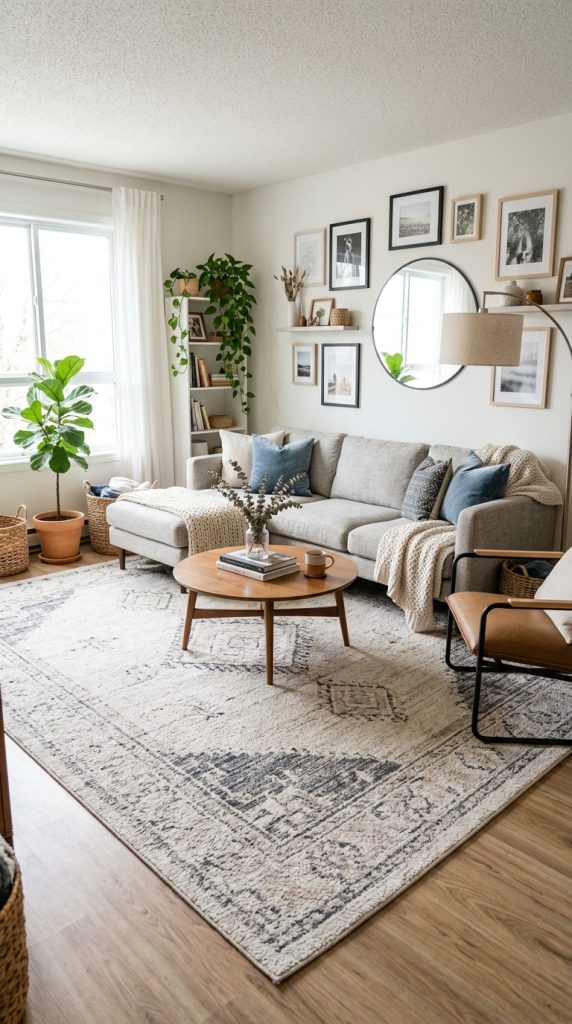
Many renters underestimate how much influence flooring has on the overall atmosphere of a home. Because floors occupy a large percentage of visual space, covering unattractive surfaces can immediately elevate the entire room.
Large rugs are particularly effective because they create cohesion. Smaller rugs often look disconnected and fail to anchor furniture properly.
How to implement (step-by-step)
Measure the room before shopping for a rug.
Choose a size that allows major furniture pieces to sit partially or fully on the rug.
Select colors and patterns that complement your existing décor.
Place the rug first before rearranging furniture around it.
Layer smaller decorative rugs if additional texture is desired.
Use a non-slip rug pad underneath for safety and comfort.
Vacuum regularly to maintain a clean and fresh appearance.
Best for
This makeover works exceptionally well in living rooms, bedrooms, dining areas, and studio apartments.
It is particularly useful for renters trying to hide unattractive flooring.
Pro tip
Always buy the largest rug your space and budget can reasonably accommodate. Larger rugs typically make rooms feel bigger and more professionally designed.
Mistake to avoid
Avoid choosing rugs that are too small for the furniture layout. Undersized rugs can make a room feel disconnected and visually awkward.
4. Create a Custom Look with Peel-and-Stick Backsplashes
What it is
One of the fastest ways to upgrade a rental kitchen or bathroom is by installing a peel-and-stick backsplash. Many rental apartments come with plain painted walls, outdated tile, or no backsplash at all. While landlords may not allow permanent renovations, removable backsplash panels can completely change the appearance of the space without damaging the original surfaces.
Modern peel-and-stick backsplashes are far more realistic than older versions. Many mimic subway tile, marble, stone, mosaic patterns, or even high-end designer finishes. When installed correctly, they can look surprisingly similar to permanent tile work.

A stylish backsplash adds visual interest, protects walls from splashes, and makes kitchens and bathrooms feel more finished. Since these rooms often have limited decorative opportunities, upgrading the wall surface can create a dramatic transformation with relatively little effort.
How to implement (step-by-step)
Start by thoroughly cleaning the wall surface to remove grease, dust, and moisture.
Measure the area carefully before purchasing materials.
Choose a backsplash style that complements your overall apartment design.
Peel and apply each panel slowly, aligning edges precisely.
Use a smoothing tool to remove air bubbles as you work.
Trim around outlets and corners using a sharp utility knife.
Step back frequently to ensure patterns remain straight and aligned.
Best for
This makeover is ideal for kitchens, coffee stations, wet bars, laundry areas, and bathroom vanity walls.
It works especially well in apartments with outdated finishes that cannot be permanently changed.
Pro tip
Choose simple subway tile or marble-look designs if you want a timeless appearance that will still look stylish years from now.
Mistake to avoid
Avoid applying backsplash panels to dirty or uneven surfaces. Poor preparation often causes peeling and shortens the lifespan of the installation.
5. Use Mirrors to Make Small Apartments Feel Larger
What it is
Many rental apartments have limited square footage, making rooms feel cramped or enclosed. One of the oldest interior design tricks—and still one of the most effective—is strategically using mirrors to create the illusion of more space.
Mirrors reflect both natural and artificial light, making rooms appear brighter, larger, and more open. They also add elegance and visual depth without taking up much floor space.

A well-placed mirror can completely change how a room feels. Instead of focusing on the room’s physical dimensions, the eye perceives additional depth and openness through reflected views.
This technique is especially valuable in apartments where structural expansion isn’t possible. Rather than physically increasing square footage, mirrors help maximize the feeling of space.
How to implement (step-by-step)
Identify areas that receive the most natural light.
Place a large mirror directly opposite or adjacent to a window whenever possible.
Use full-length mirrors in bedrooms, hallways, or entryways.
Consider leaning oversized mirrors against walls for a modern designer look.
Group smaller decorative mirrors together to create a gallery effect.
Choose frames that complement your apartment’s overall style.
Secure heavy mirrors properly if mounting is permitted.
Best for
This makeover works exceptionally well in studio apartments, small bedrooms, narrow hallways, and compact living rooms.
It is particularly helpful for apartments with limited natural light.
Pro tip
Position mirrors to reflect attractive features such as windows, plants, artwork, or decorative lighting rather than blank walls.
Mistake to avoid
Avoid placing mirrors where they reflect cluttered areas. A mirror doubles whatever it reflects, including visual mess.
6. Add Personality Through Layered Textiles
What it is
Textiles are one of the easiest and most affordable ways to make a rental apartment feel warm, comfortable, and personalized. Layered textiles include throw blankets, decorative pillows, curtains, bedding, table runners, poufs, and upholstered accessories.
Many rental apartments feel sterile because they contain hard surfaces such as drywall, laminate flooring, countertops, and standard fixtures. Textiles soften these surfaces and introduce warmth, texture, and color into the environment.
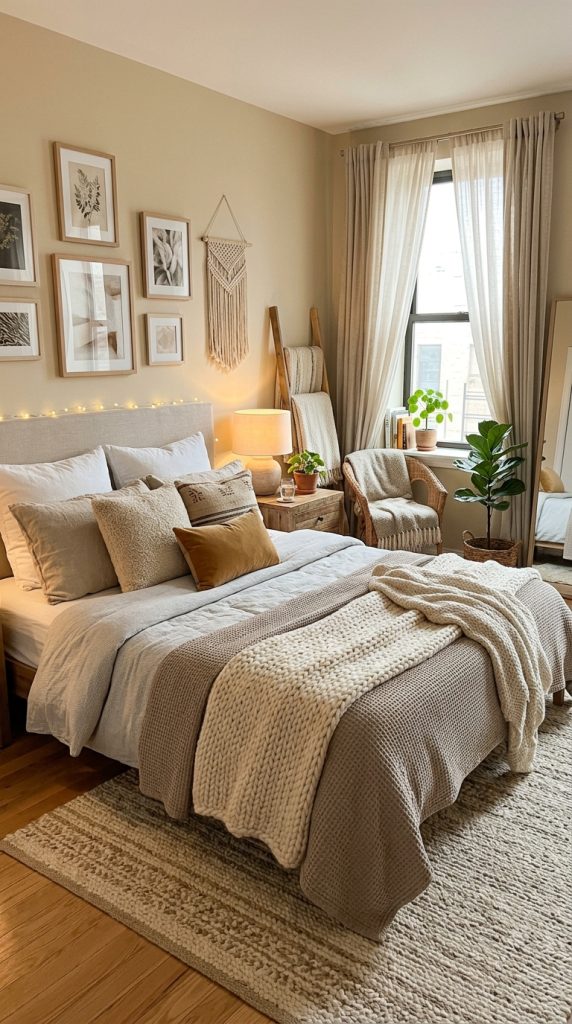
The beauty of textile-based decorating is flexibility. Unlike paint or renovations, textiles can be changed seasonally or whenever your style evolves. They also move with you when it’s time to relocate.
A thoughtfully layered room often feels far more expensive and professionally designed than one relying solely on furniture.
How to implement (step-by-step)
Start with foundational textiles such as rugs and curtains.
Add decorative throw pillows in varying sizes and textures.
Layer blankets over sofas, chairs, and beds.
Mix materials such as linen, cotton, velvet, boucle, and knit fabrics.
Choose a cohesive color palette to maintain visual harmony.
Replace basic apartment blinds with renter-friendly curtain solutions if allowed.
Update bedding to create a more luxurious bedroom atmosphere.
Best for
This makeover works in every room of the apartment and suits virtually every decorating style.
It is especially effective for renters working with limited budgets.
Pro tip
Focus on texture rather than excessive color. Mixing different fabric textures often creates a richer and more sophisticated appearance than simply adding more colors.
Mistake to avoid
Avoid purchasing too many mismatched textiles without a plan. Too many competing colors and patterns can make a room feel chaotic rather than cozy.
7. Maximize Vertical Storage to Reduce Clutter
What it is
One of the most common challenges renters face is limited storage space. Many apartments have small closets, minimal cabinet space, and few built-in storage options. As a result, everyday items can quickly accumulate and make a home feel crowded and disorganized.
A smart rental makeover often focuses less on buying more décor and more on improving storage. Vertical storage is one of the most effective solutions because it utilizes wall height instead of valuable floor space. By thinking upward rather than outward, you can significantly increase storage capacity while making rooms feel cleaner and more organized.
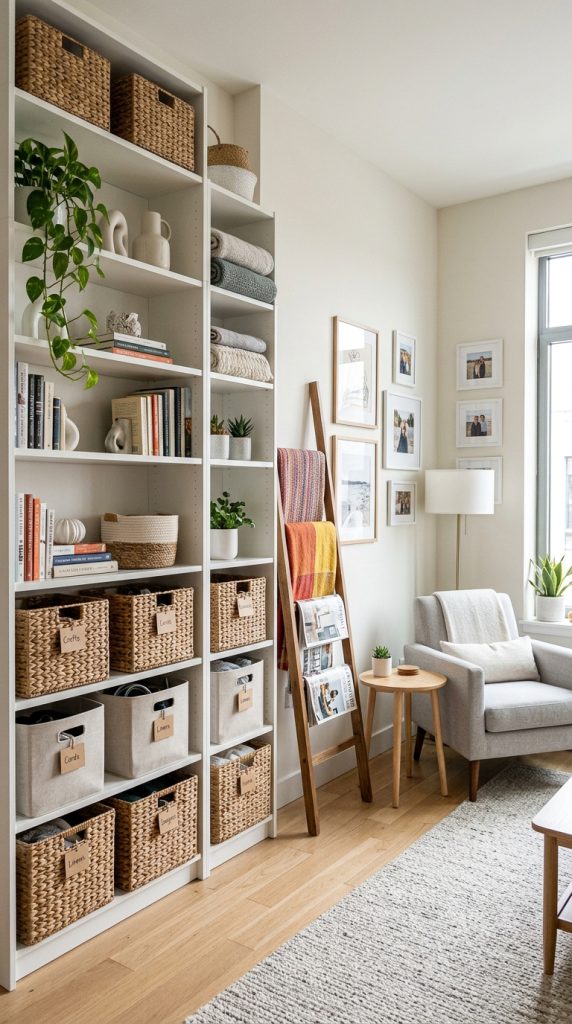
When clutter is reduced, the entire apartment instantly feels larger, calmer, and more stylish. Even beautiful furniture and décor can lose their impact if the surrounding space feels chaotic.
How to implement (step-by-step)
Start by identifying areas where clutter tends to collect.
Install renter-friendly shelving systems if permitted.
Use tall bookcases instead of wide storage units whenever possible.
Add over-the-door organizers for bathrooms, bedrooms, and closets.
Use decorative baskets on upper shelves to store less frequently used items.
In kitchens, utilize stackable shelves and cabinet organizers.
Store seasonal items higher up while keeping everyday essentials within easy reach.
Best for
This makeover is ideal for studio apartments, one-bedroom rentals, and apartments with limited closet space.
It is especially useful for renters who work from home or have growing storage needs.
Pro tip
Choose storage pieces that combine function and style. Open shelving can display books, plants, and decorative objects while also providing practical storage.
Mistake to avoid
Avoid overloading shelves with too many items. Crowded storage systems can create visual clutter instead of reducing it.
8. Upgrade Window Treatments for an Instant Luxury Feel
What it is
Many rental apartments come with basic blinds that serve a practical purpose but add little visual appeal. Upgrading window treatments is one of the fastest ways to make an apartment feel more polished, sophisticated, and customized.
Curtains not only improve aesthetics but also soften a room, enhance privacy, control natural light, and improve overall comfort. Well-chosen window treatments can make ceilings appear higher, windows look larger, and rooms feel more luxurious.

Because windows naturally draw attention, improving them often has a greater visual impact than many other decorating changes.
How to implement (step-by-step)
Measure your windows carefully before purchasing curtains.
Choose curtain panels that extend beyond the window frame for a larger appearance.
Install renter-friendly tension rods or removable curtain hardware if necessary.
Hang curtains as close to the ceiling as possible to create visual height.
Allow curtains to lightly touch the floor for a more elegant look.
Layer sheer curtains with blackout panels if additional light control is needed.
Select fabrics that complement your apartment’s overall color palette.
Best for
This makeover works in living rooms, bedrooms, dining areas, and home offices.
It is especially effective in apartments with large windows or abundant natural light.
Pro tip
Mount curtain rods higher and wider than the actual window frame. This simple trick makes windows appear significantly larger and ceilings feel taller.
Mistake to avoid
Avoid curtains that are too short. Panels that stop above the floor often make a room look unfinished and less refined.
9. Bring Life into the Apartment with Indoor Plants
What it is
Few decorating elements transform a rental apartment as effectively as indoor plants. Plants add color, texture, movement, and natural beauty while helping a space feel more inviting and lived-in.
Many rental apartments feature neutral finishes and standard fixtures that can feel somewhat sterile. Plants introduce organic shapes and vibrant greenery that soften the environment and create visual balance.

Beyond aesthetics, plants can contribute to a sense of well-being. Caring for greenery often makes a home feel more nurturing and connected to nature, which is particularly valuable in urban apartment settings.
Even renters without gardening experience can enjoy the benefits of indoor plants thanks to many low-maintenance varieties available today.
How to implement (step-by-step)
Assess how much natural light each room receives.
Choose beginner-friendly plants if you’re new to plant care.
Place larger plants in empty corners to fill visual gaps.
Use smaller plants on shelves, desks, side tables, and countertops.
Mix different plant heights and leaf shapes for visual interest.
Use decorative planters that match your apartment’s style.
Develop a simple watering schedule to maintain healthy growth.
Best for
This makeover works in virtually every apartment and complements nearly every design style.
It is especially beneficial for renters seeking a warmer, more natural atmosphere.
Pro tip
Group several plants together rather than scattering them randomly throughout the apartment. Plant groupings often create a stronger visual impact and feel more intentional.
Mistake to avoid
Avoid purchasing high-maintenance plants without understanding their care requirements. Struggling plants can quickly diminish the fresh, vibrant look you’re trying to achieve.
10. Rearrange Furniture to Improve Flow and Function
What it is
One of the most overlooked apartment makeover tips is completely free: rearranging your furniture. Many renters move into an apartment and place furniture wherever it seems to fit, then leave it in the same position for years. However, a poorly planned layout can make even a beautifully decorated apartment feel cramped, awkward, and inefficient.
A strategic furniture layout improves traffic flow, creates better conversation areas, maximizes natural light, and makes rooms feel larger. In many cases, simply repositioning existing furniture can have a greater impact than purchasing new décor.
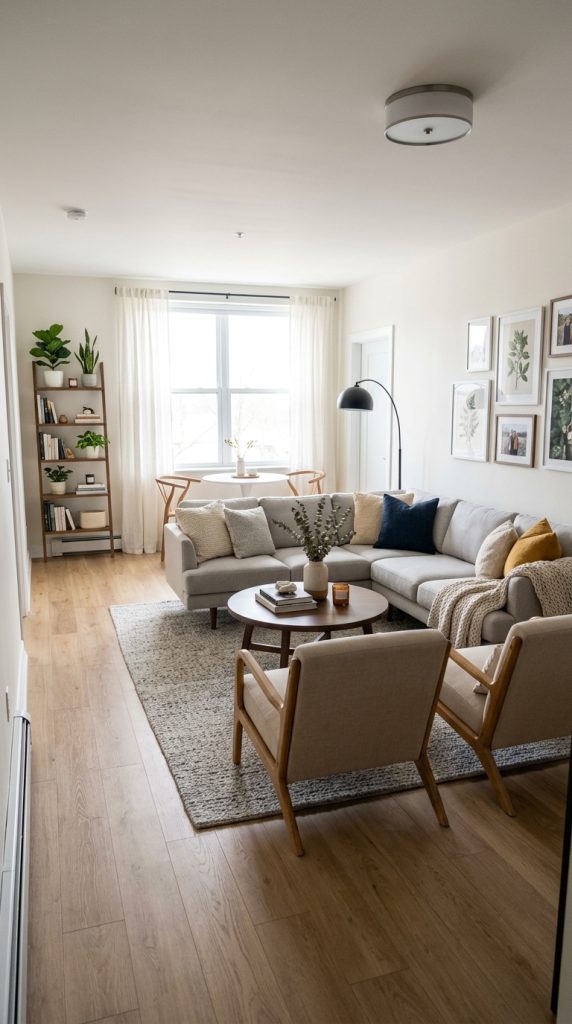
Professional interior designers often start with furniture placement before making any decorative decisions because the layout forms the foundation of the entire room. When furniture is arranged thoughtfully, every other design element works more effectively.
How to implement (step-by-step)
Begin by evaluating how you actually use each room.
Remove smaller decorative items temporarily so you can focus on layout.
Identify the room’s natural focal point, such as a window, television, fireplace, or statement wall.
Arrange larger furniture pieces first before adding accent furniture.
Create clear pathways that allow easy movement throughout the room.
Avoid pushing every piece of furniture directly against the walls.
Experiment with multiple layouts before settling on one arrangement.
Take photos of each setup to compare them objectively.
Best for
This makeover works for every rental apartment regardless of size, style, or budget.
It is especially useful for renters who feel their apartment looks crowded despite having relatively little furniture.
Pro tip
Float furniture away from walls when possible. Even a few inches of space can make a room feel more intentional and professionally designed.
Mistake to avoid
Avoid blocking natural light sources with large furniture pieces. Maximizing daylight instantly makes an apartment feel larger and more welcoming.
11. Create a Signature Focal Point in Every Room
What it is
One reason some apartments feel professionally designed while others seem unfinished is the presence of a strong focal point. A focal point is the first feature that attracts attention when someone enters a room. Without one, the eye wanders aimlessly, and the space can feel disorganized.

Creating a focal point does not require expensive renovations. In a rental apartment, it can be achieved through artwork, a gallery wall, a statement mirror, a bold piece of furniture, a bookshelf, an accent wall, or even a carefully styled bed.
A focal point provides visual structure and helps unify the room’s overall design. It also gives the apartment more personality by highlighting what you want visitors to notice first.
How to implement (step-by-step)
Walk into the room and identify where your eye naturally goes.
Choose one feature to emphasize rather than several competing elements.
Use large-scale artwork, a mirror, shelving unit, or decorative furniture piece as the focal point.
Arrange surrounding furniture to support and highlight that feature.
Add lighting to draw attention toward the focal area.
Keep nearby décor relatively simple so the focal point remains dominant.
Regularly evaluate the room to ensure the focal point still feels intentional and balanced.
Best for
This makeover works in living rooms, bedrooms, dining spaces, home offices, and even entryways.
It is especially effective for apartments that currently feel plain or lack visual interest.
Pro tip
Think bigger rather than smaller. One large statement piece often creates more impact than several small decorative items competing for attention.
Mistake to avoid
Avoid creating multiple focal points in a single room. Too many competing visual elements can make the space feel cluttered and confusing instead of cohesive.