
A backyard for dogs is no longer just a fenced patch of grass where they are “let out.” In 2026, it has become a purpose-built environment for behavior, health, and stimulation—closer to a personal activity zone than a basic outdoor space. The difference between an average yard and a well-designed dog backyard is not size. It is intention.
Most people underestimate how complex a dog’s needs actually are. Dogs don’t just need space—they need structure, variety, and mental engagement. Without that, even a large backyard becomes boring very quickly. That boredom often turns into digging, barking, chewing, or restless behavior. A properly designed backyard prevents that by turning the space into a controlled ecosystem of activity, rest, and exploration.

Modern backyard design for dogs focuses on three core principles: movement, safety, and stimulation. Movement ensures dogs can run and release energy. Safety ensures they can do so without risk. Stimulation ensures their mind stays active, not just their body. When these three elements are balanced, the backyard becomes more than an outdoor area—it becomes a daily enrichment system.
One of the strongest shifts in recent design thinking is the idea of zoned backyards. Instead of one open space, the yard is divided into functional areas. There may be a running lane for exercise, a shaded resting corner, a digging zone, a sensory patch with different textures, and a hydration or cooling area. This zoning approach mirrors how natural environments work, where animals don’t experience one flat, uniform space but multiple micro-environments.
Safety design has also become more advanced. It’s not just about fencing anymore. It includes escape-proof layouts, visibility control, and hazard-free landscaping. Plants are carefully selected to avoid toxicity, ground materials are chosen to prevent paw injury, and fence designs are reinforced not just for height but for behavioral prevention (like digging under or climbing over). Good design anticipates behavior instead of reacting to it.
Comfort is another layer that cannot be ignored. Dogs experience outdoor environments differently depending on temperature, surface texture, and exposure. In 2026 backyard design, shade is not optional—it is built into the structure through pergolas, tree placement, or covered zones. Ground surfaces are also carefully considered, balancing between natural grass, artificial turf, gravel paths, and soft resting platforms to avoid overheating or joint stress.
Mental stimulation is where modern designs really evolve. A backyard is no longer just physical space—it is an interactive environment. Dogs are given opportunities to engage their senses: sniffing trails, hidden treat zones, textured walking paths, and structured play elements like tunnels or low obstacles. These features don’t just entertain—they reduce anxiety and improve cognitive engagement.
Water integration is also becoming a standard feature rather than a luxury addition. Dogs naturally regulate heat through behavior, and water elements support that. Shallow splash areas, controlled fountains, or small cooling pools provide both hydration and play value. The key is safety-focused design—everything is shallow, accessible, and easy to exit.
Another important evolution is aesthetic integration. Dog spaces no longer need to look separate or utilitarian. Instead, they are designed to blend into the overall backyard architecture. Materials, colors, and landscaping choices are aligned with the home’s design language so the yard feels cohesive, not divided. A well-designed dog backyard should still look like a designed garden, not a pet enclosure.
Durability is also central. Dogs are naturally active, and any weak design will fail quickly. That is why modern backyard planning focuses on wear-resistant materials, reinforced turf systems, and structured surfaces that can handle digging, running, and weather exposure without breaking down. The goal is long-term usability, not temporary appearance.
Finally, personalization is what separates good design from great design. Every dog has a different temperament. Some need high-energy agility zones. Others need calm sensory environments. Some thrive in social, open layouts, while others prefer enclosed, predictable paths. A truly effective backyard is not generic—it is tailored to behavior patterns.
In the following ideas, you will explore unique backyard ideas for dogs that go beyond basic pet space design. These concepts focus on creating environments that are functional, safe, visually integrated, and mentally enriching—turning a simple yard into a fully designed lifestyle space for your dog.
1. Agility Course Backyard Zone (Energy-Release Training Space)
What it is
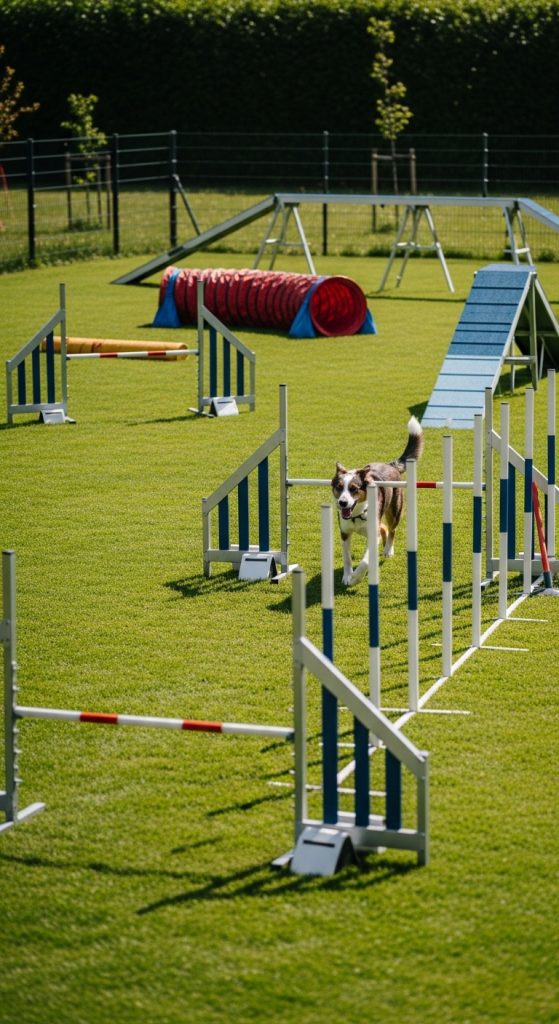
The agility course backyard zone is a structured outdoor area designed with obstacle-based activities that improve a dog’s physical fitness, coordination, and mental engagement. Instead of letting dogs run randomly, this setup turns movement into a guided experience.
In 2026 pet space design, this is one of the most effective backyard concepts because it directly solves a major problem: uncontrolled energy buildup. Dogs that don’t get structured stimulation often become restless indoors, but an agility zone gives them a healthy outlet.
How it works (design breakdown)
- Low hurdles for jumping practice
- Weaving poles for coordination training
- Tunnel sections for exploration behavior
- Elevated ramps or platforms for balance
- Defined running lane connecting obstacles
The layout is usually circular or linear depending on yard size, ensuring continuous movement flow.
Best for
- High-energy dog breeds
- Medium to large backyard spaces
- Owners who want active training built into daily routine
This works best when you want exercise and play combined in one space.
Pro tips
- Use lightweight, movable equipment for flexibility
- Space obstacles evenly to prevent crowding
- Add soft ground (grass or rubber turf) for joint protection
Mistake to avoid
Don’t overcrowd the area with too many obstacles—it reduces flow and creates confusion instead of structured activity.
2. Shaded Relaxation Lounge Zone (Comfort Rest Area)
What it is
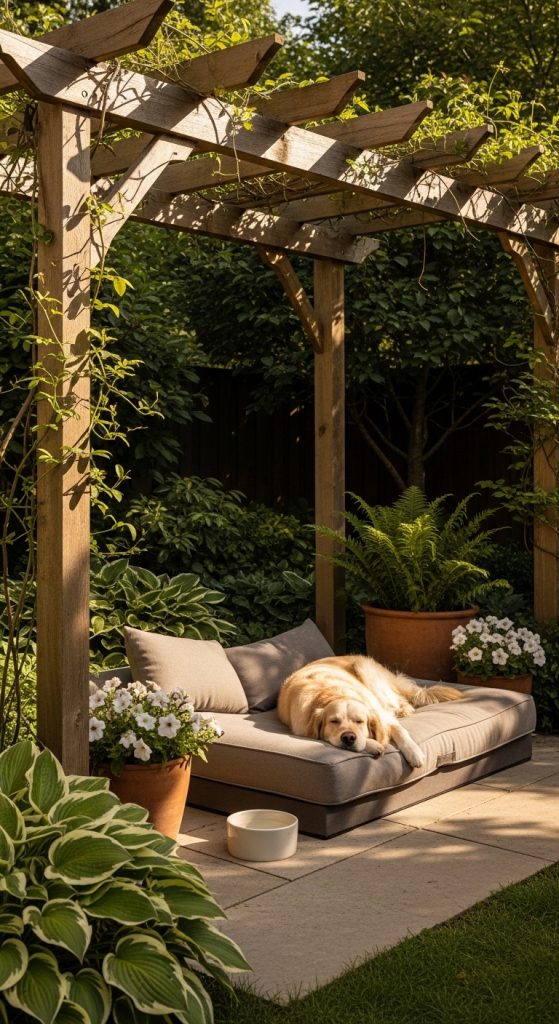
The shaded relaxation lounge zone is a dedicated resting space within the backyard where dogs can cool down, relax, and recover after activity. It acts as a balance point between active and passive areas.
In modern pet design thinking, rest is just as important as play. Without proper recovery zones, dogs can overheat, become stressed, or lose energy balance. This setup ensures controlled comfort within the outdoor environment.
How it works (design breakdown)
- Permanent or semi-covered shade (pergola, canopy, trees)
- Elevated or soft resting platform (wood deck, pet bed zone)
- Cool ground materials (stone, tiles, or shaded grass)
- Water access nearby for hydration
- Low-stimulation environment (minimal noise and movement)
The space is intentionally calm and separated from active zones.
Best for
- All dog sizes and breeds
- Hot climate regions
- Backyards with multiple activity zones
This works best as a recovery and cooling station.
Pro tips
- Position lounge zone away from direct sun paths
- Use natural airflow direction for cooling effect
- Add soft bedding that is weather-resistant
Mistake to avoid
Don’t place it too close to high-energy zones—dogs won’t actually rest if stimulation is constant.
3. Natural Sensory Garden Path (Enrichment Exploration Trail)
What it is
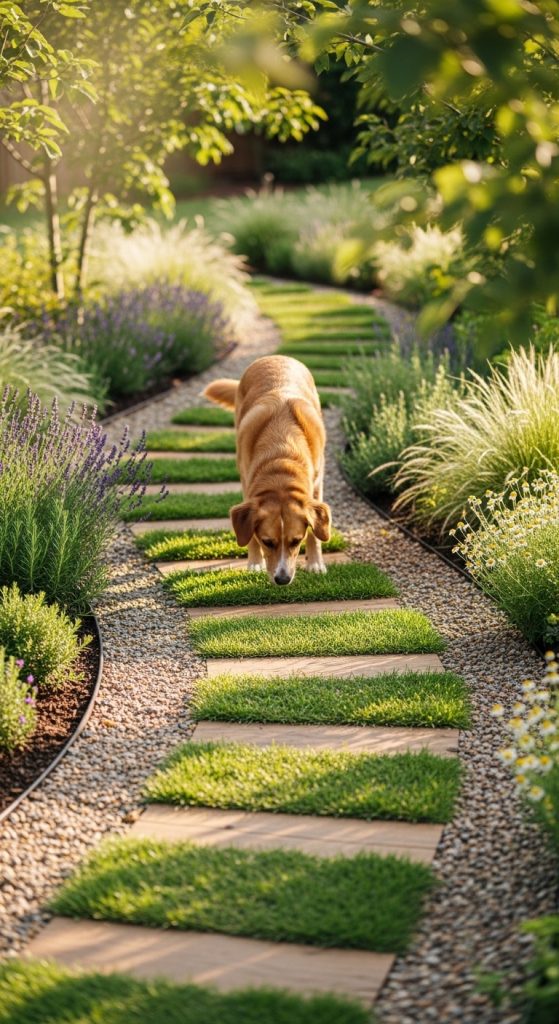
The natural sensory garden path is a designed walking route that stimulates a dog’s senses through varied textures, scents, and natural elements. Instead of a plain walkway, it becomes an interactive exploration experience.
In modern backyard planning, this concept is widely used because dogs rely heavily on smell and touch. A sensory path turns simple movement into mental stimulation and curiosity-driven behavior.
How it works (design breakdown)
- Curved walking path (not straight lines)
- Sections with different ground textures (grass, gravel, wood chips, stone)
- Safe, non-toxic plants placed along edges for scent variation
- Small hidden treat or scent points for engagement
- Subtle elevation changes for interest
The path encourages slow, mindful movement rather than fast running.
Best for
- Small to medium backyard spaces
- Dogs that need mental stimulation more than exercise
- Calm or older dogs needing enrichment
This works best as a daily exploration route.
Pro tips
- Rotate scent elements occasionally to maintain interest
- Keep plant choices dog-safe and non-toxic
- Use gentle curves to create natural walking behavior
Mistake to avoid
Don’t make the path too complicated or tight—dogs need freedom to explore, not confusion or restriction.
4. Digging Pit Adventure Zone (Controlled Natural Instinct Space)
What it is
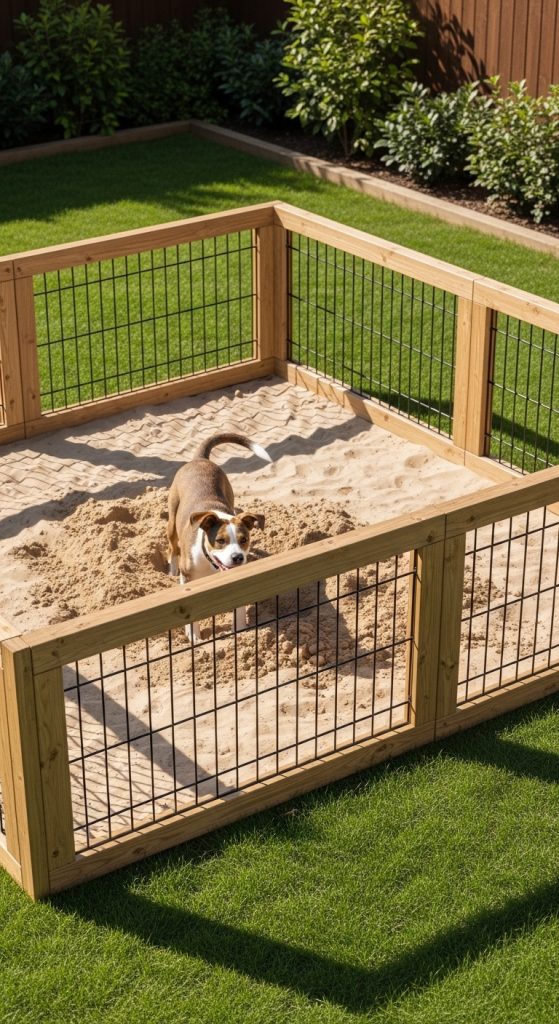
The digging pit adventure zone is a designated area in the backyard where dogs are allowed—and encouraged—to dig freely without damaging the rest of the garden. Instead of fighting the instinct, this setup channels it into a controlled environment.
In 2026 pet-friendly design thinking, this is considered a smart behavioral solution because digging is a natural dog instinct, not a “bad habit.” When it has no outlet, dogs will dig in random, unwanted areas. A proper digging zone removes that problem completely.
How it works (design breakdown)
- Defined square or circular pit area
- Filled with soft sand, soil mix, or loose bark chips
- Border edging using wood, stone, or hidden frame to contain material
- Optional buried toys or treats for stimulation
- Surrounding grass or clean landscaping for contrast
The contrast between “allowed zone” and “protected zone” is what trains behavior.
Best for
- Active or working dog breeds
- Medium to large backyard spaces
- Dogs that already show digging behavior
This works best as a behavioral redirection system.
Pro tips
- Bury toys occasionally to keep interest high
- Keep pit material soft and safe for paws
- Refresh sand/soil periodically to maintain hygiene
Mistake to avoid
Don’t place the pit randomly without boundaries—without clear separation, dogs won’t learn where digging is allowed.
5. Secure Play Turf Arena (All-Weather Activity Field)
What it is
The secure play turf arena is a fully enclosed, flat activity zone covered with durable dog-safe artificial turf or reinforced natural grass, designed for running, playing, and social interaction in a controlled environment.
This concept is widely used in modern backyard design because it combines safety, durability, and low maintenance while still giving dogs a large, open play space.
In structured outdoor planning, this zone acts as the “main field” where most physical activity happens.
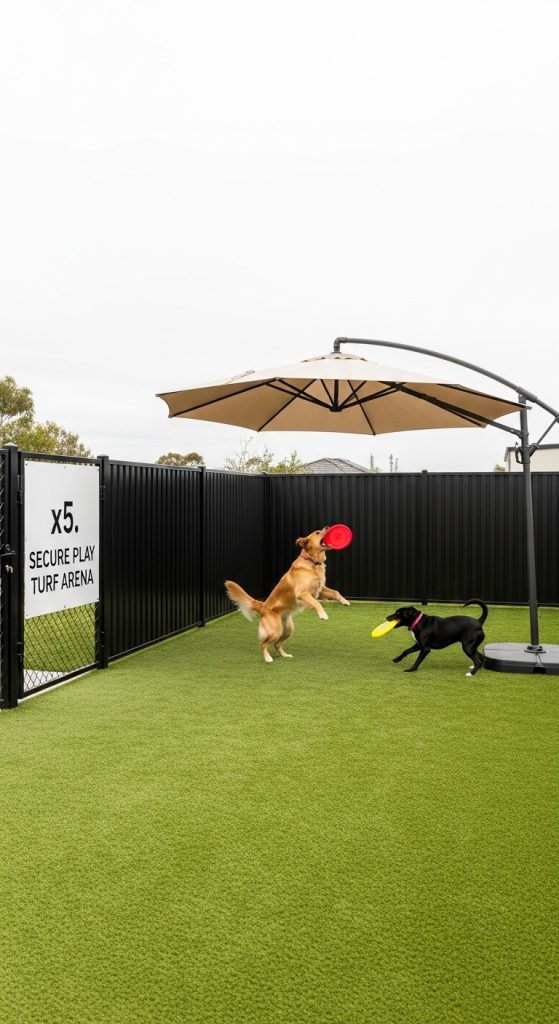
How it works (design breakdown)
- Fully fenced perimeter for safety and containment
- Even, flat ground surface using artificial turf or reinforced grass
- Drainage system underneath to prevent water pooling
- Open layout for running and fetch games
- Minimal obstacles to keep space flexible
The focus is freedom of movement without environmental risk.
Best for
- High-energy dogs needing daily exercise
- Multiple dogs in one household
- Owners who want low-maintenance outdoor design
This works best as the central activity hub of the backyard.
Pro tips
- Choose UV-resistant turf to prevent fading
- Add shaded corners along the edges for rest breaks
- Use rounded fence corners to avoid injury risk
Mistake to avoid
Don’t mix hard gravel or sharp decorative stones inside the arena—it increases injury risk and defeats the safety purpose.
6. Water Splash Cooling Zone (Safe Hydration & Play Area)
What it is
The water splash cooling zone is a dedicated shallow water area designed for dogs to play, cool down, and hydrate safely during warm weather. It’s not a deep pool or uncontrolled water feature—it’s a controlled, low-depth environment built specifically for canine safety and comfort.
In modern backyard design, this zone is becoming essential in warmer climates because dogs do not regulate heat the same way humans do. Without cooling options, they can overheat quickly during outdoor activity.
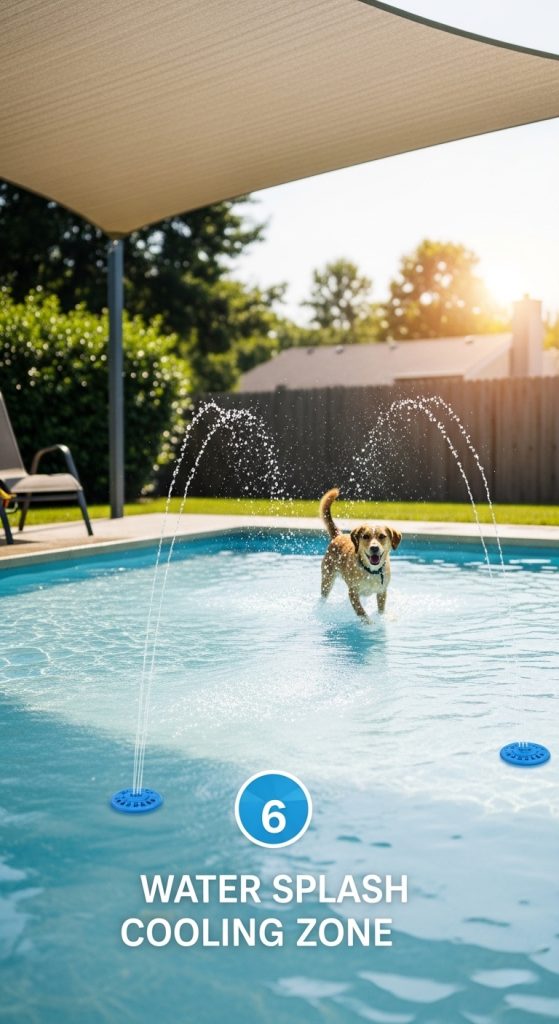
How it works (design breakdown)
- Shallow splash pool (low depth, easy entry and exit)
- Non-slip base to prevent slipping injuries
- Gentle water flow system (sprayers, fountains, or slow fill basin)
- Drainage system for hygiene and water refresh
- Positioned near shaded area for temperature control
The goal is controlled interaction with water—not deep swimming.
Best for
- Hot climate regions
- Active dogs needing cooling breaks
- Backyards with play or agility zones nearby
This works best as a recovery and fun cooling station after exercise.
Pro tips
- Use filtered or clean water circulation to maintain hygiene
- Add textured surfaces inside to prevent slipping
- Place near shade to avoid overheating after water play
Mistake to avoid
Don’t make it deep or pool-like. Deep water increases safety risks and removes the “controlled play” purpose.
7. Enclosed Dog Garden Path Loop (Safe Exploration Circuit)
What it is
The enclosed dog garden path loop is a fully fenced, circular or looping walking system designed specifically for safe roaming, exploration, and light exercise. Instead of a straight walkway, it creates a continuous path that dogs can follow freely without supervision pressure.
In 2026 backyard design trends, this is considered a behavior-friendly layout system because it combines movement, safety, and mental stimulation in a predictable structure.
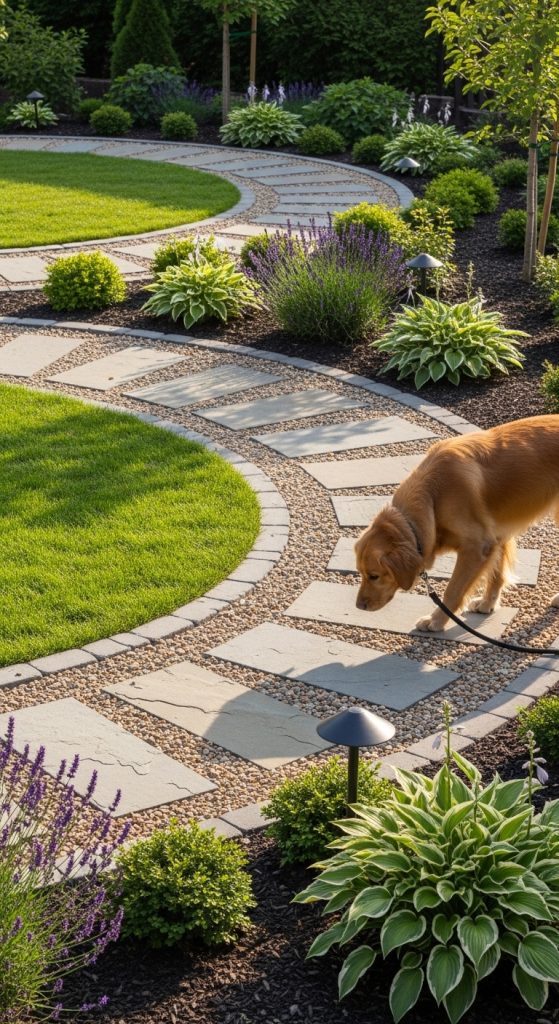
How it works (design breakdown)
- Fully enclosed perimeter fencing for safety
- Continuous looping pathway (no dead ends)
- Mixed surface textures (grass, gravel, stepping stones)
- Small enrichment stops along the route (sniff zones, shade spots)
- Gentle curves instead of sharp angles
The loop design allows repetitive movement without boredom or confusion.
Best for
- Medium to large backyards
- Dogs that enjoy roaming behavior
- Homes where off-leash safety is a priority
This works best as a daily independent exploration route.
Pro tips
- Add multiple entry points from house or main yard
- Use subtle landscaping changes along the loop to maintain interest
- Keep fencing visually integrated with garden design
Mistake to avoid
Don’t design it like a maze with dead ends—dogs prefer continuous flow, not confusion or blocked paths.
8. Elevated Dog Deck Lounge (Dry Comfort Rest Platform)
What it is
The elevated dog deck lounge is a raised outdoor resting platform designed to keep dogs comfortable, clean, and cool while still being part of the backyard environment. Instead of resting directly on grass or soil, dogs have a structured “outdoor bed space” that feels stable and clean.
In 2026 backyard design thinking, elevation is not just aesthetic—it is functional. Raised surfaces help with temperature control, hygiene, and joint comfort, especially for older dogs or breeds sensitive to ground heat or moisture.
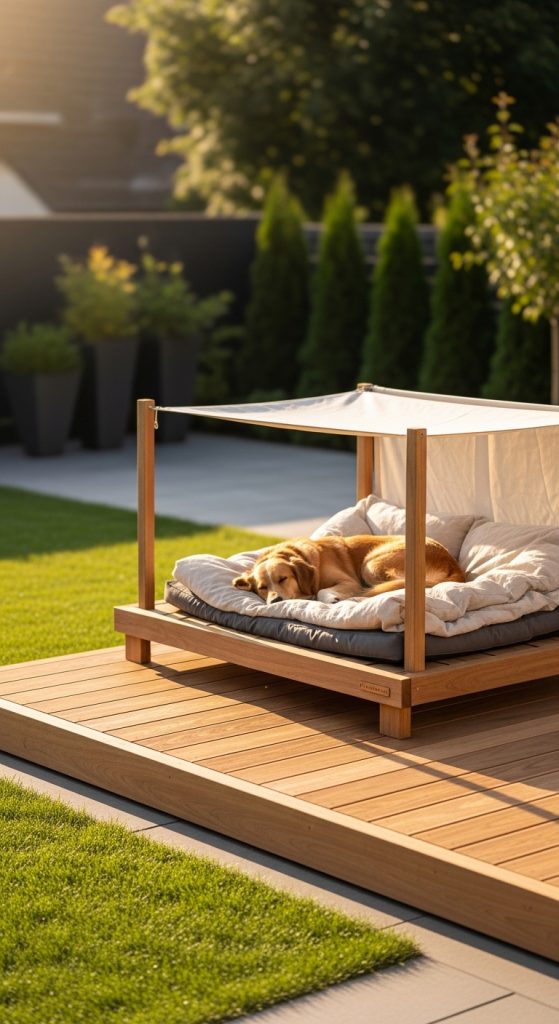
How it works (design breakdown)
- Raised wooden or composite deck platform
- Slight ventilation gap underneath for airflow cooling
- Weather-resistant dog beds or cushioned mats
- Partial shade cover (awning, pergola, or tree shadow)
- Easy access ramps or low steps for safe movement
The elevation creates a defined “comfort zone” separate from active play areas.
Best for
- Senior dogs or dogs with joint sensitivity
- Hot or humid climates
- Backyards with mixed activity zones
This works best as a calm recovery and observation area.
Pro tips
- Use non-slip surface coating on decking
- Position deck where dogs can still observe yard activity
- Add removable washable bedding for hygiene
Mistake to avoid
Don’t make the deck too high without proper ramp access—it can cause strain or injury during repeated use.
9. Natural Shade Tree Retreat Zone (Organic Cooling Sanctuary)
What it is
The natural shade tree retreat zone is a dog-friendly relaxation area built around existing trees or planted greenery that provides natural shade, cooling, and sensory calmness. Instead of artificial structures, this design relies on nature itself as the main comfort system.
In modern backyard planning, this is considered the most sustainable and calming option because it creates a naturally regulated micro-environment where dogs can rest without artificial heat buildup.
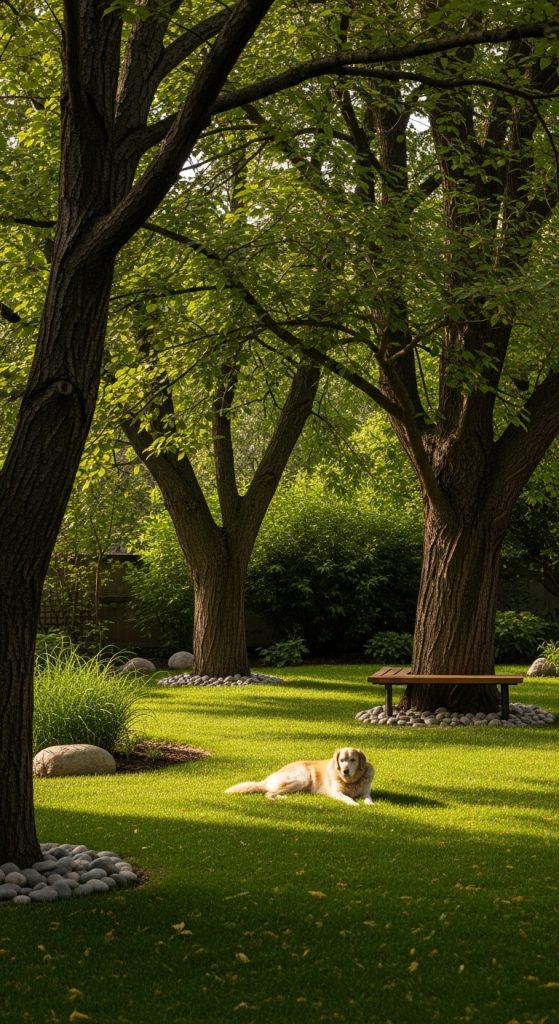
How it works (design breakdown)
- Central or multiple shade-providing trees
- Soft ground cover like grass, mulch, or natural soil
- Low seating or resting mats placed under canopy
- Minimal disturbance landscaping (no heavy structures)
- Optional water bowl or hydration point nearby
The tree canopy naturally regulates temperature and light exposure.
Best for
- Calm or older dogs
- Eco-friendly backyard designs
- Medium to large yards with natural planting space
This works best as a long-term rest and cooling environment.
Pro tips
- Choose non-toxic, dog-safe tree species
- Maintain open airflow beneath canopy for cooling
- Combine with soft ground textures for comfort
Mistake to avoid
Don’t overcrowd the area with decorations or furniture—this zone should stay natural and uncluttered.
10. Interactive Sniff & Puzzle Garden Corner (Mental Enrichment Zone)
What it is
The interactive sniff and puzzle garden corner is a dedicated mental stimulation area where dogs engage their strongest sense—smell—through hidden objects, scent trails, and simple puzzle-style enrichment features. It is designed to keep dogs mentally active, not just physically tired.
In 2026 pet design systems, this is one of the most important zones because behavioral health is now treated as equally important as exercise.
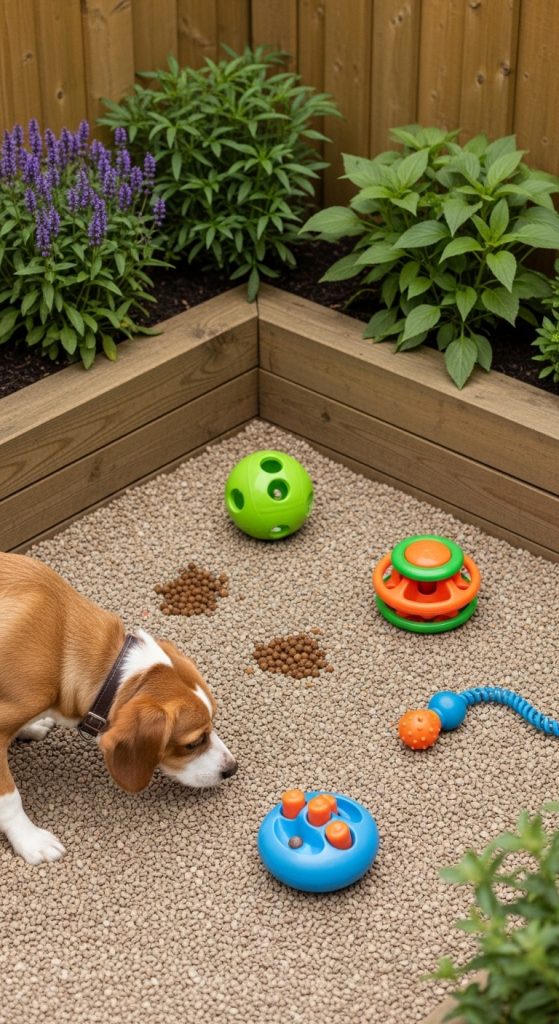
How it works (design breakdown)
- Small enclosed or semi-open corner area
- Hidden treat spots under safe containers or natural materials
- Varied textures (grass patches, wooden boards, gravel zones)
- Scent rotation system (changing smells to maintain interest)
- Simple puzzle objects like treat-dispensing toys or buried items
The area encourages slow, focused exploration rather than speed.
Best for
- Intelligent or high-energy dog breeds
- Indoor-outdoor transition training
- Dogs that get bored easily
This works best as a daily mental workout zone.
Pro tips
- Rotate hiding spots regularly to prevent predictability
- Use safe, washable enrichment objects
- Combine scent games with short physical movement paths
Mistake to avoid
Don’t overload the area with too many puzzles at once—overstimulation reduces focus and turns enrichment into confusion.