
Closets are often one of the most overlooked spaces in a home, yet they play a crucial role in our daily routines. Whether you’re getting ready for work, planning an outfit for a special occasion, or simply trying to keep your belongings in order, a well-organized closet can make all the difference. A cluttered closet leads to wasted time, frustration, and even forgotten items, while a thoughtfully organized space creates efficiency, clarity, and a sense of calm. In 2026, closet organization is no longer just about storage—it’s about creating a functional, stylish, and personalized space that enhances your lifestyle.
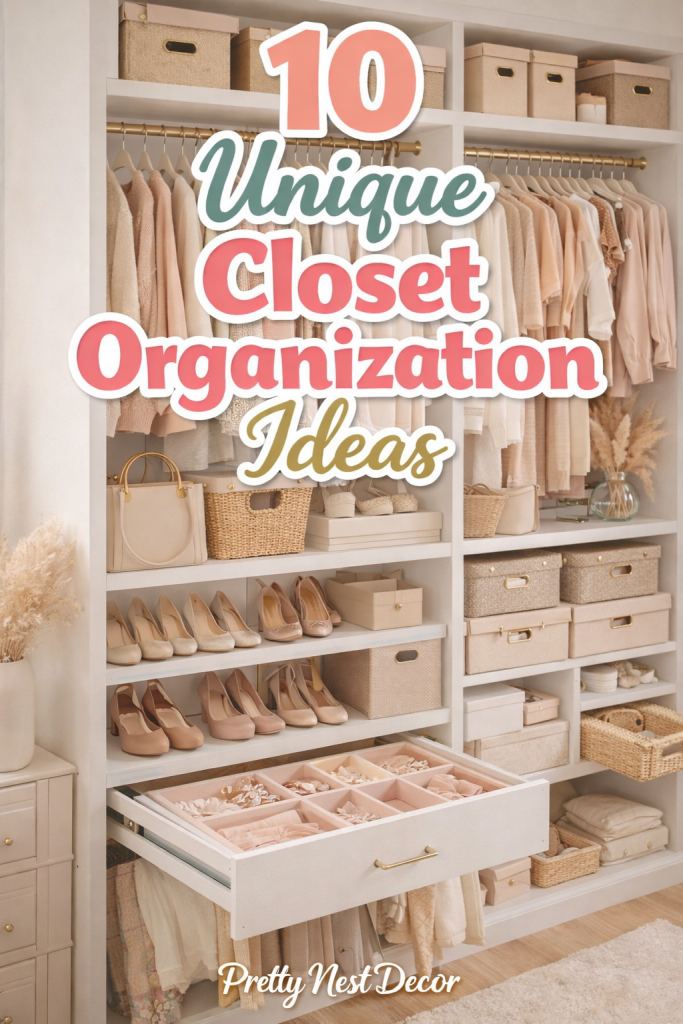
Modern closet organization goes beyond simply hanging clothes or stacking boxes. It involves strategic planning, creative storage solutions, and a focus on both functionality and aesthetics. Today’s closets are designed to maximize space, improve accessibility, and reflect personal style. From small reach-in closets to large walk-in wardrobes, every space can be transformed into a beautifully organized system with the right ideas and techniques. The key is to combine smart storage with thoughtful design, ensuring that every item has a designated place while maintaining a clean and visually appealing look.
One of the biggest benefits of an organized closet is time efficiency. Imagine opening your closet and instantly finding exactly what you need—your favorite outfit neatly arranged, shoes lined up, and accessories easy to grab. No more digging through piles of clothes or searching for missing items. By categorizing clothing, using proper storage solutions, and maintaining a system, your daily routine becomes smoother and more enjoyable. This is especially helpful for busy mornings, where every minute counts.
Another important aspect of closet organization is maximizing space. Many people struggle with limited closet space, but the truth is that even small closets can be highly functional with the right approach. Utilizing vertical space, adding shelves, using multi-functional hangers, and incorporating storage bins can significantly increase capacity. Hidden storage solutions, such as under-shelf baskets or hanging organizers, make use of areas that would otherwise go unused. With creative planning, you can transform even the smallest closet into an efficient storage powerhouse.
A modern closet also emphasizes visual clarity and accessibility. Clear bins, labeled boxes, and coordinated hangers create a cohesive and polished look while making it easier to locate items. Color-coding clothing or arranging items by type—such as shirts, dresses, and jackets—adds an extra layer of organization. When everything is visible and easy to access, maintaining the system becomes effortless. This approach not only improves functionality but also makes your closet feel more like a curated boutique than a storage space.
In addition to functionality, aesthetics play a major role in modern closet design. A visually pleasing closet can inspire you to stay organized and take better care of your belongings. Coordinated colors, matching storage containers, and decorative elements such as baskets or drawer liners create a cohesive and stylish environment. Lighting is another key factor—adding LED strips, soft lighting, or even a small chandelier can elevate the overall look and make your closet feel luxurious and inviting. A beautiful closet isn’t just about appearance; it enhances your overall experience and makes everyday tasks more enjoyable.
Closet organization also encourages mindful living and decluttering. When you take the time to organize your space, you naturally become more aware of what you own. This awareness helps reduce unnecessary purchases, promotes better decision-making, and ensures that items are used and appreciated. Decluttering becomes an essential step in the process, allowing you to remove items you no longer need and create space for what truly matters. A well-organized closet reflects a more intentional and balanced lifestyle.
Another growing trend in closet organization is customization. Every individual has different needs, preferences, and lifestyles, and modern closet solutions are designed to accommodate these differences. Whether you need extra space for shoes, accessories, or seasonal clothing, there are countless ways to tailor your closet to fit your specific requirements. Adjustable shelving, modular systems, and personalized storage solutions allow you to create a closet that works perfectly for you. This level of customization ensures that your organization system remains practical and sustainable over time.
Technology and innovation have also influenced closet organization in recent years. From smart lighting systems to space-saving storage tools, modern closets are becoming more advanced and user-friendly. Even simple additions like motion-sensor lights or pull-out racks can significantly improve functionality. These innovations make it easier to maintain an organized space while adding convenience to your daily routine.
In this article, we will explore 10 unique closet organization ideas that are practical, creative, and beginner-friendly. Each idea is designed to help you maximize space, improve accessibility, and create a visually appealing closet. You’ll find step-by-step instructions, materials needed, and actionable tips to transform your closet into a modern, organized haven. Whether you’re working with a small closet or a spacious walk-in, these ideas will inspire you to create a system that fits your needs and lifestyle.
By the end of this guide, you’ll have the tools and inspiration to turn your closet into a functional, stylish, and stress-free space. A well-organized closet is more than just a storage solution—it’s a daily convenience, a reflection of your personal style, and a step toward a more organized and intentional life. With the right strategies, you can create a closet that not only looks amazing but also works seamlessly for you every single day.
Idea 1: Double Hanging Rod System for Maximum Space
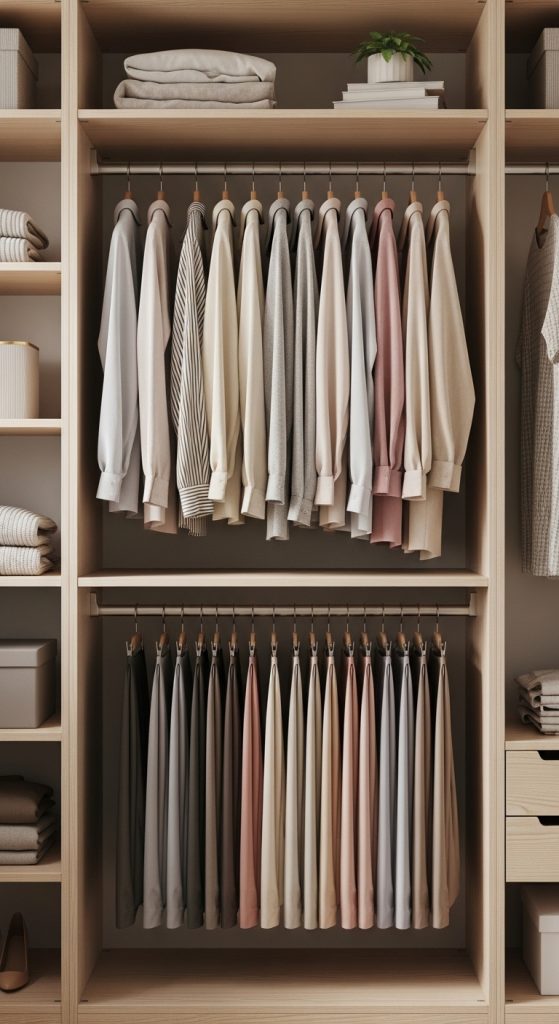
One of the most effective ways to instantly double your closet space is by installing a double hanging rod system. This idea is perfect for small closets where maximizing vertical space is essential. Instead of letting unused space sit empty beneath your clothes, a second rod allows you to hang more items efficiently while keeping everything organized and accessible.
Explanation:
A double hanging rod system divides your closet vertically into two sections, allowing you to hang shorter items like shirts, blouses, skirts, or folded pants on both levels. This setup eliminates wasted space and creates a more structured layout. It’s especially useful for everyday wear, making it easier to see and select outfits quickly. For longer garments like dresses or coats, you can reserve one section of the closet with a single rod. This combination ensures a balanced and practical organization system.
Step-by-Step How-To:
- Measure Closet Height: Determine how much vertical space you have to install two rods comfortably.
- Choose Rod Placement: Install the top rod at standard height and position the second rod about halfway below.
- Install Brackets: Secure brackets or rod holders firmly into the wall.
- Add Hanging Rods: Insert rods and ensure they are level and stable.
- Organize Clothing: Hang shorter garments on both rods and group items by type or color.
- Adjust as Needed: Rearrange sections for seasonal clothing or changing needs.
Materials Needed:
- Closet rods (metal or wood)
- Mounting brackets and screws
- Measuring tape and level
- Drill or screwdriver
Tips:
- Use slim, matching hangers to maximize space.
- Reserve one section for longer garments.
- Color-coordinate clothes for a clean, boutique-style look.
Idea 2: Use Slim Velvet Hangers for a Clean Look
Bulky plastic or wooden hangers take up unnecessary space and create a cluttered appearance. Switching to slim velvet hangers is a simple yet powerful way to create a sleek, modern closet.
Explanation:
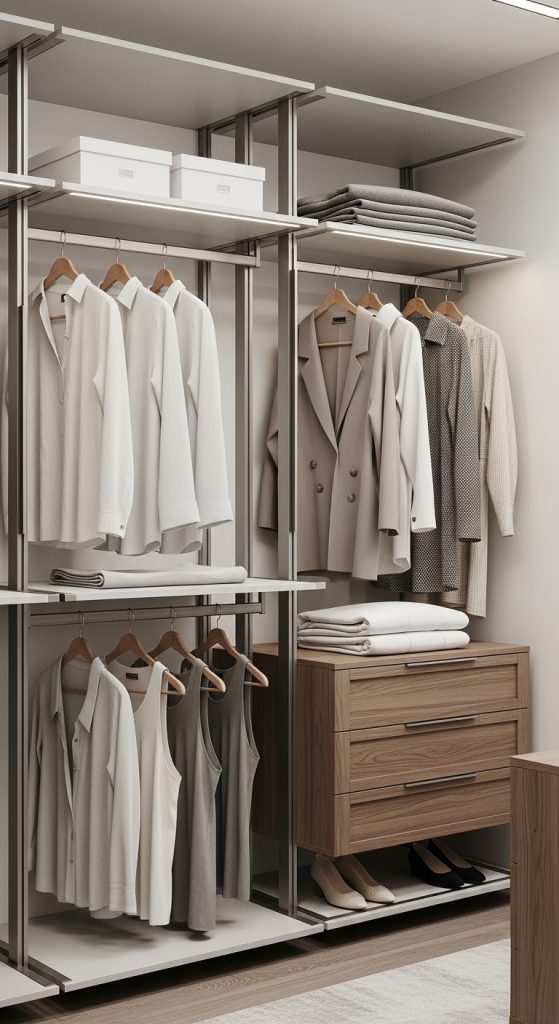
Slim velvet hangers are designed to be thin yet sturdy, allowing you to fit more clothes into the same space. The velvet texture prevents clothes from slipping off, making them ideal for delicate fabrics like silk or chiffon. Uniform hangers instantly create a cohesive and visually pleasing look, transforming your closet into a Pinterest-worthy space. This small change has a big impact on both functionality and aesthetics.
Step-by-Step How-To:
- Declutter Your Closet: Remove all clothing items and sort them by category.
- Replace Old Hangers: Swap bulky hangers with slim velvet ones.
- Hang Clothes Neatly: Ensure each garment is properly aligned.
- Organize by Category: Group shirts, dresses, and jackets together.
- Color Coordinate: Arrange clothes from light to dark for visual appeal.
- Maintain Consistency: Stick to the same hanger style for all items.
Materials Needed:
- Slim velvet hangers
- Storage bins for extra hangers
- Optional hanger clips for skirts or pants
Tips:
- Choose neutral colors like black, beige, or gray for a modern look.
- Use hanger clips for versatile use.
- Avoid mixing hanger styles to maintain visual consistency.
Idea 3: Add Hanging Shelf Organizers
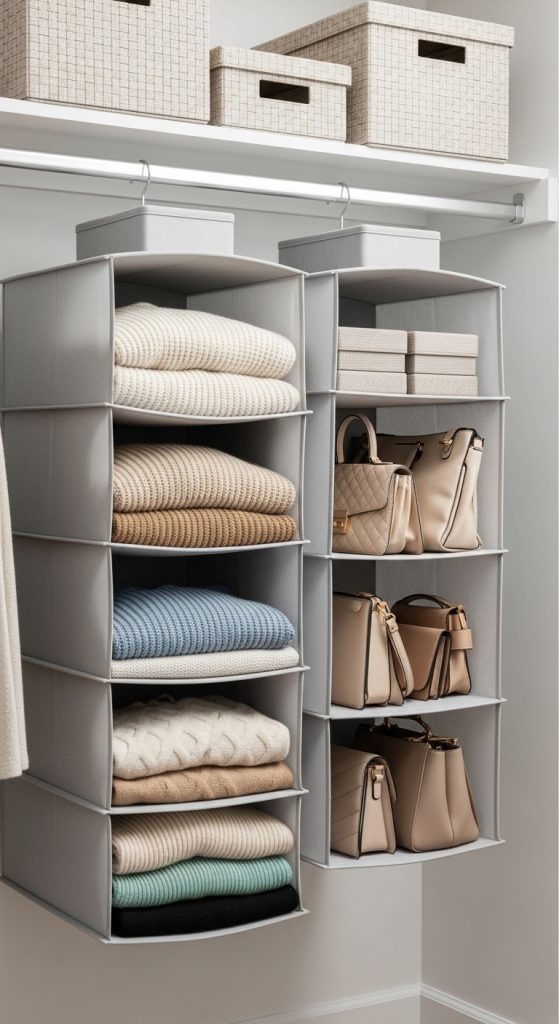
Hanging shelf organizers are a versatile solution for adding storage without permanent installation. They provide extra compartments for folded clothes, accessories, or shoes.
Explanation:
These fabric or canvas organizers hang directly from your closet rod, creating vertical shelves within your closet. They are ideal for sweaters, handbags, or even storage boxes. Hanging organizers maximize unused vertical space while keeping items visible and accessible. They are especially useful for renters or anyone looking for a non-permanent solution.
Step-by-Step How-To:
- Select Organizer Size: Choose one that fits your closet height and width.
- Attach to Rod: Secure the organizer using built-in hooks or Velcro straps.
- Sort Items: Fold clothes neatly or group accessories by category.
- Place Items in Compartments: Keep heavier items at the bottom for stability.
- Label Sections: Optional labels help maintain organization.
- Adjust Placement: Move organizer if needed to balance space.
Materials Needed:
- Hanging shelf organizer
- Storage bins or boxes (optional)
- Labels or tags
Tips:
- Use for seasonal clothing or less-used items.
- Keep compartments uncluttered for easy access.
- Pair with baskets for a cleaner look.
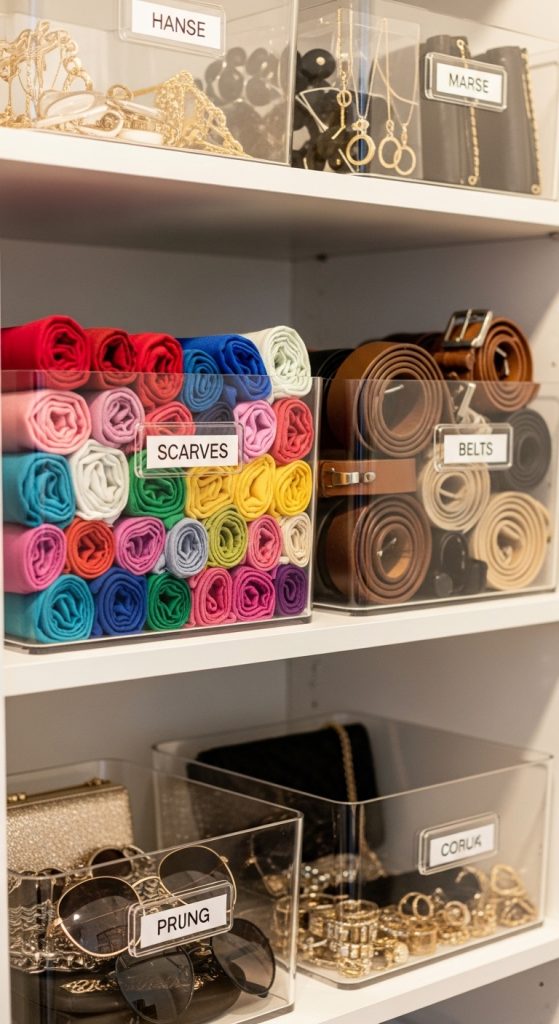
Idea 4: Use Clear Storage Bins for Accessories
Accessories like scarves, belts, and small items often create clutter. Clear storage bins provide a neat, visible, and organized solution.
Explanation:
Clear bins allow you to see what’s inside without opening them, saving time and effort. They are perfect for grouping similar items together while protecting them from dust. Stackable bins maximize vertical space and create a clean, modern appearance. Adding labels further enhances organization, ensuring every item has a designated place.
Step-by-Step How-To:
- Sort Accessories: Group items like scarves, belts, and hats.
- Choose Bin Sizes: Select bins that fit your shelves or closet layout.
- Place Items Inside: Fold or roll items neatly.
- Label Each Bin: Use clear, simple labels for easy identification.
- Stack or Arrange: Place bins on shelves or stack them vertically.
- Maintain Regularly: Return items to their bins after use.
Materials Needed:
- Clear plastic or acrylic bins
- Labels or stickers
- Divider inserts (optional)
Tips:
- Use small bins for jewelry or delicate items.
- Stack bins to maximize space.
- Keep frequently used items within reach.
Idea 5: Install Shoe Racks or Cubby Storage
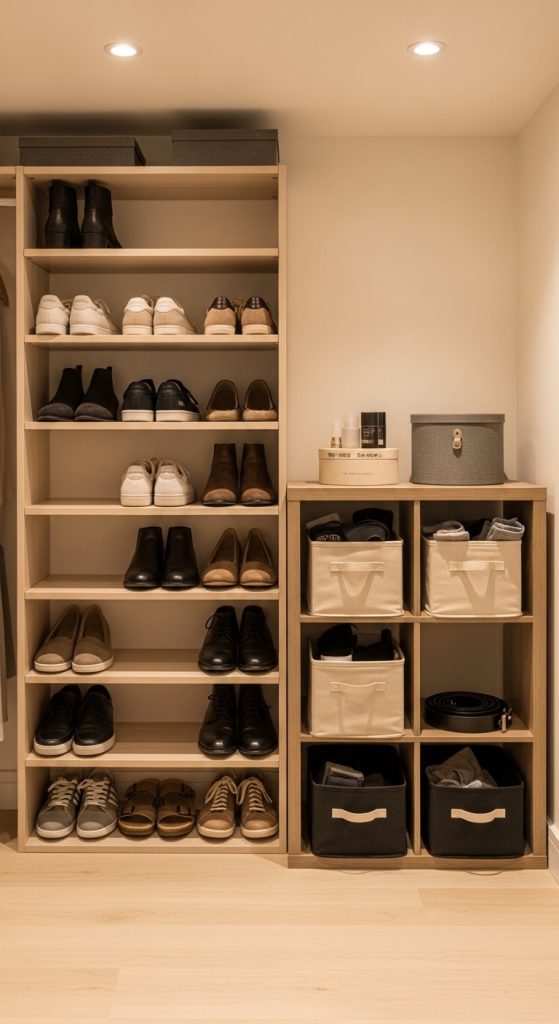
Shoes can quickly take over a closet floor, making the space look messy. A dedicated shoe storage system keeps footwear organized and easy to access.
Explanation:
Shoe racks or cubby storage units provide designated spaces for each pair, preventing clutter and protecting shoes from damage. Open cubbies make it easy to see all options, while stackable racks maximize vertical space. This system works well for both small and large closets, creating a neat and organized appearance.
Step-by-Step How-To:
- Measure Floor Space: Determine how much room is available for shoe storage.
- Choose Storage Type: Select racks, cubbies, or stackable shelves.
- Assemble or Install: Set up the storage unit securely.
- Sort Shoes: Group by type—casual, formal, seasonal.
- Arrange Neatly: Place shoes in pairs for easy access.
- Maintain Organization: Rotate seasonal shoes as needed.
Materials Needed:
- Shoe rack or cubby organizer
- Storage boxes for special shoes
- Labels (optional)
Tips:
- Store less-used shoes in labeled boxes.
- Keep everyday shoes at eye level or easy reach.
- Use uniform boxes for a clean, Pinterest-style look.
Idea 6: Use Drawer Dividers for Small Items
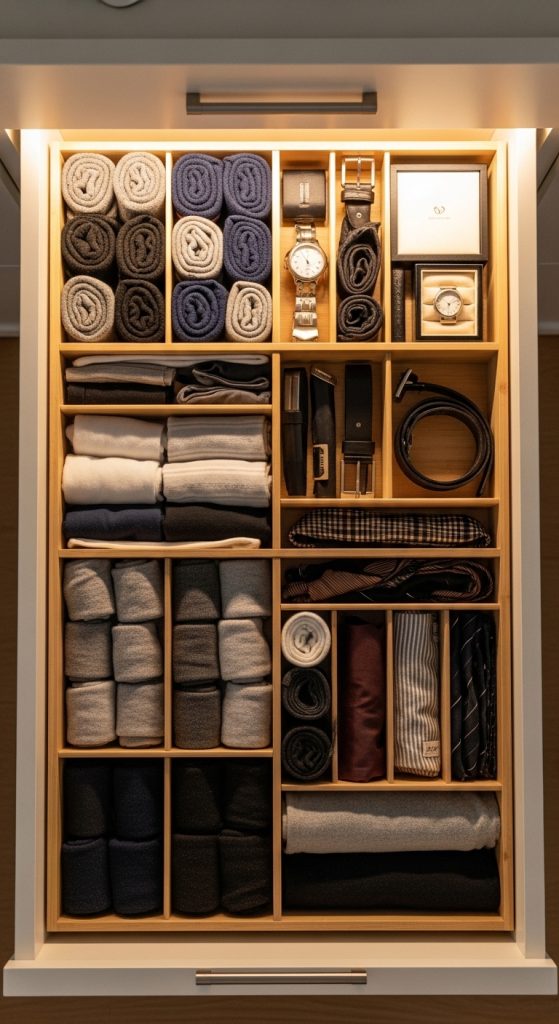
Small items like socks, underwear, ties, and accessories can quickly turn drawers into a messy pile. Drawer dividers are a simple yet highly effective solution to keep everything neatly separated and easy to find.
Explanation:
Drawer dividers create individual compartments within a drawer, allowing you to assign a specific space for each category. Instead of digging through clutter, you can instantly locate what you need. This system not only saves time but also keeps items in better condition. Dividers come in adjustable designs, making them suitable for drawers of all sizes. By organizing items into sections, you create a clean, structured layout that is both functional and visually satisfying.
Step-by-Step How-To:
- Empty Your Drawer: Remove all items and clean the surface.
- Sort Items: Group similar items like socks, undergarments, or accessories.
- Install Dividers: Place adjustable dividers or inserts into the drawer.
- Assign Sections: Dedicate each compartment to a specific category.
- Fold Items Neatly: Use folding techniques to maximize space.
- Maintain Order: Return items to their designated sections after use.
Materials Needed:
- Drawer dividers or inserts
- Storage boxes (optional)
- Labels (optional)
Tips:
- Use soft fabric organizers for delicate items.
- Fold vertically to see all items at once.
- Avoid overfilling compartments.
Idea 7: Install Hooks for Accessories and Bags
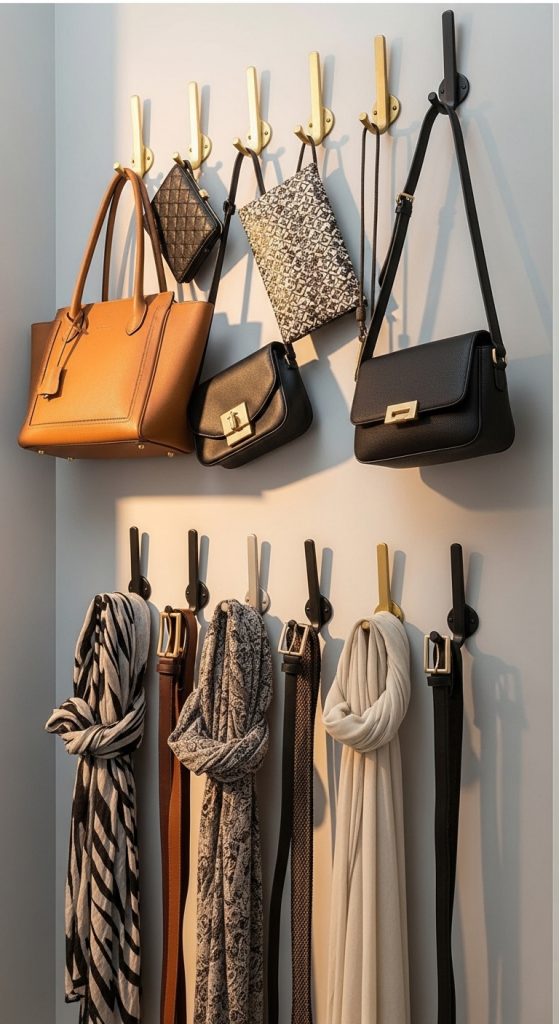
Hooks are a versatile and space-saving solution for organizing accessories like bags, belts, scarves, and hats. They make use of unused wall or door space while keeping items easily accessible.
Explanation:
Installing hooks inside your closet or on the back of doors allows you to hang items that would otherwise take up shelf or floor space. This method is especially useful for frequently used accessories. Hooks also prevent items from becoming tangled or wrinkled. By grouping similar items together—such as all handbags in one area—you create a streamlined and efficient system. Modern hooks come in stylish designs that add both function and aesthetic appeal to your closet.
Step-by-Step How-To:
- Choose Location: Select walls, closet sides, or doors for hook placement.
- Measure Spacing: Ensure enough room between hooks for items to hang freely.
- Install Hooks: Use screws or adhesive hooks depending on the surface.
- Sort Accessories: Group items like bags, belts, or scarves.
- Hang Items: Arrange neatly for easy access.
- Adjust Layout: Rearrange hooks if needed for better organization.
Materials Needed:
- Wall hooks or adhesive hooks
- Measuring tape
- Screws or adhesive strips
Tips:
- Use sturdy hooks for heavier bags.
- Keep frequently used items at eye level.
- Match hook finishes with closet design for a modern look.
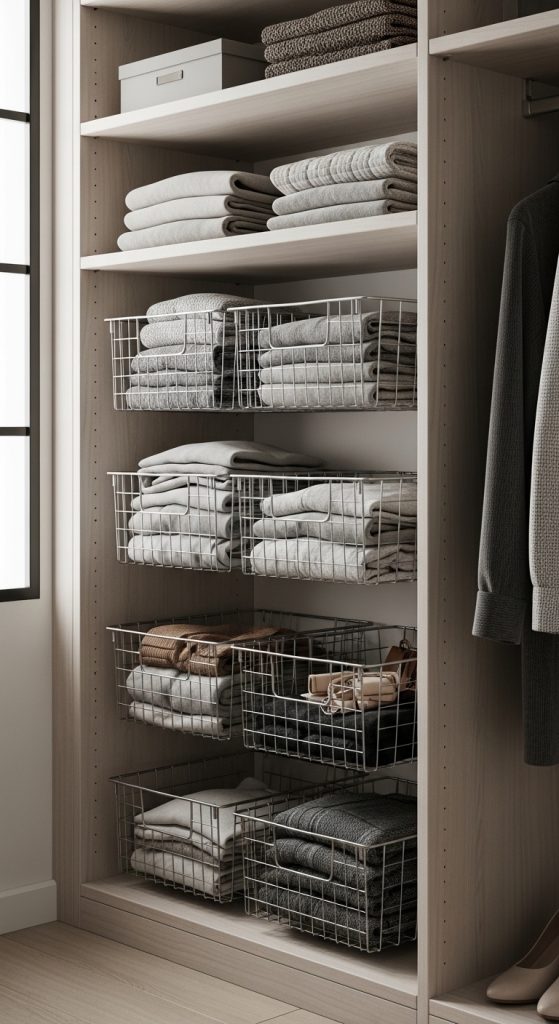
Idea 8: Add Under-Shelf Baskets for Hidden Storage
Under-shelf baskets are a clever way to utilize unused space beneath shelves, providing extra storage without taking up additional room.
Explanation:
These baskets slide or clip under existing shelves, creating an extra layer of storage. They are perfect for lightweight items such as folded clothes, accessories, or small boxes. Under-shelf baskets help reduce clutter by keeping items off main shelves while still being easily accessible. This solution is ideal for small closets where every inch of space matters. By adding multiple baskets, you can create a layered storage system that maximizes efficiency and keeps your closet looking organized.
Step-by-Step How-To:
- Measure Shelf Space: Ensure baskets will fit securely under shelves.
- Select Basket Style: Choose metal, wire, or fabric baskets.
- Install or Slide In: Attach baskets to the shelf or slide them into place.
- Sort Items: Decide what items will be stored in each basket.
- Place Items Neatly: Avoid overloading to maintain stability.
- Maintain Regularly: Keep baskets organized and clutter-free.
Materials Needed:
- Under-shelf baskets
- Labels or tags (optional)
- Storage liners (optional)
Tips:
- Use for seasonal items or accessories.
- Keep heavier items off these baskets.
- Pair with labels for easy identification.
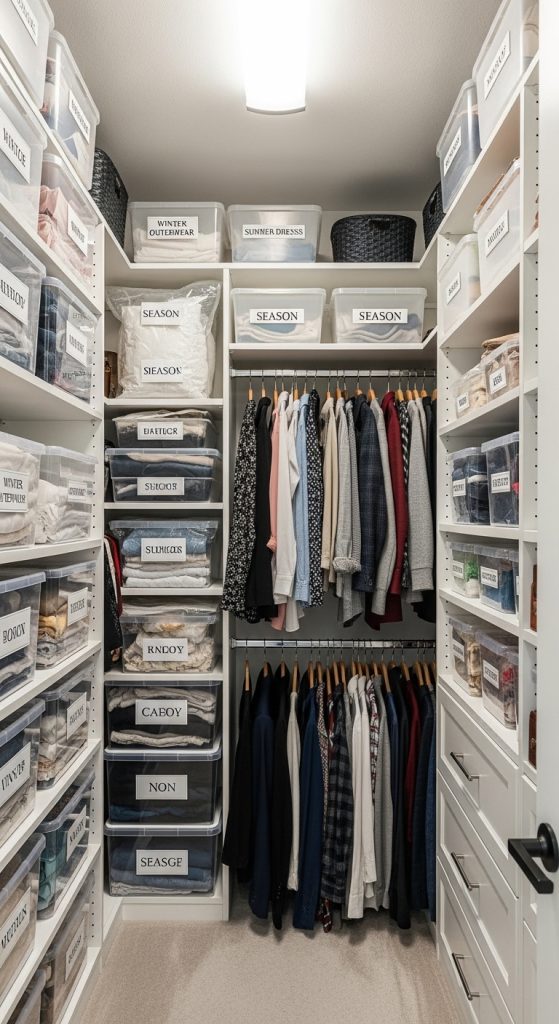
Idea 9: Create a Seasonal Rotation System
Closets often feel overcrowded because they hold clothes for every season. A seasonal rotation system helps keep your closet organized and manageable year-round.
Explanation:
This system involves storing off-season clothing separately and only keeping current-season items in your main closet. For example, during summer, winter coats and sweaters can be stored in bins or vacuum-sealed bags. This creates more space and makes your closet easier to navigate. Seasonal rotation also helps you reassess your wardrobe regularly, making it easier to declutter and stay organized.
Step-by-Step How-To:
- Sort Clothing by Season: Separate summer, winter, and transitional items.
- Choose Storage Method: Use bins, vacuum bags, or storage boxes.
- Label Storage: Clearly mark each container by season.
- Store Off-Season Items: Place in high shelves, under-bed storage, or another area.
- Refresh Closet Layout: Arrange current-season items neatly.
- Repeat Each Season: Rotate items as weather changes.
Materials Needed:
- Storage bins or vacuum bags
- Labels or tags
- Storage space (under-bed or shelves)
Tips:
- Wash and fold items before storing.
- Use moisture absorbers to prevent damage.
- Donate items you no longer wear.
Idea 10: Add Lighting for a Luxurious and Functional Touch
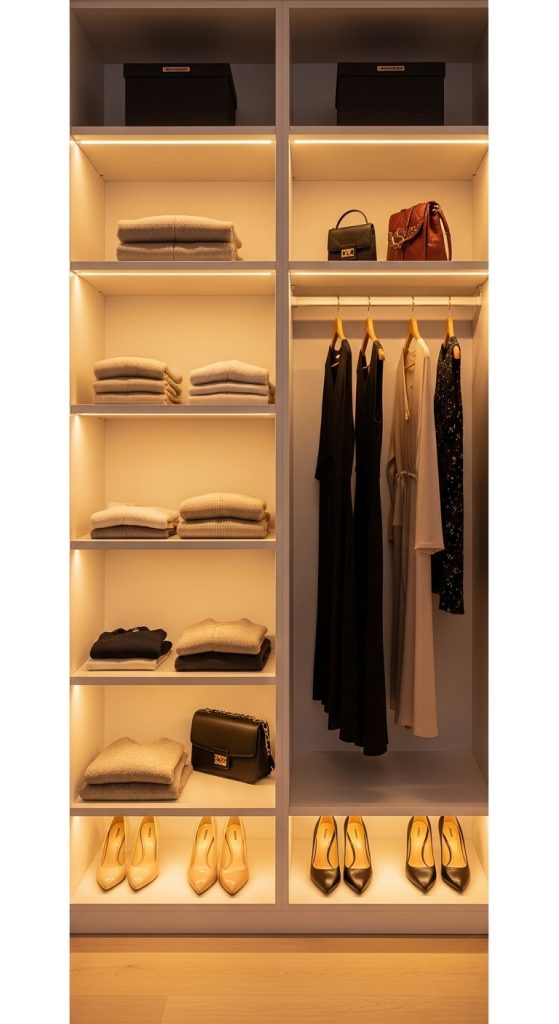
Lighting is often overlooked in closets, but it can completely transform the space, making it more functional and visually appealing.
Explanation:
Proper lighting improves visibility, making it easier to find items quickly. It also enhances the overall look of your closet, giving it a modern, boutique-like feel. Options include LED strip lights, puck lights, or motion-sensor lighting. These solutions are easy to install and energy-efficient. Good lighting highlights your organized system, making the space feel larger, cleaner, and more inviting.
Step-by-Step How-To:
- Assess Lighting Needs: Identify dark areas in your closet.
- Choose Lighting Type: Select LED strips, puck lights, or motion-sensor lights.
- Install Lights: Attach lights to shelves, walls, or closet rods.
- Test Placement: Ensure even lighting throughout the space.
- Enhance Design: Combine lighting with mirrors or reflective surfaces.
- Maintain: Replace batteries or bulbs as needed.
Materials Needed:
- LED strip lights or puck lights
- Adhesive strips or mounting hardware
- Batteries or power source
Tips:
- Use warm lighting for a cozy feel.
- Motion-sensor lights add convenience.
- Place lights near shelves for maximum visibility.