
There is something undeniably magical about vintage Easter decorations. Unlike modern seasonal décor that often feels temporary or trend-driven, antique Easter pieces carry history, sentiment, and craftsmanship that instantly elevate your spring styling. When you incorporate vintage Easter décor into your home, you are not simply decorating — you are curating a story. Each faded pastel egg, delicate porcelain bunny, hand-painted German ornament, or embroidered linen tells a quiet tale of past celebrations, family gatherings, and cherished traditions.

In a world where mass-produced décor fills store shelves each season, antique Easter decorations bring authenticity and warmth. They feel intentional. They feel personal. And most importantly, they create a layered, collected aesthetic that photographs beautifully for Pinterest and feels deeply meaningful in real life.
Vintage Easter décor often features softer color palettes than modern versions. Instead of bright neon pinks and electric blues, you’ll find dusty rose, muted sage, buttery cream, pale robin’s egg blue, and time-worn gold accents. These colors blend effortlessly into farmhouse, cottagecore, French country, romantic vintage, or even modern neutral homes. The patina, slight wear, and delicate craftsmanship make these pieces feel soulful rather than commercial.
Antique Easter decorations can range from Victorian-era die-cut paper scraps and German glass ornaments to mid-century ceramic bunnies, vintage wicker baskets, embroidered linens, and hand-painted wooden eggs. The beauty lies in mixing eras thoughtfully. You don’t need museum-level pieces. Even 20–50-year-old décor from thrift shops can create that charming collected-over-time look.
Displaying vintage Easter decorations requires a softer touch than modern décor. Because these items often have intricate details and fragile materials, they deserve thoughtful placement. Instead of overcrowding shelves, allow breathing room. Let the delicate details shine. Pair antiques with natural textures like linen runners, raw wood trays, moss, dried florals, and woven baskets to enhance their old-world charm.
Another powerful reason vintage Easter décor performs so well (especially on Pinterest) is nostalgia. People are drawn to pieces that remind them of childhood, grandmother’s homes, spring church services, egg hunts in old gardens, and hand-sewn holiday dresses. When styled correctly, antique Easter displays evoke emotion — and emotional décor always resonates more than purely aesthetic setups.
In this guide, you will discover detailed antique Easter display ideas that focus on:
• How to source authentic vintage pieces
• How to style them without clutter
• How to mix antique and modern elements
• How to create layered, heirloom-inspired displays
• How to protect fragile decorations
• How to photograph vintage Easter décor beautifully
We will focus on timeless elegance rather than trendy overload. Think curated hutches, antique baskets filled with faded eggs, porcelain bunnies perched beside old books, and delicate lace table runners beneath pastel glass cloches.
By the end of this article, you will know exactly how to transform your home into a soft, romantic, vintage-inspired Easter space that feels intentional, elevated, and completely Pinterest-worthy.
Let’s begin with the first antique display idea.
1. Antique Easter Basket Display with Layered Linens
Introduction
A vintage Easter basket display is one of the easiest and most impactful ways to introduce antique charm into your spring décor. Unlike modern plastic baskets, antique baskets are often made from woven wicker, rattan, or wood splints. They have irregular shapes, natural color variations, and beautiful patina that adds depth to any space.
Instead of simply filling the basket with eggs and placing it on a table, elevate the display by layering it with vintage linens. Think embroidered doilies, lace-edged napkins, faded floral handkerchiefs, or heirloom table runners. The softness of aged fabric against rustic woven texture creates instant visual richness.
Place the basket on a console table, dining table centerpiece, or entryway bench. Fill it with hand-painted wooden eggs, blown glass ornaments, porcelain mini bunnies, or even dried lavender bundles. Avoid overcrowding. Vintage displays look best when they feel curated rather than stuffed.
You can also add subtle height variation by placing an overturned antique book beneath part of the basket. This small elevation trick makes the display look professionally styled and intentional.

Materials to Use
• Vintage wicker or rattan Easter basket
• Antique or thrifted lace/embroidered linens
• Wooden or glass vintage-style eggs
• Small porcelain bunny figurines
• Optional: old books for layering
Step-by-Step Styling
- Lay a vintage linen flat on your chosen surface.
- Place the basket slightly off-center for a natural look.
- Let the linen gently spill out of the basket edge.
- Add eggs and small figurines sparingly.
- Step back and adjust spacing for balance.
Styling Tip
Keep color tones muted and cohesive. Avoid mixing too many bright modern pieces, or the antique charm will get lost.
2. Victorian Glass Cloche Bunny Display
Introduction
If you want your vintage Easter décor to feel elevated, romantic, and museum-worthy, a Victorian-inspired glass cloche display is one of the most timeless choices. Glass cloches were traditionally used in the 19th century to protect delicate objects, plants, and curiosities. Today, they create an elegant “preserved in time” effect that is absolutely stunning for antique Easter styling.
The beauty of a cloche display is in its restraint. Instead of scattering décor across a shelf, you isolate one or two meaningful antique pieces and give them their own spotlight. A small porcelain bunny, a hand-painted wooden egg, or even a faded German paper scrap illustration becomes the hero of the arrangement. The glass dome magnifies details, highlights craftsmanship, and instantly makes even a simple piece feel rare and collectible.
For vintage Easter décor, this style works beautifully in farmhouse, French country, romantic vintage, or cottagecore interiors. The clear glass allows light to bounce around the object, creating softness and dimension. When paired with moss, antique books, lace, or soft florals beneath the dome, the effect feels curated rather than staged.
This type of display works especially well on entryway consoles, mantels, coffee tables, or layered within a hutch. Because it contains the décor inside the dome, it prevents clutter while still making a visual statement — which is ideal for homes where you want elegance without overwhelming the space.

Materials Needed
• Glass cloche dome (antique or reproduction)
• Wooden or marble base (or stack of antique books)
• Vintage porcelain bunny or antique Easter figurine
• Moss (real or faux)
• Optional: lace fabric, dried florals, small handwritten vintage tag
Step-by-Step Styling
- Choose your base. A wooden slab, marble tray, or stacked antique books works beautifully.
- Add a thin layer of moss to soften the foundation.
- Position your vintage bunny or egg slightly off-center.
- Add one delicate accent — like dried baby’s breath or a small lace fragment.
- Carefully place the glass dome over the arrangement.
- Step back and ensure spacing feels airy, not crowded.
Styling Tip
Less is more. The cloche should feel like it’s preserving something precious. Avoid overfilling the dome. A single, well-chosen antique piece creates far more impact than five crowded items.
3. Antique Porcelain Bunny Shelf Styling
Introduction
Antique porcelain bunnies are among the most collectible vintage Easter decorations. Whether they’re glossy white, hand-painted with delicate florals, or softly crackled with age, these figurines bring elegance and nostalgia to spring décor. Unlike modern resin decorations, porcelain pieces have weight, detail, and history that instantly elevate your shelves.
When styling antique porcelain bunnies, the key is layering. Rather than lining them up in a straight row, create varying heights and depth. Place one bunny slightly forward, another elevated on a small stack of vintage books, and perhaps a third tucked partially behind a small floral arrangement. This creates a collected-over-time look rather than a retail display feel.
Open shelving, hutches, or built-in bookcases are perfect for this idea. The neutral tones of porcelain blend seamlessly with wood, linen, and soft pastel accents. Because porcelain reflects light gently, it pairs beautifully with natural sunlight, making it incredibly photogenic for Pinterest.
The charm of antique porcelain is in its imperfections. Tiny cracks in glaze or subtle fading only add to the authenticity. When displayed thoughtfully, these figurines feel heirloom-worthy and refined rather than seasonal and temporary.

Materials Needed
• Antique porcelain bunny figurines
• Vintage books
• Small bud vases
• Dried florals or soft pastel flowers
• Neutral shelf backdrop
Step-by-Step Styling
- Clear your shelf and start with a neutral base.
- Stack 2–3 vintage books to create height variation.
- Place one bunny on the books and another directly on the shelf.
- Add a small bud vase with soft florals.
- Leave negative space between items to avoid overcrowding.
Styling Tip
Group décor in odd numbers (3 or 5 items per shelf area). This creates visual harmony and makes your antique pieces feel curated rather than cluttered.
4. Vintage Easter Hutch Display
Introduction
A vintage hutch or china cabinet offers the perfect backdrop for a full antique Easter display. Because hutches already feel traditional and nostalgic, they naturally enhance the charm of older décor pieces. Styling a hutch allows you to build layers — from back panel to shelf front — creating depth and dimension.
Start by using the back wall of the hutch as your anchor. Lean framed vintage Easter postcards, botanical rabbit prints, or antique floral artwork against the back. This creates a soft backdrop without committing to wall nails. Next, layer plates or platters in muted pastel tones or delicate floral patterns.
On the middle layer, introduce your antique Easter items: porcelain bunnies, glass eggs, old wicker baskets, small cake stands, and even delicate teacups filled with moss or pastel eggs. The key is mixing materials — ceramic, glass, wood, fabric — for richness.
Lower shelves can hold larger baskets or vintage crates filled with linens and eggs. Incorporating soft string lights inside the hutch adds warmth and highlights glass and porcelain surfaces beautifully.
This setup feels old-world, elegant, and deeply nostalgic — the kind of display that looks like it belongs in a countryside cottage or grandmother’s dining room.

Materials Needed
• Vintage or farmhouse-style hutch
• Framed antique Easter prints or postcards
• Porcelain figurines
• Vintage plates or platters
• Wicker baskets
• Soft fairy lights (optional)
Step-by-Step Styling
- Clear shelves and wipe down surfaces.
- Lean framed art at the back.
- Add layered plates vertically behind décor.
- Place medium-sized antique items in the middle.
- Add baskets or larger pieces on bottom shelves.
- Turn on soft lighting for warmth.
Styling Tip
Keep the color palette cohesive — dusty pastels, creams, soft greens, and faded blues create a romantic antique look.
5. Old World Easter Table Centerpiece
Introduction
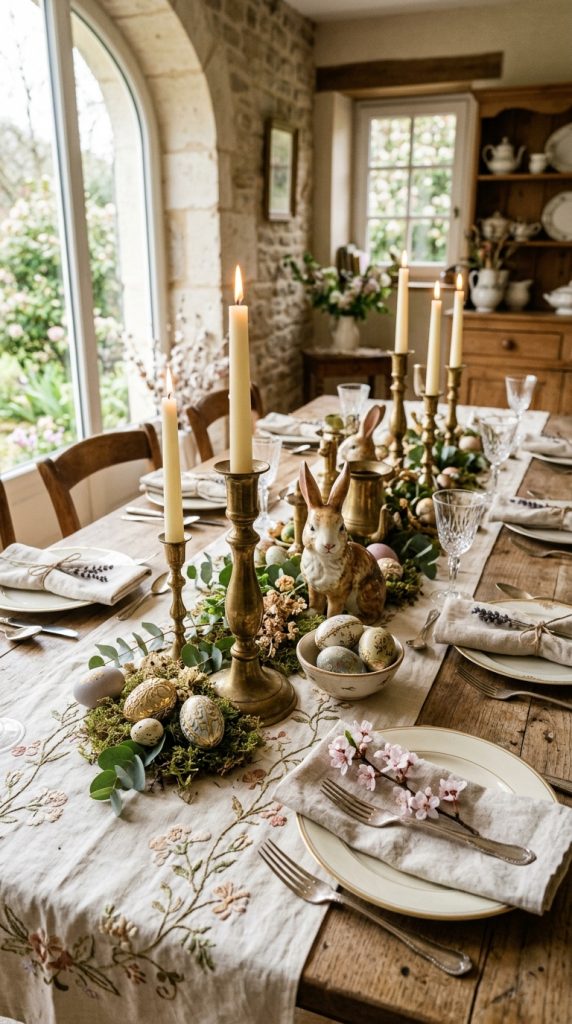
An Old World–inspired Easter table centerpiece feels timeless, romantic, and deeply nostalgic. Instead of modern plastic décor or brightly colored mass-produced accents, this style focuses on antique textures, muted tones, and heirloom-quality pieces that feel like they’ve been passed down for generations.
The key to this look is layering natural materials with delicate vintage elements. Think aged brass candlesticks, embroidered linen runners, soft moss, faded pastel eggs, and porcelain or ceramic bunnies placed thoughtfully along the table. Rather than creating one tight arrangement in the center, allow your display to gently flow across the length of the table. This creates a collected, European countryside feel.
Vintage Easter centerpieces shine because of their softness. Cream taper candles provide warm light. Old silver trays reflect gentle glows. Worn wood textures add rustic charm. Even a slightly chipped teacup filled with tiny blossoms contributes character and authenticity.
This style works beautifully for farmhouse, French country, cottagecore, or even neutral modern homes wanting warmth during spring. It’s less about perfection and more about mood. When styled properly, the table feels welcoming, layered, and story-driven — not staged.
Materials Needed
• Vintage or antique linen table runner
• Aged brass or silver candlesticks
• Cream taper candles
• Porcelain bunny or antique figurines
• Hand-painted wooden or glass eggs
• Moss or dried florals
• Optional: antique silver tray
Step-by-Step Styling
- Lay down a soft, embroidered or lace runner.
- Place candlesticks at varying heights along the center.
- Add a silver tray slightly off-center for layering.
- Position porcelain bunnies or antique eggs around candles.
- Fill small gaps with moss or dried florals.
- Light candles before photography or dinner for warmth.
Styling Tip
Avoid bright, modern florals. Choose muted tulips, baby’s breath, or dried lavender to maintain the antique mood.
6. Antique Egg Collection Shadow Box
Introduction
If you’ve collected vintage Easter eggs — whether they’re wooden, paper mâché, blown glass, or hand-painted — a shadow box display is one of the most elegant ways to showcase them. Instead of storing them away or scattering them loosely, a framed display preserves their beauty while turning them into art.
Shadow boxes create structure. They prevent clutter and elevate small delicate items into statement décor. The key is spacing. Each egg should have breathing room. Antique pieces deserve negative space so their hand-painted details and aged patina can shine.
Choose a shadow box with a neutral or linen backing. Avoid bold backgrounds that compete with the eggs. Arrange them symmetrically for a formal vintage feel, or slightly staggered for a collected look. You can also add tiny handwritten labels beneath each egg if you want a museum-style aesthetic.
This display works beautifully in entryways, dining rooms, hallways, or above mantels. It feels curated and heirloom-worthy rather than seasonal and temporary.

Materials Needed
• Deep shadow box frame
• Neutral linen or soft fabric backing
• Vintage Easter eggs
• Small adhesive mounts or museum putty
• Optional: tiny handwritten tags
Step-by-Step Styling
- Lay the shadow box flat before arranging.
- Test egg placement before securing.
- Keep equal spacing between pieces.
- Attach gently using museum-safe adhesive.
- Mount on wall at eye level.
Styling Tip
Group eggs by color tones (muted blues together, dusty pinks together) for a visually cohesive look.
7. Vintage Spring Mantel Display
Introduction
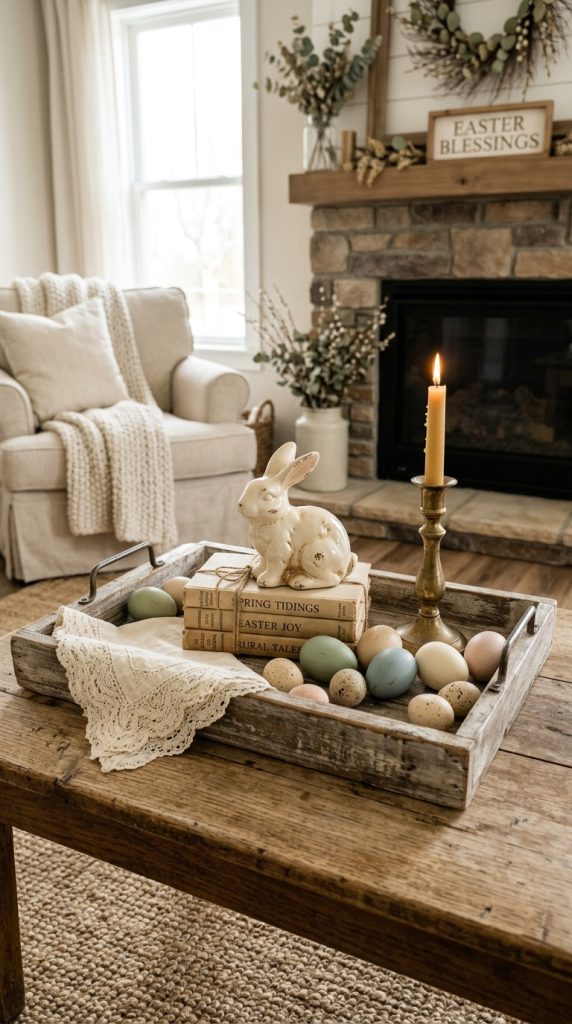
A fireplace mantel is the perfect stage for antique Easter décor because it naturally draws the eye. For a vintage spring look, the goal is soft layering — not heavy stacking. Think of the mantel as a horizontal canvas where height variation creates elegance.
Start with a large antique mirror or framed botanical print as your backdrop. Lean it against the wall for relaxed charm. In front of that, layer candlesticks, porcelain bunnies, small baskets, and antique books.
One beautiful vintage touch is incorporating old Easter postcards or Victorian rabbit prints. These can be clipped to twine or leaned in small frames. The faded paper tones enhance authenticity and add storytelling depth.
Balance is important. If you add height on one side (like tall candlesticks), balance the opposite side with stacked books or a small basket arrangement. The center can feature a glass cloche display or statement bunny figurine.
The overall feel should be romantic and slightly nostalgic — like stepping into a historic countryside cottage during spring.
Materials Needed
• Large antique mirror or framed art
• Vintage candlesticks
• Porcelain or ceramic bunnies
• Old books
• Small wicker baskets
• Optional: antique postcards
Step-by-Step Styling
- Lean large art or mirror as backdrop.
- Add tallest elements first (candlesticks).
- Layer medium pieces like bunnies and books.
- Fill small gaps with eggs or moss.
- Step back and adjust symmetry.
Styling Tip
Use warm light bulbs nearby to enhance the antique glow of brass and porcelain surfaces.
8. Rustic Farmhouse Antique Easter Tray Display
Introduction
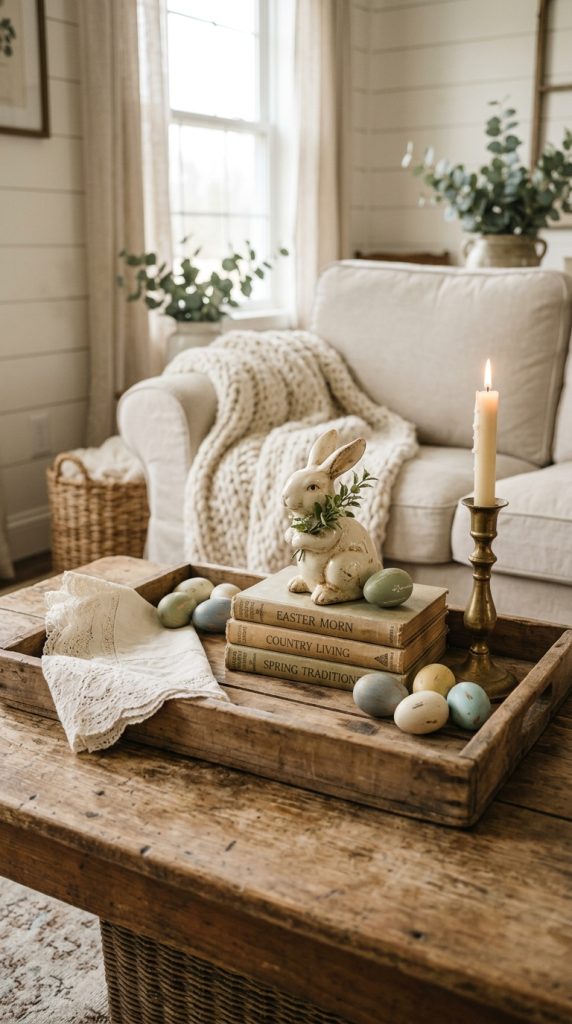
A rustic farmhouse tray display is one of the easiest ways to style antique Easter décor without overwhelming your space. The tray acts as a defined boundary, which makes even layered vintage pieces feel organized and intentional. This is especially helpful if you’re decorating coffee tables, kitchen islands, entry consoles, or sideboards.
The charm of this style lies in texture. Think weathered wood trays, chipped white paint finishes, soft linen napkins, and aged ceramic bunnies. Antique Easter décor pairs beautifully with rustic wood because both carry natural warmth and patina. Instead of trying to make everything look pristine, embrace imperfections — slight chips, faded paint, and uneven finishes enhance the authenticity.
Start with a wooden tray that has visible grain or a distressed finish. Layer a folded linen napkin or lace runner inside the tray. Add a small stack of antique books, then place a porcelain bunny on top. Include hand-painted eggs, a small bundle of dried lavender, and perhaps a brass candlestick for height variation.
Because the tray contains the décor, you can build a richer arrangement without it feeling chaotic. This setup is perfect for farmhouse, cottagecore, or neutral modern homes wanting subtle vintage charm.
Materials Needed
• Rustic wooden tray
• Vintage linen or lace fabric
• Porcelain or ceramic bunny
• Hand-painted or wooden eggs
• Small stack of antique books
• Brass or metal candlestick
• Dried florals or moss
Step-by-Step Styling
- Place tray on a flat surface (coffee table, island, console).
- Add folded linen to soften the base.
- Stack 2–3 antique books slightly off-center.
- Place bunny figurine on top of books.
- Scatter 3–5 eggs around the base.
- Add one vertical element like a candlestick.
- Adjust spacing to keep breathing room.
Styling Tip
Stick to one dominant tone (cream, sage, dusty blue) and let smaller accents complement it. Too many colors can distract from the antique mood.
9. Cottagecore Easter Tea Cart Setup
Introduction
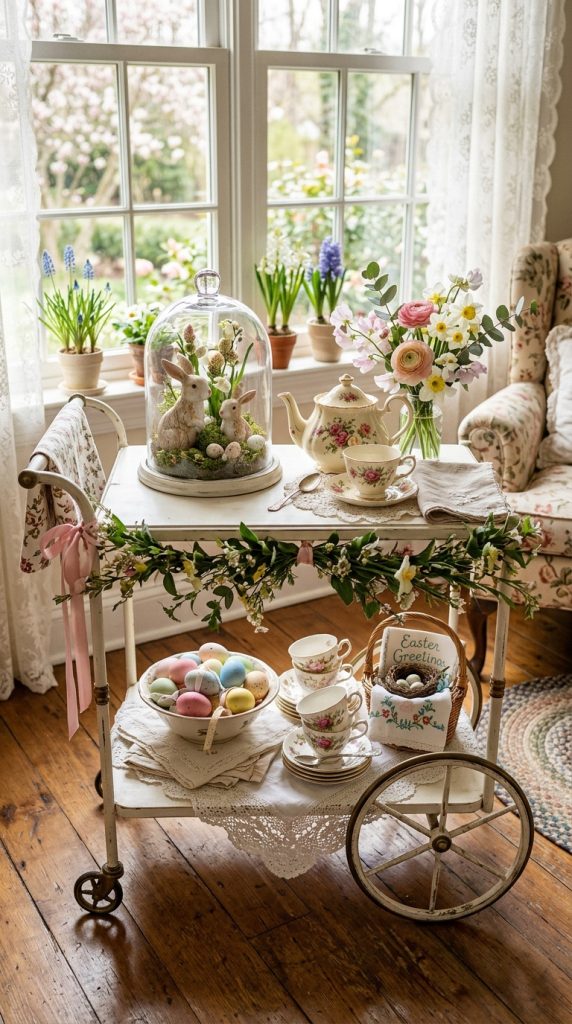
A vintage tea cart styled for Easter creates a dreamy, cottagecore-inspired display that feels whimsical yet elegant. If you have an antique bar cart, rolling tea trolley, or even a small vintage side table with wheels, this idea adds layered charm while remaining functional.
Tea carts naturally create levels, which makes them perfect for styling antique décor. The top tier can hold a statement piece — like a glass cloche bunny display or a vintage floral teapot filled with soft spring blooms. The second shelf can hold baskets of pastel eggs, folded embroidered linens, or small porcelain figurines.
This setup feels romantic and slightly storybook-like. Imagine it placed near a window with soft natural light streaming across glassware and porcelain. Add lace runners draped slightly over the edge to create softness. Incorporate delicate china cups, small cake stands, or silver serving trays for that European countryside aesthetic.
The beauty of a tea cart is mobility. You can move it from dining room to living room, making it both decorative and versatile for Easter gatherings. It becomes a focal point without permanently altering your room’s layout.
This styling idea works beautifully in feminine vintage homes, cottagecore spaces, French country interiors, or anyone wanting a soft nostalgic vibe.
Materials Needed
• Vintage tea cart or bar trolley
• Lace or embroidered linens
• Porcelain bunnies
• Glass cloche or floral teapot
• Antique cups or small plates
• Pastel eggs
• Small floral arrangement
Step-by-Step Styling
- Drape lace fabric across top tier.
- Place your main focal piece in the center.
- Add medium-sized décor items around it.
- Style lower tier with baskets or stacked linens.
- Leave small open areas for visual balance.
- Roll near a window for best lighting.
Styling Tip
Keep it airy. Tea carts look most beautiful when they feel light and romantic rather than packed full.
10. Heirloom Easter Entryway Display
Introduction
Your entryway sets the tone for your entire home. Styling antique Easter décor here creates an immediate feeling of warmth, nostalgia, and seasonal elegance. Instead of modern signage or bright plastic decorations, choose heirloom-inspired pieces that feel personal and meaningful.
Start with a vintage console table. Above it, hang an antique mirror or lean a framed botanical rabbit print. This becomes your anchor. On the table surface, layer a soft linen runner. Add a wicker basket filled with antique eggs or pastel florals.
One side of the table can hold a taller element like brass candlesticks or a floral arrangement in an aged ceramic pitcher. The other side can feature stacked antique books topped with a porcelain bunny. Balance is key — avoid perfect symmetry, but maintain visual harmony.
If space allows, place an old wooden crate or woven basket underneath the console filled with folded quilts or extra linens. This adds texture and height variation while keeping the antique theme consistent.
Because entryways are high-traffic areas, avoid fragile overloading. Choose sturdy antique pieces and secure anything delicate.
When guests walk in and see this display, it feels like stepping into a timeless spring celebration rather than a temporary holiday setup.

Materials Needed
• Vintage console table
• Antique mirror or framed print
• Linen runner
• Wicker basket
• Porcelain bunny
• Brass candlesticks
• Antique books
• Ceramic pitcher with florals
Step-by-Step Styling
- Position mirror or artwork first.
- Lay down linen runner.
- Add tallest elements on one side.
- Stack books and bunny opposite for balance.
- Place basket slightly forward.
- Adjust spacing to avoid crowding.
Styling Tip
Use warm-toned lighting in the entryway to enhance brass, wood, and porcelain finishes.