
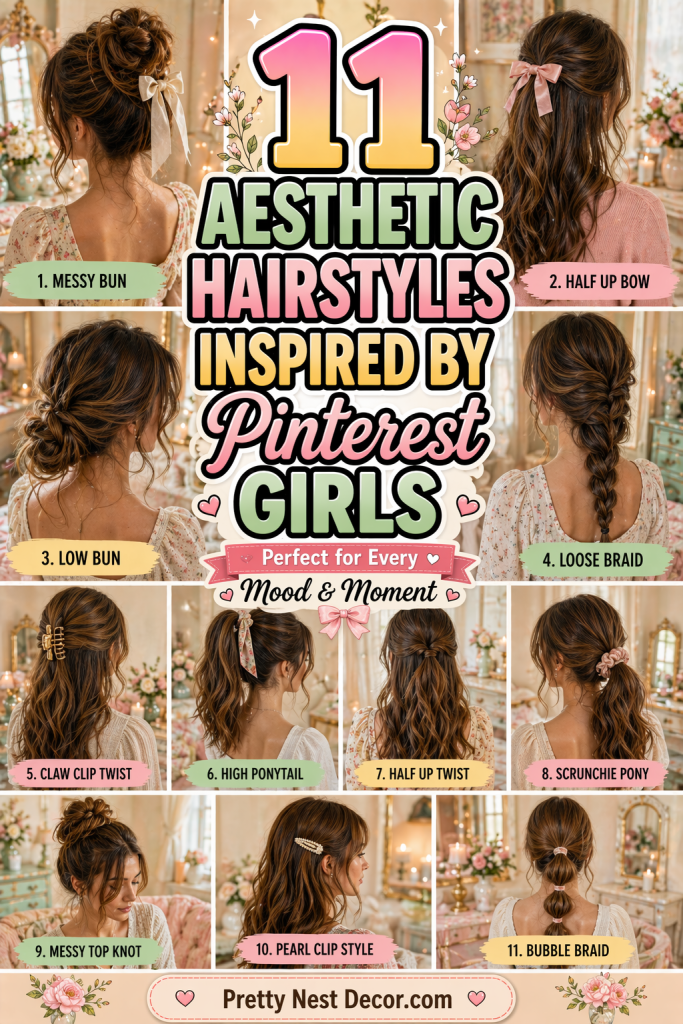
Pinterest has completely changed the way people approach hairstyles. It’s no longer just about looking “done” or following traditional styles—it’s about creating a vibe. When you scroll through Pinterest, you’ll notice something very specific: the hairstyles that stand out are not always the most complicated ones. In fact, many of them are surprisingly simple, but they carry a certain aesthetic—soft, effortless, slightly imperfect, yet still intentional.
Pinterest didn’t just make hairstyles popular—it changed the standard of what “good hair” even looks like. Before, the focus was on perfection: smooth blowouts, tight curls, flawless buns, everything controlled and in place. Now, if you actually look at what trends on Pinterest, it’s the opposite. The most saved, shared, and recreated hairstyles are soft, slightly undone, natural-looking, and most importantly—effortless.
But here’s where most people get it wrong.
They see a Pinterest hairstyle and assume it’s effortless because the person in the photo looks relaxed. In reality, they try to recreate it by following strict steps, using too many tools, or forcing their hair into something unnatural. That’s why their result looks stiff, overdone, or completely different from the reference image. The problem is not skill—it’s misunderstanding the aesthetic.
Pinterest hairstyles are not about perfection. They’re about controlled imperfection.
That means the hair still has shape, direction, and intention—but it doesn’t look forced. A few loose strands are not mistakes—they’re part of the design. Slight volume at the crown is not random—it creates balance. Even something as simple as where your ponytail sits on your head changes the entire look. These small details are what separate a basic hairstyle from something that actually looks aesthetic.
Another thing people ignore is how much these styles rely on natural texture. Most Pinterest-inspired looks are built around what your hair already does—whether that’s straight, slightly wavy, thick, or fine. Instead of fighting your hair type, these styles enhance it. That’s why they feel easy and wearable. When you try to completely change your natural texture every day, styling becomes time-consuming and frustrating. When you work with it, everything becomes faster and looks more authentic.
Repetition is another hidden problem. Most people rotate between the same few hairstyles every day—not because they want to, but because they don’t know simple variations. The difference between a basic look and an aesthetic one is often just a small adjustment. A low ponytail becomes Pinterest-worthy when you soften the front and adjust placement. A basic bun becomes aesthetic when you loosen it slightly and allow movement. You don’t need ten new hairstyles—you need smarter versions of the ones you already do.
There’s also a strong connection between hairstyle and overall appearance that people underestimate. A hairstyle doesn’t exist on its own—it works with your outfit, your face shape, and the mood you’re going for. That’s why the same hairstyle can look completely different depending on how it’s styled. A sleek low bun can feel elegant or strict depending on how tight it is. Loose waves can look messy or intentional depending on how they’re shaped. Once you understand this, you stop copying and start adjusting.
Time is another reality check. Most people don’t have 30–40 minutes every day to style their hair, and honestly, you shouldn’t need that much time. The reason Pinterest hairstyles are so popular is because many of them are quick. They’re designed for real routines—school, college, work, casual outings. If a style is too complicated, it doesn’t survive daily life. The best hairstyles are the ones that look good and stay in place without constant fixing.
Another factor that separates aesthetic hairstyles from basic ones is movement. Hair that looks too stiff or overly sprayed loses that soft Pinterest feel. Natural movement—slight bounce, soft layers, loose ends—makes the hairstyle look alive. That’s why overusing hairspray or making everything too tight usually ruins the look instead of improving it.
And then there’s confidence, which people don’t talk about enough. When your hair looks put together—even in a simple way—you carry yourself differently. You stop adjusting it every few minutes. You feel more comfortable, more relaxed, and more in control of your appearance. That’s the real benefit of these hairstyles—they reduce effort while improving how you feel.
In this guide, you’re going to explore 11 aesthetic hairstyles inspired by Pinterest girls that are actually practical, wearable, and adaptable. These are not overcomplicated tutorial styles that only work in perfect conditions. These are real-life hairstyles that work on busy mornings, slightly messy hair, and normal routines.
Each one focuses on structure, placement, and small details that make a big difference. You’ll understand not just how to do them, but why they look good—so you can adjust them based on your own hair type, length, and situation.
Because copying a Pinterest hairstyle once won’t change anything.
Understanding how they work will.
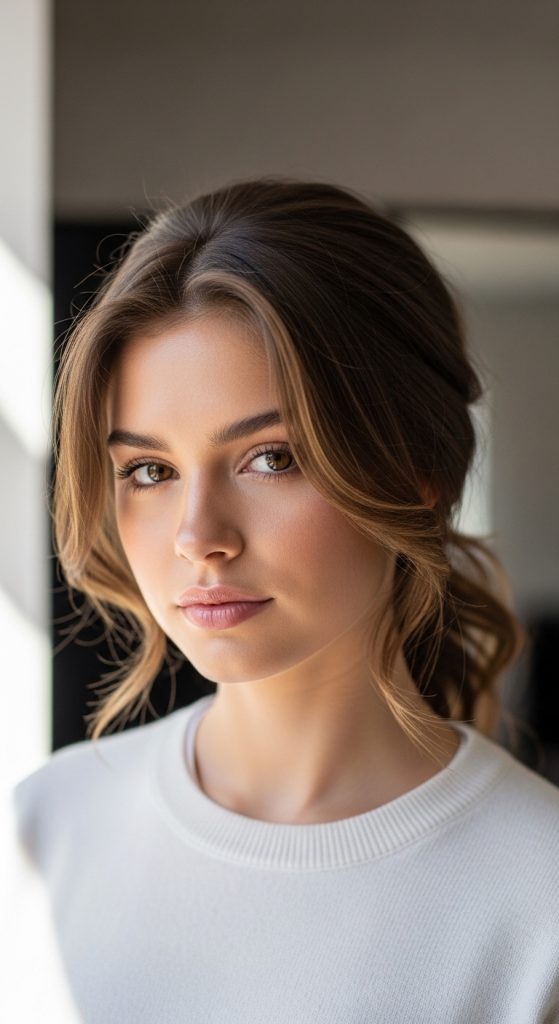
1. Soft Low Ponytail with Face-Framing Layers (Effortless Everyday Aesthetic)
This is one of the most common Pinterest hairstyles—and also one of the most poorly executed. Most people turn it into a basic tight ponytail, which completely kills the aesthetic. The difference between a normal ponytail and a Pinterest-style ponytail is not the style itself—it’s the softness and placement.
What it is
A low-positioned ponytail tied near the nape of the neck, with loose face-framing strands and slight volume at the crown. It looks relaxed, natural, and subtly styled without trying too hard.
This hairstyle works because it balances structure (tied hair) with softness (loose front pieces).
How to implement it (practical steps)
Start with dry or slightly textured hair.
- Gently brush your hair back without flattening it completely
- Create slight volume at the crown by lifting hair with your fingers
- Tie a low ponytail at the nape (not too tight)
- Pull out a few thin strands around your face
- Slightly loosen the ponytail by tugging sections gently
- Optional: wrap a small section of hair around the elastic for a cleaner finish
If your hair is very straight, add a little texture or light waves before tying.
If your hair is thick, keep front pieces slightly longer for better framing.
Best for
- School, college, or daily wear
- Medium to long hair
- Straight or slightly wavy textures
- Quick, low-effort styling
This works best when you want something simple but still put-together.
Pro tip
Don’t center the part too perfectly. A slightly off-center or soft middle part makes the look more natural.
Mistake to avoid
Don’t pull the ponytail too tight. That removes softness and makes it look harsh instead of aesthetic.
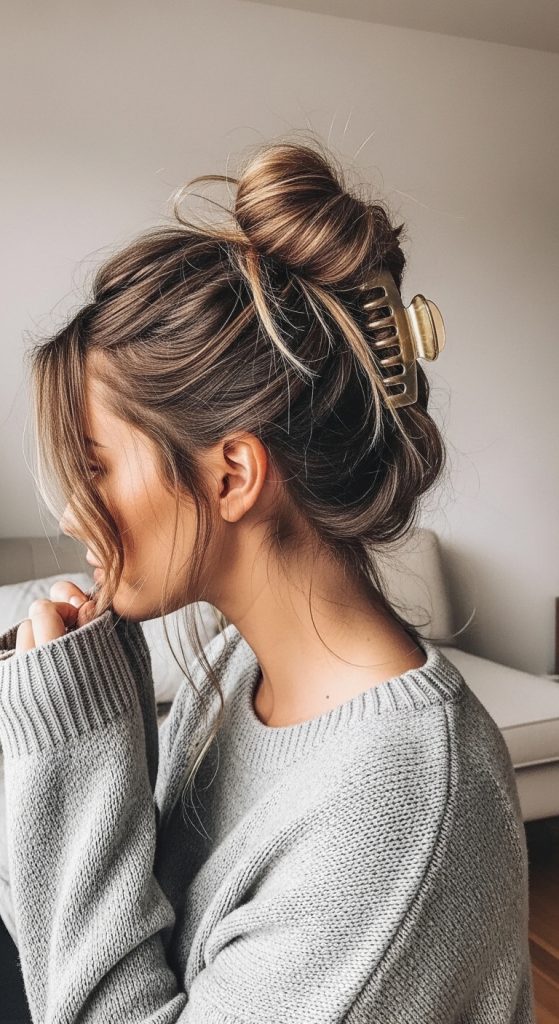
2. Messy Claw Clip Twist (Casual Pinterest Girl Staple)
If there’s one hairstyle that defines Pinterest girls, it’s the claw clip twist. But again, most people either make it too neat or too messy. The key is controlled looseness.
What it is
A twisted updo secured with a claw clip, leaving some ends and front pieces loose. It creates a relaxed, casual look that still feels styled and intentional.
It’s quick, practical, and very on-trend.
How to implement it (practical steps)
Start with natural or slightly messy hair.
- Gather your hair loosely at the back
- Twist it upward (not tightly)
- Fold the twist and secure it with a claw clip
- Let the ends stick out slightly at the top or side
- Pull out a few front strands for softness
- Adjust volume by gently loosening the twist
If your hair is long, use a larger clip.
If your hair is fine, twist less tightly for more volume.
Best for
- Lazy days or quick styling
- Medium to long hair
- Casual outings, home, or errands
- Low-effort aesthetic looks
This works best when you want something fast but still stylish.
Pro tip
Tilt the twist slightly to one side instead of centering it perfectly. It creates a more relaxed, natural look.
Mistake to avoid
Don’t slick all your hair back. Without loose strands, the style looks too strict and loses its Pinterest vibe.
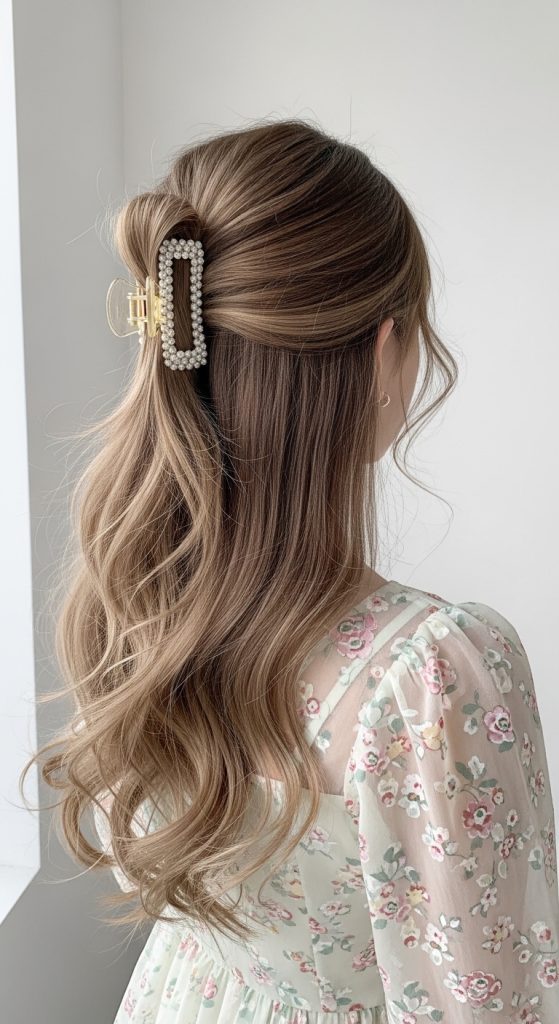
3. Half-Up Mini Claw Clip Style (Soft Feminine Look)
This is one of the easiest ways to upgrade open hair without fully tying it. It gives structure while keeping the softness of loose hair.
What it is
A half-up hairstyle where the top section of hair is clipped back using a small claw clip, while the rest of the hair remains open. It creates volume at the top and keeps hair away from the face.
It’s soft, feminine, and very versatile.
How to implement it (practical steps)
Start with open hair.
- Take a small section from the crown area
- Gently pull it back without flattening volume
- Secure it with a mini claw clip
- Let the rest of the hair fall naturally
- Pull out a few front strands if needed
- Adjust the top section for height and softness
If your hair is flat, tease the crown slightly before clipping.
If your hair is thick, use a stronger clip to hold it in place.
Best for
- Medium to long hair
- Soft, romantic everyday looks
- School, casual outings, or light events
- People who prefer open hairstyles
This works best when you want to keep your hair down but still styled.
Pro tip
Use a neutral or pastel-colored clip to match the aesthetic vibe.
Mistake to avoid
Don’t take too much hair in the top section. It should feel light and lifted, not heavy or pulled back too far.
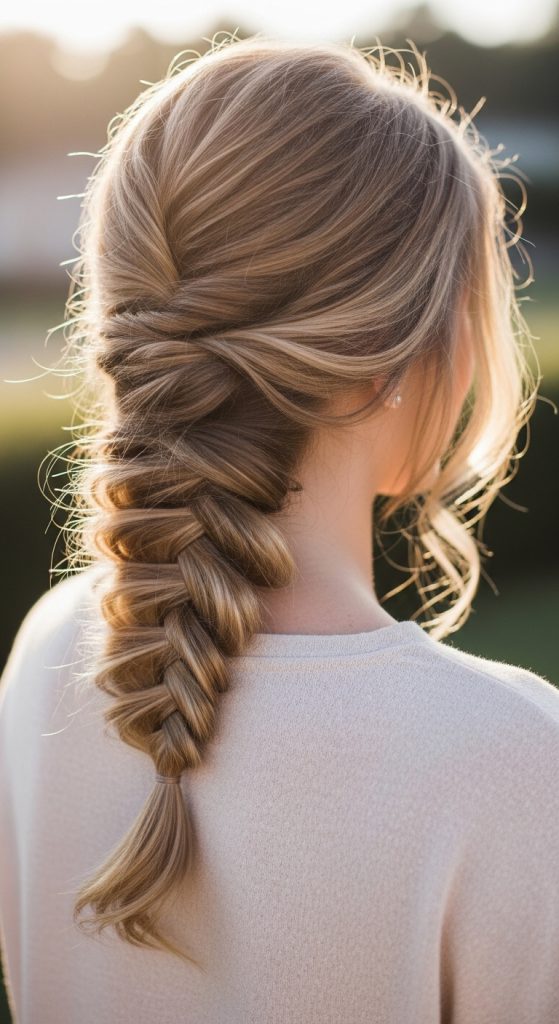
4. Loose Side Braid with Soft Pull-Apart Texture (Romantic Everyday Style)
Most people think of braids as tight and neat, but that’s exactly what makes them look outdated. The Pinterest version of a braid is softer, slightly undone, and shaped to add volume instead of control.
What it is
A low side braid that sits over one shoulder, gently loosened to create width and softness. It’s not about perfect weaving—it’s about texture and shape.
This hairstyle works because it adds visual volume even if your hair is thin.
How to implement it (practical steps)
Start with slightly textured or day-old hair.
- Sweep all your hair to one side (left or right, choose your better side)
- Begin a simple three-strand braid near your shoulder
- Braid loosely instead of tightly
- Secure the end with a thin elastic
- Gently pull apart each section of the braid to add volume
- Pull out a few face-framing strands for softness
If your hair is very straight, lightly curl or texturize it first.
If your hair is thick, loosen the braid more to avoid heaviness.
Best for
- Medium to long hair
- Soft, feminine looks
- Casual outings or relaxed events
- Slightly textured or wavy hair
This works best when you want something styled but still relaxed.
Pro tip
Don’t pull all sections equally—focus more on the outer edges of the braid for a fuller look.
Mistake to avoid
Don’t braid too tight at the start. If the base is tight, you won’t be able to loosen it properly later.
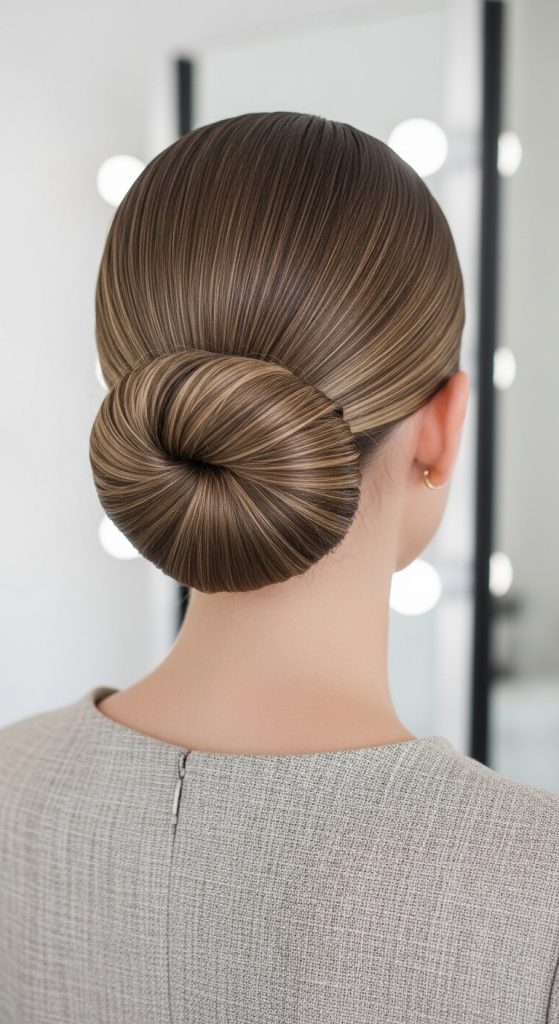
5. Sleek Low Bun with Center Part (Clean Minimal Aesthetic)
This is the opposite of messy styles. It’s sharp, controlled, and polished—but still modern when done correctly. The problem is most people either make it too tight or too flat, which makes it look harsh.
What it is
A low bun positioned at the nape of the neck with a clean center part and smooth finish. It creates a balanced, minimal, and slightly elegant look.
It’s simple, but it depends heavily on precision.
How to implement it (practical steps)
Start with smooth, detangled hair.
- Create a clean center part
- Comb hair back evenly without bumps
- Gather hair into a low ponytail at the nape
- Twist the ponytail into a bun and secure it
- Smooth down any flyaways lightly
- Optional: leave very thin front strands for softness
If your hair is frizzy, use a small amount of serum.
If your hair is fine, avoid over-flattening to keep some volume.
Best for
- Formal or semi-formal looks
- Straight or smooth hair
- Minimalist style lovers
- Clean, polished aesthetics
This works best when you want a neat and put-together appearance.
Pro tip
Keep the bun slightly loose instead of ultra-tight. It keeps the look modern instead of strict.
Mistake to avoid
Don’t use too much product. Overly shiny or stiff hair ruins the natural clean look.
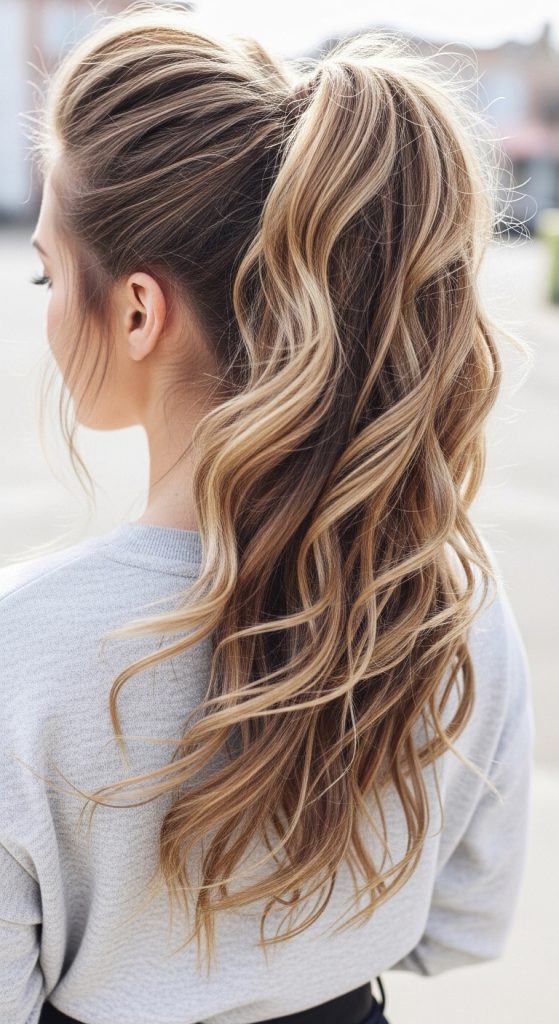
6. High Ponytail with Soft Waves (Lifted & Fresh Look)
This is a more energetic, lifted version of everyday styling. It adds height and movement, making your overall look feel more awake and styled.
What it is
A high ponytail placed near the crown, combined with soft waves or curls in the length. It creates volume at the top and movement at the ends.
It’s simple but visually impactful.
How to implement it (practical steps)
Start with slightly textured or pre-curled hair.
- Brush hair upward toward the crown
- Tie a high ponytail securely (but not overly tight)
- Add soft waves to the ponytail length if needed
- Wrap a small section of hair around the elastic
- Gently loosen the crown area slightly for softness
- Pull out a few front strands if desired
If your hair is flat, tease the crown slightly before tying.
If your hair is thick, keep waves loose to avoid heaviness.
Best for
- Medium to long hair
- Active or busy days
- Casual outings or school
- People who want a lifted look
This works best when you want energy and volume.
Pro tip
Tilt your head slightly back while tying the ponytail—it helps create natural lift without pulling too tight.
Mistake to avoid
Don’t make the ponytail too tight and flat. Without softness, it looks sporty instead of aesthetic.
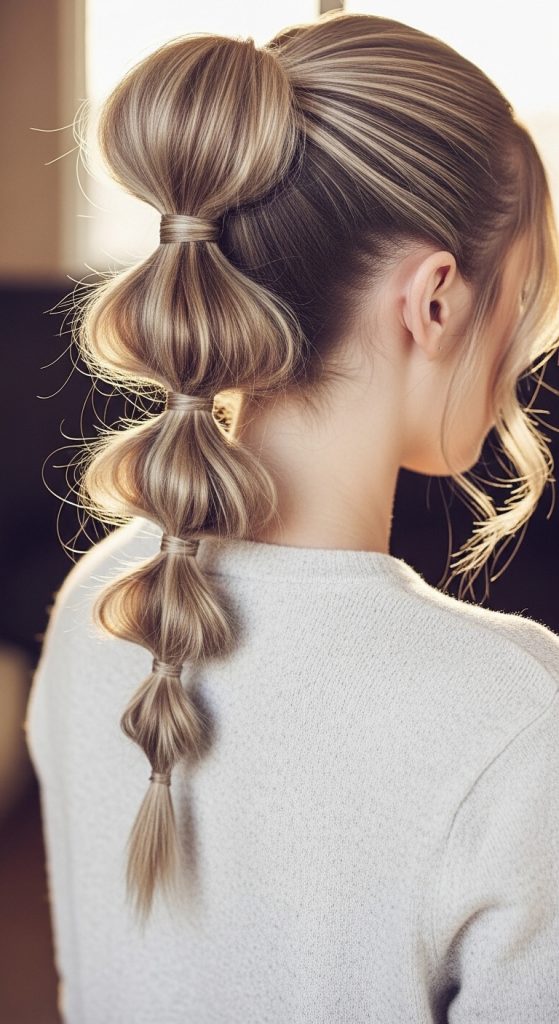
7. Bubble Ponytail (Soft Volume Statement Style)
This looks complicated at first, but it’s actually one of the easiest ways to make a basic ponytail look styled. The problem is most people either space it wrong or pull it too tight, which ruins the soft aesthetic.
What it is
A ponytail divided into multiple “bubble” sections using elastics, gently pulled apart to create round, voluminous shapes. It adds structure while still looking playful and modern.
It works because it breaks the straight line of a ponytail into softer, fuller sections.
How to implement it (practical steps)
Start with a mid or high ponytail.
- Tie your ponytail at your preferred height
- Add another elastic a few inches below the first
- Repeat this down the length (3–5 sections depending on hair length)
- Gently pull each section outward to create a rounded “bubble”
- Keep spacing consistent between each section
- Pull out a few front strands to soften the overall look
If your hair is thin, keep bubbles smaller and closer together.
If your hair is thick, space them out slightly for better balance.
Best for
- Medium to long hair
- Casual, fun, or trendy looks
- School or outings
- Days when you want something different but easy
This works best when you want a statement style without effort.
Pro tip
Lightly loosen the base of the ponytail before creating bubbles—it helps the whole style feel softer and less stiff.
Mistake to avoid
Don’t pull the bubbles unevenly. Irregular shapes make the style look messy instead of intentional.
8. Soft Beach Waves with Middle Part (Classic Pinterest Hair)
This is probably the most recognizable Pinterest hairstyle—and also the one most people overdo. The goal is not perfect curls. It’s natural, slightly undone waves.
What it is
Loose, flowing waves paired with a soft middle part, creating a relaxed and balanced look. It’s simple, but it works with almost every outfit and occasion.
The key is movement, not perfection.
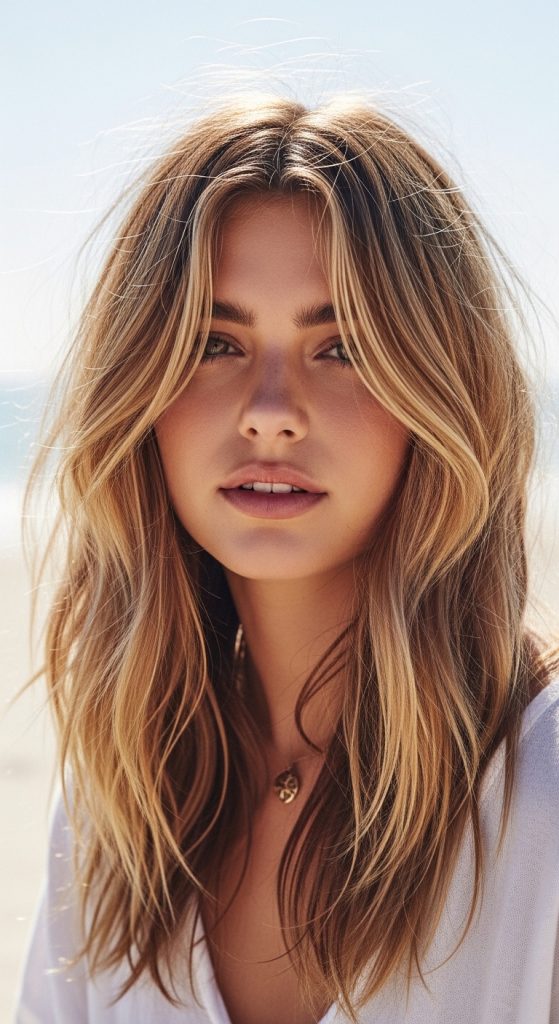
How to implement it (practical steps)
Start with dry hair.
- Create a soft middle part (not perfectly sharp)
- Use a curling tool or braid method to create loose waves
- Focus on mid-lengths, not the roots
- Leave the ends slightly straighter for a natural finish
- Run fingers through waves to break them up
- Add light texture spray if needed
If your hair is naturally wavy, enhance instead of reshaping it.
If your hair is straight, keep curls loose—not tight spirals.
Best for
- Medium to long hair
- Everyday wear or outings
- Soft, feminine aesthetic
- All face shapes
This works best when you want effortless open hair that still looks styled.
Pro tip
Alternate curl directions slightly to avoid uniform patterns—it makes the waves look more natural.
Mistake to avoid
Don’t curl from the roots. It creates a heavy, overdone look instead of soft movement.
9. Low Twisted Bun with Loose Strands (Soft Elegant Style)
This is a relaxed version of a classic bun. It looks elegant, but not too formal, which makes it perfect for both everyday and slightly dressed-up moments.
What it is
A low bun created by twisting sections of hair and pinning them loosely at the nape, with soft strands left out around the face. It combines structure with softness.
It feels intentional without looking rigid.
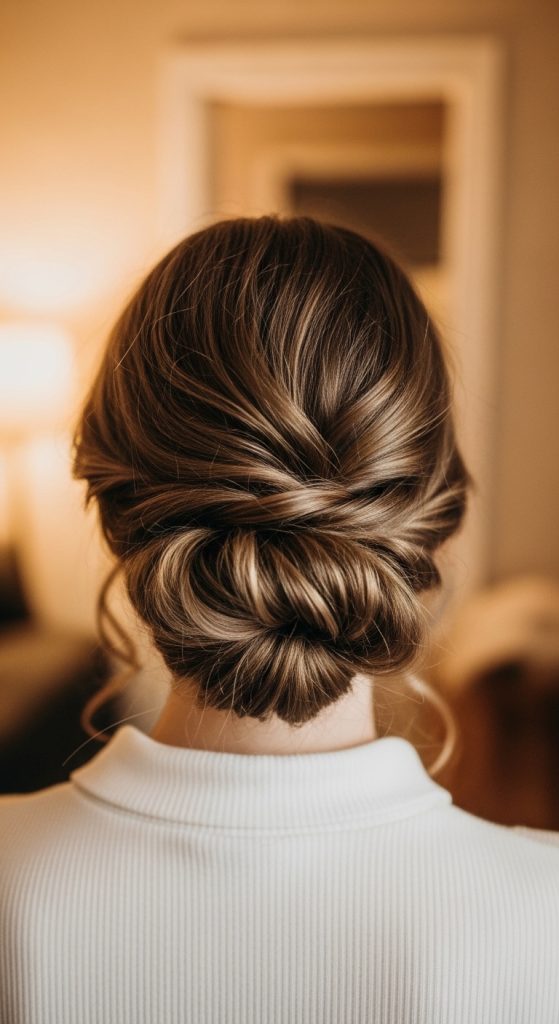
How to implement it (practical steps)
Start with slightly textured hair.
- Part your hair softly (middle or slightly off-center)
- Divide hair into two or more sections
- Twist each section loosely toward the back
- Combine and secure into a low bun
- Pull out a few front strands for softness
- Loosen the bun slightly for volume
If your hair is fine, tease lightly before twisting.
If your hair is thick, keep twists looser to avoid bulk.
Best for
- Medium to long hair
- Semi-formal or casual elegant looks
- Events, dinners, or outings
- Soft aesthetic styles
This works best when you want something polished but not strict.
Pro tip
Use pins instead of tight elastics—it gives more control over shape and softness.
Mistake to avoid
Don’t twist hair too tightly. Tight twists remove the relaxed feel and make it look overly formal.
10. Half-Up High Pony (Lifted Crown, Soft Lengths)
This is where most people go wrong—they either make it look like a kids’ hairstyle or pull too much hair, which ruins the balance. Done correctly, this style gives height at the crown while keeping the softness of open hair.
What it is
A half-up hairstyle where the top section is tied into a small high ponytail, while the rest of the hair stays loose. It creates lift at the top and movement through the lengths.
It works because it combines structure (top section) with flow (open hair).
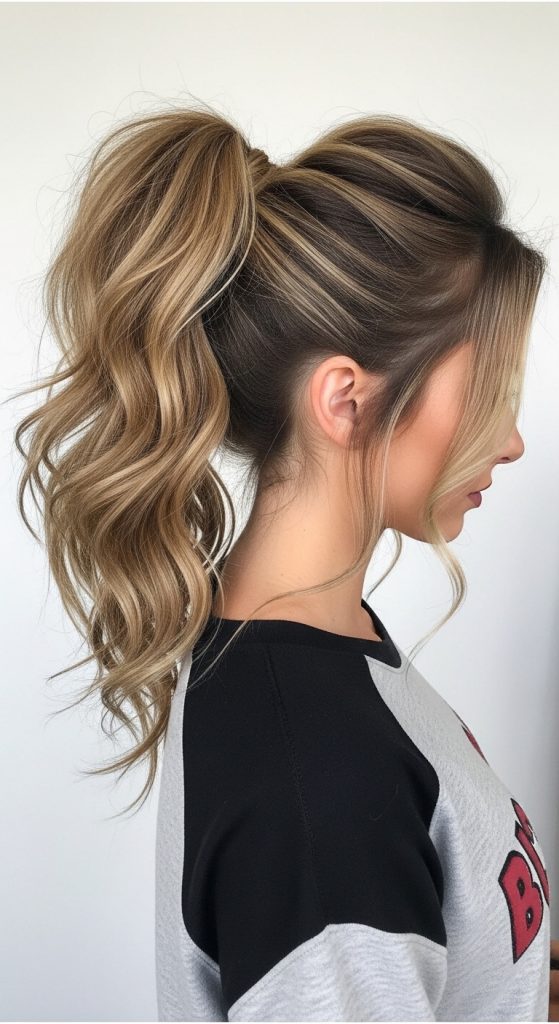
How to implement it (practical steps)
Start with dry or lightly textured hair.
- Take a section from the crown (not too wide)
- Lift it upward slightly to create volume
- Tie it into a small high ponytail
- Keep the lower hair loose and natural
- Add soft waves to the lengths if needed
- Pull out a few front strands to soften the face
If your hair is flat, tease the crown slightly before tying.
If your hair is thick, keep the top section smaller to avoid heaviness.
Best for
- Medium to long hair
- Casual outings or school
- People who like open hairstyles with structure
- Quick styling with a noticeable upgrade
This works best when you want volume without tying all your hair.
Pro tip
Don’t place the ponytail too high. Slightly below the crown looks more natural and less childish.
Mistake to avoid
Don’t take too much hair in the top section. It should feel light, not like half your head is pulled back.
11. Braided Front Strands with Open Hair (Pinterest Girl Signature Look)
This is one of the most recognizable Pinterest hairstyles right now. It’s extremely simple, but the placement and proportion matter more than the braid itself.
What it is
Two thin braids created from the front sections of your hair, while the rest remains open. It adds detail to otherwise simple hair without changing the overall style.
It works because it adds interest without effort.
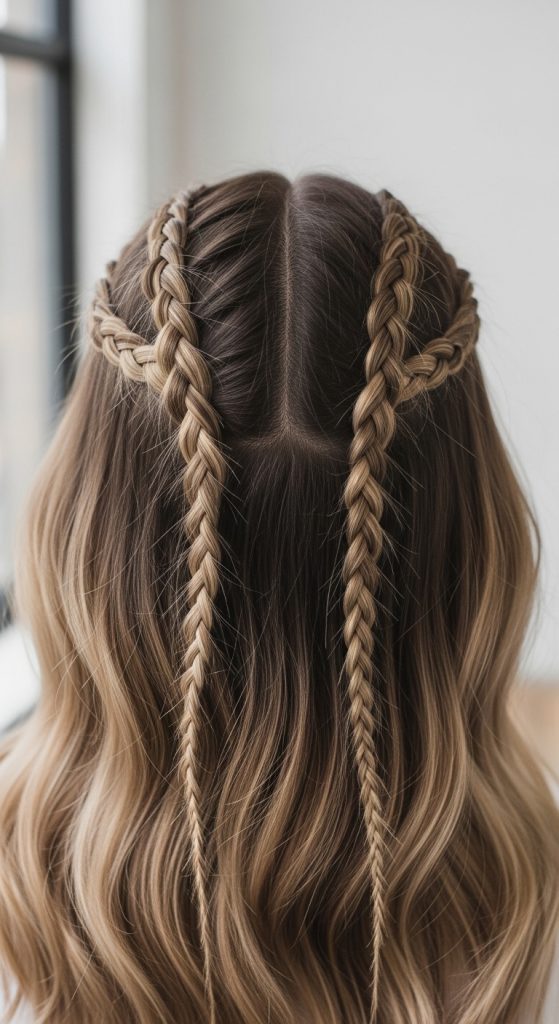
How to implement it (practical steps)
Start with open hair.
- Take a small front section from one side
- Create a thin, simple braid
- Secure it with a tiny elastic
- Repeat on the other side
- Let the rest of your hair fall naturally
- Add light waves if you want extra texture
If your hair is straight, keep braids tight but thin.
If your hair is wavy, keep braids slightly loose to match texture.
Best for
- Medium to long hair
- Casual, trendy looks
- School, hangouts, or photos
- Minimal effort styling
This works best when you want a small detail that changes your whole look.
Pro tip
Keep braids thin and subtle. The goal is detail, not dominance.
Mistake to avoid
Don’t make thick or uneven braids. It shifts the look from aesthetic to messy very quickly.