
The butterfly haircut isn’t just another layered trend—it’s the reason long hair is dominating again in 2026. After years of blunt cuts and minimal layers, people are moving back toward volume, movement, and softness. But instead of going back to heavy 90s styles, the modern butterfly cut gives you that same bounce in a much more wearable, lighter way.
At first glance, it looks like a simple layered haircut. But if you actually understand what makes it different, you’ll realize why it’s trending everywhere—from Pinterest to TikTok to salons worldwide.
The butterfly haircut is built on one core idea: you get the look of short, voluminous hair without actually cutting your length. It uses a mix of shorter face-framing layers and longer layers underneath to create a “two-level” effect. That’s why when it’s styled, it looks bouncy and full around the face, but still long and flowy overall.
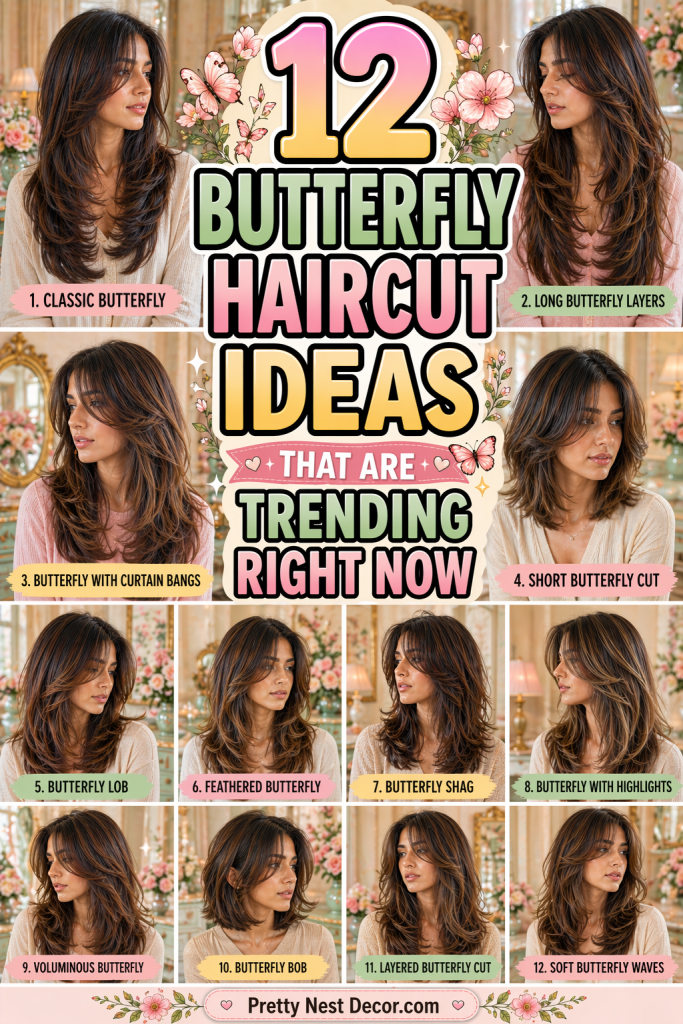
This is exactly what most people want—but don’t know how to ask for.
The problem with traditional long hair is that it often looks flat, heavy, and lifeless, especially if you don’t style it daily. On the other hand, short hair gives volume but removes length, which many people aren’t ready for. The butterfly cut sits perfectly in between. It solves both problems at once by adding movement at the top while keeping length at the bottom.
That’s one of the main reasons it exploded in popularity. Social media didn’t just make it viral—it made people realize they don’t need drastic changes to look different. A strategic cut can completely change how your hair behaves.
Another reason this trend is dominating right now is versatility. This isn’t a one-style haircut. Depending on how the layers are cut and styled, it can look soft and natural, dramatic and voluminous, or sleek and polished.That’s why two people can have the same “butterfly cut” but look completely different.
But here’s where most people get it wrong.
They think the haircut alone creates the look.
It doesn’t.
The butterfly haircut is heavily dependent on styling awareness. Without proper styling—even basic blow-drying—the layers can fall flat and lose their signature shape. That’s why some people love it and others feel disappointed after getting it. The cut gives you potential. The styling brings it to life.
Another mistake is not understanding layering depth. The butterfly cut isn’t just “long layers.” It requires intentional contrast between short and long sections. The shortest layers usually start around the chin or cheekbone, while the longer layers maintain the length If this contrast is too subtle, the haircut looks basic. If it’s too extreme, it becomes hard to manage.
Balance is everything.
Face shape also plays a role. One of the reasons this haircut is trending so strongly is because it flatters almost everyone when adjusted correctly. The face-framing layers highlight cheekbones and jawlines, while the longer layers soften the overall look. But if the layers are not customized, the result can feel off instead of flattering.
There’s also a lifestyle factor people ignore.
The butterfly haircut is popular because it fits modern routines. People don’t want styles that require an hour every morning. They want something that looks styled even with minimal effort. This cut does that—especially for naturally wavy or thick hair, where the layers fall into place more easily.
At the same time, it’s not completely “low maintenance.” To keep the shape fresh, it still needs regular trims and occasional styling. That’s the trade-off: you get movement and volume, but you need to maintain it.
Another reason this trend is everywhere right now is nostalgia. The butterfly cut blends elements from the 70s feathered styles and 90s layered blowouts, but updates them for modern aesthetics. That mix of familiar and fresh is exactly what makes trends stick.
It feels new—but also safe.
And that’s why so many people are choosing it. It’s not a risky transformation. It’s a smart upgrade.
In this guide, you’re going to explore 12 butterfly haircut ideas that are trending right now—not just visually, but practically. These are not random variations. Each idea shows how the same haircut can be adjusted based on hair type, length, and styling preference.
You’ll understand:
- How to choose the right version for your face shape
- How layering depth changes the final look
- How to avoid common mistakes that ruin the effect
- And how to make the cut actually work in real life, not just in photos
Because getting a butterfly haircut is easy.
Getting it to look right—that’s where most people fail.
And that’s exactly what you’re about to fix.
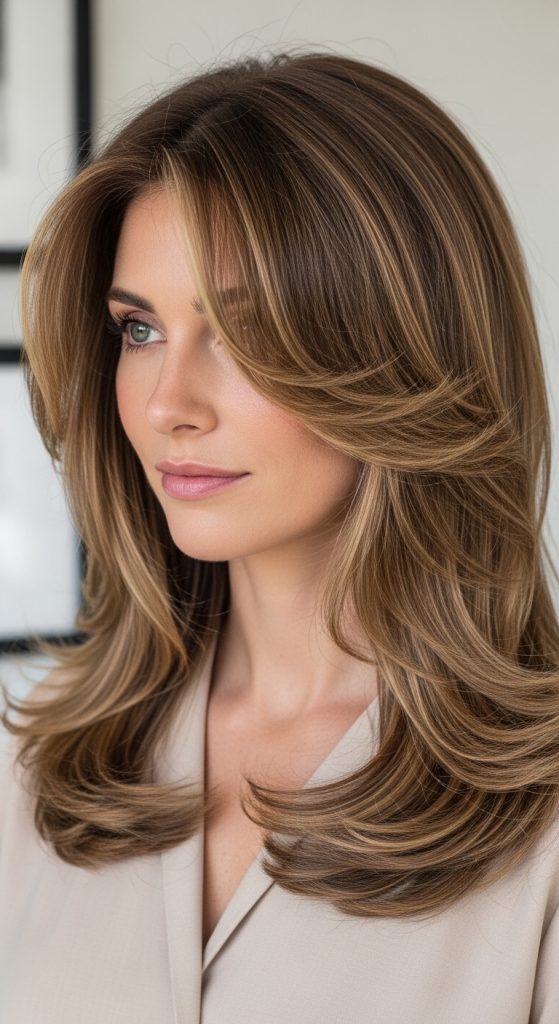
1. Classic Long Butterfly Cut with Soft Face Layers (Balanced & Wearable)
This is the version most people think they’re getting—but very few actually do. The difference between a basic layered cut and a real butterfly cut comes down to layer placement and contrast. If your stylist doesn’t understand that, you’ll walk out with something flat and forgettable.
What it is
A long-length butterfly haircut where the shortest layers begin around the chin or slightly below, blending gradually into long, flowing ends. It creates a soft frame around the face while keeping the overall length intact.
This is the most balanced version—nothing too dramatic, nothing too subtle.
How to implement it (practical steps)
You don’t just say “butterfly cut” and hope for the best. You need to guide it.
- Ask for face-framing layers starting at chin level
- Request visible contrast between top and bottom layers (not too blended)
- Keep overall length below shoulders or mid-back
- Avoid thinning scissors at the ends—they remove the fullness
- Ask for soft, blended ends—not choppy cuts
- Style with a round brush or soft waves to activate the layers
If your stylist blends everything too much, the butterfly effect disappears.
Best for
- Medium to long hair
- Beginners trying butterfly cut for the first time
- Straight to slightly wavy hair
- People who want a safe but noticeable upgrade
This works best when you want movement without losing length.
Pro tip
Blow-dry the front layers away from your face. That’s what creates the signature “butterfly bounce.”
Mistake to avoid
Don’t ask for “long layers only.” That gives you a flat haircut with no dimension.
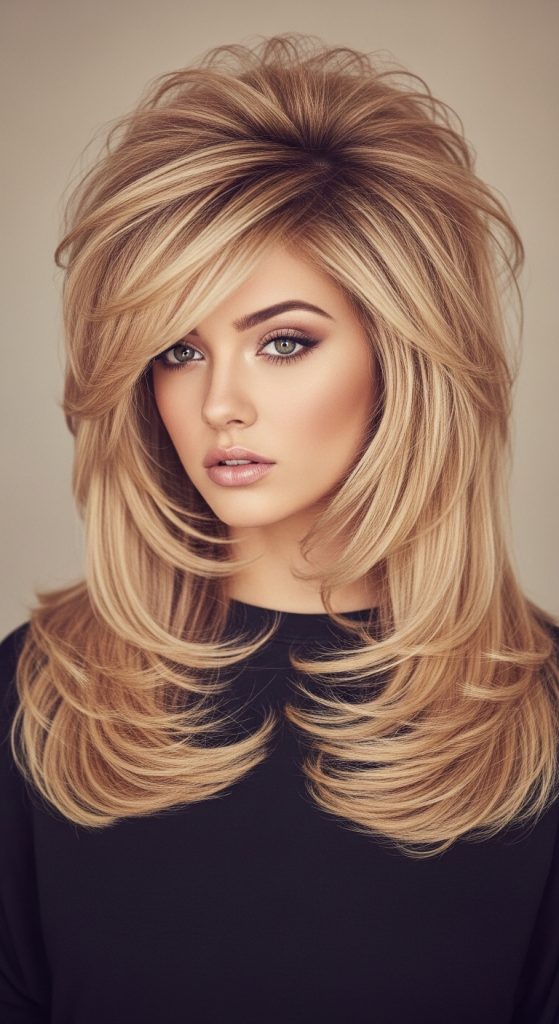
2. Short-Top Butterfly Cut (Dramatic Volume Effect)
This is where the butterfly cut becomes noticeable. Instead of playing safe, this version exaggerates the difference between short and long layers. It’s bold—but when done right, it looks incredibly stylish.
What it is
A butterfly haircut with shorter top layers starting near cheekbone level, creating a lifted, voluminous crown while the bottom remains long and flowing.
It gives the illusion of having both short and long hair at the same time.
How to implement it (practical steps)
This requires more precision than the classic version.
- Ask for short layers starting around cheekbone or jawline
- Maintain strong length in the bottom layers
- Keep top layers lighter but not too thin
- Avoid over-texturizing—it can make layers look frizzy
- Style with blow-dry or rollers for maximum lift
- Add light waves to enhance the layered contrast
If the top layers are too short without proper blending, it can look disconnected.
Best for
- Thick hair (holds shape better)
- People who want visible volume
- Medium to long hair lengths
- Trend-focused styling
This works best when you want your haircut to actually stand out.
Pro tip
Use a volumizing mousse at the roots before blow-drying. This cut depends heavily on lift at the top.
Mistake to avoid
Don’t skip styling. Without volume, this cut collapses and looks uneven instead of layered.
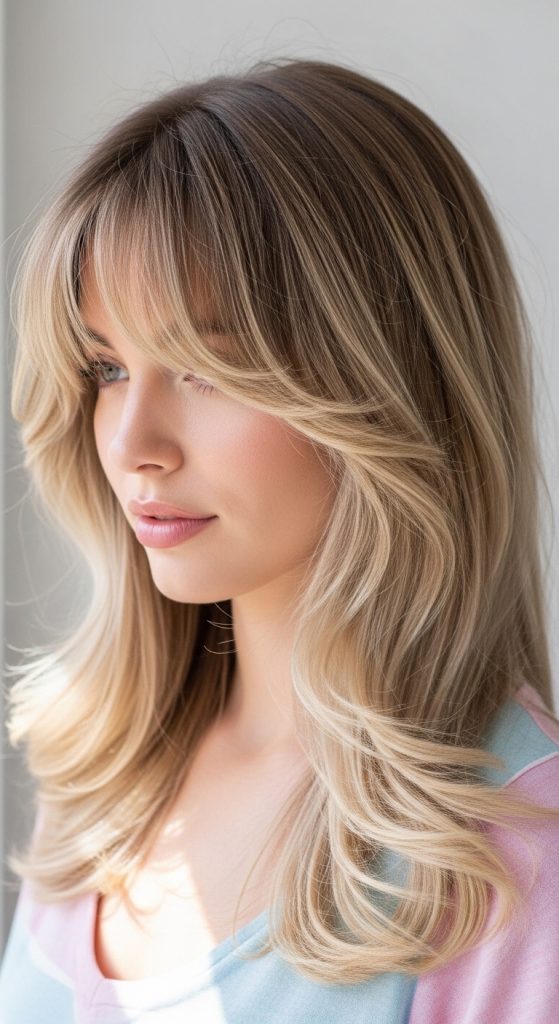
3. Butterfly Cut with Curtain Bangs (Soft Pinterest Look)
This is the most Pinterest-driven version of the butterfly cut. It combines layered structure with soft bangs, creating a very aesthetic, face-framing result. But it only works if proportions are right.
What it is
A butterfly haircut paired with curtain bangs that blend into the shorter layers. The bangs open at the center and flow naturally into the rest of the haircut.
It creates softness around the face while keeping volume through the lengths.
How to implement it (practical steps)
This requires coordination between bangs and layers.
- Ask for curtain bangs starting at cheekbone level
- Blend bangs directly into front layers (no harsh separation)
- Keep bangs light and airy—not thick and heavy
- Maintain longer layers underneath for movement
- Style bangs outward using a round brush or rollers
- Keep the rest of the hair softly layered and flowing
If bangs are cut too blunt, they break the butterfly effect.
Best for
- Oval, round, or heart-shaped faces
- Medium to long hair
- People who want a soft, feminine look
- Pinterest-inspired styling
This works best when you want maximum face framing.
Pro tip
Always style curtain bangs—even a quick blow-dry makes a huge difference.
Mistake to avoid
Don’t make bangs too thick. Heavy bangs overpower the layers and ruin the soft aesthetic.
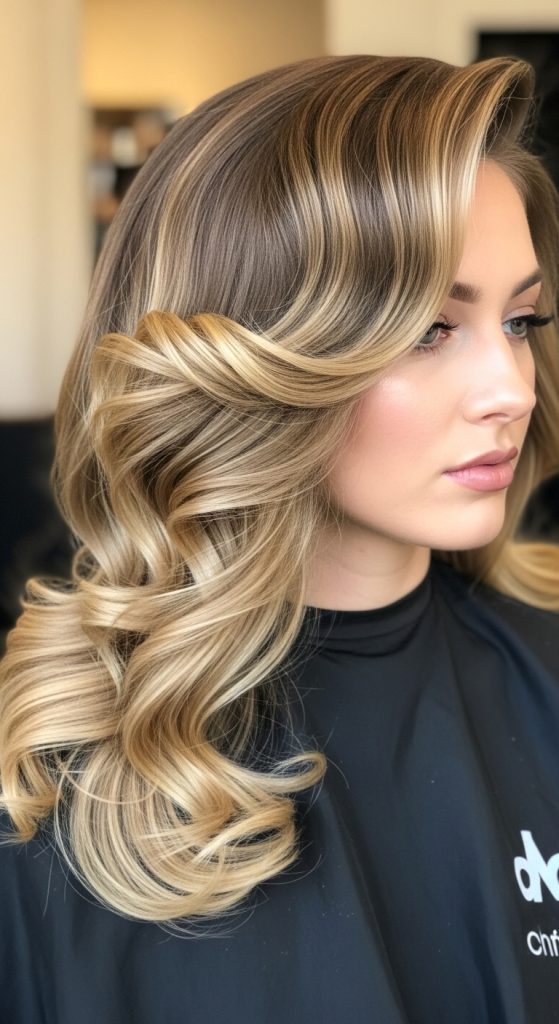
4. Wavy Butterfly Cut with Volume Blowout Layers (Full Salon Finish Look)
This is the version that looks like it came straight out of a salon blowout—but the reality is, it’s just a butterfly cut styled correctly. The mistake most people make is thinking the haircut alone creates volume. It doesn’t. The shape is in the cut, but the impact comes from styling.
What it is
A butterfly haircut designed to be styled into soft, bouncy waves that enhance every layer. The shorter layers lift around the face, while the longer layers flow with movement, creating a full, airy blowout effect.
It looks polished, expensive, and very “put together.”
How to implement it (practical steps)
This version relies heavily on styling technique.
- Get a standard butterfly cut with medium contrast layers
- Apply heat protectant before styling
- Blow-dry using a round brush to lift roots and shape layers
- Curl sections away from the face for soft volume
- Alternate curl directions slightly for natural movement
- Brush out curls gently to create a blowout wave effect
If your hair falls flat easily, set the roots with light volume spray.
If your hair is thick, focus more on shaping ends than adding extra curls.
Best for
- Long to medium-length hair
- Special occasions or styled everyday looks
- Thick or medium-density hair
- People who like voluminous hair
This works best when you want maximum visual impact.
Pro tip
Let curls cool completely before brushing them out. That’s what locks in the bounce.
Mistake to avoid
Don’t leave curls tight. The butterfly cut loses its softness when waves are too defined.
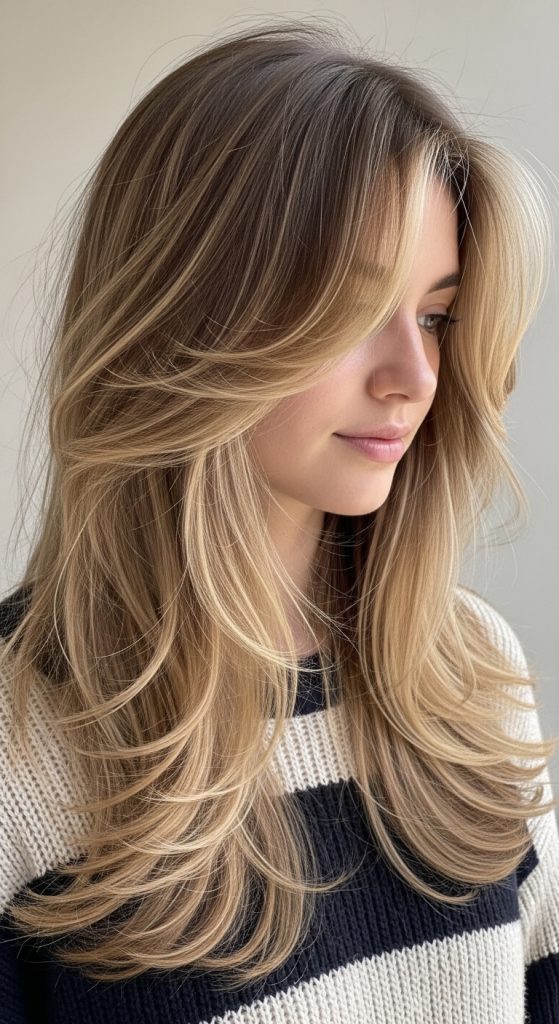
5. Low-Maintenance Air-Dry Butterfly Cut (Natural Texture Version)
This is the most realistic version for everyday life. Not everyone has time for blow-drying or styling every day, so this cut is designed to work with your natural hair texture instead of fighting it.
What it is
A butterfly cut tailored for air-drying, where layers are blended to fall naturally without heat styling. It enhances natural waves, bends, or soft movement in the hair.
The goal is effortless shape with minimal effort.
How to implement it (practical steps)
This version depends more on the haircut than styling tools.
- Ask for soft blended layers with minimal harsh contrast
- Keep face-framing layers slightly longer for natural fall
- Avoid over-thinning the ends
- Use lightweight leave-in conditioner after washing
- Scrunch hair gently while drying (don’t over-touch it)
- Let layers air-dry naturally or use diffuser if needed
If your hair is straight, you may need a slight wave enhancement for shape.
If your hair is wavy, this cut will naturally fall into place.
Best for
- Busy routines
- Naturally wavy or slightly textured hair
- Low-maintenance lifestyle
- Everyday wear
This works best when you want a “wake up and go” haircut.
Pro tip
Apply styling cream only on mid-lengths—not roots—to avoid flattening volume.
Mistake to avoid
Don’t ask for overly sharp layers. They only work with heat styling and can look uneven when air-dried.
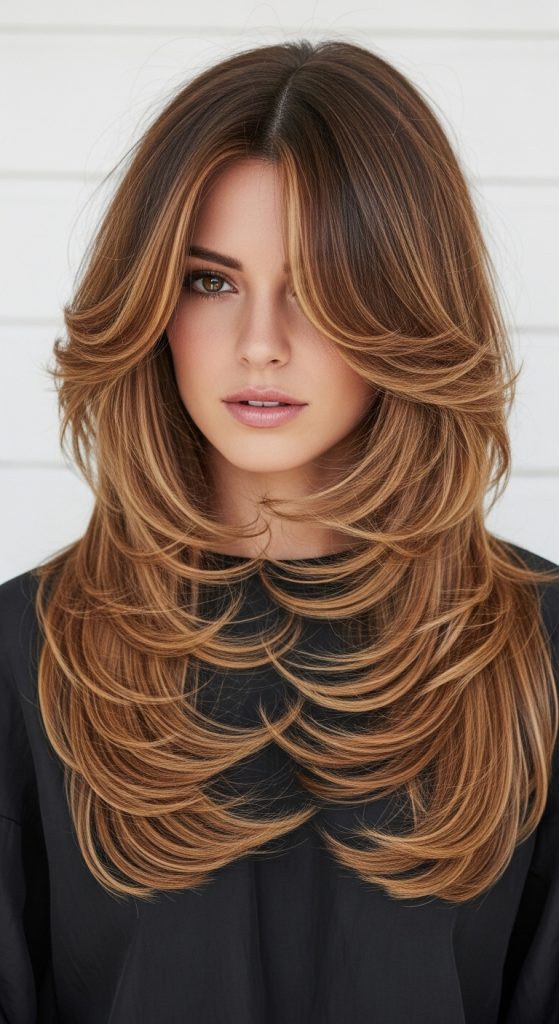
6. Butterfly Cut with Face-Framing Dramatic Layers (High Impact Look)
This is the bold, more fashion-forward version of the butterfly cut. It’s designed to make the face framing the main feature of the hairstyle. If done wrong, it can look disconnected—but if done right, it looks very editorial and trendy.
What it is
A butterfly haircut with stronger, more visible face-framing layers starting higher up near the cheekbones or even eye level, while maintaining long, flowing bottom layers.
The contrast is more dramatic than the classic version.
How to implement it (practical steps)
This requires clear communication with your stylist.
- Ask for strong face-framing layers starting high near cheekbone/eye level
- Keep bottom length long and intact for balance
- Ensure layers blend smoothly into mid-lengths
- Avoid heavy thinning at ends
- Style front layers outward for visible framing
- Use soft waves to connect short and long sections
If your stylist over-separates layers, the cut will look choppy instead of blended.
Best for
- Fashion-forward looks
- Long hair with good density
- People who want visible face definition
- Trend-focused styling
This works best when you want your haircut to stand out immediately.
Pro tip
Style the front layers outward away from the face—this is what creates the signature butterfly “lift.”
Mistake to avoid
Don’t over-layer the entire head. Only the front should be dramatic; the rest must stay balanced for harmony.
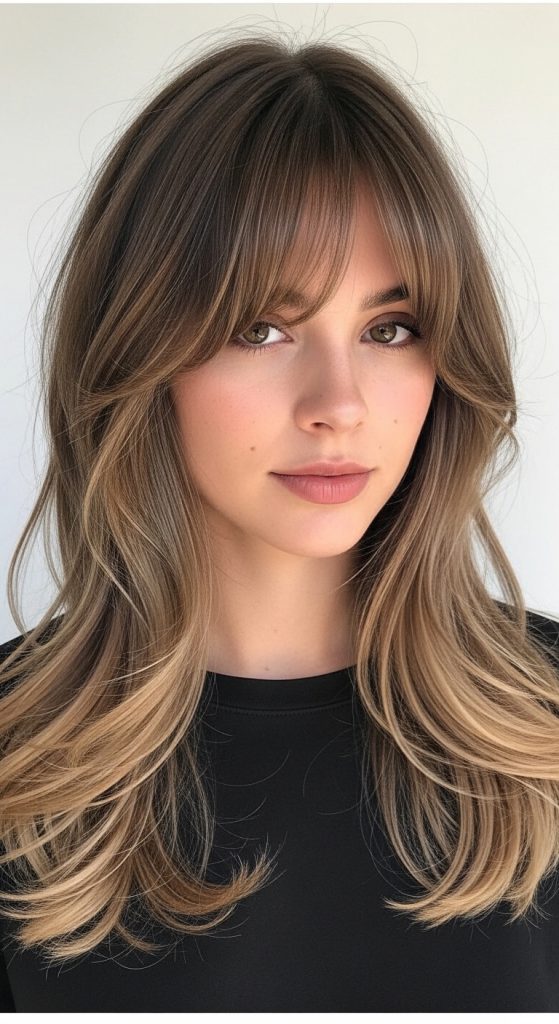
7. Butterfly Cut with Curtain Bangs + Soft Waves (Soft Feminine Balance Look)
This is one of the most Pinterest-heavy versions of the butterfly haircut. It combines structure, softness, and face framing in a way that looks effortless—but only works if the proportions between bangs and layers are controlled properly. Most people mess this up by making the bangs too heavy or too disconnected from the layers.
What it is
A butterfly haircut paired with curtain bangs that gradually blend into the front layers, styled with soft waves to enhance movement. The bangs open from the center and flow into the layered sides, creating a seamless face-framing effect.
It’s soft, romantic, and very “Pinterest girl aesthetic.”
How to implement it (practical steps)
This style depends on blending, not just cutting.
- Ask for light curtain bangs starting at cheekbone level
- Ensure bangs are blended into front layers (no sharp separation)
- Keep top layers soft so they merge naturally with bangs
- Style with a middle part for balance
- Create loose waves using a curling iron or heatless method
- Brush out waves slightly for a soft, airy finish
If your bangs are too thick, they will overpower the butterfly layers.
If they are too thin, they will disappear into the haircut.
Best for
- Medium to long hair
- Soft feminine or romantic looks
- Oval, heart, and round face shapes
- Everyday Pinterest-inspired styling
This works best when you want softness without losing structure.
Pro tip
Always style curtain bangs outward first before touching the rest of the hair—it sets the face frame correctly.
Mistake to avoid
Don’t separate bangs from layers too much. They should feel like one continuous shape, not two different styles.
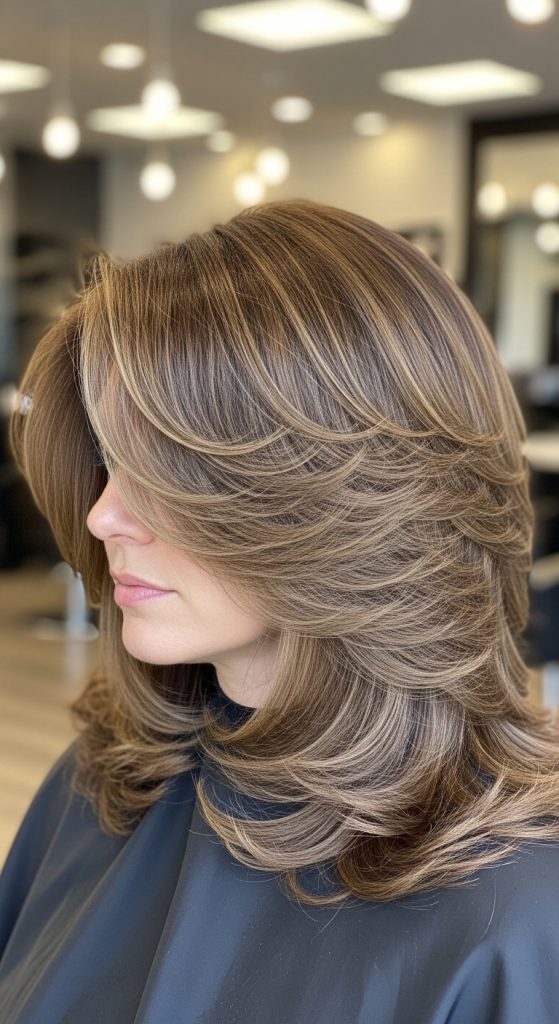
8. Thick Hair Butterfly Cut with Weight Removal Layers (Light Volume Control)
This version is designed specifically for thick or heavy hair types. Without proper layering, thick hair can look bulky, flat at the top, and too heavy at the ends. The butterfly cut fixes this by redistributing weight—but only if it’s done strategically.
What it is
A butterfly haircut with structured internal layers that remove bulk from the inside while keeping the outer shape long and full. The top layers are designed to reduce heaviness and create lift without sacrificing density.
It makes thick hair feel lighter, bouncier, and more manageable.
How to implement it (practical steps)
This cut requires controlled layering.
- Ask for internal weight-removal layers (not just surface layers)
- Keep face-framing layers soft but not overly short
- Reduce bulk around mid-length areas for movement
- Maintain strong ends to avoid thin-looking tips
- Style with blow-dry or soft waves to activate layers
- Avoid over-thinning at the bottom to preserve fullness
If layers are too aggressive, thick hair can become frizzy or uneven.
If they are too light, the haircut won’t change anything.
Best for
- Thick or dense hair
- Heavy, flat-looking long hair
- People who struggle with styling bulk
- Medium to long hair lengths
This works best when you want control without losing natural volume.
Pro tip
Ask your stylist specifically for “removing internal weight, not thinning ends”—this makes a huge difference in results.
Mistake to avoid
Don’t over-thin the ends. Thick hair needs structure at the bottom or it will look stringy.
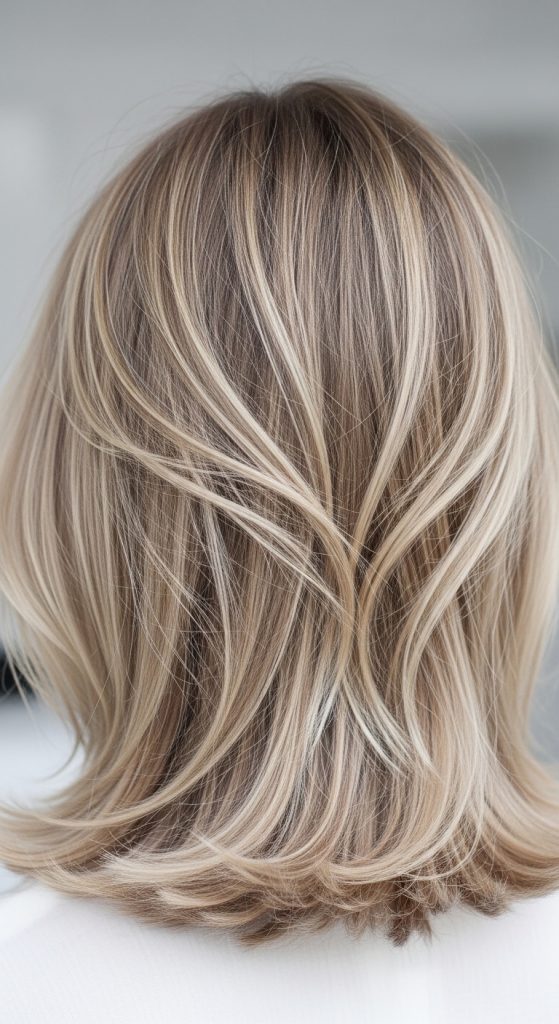
9. Subtle Butterfly Cut for Fine Hair (Soft Volume Illusion Style)
This is the most delicate version of the butterfly haircut. Fine or thin hair needs careful layering—too much and it becomes flat; too little and it stays lifeless. The goal here is illusion of volume, not heavy structure.
What it is
A light butterfly haircut with minimal but strategic layers designed to create softness and movement without removing too much density. The layers are subtle but placed in a way that lifts the hair visually.
It creates a fuller appearance without actually adding weight.
How to implement it (practical steps)
This version must be very controlled.
- Ask for soft, minimal face-framing layers starting at jawline or below
- Keep overall density intact—avoid heavy layering
- Focus on slight movement at the front only
- Keep ends blunt or slightly softened (not heavily layered)
- Use light styling like blow-dry or soft bends
- Avoid heavy products that flatten roots
If layers are too deep, fine hair will look thinner instead of fuller.
If they are too subtle, there will be no visible effect.
Best for
- Fine or thin hair
- Low-density hair types
- Natural, soft styling preference
- Short to medium-long hair
This works best when you want a subtle upgrade without losing fullness.
Pro tip
Use root-lifting spray before blow-drying—it enhances the butterfly shape without extra cutting.
Mistake to avoid
Don’t ask for too many layers. Fine hair needs structure, not removal.
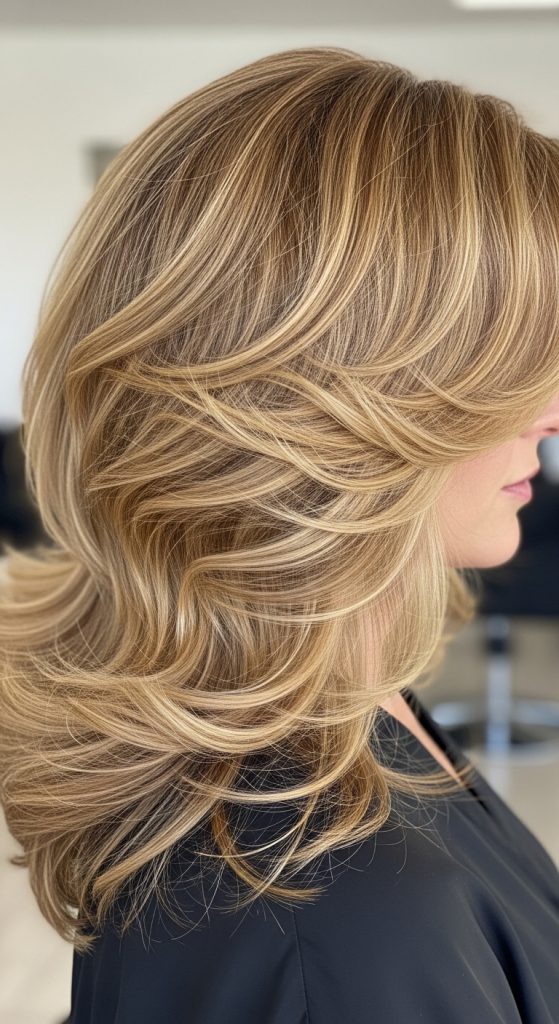
10. Butterfly Cut with Long Feathered Layers (Retro Volume Revival)
This version leans into a more “70s-inspired” feathered structure, but modernized so it doesn’t look outdated. It’s all about soft separation between layers that flick out naturally instead of stacking heavily.
What it is
A butterfly haircut where the layers are cut in a feathered technique, allowing the ends to slightly flick outward and blend into long flowing lengths. The top layers are light and airy, creating a lifted crown with movement through the mid-lengths.
It gives a soft retro blowout feel but still looks modern and wearable.
How to implement it (practical steps)
This cut needs precision layering and proper styling.
- Ask for feathered layering through mid-lengths, not blunt cuts
- Keep face-framing layers soft and slightly curved
- Ensure layers gradually blend into long ends
- Avoid heavy thinning at the bottom
- Style with round brush blow-dry for outward flick
- Finish with light serum to define movement
If the feathering is too sharp, it can look outdated instead of soft.
If it’s too blended, the butterfly effect disappears.
Best for
- Long to medium hair
- Thick or medium-density hair
- People who like voluminous blowout styles
- Soft retro-modern aesthetics
This works best when you want bounce and movement without curls.
Pro tip
Always blow-dry the ends slightly outward to activate the feathered effect.
Mistake to avoid
Don’t flatten the layers with straight ironing only—it removes the feathered shape completely.
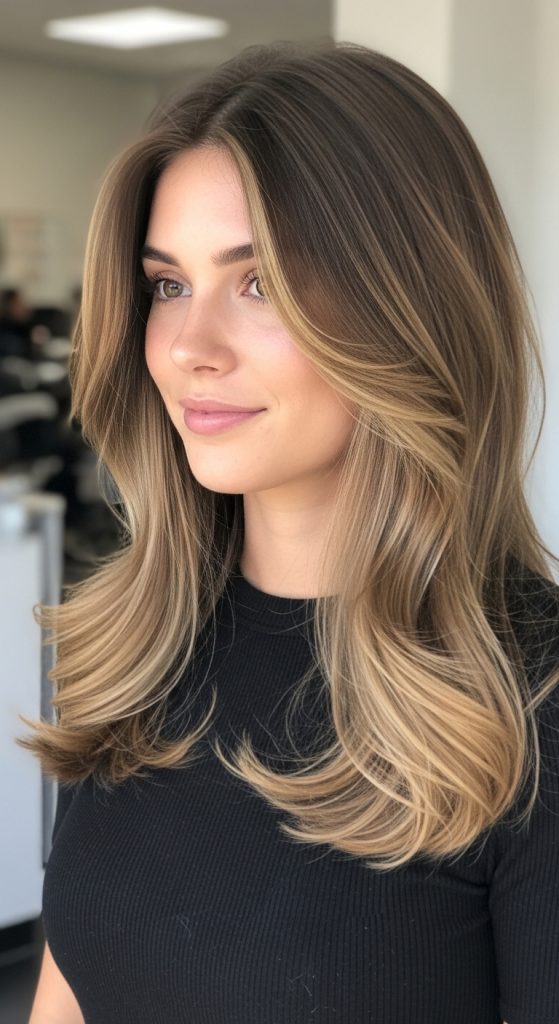
11. Butterfly Cut with U-Shaped Bottom + Face Lift Layers (Smooth Flow Finish)
This is a more polished and refined version of the butterfly cut. Instead of choppy contrast, it focuses on smooth transitions and a rounded silhouette that looks very healthy and full.
What it is
A butterfly haircut combined with a soft U-shaped hemline at the bottom and gentle face-framing layers. The structure creates a smooth flow from short layers at the front to longer, rounded ends.
It looks clean, soft, and very “expensive hair” aesthetic.
How to implement it (practical steps)
This version is all about shaping, not dramatic cutting.
- Ask for a soft U-shaped cut at the bottom (not V-shape)
- Add gentle face-framing layers starting around cheekbone level
- Keep layers long and blended for smooth transitions
- Avoid aggressive texturizing or choppy cuts
- Style with soft waves or natural blow-dry
- Maintain shine with lightweight finishing oil
If the bottom is too straight, the haircut loses flow.
If it’s too layered, it loses the smooth butterfly shape.
Best for
- Straight or slightly wavy hair
- Medium to long lengths
- Minimalist, clean aesthetic lovers
- Everyday polished looks
This works best when you want softness without obvious layering.
Pro tip
Use a center part and soft blow-dry to enhance the symmetrical flow of the cut.
Mistake to avoid
Don’t over-layer the ends. The strength of this style is in the smooth, rounded silhouette.
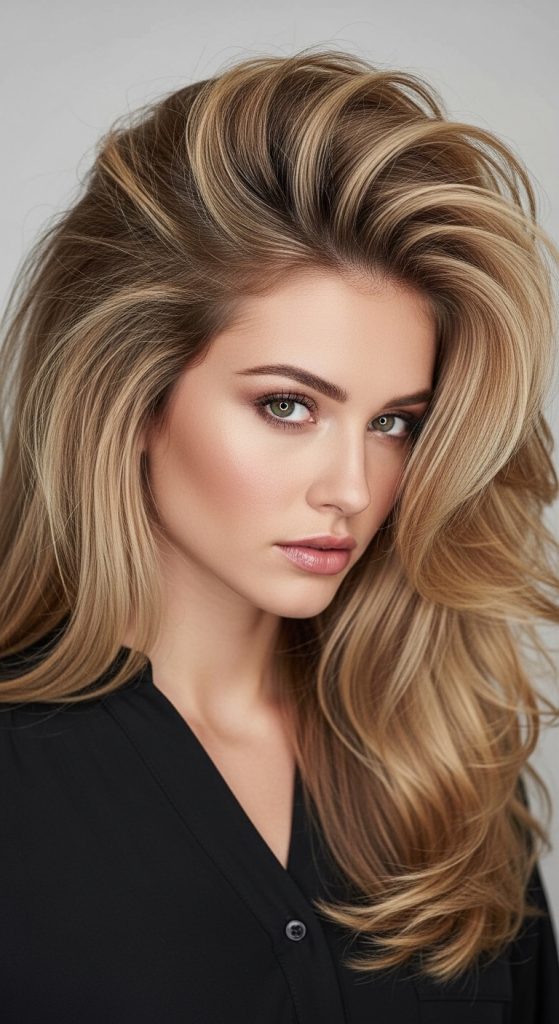
12. Voluminous Butterfly Cut with Extra Crown Lift (High Impact Glam Look)
This is the most dramatic and salon-styled version of the butterfly haircut. It focuses heavily on crown volume and lift, making the hair look fuller, taller, and more glamorous. If done wrong, it can look puffy—but if done right, it looks editorial.
What it is
A butterfly haircut with enhanced crown layering that creates maximum lift at the top while maintaining long, flowing lengths at the bottom. The top section is styled to look airy and voluminous, giving a “salon blowout” effect.
It’s bold, glamorous, and very photo-friendly.
How to implement it (practical steps)
This requires both cutting strategy and styling discipline.
- Ask for shorter crown layers designed for volume lift
- Maintain strong length in the bottom section
- Ensure clear separation between crown and lengths
- Avoid over-thinning mid-lengths
- Blow-dry roots upward using round brush or rollers
- Finish with soft waves to balance volume
If crown layers are too short, it becomes difficult to control.
If they are too long, the volume effect disappears.
Best for
- Thick or medium-density hair
- Event styling or glam looks
- Long hair that lacks volume
- People who love blowout aesthetics
This works best when you want noticeable transformation.
Pro tip
Use velcro rollers at the crown after blow-drying to lock in lift without heat damage.
Mistake to avoid
Don’t skip root styling. Without lift at the crown, this cut loses its entire purpose.