
Minimalist kitchens have become one of the most desired home design trends in 2026 because they combine simplicity, functionality, and timeless beauty in a way that feels calm and luxurious. In modern homes, the kitchen is no longer just a place for cooking—it has become the center of everyday living. People gather there for meals, conversations, work, and relaxation, which is why creating a clean and peaceful kitchen environment matters more than ever.
A minimalist kitchen is not about making the space empty or cold. Instead, it focuses on intentional design choices that remove visual clutter while keeping the room practical, elegant, and comfortable. The goal is to create a kitchen that feels organized, breathable, and visually balanced without sacrificing warmth or personality.
One of the biggest reasons kitchens often feel stressful is because they become overloaded with appliances, decorations, utensils, and unnecessary storage items. Countertops become crowded, cabinets overflow, and too many colors or materials compete for attention. Even expensive kitchens can feel chaotic when there is no visual simplicity.
Minimalist kitchen design solves this problem by focusing on clarity and function. Every element has a purpose, and every design choice supports a calm, clean atmosphere. This approach not only improves the appearance of the kitchen but also makes daily routines easier and more enjoyable.
In 2026, minimalist kitchens are evolving beyond plain white spaces. Modern minimalist design now includes warmth, texture, and natural materials to prevent kitchens from feeling sterile. Soft wood tones, warm beige palettes, stone-inspired surfaces, matte finishes, and layered lighting are becoming key features of contemporary minimalist interiors.
Another major reason minimalist kitchens are trending is because people are prioritizing mental calmness at home. A visually clean kitchen creates less stress and makes the home feel more peaceful overall. Research and modern lifestyle trends both show that cluttered environments can increase mental overwhelm, while organized spaces support relaxation and productivity.
This is especially important in small homes and apartments where kitchens are often connected directly to living areas. In open-concept spaces, a cluttered kitchen affects the feeling of the entire home. Minimalist design helps maintain visual harmony between rooms and creates a smoother flow throughout the space.
Storage plays a huge role in achieving this clean aesthetic. Modern minimalist kitchens rely heavily on hidden storage, integrated appliances, and smart organization systems. Instead of displaying everything openly, the design focuses on concealing visual clutter while keeping everyday items easy to access.
Examples include:
- Handleless cabinets
- Hidden pantry storage
- Built-in appliances
- Drawer organizers
- Vertical storage solutions
- Floating shelves with minimal styling
These features help kitchens feel streamlined and spacious.
Lighting is another key element of minimalist kitchen design. Many people underestimate how much lighting affects the overall atmosphere of a room. Harsh overhead lights can make kitchens feel flat and cold, while layered warm lighting creates softness and sophistication.
Modern minimalist kitchens often combine:
- Pendant lights
- Under-cabinet lighting
- Natural daylight
- Warm LED accents
- Soft ambient lighting
This layered approach makes the kitchen feel welcoming rather than clinical.
Color palettes are also changing in 2026 minimalist trends. While classic white kitchens remain popular, warmer neutral tones are becoming more desirable because they feel softer and more inviting. Shades like:
- Warm white
- Cream
- Taupe
- Beige
- Soft gray
- Muted olive
- Natural wood tones
are helping minimalist kitchens feel cozy while still maintaining simplicity.
Texture has become equally important. Since minimalist spaces use fewer decorative elements, texture creates depth and visual interest. Matte cabinetry, fluted wood details, natural stone, brushed metal accents, and linen-inspired finishes all contribute to a richer, more luxurious appearance without overwhelming the space.
If you have a small kitchen, minimalist design can make the room feel dramatically larger. Removing unnecessary items, simplifying decor, and using cohesive materials helps open up the visual flow. Even simple changes like clearing countertops or switching to lighter cabinet colors can completely transform how spacious the kitchen feels.
Another reason minimalist kitchens are so practical is because they are easier to clean and maintain. Fewer visible items mean less dust, less clutter, and less visual stress. This creates a home environment that feels more manageable in everyday life.
Minimalist kitchens also age well. Unlike highly trendy designs that quickly feel outdated, simple and balanced interiors remain stylish for years. This makes minimalist design a smart long-term investment for homeowners and renters alike.
In this guide, you will discover 11 minimalist kitchen design ideas for a clean look, carefully selected to help create a kitchen that feels:
- More organized
- More spacious
- More luxurious
- More calming
- More functional
- More timeless
From hidden storage ideas and neutral color palettes to warm lighting and clean countertop styling, each idea is designed to help you create a kitchen that feels modern, elegant, and easy to live in every day.
Whether your kitchen is large or small, these minimalist design ideas will show you how thoughtful simplicity can completely transform the heart of your home into a cleaner, calmer, and more stylish space.
1. Handleless Cabinets for Seamless Modern Flow
What it is
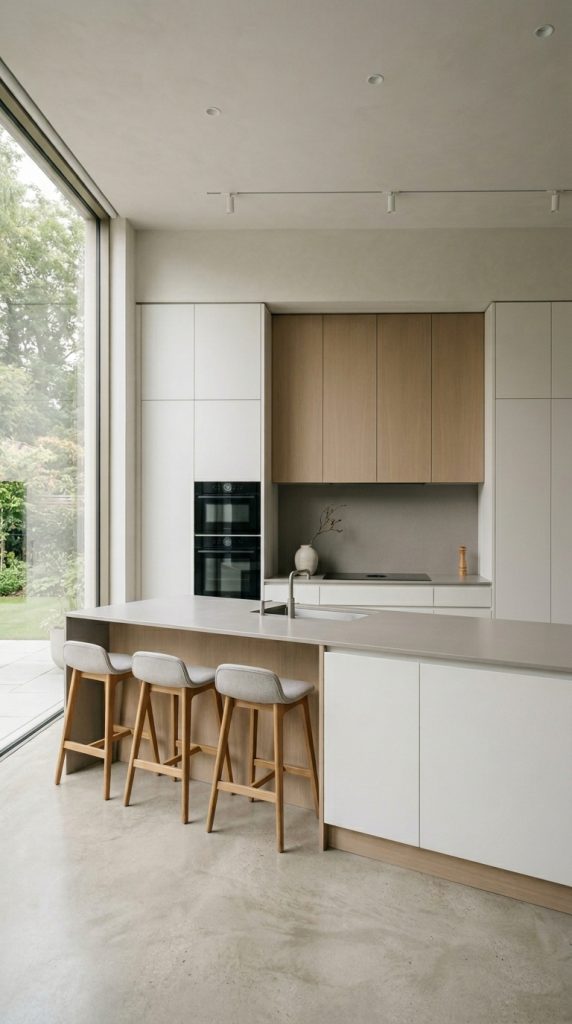
Handleless cabinets are one of the biggest minimalist kitchen trends in 2026 because they create a smooth, uninterrupted visual flow that instantly makes kitchens feel cleaner and more luxurious. Instead of traditional knobs or bulky handles, these cabinets use hidden grooves, push-to-open systems, or integrated edge pulls.
This simple detail dramatically changes the overall appearance of the kitchen. Without visible hardware breaking up the cabinetry lines, the space feels calmer, more modern, and visually larger.
Luxury minimalist interiors often focus on reducing visual noise, and cabinet hardware is one of the easiest areas to simplify.
How to implement it
To achieve this look:
- Choose flat-panel cabinet doors
- Use push-to-open mechanisms or hidden edge pulls
- Stick to matte or satin finishes for softer elegance
- Keep cabinet colors cohesive with walls when possible
Popular minimalist cabinet colors for 2026 include:
- Warm white
- Beige
- Taupe
- Soft gray
- Natural wood finishes
- Muted olive tones
If you have a small kitchen, matching cabinet color closely with wall color helps create a more spacious seamless effect.
Best for
- Small kitchens
- Modern apartments
- Open-concept homes
- Luxury minimalist interiors
- Contemporary renovations
Pro tip
Matte finishes hide fingerprints better than glossy cabinets while creating a softer high-end appearance.
Mistake to avoid
Avoid mixing too many cabinet styles or hardware finishes. Minimalist kitchens rely on consistency and clean visual rhythm.
2. Hidden Appliance Design for Clutter-Free Counters
What it is
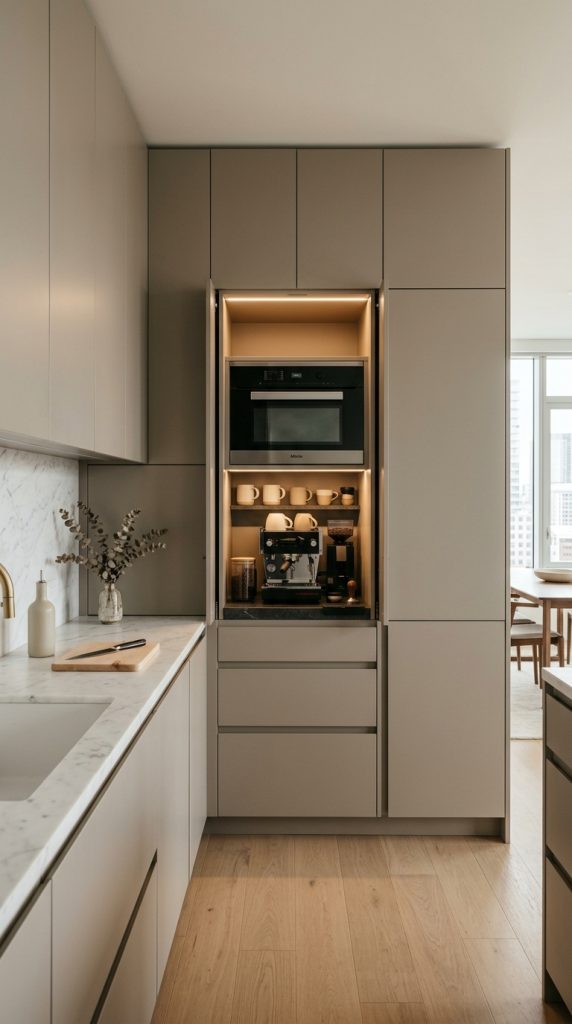
One of the main reasons kitchens feel visually stressful is because countertops become crowded with appliances, wires, and daily-use items. Modern minimalist kitchens solve this problem by integrating hidden appliance storage that keeps surfaces clean and visually calm.
In 2026, luxury kitchens are moving toward “appliance invisibility,” where coffee machines, microwaves, toasters, and even refrigerators blend naturally into cabinetry instead of dominating the room visually.
This creates a cleaner atmosphere while making the kitchen feel more custom-designed and spacious.
How to implement it
Start by identifying which appliances stay permanently on your counters.
Then create solutions such as:
- Appliance garages with lift-up doors
- Built-in microwave cabinets
- Integrated refrigerators
- Pull-out coffee stations
- Hidden charging drawers
If you have a small kitchen:
- Store rarely used appliances inside cabinets
- Use vertical storage to free counter space
- Keep only one or two everyday essentials visible
Minimalist kitchens work best when countertops remain mostly open.
Best for
- Small kitchens
- Busy family homes
- Minimalist lifestyles
- Open-concept layouts
- Luxury modern interiors
Pro tip
Grouping appliances into one hidden “coffee or breakfast station” keeps routines practical while maintaining visual simplicity.
Mistake to avoid
Avoid overcrowding countertops with decorative appliances. Even beautiful appliances can create visual clutter when too many are displayed.
3. Warm Neutral Color Palettes Instead of Stark White
What it is
Minimalist kitchens in 2026 are moving away from cold all-white interiors and embracing warmer neutral palettes that feel softer, calmer, and more welcoming. While classic white kitchens remain timeless, modern minimalist design now focuses on adding warmth through layered earthy tones and natural textures.
This shift creates kitchens that still feel clean and uncluttered but also comfortable and lived-in.
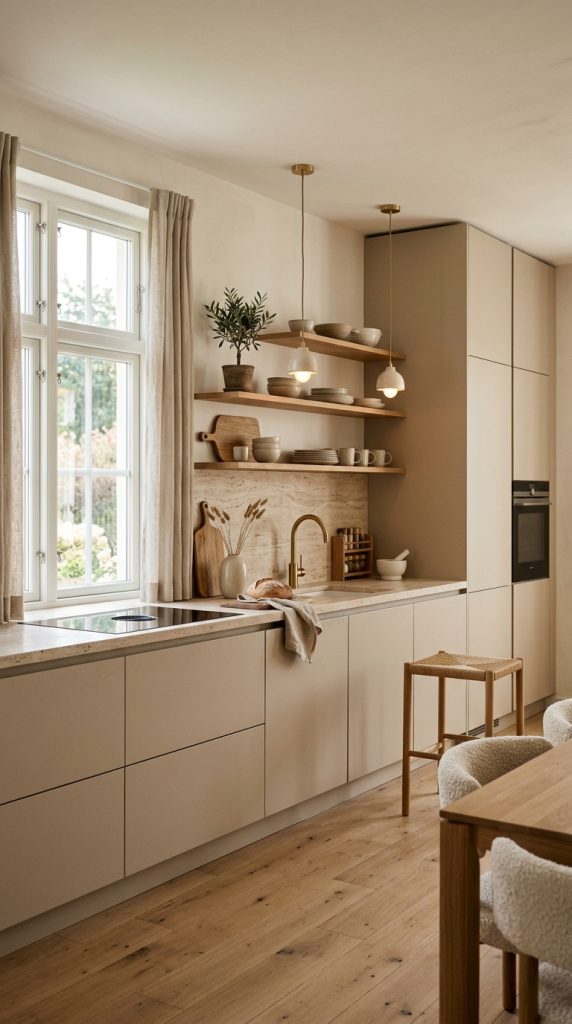
Popular minimalist kitchen tones now include:
- Warm white
- Cream
- Sand
- Beige
- Taupe
- Soft olive
- Natural oak wood
- Muted stone grays
These shades reflect light beautifully while maintaining a cozy luxury atmosphere.
How to implement it
To create a warm minimalist palette:
- Use soft neutral cabinetry
- Add wood accents through shelves or stools
- Incorporate stone or quartz countertops with subtle texture
- Keep flooring light and cohesive
For balance:
- Use matte black or brushed brass accents sparingly
- Layer natural materials instead of bold colors
- Stick to 2–3 main tones throughout the kitchen
If you have a small room, this works especially well because warm neutrals make the space feel open without looking sterile.
Best for
- Cozy modern homes
- Small kitchens needing brightness
- Scandinavian-inspired interiors
- Calm relaxing spaces
- Timeless kitchen designs
Pro tip
Mixing different neutral textures creates depth even when the color palette remains simple and minimal.
Mistake to avoid
Avoid combining too many undertones. Warm and cool neutrals can clash and make the kitchen feel visually disconnected instead of cohesive.
4. Open Shelving with Minimal Styling for Airy Look
What it is
Open shelving is a key minimalist kitchen trend in 2026, but the modern version is very different from cluttered or over-decorated shelves. Instead of filling every space, minimalist open shelving focuses on breathing room, symmetry, and carefully chosen essentials.
The idea is to make the kitchen feel lighter and more open by reducing heavy upper cabinets and replacing them with simple floating shelves. When styled correctly, this creates a soft, airy look that feels both functional and visually elegant.
In small kitchens especially, open shelving helps remove visual weight from the walls, making the entire space feel larger and less boxed in.
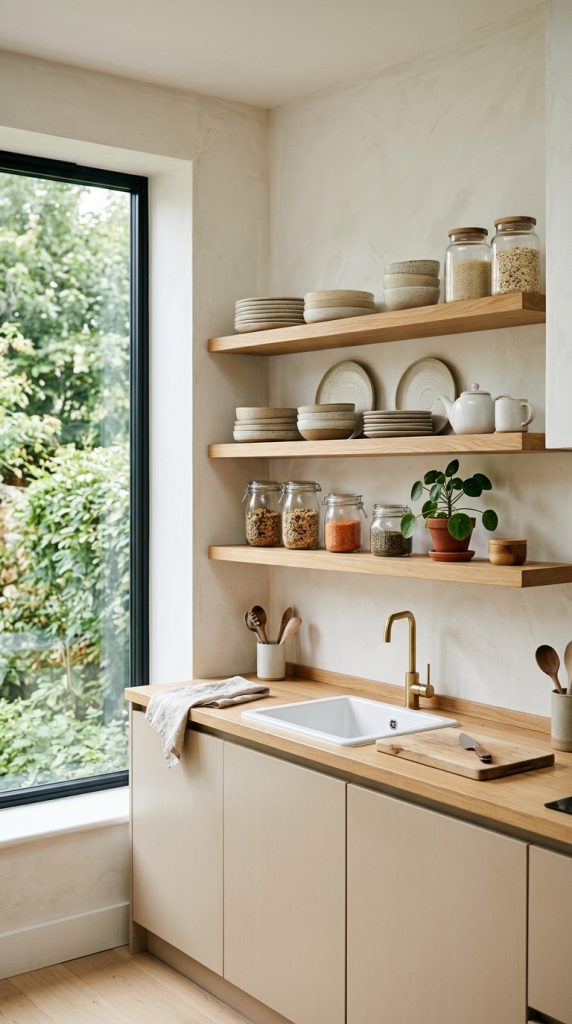
How to implement it
To style open shelves in a minimalist way:
- Choose 1–2 long floating shelves instead of many small ones
- Stick to a consistent color palette (white, beige, wood, or stone tones)
- Display only essential items like plates, bowls, or glass jars
- Leave empty space between objects for visual balance
For a cleaner look:
- Group items in small sets instead of spreading them out
- Use matching dishware for uniform styling
- Add one or two decor pieces like a ceramic vase or plant
If you have a small kitchen, place shelves only on one wall to avoid visual overload.
Best for
- Small kitchens needing openness
- Scandinavian or minimalist interiors
- Apartments with limited cabinet space
- Light, airy kitchen aesthetics
Pro tip
Stick to one material tone for shelving (like light oak or matte white) to maintain a calm, cohesive look.
Mistake to avoid
Avoid overcrowding shelves with too many items. Open shelving becomes clutter quickly if it loses negative space.
5. Integrated Lighting Under Cabinets for Soft Glow
What it is
Under-cabinet lighting is one of the most important elements in a modern minimalist kitchen because it adds depth, warmth, and functionality without adding visual clutter. In 2026, kitchens are shifting toward soft ambient lighting instead of harsh overhead brightness, and under-cabinet lighting plays a major role in this transformation.
This lighting style creates a subtle glow on countertops, making the kitchen feel warmer, more expensive, and more inviting. It also improves visibility while cooking without overpowering the space.
Minimalist design depends heavily on atmosphere, and lighting is what brings that atmosphere to life.
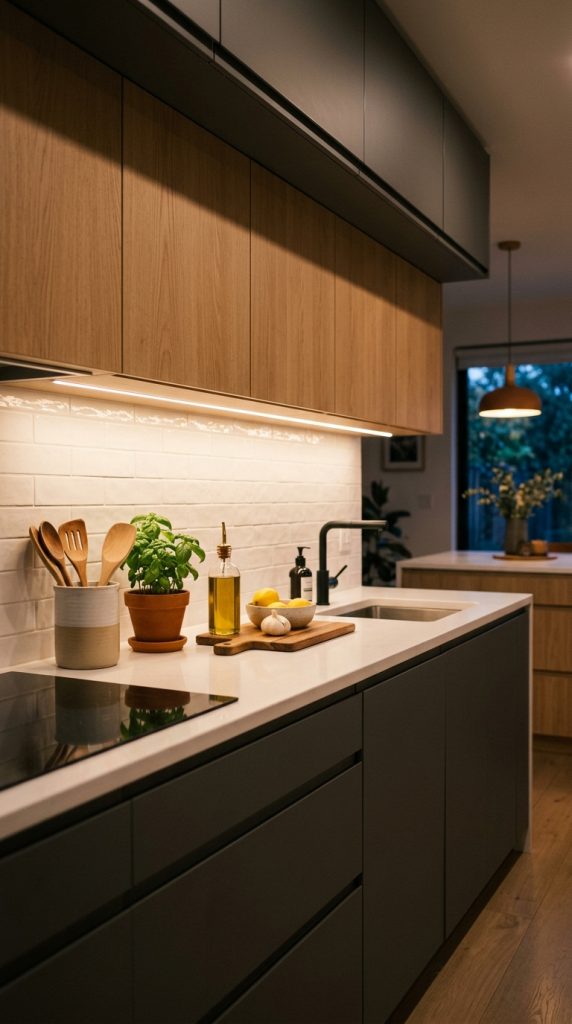
How to implement it
To create this effect:
- Install LED strip lights under upper cabinets
- Choose warm white tones (2700K–3000K)
- Hide wiring for a clean finish
- Use dimmable lighting for flexibility
For a more modern setup:
- Combine under-cabinet lights with recessed ceiling lighting
- Add toe-kick lighting under lower cabinets for a floating effect
- Keep light temperature consistent throughout the kitchen
If you have a small kitchen, this lighting instantly makes countertops feel more spacious and clean.
Best for
- Modern minimalist kitchens
- Small or narrow kitchens
- Evening cooking and ambient use
- Contemporary apartment designs
Pro tip
Hidden lighting always looks more luxurious than visible fixtures because it creates a soft, indirect glow.
Mistake to avoid
Avoid using cool white or blue-toned LEDs. They make kitchens feel sterile instead of warm and inviting.
6. Decluttered Countertops with “One Touch” Rule
What it is
A truly minimalist kitchen is defined by its countertops. One of the most powerful 2026 design principles is the “one touch rule,” which means only keeping items on the counter that are used daily and removing everything else from view.
This approach creates a calm, clean surface that immediately makes the kitchen feel more expensive and organized. In luxury interiors, empty counter space is not considered wasted—it is considered visually valuable.
When countertops are clear, the entire kitchen feels larger, brighter, and more intentional.
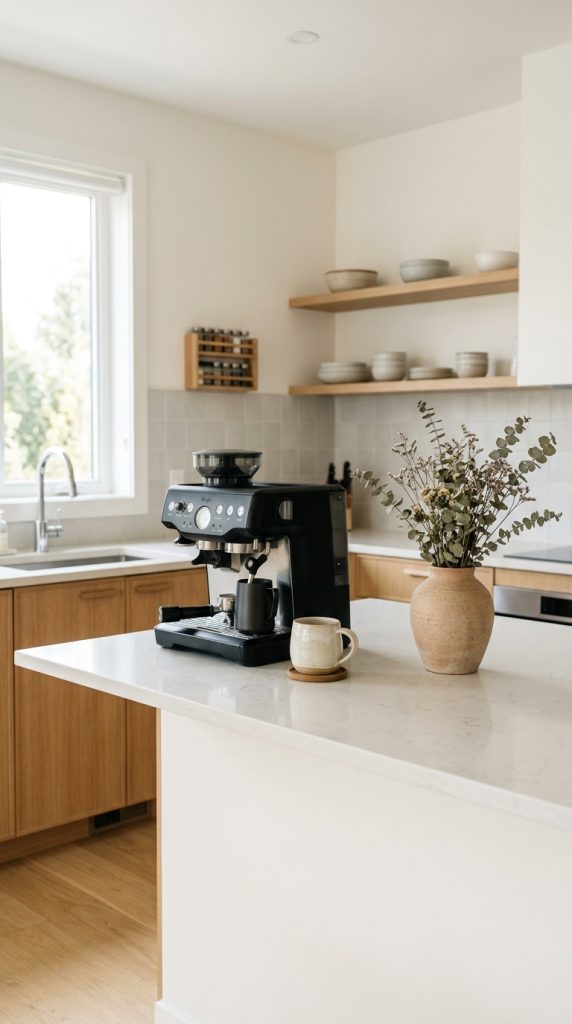
How to implement it
To apply this rule:
- Remove unused appliances from countertops
- Keep only 1–3 essential items visible (like kettle, coffee machine, or fruit bowl)
- Store everything else in cabinets or drawers
- Use trays to group essentials neatly
For a more styled minimalist look:
- Choose aesthetically pleasing essentials in matching tones
- Use ceramic or matte containers instead of plastic
- Keep surfaces wiped and visually clean at all times
If you have a small kitchen, this instantly reduces visual clutter and improves flow.
Best for
- Small kitchens
- Minimalist homes
- Busy but organized lifestyles
- Modern luxury interiors
- Open-plan living spaces
Pro tip
When in doubt, remove one more item than you think you need. Empty space is what creates luxury in minimalist kitchens.
Mistake to avoid
Avoid treating countertops as storage areas. Even neatly arranged items can create clutter if too many are left visible.
7. Minimalist Kitchen Island with Clean Architectural Lines
What it is
A minimalist kitchen island is not just an extra workspace—it becomes a central design feature that defines the entire kitchen. In 2026, the trend is shifting toward simple, architectural island designs with clean lines, flat surfaces, and clutter-free styling.
Instead of bulky or highly decorative islands, modern minimalist kitchens focus on smooth shapes, hidden storage, and seamless integration with the rest of the space. The island often acts as a dining area, prep station, and storage unit all in one, while still maintaining a visually light presence.
In small kitchens, a well-designed island can make the space feel more organized and intentional rather than crowded.
How to implement it
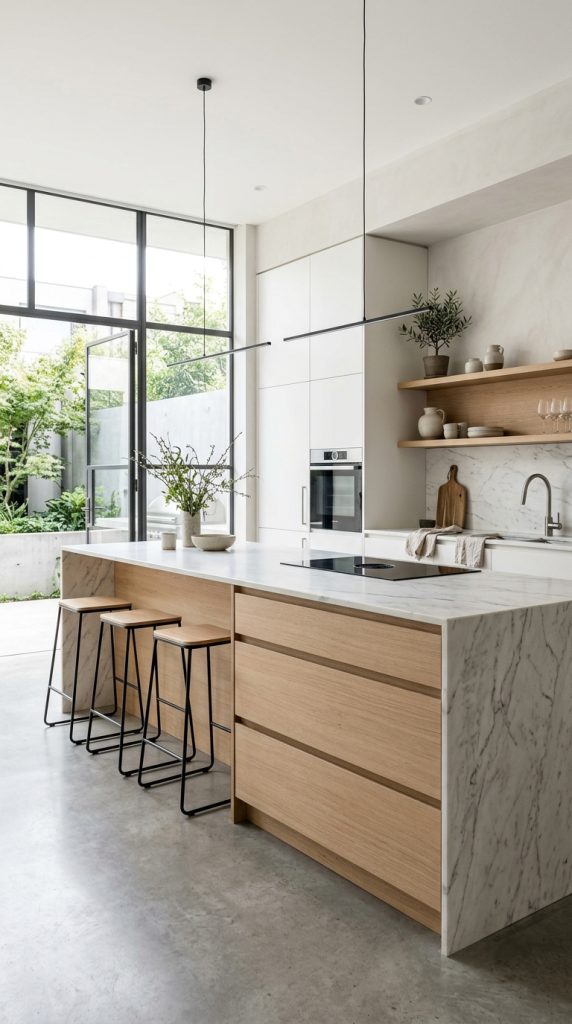
To create a minimalist kitchen island:
- Choose a simple rectangular or waterfall-edge design
- Keep surfaces smooth with stone, quartz, or matte finishes
- Integrate hidden storage drawers underneath
- Use bar stools with clean, slim profiles
For styling:
- Keep the island surface mostly empty
- Add only one simple centerpiece like a ceramic bowl or small plant
- Match island tones with cabinetry for visual harmony
If you have a small kitchen, consider a narrow island or rolling island instead of a bulky fixed one.
Best for
- Open-concept kitchens
- Medium to small modern homes
- Minimalist luxury interiors
- Homes needing extra prep space
Pro tip
Waterfall edges (where the countertop flows down the sides) create a premium architectural feel without adding decoration.
Mistake to avoid
Avoid oversized islands in small kitchens. A large island can disrupt movement and make the space feel tight instead of open.
8. Hidden Pantry Storage for Invisible Organization
What it is
Hidden pantry storage is one of the most effective minimalist kitchen solutions for maintaining a clean, clutter-free appearance. Instead of open shelves or visible storage racks, everything is concealed behind sleek cabinet doors or integrated wall panels.
In 2026, modern kitchens are moving toward “invisible organization,” where storage exists everywhere but is not visually noticeable. This creates a smooth, uninterrupted design that feels calm and high-end.
Hidden pantry systems help eliminate visual chaos, especially in kitchens where food items, jars, and packaging can quickly make the space look messy.
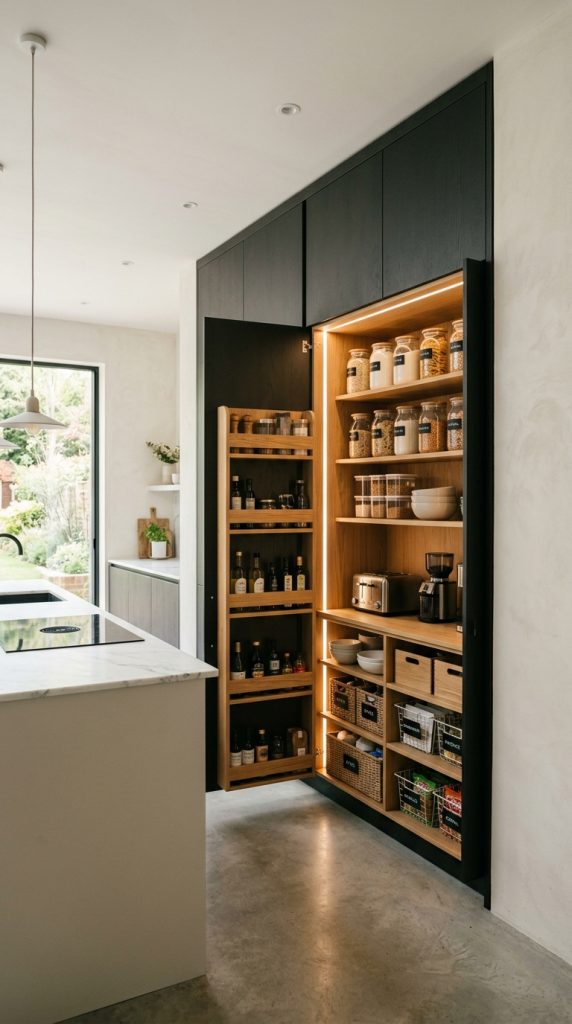
How to implement it
To create hidden pantry storage:
- Use tall cabinets that extend from floor to ceiling
- Install pull-out pantry systems inside cabinets
- Use labeled storage bins inside closed doors
- Dedicate one full cabinet wall as a pantry zone
For small kitchens:
- Use vertical space efficiently with stacked shelving inside cabinets
- Group similar items together to maximize order
- Keep frequently used items at eye level for convenience
You can also design a “secret pantry wall” that blends completely into cabinetry for a seamless look.
Best for
- Small kitchens needing organization
- Family homes with lots of groceries
- Minimalist modern interiors
- Luxury clean kitchens
- Busy households
Pro tip
Matching pantry containers (glass or matte bins) create internal visual order even when doors are opened.
Mistake to avoid
Avoid mixing open storage with hidden pantry systems randomly—it breaks the clean, minimalist flow.
9. Natural Materials for Warm Minimalist Balance
What it is
Modern minimalist kitchens in 2026 are no longer cold or overly sterile. One of the strongest design shifts is the use of natural materials to bring warmth, texture, and balance into clean spaces. Instead of relying only on flat white surfaces, designers now incorporate wood, stone, linen-inspired finishes, and subtle organic textures.
This combination creates a kitchen that still feels minimal but also feels lived-in, comfortable, and inviting.
Natural materials help prevent the “too clinical” look that traditional minimalism sometimes creates.
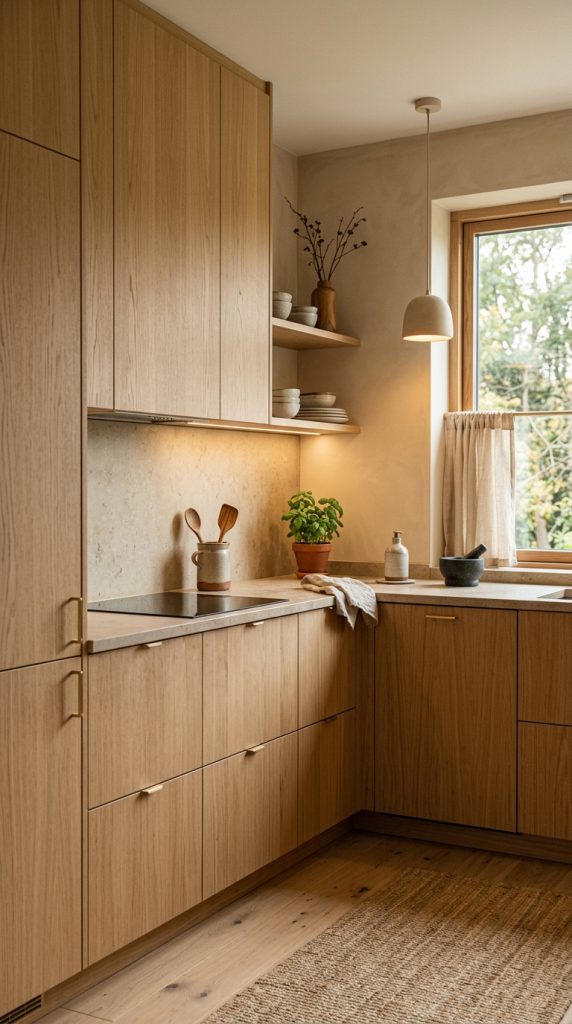
How to implement it
To add natural balance:
- Use wooden cabinetry or accents
- Choose stone or marble countertops with soft veining
- Add wooden cutting boards as subtle decor
- Incorporate woven baskets for storage
For flooring:
- Light oak or warm-toned wood works best
- Matte stone tiles add a grounded luxury feel
If you have a small kitchen, limit materials to 2–3 main natural textures to avoid visual clutter.
Best for
- Cozy minimalist homes
- Scandinavian-inspired kitchens
- Small warm interiors
- Luxury modern apartments
- Earth-toned aesthetics
Pro tip
Combining wood + stone + soft neutrals creates the perfect balance between minimalism and warmth.
Mistake to avoid
Avoid mixing too many competing natural textures. Too much variation can make the kitchen feel inconsistent instead of harmonious.
10. Hidden Handle Storage Cabinets for Ultra-Clean Walls
What it is
Hidden handle storage cabinets are a refined extension of minimalist kitchen design where the entire wall of cabinetry appears smooth, uninterrupted, and almost architectural. In 2026, this style is becoming a key feature of luxury minimalist kitchens because it removes every unnecessary visual break from the surface.
Instead of visible knobs or handles, these cabinets use push-to-open systems, recessed grooves, or integrated finger pulls that blend seamlessly into the design. The result is a clean wall effect where the kitchen looks more like a curated interior space rather than a busy working area.
This design is especially powerful in small kitchens because uninterrupted cabinet lines make the space feel wider and more structured.
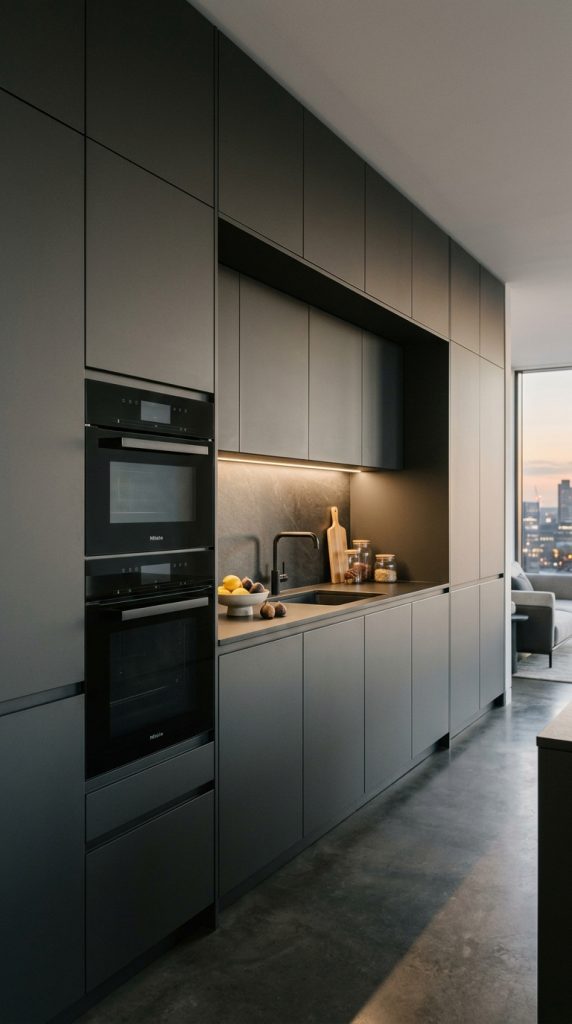
How to implement it
To achieve this look:
- Choose full-height cabinets with flat fronts
- Use push-to-open mechanisms or edge pull grooves
- Keep cabinet color consistent across the entire wall
- Use matte finishes for a softer, high-end feel
For a luxury effect:
- Extend cabinets up to the ceiling
- Align appliances within cabinetry for a flush look
- Avoid breaking the wall with mixed materials
If you have a small kitchen, this design helps visually expand the space by removing cluttered details.
Best for
- Modern apartments
- Small kitchens
- Luxury minimalist interiors
- Open-plan homes
- Clean architectural aesthetics
Pro tip
Monochrome cabinetry (same wall + cabinet tone) creates a seamless “built-in” luxury effect.
Mistake to avoid
Avoid mixing handle styles or adding decorative knobs—it immediately breaks the minimalist illusion.
11. Minimal Kitchen Styling with Functional Aesthetic Decor
What it is
Minimal kitchen styling is about carefully choosing a few functional decor elements that enhance beauty without creating clutter. In 2026, the focus is shifting toward “functional aesthetics,” where everything in the kitchen not only looks good but also serves a purpose.
Instead of filling counters with random decorative pieces, minimalist kitchens use intentional styling that blends beauty and usability. This creates a calm, curated environment that feels lived-in but still clean and organized.
The goal is not decoration overload—it is thoughtful simplicity.
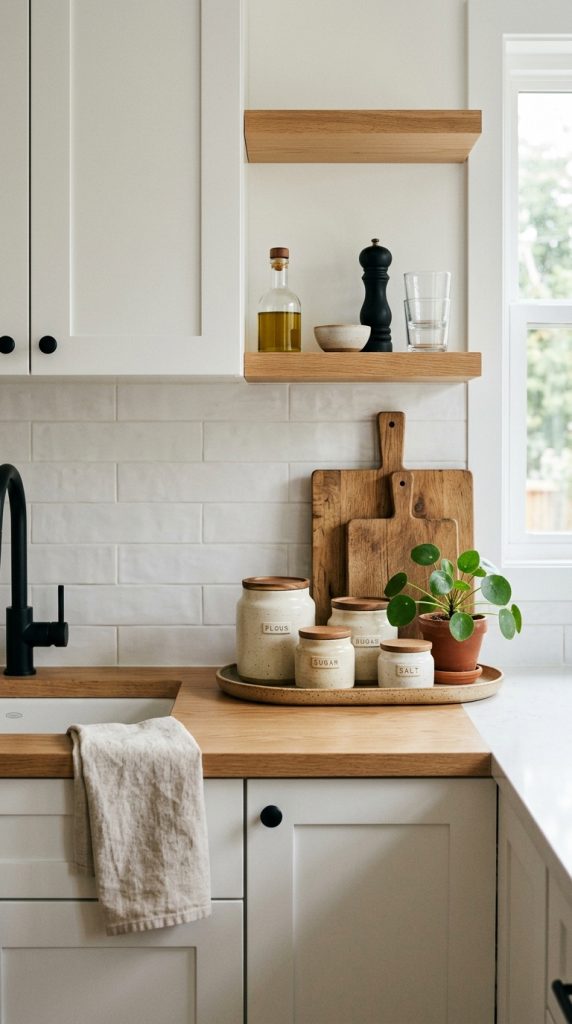
How to implement it
To style a minimalist kitchen:
- Use matching ceramic jars for everyday ingredients
- Display wooden cutting boards leaned against the backsplash
- Add a single plant or herb pot for freshness
- Use a neutral-toned tray to group essentials
For countertops:
- Keep styling limited to 2–3 visual elements
- Stick to a consistent color palette (beige, white, wood tones)
- Avoid random or colorful accessories
If you have a small kitchen, choose vertical decor like wall-mounted shelves instead of cluttering surfaces.
Best for
- Small and modern kitchens
- Minimalist lifestyles
- Cozy contemporary homes
- Clean aesthetic interiors
- Everyday functional spaces
Pro tip
When decor is used daily (like jars or utensils), it naturally feels more integrated and less cluttered than purely decorative items.
Mistake to avoid
Avoid over-styling countertops. Even beautiful decor loses its minimalist effect when too many items are displayed at once.