
Black kids’ hair is often described as versatile, but in real life, that versatility comes with responsibility. It is not just about styling—it is about maintenance, protection, time management, and consistency. Many parents quickly realize that doing hair once is not the problem; keeping it healthy and presentable over days or weeks is where the real challenge begins.
The most common struggle is unpredictability. One day the hair looks neat and defined, and within a short time it becomes dry, tangled, or puffy at the roots. This is not because the hair is difficult—it is because textured hair requires structure. Without the right styling approach, everyday activities like sleeping, sweating, playing, or even simple combing can slowly undo all the effort put into styling.
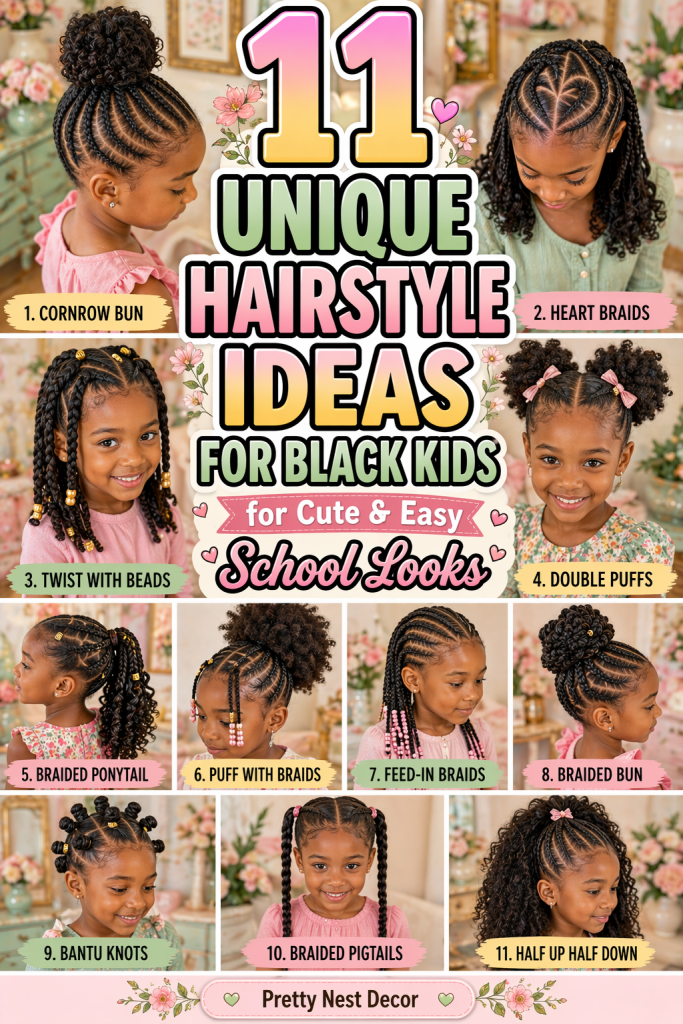
Another major issue is time pressure. Morning routines are often rushed, especially on school days. Between getting dressed, packing bags, and managing schedules, hair becomes one of the most time-sensitive tasks. This leads many parents to repeat the same quick styles again and again—not because they are the best option, but because they are the most “manageable under pressure.” Over time, this limits creativity and can even affect hair health if the same tension patterns are repeatedly used.
Hair care for Black kids is not just cosmetic—it is protective. The structure of textured hair makes it more prone to dryness because natural oils have a harder time traveling down the strands. That means moisture retention is essential. When hairstyles are too tight, too dry, or constantly manipulated, breakage becomes more likely. On the other hand, well-planned protective styles can help retain length, reduce breakage, and keep the hair healthier over time.
But protection alone is not enough. Comfort matters just as much. A hairstyle that looks good but causes scalp tension, pulling, or discomfort will never last in a real household routine. Kids are active—they run, sleep, sweat, and move constantly. If a style is not comfortable, it will not stay intact, no matter how good it looks on the first day. That is why the best hairstyles are the ones that balance neatness with flexibility.
There is also an emotional side to hairstyling that often gets ignored. For many kids, hair is part of their confidence and self-expression. When they feel good about their hairstyle, they carry themselves differently. But if styling becomes painful, repetitive, or stressful, it can create resistance. Over time, this turns hair care into a daily struggle instead of a normal routine. That is why choosing the right styles is not just about appearance—it is about creating a positive experience.
Another overlooked factor is durability. A hairstyle that looks perfect immediately after styling is not enough. It needs to survive real life: school hours, outdoor play, naps, and sleep. Many styles fail not because they are poorly done, but because they were never designed for long wear. A good hairstyle should reduce daily manipulation, not require constant fixing.
If you have a small room of time in the morning, the goal is not perfection—it is reliability. A hairstyle should be easy enough to repeat, strong enough to last, and simple enough that it does not create stress every time it needs to be redone. That is the difference between temporary styling and practical hair care.
Texture also plays a major role in how hairstyles behave. Tighter curls shrink more, looser curls expand differently, and some patterns lose definition faster than others. This means there is no universal approach that works for every child. The most effective hairstyles are the ones that respect natural texture while still keeping the hair controlled and protected.
This guide focuses on exactly that—real, practical, and wearable hairstyle ideas for Black kids that work beyond the styling chair. These are not just visual inspirations; they are structured options designed for everyday life, school routines, active movement, and long-term hair health.
The purpose is simple: to help you move away from stressful, repetitive styling cycles and toward a more manageable system where hair care becomes easier, not harder.
1. Classic Box Braids for Kids
Explanation (What it is)
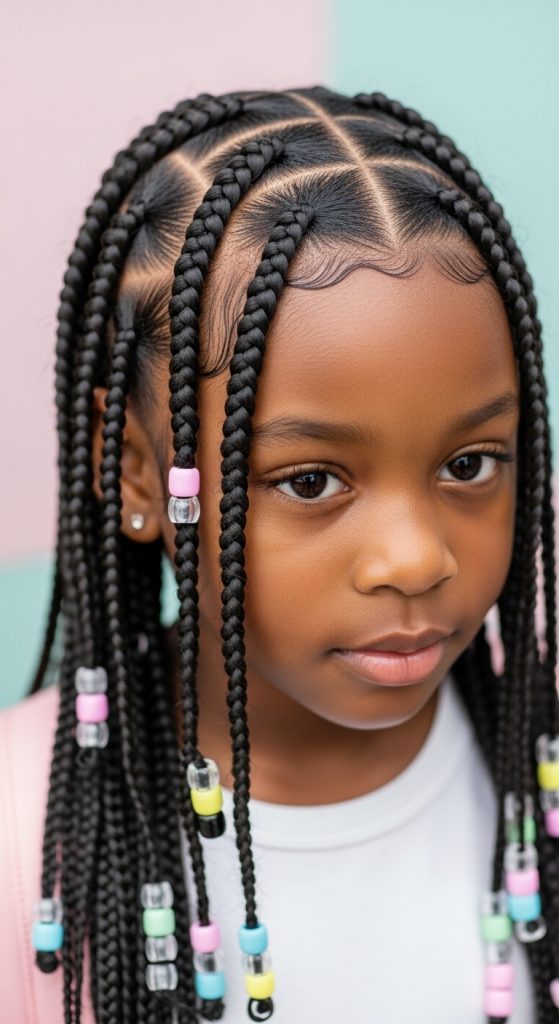
Box braids are one of the most reliable protective hairstyles for Black kids because they combine structure, durability, and versatility in one style. The hair is divided into small square-shaped sections (“boxes”), and each section is braided from root to tip. Extensions can be added for length, but for kids, natural-length box braids are often more practical and comfortable.
What makes this style so valuable is its stability. Once installed correctly, box braids reduce daily combing, protect the ends of the hair, and keep the scalp relatively undisturbed. For active children, this means less time spent redoing hair and more time letting the style naturally hold through school days, play, and sleep.
The key benefit is protection. Since the hair is tucked into braids, it is less exposed to friction, dryness, and breakage caused by constant manipulation.
How to implement (Practical steps)
Start with clean, fully detangled hair. This step is critical—any knots left in the hair will cause discomfort once braided.
Apply a light leave-in conditioner to add moisture, followed by a small amount of oil to seal it. Then divide the hair into even square sections using a rat-tail comb. Clean parting is important because uneven sections make the style look messy and reduce longevity.
Begin braiding each section from the root, keeping tension firm but not tight. This balance is important—too tight causes scalp pain and tension, too loose causes the braid to unravel quickly.
For kids, medium-sized braids are often the best choice. They are quicker to install than micro braids and lighter on the scalp.
Finish by dipping ends in warm water (if extensions are used) or securing naturally if it is all-natural hair.
Best for
- School-going kids with active routines
- Parents who want low-maintenance weekly styling
- Hair that needs protection from breakage and dryness
Pro tip
Do not make sections too small for kids. Medium or slightly larger parts reduce tension and make the style more comfortable for long wear.
Mistake to avoid
Avoid over-tight braiding at the scalp. It may look neat initially but can lead to discomfort, itching, and even hair thinning over time.
2. Cornrows with Simple Straight Backs
Explanation (What it is)
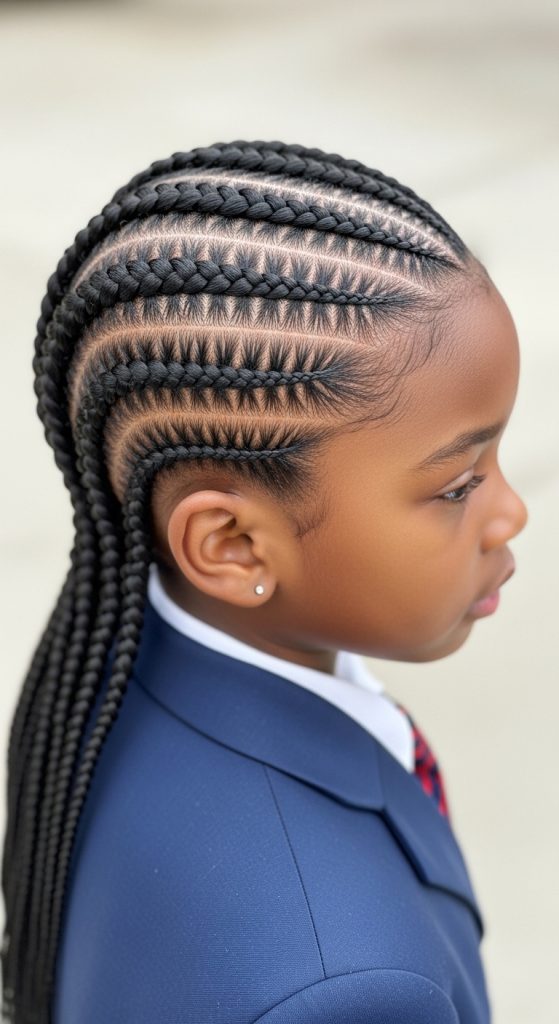
Cornrows are a foundational protective style where the hair is braided flat against the scalp in continuous rows. The simplest and most practical version for kids is straight-back cornrows, where all braids move in one direction from front to back.
This style is highly effective because it keeps hair completely secured and reduces daily maintenance to almost zero. It also works well for school environments because it stays neat for days without needing restyling.
Cornrows are especially useful for kids with tightly coiled or thick hair textures, where daily detangling can become time-consuming and stressful.
How to implement (Practical steps)
Start with freshly washed and moisturized hair. Apply a light leave-in conditioner to soften the strands and make braiding easier.
Create straight, even sections from the front hairline to the back using a comb. Clean parting is essential because cornrows are very visible—any unevenness will stand out immediately.
Begin braiding close to the scalp, gradually feeding in hair as you move backward. Maintain consistent tension throughout the braid, but avoid pulling too tightly at the edges.
For kids, 6–10 cornrows are usually enough depending on head size. Fewer braids mean quicker installation and less scalp stress.
Finish the ends with small elastic bands or simple sealed braids, depending on preference.
Best for
- Busy school weeks with minimal styling time
- Active kids who need hair fully secured
- Parents looking for quick weekly maintenance styles
Pro tip
Apply a light scalp oil after installation every few days. This keeps the scalp hydrated without disturbing the braids.
Mistake to avoid
Avoid overly small cornrows for children. Tiny sections increase installation time and can create unnecessary tension on sensitive scalps.
3. Two-Strand Twists (Natural Protective Style)
Explanation (What it is)
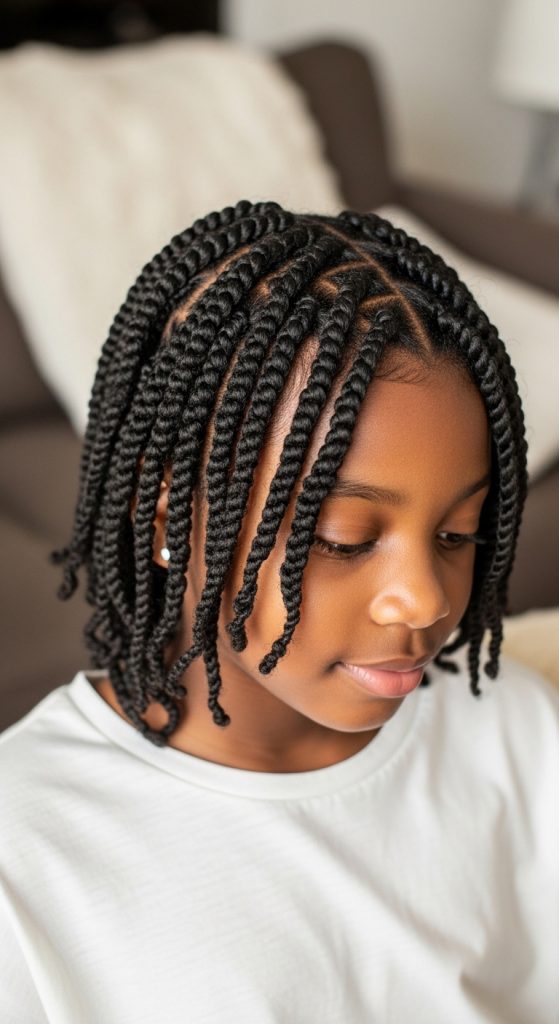
Two-strand twists are a simple yet powerful protective style where two sections of hair are wrapped around each other from root to tip. Unlike braids, which use three strands, twists are gentler on the scalp and easier to install and remove.
This style is especially beneficial for kids because it reduces manipulation while still keeping hair neat and manageable. It also helps retain moisture better than loose hair because the strands are tucked and protected.
Twists can be worn as a final style or later unraveled for defined twist-out curls, giving flexibility in styling without extra stress on the hair.
How to implement (Practical steps)
Start with damp, detangled hair. Apply a water-based leave-in conditioner to keep hair hydrated, followed by a light cream or butter to lock in moisture.
Divide hair into medium sections. Smaller sections create longer-lasting twists, while larger sections make the process faster.
Take two strands from each section and twist them around each other evenly from root to end. Keep tension consistent—tight enough to hold, but not so tight that it pulls the scalp.
You can twist in the same direction throughout for a uniform look, or slightly vary tension for a more natural finish.
Allow twists to air-dry fully to set the style and reduce frizz.
Best for
- Kids with sensitive scalps
- Parents who prefer gentler protective styles
- Medium to thick natural hair textures
Pro tip
Twists last longer when installed on slightly damp—not soaking wet—hair. This helps them set without frizzing too quickly.
Mistake to avoid
Do not twist dry hair. This leads to breakage and makes the style harder to maintain, especially for children with fragile strands.
4. Afro Puff Ponytails (Single or Double)
Explanation (What it is)
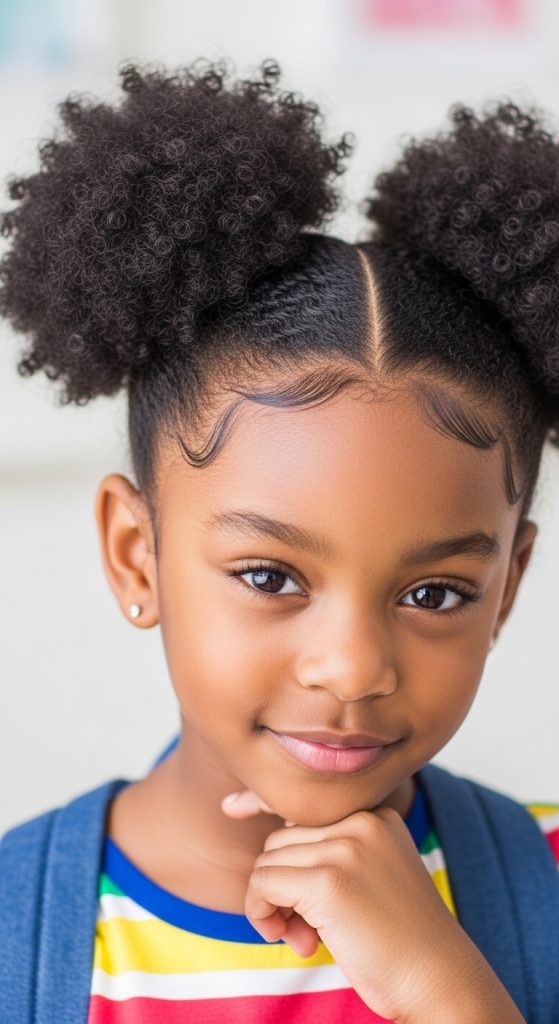
Afro puff ponytails are one of the simplest yet most effective hairstyles for Black kids because they work with natural texture instead of fighting it. The hair is gathered into one or two sections and secured into soft puffs, allowing curls and coils to stay visible, defined, and free while still being controlled.
This style is especially useful for kids because it reduces daily manipulation while still looking fresh and playful. It doesn’t require complex braiding or long installation time, but when done correctly, it can still last multiple days with minimal maintenance. The biggest advantage is comfort—there is no heavy pulling or tight tension when styled properly.
Afro puffs also allow the scalp to breathe, which is important for healthy hair growth. They are flexible enough for school, playtime, and even casual events without needing full restyling.
How to implement (Practical steps)
Start with moisturized hair. Spray a light water-based leave-in conditioner to soften the strands and make them easier to gather. Follow with a small amount of natural oil or cream to lock in hydration.
Use a soft brush or your fingers to gather the hair into one or two sections depending on the look you want. Single puff gives a bold, full look, while double puffs create a more playful style.
Secure each section with a soft elastic band or puff holder. Avoid tightening too much—this is where most mistakes happen. The goal is control, not tension.
Once secured, gently shape the puff using your hands to create even volume. You can also define edges lightly for a neater finish, but keep it minimal for kids.
If needed, re-moisturize lightly every 1–2 days to maintain softness.
Best for
- Active school days
- Kids with medium to tight curls
- Parents needing quick styling options
Pro tip
If hair is slightly stretched (not freshly washed), puffs hold better and look fuller. This makes second-day or stretched hair ideal for this style.
Mistake to avoid
Avoid pulling the puff too tightly. Excess tension can cause discomfort and stress on the edges, especially for children with delicate hairlines.
5. Beaded Braided Cornrows
Explanation (What it is)
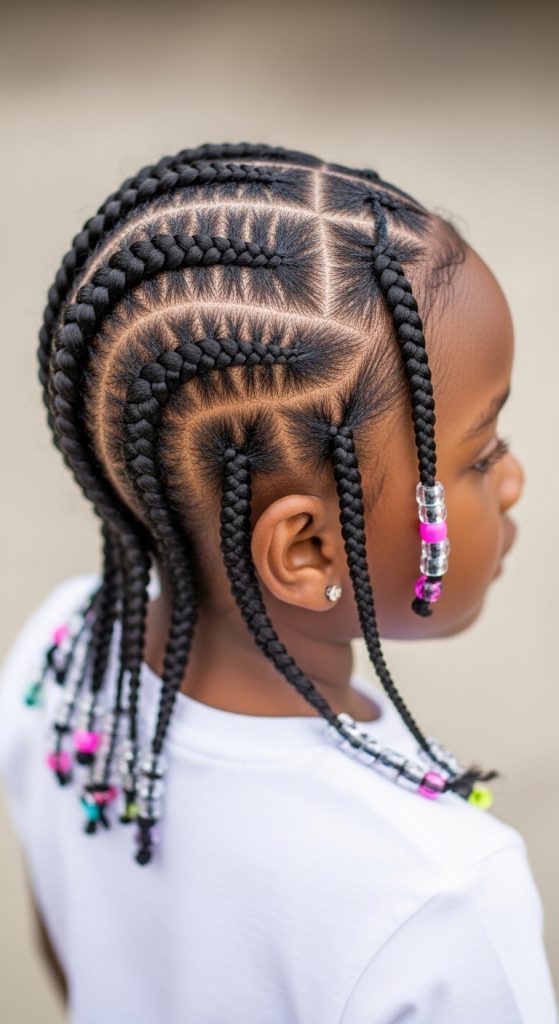
Beaded braided cornrows combine structure with creativity. The hair is braided flat against the scalp in rows, and decorative beads are added at the ends for style and personality. This makes it one of the most expressive protective hairstyles for kids, blending neatness with fun.
Cornrows already provide strong protection by keeping hair flat and secure, but adding beads makes the style more engaging for children. It allows them to feel involved in their look, which often makes styling time easier and more enjoyable.
However, this style is not just decorative—it is still a protective hairstyle. The braids reduce daily combing, minimize tangling, and help retain moisture when maintained properly.
How to implement (Practical steps)
Begin with clean, detangled, and moisturized hair. Apply a light leave-in conditioner to soften strands before braiding.
Create even sections using a rat-tail comb. Straight and clean parting is very important because cornrows are highly visible and define the entire style.
Start braiding close to the scalp, feeding in hair as you move backward. Keep tension even throughout the braid—firm enough to hold shape, but not tight enough to cause discomfort.
Once the braids are complete, secure the ends and attach beads using a beading tool or small elastic bands. Choose lightweight beads to avoid pulling on the hair.
For kids, keeping braid size medium ensures comfort and faster installation.
Best for
- School events or special occasions
- Kids who enjoy colorful, expressive hairstyles
- Long-lasting protective styling (1–2 weeks)
Pro tip
Let the child help choose bead colors. When kids feel involved, they are more cooperative during styling.
Mistake to avoid
Avoid using heavy beads or adding too many at once. Excess weight can pull on the braids and cause scalp strain over time.
6. Bantu Knots (Protective & Style-Out Combo)
Explanation (What it is)
Bantu knots are a unique hairstyle where sections of hair are twisted and wrapped into small buns across the scalp. This style works both as a protective hairstyle and as a curl-setting method, making it highly versatile for kids.
For children, Bantu knots are especially useful because they protect the ends of the hair completely while keeping everything secure and neat. They also offer a second styling option—once unraveled, they create defined, bouncy curls without heat.
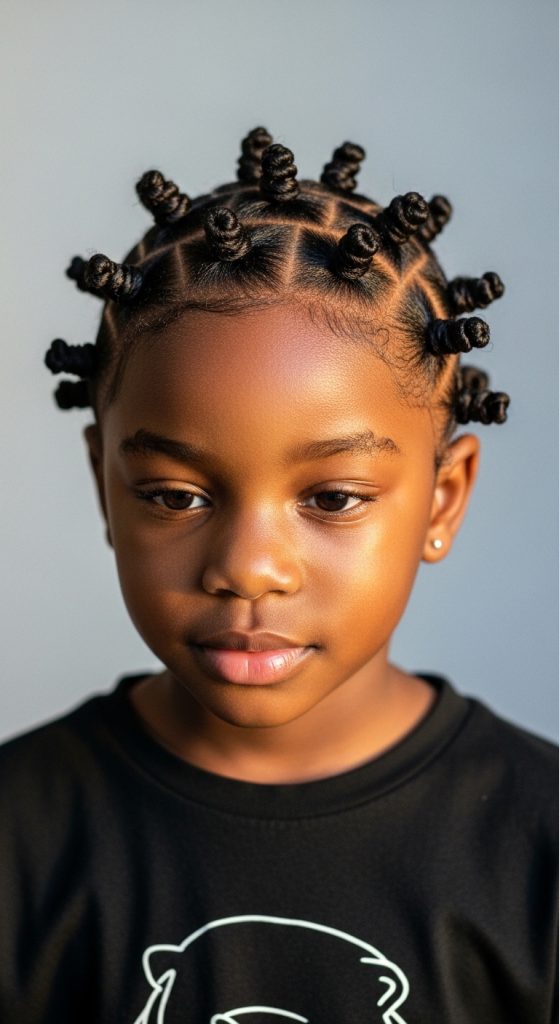
This dual-purpose feature makes them practical for both everyday wear and special occasions. They are also visually interesting, which many kids enjoy.
How to implement (Practical steps)
Start with damp, moisturized hair. Apply a leave-in conditioner to soften strands, followed by a light styling cream for hold.
Divide the hair into small or medium sections depending on desired knot size. Smaller knots create more defined curls later, while larger knots are quicker to install.
Twist each section tightly from root to tip, then wrap the twisted strand around itself to form a small bun. Secure it with a soft band or pin.
Repeat across the entire head, ensuring consistent sizing for a balanced look.
Allow knots to dry completely if you plan to take them out later for curls. If worn as a protective style, they can be kept intact for several days with light scalp care.
Best for
- Kids with natural curls or coils
- Parents who want style + curl definition options
- Short to medium-length natural hair
Pro tip
Slightly stretched hair (not freshly washed) helps knots hold better and reduces frizz when unraveled.
Mistake to avoid
Do not make knots too tight at the scalp. This can cause discomfort and make removal harder later, especially for children.
7. Half-Up Braided Crown Style
Explanation (What it is)
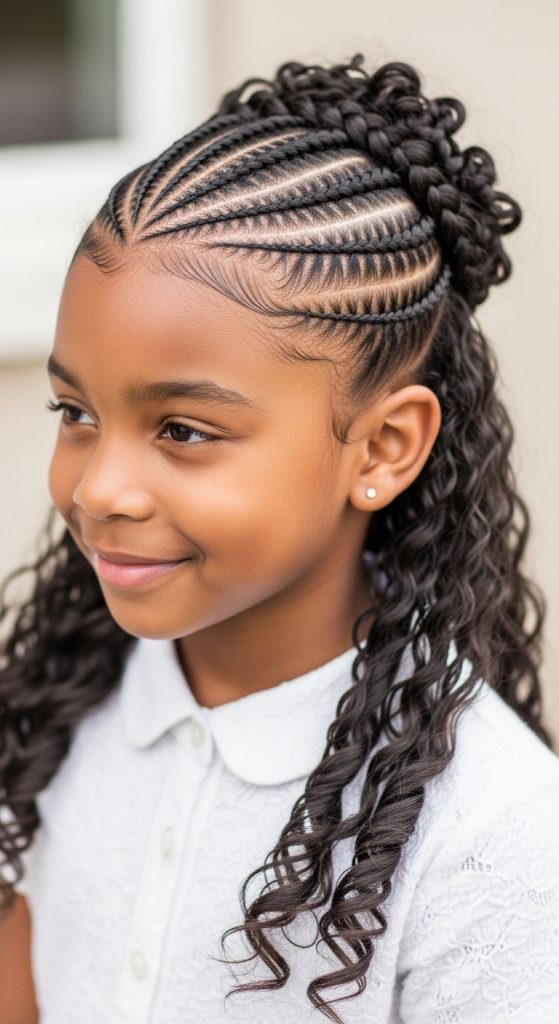
The half-up braided crown is a soft, elegant hairstyle that blends structure with natural texture. It works by taking sections of hair from both sides of the head, braiding them, and connecting them at the back to form a crown-like shape, while the rest of the hair is left loose.
For kids, this style is powerful because it gives the “done” look without fully restricting the hair. It keeps hair away from the face, which is practical for school or events, but still allows natural curls or waves to show. It also adds a decorative element without needing extensions or heavy styling tools.
This hairstyle is especially useful when you want something that looks special but does not take hours to install or damage the hair with excessive tension.
How to implement (Practical steps)
Start with moisturized and detangled hair. A light leave-in conditioner helps reduce frizz and makes braiding smoother.
Take a section from one side of the head near the temple and begin a simple three-strand braid, moving toward the back. Repeat the same on the other side.
Bring both braids toward the back of the head and secure them together with a soft elastic or pins, forming a crown shape.
Leave the remaining hair loose. It can be worn natural, lightly stretched, or softly curled depending on the child’s hair type.
Gently loosen the braids slightly for a softer, fuller crown effect.
Best for
- School events and parties
- Kids with medium-length natural hair
- Parents wanting a quick but decorative style
Pro tip
Loosening the braid edges slightly makes the crown look fuller and more natural instead of tight or harsh.
Mistake to avoid
Do not braid too tightly at the edges or hairline. This creates discomfort and can cause tension over time.
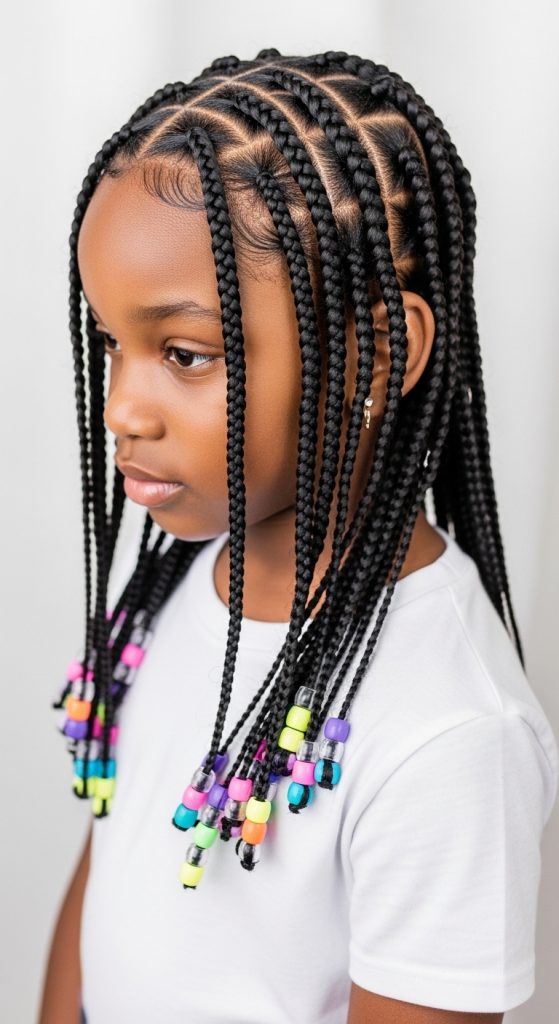
8. Simple Box Braids with Beads Ends
Explanation (What it is)
This is a simplified version of classic box braids designed specifically for kids, focusing on medium-sized sections and lightweight beads at the ends. It combines long-lasting protection with playful styling, making it one of the most practical options for busy routines.
Unlike complex or micro braids, this version keeps sections larger and installation time shorter. The beads add personality and make the hairstyle more engaging for children, which often increases their willingness to sit through styling.
This style is especially effective for reducing daily combing while keeping hair neat for extended periods.
How to implement (Practical steps)
Start with clean, fully detangled hair. Apply a moisturizing leave-in conditioner to keep strands soft and prevent dryness.
Divide hair into medium square sections using a comb. Clean, even parting is very important for a neat final result.
Braid each section from root to tip, maintaining consistent tension—firm enough to hold, but never tight enough to cause discomfort.
Once braiding is complete, secure the ends and attach lightweight beads using elastic bands or a beading tool.
You can dip ends in warm water if extensions are used, or simply secure naturally for natural hair braids.
Best for
- School weeks with minimal maintenance
- Kids who prefer longer-lasting hairstyles
- Active children who need secure styling
Pro tip
Medium-sized braids last longer and are more comfortable than very small or very large sections for kids.
Mistake to avoid
Avoid heavy beads or excessive decorations. Too much weight can strain the hair and reduce comfort during daily wear.
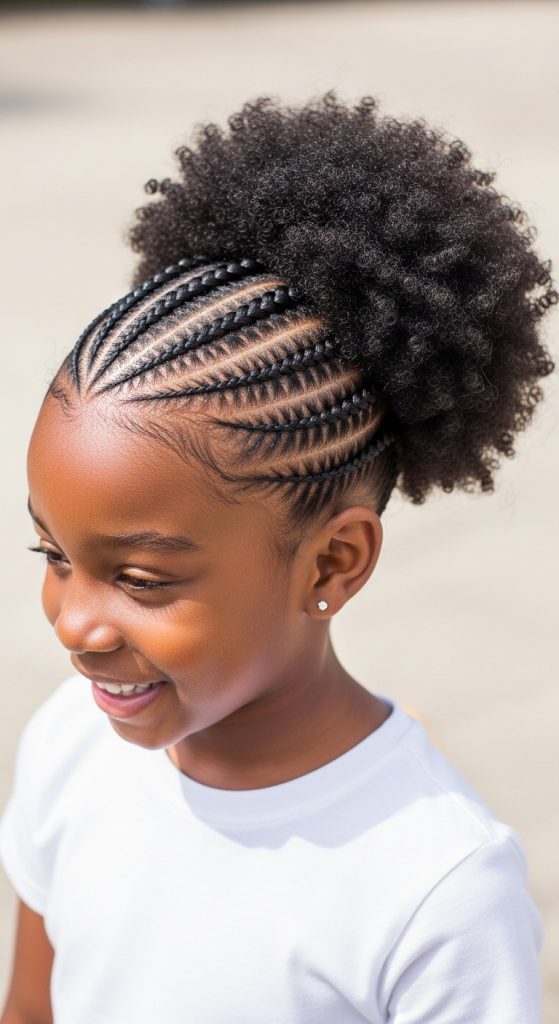
9. Puff with Braided Front Design
Explanation (What it is)
This hairstyle combines two elements: neat braided sections at the front and a natural puff at the back. It creates a balanced look where the front is styled and structured, while the back remains soft and natural.
It is especially useful for kids because it gives a “styled” appearance without requiring full-head braiding. The braided front keeps hair out of the face, while the puff allows natural texture to remain free and comfortable.
This style is often chosen for its balance between practicality and creativity. It looks detailed, but it is actually simple to maintain.
How to implement (Practical steps)
Start with moisturized hair. Apply a light leave-in conditioner to soften strands and reduce breakage during styling.
Section the front portion of the hair from ear to ear. Braid this section into small cornrows or simple straight-back braids depending on preference.
Once the front is braided, gather the remaining back section into a puff using a soft band. Adjust volume by gently shaping the puff with your hands.
Ensure the puff is not too tight to avoid scalp tension. Lightly smooth edges if desired for a cleaner finish.
Best for
- School days and casual events
- Kids with natural curls or coils
- Parents who want quick styling with a neat front look
Pro tip
This style works best on stretched or slightly old hair, as it gives better control for both braiding and puff formation.
Mistake to avoid
Do not pull the puff too tightly or over-braid the front sections. Both can cause discomfort and reduce the style’s wearability over time.
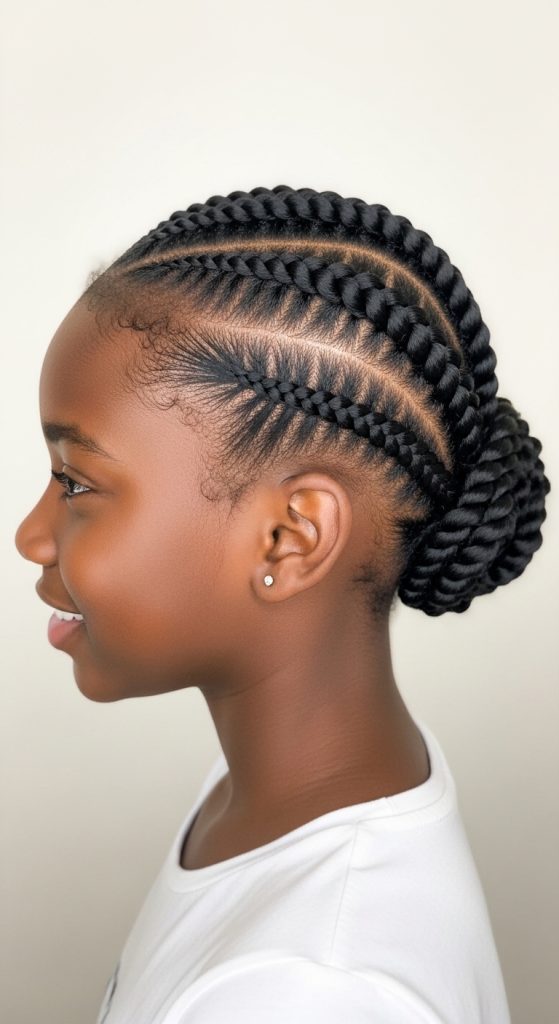
10. Twisted Updo Bun for Kids
Explanation (What it is)
The twisted updo bun is a neat, protective hairstyle where the hair is divided into sections, twisted, and then pinned or wrapped into a bun shape at the back or top of the head. For Black kids, this style is especially useful because it keeps all hair secured, reduces daily tangling, and protects the ends from breakage caused by friction during sleep or play.
Unlike a tight adult-style bun, this version is softer, looser, and designed with comfort in mind. It gives a clean, polished look while still respecting the sensitivity of a child’s scalp. It also works well for school, special occasions, or days when you want the hair completely off the face and neck.
This style is also highly adaptable. You can make it look simple for school days or dress it up with beads, clips, or small accessories for events.
How to implement (Practical steps)
Start with moisturized, detangled hair. Use a light leave-in conditioner to soften strands and make twisting easier.
Divide the hair into 4–8 sections depending on thickness. Take each section and twist it tightly from root to end. Keep tension controlled—firm enough to hold shape, but not tight enough to pull the scalp.
Once all sections are twisted, bring them together at the back or crown of the head. Wrap or pin them into a bun shape, layering twists over each other until the bun is formed.
Secure with soft pins or bands. Gently adjust the bun to make it round and balanced. You can pull a few front strands loose for a softer look if desired.
Finish with a light moisturizer or oil on the scalp to maintain hydration.
Best for
- School presentations or formal days
- Kids with medium to thick natural hair
- Parents who want a fully secured, long-lasting style
Pro tip
Twist sections while the hair is slightly damp—not soaking wet—for better hold and less frizz once the bun is formed.
Mistake to avoid
Avoid making the twists too tight or the bun too heavy. Excess tension can cause discomfort and reduce how long the child can comfortably wear the style.
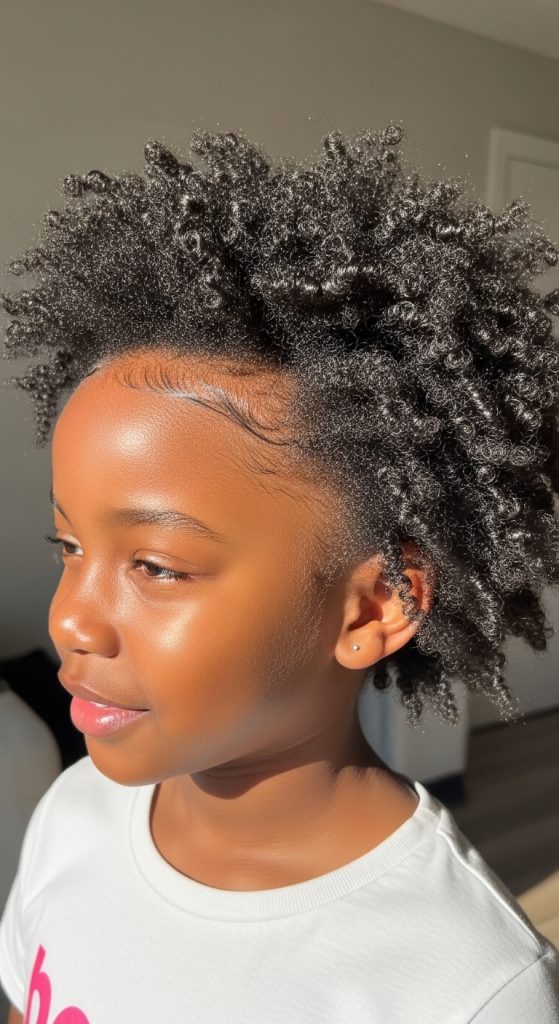
11. Wash-and-Go Defined Curls (Kid-Friendly Version)
Explanation (What it is)
The wash-and-go is a natural hairstyle that enhances the child’s curl pattern without heavy manipulation or protective braiding. For Black kids, this version focuses on defining curls while keeping the routine simple and gentle.
Instead of forcing structure, this style works with the natural texture of the hair. It is ideal for days when you want the hair to breathe, especially after protective styles like braids or twists. When done correctly, it creates soft, defined curls that look fresh, healthy, and natural.
The key benefit is simplicity—but it requires proper moisture control to prevent frizz and dryness.
How to implement (Practical steps)
Start with freshly washed hair. Use a moisturizing shampoo and follow with a deep conditioner to ensure softness and hydration.
While the hair is still damp, apply a leave-in conditioner evenly from roots to ends. Then apply a light curl cream or gel to help define curl patterns.
Section the hair and gently finger-coil or scrunch depending on texture. Avoid combing once products are applied, as this can break curl formation.
Let the hair air-dry or use a diffuser on low heat. Do not disturb the curls while drying, as this can create frizz.
Once fully dry, gently separate curls with oiled fingers for volume.
Best for
- Weekend or rest days for hair
- Kids with well-defined curl patterns
- Parents who want a low-tension, natural style
Pro tip
Applying products in sections while hair is still very wet helps curls form better and reduces frizz.
Mistake to avoid
Do not over-touch the hair while it dries. Constant manipulation breaks curl definition and leads to puffiness instead of defined curls.