
In today’s fast-moving digital world, your workspace is no longer just a table, chair, and laptop setup. It has become something much deeper — a reflection of your personality, your mindset, and even your success habits. Whether you are working from home, running a small business, studying online, or building a creative career, your office space plays a huge role in how productive, focused, and motivated you feel every single day.
If you have a small room or even just a corner in your bedroom, you might already know the struggle. Sometimes the space feels cluttered, dull, or completely uninspiring. You sit down to work, but instead of feeling focused, you feel distracted. Your eyes move everywhere — messy wires, plain walls, uncomfortable seating, or poor lighting. Slowly, your energy drops, and even simple tasks start feeling heavy.

This is where an aesthetic office workspace setup changes everything.
An aesthetic workspace is not just about making things look pretty for Pinterest photos. It is about designing a space that supports your mental clarity, productivity, and creativity. When your environment feels calm, organized, and visually pleasing, your brain naturally responds in a better way. You feel more motivated to sit down and start working. You stay focused longer without feeling tired. Even stressful tasks feel easier to handle.
This is not just a design trend — it is psychology.
Studies in environmental psychology show that our surroundings directly impact our mood, concentration, and performance. A cluttered or poorly designed workspace increases mental load. On the other hand, a clean, well-organized, and visually balanced environment reduces stress and improves focus. This is why modern professionals, content creators, and students are investing more time into building aesthetic workspaces that feel like a personal sanctuary rather than just a working corner.
But here’s the problem most people face:
They see beautiful Pinterest office setups online and think, “My space can never look like that.”
The truth is, you don’t need a big budget or a large room to create a stunning workspace. You just need the right ideas, smart styling, and a clear understanding of what actually works in real life. Even the smallest corner can be transformed into a highly aesthetic and productive office setup if designed correctly.
For example, if you have a small room, you can still create a clean minimalist desk setup using floating shelves, neutral colors, and proper lighting. If you are a student, you can design a compact study zone that feels inspiring without taking too much space. If you are a freelancer or content creator, you can build a stylish setup that looks camera-ready for Zoom calls, videos, or Pinterest photos.
The goal is not perfection — the goal is functionality with beauty.
In this guide, you will discover 12 aesthetic office workspace setup ideas that are not only visually appealing but also practical, realistic, and easy to implement in any space. Each idea is designed to help you upgrade your workspace step-by-step, whether you are starting from scratch or improving your current setup.
You will learn how to:
- Choose the right desk style for your space
- Use lighting to completely transform your mood
- Organize your workspace like a minimalist aesthetic setup
- Add decor without creating clutter
- Create a Pinterest-worthy desk environment on a budget
- Improve productivity through smart design choices
We will not just talk about decoration — we will focus on real transformation strategies that actually work in everyday life.
Because at the end of the day, your workspace should do more than just look good in pictures. It should help you think clearly, work efficiently, and feel inspired every time you sit down.
So, if you are ready to turn your boring desk into a calm, aesthetic, and highly productive workspace that feels like a dream setup — let’s dive into the 12 powerful ideas that will completely change the way you work and create.
1. Minimalist White Desk Setup with Clean Aesthetic Flow
What it is
A minimalist white desk setup is one of the most powerful aesthetic workspace styles because it focuses on simplicity, clarity, and visual calmness. The entire concept revolves around using a clean white or neutral-colored desk, limited decor, and organized essentials so that your mind feels “uncluttered” the moment you sit down.
This setup is especially popular on Pinterest because it creates that soft, luxury, “high-focus” vibe that looks both professional and peaceful. The idea is not to make the desk empty, but to make everything intentional. Every item has a purpose, and nothing feels visually heavy.
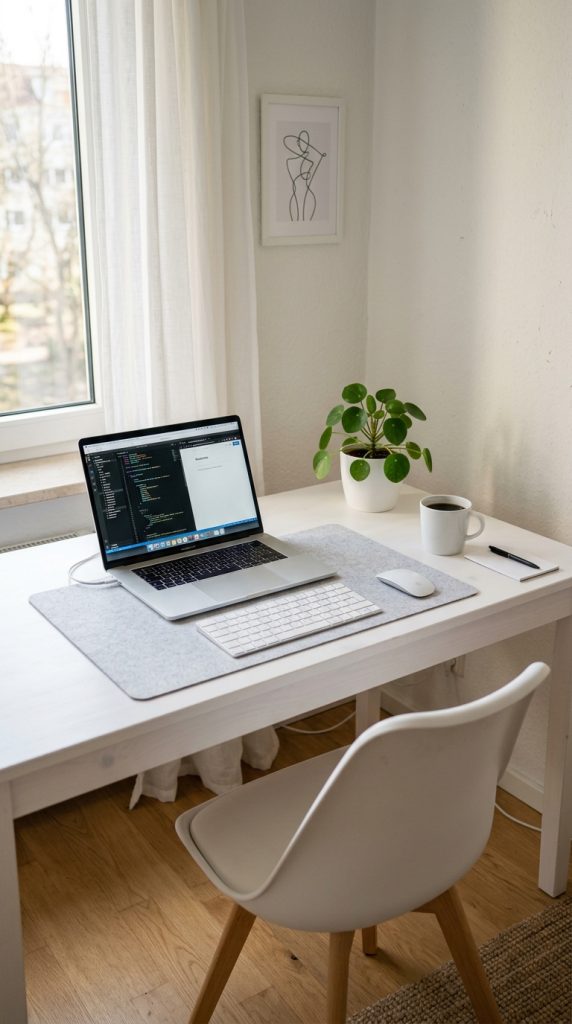
If you have a small room, this setup works even better because white tones reflect light and make the space feel bigger, brighter, and more open.
How to implement it (practical steps)
Start with your desk. Choose a white, beige, or light wood table. If you already have a dark desk, you don’t need to replace it — you can use a white desk mat to instantly shift the aesthetic.
Next, remove everything unnecessary. Keep only essentials like:
- Laptop or PC
- A small organizer tray
- A lamp (preferably white or neutral tone)
- One decorative element (plant or candle)
Now focus on organization. Use small storage boxes or drawer dividers to hide clutter. The key rule is: if it doesn’t need to be visible, it should not be visible.
For wall setup, keep it simple:
- One floating shelf OR
- One small frame OR
- A clean blank wall with soft lighting
Add lighting carefully. Natural light is best, but if that’s not available, use a warm LED desk lamp. Avoid harsh white lighting because it kills the cozy aesthetic.
Finally, keep cables hidden using clips or cable boxes. Even a beautiful desk can look messy if wires are visible.
Best for (who should use it)
This setup is perfect for:
- Students who need focus and calm environment
- Remote workers who attend long computer sessions
- Writers and freelancers who want distraction-free space
- People with small rooms or shared spaces
If you feel overwhelmed easily or lose focus quickly, this setup works especially well because it reduces visual noise.
Pro tip (expert advice)
Use a “one-color rule” system — stick to 2–3 colors maximum (white, beige, soft gray). This keeps your workspace visually balanced and prevents aesthetic clutter. Also, place your desk near natural light if possible, because natural lighting instantly enhances the minimalist look without any extra decor.
Mistakes to avoid
- Over-decorating with too many aesthetic items
- Using bright, clashing colors
- Leaving cables exposed
- Filling desk with non-essential objects
- Using harsh white lighting instead of warm tones
2. Cozy Aesthetic Workspace with Warm Lighting & Soft Textures
What it is
A cozy aesthetic workspace is designed to feel warm, comforting, and emotionally relaxing. Unlike minimal setups that focus on emptiness and clarity, this style focuses on comfort and mood. It uses warm lighting, soft textures, and gentle colors to create a space where you actually want to sit for hours.
This setup is perfect for people who work late nights, study long hours, or prefer a calm, emotional connection with their workspace. It feels less like an office and more like a personal creative corner.

If you have a small room, this setup can completely change the energy of your space without major renovations.
How to implement it (practical steps)
Start with lighting — this is the most important part of a cozy setup. Replace harsh overhead lighting with:
- Warm desk lamps
- Fairy lights
- LED strip lights behind desk or shelves
Warm tones like yellow, amber, and soft orange create a relaxing atmosphere.
Next, focus on textures. Add:
- A soft desk mat
- A comfortable chair cushion
- A small knitted throw (if space allows)
- Wooden or matte accessories
Now bring in soft decor elements:
- Small indoor plants (like pothos or succulents)
- A candle or diffuser
- A minimal photo frame or vision board
Keep the desk slightly more “lived-in” compared to minimalist setups, but still organized. The goal is cozy, not cluttered.
For wall styling, you can add:
- Soft aesthetic prints
- A corkboard with inspirational notes
- String lights around shelves or frames
Best for (who should use it)
This setup is ideal for:
- Writers and creative professionals
- Students studying at night
- People who feel stressed in overly minimal environments
- Anyone who prefers warm, comforting spaces
If you often feel tired or unmotivated while working, this setup helps create emotional comfort that encourages longer focus sessions.
Pro tip (expert advice)
Layer your lighting instead of relying on one source. Combine a desk lamp + ambient LED light + natural light. This layering effect creates depth and instantly upgrades your workspace aesthetic without expensive decor.
Mistakes to avoid
- Using only bright white lights (kills cozy vibe)
- Adding too many decorative items
- Ignoring chair comfort
- Mixing too many color tones
- Overcrowding desk surface
3. Modern Tech Workspace with Smart Organization Setup
What it is
A modern tech workspace is designed for productivity, efficiency, and a clean digital workflow. It focuses on integrating technology smoothly into your setup while keeping everything highly organized and visually sleek.
This setup is commonly seen in content creator studios, startup offices, and remote workstations. It looks professional, structured, and powerful — perfect for people who spend most of their time on laptops, monitors, and digital tools.

If you have a small room, this setup helps you maximize space while keeping everything functional and clutter-free.
How to implement it (practical steps)
Start with your desk layout. A modern tech setup usually includes:
- Dual monitors OR laptop + monitor stand
- Wireless keyboard and mouse
- Minimal desktop accessories
Use a monitor stand to elevate screens — this instantly improves posture and adds storage space underneath.
Now focus on cable management. This is extremely important for a tech setup:
- Use cable trays under the desk
- Use cable clips along edges
- Hide extension boards inside boxes
Next, organize your gadgets:
- Keep chargers in one dedicated box
- Use labeled drawers for accessories
- Store unused devices out of sight
Lighting is also important. Use:
- LED backlight strips behind monitors
- Soft desk lamp for balance
- Avoid screen glare by positioning lights correctly
For aesthetics, keep a neutral tech palette:
- Black, white, gray, or silver tones
- Matte finishes instead of glossy clutter
- Simple geometric desk accessories
Add one or two modern decor items only, such as:
- A digital clock
- A small plant
- A sleek headphone stand
Best for (who should use it)
This setup is best for:
- Remote workers and IT professionals
- Gamers and streamers
- Freelancers working on digital platforms
- Content creators and editors
If you rely heavily on multiple devices, apps, or long screen hours, this setup is designed specifically for you.
Pro tip (expert advice)
Invest in vertical space optimization. Use wall-mounted shelves or pegboards to store accessories. This keeps your desk surface clean and improves workflow efficiency dramatically.
Mistakes to avoid
- Leaving cables unmanaged (ruins entire aesthetic)
- Overloading desk with gadgets
- Using mismatched tech colors and styles
- Poor monitor height positioning
- Ignoring ergonomic setup
4. Scandinavian Natural Workspace with Wood & Neutral Harmony
What it is
A Scandinavian natural workspace is a clean, balanced, and nature-inspired office setup that focuses on simplicity, functionality, and warmth through natural materials. This style comes from Nordic design principles where “less is more,” but comfort is never sacrificed.
Instead of looking empty or overly decorated, this setup feels calm, breathable, and naturally aesthetic. It combines light wood textures, soft neutral colors, and minimal decor to create a workspace that reduces stress and improves focus.

If you have a small room, this setup is especially powerful because it visually expands the space while still keeping it warm and inviting.
How to implement it (practical steps)
Start with your desk. Choose light wood tones like oak, birch, or maple. If you already have a desk, you can cover it with a wood-texture desk mat or vinyl wrap to achieve the same effect.
Keep your color palette neutral:
- White
- Beige
- Light gray
- Soft brown
Now focus on furniture balance. A Scandinavian workspace should feel open, so avoid bulky items. Choose slim-profile chairs and simple storage units.
Next, add natural elements:
- Small indoor plants like snake plants or pothos
- Wooden pen holders or trays
- Linen or cotton desk accessories
Lighting is very important. Natural light is ideal, so place your desk near a window if possible. If not, use warm white lighting with a soft diffuser to avoid harsh shadows.
Wall setup should remain simple:
- One abstract art frame
- One floating wooden shelf
- Or a clean, empty wall for openness
Organization is key. Use hidden storage to keep everything out of sight. Scandinavian design is all about visual calmness, so clutter should never be visible.
Best for (who should use it)
This setup is perfect for:
- Students who need a calm study environment
- Professionals who prefer clean and distraction-free spaces
- People working in small apartments or shared rooms
- Anyone who feels overwhelmed in visually busy environments
If you want a workspace that feels peaceful and mentally refreshing, this style is ideal.
Pro tip (expert advice)
Stick to the “80% empty rule.” Your desk surface should always remain at least 80% clear. This creates mental space and keeps your mind from feeling overloaded during work sessions.
Mistakes to avoid
- Using too many dark colors that break the soft aesthetic
- Over-decorating with random items
- Ignoring natural light placement
- Choosing bulky furniture for small spaces
- Mixing too many design styles at once
5. Creative Aesthetic Workspace for Artists & Content Creators
What it is
A creative aesthetic workspace is designed for people who need inspiration, flexibility, and visual stimulation while working. Unlike minimal or structured setups, this style embraces controlled creativity — meaning it allows personality and artistic expression without becoming messy or overwhelming.
This workspace is perfect for designers, artists, content creators, and bloggers who constantly generate ideas. It feels alive, colorful, and inspiring, but still intentional.

If you have a small room, this setup works best when you define a “creative zone” so your inspiration area stays organized instead of scattered.
How to implement it (practical steps)
Start by choosing a neutral base (white or light desk) so your creative items stand out visually.
Then build layers of inspiration:
- Pinboard or corkboard for ideas
- Mood boards with magazine cutouts or prints
- Sticky notes for daily creative reminders
Next, organize your creative tools:
- Pens, markers, brushes in aesthetic holders
- Sketchbooks stacked neatly
- Digital tablet or laptop setup
Color plays a big role here. Unlike minimalist setups, this style allows soft pops of color:
- Pastel pink
- Sage green
- Soft blue
- Warm orange accents
But the key is balance — avoid visual chaos by grouping similar items together.
Add inspirational decor:
- Quotes framed on wall
- Vision board with goals
- Small aesthetic figurines or decor objects
Lighting should be soft but creative-friendly:
- Desk lamp with adjustable brightness
- LED strips for mood lighting
- Natural light if possible for daytime creativity
Best for (who should use it)
This setup is ideal for:
- Graphic designers
- Content creators and YouTubers
- Writers and bloggers
- Artists and illustrators
If your work depends on ideas, creativity, and visual thinking, this workspace enhances inspiration flow.
Pro tip (expert advice)
Create a “rotating inspiration zone.” Change your pinboard, quotes, or mood board every 2–3 weeks. This keeps your brain visually stimulated and prevents creative burnout.
Mistakes to avoid
- Turning creative space into full clutter
- Mixing too many bold colors randomly
- Ignoring storage for art supplies
- Overloading wall with decorations
- Lack of defined workspace zones
6. Small Space Compact Workspace with Smart Space Optimization
What it is
A small space compact workspace is designed specifically for limited areas like bedrooms, studio apartments, or shared living spaces. The goal is to maximize productivity in minimal space without sacrificing aesthetic appeal.
This setup is all about smart organization, multifunctional furniture, and vertical space usage. It proves that you don’t need a big room to have a functional and beautiful office setup.

If you have a small room, this is one of the most practical and life-changing workspace styles.
How to implement it (practical steps)
Start with furniture selection:
- Choose a wall-mounted or foldable desk
- Use slim chairs that can slide under the desk
- Avoid bulky furniture completely
Now focus on vertical storage:
- Floating shelves above desk
- Wall organizers for stationery
- Pegboards for accessories and tools
Next, define your workspace zone clearly. Even if it’s a corner of your bedroom, visually separate it using:
- Rug under desk
- Different wall color section
- LED lighting boundary
Keep only essentials on the desk:
- Laptop
- One organizer
- One lamp
- One small decor item
Everything else should be stored vertically or hidden.
Lighting is crucial in small spaces. Use:
- Corner lighting to expand visual depth
- Warm LED strips behind desk
- Compact desk lamp instead of large lighting fixtures
Mirror placement can also help. A small mirror on the wall can reflect light and make the space feel larger.
Best for (who should use it)
This setup is perfect for:
- Students in dorms or shared rooms
- Freelancers living in small apartments
- People working from bedroom corners
- Anyone with limited space but high productivity needs
If you feel your room is “too small to work in,” this setup solves that problem completely.
Pro tip (expert advice)
Use multifunctional items. For example, a desk with drawers, a shelf that doubles as decor display, or storage boxes that match your aesthetic theme. This reduces clutter while keeping everything stylish.
Mistakes to avoid
Mixing too many decor styles in small area
Overfilling small desk space
Ignoring vertical storage potential
Using oversized furniture
Poor lighting placement
7. Luxury Executive Workspace Setup with Premium Aesthetic Vibes
What it is
A luxury executive workspace is designed to create a powerful, high-end, and professional environment that instantly gives a “CEO energy” feeling. This setup is often seen in corporate offices, home offices of entrepreneurs, and high-income remote professionals who want their workspace to reflect success, authority, and confidence.
Unlike cozy or creative setups, this style focuses on premium materials, symmetry, and polished organization. Everything feels intentional, structured, and visually impressive. The goal is not just comfort—it’s also about making a strong visual statement.

If you have a small room, you can still achieve this look by focusing on quality over quantity. Even a simple desk corner can feel luxurious when styled correctly.
How to implement it (practical steps)
Start with your desk. Choose dark wood, glass, or matte black finishes. These materials instantly create a premium look. A large, clean desk surface is essential—avoid clutter at all costs.
Next, upgrade your essentials:
- Leather desk mat (black, brown, or beige)
- High-quality ergonomic chair
- Matching desk accessories (pen holder, organizer, tray)
Now focus on symmetry. Luxury setups look balanced, so try placing items evenly:
- Lamp on one side
- Plant or decor piece on the other side
Technology should also look refined:
- Sleek monitor or dual monitor setup
- Wireless keyboard and mouse
- Hidden cable management system
Lighting is extremely important in luxury setups:
- Warm ambient lighting for depth
- Desk lamp with gold/black finish
- Optional LED backlight for subtle glow
Wall styling should remain elegant:
- One large abstract art piece
- Or framed motivational typography
- Or clean textured wall paneling
Keep everything minimal but high quality. One expensive-looking item is better than ten cheap decorative pieces.
Best for (who should use it)
This setup is perfect for:
- Entrepreneurs and business owners
- Remote corporate professionals
- Freelancers who want a premium brand image
- People attending frequent video meetings
If you want your workspace to reflect authority and success, this style is ideal.
Pro tip (expert advice)
Stick to a strict “premium minimal rule.” Instead of filling your desk, invest in fewer but higher-quality items. A single elegant lamp or leather mat can completely elevate the entire setup.
Mistakes to avoid
- Mixing cheap plastic accessories with luxury decor
- Overcrowding the desk with unnecessary items
- Using mismatched colors or finishes
- Poor cable management (kills luxury feel instantly)
- Ignoring chair quality and comfort
8. Soft Pastel Aesthetic Workspace for Feminine & Calm Energy
What it is
A soft pastel workspace is a visually soothing and emotionally calming setup that uses light, dreamy colors to create a peaceful and feminine aesthetic. It is extremely popular on Pinterest because it looks soft, cozy, and visually uplifting.
This workspace style focuses on pastel tones like blush pink, lavender, mint, cream, and baby blue. It creates a gentle environment that feels relaxing and inspiring at the same time.
If you have a small room, pastel tones are especially helpful because they reflect light and make the space feel more open and airy.
How to implement it (practical steps)

Start with your base setup. Choose a white or light-colored desk so pastel decor stands out naturally.
Now add your color palette carefully:
- Blush pink accessories
- Soft lavender organizers
- Mint green stationery
- Cream or beige accents
Next, choose aesthetic desk accessories:
- Pastel pen holders
- Matching file organizers
- Soft-colored mouse pads
- Decorative trays in light tones
Add feminine decor elements:
- Small floral arrangements (real or artificial)
- Fairy lights or soft LED glow
- Cute framed quotes or aesthetic prints
Lighting should be soft and warm:
- Warm white desk lamp
- LED strips in pink or warm tones
- Natural light for daytime softness
Keep everything visually light. Avoid heavy furniture or dark contrasts because they break the pastel harmony.
Best for (who should use it)
This setup is ideal for:
- Students who love aesthetic study spaces
- Content creators for lifestyle or beauty niches
- People who enjoy feminine, soft aesthetics
- Anyone who wants a calming emotional workspace
If you want your desk to feel like a Pinterest mood board, this style is perfect.
Pro tip (expert advice)
Stick to 3 main pastel colors only. Too many colors can ruin the soft aesthetic and make the setup look messy instead of dreamy.
Mistakes to avoid
- Mixing too many bold or dark colors
- Overloading desk with decorative items
- Using harsh white lighting
- Ignoring organization in favor of aesthetics
- Mismatched pastel tones that clash
9. Productivity-Focused Study Workspace for Maximum Focus & Efficiency
What it is
A productivity-focused workspace is designed for one purpose: maximum focus and efficient work output. Unlike aesthetic-heavy setups, this style prioritizes function, clarity, and mental discipline.
It is commonly used by students, exam aspirants, writers, and professionals who need deep concentration for long working hours. The design is simple, distraction-free, and strategically organized to support learning and productivity.

If you have a small room, this setup helps you turn even the smallest corner into a powerful study zone.
How to implement it (practical steps)
Start by removing all unnecessary items. Your desk should only include essential tools:
- Laptop or books
- Study lamp
- Notepad or planner
- One organizer
Now create a structured layout:
- Left side for study materials
- Right side for digital tools
- Center for active work space
Use organizers to control clutter:
- Drawer units for stationery
- File holders for documents
- Cable organizers for tech devices
Lighting should be bright but not harsh:
- White or neutral desk lamp
- Natural light from window if possible
- Avoid dim lighting that causes fatigue
Wall setup should be minimal but functional:
- Whiteboard or planner board
- Simple calendar
- Motivational quote (one only, not multiple)
Color scheme should remain neutral:
- White
- Gray
- Light wood
- Soft black accents
The goal is to reduce distractions completely so your mind stays locked into work mode.
Best for (who should use it)
This setup is perfect for:
- Students preparing for exams
- Writers and researchers
- Professionals with heavy workloads
- People who struggle with focus and distractions
If you need deep concentration and structured workflow, this setup is designed for you.
Pro tip (expert advice)
Use the “single-task rule.” Keep only the materials needed for the task you are currently working on. Everything else should be stored away. This dramatically increases focus and reduces mental overload.
Mistakes to avoid
- Keeping unnecessary decorative items
- Multitasking clutter on desk
- Poor lighting setup causing eye strain
- Mixing too many colors or styles
- Lack of proper storage system
10. Nature-Inspired Green Workspace with Biophilic Design Energy
What it is
A nature-inspired green workspace is designed to bring the calming energy of nature indoors. This setup is based on biophilic design, which means connecting humans with natural elements to improve mental well-being, focus, and creativity.
Instead of feeling like a traditional office, this workspace feels refreshing, alive, and peaceful. It uses plants, natural textures, and earthy colors to reduce stress and increase productivity.

If you have a small room, this setup works beautifully because plants naturally soften harsh corners and make even compact spaces feel more open and breathable.
How to implement it (practical steps)
Start by choosing a neutral or wooden desk base. Natural wood works best because it blends perfectly with greenery.
Now introduce plants strategically:
- Small desk plants (succulents, cactus, pothos)
- Medium floor plants (snake plant, rubber plant)
- Hanging plants for vertical space
Do not overcrowd—2 to 4 plants are enough for a balanced aesthetic.
Next, bring in natural textures:
- Wooden pen holders
- Bamboo organizers
- Rattan or jute desk mats
- Stone or ceramic decor pieces
Lighting should feel natural:
- Place desk near sunlight if possible
- Use warm white lighting for evening
- Avoid harsh blue light dominance
Wall styling should stay simple but organic:
- Botanical prints
- Nature-inspired artwork
- Wooden floating shelves
Color palette should remain earthy:
- Green tones
- Beige
- Brown wood
- Soft white
Best for (who should use it)
This setup is perfect for:
- People who feel stressed or anxious while working
- Students needing calm focus environments
- Remote workers spending long hours indoors
- Anyone who loves natural, earthy aesthetics
If you feel mentally drained in traditional setups, this workspace brings balance and calm energy.
Pro tip (expert advice)
Use real plants instead of artificial ones whenever possible. Real plants improve air quality and provide psychological relaxation benefits that fake plants cannot replicate.
Mistakes to avoid
- Overloading desk with too many plants
- Using plastic fake plants that reduce aesthetic quality
- Ignoring natural light placement
- Mixing artificial neon colors with natural theme
- Choosing plants that require high maintenance if you are busy
11. Ultra-Minimal Zen Workspace for Deep Focus & Mental Clarity
What it is
An ultra-minimal Zen workspace is a highly simplified, distraction-free setup designed to create mental clarity, deep focus, and emotional calmness. It follows Japanese-inspired Zen principles where simplicity is not emptiness, but intentional design.
This workspace removes everything unnecessary and focuses only on essential items. The result is a peaceful environment where your mind feels lighter and more focused.

If you have a small room, this setup is extremely effective because it reduces visual pressure and creates a sense of spaciousness even in tight areas.
How to implement it (practical steps)
Start by clearing everything from your desk. Then rebuild it using only essentials:
- Laptop or notebook
- One lamp
- One pen holder
- One small calming decor item
Choose a very simple desk:
- White
- Light wood
- Or matte neutral tones
Now focus on complete decluttering:
- Hide all cables
- Remove unnecessary stationery
- Keep only daily-use items visible
Lighting should be soft and natural:
- Warm desk lamp with soft glow
- Natural daylight preferred
- Avoid colorful LED distractions
Wall design should remain almost empty:
- One subtle artwork OR
- Blank wall for full focus
Color palette should stay extremely neutral:
- White
- Beige
- Soft gray
- Light wood tones
The idea is to create mental silence through visual simplicity.
Best for (who should use it)
This setup is perfect for:
- People who get distracted easily
- Students during exam preparation
- Writers and deep thinkers
- Professionals working on complex tasks
If you need extreme focus and mental clarity, this setup is ideal.
Pro tip (expert advice)
Adopt a “zero visual noise rule.” If an item does not directly help your task or calm your mind, it should not be on your desk.
Mistakes to avoid
- Adding unnecessary decoration
- Using bright or colorful items
- Leaving items scattered on desk
- Overcomplicating the layout
- Ignoring storage discipline
12. Dual-Purpose Multi-Functional Workspace for Small Room Living
What it is
A dual-purpose workspace is designed for people who need their office setup to serve more than one function. In small rooms, space is limited, so the desk often needs to act as a study area, work station, and sometimes even a creative or personal space.
This setup focuses on smart furniture, hidden storage, and flexible design, making it one of the most practical workspace solutions for modern living.
If you have a small room, this setup helps you maximize every inch without sacrificing style or comfort.

How to implement it (practical steps)
Start with multi-functional furniture:
- Foldable desk or wall-mounted desk
- Desk with built-in drawers
- Convertible table that expands when needed
Now divide your workspace into zones:
- Work zone (laptop, computer)
- Storage zone (drawers, shelves)
- Display zone (decor, inspiration board)
Use vertical space efficiently:
- Floating shelves above desk
- Wall organizers for essentials
- Hanging storage pockets
Keep your desk surface flexible:
- Clear setup during work hours
- Quick reset after work
- Minimal permanent clutter
Lighting should adapt to different uses:
- Adjustable desk lamp
- Soft ambient lighting
- Task lighting for focused work
Choose neutral but adaptable colors:
- White
- Gray
- Light wood
- Soft accent tones
This setup is about efficiency + adaptability + aesthetics combined.
Best for (who should use it)
This setup is perfect for:
- Students living in shared rooms
- Freelancers working from bedrooms
- People in studio apartments
- Anyone needing flexible workspace use
If your space serves multiple purposes, this setup gives you full control without chaos.
Pro tip (expert advice)
Use “reset routine habit” — spend 3–5 minutes after every work session to reset your desk into clean mode. This keeps your space always ready and visually balanced.
Mistakes to avoid
- Treating desk like permanent storage space
- Ignoring vertical storage options
- Using fixed bulky furniture in small room
- Allowing clutter to accumulate daily
- Mixing too many functions without organization