
A patio garden in 2026 is no longer just an outdoor corner with a few plants and chairs—it has become a personal luxury extension of the home. People are increasingly turning their patios into private retreat spaces, blending nature, comfort, and high-end aesthetics to create environments that feel like boutique resorts rather than simple backyards.
But here’s the reality most people ignore: luxury is not about how much you spend—it’s about how intentionally you design the space.
Many patios fail because they are treated as afterthoughts. A few random pots, mismatched furniture, and unplanned layouts don’t create a “luxury garden.” They create visual noise. And no matter how expensive individual pieces are, without structure and design logic, the space never feels premium.
True luxury patio design works differently. It focuses on spatial harmony, layered textures, controlled greenery, and emotional atmosphere. When these elements come together correctly, even a small outdoor area can feel like a high-end relaxation lounge.
Another important shift in 2026 is how people use outdoor spaces. Patios are no longer just for decoration or occasional sitting. They are becoming multi-purpose environments—used for morning coffee rituals, evening unwinding, casual gatherings, remote work breaks, and even personal reflection time. That means the design must support both functionality and experience.
If a patio looks beautiful but feels uncomfortable to use, it fails as a luxury space.
Space limitation is also a major challenge. Not everyone has a large garden or open courtyard. Many people are working with compact patios, apartment balconies, or narrow outdoor strips. This is where smart design becomes essential. Luxury does not require size—it requires balance, proportion, and thoughtful layering.
For example, instead of filling a patio with heavy furniture, modern luxury design uses light visual elements: vertical gardens, modular seating, ambient lighting, water features, and natural textures like stone, wood, and rattan. These elements create depth without overcrowding the space.
Lighting also plays a major role. In high-end patio design, lighting is not an accessory—it is a defining feature. Soft warm lighting, hidden LED strips, lanterns, and layered glow effects completely change the mood of a garden after sunset. The same space that looks simple in daylight can feel like a luxury outdoor lounge at night.
Another key element is greenery styling. Luxury patio gardens are not about having more plants—they are about placing plants with intention. Layered heights, structured arrangements, and balanced empty space are what create that “expensive” visual effect. Overcrowding with plants actually reduces the luxury feel, even if the greenery is healthy and vibrant.
Comfort is equally important. A luxury patio is not meant to be admired from a distance—it must be lived in. That means seating must be inviting, surfaces must be practical, and the overall layout must encourage relaxation without effort. If a space feels beautiful but awkward to use, it fails its purpose.
In this guide, you will explore 12 Luxury Patio Garden Ideas for 2026, designed to help you transform any outdoor space into a refined, functional, and visually stunning environment. These ideas are not based on unrealistic high-budget designs—they are based on real, achievable upgrades that focus on structure, layering, and atmosphere.
Each idea will break down:
- What the design actually is
- How to implement it in real spaces
- Who it works best for
- And what common mistakes to avoid
Because luxury design is not about copying expensive magazines—it’s about understanding how to build spaces that feel intentional, balanced, and timeless.
By the end, you won’t just have inspiration—you’ll have a clear understanding of how to turn even a simple patio into a high-end outdoor experience that feels both practical and visually elevated.
1. Resort-Style Seating Lounge Patio (Luxury Comfort Zone)
What it is
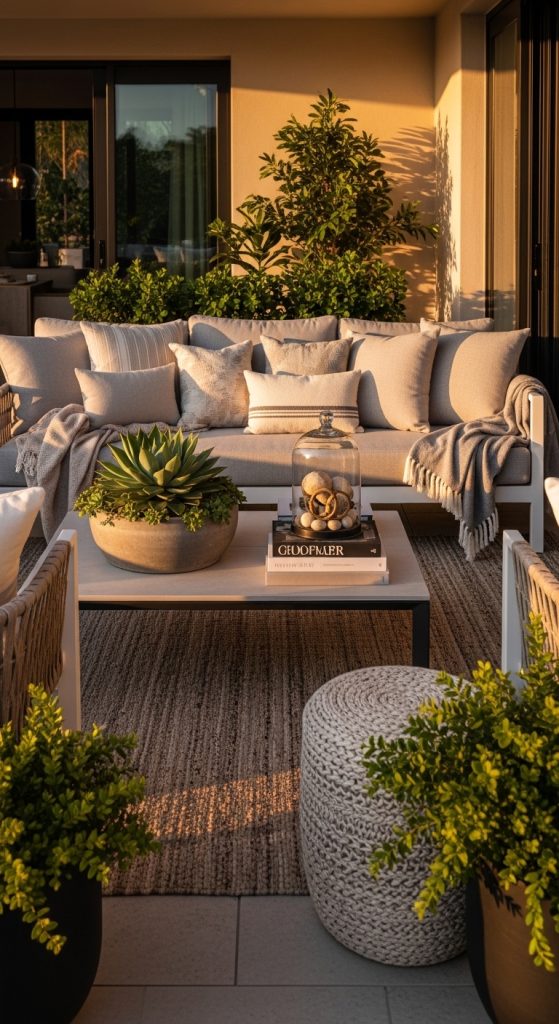
A resort-style seating lounge is the foundation of any luxury patio garden. It’s designed to recreate the feeling of a high-end outdoor hotel space using structured seating, layered comfort, and calm visual balance.
Most people ruin patios by mixing random chairs, plastic furniture, and unplanned seating arrangements. That creates a “temporary setup” feeling, not luxury. Real luxury comes from intentional seating design that feels permanent, comfortable, and visually cohesive.
This idea focuses on turning your patio into a place where people naturally want to sit for long periods without feeling rushed or uncomfortable.
How to implement (practical steps)
Start with layout planning:
- Choose one main seating zone (don’t scatter furniture everywhere)
- Position seating to face greenery, open view, or focal point
Now build the seating structure:
- Use a low outdoor sofa OR modular seating units
- If budget is limited, combine outdoor cushions with wooden pallets or benches
- Keep seating height low and relaxed for resort feel
Layer comfort:
- Add neutral-toned cushions (beige, cream, soft grey)
- Use 1–2 textured throws for softness
- Mix fabrics like linen, cotton, and light woven textures
Define the space:
- Place a large outdoor rug under seating area
- Keep edges slightly natural, not perfectly aligned
Add a central element:
- Small coffee table, stone table, or wooden crate setup
- Keep it minimal, not overloaded
Best for
- Medium to large patios
- People who want a relaxation-focused outdoor space
- Homes that entertain guests outdoors
This works best when your goal is comfort + aesthetic balance.
Pro tip
Keep seating arrangement slightly inward-facing. This creates intimacy and makes the space feel like a private lounge instead of an open yard.
Mistake to avoid
Don’t overcrowd seating with too many pieces. Luxury patios feel spacious, not packed.
2. Vertical Luxury Green Wall (High-End Botanical Impact)
What it is
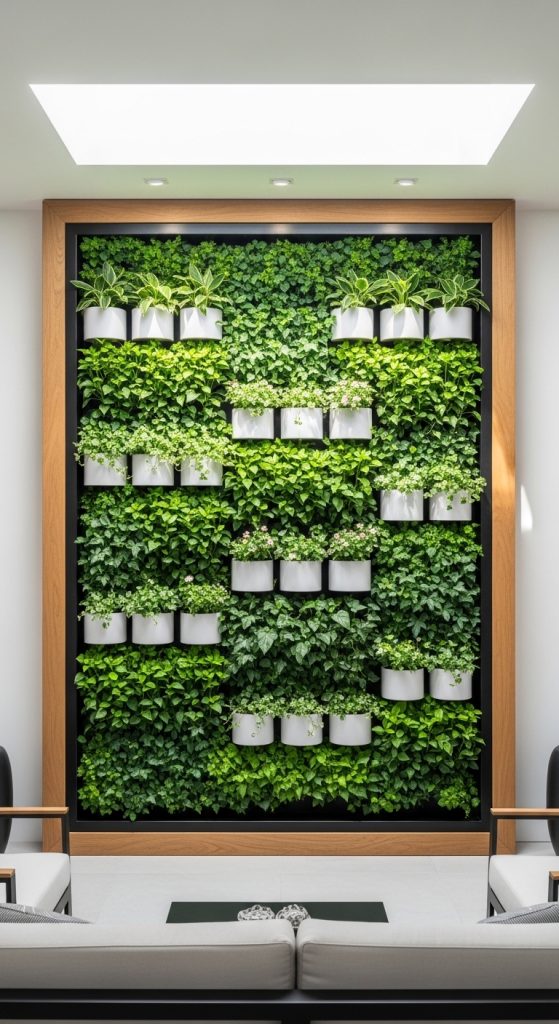
A vertical green wall transforms a plain patio wall into a living design feature. Instead of spreading plants across the floor, you build upward greenery that creates depth, freshness, and architectural beauty.
Most people think luxury patios need expensive landscaping. In reality, vertical plant design is what creates that premium, magazine-style look without needing large space or high budgets.
This is one of the strongest visual upgrades for small and large patios alike.
How to implement (practical steps)
Start with selecting a wall:
- Choose a visible, clean background wall
- Avoid overcrowded or textured walls
Now build structure:
- Install wall-mounted planters or vertical grids
- Use uniform pots for a clean luxury look
- Mix hanging planters with fixed ones for depth
Plant layering strategy:
- Top layer: trailing plants (ivy, pothos)
- Middle layer: medium leafy plants
- Bottom layer: structured plants or small shrubs
Keep spacing intentional:
- Don’t fill every gap
- Leave breathing space between plants for a high-end look
Enhance luxury feel:
- Use neutral or matte-colored pots (white, black, stone, terracotta)
- Add soft ground lighting pointing upward to highlight greenery
Best for
- Small patios needing vertical expansion
- Modern luxury garden designs
- People who want high visual impact with plants
This works best when your patio feels flat or visually empty.
Pro tip
Symmetry is not required, but balance is. Slight irregularity in plant placement often looks more natural and premium than perfect alignment.
Mistake to avoid
Don’t overcrowd the wall with too many plant types. Too much variety removes the luxury effect and creates visual chaos.
3. Ambient Water Feature Corner (Calm Luxury Atmosphere)
What it is
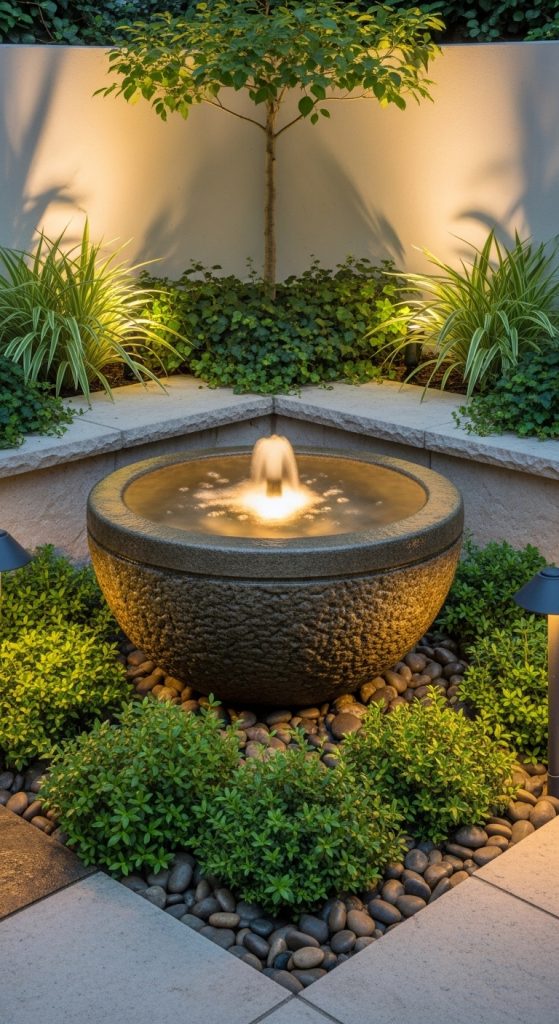
A water feature corner adds movement, sound, and calm energy to a patio garden. In luxury design, water is used not for decoration alone, but to create a sensory experience—sound of flowing water instantly elevates the feeling of the space.
Most people ignore this because they assume water features are expensive or complex. But even small-scale designs can completely transform the mood of a patio.
This idea is about creating a quiet, elegant corner that feels peaceful and high-end.
How to implement (practical steps)
Start by choosing location:
- Pick a quiet corner of the patio
- Keep it slightly separated from heavy seating areas
Now choose water setup:
- Small fountain bowl or tabletop water feature
- Wall-mounted water flow panel for modern luxury look
- DIY stone bowl with circulating water pump (budget option)
Design the surrounding area:
- Place natural stone or pebbles around the base
- Add 1–2 medium plants for softness
- Keep surrounding decor minimal
Lighting integration:
- Add soft warm lights pointing toward water
- Avoid harsh lighting; focus on subtle glow reflection
Sound balance:
- Ensure water flow is gentle, not loud or aggressive
- The goal is calming background sound, not distraction
Best for
- Luxury-focused patio designs
- Relaxation and meditation spaces
- Homes that want spa-like outdoor atmosphere
This works best when you want emotional calm, not just visual beauty.
Pro tip
Place seating slightly away from the water feature so the sound blends into the background instead of dominating the space.
Mistake to avoid
Don’t overdecorate the water feature area. The luxury effect comes from simplicity, not excessive styling around it.
4. Outdoor Dining Luxury Setup (Elegant Open-Air Experience)
What it is
An outdoor dining luxury setup turns your patio into a refined eating and gathering space instead of just a decorative garden. It is not about placing a table outside—it is about designing a complete dining experience under open air.
Most patios fail here because people either use cheap plastic tables or overcrowd the space with mismatched furniture. That destroys the “luxury” feeling instantly. Real outdoor dining design focuses on proportion, material quality, and atmosphere control.
This idea creates a space where meals feel intentional, calm, and slightly elevated—like a boutique restaurant at home.
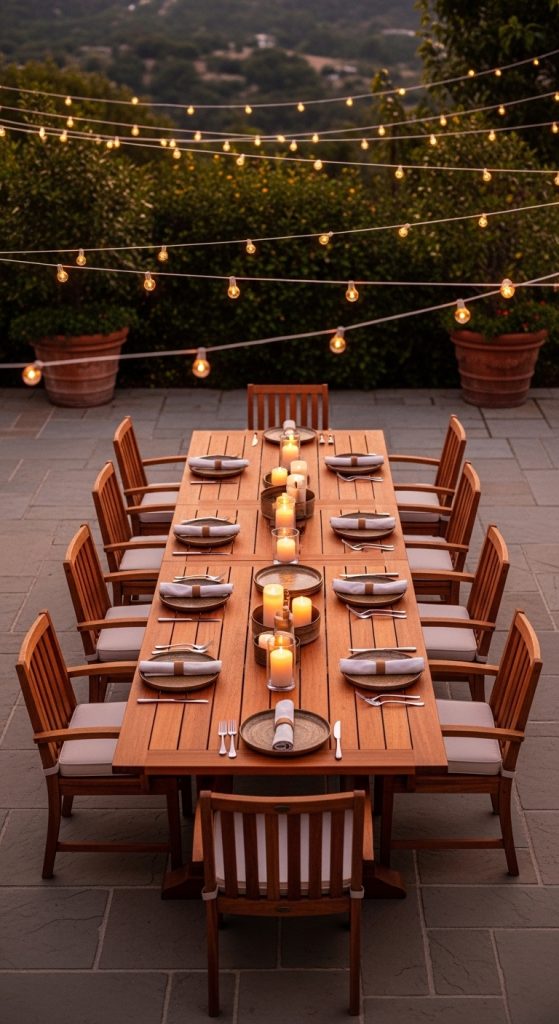
How to implement (practical steps)
Start with choosing the right base:
- Use a wooden, stone, or metal outdoor dining table
- Keep size proportional to patio (don’t oversize)
- Avoid folding or temporary-looking furniture if possible
Now structure seating:
- Use matching chairs for a cohesive luxury feel
- If budget is limited, stick to one chair style and color
- Keep spacing comfortable (not cramped or too far apart)
Layer the table styling:
- Neutral table runner or linen cloth
- Simple ceramic plates or muted tableware
- One central decor piece (small plant, candle set, or bowl)
Define the dining zone:
- Place rug underneath to visually anchor the area
- Ensure dining space is clearly separated from lounge or plant zones
Lighting setup:
- Hang soft string lights above dining area
- Add lanterns or candles for evening use
Best for
- Families who dine outdoors
- People who host guests often
- Medium to large patios
This works best when you want your patio to feel like a functional luxury extension of your home.
Pro tip
Keep table styling minimal during non-use hours. A cluttered table breaks the luxury illusion even when the rest of the patio looks perfect.
Mistake to avoid
Don’t mix indoor dining furniture with outdoor setup. Weather-appropriate materials are essential for long-term luxury appearance.
5. Stone & Natural Texture Patio Design (Organic Luxury Aesthetic)
What it is
A stone and natural texture patio design focuses on creating a grounded, earthy luxury environment using materials like stone, wood, gravel, and woven elements. Instead of relying on heavy decoration, it builds beauty through raw natural textures and material harmony.
Most people ignore texture and only focus on furniture or plants. That’s why their patios feel flat or incomplete. Luxury design depends heavily on how materials interact visually and physically.
This idea brings a timeless, resort-like earthiness to your outdoor space.
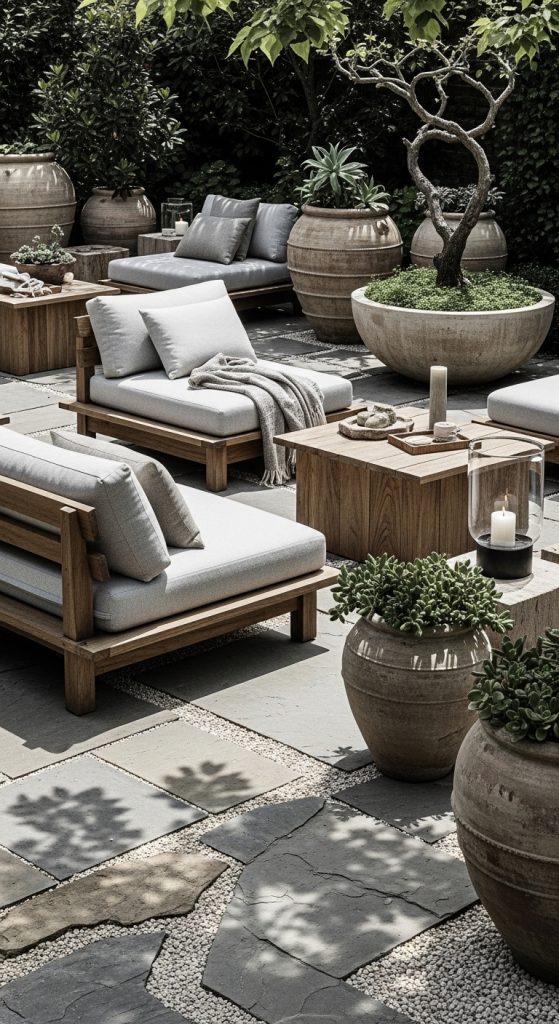
How to implement (practical steps)
Start with flooring or base surface:
- Use stone tiles, gravel sections, or textured outdoor mats
- Keep tones neutral (beige, grey, sand, earthy brown)
Now build structure using materials:
- Wooden benches or stone seating elements
- Concrete or stone side tables
- Woven or rattan accents for softness
Layer natural contrast:
- Combine rough textures (stone) with soft ones (cushions, fabric)
- Avoid using only one material type
Plant integration:
- Use large planters made of clay, cement, or stone
- Avoid shiny plastic pots
- Place greenery in structured groups for balance
Keep layout intentional:
- Don’t overcrowd surfaces
- Leave negative space between elements for luxury feel
Best for
- Large patios or garden courtyards
- People who prefer natural, earthy aesthetics
- Homes aiming for resort or villa-style design
This works best when you want a long-lasting, timeless patio look.
Pro tip
Stick to 2–3 core materials only. Too many textures create visual confusion instead of luxury.
Mistake to avoid
Don’t mix artificial glossy materials with natural textures. It breaks the organic luxury effect immediately.
6. Soft Lighting Layer Patio System (Evening Luxury Transformation)
What it is
A soft lighting layer system is what transforms a normal patio into a luxury evening retreat. In high-end outdoor design, lighting is not an accessory—it is the main mood creator after sunset.
Most people either use harsh white bulbs or random fairy lights without planning. That creates uneven brightness and kills the cozy luxury atmosphere. Proper lighting design uses layers of soft, warm illumination at different heights and intensities.
This is the difference between a basic patio and a premium outdoor lounge.
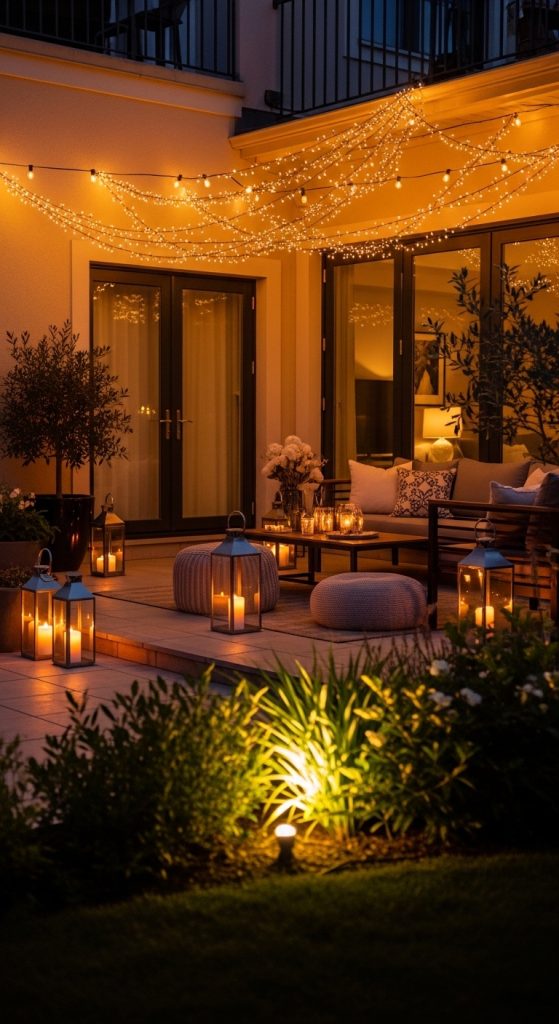
How to implement (practical steps)
Start with base lighting:
- Install warm white string lights along borders or pergolas
- Keep lights slightly loose for soft glow effect
- Avoid bright, cold lighting completely
Now add mid-level lighting:
- Use lanterns placed on tables or corners
- Add wall-mounted sconces if available
- Keep glow indirect, not exposed bulbs
Ground lighting layer:
- Place small LED lights near plants or pathways
- Use hidden lighting under benches or edges
Create lighting zones:
- Seating area = soft warm focus
- Plant area = subtle highlight glow
- Walkways = minimal guiding light
Balance is key:
- Avoid overlighting entire patio
- Leave some darker zones for depth contrast
Best for
- Evening-focused patios
- Small and large outdoor spaces
- People who want cozy luxury atmosphere
This works best when your patio looks dull after sunset.
Pro tip
Use dimmable or adjustable lighting whenever possible. Control over brightness is what creates true luxury ambiance.
Mistake to avoid
Don’t mix cool white and warm light together. It creates visual conflict and removes the premium aesthetic instantly.
7. Luxury Outdoor Lounge Fire Pit Setup (Warmth + Social Centerpiece)
What it is
A fire pit lounge is one of the strongest luxury elements you can add to a patio because it creates both visual impact and emotional warmth. It becomes the natural center of the space where people gather, relax, and stay longer.
Most patios feel “flat” because they don’t have a focal point. A fire pit solves that by giving the space direction. In luxury design, this is called a social anchor—a feature that organizes everything around it.
But here’s where people go wrong: they either buy oversized fire pits for small spaces or treat it like decoration instead of a functional gathering point.
A proper setup is balanced, safe, and integrated into the overall patio design.
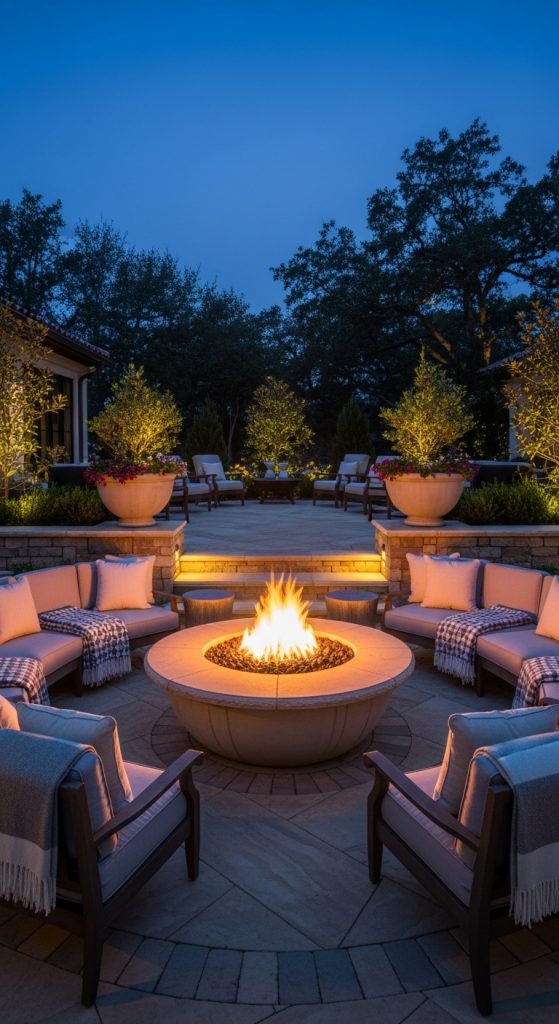
How to implement (practical steps)
Start with placement:
- Choose a central or slightly off-center open area
- Keep safe distance from plants, furniture, and walls
- Ensure proper ventilation and open airflow
Now choose fire pit style:
- Stone or concrete fire bowl for luxury aesthetic
- Metal fire pit for modern minimalist look
- Table-style fire pit for compact patios
Arrange seating around it:
- Use circular or semi-circular seating layout
- Keep equal spacing for balance
- Use outdoor chairs, cushions, or low benches
Layer comfort:
- Add heat-resistant cushions or blankets
- Use neutral earthy tones for luxury feel
- Keep materials durable and outdoor-safe
Enhance atmosphere:
- Combine with soft ground lighting
- Keep surrounding decor minimal to highlight fire glow
Best for
- Large or medium patios
- Social outdoor spaces
- Evening relaxation and gatherings
This works best when your patio needs a strong focal point and emotional warmth.
Pro tip
Keep seating slightly angled inward. It naturally improves conversation flow and makes the space feel more intimate.
Mistake to avoid
Don’t overcrowd the fire pit area with decor. The fire itself is the main visual feature—everything else should support it, not compete with it.
8. Vertical Pergola Garden Luxury Frame (Architectural Outdoor Elegance)
What it is
A pergola garden frame adds architectural structure to your patio, instantly making it feel more expensive and designed. It creates a defined outdoor “room” instead of an open, undefined space.
Most people ignore vertical structure and focus only on ground-level design. That’s why their patios feel incomplete. Luxury outdoor spaces always have overhead framing or vertical definition that creates depth and enclosure.
A pergola doesn’t just look good—it changes how the entire space feels.
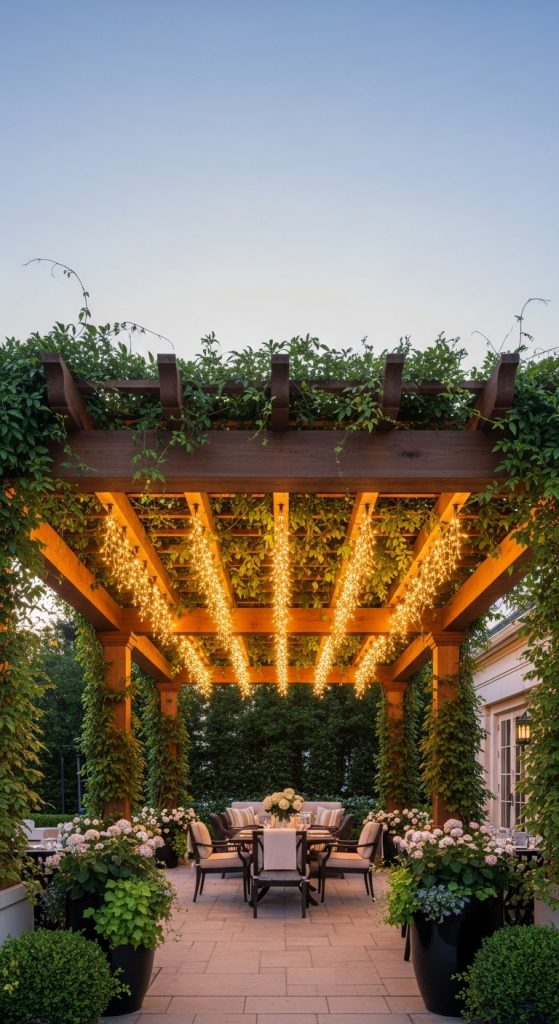
How to implement (practical steps)
Start with structure:
- Install wooden or metal pergola frame over seating or dining area
- Keep design simple and clean, not overly ornate
- Ensure it matches overall patio style
Now add greenery:
- Hang trailing plants or vines from beams
- Use climbing plants like ivy or jasmine if possible
- Keep plant growth controlled, not overgrown
Lighting integration:
- Wrap warm string lights around beams
- Add hanging lanterns at different heights
- Avoid harsh direct lighting
Define space under pergola:
- Place seating lounge or dining setup underneath
- Use rug to anchor the zone visually
Balance openness:
- Don’t fully cover pergola with plants or fabric
- Leave some open sky visibility for airy luxury feel
Best for
- Medium to large patios
- Homes wanting architectural outdoor design
- Luxury garden-style setups
This works best when your patio lacks structure or feels too open.
Pro tip
Combine one strong pergola zone instead of multiple small structures. One well-designed frame looks more luxurious than many weak ones.
Mistake to avoid
Don’t overload pergola with heavy decor. It should feel light, airy, and intentional—not crowded or visually heavy.
9. Minimal Luxury Zen Patio Corner (Calm, High-End Simplicity)
What it is
A Zen patio corner focuses on extreme simplicity, balance, and calmness. It is the opposite of cluttered garden design. Instead of filling the space, it removes excess and creates a quiet luxury environment.
Most people think luxury means adding more items. In reality, high-end design often uses restraint. Empty space is not wasted space—it is part of the aesthetic.
A Zen corner is designed for mental clarity, reflection, and peaceful moments.
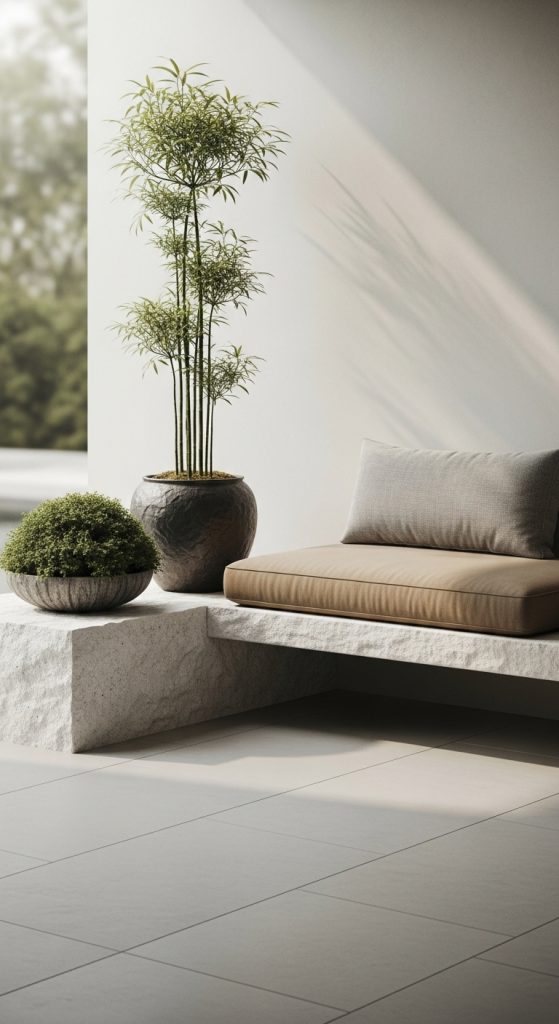
How to implement (practical steps)
Start with layout:
- Choose a quiet corner of the patio
- Keep it isolated from high-traffic areas
Now build minimal structure:
- Use a single low bench or floor seating
- Keep furniture extremely simple and clean-lined
Add natural grounding:
- Use sand, gravel, or stone base elements
- Keep patterns minimal or completely absent
Introduce controlled greenery:
- One or two plants only
- Prefer sculptural plants (bonsai, bamboo, or structured greenery)
Keep decor extremely limited:
- One stone piece, lantern, or water bowl
- No clutter or unnecessary accessories
Lighting approach:
- Soft, indirect lighting only
- Avoid bright or decorative lighting overload
Best for
- Meditation or relaxation spaces
- Small patios needing calm focus area
- People who prefer minimal luxury aesthetics
This works best when your patio feels mentally noisy or visually overwhelming.
Pro tip
If you hesitate whether to add something—don’t. Zen design improves with subtraction, not addition.
Mistake to avoid
Don’t mix Zen style with decorative boho or vibrant elements. It destroys the calm identity and creates confusion in design language.
10. Infinity Green Layer Patio (Deep Luxury Botanical Design)
What it is
An infinity green layer patio is a high-end botanical design style where greenery is arranged in continuous visual layers that feel endless and immersive. Instead of placing plants randomly, you design depth—front, middle, and background—so the garden feels richer and larger than its actual size.
Most patios fail because plants are treated like decoration pieces. Luxury design treats them like architecture. The goal is to create a flow of greenery that draws the eye naturally across the space, almost like a living landscape painting.
This works especially well in 2026 design trends where natural immersion and “indoor-outdoor blending” are becoming a key luxury standard.
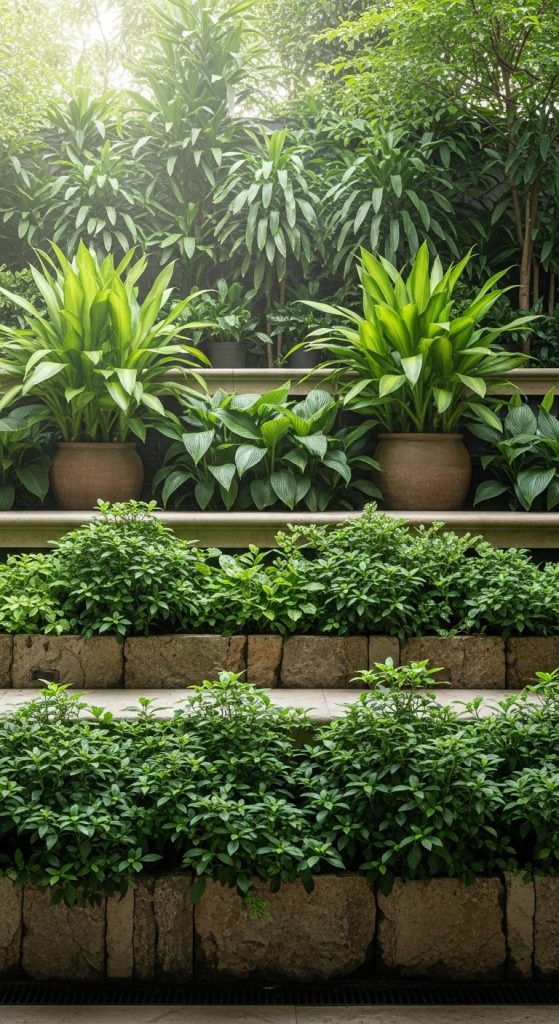
How to implement (practical steps)
Start with layered positioning:
- Back layer: tall plants or vertical green wall
- Middle layer: medium-height shrubs or structured pots
- Front layer: small plants or ground greenery
Now create flow:
- Avoid placing plants in straight lines
- Arrange them in soft curves or staggered positions
- Leave intentional gaps for breathing space
Add visual depth:
- Use different pot heights using stands or crates
- Mix leafy plants with trailing vines for movement
- Keep color palette natural and consistent
Enhance infinity effect:
- Place mirrors or reflective surfaces subtly on one side
- Use corner planting to extend visual boundaries
- Keep edges slightly hidden to avoid “boxed-in” look
Best for
- Medium to large patios
- Nature-heavy luxury garden lovers
- People who want immersive green environments
This works best when your patio feels flat or visually limited.
Pro tip
Layer height differences carefully—too much uniformity removes the “infinite depth” illusion.
Mistake to avoid
Don’t overcrowd every layer. The infinity effect depends on balance between filled and open space.
11. Water + Stone Luxury Harmony Zone (Natural Resort Feel)
What it is
This design combines two powerful natural elements—water and stone—to create a grounded, resort-style patio experience. It focuses on sensory luxury: the sound of water, the texture of stone, and the calm balance between movement and stability.
Most people either use decorative fountains without context or stone layouts without life. True luxury comes when both elements are integrated into a single cohesive design story.
This creates a patio that feels like a high-end spa courtyard.
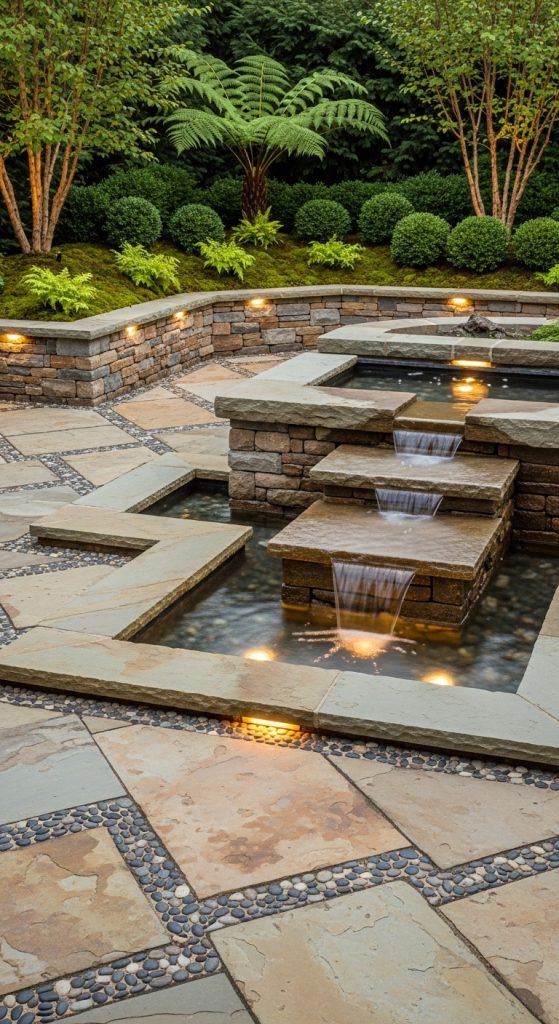
How to implement (practical steps)
Start with base structure:
- Use stone flooring, gravel paths, or textured tiles
- Keep tones neutral (grey, beige, sand, earthy brown)
Now introduce water element:
- Small fountain bowl, wall waterfall, or stone water feature
- Keep water flow gentle and continuous
- Place it as a focal point, not hidden detail
Build surrounding harmony:
- Add plants in stone or clay pots
- Keep greenery structured, not overgrown
- Use low shrubs or controlled foliage near water
Create sensory balance:
- Combine smooth water flow with rough stone texture
- Avoid adding too many decorative items around it
Lighting integration:
- Use soft warm lights reflecting on water surface
- Highlight stone edges subtly at night
Best for
- Luxury spa-style patios
- Medium to large outdoor spaces
- Relaxation-focused environments
This works best when you want emotional calm and sensory richness.
Pro tip
Keep water feature slightly elevated or framed so it becomes a visual focus point, not just background decor.
Mistake to avoid
Don’t overload the area with extra decor. Water + stone is already visually powerful—too many additions reduce its impact.
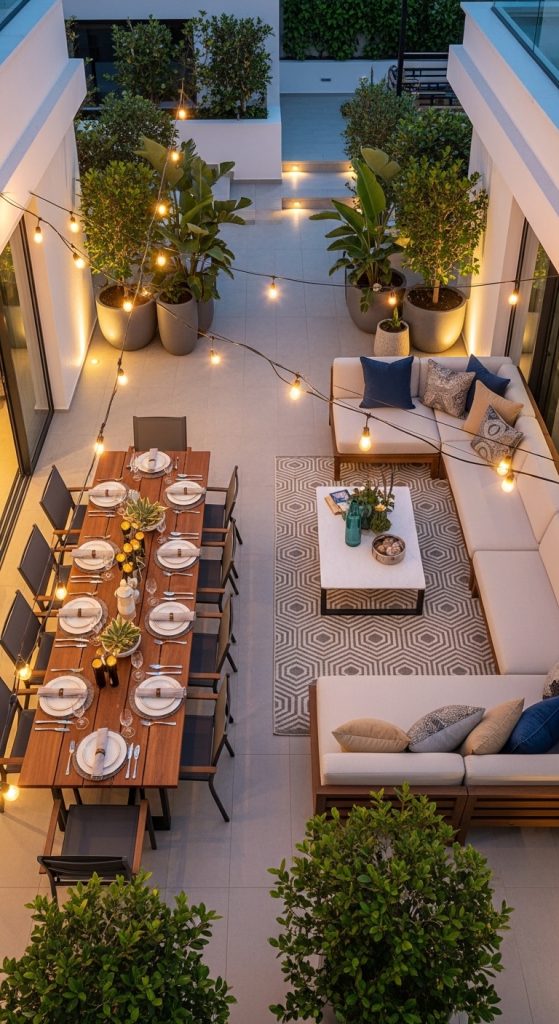
12. High-End Outdoor Dining & Lounge Fusion Patio (Full Luxury Living Experience)
What it is
This is the ultimate luxury patio concept where dining and relaxation merge into one seamless outdoor living space. Instead of separating seating and eating zones completely, you design a fluid environment that can adapt to both functions.
Most patios fail because they are either too formal (dining only) or too casual (lounge only). Luxury design in 2026 is about flexibility without losing elegance.
This setup makes your patio feel like a private villa terrace where every activity feels intentional.
How to implement (practical steps)
Start with zoning balance:
- One side = dining area
- Other side = lounge seating
- Keep a clear visual connection between both
Now build dining zone:
- Use a strong central table (wood, stone, or metal)
- Keep seating elegant and coordinated
- Minimal but refined table styling
Build lounge zone:
- Use low seating or sofa-style setup
- Add rugs, cushions, and soft throws
- Keep layout relaxed but structured
Connect both zones:
- Use consistent color palette across both areas
- Add shared lighting style (string lights or lanterns)
- Ensure walking flow is smooth and open
Lighting strategy:
- Dining area = slightly brighter, focused lighting
- Lounge area = softer, ambient glow
- Blend both using warm tones
Final luxury balance:
- Keep decor minimal but intentional
- Use repeating materials (wood, stone, rattan) for unity
Best for
- Large patios or terraces
- Homes that host gatherings
- Full outdoor lifestyle design lovers
This works best when you want your patio to function like a complete living extension of your home.
Pro tip
Maintain visual consistency between zones. Luxury is created when everything feels connected, not separated.
Mistake to avoid
Don’t treat dining and lounge areas as unrelated spaces. If they feel disconnected, the patio loses its premium “designed experience” feel.