
If you have fine hair, you already know the struggle—it can look flat, lifeless, and difficult to style no matter how many products or techniques you try. You might spend time curling it, volumizing it, or layering it, only to watch it fall back into a flat shape within hours. That’s exactly why choosing the right haircut matters more than anything else.
And this is where the medium shag haircut for fine hair completely changes the game.
This isn’t just another trendy haircut you see on Pinterest. The shag is one of the few styles that is actually designed to create volume, movement, and texture where fine hair naturally lacks it. Instead of working against your hair type, it works with it—strategically adding layers and shape to make your hair look fuller, thicker, and more dynamic.
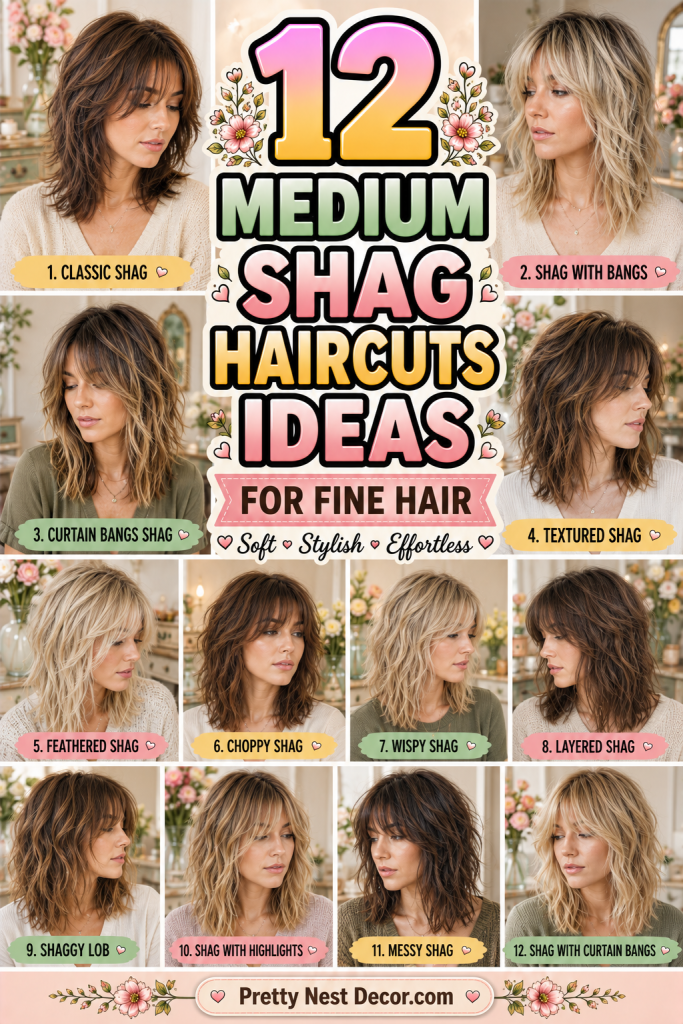
The Real Problem with Fine Hair (And Why Most Haircuts Don’t Work)
Fine hair isn’t necessarily thin in quantity—it’s fine in strand thickness. That means:
- It doesn’t hold volume easily
- It gets weighed down quickly by products
- It struggles to maintain curls or waves
- It can look flat at the roots and stringy at the ends
Most traditional haircuts—like blunt cuts or heavy layers—either make fine hair look even flatter or too sparse.
For example:
- A one-length cut can make hair look lifeless
- Too many layers can make ends look thin
- Heavy bangs can weigh everything down
So the goal isn’t just to “cut” your hair—it’s to engineer shape and movement into it.
Why the Medium Shag Is Perfect for Fine Hair
The medium shag haircut hits the perfect balance between short and long. It’s long enough to maintain styling flexibility, but short enough to remove excess weight that drags fine hair down.
What makes it special is the layering technique.
Instead of basic layers, a shag uses:
- Choppy, uneven layers to create texture
- Crown volume to lift the roots
- Face-framing pieces to add dimension
- Light, airy ends to avoid heaviness
This combination gives the illusion of thicker, fuller hair—even if your hair is naturally fine.
If you have a small face, this works best because the added texture and layers create width and balance without overwhelming your features.
The Volume Illusion: Why Shag Cuts Look Fuller
One of the biggest advantages of a shag haircut is how it creates the illusion of volume.
Instead of relying on products or heat tools, the cut itself does the work.
Here’s how:
- Shorter layers at the crown push hair upward
- Textured ends prevent hair from clumping together
- Movement between layers creates visual thickness
- Lightness allows natural lift at the roots
This works best when your stylist understands how to cut specifically for fine hair—not just copy a shag from thick hair references.
The Low-Maintenance Advantage
Another major reason why medium shag haircuts are trending is because they fit perfectly into modern lifestyles.
People don’t want to spend hours styling their hair every day. They want something that:
- Looks good with minimal effort
- Air-dries well
- Holds shape throughout the day
- Doesn’t require constant touch-ups
The shag delivers exactly that.
You can:
- Let it air dry for a natural, textured look
- Add light waves for a styled finish
- Use minimal product without weighing hair down
If you have a small room in your routine (limited time), this haircut is ideal because it gives you a “styled” look without actually needing to style much.
Why Not All Shag Cuts Work for Fine Hair
Here’s an important truth: not every shag haircut is good for fine hair.
Some common mistakes include:
- Over-layering, which makes hair look thinner
- Cutting ends too wispy, losing structure
- Adding too much volume at the wrong places
- Using heavy bangs that flatten the front
A good medium shag for fine hair is controlled chaos—it looks effortless, but it’s carefully designed.
That’s why choosing the right variation matters.
The Role of Bangs in Shag Haircuts
Bangs are often a key part of shag hairstyles, but they need to be chosen carefully for fine hair.
The right bangs can:
- Add fullness to the front
- Frame your face beautifully
- Blend seamlessly into layers
Popular options include:
- Curtain bangs for softness
- Wispy bangs for lightness
- Side bangs for easy styling
This works best when bangs are kept light and blended—not thick and heavy.
What You’ll Learn in This Guide
In the sections ahead, you’ll discover 12 medium shag haircut ideas specifically designed for fine hair—not generic styles, but real, practical options that work in everyday life.
Each idea will include:
- What the haircut actually looks like
- How it’s cut for fine hair
- Who it suits best
- How to style it easily
- Pro tips for getting the best results
- Mistakes to avoid
You won’t just get inspiration—you’ll understand how to choose a shag that truly works for your hair type.
Before You Choose Your Shag
The most important thing to remember is this:
Fine hair doesn’t need more effort—it needs the right structure.
The medium shag haircut gives you that structure. It adds life, movement, and volume in a way that feels natural, not forced.
So if you’re tired of flat hair and ready for something that actually works, these medium shag haircut ideas for fine hair will help you find a style that transforms your look without complicating your routine. ✨
Idea 1: Classic Medium Shag with Curtain Bangs (Balanced Volume Starter Style)
What it is
The classic medium shag with curtain bangs is the most beginner-friendly version of a shag haircut, especially for fine hair. It features soft, blended layers throughout the mid-lengths with light, face-framing curtain bangs that open in the center.
This style is all about balance. It doesn’t go too extreme with choppy layers, and it avoids overly thin ends. Instead, it creates a natural, airy shape that adds volume without sacrificing fullness.
If you’re trying a shag for the first time, this is the safest and most flattering option because it enhances your hair without making it feel dramatically different.
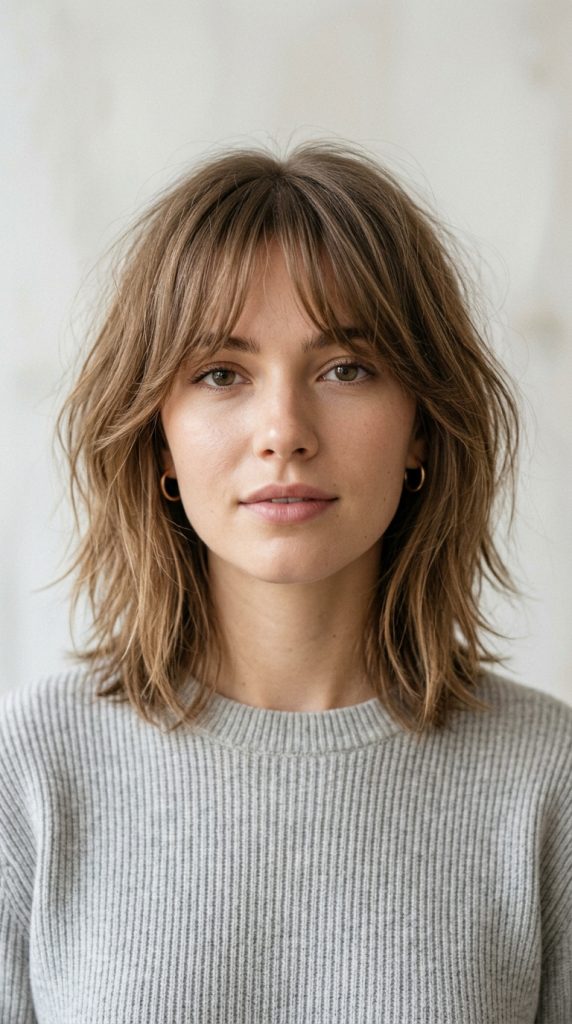
How it is cut and styled
The stylist usually:
- Adds soft, gradual layers starting around cheekbone level
- Keeps the ends slightly textured but not wispy
- Creates curtain bangs that blend into the front layers
- Maintains medium length (around shoulders) for fullness
Styling steps:
- Apply a lightweight volumizing mousse to damp hair
- Blow-dry using fingers or a round brush for lift at the crown
- Style curtain bangs away from the face
- Add a light texturizing spray for movement
If you have a small face, this works best because the curtain bangs create width and soften your features without overwhelming them.
Best for
- Fine, straight to slightly wavy hair
- First-time shag haircut
- Everyday low-maintenance styling
Pro tip
Focus on root lift instead of heavy styling—volume at the crown is what makes this shag look full.
Mistake to avoid
Don’t make the curtain bangs too thick. Heavy bangs can flatten fine hair and reduce the airy effect.
Idea 2: Choppy Medium Shag (High Texture Volume Boost)
What it is
The choppy medium shag is a more textured and edgy version of the classic shag. It uses intentionally uneven, choppy layers to create strong movement and separation throughout the hair.
This style is perfect if your fine hair tends to fall flat quickly. The choppy structure prevents strands from sticking together, giving the illusion of more density and fullness.
It’s slightly messier, more modern, and very popular on Pinterest because of its effortless, lived-in look.
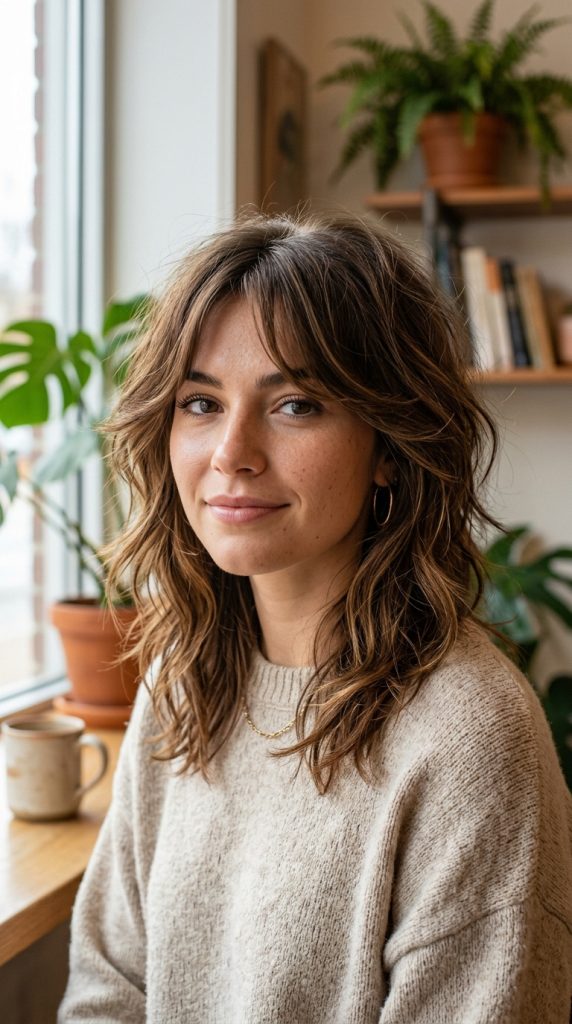
How it is cut and styled
The stylist focuses on:
- Creating uneven, textured layers throughout
- Removing bulk strategically without thinning the ends too much
- Keeping the crown slightly shorter for lift
- Adding optional light fringe or bangs
Styling steps:
- Apply texturizing spray or sea salt spray to damp hair
- Rough dry using fingers instead of a brush
- Use a curling wand on random sections for movement
- Finish with a light hold spray for separation
If you have a small room in your routine, this works best because the messier texture actually looks better with minimal effort.
Best for
- Fine hair that lacks natural texture
- People who want a modern, edgy look
- Medium-density fine hair
Pro tip
Style in sections, but not uniformly—randomness creates the illusion of thicker hair.
Mistake to avoid
Don’t over-texturize the ends. Too much thinning can make fine hair look stringy instead of full.
Idea 3: Feathered Medium Shag (Soft Movement and Light Volume)
What it is
The feathered medium shag is a softer, more polished take on the shag haircut. It features light, feathered layers that create smooth movement rather than choppy separation.
This style gives you volume and flow without the messy look of a traditional shag. It’s ideal if you want something that feels elegant, controlled, and still easy to manage.
The feathering technique helps fine hair look fuller by creating gentle lift and direction in the strands.
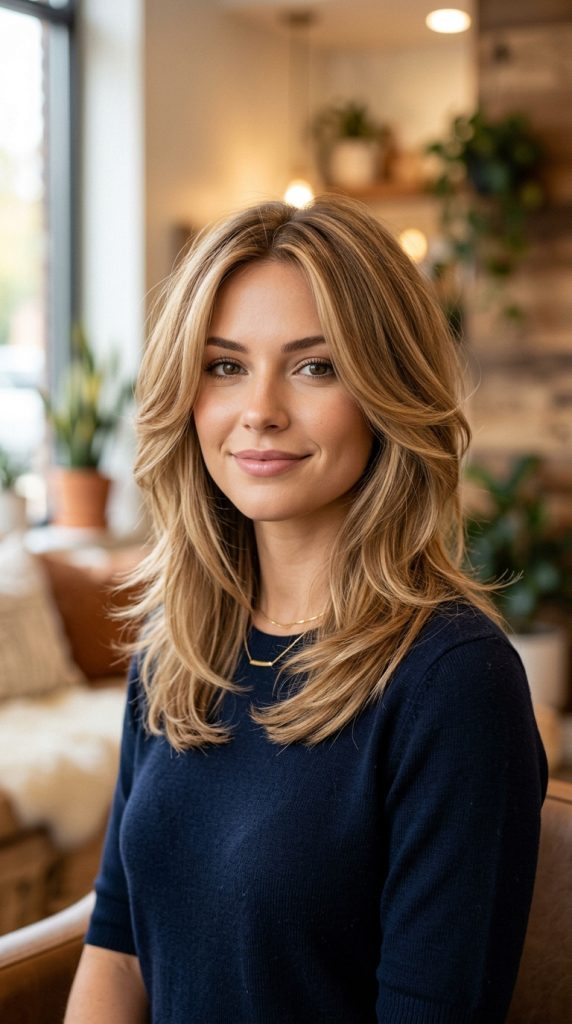
How it is cut and styled
The stylist usually:
- Uses a feathering technique to soften layer edges
- Keeps layers more blended than choppy
- Adds slight volume at the crown
- Incorporates light, airy bangs if desired
Styling steps:
- Blow-dry with a round brush, lifting at the roots
- Curl ends slightly outward or inward for movement
- Use a lightweight serum for shine
- Finish with a flexible hold spray
If you have a small face, this works best because the soft layers frame your features without adding heaviness.
Best for
- Fine, straight or lightly wavy hair
- Professional or polished looks
- People who prefer soft styling over messy texture
Pro tip
Flip your hair upside down while drying the roots to instantly boost volume without extra product.
Mistake to avoid
Don’t make the layers too subtle. If the feathering is too light, fine hair can still appear flat and lack dimension.
Idea 4: Medium Shag with Wispy Bangs (Lightweight Airy Front Volume)
What it is
The medium shag with wispy bangs is a soft, airy version of the shag haircut designed specifically to avoid weighing down fine hair. It features light, piecey bangs that don’t fully cover the forehead, combined with gentle shag layers that add movement without removing too much density.
This style is perfect if you like the idea of bangs but are worried about them making your hair look flat or heavy. Wispy bangs create the illusion of fullness at the front while still allowing your scalp and layers to breathe.
It’s subtle, feminine, and very wearable for everyday life.
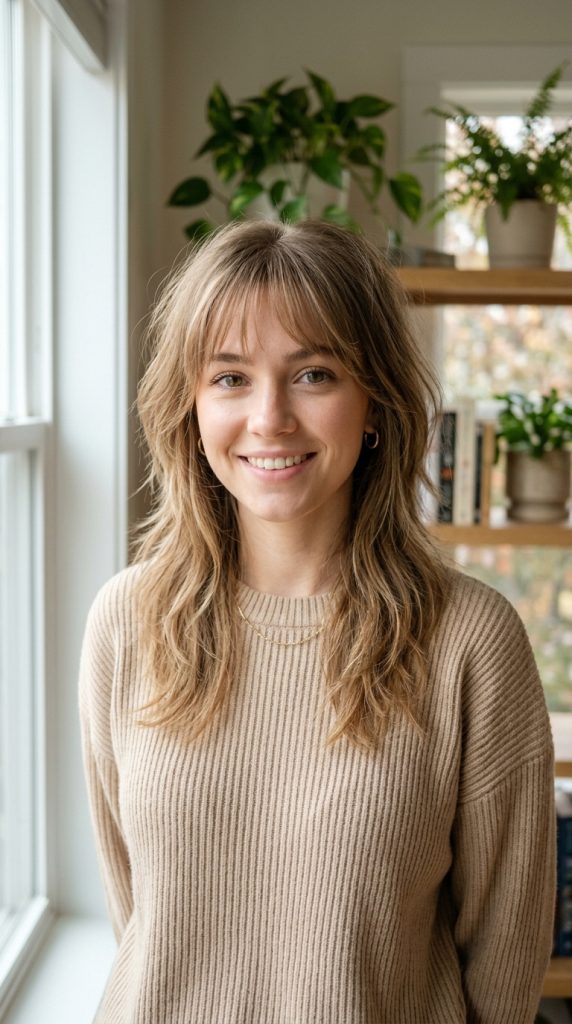
How it is cut and styled
The stylist usually:
- Cuts soft, lightweight layers throughout the mid-lengths
- Keeps ends slightly textured but not thin
- Creates wispy bangs using point-cutting technique
- Blends bangs seamlessly into the side layers
Styling steps:
- Apply a lightweight volumizing spray at the roots
- Blow-dry bangs using fingers for a natural finish
- Let the rest air dry or lightly wave it
- Use a small amount of texturizing spray for separation
If you have a small face, this works best because the wispy bangs add softness without overwhelming your features.
Best for
- Fine, straight or slightly wavy hair
- People who want light, natural bangs
- Low-maintenance styling routines
Pro tip
Use dry shampoo on your bangs—even on clean hair—to keep them lifted and prevent them from separating too much.
Mistake to avoid
Don’t cut the bangs too sparse. If they are too thin, they can disappear into the rest of the hair instead of framing your face.
Idea 5: Medium Shag with Face-Framing Layers (Contour Effect for Fine Hair)
What it is
This version of the medium shag focuses heavily on face-framing layers that start around the cheekbones and blend into the rest of the hair. Instead of spreading layers evenly everywhere, the emphasis is placed on the front to create dimension and shape.
For fine hair, this is extremely effective because it adds visible structure without thinning out the entire head. It creates the illusion of thicker hair around the face, which naturally draws attention and enhances your overall look.
It’s a great choice if you want a subtle shag that still makes a noticeable difference.
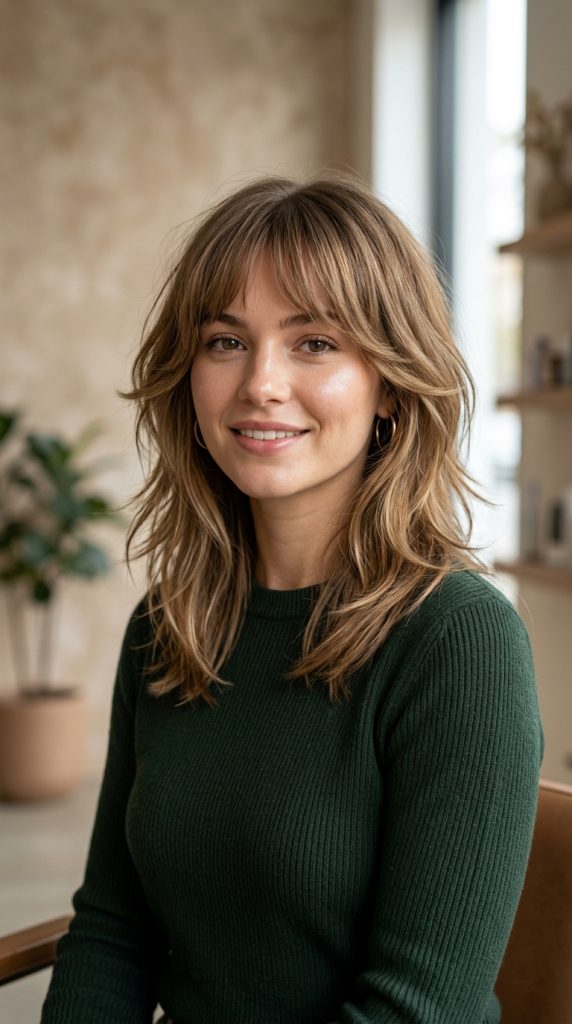
How it is cut and styled
The stylist focuses on:
- Keeping the back relatively fuller with minimal layering
- Adding more defined layers around the face
- Creating smooth transitions between front and back
- Keeping the overall length medium for balance
Styling steps:
- Blow-dry front layers with a round brush
- Curl or flip the face-framing pieces slightly outward
- Keep the rest of the hair simple and natural
- Apply a light shine serum for a polished finish
If you have a small face, this works best because the front layers add width and create a flattering contour effect.
Best for
- Fine hair that looks flat around the face
- Straight to slightly wavy textures
- People who want a subtle, wearable shag
Pro tip
Focus your styling on the front sections—this is where the visual impact comes from.
Mistake to avoid
Don’t add too many layers at the back. This can reduce overall density and make fine hair look thinner.
Idea 6: Medium Shag with Root Lift Layers (Crown Volume Focus)
What it is
The medium shag with root lift layers is designed specifically to solve one of the biggest problems with fine hair: flat roots. This style focuses on shorter layers at the crown to create natural lift and height at the top of the head.
Instead of relying on teasing or heavy products, the haircut itself builds volume from the roots, making your hair look fuller all day.
It’s a strategic, functional version of the shag that prioritizes structure over randomness.
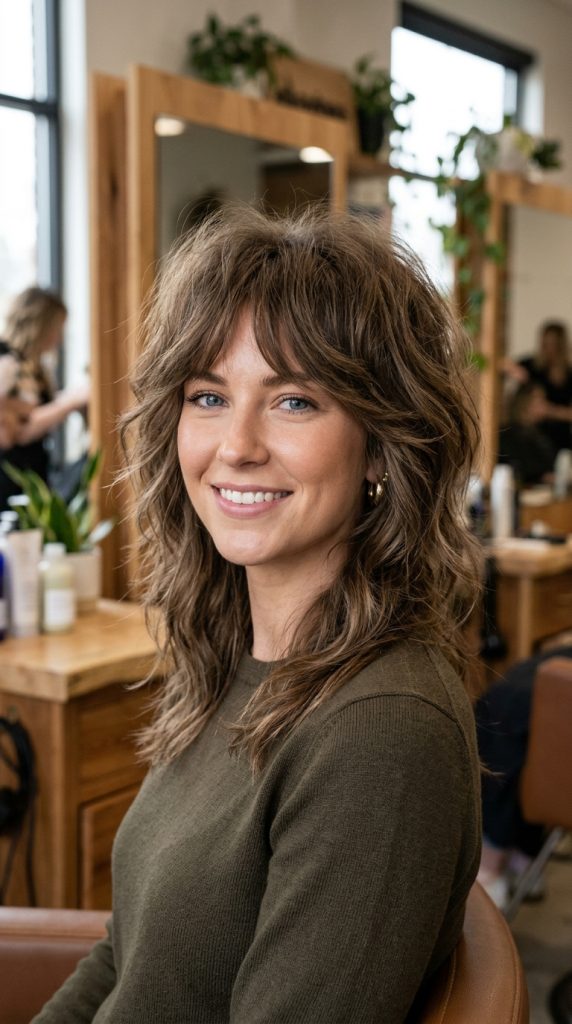
How it is cut and styled
The stylist usually:
- Adds shorter layers at the crown area
- Keeps mid-lengths and ends fuller for balance
- Blends layers smoothly to avoid harsh steps
- Maintains medium length for versatility
Styling steps:
- Apply volumizing mousse at the roots
- Blow-dry hair upside down for lift
- Use a round brush at the crown for extra height
- Finish with a light texturizing spray
If you have a small room in your routine, this works best because the built-in volume reduces the need for daily styling.
Best for
- Fine hair with flat roots
- Straight or slightly wavy textures
- People who want long-lasting volume
Pro tip
Blow-dry your roots in the opposite direction first, then style them into place—this creates stronger lift.
Mistake to avoid
Don’t make crown layers too short. Over-shortening can create a “puffy” look instead of natural volume.
Idea 7: Medium Shag with Soft Curtain Layers (Blended Face + Movement Cut)
What it is
The medium shag with soft curtain layers is a refined, modern version of the shag haircut that focuses on long, blended layers that naturally open away from the face like curtain bangs—but extended into the full haircut. Instead of harsh choppy texture, everything is softly connected.
This style is perfect if you want the volume benefits of a shag but still prefer a smoother, more elegant finish. For fine hair, it creates movement without making the ends look thin or stringy.
It’s one of the most wearable shag variations because it looks good even when it air-dries naturally.
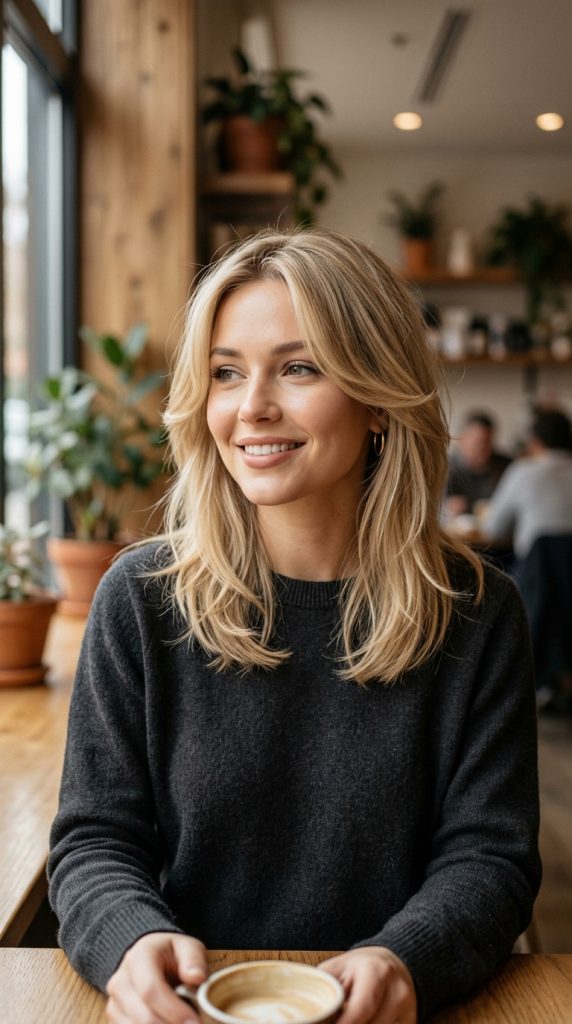
How it is cut and styled
The stylist usually:
- Creates long, face-opening layers starting from cheekbone level
- Blends layers into the mid-lengths instead of cutting sharp steps
- Keeps ends slightly textured but full
- Ensures symmetry so both sides frame the face evenly
Styling steps:
- Apply lightweight volumizing spray at roots
- Blow-dry front layers outward using a round brush
- Let mid-lengths fall naturally for softness
- Add a touch of texturizing spray for separation
If you have a small face, this works best because the curtain layers gently widen your facial frame without overpowering it.
Best for
- Fine, straight to slightly wavy hair
- People who want a soft, natural shag
- Low-maintenance styling lovers
Pro tip
Style the front pieces first while drying—this sets the direction and improves overall shape.
Mistake to avoid
Don’t over-layer the ends. Too many light layers can reduce fullness in fine hair.
Idea 8: Medium Shag with Subtle Waves (Natural Volume Illusion Cut)
What it is
The medium shag with subtle waves is designed to make fine hair look fuller by enhancing natural or lightly styled waves within a shag layer structure. Instead of heavy cutting or extreme choppiness, it relies on soft layering that works beautifully with movement.
This style gives that effortless “lived-in” look while still maintaining shape. It’s especially flattering if your hair struggles to hold curl because the cut itself creates visual texture.
It looks relaxed, modern, and slightly undone in the best way.

How it is cut and styled
The stylist usually:
- Adds soft, uneven layers throughout the length
- Keeps mid-lengths slightly heavier for density
- Avoids thinning the ends too much
- Shapes layers to enhance wave formation
Styling steps:
- Apply sea salt spray or light mousse on damp hair
- Scrunch hair gently to encourage waves
- Air dry or use a diffuser on low heat
- Break waves lightly with fingers for softness
If you have a small face, this works best because the waves add width and softness, balancing facial proportions naturally.
Best for
- Fine hair that struggles with volume
- Slightly wavy or straight textures
- Casual, effortless styling routines
Pro tip
Twist small sections while drying to create natural wave direction without heat tools.
Mistake to avoid
Don’t brush out waves completely after styling—it removes the shag’s built-in texture.
Idea 9: Medium Shag with Wispy Ends (Light, Airy Density Boost)
What it is
The medium shag with wispy ends focuses on creating light, airy tips while keeping the top and mid-lengths full enough to maintain volume. Instead of blunt or heavy ends, the hair gradually becomes softer toward the bottom.
This technique is ideal for fine hair because it removes weight without sacrificing shape. It gives a feathered, floating effect that makes hair appear more dynamic and textured.
It’s a great choice if your hair feels heavy at the ends but flat at the top.
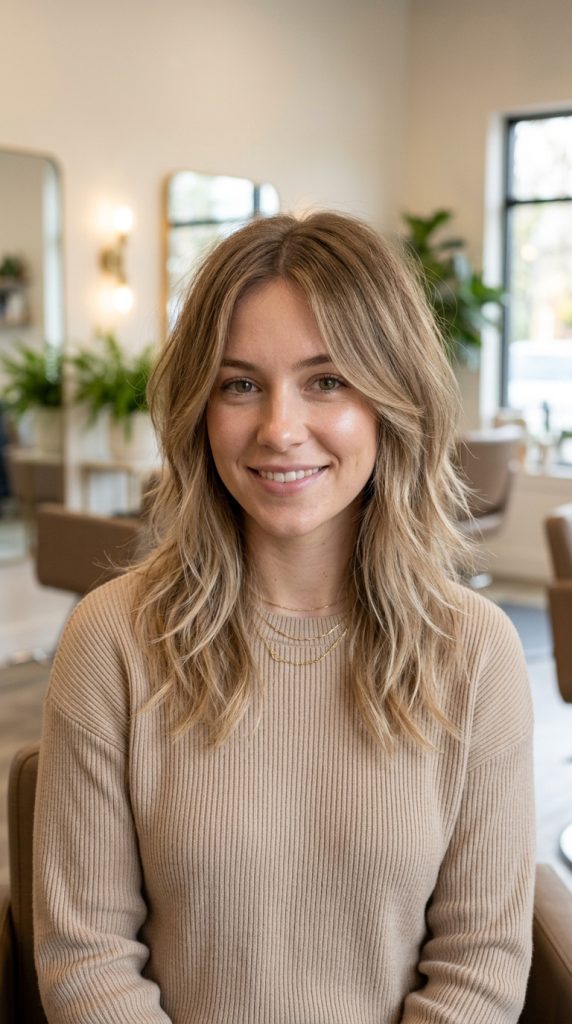
How it is cut and styled
The stylist usually:
- Maintains fullness at the crown and mid-lengths
- Lightly softens ends using point-cutting technique
- Avoids over-thinning the lower sections
- Keeps overall silhouette balanced
Styling steps:
- Use volumizing spray at roots
- Blow-dry with lift at crown
- Let ends fall naturally for softness
- Add light texture spray to define separation
If you have a small face, this works best because the airy ends prevent heaviness around your jawline while keeping balance in the upper face.
Best for
- Fine, straight hair types
- People who want lightweight movement
- Everyday soft styling looks
Pro tip
Ask for “soft point-cut ends” instead of razor thinning to maintain healthier fullness.
Mistake to avoid
Don’t over-thin the ends. Fine hair can quickly look sparse if the bottom is too light.
Idea 10: Medium Shag with Bottleneck Bangs (Soft Contoured Frame Look)
What it is
The medium shag with bottleneck bangs is a modern, highly flattering haircut where the bangs are shorter in the center and gradually get longer toward the sides, blending seamlessly into shag layers. It creates a soft “contour” effect around the face while keeping the shag structure light and textured.
For fine hair, this is a smart choice because it adds shape at the front without adding heaviness. The bottleneck shape naturally draws attention to the cheekbones and eyes while the shag layers add movement through the rest of the hair.
It feels polished but still relaxed—perfect for everyday wear.
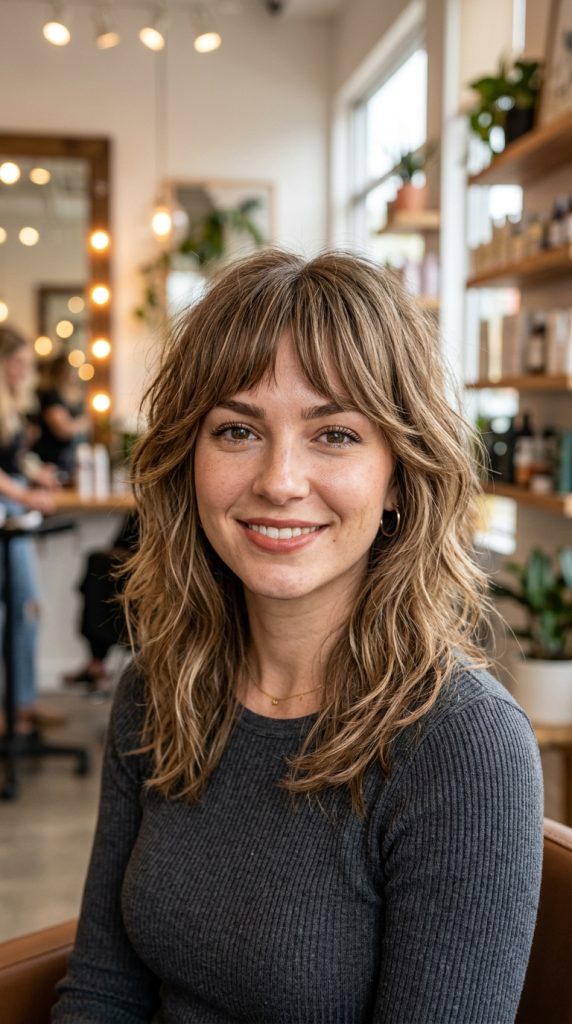
How it is cut and styled
The stylist usually:
- Cuts a medium shag with soft, blended layers
- Shapes bangs shorter in the center and longer at the edges
- Blends fringe into face-framing layers
- Keeps ends lightly textured but not sparse
Styling steps:
- Apply volumizing spray at the roots
- Blow-dry bangs forward first, then sweep outward
- Use a round brush to shape the “bottleneck” curve
- Add light texture spray for movement
If you have a small face, this works best because the curved fringe creates balance and soft width without overpowering your features.
Best for
- Fine, straight to slightly wavy hair
- People who want a trendy but soft fringe
- Everyday wearable shag styles
Pro tip
Style bangs in two directions while drying—center forward, sides outward—to naturally create the bottleneck shape.
Mistake to avoid
Don’t cut the center bangs too short. The gradient effect is what makes this style flattering and modern.
Idea 11: Airy Medium Shag with Invisible Layers (Natural Fullness Illusion)
What it is
The airy medium shag with invisible layers is a subtle, refined version of the shag where layers are carefully blended so they are not visibly choppy, but still create internal movement and volume. This is ideal for people who want the benefits of a shag without an obvious layered look.
Instead of dramatic separation, the haircut focuses on internal structure—giving fine hair a fuller appearance while still looking smooth and natural from the outside.
It’s perfect if you want something professional, soft, and easy to maintain.
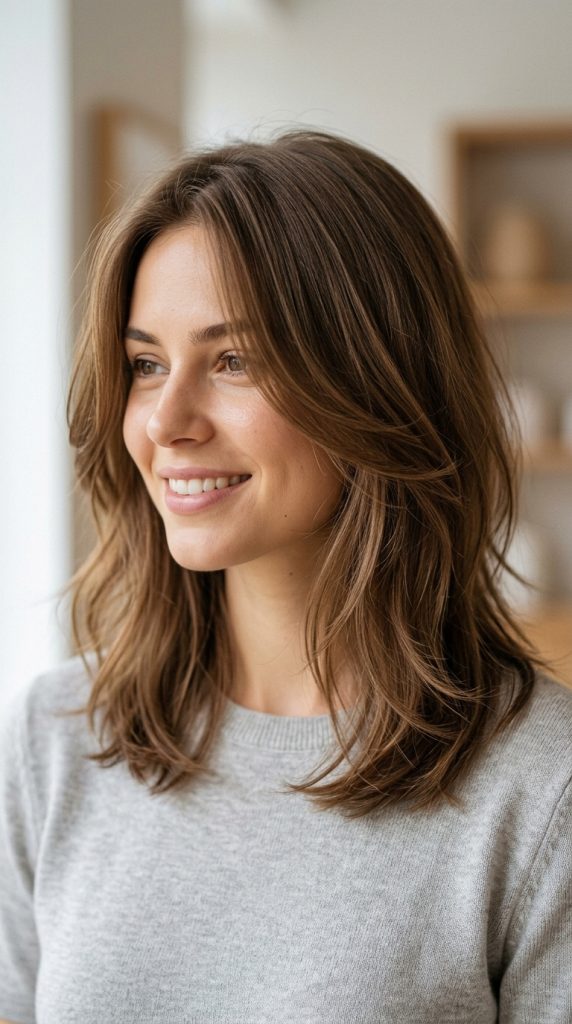
How it is cut and styled
The stylist usually:
- Creates internal layering instead of surface choppiness
- Keeps the outer shape smooth and cohesive
- Adds slight crown layers for lift
- Maintains balanced medium length
Styling steps:
- Apply lightweight volumizing mousse
- Blow-dry using a round brush for smooth lift
- Keep ends slightly curved inward
- Use a soft hold spray for natural movement
If you have a small face, this works best because the invisible layers create fullness without adding visual bulk around the face.
Best for
- Fine hair that needs subtle volume
- Professional or minimal styling preferences
- Straight hair textures
Pro tip
Ask your stylist for “internal layering only” to avoid removing too much surface density.
Mistake to avoid
Don’t request heavy external layers—this will make fine hair look thinner instead of fuller.
Idea 12: Medium Shag with Full Volume Blowout Layers (Salon Bounce Effect)
What it is
The medium shag with full volume blowout layers is the most dramatic and glamorous version of the shag for fine hair. It features strategically placed layers designed specifically to enhance blowout styling, creating maximum bounce, body, and lift.
This haircut is ideal if you love salon-style hair with volume that lasts. It transforms fine hair by giving it structure that responds beautifully to blow-drying and round brush styling.
The result is soft, bouncy, and full-looking hair that still has shag movement.
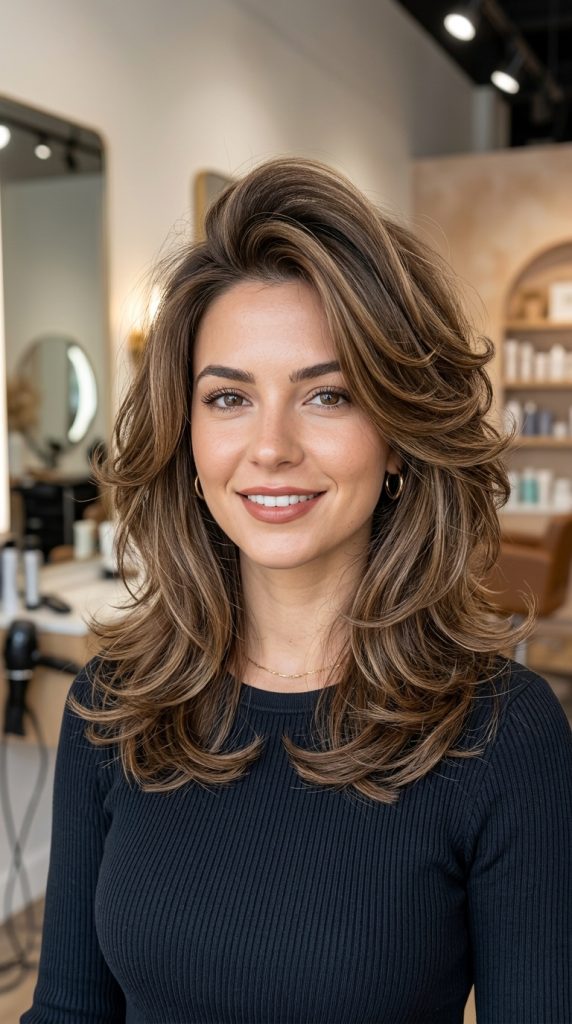
How it is cut and styled
The stylist usually:
- Adds structured layers focused around the crown and mid-lengths
- Keeps ends slightly rounded for bounce
- Maintains medium length for styling flexibility
- Designs layers to enhance blowout movement
Styling steps:
- Apply heat protectant + volumizing mousse
- Blow-dry with a round brush in sections
- Roll ends slightly inward or outward for bounce
- Finish with lightweight shine spray
If you have a small face, this works best because the lifted volume elongates your overall shape and adds balance.
Best for
- Fine hair that lacks volume
- People who love blowout styling
- Medium-length hair with styling effort
Pro tip
Always blow-dry roots first for maximum lift—this determines how full the final look will be.
Mistake to avoid
Don’t skip heat protection or overuse heavy oils. They can flatten the volume and ruin the bounce effect.