
Modern farmhouse entryway benches are one of those home decor elements that look simple on the surface but completely change how a home feels the moment you step inside. The entryway is the first impression of a house, yet it is also the most neglected space. People decorate living rooms, bedrooms, kitchens—but the entrance often ends up as a leftover zone: a random shoe pile, a blank wall, or a space that feels unfinished. That’s where a well-designed entryway bench becomes more than furniture—it becomes structure, function, and visual balance all in one.
Most homeowners don’t realize how much impact the entryway actually has on daily life. It’s where you drop your bag, remove your shoes, check your appearance before leaving, and transition from outside chaos into indoor comfort. When this space is disorganized or empty, it creates small daily friction that adds up. You lose time looking for things, you feel clutter before even entering your living space, and the home never feels fully “put together” at the front.
A modern farmhouse entryway bench solves this problem in a surprisingly efficient way. It combines rustic warmth with modern simplicity, creating a look that feels welcoming without being messy. The farmhouse style brings in natural textures like wood, wicker, linen, and metal accents, while the modern element keeps everything clean, minimal, and intentional. This balance is exactly why it has become such a strong trend in interior design for 2026.
But there is a mistake many people make when designing entryway spaces: they focus only on aesthetics and ignore function. A bench that looks beautiful but doesn’t offer storage, comfort, or practical usage quickly becomes decorative clutter. On the other hand, a purely functional bench with no design thought ends up looking dull and disconnected from the rest of the home. The best farmhouse entryway designs solve both problems at once—they are visually warm and practically useful.
Another important factor is scale. Entryways are usually small or narrow spaces, especially in modern homes. Oversized furniture can make the area feel cramped, while too-small pieces look lost and ineffective. A well-balanced entryway bench must match the proportions of the wall, door, and available walking space. That’s why smart design choices matter more than expensive furniture. Even a simple wooden bench can look high-end if it’s styled correctly.
Lighting also plays a major role in how the entryway feels. Natural light enhances the farmhouse aesthetic by highlighting wood textures and soft neutral tones. In darker entryways, artificial lighting like wall sconces or warm LED lamps can create the same effect. Without proper lighting, even the most expensive bench setup can feel flat and uninviting.
The beauty of modern farmhouse design is its flexibility. It doesn’t demand perfection. Slight imperfections in wood, soft fabric wrinkles, woven baskets, or natural textures actually enhance the aesthetic instead of ruining it. This makes it one of the most forgiving and practical design styles for real homes where life is constantly happening.
In this guide, you will explore 13 modern entryway bench farmhouse ideas that focus on both style and real-life usability. Each idea is designed to help you transform an ordinary entrance into a functional, visually appealing space that feels organized and intentional. These concepts are not just decorative inspiration—they are practical setups that work in real homes, whether your space is large, small, narrow, or open.
You’ll see combinations of storage benches, rustic wood designs, cushioned seating, wall-mounted setups, basket integrations, coat hooks, and layered decor styling. Each idea shows how small design choices can completely change the feel of your entryway without requiring a full renovation.
If your entryway currently feels empty, cluttered, or disconnected, the problem is not lack of space—it’s lack of structure. Once you understand how to combine farmhouse warmth with modern functionality, even the smallest entrance can feel like a designed, intentional part of your home instead of an afterthought.
This is where design stops being decoration and starts becoming daily comfort.
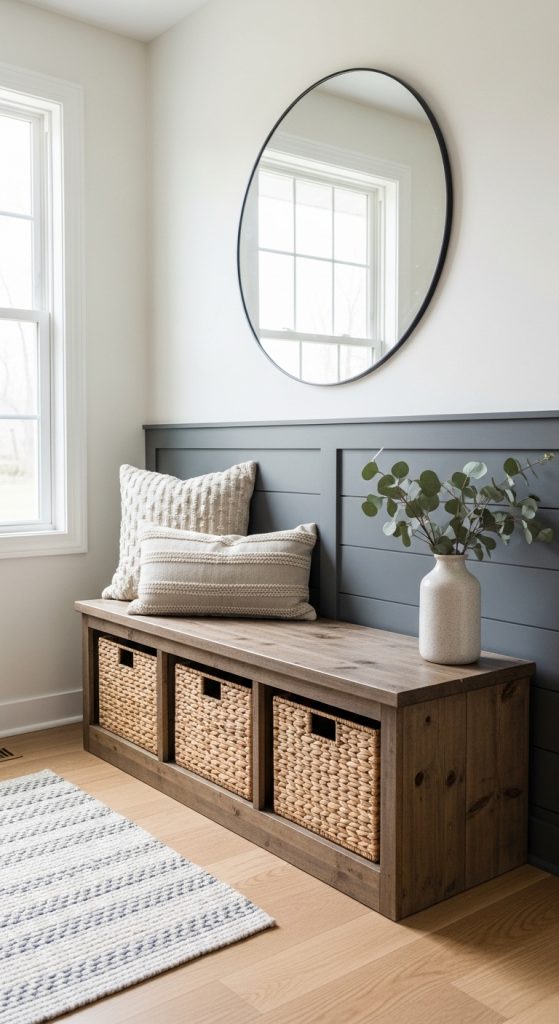
1. Rustic Wood Storage Bench with Woven Baskets (Functional Classic Setup)
This is the most practical farmhouse entryway idea, and also the one most people underestimate. It looks simple, but when done right, it solves three problems at once: seating, storage, and visual clutter control. The mistake people make is treating it as “just a bench” instead of a full entry system.
What it is
A solid rustic wooden bench placed against the entryway wall with built-in or under-bench woven baskets. It combines seating with hidden storage for shoes, bags, scarves, or daily essentials while maintaining a warm farmhouse aesthetic.
The woven baskets are what give it the farmhouse identity—without them, it becomes just a plain bench.
How to implement it (practical steps)
Start by choosing a wall near the main entrance.
- Place a medium-length wooden bench (natural oak, walnut, or distressed wood)
- Ensure there is enough clearance for sitting comfortably
- Add 2–4 woven baskets underneath depending on bench size
- Use baskets for shoes, seasonal items, or daily-use storage
- Keep the bench surface clean or add a thin neutral cushion
- Style with a small plant, tray, or wall art above
If your entryway is narrow, choose a slim bench with open legs instead of a bulky storage base.
If your space is large, extend the setup with side decor like coat hooks or wall shelving.
Best for
- Small to medium entryways
- Families needing daily storage
- Minimal farmhouse style lovers
- High-traffic homes
This works best when you want everything hidden but still easily accessible.
Pro tip
Keep basket materials consistent (same color tone or texture). Mixed baskets can make the setup look messy instead of designed.
Mistake to avoid
Don’t overcrowd the top of the bench. Too many decor items ruin the clean farmhouse look and make it feel cluttered instead of functional.
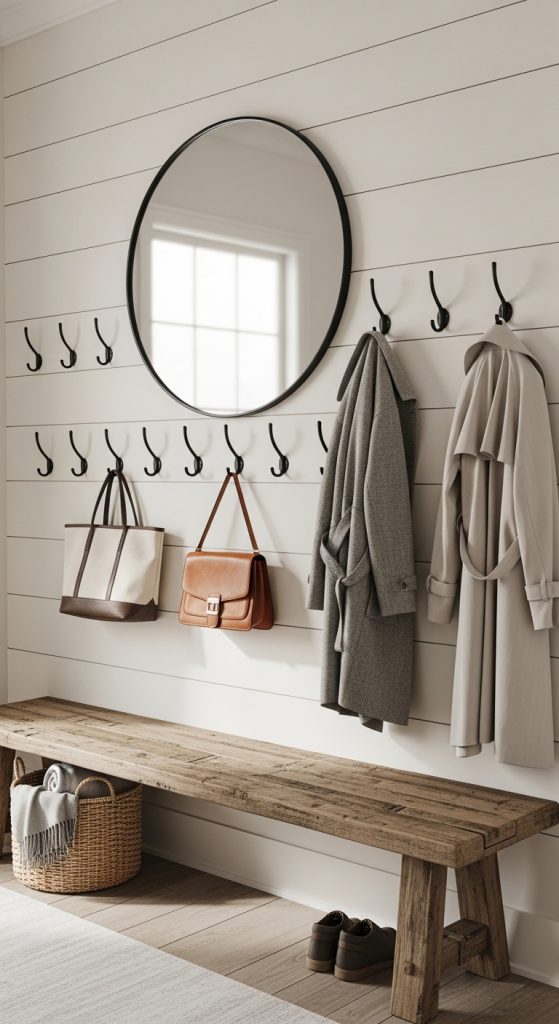
2. Modern Farmhouse Bench with Wall Hooks and Mirror (Complete Entry System)
This idea turns your entryway into a fully functional “drop zone.” Instead of just sitting space, you’re creating a structured system for coming and going. It’s one of the most efficient setups for real daily life.
What it is
A wooden farmhouse-style bench paired with a wall-mounted coat hook rack and a mirror above it. It creates a vertical entry system where each element has a purpose: sitting, hanging, and checking appearance before leaving.
This setup is popular because it uses wall height instead of floor space, making it ideal for smaller homes.
How to implement it (practical steps)
Start by identifying a clear wall near the entrance.
- Install a sturdy wooden bench at standard seating height
- Mount a row of farmhouse-style hooks above it
- Add a medium or large mirror above the hooks
- Keep spacing balanced (don’t stack items too tightly)
- Use hooks for bags, jackets, and hats
- Keep bench area mostly clear or add one cushion
If your entryway is narrow, keep hooks slim and vertical. If it’s wide, you can expand into a full wall feature.
Lighting above or beside the mirror improves both function and aesthetics.
Best for
- Families with daily commuting routines
- Small entryways needing vertical storage
- Functional farmhouse interiors
- Busy, high-use homes
This works best when you need everything accessible within one spot.
Pro tip
Use a round mirror instead of a square one for a softer farmhouse-modern balance.
Mistake to avoid
Don’t overload the hooks. Too many hanging items destroy the clean visual structure and make the entryway feel chaotic.
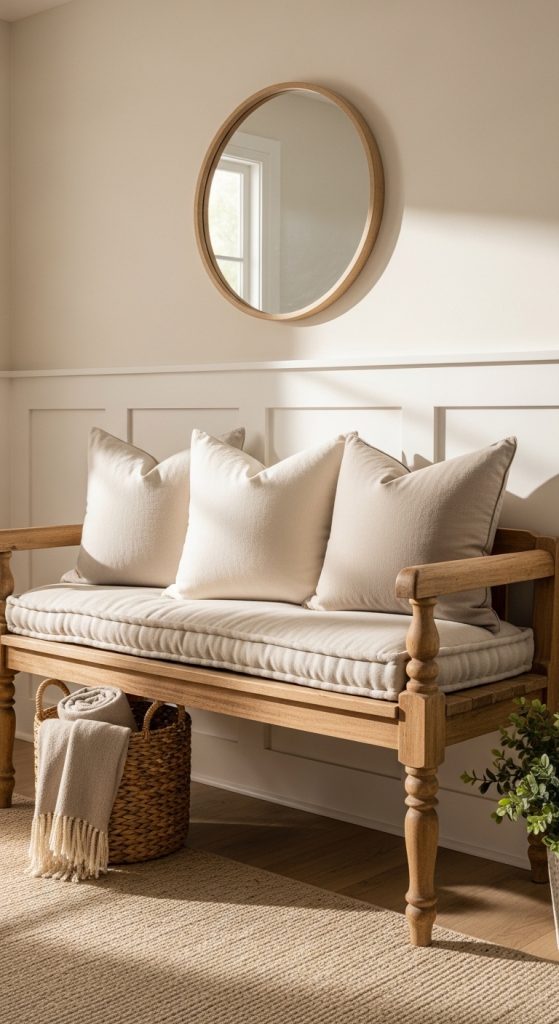
3. Cushioned Farmhouse Bench with Neutral Textures (Soft Comfort Entry)
This idea focuses more on comfort and aesthetic warmth rather than heavy storage. It’s perfect for homes where the entryway is meant to feel welcoming and styled, not just functional.
What it is
A wooden farmhouse bench topped with a neutral-toned cushion (linen, cotton, or linen-blend) combined with soft decorative elements like pillows or a throw. It creates a cozy, lived-in look while maintaining simplicity.
The cushion adds comfort and softness, which balances the hard textures of wood and walls.
How to implement it (practical steps)
Start with a solid bench base.
- Choose a natural wood bench with simple legs
- Add a long neutral cushion (beige, cream, grey, or soft white)
- Place 1–2 small textured pillows if space allows
- Add a light throw blanket folded neatly on one side
- Keep wall decor minimal (simple frame or small art)
- Optionally add a small plant nearby for freshness
If your entryway gets high use, choose washable cushion covers.
If your space is small, avoid extra pillows and keep it minimal.
Best for
- Cozy farmhouse-style homes
- Low to medium traffic entryways
- Aesthetic-focused interiors
- Apartments or small houses
This works best when you want your entryway to feel warm and inviting instead of purely functional.
Pro tip
Stick to one color palette (neutral tones only). Mixing bold colors breaks the farmhouse calm aesthetic instantly.
Mistake to avoid
Don’t over-decorate the bench. Too many cushions or props make it look like a living room sofa instead of an entryway feature.
4. Built-In Farmhouse Bench Nook (Architectural Entry Feature)
This is the kind of entryway setup that looks expensive because it feels “built into the house,” not placed inside it. Most people try to decorate around space; this idea turns the space itself into the design.
What it is
A recessed or wall-built bench area integrated into the entryway structure, often framed with wood paneling, shiplap, or trim. It usually includes storage underneath and sometimes shelving above, creating a complete architectural entry nook.
It feels permanent, organized, and intentional—like it was designed with the house.
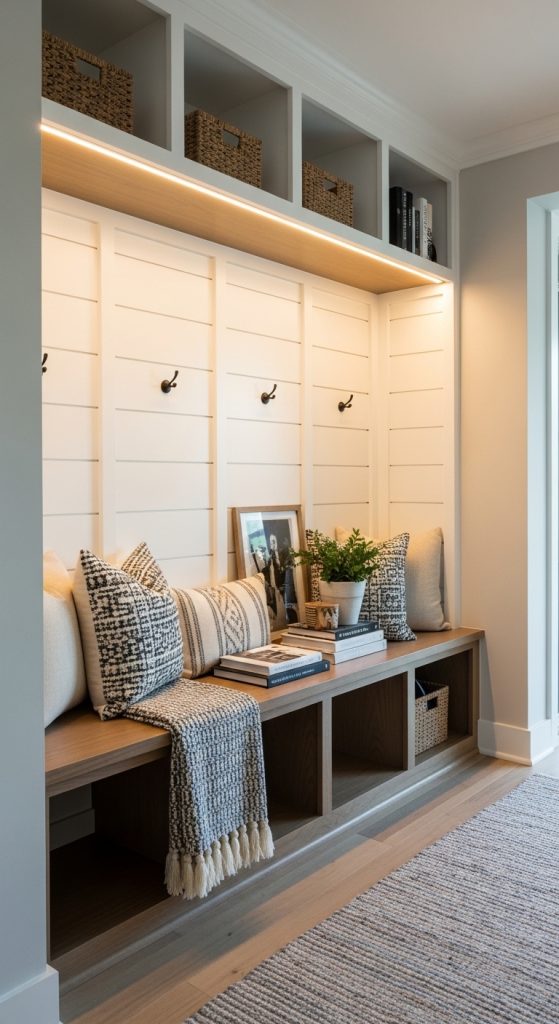
How to implement it (practical steps)
This works best during renovation or planned construction, but can be mimicked with framing.
- Identify a recessed wall space or corner near the entrance
- Build a wooden frame for the bench base
- Add a solid top surface (wood or MDF with farmhouse finish)
- Include built-in cubbies or drawers underneath
- Add vertical paneling or shiplap behind the bench
- Finish with soft lighting or wall hooks above
If full construction isn’t possible, you can fake the built-in look using paneling around a freestanding bench.
Best for
- Medium to large entryways
- Renovated or custom homes
- High-end farmhouse interiors
- Families needing organized storage zones
This works best when you want a permanent, structured entry feature instead of movable furniture.
Pro tip
Add warm LED strip lighting under the bench or behind wall panels to enhance depth and create a luxury farmhouse feel.
Mistake to avoid
Don’t break the symmetry of the nook. Uneven paneling or poorly aligned storage makes the built-in effect look fake and unfinished.
5. Narrow Console Bench with Slim Farmhouse Styling (Small Space Solution)
This idea is designed for tight entryways where space is limited but style still matters. The mistake most people make is using bulky furniture that blocks movement. This setup solves that problem with proportion control.
What it is
A slim, elongated farmhouse-style console bench that doubles as seating and display space, designed specifically for narrow entryways or hallway entrances. It keeps the space open while still functional.
It’s minimal, clean, and visually light.
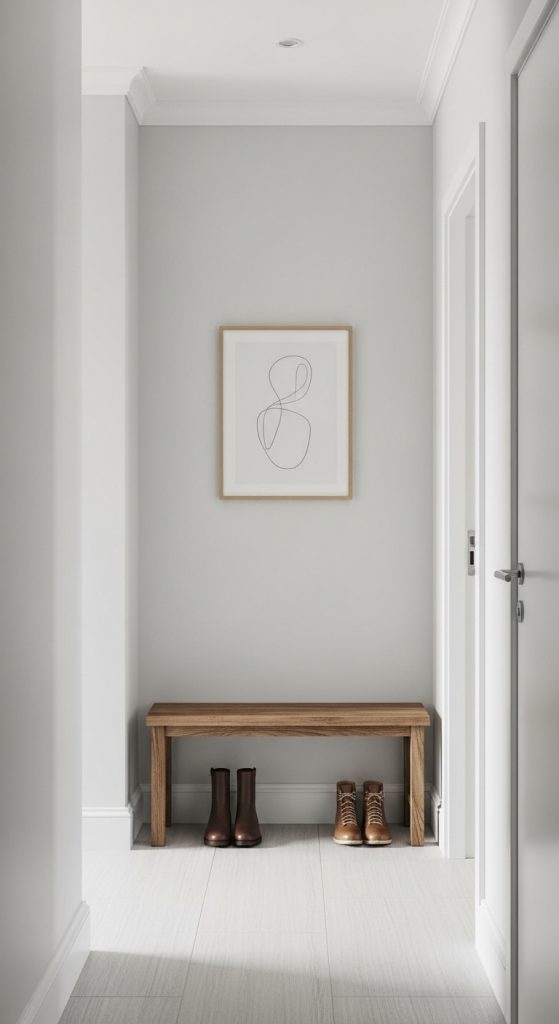
How to implement it (practical steps)
Start by measuring your entryway depth.
- Choose a narrow wooden bench (slim profile, open legs preferred)
- Place it flush against the wall without blocking pathways
- Add a small tray or decor item on top (not overcrowded)
- Place one basket or slim storage box underneath if space allows
- Hang a single artwork or mirror above it
- Keep color palette light and neutral
If your hallway is extremely tight, avoid any under-bench storage.
If you have slightly more space, add vertical wall hooks above.
Best for
- Apartments or small homes
- Narrow entryways or corridors
- Minimal farmhouse lovers
- Low-clutter lifestyles
This works best when you need style without sacrificing walking space.
Pro tip
Keep negative space intentionally empty. In narrow entryways, emptiness is part of the design, not a mistake.
Mistake to avoid
Don’t over-decorate the top surface. One or two items are enough—anything more makes the space feel cramped.
6. Farmhouse Bench with Shoe Storage Cubes (Daily Utility Setup)
This is one of the most practical entryway solutions for real-life use. It focuses heavily on functionality but still maintains farmhouse aesthetics through wood textures and natural tones.
What it is
A wooden bench combined with open or closed cubby-style shoe storage underneath. Each section is designed to hold footwear or daily essentials, keeping the entryway organized and clutter-free.
It’s ideal for households where shoes usually pile up near the entrance.
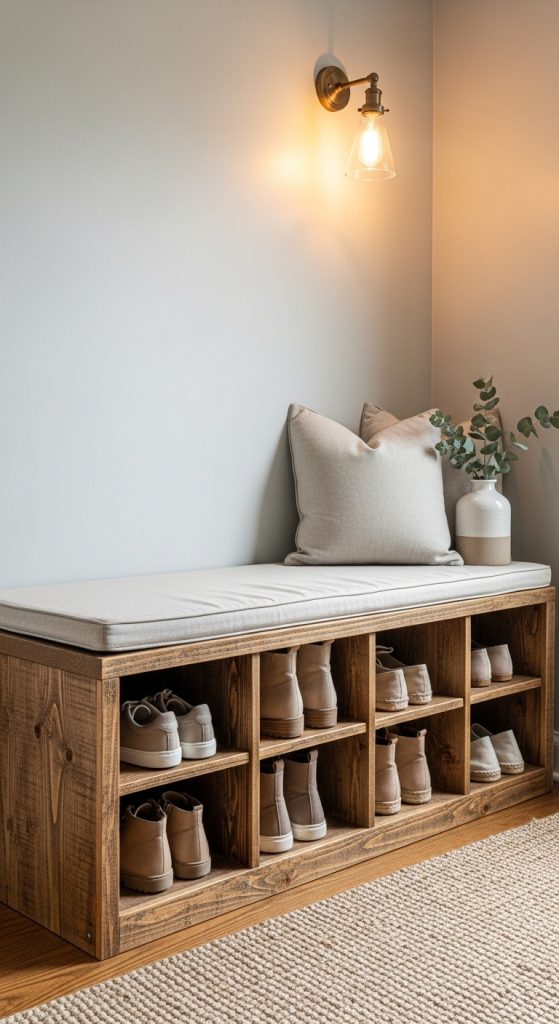
How to implement it (practical steps)
Start with a sturdy bench base.
- Choose a bench with built-in cubby compartments
- Assign each cube for shoes or small storage
- Keep frequently used shoes in easy-to-reach sections
- Place a thin cushion on top for seating comfort
- Add a small wall hook system above for bags/jackets
- Maintain color consistency (wood tones or neutral finishes)
If you have multiple people in the house, assign cubbies per person for better organization.
If space is small, use vertical cubbies instead of wide ones.
Best for
- Family homes
- High-traffic entryways
- Organized storage needs
- Practical farmhouse interiors
This works best when daily clutter control is the priority.
Pro tip
Use matching storage bins or labeled sections inside cubbies to keep it visually clean, not chaotic.
Mistake to avoid
Don’t overload cubbies with random items. If it turns into a dumping zone, the entire design loses its farmhouse clean aesthetic.
7. Floating Farmhouse Bench with Open Floor Space (Light & Airy Entry)
This is the kind of entryway design that instantly makes a space feel bigger than it actually is. Most people crowd their entryway with heavy furniture, which visually shrinks the area. This idea does the opposite—it creates openness while still being functional.
What it is
A wall-mounted floating bench with no legs touching the floor, paired with minimal farmhouse styling. The open space underneath creates visual breathing room and makes small entryways feel wider and cleaner.
It’s simple, modern, and extremely effective in compact homes.
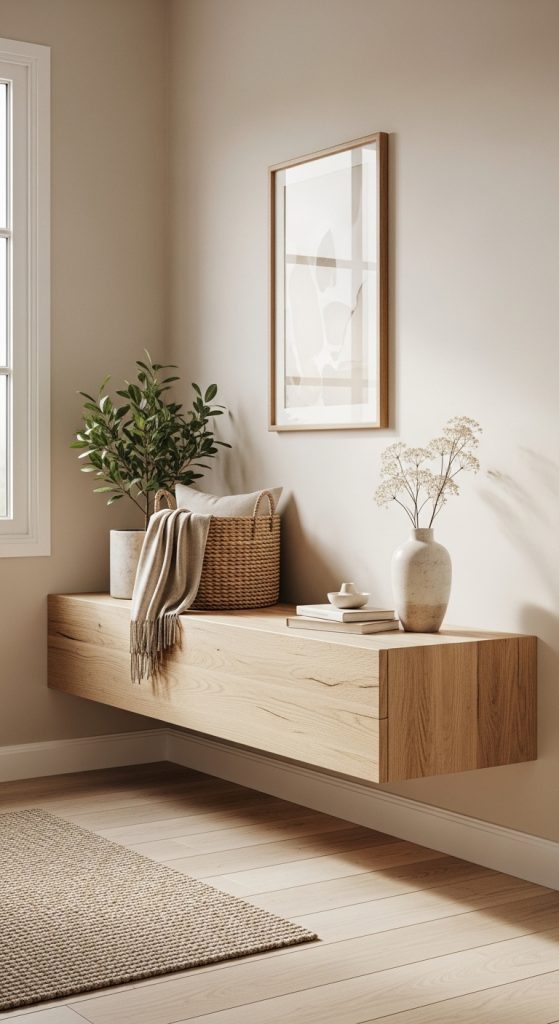
How to implement it (practical steps)
Start with a solid wall that can support weight.
- Install a strong wooden floating bench bracket system
- Mount a thick wooden top (rustic or natural finish)
- Ensure proper wall anchoring for safety
- Keep the space underneath completely open or lightly styled
- Add a small rug underneath for softness (optional)
- Pair with minimal wall decor like hooks or a mirror
If your wall is weak or hollow, reinforce it before installation.
If space is very small, keep the bench shorter rather than extending across the whole wall.
Best for
- Small apartments
- Modern farmhouse minimalist homes
- Tight entryways
- Clean aesthetic lovers
This works best when you want maximum openness with minimal visual weight.
Pro tip
Use a slightly thicker wood slab for the bench to make it feel stable and visually grounded even though it floats.
Mistake to avoid
Don’t overload the wall above it. Too many hooks or heavy decor ruins the airy effect instantly.
8. Farmhouse Bench with Layered Textures (Cozy Styled Entry Look)
This idea focuses less on structure and more on visual warmth. It turns a simple bench into a styled moment using layered textures. The mistake most people make is using only one material—this design works because of contrast.
What it is
A wooden farmhouse bench styled with multiple soft layers like cushions, throws, woven textures, and natural decor elements. It creates a cozy, lived-in aesthetic while still feeling intentional.
It’s more about styling than construction.
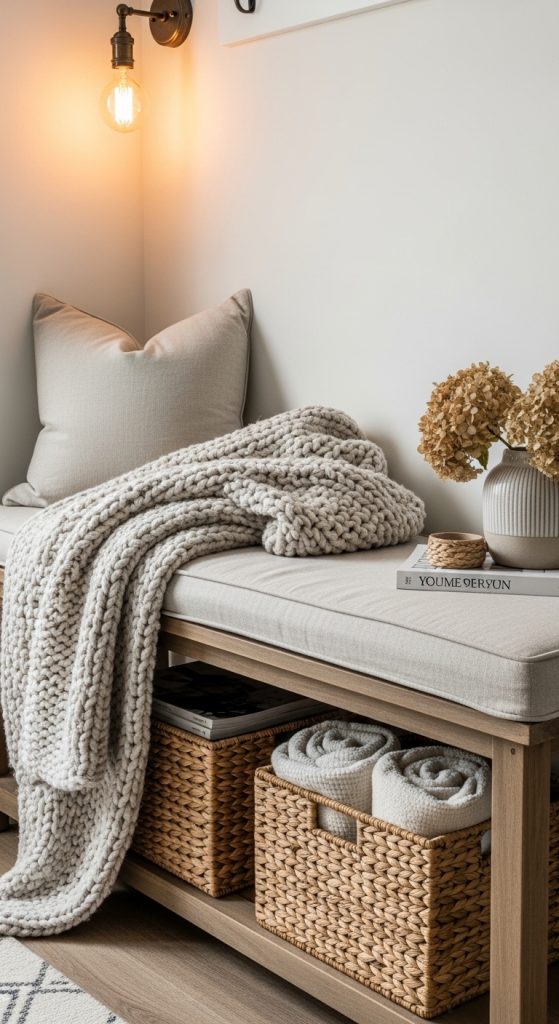
How to implement it (practical steps)
Start with a simple bench base.
- Place a rustic wood bench against the entry wall
- Add a neutral cushion for comfort
- Layer a folded throw blanket on one side
- Add a woven basket nearby or underneath
- Style the wall with a mirror or soft artwork
- Include a small natural element like a plant or dried pampas
If your space is small, reduce layers but keep texture contrast.
If your space is larger, add vertical styling like hooks or shelves.
Best for
- Cozy farmhouse interiors
- Aesthetic-focused homes
- Medium traffic entryways
- Soft, warm design lovers
This works best when you want the entryway to feel welcoming and comfortable.
Pro tip
Stick to 2–3 textures maximum (wood + fabric + woven). Too many textures create visual noise instead of harmony.
Mistake to avoid
Don’t over-layer cushions or throws. It quickly shifts from “cozy” to “cluttered.”
9. Entryway Bench with Mirror Wall Feature (Light-Expanding Design)
This is one of the most powerful visual tricks in interior design. It not only adds function but also changes how the entire entryway feels by reflecting light and space.
What it is
A farmhouse-style bench placed beneath a large wall mirror, often paired with subtle decor like baskets, hooks, or a small console. The mirror becomes the focal point while the bench grounds the space.
It makes entryways feel brighter, larger, and more open.
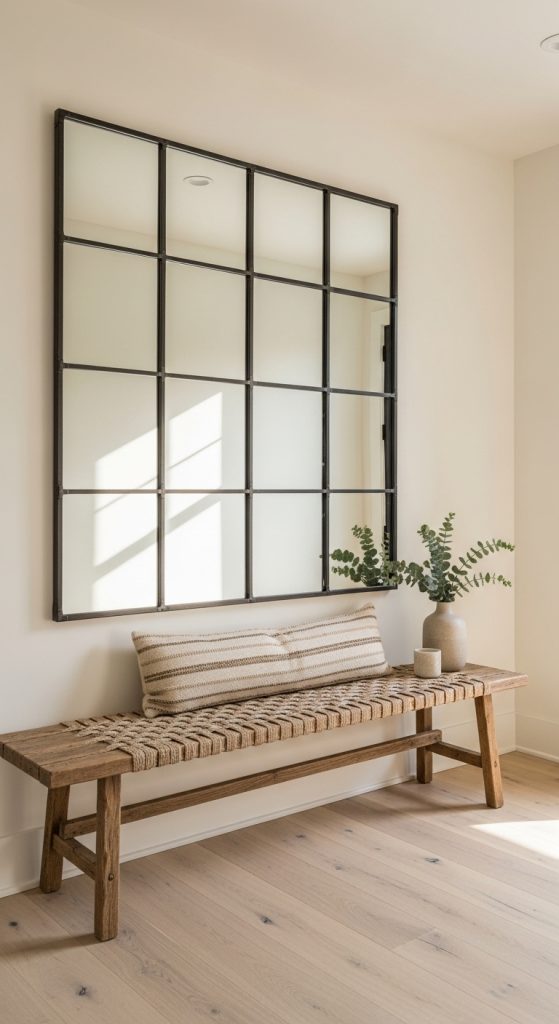
How to implement it (practical steps)
Start with bench placement.
- Place a wooden farmhouse bench against the wall
- Install a large mirror directly above it (round or rectangular)
- Ensure mirror width matches or slightly exceeds bench width
- Keep decor minimal on the bench surface
- Add a small basket or tray underneath if needed
- Use warm lighting nearby for reflection enhancement
If your entryway is narrow, a round mirror works best. If it’s wide, a rectangular mirror gives better balance.
Best for
- Small or dark entryways
- Modern farmhouse homes
- Minimal but elegant designs
- Spaces needing visual expansion
This works best when you want the entryway to feel brighter and more open instantly.
Pro tip
Place lighting opposite the mirror to maximize reflected brightness and enhance depth.
Mistake to avoid
Don’t use a small mirror above a large bench. It breaks proportion and makes the setup feel unbalanced.
10. Farmhouse Bench with Coat Rack Wall Combo (Full Drop Zone System)
This is not just decoration—it’s a controlled entry system. If your entryway feels like a dumping ground for bags, jackets, and random clutter, the problem isn’t space. It’s lack of structure. This setup fixes that.
What it is
A farmhouse bench paired with a full wall-mounted coat rack system above it. It creates a vertical “drop zone” where every item has a place: sit, hang, store, and go. It’s one of the most functional entryway setups for real daily use.
It turns chaos into a routine system.
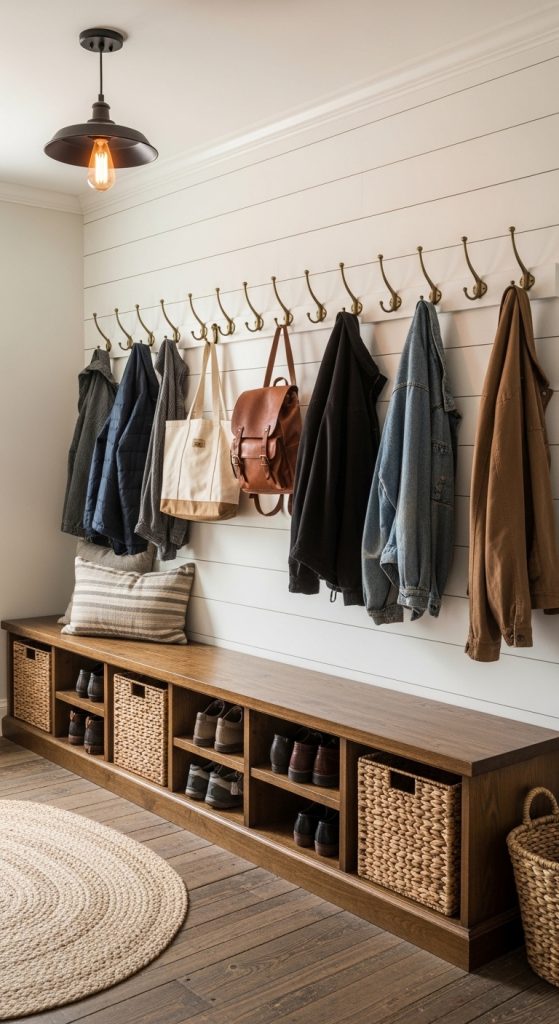
How to implement it (practical steps)
Start by selecting one main entry wall.
- Place a sturdy wooden farmhouse bench against the wall
- Install a horizontal coat rack or individual hooks above it
- Space hooks evenly for bags, jackets, hats
- Add a small basket under the bench for shoes or quick storage
- Keep bench surface mostly clear or add a thin cushion
- Maintain visual balance between bench width and hook placement
If your entryway is small, keep hooks minimal (5–7 max). If it’s wide, you can extend into a full wall system.
Best for
- Family homes
- Busy daily routines
- High-traffic entryways
- Functional farmhouse interiors
This works best when multiple people are using the same entry space.
Pro tip
Assign hook sections per person. It prevents clutter and keeps the system organized long-term.
Mistake to avoid
Don’t overcrowd hooks. Overloading instantly destroys the clean farmhouse look and turns it into visual noise.
11. Corner Farmhouse Bench Nook (Space-Maximizing Design)
Corners are usually wasted in entryways, but this idea turns dead space into a functional feature. Instead of forcing furniture into a straight wall, you use geometry to your advantage.
What it is
A corner-installed farmhouse bench that wraps around two walls or fits snugly into a corner area. It often includes cushions, small storage below, and corner wall styling above.
It creates a cozy, tucked-in seating zone that feels intentional and space-efficient.
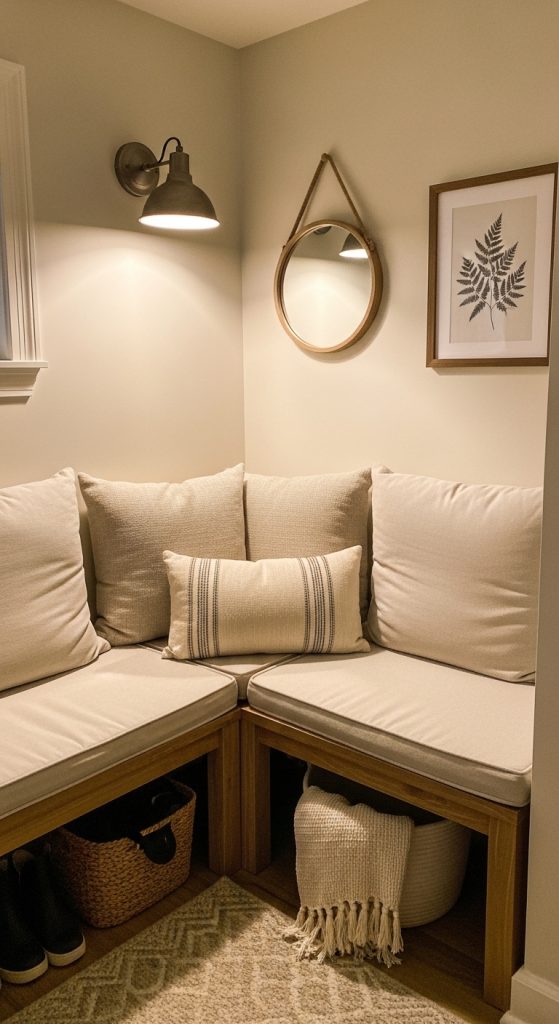
How to implement it (practical steps)
Find an unused corner near your entrance.
- Install a custom L-shaped bench or place a corner-fitted bench
- Ensure both walls are used for support and styling
- Add a soft cushion or corner seat pad
- Use one wall for hooks and the other for decor or mirror
- Place baskets or storage boxes underneath
- Keep styling minimal to avoid overcrowding
If space is very tight, use a simple straight bench angled into the corner instead of full L-shape.
Best for
- Small homes or apartments
- Narrow or awkward entryways
- Cozy farmhouse aesthetics
- Space optimization needs
This works best when you want to turn unused corners into functional seating.
Pro tip
Add a corner cushion instead of separate cushions—it keeps the seating visually unified and cleaner.
Mistake to avoid
Don’t overload both walls with decor. One wall should dominate visually, while the other stays simple for balance.
12. Farmhouse Bench with Seasonal Styling Setup (Changeable Decor Concept)
This idea is not about structure—it’s about flexibility. Instead of redesigning your entryway every time, you keep the base same and change styling with seasons or moods.
What it is
A simple farmhouse bench that acts as a permanent base, while decor elements (pillows, baskets, wall art, greenery) are swapped seasonally or periodically. It keeps the entryway fresh without major effort.
It’s perfect for people who like variety but don’t want constant redesign.
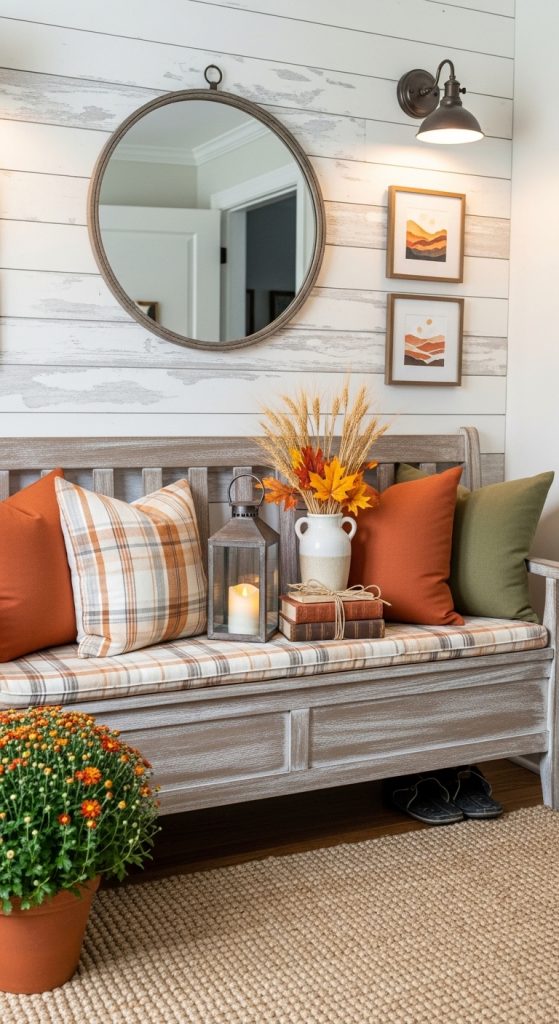
How to implement it (practical steps)
Start with a neutral base setup.
- Choose a simple wooden bench in neutral tone
- Keep wall decor minimal and flexible (frames, mirrors, hooks)
- Use removable cushions and throws for seasonal changes
- Switch decor themes (summer greens, winter warm tones, etc.)
- Keep storage baskets neutral so they match all styles
- Avoid permanent heavy decor so changes stay easy
If you want easier switching, stick to 2–3 core color palettes only.
Best for
- Aesthetic-focused homeowners
- Pinterest-style decor lovers
- Seasonal decorators
- Flexible interior design homes
This works best when you enjoy refreshing your home look regularly.
Pro tip
Keep a “neutral base kit” so every seasonal change only replaces small accents, not the whole setup.
Mistake to avoid
Don’t mix too many seasonal themes at once. It creates visual confusion instead of a clean transition.