
Butterfly hairstyles have quickly become one of the most viral, Pinterest-loved, and salon-requested hair trends in recent years. The reason is simple: this haircut gives the illusion of two different lengths in one style—long, flowing layers at the back combined with shorter, face-framing layers at the top that mimic the soft, airy shape of butterfly wings. The result is a voluminous, bouncy, and effortlessly glamorous look that works across different hair textures, face shapes, and styling preferences.
What makes the butterfly haircut especially popular is its versatility. It is not just a single haircut but a layered styling technique that can be adjusted based on hair length, density, and personal aesthetic. Whether someone has straight, wavy, or curly hair, the butterfly cut can be customized to enhance natural movement while maintaining structure and softness. It creates a balanced look where the hair feels light and airy at the top, yet still long and dramatic at the ends. This dual-layer effect is what gives the “butterfly” illusion its name.
In today’s beauty world, where Pinterest and Instagram drive hairstyle trends, the butterfly haircut stands out because it combines modern aesthetics with practical wearability. Many people want hairstyles that look professionally styled but still feel low-maintenance in daily life. The butterfly haircut meets this demand perfectly. It allows the hair to be worn naturally without heavy styling, yet it can easily be transformed into voluminous blowouts, curled waves, or sleek layered looks when desired.
Another major reason for the popularity of butterfly hairstyles is their face-framing power. The shorter layers around the face are designed to highlight facial features such as cheekbones, jawlines, and eyes. This makes the haircut flattering for almost everyone. It softens strong facial structures and adds dimension to round or square faces. At the same time, the longer layers maintain length and elegance, which is ideal for people who love the feeling of long hair but want added movement and shape.
The butterfly haircut also aligns perfectly with current beauty trends that emphasize softness, volume, and natural texture. Unlike overly sharp or structured cuts, this hairstyle embraces flow and dimension. It works beautifully with curtain bangs, soft waves, layered blowouts, and even messy, undone styles. Because of this flexibility, it has become a go-to choice for hairstylists and influencers who want a timeless yet trendy appearance.
From a styling perspective, butterfly haircuts are also incredibly adaptable. They can be worn casually for everyday looks or elevated for special occasions. A simple blow-dry with a round brush can enhance the wing-like layers, giving a salon-finish effect at home. Curling the layers outward adds more definition and drama, while straightening them creates a sleek, modern silhouette. This adaptability is one of the reasons the butterfly cut has become a staple in Pinterest hairstyle boards and beauty inspiration searches.
Beyond aesthetics, the butterfly haircut is also a strategic solution for people dealing with flat, heavy, or shapeless hair. Many individuals struggle with hair that lacks volume or feels weighed down due to length. The layered structure of the butterfly cut removes unnecessary bulk while preserving length, creating an illusion of fullness and movement. This makes it especially appealing for fine hair, as it adds body without requiring excessive styling products or heat tools.
However, achieving the perfect butterfly hairstyle is not just about the cut itself—it is also about understanding the small techniques, adjustments, and styling hacks that bring the haircut to life. This is where “butterfly hairstyle cut hacks” become essential. These hacks help refine the layers, improve balance, enhance volume, and ensure the haircut suits individual hair types and face shapes. Without these small but powerful techniques, the butterfly cut may not reach its full aesthetic potential.
In professional hairstyling, small adjustments such as layer placement, sectioning techniques, angle cutting, and blow-drying direction can completely transform the final result. For example, slightly adjusting the length difference between the top and bottom layers can make the butterfly effect more dramatic or more subtle depending on preference. Similarly, the way the hair is styled after cutting plays a huge role in how visible the layers appear.
Another important aspect of butterfly haircut hacks is maintenance. Unlike blunt cuts, layered hairstyles require strategic upkeep to maintain shape and movement. Knowing how to trim, refresh, and restyle layers at home can extend the life of the haircut and keep it looking fresh between salon visits. These practical techniques make the butterfly cut not only beautiful but also sustainable for everyday wear.
The growing demand for butterfly hairstyles also reflects a shift in modern beauty standards. People are moving away from rigid, high-maintenance hairstyles and toward more natural, effortless-looking styles that still feel polished. The butterfly haircut embodies this shift perfectly—it is structured yet soft, stylish yet easy to maintain, and trendy yet timeless.
In this guide on “13 Butterfly Hairstyle Cut Hacks,” the focus will be on uncovering professional-level techniques, styling secrets, and practical tips that enhance the butterfly haircut experience. Each idea will explore how to improve layering, increase volume, balance proportions, and customize the cut for different hair types. Whether someone is a beginner exploring the style for the first time or someone already familiar with layered cuts, these insights will help unlock the full potential of the butterfly hairstyle.
Ultimately, the butterfly haircut is more than just a trend—it is a modern expression of effortless beauty. With the right hacks and techniques, it can transform ordinary hair into a voluminous, flowing, and elegant masterpiece that feels light, fresh, and full of life.
IDEA 1: Butterfly Cut for Maximum Face-Framing Volume
Introduction (Deep Concept Overview)
The butterfly haircut is most powerful when it is used strategically to enhance facial structure through volume placement. One of the most important “butterfly hairstyle cut hacks” is learning how to design face-framing layers that create lift, softness, and balance at the front of the face while still maintaining length at the back. This idea is especially important because many people get the butterfly cut but do not achieve the full “butterfly wing effect” due to incorrect layering around the face.
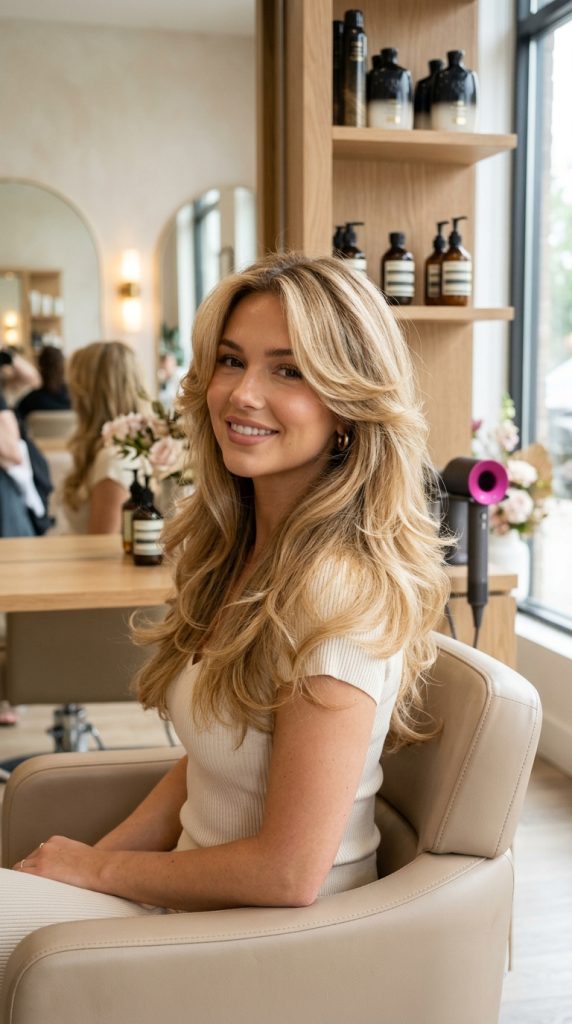
Face-framing layers are not just decorative—they define the entire haircut outcome. When placed correctly, they create the illusion of higher cheekbones, a slimmer jawline, and a lifted overall appearance. In the butterfly cut, these layers are usually shorter near the chin or cheek level and gradually blend into longer sections. The magic lies in how these layers are connected to the crown area, which determines volume and bounce.
This hack focuses on balancing proportions so that the face appears naturally lifted without harsh or choppy transitions. It is widely used in salon-level butterfly cuts because it ensures the haircut looks intentional, soft, and dimensional from every angle. The goal is not just to shorten front pieces but to sculpt the face using hair as a framing tool.
What This Butterfly Hack Means (Definition)
This hack refers to the precise technique of cutting and blending front layers in a way that enhances facial symmetry and adds natural volume around the cheeks and jawline. Instead of random layering, the stylist creates a structured gradient that blends seamlessly into the longer back layers.
The key idea is “controlled softness”—the layers should be noticeable but not harsh.
Step-by-Step How to Achieve It
Step 1: Identify Face Shape
- Round face → longer face-framing layers starting near chin
- Oval face → balanced cheek-level framing
- Square face → softer, feathered layers below cheekbones
Step 2: Section the Front Hair
Divide two front triangular sections from the crown to the ears.
Step 3: Establish Guide Length
Cut the shortest layer based on face shape preference (cheek or chin level).
Step 4: Angle the Cut
Use a soft diagonal angle instead of straight cuts for natural blending.
Step 5: Blend into Longer Layers
Gradually connect front layers with back layers using slide-cutting or point-cutting techniques.
Step 6: Style to Check Balance
Blow-dry with round brush to ensure symmetry and lift.
Materials / Tools Needed
- Professional haircutting scissors
- Sectioning clips
- Fine-tooth comb
- Blow dryer
- Round brush (medium or large)
- Styling serum or light mousse
Why This Hack Works
This technique enhances bone structure without needing heavy styling. It gives the butterfly cut its signature “floating layers” effect, making the hair look lighter and more dynamic. It also prevents the haircut from appearing flat or boxy.
IDEA 2: Crown Volume Layering Hack (The Butterfly Lift Effect)
Introduction (Deep Concept Overview)
One of the most defining features of a butterfly haircut is the dramatic crown volume that creates a lifted, airy silhouette. Without proper crown layering, the haircut loses its signature “butterfly wing” movement and appears flat or uneven. This hack focuses entirely on building internal layers at the crown area to create natural elevation and bounce.
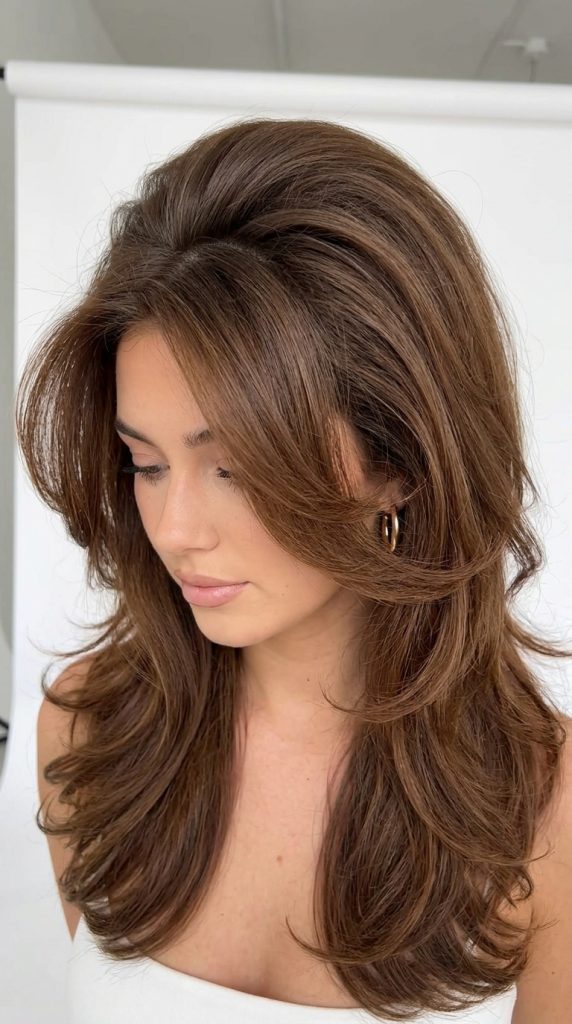
Crown volume is what separates a basic layered cut from a professional butterfly haircut. It is the reason the hairstyle looks full even when hair is fine or medium density. Many stylists consider this the most important part of the cut because it influences how the rest of the layers fall. When done correctly, the crown acts as the “foundation” that supports the entire shape.
This technique is especially useful for people with flat hair or hair that tends to fall limp at the top. By strategically removing weight from the crown while preserving length elsewhere, the hair naturally lifts itself without excessive teasing or product use.
What This Hack Means (Definition)
This hack involves cutting short, internal layers at the crown to create hidden volume that lifts the top section of the hair. These layers are not visible directly but impact the overall silhouette and movement of the haircut.
Step-by-Step How to Achieve It
Step 1: Section the Crown Area
Create a circular section at the top of the head from temple to temple.
Step 2: Elevation Cutting
Lift sections upward at a 90-degree angle to remove internal weight.
Step 3: Soft Layering Technique
Use point-cutting instead of blunt cutting to avoid harsh lines.
Step 4: Connect to Mid Layers
Gradually blend crown layers into mid-length butterfly layers.
Step 5: Blow-Dry for Lift
Use a round brush and lift roots upward while drying.
Step 6: Set Volume
Cool air setting locks in lift and prevents collapse.
Materials / Tools Needed
- Sectioning clips
- Professional scissors
- Round brush (small for crown lift)
- Blow dryer with nozzle
- Volumizing mousse or spray
Why This Hack Works
The crown layering hack creates invisible support inside the haircut. Instead of relying on products, the structure itself creates volume. This is what gives the butterfly haircut its airy, salon-quality bounce that lasts all day.
IDEA 3: Butterfly Wing Layer Separation Hack (The Signature Shape Trick)
Introduction (Deep Concept Overview)
The most iconic feature of a butterfly haircut is its “wing-like” layered structure. This effect is achieved when the shorter top layers and longer bottom layers are clearly separated yet still blended enough to flow naturally. Many people struggle with this balance—either the layers are too blended and lose definition, or too separated and look choppy. This hack solves that problem by teaching precise layer separation control.
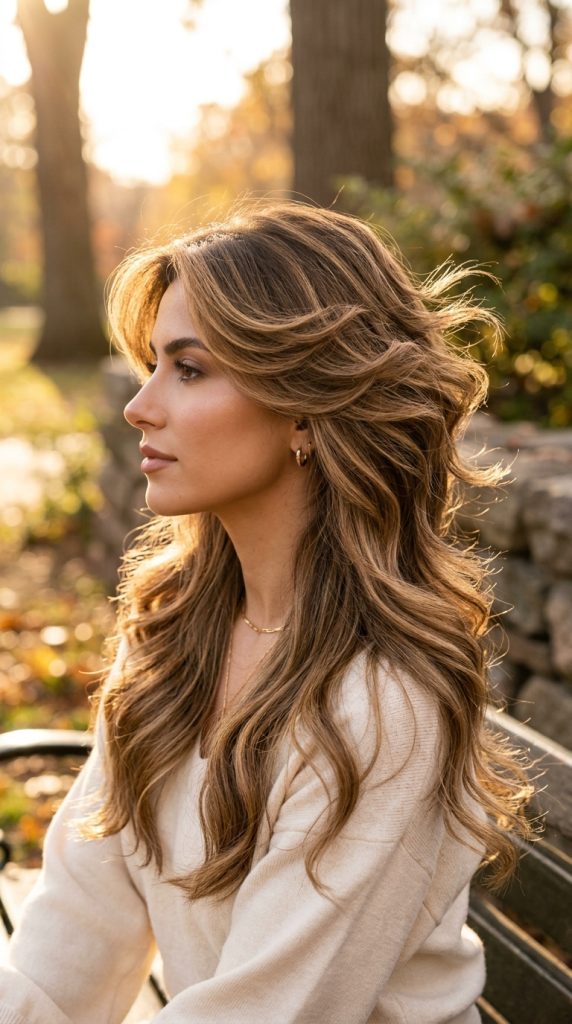
The butterfly wing effect is what makes the haircut visually striking on Pinterest and social media. It creates movement, dimension, and flow that catches light from different angles. The goal is to make the haircut look like two flowing sections that move independently but harmoniously together.
This technique is essential for achieving a professional butterfly haircut because it defines the overall silhouette. Without proper separation, the haircut becomes just another layered style rather than a signature butterfly shape.
What This Hack Means (Definition)
This hack refers to controlling the distance and blending between upper face-framing layers and lower length layers to maintain a visible yet soft separation that mimics butterfly wings.
Step-by-Step How to Achieve It
Step 1: Establish Two Layer Zones
- Upper zone: crown to cheek level
- Lower zone: shoulder to back length
Step 2: Define Separation Line
Create a soft invisible guideline between zones using slight tension control.
Step 3: Soft Disconnect Technique
Slightly vary layer lengths instead of cutting uniform transitions.
Step 4: Texturize Ends
Use point-cutting to avoid harsh edges.
Step 5: Style for Definition
Curl ends outward in opposite directions for wing effect.
Step 6: Final Balance Check
Ensure top layers float above lower layers without collapsing.
Materials / Tools Needed
- Hair cutting scissors
- Razor comb (optional for texture)
- Sectioning clips
- Blow dryer
- Curling wand or round brush
- Lightweight styling cream
Why This Hack Works
This technique creates visual separation while maintaining softness, which is the essence of the butterfly haircut. It enhances movement, making hair look fuller, lighter, and more dimensional. It also ensures the haircut photographs beautifully—one of the reasons it performs so well on Pinterest.
IDEA 4: Invisible Weight Removal Hack (Light-Flow Butterfly Effect)
Introduction (Deep Concept Overview)
One of the most overlooked secrets behind a perfect butterfly haircut is how the weight of the hair is distributed internally. Many people think the butterfly cut is only about visible layers, but the real magic comes from “invisible weight removal.” This hack focuses on removing bulk from hidden sections so the hair naturally flows, flips, and moves like soft butterfly wings without looking thin or stringy.
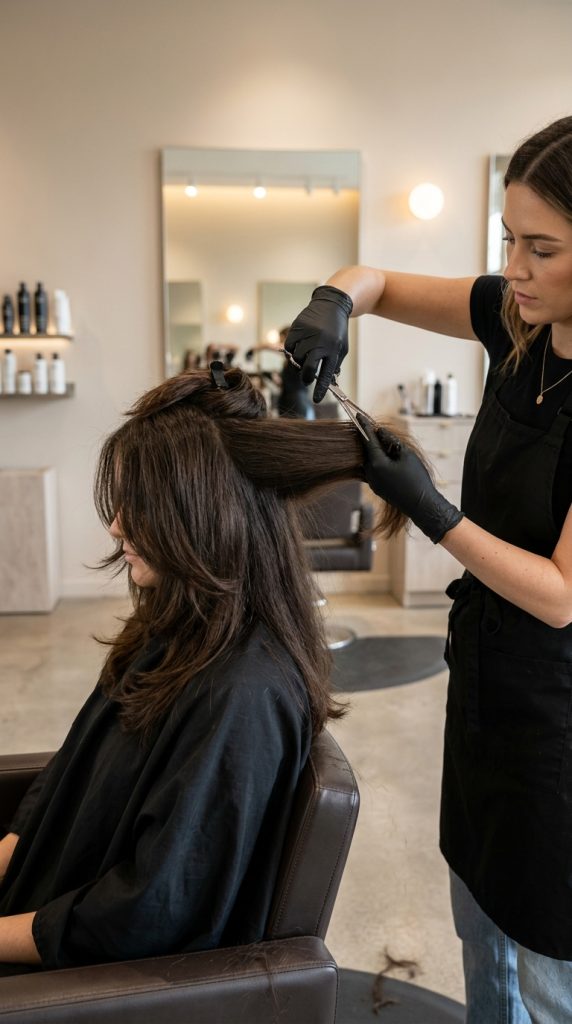
When hair is too heavy internally, even well-cut layers fall flat and lose their bounce. The butterfly haircut depends on controlled lightness—especially in the mid-length and internal back sections. This technique creates movement from within, not just from the surface. That is why professional stylists always focus on interior layering before refining outer shape.
The goal of this hack is not to shorten hair dramatically, but to reduce resistance inside the haircut so the layers can lift, separate, and fall naturally. This is especially important for thick, dense hair that tends to collapse under its own weight. By strategically removing bulk in hidden areas, the hairstyle becomes airy, soft, and responsive to styling.
What This Hack Means (Definition)
This hack involves removing internal weight from mid and lower sections of the hair using hidden layering techniques, without changing the overall visible length or silhouette.
Step-by-Step How to Achieve It
Step 1: Divide Interior Sections
Separate hair into upper visible layers and hidden lower interior sections.
Step 2: Lift and Cut Internally
Take small sections underneath the top layer and elevate them slightly before cutting.
Step 3: Use Point-Cutting Technique
Instead of straight cuts, use vertical snips to soften bulk.
Step 4: Focus on Mid-Length Area
Reduce density in the middle where hair tends to feel heavy.
Step 5: Blend Carefully
Ensure outer layers remain smooth and uninterrupted.
Step 6: Test Movement
Shake hair lightly to check natural flow and bounce.
Materials / Tools Needed
- Professional haircutting scissors
- Sectioning clips
- Fine comb
- Thinning shears (optional, for thick hair)
- Blow dryer for movement test
Why This Hack Works
This technique improves movement without sacrificing length. It creates a weightless structure inside the haircut, allowing the butterfly layers to float naturally. It also prevents the common issue of “triangle hair,” where ends appear bulky and flat at the same time.
IDEA 5: Butterfly Blowout Direction Hack (Wing Shape Styling Control)
Introduction (Deep Concept Overview)
The butterfly haircut does not reach its full potential until it is styled correctly, and the most powerful styling factor is blow-drying direction. This hack focuses on how airflow and brush direction shape the final “butterfly wing” effect. Even a perfect cut can lose its structure if the blowout is done incorrectly.
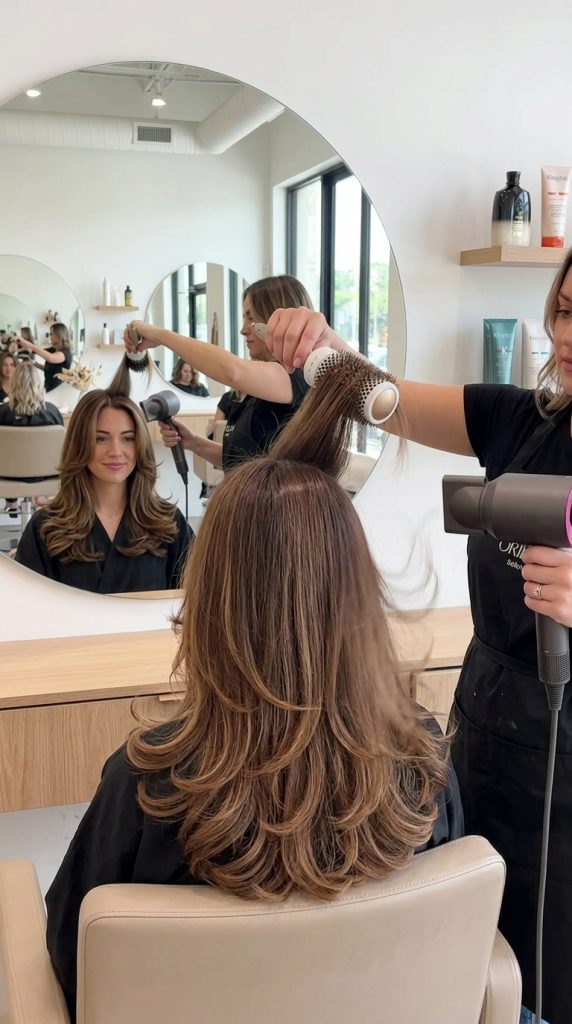
Blow-drying is what activates the layers. It determines whether the hair appears bouncy, lifted, and separated or flat and blended. The butterfly cut relies heavily on directional styling to enhance its dual-layer structure. The top layers must lift upward and outward, while the bottom layers flow downward with soft movement.
This technique is widely used in salon blowouts because it creates instant volume without needing curling irons or heavy styling products. It also helps lock in shape, making the haircut last longer between washes. The direction of airflow essentially “trains” the hair into its butterfly form.
What This Hack Means (Definition)
This hack refers to using controlled blow-dry directions and brush angles to enhance layer separation and create natural wing-like movement in the butterfly haircut.
Step-by-Step How to Achieve It
Step 1: Prep Damp Hair
Apply lightweight volumizing mousse to roots and mid-lengths.
Step 2: Section Hair Strategically
Divide into crown, face-framing, and back layers.
Step 3: Lift Crown Upward
Use a round brush and direct airflow upward at roots.
Step 4: Flip Face-Framing Layers Outward
Roll brush away from the face to create wing effect.
Step 5: Smooth Lower Layers Downward
Pull bottom sections downward for contrast.
Step 6: Lock with Cool Air
Finish with cool shot to set shape and volume.
Materials / Tools Needed
- Blow dryer with nozzle
- Round brushes (small + medium)
- Volumizing mousse
- Heat protectant spray
- Sectioning clips
- Lightweight finishing serum
Why This Hack Works
Directional blow-drying activates the layered structure of the butterfly cut. It enhances lift at the crown, separation at the face, and flow at the ends. This creates the signature “floating wings” effect that makes the hairstyle so visually appealing on Pinterest and social media.
IDEA 6: Curtain Bang Integration Hack (Soft Frame Butterfly Balance)
Introduction (Deep Concept Overview)
Curtain bangs are one of the most powerful additions to a butterfly haircut because they enhance softness, balance, and facial framing. However, when not properly integrated, curtain bangs can break the flow of the butterfly layers instead of enhancing them. This hack focuses on blending curtain bangs seamlessly into the butterfly structure so everything moves as one cohesive shape.
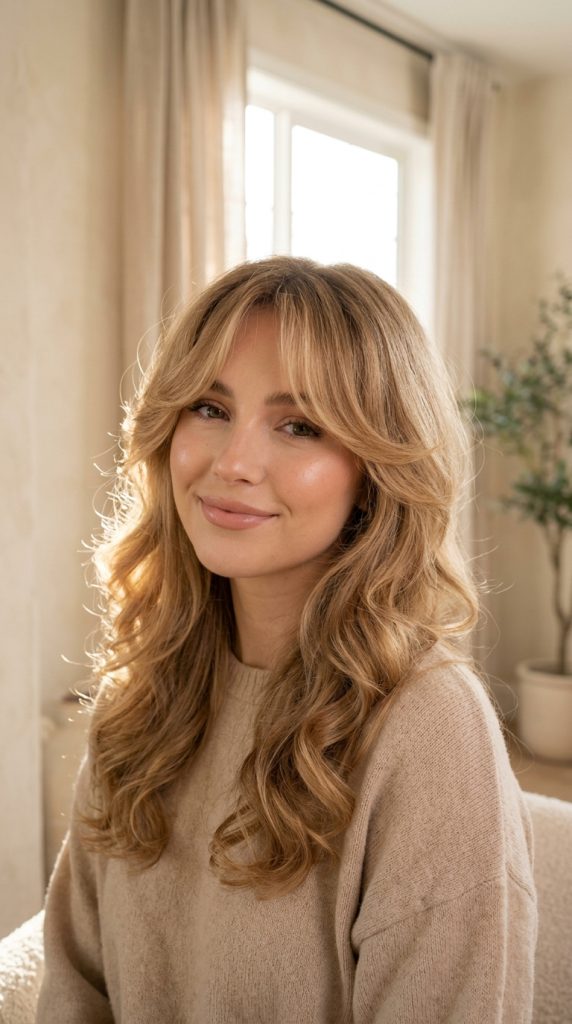
The butterfly haircut is built on layered harmony, and curtain bangs act as the front focal point. They guide the eye toward the face while connecting upper layers to the rest of the haircut. When done correctly, curtain bangs extend the butterfly effect upward, making the hairstyle look fuller, softer, and more dimensional.
This technique is especially useful for people who want a trendy but natural look. Curtain bangs reduce harsh lines around the forehead and create a soft transition into the face-framing layers. The result is a balanced, airy hairstyle that looks effortlessly styled even without heat tools.
What This Hack Means (Definition)
This hack involves cutting and styling curtain bangs in a way that blends them into the butterfly layers instead of separating them visually from the rest of the haircut.
Step-by-Step How to Achieve It
Step 1: Create Central Triangle Section
Take a triangle section from the front hairline to crown.
Step 2: Cut Soft Center Length
Start shorter in the middle and gradually elongate toward the sides.
Step 3: Connect to Face-Framing Layers
Ensure side lengths blend into cheek-level layers.
Step 4: Feather the Ends
Use point-cutting to soften edges.
Step 5: Blow-Dry Away from Face
Use round brush to create natural curtain sweep.
Step 6: Blend with Overall Layers
Style all layers together for unified movement.
Materials / Tools Needed
- Hair scissors
- Round brush (small)
- Blow dryer
- Heat protectant spray
- Lightweight styling cream or serum
- Sectioning clips
Why This Hack Works
Curtain bangs amplify the butterfly haircut by adding vertical softness and flow. They connect the upper and lower layers, making the hairstyle look more intentional and balanced. This integration creates a cohesive silhouette that enhances facial features and improves overall movement.
IDEA 7: Butterfly Layer “Ghost Cutting” Hack (Soft Texture Without Losing Length)
Introduction (Deep Concept Overview)
One of the most advanced techniques used in creating a flawless butterfly haircut is “ghost cutting,” a soft internal texturizing method that removes weight without changing the visible outline of the haircut. This hack is especially powerful for achieving the airy, floating movement that defines the butterfly style.
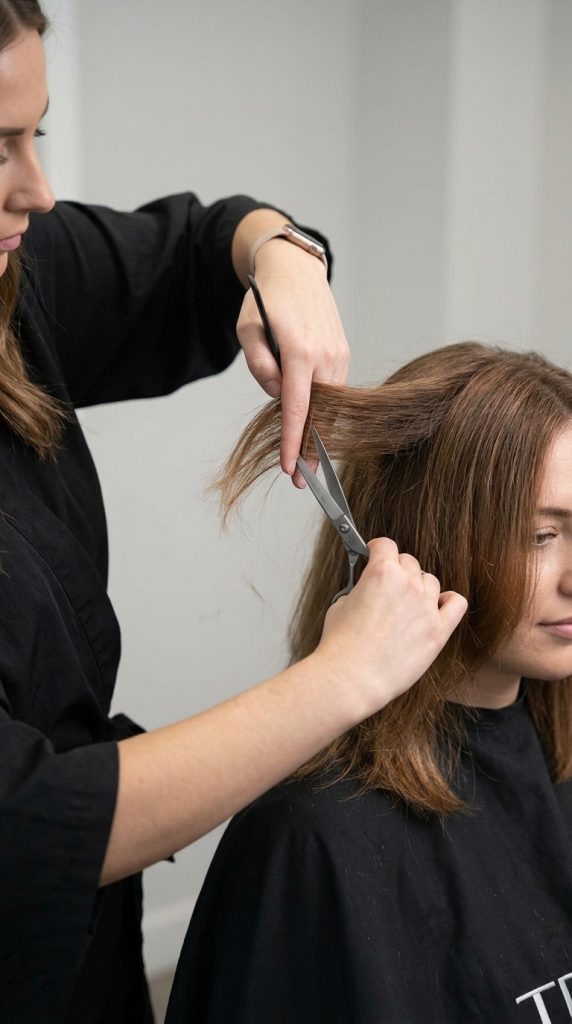
Unlike traditional cutting, where visible layers are clearly defined, ghost cutting works inside the hair structure. It removes just enough bulk to allow the layers to move freely, while keeping the outer shape smooth and intact. This is what creates that expensive salon finish where hair looks naturally styled even without heavy products or heat tools.
In butterfly hairstyles, ghost cutting is used to enhance the separation between top and bottom layers. It prevents the haircut from becoming too bulky or too blunt, which can destroy the soft wing illusion. Instead, the hair flows in lightweight sections that respond beautifully to styling.
This hack is particularly useful for thick hair types that struggle with heaviness. It also helps fine hair avoid looking too thin by maintaining structure while still reducing weight internally. The result is a balanced, dimensional haircut that feels soft, airy, and perfectly layered.
What This Hack Means (Definition)
Ghost cutting is an internal texturizing technique where small sections of hair are lightly snipped vertically inside the hair mass to remove weight without altering the visible outer shape.
Step-by-Step How to Achieve It
Step 1: Divide Hair into Hidden Layers
Separate outer visible layers from inner sections underneath.
Step 2: Lift Small Internal Sections
Take thin slices of hair inside the mid-length and lower areas.
Step 3: Vertical Snipping Technique
Cut into the hair vertically using light, controlled snips.
Step 4: Avoid Outer Lines
Never touch the visible perimeter of the haircut.
Step 5: Focus on Heavy Zones
Target areas where hair feels dense or stiff.
Step 6: Test Movement
Shake hair gently to ensure natural flow and softness.
Materials / Tools Needed
- Professional haircutting scissors
- Sectioning clips
- Fine-tooth comb
- Light thinning shears (optional)
- Blow dryer for movement check
Why This Hack Works
Ghost cutting creates invisible layers that improve movement without affecting the hairstyle’s shape. It enhances softness, reduces heaviness, and allows butterfly layers to float naturally. This is key for achieving the signature airy, feathered butterfly effect.
IDEA 8: Butterfly “Length Illusion Balance” Hack (Dual-Length Perfection Trick)
Introduction (Deep Concept Overview)
The defining feature of a butterfly haircut is its dual-length illusion—short, voluminous layers on top and long, flowing layers underneath. However, achieving the perfect balance between these two lengths is extremely precise. If the difference is too small, the butterfly effect disappears. If it is too extreme, the haircut can look disconnected or uneven.
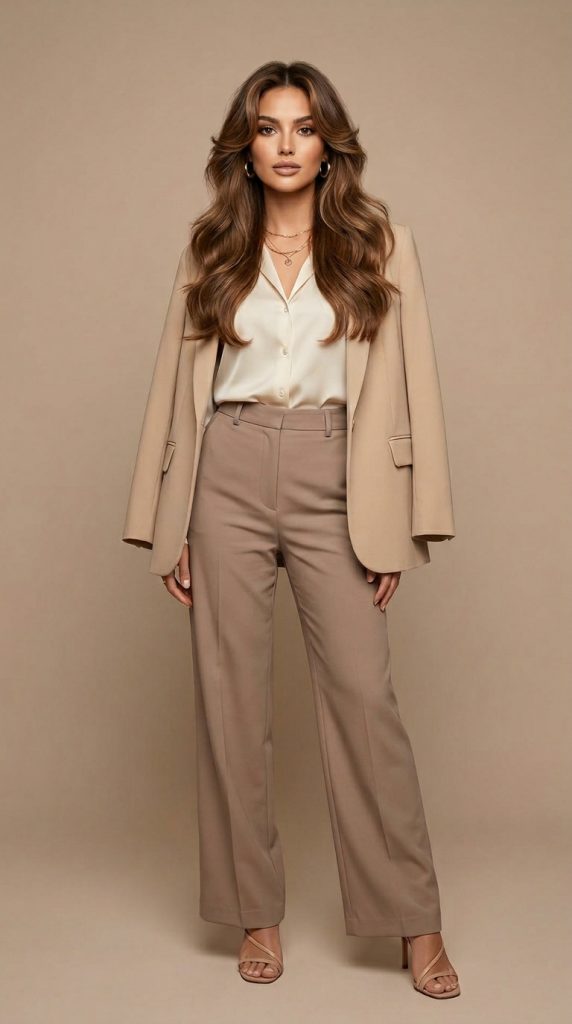
This hack focuses on controlling the visual relationship between the two lengths so they appear naturally blended yet distinctly separated. The goal is to create a smooth transition that allows the eye to perceive both structure and flow at the same time.
This technique is essential for making the haircut look intentional and professionally designed. It ensures that the shorter layers act as a frame while the longer layers provide movement and elegance. When done correctly, the haircut appears fuller, more dynamic, and perfectly balanced from every angle.
The length illusion hack is also crucial for Pinterest-friendly hairstyles because it enhances visual contrast, which is what makes butterfly haircuts so eye-catching in photos and videos.
What This Hack Means (Definition)
This hack involves carefully controlling the length difference between upper and lower layers to create a balanced, visually appealing dual-layer structure.
Step-by-Step How to Achieve It
Step 1: Decide Layer Separation Ratio
Choose a visible gap between upper and lower layers (usually 3–6 inches depending on hair length).
Step 2: Cut Upper Layers First
Establish the shortest face-framing and crown layers.
Step 3: Maintain Lower Length Integrity
Keep bottom layers long but slightly softened at the ends.
Step 4: Blend Transition Zone
Use soft point-cutting to connect both lengths.
Step 5: Check Symmetry
Ensure both sides mirror each other evenly.
Step 6: Style for Visibility
Use blowout or waves to emphasize separation.
Materials / Tools Needed
- Hair scissors
- Sectioning clips
- Comb
- Blow dryer or curling tool
- Heat protectant spray
- Light styling cream
Why This Hack Works
This technique creates the signature butterfly silhouette by balancing contrast and harmony. It ensures the haircut is neither too blended nor too disconnected. The result is a visually striking, dimensional hairstyle that moves beautifully and photographs well.
IDEA 9: Soft Feather Blending Hack (Seamless Layer Transition Technique)
Introduction (Deep Concept Overview)
One of the most important finishing techniques in a butterfly haircut is feather blending. This hack ensures that all layers transition smoothly without visible lines or harsh separations. Without proper blending, even a well-cut butterfly hairstyle can look choppy, uneven, or unfinished.
Feather blending focuses on softening the edges of each layer so that they naturally flow into one another. Instead of sharp steps between layers, the hair appears to melt from one section into the next. This is what gives the butterfly haircut its signature softness and elegance.
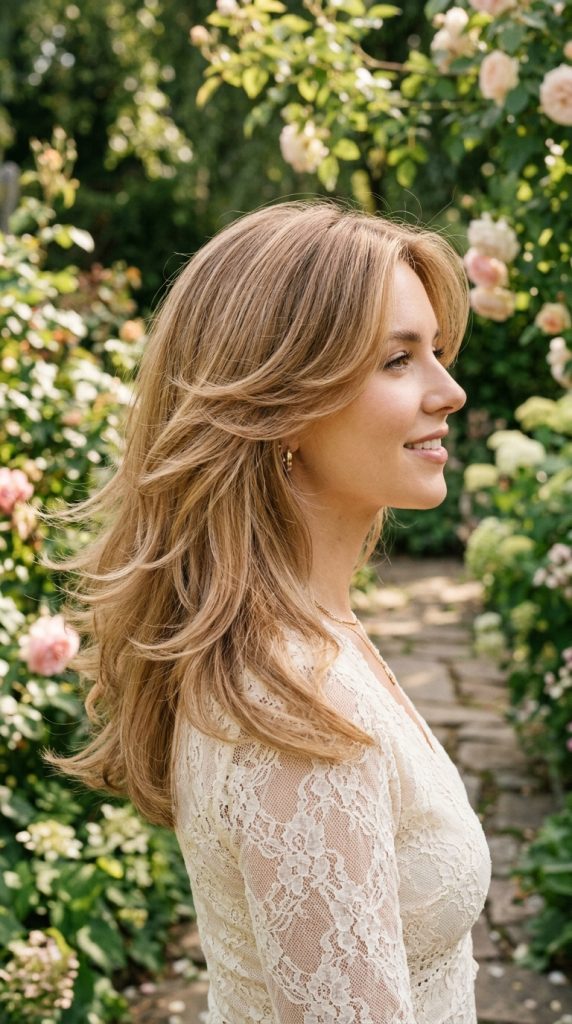
This technique is especially important around the mid-length zone, where the top and bottom layers meet. If this area is not properly blended, the haircut loses its airy movement and becomes visually segmented. Feather blending restores harmony and ensures that the layers behave as one flowing structure.
This hack is widely used in professional salons because it enhances natural movement and reduces the need for daily styling. It also helps the haircut grow out gracefully, maintaining shape for longer periods.
What This Hack Means (Definition)
Feather blending is a cutting technique that softens layer transitions using light, angled snips to create a seamless flow between different lengths.
Step-by-Step How to Achieve It
Step 1: Identify Transition Zones
Focus on areas where short and long layers meet.
Step 2: Use Light Tension
Hold hair gently without pulling too tightly.
Step 3: Point-Cut at Angles
Use scissors to cut into ends diagonally for softness.
Step 4: Avoid Straight Lines
Never cut blunt edges between layers.
Step 5: Blend in Sections
Work section by section for consistent results.
Step 6: Style to Reveal Flow
Blow-dry or wave hair to activate feathered texture.
Materials / Tools Needed
- Hair scissors
- Sectioning clips
- Fine comb
- Blow dryer
- Round brush
- Lightweight smoothing serum
Why This Hack Works
Feather blending removes harsh transitions and creates continuous flow throughout the hairstyle. It enhances softness, movement, and dimension, making the butterfly haircut look natural, light, and professionally styled at all times.
IDEA 10: Root Lift Sectioning Hack (Instant Volume Foundation Trick)
Introduction (Deep Concept Overview)
One of the biggest reasons a butterfly haircut looks flat instead of glamorous is lack of root lift. Even when the layers are perfectly cut, the hairstyle can lose its signature “floating wings” effect if the roots sit too close to the scalp. This hack focuses on building a strong foundation of lift at the root level so the entire butterfly structure appears elevated, airy, and full of movement.
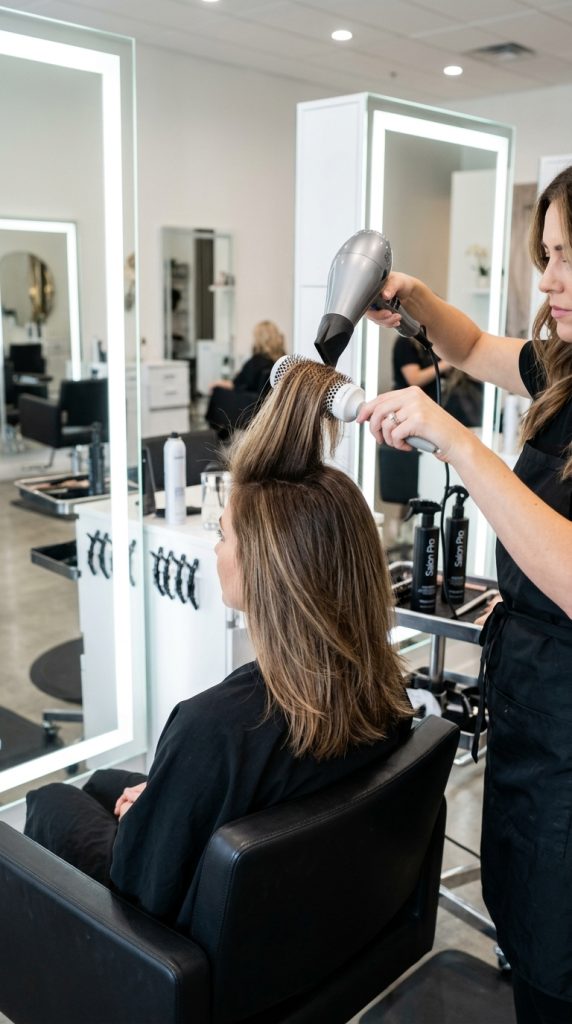
Root lift is not just about volume—it is about shape control. In the butterfly haircut, the crown and upper layers must sit slightly elevated so the shorter face-framing pieces can “float” above the longer layers. Without this lift, the haircut collapses into a single heavy shape, losing its dimensional separation.
This technique is especially important for fine or straight hair types that naturally fall flat. By adjusting sectioning patterns and drying direction at the root level, the hair gains long-lasting lift without needing excessive teasing or heavy styling products. The result is a soft, salon-style blowout effect that supports the entire butterfly structure.
What This Hack Means (Definition)
Root lift sectioning is a cutting and styling preparation technique where hair is divided and directed in a way that encourages natural elevation at the scalp, creating long-lasting volume at the crown.
Step-by-Step How to Achieve It
Step 1: Create Vertical Sectioning Pattern
Divide hair in vertical panels instead of horizontal ones to avoid flattening the crown.
Step 2: Lift at 90-Degree Angle
When cutting or drying, elevate sections straight upward to remove internal weight near roots.
Step 3: Blow-Dry in Opposite Direction
Dry hair against its natural fall to train roots upward.
Step 4: Focus on Crown First
Always style crown area before lengths to lock in volume foundation.
Step 5: Lock Shape with Cool Air
Finish with cool airflow to set lifted structure.
Step 6: Adjust with Fingers
Gently lift roots after drying for natural separation.
Materials / Tools Needed
- Blow dryer with nozzle
- Round brush (medium size)
- Volumizing mousse
- Sectioning clips
- Root-lift spray (lightweight)
Why This Hack Works
This method builds invisible structure at the scalp, ensuring the butterfly layers sit above the head instead of collapsing downward. It enhances the wing effect by creating height, bounce, and airy separation.
IDEA 11: Butterfly “Face Angle Mapping” Hack (Precision Framing Technique)
Introduction (Deep Concept Overview)
A flawless butterfly haircut is not only about layers—it is about geometry. One of the most advanced techniques used by stylists is face angle mapping, which ensures that every layer aligns perfectly with facial structure. This hack focuses on designing the haircut based on angles of the face rather than random length decisions.
Every face has natural lines—cheekbone angles, jawline direction, and forehead width. When butterfly layers are cut without considering these angles, the result can look unbalanced or heavy on one side. Face angle mapping solves this by turning the haircut into a structured design that enhances natural beauty instead of working against it.
This technique is what makes professional butterfly cuts look “expensive” and customized. It ensures that every layer has a purpose: some enhance cheekbones, some soften the jawline, and others create vertical length for balance.
What This Hack Means (Definition)
Face angle mapping is a cutting strategy where layer placement is determined by analyzing facial angles and bone structure to create customized butterfly framing.
Step-by-Step How to Achieve It
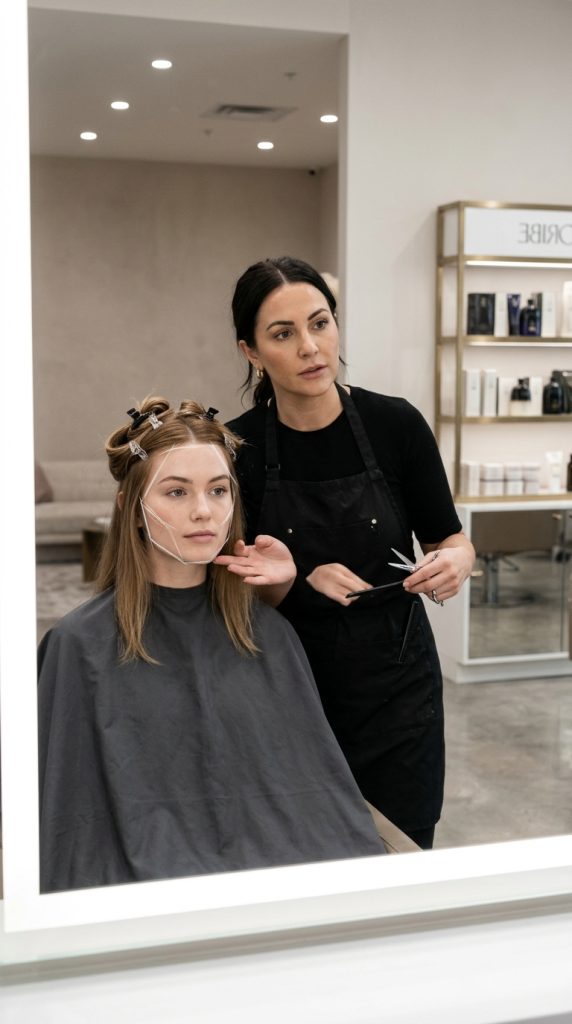
Step 1: Identify Facial Angles
Observe cheekbone height, jawline slope, and forehead width.
Step 2: Mark Key Points
Mentally map where layers should enhance or soften features.
Step 3: Align First Layer with Cheekbone
Set shortest layer based on cheekbone direction for lift.
Step 4: Adjust Side Layers for Balance
Slightly angle layers toward jawline or away depending on face shape.
Step 5: Maintain Flow to Back Layers
Ensure front mapping transitions smoothly into length.
Step 6: Check Symmetry in Movement
Style hair and observe how layers fall naturally.
Materials / Tools Needed
- Cutting comb
- Sectioning clips
- Professional scissors
- Mirror (for angle checking)
- Blow dryer for final assessment
Why This Hack Works
Face angle mapping transforms the butterfly haircut from a standard layered style into a customized, face-enhancing design. It ensures harmony between haircut structure and natural facial proportions, making the final look more flattering and intentional.
IDEA 12: Butterfly “Dry Cut Control” Hack (Precision Layer Preview Method)
Introduction (Deep Concept Overview)
One of the most underrated secrets in professional butterfly haircuts is dry cutting control. While most haircuts are performed on wet hair, dry cutting allows the stylist to see the real movement, fall, and volume of the hair before making final adjustments. This is especially important for butterfly layers, where flow and bounce are more important than strict symmetry.
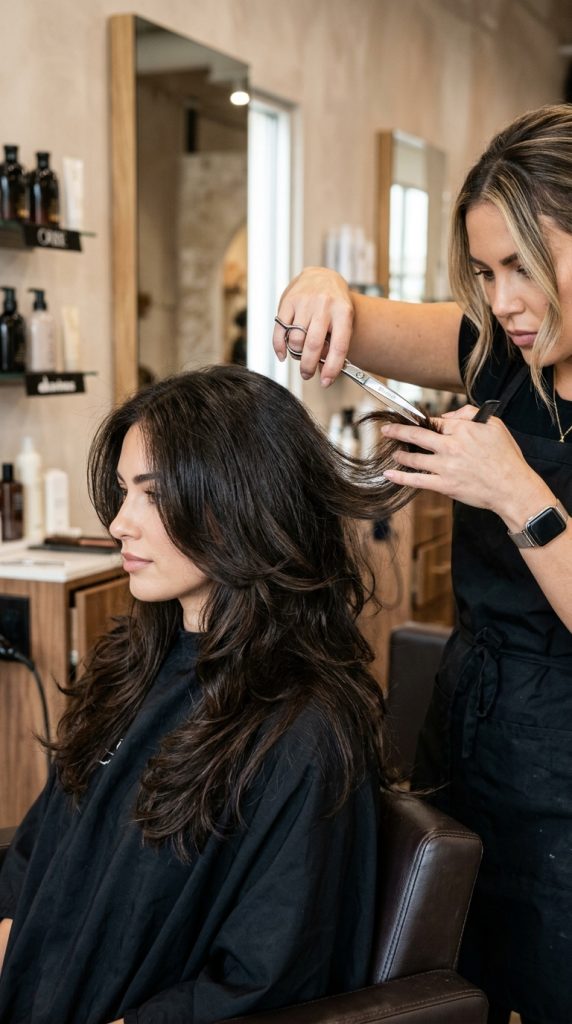
Hair behaves very differently when dry. Some sections shrink, some expand, and some fall flatter than expected. The butterfly haircut depends on understanding these natural behaviors so layers can be adjusted in real time. Dry cutting ensures that every layer contributes correctly to the overall wing-like structure.
This hack is often used as a final refinement step to perfect balance, remove heaviness, and enhance natural movement. It allows precision corrections that are impossible to see when hair is wet.
What This Hack Means (Definition)
Dry cut control is a finishing technique where hair is cut and refined in its natural dry state to accurately adjust layers based on real movement and volume.
Step-by-Step How to Achieve It
Step 1: Fully Dry Hair Before Cutting
Ensure hair is clean, styled naturally, and completely dry.
Step 2: Observe Natural Fall
Watch how each section behaves without manipulation.
Step 3: Identify Heavy Areas
Look for sections that collapse or lose shape.
Step 4: Make Micro Adjustments
Trim small sections only where needed.
Step 5: Focus on Layer Balance
Ensure top and bottom layers maintain harmony.
Step 6: Restyle and Recheck
Blow-dry lightly and confirm final shape.
Materials / Tools Needed
- Professional scissors
- Fine comb
- Blow dryer
- Sectioning clips
- Mirror setup (front + side view)
Why This Hack Works
Dry cutting ensures absolute precision in butterfly layering. It allows correction based on real hair behavior rather than assumptions, resulting in a perfectly balanced, natural-flowing haircut.
IDEA 13: Butterfly “Grow-Out Harmony” Hack (Long-Term Shape Maintenance Trick)
Introduction (Deep Concept Overview)
A truly successful butterfly haircut should not only look good on day one—it should also grow out beautifully over time. One of the most valuable hacks in layered hairstyling is designing the cut in a way that maintains harmony even as it grows. This is especially important for butterfly cuts because they rely on multiple layer lengths working together.
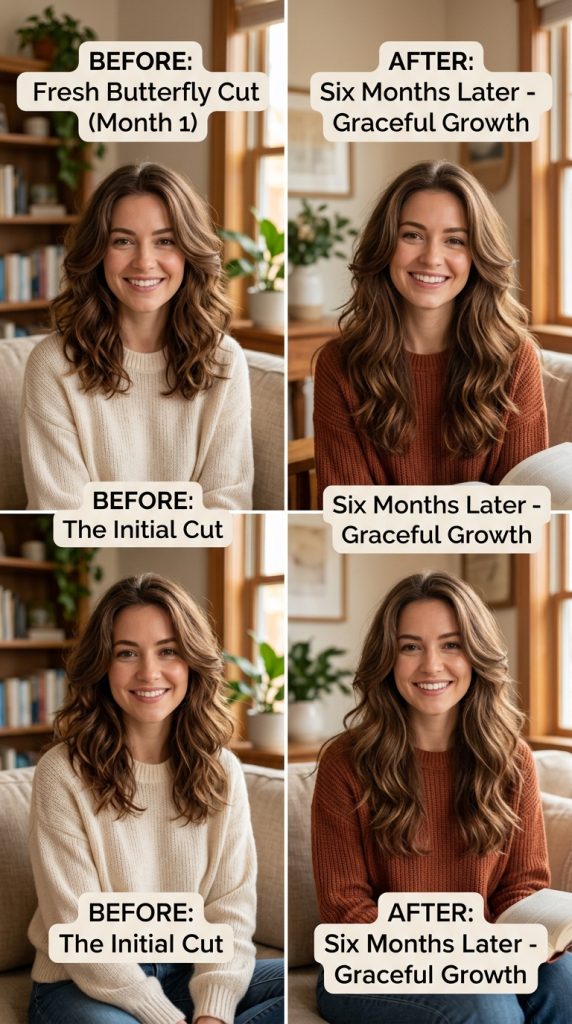
Without proper planning, layered cuts can grow into uneven or bulky shapes. However, with the right grow-out strategy, the butterfly haircut evolves gracefully, maintaining its wing-like silhouette for months. This makes it a low-maintenance yet high-impact hairstyle.
This hack focuses on anticipating how each layer will grow and ensuring that transitions remain soft and balanced even after several weeks. It also reduces the need for frequent salon visits while keeping the hairstyle stylish and structured.
What This Hack Means (Definition)
Grow-out harmony is a cutting strategy where layers are designed to maintain shape and balance as hair naturally grows, preserving the butterfly silhouette over time.
Step-by-Step How to Achieve It
Step 1: Avoid Extreme Layer Gaps
Keep layer differences moderate for smoother growth transition.
Step 2: Soften All Layer Edges
Use feathering techniques instead of blunt cuts.
Step 3: Maintain Gradual Length Flow
Ensure each layer blends into the next naturally.
Step 4: Plan Face-Framing Longevity
Cut front layers slightly longer for future growth balance.
Step 5: Regular Micro-Trims
Trim only split or uneven ends instead of reshaping whole cut.
Step 6: Restyle Periodically
Refresh blowout or waves to maintain structure.
Materials / Tools Needed
- Hair scissors (for trims)
- Comb
- Blow dryer
- Heat protectant
- Lightweight styling cream
- Sectioning clips
Why This Hack Works
This technique ensures the butterfly haircut remains beautiful even as it grows out. It prevents shape distortion and keeps layers flowing naturally, extending the life and elegance of the hairstyle.