
Minimalist room makeovers have become one of the most powerful interior design trends in recent years, especially for people who want their space to look clean, calm, and expensive without spending a fortune. The idea of minimalism is often misunderstood as “empty” or “boring,” but in reality, true minimalism is about intentional design—where every object, color, and texture has a purpose.
A high-end minimalist room is not defined by how much you remove, but by how carefully you choose what stays. The goal is to create a space that feels open, organized, and visually balanced while still reflecting personality and comfort. This is why minimalist design is now widely used in luxury hotels, modern apartments, and Pinterest-inspired home decor.
One of the biggest reasons minimalist rooms look high-end is because they reduce visual clutter. When a room is overloaded with too many colors, furniture pieces, or decorations, the eye doesn’t know where to focus. This creates a feeling of chaos, even if everything in the room is expensive. Minimalist design solves this problem by simplifying the environment so that each element stands out more clearly.
Another reason minimalist spaces feel luxurious is because they rely heavily on quality over quantity. Instead of filling a room with many decorative items, minimalist design focuses on a few well-chosen pieces that look intentional and refined. A single elegant lamp, a well-designed chair, or a carefully placed piece of art can completely transform the feel of a room when surrounded by clean, open space.
Lighting also plays a huge role in minimalist interiors. Natural light is often the foundation of a high-end minimalist room. Large windows, light curtains, and open layouts allow sunlight to move freely through the space, creating softness and warmth. When natural light is limited, warm artificial lighting is used to maintain a calm and cozy atmosphere.
Color palettes are another defining feature of minimalist design. Most high-end minimalist rooms use neutral tones such as white, beige, soft gray, warm taupe, and muted earth tones. These colors create a sense of calm and continuity. They also allow textures and shapes to become more noticeable without overwhelming the space visually.
Textures are especially important in minimalist interiors because they add depth without adding clutter. For example, a linen sofa, a wooden coffee table, or a soft wool rug can make a room feel warm and expensive without needing bold patterns or excessive decor. The combination of simple colors and rich textures is what creates that “quiet luxury” look often seen in high-end interior design.
Minimalist rooms also focus heavily on functionality. Every piece of furniture should serve a purpose. Storage is often hidden or built into the design so that surfaces remain clean and open. This not only makes the room look more spacious but also reduces stress, as clutter-free environments are proven to improve mental clarity and relaxation.
Another important aspect of minimalist makeovers is spatial balance. Furniture is not randomly placed but arranged in a way that allows easy movement and visual harmony. Negative space—the empty areas between objects—is just as important as the furniture itself. This breathing room is what gives minimalist interiors their signature calm and expensive aesthetic.
Plants are often used in minimalist rooms, but in a very controlled way. Instead of filling the space with many decorative plants, one or two carefully chosen green elements are used to add freshness and life. This prevents the room from feeling sterile while still maintaining simplicity.
Modern minimalist design also blends well with other aesthetics like Scandinavian, Japandi, and contemporary luxury styles. These styles share similar principles such as simplicity, natural materials, and neutral color schemes, making them ideal for creating high-end looks on a budget.
What makes minimalist room makeovers especially popular today is their adaptability. Whether you live in a small apartment, a shared space, or a larger home, minimalism can be adjusted to fit any environment. In small rooms, it creates the illusion of more space. In larger rooms, it enhances elegance and structure.
Another benefit of minimalist design is its timelessness. Unlike trendy decor styles that change frequently, minimalism remains stylish for years. A well-designed minimalist room does not easily feel outdated because it is based on simplicity rather than seasonal trends.
However, achieving a high-end minimalist look requires more than just removing items. It involves thoughtful planning, careful selection of materials, and understanding how balance and proportion work together. Without these elements, a minimalist room can quickly feel empty instead of elegant.
In this guide, you will explore 13 minimalist room makeover ideas that look high-end, designed to help you transform any space into a calm, stylish, and expensive-looking environment. Each idea will explain:
- What the design concept is
- How to apply it in real life
- Why it creates a luxury effect
- Who it works best for
- Expert styling tips
- Common mistakes to avoid
The focus is not just on aesthetics, but on creating a functional and visually pleasing space that feels intentional and elevated.
By the end of this guide, you will understand how to turn even the simplest room into a high-end minimalist space that looks clean, modern, and beautifully designed—without unnecessary clutter or expensive renovations.
Now let’s begin exploring the first minimalist room makeover ideas that can instantly elevate your space into a luxury-inspired environment.
1. Neutral Tone Minimalist Makeover for a Luxury Calm Space
Explanation (What it is)
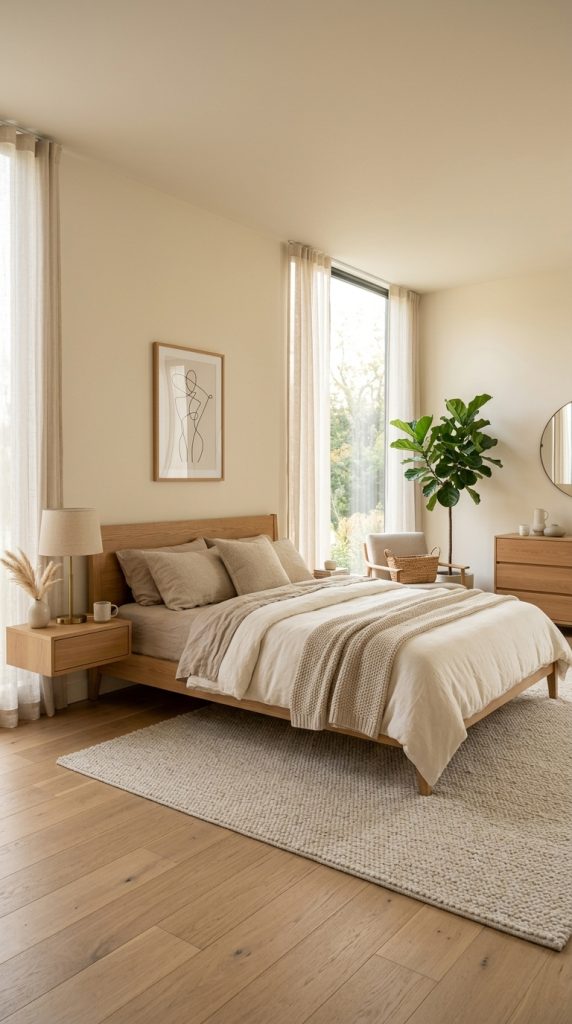
A neutral tone minimalist room is the foundation of high-end interior design. It focuses on a soft, muted color palette—think whites, creams, beiges, warm greys, and light earthy tones. This style removes visual noise and replaces it with calm, balanced simplicity.
What makes this look “high-end” is not just the colors, but the emotional effect it creates. Neutral rooms feel peaceful, spacious, and intentional. Luxury hotels and modern designer apartments often use this palette because it instantly makes a space feel clean, expensive, and timeless.
Unlike colorful or heavily decorated rooms, neutral minimalist spaces allow texture, light, and shape to become the main design elements. Even simple furniture looks elevated when surrounded by soft tones and open space.
This style is especially powerful for small rooms because light colors reflect natural light and make the space appear larger and more open.
How to implement (Practical steps)
Start by choosing a base palette:
- Warm white or off-white walls
- Beige or taupe sofa/bed frame
- Light wood furniture accents
Then remove visual clutter:
- Keep surfaces mostly empty
- Use hidden storage for daily items
- Limit decor to 2–3 statement pieces
Layer soft textures:
- Linen curtains
- Wool rugs
- Cotton bedding in muted tones
Lighting should be warm and soft, not harsh white.
Best for (Who should use it)
- Small apartments or rooms
- People who prefer calm, clean aesthetics
- Minimal decor lovers
- Anyone aiming for luxury hotel-style interiors
Pro tip (Expert advice)
Use different shades of the same neutral color instead of adding multiple colors. This creates depth without breaking the minimalist feel.
Mistake to avoid
Avoid pure stark white everywhere—it can feel cold and unfinished instead of warm and luxurious.
2. Minimalist Furniture Layout for Open Luxury Space
Explanation (What it is)
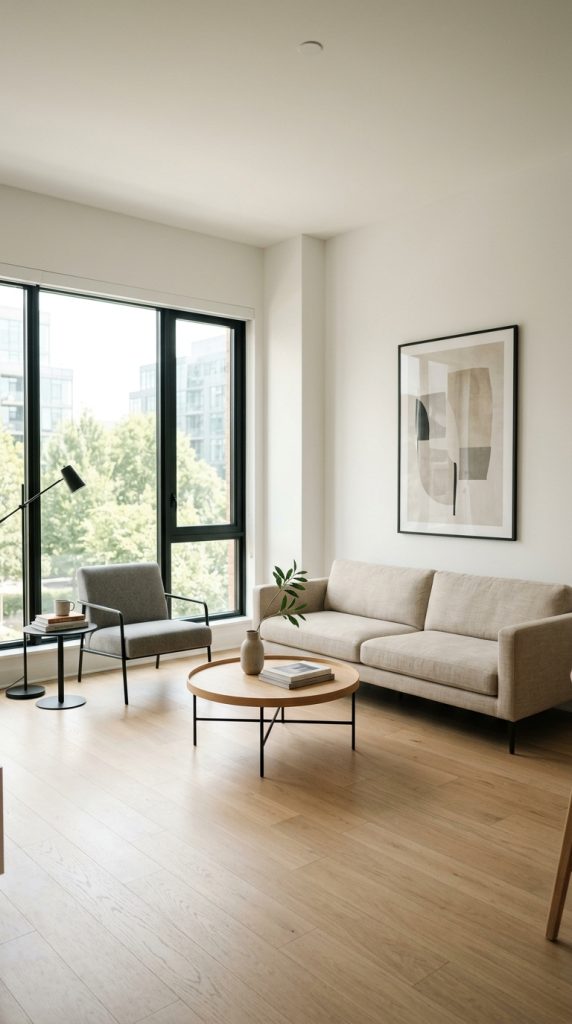
A minimalist furniture layout is all about intentional spacing and balance. Instead of filling a room with many furniture pieces, you choose fewer items and place them strategically to create openness and flow.
This approach is what gives minimalist rooms their “expensive” feeling. High-end interiors are never overcrowded; they are carefully curated. Every piece has space to breathe, which makes even simple furniture look more premium.
The key idea is negative space—empty areas that allow the room to feel larger, lighter, and more structured. This makes the room visually relaxing and easier to navigate.
A well-planned layout also improves functionality. Movement feels natural, and the room feels organized without needing extra decoration.
How to implement (Practical steps)
Start by removing unnecessary furniture:
- Keep only essential items (bed, sofa, table, storage)
- Avoid duplicate furniture pieces
Then arrange using balance rules:
- Keep large furniture against walls or corners
- Maintain open center space
- Avoid blocking natural pathways
Use symmetry where possible:
- Matching side tables or lamps
- Balanced visual weight on both sides of the room
Leave breathing space between items instead of placing everything close together.
Best for (Who should use it)
- Small and medium-sized rooms
- People who feel their space is cluttered
- Modern apartment owners
- Anyone wanting a clean luxury aesthetic
Pro tip (Expert advice)
If a room feels “off,” it’s usually not the furniture—it’s spacing. Increasing gaps between items often instantly improves luxury feel.
Mistake to avoid
Avoid pushing every furniture piece against the wall without planning. This can make the room feel flat instead of designed.
3. Statement Lighting Minimalist Setup for High-End Glow
Explanation (What it is)
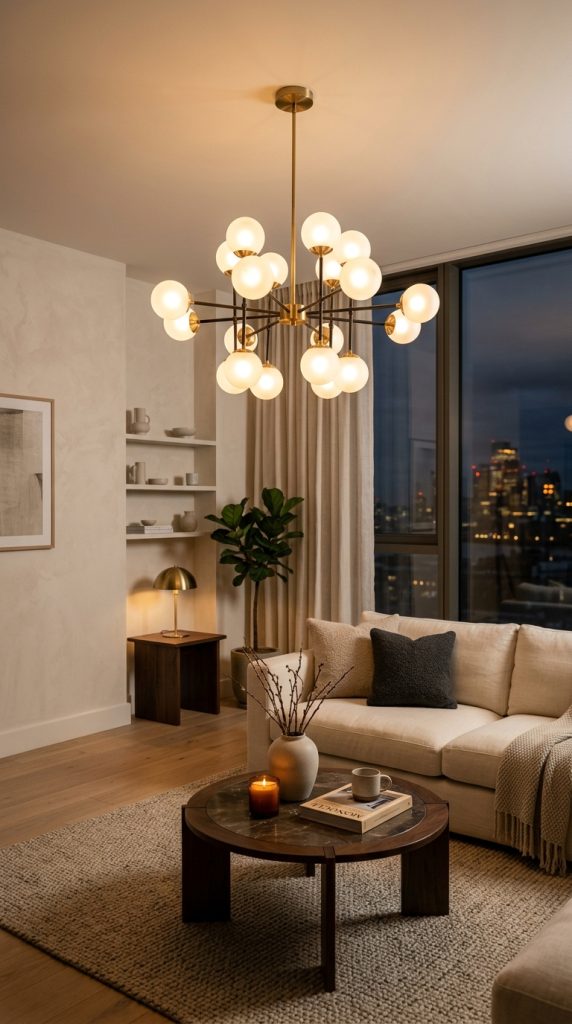
Statement lighting is one of the most powerful tools in minimalist interior design because it adds luxury without adding clutter. Instead of multiple decorative items, a single elegant light fixture becomes the focal point of the room.
This could be a modern pendant light, a sculptural floor lamp, or a warm ambient table lamp. In minimalist design, lighting is not just functional—it is decorative art.
What makes this feel high-end is the way light interacts with space. Soft, warm lighting creates depth, highlights textures, and adds mood without overwhelming the room. Luxury interiors often rely on layered lighting instead of bright overhead lights.
A well-chosen lighting piece can completely transform a simple room into a designer-style space.
How to implement (Practical steps)
Choose 1–2 main lighting sources:
- Warm pendant light for ceiling focus
- Minimalist floor lamp for corners
- Soft bedside or table lamps for ambiance
Avoid harsh white lighting. Instead:
- Use warm yellow or soft warm white bulbs
- Add dimmable lighting if possible
Place lighting strategically:
- Highlight corners to add depth
- Use soft light near seating or bed areas
- Avoid overcrowding with multiple bright sources
Keep lamp designs simple but elegant—metal, wood, or matte finishes work best.
Best for (Who should use it)
- Bedrooms, living rooms, studio apartments
- People wanting cozy luxury atmosphere
- Modern and minimalist home styles
- Small rooms needing depth and warmth
Pro tip (Expert advice)
Layering one strong statement light with smaller soft lights creates a designer-level luxury effect without adding clutter.
Mistake to avoid
Avoid using only overhead white lighting. It flattens the room and removes the cozy, expensive feel.
4. Wall Art Minimalism for a High-End Gallery Look
Explanation (What it is)
Minimalist wall art is one of the simplest ways to make a room feel instantly expensive without adding clutter. Instead of filling walls with many small decorations, this style focuses on one or a few carefully chosen art pieces that create a strong visual impact.
What makes this feel high-end is the “gallery effect.” Luxury homes and modern hotels often use large-scale artwork or perfectly aligned frames with lots of empty wall space around them. This negative space is what makes the art feel intentional and valuable.
Minimalist wall art usually includes abstract designs, neutral tones, line art, or soft nature-inspired prints. The key is simplicity and emotional calm rather than busy patterns.
When done correctly, even a basic room can feel like a curated interior design space.
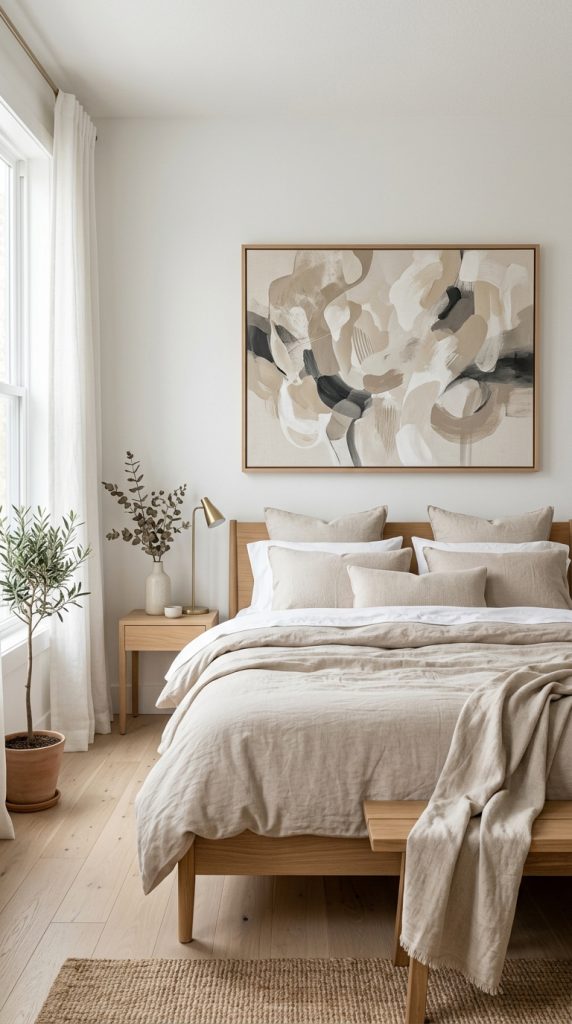
How to implement (Practical steps)
Start with a clean wall:
- Choose one main focal wall (behind bed, sofa, or desk)
- Avoid overcrowding multiple walls at once
Select your art style:
- Abstract neutral paintings
- Black line drawings on white background
- Soft landscape or nature prints
Frame choices matter:
- Use thin black, white, or natural wood frames
- Keep frame styles consistent
Placement rules:
- Hang art at eye level
- Leave space around each piece
- Center alignment for a balanced look
Best for (Who should use it)
- Bedrooms, living rooms, workspaces
- People who like clean aesthetics
- Small rooms needing visual structure
- Anyone wanting a modern luxury feel
Pro tip (Expert advice)
One large statement artwork looks more expensive than many small pieces scattered together.
Mistake to avoid
Avoid over-decorating walls with multiple unrelated frames. It removes the calm luxury feeling.
5. Hidden Storage Minimalism for Clean Luxury Spaces
Explanation (What it is)
Hidden storage is a core principle of minimalist luxury design. It focuses on keeping everyday items out of sight so the room always appears clean, organized, and visually calm.
What makes this style feel expensive is the absence of clutter. In high-end interiors, you rarely see open storage filled with visible items. Instead, everything has a designated hidden place—inside drawers, cabinets, storage beds, or built-in shelves.
This creates a “hotel-like” environment where the room always looks ready and styled, even in daily use. The fewer visible items there are, the more premium and spacious the room feels.
Hidden storage also reduces mental clutter, making the space feel more relaxing and easier to maintain.
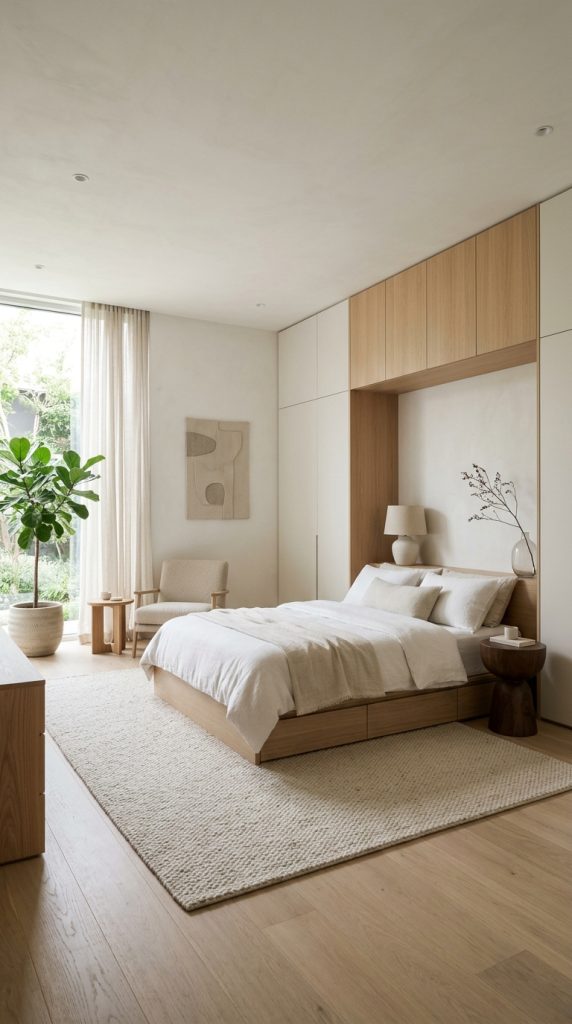
How to implement (Practical steps)
Start by identifying visible clutter:
- Loose items on tables
- Open shelves with too many objects
- Random storage boxes
Replace with hidden solutions:
- Storage beds or under-bed drawers
- Closed cabinets instead of open shelves
- Decorative boxes to hide small items
Keep surfaces minimal:
- Only 1–2 decorative items on tables
- Clear bedside tables and desks
Use multi-functional furniture:
- Ottomans with storage inside
- Coffee tables with drawers
- Wall-mounted cabinets
Best for (Who should use it)
- Small apartments or bedrooms
- People who struggle with clutter
- Families or shared spaces
- Anyone wanting a luxury hotel-style room
Pro tip (Expert advice)
If you can hide 70–80% of visible items, your room will instantly look more expensive and organized.
Mistake to avoid
Avoid simply “stuffing” items into random boxes. Hidden storage should still be organized inside.
6. Textured Minimalism for Soft Luxury Depth
Explanation (What it is)
Textured minimalism is about adding depth and warmth to a simple room without using extra colors or decorations. Instead of relying on objects or patterns, this style focuses on materials and surfaces.
This is what separates basic minimalism from high-end minimalist interiors. A plain room can feel empty, but a textured minimalist room feels rich, layered, and intentionally designed.
Textures like linen, wood, stone, cotton, wool, and matte finishes create visual interest without clutter. These subtle details make a room feel warm, cozy, and expensive at the same time.
Luxury interior designers often use texture to create “quiet richness”—a space that feels high-end without being flashy.
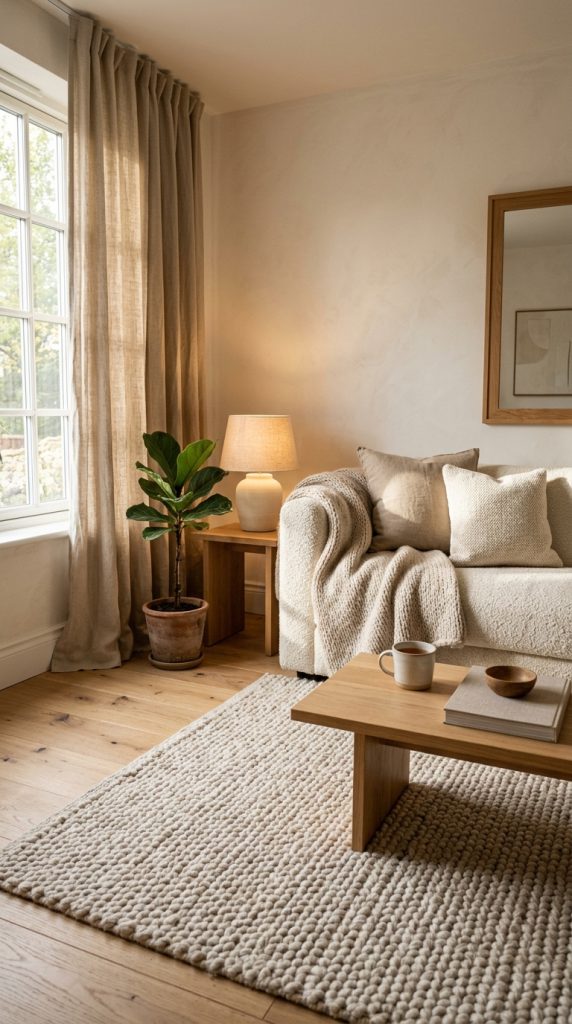
How to implement (Practical steps)
Start with base materials:
- Linen bedding or curtains
- Wooden furniture accents
- Soft wool or cotton rugs
Layer textures carefully:
- Smooth + rough combinations (wood + fabric)
- Matte + soft finishes
Keep colors neutral:
- Beige, cream, soft grey, warm brown tones
Add depth through layering:
- Throw blanket on sofa or bed
- Textured cushions (not overly patterned)
- Subtle woven baskets for storage
Best for (Who should use it)
- People who want cozy luxury interiors
- Neutral and Scandinavian-style lovers
- Bedrooms and living rooms
- Small spaces needing warmth
Pro tip (Expert advice)
Mixing 2–3 different textures in the same color family creates a rich, designer-level aesthetic without adding visual clutter.
Mistake to avoid
Avoid using too many patterns. Texture should replace clutter, not add more visual noise.
7. Neutral Color Furniture for a Soft Luxury Foundation
Explanation (What it is)
Neutral color furniture is one of the strongest foundations of a high-end minimalist room because it creates visual calm and timeless elegance. Instead of bold or mixed colors, this style focuses on soft shades like beige, cream, ivory, warm grey, taupe, and muted browns.
What makes this look expensive is its simplicity and harmony. Luxury interiors almost never rely on loud furniture colors because neutral tones allow the space to feel larger, cleaner, and more cohesive. Everything blends naturally instead of competing for attention.
Neutral furniture also works as a “blank canvas.” It allows textures, lighting, and small decor pieces to stand out more clearly, which is exactly how designer rooms achieve that curated aesthetic.
This approach is especially powerful in small rooms because light-toned furniture reflects light and makes the space feel more open and airy.
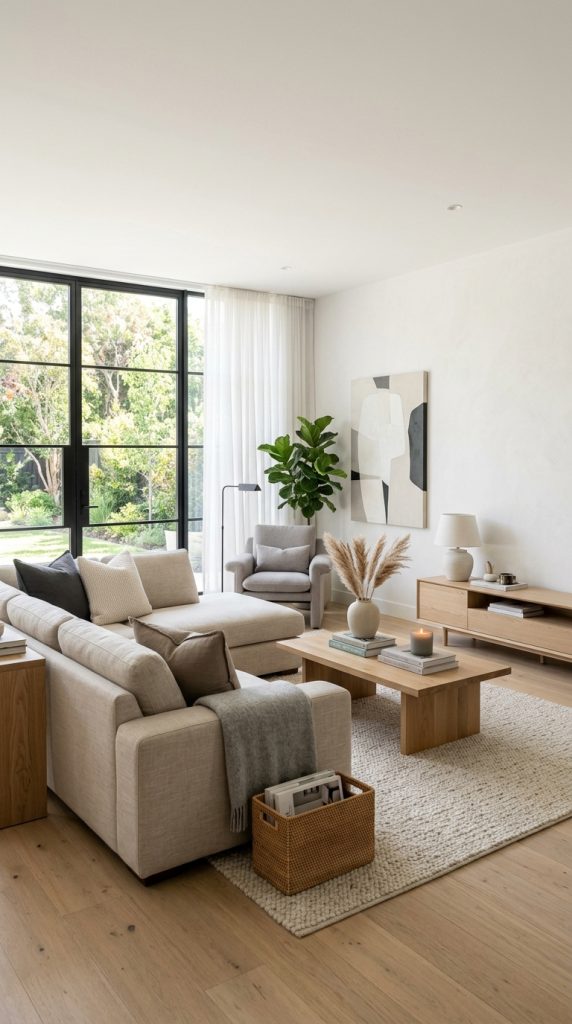
How to implement (Practical steps)
Start by choosing main furniture pieces:
- Sofa or bed in beige, white, or soft grey
- Wooden or neutral-toned tables
- Minimal design chairs without heavy patterns
Then maintain color consistency:
- Stick to 2–3 neutral shades only
- Avoid mixing too many contrasting tones
Upgrade materials:
- Linen or cotton fabric for softness
- Matte wood or light oak finishes
- Simple metal accents in black or gold
Keep the layout visually balanced so colors feel evenly distributed across the room.
Best for (Who should use it)
- Small apartments and bedrooms
- People who love calm aesthetics
- Modern and Scandinavian style lovers
- Anyone aiming for luxury hotel-inspired interiors
Pro tip (Expert advice)
If everything is neutral, texture becomes your main design tool—mix soft fabric with wood or stone for depth.
Mistake to avoid
Avoid adding random bright-colored furniture pieces. One strong color can break the entire minimalist luxury feel.
8. Statement Rug Minimalism for Cozy High-End Grounding
Explanation (What it is)
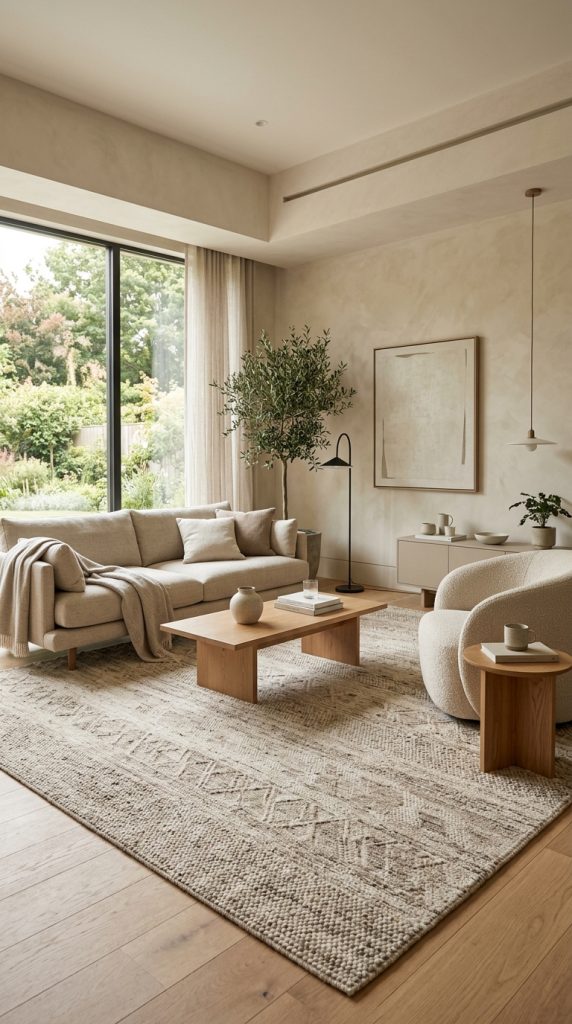
A statement rug in a minimalist room acts as a grounding element that ties the entire space together. Instead of multiple small rugs or busy floor patterns, minimalist design focuses on one large, well-chosen rug that enhances warmth and structure.
What makes this look high-end is scale and simplicity. A large, soft rug instantly makes a room feel more intentional and luxurious. It defines the space without adding clutter, which is essential in minimalist interiors.
Luxury-style rugs are usually neutral, textured, or subtly patterned. They add comfort underfoot while also softening the overall look of the room. This balance between softness and structure is what creates that cozy yet expensive atmosphere.
In high-end homes, rugs are often used to define “zones” such as seating areas or bed areas, especially in open layouts.
How to implement (Practical steps)
Choose the right rug size:
- Large enough to sit under main furniture (sofa/bed)
- Avoid small rugs that float in the middle of the room
Stick to neutral tones:
- Beige, cream, soft grey, or muted earthy shades
Focus on texture:
- Wool, woven, or high-pile soft rugs
- Subtle patterns only (avoid loud prints)
Placement rules:
- Center the rug under furniture
- Ensure it anchors the entire seating or bed area
Best for (Who should use it)
- Bedrooms and living rooms
- Cold or plain-looking spaces
- People wanting cozy luxury feel
- Minimal decor lovers
Pro tip (Expert advice)
A large rug always looks more expensive than multiple small rugs—even if it costs less.
Mistake to avoid
Avoid using rugs that are too small. This is one of the most common mistakes that makes a room look unfinished.
9. Minimalist Greenery Styling for Natural Luxury Feel
Explanation (What it is)
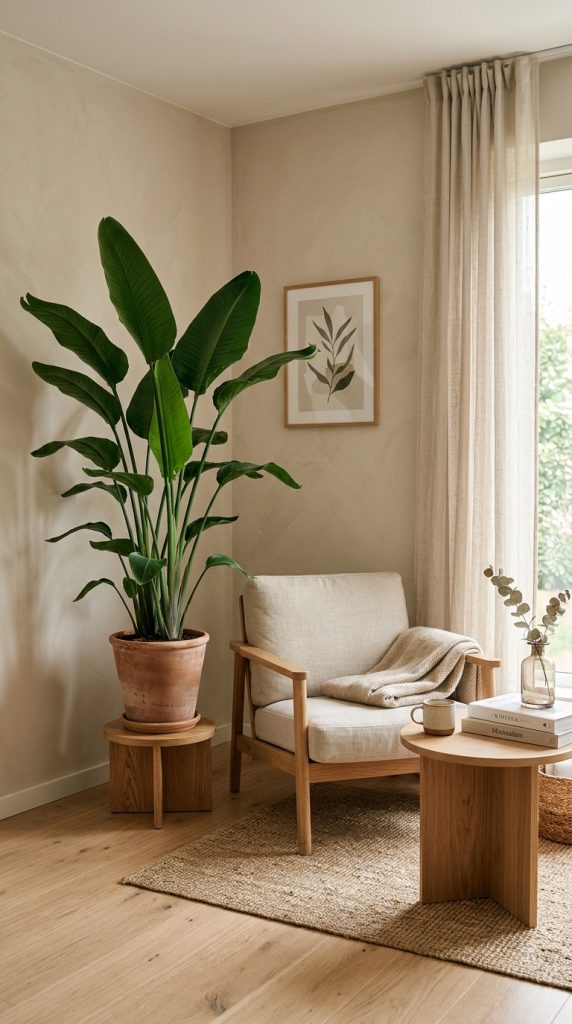
Minimalist greenery styling is about adding natural elements to a room in a controlled and intentional way. Instead of filling the space with many plants, this style uses one or two carefully placed greenery pieces to bring life, freshness, and softness into the room.
What makes this feel luxurious is balance. High-end minimalist spaces often use nature as a subtle accent rather than a dominant feature. A single tall plant or a small vase with greenery can completely change the atmosphere without creating clutter.
Green elements add contrast to neutral interiors, making the space feel more alive, breathable, and organic. This is especially important in rooms with mostly white or beige tones, where greenery prevents the space from feeling too sterile.
How to implement (Practical steps)
Choose simple greenery options:
- One tall indoor plant (corner placement)
- Small tabletop plant or vase
- Eucalyptus or dried pampas grass
Keep containers minimal:
- Ceramic, glass, or matte neutral pots
- Avoid colorful or overly decorative pots
Placement strategy:
- One focal plant per room is enough
- Use corners or empty negative spaces
- Avoid cluttering multiple small plants everywhere
Balance greenery with open space to maintain minimalism.
Best for (Who should use it)
- Living rooms and bedrooms
- Neutral minimalist interiors
- People who want natural calm energy
- Small spaces needing freshness
Pro tip (Expert advice)
One large plant always looks more expensive than many small scattered plants.
Mistake to avoid
Avoid over-decorating with too many plants. It breaks the minimalist luxury aesthetic and creates visual clutter.
10. Warm Ambient Lighting for High-End Cozy Atmosphere
Explanation (What it is)
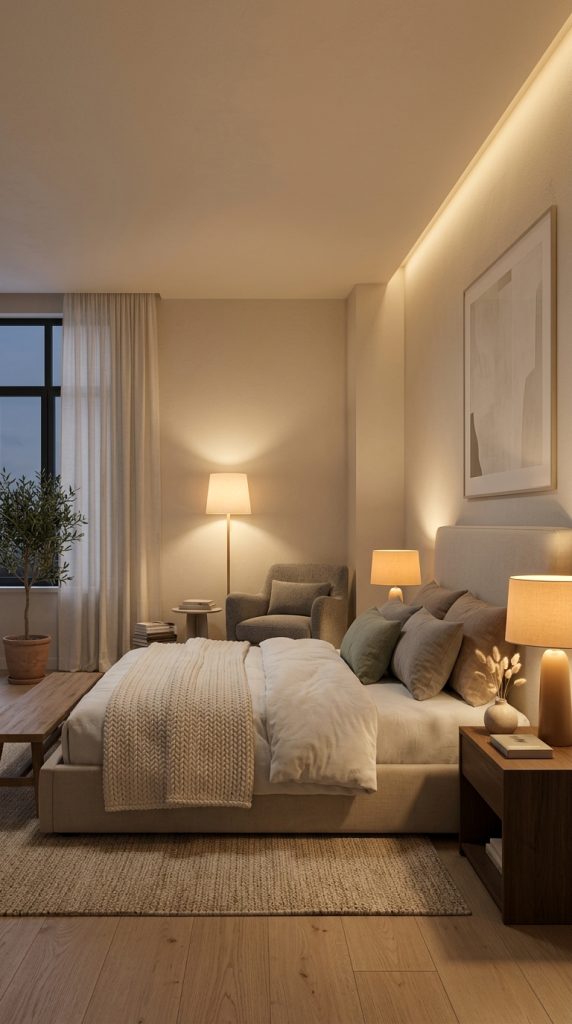
Warm ambient lighting is one of the most powerful elements in creating a high-end minimalist room because it completely changes the mood of the space without adding any physical clutter. Instead of relying on harsh white ceiling lights, this style uses soft, layered lighting to create warmth, depth, and emotional comfort.
What makes this feel luxurious is the “hotel glow” effect. High-end interiors rarely depend on bright overhead lighting alone. Instead, they use multiple soft light sources that bounce gently around the room, creating shadows, highlights, and a cozy atmosphere.
Warm lighting also enhances every other minimalist element—neutral colors look richer, textures appear softer, and the entire room feels more intentional and calming.
How to implement (Practical steps)
Use layered lighting:
- Warm LED bulbs (2700K–3000K)
- Table lamps on bedside or side tables
- Floor lamps in corners for depth
- Soft string or hidden strip lights (optional)
Avoid:
- Harsh white daylight bulbs
- Overhead-only lighting
Placement strategy:
- Light corners to remove dark empty areas
- Add soft glow near seating or bed
- Use dimmers for adjustable mood
Best for (Who should use it)
- Bedrooms and living rooms
- Small rooms needing warmth
- People who love cozy luxury aesthetics
- Modern minimalist homes
Pro tip (Expert advice)
Always combine at least two light sources in one room to avoid flat, boring lighting.
Mistake to avoid
Avoid using only one bright ceiling light—it instantly removes the luxury and cozy feel.
11. Floating Shelves Minimalism for Clean Display Style
Explanation (What it is)
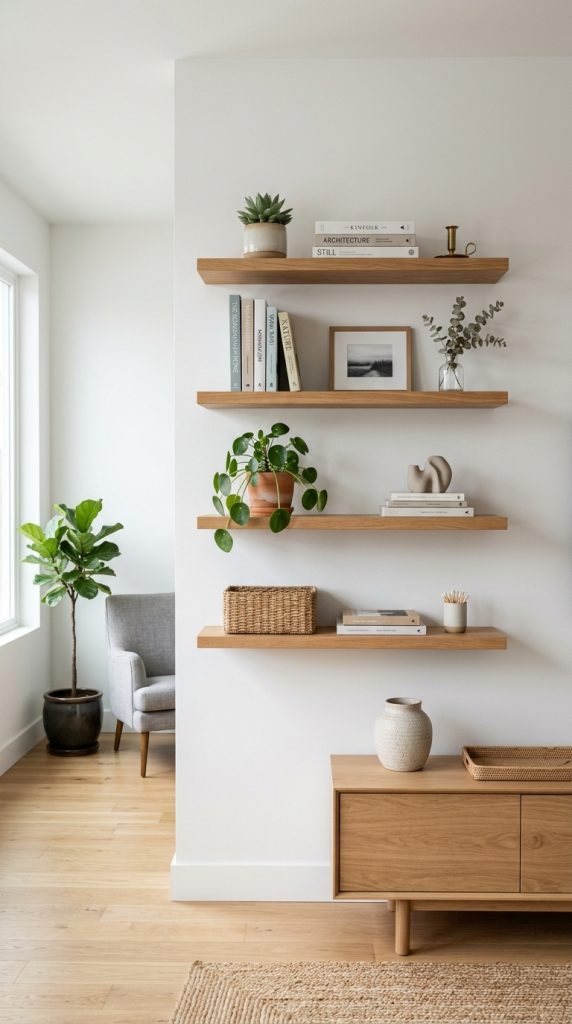
Floating shelves are a minimalist storage and decor solution that creates a clean, modern, and visually light appearance. Unlike bulky cabinets or cluttered shelving units, floating shelves appear to “hover” on the wall, making the room feel more open and spacious.
What makes this style high-end is its curated simplicity. Instead of filling shelves with many items, minimalist design focuses on a few carefully selected objects—books, small plants, candles, or decor pieces. This creates a gallery-like display rather than cluttered storage.
Floating shelves also help maintain floor space, which is important in minimalist rooms because empty floor areas make the space feel larger and more expensive.
How to implement (Practical steps)
Choose simple shelf designs:
- Wooden, white, or matte black finishes
- Slim, clean lines with hidden brackets
Styling rules:
- Keep 2–4 items per shelf maximum
- Mix height and texture (book + plant + decor object)
- Leave empty space between items
Placement:
- Above desks, sofas, or beds
- Avoid overcrowding one wall
Keep styling symmetrical or balanced for a clean look.
Best for (Who should use it)
- Small apartments or rooms
- People who need light storage + decor
- Modern minimalist interiors
- Study rooms or living spaces
Pro tip (Expert advice)
Less is more—an almost empty shelf with 2–3 styled items looks more expensive than a fully filled one.
Mistake to avoid
Avoid overcrowding shelves with too many decorative objects. It breaks the minimalist luxury aesthetic.
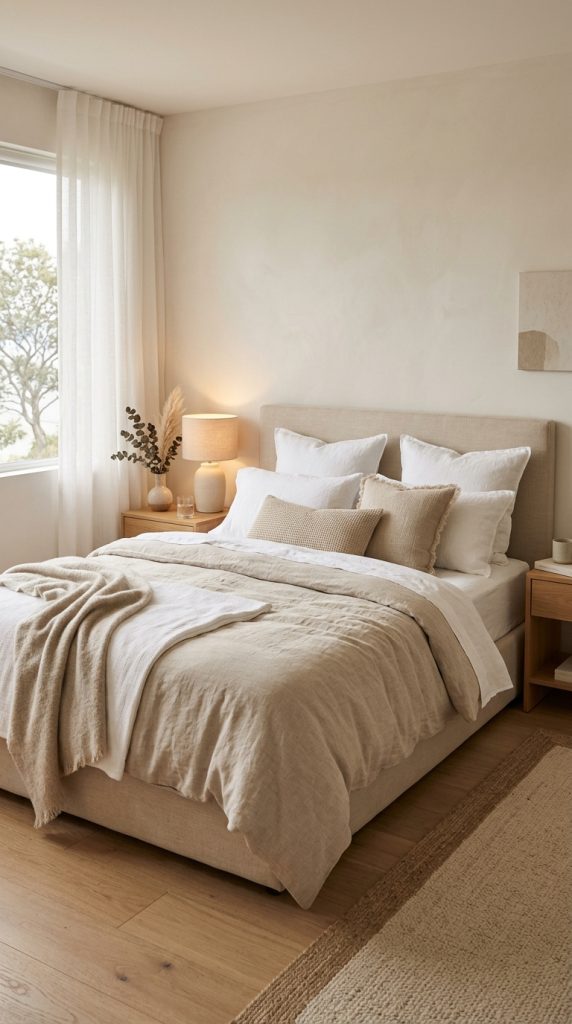
12. Minimalist Bedding & Soft Textiles for Hotel-Like Comfort
Explanation (What it is)
Minimalist bedding focuses on creating a soft, layered, and luxurious bed setup using simple colors and high-quality textures. Instead of bright prints or heavy patterns, this style uses neutral tones and natural fabrics to create a calm, hotel-inspired sleeping space.
What makes this look expensive is the layering effect. High-end beds often look full and inviting but still clean and organized. This is achieved by combining different textures like linen sheets, soft duvets, and lightweight throws in similar color tones.
This style transforms the bed into a visual centerpiece of the room while still maintaining minimalism.
How to implement (Practical steps)
Choose bedding colors:
- White, beige, cream, soft grey
Layer bedding:
- Fitted sheet + duvet + throw blanket
- Add 2–4 neutral pillows (not too many)
Focus on fabric:
- Linen for natural texture
- Cotton for softness
- Avoid shiny synthetic materials
Keep arrangement neat:
- Smooth, tucked, and structured appearance
- Slightly relaxed folds for natural luxury feel
Best for (Who should use it)
- Bedrooms only
- People wanting hotel-style interiors
- Minimalist and cozy aesthetic lovers
- Small rooms needing softness
Pro tip (Expert advice)
Always use at least 2 fabric textures in the same color family for a rich layered effect.
Mistake to avoid
Avoid too many pillows or loud patterns—they make the bed look cluttered instead of luxurious.
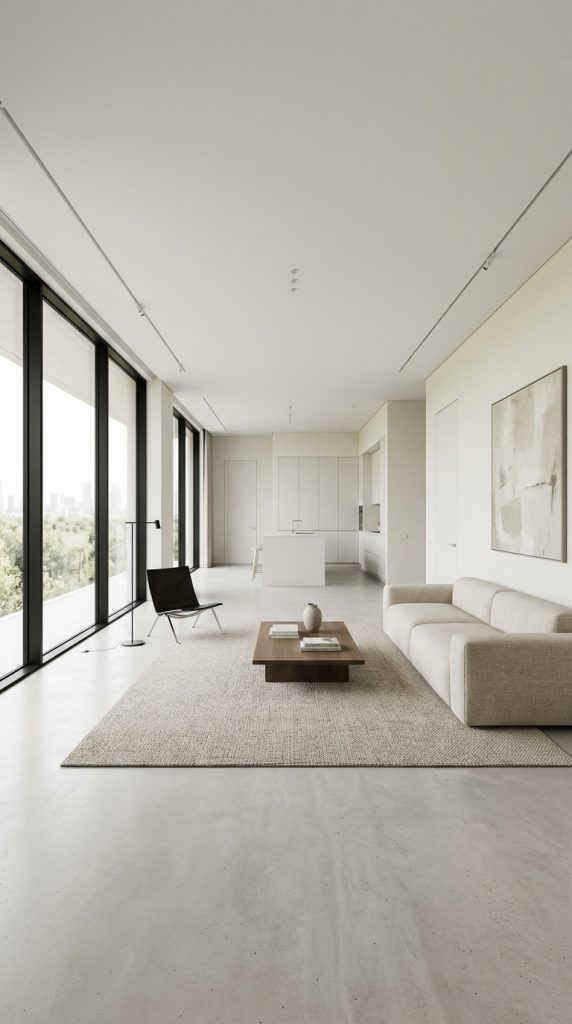
13. Decluttered Open Space Design for True Luxury Minimalism
Explanation (What it is)
Decluttered open space design is the core principle of true minimalist luxury. It focuses on removing unnecessary items and intentionally keeping empty space as part of the design. This negative space is what makes a room feel open, breathable, and high-end.
What makes this style powerful is that it shifts focus from “filling the room” to “designing the space.” Empty areas are not seen as wasted—they are part of the aesthetic. This creates a calm, gallery-like environment where every object feels meaningful.
Luxury interiors often rely heavily on open space because it creates visual clarity and a sense of calm sophistication.
How to implement (Practical steps)
Start by decluttering:
- Remove unused furniture
- Clear surfaces completely
Organize intentionally:
- Keep only essential items visible
- Store everything else out of sight
Maintain breathing space:
- Leave empty areas between furniture
- Avoid filling every corner
Focus on quality over quantity:
- Fewer decor items, but better design
- One focal point per area
Best for (Who should use it)
- Any room type
- People overwhelmed by clutter
- Small and large spaces
- Minimalist lifestyle lovers
Pro tip (Expert advice)
If you’re unsure whether to remove something, removing it usually improves the luxury feel of the room.
Mistake to avoid
Avoid replacing clutter with “decor clutter.” Minimalism is about space, not just different objects.