
Designing a modern kitchen in a small space is one of the most exciting challenges in home décor today. With rising apartment living, compact homes, and minimalist lifestyles becoming more popular, small kitchens are now the norm rather than the exception. But limited square footage does not mean limited style. In fact, small kitchens often offer the best opportunity to create a beautifully curated, functional, and Pinterest-worthy space that feels intentional, organized, and effortlessly modern. The key lies in smart design choices, clever storage solutions, and décor strategies that maximize every inch without making the room feel crowded.
Modern kitchen décor is all about clean lines, simplicity, functionality, and subtle elegance. It combines minimalism with warmth, practicality with personality. When applied thoughtfully, modern design can make even the tiniest kitchen feel open, airy, and luxurious. The secret is understanding how to work with your space rather than against it. Every cabinet, shelf, and surface must serve a purpose. Every decorative element should enhance the overall aesthetic without overwhelming the room.
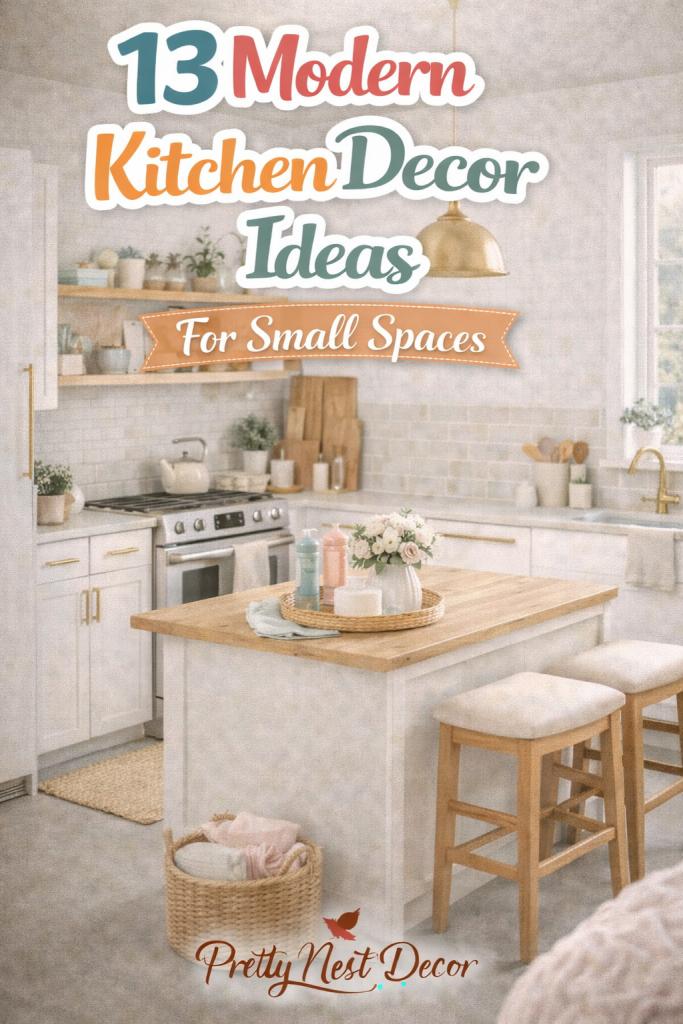
Small kitchens benefit from intentional styling. Light colors, reflective surfaces, vertical storage, and multi-functional furniture are foundational principles. But beyond structure, décor plays a major role in defining the atmosphere. Texture, lighting, hardware finishes, greenery, and wall treatments can completely transform a compact kitchen into a sophisticated culinary nook. Modern design doesn’t mean sterile or cold—it means streamlined and purposeful. When warmth is layered in through materials like wood, matte metals, and soft lighting, a small kitchen becomes both inviting and efficient.
Another crucial element of small kitchen design is visual flow. Clutter is the enemy of compact spaces. Open shelving must be styled carefully. Countertops should remain mostly clear. Storage should be hidden where possible and displayed only when aesthetically pleasing. Modern décor thrives on balance—negative space is just as important as decorative detail.
Technology also plays a role in modern small kitchens. Sleek appliances, built-in features, and integrated lighting systems enhance both form and function. But even without major renovations, small decorative upgrades can create a high-end modern look. Swapping cabinet handles, adding under-cabinet lighting, incorporating statement backsplashes, or installing floating shelves can dramatically upgrade the overall feel.
The beauty of modern kitchen décor is that it adapts to your personal style. Whether you lean toward Scandinavian simplicity, industrial chic, contemporary glam, or warm minimalist aesthetics, the foundation remains the same: clean design, thoughtful organization, and cohesive styling. A small kitchen can feel expansive when light reflects properly, when vertical space is utilized efficiently, and when every item has a designated home.
In this guide, you’ll discover 20 practical, beginner-friendly, and highly effective modern kitchen décor ideas specifically tailored for small spaces. Each idea will provide a clear explanation, step-by-step guidance, and a list of materials to help you implement it with confidence. These ideas are designed to be save-worthy, Pinterest-optimized, and achievable—whether you’re decorating a studio apartment kitchen or upgrading a compact family space.
If you’re ready to transform your small kitchen into a modern, stylish, and highly functional masterpiece, let’s dive into the first set of ideas that will redefine how you see your space.
IDEA 1: Maximize Vertical Storage with Floor-to-Ceiling Cabinets
Introduction
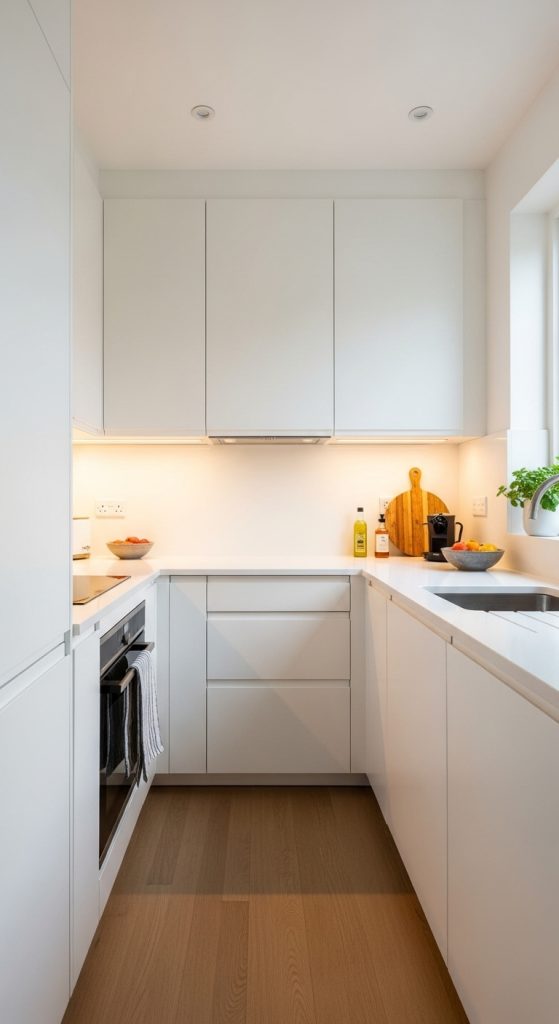
In small kitchens, vertical space is your greatest asset. While many homeowners focus on counter space and floor layout, the walls often remain underutilized. Floor-to-ceiling cabinets are a powerful modern solution that maximizes storage without expanding the kitchen footprint. This approach draws the eye upward, creating the illusion of higher ceilings and a more spacious environment. In modern design, tall cabinetry also delivers a sleek, streamlined look that eliminates visual breaks and cluttered wall gaps.
Rather than allowing dust-collecting empty spaces above cabinets, extending cabinetry upward provides room for rarely used items, seasonal cookware, or bulk pantry storage. Modern kitchens benefit from uniform finishes and flat-panel cabinet doors that maintain a minimalist aesthetic. When done correctly, tall cabinets can transform a cramped kitchen into a polished, custom-designed space that feels intentional and high-end.
What This Idea Means
This concept involves installing cabinets that reach from floor to ceiling to optimize storage capacity while maintaining a clean, modern appearance.
Step-by-Step How-To
- Measure your wall height accurately.
- Choose sleek, flat-panel cabinet designs.
- Use lighter colors to prevent heaviness.
- Store less-used items on upper shelves.
- Install soft-close hardware for a premium feel.
Materials / Items Needed
- Floor-to-ceiling cabinet units
- Wall anchors and installation hardware
- Measuring tape
- Level tool
- Soft-close hinges
IDEA 2: Use Light and Neutral Color Palettes
Introduction
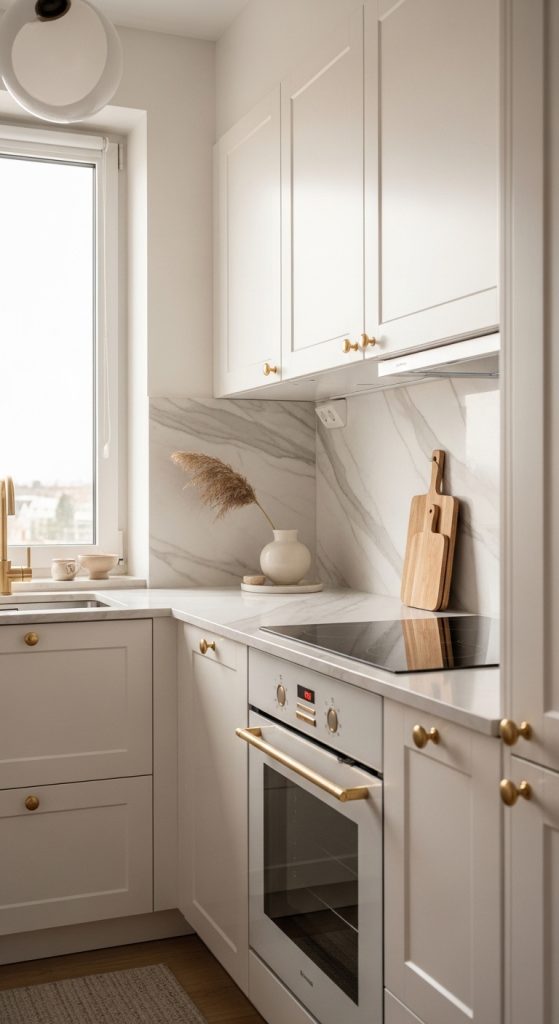
Color plays a crucial role in small kitchen décor. Dark colors absorb light, making compact kitchens feel smaller and more enclosed. In contrast, light and neutral palettes reflect natural and artificial light, instantly opening up the space. Modern kitchen design thrives on soft whites, warm beiges, pale greys, and subtle taupe tones. These shades create a clean foundation while allowing décor elements like hardware, lighting, and greenery to shine.
Neutral palettes also provide timeless appeal. Unlike bold trends that may feel outdated quickly, light modern tones maintain elegance for years. Additionally, lighter cabinetry and walls create a seamless look that reduces visual clutter. When upper and lower cabinets blend with the walls, the kitchen feels expansive and harmonious. For small spaces, consistency is key—using one dominant neutral tone prevents fragmentation and promotes flow.
What This Idea Means
Choosing light, cohesive color schemes to visually enlarge and modernize a small kitchen.
Step-by-Step How-To
- Select a primary neutral shade.
- Paint walls and cabinetry in complementary tones.
- Use matte or satin finishes.
- Add subtle contrast with black or metallic accents.
- Keep décor within the same color family.
Materials / Items Needed
- Neutral paint
- Paint brushes or rollers
- Primer
- Cabinet paint (if refinishing)
- Metallic hardware accents
IDEA 3: Install Floating Shelves for an Open Feel
Introduction
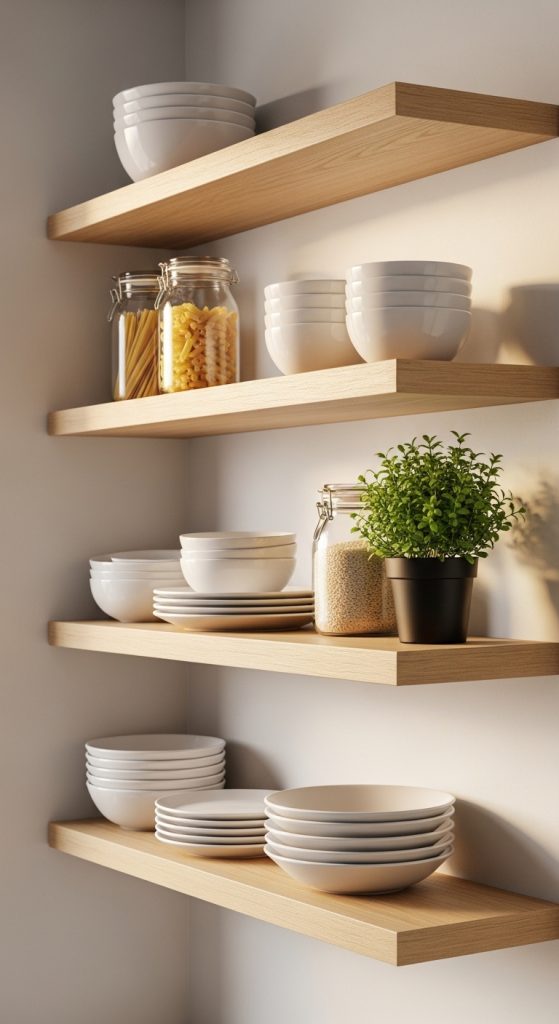
Floating shelves are one of the most popular modern décor solutions for small kitchens. Unlike bulky upper cabinets, floating shelves provide storage while maintaining visual openness. They allow walls to breathe, making the kitchen feel lighter and less crowded. In modern design, simplicity is key—and floating shelves align perfectly with that principle.
When styled intentionally, floating shelves become both functional and decorative. Displaying neatly stacked dishes, minimalist jars, or small potted herbs creates a curated look without clutter. The key is moderation—too many items defeat the purpose. In small kitchens, one or two well-placed shelves can make a dramatic difference.
What This Idea Means
Replacing heavy cabinetry with sleek, wall-mounted shelves to create openness while maintaining functionality.
Step-by-Step How-To
- Measure and mark shelf placement.
- Install sturdy floating shelf brackets.
- Choose solid wood or engineered shelves.
- Style with minimal, cohesive items.
- Avoid overcrowding.
IDEA 4: Incorporate Under-Cabinet Lighting for Depth and Warmth
Introduction
Lighting is one of the most transformative elements in a small modern kitchen. While overhead lighting provides general illumination, it often creates shadows under cabinets, making the space feel darker and smaller than it actually is. Under-cabinet lighting solves this issue instantly. It adds depth, brightness, and a subtle layer of luxury that elevates even the simplest kitchen design.
Modern kitchens thrive on layered lighting. Adding LED strips or puck lights beneath upper cabinets creates a soft glow across countertops, highlighting backsplashes and making food preparation easier. In small kitchens, this additional light visually expands the space by eliminating dark corners. It also enhances reflective surfaces like quartz countertops, glossy tiles, and metallic fixtures.
Beyond functionality, under-cabinet lighting adds ambiance. Warm white lighting creates a cozy atmosphere for evening meals, while cool white lighting delivers a crisp, contemporary feel. This simple upgrade is affordable, beginner-friendly, and does not require a full renovation. It’s one of the easiest ways to achieve a high-end modern kitchen look in a compact space.
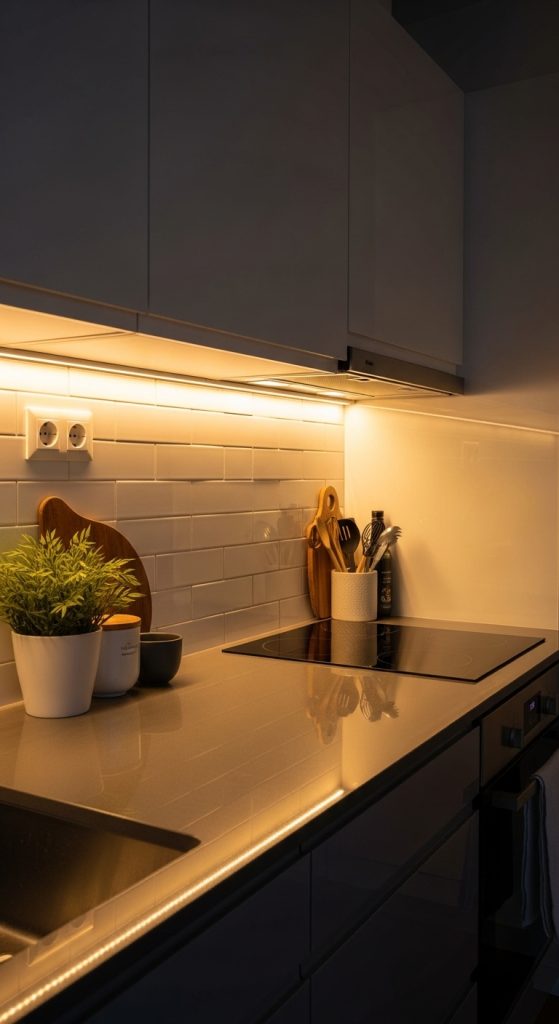
What This Idea Means
Adding LED or puck lighting beneath cabinets to brighten countertops and visually expand the kitchen.
Step-by-Step How-To
- Measure the length of cabinets where lighting will be installed.
- Choose LED strip lights or puck lights based on your preference.
- Select warm white (2700K–3000K) for cozy ambiance or cool white (4000K) for a crisp modern look.
- Clean the underside of cabinets thoroughly.
- Install adhesive-backed LED strips or mount puck lights securely.
- Conceal wires neatly for a streamlined finish.
- Test lighting before final adjustments.
Materials / Items Needed
- LED strip lights or puck lights
- Power adapter
- Measuring tape
- Adhesive backing or mounting screws
- Wire clips for cable management
IDEA 5: Add a Statement Backsplash for Visual Impact
Introduction
In a small modern kitchen, every design element should serve a visual purpose. A statement backsplash acts as a focal point without taking up physical space. Because it occupies vertical wall area, it enhances design while preserving valuable square footage. The right backsplash can transform a plain kitchen into a Pinterest-worthy masterpiece instantly.
Modern kitchens often feature subway tiles, geometric patterns, marble slabs, or textured ceramic finishes. Light-reflective materials such as glossy tiles or glass panels amplify brightness, making the room appear larger. Meanwhile, subtle patterns add personality without overwhelming the space. The key in small kitchens is balance—choose a backsplash that complements your color palette rather than competes with it.
A bold backsplash works especially well when cabinetry and countertops are neutral. It becomes the statement piece that anchors the entire room. Whether you prefer minimal white tiles with dark grout or sleek marble veining, this décor upgrade delivers maximum impact with minimal spatial intrusion.
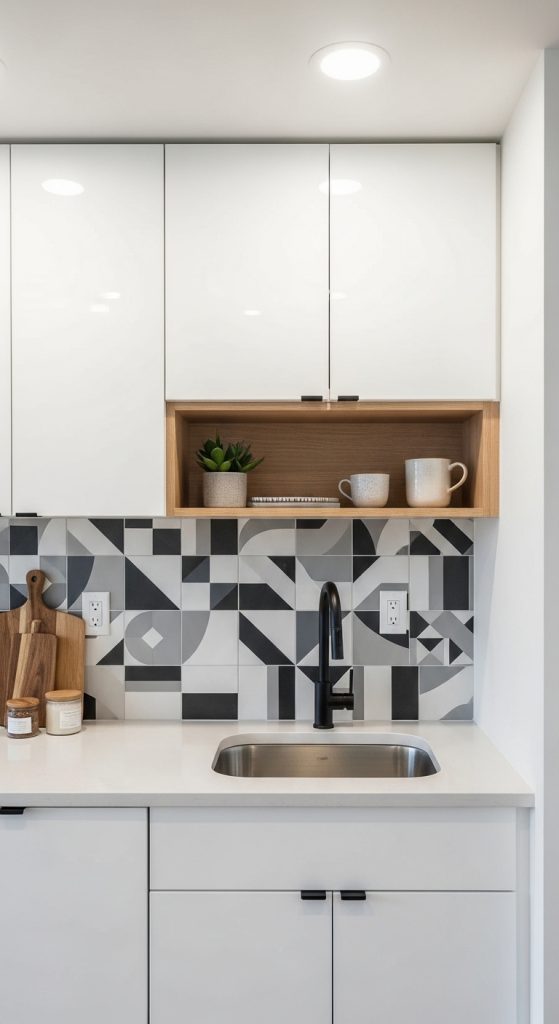
What This Idea Means
Installing a visually striking backsplash to add personality and depth to a small kitchen without clutter.
Step-by-Step How-To
- Measure the backsplash area precisely.
- Choose a modern tile style or slab material.
- Select a color that complements cabinets and countertops.
- Prepare the wall surface by cleaning and smoothing it.
- Apply tile adhesive evenly.
- Install tiles using spacers for uniform gaps.
- Apply grout and clean excess residue.
Materials / Items Needed
- Backsplash tiles or slab
- Tile adhesive
- Grout
- Tile spacers
- Level
- Sponge and cleaning cloth
IDEA 6: Choose Multi-Functional Furniture
Introduction
In small kitchens, every piece of furniture must justify its presence. Multi-functional furniture is the backbone of efficient modern design. Instead of overcrowding the space with single-purpose items, choose pieces that serve dual roles. For example, a kitchen island with built-in storage, a foldable dining table, or bar stools that tuck completely underneath counters.
Modern small kitchens benefit greatly from flexible layouts. Furniture that can be folded, moved, or repurposed allows the space to adapt to your daily needs. A slim rolling cart can function as extra prep space, a coffee station, or even additional storage. A wall-mounted drop-leaf table can act as a breakfast nook without permanently consuming floor area.
This approach reduces clutter while increasing practicality. It also enhances visual openness because fewer bulky items are required. Multi-functional pieces maintain the sleek, streamlined look that defines modern kitchen décor. When selected thoughtfully, they make a compact kitchen feel intelligently designed rather than restricted.
What This Idea Means
Using furniture that performs multiple tasks to maximize space efficiency in a small kitchen.
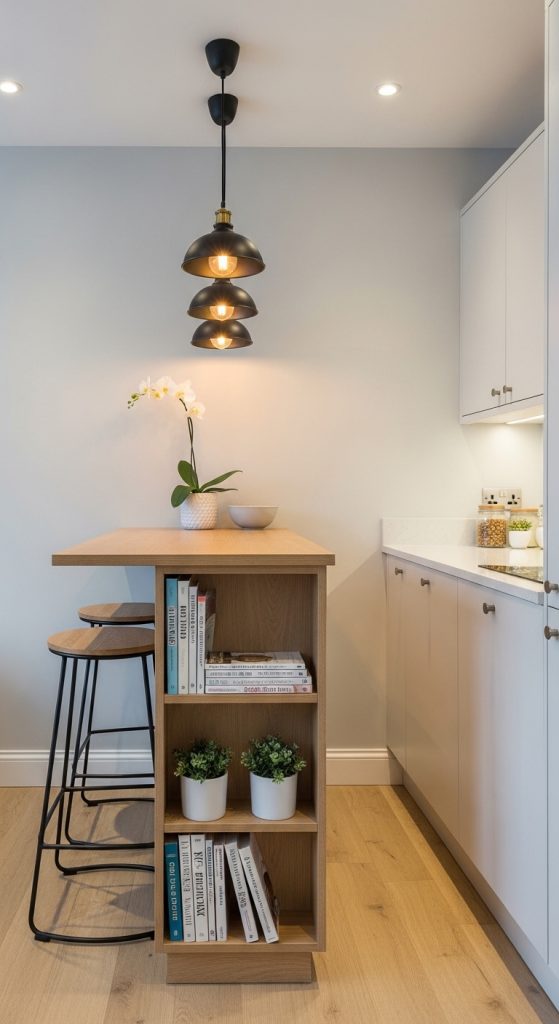
Step-by-Step How-To
- Assess your kitchen’s daily functional needs.
- Identify areas lacking prep space or storage.
- Choose a multi-purpose island, cart, or foldable table.
- Ensure furniture proportions match your space.
- Position pieces to allow easy movement.
- Store items inside built-in compartments.
Materials / Items Needed
- Multi-functional kitchen island or cart
- Foldable or wall-mounted table
- Storage baskets or bins
- Measuring tape
IDEA 7: Use Glass Cabinet Doors to Create Openness
Introduction
Solid cabinet doors can sometimes make a small kitchen feel boxed in and visually heavy. Replacing a few upper cabinet panels with glass inserts is a subtle yet powerful modern décor upgrade that creates openness without sacrificing storage. Glass cabinet doors reflect light, add dimension, and visually extend the depth of the room. In compact kitchens especially, this transparency reduces the bulky appearance of traditional cabinetry.
Modern kitchens benefit from frosted, clear, or ribbed glass panels depending on your style preference. Clear glass works beautifully for displaying neatly organized dishes, while frosted glass offers partial concealment for a cleaner aesthetic. The key is intentional styling—items inside must remain tidy and cohesive. Neutral dishware, stacked bowls, and matching glassware enhance the curated look.
This design trick adds architectural interest while keeping functionality intact. It also breaks up long stretches of cabinetry, preventing the room from feeling flat. When paired with subtle interior cabinet lighting, glass doors elevate a small kitchen into a bright, airy, and modern space that feels much larger than its footprint.
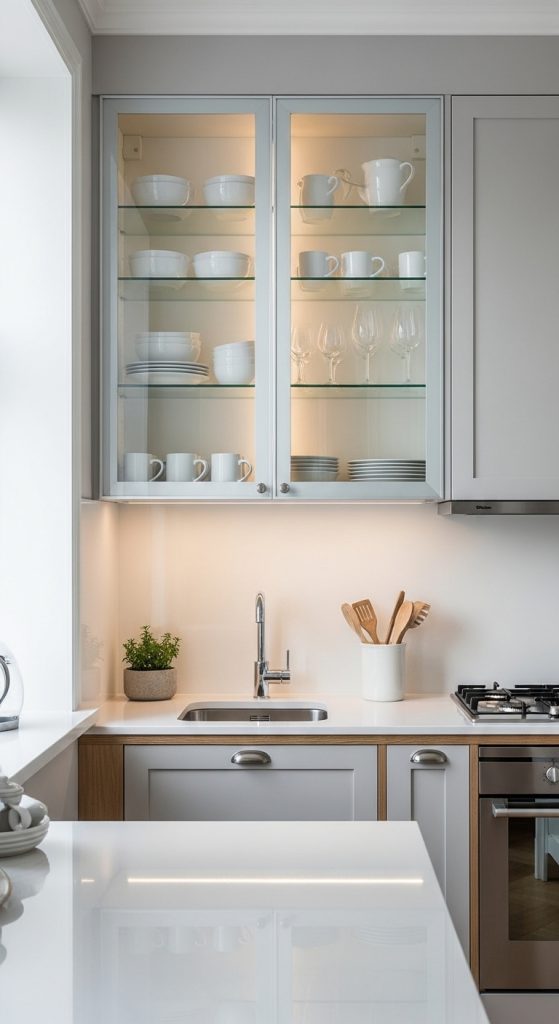
What This Idea Means
Incorporating glass-front cabinet doors to reduce visual heaviness and enhance light flow in small kitchens.
Step-by-Step How-To
- Identify upper cabinets suitable for glass panel replacement.
- Choose clear, frosted, or textured glass.
- Remove existing cabinet panels carefully.
- Install glass inserts securely.
- Organize cabinet interiors neatly for display.
- Add optional interior lighting for added depth.
Materials / Items Needed
- Glass cabinet inserts
- Screwdriver
- Measuring tape
- Cabinet lighting (optional)
- Matching dishware for styling
IDEA 8: Install a Compact Kitchen Island with Storage
Introduction
Many homeowners assume small kitchens cannot accommodate islands, but compact island designs prove otherwise. A slim, narrow island can provide additional prep space, hidden storage, and even seating without overwhelming the room. Modern kitchens prioritize functionality, and a well-proportioned island delivers high impact in a small footprint.
The key is scale. Choose an island that allows comfortable movement around all sides. Look for built-in shelves, drawers, or cabinets to store cookware, utensils, or pantry items. Light-colored finishes prevent visual bulk, while open shelving at the bottom maintains airiness. Some islands even feature wheels, allowing flexibility when extra floor space is needed.
In addition to practicality, an island anchors the room. It creates a central focal point and enhances the overall layout. For studio apartments or open-plan living areas, a small island can subtly separate the kitchen from the living space. When styled with a decorative bowl or a small plant, it becomes both functional and visually appealing.
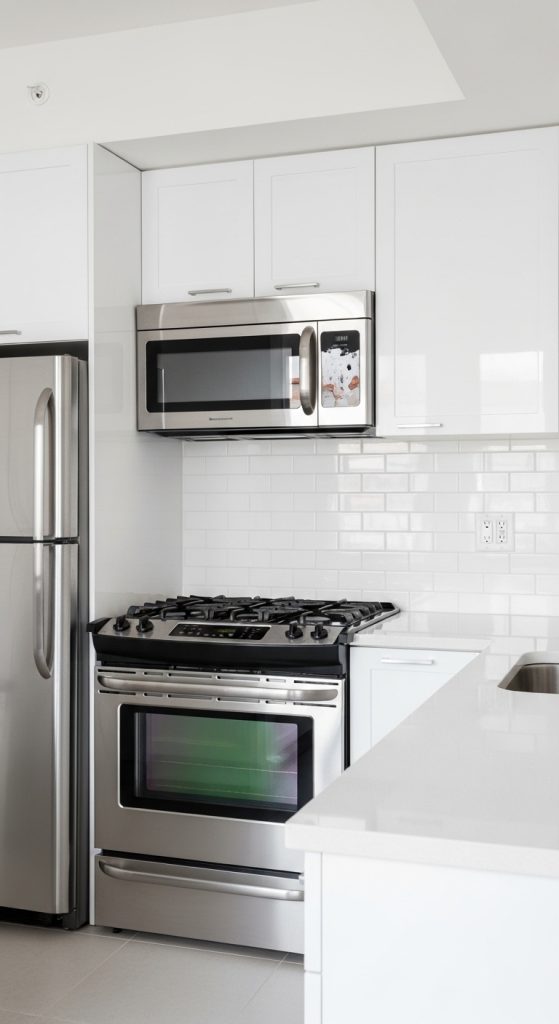
What This Idea Means
Adding a narrow, storage-equipped kitchen island designed specifically for compact spaces.
Step-by-Step How-To
- Measure available floor space carefully.
- Ensure at least 36 inches of clearance around the island.
- Select a slim island with built-in storage.
- Choose a light or neutral finish.
- Position strategically for optimal workflow.
- Style minimally to maintain openness.
Materials / Items Needed
- Compact kitchen island
- Measuring tape
- Storage baskets (optional)
- Decorative centerpiece
IDEA 9: Incorporate Reflective Surfaces to Enhance Light
Introduction
Reflective surfaces are one of the most effective design strategies for visually enlarging a small kitchen. When light bounces off glossy tiles, stainless steel appliances, glass elements, or polished countertops, the room instantly feels brighter and more spacious. Modern décor often integrates reflective finishes to create depth and a sleek aesthetic.
Small kitchens benefit tremendously from high-gloss backsplashes, mirrored accents, or metallic hardware. Even subtle additions, such as chrome faucets or brushed nickel handles, contribute to a brighter atmosphere. Reflective finishes work especially well when paired with light color palettes. Together, they amplify natural light and prevent the room from feeling confined.
However, balance is essential. Too many shiny surfaces can feel overwhelming. The goal is strategic placement—highlighting key areas like backsplashes, cabinet hardware, or appliances. When thoughtfully applied, reflective elements create dimension and elevate a compact kitchen into a polished, contemporary space.
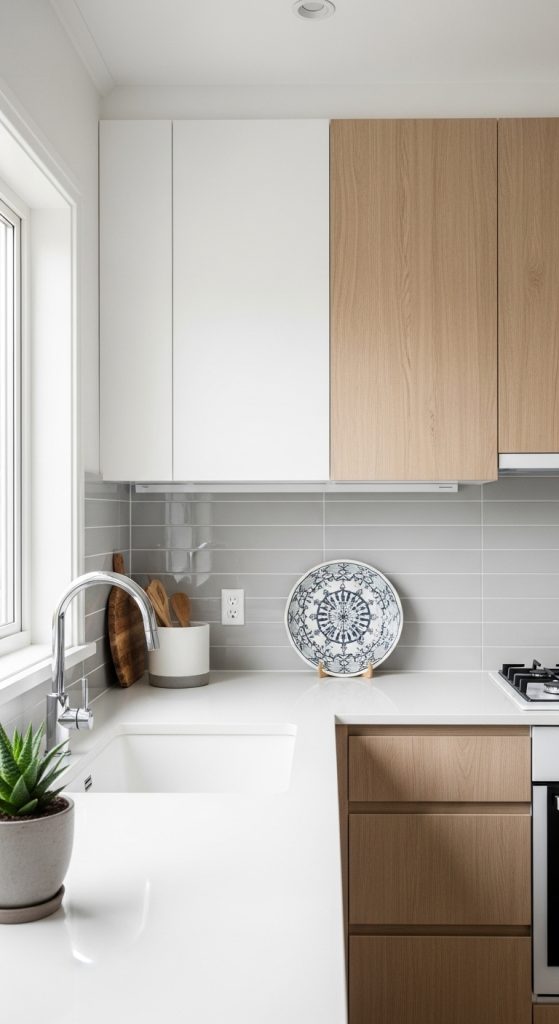
What This Idea Means
Using glossy and metallic finishes to reflect light and visually expand a small kitchen.
Step-by-Step How-To
- Identify areas where light reflection can be maximized.
- Choose glossy backsplash tiles or glass panels.
- Install stainless steel or chrome hardware.
- Opt for polished countertops if upgrading.
- Maintain clean surfaces to enhance reflection.
Materials / Items Needed
- Glossy backsplash tiles
- Metallic cabinet handles
- Stainless steel appliances
- Glass décor elements
IDEA 10: Keep Countertops Minimal and Clutter-Free
Introduction
Clutter is the fastest way to make a small kitchen feel cramped. Modern kitchen décor embraces minimalism, especially on countertops. Keeping surfaces clear enhances functionality, visual calmness, and overall spaciousness. In compact kitchens, every visible item adds to the perception of crowding.
A clean countertop allows the eye to move freely across the room, creating openness. Store appliances inside cabinets when not in use. Limit decorative items to one or two intentional pieces, such as a small plant or a stylish utensil holder. Wall-mounted organizers or under-cabinet hooks can free up valuable counter space.
Minimalism does not mean sacrificing personality. Instead, it means curating carefully. Choose high-quality, aesthetically pleasing essentials rather than overcrowding with miscellaneous items. When countertops are tidy, even the smallest kitchen feels organized, modern, and breathable. This single change can dramatically transform the atmosphere of your space.
What This Idea Means
Maintaining clean, streamlined countertops to enhance visual spaciousness in a small kitchen.
Step-by-Step How-To
- Remove all non-essential items from countertops.
- Store small appliances inside cabinets.
- Install wall hooks or magnetic strips for utensils.
- Keep only one or two decorative elements visible.
- Develop a daily decluttering routine.
Materials / Items Needed
- Storage organizers
- Wall hooks or magnetic strips
- Decorative container or small plant
- Cabinet storage solutions
IDEA 11: Use Slim Open Pantry Shelving
Introduction
Traditional pantry cabinets can feel bulky in small kitchens, especially when space is limited. Slim open pantry shelving offers a modern alternative that keeps essentials accessible while maintaining an airy aesthetic. Instead of large enclosed units, narrow vertical shelving units utilize tight spaces between walls, beside refrigerators, or in unused corners.
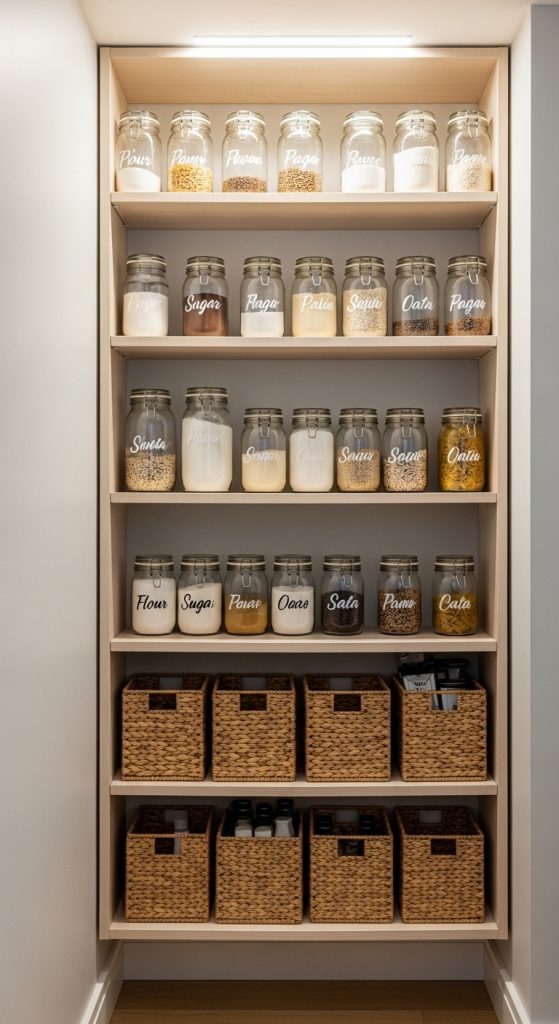
Modern kitchens benefit from visual lightness. Open pantry shelves create a boutique-style display for jars, containers, and dry goods—turning everyday storage into decorative styling. Clear glass jars, labeled containers, and uniform baskets elevate the look and prevent clutter. The key is consistency. Matching storage containers instantly make a small pantry area appear organized and intentional.
Slim shelving also improves workflow efficiency. Frequently used items are within reach, reducing cabinet digging. When styled thoughtfully, this solution balances practicality and design. It’s especially ideal for apartment kitchens where built-in pantry space is limited. By embracing vertical slim storage, you maximize functionality without sacrificing modern appeal.
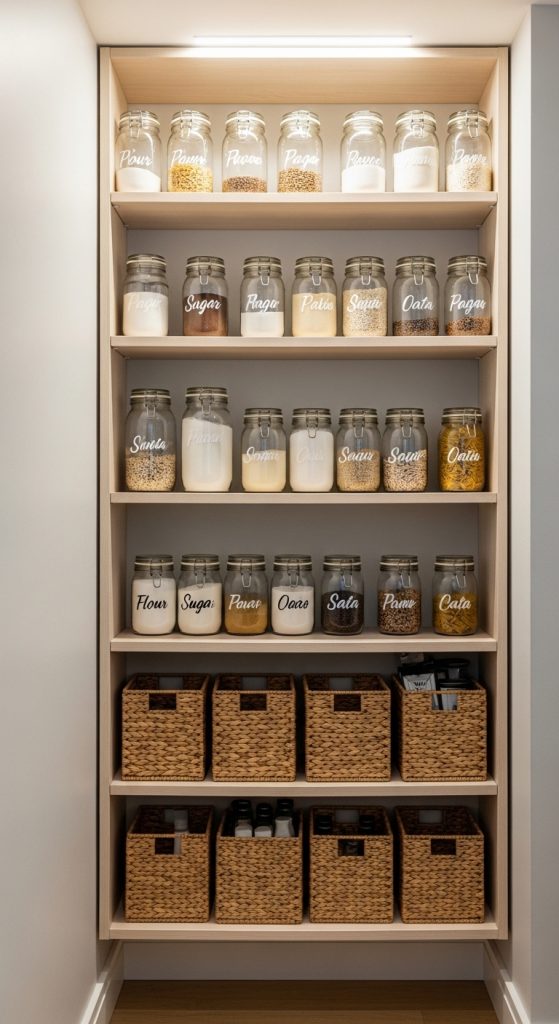
What This Idea Means
Installing narrow open shelving units to store pantry items in a visually appealing and space-saving way.
Step-by-Step How-To
- Identify unused vertical wall space.
- Measure the width carefully.
- Install slim shelving units securely.
- Transfer dry goods into matching jars.
- Label containers neatly.
- Arrange items by height for balance.
Materials / Items Needed
- Slim shelving unit
- Glass jars or containers
- Labels
- Wall anchors and screws
- Storage baskets
IDEA 12: Integrate Built-In Appliances for a Seamless Look
Introduction
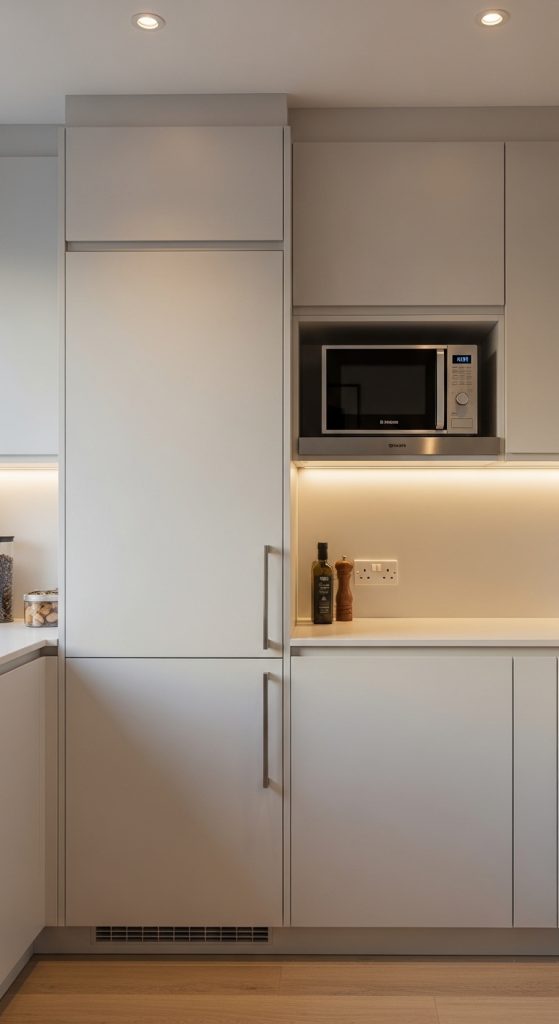
Built-in appliances are a hallmark of modern kitchen design. In small kitchens, they are especially valuable because they reduce visual clutter and create a streamlined appearance. Unlike freestanding appliances that interrupt cabinetry lines, built-in options blend seamlessly with surrounding surfaces.
When appliances such as microwaves, dishwashers, or refrigerators are integrated into cabinetry, the kitchen feels cohesive and organized. This uniformity enhances the illusion of space by minimizing visual breaks. Panel-ready appliances that match cabinet finishes further elevate the aesthetic.
Beyond style, built-in appliances improve workflow. They are positioned strategically for ergonomic efficiency, making cooking easier in tight quarters. While this idea may require a higher investment, even small upgrades—like installing a built-in microwave shelf—can create a dramatic transformation. A seamless layout contributes significantly to a clean, modern atmosphere in compact kitchens.
What This Idea Means
Incorporating appliances that blend into cabinetry for a sleek and cohesive appearance.
Step-by-Step How-To
- Evaluate current appliance layout.
- Choose panel-ready or compact built-in models.
- Work with cabinetry dimensions.
- Install according to manufacturer guidelines.
- Maintain consistent finishes for cohesion.
Materials / Items Needed
- Built-in appliances
- Cabinet panels
- Professional installation tools
- Measuring tape
IDEA 13: Add a Modern Minimalist Rug
Introduction
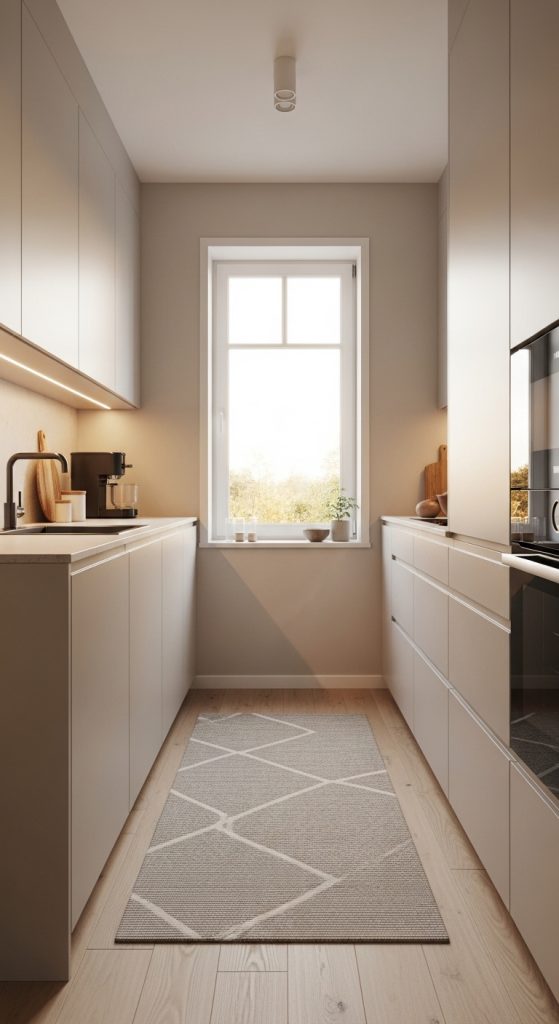
Many homeowners overlook rugs in kitchens, but in small spaces, a well-chosen rug adds warmth without crowding the room. Modern kitchens benefit from subtle texture and softness to balance sleek surfaces like tile, stone, and metal. A slim, low-pile runner can define areas such as the sink zone or cooking space while maintaining practicality.
Neutral-toned rugs with simple geometric patterns complement modern décor without overwhelming the space. They also provide comfort underfoot during meal preparation. In small kitchens, choosing a rug that aligns with the overall color palette ensures visual harmony.
Beyond aesthetics, rugs protect flooring and reduce noise. The key is scale—avoid oversized rugs that make the room feel cramped. Instead, select streamlined designs that enhance rather than dominate. This subtle addition can make a small kitchen feel warmer and more inviting instantly.
What This Idea Means
Incorporating a slim, minimalist rug to add warmth and texture to a compact modern kitchen.
Step-by-Step How-To
- Measure the intended rug area.
- Choose a low-pile, washable design.
- Select neutral or subtle patterns.
- Place near sink or prep zones.
- Secure with a non-slip pad.
Materials / Items Needed
- Kitchen runner rug
- Non-slip rug pad-o
- Measuring tape