
The mud room is one of the most overlooked yet hardest-working spaces in any home. It serves as the transition zone between outdoors and indoors, catching muddy shoes, wet coats, backpacks, pet leashes, sports gear, and everyday clutter before it spreads throughout the house. While many homeowners focus on making living rooms and bedrooms beautiful, the mud room often becomes a purely functional space with little personality or design intention. However, this space offers a powerful opportunity to blend practicality with style — and wallpaper is one of the easiest and most impactful ways to do that.
Wallpaper has evolved far beyond outdated floral prints and heavy patterns. Today’s wallpaper options include peel-and-stick, moisture-resistant vinyl, textured grasscloth, removable murals, geometric prints, faux finishes, and custom designs that can instantly transform a small, boring mud room into a stylish, organized, and welcoming entry space. Because mud rooms are typically compact, wallpaper can make a bold statement without overwhelming the rest of your home. This makes it the perfect room to experiment with color, pattern, and texture in a way that feels intentional and curated.

From a design perspective, wallpaper helps define the mud room as a real room rather than just a pass-through area. It adds visual interest, creates a sense of structure, and elevates built-in storage like cubbies, benches, and lockers. From a practical standpoint, many modern wallpapers are washable, durable, and moisture-resistant — making them ideal for high-traffic, high-mess environments. This means you can enjoy style without sacrificing durability.
Another major advantage of wallpaper in the mud room is its ability to enhance lighting and perceived space. Light-reflecting patterns can make small or windowless mud rooms feel brighter and larger. Vertical stripes can visually raise ceilings, while horizontal designs can make narrow rooms feel wider. Nature-inspired prints can soften hard surfaces like tile and concrete floors, while bold patterns can hide scuffs and marks better than plain paint.
Wallpaper also allows you to personalize your home in subtle but meaningful ways. Whether you love farmhouse charm, modern minimalism, coastal calm, cottage coziness, or bold contemporary style, there is a wallpaper option that can reflect your personal taste while still supporting everyday functionality. The mud room becomes a place that feels intentional, styled, and connected to the rest of your home’s design story.
In this guide, you’ll discover 20 detailed mud room wallpaper decor ideas that go far beyond basic suggestions. Each idea is designed to help you understand not just what wallpaper to choose, but how to apply it strategically, how to style around it, what materials work best, and how to make your mud room both beautiful and practical. These ideas are perfect for homeowners, renters, DIYers, and anyone looking to refresh their entryway without a full renovation.
Whether your mud room is large or small, bright or dark, modern or traditional, these ideas will give you actionable inspiration to transform it into a space that feels welcoming, organized, and Pinterest-worthy — while still standing up to real life.
IDEA 1: Bold Botanical Wallpaper for a Fresh, Nature-Inspired Mud Room
Introduction
Botanical wallpaper is one of the most popular choices for mud rooms because it naturally connects the outdoors with the indoors. Since the mud room is literally where you enter from outside, botanical patterns create a seamless visual transition that feels intentional and calming. Large leafy prints, delicate florals, or tropical greenery can instantly make the space feel fresher, brighter, and more alive. This style works beautifully in both modern and traditional homes and adds personality without feeling too trendy.
Botanical wallpaper also helps soften the hard, practical surfaces typically found in mud rooms, such as tile floors, metal hooks, and wooden benches. The organic shapes and natural colors balance out these functional elements and make the room feel more welcoming. It’s especially effective in mud rooms that lack windows, as greenery prints can visually replace natural views and create the feeling of being surrounded by nature.

Definition / Explanation
Botanical wallpaper features plant-inspired designs such as leaves, vines, flowers, ferns, or tropical foliage. These patterns can be subtle and neutral or bold and colorful, depending on your style and how much impact you want.
Step-by-Step How-To
- Measure all mud room walls to determine wallpaper coverage.
- Choose a moisture-resistant or vinyl botanical wallpaper for durability.
- Decide whether to wallpaper all walls or create a feature wall.
- Prepare walls by cleaning and smoothing surfaces.
- Install wallpaper carefully around hooks, cubbies, and trim.
- Style with natural wood benches and woven baskets.
Materials List
- Botanical wallpaper (vinyl or peel-and-stick)
- Wallpaper paste (if required)
- Utility knife and smoothing tool
- Natural wood storage bench
- Woven baskets or bins
IDEA 2: Black and White Geometric Wallpaper for a Modern Mud Room
Introduction
Black and white geometric wallpaper is a powerful design choice for creating a sleek, modern mud room. This style brings strong visual structure and makes even small spaces feel intentional and professionally designed. Geometric patterns introduce rhythm and movement, helping the mud room feel less like a storage area and more like a stylish extension of your home.
Because mud rooms often contain many functional elements, such as hooks, lockers, and shoe shelves, geometric wallpaper provides a clean, high-contrast backdrop that makes these features stand out. It also works well with both light and dark cabinetry, allowing you to build a cohesive look around a simple black-and-white palette. This makes future updates easier, since black and white pairs well with nearly any accent color.

Definition / Explanation
Geometric wallpaper features repeating shapes such as hexagons, chevrons, diamonds, or lines in structured patterns, typically in high-contrast color schemes.
Step-by-Step How-To
- Choose a geometric pattern that fits the scale of your room.
- Use peel-and-stick for easy installation in high-traffic areas.
- Apply wallpaper to one main wall or behind cubbies.
- Pair with black hooks and white cabinetry.
- Add neutral flooring to balance the pattern.
Materials List
- Black and white geometric wallpaper
- Peel-and-stick adhesive (if needed)
- Level and measuring tape
- Black wall hooks
- White storage cabinets
IDEA 3: Peel-and-Stick Wallpaper for Renters and Easy Updates
Introduction
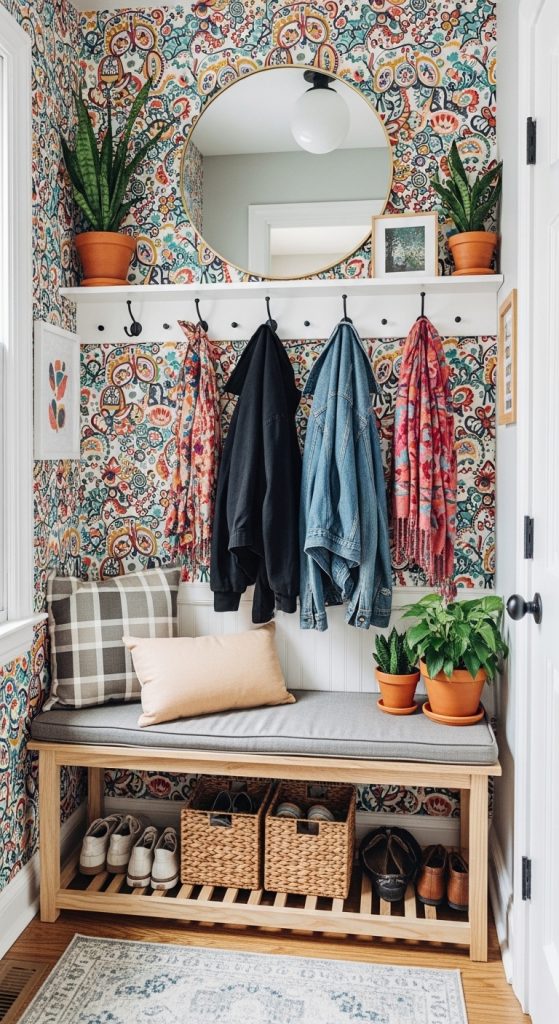
Peel-and-stick wallpaper is a game-changer for mud rooms, especially for renters or homeowners who like to refresh their space often. Because mud rooms experience heavy wear and tear, having a removable option makes it easier to update styles, repair damaged areas, or change seasonal looks. This type of wallpaper allows you to enjoy bold design without the long-term commitment of traditional wallpaper.
Peel-and-stick wallpaper also simplifies installation, making it ideal for DIY beginners. You can apply it in sections, adjust placement easily, and remove it without damaging walls. This flexibility is especially helpful in mud rooms where hooks, trim, and built-ins make traditional wallpapering more complex.
Definition / Explanation
Peel-and-stick wallpaper is a self-adhesive, removable wallpaper that does not require paste and can be repositioned or removed cleanly.
Step-by-Step How-To
- Clean walls thoroughly.
- Measure and cut wallpaper panels.
- Peel backing slowly and smooth onto wall.
- Trim around trim and fixtures.
- Press edges firmly to prevent lifting.
Materials List
- Peel-and-stick wallpaper rolls
- Smoothing tool
- Utility knife
- Measuring tape
- Microfiber cloth
IDEA 4: Vertical Stripe Wallpaper to Make Small Mud Rooms Feel Taller
Introduction
Small mud rooms can often feel cramped, especially if they have low ceilings or limited natural light. Vertical stripe wallpaper is a smart design trick that visually raises the ceiling and makes the room feel more open. This creates a more comfortable, breathable entry experience without structural changes.
Stripes also add classic charm and work well in both modern and traditional homes. Subtle, tone-on-tone stripes feel elegant and understated, while bold contrasting stripes can create a dramatic statement. Either way, vertical stripes add visual order, making busy mud rooms feel more organized.

Definition / Explanation
Vertical stripe wallpaper features vertical lines that draw the eye upward, creating the illusion of height.
Step-by-Step How-To
- Select stripe width based on room size.
- Align first panel carefully for straight lines.
- Apply wallpaper from ceiling to baseboard.
- Match stripe seams precisely.
- Keep décor simple to avoid visual clutter.
Materials List
- Vertical stripe wallpaper
- Level
- Wallpaper adhesive
- Straight edge
- Neutral storage furniture
IDEA 5: Shiplap-Style Wallpaper for Farmhouse Mud Room Charm
Introduction
Shiplap-style wallpaper is perfect for creating farmhouse charm without the cost or labor of real wood paneling. This style adds texture, warmth, and architectural interest to mud rooms, making them feel cozy and welcoming. It’s especially popular in country, rustic, and modern farmhouse homes.
Using wallpaper instead of real shiplap keeps the space lighter and easier to maintain. It also allows you to achieve the same look in homes where installing wood panels isn’t practical. Shiplap wallpaper pairs beautifully with wood benches, metal hooks, and woven baskets for a classic farmhouse mud room look.

Definition / Explanation
Shiplap-style wallpaper mimics the look of horizontal wooden planks using printed patterns.
Step-by-Step How-To
- Choose white or light wood-tone shiplap wallpaper.
- Apply to all walls or a single accent wall.
- Align plank lines carefully.
- Add rustic hooks and storage.
- Finish with warm lighting.
Materials List
- Shiplap-style wallpaper
- Wallpaper smoothing tool
- Rustic wall hooks
- Wooden bench
- Storage baskets
IDEA 6: Dark Moody Wallpaper for a High-End Mud Room Look
Introduction
Dark, moody wallpaper can transform a basic mud room into a high-end, designer-style space. Deep colors like navy, charcoal, forest green, or black create a dramatic and luxurious feel. This approach works especially well in mud rooms that are part of a main entryway, helping set a strong first impression for guests.
Dark wallpaper also hides scuffs and dirt better than light colors, making it practical for high-traffic areas. When paired with good lighting and light-colored trim, dark wallpaper feels intentional rather than gloomy. It gives your mud room a bold personality and makes everyday storage look more elevated.

Definition / Explanation
Moody wallpaper features deep, rich colors and often textured or dramatic patterns.
Step-by-Step How-To
- Choose moisture-resistant dark wallpaper.
- Add layered lighting for brightness.
- Pair with light trim and cabinetry.
- Install mirrors to reflect light.
- Keep accessories minimal.
Materials List
- Dark wallpaper
- Wall sconces or overhead lighting
- White or light cabinetry
- Mirror
- Black or brass hooks
IDEA 7: Wallpapered Cubbies for a Custom Built-In Look
Introduction
Wallpapering the inside of cubbies is a creative way to add personality without overwhelming the entire mud room. This technique creates a custom, built-in look that feels high-end and intentional. Each cubby becomes a mini design moment that adds color and pattern while keeping the rest of the space neutral.
This approach is perfect for families, as different patterns can be used for each person’s cubby. It also makes it easier to change styles over time without redoing the entire room. Wallpapered cubbies are both functional and decorative, making storage look styled instead of cluttered.

Definition / Explanation
This idea involves applying wallpaper to the back panels of cubbies or lockers only.
Step-by-Step How-To
- Measure cubby back panels.
- Cut wallpaper to fit.
- Apply carefully inside each cubby.
- Seal edges for durability.
- Coordinate baskets with wallpaper colors.
Materials List
- Small-scale wallpaper
- Craft knife
- Adhesive
- Storage bins
- Label tags
IDEA 8: Faux Brick Wallpaper for Industrial-Style Mud Rooms
Introduction
Faux brick wallpaper adds an industrial, urban feel to mud rooms without the cost or mess of real brick. This style is ideal for modern lofts, industrial homes, or anyone who wants a bold, textured look. Brick patterns create visual depth and make small spaces feel more architectural.
This wallpaper works especially well as a feature wall behind benches or hooks. It pairs nicely with metal accents, concrete floors, and dark wood. Faux brick also hides dirt and wear, making it a practical choice for high-traffic mud rooms.

Definition / Explanation
Faux brick wallpaper mimics the look of exposed brick walls using printed or textured designs.
Step-by-Step How-To
- Choose realistic brick pattern.
- Apply to one main wall.
- Add industrial-style hooks.
- Use wood or metal bench.
- Style with neutral baskets.
Materials List
- Faux brick wallpaper
- Industrial wall hooks
- Wood or metal bench
- Storage bins
- Level
IDEA 9: Light Neutral Wallpaper to Brighten Dark Mud Rooms
Introduction
Many mud rooms lack windows or natural light, making them feel dark and cramped. Light neutral wallpaper is an excellent solution to brighten the space and make it feel more open. Soft colors like cream, beige, light gray, or pale greige reflect light and create a clean, airy feel.
Neutral wallpaper also provides a flexible backdrop for seasonal décor and changing storage needs. It allows colorful jackets, bags, and accessories to stand out without clashing. This makes it perfect for busy family homes where function is just as important as style.

Definition / Explanation
Light neutral wallpaper features soft, light tones designed to reflect light and visually open up space.
Step-by-Step How-To
- Choose washable light wallpaper.
- Pair with bright lighting.
- Use white trim for contrast.
- Add mirrors if possible.
- Keep storage streamlined.
Materials List
- Light neutral wallpaper
- Bright LED lighting
- White trim paint
- Mirror
- Neutral storage bins
IDEA 10: Patterned Accent Wall for Subtle Mud Room Style
Introduction
If you want to add wallpaper to your mud room without committing to a full-room pattern, a patterned accent wall is the perfect solution. This allows you to introduce color and personality while keeping the overall look balanced and clean. Accent walls are especially useful in small mud rooms where too much pattern could feel overwhelming.
This approach also makes wallpaper more budget-friendly and easier to install. You can choose a bold design for one wall while keeping the rest painted in a coordinating neutral color. The result is a stylish, intentional space that feels designed without being busy.

Definition / Explanation
An accent wall is a single wall covered in wallpaper to create a focal point.
Step-by-Step How-To
- Select the most visible wall.
- Choose bold but coordinated wallpaper.
- Paint remaining walls neutral.
- Center bench or hooks on accent wall.
- Keep décor minimal for balance.
Materials List
- Feature wall wallpaper
- Neutral wall paint
- Bench or storage unit
- Wall hooks
- Measuring tools
IDEA 11: Vintage Floral Wallpaper for a Cottage-Style Mud Room
Introduction
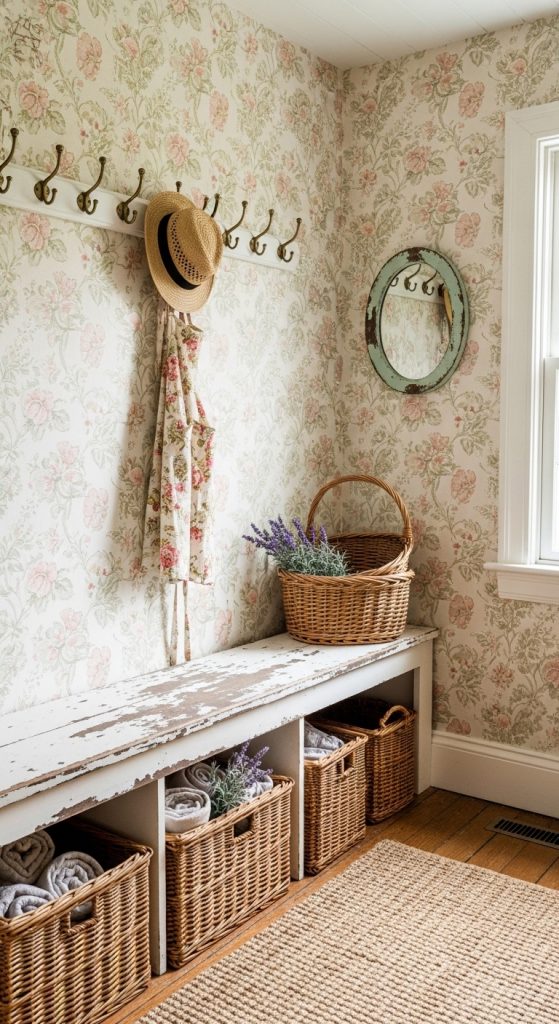
Vintage floral wallpaper is a beautiful way to bring warmth, charm, and timeless personality into your mud room. While mud rooms are often designed to be purely functional, incorporating vintage florals instantly softens the space and makes it feel more like a welcoming part of your home rather than a utility zone. This style is especially well-suited for cottage, farmhouse, traditional, and shabby chic interiors, where cozy details and nostalgic touches are celebrated.
Floral wallpaper also helps balance the rugged nature of mud rooms. Coats, boots, backpacks, and sports gear can make a space feel harsh and cluttered. Floral patterns counteract this by adding softness and visual comfort. The result is a space that feels warm, inviting, and emotionally comforting — a place you don’t mind entering multiple times a day. Vintage floral designs often feature muted tones and classic patterns that age gracefully, making them a long-term style choice rather than a trend-driven one.
Definition / Explanation
Vintage floral wallpaper features classic flower patterns inspired by traditional English cottages, French country homes, and antique prints.
Step-by-Step How-To
- Choose a floral pattern with soft, muted tones.
- Decide whether to cover all walls or create a floral accent wall.
- Prepare walls and repair imperfections.
- Apply wallpaper carefully around trim and doors.
- Style with white or distressed wood furniture.
Materials List
- Vintage floral wallpaper
- Wallpaper paste or peel-and-stick backing
- Smoothing tool
- Distressed wood bench
- Wicker baskets
IDEA 12: Waterproof Vinyl Wallpaper for Heavy-Traffic Mud Rooms
Introduction
For families with kids, pets, and busy schedules, durability is just as important as design. Waterproof vinyl wallpaper is one of the most practical and long-lasting choices for mud rooms because it is designed to withstand moisture, dirt, and frequent cleaning. This makes it ideal for homes where muddy boots, wet coats, and dripping umbrellas are part of everyday life.
Vinyl wallpaper allows you to enjoy stylish patterns without worrying about stains or damage. It can be wiped clean with a damp cloth, making maintenance simple and stress-free. This type of wallpaper is perfect for households that want beauty and function to coexist. With today’s wide variety of vinyl designs, you don’t have to sacrifice style for practicality — you can choose modern, farmhouse, floral, or minimalist patterns that suit your home’s aesthetic.

Definition / Explanation
Waterproof vinyl wallpaper is a moisture-resistant, washable wall covering designed for high-traffic and damp environments.
Step-by-Step How-To
- Select vinyl wallpaper labeled washable or waterproof.
- Clean walls thoroughly before installation.
- Apply adhesive evenly if required.
- Seal edges carefully.
- Wipe down regularly for maintenance.
Materials List
- Vinyl wallpaper
- Wallpaper adhesive
- Damp cloth
- Utility knife
- Protective gloves
IDEA 13: Nature-Inspired Wood Grain Wallpaper for Rustic Mud Rooms
Introduction
Wood grain wallpaper is a fantastic option for creating a rustic, cabin-style, or lodge-inspired mud room without the cost and maintenance of real wood paneling. This style brings natural warmth and texture into the space, making it feel grounded and cozy. It’s especially popular in mountain homes, country houses, and rustic interiors where natural materials are a key part of the design aesthetic.
Using wood grain wallpaper allows you to achieve a layered, natural look while keeping walls easy to clean and maintain. It pairs beautifully with stone floors, iron hooks, and heavy wooden benches. The result is a mud room that feels connected to nature, durable, and visually rich — perfect for homes where outdoor activities are part of daily life.

Definition / Explanation
Wood grain wallpaper mimics the appearance of natural wood planks, logs, or panels using printed textures.
Step-by-Step How-To
- Choose realistic wood grain pattern.
- Install on main walls or accent wall.
- Align grain direction carefully.
- Add rustic hardware.
- Layer with natural textures.
Materials List
- Wood grain wallpaper
- Rustic wall hooks
- Wooden bench
- Stone-look flooring
- Storage baskets
IDEA 14: Coastal-Inspired Wallpaper for a Light and Airy Mud Room
Introduction
Coastal-inspired wallpaper brings a sense of calm, freshness, and lightness into your mud room. This style is perfect for beach homes, lake houses, or anyone who wants to create a relaxed, breezy entryway atmosphere. Soft blues, sandy neutrals, subtle stripes, or nautical-inspired patterns instantly make the space feel open and peaceful.
Coastal wallpaper works especially well in mud rooms that connect to outdoor areas like patios, decks, or pool spaces. It helps visually tie the outdoors to the indoors while maintaining a clean and organized look. The light colors also help reflect natural and artificial light, making the room feel larger and brighter.
Definition / Explanation
Coastal wallpaper features light, beach-inspired colors and patterns such as stripes, shells, waves, or soft textures.

Step-by-Step How-To
- Choose soft blue or neutral coastal patterns.
- Apply to all walls or a feature wall.
- Pair with white trim and cabinetry.
- Use natural textures like jute.
- Keep accessories light and simple.
Materials List
- Coastal wallpaper
- White storage cabinets
- Jute rug
- Light wood bench
- Nautical hooks
IDEA 15: Kids-Friendly Wallpaper for Family Mud Rooms
Introduction
In busy family homes, the mud room often becomes a kid-centered space filled with backpacks, shoes, jackets, and sports gear. Kids-friendly wallpaper is a fun and practical way to make this space more engaging while still keeping it functional. Bright colors, playful patterns, and durable materials can turn the mud room into a space that children enjoy using, which can even encourage better organization habits.
This style also helps designate the mud room as a family zone rather than a formal entryway. Fun wallpaper can add personality while still coordinating with the rest of your home’s design. Choosing washable and durable options ensures the wallpaper can handle fingerprints, scuffs, and spills without looking worn out.

Definition / Explanation
Kids-friendly wallpaper features playful colors, patterns, or themes designed to appeal to children while remaining practical.
Step-by-Step How-To
- Choose washable, durable wallpaper.
- Pick fun but not overly busy patterns.
- Apply behind cubbies and hooks.
- Label storage areas for kids.
- Use bright bins and baskets.
Materials List
- Kids-themed wallpaper
- Washable adhesive
- Label maker
- Colorful storage bins
- Kid-height hooks