
Round face shapes are often misunderstood in hairstyling, but in reality, they offer one of the most versatile foundations for modern haircuts. In 2026, the focus in hairstyle design has shifted away from trying to “hide” face shapes and moved toward enhancing natural structure through strategic cutting, layering, and framing. For round faces, the goal is not restriction—it is balance, elongation, and soft definition.
A round face typically has fuller cheeks, similar width and length proportions, and softer jawlines. Because of this natural symmetry, the right haircut can completely transform the overall look by adding vertical lines, structure, and dimension. Modern haircut trends are no longer about rigid rules like “avoid this” or “don’t do that.” Instead, stylists now focus on how to visually guide the eye using shape, volume placement, and texture control.

In 2026, haircut trends for round faces are heavily influenced by the rise of effortless beauty aesthetics and face-framing customization. Instead of one universal style, haircuts are now tailored to individual facial proportions. This means layers, bangs, and lengths are designed to subtly reshape perception rather than force dramatic change.
One of the most important principles for round face haircuts is vertical illusion. Styles that add height at the crown or length along the sides help create a more elongated appearance. This is why layered cuts, long curtain bangs, and angled bobs are so popular—they naturally guide attention downward rather than outward.
Another key trend is the use of soft structure instead of harsh lines. Sharp cuts that end at cheek level can sometimes emphasize roundness, while softer layering below the chin helps create flow and movement. The goal is not to hide facial features but to balance proportions in a natural way.
Texture also plays a major role. Straight, flat styles can sometimes emphasize width, while waves and soft layers add dimension and break up roundness. This is why modern round-face haircuts often include controlled movement rather than stiff styling. Hair is designed to fall in a way that naturally shapes the face over time, not just when styled.
Curtain bangs, face-framing layers, and asymmetrical cuts are especially dominant in 2026 trends because they provide flexibility. These styles can be adjusted based on how the hair is worn—straight, wavy, or tied up—making them highly practical for everyday life.
Another major shift is the acceptance of medium and short lengths for round faces. Earlier trends often pushed long hair as the only “safe” option, but modern styling recognizes that well-structured bobs, lobs, and layered medium cuts can actually create stronger definition than long, heavy hair.
Maintenance and lifestyle are also important considerations. Today’s haircuts are designed to be low-effort but high-impact, meaning they look good without constant styling. This aligns with the modern demand for practical beauty—styles that fit into busy routines while still looking intentional.
Face shape styling in 2026 is less about correction and more about enhancement. Round faces are now seen as soft, youthful, and naturally balanced, and the right haircut simply brings out those strengths rather than changing them completely.
In this guide, you will explore 15 trendy haircuts for round face shapes in 2026 that focus on structure, elegance, and modern styling principles. Each style is designed to help create balance, add definition, and bring out the best version of natural facial features without overcomplication.
1. Long Layered Cut with Face Framing (Vertical Slimming Effect)
What it is
The long layered cut with face framing is a strategically designed haircut that uses long, soft layers and angled front pieces to visually elongate a round face shape. Instead of adding width, it builds vertical flow that naturally balances fuller cheeks and softer jawlines.
In 2026, this is one of the most reliable styles for round faces because it doesn’t fight the face shape—it restructures how the eye reads proportions. The length keeps the silhouette extended, while the layers prevent heaviness.

How it works (structure breakdown)
- Long base length below shoulders or chest level
- Gradual layering starting from mid-length
- Face-framing strands beginning near chin or below cheek level
- Soft tapering at ends to maintain flow
The vertical direction of layers creates a slimming illusion.
Best for
- Round and fuller face shapes
- Medium to thick hair
- People wanting low-maintenance length with structure
This works best when you want softness without losing definition.
Styling approach
- Loose waves for added vertical movement
- Middle or slightly off-center part for balance
- Blow-dry face layers outward for elongation effect
Pro tip
Keep the shortest face layer below cheek level—this prevents extra width emphasis.
Mistake to avoid
Don’t cut heavy layers near the cheeks. It visually widens the face instead of balancing it.
2. Collarbone Lob with Curtain Bangs (Soft Contour Balance Cut)
What it is
The collarbone lob with curtain bangs is a medium-length haircut that combines a structured long bob with parted, flowing bangs that open the face in the center and blend into side layers. It is designed to create softness at the forehead while elongating the overall silhouette.
In modern 2026 trends, this cut is popular because it offers controlled framing without harsh lines, making it ideal for round faces that need subtle structure rather than drastic change.
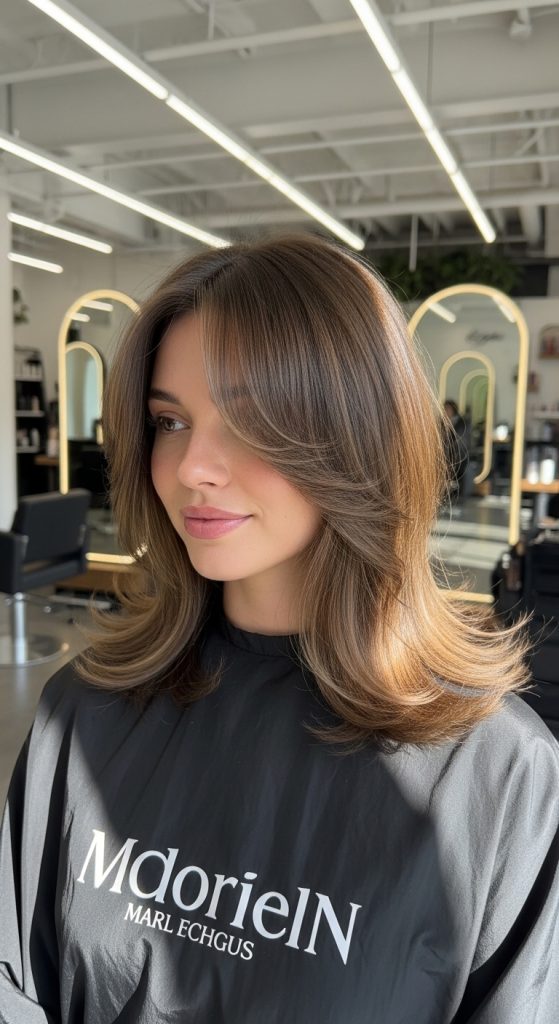
How it works (structure breakdown)
- Lob length sitting at collarbone for elongation
- Curtain bangs parted in the middle
- Side layers blending into front sections
- Slight inward or outward bend at ends
The center part of the bangs creates vertical separation that reduces roundness.
Best for
- Round and soft oval faces
- Fine to medium hair textures
- People wanting a trendy but manageable cut
This works best when you want face definition without heavy styling.
Styling approach
- Blow-dry bangs outward for soft curtain effect
- Add slight wave for movement and dimension
- Keep ends slightly curved for polished finish
Pro tip
The curtain bangs should start light and blend—not form a heavy block.
Mistake to avoid
Don’t cut bangs too short or dense. It compresses the face visually and reduces elongation.
3. Asymmetrical Bob (Sharp Balance Illusion Cut)
What it is
The asymmetrical bob is a modern short-to-medium haircut where one side is slightly longer than the other, creating an intentional imbalance that disrupts round facial symmetry. This controlled asymmetry helps create a sharper, more defined look.
In 2026, this cut is trending because it uses geometry to reshape perception. Instead of relying on length alone, it uses angled structure to visually stretch and slim the face.

How it works (structure breakdown)
- One side longer than the other (subtle or strong variation)
- Chin to shoulder-length base depending on preference
- Clean or slightly textured ends
- Side or off-center parting for added dimension
The diagonal lines created by the cut break circular visual flow.
Best for
- Round and soft face shapes
- Straight or slightly wavy hair
- Bold but structured style preference
This works best when you want a noticeable style upgrade.
Styling approach
- Straight styling for sharp geometric effect
- Slight bend at ends for soft modern finish
- Deep side part to enhance asymmetry
Pro tip
Keep the difference subtle if you want elegance, stronger if you want a bold fashion statement.
Mistake to avoid
Don’t combine with heavy bangs—it reduces the asymmetry effect and flattens the design impact.
4. Soft Shag Cut with Crown Volume (Controlled Messy Structure)
What it is
The soft shag cut is a layer-heavy haircut designed with deliberate unevenness, focusing on crown lift and broken texture to reshape a round face visually. In 2026, it’s no longer the harsh retro shag—it’s refined, softer, and more wearable.
For round faces, this cut works because it builds height at the top and removes bulk from the sides, which is exactly what changes perceived face width.
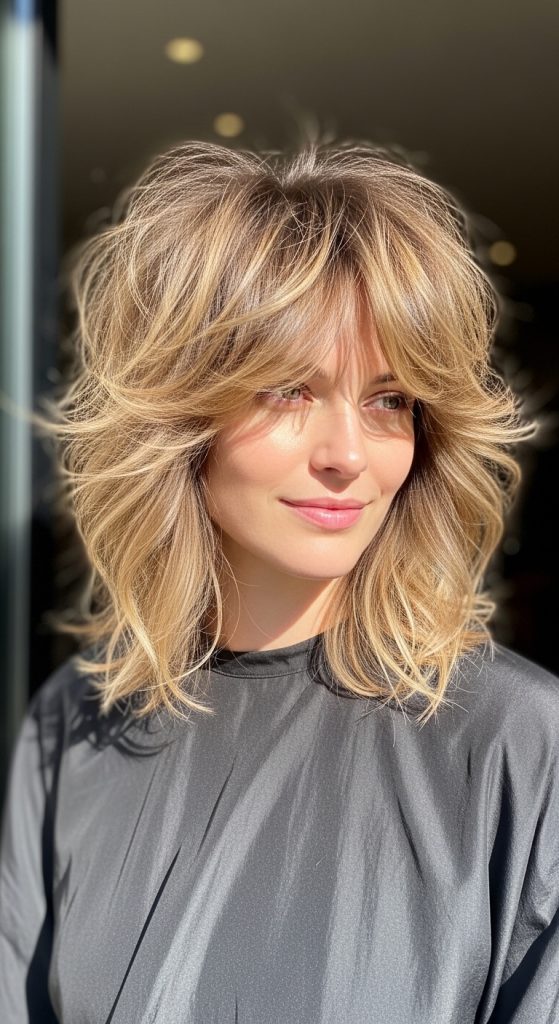
How it works (structure breakdown)
- Short-to-medium crown layers for volume lift
- Feathered mid-length layers to break roundness
- Thinned ends to avoid heaviness at jawline
- Curtain or wispy fringe optional for balance
The “controlled messiness” creates vertical movement instead of horizontal fullness.
Best for
- Thick or naturally wavy hair
- Round faces needing crown height
- People comfortable with textured styling
This works best when you want volume without structure stiffness.
Styling approach
- Use volumizing mousse at roots
- Air-dry or diffuse for natural separation
- Avoid over-brushing (kills texture instantly)
Pro tip
If the crown is flat, this cut loses its entire purpose—volume placement is non-negotiable.
Mistake to avoid
Don’t let layers widen at cheek level. That turns a slimming cut into a widening one.
5. Long Straight Cut with U-Shaped Ends (Elongation Control Cut)
What it is
This is a long haircut with minimal layers and a soft U-shaped perimeter that naturally elongates the silhouette while keeping the ends structured but not harsh. It’s one of the most “quiet correction” styles for round faces.
In 2026 styling logic, this cut relies on length dominance and clean fall direction, not volume manipulation.

How it works (structure breakdown)
- Long uniform length past shoulders
- Subtle U-shaped curve at back
- Very light internal layering (almost invisible)
- Smooth ends to maintain vertical flow
The U-shape prevents boxiness while keeping elongation strong.
Best for
- Straight or slightly wavy hair
- Round faces wanting minimal change impact
- Low-maintenance styling preference
This works best when you want length to do the shaping work.
Styling approach
- Sleek straight finish for maximum elongation
- Center part for symmetry control
- Light serum for smooth downward flow
Pro tip
The longer the hair, the stronger the slimming effect—but only if ends stay clean.
Mistake to avoid
Don’t add heavy layers. It breaks the vertical illusion and adds unwanted width.
6. Angled Long Bob (A-Line Contour Cut)
What it is
The angled long bob (A-line bob) is a structured haircut where the back is shorter and gradually lengthens toward the front, creating a forward-leaning shape that visually slims the face.
In modern 2026 styling, this cut is used specifically for round faces because it redirects visual attention downward and forward, reducing width perception.

How it works (structure breakdown)
- Shorter back neckline
- Gradual length increase toward the front
- Front pieces typically reach chin to collarbone
- Clean or slightly textured ends depending on style
The forward angle creates a sharp directional line.
Best for
- Round and soft jawline faces
- Medium density hair
- People wanting structured but trendy cuts
This works best when you want definition without going too short.
Styling approach
- Straight styling for sharp geometry
- Slight inward bend at front for face contouring
- Deep side part for added asymmetry effect
Pro tip
The front length must be below cheek level or it will emphasize roundness instead of reducing it.
Mistake to avoid
Don’t make both sides equal in length—then it stops being a contour cut and becomes basic.
7. Butterfly Cut for Medium Hair (Layered Lift Illusion)
What it is
The butterfly cut is a high-layer, face-framing haircut designed to create the illusion of long hair while removing weight around the face and adding crown volume. For round faces, it works as a visual sculpting tool rather than just a style.
In 2026, this cut is popular because it delivers movement, lift, and softness at the same time, without making the face appear wider.

How it works (structure breakdown)
- Short face-framing layers starting below cheek level
- Longer outer layers that maintain overall length
- Crown layers for volume lift
- Blended transition between short and long sections
The contrast between layers creates a “winged” effect that elongates the face.
Best for
- Round and full cheeks face shapes
- Medium to thick hair
- People wanting volume without losing length
This works best when you want softness with visible structure.
Styling approach
- Blow-dry crown for lift
- Curl front layers outward for framing
- Keep ends soft, not heavy
Pro tip
The shortest layers should never sit at cheek level—it breaks the slimming illusion.
Mistake to avoid
Don’t over-layer the bottom section. It removes weight control and makes the cut lose balance.
8. Textured Lob with Side Part (Diagonal Balance Cut)
What it is
The textured lob with side part is a shoulder-length haircut designed with soft layers and a deep side part to break facial symmetry and reduce roundness perception. It creates controlled asymmetry without being dramatic.
In modern 2026 styling, this cut is favored because it adds diagonal flow instead of horizontal width, which is essential for round face balancing.

How it works (structure breakdown)
- Lob length around collarbone or slightly above
- Soft internal layers for movement
- Deep side part to shift facial focus
- Light texturizing at ends for flow
The diagonal parting redirects visual attention across the face.
Best for
- Round and soft jawline faces
- Fine to medium hair
- Low-maintenance styling preference
This works best when you want subtle shaping without drastic cuts.
Styling approach
- Loose waves for texture
- Side part to create asymmetry
- Light volumizing at roots on top side
Pro tip
The heavier side should fall slightly forward to create slimming shadow lines.
Mistake to avoid
Don’t center-part this cut—it removes the entire contouring effect.
9. Long Wolf Cut for Round Face (Soft Edge Volume Structure)
What it is
The long wolf cut is a hybrid haircut combining shaggy layers at the top with longer, softer lengths at the bottom to create controlled volume and edge. Unlike extreme wolf cuts, the 2026 version is refined and wearable.
For round faces, it works because it pushes volume upward while keeping the lower face area visually lighter.
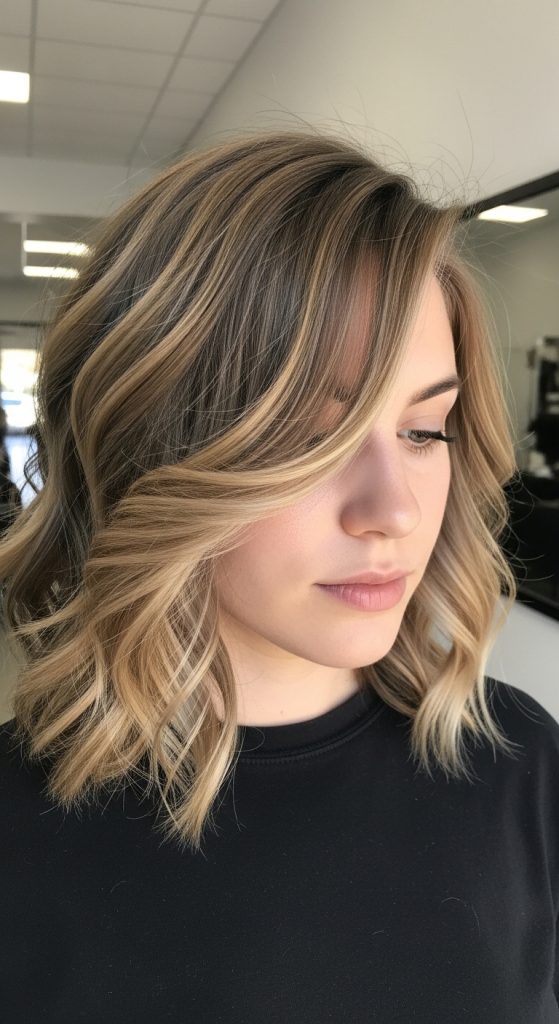
How it works (structure breakdown)
- Voluminous crown layers for height
- Medium face-framing layers for contouring
- Longer bottom length for elongation
- Soft tapering instead of harsh ends
The structure creates a top-heavy balance that elongates the face.
Best for
- Round or fuller face shapes
- Naturally wavy or thick hair
- People wanting edgy but controlled style
This works best when you want movement and personality.
Styling approach
- Use texture spray for separation
- Lift roots at crown during drying
- Avoid heavy straightening (removes character)
Pro tip
Height at the crown is essential—without it, the cut loses its slimming effect.
Mistake to avoid
Don’t let side layers get too wide or heavy. It will visually expand the face instead of balancing it.
10. Sleek Middle-Part Straight Cut (Vertical Precision Slim Cut)
What it is
The sleek middle-part straight cut is a clean, long-length haircut with minimal layering and a sharp center part designed to create strong vertical lines down the face. For round faces, this is one of the most straightforward “visual correction” styles because it relies on geometry, not volume.
In 2026, this cut is trending in minimalist beauty aesthetics because it delivers structure, simplicity, and elongation without effort-heavy styling.

How it works (structure breakdown)
- Long straight length below shoulders or chest
- Minimal to no layering
- Precise middle parting
- Blunt or softly tapered ends
The center part divides the face evenly, creating vertical alignment that reduces width perception.
Best for
- Round and soft facial features
- Straight or relaxed hair textures
- Minimalist style preference
This works best when you want a clean, polished everyday look.
Styling approach
- Flat iron for sleek finish
- Use serum for reflective shine
- Keep parting perfectly centered
Pro tip
Hair must fall straight downward—any outward flip at cheeks increases width visually.
Mistake to avoid
Don’t add volume at the sides; it completely cancels the slimming effect.
11. Chin-Length Inverted Bob (Jawline Sculpt Cut)
What it is
The chin-length inverted bob is a structured haircut where the back is slightly shorter and gradually angles forward toward the chin, creating a sculpted jawline effect. It is one of the strongest face-defining cuts for round faces.
In modern 2026 styling, this cut is used for controlled sharpness, helping reshape soft facial outlines without needing extreme length changes.
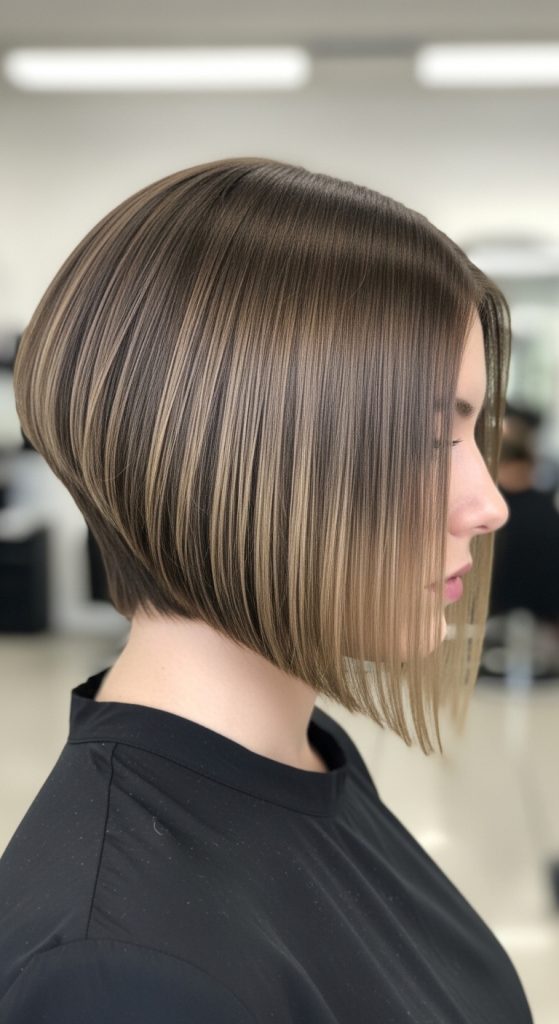
How it works (structure breakdown)
- Shorter stacked back section
- Longer front pieces reaching chin or slightly below
- Subtle graduation for smooth angle transition
- Clean or slightly textured ends
The forward angle visually narrows the face.
Best for
- Round and fuller cheek faces
- Straight or slightly wavy hair
- People wanting a bold but structured short cut
This works best when you want definition around the jaw area.
Styling approach
- Straight styling for sharp geometry
- Slight inward bend at front for contour effect
- Tucked one side behind ear for asymmetry
Pro tip
Keep the front just below chin level to avoid emphasizing cheek fullness.
Mistake to avoid
Don’t make it too symmetrical—round faces need directional imbalance for slimming.
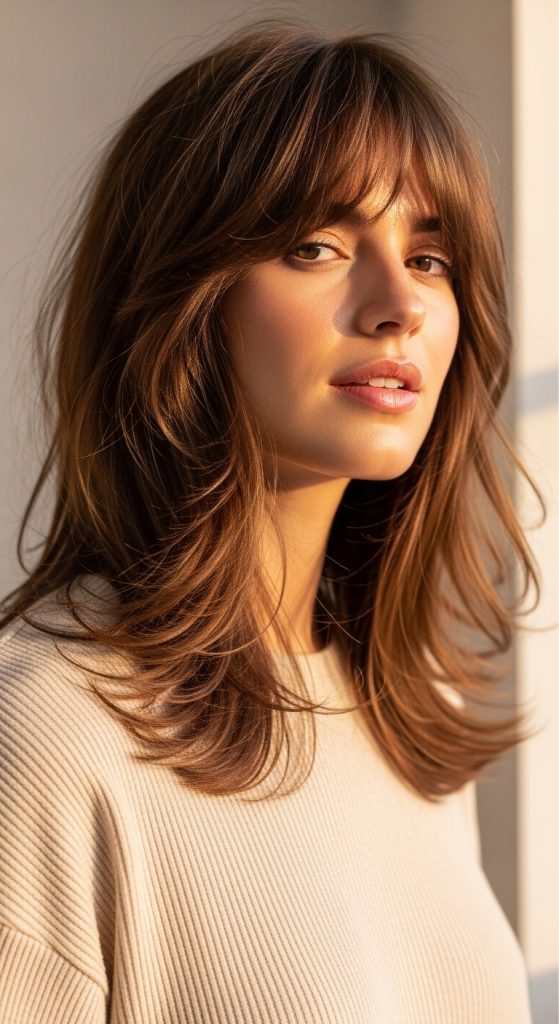
12. Soft Layered Shoulder Cut with Curtain Fringe (Balanced Soft Frame Cut)
What it is
The soft layered shoulder cut with curtain fringe is a medium-length haircut with gentle layers and parted bangs that blend seamlessly into the sides, creating a soft framing effect around the face.
In 2026 trends, this style is popular because it offers adaptable structure—soft enough for everyday wear, but designed to subtly reshape round facial proportions.
How it works (structure breakdown)
- Shoulder-length base cut
- Soft layers starting below cheek level
- Curtain fringe parted in the middle
- Seamless blending from bangs into side layers
The fringe opens the face while layers create downward flow.
Best for
- Round and soft facial features
- Medium hair density
- People wanting low-maintenance styling
This works best when you want softness with controlled shaping.
Styling approach
- Blow-dry curtain bangs outward for curtain shape
- Add soft waves for movement
- Keep ends light and slightly curved
Pro tip
Curtain fringe should be light and airy—not thick or heavy.
Mistake to avoid
Don’t cut fringe too short; it compresses the face and reduces elongation.
13. Asymmetrical Long Pixie Cut (Sharp Balance Reset Cut)
What it is
The asymmetrical long pixie is a short haircut with uneven length distribution, typically longer on one side and slightly tapered on the other, designed to break circular facial symmetry. For round faces, this creates instant structure and edge.
In 2026, this cut is popular in modern styling because it gives a bold transformation without needing long hair, and it visually redirects attention diagonally instead of outward.

How it works (structure breakdown)
- Short cropped back and sides
- Longer front section falling toward one side
- Side-swept fringe instead of full bangs
- Soft tapering at edges for modern finish
The asymmetry creates visual angles that reduce roundness.
Best for
- Round and soft jawline faces
- Straight or slightly wavy hair
- Confident, fashion-forward styling preference
This works best when you want a strong personality-driven look.
Styling approach
- Side-sweep the longer section for diagonal flow
- Add light texture for movement
- Keep volume slightly higher at crown
Pro tip
The longer side should extend below cheek level to properly elongate the face.
Mistake to avoid
Don’t make both sides equal—it removes the entire slimming and shaping effect.
14. Feathered Mid-Length Cut (Soft Vertical Flow Layers)
What it is
The feathered mid-length cut is a light, layered haircut where ends are softly thinned and textured to create airy movement and vertical flow. It avoids heaviness and helps elongate round facial proportions naturally.
In 2026, this style is part of the “soft structure” trend—hair that looks natural but is strategically shaped.

How it works (structure breakdown)
- Mid-length base around shoulders
- Feathered layers starting below cheek area
- Soft, wispy ends instead of blunt cuts
- Light face-framing pieces blended into layers
The feathering reduces bulk and encourages downward flow.
Best for
- Round and fuller face shapes
- Fine to medium hair
- Low-maintenance styling needs
This works best when you want softness without heaviness.
Styling approach
- Blow-dry with round brush for feathered ends
- Add light wave for movement
- Keep crown flat or slightly lifted
Pro tip
Feathering should be subtle—over-thinning makes hair look weak, not styled.
Mistake to avoid
Don’t start layers too high near cheeks; it increases width instead of reducing it.
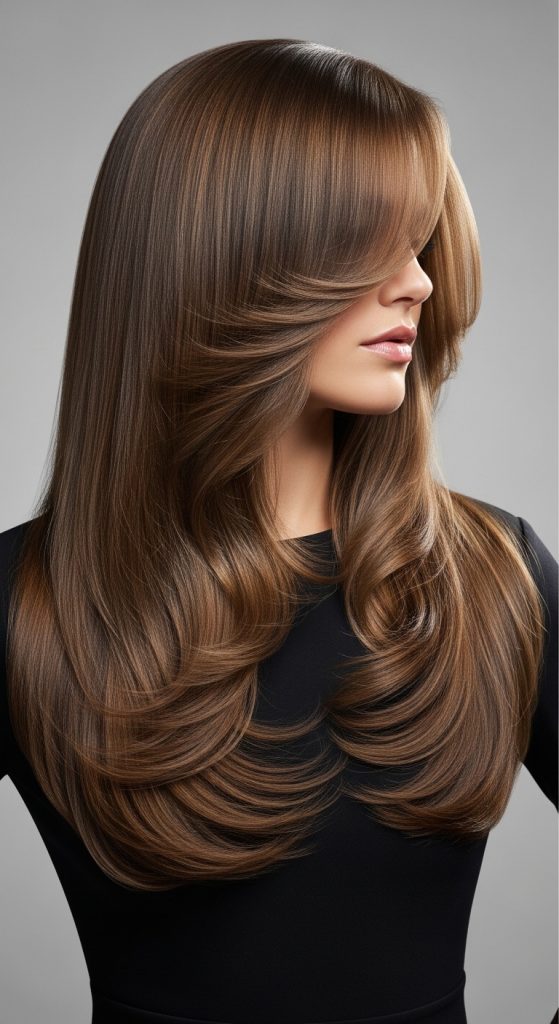
15. Long V-Cut with Face Contour Layers (Elongation Definition Cut)
What it is
The long V-cut is a haircut where the back forms a soft “V” shape while face-contouring layers are added around the front to sculpt and elongate the face visually. It is one of the most effective long styles for round face balancing.
In modern 2026 hair trends, this cut is valued because it combines length, direction, and controlled shaping in one structure.
How it works (structure breakdown)
- Long base length extending below chest
- V-shaped back taper for downward focus
- Soft face-framing layers starting below cheek level
- Minimal bulk at sides for clean silhouette
The V shape pulls the eye downward, increasing perceived length.
Best for
- Round and soft facial features
- Thick or long hair types
- People wanting strong elongation effect
This works best when you prefer long hair but still want structure.
Styling approach
- Straight or soft waves for vertical flow
- Middle part for balanced framing
- Light layering at front for contouring
Pro tip
The V shape must be soft, not sharp—harsh angles look unnatural and dated.
Mistake to avoid
Don’t add wide side layers near cheeks; it disrupts the slimming vertical effect.