
The garage is often overlooked when it comes to modern home design, yet it plays a pivotal role in shaping the overall curb appeal of a house. For many homeowners, the front garage is more than just a place to park a car—it’s an opportunity to showcase architectural style, personal taste, and functionality. A well-designed modern garage can dramatically enhance the aesthetic of your home, create a welcoming entrance, and even increase property value. In today’s urban and suburban environments, where homes are often closely spaced, thoughtful garage design can make your property stand out, balancing practicality with sleek modern aesthetics.
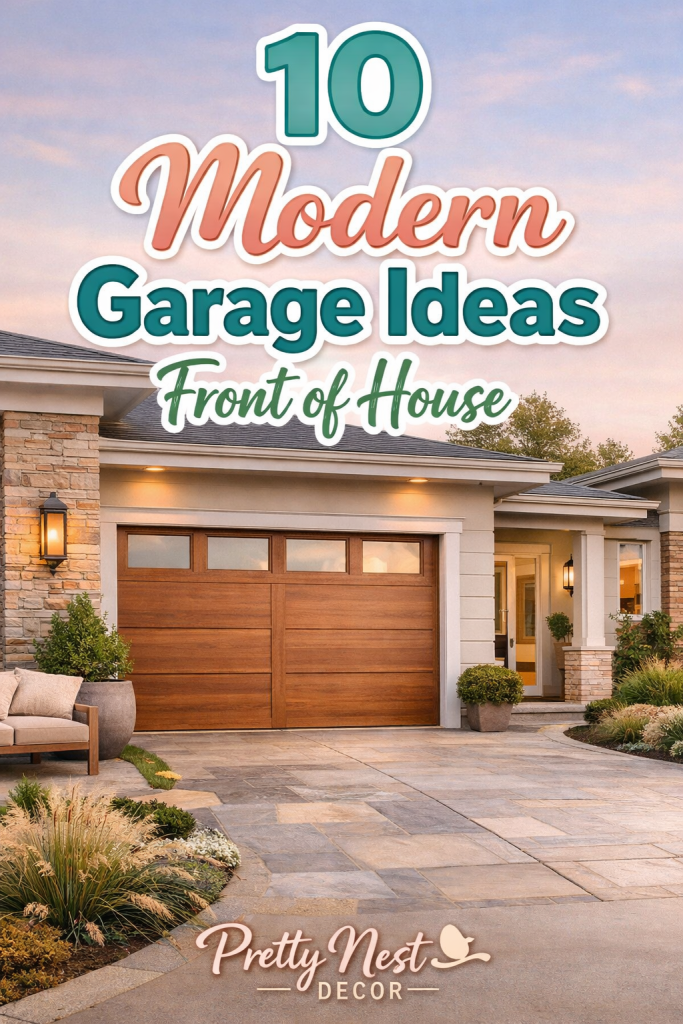
Modern garage design is all about simplicity, clean lines, and materials that blend seamlessly with the rest of the home’s exterior. Gone are the days when garages were purely utilitarian boxes with plain doors; today, homeowners are transforming them into integral parts of the home’s facade. This transformation can include a mix of materials, finishes, lighting, and landscaping that collectively enhance both functionality and visual appeal. Whether it’s a single-car garage or a double garage, there are numerous strategies to modernize and elevate its look.
One of the most important considerations for a modern garage is its integration with the home’s architectural style. Contemporary homes often feature large windows, sleek doors, and uniform color schemes that tie the garage to the overall design language. Materials such as wood, glass, aluminum, steel, or composite panels can be used to create a striking, modern appearance while maintaining durability and ease of maintenance. Texture and contrast are also key: combining smooth concrete with warm wood tones or matte black with natural stone can result in a sophisticated and contemporary look that captures attention from the street.
Lighting plays a crucial role in modern garage design, particularly for front-facing garages. Well-placed exterior lights not only provide safety and security but also highlight architectural features and create a welcoming ambiance. Wall-mounted sconces, recessed LED lights, and subtle pathway lighting can transform a garage from a simple functional space into a design centerpiece. Proper lighting can emphasize textures, colors, and materials, making your garage visually appealing during both day and night.
Functionality should never be sacrificed for style, especially in a modern garage. Homeowners now demand solutions that maximize space efficiency, storage, and accessibility while keeping the exterior clean and uncluttered. Smart storage solutions, hidden compartments, and organized shelving systems can make a garage highly functional without detracting from its modern aesthetic. Retractable garage doors, automated openers, and insulated panels enhance convenience and energy efficiency, making the garage both stylish and practical.
Another trend in modern garage design is garage door innovation. Garage doors now come in a variety of finishes, from frosted glass panels to sleek aluminum, natural wood, or matte steel. Minimalist designs with horizontal lines or panel-free surfaces create a seamless modern look. Glass-paneled doors, for example, allow natural light to enter while maintaining privacy and can complement a home’s contemporary architecture beautifully. Color selection is equally important; neutral tones such as white, gray, or black often work best for a sleek, modern vibe, while accent colors can add personality and uniqueness to the façade.
For homeowners with limited driveway or street frontage, integrating landscaping and exterior design elements around the garage can enhance the overall aesthetic. Planters, small trees, or hedges can frame the garage, soften hard lines, and create a balanced appearance. Minimalist landscaping, with gravel paths, pavers, or greenery borders, complements the clean lines of modern architecture while maintaining a polished and low-maintenance exterior. Thoughtful landscaping makes the garage more than a functional space; it becomes a central feature that contributes to the home’s visual identity.
Sustainability and eco-conscious design are increasingly important in modern garages. Insulated doors, energy-efficient lighting, and eco-friendly materials not only reduce environmental impact but also increase comfort and efficiency. Many homeowners now integrate electric car charging stations, solar panels, or rainwater harvesting systems into their garage design. These features combine technology and functionality, reinforcing the modern aesthetic while meeting practical needs.
In this article, we will explore 10 modern garage ideas specifically designed for the front of the house, offering practical solutions, stylish inspiration, and step-by-step guidance. These ideas cover a variety of design elements, from materials, colors, and textures to lighting, storage, and landscaping. Whether you’re aiming for a minimalist, contemporary, or industrial look, these ideas will help you transform your garage into a statement feature that complements your home’s overall design.
Ultimately, your garage doesn’t have to be an afterthought. With thoughtful design, modern materials, and a focus on both aesthetics and functionality, the front garage can become a defining element of your home. By embracing clean lines, innovative solutions, and attention to detail, even a small or ordinary garage can be elevated into a modern masterpiece. From sleek doors and minimalist landscaping to smart lighting and innovative storage, these design ideas demonstrate that a garage can be as stylish and Pinterest-worthy as the rest of your home’s exterior.
Idea 1: Sleek Glass Panel Garage Doors
Introduction
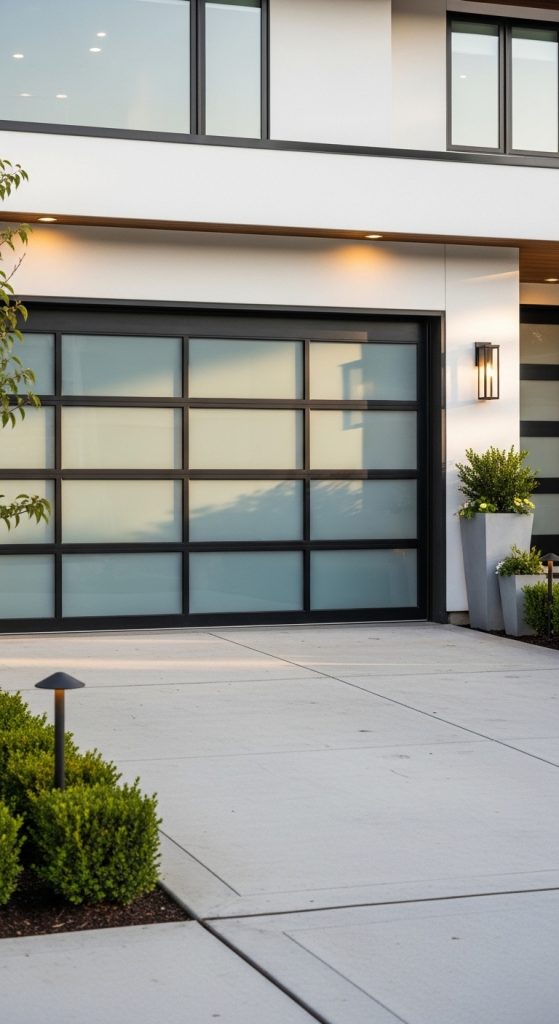
Glass panel garage doors have become a hallmark of modern home design, combining style, light, and functionality. These doors feature horizontal or vertical glass panels framed in aluminum, steel, or wood, offering a contemporary aesthetic that instantly elevates the exterior. In addition to their visual appeal, glass panels allow natural light into the garage, making it a brighter, more inviting space without sacrificing privacy. Frosted or tinted glass options ensure that the interior remains concealed while still benefiting from daylight.
For homeowners seeking a minimalist yet luxurious front façade, glass panel doors provide the perfect balance. They complement clean architectural lines, neutral color schemes, and modern landscaping. These doors work well in both single-car and double-car garages, adapting seamlessly to a variety of home sizes. The reflective surfaces also create a sense of depth, making the garage and driveway appear more spacious. By integrating modern lighting, sleek hardware, and complementary materials like metal or wood, glass panel garage doors can transform an ordinary garage into a statement feature that’s functional, stylish, and Pinterest-worthy.
Step-by-Step How-To:
- Measure your garage opening accurately.
- Choose a glass panel design: frosted, tinted, or clear with aluminum, steel, or wood framing.
- Hire professional installation for safety and durability.
- Install modern handles or automatic opener systems.
- Add LED strip or wall-mounted lights for a sleek evening look.
- Incorporate landscaping elements (planters, stones, or lighting) around the garage to complete the modern aesthetic.
Materials Needed:
- Glass panels (frosted, tinted, or clear)
- Aluminum, steel, or wood framing
- Automatic garage door opener
- Modern handles and hardware
- LED lighting fixtures
- Landscaping materials (stones, planters)
Idea 2: Horizontal Slat Wood Garage Doors
Introduction
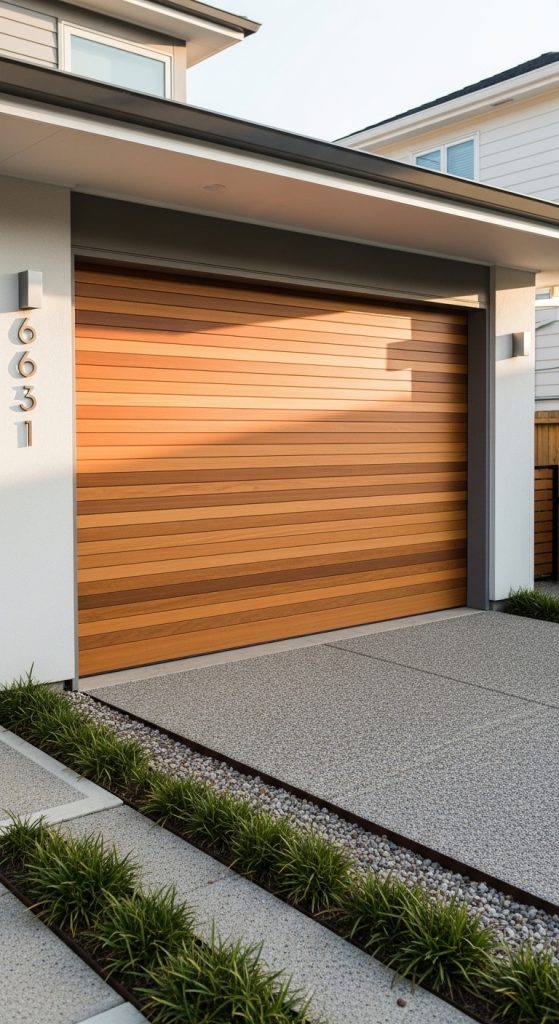
Horizontal slat wood garage doors are a popular modern choice, offering a warm yet contemporary appearance. The clean, linear design aligns with modern architecture and provides a natural contrast to concrete, stucco, or brick facades. Wood slats can be left in their natural tone, stained for warmth, or painted for a bold statement. These doors create visual interest through texture and repetition, giving your home a sophisticated front façade.
The horizontal orientation enhances the perception of width, making a garage look more expansive and balanced. This design works especially well in small to medium-sized homes, as it creates a low-profile, seamless integration with the rest of the exterior. Wood is not only aesthetically pleasing but also durable, especially when treated with weather-resistant coatings. Combining wood slat doors with subtle lighting, metal accents, and minimalist landscaping enhances the modern look while keeping the garage functional and practical.
Step-by-Step How-To:
- Measure garage opening for a custom fit.
- Select durable wood such as cedar, teak, or composite wood.
- Construct or purchase a horizontal slat panel door.
- Treat wood with weather-resistant sealant or stain.
- Install automatic opener or sleek modern handles.
- Enhance the area with subtle lighting and complementary plants or stonework.
Materials Needed:
- Durable wood slats (cedar, teak, or composite)
- Wood sealant or stain
- Automatic garage door opener
- Modern handles and hardware
- Subtle outdoor lighting
- Landscaping elements (plants, stones)
Idea 3: Matte Black Minimalist Garage Doors
Introduction
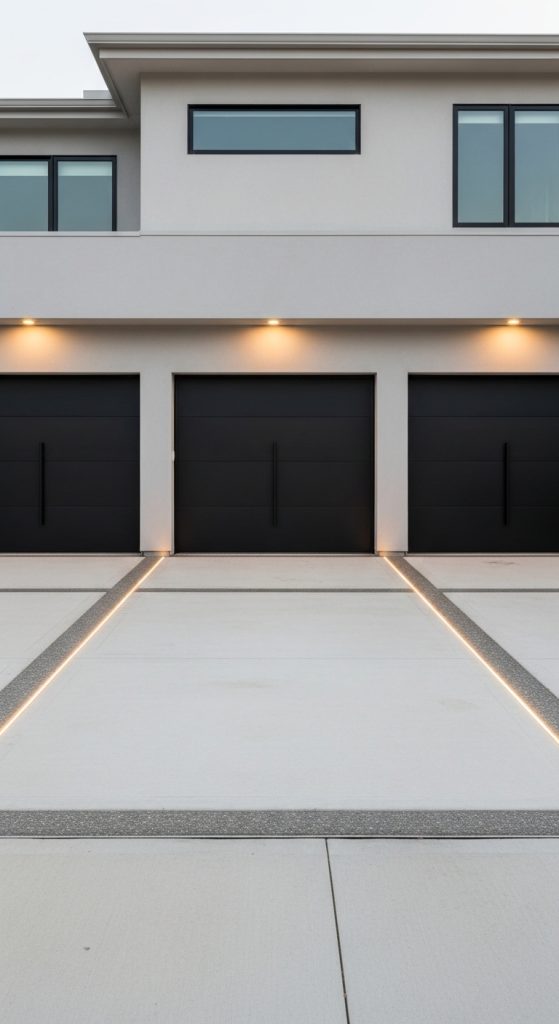
Matte black garage doors are a striking choice for modern homes, offering bold simplicity that pairs beautifully with almost any exterior color. The matte finish eliminates glare and reflections, creating a sleek, understated look that emphasizes clean lines and geometric shapes. Black doors add contrast to light-colored facades like white, gray, or beige, while complementing darker tones for a monochromatic, contemporary effect.
This style works particularly well for homeowners seeking a minimalist approach. By eliminating ornate details, the focus remains on proportion, texture, and material. Matte black garage doors are versatile, suiting both residential and urban settings, and they pair seamlessly with metal, wood, or concrete accents. When combined with well-planned lighting and a carefully curated driveway or landscaping, these doors create a high-end, Pinterest-worthy exterior that looks modern and sophisticated while remaining practical and durable.
Step-by-Step How-To:
- Measure your garage opening accurately.
- Choose a matte black door finish: steel, aluminum, or composite panel.
- Install sleek, modern handles or touchless entry systems.
- Ensure the surface is weather-resistant and maintainable.
- Add linear or recessed LED lighting along the sides or overhead.
- Incorporate minimalist landscaping such as gravel, low shrubs, or pavers.
Materials Needed:
- Matte black garage door (steel, aluminum, or composite)
- Weatherproof coatings
- Modern handles or touchless entry
- LED lighting fixtures
- Landscaping materials (gravel, shrubs, pavers)
Idea 4: Integrated Garage with House Facade
Introduction
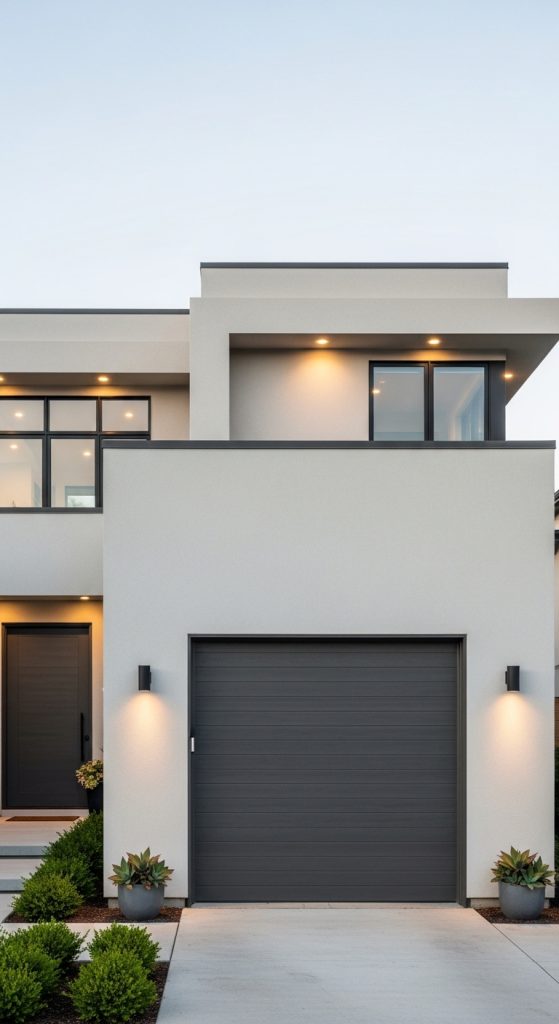
An integrated garage blends seamlessly with the overall house design, making it almost indistinguishable from the main facade. Modern homes often achieve this look by aligning garage door materials, colors, and finishes with the exterior walls. This approach creates a clean, cohesive appearance and enhances curb appeal by maintaining continuity between the garage and the rest of the home.
Integration emphasizes balance and proportion, especially in modern minimalist architecture. For example, a garage door can mirror the color palette of window frames, siding, or rooflines. Textured finishes such as wood veneer, stone cladding, or composite panels further tie the garage to the home’s design. This approach is ideal for small lots or homes where maximizing frontage aesthetics is essential. By hiding the garage as part of the overall architectural statement, homeowners can maintain a sophisticated modern look while keeping functionality intact.
Step-by-Step How-To:
- Choose garage door materials and colors that match or complement the home’s exterior.
- Align the door dimensions with architectural features for proportion and balance.
- Install hidden or minimalist hardware to maintain a seamless look.
- Add subtle lighting or trim to highlight symmetry.
- Integrate landscaping elements along edges to blend the garage naturally.
- Ensure functionality with an automatic opener and easy access.
Materials Needed:
- Matching garage door panels (wood, composite, or metal)
- Seamless hardware and handles
- Exterior lighting
- Landscaping materials (shrubs, planters, stones)
Idea 5: Modern Industrial-Style Garage Doors
Introduction
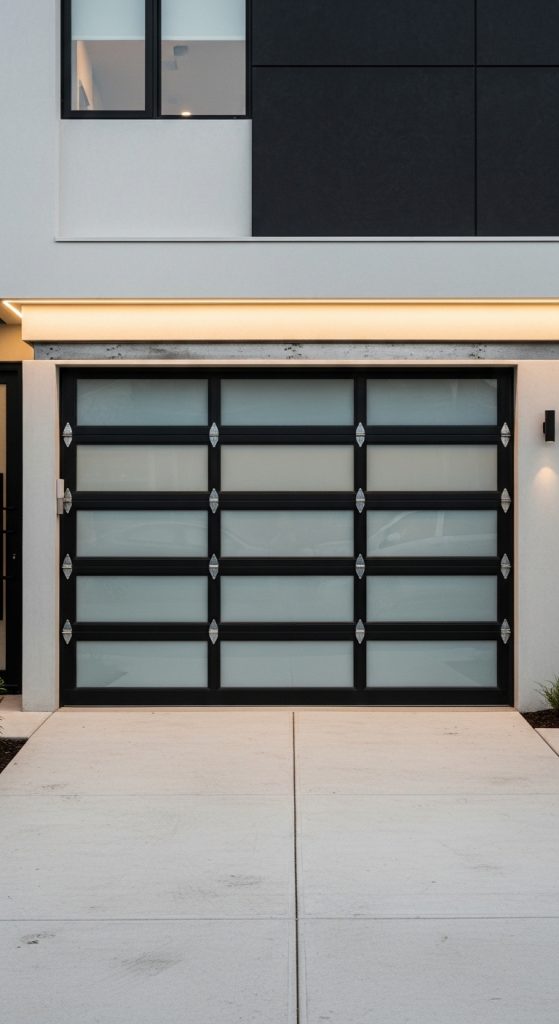
Industrial-style garage doors combine modern functionality with raw, urban aesthetics. These designs often feature materials like steel, metal frames, frosted glass panels, and exposed hardware, creating a bold, contemporary look. Industrial doors provide durability while adding a visually striking element to the front of your home.
The industrial style works well for homes with minimalist or urban-inspired architecture. Metal finishes, clean lines, and large geometric panels emphasize the modern industrial vibe, while frosted or tinted glass maintains privacy. These doors are practical, resistant to weather, and easy to maintain, making them ideal for homeowners seeking a combination of style and utility. By pairing industrial garage doors with modern exterior lighting, textured walls, and clean landscaping, you can create a Pinterest-worthy front facade that stands out while remaining functional.
Step-by-Step How-To:
- Measure garage dimensions accurately.
- Choose an industrial-style door with metal panels, frosted glass, or steel framing.
- Install exposed, modern hardware for authenticity.
- Incorporate an automatic opener for convenience.
- Add accent lighting and minimal landscaping to complement the industrial look.
- Maintain metal surfaces with weather-resistant coating for longevity.
Materials Needed:
- Industrial-style garage door (metal and glass panels)
- Weather-resistant coating
- Modern hardware
- LED or wall-mounted exterior lighting
- Landscaping materials (gravel, planters, stones)
Idea 6: Garage Doors with Horizontal Windows
Introduction
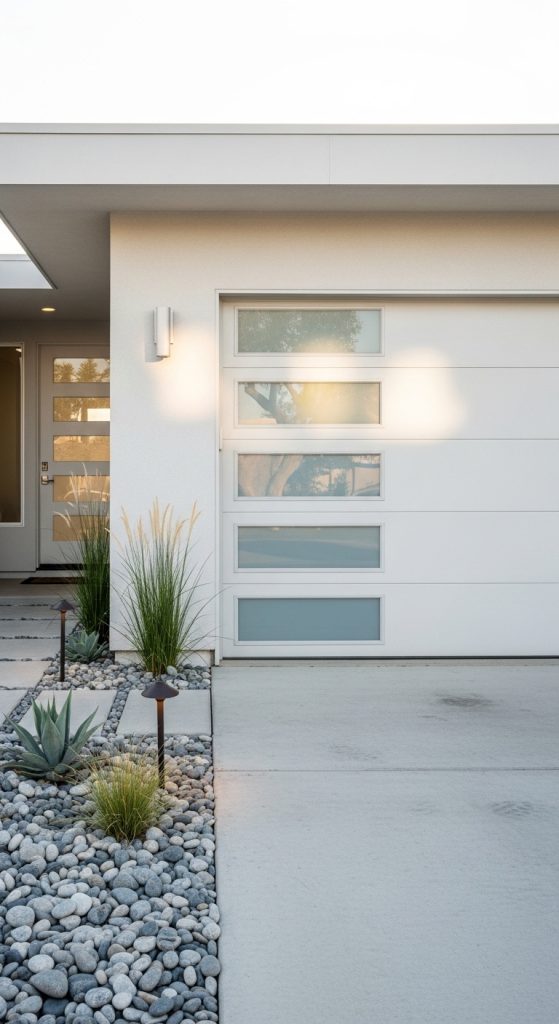
Incorporating horizontal windows into garage doors is a modern design trend that balances style and functionality. These narrow, elongated windows run along the top or middle section of the door, creating visual interest while allowing natural light into the garage. This design adds a sleek, contemporary touch, breaking the monotony of solid panels and giving the exterior a dynamic appearance. Horizontal windows are particularly effective for modern and minimalist homes, complementing linear architectural elements and creating a cohesive, streamlined look.
Natural light improves visibility and reduces energy usage during the day, making the garage more inviting and functional. Frosted or tinted glass can maintain privacy while still letting sunlight in. Combining horizontal windows with a neutral or contrasting door color enhances the aesthetic appeal, creating a Pinterest-worthy façade that feels open and modern. These doors also work well with a variety of exterior materials, including concrete, brick, or stucco, making them versatile and practical for different home styles.
Step-by-Step How-To:
- Measure your garage door accurately to plan window placement.
- Choose horizontal window panels with frosted or tinted glass.
- Decide whether windows go at the top, middle, or full width for design balance.
- Hire professional installation to ensure proper fit and weatherproofing.
- Complement with sleek handles, automatic openers, and modern hardware.
- Add exterior lighting or minimalist landscaping to highlight the modern design.
Materials Needed:
- Garage door panels
- Horizontal frosted or tinted glass panels
- Weatherproof sealant
- Modern handles and hardware
- Automatic garage opener
- LED or wall-mounted exterior lighting
Idea 7: Color-Blocked Garage Doors
Introduction
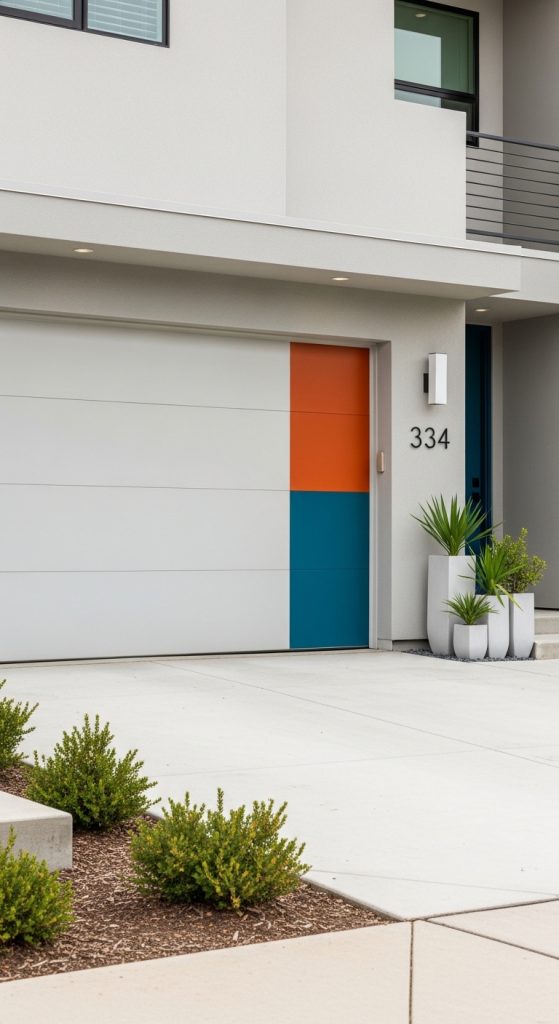
Color-blocked garage doors are a bold and creative way to modernize the front of your home. This design involves using contrasting or complementary colors on different sections of the door to create visual interest and make a statement. Color blocking can enhance architectural features, emphasize horizontal or vertical lines, and add personality to an otherwise neutral façade. It’s ideal for homeowners who want their garage to stand out without overwhelming the home’s overall design.
The key to modern color-blocking is balance and simplicity. Neutral base tones paired with one or two accent colors can create a sleek, contemporary look. For example, a dark gray base with natural wood accents or black frames can achieve a minimalist yet visually striking effect. Color-blocked garage doors can complement modern landscaping, lighting, and exterior materials, creating a cohesive, Pinterest-worthy design. This style works for both single-car and double garages, adapting to small or large front façades.
Step-by-Step How-To:
- Select a base color for the main garage door.
- Choose one or two accent colors for panels or horizontal/vertical sections.
- Prep the surface with primer and weather-resistant paint.
- Use painter’s tape for clean, straight lines.
- Apply paint layers evenly, allowing proper drying time between coats.
- Seal the door with a weatherproof finish for durability.
Materials Needed:
- Exterior-grade primer and paint
- Painter’s tape
- Brushes, rollers, or sprayers
- Weatherproof sealant
- Modern hardware and handles
- Optional accent lighting
Idea 8: Mixed Material Garage Doors
Introduction
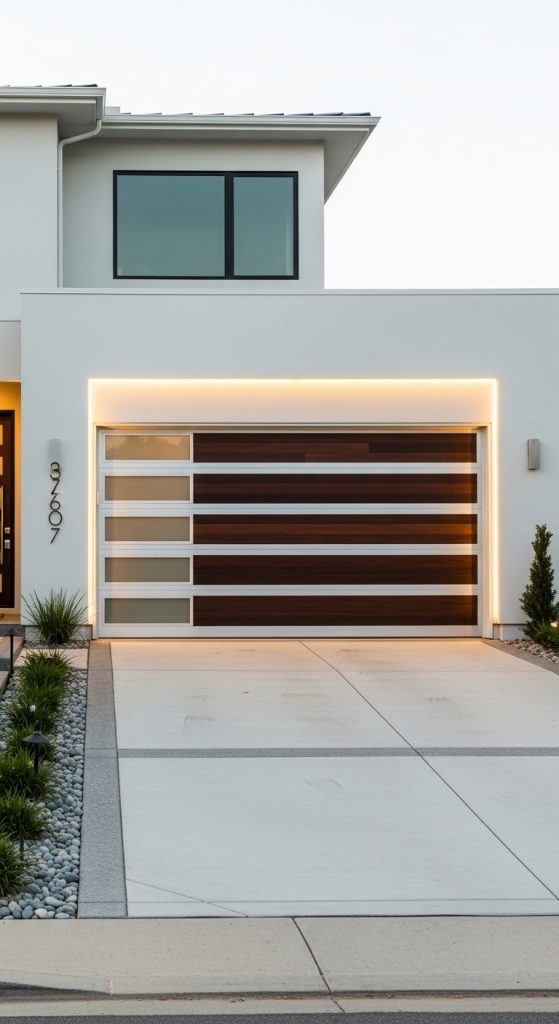
Using a combination of materials on garage doors—such as wood, metal, glass, or composite panels—is a hallmark of modern design. Mixed-material doors provide texture, depth, and visual interest, transforming the garage into a key architectural element. For example, pairing sleek metal panels with warm wood accents creates a sophisticated contrast that feels contemporary yet inviting. Glass inserts or frosted panels add light and openness, enhancing both function and style.
Mixed-material designs are highly versatile and can be tailored to complement the exterior finishes of your home. For small garages, material contrast can create the illusion of a larger, more dynamic façade. These doors also offer durability, as materials can be selected based on their resistance to weather, maintenance needs, and lifespan. By integrating clean lines, modern hardware, and subtle lighting, mixed-material garage doors become both functional and Pinterest-worthy, making a bold statement at the front of the house.
Step-by-Step How-To:
- Decide on primary and secondary materials: wood, metal, composite, or glass.
- Measure your garage door to plan panel layout and material sections.
- Install materials securely, ensuring weatherproofing between panels.
- Add modern hardware, handles, and optional automated openers.
- Incorporate accent lighting to highlight textures and materials.
- Maintain materials with sealants or coatings appropriate to their type.
Materials Needed:
- Wood panels (cedar, teak, or composite)
- Metal panels (steel or aluminum)
- Glass inserts (frosted or clear)
- Weatherproof sealant
- Modern handles and hardware
- LED lighting for accents
Idea 9: Minimalist Flush Garage Doors
Introduction
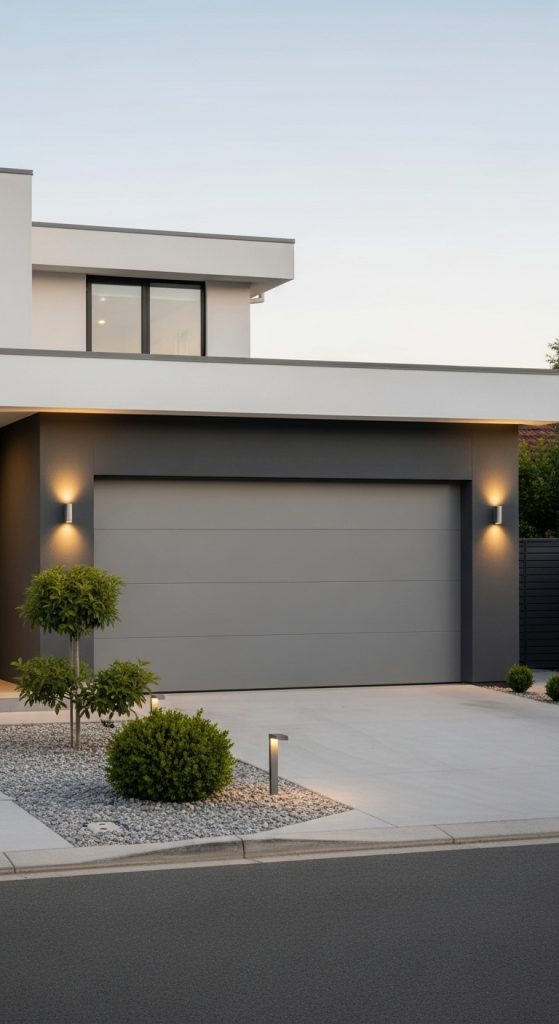
Minimalist flush garage doors feature a flat, smooth surface with no visible panels, grooves, or ornate details, creating a sleek, ultra-modern aesthetic. These doors are perfect for homeowners who want a clean, uninterrupted façade that blends seamlessly with contemporary architecture. The simplicity of flush doors emphasizes lines, proportion, and surrounding exterior materials, such as concrete, stucco, or stone, for a cohesive and sophisticated look.
Flush doors are ideal for small front garages, as their simplicity visually expands the façade and avoids clutter. The minimalist approach pairs perfectly with subtle landscaping, neutral color palettes, and modern lighting. They also work well with automatic openers and hidden hardware, maintaining a clean appearance while ensuring functionality. A flush garage door can transform a mundane utilitarian feature into a design centerpiece, providing a Pinterest-worthy exterior that’s both stylish and practical.
Step-by-Step How-To:
- Measure the garage opening for a precise flush fit.
- Choose material: steel, aluminum, or composite panel.
- Install flush panels with hidden hinges or seamless mechanisms.
- Add modern, low-profile handles and optional touchless opener.
- Complement with linear LED lighting or wall sconces for a clean look.
- Integrate minimalist landscaping to maintain a polished exterior.
Materials Needed:
- Flush garage door panels (steel, aluminum, composite)
- Hidden hinges or seamless mechanisms
- Low-profile handles or touchless opener
- LED or wall-mounted lighting
- Minimalist landscaping (gravel, shrubs, planters)
Idea 10: Smart Garage Doors with Automated Features
Introduction
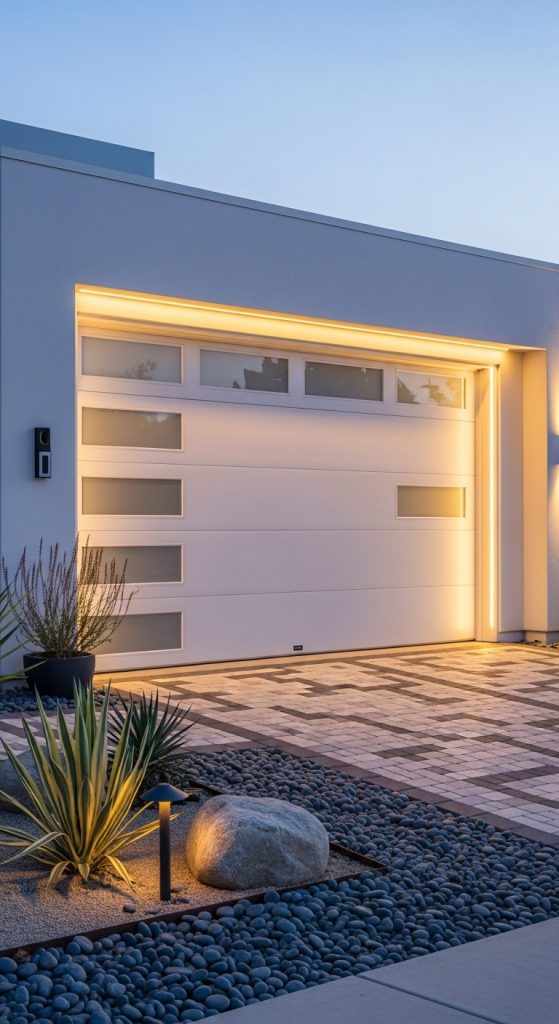
Smart garage doors combine modern design with cutting-edge technology, offering convenience, security, and a futuristic touch. These doors can integrate automated openers, smartphone controls, and remote monitoring, making them ideal for busy homeowners who value efficiency and innovation. Smart features don’t compromise style; they can be paired with sleek panels, modern finishes, and minimalist hardware to create a contemporary, high-tech exterior.
A smart garage enhances functionality while complementing modern architecture. Sensors and automatic openers increase safety, while app-controlled access allows homeowners to monitor and operate the garage from anywhere. Smart doors often come with energy-efficient insulation and durable materials, ensuring long-term reliability. When combined with modern aesthetics—such as flush surfaces, glass inserts, or matte finishes—smart garage doors elevate both the exterior design and usability, making your home look sophisticated and Pinterest-worthy.
Step-by-Step How-To:
- Select a smart garage door system compatible with your existing setup.
- Choose door style: flush, panel, mixed material, or glass.
- Install automated opener and sensors according to manufacturer instructions.
- Connect the door to a smartphone app or smart home system.
- Add complementary lighting or landscaping to highlight the modern design.
- Test functionality and ensure regular maintenance for reliability.
Materials Needed:
- Smart garage door system
- Sleek modern door panels (steel, composite, wood, or glass)
- Automatic opener and sensors
- Smartphone or smart home hub
- LED lighting and landscaping elements