
Your home’s exterior is more than just a facade—it is a reflection of your personality, taste, and the atmosphere you want to create for your family and visitors. The colors you choose for your house can dramatically influence its overall appearance, curb appeal, and even its perceived value. A well-thought-out exterior paint scheme not only enhances aesthetic appeal but also protects your home from harsh weather, UV damage, and aging, combining functionality with beauty. With the right approach, a fresh coat of paint can transform an ordinary home into a standout masterpiece that feels inviting, vibrant, and stylish.
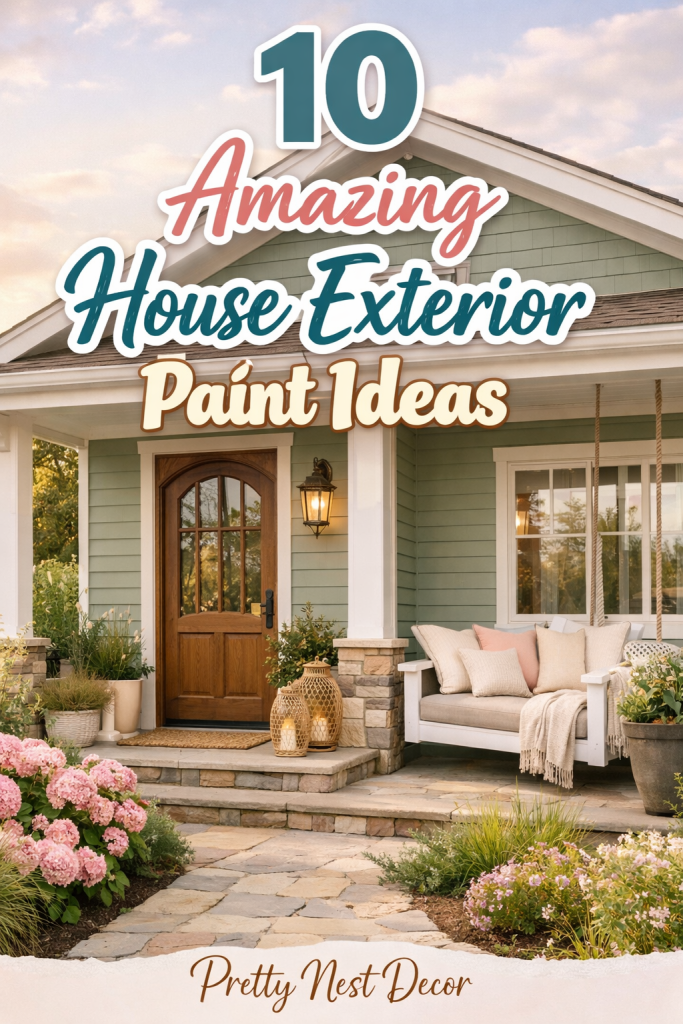
Selecting exterior colors is a delicate balance of art and strategy. Unlike interior painting, exterior painting must account for natural lighting, surrounding landscapes, architectural style, roof color, and even neighboring homes. For instance, sunlight can alter the perception of certain hues: warm tones may look muted in shaded areas, while cool tones may appear more vibrant in direct sunlight. Similarly, colors that complement the landscaping, driveway, and garden can make a home feel cohesive and harmonious. A bold choice, such as deep navy or forest green, may evoke sophistication and modern elegance, while softer pastels like blush, sage, or cream convey warmth and serenity. Combining primary wall colors with contrasting trims or accent features adds depth, highlights architectural details, and creates a polished look that stands the test of time.
Current exterior paint trends emphasize creativity and individuality while maintaining timeless elegance. Homeowners are no longer restricted to neutral shades; instead, they are embracing dynamic color palettes, striking contrasts, and layered textures. Popular trends include monochromatic schemes with subtle variations, bold front doors with complementary walls, muted tones paired with natural wood accents, and even geometric patterns or murals that make the house a visual statement. Seasonal trends also play a role, as colors that reflect nature’s changing palette—warm terracotta, sandy beige, forest green, or cool slate—enhance the home’s integration with its environment.
Choosing the right paint finish is equally important. Matte finishes provide a contemporary, understated elegance but may show wear more easily, whereas satin or semi-gloss finishes add durability and make cleaning simpler, particularly for trim, doors, and shutters. High-quality weather-resistant paints ensure longevity, preventing peeling, fading, and damage caused by moisture or extreme temperatures. Thoughtful consideration of finish and quality, combined with a strategic color palette, guarantees that your home not only looks stunning but remains protected for years to come.
Beyond technical considerations, exterior painting is an opportunity for self-expression. Each element—walls, shutters, doors, window trims, and even roof eaves—serves as a canvas to convey personality. Bold contrasting doors can create a focal point, while carefully selected trim colors highlight architectural details like gables, columns, and dormers. Some homeowners choose to experiment with two-tone or three-tone schemes, subtly layering neutral walls with vibrant trims and doors to add dimension. Others opt for soft, monochromatic shades to achieve a minimalist, modern look. Whether your style is traditional, contemporary, rustic, or eclectic, the exterior paint you select plays a pivotal role in defining your home’s character.
In this guide, we have curated 10 amazing house exterior paint ideas that blend creativity, practicality, and trendiness. Each idea is designed to inspire homeowners of every skill level—from those seeking simple transformations with minimal effort to ambitious projects involving multiple shades, textures, and accent features. We provide tips for pairing wall colors with trim, doors, and roofing, ensuring cohesive designs that are visually balanced. We also highlight combinations that complement common home materials like brick, wood, stucco, and stone, so you can achieve professional results without hiring an expert.
These exterior paint ideas are versatile and adaptable to different climates, architectural styles, and personal preferences. Whether you want to make a bold statement with a modern dark palette or maintain a classic charm with soft neutrals, you’ll find inspiration here. Additionally, we emphasize Pinterest-worthy aesthetics—because a house exterior that looks beautiful in real life should also translate perfectly in photographs for sharing or design inspiration. Each concept considers color psychology, visual impact, and harmony with natural surroundings, ensuring that your choice will impress visitors, enhance curb appeal, and create a welcoming atmosphere for your family.
Finally, painting the exterior of your home is an opportunity to breathe new life into your property, boosting confidence in your home’s appearance while providing long-term benefits. By combining thoughtful planning, trend-awareness, and creativity, you can achieve a polished, durable, and visually stunning result that reflects your unique taste. From timeless neutrals to daring jewel tones, subtle contrasts to bold accents, this guide explores a spectrum of possibilities, helping you find the perfect paint scheme for your dream home.
Prepare to explore 10 amazing house exterior paint ideas, each carefully selected to inspire, educate, and guide you toward creating a remarkable exterior transformation. With these ideas, your home will not only stand out on your street but also embody elegance, charm, and personality that lasts for years. Whether you’re repainting walls, accenting doors, or refreshing trims, the perfect color palette awaits to transform your home into a masterpiece that is visually captivating and emotionally rewarding.
Idea 1: Classic White with Bold Accents
Introduction
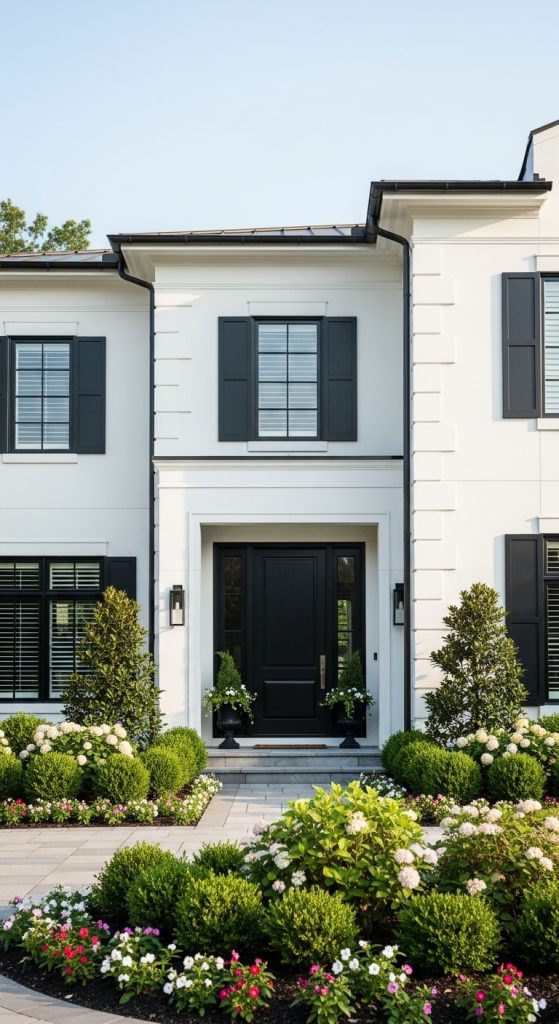
Classic white exteriors never go out of style. They exude elegance, timelessness, and a sense of spaciousness, instantly brightening any home. A crisp white facade provides a clean canvas that complements greenery, landscaping, and architectural details. While white is traditionally seen as minimalist, pairing it with bold accent colors on doors, shutters, or window trims creates a visually striking contrast. For example, a charcoal or black front door on a white house conveys sophistication, while navy or emerald green accents add vibrancy and modernity. White exteriors are also versatile—they suit colonial, modern, farmhouse, and contemporary homes alike. This idea works particularly well in neighborhoods with varied architectural styles because white blends harmoniously without clashing with surrounding houses.
Classic white with bold accents is not just about color—it’s about creating a focal point. Accent areas like doors, shutters, and even roof trims act as visual anchors, drawing the eye and enhancing architectural details. Furthermore, white reflects sunlight, helping keep homes cooler in warmer climates. With proper preparation and high-quality paints, this approach offers durability, low maintenance, and a timeless aesthetic that can easily adapt to future trends. In this guide, you’ll learn step-by-step how to implement this idea, from selecting complementary accent colors to ensuring a smooth, professional finish that’s both Pinterest-worthy and practical.
Definition/Explanation:
This concept involves painting the main body of a house white while applying bold, contrasting colors to doors, shutters, trims, or other architectural features to enhance depth and style.
Step-by-Step How-To:
- Prep the surface: Clean exterior walls, repair cracks, and sand rough areas.
- Prime: Apply a white primer to ensure even coverage.
- Paint main walls: Use high-quality exterior white paint for durability.
- Select accents: Choose complementary colors for doors, shutters, or trims.
- Mask areas: Use painter’s tape to ensure clean lines on trims or doors.
- Paint accents: Apply 2–3 coats for even coverage.
- Final touches: Remove tape, inspect for touch-ups, and seal if necessary.
Materials Needed:
- Exterior primer and white paint
- Paint for accents (semi-gloss for durability)
- Brushes, rollers, and painter’s tape
- Ladder or scaffolding if necessary
- Cleaning materials (soap, water, scrub brush)
Idea 2: Earthy Tones for Rustic Charm
Introduction
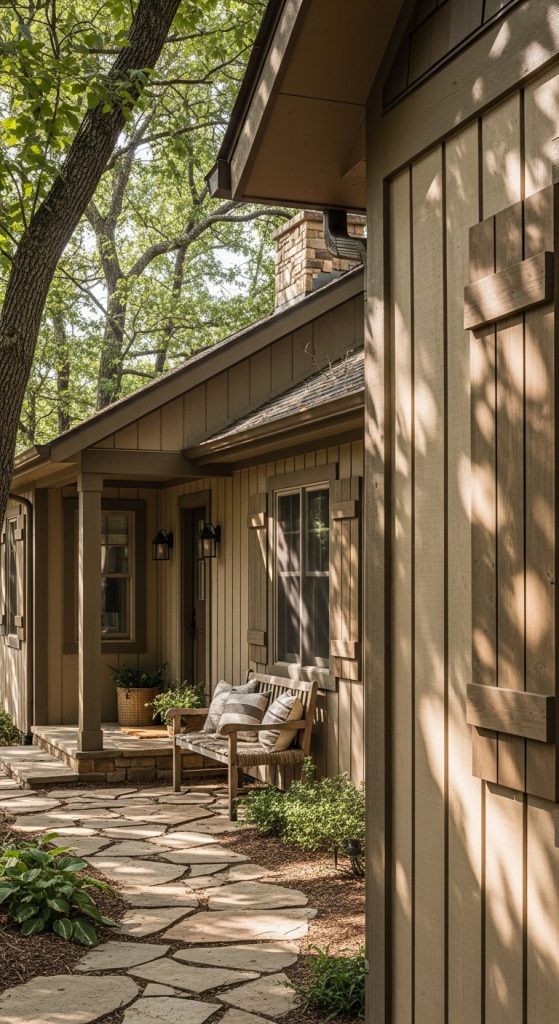
Earthy tones are ideal for creating a warm, inviting, and harmonious exterior. Shades like beige, taupe, terracotta, olive green, or warm gray blend seamlessly with natural surroundings, evoking a sense of comfort and stability. This palette works beautifully for rustic, craftsman, or cottage-style homes, particularly those with stone or wooden architectural features. Earthy exteriors harmonize with gardens, trees, and stone pathways, creating a cohesive and natural look. This approach emphasizes subtle sophistication and is especially effective for homes in suburban or countryside settings where blending with the landscape is desirable.
Earthy tones also allow for creative layering. Pairing a muted wall color with slightly darker trims or natural wood accents can highlight architectural details while maintaining a unified aesthetic. Additionally, these shades tend to age gracefully, hiding dirt and weathering better than bright or light hues. When combined with sustainable landscaping and natural materials, earthy tones convey a holistic approach to design. This guide offers a step-by-step approach to selecting the perfect earthy palette, applying it professionally, and accentuating features like doors, shutters, and window trims to achieve a cozy, Pinterest-worthy exterior.
Definition/Explanation:
Using muted, natural colors on the house exterior to create a warm, inviting, and rustic aesthetic that complements landscaping and architectural materials.
Step-by-Step How-To:
- Choose wall color: Pick a dominant earthy tone for main walls.
- Highlight architectural features: Select slightly darker or complementary tones for trims, shutters, and doors.
- Prepare surfaces: Clean, repair, and prime as needed.
- Paint main walls: Apply 2–3 coats for smooth coverage.
- Paint accents: Use painter’s tape for crisp edges on trims and shutters.
- Blend with landscaping: Consider planters or stone pathways that enhance earthy tones.
- Inspect and touch up: Ensure clean lines and uniform color.
Materials Needed:
- Exterior paints in earthy tones
- Primer for exterior walls
- Brushes, rollers, painter’s tape
- Cleaning supplies
- Ladder/scaffolding
Idea 3: Bold Dark Exterior for Modern Statement
Introduction
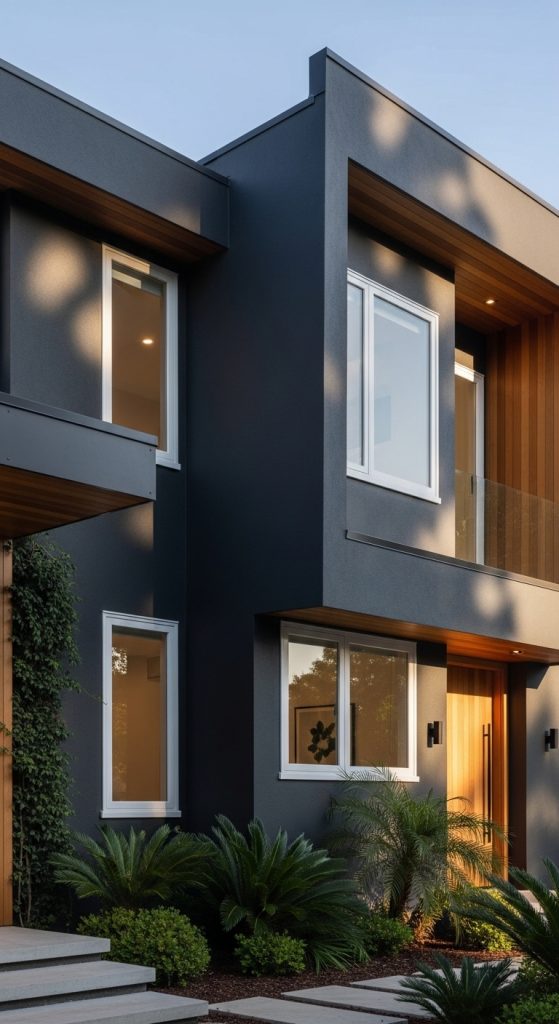
Dark exteriors are increasingly popular for contemporary and modern homes. Shades like charcoal, navy, deep forest green, or black exude sophistication, drama, and luxury. A dark exterior creates a strong visual statement, particularly when paired with natural wood accents, stone details, or vibrant doors. This idea works best for homes with clean lines, large windows, and minimalist architecture. Dark colors emphasize structure, make landscaping pop, and provide a high-contrast backdrop for light-colored trims or metal features.
Choosing a dark exterior requires careful consideration. These colors absorb heat, so high-quality, weather-resistant paints are essential to prevent fading or damage. Pairing dark walls with lighter accents, like white trims or natural wood doors, creates a balanced, inviting look. This concept allows homeowners to express individuality and modern style while maintaining elegance and sophistication. This guide provides practical steps for painting a dark exterior without overwhelming your home, including preparation, selecting finishes, and combining textures for a high-impact, Pinterest-worthy result.
Definition/Explanation:
Painting a house in a deep, rich color to create a dramatic, modern aesthetic, often paired with lighter accents or natural materials for contrast.
Step-by-Step How-To:
- Choose dark paint: Select a high-quality exterior paint that resists fading.
- Prep walls: Clean thoroughly and repair any damage.
- Prime if necessary: Especially for lighter surfaces or porous materials.
- Paint main surfaces: Apply 2–3 even coats.
- Add accent colors: Light-colored trims, doors, or stone details create balance.
- Inspect finish: Touch up streaks and ensure uniform coverage.
- Consider lighting: Exterior lighting highlights features against dark walls.
Materials Needed:
- Dark exterior paint
- Primer
- Brushes, rollers, painter’s tape
- Cleaning and repair supplies
- Optional: accent paint, lighting fixtures
Idea 4: Two-Tone Exterior for Visual Depth
Introduction
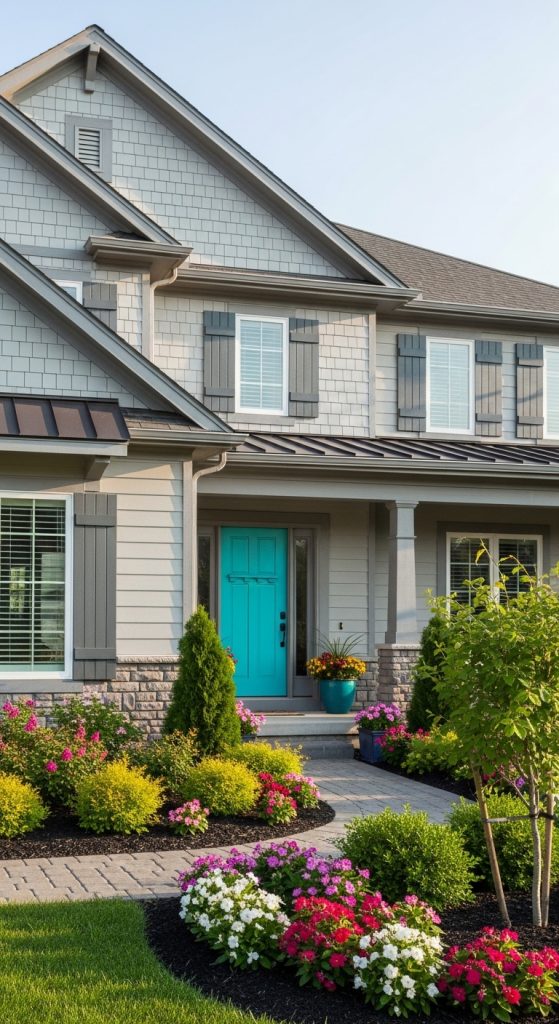
Two-tone exteriors create depth, dimension, and visual interest. By combining complementary or contrasting colors, homeowners can highlight architectural features, differentiate sections of the house, and elevate curb appeal. Popular combinations include gray and white, beige and taupe, or navy with soft gray accents. Two-tone designs can emphasize trim, gables, shutters, or lower vs. upper walls, creating a layered and sophisticated appearance. This idea works well on larger homes where a single color might feel flat or overwhelming.
Two-tone exteriors also allow creative freedom. You can choose subtle tonal variations for elegance or bold contrasts for drama. Careful placement of colors ensures harmony and enhances the home’s architectural lines. This approach also offers versatility—classic, contemporary, or eclectic homes can benefit from two-tone palettes that suit personal taste. This guide explains step-by-step how to select colors, apply paint professionally, and create a cohesive, Pinterest-worthy exterior that draws attention for all the right reasons.
Definition/Explanation:
Painting a home using two distinct colors, typically a primary wall color and a secondary accent, to highlight architectural features and create depth.
Step-by-Step How-To:
- Choose colors: Select a dominant and complementary secondary color.
- Prep surfaces: Clean and repair walls, trims, and other areas.
- Mask areas: Use painter’s tape to separate sections for clean lines.
- Paint main walls: Apply 2–3 coats of the primary color.
- Paint accents: Apply secondary color to trims, shutters, or gables.
- Inspect lines: Touch up edges and overlaps.
- Optional: Add a bold front door or metallic accents for extra flair.
Materials Needed:
- Two high-quality exterior paints
- Primer
- Brushes, rollers, painter’s tape
- Cleaning and repair supplies
- Optional: metallic or bright accent paint
Idea 5: Soft Pastels for Charming Appeal
Introduction
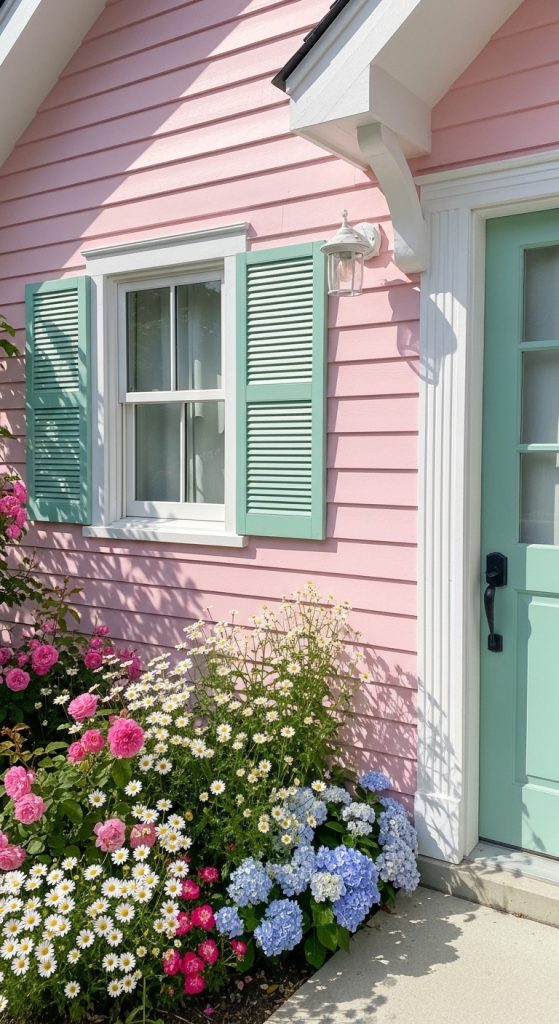
Soft pastel colors create a cheerful, inviting, and whimsical aesthetic. Shades like blush pink, mint green, powder blue, or soft lavender are ideal for cottages, coastal homes, or whimsical designs. Pastels evoke calmness, charm, and elegance, making homes appear approachable yet stylish. When paired with white trims, natural wood, or stone accents, pastel exteriors feel balanced and visually appealing. Soft hues also allow the landscaping to stand out, complementing gardens, flowers, and pathways.
Pastel exteriors are perfect for homeowners looking to create a unique, charming, and Pinterest-worthy curb appeal. The gentle tones can highlight architectural details like shutters, window frames, and doors, while maintaining subtle sophistication. Pastels are versatile—they can be paired with brighter accent doors for personality or kept soft for a serene, cohesive look. This guide provides detailed steps for selecting the perfect pastel palette, preparing surfaces, and applying paint for a flawless, long-lasting finish that elevates the home’s charm and style.
Definition/Explanation:
Painting a home with light, soft colors that create a charming, whimsical, and approachable exterior while highlighting architectural details.
Step-by-Step How-To:
- Choose pastel palette: Pick 1–2 main colors with complementary trims.
- Prep surfaces: Clean, sand, and repair walls and trims.
- Prime: Use a primer suitable for light tones.
- Paint walls: Apply 2–3 coats of the main pastel color.
- Paint trims/accents: Use complementary pastel or white for trims, shutters, and doors.
- Inspect and touch up: Ensure smooth finish and crisp edges.
- Optional: Add landscaping or potted flowers that match pastel tones.
Materials Needed:
- Exterior paints in pastel shades
- Primer
- Brushes, rollers, painter’s tape
- Cleaning and repair materials
- Optional: landscaping accents, shutters, decorative planters
Idea 6: Monochromatic Shades for Minimalist Elegance
Introduction
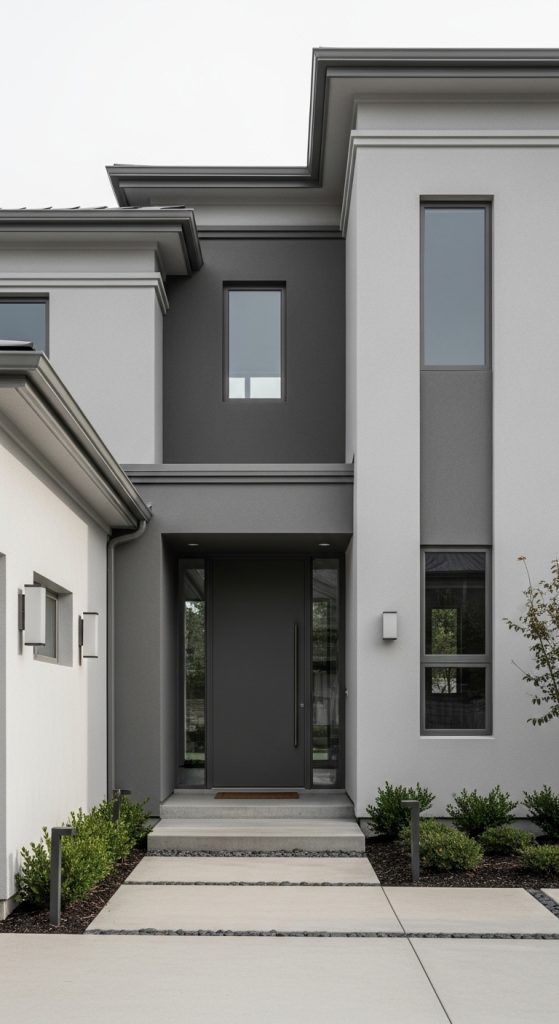
Monochromatic color schemes are a sophisticated way to create a cohesive, minimalist exterior. By using variations of a single color—from light to dark tones—you can achieve depth, elegance, and harmony without overwhelming the eye. This approach works exceptionally well on modern or contemporary homes, where clean lines and geometric features benefit from subtle, unified coloring. Monochromatic exteriors are understated yet visually striking; they allow architectural details like trims, windows, and doors to emerge naturally.
Choosing the right monochromatic palette requires understanding color intensity and undertones. Lighter shades on main walls paired with darker trims create subtle contrast, while darker walls with lighter accents can highlight features like porches or gables. This strategy also makes landscaping and outdoor furniture pop against the unified backdrop. Monochromatic schemes are highly versatile—they can evoke warmth with taupe, beige, or blush, or sophistication with shades of gray, navy, or charcoal. Beyond aesthetics, this approach simplifies painting decisions, reduces risk of clashing colors, and creates a Pinterest-worthy, timeless exterior. This guide will teach you step-by-step how to apply monochromatic paint effectively, choose the perfect shades, and highlight architectural elements for maximum impact.
Definition/Explanation:
A monochromatic exterior uses different shades and tints of a single color to create a cohesive, sophisticated, and minimalist aesthetic.
Step-by-Step How-To:
- Choose base color: Select a color that complements your home’s style.
- Select shades: Pick at least two to three shades of the base color for walls, trims, and accents.
- Prep surfaces: Clean, repair, and prime exterior walls.
- Paint walls: Apply the main color evenly across large surfaces.
- Add contrast: Use lighter or darker shades on trims, shutters, or doors.
- Inspect coverage: Touch up uneven areas and edges.
- Optional: Add plants or furniture that complement the monochromatic palette.
Materials Needed:
- Exterior paints in multiple shades of the same color
- Primer
- Brushes, rollers, painter’s tape
- Cleaning and repair supplies
- Optional: landscaping elements
Idea 7: Coastal Inspired Blues and Whites
Introduction
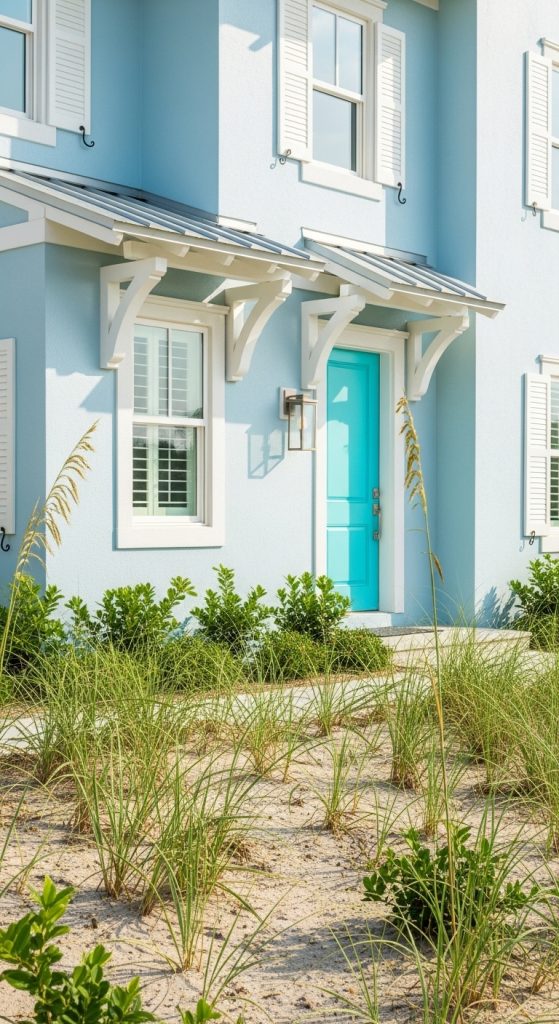
Coastal homes often evoke relaxation, freshness, and a connection to nature, and exterior paint plays a central role in achieving this look. Blues and whites are classic choices for creating a breezy, seaside-inspired aesthetic. Light blue walls paired with crisp white trims or shutters convey a sense of calm and openness, reminiscent of ocean waves and sandy beaches. For modern coastal homes, deeper navy accents on doors or shutters can add elegance while maintaining the airy vibe.
This paint approach works beautifully in beachside properties or areas with lush greenery, as the palette naturally complements water and sky. Pairing blues and whites also creates a crisp, clean look that highlights architectural details such as gables, dormers, and railings. Additionally, these shades reflect sunlight, keeping homes cool in warmer climates. Beyond aesthetic appeal, coastal-inspired exteriors are timeless and versatile, providing both charm and sophistication. This guide will walk you through selecting the right shades of blue and white, applying them professionally, and creating a balanced, Pinterest-worthy coastal look that enhances curb appeal.
Definition/Explanation:
A coastal-inspired exterior uses shades of blue and white to create a fresh, airy, and relaxed aesthetic reminiscent of seaside homes.
Step-by-Step How-To:
- Choose shades: Select a soft blue for main walls and crisp white for trims.
- Prep walls: Clean and repair all exterior surfaces.
- Prime if needed: Ensures color longevity and smooth application.
- Paint walls: Apply multiple coats of blue for an even finish.
- Paint accents: Use white for trims, shutters, and railings.
- Optional accents: Consider navy doors or natural wood elements.
- Inspect and touch up: Ensure smooth edges and consistent color coverage.
Materials Needed:
- Exterior paints: soft blue, crisp white, optional navy
- Primer
- Brushes, rollers, painter’s tape
- Cleaning and repair tools
- Optional: wood accents, outdoor décor
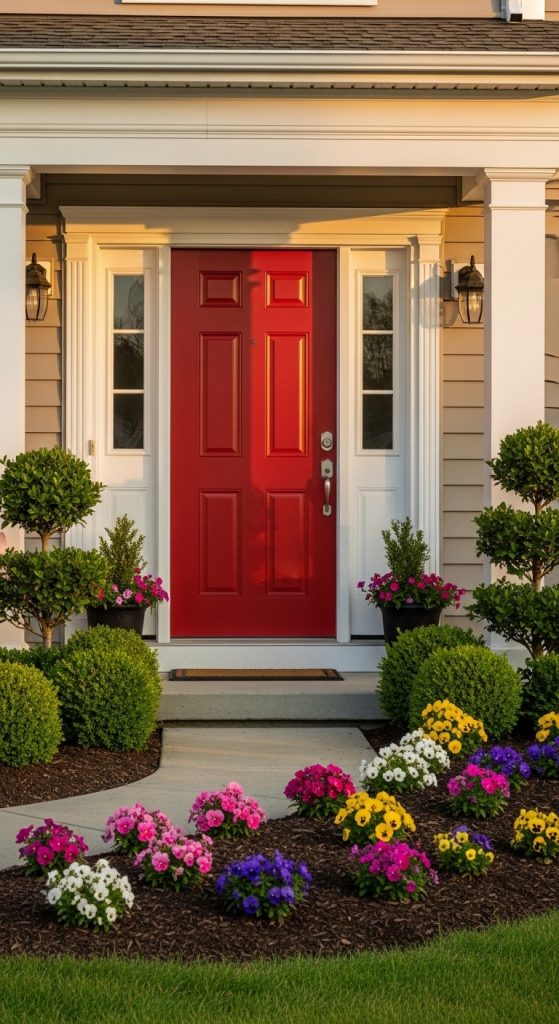
Idea 8: Bold Contrasting Front Door
Introduction
Sometimes, a small pop of color can transform the entire exterior of a home. Painting the front door a bold, contrasting color creates a striking focal point without overwhelming the overall aesthetic. Popular choices include red, yellow, turquoise, or emerald green, depending on the main house color. A bold door draws attention, enhances curb appeal, and adds personality to your home.
This approach works well for both neutral and colorful exteriors. For instance, a white, gray, or beige house paired with a bright red door creates timeless contrast, while a dark gray or navy exterior looks sophisticated with a vibrant yellow or turquoise door. This simple change is cost-effective yet highly impactful, and it allows for seasonal or periodic updates with minimal effort. In this guide, you’ll learn how to prep, select, and paint a bold front door for maximum impact while ensuring a professional, Pinterest-worthy finish that enhances your home’s character.
Definition/Explanation:
Painting a front door in a bold, contrasting color to create a focal point and enhance the home’s exterior aesthetics.
Step-by-Step How-To:
- Choose a bold color that contrasts with the main exterior.
- Prep the door: Clean, sand, and remove hardware if possible.
- Prime the surface: Ensures color adheres evenly.
- Apply paint: Use 2–3 coats for full coverage.
- Reattach hardware: Ensure hinges, handles, and locks are secure.
- Optional sealant: Protects color from sun, rain, and wear.
- Enhance surrounding areas: Consider matching planters or outdoor décor.
Materials Needed:
- Bold exterior paint
- Primer
- Brushes or small rollers
- Sandpaper and cleaning supplies
- Optional: sealant and decorative accents
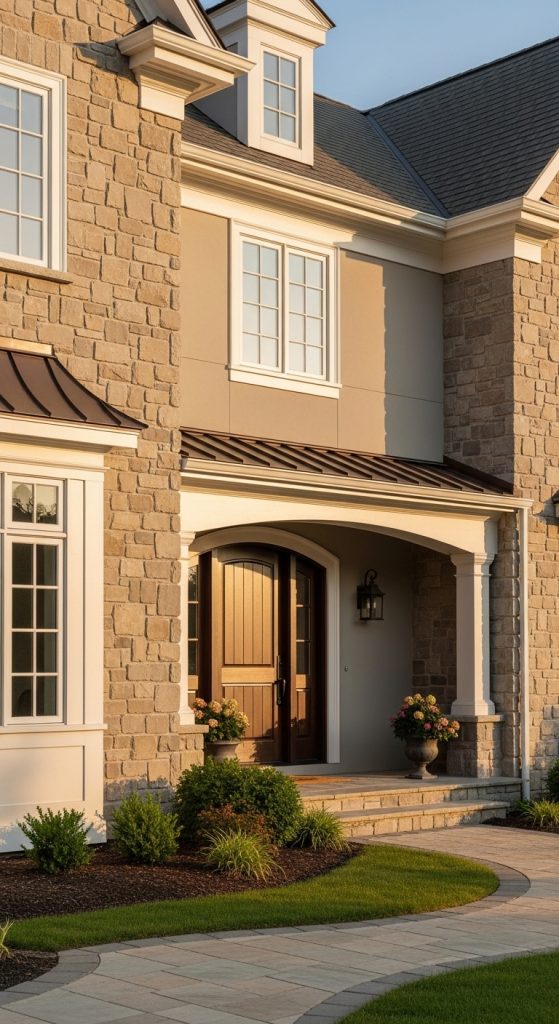
Idea 9: Stone and Paint Combination
Introduction
Combining painted surfaces with natural stone exteriors creates texture, depth, and timeless appeal. Stone adds rugged elegance, while carefully chosen paint colors unify the overall look. Neutral tones like beige, taupe, gray, or soft white work best with stone, creating a cohesive yet dynamic exterior. Accents such as trims, shutters, or doors can either blend or contrast with the main palette, depending on the desired style.
This design approach is perfect for rustic, craftsman, or traditional homes where stone features are part of the architecture. A painted wall next to stone enhances the texture and adds visual layers that make the home feel inviting and luxurious. With proper surface preparation and high-quality paints, this combination is durable, weather-resistant, and visually stunning. This guide will detail step-by-step methods for integrating painted and natural stone exteriors, color selection, and highlighting features to achieve a Pinterest-worthy result.
Definition/Explanation:
Blending painted surfaces with natural stone elements to create texture, depth, and a visually striking exterior.
Step-by-Step How-To:
- Choose colors: Select paint that complements the stone tone.
- Prep walls and stone: Clean surfaces, repair cracks, and mask edges.
- Prime painted areas: Ensures longevity and smooth application.
- Paint walls: Apply multiple coats as needed.
- Highlight architectural features: Consider trims, shutters, or doors.
- Inspect and touch up: Ensure neat lines where paint meets stone.
- Optional landscaping: Complement stone with greenery or planters.
Materials Needed:
- Exterior paints (neutral tones)
- Primer
- Brushes, rollers, painter’s tape
- Cleaning and repair tools
- Optional: stone-friendly sealant
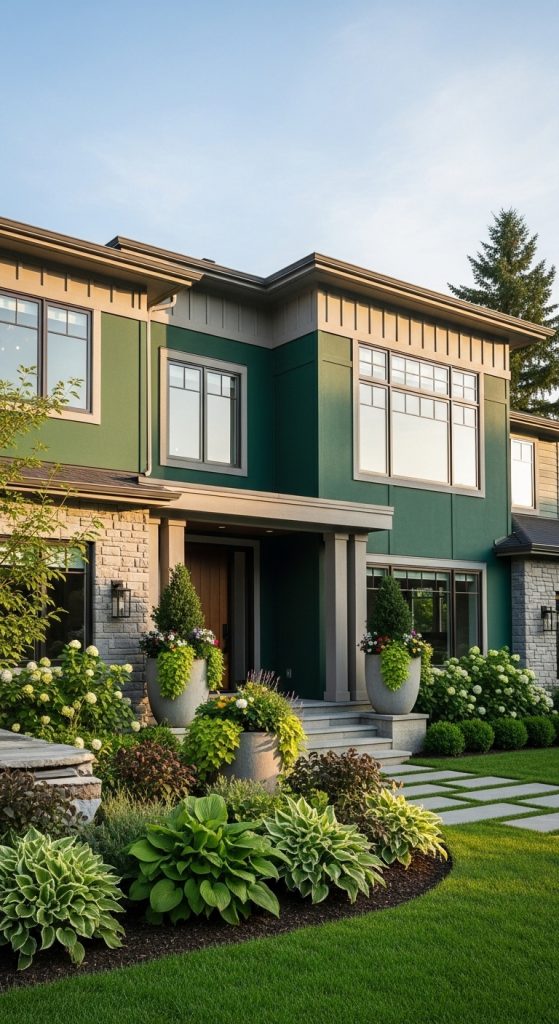
Idea 10: Warm Jewel Tones for Modern Luxury
Introduction
Jewel tones—like deep emerald, sapphire blue, rich burgundy, or amethyst—offer a luxurious, sophisticated look for modern homes. These rich colors stand out in the neighborhood, create dramatic curb appeal, and complement natural materials like wood, stone, and metal accents. Jewel-toned exteriors are bold yet elegant, offering homeowners a chance to showcase personality while maintaining style.
This approach works particularly well on contemporary homes with simple architecture, where color becomes the statement rather than ornate detailing. Pairing jewel tones with metallic or neutral accents ensures balance and prevents overwhelming the eye. High-quality, weather-resistant paints are essential to maintain vibrancy, especially in sunny or rainy climates. With proper planning and application, jewel tones provide a Pinterest-worthy, upscale aesthetic that is both memorable and timeless. This guide provides step-by-step tips for color selection, surface prep, painting techniques, and accenting architectural features for maximum impact.
Definition/Explanation:
Using deep, rich jewel tones on house exteriors to create a luxurious, bold, and modern aesthetic.
Step-by-Step How-To:
- Select jewel tone: Choose one that complements your home’s materials.
- Prep surfaces: Clean, repair, and prime exterior walls.
- Apply paint: Use 2–3 coats for a smooth, vibrant finish.
- Add accents: Use lighter neutrals or metallic trims to balance intensity.
- Inspect coverage: Touch up streaks and uneven areas.
- Optional landscaping: Add greenery to enhance jewel-toned walls.
- Maintain color: Use UV-protective sealants for long-lasting vibrancy.
Materials Needed:
- Exterior paint in jewel tone
- Primer
- Brushes, rollers, painter’s tape
- Cleaning and repair materials
- Optional: metallic accents, landscaping