
Closet organization is one of those things people keep postponing until it becomes a daily frustration. At first, it doesn’t seem like a big problem. Clothes are slightly folded, a few items are misplaced, and shoes are scattered in the corner. But over time, this “slight mess” turns into a system that silently drains your time and energy every single day. You stand in front of your closet, even when it’s full, and still feel like you have nothing to wear—not because of a lack of clothes, but because nothing is easy to see, access, or use properly.
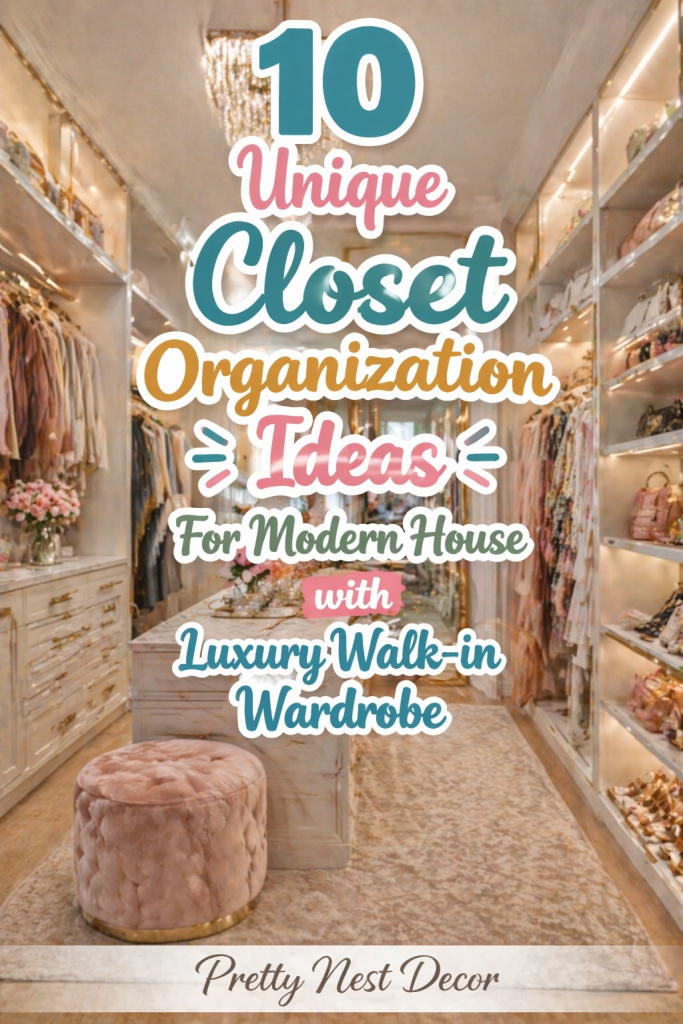
The truth is simple: most closets are not too small—they are poorly structured.
In modern homes, storage space is often designed for appearance, not behavior. Shelves look good when empty, drawers seem practical, and hanging rods feel standard. But real life is not about showroom presentation. It’s about repetition. You open your closet every day, multiple times, usually in a hurry. If the system inside that closet is not designed for speed, clarity, and easy access, it will always feel chaotic—even if it looks “organized” from the outside.
This is where most people make a critical mistake. They think organization means folding everything neatly once and maintaining it forever. But real organization is not about one-time effort—it’s about building a system that stays functional even when you’re busy, tired, or rushing. If your closet only looks good on the day you organize it, it’s not actually organized.
Another overlooked issue is visibility. When items are hidden or stacked in a way that you cannot quickly scan, your brain stops processing them as usable options. You end up wearing the same few outfits repeatedly while the rest of your wardrobe becomes “invisible storage.” This creates unnecessary repetition and frustration. A well-designed closet solves this by improving visibility without increasing clutter.
Space management is another key factor. Many modern houses have decent closet size, but poor internal design. Tall vertical space is wasted, corners are ignored, and drawers are either too deep or too shallow to be practical. The result is a system that looks fine on paper but fails in daily use. A properly designed closet uses every zone intentionally—top, middle, and bottom—each with a clear purpose.
If you have a small room or compact closet area, this becomes even more important. Every inch needs to work. Vertical stacking, smart folding systems, modular storage, and visual separation all play a role in making the space feel larger than it actually is. Without these elements, even a big closet can feel tight and inefficient.
Modern closet organization is no longer just about storing clothes. It’s about creating a personal system that saves time, reduces decision fatigue, and makes daily routines smoother. When your closet is properly structured, getting dressed becomes faster, easier, and less stressful. You stop wasting energy searching for items and start using your wardrobe intentionally.
This guide focuses on practical, real-world organization ideas that go beyond basic “fold and sort” advice. Each idea is designed to solve a specific problem—whether it’s clutter, limited space, poor visibility, or inefficient storage flow. The goal is not just to make your closet look better, but to make it function better every single day.
Because in a modern home, organization is not decoration. It is efficiency. And your closet is one of the most important systems where that efficiency starts.
1. Zoned Closet System (Category-Based Organization Layout)
Explanation (What it is)
A zoned closet system organizes your entire wardrobe into clearly defined sections based on categories instead of random placement. Instead of mixing shirts, pants, accessories, and seasonal items together, everything is grouped into dedicated “zones” inside the closet.
This method solves one major problem: decision fatigue. When everything is mixed, your brain has to search and compare constantly. But when zones are clearly defined, you instantly know where to look. It turns your closet into a structured system instead of a storage dump.
This approach is especially powerful in modern homes where closets are shared or frequently used under time pressure.

How to implement (Practical steps)
Start by emptying your closet completely. Then divide your wardrobe into categories like:
- Daily wear
- Work/formal wear
- Seasonal clothing
- Accessories
- Special occasion outfits
Assign each category its own dedicated section inside the closet.
Place the most frequently used items at eye level so they are instantly accessible. Less-used items can go higher or lower.
Use simple dividers, labeled bins, or shelf separators to clearly define each zone. Consistency matters more than decoration here.
If you have a small closet, combine similar categories but still keep separation clear—for example, “casual tops” and “formal tops” should not be mixed.
Best for
- Busy professionals and students
- Shared wardrobes
- People who struggle to find items quickly
Pro tip
Keep a “daily essentials zone” at the most reachable height. This reduces morning decision time significantly.
Mistake to avoid
Do not create too many tiny zones. Over-segmentation makes the system complicated instead of helpful.
2. Vertical Stack Optimization Closet (Space-Maximizing System)
Explanation (What it is)
The vertical stack optimization system focuses on using height instead of width. Most closets waste upper and lower space, leaving large empty gaps above hanging rods or below shelves. This system eliminates that waste by stacking storage in layers from floor to ceiling.
The goal is simple: every vertical inch should have a purpose. Instead of expanding outward, you build upward efficiency.
This is especially useful in modern homes where closet width is limited but ceiling height is available.

How to implement (Practical steps)
Start by installing double hanging rods:
- Upper rod for long-term or less-used clothing
- Lower rod for daily wear items
Above the top rod, add closed storage boxes or shelves for seasonal clothing, bedding, or rarely used items.
At the bottom, use drawers, baskets, or shoe storage racks to avoid wasted floor space.
Keep frequently used items in the middle section for easy access.
If you have a small room, use slim vertical organizers instead of wide shelves to prevent overcrowding.
Best for
- Small closets with vertical space
- Minimalist storage systems
- People with large wardrobes but limited room
Pro tip
Use uniform storage boxes on upper shelves. Visual consistency makes the closet feel more organized even when full.
Mistake to avoid
Do not overload upper shelves with heavy items. It makes access difficult and reduces long-term usability.
3. Open Display Closet System (Visibility-Based Design)
Explanation (What it is)
An open display closet system removes heavy doors and focuses on visibility and easy access. Instead of hiding clothes behind closed cabinets, everything is partially or fully visible through open racks, shelves, or hanging sections.
The idea is not to create mess exposure—it’s to create controlled visibility. When you can see your items clearly, you use them more effectively and reduce forgotten or unused clothing.
This system works especially well for modern interiors where aesthetics and functionality are combined.

How to implement (Practical steps)
Replace closed doors with open shelving or curtain-based separation if full openness feels too exposed.
Organize clothing by color or category for visual clarity. This is important because open systems rely heavily on appearance.
Keep spacing between items consistent. Crowded racks defeat the purpose of visibility.
Use matching hangers to create visual harmony. Mixed hangers instantly make the space look messy even if it is organized.
If you have a small room, limit open display to frequently used items only and keep seasonal storage hidden.
Best for
- Modern minimalist homes
- Fashion-conscious users
- Walk-in closets or semi-open spaces
Pro tip
Use a neutral color palette for hangers and storage bins. It keeps visual noise low and makes the closet feel high-end.
Mistake to avoid
Do not overfill open racks. Visibility only works when space is intentionally maintained.
4. Sliding Drawer Closet System (Hidden Efficiency Storage)
Explanation (What it is)
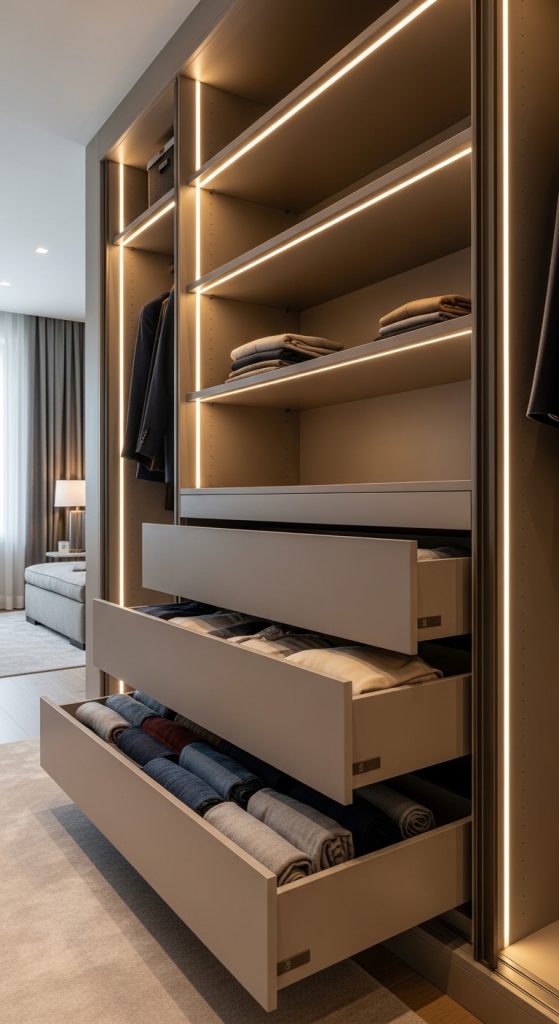
A sliding drawer closet system focuses on hidden, layered storage where everything is organized inside pull-out drawers instead of open shelves or hanging chaos. This design is built for speed and efficiency—nothing is buried at the back, and nothing requires deep searching.
The main advantage is access control. In traditional closets, items at the back often get forgotten or wasted. Sliding drawers solve this by bringing everything forward in one smooth motion. It’s especially effective for small items like socks, accessories, undergarments, and folded clothes.
This system is less about display and more about daily usability. It keeps everything out of sight but fully accessible.
How to implement (Practical steps)
Install deep pull-out drawers in the lower and middle sections of your closet. Use soft-close mechanisms if possible to improve durability and ease of use.
Assign drawers based on function:
- Top drawers: daily essentials (socks, undergarments)
- Middle drawers: folded clothing (T-shirts, casual wear)
- Bottom drawers: heavier items or seasonal storage
Use internal dividers inside drawers to prevent mixing. Without dividers, drawers quickly turn into hidden clutter.
If you have a small closet, prioritize slim vertical drawer stacks instead of wide units to maximize space efficiency.
Best for
- People who prefer hidden storage
- Small closets with limited hanging space
- Organized, minimal lifestyles
Pro tip
Label the inside of drawers subtly. You don’t see the label daily, but it helps maintain long-term organization consistency.
Mistake to avoid
Do not overload drawers to maximum capacity. Overstuffing makes sliding difficult and defeats the purpose of smooth access.
5. Capsule Wardrobe Closet System (Minimal Selection Layout)
Explanation (What it is)
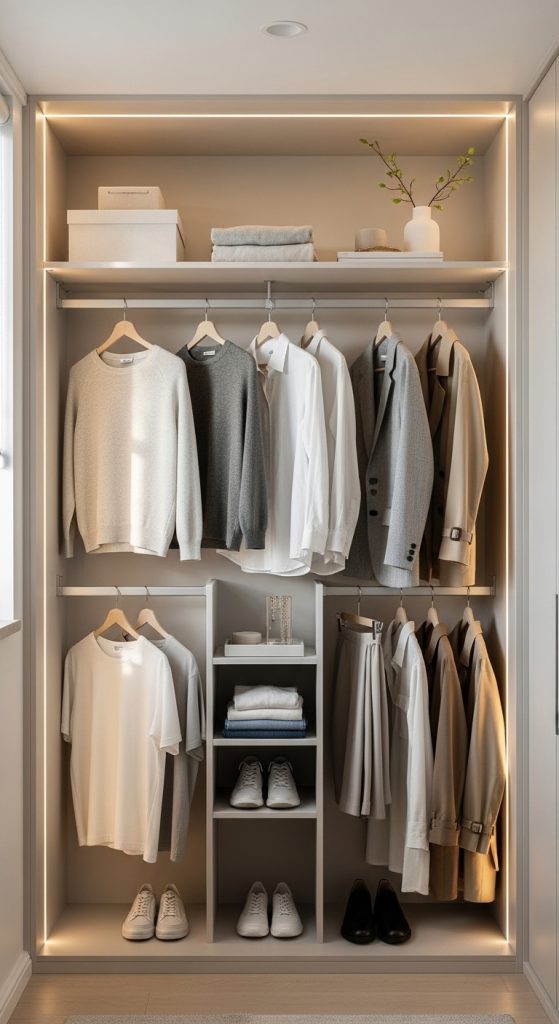
A capsule wardrobe system is not just about storage—it’s about intentional clothing reduction and smart organization. Instead of storing everything you own in a cluttered space, you curate a smaller, versatile collection of clothes that you actually wear regularly.
This approach transforms your closet from a storage unit into a functional style system. Every item has a purpose, and everything works together. The result is less clutter, faster decision-making, and a cleaner visual environment.
It works best for people who feel overwhelmed by too many clothing options but still want a functional wardrobe.
How to implement (Practical steps)
Start by removing clothes you rarely wear. Be honest—if you haven’t worn it in months, it doesn’t belong in your daily-use closet.
Group remaining items into categories:
- Everyday basics
- Work or formal outfits
- Seasonal essentials
- Occasional wear
Keep only versatile pieces that can mix and match easily.
Store excess or off-season clothes separately in upper storage or under-bed boxes.
Inside the closet, keep only your active capsule wardrobe visible and accessible.
If you have a small room, this system is extremely powerful because it reduces physical clutter and visual stress at the same time.
Best for
- Minimalist lifestyle users
- Busy professionals or students
- Small closet spaces
Pro tip
Stick to a consistent color palette. It makes outfit selection faster and reduces unnecessary duplication.
Mistake to avoid
Do not treat capsule wardrobe as permanent restriction. It should evolve seasonally, not stay fixed forever.
6. Multi-Layer Hanging System (Double + Hidden Hanging Zones)
Explanation (What it is)
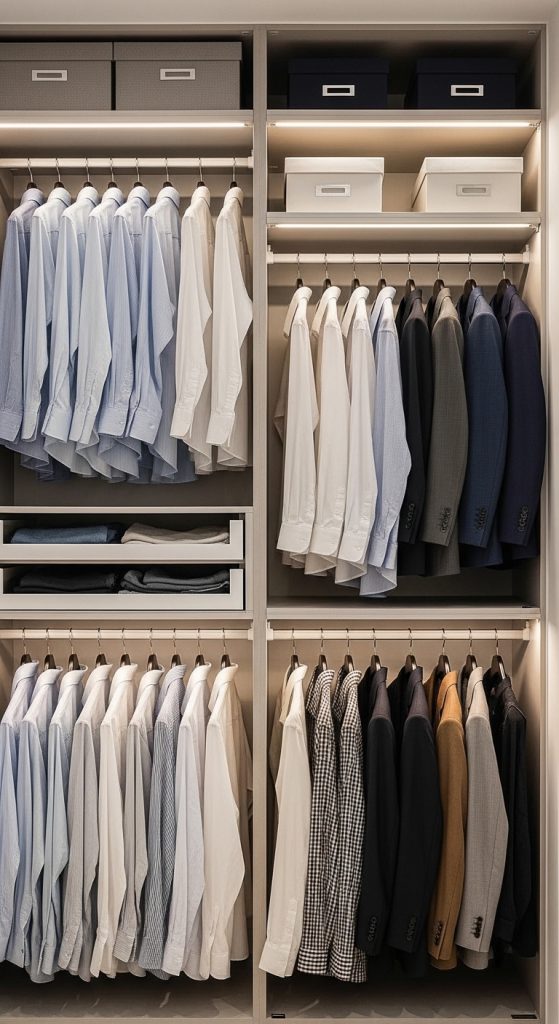
The multi-layer hanging system maximizes closet space by using more than one level of hanging rods instead of a single bar. Most closets waste vertical space because they only use one hanging height, leaving large unused gaps above or below.
This system introduces structured layers:
- Short-hang zone for shirts and jackets
- Long-hang zone for dresses or coats
- Optional hidden upper hanging for less-used items
It creates separation, improves visibility, and increases storage capacity without expanding closet size.
How to implement (Practical steps)
Install two horizontal hanging rods:
- Upper rod for shorter clothing items
- Lower rod for frequently used daily outfits
Ensure enough space between rods so clothes don’t overlap or wrinkle.
For taller closets, add a third hidden upper rod for seasonal or rarely used clothing.
Keep spacing consistent to maintain visual order.
Use matching hangers to keep the system visually clean and prevent cluttered appearance.
If you have a small room, prioritize two-layer hanging instead of overcrowding with too many rods.
Best for
- Small closets needing extra storage
- People with mixed clothing lengths
- Shared wardrobes
Pro tip
Arrange clothing by length and type. It prevents wasted vertical gaps and improves access speed.
Mistake to avoid
Do not place rods too close together. Tight spacing causes wrinkling and makes clothes hard to access.
7. Built-In Shoe Wall Closet System (Floor-to-Ceiling Footwear Storage)
Explanation (What it is)
A built-in shoe wall system turns one full closet wall into a dedicated footwear storage zone. Instead of scattering shoes at the bottom of the closet or stacking them in random boxes, everything is displayed or stored in structured rows.
The real value of this system is control. Shoes are usually the fastest source of clutter in a closet because they are used daily and rarely returned to the same place. A dedicated wall removes that chaos by assigning every pair a fixed position.
It also improves visibility, which matters more than people realize. When shoes are clearly visible and organized, you stop buying duplicates and start using your entire collection.

How to implement (Practical steps)
Choose one side wall of your closet and install floor-to-ceiling shelving units or cubbies.
Design shelf height based on shoe type:
- Low shelves: flats, sandals, sneakers
- Medium shelves: heels, loafers
- Taller sections: boots or bulky footwear
Keep spacing consistent so the wall looks structured, not random.
If you have a small closet, use angled shoe racks or stackable inserts to increase capacity without widening the structure.
Add a small LED strip or soft lighting along the shelves to improve visibility and give a modern look.
Best for
- Fashion-focused wardrobes
- Small closets with shoe clutter issues
- Walk-in closet upgrades
Pro tip
Keep frequently used shoes at eye level. This reduces daily bending and speeds up outfit selection.
Mistake to avoid
Do not mix shoe storage with general clothing shelves. It breaks visual order and creates unnecessary clutter.
8. Hidden Accessory Drawer System (Micro-Organization Layout)
Explanation (What it is)
The hidden accessory drawer system focuses on organizing small items that usually create the most hidden chaos—belts, watches, jewelry, ties, sunglasses, and miscellaneous accessories.
These items are often the reason closets feel “messy even when clothes are organized.” They get tossed into corners, mixed in boxes, or left on surfaces without structure.
This system solves that by giving every small item a controlled, separated space inside drawers.

How to implement (Practical steps)
Install shallow drawers in the middle section of your closet for easy access.
Inside each drawer, use dividers or modular trays:
- Jewelry tray for rings and earrings
- Sectioned space for watches
- Roll storage for belts or ties
- Small compartments for miscellaneous items
Keep drawers shallow instead of deep so items don’t get buried under each other.
If you have a small room, prioritize vertical drawer stacks rather than wide horizontal ones.
Labeling is optional, but internal structure must stay consistent.
Best for
- People with many accessories
- Small closets needing better organization
- Minimalist visual setups
Pro tip
Assign one drawer per category instead of mixing multiple accessory types. It prevents long-term disorder.
Mistake to avoid
Do not throw accessories into one large drawer without separation. It becomes hidden clutter very quickly.
9. Seasonal Rotation Closet System (Time-Based Organization Layout)
Explanation (What it is)
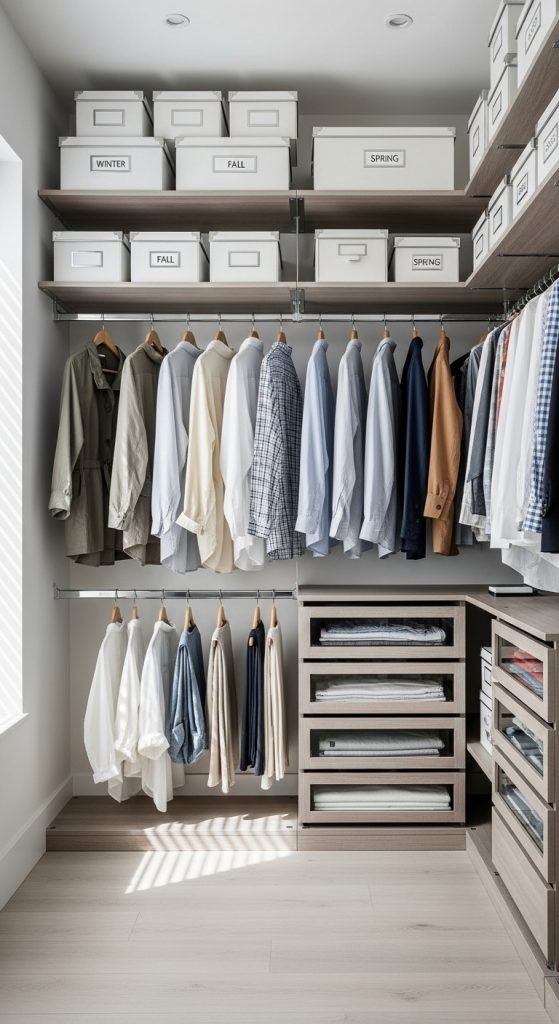
A seasonal rotation closet system organizes clothing based on time of year instead of keeping everything active at once. Instead of overcrowding your closet with all seasons of clothing, you rotate items in and out based on current weather and lifestyle needs.
This system dramatically reduces visual clutter and makes your closet feel lighter and more functional. It also improves decision-making because you are only choosing from relevant items, not your entire wardrobe.
It works especially well in modern homes where closet space is limited but clothing variety is high.
How to implement (Practical steps)
Divide your wardrobe into seasonal groups:
- Summer clothing
- Winter clothing
- Transitional (spring/autumn) items
Keep only the current season visible in your main closet.
Store off-season clothing in upper shelves, under-bed boxes, or sealed storage containers.
When seasons change, rotate the groups instead of expanding storage.
Keep a small section for all-season basics like neutral tops or everyday essentials.
If you have a small room, this system is one of the most effective ways to instantly reduce closet overcrowding.
Best for
- People with large wardrobes
- Small closet spaces
- Regions with clear seasonal changes
Pro tip
Pack seasonal clothes in labeled boxes so rotation becomes fast and stress-free.
Mistake to avoid
Do not mix seasonal categories in the main hanging area. It defeats the purpose of visual clarity and creates clutter.
10. Smart Lighting & Mirror Closet System (Clarity + Visibility Layout)
Explanation (What it is)
A smart lighting and mirror closet system is designed to solve one of the most ignored problems in wardrobe organization: poor visibility. Even a perfectly arranged closet becomes frustrating if you can’t clearly see colors, textures, or outfit combinations.
This system combines layered lighting with strategic mirror placement to improve clarity, reduce decision time, and make your closet feel more spacious and premium. It’s not just about aesthetics—it directly affects how efficiently you use your wardrobe every day.
Most closets rely on overhead room lighting, which creates shadows and uneven brightness. That’s why clothes at the back or lower shelves often look darker or less noticeable. Smart lighting fixes this by distributing light evenly across all storage zones.

How to implement (Practical steps)
Start by adding LED strip lighting inside key closet areas:
- Along hanging rods for clothing visibility
- Inside shelves for folded items
- Under upper cabinets for depth lighting
Choose warm white or neutral white lighting instead of harsh cool tones, as it gives a more natural view of clothing colors.
Next, install a full-length mirror either on the closet door or adjacent wall. This helps in two ways:
- It allows outfit checking without leaving the closet area
- It visually expands the space, making small closets feel larger
If possible, add motion-sensor lighting so the closet automatically lights up when opened. This improves convenience and reduces wasted energy.
Keep wiring hidden to maintain a clean and modern look. Visible cables reduce the premium feel of the setup.
If you have a small room, mirror placement becomes even more important. A well-placed mirror can double the perceived space instantly.
Best for
- Small or poorly lit closets
- Fashion-focused users who create daily outfits
- Modern homes needing a premium look and function
Pro tip
Layer lighting instead of using a single source. Combine overhead + shelf + rod lighting for a balanced, shadow-free view of your wardrobe.
Mistake to avoid
Do not use overly bright or blue-toned lighting. It distorts clothing colors and makes outfit selection unreliable.