
A garden fence is often treated as a purely functional structure—something that marks boundaries, provides security, and keeps things “inside or outside.” But in modern outdoor design for 2026, that mindset is outdated. A fence is no longer just a divider; it is a major visual element that defines the entire character of your garden.
The truth most people overlook is this: your fence is usually the first and last thing you see in your outdoor space. If it looks cheap, damaged, or random, it quietly drags down the entire aesthetic of your garden—even if everything else is well-decorated. On the other hand, a thoughtfully designed budget fence can make a simple garden look structured, intentional, and surprisingly high-end.
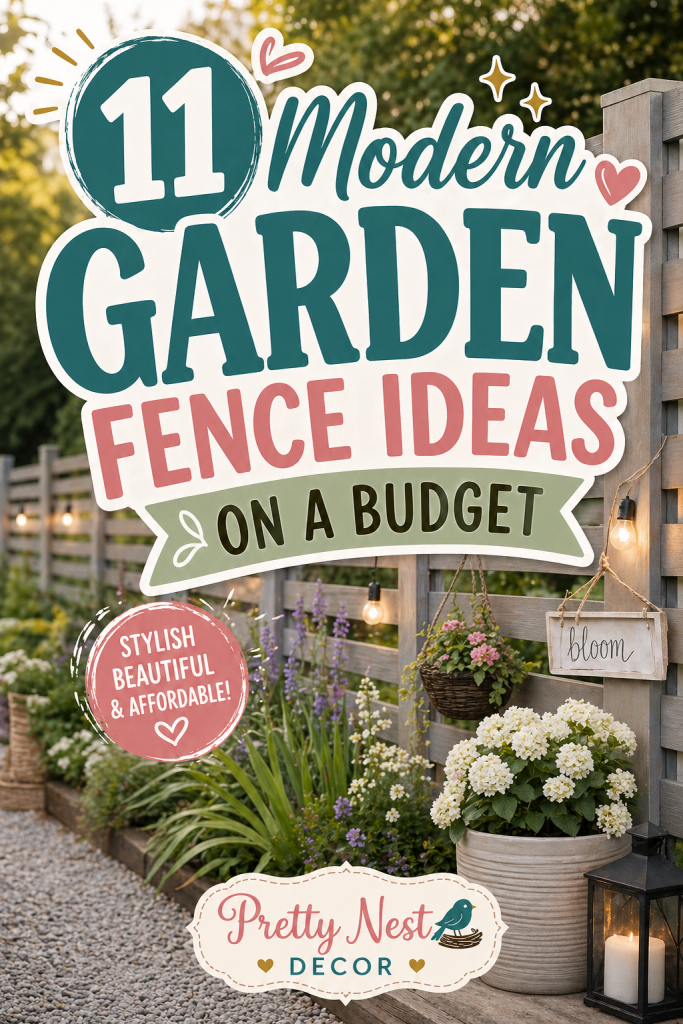
The biggest misconception is that a “modern garden fence” requires expensive materials like premium wood panels, steel installations, or custom landscaping work. In reality, some of the most stylish fence designs are built using low-cost, accessible materials combined with smart design thinking. The difference is not money—it’s layout, texture, and visual balance.
In 2026, garden design trends are shifting toward natural simplicity, vertical layering, and functional aesthetics. That means fences are no longer hidden or treated as background elements. Instead, they are being used as living walls, decorative frames, privacy screens, and even integrated garden features.
Another important factor is small-space living. Many people today don’t have large lawns or open yards. They are working with compact gardens, side yards, terraces, or balcony-style outdoor areas. In such spaces, a fence does much more than mark boundaries—it becomes a visual extension of the home itself. A poorly designed fence can make a small garden feel closed and suffocating. A well-designed one can make it feel open, layered, and peaceful.
Budget constraints also play a huge role. Not everyone can invest in expensive landscaping projects. But a limited budget does not limit creativity. In fact, some of the most effective garden fence ideas rely on DIY techniques, repurposed materials, vertical planting, paint transformations, and simple structural upgrades. These approaches focus on impact rather than cost.
For example, a plain wooden fence can be completely transformed with paint gradients, vertical planters, or woven textures. A chain-link fence can become a green wall with climbing plants. Even simple bamboo panels can create a luxury tropical feel when styled correctly. The material itself is not the limitation—the design approach is.
Lighting is another overlooked element. A fence during the day is one thing, but at night it becomes part of the atmosphere. Soft lighting, solar lamps, or subtle LED accents can completely change how a fence looks and feels, turning a basic boundary into a cozy, aesthetic background feature.
The goal of modern budget fence design is not to spend more—it is to design smarter with what you already have or can easily access. It’s about understanding how to combine structure with greenery, privacy with openness, and function with style.
In this guide, you will explore 11 Modern Garden Fence Ideas on a Budget that are practical, realistic, and visually impactful. These ideas are designed for real homes, not just inspiration boards. Each concept focuses on how to improve existing fences or build new ones using affordable materials while still achieving a modern, stylish look.
For each idea, you will learn:
- What the design actually is
- How to implement it step-by-step
- Who it works best for
- And what common mistakes to avoid
Because a fence is not just a boundary. When designed properly, it becomes a defining feature of your outdoor space—something that adds beauty, privacy, and structure all at once.
Let’s start building fences that don’t just separate spaces—but actually elevate them.
1. Vertical Green Fence Wall (Living Privacy on a Budget)
What it is
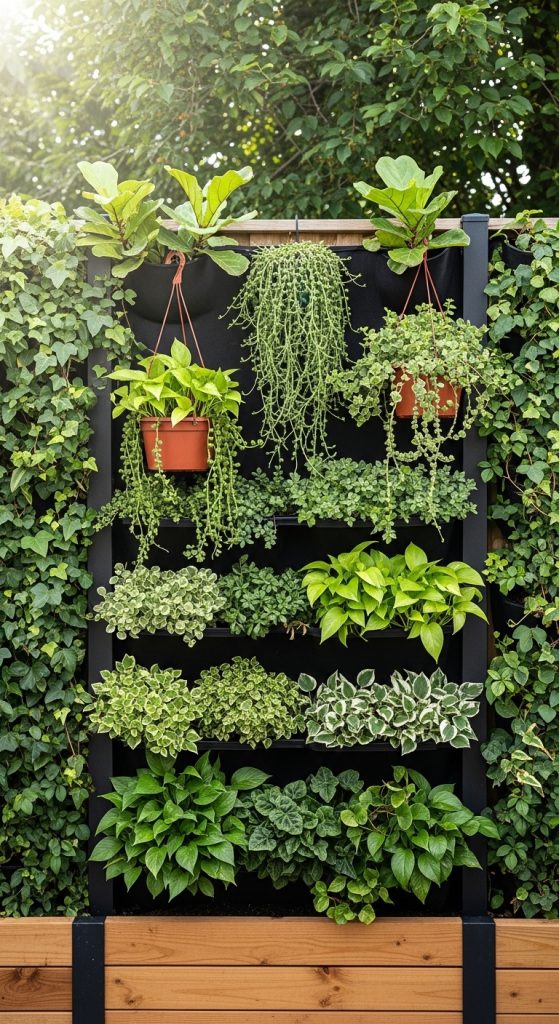
A vertical green fence wall is a budget-friendly way to turn a plain or ugly boundary into a living, breathing garden feature. Instead of hiding your fence, you upgrade it into a green backdrop using climbing plants, hanging pots, or vertical planters.
Most people treat fences as something to “cover up.” That’s the wrong mindset. In modern garden design, the fence becomes part of the landscape. A green fence doesn’t just give privacy—it adds depth, softness, and a natural luxury feel even in very small spaces.
This is one of the strongest low-budget transformations because plants do the visual work for you over time.
How to implement (practical steps)
Start by choosing your fence type:
- Wooden fence → easiest for climbing plants
- Metal fence → perfect for hanging planters
- Concrete wall → ideal for vertical planter grids
Now build the green structure:
- Install simple hooks, wire mesh, or wooden slats
- Add hanging pots at different heights
- Use climbing plants like ivy, money plant, or jasmine
Create layering:
- Bottom: bushy or medium plants in pots
- Middle: hanging planters
- Top: trailing vines spreading naturally
Keep spacing intentional:
- Don’t overcrowd the fence at once
- Let plants grow and fill space gradually
Budget-friendly options:
- Reuse plastic bottles as planters
- Use rope or wire for DIY hanging systems
- Propagate plants instead of buying mature ones
Best for
- Small gardens needing privacy
- Budget outdoor makeovers
- Nature-focused aesthetic designs
This works best when your fence looks empty, dull, or too exposed.
Pro tip
Mix fast-growing and slow-growing plants so the fence improves steadily instead of looking incomplete for months.
Mistake to avoid
Don’t plant everything in one dense layer. A flat green wall without depth looks messy instead of designed.
2. Painted Gradient Fence Design (Instant Visual Upgrade)
What it is
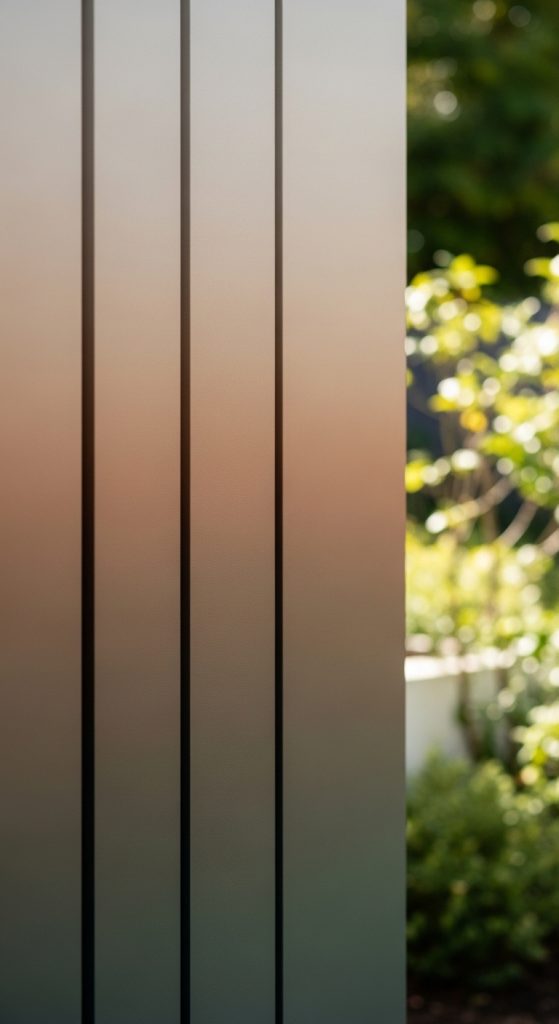
A painted gradient fence is one of the simplest yet most powerful budget upgrades for a garden. Instead of leaving a plain or faded fence as it is, you transform it using color transitions, tones, or modern matte finishes to create a stylish visual effect.
Many people underestimate paint. They think it’s just maintenance. But in design terms, paint is one of the cheapest tools for completely changing atmosphere and perceived value of a space.
A well-painted fence can make an ordinary garden look intentionally designed and modern.
How to implement (practical steps)
Start by preparing the surface:
- Clean dirt, dust, and old peeling paint
- Sand rough wooden or metal surfaces if needed
- Apply a primer if the base is uneven
Now choose a color direction:
- Earth tones (beige → brown gradient)
- Green tones (light sage → deep forest green)
- Neutral modern (white → grey gradient)
Apply design:
- Start with lighter shade at top or bottom
- Blend into darker tone gradually using sponge or brush technique
- Keep transitions soft, not sharp
Enhance modern look:
- Use matte finish instead of glossy paint
- Add minimal accents like thin black lines or panel divisions
- Keep the rest of the garden simple so fence stands out
Best for
- Old or boring fences needing refresh
- Modern aesthetic gardens
- Low-budget transformations with high impact
This works best when your fence looks outdated but structurally fine.
Pro tip
Stick to 2–3 shades only. Too many colors destroy the modern aesthetic and make it look chaotic instead of premium.
Mistake to avoid
Don’t rush painting in one thick layer. Poor blending creates patchy results that look worse than the original fence.
3. Bamboo Budget Fence Style (Natural Resort Look)
What it is
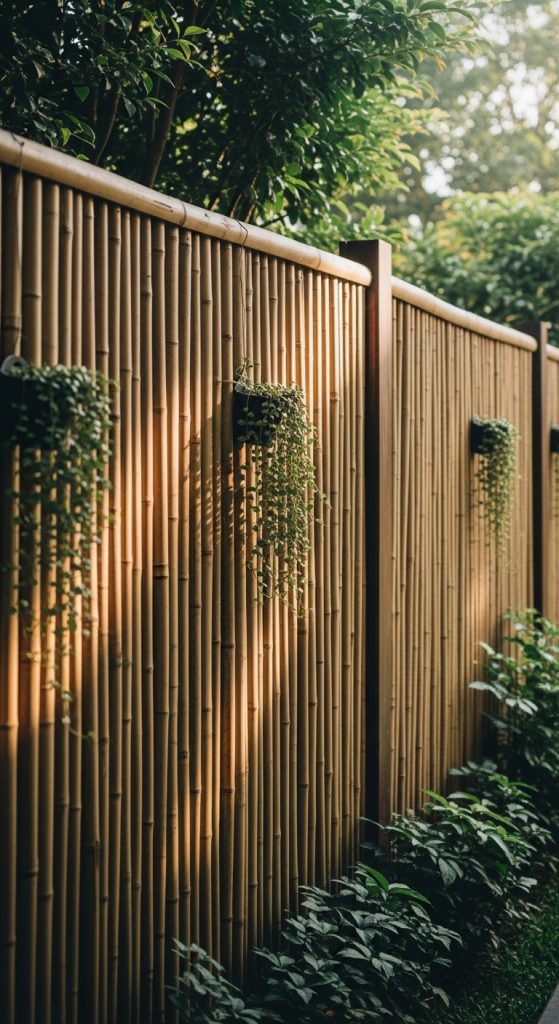
A bamboo fence is one of the most affordable ways to create a tropical, resort-style garden boundary. It instantly adds warmth, texture, and natural elegance without requiring expensive construction.
Unlike modern metal or concrete fences, bamboo brings softness and organic structure, which is why it’s widely used in luxury outdoor design as a natural divider.
The key advantage is that bamboo looks premium even when it’s simple.
How to implement (practical steps)
Start with structure planning:
- Decide whether you want full coverage or partial fencing
- Measure boundary area to avoid material waste
Now install bamboo panels:
- Use pre-made bamboo rolls or vertical bamboo sticks
- Attach securely to existing fence or frame
- Ensure even spacing for clean visual flow
Enhance durability:
- Apply weather-resistant coating or sealant
- Keep bamboo slightly raised from ground to avoid moisture damage
Style integration:
- Add small hanging plants or lanterns
- Combine with green vines for natural blending
- Use stone or gravel at base for grounding effect
Budget approach:
- Mix bamboo panels with existing fence instead of replacing fully
- Reuse bamboo sections for DIY sections or corner accents
Best for
- Tropical or natural garden themes
- Budget outdoor makeovers
- Privacy-focused fence upgrades
This works best when you want a warm, nature-inspired outdoor boundary.
Pro tip
Combine bamboo with greenery. Bamboo alone looks good, but bamboo + plants creates a true luxury garden effect.
Mistake to avoid
Don’t install bamboo unevenly or loosely. Poor alignment immediately makes it look cheap instead of aesthetic.
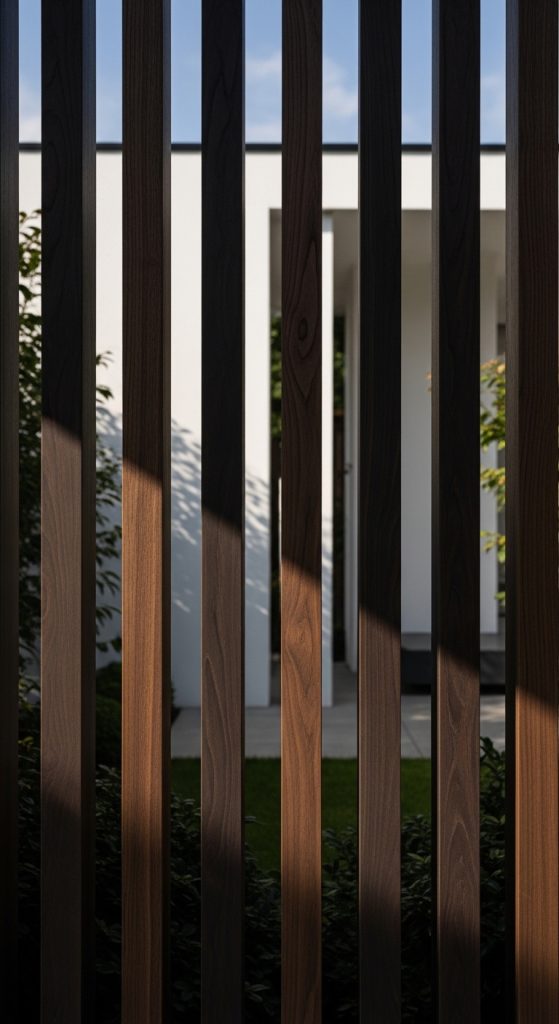
4. Slatted Wooden Fence Upgrade (Modern Minimal Luxury Look)
What it is
A slatted wooden fence is a modern upgrade that uses evenly spaced wooden panels or strips to create a clean, architectural look. Instead of a solid, heavy wall, the slatted design adds rhythm, shadow play, and airflow—making even a small garden feel more open and expensive.
Most budget fences fail because they look bulky or visually flat. Slatted design fixes that by introducing structure + negative space, which is a key principle in modern outdoor luxury design.
Even with basic wood, this style can look high-end if the spacing and alignment are done correctly.
How to implement (practical steps)
Start with base structure:
- Use existing fence or build a simple wooden frame
- Choose uniform wooden slats (thin, straight pieces work best)
Now focus on spacing:
- Keep equal gaps between each slat (consistency is critical)
- Vertical slats give height illusion; horizontal slats feel wider
- Avoid uneven spacing—it destroys the modern effect
Finish surface:
- Sand wood for smooth texture
- Apply natural stain (oak, walnut, or matte black for modern look)
- Avoid glossy finishes if aiming for luxury aesthetic
Enhance visual depth:
- Place plants behind or in front of slats for shadow layering
- Use lighting behind fence to create night-time patterns
- Keep surrounding decor minimal so fence stands out
Best for
- Modern homes and minimalist gardens
- Small to medium outdoor spaces
- People who want clean architectural aesthetics
This works best when your current fence looks heavy or outdated.
Pro tip
Black or dark brown slatted fences look more premium because they highlight shadows and structure better than light colors.
Mistake to avoid
Don’t mix random slat sizes. Inconsistent wood width immediately breaks the modern luxury feel.
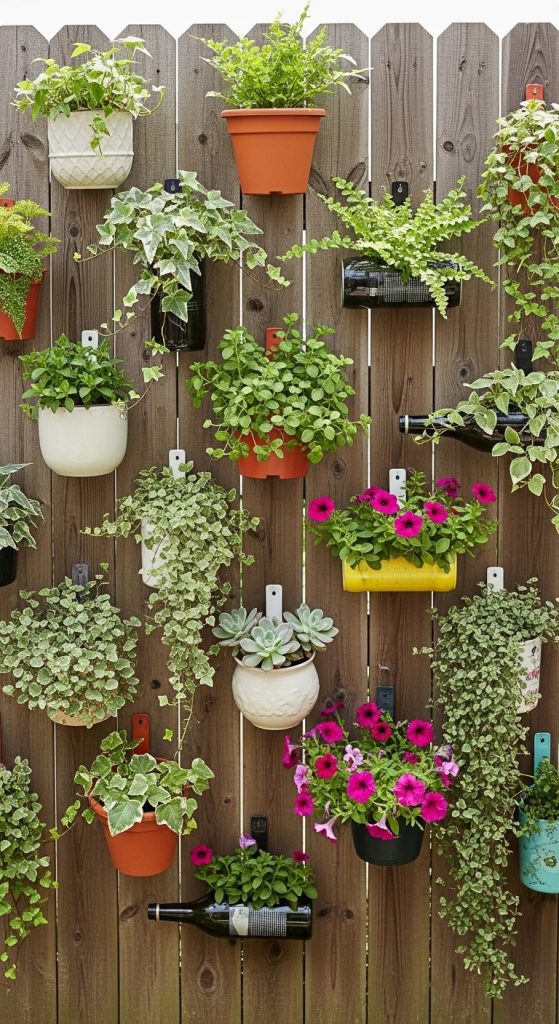
5. Hanging Planter Fence System (Budget Vertical Garden Wall)
What it is
A hanging planter fence system turns your fence into a functional vertical garden display using hooks, shelves, or suspended pots. Instead of placing plants on the ground, you use the fence itself as a growing and styling surface.
Most people waste fence space by leaving it empty or attaching random decor. This system transforms it into a living design feature that changes with seasons and plant growth.
It’s one of the easiest ways to make a small budget garden look full and layered.
How to implement (practical steps)
Start with fence preparation:
- Ensure fence is stable enough to hold weight
- Clean surface and check for weak points
Now install hanging system:
- Add hooks, nails, or wire mesh along fence
- Use uniform spacing for clean visual rhythm
- Mix heights for depth effect
Add planters:
- Use lightweight pots (plastic, tin, or recycled containers)
- Hang them in staggered formation
- Mix trailing plants and upright plants
Create layering effect:
- Top row: trailing vines (money plant, ivy)
- Middle row: flowering plants or herbs
- Bottom row: bushy plants for fullness
Budget options:
- Reuse bottles, cans, or jars as planters
- DIY rope hangers instead of buying macrame
- Repurpose kitchen containers for gardening
Best for
- Small gardens needing greenery boost
- Budget-friendly vertical gardening
- People who enjoy plant-based aesthetics
This works best when your fence looks empty and lifeless.
Pro tip
Group plants in clusters instead of evenly spacing them—natural gardens always look slightly irregular, not perfectly aligned.
Mistake to avoid
Don’t overload the fence with too many heavy pots. Overweight hanging setups can damage structure and ruin balance.
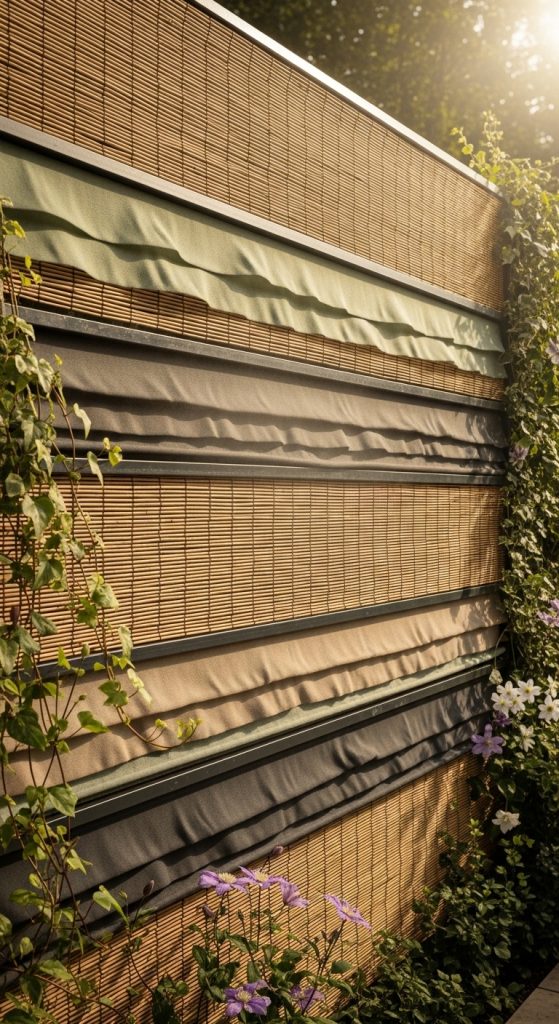
6. Privacy Screen Layer Fence (Stylish Coverage Without Heavy Walls)
What it is
A privacy screen layer fence uses fabric, bamboo mats, slats, or decorative panels to add privacy without building a solid, expensive wall. It creates a soft barrier that blocks unwanted views while still keeping the garden airy and stylish.
Most people think privacy means building taller or thicker fences. That approach often makes small gardens feel closed in and dark. A layered screen system solves privacy while maintaining light and openness.
It’s a balance between coverage and aesthetics.
How to implement (practical steps)
Start with base fence:
- Use existing fence as structural support
- Ensure it can hold light attachments
Now add privacy layer:
- Attach bamboo mats, reed screens, or fabric panels
- Install slightly above ground level for airflow
- Keep alignment clean and continuous
Layer design elements:
- Add vertical plants in front of screen for softness
- Use climbing vines to break flat surfaces
- Mix textures (wood + fabric + greenery)
Lighting enhancement:
- Add soft lights behind or above screen
- Create glow effect through semi-transparent layers
- Avoid harsh direct lighting
Keep design balanced:
- Don’t block entire fence completely
- Leave small open sections for breathing space
Best for
- Urban gardens needing privacy
- Small outdoor spaces near neighbors
- Budget-friendly boundary upgrades
This works best when your garden feels exposed or visually open to outside areas.
Pro tip
Use semi-transparent materials instead of fully opaque ones to maintain light flow while still adding privacy.
Mistake to avoid
Don’t stack too many layers (fabric + bamboo + panels all together). Over-layering removes elegance and makes it look cluttered instead of designed.
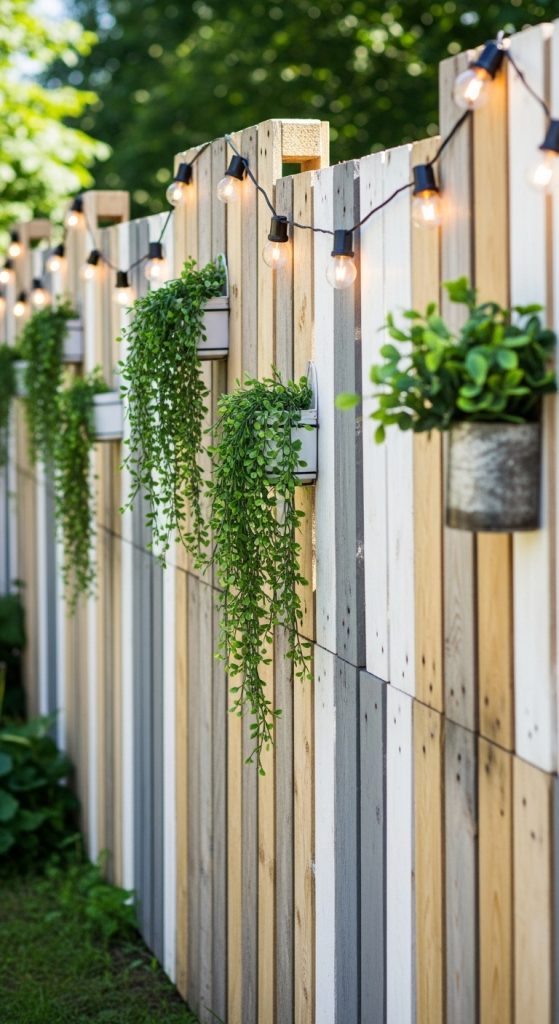
7. Recycled Pallet Fence Design (Budget Industrial Garden Look)
What it is
A recycled pallet fence is a low-cost, highly customizable boundary solution made from wooden shipping pallets or reclaimed wood panels. It creates a rustic-modern industrial aesthetic that fits surprisingly well in 2026 garden trends when styled properly.
Most people ignore pallets because they think they look “cheap” or unfinished. That only happens when they are used without design structure. When arranged intentionally, pallets can look modern, layered, and even semi-luxury in a raw, natural way.
This idea is powerful because it turns waste material into a structured design feature.
How to implement (practical steps)
Start with material selection:
- Choose clean, solid pallets (avoid broken or rotten wood)
- Sand surfaces to remove rough edges and splinters
Now build the fence structure:
- Stand pallets vertically and secure them to posts
- Align them evenly for a clean wall effect
- Or stagger them slightly for a more creative design
Style the surface:
- Paint in neutral tones (whitewash, grey, or matte black)
- Or keep natural wood for rustic aesthetic
- Apply weatherproof coating for durability
Enhance visual value:
- Add hanging plants directly on pallets
- Insert small shelves between slats for decor
- Use string lights along the structure for warmth
Budget advantage:
- Pallets are often free or very cheap from warehouses
- Can be reused and reshaped easily
Best for
- DIY garden projects on tight budgets
- Rustic or industrial-style outdoor spaces
- Creative homeowners who like customization
This works best when you want a strong visual fence without high cost.
Pro tip
Painting all pallets in one unified tone instantly upgrades them from “recycled” to “intentional design.”
Mistake to avoid
Don’t leave pallets raw and uneven without treatment. Rough, untreated wood can look neglected instead of styled.
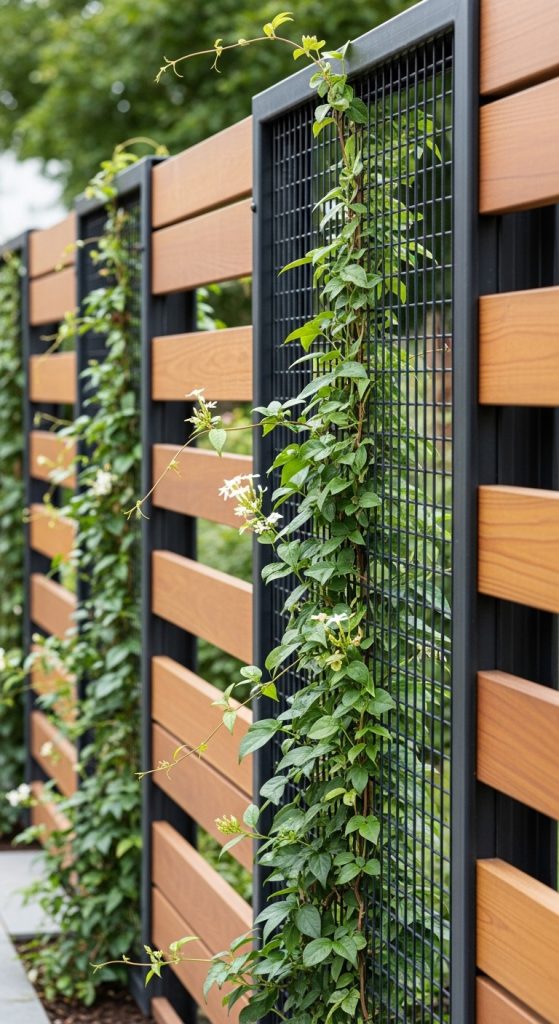
8. Mixed Material Modern Fence (Wood + Metal + Green Fusion)
What it is
A mixed material fence combines two or more elements like wood, metal, and greenery to create a modern, layered boundary design. Instead of relying on a single material, it blends textures to achieve a more dynamic and premium look.
Most budget fences fail because they feel flat—either fully wood, fully metal, or fully concrete. Luxury design avoids monotony by introducing contrast. This method creates depth even in simple structures.
When done correctly, it looks like a professionally designed landscape feature.
How to implement (practical steps)
Start with base structure:
- Use wooden posts or metal frame as foundation
- Ensure structure is stable and aligned
Now layer materials:
- Add wooden slats in sections
- Combine with metal mesh or panels in between
- Keep spacing intentional, not random
Introduce greenery:
- Attach climbing plants on metal sections
- Add hanging pots on wooden parts
- Use vines to soften hard edges
Balance textures:
- Wood = warmth
- Metal = structure
- Plants = softness
Keep proportions controlled:
- Don’t let one material dominate too much
- Aim for balanced distribution across fence length
Finish detailing:
- Use matte finishes instead of shiny surfaces
- Add soft lighting for night-time depth
Best for
- Modern home gardens
- Medium-budget outdoor upgrades
- People who want a designer-style fence look
This works best when your current fence feels too plain or one-dimensional.
Pro tip
Limit yourself to 3 materials max. More than that creates visual confusion instead of luxury balance.
Mistake to avoid
Don’t randomly attach materials without pattern. Mixed design only works when there is clear structure behind it.
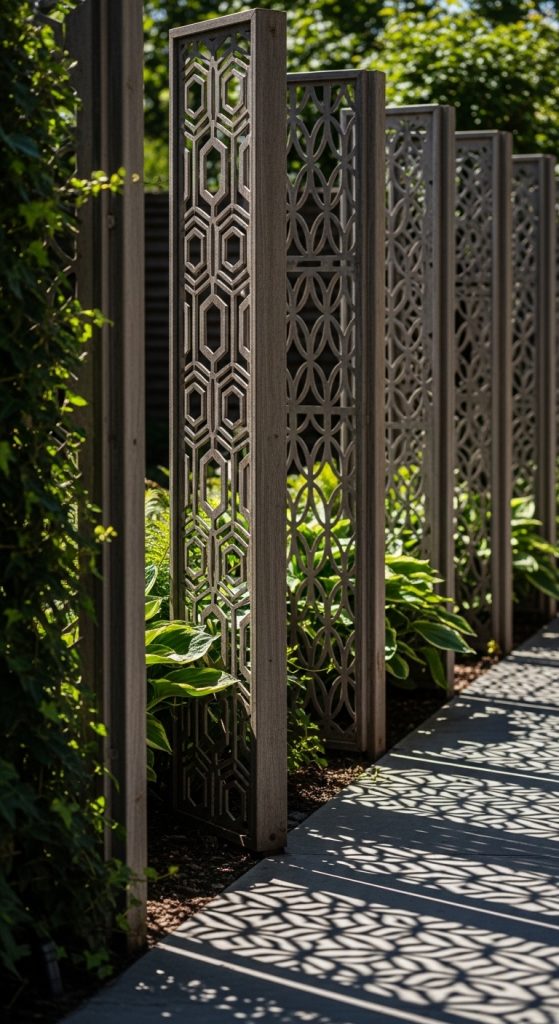
9. Decorative Panel Fence System (Pattern-Based Aesthetic Upgrade)
What it is
A decorative panel fence system uses pre-designed or DIY patterned panels to add visual interest to a plain boundary. These panels can feature geometric cutouts, lattice designs, or artistic shapes that turn a simple fence into a focal design feature.
Most people rely only on solid fences for privacy, but that creates visual heaviness. Decorative panels introduce airflow, light patterns, and artistic texture, making the fence feel lighter and more premium.
This is one of the easiest ways to upgrade a basic fence without rebuilding it.
How to implement (practical steps)
Start with existing fence:
- Ensure it is stable and clean
- Identify sections where panels will be added
Now install panels:
- Attach decorative wooden or metal panels on top or front layer
- Keep spacing consistent between sections
- Use repeating patterns for cohesive design
Choose design style:
- Geometric modern cutouts for contemporary look
- Floral or curved patterns for soft aesthetic
- Lattice style for traditional-modern blend
Enhance visual depth:
- Place plants behind panels for shadow effects
- Use lighting to project patterns at night
- Combine with neutral fence base for contrast
Budget approach:
- DIY panels using plywood and cutting tools
- Paint existing fence and overlay simple stencil patterns
Best for
- Plain or boring fences needing visual upgrade
- Modern and aesthetic garden designs
- Small to medium outdoor spaces
This works best when your fence is structurally fine but visually dull.
Pro tip
Backlighting decorative panels at night creates high-end shadow patterns that look far more expensive than the actual cost.
Mistake to avoid
Don’t mix too many different panel designs. Stick to one pattern style for a clean, premium look.
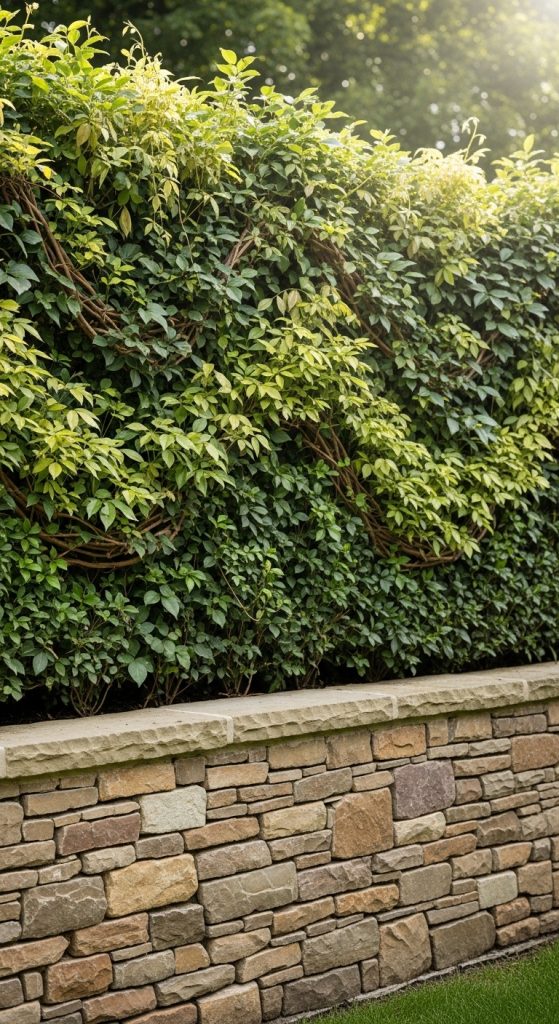
10. Stone Base + Green Top Fence Design (Structured Natural Luxury)
What it is
A stone base with a green top fence is a two-layer boundary system that combines strength and softness in one design. The lower part uses stone or brick for durability and grounding, while the upper part is softened with greenery like climbing plants or planted screens.
Most people make fences either fully hard (concrete/metal) or fully soft (wood/green). That’s why their gardens feel one-dimensional. Luxury design depends on contrast—heavy + light, solid + organic.
This concept is widely used in modern 2026 garden architecture because it creates a resort-like, grounded aesthetic without looking harsh.
How to implement (practical steps)
Start with base layer:
- Build or use existing stone, brick, or concrete base
- Keep height around waist level for balance
- Use neutral tones like grey, beige, or natural stone
Now add upper layer:
- Install wooden frame, wire mesh, or metal grid above stone base
- Add climbing plants or vertical greenery
- Let vines naturally grow over time for softness
Balance structure:
- Keep stone part clean and simple (no heavy patterns)
- Allow greenery to be the “moving visual element”
Enhance luxury feel:
- Add soft lighting along stone edges
- Use warm tones to highlight texture at night
- Avoid overcrowding plants on top layer
Best for
- Medium to large gardens
- Homes needing durable + aesthetic fencing
- Modern outdoor architecture lovers
This works best when you want a fence that feels strong but not visually heavy.
Pro tip
Keep the stone base visually simple so the greenery becomes the main attraction. Over-designed stone reduces contrast impact.
Mistake to avoid
Don’t let plants completely hide the stone base. The beauty of this design comes from visible layering, not full coverage.
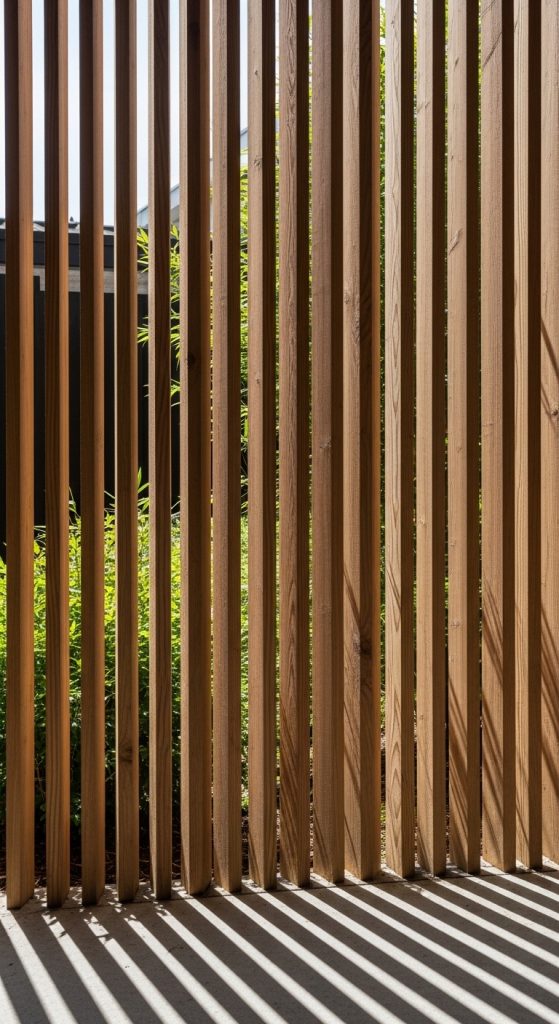
11. Minimal Slat + Open Air Fence Design (Lightweight Modern Luxury)
What it is
A minimal slat and open-air fence design focuses on space, light, and controlled visibility. Instead of building a full solid wall, it uses spaced slats or partial fencing to define boundaries while keeping the garden open and airy.
Most budget fences fail because they try to block everything completely. That creates a closed, heavy feeling. Luxury modern design does the opposite—it allows visual breathing space while still maintaining structure and privacy control.
This style is widely used in modern villas and contemporary outdoor spaces because it feels clean, architectural, and intentional.
How to implement (practical steps)
Start with structure planning:
- Use wooden or metal vertical slats
- Keep spacing equal for a clean modern rhythm
- Avoid full coverage—leave intentional gaps
Now build visual flow:
- Align slats in straight, consistent lines
- Use uniform thickness for premium appearance
- Choose one direction style (vertical or horizontal, not mixed)
Enhance openness:
- Allow partial visibility through fence gaps
- Use greenery behind or between slats for softness
- Avoid blocking entire view unless necessary
Finish surface:
- Use matte finishes (black, dark brown, or natural wood)
- Avoid glossy or uneven paint textures
Lighting integration:
- Add soft lighting behind slats for shadow effect
- Highlight structure at night for architectural depth
Best for
- Modern minimalist gardens
- Small to medium outdoor spaces
- People who prefer clean, open designs
This works best when you want a fence that defines space without feeling heavy or closed.
Pro tip
Negative space (empty gaps) is part of the design. Don’t feel pressured to “fill” everything—luxury often comes from what you leave open.
Mistake to avoid
Don’t reduce spacing too much. If slats are too close, the fence becomes solid again and loses its modern airy effect.