
Staircases are often treated as purely functional elements in a home—but that’s a mistake. In 2026 interior design trends, staircases are becoming visual focal points, and one of the most effective ways to elevate them is through carpet styling. A well-designed carpeted staircase doesn’t just add comfort underfoot—it transforms the entire space, adding texture, warmth, and a sense of intentional design.
Carpeting your staircase is no longer just about practicality or safety. It has evolved into a design statement that connects different levels of your home aesthetically. Whether your home style is modern, minimalist, traditional, or eclectic, the right staircase carpet can tie everything together while also enhancing durability and usability.
One of the biggest reasons staircase carpets are trending in 2026 is the shift toward layered interiors. Homes are no longer designed with flat, single-texture surfaces. Instead, designers are mixing materials—wood, metal, fabric, and stone—to create depth and visual interest. Staircase carpets play a major role in this layering by softening hard surfaces like wood or concrete while adding contrast and dimension.
Another key factor is comfort. Hard staircases can feel cold, noisy, and even unsafe, especially in busy households. Carpeted stairs reduce noise, provide grip, and make everyday movement more comfortable. But beyond function, they also bring a sense of coziness that aligns with modern interior trends focused on warmth and livability.
What makes staircase carpet design particularly powerful is its ability to guide visual flow. Since stairs connect different parts of a home, the design you choose influences how spaces feel connected. A neutral carpet can create continuity, while a bold pattern can act as a transition statement between floors. This is why designers now treat staircases as part of the overall design narrative rather than an afterthought.
In 2026, the focus is on balance between style and practicality. Overly ornate or heavy carpets are being replaced with cleaner, more refined designs. Patterns are becoming more subtle, colors more intentional, and textures more tactile. Instead of overwhelming the space, staircase carpets are designed to complement architecture while still standing out in a sophisticated way.
Another noticeable shift is the rise of customization and personality-driven design. Homeowners are moving away from generic choices and leaning toward styles that reflect their taste. From minimalist neutral runners to bold geometric prints, staircase carpets are now chosen to match lifestyle, mood, and interior themes.
Material choice is also more important than ever. In modern homes, durability and maintenance matter just as much as appearance. Designers are favoring materials that can withstand foot traffic while still maintaining a refined look. This means choosing carpets that resist wear, hold color well, and are easy to clean—especially in high-use areas like stairs.
Lighting also plays a huge role in how staircase carpets appear. Natural light enhances textures and colors, while artificial lighting can highlight patterns and depth. This is why many modern staircase designs consider how carpet interacts with surrounding light sources to create a cohesive visual effect.
Another trend shaping staircase carpet ideas is the influence of minimal luxury aesthetics. Instead of flashy or overly decorative designs, the focus is on subtle elegance—neutral tones, fine textures, and clean lines that feel high-end without being overwhelming. This approach makes staircase carpets feel timeless rather than trend-dependent.
Ultimately, stylish staircase carpet ideas in 2026 are about more than just covering steps—they are about creating an experience. Every step becomes part of a visual journey, connecting spaces in a way that feels intentional, comfortable, and aesthetically pleasing.
In the following ideas, you’ll explore staircase carpet styles that are not only visually appealing but also practical and adaptable. Each concept is designed to help you understand how different patterns, textures, and layouts can transform your staircase into a standout design feature.
1. Neutral Minimal Runner Staircase (Clean Luxury Foundation)
What it is
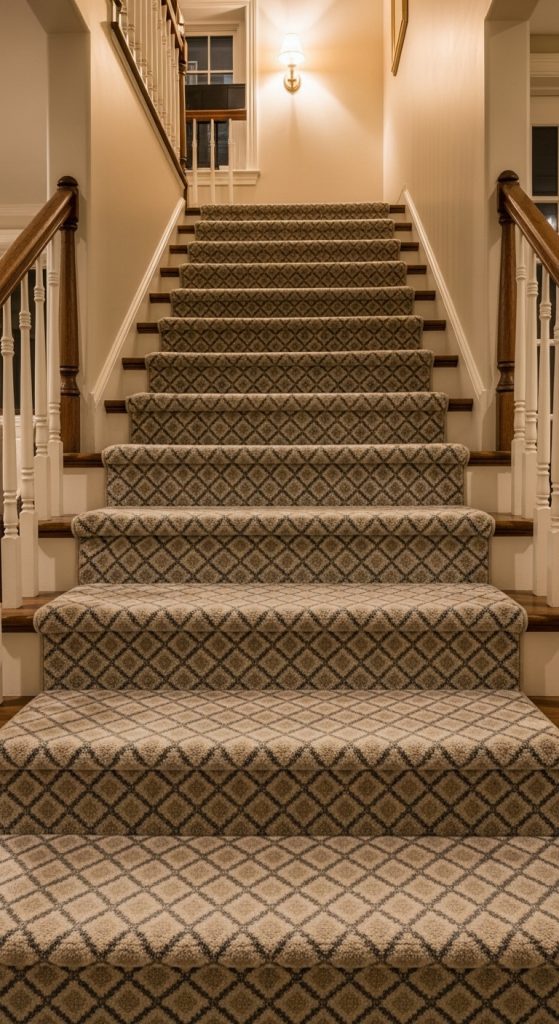
A neutral minimal runner is a narrow carpet strip placed down the center of the staircase, leaving the sides of the stairs exposed. This style is dominating 2026 interiors because it delivers a high-end look without overwhelming the space.
Instead of covering the entire staircase, the runner acts like a visual guide—clean, controlled, and intentional. It allows the natural material of the stairs (wood, marble, etc.) to remain visible while adding softness and comfort exactly where needed.
How it works (design breakdown)
- Narrow carpet centered on each step
- Equal exposed edges on both sides
- Simple tones like beige, taupe, ivory, or soft gray
- Low to medium pile for clean structure
This balance between exposed surface and soft texture creates a refined, architectural feel.
Best for
- Modern and minimalist homes
- Small staircases that need to feel wider
- Clean luxury interior styles
This works best when you want subtle elegance without visual clutter.
Styling approach
- Pair with wooden stairs for contrast
- Use black or brass rods for a classic detail
- Keep surrounding walls neutral for cohesion
Pro tip
The width of the runner matters—too wide removes the minimal effect, too narrow looks incomplete.
Mistake to avoid
Don’t choose heavy patterns or bold colors here. It breaks the clean, luxury aesthetic.
2. Soft Patterned Carpet Full Coverage (Balanced Statement Look)
What it is
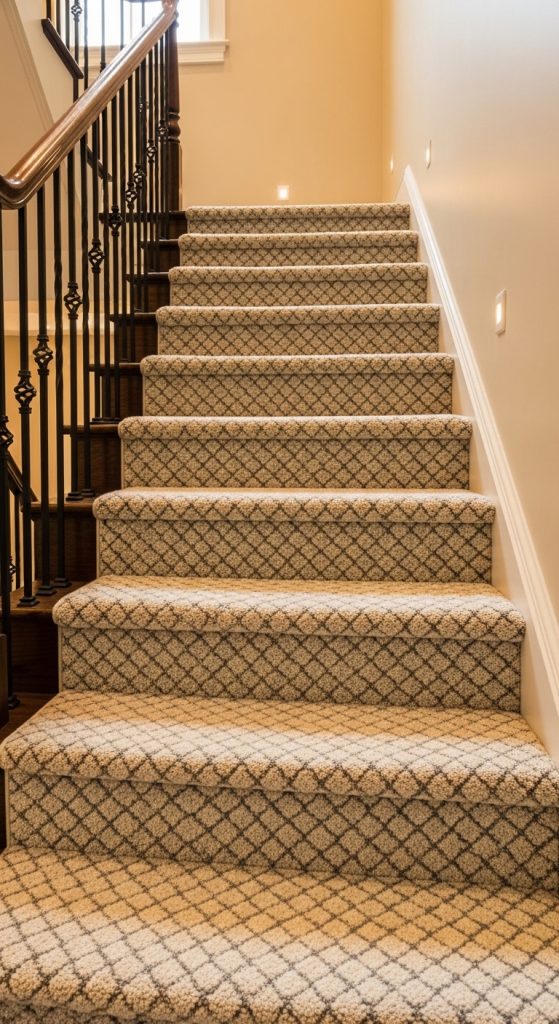
Full coverage patterned carpet means every step is completely covered with a subtle repeating pattern that adds depth without overpowering the staircase. This is ideal for those who want a bit of visual interest while still maintaining a refined look.
In 2026, patterns are not loud—they are controlled. Think small geometric shapes, faded prints, or tone-on-tone textures that are noticeable up close but soft from a distance.
How it works (design breakdown)
- Carpet covers entire step surface
- Subtle repeating pattern across all stairs
- Muted color palette (soft blues, warm grays, earthy tones)
- Medium pile for comfort and durability
The pattern creates rhythm as you move up the stairs, adding a dynamic visual flow.
Best for
- Family homes with heavy stair use
- Traditional or transitional interiors
- Spaces needing warmth and softness
This works best when you want comfort plus a gentle design statement.
Styling approach
- Match carpet tones with wall or railing color
- Use soft lighting to highlight pattern depth
- Keep surrounding decor simple to avoid overload
Pro tip
Choose patterns that are low-contrast—they age better and feel more timeless.
Mistake to avoid
Don’t use overly bold or busy prints. They can make the staircase feel cramped and chaotic.
3. Bold Striped Runner Staircase (Visual Length Illusion)
What it is
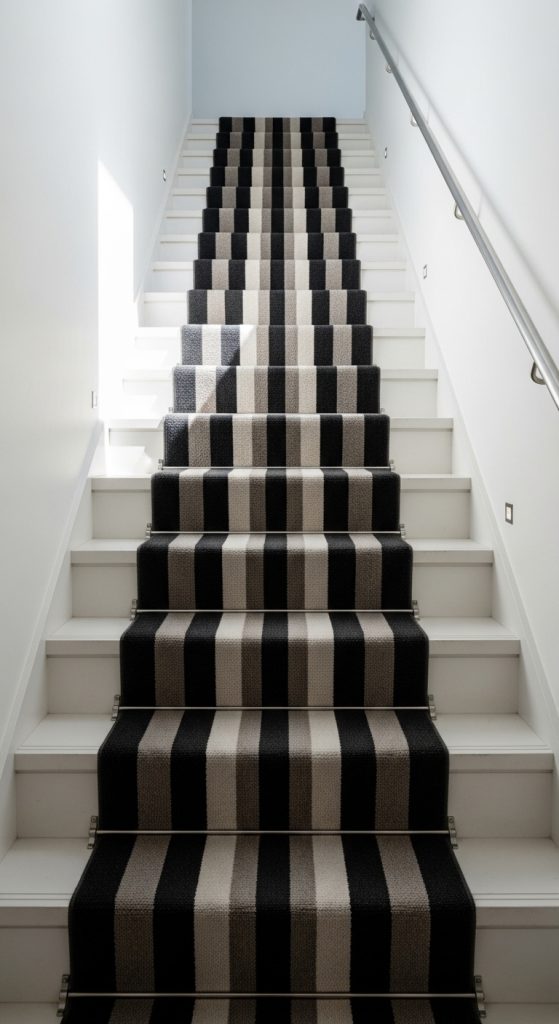
A bold striped runner is a carpet strip featuring linear patterns (usually vertical stripes along the staircase) designed to create movement and elongate the visual flow of the stairs.
This style is one of the most powerful design tricks in 2026 because it can visually change how your staircase feels—making it appear longer, taller, and more dynamic.
How it works (design breakdown)
- Runner placed in center like minimal style
- Stripes run along the length of the stairs
- Can be subtle contrast (beige + cream) or bold (black + white)
- Low to medium pile for clean lines
The stripes guide the eye upward, creating a strong directional effect.
Best for
- Narrow or steep staircases
- Homes needing a statement feature
- Modern or classic interiors
This works best when you want your staircase to stand out.
Styling approach
- Align stripes perfectly across each step
- Pair with neutral walls for balance
- Use darker railings to anchor the look
Pro tip
Thin stripes feel more elegant, while thick stripes feel more bold and dramatic—choose based on your space.
Mistake to avoid
Don’t misalign the stripes during installation. Even small errors ruin the visual flow.
4. Textured Wool Loop Carpet Staircase (Warm Depth & Durability)
What it is
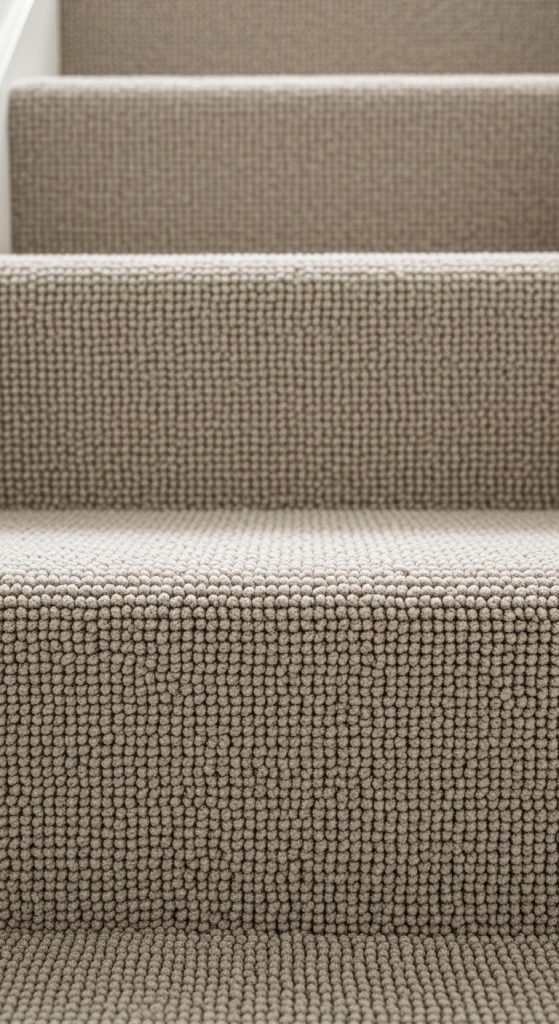
A textured wool loop carpet is a full-coverage staircase solution made from looped fibers (often wool or wool blends) that create a subtle, tactile surface. Instead of relying on bold color or pattern, this style uses texture as the main design feature.
In 2026, this approach is gaining traction because it aligns with the shift toward quiet luxury and material-driven interiors. The staircase looks understated at first glance, but up close it reveals depth, craftsmanship, and quality.
How it works (design breakdown)
- Full stair coverage for maximum comfort
- Loop-pile construction (tight, durable loops)
- Neutral tones like oatmeal, greige, sand, or soft charcoal
- Slight tonal variation within the weave for depth
The loops catch light differently, giving the surface a natural, woven look.
Best for
- High-traffic homes (families, pets)
- Minimal or Scandinavian-style interiors
- Anyone prioritizing durability without sacrificing aesthetics
This works best when you want a long-lasting, low-maintenance surface that still feels premium.
Styling approach
- Pair with light wood or matte black railings
- Keep wall colors soft to highlight texture
- Add simple stair rods only if you want a classic touch
Pro tip
Choose a tight, low-profile loop—looser loops can snag and wear faster.
Mistake to avoid
Don’t go too dark with heavy texture. It can make the staircase feel dense and visually heavy.
5. Monochrome Black & White Stair Runner (Graphic Modern Contrast)
What it is
A monochrome black-and-white runner is a high-contrast carpet design that uses simple graphic patterns (checks, herringbone, or geometric lines) to create a bold, modern staircase statement.
This style stands out because it uses contrast instead of color. In 2026 interiors, monochrome palettes are being used to anchor spaces and add clarity—especially in homes that lean toward minimal or contemporary design.
How it works (design breakdown)
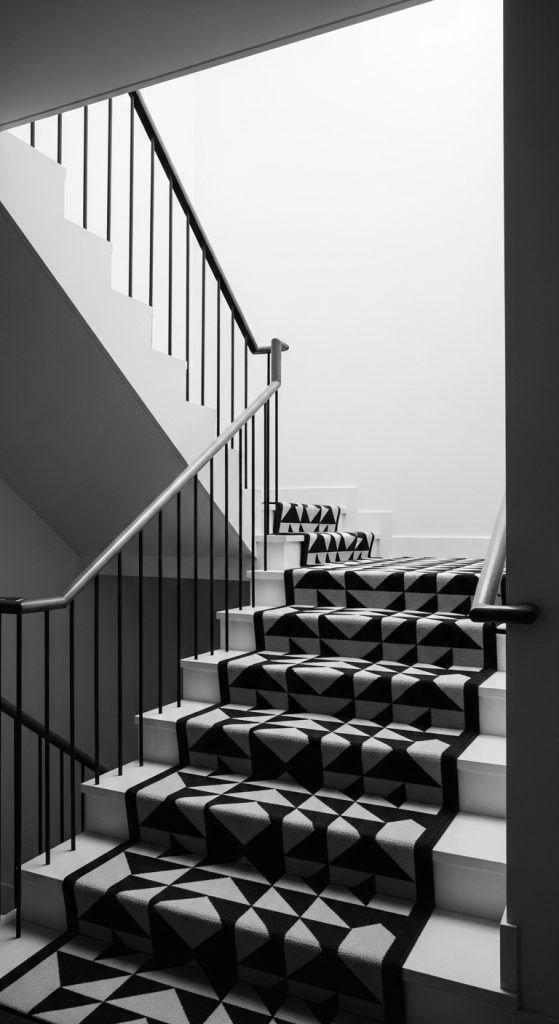
- Center runner layout with exposed stair edges
- Black and white or charcoal and cream palette
- Clean, repeating pattern (not overly complex)
- Medium pile for balance between comfort and structure
The contrast creates a sharp visual rhythm as you move up or down the stairs.
Best for
- Modern, contemporary, or industrial homes
- Neutral interiors that need a focal point
- Staircases with good natural or artificial lighting
This works best when you want a bold feature without adding color.
Styling approach
- Pair with black railings or hardware for cohesion
- Use white or light walls to balance contrast
- Keep surrounding décor minimal
Pro tip
Stick to classic patterns (like herringbone or simple checks). Trendy graphics can date quickly.
Mistake to avoid
Don’t overcrowd the space with other bold patterns nearby—it competes with the staircase.
6. Soft Neutral Ombre Stair Carpet (Gradient Flow Effect)
What it is
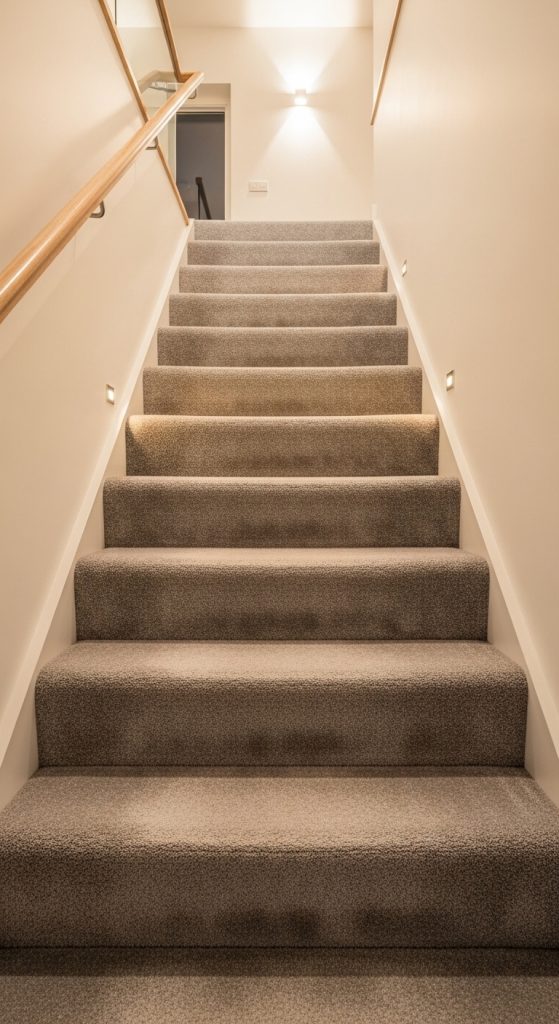
An ombre staircase carpet is a gradient-style design where the color subtly transitions from one tone to another along the length of the stairs. Instead of repeating patterns, the visual interest comes from the smooth shift in color.
In 2026, ombre designs are being used to create flow and movement without adding visual clutter. It’s a modern, artistic approach that feels soft and continuous.
How it works (design breakdown)
- Full coverage or runner style (both work)
- Gradual color shift (e.g., light beige → taupe → soft brown)
- Low to medium pile for smooth visual transition
- Muted, blended tones rather than high contrast
The gradient creates a sense of progression as you move through the space.
Best for
- Open-plan homes where flow matters
- Minimal interiors needing subtle interest
- Staircases that connect visually different levels
This works best when you want something unique but still calm and cohesive.
Styling approach
- Align gradient direction with staircase flow (bottom to top)
- Pair with neutral walls to highlight color transition
- Use warm lighting to enhance tonal depth
Pro tip
Keep the gradient soft and gradual—sharp transitions ruin the ombre effect.
Mistake to avoid
Don’t mix too many colors in the gradient. It should feel like one continuous tone shift, not a rainbow.
7. Classic Stair Rod Runner Style (Timeless Structured Elegance)
What it is
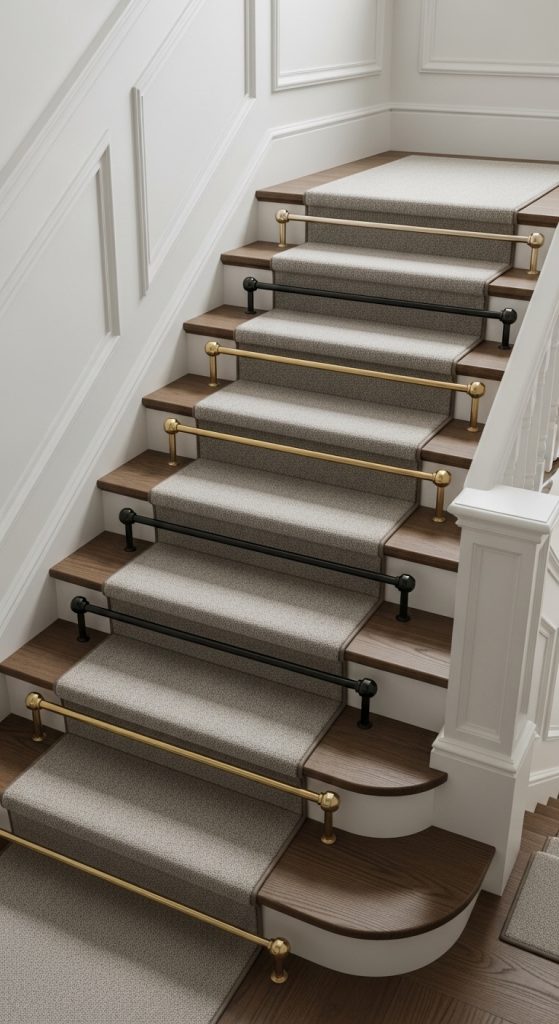
This style combines a center runner carpet with decorative stair rods installed across each step, creating a classic, tailored look. The rods don’t hold the carpet in place structurally—they’re a design feature that adds rhythm, detail, and a sense of craftsmanship.
In 2026, this look is being reinterpreted with cleaner lines and more refined finishes, making it feel less traditional and more timeless luxury with modern restraint.
How it works (design breakdown)
- Narrow to medium-width runner centered on the stairs
- Decorative rods placed at the back of each tread (under the nosing)
- Finishes like brushed brass, matte black, or polished nickel
- Low-pile carpet to keep lines crisp
The repetition of rods creates a visual cadence that guides the eye upward.
Best for
- Transitional homes (mix of classic + modern)
- Staircases with visible side profiles (open stringers)
- Anyone wanting subtle ornament without heavy pattern
This works best when you want detail without visual noise.
Styling approach
- Pair brass rods with warm woods; black rods with cooler palettes
- Choose a simple runner (herringbone or solid) to let rods stand out
- Keep spacing consistent and precisely aligned
Pro tip
Rod finish should match or complement other metals in the space (door handles, lighting).
Mistake to avoid
Don’t use bulky rods with thick carpet—it looks heavy and breaks the refined look.
8. Geometric Pattern Runner (Modern Structured Statement)
What it is
A geometric runner uses clean, repeating shapes—like diamonds, hexagons, or stepped lines—to create a structured, contemporary statement. Unlike organic patterns, geometry adds order and precision.
In 2026, the key is restraint: patterns are crisp but not chaotic, often in tone-on-tone or limited palettes to keep the staircase sophisticated.
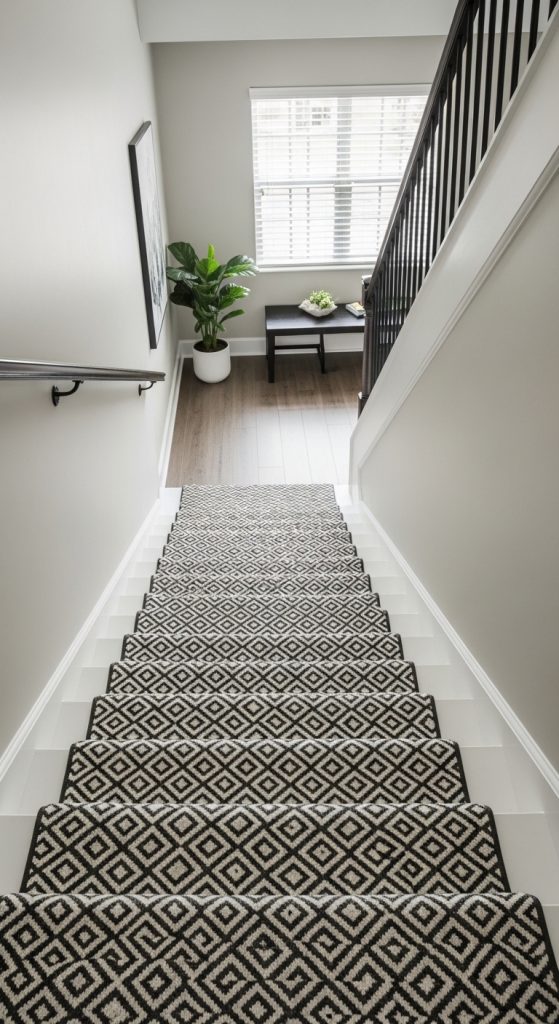
How it works (design breakdown)
- Center runner with exposed stair edges
- Repeating geometric motif aligned step-to-step
- Limited color palette (e.g., charcoal + ivory, taupe + cream)
- Low to medium pile to preserve pattern clarity
The pattern acts like a grid, organizing the visual flow of the stairs.
Best for
- Modern and contemporary interiors
- Straight stair runs where alignment can shine
- Spaces needing a defined focal element
This works best when you want a clear, graphic identity.
Styling approach
- Keep walls and balustrades simple to avoid competition
- Align pattern precisely at each tread for continuity
- Use matte finishes around it to reduce glare on lines
Pro tip
Choose medium-scale patterns—too small looks busy, too large feels clumsy on steps.
Mistake to avoid
Misalignment between steps. Even slight shifts ruin the geometric precision.
9. Natural Fiber Look (Sisal/Jute-Style) Stair Carpet (Organic Minimal Warmth)
What it is
A natural fiber look—often sisal or jute (or durable synthetics that mimic them)—offers a woven, organic texture that brings warmth and an earthy feel to the staircase. The design relies on material honesty rather than color or pattern.
In 2026, this style fits perfectly with biophilic and minimal interiors, where natural textures ground the space.
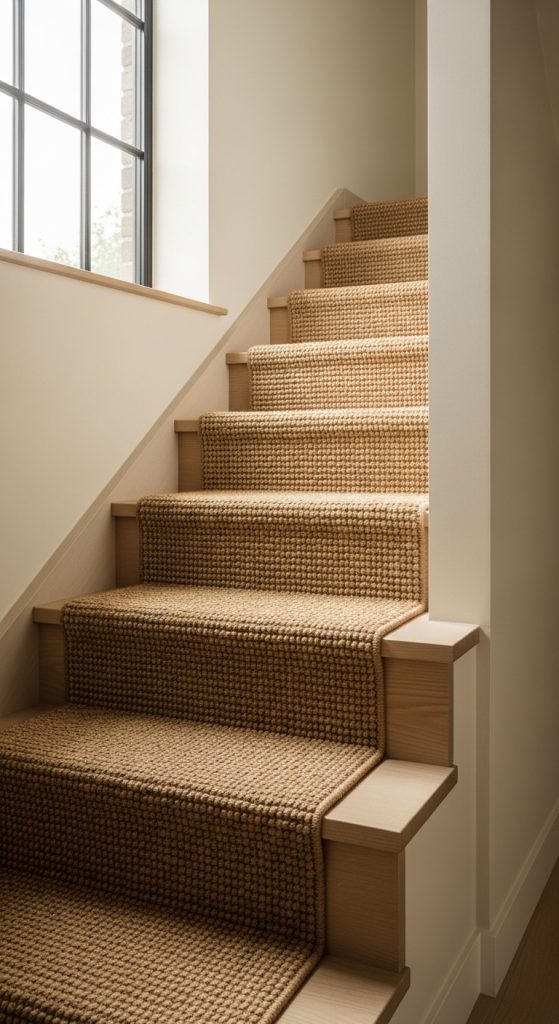
How it works (design breakdown)
- Full coverage or runner (both are common)
- Tight woven texture with visible fibers
- Neutral tones: sand, flax, honey, light brown
- Often paired with a bound edge (fabric or leather trim)
The weave introduces subtle variation, adding depth without pattern.
Best for
- Coastal, Scandinavian, or earthy modern homes
- High-traffic areas needing durability
- Spaces aiming for calm, natural aesthetics
This works best when you want texture-driven design.
Styling approach
- Pair with light woods, linen fabrics, and soft whites
- Add a contrasting border (black, chocolate, or leather) for definition
- Use warm lighting to enhance the woven texture
Pro tip
Consider a synthetic sisal for better stain resistance while keeping the same look.
Mistake to avoid
Avoid very rough weaves on steep stairs—they can feel harsh underfoot and wear unevenly.
10. Two-Tone Border Runner Staircase (Framed Luxury Look)
What it is
A two-tone border runner is a center staircase runner with a contrasting border along the edges, creating a framed, tailored appearance. Instead of relying on patterns, the design uses color contrast to define structure and add sophistication.
In 2026, this style is popular because it delivers a luxury hotel-like aesthetic while staying minimal. The border acts like a frame, making the staircase feel more intentional and architecturally refined.
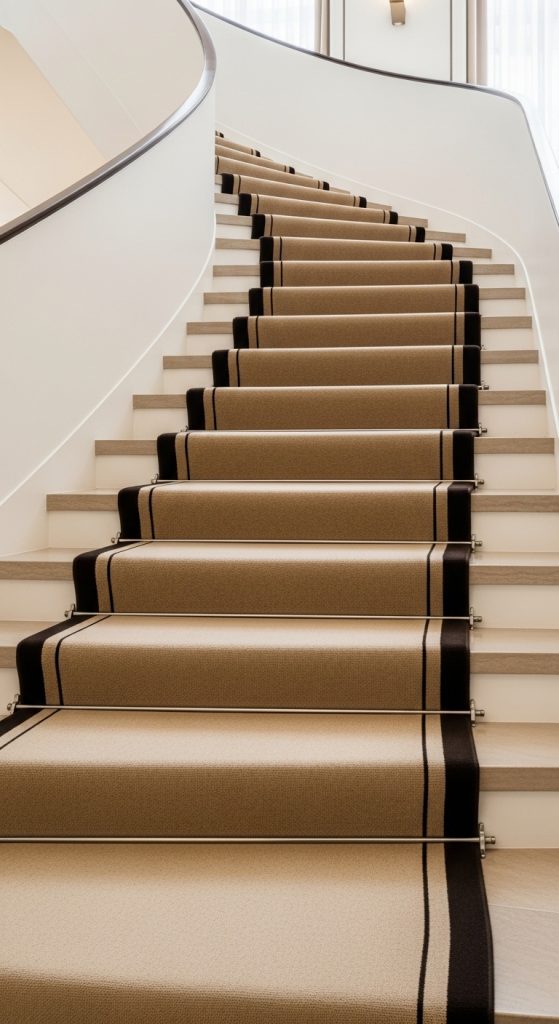
How it works (design breakdown)
- Center runner with visible stair edges
- Main neutral base (beige, gray, cream)
- Contrasting border (black, navy, deep brown)
- Clean straight lines with sharp edges
The border visually outlines each step, adding depth and definition.
Best for
- Modern classic or luxury interiors
- Straight or slightly curved staircases
- Homes needing subtle but noticeable detail
This works best when you want elegance without patterns.
Styling approach
- Match border color with railing or trim
- Keep walls neutral to highlight framing effect
- Use consistent border thickness across all steps
Pro tip
A thin border looks more refined, while a thick border feels bold—choose based on space size.
Mistake to avoid
Don’t use too many colors. Keep it strictly two-tone for a clean, high-end result.
11. Carpeted Staircase with Patterned Risers (Hidden Detail Design)
What it is
This style features carpet on the stair treads (where you step) combined with decorative patterns on the risers (the vertical part of each step). It creates a layered look where the design reveals itself gradually as you move.
In 2026, this approach is trending because it adds visual interest without overwhelming the walking surface, keeping the practical area simple while making the staircase unique.
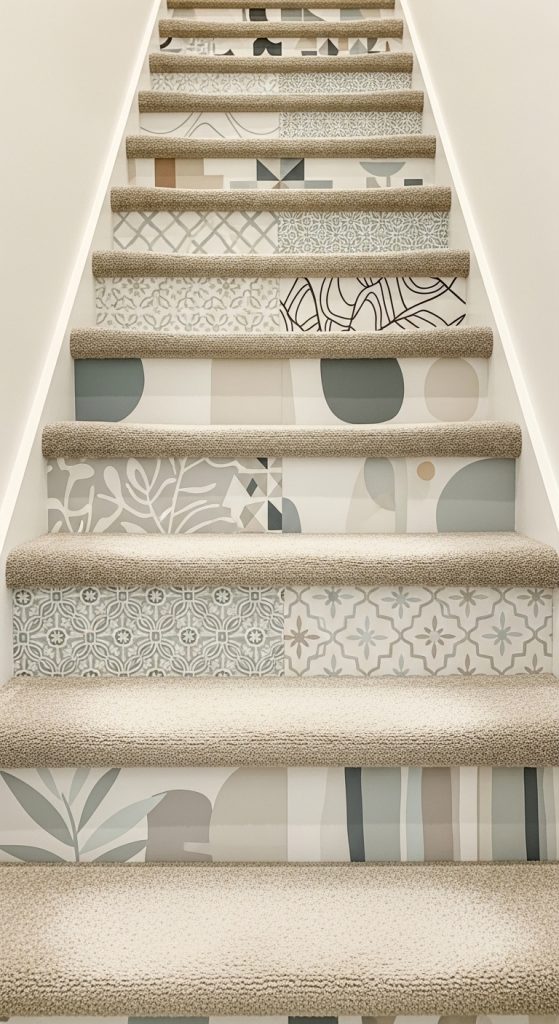
How it works (design breakdown)
- Carpet placed only on treads (runner or full tread coverage)
- Risers decorated with wallpaper, tile, or painted patterns
- Contrast between soft carpet and detailed riser design
- Neutral carpet paired with more expressive risers
The risers act like a hidden canvas, visible mainly when viewed from below or at an angle.
Best for
- Creative or eclectic interiors
- Homes wanting subtle artistic detail
- Staircases visible from entry or living areas
This works best when you want design impact without sacrificing practicality.
Styling approach
- Keep riser patterns small or repetitive for cohesion
- Match colors with surrounding decor
- Use durable materials for risers to prevent wear
Pro tip
Tone-on-tone riser patterns feel more sophisticated than high-contrast ones.
Mistake to avoid
Don’t use overly busy or large-scale patterns—it can make the staircase feel cluttered.
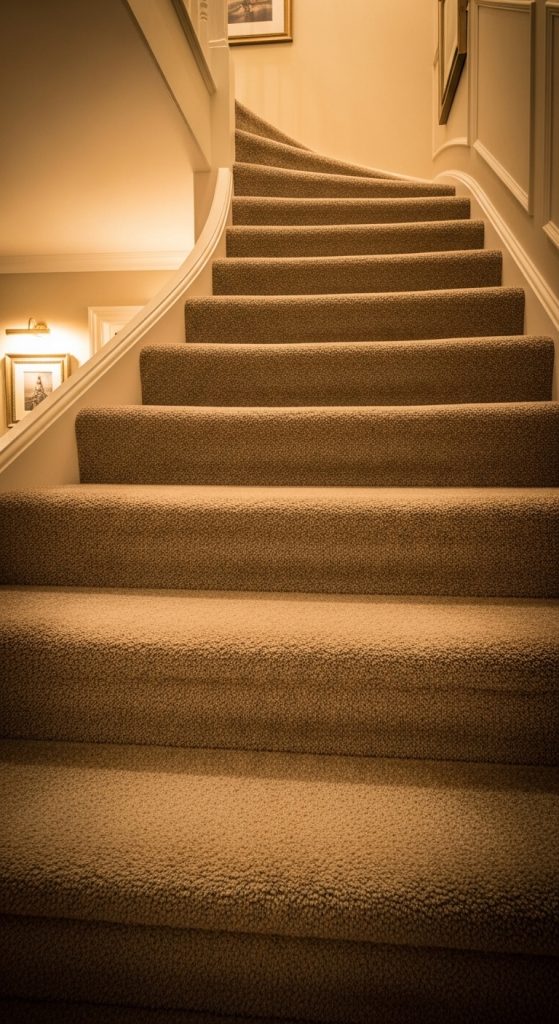
12. Plush Full Carpet Staircase (Ultra Comfort & Cozy Elegance)
What it is
A plush full carpet staircase is a fully covered stair design using soft, thick carpeting to create a warm, comfortable, and luxurious feel. This style prioritizes comfort while still maintaining a refined appearance through color and texture choice.
In 2026, this style is being modernized with neutral palettes and cleaner finishes, avoiding the heavy, outdated look of older plush carpets.
How it works (design breakdown)
- Full coverage across treads and risers
- Soft, dense pile for comfort
- Neutral tones like warm beige, soft gray, or cream
- Smooth, uniform surface without visible patterns
The thickness absorbs sound and adds a cozy atmosphere.
Best for
- Family homes or multi-level houses
- Bedrooms or private staircases
- Spaces prioritizing comfort and warmth
This works best when you want a soft, quiet, and inviting environment.
Styling approach
- Pair with simple railings to avoid heaviness
- Use light wall colors to balance thickness
- Add subtle lighting for warmth
Pro tip
Choose stain-resistant and durable materials to maintain the look over time.
Mistake to avoid
Don’t go for overly thick or shaggy textures—it can look bulky and wear unevenly.
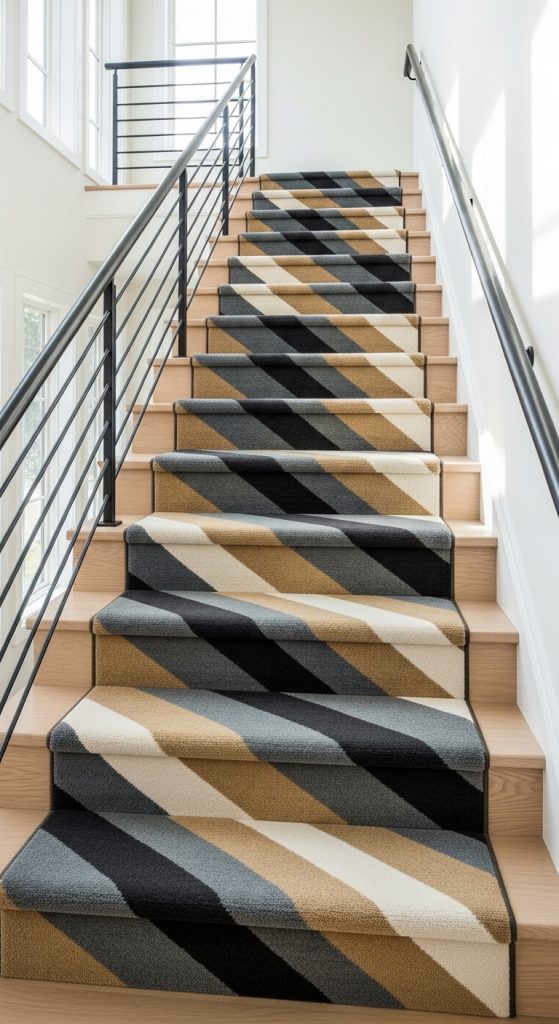
13. Diagonal Stripe Stair Runner (Dynamic Movement Design)
What it is
A diagonal stripe runner is a staircase carpet featuring angled lines instead of straight vertical stripes, creating a sense of motion and visual energy. Unlike traditional stripe designs, the diagonal direction adds a more modern, unexpected twist.
In 2026, this style is trending because it breaks uniformity and introduces controlled visual movement without being chaotic. It feels bold but still structured when done correctly.
How it works (design breakdown)
- Center runner layout with exposed stair edges
- Diagonal or chevron-style stripe direction
- Balanced contrast (not too sharp, not too faded)
- Low to medium pile for clean line definition
The angled pattern guides the eye across and upward, making the staircase feel more dynamic.
Best for
- Modern or contemporary interiors
- Straight staircases where pattern alignment stands out
- Homes needing a unique but controlled statement
This works best when you want movement without heavy decoration.
Styling approach
- Keep surrounding walls plain to avoid visual overload
- Use neutral tones with subtle contrast for elegance
- Align pattern consistently across steps
Pro tip
Softer diagonal patterns feel more sophisticated than sharp, high-contrast ones.
Mistake to avoid
Don’t misalign angles between steps—it immediately ruins the design flow.
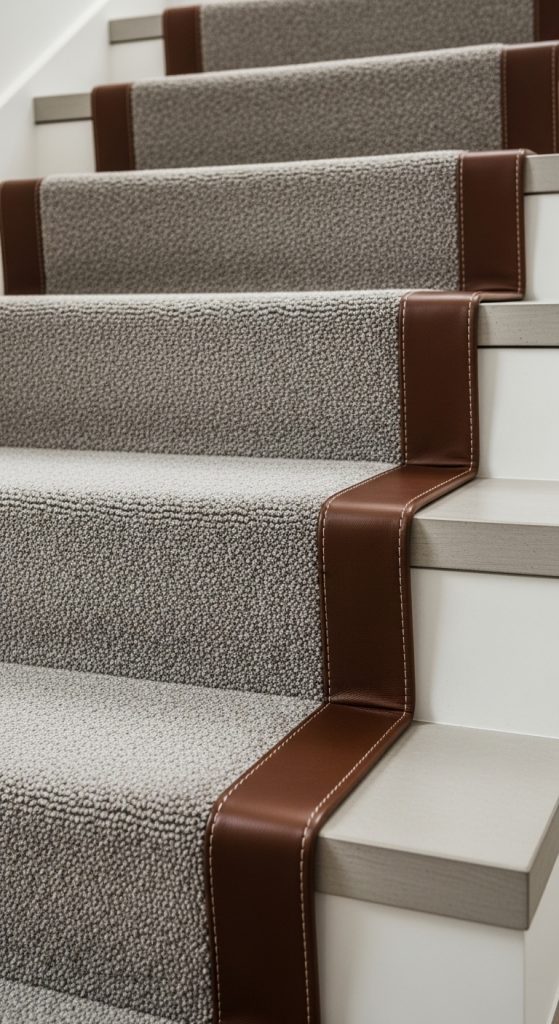
14. Leather-Trimmed Stair Runner (Refined Detail Luxury)
What it is
A leather-trimmed runner is a carpet runner finished with leather borders along the edges, adding a premium, tailored look. It’s a detail-focused design that elevates even the simplest carpet into something that feels custom and high-end.
In 2026, this style fits perfectly into the “quiet luxury” trend, where small material details create a strong visual impact without being loud.
How it works (design breakdown)
- Center runner with exposed stair edges
- Neutral carpet base (wool, sisal-look, or textured weave)
- Thin leather edging in brown, black, or tan
- Clean stitching detail for a finished look
The leather border acts as a frame, adding contrast and refinement.
Best for
- Luxury modern or transitional homes
- Minimal interiors needing texture contrast
- Staircases visible from main living areas
This works best when you want subtle richness without bold patterns.
Styling approach
- Match leather tone with furniture or décor accents
- Pair with wood stairs for a cohesive natural look
- Keep overall palette warm and neutral
Pro tip
Matte leather looks more modern and refined than glossy finishes.
Mistake to avoid
Don’t use thick or overly wide leather borders—it can overpower the elegance of the design.