
Everyone wants a home that feels elegant, expensive, and beautifully styled. A space that makes people walk in and instantly think, “This looks so high-end.” But here’s the truth most people don’t talk about: luxury doesn’t always come from money. It comes from perception, detail, and design choices. You don’t need a huge budget to make your home look rich—you need smart styling decisions that create a premium visual impact.
The idea of “luxury home decor” has changed a lot in recent years, especially with platforms like Pinterest and Instagram influencing interior trends. People now understand that a luxury-looking home is not about filling rooms with expensive furniture, but about how everything is arranged, balanced, and styled. A simple room can look incredibly high-end if the right elements are used correctly.

Think about it—have you ever walked into a hotel room or a designer Airbnb and felt an instant sense of calm and elegance? Most of the time, those spaces don’t rely on extremely expensive furniture. Instead, they use neutral tones, soft lighting, minimal clutter, and carefully selected decor pieces. That combination creates a “luxury illusion,” where the space feels expensive even if the actual cost is moderate.
Many people struggle with home decor because they assume they need to buy everything new or follow expensive interior trends. But the real secret is understanding visual hierarchy. Luxury spaces are not chaotic—they are intentional. Every item has a purpose, and nothing feels randomly placed. Even small details like the way cushions are arranged or how lighting hits a wall can change the entire feel of a room.
Another common misconception is that luxury equals quantity. In reality, luxury often means restraint. A room with fewer but higher-impact items almost always looks more expensive than a room filled with decorations. Empty space is not a mistake in luxury design—it is part of the aesthetic. It allows the eye to rest and highlights the key elements in the room.
Lighting is also one of the most powerful tools in luxury decor. Warm, layered lighting instantly elevates a space. Harsh white lights, on the other hand, can make even expensive furniture look flat and unattractive. That’s why high-end interiors always focus on ambient lighting—lamps, indirect lights, candles, and soft glows instead of one strong ceiling light.
Color psychology also plays a huge role. Luxury interiors often stick to a controlled palette: whites, beiges, creams, soft greys, earthy tones, and occasional deep accents like black, emerald green, or navy. These colors feel calm, balanced, and timeless. When colors are too bright or mismatched, the room starts to look less refined, even if the decor is expensive.
Texture is another hidden secret of luxury design. When you look at high-end interiors, you’ll notice layers of texture everywhere—linen curtains, velvet cushions, marble surfaces, wooden accents, woven rugs, ceramic decor. These textures create depth and richness. Without them, even a well-furnished room can feel flat.
The best part is that all of these luxury principles can be applied on a budget. You don’t need designer furniture or expensive renovation work. You need to understand how to combine affordable items in a way that creates a high-end visual effect. For example, a simple neutral sofa can look luxurious when paired with the right cushions, lighting, and wall art. A plain bedroom can feel like a boutique hotel with the right bedding, mirror placement, and decor styling.
Another important concept is “visual cleanliness.” Luxury homes always feel organized, even if they are lived in. That doesn’t mean everything has to be perfect, but it does mean there is a sense of order. Cables are hidden, surfaces are not overcrowded, and every item has a designated place. This creates a calm, structured environment that feels more expensive instantly.
It’s also important to understand that luxury is not about copying expensive Pinterest rooms exactly. It is about adapting those ideas to your own space and budget. If your room is small, you can still make it look premium by focusing on lighting and color harmony. If your budget is limited, you can still achieve a high-end feel by investing in a few key elements instead of many small items.
In this guide, you will learn how to transform your home into a luxury-looking space without overspending. You will discover practical decor strategies, styling techniques, and budget-friendly upgrades that create a rich and elegant atmosphere. Each idea will focus not just on what to do, but why it works—so you can understand the logic behind luxury design instead of just copying it.
By the end of this article, you will realize that making your home look expensive is not about how much you spend, but how intelligently you design. With the right approach, even the simplest room can feel like a high-end interior from a magazine or Pinterest board.
Now let’s explore how to create luxury home decor on a budget that truly looks rich and effortlessly elegant.
1. Neutral Color Foundation That Instantly Looks Expensive
Explanation (What it is)
The first and most powerful rule of luxury home decor is the color foundation. If your colors are wrong, no amount of expensive furniture will make the space look rich. But if your colors are right, even simple and budget-friendly decor can look high-end.
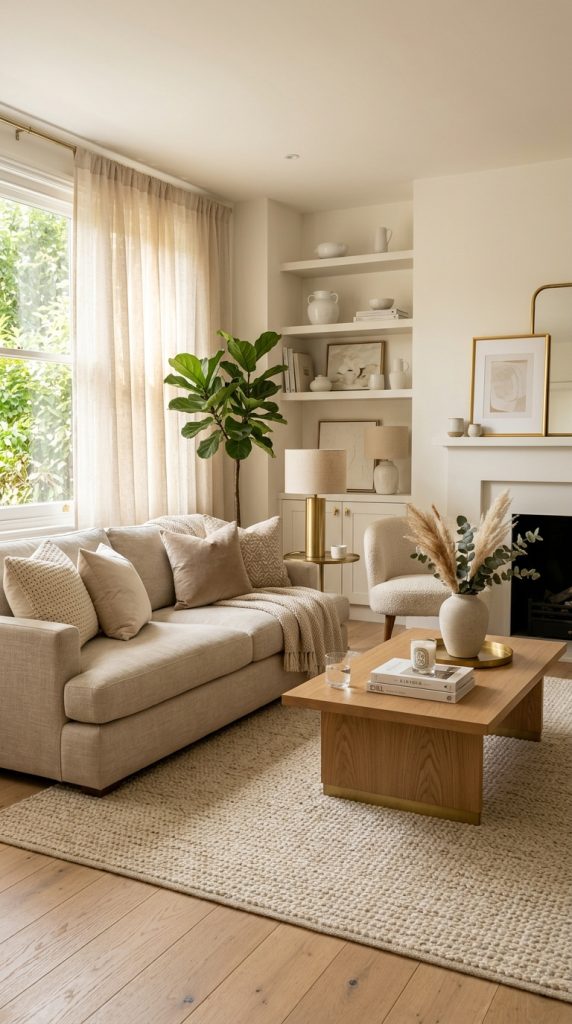
Luxury interiors almost always rely on a neutral base. This includes shades like white, cream, beige, soft grey, taupe, and warm earthy tones. These colors create a calm visual flow that feels clean and sophisticated. They don’t fight for attention—instead, they work together to create balance.
What makes neutral palettes feel luxurious is their timelessness. Unlike trendy colors that come and go, neutrals stay elegant for years. That is why high-end hotels, designer homes, and luxury apartments almost always stick to these tones.
Another important factor is how light interacts with these colors. Neutral shades reflect natural and artificial light beautifully, making the room feel brighter, cleaner, and more spacious. Even a small room can look expensive when the color palette is controlled properly.
How to implement (Practical steps)
Start by identifying the dominant color in your room. If your walls are already painted, work around them instead of changing everything. If possible, choose soft white, warm beige, or light grey as your base tone.
Next, align your furniture with this palette. You don’t need new furniture—just adjust the visual balance using covers, bedsheets, cushions, and throws. For example, a simple sofa can look luxurious with beige or cream-toned cushion covers instead of bright mixed colors.
Then focus on layering. Luxury is never flat. Combine different shades of the same color family. For example, mix cream with ivory, beige with sand, or grey with soft charcoal. This creates depth without breaking harmony.
Finally, reduce visual noise. Avoid too many bold colors competing in one space. Keep accent colors minimal and intentional.
Best for (Who should use it)
- Small homes or apartments that need visual expansion
- People who want a calm, hotel-like interior
- Anyone starting home decor from scratch
- Budget decorators who want maximum impact with minimal spending
Pro tip (Expert advice)
Stick to a 70-20-10 color rule:
70% neutral base, 20% secondary tone, 10% accent color. This instantly creates a professional luxury balance.
Mistake to avoid
Avoid mixing too many bright or random colors. Even expensive decor loses its luxury feel when the color palette is inconsistent or overly loud.
2. Lighting Layers That Create a High-End Mood
Explanation (What it is)
Lighting is one of the most underrated secrets of luxury interior design. You can have average furniture, but if your lighting is perfect, your home will still look expensive. On the other hand, even expensive furniture looks cheap under bad lighting.
Luxury spaces never rely on a single light source. Instead, they use layered lighting—multiple soft light sources placed at different levels in the room. This creates depth, warmth, and atmosphere.
There are three main types of lighting used in luxury interiors:
- Ambient lighting (general room glow)
- Task lighting (focused light for reading or work)
- Accent lighting (decorative mood lighting)
When these three layers work together, the room feels dynamic and visually rich.
Warm lighting is especially important. Soft yellow or warm white lighting creates a cozy and elegant feel. Harsh white lights flatten everything and remove depth, making the room feel cheap and unfinished.

How to implement (Practical steps)
Start by replacing harsh ceiling lights with softer alternatives if possible. If not, balance them with lamps and ambient lighting.
Add table lamps in living rooms and bedrooms. These instantly create a luxury hotel-like feel. Place them on bedside tables, console tables, or shelves.
Use floor lamps in corners to add height and depth to the room. This prevents dark, empty corners and makes the space feel more complete.
Add accent lighting such as LED strips behind furniture, under shelves, or behind mirrors. This creates a subtle glow that feels modern and expensive.
If you want an affordable upgrade, even simple warm-toned bulbs can completely transform your room.
Best for (Who should use it)
- Bedrooms and living rooms needing mood improvement
- Small spaces that feel flat or dark
- People wanting hotel-style interiors
- Budget decorators looking for high impact changes
Pro tip (Expert advice)
Always mix light heights—ceiling + table + floor lighting. This layering technique is what separates basic rooms from luxury interiors.
Mistake to avoid
Avoid using only one bright white overhead light. It flattens the entire room and removes all depth, making even stylish decor look cheap.
3. Statement Pieces Instead of Clutter
Explanation (What it is)
One of the biggest differences between a cheap-looking room and a luxury-looking room is how items are selected and displayed. Luxury interiors never feel crowded. Instead, they rely on a few strong, intentional statement pieces that define the space.
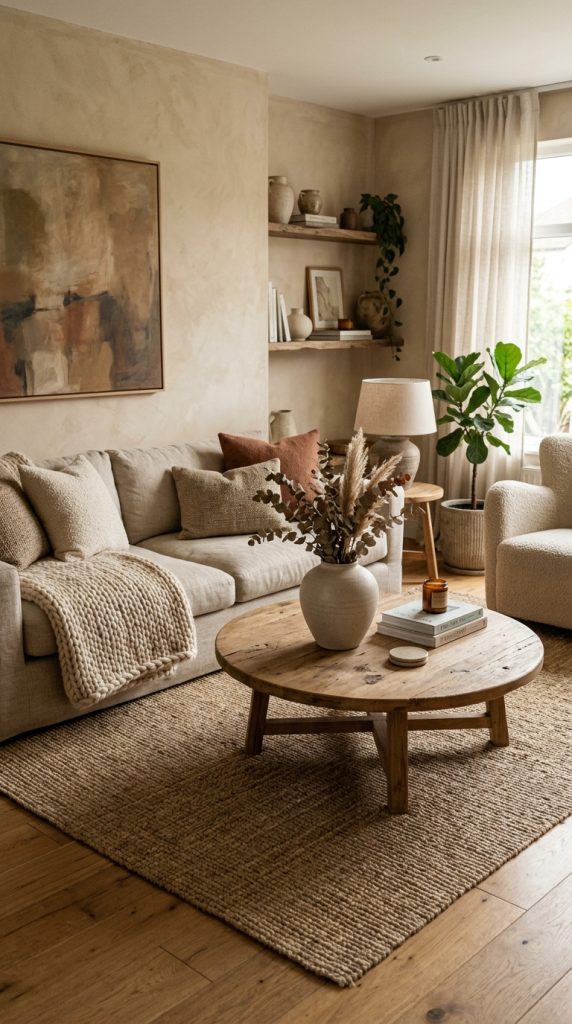
A statement piece is any item that draws attention in a subtle, elegant way. It could be a large mirror, a stylish lamp, a bold artwork, a textured rug, or a well-designed sofa. The key is that it stands out without overwhelming the room.
Budget homes often make the mistake of adding too many small decor items. While each item may look nice individually, together they create visual noise. Luxury design avoids this by focusing on fewer, better-quality visual anchors.
Statement pieces create “visual hierarchy,” meaning your eyes naturally know where to look first, second, and third. This is what makes a room feel professionally designed.
How to implement (Practical steps)
Start by identifying the focal point of your room. This could be the bed in a bedroom, the sofa in a living room, or a dining table in an eating space.
Then choose one or two statement items for that focal point. For example:
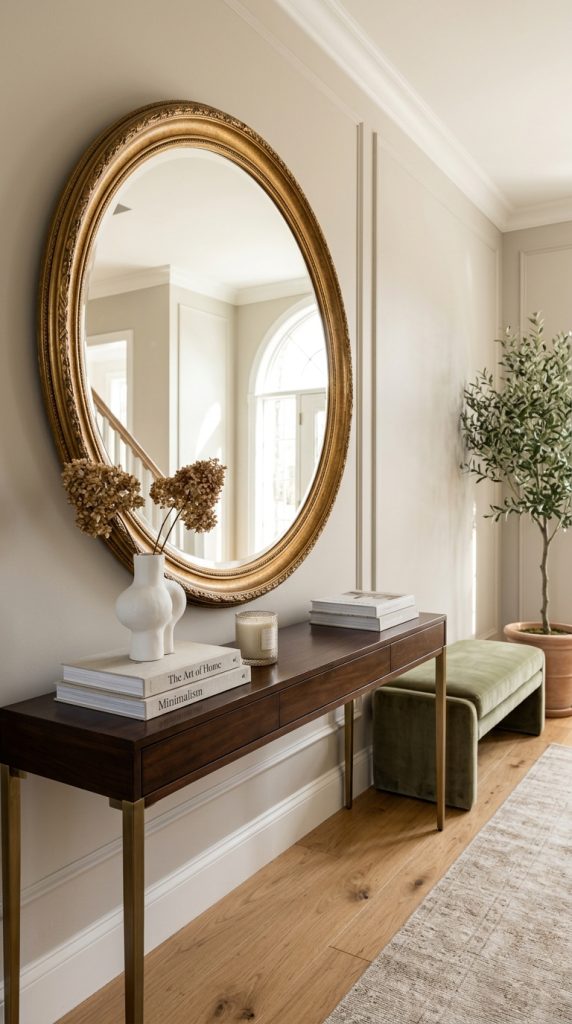
- A large framed mirror above a console table
- A bold abstract painting above a sofa
- A textured headboard in a bedroom
Keep everything else simple to support the main feature instead of competing with it.
Reduce small unnecessary items on surfaces. Clear tables and shelves so your statement pieces can stand out clearly.
Choose quality over quantity. Even one well-chosen item can elevate an entire room.
Best for (Who should use it)
- People who feel their home looks “messy” or “busy”
- Small apartments where space is limited
- Anyone wanting a clean luxury aesthetic
- Budget decorators focusing on impact over quantity
Pro tip (Expert advice)
Think like a designer: every room should have one “hero piece.” Once you define that, everything else in the room should support it visually, not compete with it.
Mistake to avoid
Avoid filling every wall and surface with decor. Too many items remove focus and instantly break the luxury illusion, even if each piece is beautiful on its own.
4. High-End Textures That Instantly Upgrade Any Space
Explanation (What it is)
One of the most overlooked secrets of luxury home decor is texture. Most people focus only on colors and furniture, but high-end interiors are actually built on layers of texture. This is what makes a room feel rich, warm, and “expensive” even if the furniture itself is budget-friendly.
Texture means how surfaces feel visually, even if you are not touching them. Luxury spaces always mix different materials like soft fabrics, smooth surfaces, natural wood, glass, metal, and stone. This contrast creates depth and visual interest.
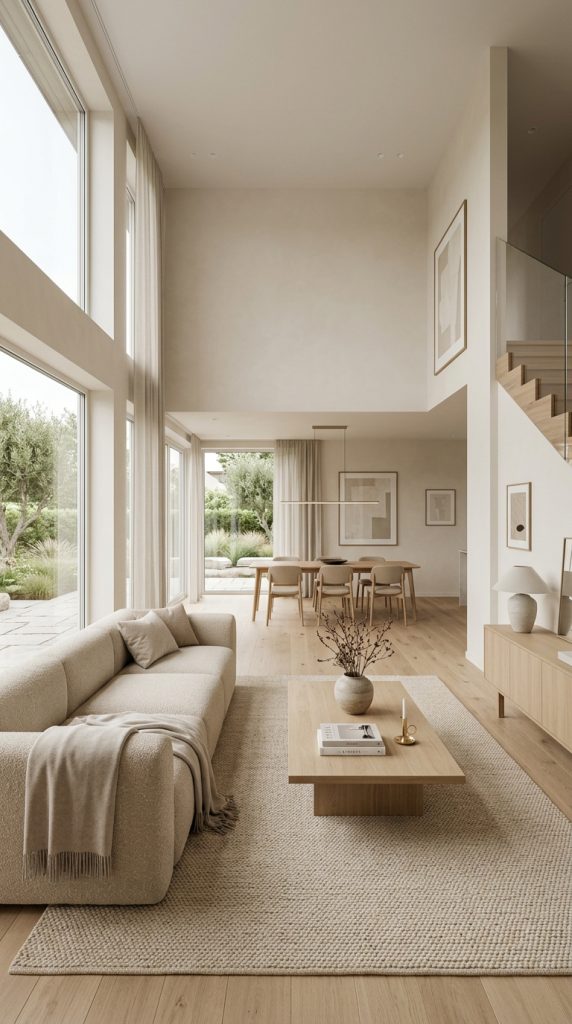
For example, imagine a room with only smooth white furniture. It will look clean, but flat. Now imagine that same room with a soft linen sofa, a knitted throw blanket, a wooden coffee table, a ceramic vase, and a textured rug. Suddenly, the space feels layered, cozy, and high-end.
Luxury design is not about everything matching perfectly—it’s about everything complementing each other through contrast.
How to implement (Practical steps)
Start by identifying flat areas in your home. These are usually sofas, beds, empty corners, or plain walls.
Then introduce texture in layers:
- Soft textures: cushions, throws, curtains, rugs
- Hard textures: wood furniture, marble surfaces, metal accents
- Natural textures: plants, woven baskets, dried flowers
If you are on a budget, focus first on textiles. Adding a textured blanket or cushion covers can instantly upgrade a space.
Next, mix materials intentionally. For example, pair a soft fabric sofa with a wooden coffee table and a metal lamp. This combination creates a balanced luxury feel.
Finally, avoid using only one type of material throughout the room. Repetition without variation makes the space look flat and basic.
Best for (Who should use it)
- People whose rooms feel “flat” or boring
- Budget decorators wanting instant visual upgrade
- Small homes that need depth without clutter
- Anyone aiming for luxury Pinterest-style interiors
Pro tip (Expert advice)
Always aim for at least 3 different textures in every main area of a room (soft + hard + natural). This is a simple designer trick that instantly elevates any space.
Mistake to avoid
Avoid using only one material type (like only plastic or only fabric). Without contrast, even expensive items lose their luxury impact.
5. Minimal Clutter Styling for a Clean Luxury Look
Explanation (What it is)
Clutter is one of the fastest ways to make a home look cheap, even if everything inside it is expensive. Luxury interiors always feel open, breathable, and intentionally organized. This doesn’t mean empty—it means controlled.
Minimal clutter styling is about reducing visual noise. Every item in the room should have a purpose or contribute to the aesthetic. High-end homes never feel overcrowded because space itself is treated as part of the design.
Luxury design uses a concept called “visual breathing space.” This means leaving gaps between furniture, decor, and surfaces so the eye can rest. This creates a calm, expensive atmosphere.
The difference between a cheap-looking room and a luxury-looking room is often not the furniture—it’s how much unnecessary stuff is removed.
How to implement (Practical steps)
Start by clearing all surfaces like tables, shelves, and counters. Remove anything that does not serve a clear purpose or aesthetic function.
Next, organize storage. Use boxes, baskets, and hidden storage to keep everyday items out of sight. Luxury rooms always look clean on the surface, even if storage is full inside.
Then apply the “one surface rule”: each surface should have only 1–3 items max. For example, a bedside table might have a lamp, a small book, and a candle.
Keep decor intentional. Instead of placing many small items, choose fewer, slightly larger pieces.
Finally, maintain consistency. Regularly remove unnecessary items instead of letting clutter build up again.
Best for (Who should use it)
- People whose homes feel messy or overcrowded
- Small apartments or shared rooms
- Anyone aiming for hotel-style interiors
- Budget decorators who want instant visual improvement
Pro tip (Expert advice)
If you are unsure whether to keep something, remove it temporarily. Luxury spaces are built through subtraction, not addition.
Mistake to avoid
Avoid filling empty spaces just for the sake of decoration. Empty space is not a flaw—it is a luxury design element.
6. Mirror Styling to Make Spaces Look Bigger and Richer
Explanation (What it is)
Mirrors are one of the most powerful and affordable tools in luxury home decor. They are used in almost every high-end interior because they instantly change how a space feels. Mirrors reflect light, expand visual space, and add a sense of elegance without adding clutter.
In luxury design, mirrors are not just functional—they are decorative statements. A well-placed mirror can become the focal point of a room and completely transform its atmosphere.
Mirrors create the illusion of a larger, brighter, and more expensive space. This is especially useful in small homes or apartments where space is limited.
High-end interiors often use large mirrors, framed mirrors, or uniquely shaped mirrors to enhance visual interest.

How to implement (Practical steps)
Start by identifying areas that feel small, dark, or empty. These are the best places for mirrors.
Place a large mirror opposite a window to reflect natural light. This instantly makes the room feel brighter and more open.
Use mirrors as statement decor above furniture like consoles, beds, or sofas. A single large mirror is more effective than many small ones.
Choose frames that match your aesthetic. Gold frames add luxury, black frames add modern elegance, and wooden frames add warmth.
You can also use multiple smaller mirrors in a styled arrangement, but keep spacing balanced to avoid clutter.
Best for (Who should use it)
- Small rooms or apartments
- Dark spaces needing more light
- People wanting instant luxury upgrades
- Budget decorators looking for high impact decor
Pro tip (Expert advice)
Always place mirrors where they reflect something beautiful—like a window, a plant, or a styled corner. Never let them reflect clutter.
Mistake to avoid
Avoid placing mirrors randomly without purpose. Poor placement can make the room look chaotic instead of luxurious.
7. Layered Lighting Design That Feels Like a Luxury Hotel
Explanation (What it is)
Layered lighting is one of the strongest indicators of a high-end interior, yet it is also one of the most ignored. In luxury homes, lighting is never treated as a single ceiling bulb that simply “lights up” a room. Instead, it is carefully designed in layers to create mood, depth, and atmosphere.
Luxury lighting usually works in three layers: ambient lighting (overall glow), task lighting (focused use like reading or working), and accent lighting (decorative mood light). When these three layers combine, the room feels warm, dimensional, and expensive.
Think about a luxury hotel room. It never feels harsh or flat. Instead, it feels soft, glowing, and intentional. That feeling comes entirely from layered lighting, not expensive furniture.
Warm lighting is especially important. Soft yellow or warm white tones make spaces feel cozy and premium, while harsh white lighting flattens everything and makes even expensive decor look cheap.

How to implement (Practical steps)
Start by identifying your main ceiling light. If it is too harsh, reduce its dominance by using it less often or pairing it with softer lights.
Next, add table lamps in key areas like bedside tables, side tables, or desks. These create soft pools of light that instantly feel luxurious.
Then add floor lamps in corners. This removes dark empty spaces and makes the room feel more complete and styled.
Finally, introduce accent lighting such as LED strips behind beds, TVs, shelves, or mirrors. This adds a subtle glow that gives a modern luxury feel.
If you are on a budget, even replacing bulbs with warm-toned ones can significantly improve the atmosphere.
Best for (Who should use it)
- Bedrooms and living rooms needing mood upgrade
- Small rooms that feel flat or dull
- People wanting hotel-style interiors
- Budget decorators looking for maximum visual impact
Pro tip (Expert advice)
Use at least three different light sources in one room. This layering trick is what separates basic lighting from luxury interior design.
Mistake to avoid
Avoid relying only on one bright overhead light. It destroys depth and makes even well-decorated rooms feel cheap and unfinished.
8. Large-Scale Art & Wall Statements for a Rich Look
Explanation (What it is)
Luxury homes always use art—but not in a scattered or random way. Instead of filling walls with small frames and mixed decorations, high-end interiors rely on large-scale statement art pieces that anchor the entire room.
A single oversized painting, abstract artwork, or framed print can completely transform a space. It creates a focal point, adds personality, and instantly makes the room feel more expensive.
The key idea is scale. Luxury design prefers fewer but larger visual elements rather than many small distractions. This creates a clean, curated look that feels intentional and professional.
Art in luxury interiors is not just decoration—it is structure. It defines the mood of the room and ties all other design elements together.
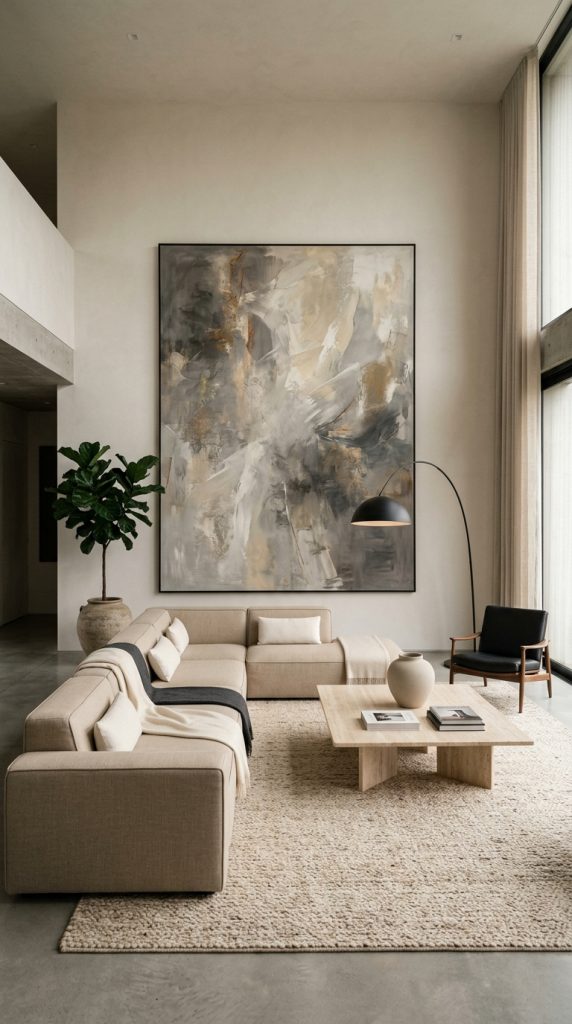
How to implement (Practical steps)
Start by choosing one main wall in your room. This is usually above a sofa, bed, or dining area.
Instead of multiple small frames, choose one large artwork or a symmetrical pair of medium-large pieces.
Stick to a consistent color theme that matches your room palette. Neutral abstract art, black-and-white photography, or soft minimalist prints work best for luxury aesthetics.
Frame choice is also important. Simple black, gold, or wooden frames elevate the artwork and make it look more refined.
Make sure the art is placed at eye level and is properly centered. Poor placement can reduce the luxury effect.
Best for (Who should use it)
- Living rooms and bedrooms needing focal points
- People who want hotel or designer home aesthetics
- Small rooms that need visual structure
- Budget decorators upgrading walls without renovation
Pro tip (Expert advice)
Always choose art that matches your room mood. Calm rooms need soft abstract pieces, while modern rooms can handle bold geometric designs.
Mistake to avoid
Avoid creating a “gallery wall” with too many small frames unless carefully styled. Random wall clutter removes the luxury feel instantly.
9. Hidden Storage & Clean Surfaces for a High-End Finish
Explanation (What it is)
One of the biggest differences between luxury homes and regular homes is how clean the surfaces look. High-end interiors always appear organized, even in lived-in spaces. This is achieved through hidden storage systems and intentional surface design.
Luxury design avoids visible clutter at all costs. Everyday items like remotes, chargers, paperwork, and small objects are hidden away so that surfaces remain clean and visually calm.
This creates a feeling of order and sophistication. When surfaces are clear, the eye focuses only on intentional decor pieces, making everything feel more expensive.
Even expensive furniture looks less appealing if it is covered in clutter. On the other hand, simple furniture looks high-end when surfaces are clean and minimal.

How to implement (Practical steps)
Start by identifying all visible clutter in your room—tables, counters, shelves, and floors.
Introduce hidden storage solutions like baskets, boxes, drawers, or storage ottomans. These allow you to keep necessary items out of sight.
Next, follow the “clean surface rule.” Every flat surface should have very few items—ideally 1 to 3 intentional decor pieces only.
Use trays or organizers to group small items together. This makes them look structured instead of scattered.
Regularly reset your space. Luxury homes maintain cleanliness through routine organization, not just initial setup.
Best for (Who should use it)
- People with cluttered or messy-looking rooms
- Small spaces with limited storage
- Anyone wanting hotel-like interiors
- Budget decorators focusing on visual upgrade without buying new furniture
Pro tip (Expert advice)
If an item is not visually beautiful or frequently used, it should not stay visible. Hidden storage is the foundation of luxury styling.
Mistake to avoid
Avoid overfilling open shelves. Open storage should be styled, not packed. Too many visible items destroy the clean luxury look.
10. High-End Bedding Styling That Looks Like a Luxury Hotel Suite
Explanation (What it is)
Bedding is one of the most powerful visual elements in any bedroom, and in luxury home decor, it often becomes the main focal point. High-end hotels invest heavily in bedding styling because it instantly communicates comfort, cleanliness, and sophistication. The same principle applies to your home—even on a budget.
A luxury bedding setup is not about expensive sheets; it is about layering, texture, and color coordination. When you look at high-end hotel rooms, the bed always looks fluffy, layered, and inviting. There is depth in the pillows, softness in the blankets, and a clean but rich visual structure.
The secret is simplicity combined with structure. A luxury bed never looks messy, but it also never looks flat or basic. It has intentional layers that create visual fullness without clutter.
This is especially important because the bed is usually the largest object in a bedroom. That means it sets the tone for the entire room. If your bed looks cheap or messy, the whole room feels less expensive—even if everything else is stylish.
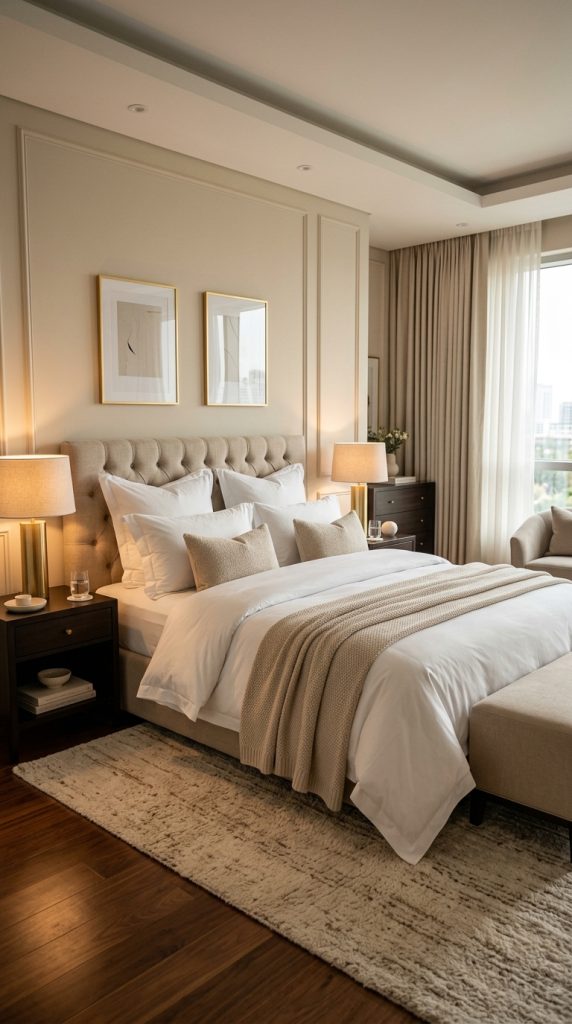
How to implement (Practical steps)
Start with a neutral base. Choose bedding in white, cream, beige, or soft grey. These colors automatically create a clean and expensive foundation.
Next, focus on layering. A luxury bed typically has:
- A fitted sheet
- A smooth top sheet
- A duvet or comforter
- A throw blanket at the end
Then add pillows strategically. Instead of random placement, use a structured arrangement:
- 2–4 sleeping pillows
- 2 decorative cushions in front
- Optional accent pillow for style
Add a textured throw blanket at the foot of the bed. This adds depth and makes the bed look styled rather than just used.
Make sure everything looks slightly “fluffed” and intentional. Luxury beds are never flat or wrinkled.
Best for (Who should use it)
- Bedrooms that feel plain or unfinished
- Small rooms needing a strong focal point
- People who want hotel-style interiors
- Budget decorators upgrading without changing furniture
Pro tip (Expert advice)
Always mix textures in bedding—smooth cotton + knitted throw + soft cushions. This layering creates a rich, expensive hotel-like appearance instantly.
Mistake to avoid
Avoid using too many patterns or bright colors on bedding. Over-designed bedding breaks the calm luxury feel and makes the room look busy.
11. Curated Decor Styling (The “Less But Perfect” Luxury Rule)
Explanation (What it is)
Curated decor styling is the final and most important principle of luxury home design. It is what ties everything together. This concept is based on choosing fewer decor items—but making sure every item looks intentional, high-quality, and well-placed.
In luxury interiors, decoration is never random. Every object has a visual purpose. Instead of filling shelves, tables, and corners with many small items, luxury design carefully selects a few standout pieces that enhance the room.
This is often called the “edited look.” It means your home looks like it has been carefully styled, not just decorated. Even if the items are budget-friendly, the arrangement makes them look expensive.
Curated styling creates emotional clarity. When a room is not visually overloaded, it feels calmer, more elegant, and more premium. Your eyes can focus, and the space feels more intentional.
This is why luxury homes often look simple at first glance—but very detailed when you pay attention.

How to implement (Practical steps)
Start by clearing all decorative surfaces like shelves, tables, and corners.
Then select only 1–3 decor items per surface. For example:
- A vase + a book stack + a candle on a table
- A lamp + small plant on a bedside table
Choose decor pieces that feel cohesive in color and material. Stick to neutral tones, glass, ceramic, wood, or metal finishes.
Avoid mixing too many styles on one surface. Keep each area visually consistent.
Use height variation in styling. Combine tall, medium, and small objects together to create visual balance.
Finally, step back and evaluate. If something feels unnecessary or distracting, remove it.
Best for (Who should use it)
- People whose homes feel cluttered or messy
- Anyone wanting a professional designer look
- Small spaces needing visual simplicity
- Budget decorators aiming for luxury results
Pro tip (Expert advice)
Think like a designer: every item should either be functional or beautiful—or both. If it is neither, it does not belong in a luxury-styled space.
Mistake to avoid
Avoid decorating every empty space. Empty space is not wasted—it is what makes your decor look expensive and intentional.