
Building a waterfront base in Minecraft brings life, utility, and natural beauty to your survival world. Spruce wood remains one of the most versatile and beloved building materials in the game. Its rich, dark brown texture pairs naturally with coastal landscapes, stone textures, and open water. A simple flat bridge or floating platform often feels disconnected from the shoreline. In contrast, an aesthetic spruce dock creates a seamless transition between land and sea.
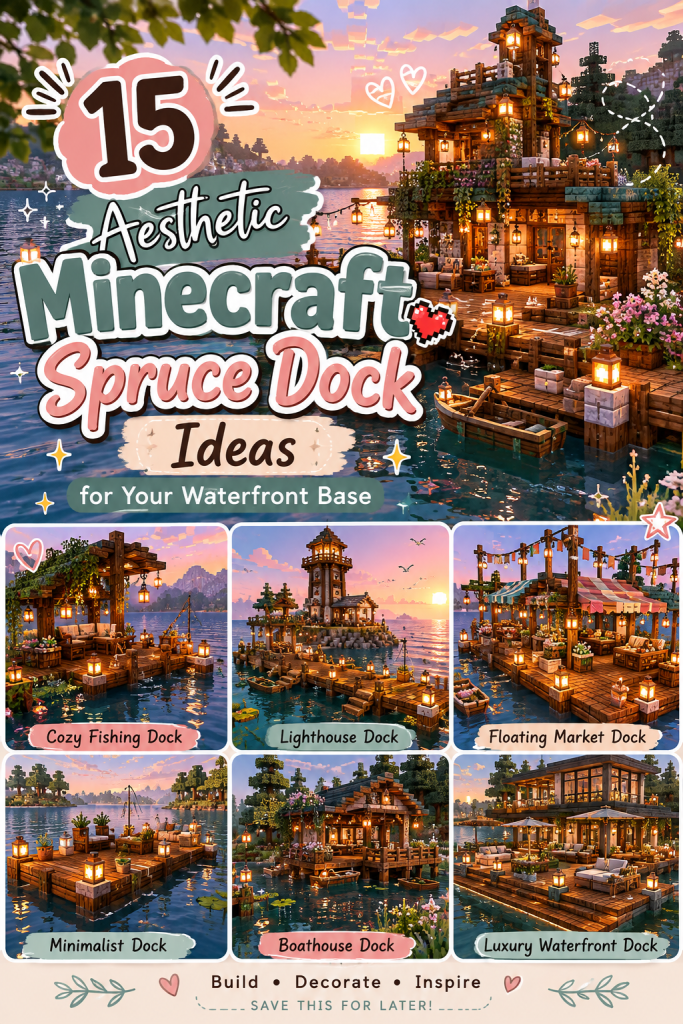
You can design bustling trading harbors, cozy fishing piers, or grand shipwright shipyards. Waterfront bases provide effortless access to boat transportation across vast ocean biomes. Furthermore, docks offer practical spaces for storage, fishing stations, and automated cargo sorting. Learning to layer varied spruce blocks, stone footings, and ambient lighting elevates your survival builds. This ultimate guide explores 15 unique, practical, and highly detailed spruce dock designs for any survival world.
Planning Your Waterfront Base Layout
Every great harbor build begins with analyzing the natural coastal terrain. Look for natural bays, river mouths, and protected coves that offer calm water. Deep ocean channels allow larger ships to dock realistically alongside your piers. In contrast, shallow coastal waters suit small fishing skiffs and floating boardwalks.
Terraforming plays a crucial role in creating natural-looking shorelines. Smooth out jagged dirt cliffs using a mixture of coarse dirt, gravel, and stone. Introduce gradual slopes from your inland base down to the wooden decking. This preparatory work ensures your spruce docks look rooted in the landscape.
Mastering the Spruce Harbor Block Palette
Spruce wood provides a rugged, weathered look ideal for maritime builds. Combining varied states of spruce adds depth and age to structural posts. Use stripped spruce logs for clean deck surfaces and horizontal support beams. Unstripped spruce logs work wonderfully as submerged, mossy pilings sunk into seabeds.
Pair spruce with complementary stone blocks like cobblestone, stone bricks, and andesite. Dark oak accents introduce rich shadows, while oak planks offer subtle color highlights. Add texture along the waterline using mud bricks, mossy cobblestone, and prismarine.
Creating Structural Depth and Realism
A flat walkway stretched over water looks artificial and flimsy. True piers require visible structural engineering to appear capable of bearing heavy loads. Drive thick vertical log pillars down into the ocean floor every four blocks. Connect these pillars horizontally using spruce fence braces, stairs, and slabs.
Stagger the edges of your walkways using upside-down spruce stairs. This technique creates an undercut lip that casts realistic shadows on the water. Furthermore, incorporate multi-level platforms, tiered staircases, and protruding moorings across the harbor.
Essential Survival Tools for Aquatic Builders
Constructing extensive docks over deep water presents unique survival challenges. Drowning hazards, slow mining speeds, and poor visibility can slow your progress. Brew water breathing and night vision potions before starting deep underwater foundations.
Equip armor with Depth Strider III and Aqua Affinity enchantments for smooth movement. Keep stacks of dirt, sand, or sponges handy to clear water pockets easily. Scaffolding allows you to reach high crane masts and boat sails safely. Proper tool preparation ensures an efficient, death-free waterfront construction project.
Designing Functional Harbor Storage Hubs
Aesthetic docks should also serve practical survival purposes. Incorporate functional storage into your pier design without creating visual clutter. Disguise large chest arrays beneath decorative spruce trapdoors and barrel stacks.
Integrate crafting tables, blast furnaces, and stonecutters directly into workshop floors. Install auto-sorting water channels beneath wooden decking to move harvested fish automatically. Villager trading stalls can also be added along main harbor walkways. This blends practical gameplay mechanics seamlessly into your aesthetic waterfront empire.
Lighting and Mob-Proofing Waterfront Piers
Hostile mobs spawning on dark docks can quickly ruin your survival base. Strategic illumination keeps your piers safe while enhancing night-time aesthetic appeal. Hide sea lanterns, froglights, or glowstone beneath wooden trapdoors along walkways.
Mount soul lanterns and copper lanterns on fence posts at regular intervals. Hang iron chains with lanterns beneath pier overhangs to illuminate water below. Use bottom-half spruce slabs for walkway surfaces to completely prevent mob spawns. A well-lit harbor creates a warm, welcoming beacon across dark oceans.
1. Classic Nordic Spruce Trading Pier
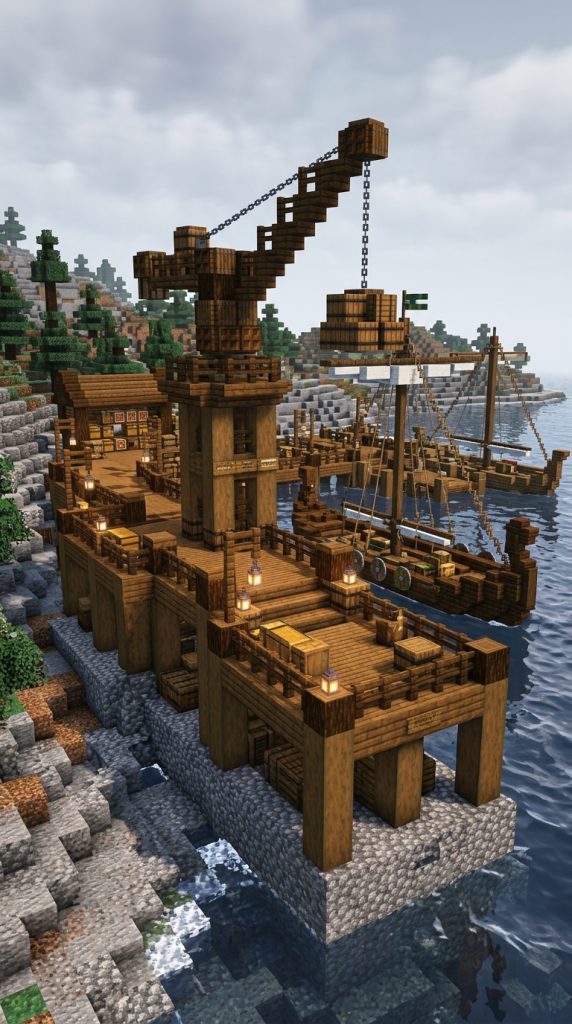
The Classic Nordic Spruce Trading Pier captures the rugged, functional charm of historic northern seaports. It features heavy timber framing, multi-level wooden decking, and specialized cargo-loading berths.
Authentic Nordic Maritime Design
Nordic harbors are designed to withstand harsh northern seas and freezing coastal winds. Sturdy stripped spruce log pillars anchor deep into the rocky ocean floor. Cobblestone retaining walls line the coast to prevent soil erosion from crashing waves.
The main walkway sits several blocks above the high-tide line for safety. Wooden cargo cranes, merchant scales, and stacked trade goods line the promenade. This design provides an imposing, historical entrance for any survival coastal village.
Required Construction Materials
- Spruce logs and stripped spruce logs
- Spruce planks, slabs, stairs, and trapdoors
- Cobblestone, mossy cobblestone, and stone bricks
- Dark oak fences and fence gates
- Barrels, chests, and crafting tables
- Lanterns, chains, and iron bars
Laying the Stone Seawall Footing
Begin by constructing a solid cobblestone seawall along your natural shoreline. Mix in mossy cobblestone and stone bricks along the lower water level. Drive stripped spruce logs vertically into the seabed three blocks out from shore.
Space these foundation pillars four blocks apart along the entire pier length. Connect the log pillars horizontally using spruce stairs placed upside-down. This forms an arched, load-bearing framework that supports the upper wooden deck.
Assembling the Multi-Tiered Walkways
Cover the main walking platform using a mixture of spruce planks and slabs. Swap random planks with dark oak slabs to simulate worn, weathered footpaths. Extend smaller, lower finger piers out into deeper water for boat mooring.
Install spruce fence railings along the outer edges to prevent accidental falls. Add open fence gates at designated boat docking slips for easy boarding.
Installing Cranes and Cargo Details
Erect a functional timber cargo crane using spruce logs and dark oak fences. Extend a horizontal boom arm out over the deepest docking slip. Hang an iron chain down from the crane arm holding a spruce slab platform.
Scatter storage barrels, supply crates, and open tool chests around the crane base. Hang glowing lanterns from dark oak fence posts to illuminate the entire pier.
2. Cozy Mountain Lake Fishing Shack Pier
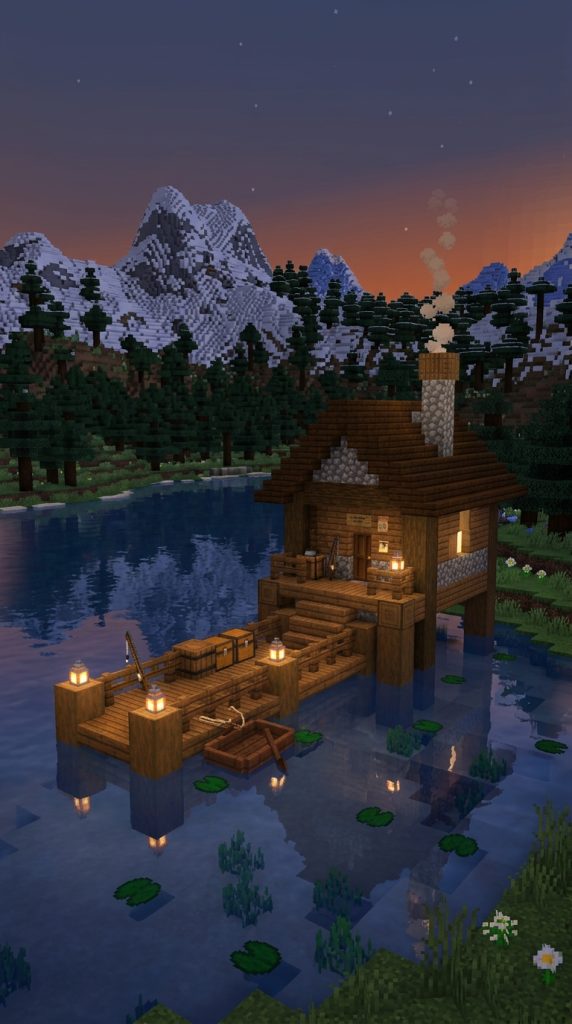
The Cozy Mountain Lake Fishing Shack Pier brings rustic storybook charm to alpine waters. It combines an over-water wooden cabin with a private fishing dock.
Peaceful Alpine Angler Haven
Tucked away in quiet mountain lakes, this build serves as a personal fishing sanctuary. A modest spruce shack sits elevated on stilts directly over the water. An adjoining pier wraps around natural reed beds and lily pad clusters.
Smoke drifts gently from a stone chimney, creating a warm, lived-in atmosphere. It provides an ideal early-game survival base with built-in food production.
Mountain Fishing Pier Palette
- Stripped spruce logs and spruce planks
- Spruce stairs, slabs, and trapdoors
- Oak fences and dark oak trapdoors
- Cobblestone and campfire blocks
- Barrels, cauldrons, and fishing rods
- Lanterns, lead ropes, and item frames
Driving the Stilt Foundations
Select a shallow, calm bay along your mountain lake shoreline. Drive stripped spruce log stilts directly into the lakebed, rising two blocks above water. Lay spruce slabs across the stilts to form an L-shaped pier platform.
Leave small open water pockets inside the walkway for decorative water plants. Install oak fences along the walkway edges to serve as rustic guide railings.
Building the Over-Water Fishing Shack
Construct a small four-by-five block cabin directly on the stilt platform. Use stripped spruce logs for corner posts and spruce planks for walls. Carve a window facing the open lake and frame it with spruce trapdoors.
Build a steep A-frame roof using spruce stairs with a dark oak trim. Place a cobblestone chimney on the roof, capped with a smoking campfire.
Outfitting the Angler Workshop
Place water-filled cauldrons and composters on the dock to serve as fish-washing basins. Mount item frames on the shack walls displaying fishing rods and raw fish. Position storage barrels along the pier to store harvested fish and enchanted books.
Tie a wooden rowboat to a spruce fence post using a survival lead. Hang warm lanterns under the roof eaves to attract fish during twilight hours.
3. Tiered Cliffside Spruce Harbor Quayside
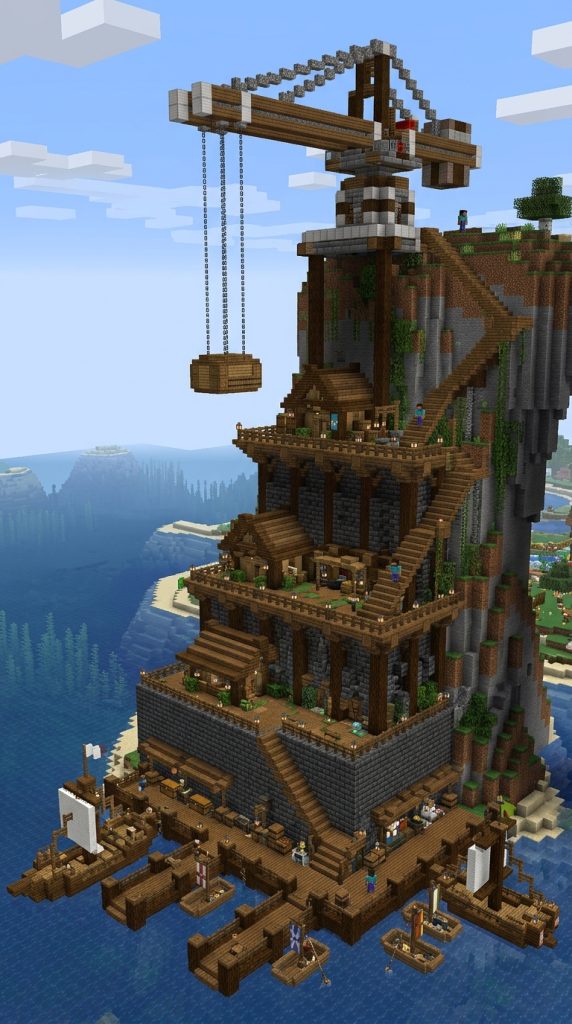
The Tiered Cliffside Spruce Harbor Quayside conquers steep coastal terrain with ambitious vertical architecture. It connects high mountain bases to sea-level docks via winding staircases.
Dramatic Vertical Harbor Engineering
Steep ocean cliffs often make coastal building difficult for survival players. This design solves vertical terrain challenges by building stepped platforms into the cliff face. Massive timber retaining beams and stone arches support each ascending level.
Winding staircases and functional cargo lifts bridge the gap between mountain and ocean. Consequently, this build turns sheer cliffs into impressive multi-level trading ports.
Cliffside Quayside Material List
- Spruce logs, stripped spruce, and spruce planks
- Spruce stairs, slabs, and trapdoors
- Deepslate bricks, polished deepslate, and deepslate walls
- Iron chains, iron bars, and heavy lanterns
- Barrels, chests, and ladders
- Scaffolding and water buckets
Carving Cliffside Terraces and Piers
Chisel horizontal terraces directly into the vertical stone cliff face. Lay lower sea-level piers using stripped spruce logs anchored into deep water. Reinforce the bottom cliff edge with heavy deepslate brick retaining walls.
Erect thick vertical spruce log pillars that run from sea level to high terraces. Cross horizontal spruce beams between pillars to provide structural support for upper platforms.
Constructing Winding Timber Stairways
Build wide staircases connecting each terrace level using spruce stairs and slabs. Guard the open side of the stairs with spruce fences and iron bars. Inset small resting alcoves into the cliff face along the ascending path.
Place crafting tables, furnaces, and storage barrels inside these cliffside alcoves. This ensures utility is available at every stage of your vertical climb.
Building the High-Altitude Cargo Hoist
Construct a large cantilevered crane extending from the top cliff edge. Use stripped spruce logs reinforced with diagonal deepslate wall braces. Drop long iron chains from the crane down to the sea-level pier.
Attach a wooden pallet loaded with barrels to the bottom of the chains. Place lanterns along every stairway landing to keep the cliff bright and safe.
4. Covered Spruce Boardwalk Market Promenade
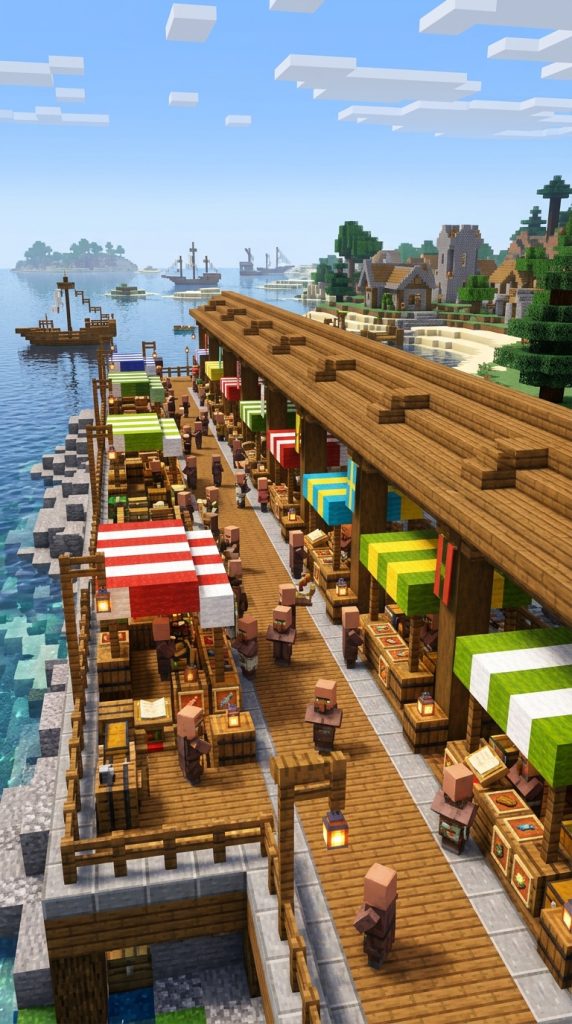
The Covered Spruce Boardwalk Market Promenade turns simple waterfront paths into bustling commercial avenues. It features wooden canopy roofs sheltering lively villager trade stalls.
Bustling Waterfront Commercial Avenue
Covered boardwalks protect coastal merchants and travelers from rain and harsh ocean spray. A wide spruce plank promenade stretches gracefully along the shoreline edge. Overhead, a pitched spruce timber canopy supported by carved pillars covers the path.
Lively merchant kiosks, potion stalls, and food markets line the inland side. This build provides an ideal layout for an interactive survival villager trading hall.
Market Promenade Checklist
- Spruce logs, stripped spruce, and spruce planks
- Spruce stairs, slabs, and trapdoors
- White wool, red wool, and colored carpets
- Bookshelves, lecterns, and brewing stands
- Barrels, chests, and composters
- Lanterns, chains, and item frames
Framing the Wide Boardwalk Deck
Lay a wide walking promenade measuring seven blocks across along your coastline. Use polished andesite along the inland border and stripped spruce planks along the water. Extend the boardwalk over the water’s edge using submerged spruce log supports.
Cap the outer edge with upside-down spruce stairs to create a polished border. Inset sea lanterns beneath spruce trapdoors along the center line for hidden lighting.
Raising the Covered Timber Canopy
Erect stripped spruce log posts every five blocks along the boardwalk borders. Connect opposite posts using curved archways made of spruce stairs and slabs. Construct a continuous pitched roof overhead using spruce planks and slabs.
Add small cross-gable dormers along the roof to break up long straight lines. Hang glowing lanterns from the overhead ceiling collar ties to illuminate the walkway.
Furnishing the Merchant Kiosks
Build compact market stalls between the supporting timber posts along the promenade. Use colorful wool blocks and carpets to create vibrant striped shop awnings. Install villager workstations like lecterns, fletching tables, and smithing tables inside stalls.
Surround workstations with decorative item frames displaying emeralds and traded goods. Your covered waterfront promenade now functions as a bustling trade hub.
5. Fortified Spruce Bastion Naval Dock
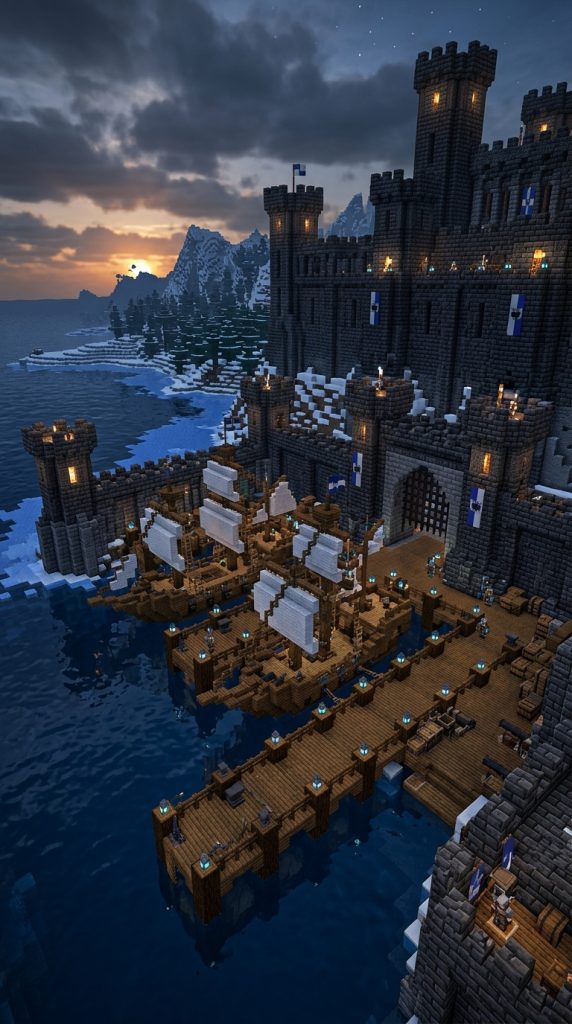
The Fortified Spruce Bastion Naval Dock merges heavy military defense with naval shipbuilding facilities. It protects survival kingdoms with stone battlements and warship berths.
Imposing Coastal Military Fortification
Naval bastions project military dominance across contested oceans and waterways. Heavy stone brick sea walls protect deep-water slips from hostile naval attacks. Reinforced spruce timber walkways allow rapid deployment of archers and naval crews.
Concealed dispensers mounted in the walls can fire arrows or splash potions. This build provides total security for your fleet against hostile mobs and players.
Naval Bastion Resource Palette
- Stone bricks, cracked stone, and deepslate bricks
- Spruce logs, stripped spruce, and spruce planks
- Spruce stairs, slabs, and heavy trapdoors
- Dispensers, redstone dust, and levers
- Iron bars, chains, and soul lanterns
- Armor stands, anvils, and target blocks
Raising Heavy Stone Bastions
Lay a thick foundation of deepslate bricks along the ocean floor. Build fortified bastion towers rising eight blocks above sea level at both ends. Connect the two towers with a high stone brick sea wall featuring arrow slits.
Construct battlements along the top of the wall using stone brick stairs and walls. Install dispensers behind arrow slits wired to a central defense lever.
Framing the Inner Spruce Dockyard
Construct a deep-water berthing platform behind the fortified sea wall. Use heavy stripped spruce logs and thick spruce planks for the decking. Reinforce the underside of the deck with crisscrossing iron bars and spruce fences.
Install heavy iron mooring cleats along the pier edge using anvils and grindstones. This creates an authentic industrial shipyard aesthetic suited for large military warships.
Outfitting Naval Armories and Barracks
Build small supply armories inside the lower chambers of the bastion towers. Place armor stands wearing iron and netherite armor along the corridors. Stack supply chests filled with bows, arrows, and fireworks for elytra deployment.
Hang soul lanterns from iron chains to cast an imposing blue glow. Your naval bastion dock is fully prepared to defend your survival realm.
6. Serene Spruce & Mangrove Swamp Stilt Dock
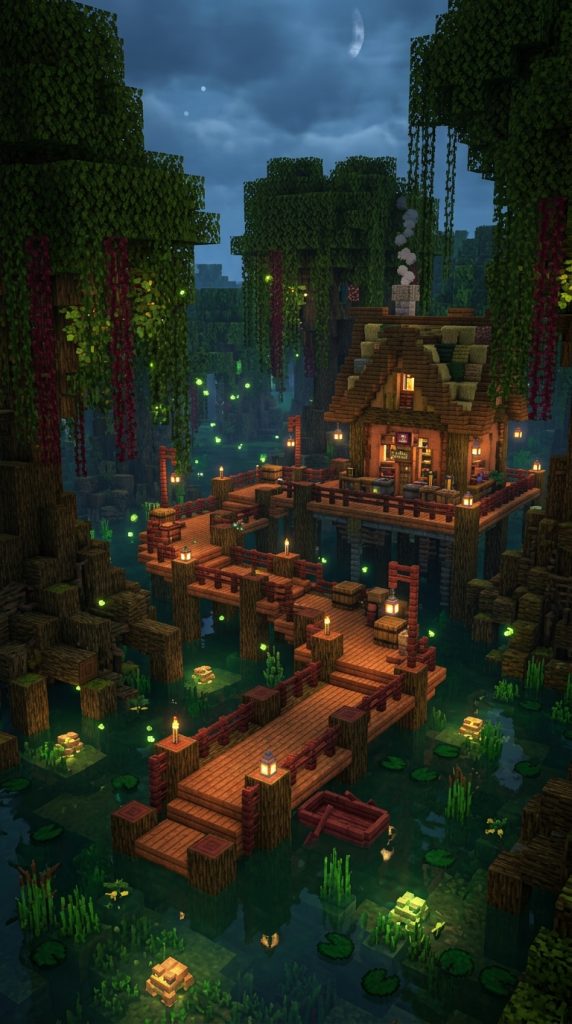
The Serene Spruce & Mangrove Swamp Stilt Dock navigates murky wetlands with elevated stilt architecture. It blends dark spruce timber with vibrant mangrove accents.
Harmonious Wetland Stilt Construction
Swamp biomes present unique building challenges with shallow water, mud, and dense vegetation. This design solves wetland navigation by elevating all walkways on tall stilts. Dark spruce wood provides sturdy framing, while crimson mangrove accents add vibrant contrast.
Walkways curve organically around ancient mangrove roots rather than destroying them. This creates a mystical, secluded outpost deep within mysterious swamp waters.
Swamp Stilt Dock Materials
- Spruce logs, stripped spruce, and spruce planks
- Mangrove planks, stairs, slabs, and trapdoors
- Mangrove roots, mud bricks, and moss blocks
- Spore blossoms, lily pads, and froglights
- Cauldrons, brewing stands, and glass bottles
- Lanterns, chains, and leads
Driving Stilt Pilings Around Mangrove Roots
Drive stripped spruce logs down through shallow swamp water into the mud. Weave the walking path around large, existing mangrove trees and root systems. Lay spruce planks bordered by mangrove slabs to form the elevated walkway.
Vary the height of different deck sections by one or two slabs for texture. This ensures the boardwalk follows natural swamp curves without looking rigid.
Constructing Witchy Alchemist Huts
Build small, open-air huts along wide platform junctions using spruce and mangrove. Use mud bricks for back walls and spruce fences for corner supports. Roof the huts with mangrove stairs draped with moss carpets and weeping vines.
Install brewing stands, water cauldrons, and ingredient chests inside the huts. Consequently, the dock functions as a practical potion-brewing and slime-farming base.
Adding Mystical Wetland Lighting
Conceal glowing pearlescent froglights beneath open mangrove trapdoors in the floor. Suspend a fragrant spore blossom from overhanging tree branches to release green particles. Scatter green lily pads and glowing sea pickles across surrounding swamp waters.
Hang copper lanterns from tree roots using iron chains for atmospheric twilight lighting. Your serene swamp stilt dock is complete, magical, and functional.
7. Deep-Water Spruce Galleon Shipyard
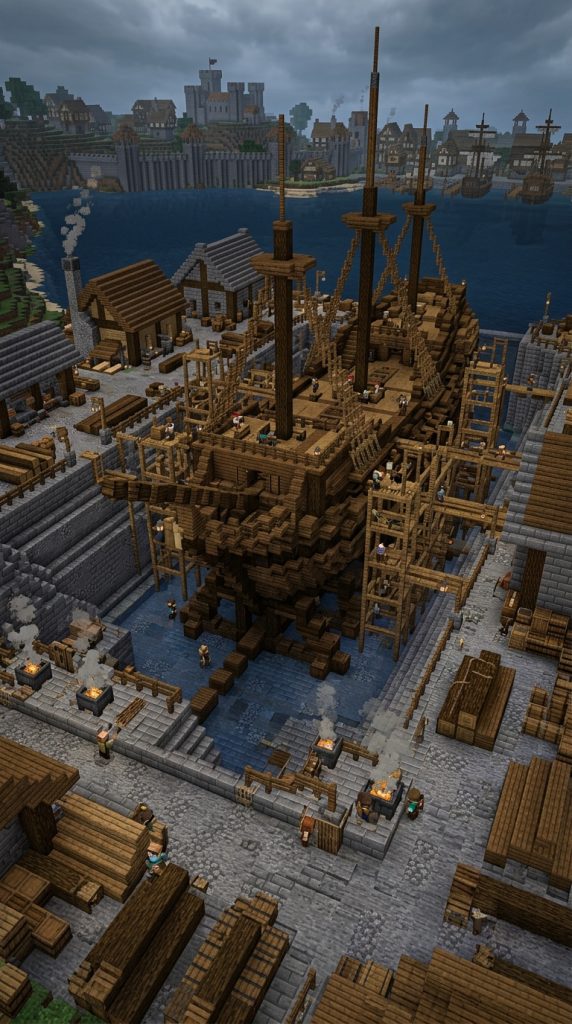
The Deep-Water Spruce Galleon Shipyard is an industrial dock built for large-scale vessel construction. It features dry dock basins, timber scaffolding, and shipwright workshops.
Industrial Historic Shipwright Facility
A true seafaring empire requires dedicated shipyard facilities to build and repair fleets. Deep stone basins hold massive ship hulls securely above the water line. Intricate spruce scaffolding towers surround resting vessels for ongoing maintenance work.
Tool racks, timber piles, and forge fires fill the bustling dockside apron. This monumental build adds incredible historical realism and scale to any coastline.
Galleon Shipyard Material Checklist
- Spruce logs, stripped spruce, and spruce planks
- Spruce slabs, stairs, and trapdoors
- Scaffolding blocks, ladders, and dark oak fences
- Stone bricks, cracked stone, and polished andesite
- Campfires, blast furnaces, and smithing tables
- Iron blocks, chains, and water buckets
Excavating the Stone Dry Dock Basin
Carve a deep rectangular channel into your shoreline thirty blocks long and twelve wide. Line the bottom and side walls of the basin with sturdy stone bricks. Mix in cracked stone bricks and polished andesite along the floor.
Build a heavy timber floodgate at the ocean entrance using dark oak logs. Place wooden keel blocks made of spruce logs along the basin floor centerline.
Erecting Timber Scaffolding Frameworks
Build towering scaffolding structures along both sides of the dry dock basin. Mix functional scaffolding blocks with spruce fences, ladders, and wooden trapdoors. Connect elevated work platforms across the basin using single-slab spruce walkways.
Hang iron chains and pulley blocks from the high scaffolding beams. This gives the appearance of an active, bustling medieval shipyard under construction.
Outfitting Shipwright Workshops and Forges
Construct an open-air carpenter workshop along the edge of the dry dock apron. Place blast furnaces, smithing tables, and stonecutters beneath a timber lean-to. Stack stripped spruce logs horizontally using dark oak trapdoors as binding straps.
Place campfires beneath iron trapdoors to simulate smoking pitch cauldrons for sealing hulls. Your deep-water galleon shipyard stands ready to construct massive survival fleets.
8. Compact Spruce Survival Starter Dock
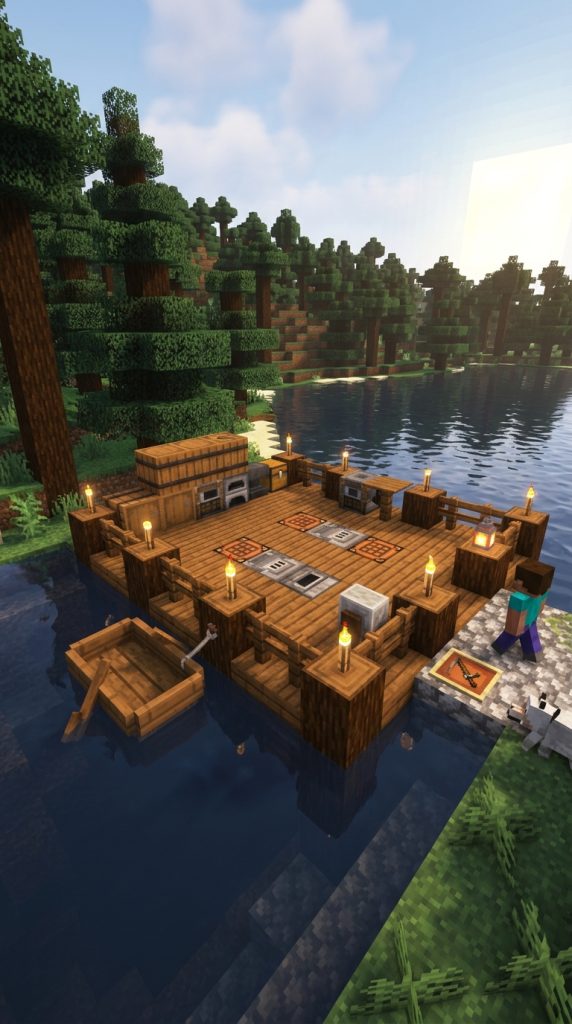
The Compact Spruce Survival Starter Dock delivers high functionality within a modest footprint. Designed for early-game players, it provides organized storage and boat launching.
Efficient Early-Game Waterfront Design
Starting a new survival world requires functional builds that use minimal resources. This starter dock fits all essential early-game necessities into an eight-by-ten area. A simple wooden deck extends over the water with dedicated boat parking.
Built-in storage chests, crafting benches, and furnaces keep your workflow efficient. It provides a clean, organized base camp before expanding into larger megabases.
Starter Dock Resource List
- Spruce logs, stripped spruce, and spruce planks
- Spruce slabs, stairs, and trapdoors
- Cobblestone and cobblestone walls
- Double chests, barrels, and crafting tables
- Furnaces, torches, and lanterns
- Oak boats and lead ropes
Laying the Compact Wooden Platform
Select a small natural shoreline area near your initial survival base camp. Lay a small stone footing along the bank using four cobblestone blocks. Extend an eight-by-six block wooden platform out over the water using spruce slabs.
Drive stripped spruce logs into the water at the two outer platform corners. Add upside-down spruce stairs along the edges to create a finished border.
Installing Integrated Crafting Workstations
Embed four furnaces and a crafting table flush into the dock floor surface. Place two double chests along the back shoreline wall for raw resource storage. Stack wooden barrels vertically in corners to hold fishing rods, seeds, and kelp.
Cover the top of the barrels with spruce trapdoors to serve as shelves. This keeps the compact deck completely free of clutter while maximizing utility.
Designing a Simple Boat Slip
Carve a two-block-wide indentation into the front of the wooden dock platform. Place spruce stairs facing downward into the water to form a smooth boat ramp. Tie an oak boat securely to a cobblestone wall post using a lead.
Mount two torches on fence posts to illuminate the dock during early survival nights. Your compact spruce survival starter dock is functional, cheap, and expandable.
9. Modern Waterfront Spruce Marina Boardwalk
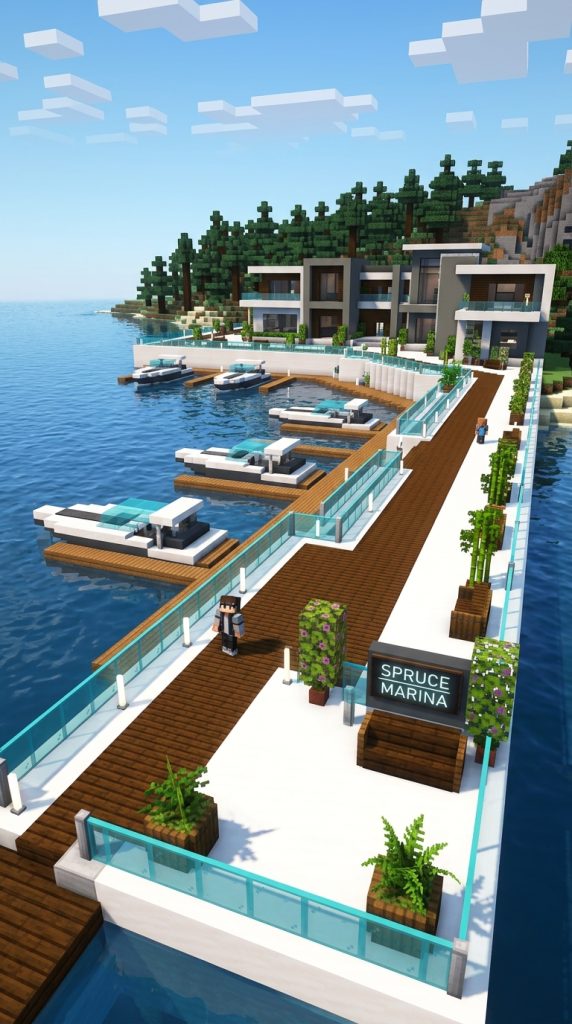
The Modern Waterfront Spruce Marina Boardwalk brings sleek contemporary luxury to survival coastlines. It features smooth white concrete, stripped spruce decking, and recessed lighting.
Contemporary Coastal Luxury Architecture
Modern waterfront marinas showcase clean lines, minimalist aesthetics, and sophisticated materials. Ultra-smooth white concrete walls contrast boldly against rich, dark stripped spruce planks. Sleek horizontal glass railings provide unobstructed panoramic views of the open ocean.
Concealed LED-style lighting casts a soft, elegant glow across floating fingers. This build turns plain shorelines into exclusive yacht clubs and contemporary resorts.
Modern Marina Palette
- Stripped spruce logs, spruce planks, and spruce slabs
- White concrete, smooth quartz, and quartz stairs
- Light gray concrete and cyan stained glass panes
- Sea lanterns, end rods, and iron trapdoors
- Oak boats, dark oak boats, and white wool
- Water source blocks and smooth stone
Pouring the White Concrete Promenade
Pour a wide seaside promenade along the coast using clean white concrete blocks. Edge the waterfront side with a border of smooth quartz stairs. Inset long panels of stripped spruce wood flush with the concrete surface.
Install seamless safety railings using vertical iron bars and cyan stained glass panes. Consequently, the promenade achieves a sleek, high-contrast contemporary appearance immediately.
Constructing Floating Finger Slips
Extend narrow floating piers eight blocks out into the water from the promenade. Build the floating piers using smooth spruce slabs capped with spruce trapdoors. Conceal glowing sea lanterns beneath the pier surfaces to illuminate water below.
Install horizontal end rods along the pier edges to mimic modern LED path lights. Place sleek mooring posts made of polished deepslate walls at each slip.
Mooring Modern Luxury Speedboats
Build custom modern speedboats docked in the marina slips using quartz and spruce. Use white quartz stairs for aerodynamic boat hulls and dark oak for seats. Place tinted glass panes on boats to serve as sleek windshields.
Furnish the dock promenade with minimalist lounge chairs made of quartz stairs. Your modern waterfront spruce marina boardwalk delivers cutting-edge contemporary luxury daily.
10. Gothic Dark Spruce Harbor Pier & Belltower
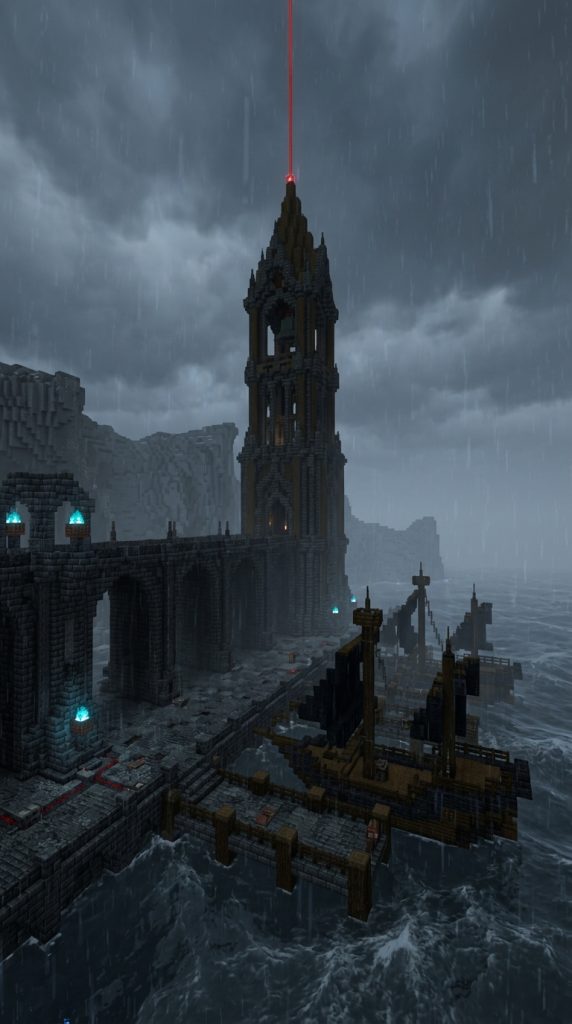
The Gothic Dark Spruce Harbor Pier & Belltower combines imposing stone architecture with dark timber docks. A soaring belltower guides ships safely through thick midnight fog.
Dramatic Gothic Maritime Fortification
Gothic harbors command deep respect along storm-swept, rocky survival coastlines. Soaring dark oak and spruce spires rise above black deepslate sea walls. A monumental belltower houses an active redstone beacon cutting through sea mist.
Pointed arches, iron portcullises, and soul fire braziers line the waterfront promenade. Consequently, this dramatic build delivers an imposing, dark fantasy coastal aesthetic.
Gothic Harbor Material Checklist
- Deepslate tiles, cracked deepslate, and polished deepslate
- Spruce logs, stripped spruce, and spruce planks
- Dark oak planks, stairs, and dark oak trapdoors
- Nether brick fences, iron bars, and heavy chains
- Redstone lamps, daylight sensors, and bells
- Soul lanterns and soul campfires
Raising Deepslate Quayside Arches
Construct a high quayside promenade along the coastline using deepslate tiles. Build dramatic pointed arch supports along the water’s edge using deepslate stairs. Inset dark stripped spruce log pillars every four blocks to reinforce arches.
Pave the upper walking deck with dark oak planks bordered by spruce slabs. Mount iron bar railings along the outer edge to prevent falls during storms.
Erecting the High Harbor Belltower
Construct a tall, octagonal watchtower at the end of the main pier. Use deepslate tiles for the lower tower base and stripped spruce logs above. Install a functional brass bell in the open belfry, suspended by iron chains.
Place redstone lamps wired to daylight sensors atop the pointed dark oak spire. Therefore, the belltower automatically illuminates as night falls over the stormy sea.
Adding Dark Fantasy Accents
Mount soul fire campfires in deepslate braziers along the pier corners. The ethereal cyan flames provide atmospheric lighting while deterring hostile mob spawns. Hang heavy iron chains from the gothic arches down toward the dark water.
Dock black-hulled wooden ships beside the pier using dark oak and spruce planks. Your gothic dark spruce harbor pier stands firm against the dark ocean.
11. Overgrown Ancient Jungle Spruce River Pier
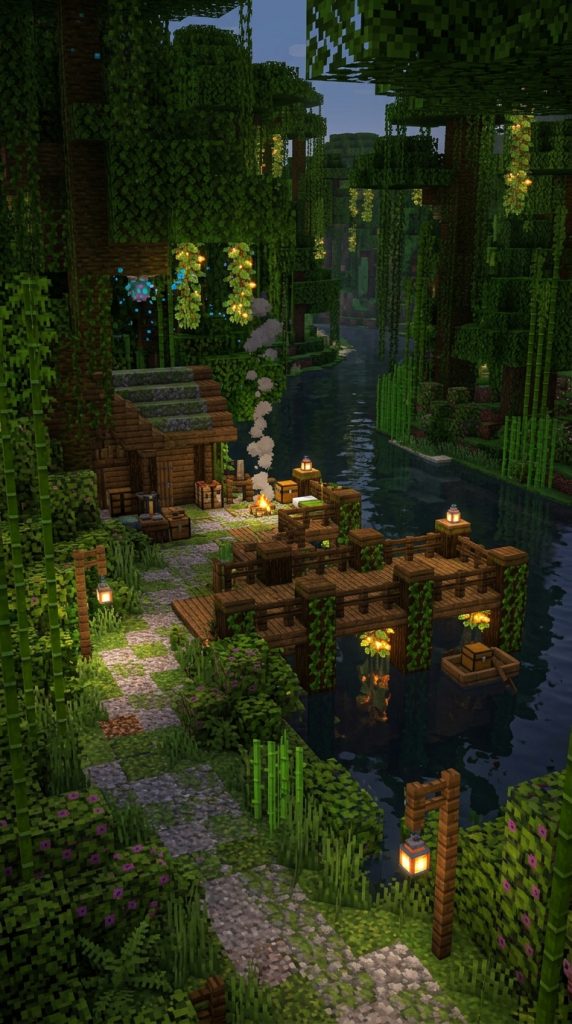
The Overgrown Ancient Jungle Spruce River Pier weaves weathered timber paths through dense jungle riverbeds. Ancient vines and flowering foliage reclaim the rustic wooden decks.
Atmospheric Reclaimed Wilderness Design
Jungle river piers capture the adventurous spirit of lost ancient civilizations. Weathered spruce planks wind gracefully between giant ancient jungle tree roots. Creeping vines, flowering azalea bushes, and moss blocks cover the wooden railings.
Hidden storage chests and fishing platforms sit nestled under thick leafy canopies. Consequently, this atmospheric build provides an immersive, organic river base for explorers.
Jungle River Pier Palette
- Spruce logs, stripped spruce, and spruce planks
- Jungle logs, jungle leaves, and bamboo stalks
- Moss blocks, moss carpets, and weeping vines
- Spore blossoms, glow berries, and lily pads
- Cobblestone, coarse dirt, and rooted dirt
- Lanterns, chains, and item frames
Framing the Organic River Walkway
Lay an organic, winding pathway following the natural curves of the jungle riverbank. Use stripped spruce logs for low water pilings driven into river mud. Pave the walking deck using a random mixture of spruce planks and cobblestone.
Replace occasional deck blocks with coarse dirt and lush moss blocks. This creates a weathered, aged texture that blends seamlessly into the dense jungle.
Weaving Living Canopy Pillars
Wrap vertical spruce dock pillars with leafy jungle vines and weeping glow berries. Connect overhead tree branches to the pier using hanging dark oak fence posts. Suspend a fragrant spore blossom centrally to release drifting green particles.
Plant tall bamboo shoots and flowering azalea bushes in clusters along the dock. Consequently, nature appears to gently reclaim the wooden structure over time.
Installing Hidden Jungle Fishing Nooks
Build a small, sheltered fishing alcove extending out over the flowing river water. Place water cauldrons, storage barrels, and fishing rod racks inside the nook. Float green lily pads and glowing sea pickles in the shallow water below.
Hang copper lanterns from tree roots using iron chains for warm evening lighting. Your overgrown ancient jungle spruce river pier offers an enchanting wilderness escape.
12. Desert Oasis Spruce & Sandstone Dock
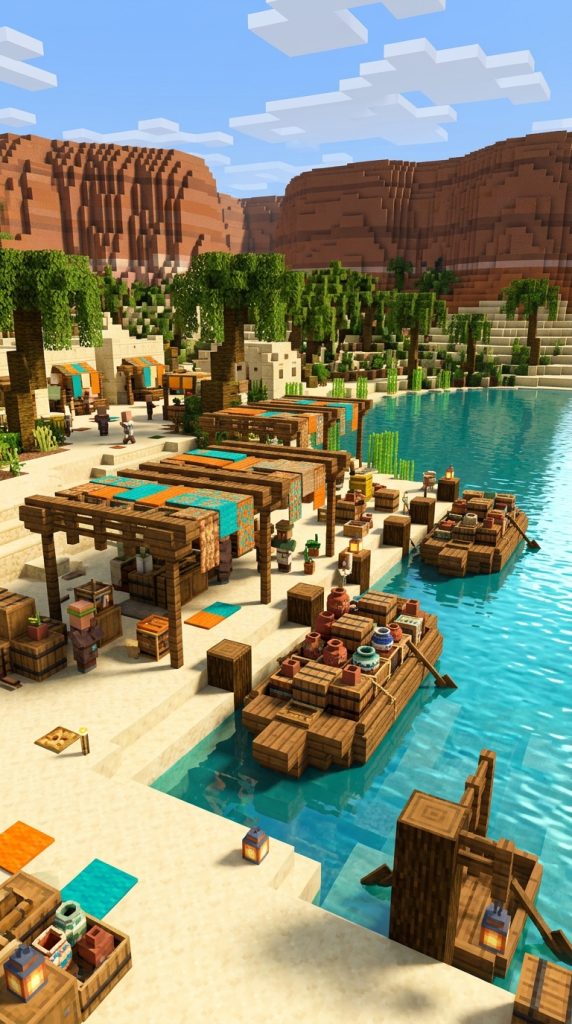
The Desert Oasis Spruce & Sandstone Dock brings refreshing shade and water transport to arid biomes. It pairs warm sandstone with dark spruce timber pergolas.
Sun-Baked Oasis Waterfront Design
Desert oasis docks provide vital water trade routes across scorching, arid biomes. Smooth sandstone quays meet calm, turquoise desert waters with clean geometric lines. Shaded spruce wood pergolas draped with colorful fabrics shelter merchants from the sun.
Lush date palms, sugar cane, and cactus gardens line the wide waterfront paths. Consequently, this build creates a wealthy, exotic trading haven in the desert.
Desert Oasis Resource Checklist
- Smooth sandstone, cut sandstone, and sandstone stairs
- Spruce logs, stripped spruce, and spruce planks
- Spruce fences, slabs, and spruce trapdoors
- Orange terracotta, yellow terracotta, and cyan carpet
- Jungle leaves, sugar cane, and cactus plants
- Lanterns, leads, and decorated pots
Terracing the Sandstone Shoreline
Carve stepped horizontal terraces into the sandy desert riverbank or oasis edge. Face the water retaining walls with smooth sandstone and warm cut sandstone. Pave the primary walking promenade using a mixture of sandstone and spruce planks.
Install cut sandstone stairs descending directly into the water for easy boat access. Therefore, the dock handles fluctuating desert river levels with functional elegance.
Constructing Shaded Spruce Pergolas
Erect slender stripped spruce log pillars along the sandstone dock promenade. Connect the pillar tops with horizontal spruce fence beams to create open pergolas. Lay vibrant orange, yellow, and cyan wool carpets across the overhead beams.
This colorful fabric canopy provides essential shade from the harsh desert sun. Add spruce trapdoors along pergola edges to serve as decorative wooden trim.
Mooring Flat-Bottom River Barges
Construct flat-bottomed wooden cargo barges moored alongside the sandstone quay. Build barge hulls using spruce planks bordered by dark oak stairs for gunwales. Load the barges with decorated pottery jars, grain barrels, and sugarcane bundles.
Hang copper lanterns from spruce pergola posts to illuminate evening trade markets. Your desert oasis spruce and sandstone dock is a magnificent trading oasis.
13. Japanese-Inspired Spruce Pagoda Harbor

The Japanese-Inspired Spruce Pagoda Harbor captures the timeless harmony of East Asian maritime architecture. It features sweeping pagoda roofs, torii gates, and koi pond docks.
Serene East Asian Harbor Aesthetics
Japanese-style harbors emphasize balance, graceful curves, and natural harmony with water. Tiered, upward-curving pagoda roofs shelter elevated wooden boat moorings. An iconic red torii gate frames the harbor entrance, welcoming returning fishing fleets.
Glowing paper lanterns cast soft, warm reflections across calm, pebble-lined waters. Consequently, this design brings peace, balance, and historic beauty to your waterfront.
Pagoda Harbor Material Palette
- Spruce logs, stripped spruce, and spruce planks
- Deepslate tiles, deepslate tile stairs, and slabs
- Crimson planks, crimson fences, and mangrove wood
- White banners, paper lanterns, and bamboo stalks
- Smooth quartz, gravel, and water cauldrons
- Pink cherry leaves, lily pads, and flower pots
Turning Sweeping Pagoda Dock Roofs
Construct a rectangular dock pavilion using stripped spruce wood corner pillars. Build a sweeping, tiered roof overhead using dark deepslate tile stairs. Flare the four roof corners upward using inverted deepslate stairs and slabs.
Trim the roof ridges with smooth spruce slabs to create clean, contrasting lines. Hang glowing red paper lanterns from every flared roof corner eave.
Framing the Crimson Torii Gate
Erect an iconic torii gate spanning the harbor entrance channel using crimson wood. Build two vertical crimson log pillars rising eight blocks above the water. Connect the pillars with a horizontal crimson beam topped with deepslate stairs.
Hang a large bronze bell or lantern from the center of the torii arch. Arriving boats glide smoothly beneath the gate, entering the tranquil harbor basin.
Landscaping the Zen Water Basins
Line the inner harbor shoreline with smooth gravel, andesite, and rounded river stones. Plant tall bamboo stalks and blooming pink cherry blossom trees along paths. Install a small stone water basin using a cauldron topped with a bamboo tap.
Place water-filled cauldrons with lily pads along the dock to mimic koi ponds. Your Japanese-inspired spruce pagoda harbor offers unmatched peaceful serenity daily.
14. Floating Spruce Pontoon Boatyard
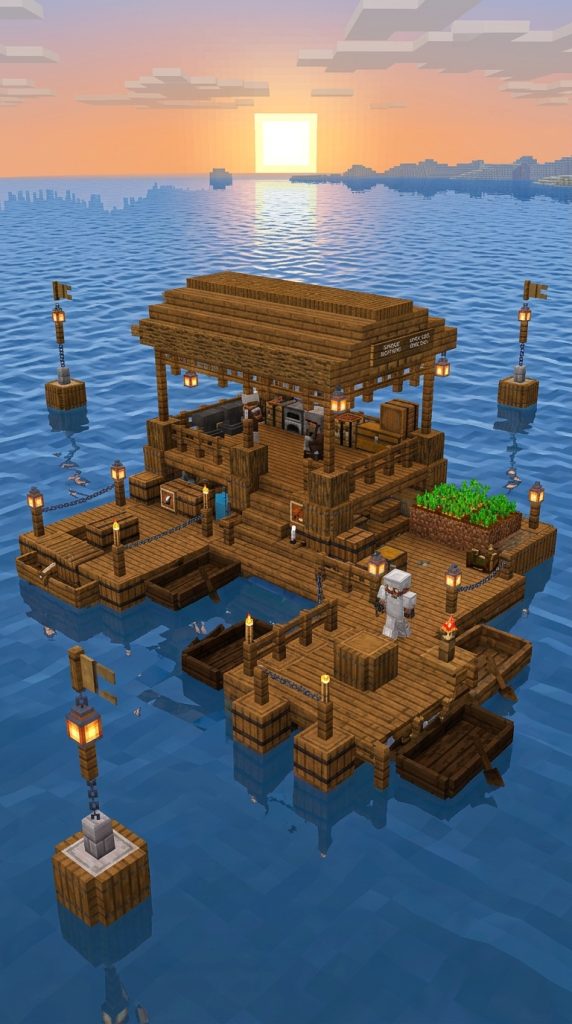
The Floating Spruce Pontoon Boatyard utilizes modular floating platforms to navigate open ocean waters. It adapts effortlessly to deep water without requiring massive foundations.
Flexible Modular Ocean Engineering
Building in deep ocean biomes can require tedious underwater pillar placement. Floating pontoon docks solve this problem by riding directly on the water surface. Buoyant wooden barrels and spruce log rafts form modular floating platforms.
Flexible chain link hinges connect separate docks, allowing organic movement on waves. This build provides an adaptable, expandable harbor for open-ocean survival bases.
Pontoon Boatyard Resource List
- Spruce logs, stripped spruce, and spruce planks
- Spruce slabs, stairs, and spruce trapdoors
- Barrels, composters, and iron chains
- Dark oak fences, gates, and iron bars
- Sea lanterns, light gray carpet, and leads
- Oak boats and fishing rods
Assembling Floating Barrel Pontoons
Lay horizontal rows of storage barrels floating directly on the water surface. Place spruce slabs and planks across the barrels to create walking platforms. Border the pontoon edges with dark spruce trapdoors to conceal underlying barrels.
Connect adjacent modular platforms using iron chains and fence hinges. This creates the authentic visual appearance of flexible floating pontoon fingers.
Building Floating Workshop Rafts
Construct a larger central platform measuring ten by twelve blocks for workshops. Erect an open-air timber canopy over the workshop using stripped spruce posts. Install crafting tables, blast furnaces, and repair anvils beneath the canopy roof.
Stack storage barrels around the workshop perimeter to store maritime gear. Inset sea lanterns beneath floor carpets to illuminate the floating base at night.
Installing Mooring Slips and Buoys
Carve two-block-wide boat mooring slips between the floating pontoon fingers. Install wooden cleats along the slip edges using spruce fences and iron tripwire hooks. Anchor decorative ocean navigation buoys around the boatyard perimeter using chains.
Hang lanterns from buoys to guide nighttime sailors safely into the floating slips. Your floating spruce pontoon boatyard provides flexible, expandable ocean utility.
15. Industrial Redstone Auto-Unloading Cargo Dock
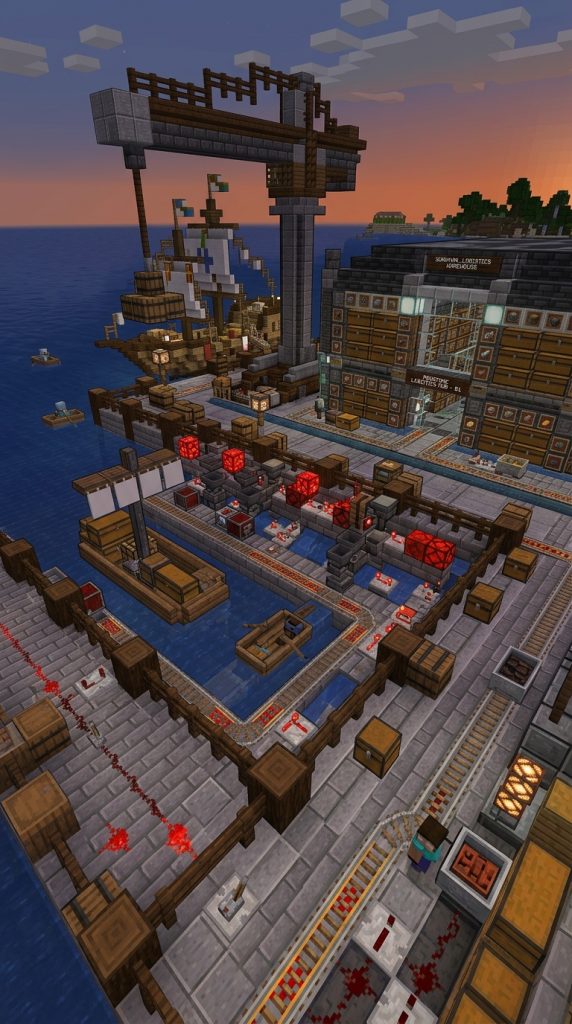
The Industrial Redstone Auto-Unloading Cargo Dock brings automated logistics to survival waterfronts. Hopper minecarts and water elevators unload boat cargo automatically.
Automated High-Tech Maritime Logistics
Manual inventory unloading after long ocean expeditions can be tedious and slow. This advanced redstone dock automates cargo extraction the moment your boat docks. Concealed hopper systems draw items from chest boats and funnel them inland.
Water elevators carry unloaded goods up into categorized storage warehouses automatically. Consequently, this build combines industrial spruce aesthetics with cutting-edge redstone efficiency.
Redstone Cargo Dock Palette
- Spruce logs, stripped spruce, and spruce planks
- Smooth stone, polished andesite, and iron blocks
- Iron hoppers, droppers, and chest minecarts
- Redstone comparators, repeaters, and redstone dust
- Powered rails, soul sand, and water buckets
- Glass blocks, lanterns, and item frames
Framing the Industrial Spruce Quay
Construct an industrial quayside apron using stripped spruce logs and polished andesite. Mix in smooth stone and iron blocks along the mechanical unloading bay. Install heavy iron cranes overhead to give the appearance of industrial cargo machinery.
Lay a reinforced stone sea wall around the automated unloading slip for protection. Therefore, the high-tech machinery blends seamlessly into an authentic timber dockyard.
Wiring the Automated Hopper Unloader
Install a subterranean iron hopper array directly beneath the designated boat docking slip. Place a hopper minecart embedded inside the floor blocks beneath the water. The hopper minecart pulls items rapidly from chest boats parked overhead.
Funnel the hopper line into a vertical dropper item elevator powered by a redstone clock. Consequently, harvested ocean loot transfers automatically into base storage without manual effort.
Installing Visual Redstone Indicator Lamps
Mount redstone lamps on industrial spruce pillars beside the automated unloading slip. Wire redstone comparators to the hopper line to detect when items are transferring. The lamps illuminate brightly while cargo is unloading and turn off when finished.
Encase the exposed redstone wiring inside stylish spruce trapdoor maintenance panels. Your industrial redstone auto-unloading cargo dock is fully powered, automated, and operational.