
Designing a minimalist nursery is about creating a space that balances functionality with tranquility. Minimalist nurseries embrace clean lines, neutral tones, and thoughtful organization, providing both a serene environment for your baby and a visually calming space for parents. Unlike heavily decorated nurseries, which can feel busy or overwhelming, a minimalist approach focuses on quality over quantity, ensuring each piece serves a purpose while enhancing the room’s aesthetic.
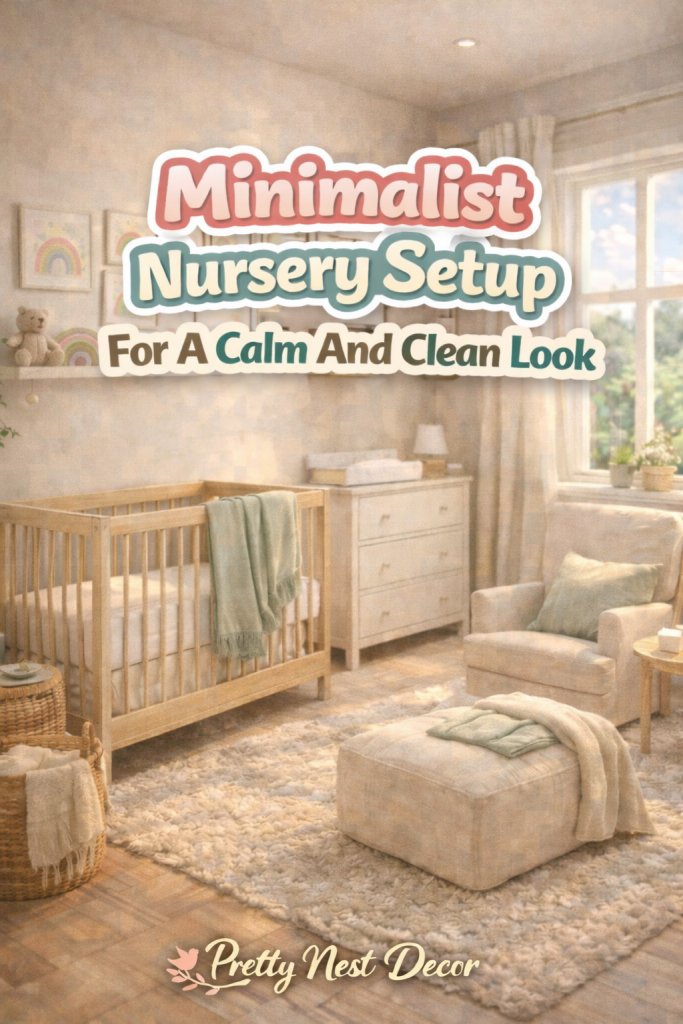
Neutral color palettes dominate minimalist nurseries, including soft whites, beige, creams, muted grays, and gentle pastels. These colors promote a sense of calm, allowing babies to rest more peacefully while creating a light, airy space that feels open and uncluttered. Incorporating textures such as soft cotton, linen, natural wood, and subtle woven fabrics adds warmth and depth without overcrowding the room. A minimalist nursery is never sterile—it is inviting, comfortable, and functional.
Furniture in a minimalist nursery is selected with intention. Pieces like cribs with clean lines, multi-functional changing tables, simple dressers, and ergonomic rocking chairs provide utility without visual clutter. Emphasizing quality craftsmanship ensures that furniture remains a statement of timeless design rather than a temporary trend. Multi-purpose furniture, such as a crib with built-in drawers or a dresser that doubles as a changing station, helps maximize space while keeping the room tidy.
Storage plays a crucial role in minimalist nurseries. Open shelving, discreet baskets, and hidden drawers help organize essentials like diapers, toys, and clothes while maintaining the clean lines of the room. Minimalist storage encourages intentional living; only the items that are truly necessary are kept visible, while excess clutter is stored away or eliminated. This approach not only enhances aesthetics but also makes day-to-day routines easier for parents.
Decor in a minimalist nursery is simple, subtle, and meaningful. Wall art is usually limited to one or two pieces with muted colors or soft line drawings, avoiding overly busy patterns. Accent items, such as small plush toys, a soft rug, or a calming mobile, are carefully chosen to complement the space rather than overwhelm it. The goal is to maintain a cohesive, harmonious environment that fosters restfulness and focus.
Lighting is another essential component of a minimalist nursery. Natural light is prioritized where possible, with sheer curtains or blinds that diffuse sunlight gently. Soft, warm artificial lighting, such as dimmable overhead lights, floor lamps, or nightlights, ensures the room is functional yet cozy during evening or nighttime routines. Thoughtful lighting design enhances the tranquil atmosphere and supports healthy circadian rhythms for both baby and parent.
A minimalist nursery also encourages a mindful layout. Each piece of furniture has space to breathe, and pathways are clear for easy movement. This spatial consideration makes the room feel larger and more open than its actual dimensions. Even small nurseries benefit from minimalist principles: by removing unnecessary items, choosing compact or multi-functional furniture, and emphasizing vertical storage, the space feels calm rather than cramped.
Safety is integral to minimalist design. The clean aesthetic is complemented by baby-proofing essentials, such as outlet covers, secured furniture, non-toxic paints, and rounded furniture edges. By blending safety measures seamlessly into the décor, parents maintain peace of mind without compromising style. Minimalism doesn’t mean sacrificing practicality; instead, it ensures that functionality and aesthetics coexist in harmony.
The minimalist nursery is also perfect for modern parents who appreciate sustainability. Focusing on fewer, high-quality, long-lasting items reduces environmental impact while ensuring the nursery remains relevant as your child grows. Neutral colors and timeless furniture pieces can easily adapt to toddler rooms, reducing the need for constant redecorating.
Finally, a minimalist nursery creates an environment that supports calm routines. The simplicity of the space encourages both baby and parents to focus on rest, bonding, and daily rituals. A clutter-free environment reduces stress, enhances clarity, and provides a sense of control for new parents navigating the demands of early parenthood. The clean, serene aesthetic isn’t just visually appealing—it has functional, emotional, and psychological benefits, making it the ultimate approach to nursery design.
In this article, we will explore 20 minimalist nursery setup ideas that emphasize calm, clean, and functional spaces. Each idea will include detailed, beginner-friendly instructions, materials lists, and tips for creating a cohesive, Pinterest-worthy nursery. From furniture placement and storage solutions to décor accents, wall art, and lighting, these ideas are designed to help you transform any nursery into a serene, minimalist haven that nurtures both baby and parent alike.
1. Neutral Toned Crib Setup
Introduction
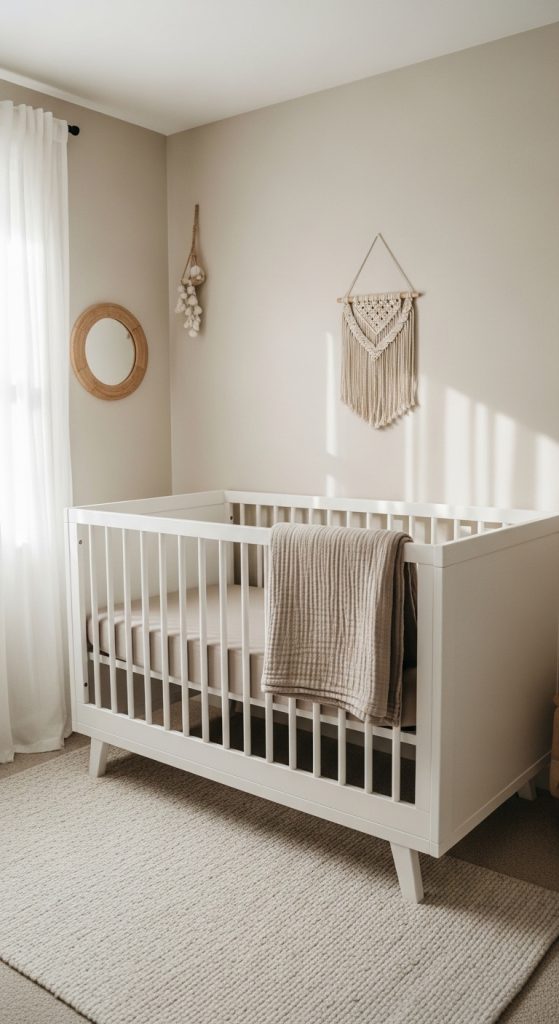
A neutral-toned crib is the centerpiece of a minimalist nursery, creating a calm and cohesive foundation for the room. Using soft whites, creams, or muted beige for the crib and bedding instantly promotes serenity and visual cleanliness. Neutral tones also make the nursery flexible for future décor changes or growth, allowing parents to easily update accent colors or accessories without replacing core pieces.
Minimalist nurseries benefit from cribs with clean lines, avoiding ornate designs that add visual clutter. Modern cribs with sleek wooden frames, smooth finishes, and multi-functional features—such as built-in drawers—maximize functionality while keeping the aesthetic calm. Pairing the crib with simple bedding, including fitted sheets in neutral tones and soft, lightweight blankets, enhances comfort and elegance.
This setup is not only stylish but also practical. A minimalist crib arrangement emphasizes safety and organization. By limiting decorative elements directly on or around the crib, parents can maintain a clean and accessible sleeping space. Accessories like a single soft mobile or subtle crib skirt can add personality without overwhelming the eye, achieving a perfectly balanced minimalist look.
What This Design Is
A central crib setup in neutral tones with simple bedding and minimal accessories for a serene nursery foundation.
Step-by-Step How-To
- Choose a crib in neutral colors with clean, modern lines.
- Add a fitted sheet in white, cream, or muted pastel.
- Include a lightweight blanket or swaddle in coordinating tones.
- Optional: add a minimalist mobile with soft colors.
- Avoid excessive toys or décor directly on the crib.
- Ensure crib placement allows for accessibility and movement around the room.
Materials Needed
- Neutral-toned crib (wood or painted)
- Fitted crib sheet
- Lightweight blanket or swaddle
- Optional: minimalist mobile
- Baby-safe mattress
2. Multi-Functional Changing Station
Introduction
A multi-functional changing station is essential in a minimalist nursery, combining style and practicality. Opting for a changing table with drawers or storage below eliminates the need for additional furniture, keeping the room clean and uncluttered. Using neutral tones and simple hardware ensures the station complements the rest of the minimalist aesthetic.
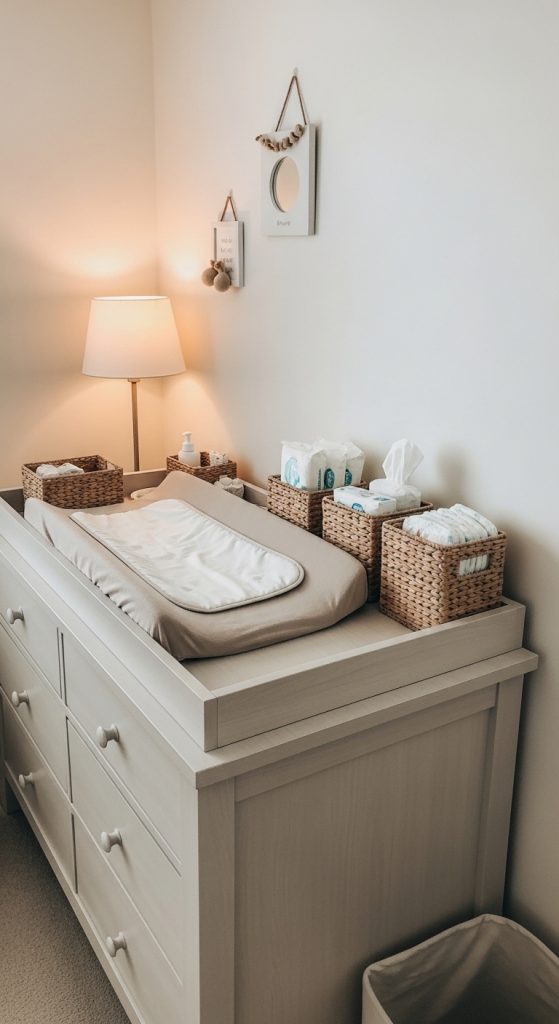
Minimalist changing stations focus on functionality without clutter. The surface should be reserved strictly for changing necessities, while diapers, wipes, and baby clothes can be stored discreetly in drawers or baskets below. This design supports calm routines and maintains the room’s visual cleanliness. Accessories like a small lamp or a soft mat enhance the station’s functionality without adding visual noise.
The changing station also serves as an organizational hub. By keeping supplies within reach but hidden from sight, parents can maintain a clean and calming environment. Neutral baskets, dividers, and soft trays allow efficient storage, making this a perfect blend of minimalist style and convenience.
What This Design Is
A changing table or dresser with built-in storage in neutral tones, keeping baby supplies organized and visually minimal.
Step-by-Step How-To
- Select a changing table or dresser with drawers and a clean-lined surface.
- Place a padded changing mat on top.
- Organize diapers, wipes, and essentials in baskets or drawers.
- Keep the surface free from clutter.
- Optional: add a small lamp for soft lighting during nighttime changes.
- Ensure the station is placed near the crib for convenience.
Materials Needed
- Changing table or dresser
- Padded changing mat
- Storage baskets or drawer organizers
- Soft lamp (optional)
- Baby essentials (diapers, wipes, creams)
3. Minimalist Wall Art
Introduction
Minimalist wall art enhances a calm nursery by providing subtle visual interest without overwhelming the space. Using muted tones, soft shapes, or simple line drawings aligns with the neutral, serene aesthetic. Unlike busy or brightly colored artwork, minimalist pieces encourage a soothing atmosphere conducive to rest for both baby and parents.
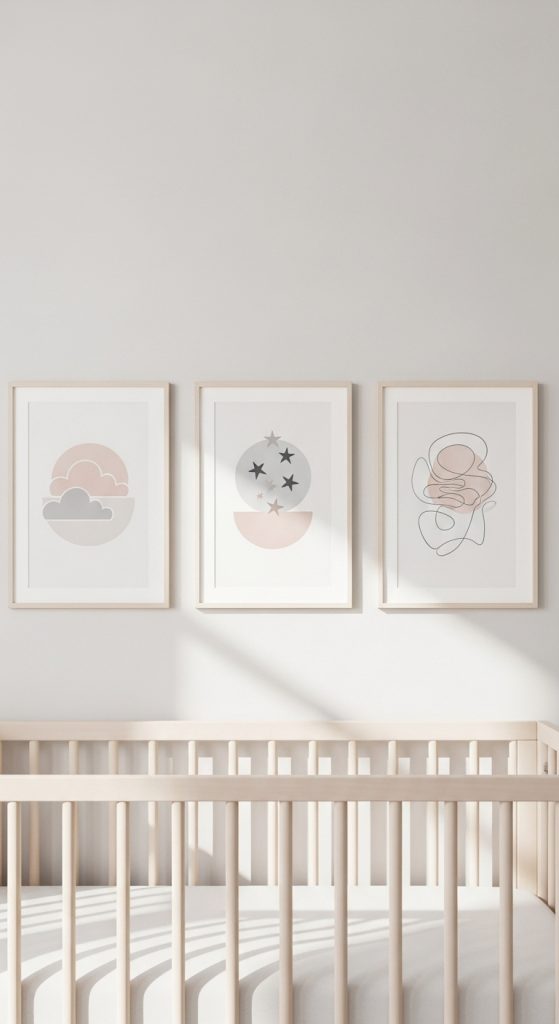
Popular options include framed line drawings, abstract shapes, or soft pastel prints. Art can also feature calming motifs such as clouds, stars, or animals in simple silhouettes. Limiting the number of frames and maintaining equal spacing ensures a balanced, clean look. For a more dynamic feel, consider arranging two or three complementary pieces rather than covering the walls with multiple prints.
This approach reinforces the minimalist principle of quality over quantity. The right artwork can tie together the room’s color palette, accentuate textures, and create a visual anchor without adding clutter. It also serves as a focal point, giving parents a beautiful yet functional nursery environment.
What This Design Is
Simple, calming wall art in neutral or pastel tones that adds interest while maintaining a minimalist aesthetic.
Step-by-Step How-To
- Select 2–3 pieces of wall art with simple shapes or muted tones.
- Use matching frames in wood, white, or black for cohesion.
- Arrange art on the wall above crib or changing table, leaving space around pieces.
- Measure spacing evenly to ensure visual balance.
- Hang securely using proper wall anchors.
- Optional: add small floating shelves for subtle décor items.
Materials Needed
- Wall art prints
- Frames (matching or complementary)
- Wall anchors or hooks
- Measuring tape
- Optional: floating shelves
4. Neutral Area Rug
Introduction
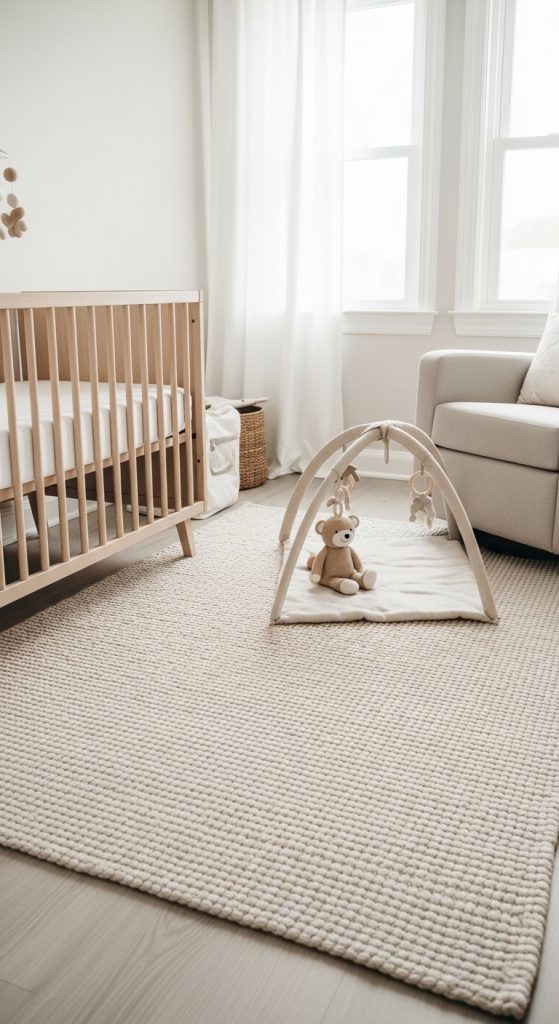
A neutral area rug anchors the minimalist nursery while adding warmth and texture. Soft creams, beiges, or muted grays complement the clean aesthetic and create a cozy environment for floor play. Unlike bold patterned rugs, neutral rugs support the calming atmosphere and make the space feel larger and more open.
Area rugs also serve a functional purpose: providing a soft surface for crawling, tummy time, or rocking sessions. In minimalist nurseries, choose rugs with subtle textures or simple patterns, avoiding overly busy designs. Layering natural fiber rugs with soft woven or cotton rugs can add depth without breaking the clean aesthetic.
The right rug balances form and function. It ties together furniture, décor, and color palette while offering comfort and safety for the baby. Maintaining simplicity ensures the rug complements the room without competing with other elements.
What This Design Is
A simple, neutral area rug that provides comfort, warmth, and a clean visual foundation for the nursery.
Step-by-Step How-To
- Measure nursery floor to determine rug size.
- Choose a neutral-toned rug in soft material.
- Position rug centrally, under crib and play area if space allows.
- Ensure rug is secured with non-slip pads for safety.
- Optional: layer smaller textured rug on top for visual interest.
Materials Needed
- Neutral area rug
- Non-slip rug pad
- Optional: smaller textured rug
5. Floating Shelves for Essentials
Introduction
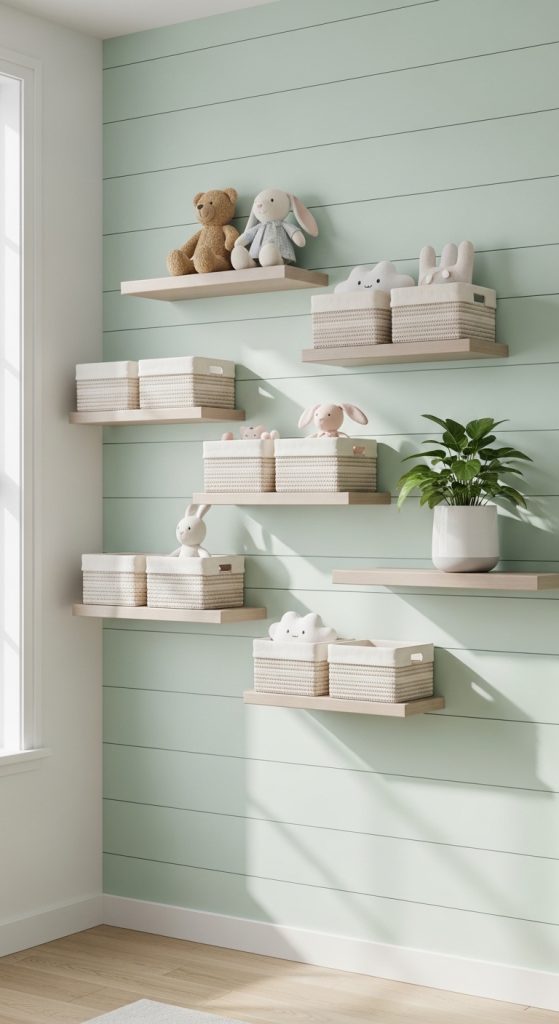
Floating shelves are a minimalist solution for storing and displaying nursery essentials. They save floor space while keeping items accessible and organized. Open shelves allow you to store baskets, toys, books, or decorative accents without adding visual clutter, maintaining a clean, airy look.
Minimalist floating shelves focus on neutral colors, simple lines, and minimal décor. Using white, light wood, or muted tones ensures cohesion with the rest of the nursery. Placing shelves at varying heights allows parents to separate frequently used items from decorative pieces, creating functional hierarchy.
This setup promotes organization and clean aesthetics. Baskets or boxes on shelves hide clutter, while small accent items like framed prints, soft toys, or a tiny plant add personality without overwhelming the space. Floating shelves also keep surfaces clear, enhancing visual calm and supporting minimalist principles.
What This Design Is
Wall-mounted floating shelves for storing nursery essentials in a clean, organized, and minimalist manner.
Step-by-Step How-To
- Select floating shelves in neutral tones.
- Measure and mark wall placement for balance.
- Install shelves using wall anchors.
- Place baskets, books, or décor on shelves.
- Arrange items for visual balance, keeping frequently used items accessible.
- Avoid overloading shelves to maintain clean look.
Materials Needed
- Floating shelves
- Wall anchors and screws
- Baskets or storage boxes
- Decorative items (small toys, prints, plants)
6. Soft Linen Curtains
Introductionx
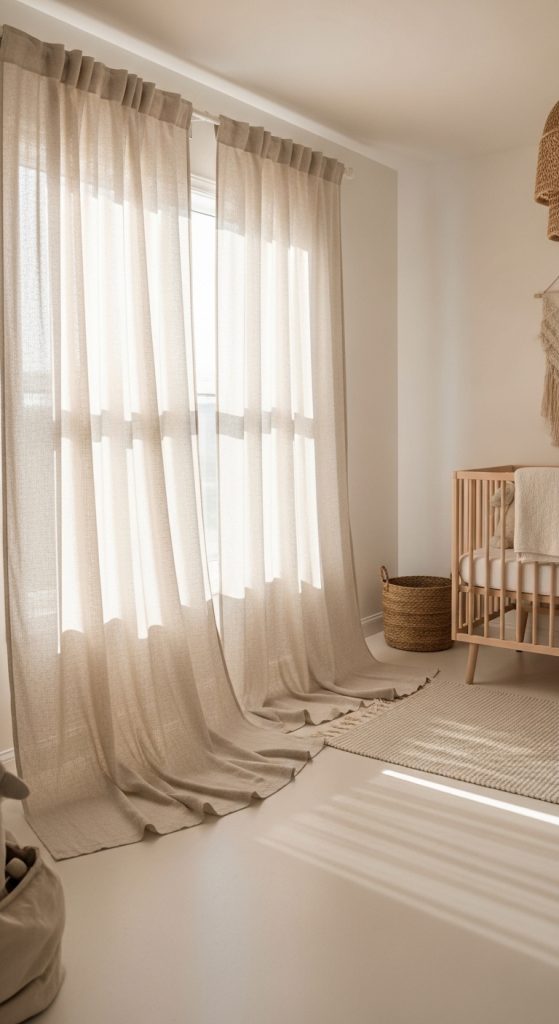
Soft linen curtains enhance a minimalist nursery by providing gentle filtering of natural light and maintaining a calm ambiance. Neutral-toned fabrics, such as cream, beige, or muted pastels, complement the clean aesthetic while adding texture. Linen or cotton blends create a natural, airy look that harmonizes with minimalist décor.
Curtains also contribute to functionality: they block harsh sunlight during naps, offer privacy, and soften the nursery’s acoustics. Choosing lightweight fabrics ensures they drape naturally without overwhelming the space. Simple curtain rods in neutral tones keep the overall design cohesive and streamlined.
By emphasizing simplicity and quality materials, linen curtains enhance the room’s tranquility. They work seamlessly with other minimalist elements, such as neutral furniture, soft rugs, and subtle wall art, creating a cohesive and calming nursery environment.
What This Design Is
Lightweight linen curtains in neutral shades that filter light and maintain minimalist aesthetics.
Step-by-Step How-To
- Measure window dimensions for curtain length and width.
- Choose neutral-toned linen or cotton curtains.
- Install simple curtain rod above window frame.
- Hang curtains, ensuring even drape.
- Optional: tie back curtains with matching ribbons or hooks.
- Adjust for full coverage during naps and open for daylight.
Materials Needed
- Linen or cotton curtains
- Curtain rod
- Wall brackets
- Optional: tiebacks or hooks
7. Minimalist Storage Baskets
Introduction
Storage baskets are essential in a minimalist nursery for keeping essentials organized without creating visual clutter. By selecting baskets in neutral tones like beige, white, or soft gray, you maintain a calm, cohesive look while hiding items such as toys, blankets, diapers, and clothes. Minimalist storage emphasizes both form and function: each basket serves a purpose while complementing the overall nursery aesthetic.
Baskets also contribute to a layered, textured look without overwhelming the space. Woven or fabric baskets introduce natural textures that enhance the nursery’s warmth and tactile appeal. Choosing baskets of various sizes allows for versatile storage solutions, from floor placement to floating shelves or under the crib. This approach keeps the nursery clean, accessible, and visually balanced.
In a minimalist setup, fewer items are kept visible, and baskets help achieve this principle. They encourage parents to declutter and store only necessary items while maintaining a stylish, organized space. Neutral baskets with simple handles or subtle patterns add charm without disrupting the calm aesthetic.
What This Design Is
Neutral-toned storage baskets used for organizing nursery essentials while maintaining minimalist aesthetics.

Step-by-Step How-To
- Select baskets in neutral tones and sizes suitable for your nursery.
- Assign specific baskets for toys, blankets, clothes, or diapers.
- Place larger baskets on the floor or under the crib, smaller ones on shelves.
- Fold or neatly arrange items inside baskets.
- Keep frequently used items accessible while hiding clutter in storage baskets.
- Optional: label baskets for easy organization.
Materials Needed
- Neutral-toned woven or fabric baskets
- Optional: labels
- Nursery essentials (toys, blankets, diapers, clothes)
8. Simple Crib Mobile
Introduction
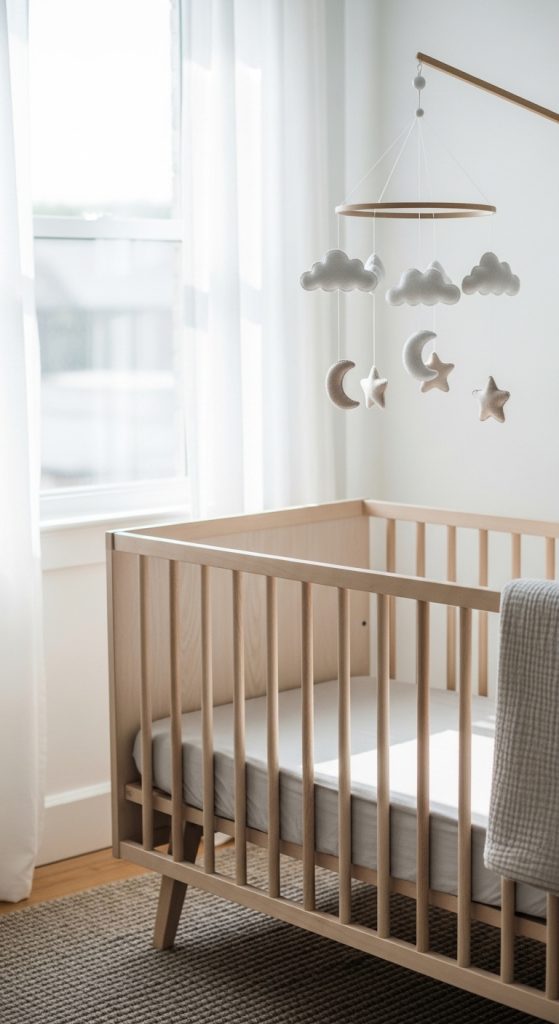
A simple crib mobile adds a calming, visually engaging focal point to a minimalist nursery. Unlike elaborate, colorful mobiles, minimalist designs use soft neutral or pastel tones and simple shapes, promoting tranquility while encouraging visual stimulation for the baby. The mobile can feature clouds, stars, geometric shapes, or natural elements, complementing the clean lines of the nursery.
Minimalist mobiles are typically lightweight, safe, and easy to assemble. They should not overwhelm the space or add clutter above the crib. A well-chosen mobile enhances the crib area’s aesthetic while providing subtle movement and interest that engages the baby without distracting from the room’s calm environment.
This décor item allows parents to add personality while remaining aligned with minimalist principles. Simple mobiles often pair with soft bedding, neutral rugs, and limited wall décor to maintain balance. They also create a cozy focal point for photos or daily interaction.
What This Design Is
A minimalist crib mobile in neutral or pastel colors, featuring subtle shapes and lightweight materials for calm visual interest.
Step-by-Step How-To
- Select a mobile design in neutral or soft pastel colors.
- Assemble the mobile according to manufacturer instructions.
- Attach securely to crib using included hardware.
- Adjust height so shapes are within baby’s line of sight but safe.
- Keep surrounding area minimal to maintain clean lines.
- Optional: rotate mobile shapes occasionally for baby engagement.
Materials Needed
- Minimalist crib mobile
- Mounting hardware (included with mobile)
- Optional: coordinating crib bedding
9. Soft Pastel Wall Paint or Accent Wall
Introduction
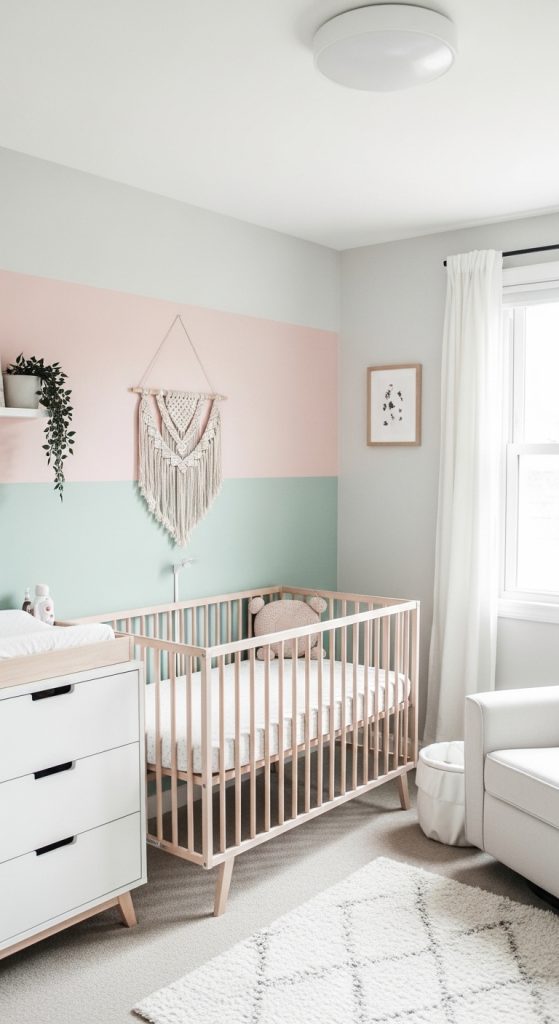
Soft pastel wall colors or an accent wall can define a minimalist nursery without overwhelming it. Using muted shades of cream, blush pink, mint, or soft gray promotes calmness while adding a gentle visual layer to the room. An accent wall behind the crib or changing table provides a subtle focal point that enhances the overall nursery aesthetic.
Minimalist nurseries benefit from clean, uncluttered walls. A single accent wall is sufficient to create visual interest, while neutral base colors for the remaining walls maintain openness and serenity. This approach supports flexibility, as accent colors can be updated easily when the baby grows or new décor is introduced.
Pastel walls also work harmoniously with furniture, rugs, and storage items, ensuring the room feels cohesive. The right shade can influence mood: soft tones encourage rest and comfort, perfect for both baby naps and parent relaxation.
What This Design Is
Soft pastel wall paint or a single accent wall that provides subtle color and visual focus while maintaining a calm minimalist aesthetic.
Step-by-Step How-To
- Choose a pastel shade that complements nursery furniture and décor.
- Prepare walls by cleaning and priming.
- Apply neutral base color to all walls, if applicable.
- Paint accent wall behind crib or changing table with chosen pastel.
- Allow paint to dry and inspect for even coverage.
- Keep wall décor minimal to preserve clean look.
Materials Needed
- Paint in pastel shades
- Paint rollers and brushes
- Painter’s tape
- Drop cloths
- Optional: minimal wall décor
10. Natural Wood or White Furniture
Introduction
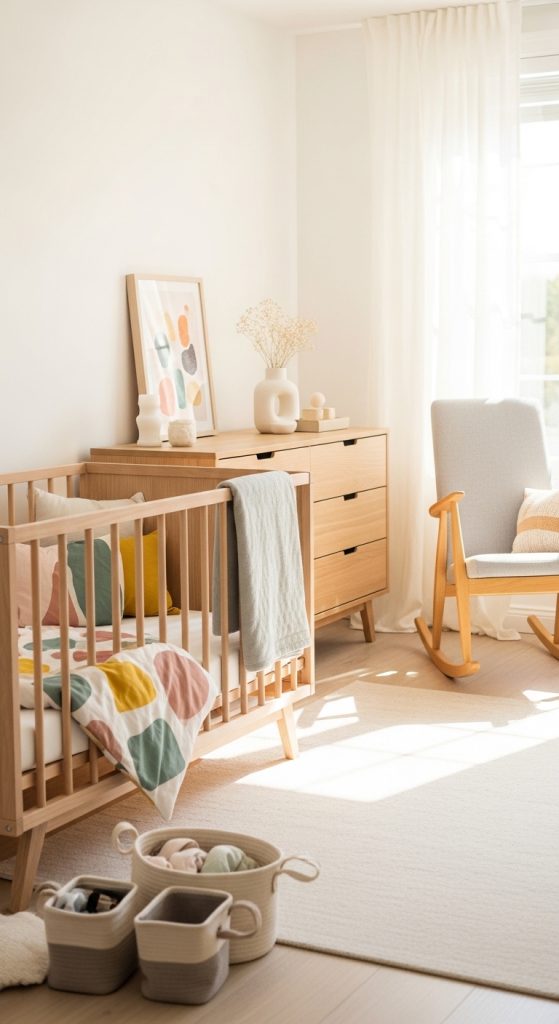
Natural wood or white furniture enhances a minimalist nursery by combining warmth with clean simplicity. Selecting a cohesive palette for the crib, dresser, and rocking chair ensures visual harmony while maintaining a serene, uncluttered atmosphere. These materials are timeless, versatile, and complement neutral wall colors, rugs, and décor accents.
Natural wood adds texture and a sense of organic calm, while white furniture emphasizes openness and light. Multi-functional pieces like cribs with drawers, dressers with changing stations, or chairs with storage compartments reduce clutter and maximize efficiency. Choosing high-quality, timeless furniture allows the nursery to adapt as the child grows, aligning with minimalist and sustainable principles.
This approach emphasizes intentionality. Each piece of furniture is selected for both utility and aesthetic value. By keeping furniture simple, parents can create a clean environment that is functional, safe, and visually soothing.
What This Design Is
Nursery furniture in natural wood or white finishes, chosen for functionality, simplicity, and a cohesive minimalist look.
Step-by-Step How-To
- Choose furniture with clean lines in white or natural wood.
- Prioritize multi-functional pieces to reduce clutter.
- Arrange furniture to allow easy movement around the room.
- Maintain consistent color palette with neutral or pastel accents.
- Avoid unnecessary decorative items on furniture surfaces.
- Regularly tidy and reorganize to maintain clean look.
Materials Needed
- Crib, dresser, and rocking chair in wood or white finish
- Optional: multi-functional furniture pieces
- Neutral or pastel accent items