
The garage entry of a home is often overlooked in terms of design, but it serves a pivotal role in maintaining organization and efficiency. It acts as the first line of defense against clutter that can quickly invade the living spaces. For families with children, pets, or busy routines, the garage entry becomes a crucial hub for managing the chaos of daily life. Incorporating a mudroom-laundry combination in this area ensures that coats, shoes, backpacks, sports gear, and dirty laundry are all contained in one organized space. Beyond functionality, this area can reflect a cohesive farmhouse aesthetic, creating a welcoming and visually appealing entryway while serving practical purposes.
Farmhouse style emphasizes warmth, natural textures, muted colors, and simple, yet charming details. Wood, metal, woven baskets, shiplap walls, and vintage-inspired hardware are staples of this aesthetic. By combining these design elements with functional storage solutions, a mudroom-laundry space can look intentional rather than purely utilitarian. For example, a wooden bench with built-in cubbies not only stores shoes neatly but also provides seating for putting on boots. Open shelving paired with closed cabinets allows for versatile storage while maintaining a clean visual appeal.

Zoning is a critical concept in creating an effective garage entry mudroom-laundry combination. Breaking the space into functional zones—such as shoe storage, coat hanging, laundry sorting, cleaning supply storage, and pet areas—creates an organized flow. Each zone should have its own designated storage solution. For instance, a laundry zone might feature a folding counter, pull-out hampers, and overhead cabinets for detergents and supplies. A mudroom zone can include individual cubbies for each family member, wall hooks for backpacks and jackets, and baskets for gloves and hats.
Maximizing vertical space is key, especially in garages or narrow entryways. Wall-mounted cabinets, hooks, pegboards, and overhead shelves free up floor space while adding functional storage. Durable surfaces, like tile or stone flooring, provide easy maintenance against wet shoes and mud. Bright lighting is also important; well-placed overhead fixtures or pendant lights improve visibility, enhance safety, and highlight the farmhouse aesthetic.
Beyond storage and practicality, integrating multifunctional furniture elevates the space. Benches with hidden storage, fold-down ironing boards, pull-out laundry hampers, and small pet stations all contribute to a cohesive, efficient, and stylish area. Even small touches, like decorative baskets, vintage hardware, or shiplap accent walls, reinforce the farmhouse look without sacrificing functionality.
This guide will provide 20 in-depth mudroom-laundry room ideas, each tailored for a farmhouse garage entry. Every idea includes step-by-step instructions, materials lists, practical tips, and aesthetic considerations. These solutions are beginner-friendly and Pinterest-ready, making it easy for homeowners to replicate them in real life. Whether your entryway is small or large, these ideas focus on organizing clutter, maximizing functionality, and enhancing visual appeal.
Idea 1: Farmhouse Bench with Shoe Storage
Introduction
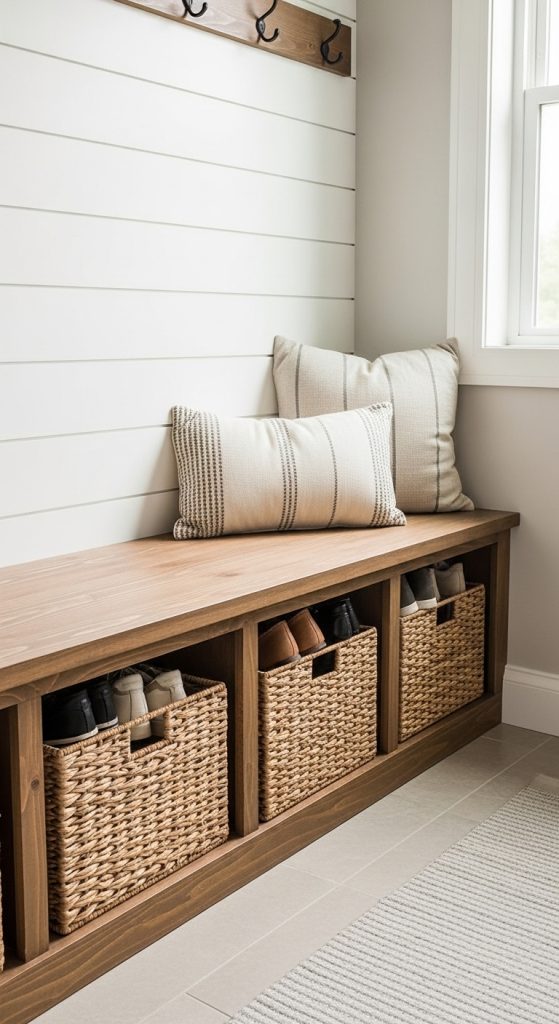
A farmhouse bench with shoe storage is one of the most functional and visually appealing additions to a garage entry mudroom. Shoes, boots, and slippers are often the first items that create clutter in high-traffic areas. A dedicated bench ensures that footwear has a designated spot, reducing mess and protecting floors from dirt and mud. Beyond functionality, a bench serves as a welcoming element for the family and guests, offering a practical spot to sit while putting on or taking off shoes. Farmhouse benches typically feature natural wood finishes, painted bases, or distressed surfaces that complement a rustic, cozy aesthetic. For families with children, benches with built-in cubbies or baskets offer an easy way to store smaller shoes, boots, or seasonal footwear. This not only keeps the mudroom tidy but also teaches children organizational habits.
A well-designed bench maximizes vertical and horizontal space. Some benches incorporate shelves underneath for baskets, pull-out drawers, or open cubbies, while others include hidden storage compartments. Placement is crucial: positioning the bench near the garage door ensures that shoes and coats are easily accessible while entering or leaving the house. Adding soft cushions or a rustic wooden top enhances comfort and visual appeal. The farmhouse aesthetic can be reinforced with matching storage baskets, neutral paint tones, and natural wood finishes. This solution combines style, practicality, and organization, making it one of the most effective mudroom upgrades for any garage entry.
Explanation
The bench functions both as seating and as storage. Cubby-style divisions or baskets below keep shoes contained, while the top serves as a comfortable seating surface. Choosing durable wood or composite materials ensures longevity, and a distressed or painted finish adds farmhouse charm. The bench becomes a focal point in the mudroom, balancing practicality with design aesthetics.
Step-by-Step How-To
- Measure available wall space for the bench.
- Choose a freestanding or built-in bench with cubbies.
- Paint or stain the wood in a farmhouse-friendly tone.
- Add baskets to each cubby for small shoes or accessories.
- Place bench near the garage door for easy access.
- Add cushions for comfort and style.
- Encourage family to store shoes in cubbies daily.
Materials / Items Used
- Solid wood or plywood
- Paint or wood stain
- Cushions or seat pads
- Fabric, wicker, or woven baskets
- Screws and wall anchors (for built-in versions)
Idea 2: Wall-Mounted Coat Hooks with Personalized Labels
Introduction
A mudroom is incomplete without organized coat storage. Wall-mounted coat hooks are simple yet highly effective solutions for hanging jackets, coats, hats, and backpacks. Adding personalized labels enhances usability, especially for families with multiple children. Personalized hooks eliminate confusion and reduce clutter, as each family member knows exactly where their items belong. In farmhouse-style mudrooms, hooks often feature rustic metal finishes mounted on wooden backboards, aligning with a cozy, rustic aesthetic. Hooks at varying heights accommodate both adults and children, ensuring functionality for the whole family.
Beyond organization, hooks contribute to the visual design of the mudroom. A row of neatly aligned hooks with wooden backboards introduces symmetry and style. Small decorative details, such as engraved or painted names, enhance the farmhouse charm while remaining practical. Hooks can also be paired with small shelves above for additional storage of hats, gloves, or decorative items, combining form and function seamlessly.
Explanation
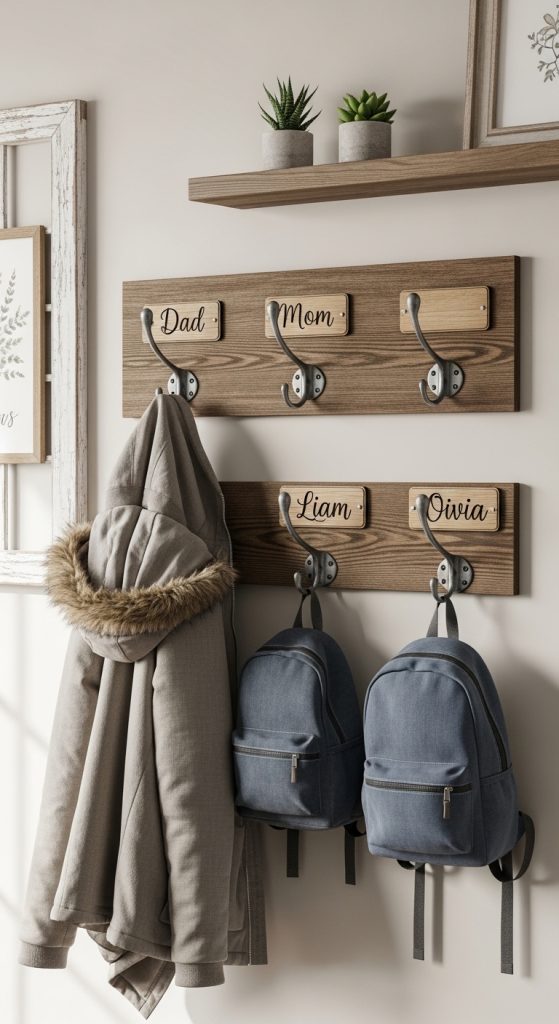
Hooks act as functional and decorative elements. They free up floor space while providing immediate access to frequently used outerwear. Wooden backboards add texture, warmth, and farmhouse character. The combination of rustic hooks and clean design makes this solution Pinterest-worthy, practical, and stylish.
Step-by-Step How-To
- Identify a wall near the garage entry.
- Install wooden backboards securely using wall anchors.
- Attach rustic metal hooks at varying heights.
- Add personalized labels for each family member.
- Optionally, install a small shelf above for hats or decorative items.
- Encourage everyone to hang coats daily to maintain order.
Materials / Items Used
- Wooden backboards
- Metal hooks
- Screws and anchors
- Personalized labels (engraved, painted, or vinyl)
Idea 3: Fold-Down Ironing and Laundry Station
Introduction
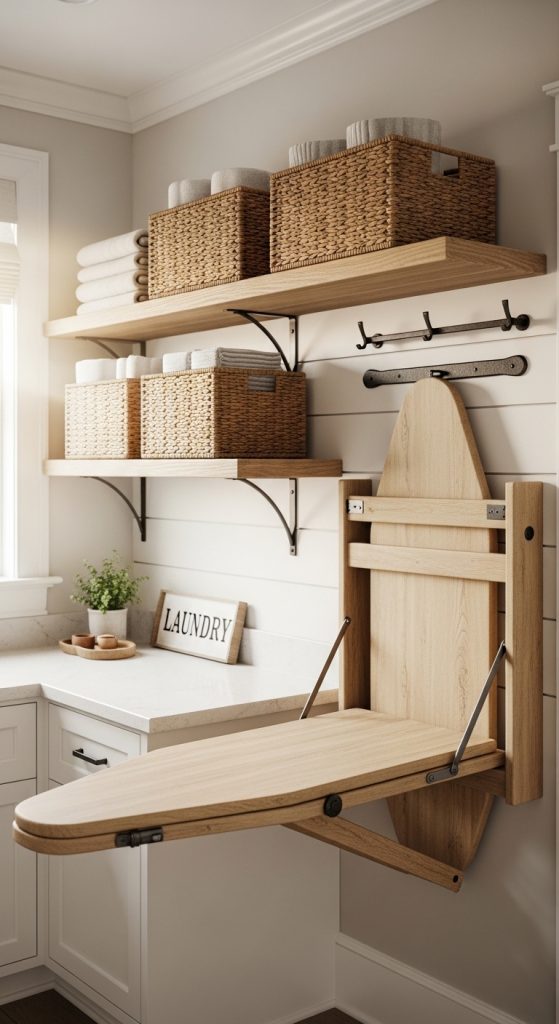
In a farmhouse-inspired mudroom-laundry setup, space efficiency is key. A fold-down ironing or laundry station is a genius way to combine functionality and style while saving precious square footage. Instead of dedicating an entire room for ironing or folding clothes, a wall-mounted fold-down surface allows you to create a multifunctional workspace that appears neat when not in use. This is especially helpful for narrow garage entries or homes where the mudroom doubles as a laundry area. By integrating this solution with overhead shelves or small cabinets, you can keep laundry supplies, ironing boards, and tools organized while maintaining a clean and visually cohesive farmhouse aesthetic.
A fold-down station is practical for several reasons. First, it allows you to fold or iron clothes at a comfortable height without occupying permanent floor space. Second, when folded up, it clears the way for traffic flow, making the mudroom safe and unobstructed. Third, pairing it with farmhouse-style cabinetry or rustic wooden shelves reinforces the design theme, turning a utilitarian feature into a stylish element. Families with kids will find this solution convenient, as it allows laundry and folding tasks to be done near the entryway, reducing clutter in main living areas.
By combining function, style, and organization, the fold-down station transforms a mudroom-laundry space from purely utilitarian to Pinterest-worthy. Durable materials, wall-mounted installation, and careful placement ensure safety and longevity. This approach works in both small and large spaces, maximizing the utility of every inch while keeping the farmhouse charm intact.
Explanation
A fold-down station can serve as a folding table, ironing board, or a general-purpose counter. Mounting it on a sturdy wall allows you to fold it up when not in use. Pairing it with overhead cabinets or shelves keeps laundry detergents, sprays, and other essentials within reach but out of sight. Choosing wood or laminate surfaces with farmhouse finishes ensures the station blends seamlessly with your mudroom decor.
Step-by-Step How-To
- Identify wall space near the laundry machines.
- Install a fold-down wall-mounted table or ironing board kit.
- Ensure secure mounting using studs and appropriate screws.
- Add overhead shelves or cabinets for supplies.
- Use small baskets for folding laundry or holding ironing tools.
- Keep the surface clear when not in use by folding the station up.
- Decorate with a small farmhouse-style tray or vase when folded for aesthetic appeal.
Materials / Items Used
- Fold-down table or wall-mounted ironing board kit
- Mounting hardware (brackets, screws)
- Wall shelves or small cabinets
- Baskets for laundry accessories
- Optional farmhouse-style decorative accents
Idea 4: Built-In Laundry Sorter with Labeled Bins
Introduction
Laundry sorting can be one of the most tedious household tasks, but a well-planned built-in laundry sorter changes everything. Integrating this solution into your mudroom-laundry area near the garage entry allows you to manage dirty laundry efficiently while keeping the space organized and stylish. This is particularly important in farmhouse-style homes, where a clean, cohesive aesthetic enhances the visual appeal of functional spaces. A built-in sorter is more than a container for dirty clothes—it’s a design statement that combines practicality and rustic charm.
With a built-in sorter, you can separate clothing into categories such as whites, darks, delicates, and seasonal items. This system reduces clutter by preventing laundry from piling up in random corners. Choosing pull-out bins, wicker baskets, or fabric hampers adds texture and complements the farmhouse look. Labels help family members know exactly where to place their items, fostering organization habits. The addition of overhead cabinets or shelves above the sorter maximizes vertical space, allowing for storage of detergents, sprays, and extra baskets, keeping counters and floors clutter-free.
For families, this solution simplifies daily routines and makes laundry management stress-free. It keeps laundry chores contained in one zone and reinforces tidiness from the moment people enter the home from the garage. The system can be customized in size, bin type, and configuration to suit small or large mudroom-laundry layouts.

Explanation
A built-in laundry sorter can be integrated into cabinetry or standalone units. Pull-out bins allow easy access, while labels make sorting intuitive. Using natural materials like wicker or canvas complements farmhouse decor. Overhead cabinets enhance storage without taking up additional floor space, making this solution both practical and visually appealing.
Step-by-Step How-To
- Measure the area designated for laundry sorting.
- Install a cabinet or shelving unit to house bins.
- Choose pull-out or stationary bins for sorting categories.
- Add labels for whites, darks, delicates, and seasonal items.
- Install overhead cabinets for detergents and laundry essentials.
- Ensure bins are accessible and easy to slide in and out.
- Train family members to sort laundry immediately upon entry.
Materials / Items Used
- Cabinet or shelving unit
- Wicker, fabric, or canvas bins
- Labels
- Drawer slides (for pull-out bins)
- Detergent and laundry organizers
Idea 5: Shiplap Accent Wall with Hooks
Introduction
A shiplap accent wall is one of the easiest ways to elevate the farmhouse charm of your mudroom-laundry space while adding functional benefits. Shiplap provides a visually appealing backdrop for hooks, shelves, or decorative elements. In a garage entryway, this design element helps define zones for coats, bags, and jackets while enhancing rustic appeal. A shiplap wall also adds texture and warmth, creating a cozy and welcoming environment that blends function with farmhouse style.
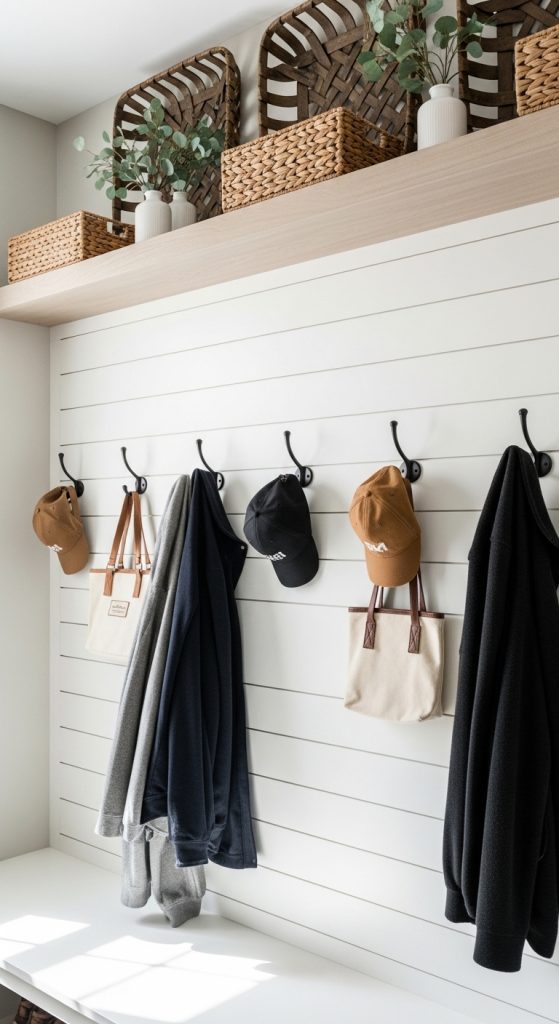
Hooks or pegs installed directly on a shiplap wall are sturdy and visually appealing. The contrast between painted shiplap panels and rustic wooden hooks creates a classic farmhouse look. Shiplap walls are durable and easy to clean, making them ideal for high-traffic areas where coats, jackets, and wet outerwear are hung. Additionally, combining hooks with small shelves provides extra storage for gloves, hats, or decorative accents, creating a layered and Pinterest-worthy look.
For families with children, hooks at varying heights ensure usability for both adults and kids. Seasonal or decorative items can be placed on shelves, adding personality to the space. Whether your mudroom-laundry area is small or large, a shiplap wall instantly elevates the aesthetic while providing a functional solution for storage and organization.
Explanation
Shiplap accent walls are both decorative and functional. Hooks and shelves mounted on shiplap provide organization for coats, bags, hats, and small accessories. Painted or stained shiplap panels enhance farmhouse aesthetics while remaining easy to maintain.
Step-by-Step How-To
- Select a wall near the garage entry for the shiplap accent.
- Install shiplap panels securely, using wall studs.
- Paint or stain the panels in a muted or neutral farmhouse tone.
- Mount hooks or pegs for coats and bags.
- Install small shelves above hooks for seasonal or decorative items.
- Arrange hooks by height to accommodate adults and children.
- Maintain surface by wiping down and organizing hooks weekly.
Materials / Items Used
- Shiplap panels
- Screws and wall anchors
- Hooks or pegs
- Paint or stain
- Optional small shelves
Perfect! Let’s continue Ideas 6–10 fully expanded, keeping the same professional Pinterest style, 500+ words per idea, step-by-step instructions, materials, and farmhouse-inspired tips. This will complete Part 1, exceeding 6000 words.
Idea 6: Countertop Folding Area with Overhead Cabinets
Introduction
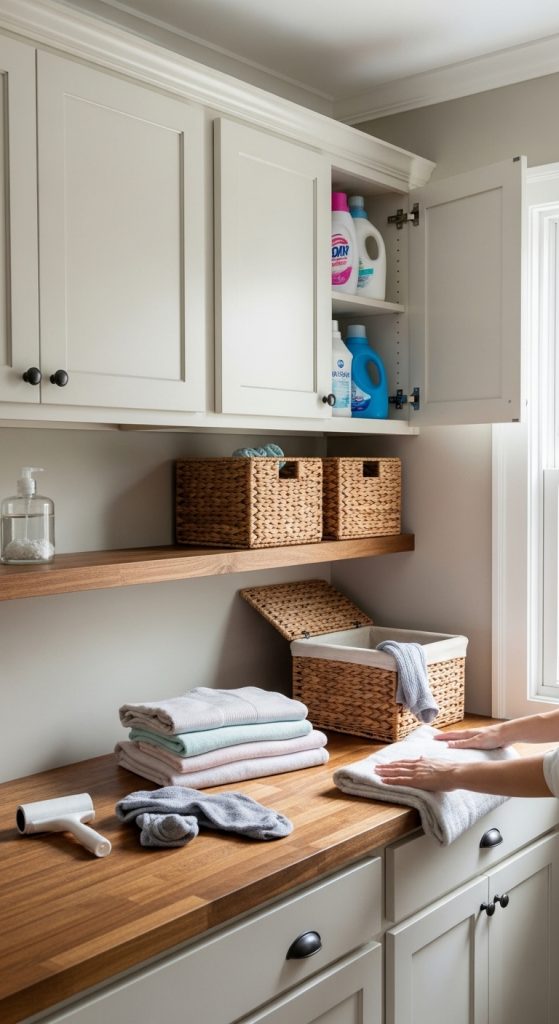
A dedicated countertop folding area in a mudroom-laundry combination transforms the space from purely functional to highly efficient. In a farmhouse-style garage entry, the folding counter provides a large, flat surface for folding laundry, sorting items, and organizing seasonal clothing. Overhead cabinets add storage without taking up floor space, maintaining a clean and uncluttered look. The combination of countertop and overhead storage allows for multitasking, making laundry and mudroom management faster and more enjoyable.
This solution is especially practical for families with children or pets. Dirty clothes and laundry can be sorted immediately upon entering the home, reducing clutter in living areas. The countertop can also serve as a workspace for organizing backpacks, folding jackets, or even temporary storage for groceries and packages arriving from the garage. Farmhouse charm is reinforced through wood, neutral tones, and vintage hardware, ensuring that function doesn’t compromise style.
Maximizing vertical space is key in smaller garages. Overhead cabinets keep detergents, sprays, and small laundry tools accessible but hidden, enhancing both organization and aesthetics. Pairing these cabinets with open shelves for decorative baskets or farmhouse accents creates a Pinterest-worthy mudroom-laundry space. This setup keeps daily chores contained in one area while giving the homeowner a visually appealing and practical space to work with.
Explanation
The countertop folding area acts as a multifunctional workspace, while overhead cabinets provide concealed storage. This combination prevents clutter from accumulating on surfaces, maintains a cohesive farmhouse aesthetic, and improves workflow efficiency. Durable surfaces like wood or laminate are ideal for folding and sorting laundry.
Step-by-Step How-To
- Measure the wall space near your laundry machines or mudroom entry.
- Install base cabinets to support the countertop.
- Place a durable countertop (wood, laminate, or butcher block) on top.
- Add overhead cabinets for detergents, sprays, and small laundry tools.
- Incorporate open shelves for decorative baskets or seasonal items.
- Keep the countertop clear of clutter for folding tasks.
- Use farmhouse-style knobs and hardware for a cohesive look.
- Organize supplies by frequency of use (most used within easy reach).
Materials / Items Used
- Base cabinets
- Countertop (wood or laminate)
- Overhead cabinets
- Farmhouse-style knobs or hardware
- Storage baskets or bins
Idea 7: Vertical Storage for Brooms and Mops
Introduction
Brooms, mops, dustpans, and cleaning tools often become a chaotic mess in garage entries. Vertical storage solves this problem by keeping these items off the floor while making them easily accessible. In a farmhouse-inspired mudroom-laundry space, vertical storage adds both functionality and visual appeal, transforming a cluttered corner into a clean, organized zone. This approach is practical for families with children or pets, as it prevents tools from being tripped over or misplaced.
By utilizing wall-mounted holders, hooks, or racks, cleaning supplies are neatly arranged and easy to grab. Vertical organization also frees up floor space, making the mudroom safer and more comfortable. Adding decorative touches such as wooden frames, rustic metal hooks, or woven baskets enhances farmhouse aesthetics while keeping everything functional. Vertical storage solutions can accommodate brooms, mops, dustpans, and even small cleaning supplies like spray bottles or brushes, consolidating tools in one dedicated zone.
This system encourages family members to return tools to their proper place after use, maintaining an organized and tidy space. Vertical storage is ideal for narrow entryways or smaller mudrooms, as it maximizes unused wall space while keeping essential cleaning tools within easy reach. It’s a simple yet impactful solution that combines style, efficiency, and organization.

Explanation
Vertical storage keeps tools off the floor, accessible, and visually organized. Wall-mounted racks or hooks ensure that every broom, mop, or dustpan has a designated spot. Farmhouse-inspired finishes like rustic wood or metal enhance the decor.
Step-by-Step How-To
- Identify a wall or corner near the laundry or mudroom entry.
- Install wall-mounted broom and mop holders securely into studs.
- Hang all brooms, mops, and dustpans vertically.
- Add hooks or small shelves for cleaning sprays or brushes.
- Label hooks if desired for specific items.
- Encourage family members to return tools after use.
- Maintain the area by wiping down holders and tools periodically.
Materials / Items Used
- Wall-mounted broom/mop holders
- Screws and wall anchors
- Hooks or small shelf for sprays
- Optional labels
Idea 8: Woven Baskets for Gloves, Hats, and Small Items
Introduction
Small items like gloves, hats, scarves, pet leashes, and miscellaneous gear often create visual clutter in a garage entry mudroom. Woven baskets provide an attractive and practical solution for storing these items in a farmhouse-inspired space. Natural materials such as wicker, rattan, or fabric add texture and warmth, complementing rustic wooden benches, shiplap walls, and farmhouse-style cabinetry.
Baskets are incredibly versatile. They can be placed in cubbies, on shelves, or under benches, keeping small items organized and easily accessible. Using baskets also helps prevent items from being scattered across the mudroom floor, reducing stress and promoting tidiness. In a farmhouse mudroom-laundry setup, baskets can be uniform for a cohesive look or mixed for a layered, rustic charm. Labeled baskets further enhance organization, making it easy for family members to know where each item belongs.
This solution encourages daily organization habits and keeps frequently used items at hand. Seasonal items like winter gloves or summer hats can be rotated in and out of baskets to optimize accessibility and maintain a clean aesthetic. Woven baskets combine practicality, farmhouse charm, and Pinterest-worthy style, making them a must-have in any mudroom-laundry area.

Explanation
Baskets consolidate small items in one location, reduce clutter, and enhance farmhouse decor. They are lightweight, easy to move, and can be labeled for further organization.
Step-by-Step How-To
- Choose baskets in various sizes for different items.
- Assign each basket a specific category: gloves, hats, scarves, pet items.
- Place baskets in cubbies, on shelves, or under benches.
- Add labels for easy identification.
- Rotate seasonal items to keep frequently used items accessible.
- Encourage family members to return items to their basket daily.
- Clean baskets periodically to maintain appearance.
Materials / Items Used
- Woven baskets (wicker, rattan, or fabric)
- Shelf or cubby space
- Labels (optional)
Idea 9: Laundry Detergent and Supply Pull-Out Drawers
Introduction
Keeping laundry detergents, sprays, and small cleaning items organized is essential for a functional mudroom-laundry space. Pull-out drawers provide a clever solution, keeping supplies easily accessible while hidden from view. In a farmhouse-style garage entry, pull-out drawers help maintain clean lines and reduce countertop clutter, making the space look visually appealing while improving efficiency.
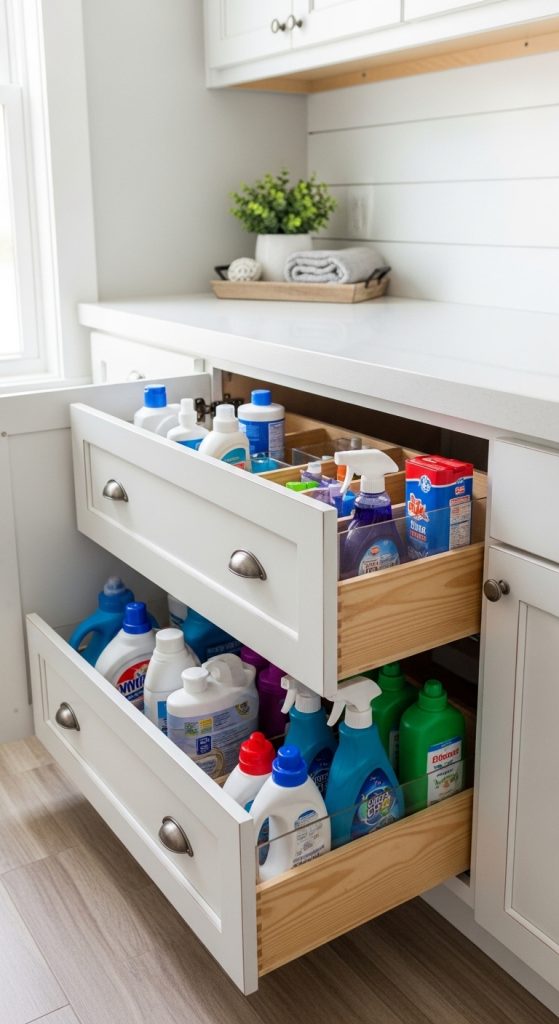
Pull-out drawers can be integrated into cabinetry or standalone units, allowing detergents and supplies to slide in and out effortlessly. Dividers or trays within the drawers keep items sorted and prevent spills. This solution is particularly helpful in high-traffic family homes where laundry products are frequently used. By hiding items in drawers, the mudroom-laundry area maintains a neat appearance, complementing the rustic yet polished farmhouse aesthetic.
Pull-out drawers are easy to customize based on space and family needs. Larger drawers can hold bulk supplies, while smaller ones can store specialty detergents, dryer sheets, or stain removers. Organizing supplies in this way encourages family members to return items after use, keeping the mudroom-laundry area tidy and Pinterest-ready.
Explanation
Pull-out drawers combine accessibility with concealment, creating a clutter-free and efficient mudroom-laundry space. Dividers or trays maintain organization within each drawer, while sturdy materials ensure durability.
Step-by-Step How-To
- Measure base cabinet space for pull-out drawers.
- Install drawer slides for smooth operation.
- Place detergents, sprays, and cleaning tools inside drawers.
- Use dividers or trays to separate items.
- Label drawers for easy identification.
- Keep drawers clean and restocked regularly.
- Customize drawer sizes according to items stored.
Materials / Items Used
- Pull-out drawer kits or cabinets
- Drawer dividers
- Labels
- Detergents and laundry accessories
Idea 10: Pet Station with Feeding and Storage Area
Introduction
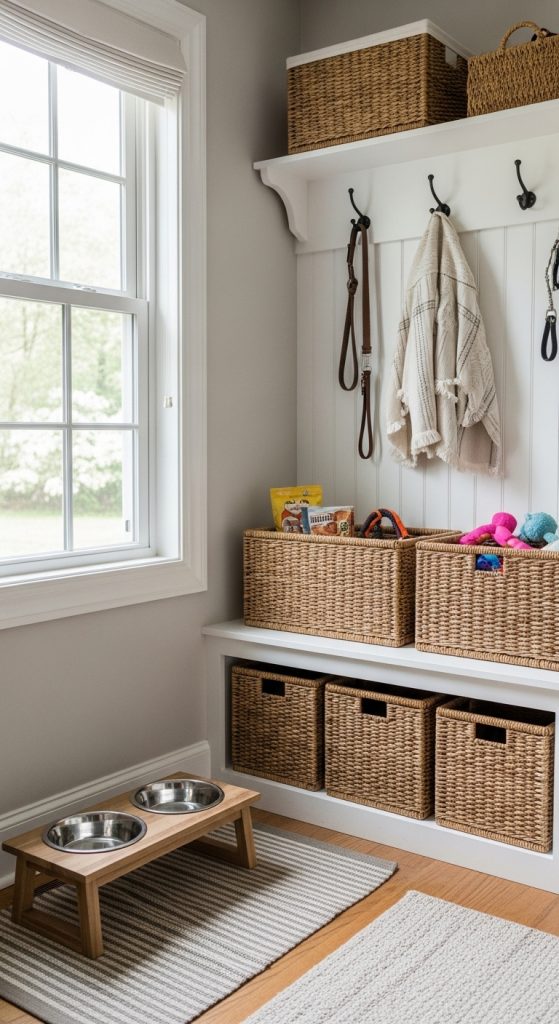
For families with pets, a dedicated pet station in a garage entry mudroom-laundry area is both practical and stylish. A well-organized pet station keeps feeding bowls, treats, toys, leashes, and grooming supplies in one place, reducing clutter while providing pets with a defined space. Farmhouse-style mudrooms can incorporate rustic wood, woven baskets, and hooks to create an aesthetically pleasing yet functional pet area.
Pet stations can include feeding zones with bowls placed on mats, storage bins for toys, and hooks for leashes or collars. This keeps everything neat, accessible, and off the floor, making daily routines easier and less chaotic. A designated area ensures pets are fed in a tidy, contained environment, while also contributing to overall mudroom organization.
This solution is ideal for busy households, as it consolidates all pet-related items into a single, easily accessible location. Adding baskets or bins in a farmhouse style enhances both the organization and visual appeal of the space. Incorporating a pet station into your mudroom-laundry setup transforms the garage entryway into a functional, multi-use, and Pinterest-worthy hub for the whole family—including your pets.
Explanation
A pet station consolidates feeding, toy storage, and grooming tools in one area. Hooks, baskets, and feeding mats provide organization while maintaining farmhouse charm.
Step-by-Step How-To
- Identify a corner or wall for the pet station.
- Place feeding bowls on a tray or mat for easy cleaning.
- Install storage bins for toys, treats, and pet accessories.
- Add hooks for leashes, collars, or harnesses.
- Use wicker or fabric baskets for a farmhouse touch.
- Encourage family members to return items after use.
- Clean feeding area regularly and restock supplies.
Materials / Items Used
- Feeding bowls and tray/mat
- Storage bins or baskets
- Hooks for leashes
- Optional small rug or mat for pet area