
If your closet feels like a constant mess no matter how many times you clean it, you’re not dealing with a motivation problem—you’re dealing with a system problem. Most people think organizing a small closet just means “declutter and buy a few storage boxes.” That’s exactly why their space looks good for two days and then goes right back to chaos.
Here’s the truth: a small closet doesn’t forgive bad decisions.
Every inch matters. Every hanger, shelf, and item placement either works for you—or against you. And if your setup isn’t intentional, clutter builds fast, frustration follows, and suddenly getting dressed becomes a daily headache instead of a simple routine.
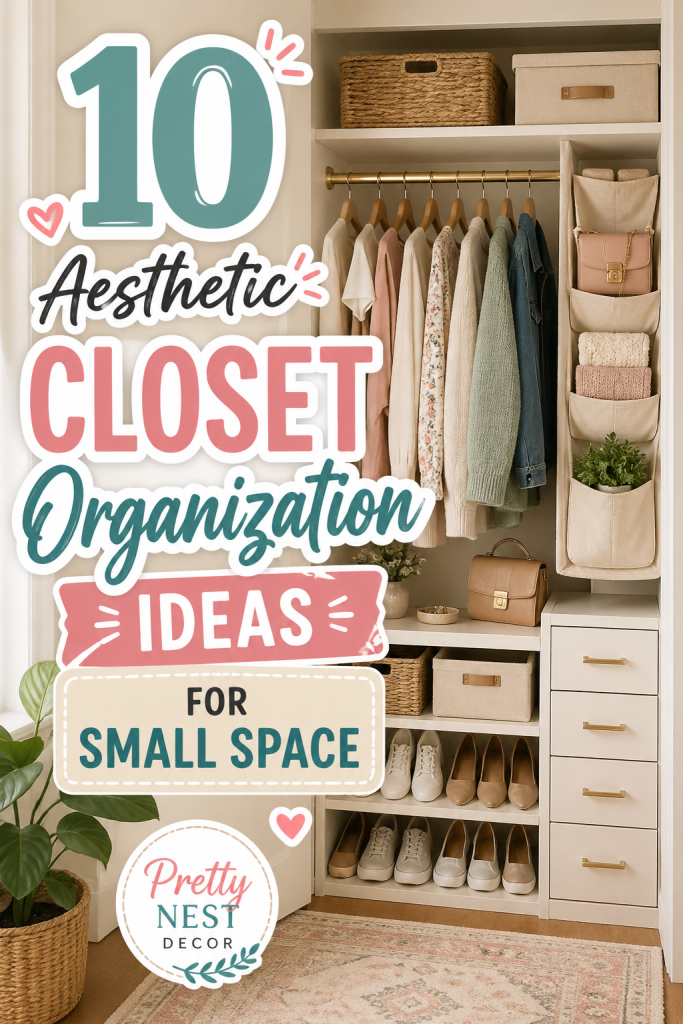
Now add another layer: aesthetics.
You don’t just want a functional closet—you want one that looks clean, calming, and Pinterest-worthy. Something that feels satisfying every time you open it. But here’s where most people go wrong: they chase the aesthetic first and ignore functionality. They buy matching baskets, pretty hangers, and decorative boxes… but the space still doesn’t work.
So the result?
It looks good in photos—but doesn’t hold up in real life.
This is exactly what we’re going to fix.
Because organizing a small closet isn’t about squeezing things in randomly or copying someone else’s setup. It’s about designing a system that fits your habits, your space, and your daily routine. If you skip that part, nothing lasts. If you get it right, even the smallest closet can feel spacious, organized, and effortless to maintain.
Another problem you’re probably facing: lack of space isn’t your only issue—lack of visibility is.
If you can’t see what you own, you won’t use it properly. Clothes get buried, items get forgotten, and you end up wearing the same few outfits while the rest sit untouched. That’s not just disorganization—that’s wasted space.
And if you have a small room, this becomes even more important. Your closet isn’t just storage—it directly affects how your entire room looks and feels. A cluttered closet spills into your room. A clean, structured closet makes everything feel lighter and more put together.
So instead of trying random hacks that don’t stick, you need a smarter approach.
In this article, you’re going to learn 10 aesthetic closet organization ideas specifically designed for small spaces—not generic advice that works only in large walk-in closets. These ideas are practical, realistic, and built for real-life use.
Each idea will go beyond “what looks good” and focus on:
- How to actually implement it step by step
- How to make it work in a small space
- Who it’s best suited for
- What most people do wrong (and how to avoid it)
Because let’s be clear—throwing storage products into your closet isn’t organizing. It’s hiding the problem.
You need systems that:
- Maximize vertical and hidden space
- Make items easy to access and maintain
- Keep your closet visually clean without constant effort
And yes, aesthetics still matter—but only when they support functionality, not replace it.
You’ll also notice that many of these ideas are adaptable. If you have a tiny closet, you’ll still be able to use them. If your budget is limited, you won’t be forced into expensive solutions. If your room is small, these ideas will actually make it feel bigger—not more crowded.
This works best when you stop trying to organize everything at once and start thinking in zones, layers, and purpose. Your closet isn’t just a box—it’s a system. And once that system is built correctly, maintaining it becomes easy instead of exhausting.
By the end of this guide, you won’t just have inspiration—you’ll have a clear, structured way to transform your closet into something that actually works and looks good at the same time.
Because the goal isn’t perfection.
The goal is a closet that stays organized without constant effort—especially when space is limited.
1. Vertical Layering System (Use Height or Stay Cluttered)
What it is
If you’re still organizing your closet horizontally—one rod, one shelf, everything crammed side by side—you’re wasting space. A vertical layering system means breaking your closet into top, middle, and bottom zones, each with a specific purpose.
This is not about “adding more shelves randomly.” It’s about structuring your space so every inch works. Small closets don’t give you width, so you have to dominate height. If you don’t, you’ll keep stacking things until nothing is visible or accessible.

How to implement (practical steps)
Start by emptying your closet completely. You need to see the raw space before you fix it.
- Top Zone (least-used items)
Store off-season clothes, extra bedding, or occasional wear. Use uniform storage boxes so it looks clean instead of chaotic. - Middle Zone (daily essentials)
This is your prime space. Install a double hanging rod if possible—tops on the upper rod, bottoms on the lower. This instantly doubles your capacity without needing more width. - Bottom Zone (heavy or flexible storage)
Use it for shoes, bins, or folded items. Avoid piling things directly on the floor—use trays or baskets to keep it structured.
If your closet is very small, even adding a simple tension rod can create a second level without major cost.
Best for
- Extremely small closets with limited width
- People who have more clothes than space
- Anyone tired of digging through piles
This works best when you need maximum storage without making the closet feel stuffed.
Pro tip
Stick to one color palette for storage (white, beige, or clear). Visual clutter makes small spaces feel smaller—even if they’re technically organized.
Mistake to avoid
Don’t turn vertical space into a dumping zone. If the top shelf becomes a random pile, you’ve lost control. Every level must have a defined purpose.
2. Uniform Hanger Method (Instant Visual Upgrade + Space Saving)
What it is
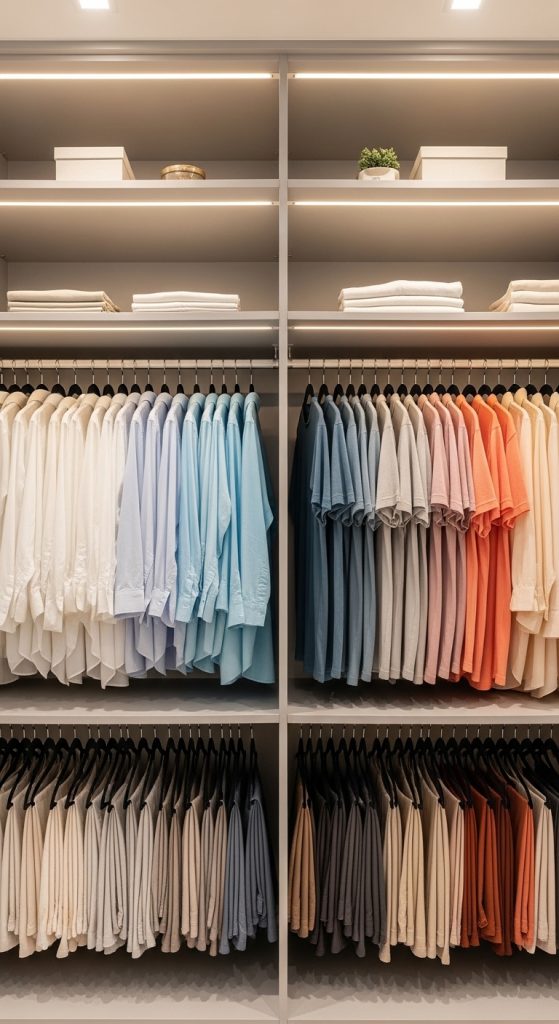
This is one of the simplest changes—but also one of the most ignored. Using the same type of hanger throughout your closet creates a clean, aligned, aesthetic look while also saving space.
Mixed hangers (plastic, wire, wood, random shapes) create uneven spacing and visual chaos. Even if your closet is organized, it will still look messy.
How to implement (practical steps)
Remove every hanger you currently have. Don’t try to “work around them.” That’s where people get lazy and fail.
- Choose slim, non-slip hangers (velvet or thin plastic)
- Stick to one color—preferably neutral like black, white, or beige
- Hang items in one consistent direction
Then go one step further:
- Group by category (shirts, dresses, jackets)
- Within each category, arrange by color
This isn’t just aesthetic—it makes finding outfits faster and reduces decision fatigue.
If you have a small closet, this step alone can free up noticeable space.
Best for
- People who want an instant aesthetic upgrade
- Small closets where spacing matters
- Anyone struggling with messy-looking racks
This works best when you want both function and visual impact with minimal effort.
Pro tip
Face all hangers in one direction. When you wear something, return it facing the opposite way. After a month, you’ll clearly see what you actually use—and what’s just taking up space.
Mistake to avoid
Don’t mix hanger types “just for a few items.” That ruins the entire look. Consistency is what creates the aesthetic, not the hanger itself.
3. Closet Zoning by Lifestyle (Stop Organizing by Category Only)
What it is
Most people organize their closet by item type—shirts together, pants together, etc. That’s basic, but not efficient. A smarter system is organizing by lifestyle zones—grouping items based on when and how you actually use them.
Because here’s the truth: you don’t get dressed by category—you get dressed by purpose.

How to implement (practical steps)
Think about your daily routine and divide your closet accordingly.
For example:
- Daily Wear Zone → Clothes you wear most often
- Occasion Zone → Formal outfits, events, special wear
- Home/Comfort Zone → Loungewear, casual basics
Place your most-used zone at eye level. Less-used zones go higher or lower.
Then refine it further:
- Keep complete outfits close together when possible
- Store accessories near relevant clothing (don’t separate everything unnecessarily)
If you have a small room, this method saves time and reduces mess because you’re not pulling items from different areas every day.
Best for
- Busy people who want faster outfit selection
- Small closets with limited accessibility
- Anyone who feels overwhelmed choosing outfits
This works best when your current system feels organized—but still inefficient.
Pro tip
Create a “quick grab section” for your most worn outfits. This removes daily decision-making completely.
Mistake to avoid
Don’t overcomplicate zones. If you create too many sections, you’ll confuse yourself and stop maintaining the system. Keep it simple and practical.
4. Clear Storage Box System (Hide Chaos Without Losing Access)
What it is
Small closets don’t fail because of lack of space—they fail because of invisible clutter. You can’t see what you own, so you forget it, rebuy it, or shove it somewhere else. A clear storage box system fixes this by making storage visible, structured, and stackable without looking messy.
But here’s the mistake most people make: they buy random boxes in different sizes, colors, and styles. That doesn’t solve anything. It just creates “organized chaos.” The goal is not to hide things—it’s to control visibility without visual noise.

How to implement (practical steps)
Start by separating your closet into “visible” and “hidden” zones.
- Visible zone (eye level or hanging area): daily clothes
- Hidden zone (shelves / top / bottom): everything else
Now introduce uniform clear storage boxes:
- Use transparent or lightly tinted boxes only
- Stick to one or two sizes maximum
- Label each box clearly (season, category, or purpose)
Then organize by logic, not randomness:
- Winter clothes together
- Accessories together
- Occasional wear together
Stack boxes vertically if possible, but don’t stack more than you can comfortably reach. If you have to move 3 boxes just to access one item, the system is already failing.
Best for
- Small closets with deep shelves
- People with seasonal clothing changes
- Anyone who forgets what they own
This works best when your closet has storage potential but poor visibility.
Pro tip
Take a quick photo of what’s inside each box and stick it on the outside label. This saves time and prevents unnecessary opening and searching.
Mistake to avoid
Don’t overfill boxes. If you compress everything just to “fit more,” you’ll destroy the system. Overstuffed boxes always turn back into clutter later.
5. Door Space Utilization (The Most Ignored Storage Area)
What it is
If you’re ignoring the inside of your closet door, you’re literally throwing away usable storage. In small spaces, doors are not just entry points—they are hidden storage walls.
Most people waste this area completely or stick random hooks without planning. That leads to visual mess and zero efficiency. The goal is to turn the door into a structured mini storage system, not a dumping ground.

How to implement (practical steps)
Start by choosing the right setup based on your door type.
- Over-the-door organizers: best for shoes, accessories, or small items
- Slim hanging hooks: for bags, belts, scarves
- Pocket organizers: for lightweight items like socks or beauty tools
Now structure it:
- Top section → lightweight or rarely used items
- Middle section → daily-use accessories
- Bottom section → shoes or heavier items
Keep everything aligned and intentional. Don’t mix categories randomly or it will look chaotic instantly.
If your closet is very small, this method can free up an entire shelf inside.
Best for
- Extremely small closets
- People with accessories, shoes, or small items
- Anyone struggling with cluttered shelves
This works best when your internal closet space is already full but your door is unused.
Pro tip
Use neutral-colored organizers so the door doesn’t look visually heavy. The goal is function + subtle appearance, not a cluttered display wall.
Mistake to avoid
Don’t overload the door with too many heavy items. It will become difficult to close and eventually destroy the structure. Door storage should be smart, not excessive.
6. Capsule Closet Rotation (Less Items, Better Control)
What it is
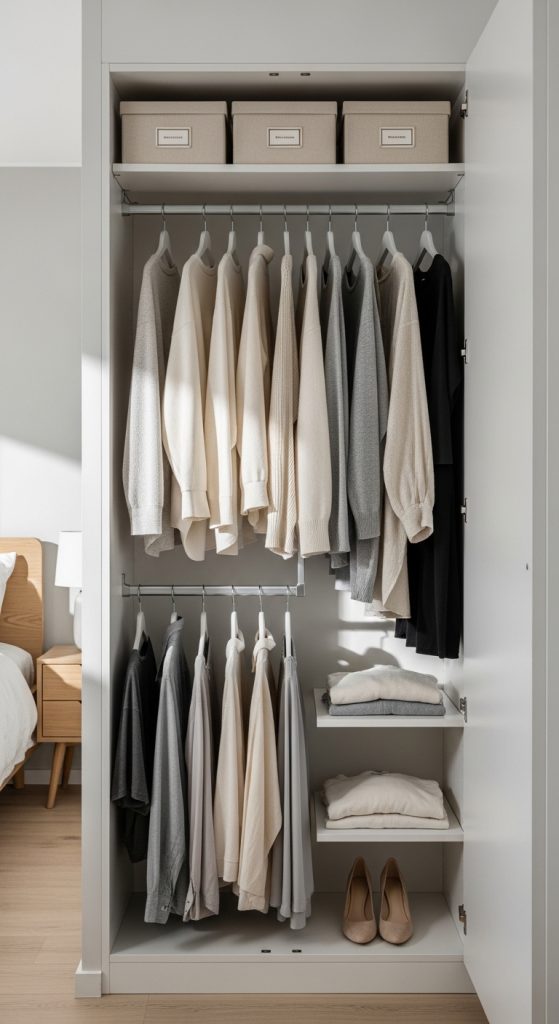
A capsule closet system is not about having fewer clothes for the sake of minimalism—it’s about curating what actually works for you. In a small space, too many items don’t give you more options; they create confusion and clutter.
Most people fail here because they keep everything “just in case.” That mindset destroys small closets. If everything is important, nothing is actually useful.
How to implement (practical steps)
Start by dividing your wardrobe into three groups:
- Keep (frequently worn and loved items)
- Store (seasonal or occasional items)
- Remove (unused or unnecessary items)
Be strict. If you haven’t worn something in months and it doesn’t fit your current lifestyle, it doesn’t belong in your daily closet space.
Now build a rotation system:
- Keep only season-appropriate clothing visible
- Store off-season items in labeled boxes
- Rotate every 3–4 months depending on weather and usage
Arrange your “keep” section in a simple, clean structure (by category or outfit pairing).
Best for
- Small closets with overload issues
- People who feel overwhelmed choosing outfits
- Anyone who wants a clean, minimal aesthetic
This works best when your closet feels full but still feels like you have “nothing to wear.”
Pro tip
Create a “maybe pile” box. If you’re unsure about an item, don’t decide immediately—put it there. If you don’t reach for it in the next rotation cycle, it’s time to let it go.
Mistake to avoid
Don’t treat storage as emotional attachment. Keeping clothes because of memory or guilt is the fastest way to destroy a functional closet system.
7. Hanging + Folding Hybrid System (Stop Wasting Half Your Closet)
What it is
Most small closets fail because people rely on only one method—either everything is hung or everything is folded. Both extremes waste space. A hybrid system uses smart division: hang what needs structure, fold what doesn’t.
The real issue isn’t lack of space—it’s misuse of vertical and flat surfaces. Hanging everything creates overcrowding. Folding everything creates piles you can’t see or access properly.
This system fixes both problems by assigning each item a “best storage method” based on shape, frequency, and durability.

How to implement (practical steps)
Start by emptying your closet and sorting items into two groups:
- Hang: dresses, shirts, jackets, formal wear, wrinkle-prone clothes
- Fold: jeans, t-shirts, sweaters, loungewear
Now structure it intentionally:
- Hang clothes in one clean section using consistent spacing
- Folded clothes should go into open shelves or labeled bins (not messy stacks)
If you have a small closet:
- Use the lower half for folded items
- Use the upper rod for hanging items
- Keep frequently used folded items at eye level
Fold clothes vertically (file-folding method) so you can see everything at once instead of stacking piles.
Best for
- Small closets with mixed clothing types
- People who struggle with cluttered shelves or overcrowded rods
- Anyone who wants quick outfit access
This works best when your closet feels “full but unorganized.”
Pro tip
Limit each shelf to a fixed number of items. If it overflows, that’s a signal—not a storage problem. It means you need to reduce, not expand.
Mistake to avoid
Don’t randomly decide what to hang or fold based on convenience in the moment. If you don’t follow a consistent rule, your system will collapse within a week.
8. Aesthetic Color Coding System (Visual Calm + Faster Choices)
What it is
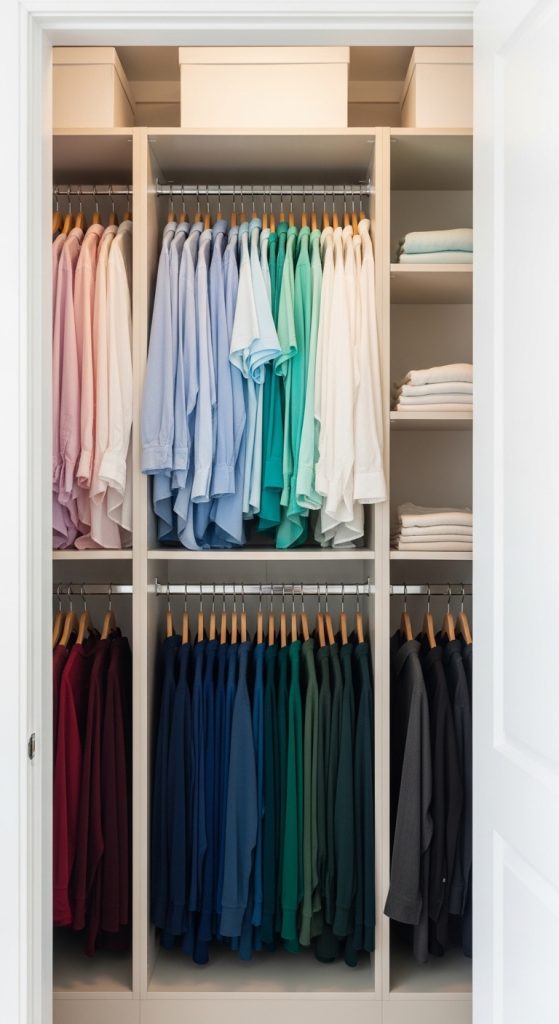
Color coding is not just about making your closet look pretty—it’s about reducing mental load. When your clothes are arranged visually by color, your brain processes options faster and decision-making becomes easier.
But most people do this wrong. They create rainbow chaos or over-segment colors so strictly that it becomes impractical. The goal is controlled color flow, not decoration.
How to implement (practical steps)
Start with a basic structure:
- Whites / neutrals
- Light tones (beige, soft pastels)
- Medium tones
- Dark tones (black, navy, deep shades)
Now apply this to hanging and folding sections:
- Hang clothes in a smooth gradient (light → dark or vice versa)
- Folded items should follow the same flow inside bins or shelves
If your wardrobe is small, don’t force full rainbow sorting. Focus on tone grouping instead of exact color matching.
Also:
- Keep one dominant neutral tone for visual balance
- Avoid mixing too many bright, unrelated colors in one section
Best for
- People who want a Pinterest-style closet
- Small spaces that feel visually cluttered
- Anyone who struggles to choose outfits quickly
This works best when your closet is already functional but visually overwhelming.
Pro tip
Stick to 2–3 dominant colors in your entire wardrobe if possible. The less color chaos you have, the more cohesive and aesthetic your closet will look.
Mistake to avoid
Don’t prioritize aesthetics over usability. If color coding makes it harder to find clothes quickly, you’ve gone too far. Function always comes first.
9. Multi-Use Storage Zones (One Space, Multiple Functions)
What it is
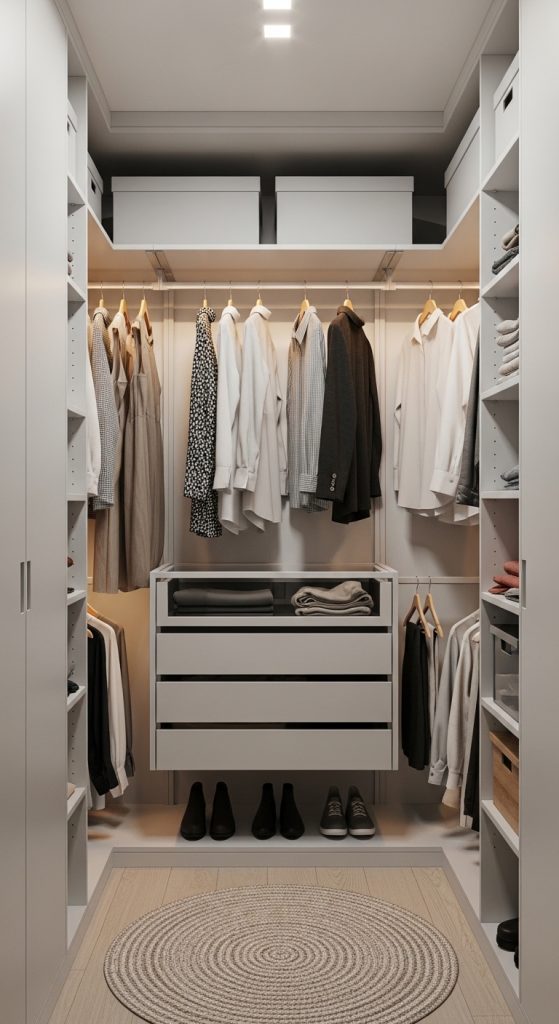
In small closets, every section must do more than one job—but in a controlled way. A multi-use storage zone means designing areas that can flex between categories without becoming messy.
Most people fail here by creating “random multipurpose spaces” where everything gets dumped. That’s not a system—that’s chaos. True multi-use design is intentional layering with clear rules.
How to implement (practical steps)
Divide your closet into flexible zones:
- Primary zone (daily use): clothes you wear often
- Secondary zone (rotational use): seasonal or occasional items
- Flexible zone (shared storage): accessories, bags, small items
Now structure each zone carefully:
- Use bins or dividers inside shelves to separate categories
- Assign each space a “main purpose” even if it holds multiple item types
- Keep similar usage frequency together (don’t mix daily and rare items)
For example:
- One bin = scarves + belts (same usage category)
- One shelf section = casual tops + light sweaters
If your closet is very small, flexible zones help you avoid overcrowding while still keeping variety accessible.
Best for
- Very small closets with limited compartments
- People with mixed clothing + accessories
- Anyone who needs adaptable storage
This works best when your space must serve multiple needs without expansion.
Pro tip
Use removable dividers instead of permanent setups. Your needs change—your system should be able to adjust without breaking.
Mistake to avoid
Don’t let “multi-use” become “no rules.” If items don’t have defined placement logic, the system will collapse into clutter quickly.
10. Minimal Aesthetic Reset System (Keep It Clean Without Re-Organizing Every Week)
What it is
This is the system most people skip—and then wonder why their closet never stays organized. A minimal aesthetic reset system is not about organizing once. It’s about creating a maintenance structure that prevents chaos from building up again.
Because here’s the uncomfortable truth: if your closet only looks good right after organizing it, then it’s not organized—it’s temporarily arranged. Small spaces break down fast unless you design for maintenance from day one.
This system is about control, not decoration. It forces your closet to “self-correct” through simple habits instead of requiring full reorganization every few days.

How to implement (practical steps)
Start by setting non-negotiable reset rules:
- 5-minute daily reset rule
Every night, spend 5 minutes putting things back where they belong. Not deep cleaning—just resetting order. - One-touch rule for clothes
When you take something out, it must go back in its exact place. No “I’ll fix it later” piles allowed. - Weekly micro-audit
Once a week, check:- Are hangers still aligned?
- Are folded items still visible and neat?
- Is anything misplaced or overflowing?
Now design your closet to support this behavior:
- Keep frequently used items in the easiest-to-reach zones
- Avoid overly complicated storage systems you won’t maintain
- Leave a small “buffer space” (never fill 100%) so items can return easily
Add one visual rule:
If it starts looking messy, it should take less than 10 minutes to reset.
Best for
- People who constantly re-clutter their closet
- Small spaces where mess builds quickly
- Anyone who wants long-term organization, not temporary fixes
This works best when you’re tired of redoing your closet every week.
Pro tip
Design your closet so “putting things back” is easier than leaving them out. If returning items feels difficult, your system is already flawed.
Mistake to avoid
Don’t over-design your closet to look perfect but ignore usability. If your system requires effort every time you use it, you won’t maintain it—and it will collapse. Simplicity is what keeps it aesthetic long-term.