
The pantry may be one of the smallest rooms in your home, but it has the power to make one of the biggest impacts. In today’s world of aesthetic organization, intentional living, and Pinterest-inspired interiors, even the pantry has transformed from a purely functional storage zone into a cozy, styled extension of the kitchen. Especially in small homes, apartments, or compact layouts, designing a cozy pantry is no longer just about shelves and storage—it’s about creating a space that feels warm, organized, beautiful, and practical all at once.
Small pantry spaces often come with challenges: limited square footage, narrow shelving, awkward corners, or a lack of natural light. But these constraints can actually inspire smarter, more creative design choices. With the right combination of organization systems, decorative elements, lighting, and textures, even the tiniest pantry can feel intentional and inviting rather than cramped or cluttered.

In recent years, pantry design trends have shifted toward cozy minimalism—clean lines paired with warm textures, neutral color palettes softened by natural materials, and storage solutions that double as decor. Inspired by modern farmhouse, Scandinavian simplicity, and cottage-style charm, homeowners are embracing open shelving, labeled glass jars, woven baskets, wood accents, and soft lighting to create pantry spaces that are both highly functional and aesthetically pleasing.
One of the biggest trends in small pantry decorating is the use of cohesive containers. Matching jars, clear canisters, labeled bins, and uniform baskets instantly reduce visual clutter and create that polished, Pinterest-worthy look. When dry goods like pasta, rice, flour, and cereal are transferred into glass containers, they not only stay fresher but also become part of the decor. The visual rhythm of neatly arranged containers brings calm and order to a space that once felt chaotic.
Neutral color palettes also play a major role in making small pantries feel cozy instead of crowded. Soft whites, warm creams, beige tones, muted sage, and light wood finishes help reflect light and visually expand tight spaces. When paired with textured elements like woven baskets, linen liners, wooden risers, and ceramic containers, these neutral tones create depth and warmth without overwhelming the eye.
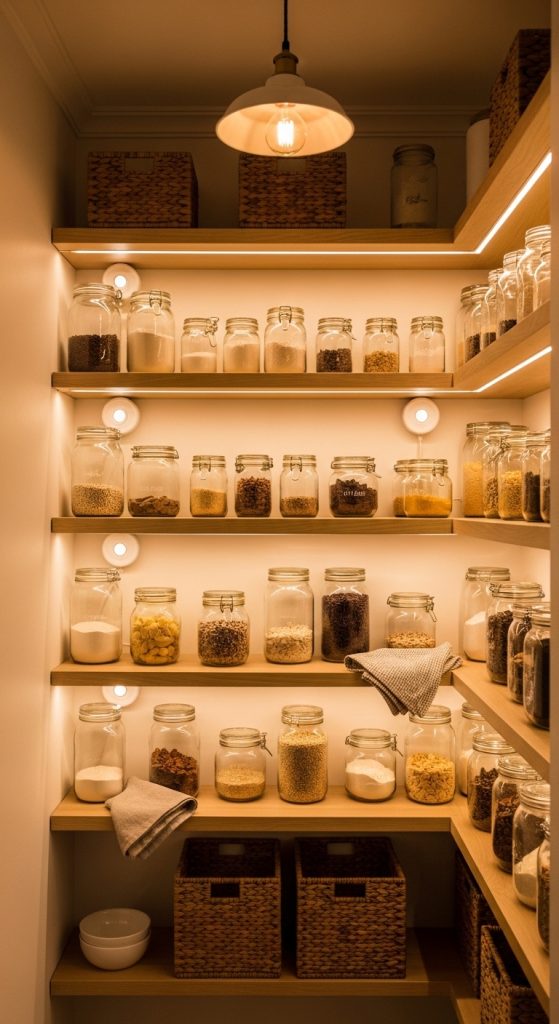
Lighting is another game-changer in small pantry design. Many pantries lack windows, which can make them feel dark and purely utilitarian. Adding warm LED strip lights under shelves, a small pendant light, or even battery-operated puck lights can instantly transform the mood. Warm lighting softens the space, highlights organized shelves, and makes everyday tasks like grabbing ingredients feel more enjoyable.
Functionality, of course, remains essential. A cozy pantry isn’t just about looking beautiful—it must work efficiently. Smart space-saving strategies such as vertical storage, door-mounted racks, stackable bins, and tiered shelf organizers maximize every inch. Adjustable shelving allows flexibility as storage needs change. Lazy Susans in corners, pull-out drawers, and clear labeling systems prevent forgotten items and reduce waste.
Texture is what truly brings coziness into a small pantry. Wood shelving, brass or matte black hardware, woven baskets, ceramic jars, chalkboard labels, and soft fabric liners introduce warmth and personality. Even something as simple as a small framed print, a mini rug runner, or a decorative bowl can make the space feel curated rather than purely functional.
Another reason cozy pantry decorating has become so popular is the rise of home cooking, baking, and intentional meal prep. As kitchens become central gathering spaces, homeowners want every connected area—including the pantry—to feel thoughtfully designed. An organized, visually pleasing pantry encourages creativity, reduces stress during meal preparation, and makes grocery restocking more satisfying.
Small-space pantries especially benefit from thoughtful styling because every item is visible. Unlike large walk-in pantries where clutter can hide behind depth, compact spaces require intentional editing. This encourages homeowners to keep only what they truly use, leading to better organization habits and less food waste overall.
Creating a cozy small pantry is ultimately about balance: balancing beauty with practicality, storage with style, and minimalism with warmth. It’s about transforming shelves of ingredients into a curated display, turning storage solutions into decorative features, and designing a space that feels calm and welcoming every time you open the door.
In this article, we’ll explore cozy pantry decorating ideas specifically tailored for small spaces. From vertical storage hacks and lighting upgrades to styling techniques, label systems, and texture layering, each idea will help you maximize space while elevating the overall aesthetic. Whether you have a narrow cabinet pantry, a tiny closet conversion, or a compact corner shelving unit, these ideas will show you how to make it both functional and beautifully cozy.
Because no matter how small the space is, every corner of your home deserves thoughtful design—and your pantry is no exception.
1. Maximize Vertical Storage for a Cozy, Organized Pantry
Small pantry spaces often suffer from horizontal overcrowding. Shelves become packed, items stack awkwardly, and visibility decreases. The solution isn’t expanding outward—it’s building upward. Vertical storage is one of the most effective strategies for transforming a cramped pantry into a highly functional and visually balanced space.
Vertical storage means fully utilizing wall height, stacking solutions, and door surfaces. When every inch from floor to ceiling serves a purpose, you dramatically increase storage capacity without making the space feel stuffed.
Start by evaluating your current shelf spacing. Many pantries waste vertical space between shelves. Installing adjustable shelves allows you to customize heights based on your needs. Canned goods require less vertical room than cereal boxes. Tailoring shelf spacing immediately improves efficiency.
If you cannot install new shelves, use stackable shelf risers. These create two levels within one shelf, doubling storage while keeping items visible. Tiered organizers also work beautifully for canned goods, preventing items from getting lost in the back.
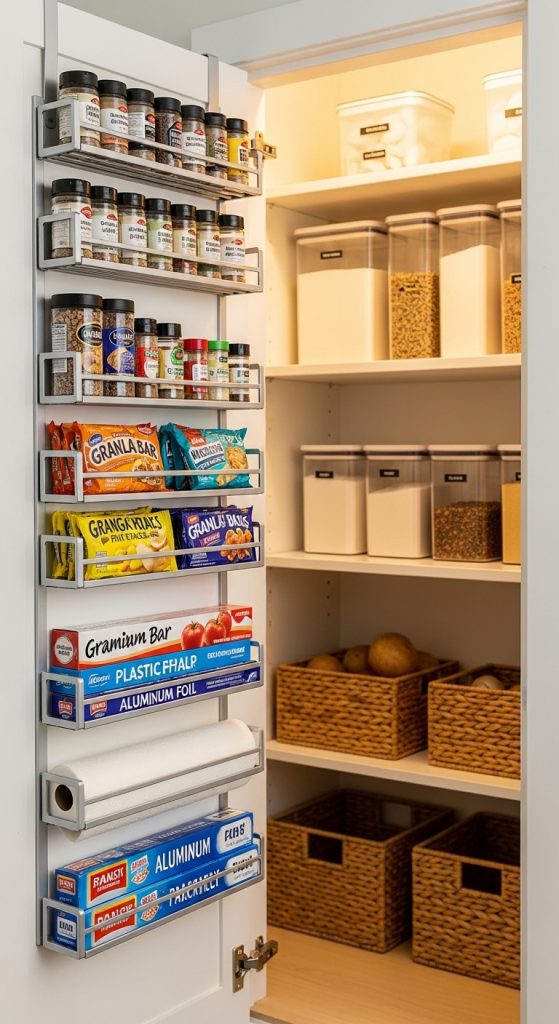
The inside of the pantry door is another valuable vertical surface. Slim door-mounted racks are perfect for spices, snack packs, baking supplies, or foil wraps. This keeps small items off main shelves and reduces clutter.
Upper shelves can store less frequently used items in labeled woven baskets. Keeping them grouped prevents visual chaos while maintaining easy access.

Step-by-Step How-To:
- Empty your pantry completely.
- Measure shelf heights and identify wasted vertical gaps.
- Install adjustable shelves or add stackable risers.
- Mount door racks for small items.
- Group items by category and assign vertical zones.
- Add under-shelf LED lighting for warmth and visibility.
Materials Needed:
- Adjustable shelving brackets
- Stackable shelf risers
- Tiered can organizers
- Door-mounted racks
- Woven storage baskets
- Clear storage bins
- LED strip lights
- Label maker
When styled thoughtfully, vertical storage creates rhythm and structure. Leave small breathing spaces between groupings to avoid overcrowding. Use matching baskets and consistent labeling for a Pinterest-worthy finish.
Vertical organization doesn’t just maximize space—it creates calm. A tall, layered pantry feels intentional, efficient, and cozy.
2. Create a Cohesive Container System for a Calm, Pinterest-Worthy Pantry
A small pantry can instantly feel chaotic when it’s filled with mismatched packaging, crumpled snack bags, and half-open boxes. Even if everything is technically organized, visual clutter makes the space feel smaller and more overwhelming. One of the most transformative cozy pantry decorating ideas is creating a cohesive container system.
A cohesive container system means transferring pantry goods into matching jars, bins, and airtight containers. Instead of storing food in its original packaging, you curate it into a uniform, visually balanced setup. This doesn’t just improve appearance—it increases efficiency, preserves freshness, and reduces waste.
When containers match in material, lid color, and labeling style, the entire pantry feels intentional and styled rather than chaotic. Clear containers are especially effective for small spaces because they create visual lightness and allow you to monitor inventory at a glance.
Start by decluttering your pantry completely. Remove expired items and combine duplicates. Categorize food into groups: baking essentials, grains, snacks, pasta, cereals, canned goods, breakfast items, and cooking staples.
Choose container types based on usage. Frequently used items should be stored in easy-access containers with wide openings. Tall airtight containers work beautifully for pasta and cereal. Medium jars are ideal for rice, flour, sugar, and oats. Smaller jars are perfect for nuts, seeds, and baking toppings.
Consistency is essential. Choose one lid finish—bamboo, white, black, or stainless steel—and stick to it. Use the same label style throughout. Minimalist white labels with black font create a modern look. Chalk labels add farmhouse charm.

Step-by-Step How-To:
- Remove all pantry contents and wipe shelves clean.
- Sort items into clear categories.
- Purchase matching airtight containers in various sizes.
- Transfer dry goods into containers.
- Label each container clearly and consistently.
- Arrange containers by height for visual flow.
- Store snack packets inside labeled bins for a tidy look.
Materials Needed:
- Glass jars with bamboo lids
- Clear acrylic airtight containers
- Label maker or printable labels
- Chalkboard tags (optional)
- Snack storage bins
- Shelf liners (optional)
For a cozy touch, place containers on wooden risers or trays. Add woven baskets for smaller packets. Leave small gaps between groupings so the shelves can breathe visually.
The result is a calm, polished pantry that looks straight out of Pinterest. More importantly, it functions beautifully. You always know what you have, which reduces food waste and grocery overbuying.
A cohesive container system transforms small pantries from cluttered storage zones into curated, calming spaces.
3. Add Warm Lighting to Instantly Elevate a Small Pantry
Lighting is one of the most overlooked elements in pantry decorating. Many small pantries are dark, windowless spaces lit only by a harsh overhead bulb. This makes even the most organized shelves feel uninviting. Adding warm, layered lighting is a simple but powerful way to create coziness.
Good lighting serves two purposes: functionality and ambiance. You need enough brightness to see labels and ingredients clearly, but you also want the space to feel warm and welcoming rather than sterile.
Start by evaluating your existing lighting. If your pantry has only a single overhead bulb, consider replacing it with a warm-toned LED (2700K–3000K range). Warm light softens shelving lines and enhances wood tones and woven textures.
Next, incorporate layered lighting. LED strip lights installed under shelves provide both visibility and aesthetic glow. Battery-operated puck lights are ideal for renters because they require no wiring. Motion-sensor lights are especially convenient in small pantries.
For walk-in pantries, a small pendant light or flush-mount fixture adds design personality. Choose warm finishes like brass, matte black, or woven rattan for added texture.
Lighting also highlights your organization system. It draws attention to labeled jars, uniform containers, and styled shelves. In small spaces, brightness creates the illusion of openness.
Step-by-Step How-To:
- Replace harsh white bulbs with warm LED bulbs.
- Install under-shelf LED strips.
- Add battery puck lights in darker corners.
- Consider a decorative pendant for walk-in pantries.
- Test lighting at different times of day to ensure balance.
Materials Needed:
- Warm LED bulbs (2700K–3000K)
- LED strip lights
- Battery-operated puck lights
- Adhesive mounting strips
- Small pendant light (optional)
To enhance coziness, pair lighting with natural materials. Warm wood shelves glow beautifully under soft lighting. Glass jars reflect light, creating dimension.
Good lighting makes your pantry feel intentional rather than forgotten. It turns a storage area into a styled extension of your kitchen.
4. Incorporate Woven Baskets for Texture and Hidden Storage
In small pantry decorating, texture is what transforms organization into coziness. Woven baskets are one of the easiest ways to introduce warmth while maintaining practical storage.
Baskets hide visual clutter. Snack packets, seasoning pouches, and miscellaneous items often disrupt clean lines. Placing them inside matching woven baskets instantly creates uniformity.
Natural materials like seagrass, rattan, wicker, and water hyacinth add organic warmth. In neutral pantries, this texture prevents the space from feeling flat or sterile.
Use baskets strategically. Lower shelves can hold larger baskets for snacks and baking supplies. Upper shelves can store labeled baskets for less frequently used items. Narrow baskets work well for tight spaces.
Consistency matters. Choose baskets in the same tone and weave style for a cohesive look. Lining baskets with neutral fabric adds softness and protects delicate packaging.

Step-by-Step How-To:
- Measure shelf dimensions carefully.
- Select baskets that fit without overcrowding.
- Assign each basket a category.
- Label baskets discreetly.
- Arrange baskets symmetrically for visual balance.
Materials Needed:
- Woven storage baskets
- Basket liners (optional)
- Chalk or adhesive labels
- Shelf dividers (optional)
To enhance styling, pair baskets with glass jars and wood risers. The contrast between textures adds dimension while maintaining cohesion.
Woven baskets make small pantries feel curated and warm. They combine storage and decor in a way that feels effortless and Pinterest-worthy.
5. Use Neutral Color Palettes to Make Small Pantries Feel Larger and Cozier
Color plays a powerful role in how spacious and calming a small pantry feels. Dark, busy, or mismatched tones can make compact spaces appear cramped. On the other hand, soft neutral palettes create openness, warmth, and visual harmony. One of the most effective cozy pantry decorating ideas is designing around a cohesive neutral color scheme.
Neutral doesn’t mean boring. It means intentional. Warm whites, creamy beige, muted sage, soft gray, and natural wood tones reflect light and create an airy atmosphere. In small pantries—especially those without windows—lighter colors visually expand the space.
Start with your base surfaces. If possible, paint pantry walls a warm white or soft beige instead of stark white. Warmer undertones create coziness. If painting isn’t an option, you can incorporate neutrals through containers, baskets, and shelf liners.
Choose one dominant neutral and one accent tone. For example:
- Cream + light wood
- Soft gray + matte black
- Beige + brass
- White + sage green
Avoid introducing too many competing colors. Visual simplicity helps small spaces feel organized.
Shelf styling also matters. Keep container lids consistent in color. Choose woven baskets in similar shades. Opt for neutral labels with black or muted lettering.

Step-by-Step How-To:
- Choose a dominant neutral base color.
- Replace harsh white bulbs with warm lighting.
- Select storage containers in consistent tones.
- Add natural wood elements for warmth.
- Limit decorative accents to one or two complementary hues.
Materials Needed:
- Neutral paint (optional)
- Matching storage containers
- Wooden shelf risers
- Woven baskets
- Neutral shelf liners
- Warm LED bulbs
Layering textures within a neutral palette prevents flatness. Combine glass, wood, metal, and woven elements. For example, glass jars paired with bamboo lids and wicker baskets create depth without clutter.
Neutral pantries feel timeless. They are easy to maintain and simple to update seasonally with small decorative touches.
When everything feels visually cohesive, the pantry transforms from chaotic storage into a calm, curated space that feels intentional and cozy.
6. Install Door-Mounted Storage to Free Up Shelf Space
In small pantry decorating, hidden surfaces are your best friend. The inside of the pantry door is often completely unused, yet it holds enormous potential. Door-mounted storage systems are one of the smartest ways to maximize space without crowding shelves.
Door racks are ideal for small items that tend to scatter: spices, seasoning packets, snack bars, foil wraps, baking soda, and sauces. Moving these items off main shelves instantly reduces visual clutter.
Slim metal or acrylic racks work best because they maintain visibility while keeping things organized. For a cozy aesthetic, choose finishes that match your overall design—matte black for modern spaces, brass for warm elegance, white for minimalism.
You can also use adhesive hooks or small hanging baskets if drilling isn’t an option. Magnetic strips work well for spice tins.
Step-by-Step How-To:
- Measure door width and depth clearance.
- Select slim racks that won’t prevent the door from closing.
- Install racks securely or use heavy-duty adhesive mounts.
- Categorize items (spices, snacks, baking).
- Label sections for clarity.
Materials Needed:
- Door-mounted pantry racks
- Screwdriver or adhesive strips
- Small bins for grouping
- Label maker
- Magnetic spice containers (optional)
Keep door storage organized by grouping similar items together. Avoid overcrowding. Leave small gaps between sections for visual breathing room.
Door storage enhances functionality without adding bulk. It creates a layered organization system that feels intentional and efficient.
For small pantries, this upgrade alone can dramatically increase usable space while keeping shelves neat and cozy.
7. Create Designated Zones for Stress-Free Organization
One of the most common reasons small pantries feel messy is the absence of clear zones. Without designated areas, items migrate randomly across shelves. Cozy pantry decorating isn’t just about aesthetics—it’s about structure. Creating zones brings order and calm.
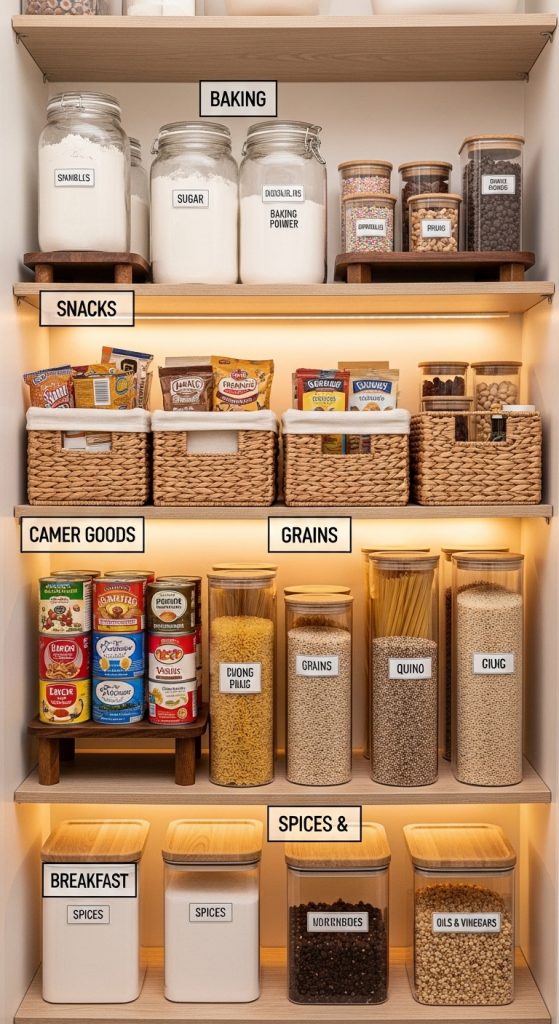
Pantry zoning means dividing your space into clearly defined categories. Each shelf or section serves a purpose. This reduces decision fatigue and makes restocking easier.
Common pantry zones include:
- Baking essentials
- Breakfast items
- Snacks
- Canned goods
- Pasta and grains
- Spices
- Beverages
- Cooking oils and condiments
Start by evaluating your household’s eating habits. If you bake often, dedicate a full shelf to baking. If snacks are heavily used, assign them accessible lower shelves.
Use visual cues to define zones. Wooden risers can separate baking supplies. Woven baskets can hold snacks. Clear bins can group breakfast items.
Step-by-Step How-To:
- Remove all items and categorize them.
- Assign shelves based on frequency of use.
- Use containers or baskets to define each zone.
- Label shelves subtly if needed.
- Keep frequently used zones at eye level.
Materials Needed:
- Clear storage bins
- Woven baskets
- Shelf risers
- Labels
- Lazy Susans (for corner zones)
Maintain boundaries by returning items to their designated zone after use. This habit keeps the pantry consistently tidy.
When zones are clearly defined, your pantry feels structured rather than chaotic. You always know where things belong. This reduces stress and makes small spaces feel highly functional.
A zoned pantry looks curated and Pinterest-ready because everything has a clear purpose.
8. Incorporate Pull-Out Drawers for Easy Access and Neatness
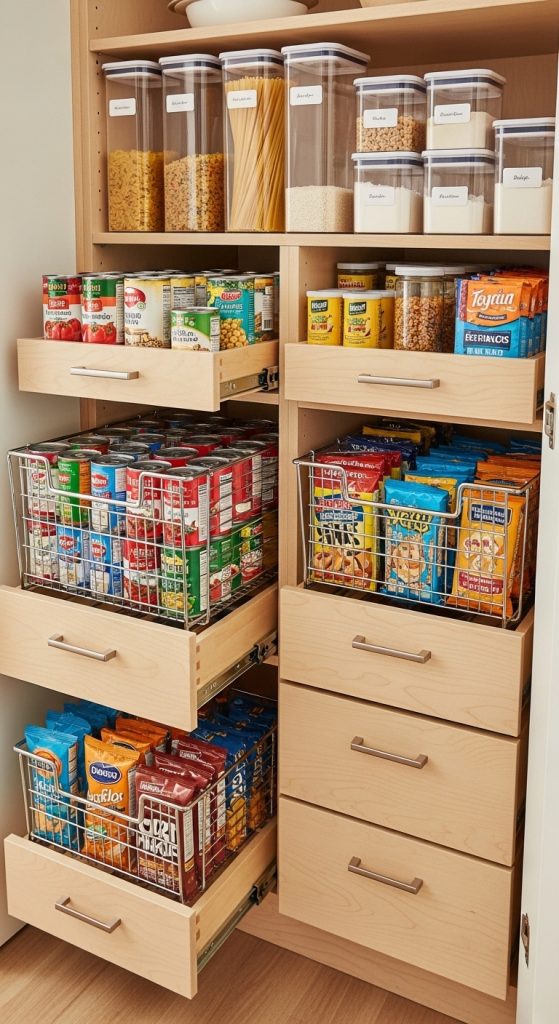
Small pantries often suffer from accessibility issues. Items at the back of shelves are easily forgotten, creating clutter and wasted food. Pull-out drawers or sliding baskets solve this problem while adding a cozy, organized aesthetic.
Pull-out drawers can be installed in both lower and upper shelves. They allow you to reach items effortlessly without bending or moving multiple containers. In compact pantries, this makes even deep shelves functional.
Step-by-Step How-To:
- Measure shelf depth and width to ensure drawer fit.
- Purchase adjustable pull-out drawers or sliding wire baskets.
- Install according to manufacturer instructions.
- Group items by category (canned goods, snacks, baking supplies).
- Optional: Add liners or small baskets inside drawers for smaller items.
Materials Needed:
- Pull-out drawer kits or sliding baskets
- Screws and screwdriver (if needed)
- Shelf liners
- Clear or labeled baskets for inner organization
Pull-out systems enhance visibility, reduce clutter, and maximize every inch. With organized drawers, your pantry looks tidy and feels easier to use, creating a sense of calm and functionality.
9. Style Shelves with Layered Textures for Warmth
Texture is key to turning a functional pantry into a cozy, Pinterest-worthy space. Combining glass, wood, wicker, and fabric creates depth without adding bulk. Small touches of texture make a small pantry feel intentional and warm.
Start by layering items on shelves. Place glass jars next to wooden risers. Add woven baskets for snacks. Consider fabric-lined baskets for delicate items. Mix materials thoughtfully; don’t overcrowd.

Step-by-Step How-To:
- Sort pantry items into containers.
- Select complementary textures: glass, wood, woven, ceramic.
- Layer containers by height or depth.
- Leave breathing space between clusters for visual calm.
- Add small decorative elements like framed prints or minimal ornaments if desired.
Materials Needed:
- Glass jars
- Wooden shelf risers
- Woven baskets
- Fabric liners
- Small decorative items (optional)
Layered textures create a visually rich space that feels curated rather than cluttered. In small pantries, it turns shelves into mini displays, elevating functionality into style.
10. Add Small Decorative Accents for Personality and Charm
Even in a small pantry, subtle décor adds personality and makes the space feel cozy. Small accents make the pantry feel intentionally designed rather than purely functional.
Decorative accents might include:
- Small framed prints with food or kitchen themes
- Mini chalkboards for weekly meal notes
- Ceramic or wooden bowls for loose items
- Small indoor plants (if lighting allows)

Step-by-Step How-To:
- Select one or two decorative accents that fit your pantry style.
- Place accents strategically without overcrowding shelves.
- Combine functional and decorative items, e.g., a small tray holding both jars and a mini chalkboard.
- Maintain color consistency with your neutral palette.
- Adjust as needed for seasonal décor refreshes.
Materials Needed:
- Small framed prints
- Mini chalkboards
- Ceramic or wooden bowls
- Small faux or real plants
- Decorative trays
Decor accents personalize the space. They elevate a small pantry from purely functional to Pinterest-ready. Combined with organization systems, lighting, and cohesive containers, small touches create a cozy and visually appealing environment.