
Creating a cozy playroom in a small space is both an exciting and practical challenge for any parent or homeowner. Playrooms are essential spaces where children can explore, learn, and develop creativity, but designing them in compact areas requires intentional planning. A well-designed playroom maximizes every square foot while remaining safe, functional, and visually inviting. Cozy, thoughtfully curated playrooms not only stimulate a child’s imagination but also provide parents with an organized and manageable environment. In modern small-home living, the key is to create a playroom that feels spacious, joyful, and Pinterest-worthy without overcrowding or chaos.
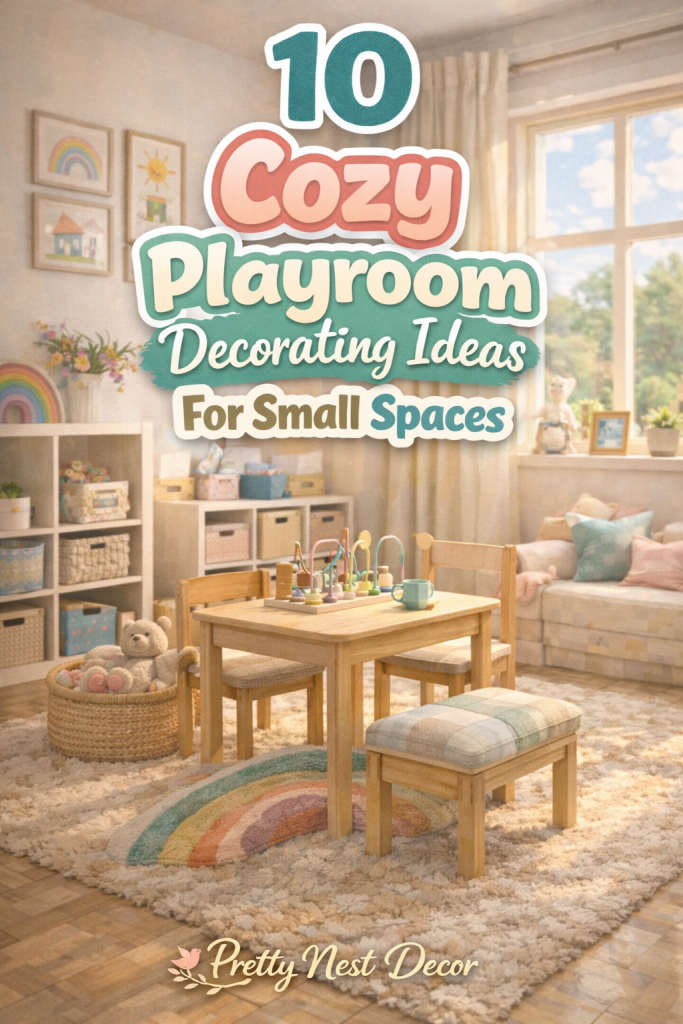
Small playrooms can easily feel cluttered or chaotic, especially when toys, books, and craft supplies accumulate. However, with the right approach, even the tiniest spaces can become highly functional, aesthetically pleasing, and cozy. Incorporating storage solutions, flexible furniture, and intentional design elements ensures that the room remains practical for daily play while visually appealing for both children and adults. A cohesive style, organized layout, and layered textures can transform a small corner into a vibrant, comfortable space that encourages imagination and exploration.
Cozy playroom design revolves around several essential principles: organization, comfort, creativity, and multi-functionality. Organization is critical in small spaces, and every toy, book, or craft supply should have a dedicated home. Using baskets, shelves, cubbies, and labeled containers keeps the room tidy while teaching children the value of order. Comfort can be achieved through soft textiles like rugs, cushions, bean bags, and floor mats that provide safe and inviting areas for play. Creativity is encouraged by designing spaces that inspire imagination, such as designated reading nooks, art corners, or play zones. Finally, multi-functional furniture ensures that the space serves multiple purposes, from storage to seating, without crowding the room.
Pinterest trends for small playrooms emphasize bright, cheerful, and cozy environments that feel intentionally designed. Neutral or pastel color palettes with pops of bold colors add visual interest while keeping the room light and airy. Layered textures like soft rugs, cushioned seats, woven baskets, and fabric storage bins create depth and warmth. Playrooms are not just about toys; they are about the overall experience of play, learning, and comfort. Adding whimsical touches, such as wall decals, garlands, or themed décor, can elevate the space and make it both functional and Instagram- or Pinterest-worthy.
Safety is also a crucial consideration in small playroom design. Furniture should be child-friendly with rounded edges, non-toxic finishes, and secure attachments to walls where necessary. Storage units should be accessible to children but organized in a way that minimizes tripping hazards. Soft rugs or floor cushions can cushion falls and create cozy areas for reading, building, or pretend play. Thoughtful placement of furniture ensures open pathways and maximizes floor space for active play.
Storage solutions in small playrooms are not just functional—they are a design feature. Stackable bins, labeled baskets, rolling carts, and under-bench storage help keep toys organized while enhancing the visual appeal of the room. Open shelving allows for easy access to frequently used items, while closed storage hides clutter for a cleaner look. By using vertical space efficiently with wall shelves or hanging organizers, even compact rooms can accommodate a variety of play and learning activities.
Lighting is another critical component in creating a cozy small playroom. Natural light is ideal, but small rooms often require supplemental lighting. Layered lighting, including overhead lights, wall-mounted fixtures, and task lamps, ensures the room is well-lit and visually welcoming. Warm-toned bulbs and soft diffusers create a comfortable ambiance, while strategically placed lights highlight play zones, reading corners, or craft areas.
Color, pattern, and texture contribute significantly to the playroom’s overall feel. A neutral base with pops of bright colors stimulates creativity without overwhelming the senses. Soft patterns on rugs, cushions, and wall décor add visual interest, while natural textures like wicker baskets, wooden furniture, and cotton textiles enhance warmth and comfort. By balancing playful elements with simplicity, the room feels organized, inviting, and Pinterest-ready.
Intentional layout planning is essential in small spaces. Clearly defined zones for reading, building, art, and imaginative play help children understand the function of each area while maintaining organization. Small playrooms benefit from modular furniture or movable storage, allowing parents to adapt the room as the child’s needs evolve. Flexibility ensures that the space remains functional and engaging over time.
In this guide, we will explore cozy playroom decorating ideas specifically for small spaces. Each idea includes clear explanations, step-by-step instructions, and a materials list so you can recreate the designs in your own home. From clever storage solutions and multifunctional furniture to soft textiles, lighting techniques, and playful décor, these ideas will help you transform even the smallest playroom into a cozy, functional, and Pinterest-worthy environment.
Whether you have a small nook, a compact bedroom, or a converted corner for your child’s play area, these decorating ideas will ensure the space is practical, stylish, and inviting. With thoughtful organization, layered textures, and intentional design, your small playroom can become a beloved, functional, and visually inspiring space for kids to learn, explore, and have fun.
1. Use Multi-Functional Furniture to Maximize Space
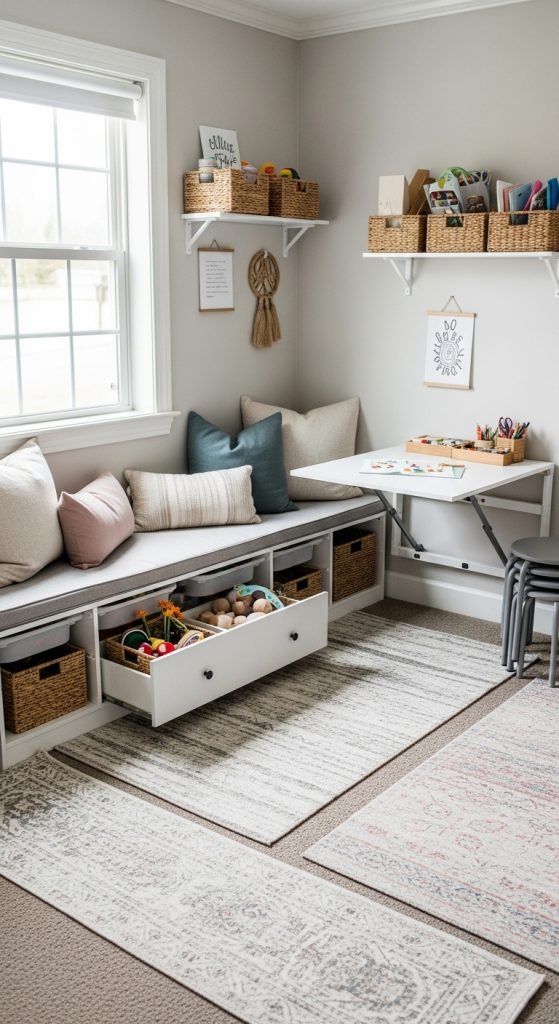
In small playrooms, floor space is precious, and traditional furniture can quickly overwhelm the room. Multi-functional furniture solves this challenge while keeping the space cozy and practical. These pieces provide seating, storage, and play surfaces all in one, allowing children to enjoy a clutter-free, organized, and inviting environment. By choosing furniture that serves multiple purposes, parents can maximize both functionality and style, making even the tiniest playroom feel spacious and Pinterest-worthy.
Multi-functional furniture includes storage benches, fold-out tables, stackable stools, and bunk beds with built-in storage. A small playroom benefits when every piece has more than one function. For instance, a bench with drawers underneath can serve as seating, a toy organizer, and a display surface. Similarly, fold-out tables or modular units can create art or building zones without occupying permanent floor space. This approach reduces clutter, maintains open play areas, and provides a cozy feel through intentional design.
Step-by-Step How-To:
- Measure Your Playroom: Identify available floor space and areas where furniture can be placed without blocking movement.
- Select Key Multi-Functional Pieces: Storage benches, fold-out tables, stackable stools, or modular cubbies are ideal.
- Organize Storage Sections: Divide storage areas by toy type or activity for easy access.
- Incorporate Soft Seating: Use cushions or floor mats on benches to make seating comfortable.
- Style the Space: Neutral or pastel colors maintain a light, airy feel, while soft textiles add warmth.
Materials Needed:
- Storage bench with drawers or lift-up top
- Fold-out or modular table
- Stackable stools or chairs
- Cushions, throw pillows, or soft floor mats
- Small baskets or containers for organized storage
By using multi-functional furniture, small playrooms feel uncluttered and cozy. Children can enjoy a playful, organized environment, and parents benefit from easier maintenance. Thoughtfully chosen pieces ensure that every inch of space is functional, stylish, and Pinterest-ready.
2. Layer Soft Textiles for Comfort and Play
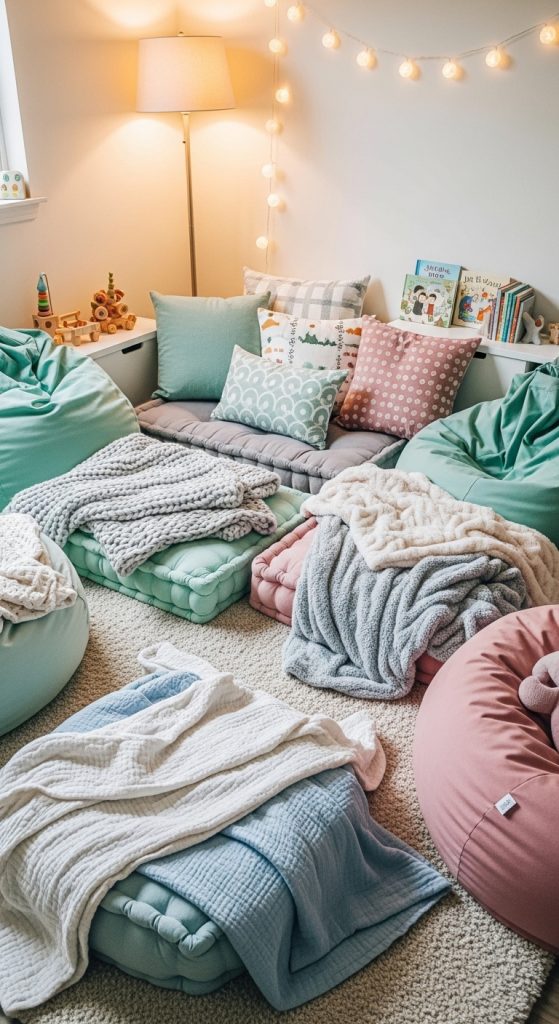
Soft textiles instantly make a playroom feel cozy and inviting, especially in small spaces. Rugs, cushions, bean bags, and blankets create comfortable zones for reading, imaginative play, or quiet relaxation. Layered textures add depth without occupying extra floor space, which is crucial in compact areas.
Start with a neutral or muted base for rugs and cushions to keep the room feeling open. Add pops of playful colors through throw pillows, floor mats, or a patterned rug to create visual interest. Mixing textures—plush, cotton, linen, or woven materials—makes the room cozy and tactile, encouraging children to engage in different types of play.
Step-by-Step How-To:
- Choose a Soft Base Rug: Select a low-pile or cushioned rug for safe and comfortable play.
- Add Cushions and Bean Bags: Place soft seating in corners or around activity areas.
- Layer Throws and Blankets: Keep extra throws for reading nooks or quiet zones.
- Use Patterned or Textured Accents: Mix solids, patterns, and textures to make the space playful yet organized.
- Maintain a Neutral Base: Use neutral colors for larger items and brighter tones for accents to avoid visual clutter.
Materials Needed:
- Low-pile or cushioned area rug
- Cushions and bean bags
- Throw blankets
- Patterned pillows for color accents
- Small floor mats for activity areas
Layered textiles create a cozy, inviting, and Pinterest-worthy environment while defining play zones in a small space. They provide comfort for children and enhance the overall aesthetic of the room.
3. Optimize Vertical Space with Shelves and Wall Storage
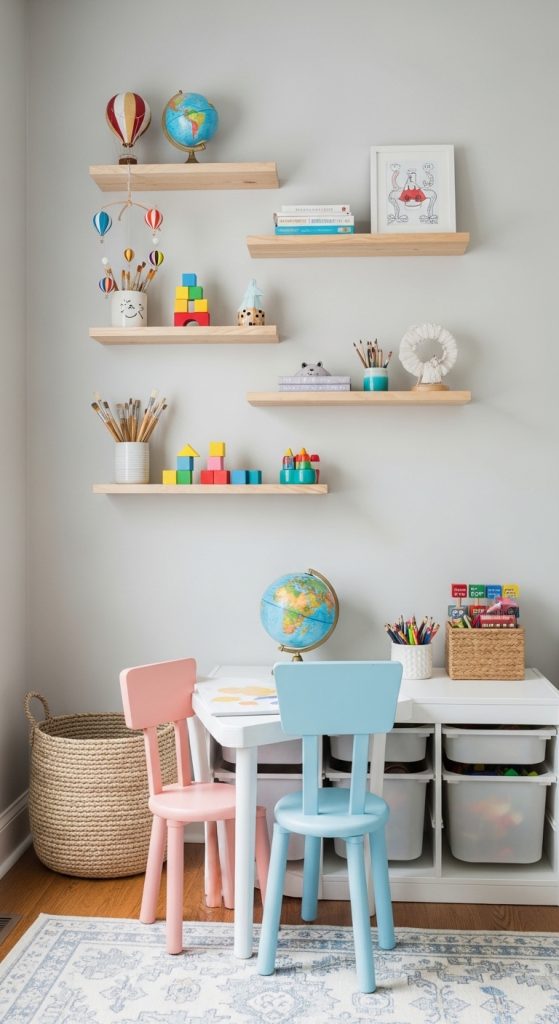
In small playrooms, floor space is limited, making vertical storage a must. Floating shelves, wall-mounted cubbies, and hooks allow toys, books, and art supplies to be organized without cluttering the room. Vertical storage also keeps frequently used items accessible and adds a decorative element that complements a cozy and functional small playroom.
Start by installing floating shelves at varying heights to display books, toys, or small decorative items. Wall-mounted cubbies or baskets can store art supplies, building blocks, or board games. Hooks on walls or doors are ideal for dress-up clothes or backpacks. Vertical storage ensures the floor remains open for active play while keeping the room visually appealing.
Step-by-Step How-To:
- Measure Available Wall Space: Determine areas suitable for floating shelves or wall-mounted storage.
- Install Shelves at Child-Friendly Heights: Keep frequently used items within easy reach.
- Add Storage Bins or Baskets: Categorize toys or supplies for easy access.
- Use Hooks or Pegboards: Hang costumes, bags, or hats without occupying floor space.
- Style with Minimal Decorative Items: Balance storage with decorative pieces like small plants or prints.
Materials Needed:
- Floating shelves or wall-mounted cubbies
- Storage baskets or boxes
- Wall hooks or pegboards
- Labels for organized bins
- Small decorative items for visual interest
Vertical storage maximizes functionality in small playrooms while maintaining a cozy, organized, and Pinterest-worthy atmosphere. Children can easily access toys and supplies, and the room remains open and inviting.
4. Create Defined Play Zones
Even in small playrooms, defining specific areas for different activities helps keep the space organized and functional. Zoning allows children to engage in multiple activities—reading, building, art, or imaginative play—without feeling cluttered or overwhelmed. Clear zones also make it easier for parents to maintain a tidy room while creating a visually appealing layout.
Start by identifying the main activities that will take place in the room. A reading nook, craft corner, building station, and pretend-play area are common choices. Use rugs, small furniture, or low partitions to visually separate zones. Each zone should include all the essentials for its function, ensuring children have everything they need without disrupting other areas.
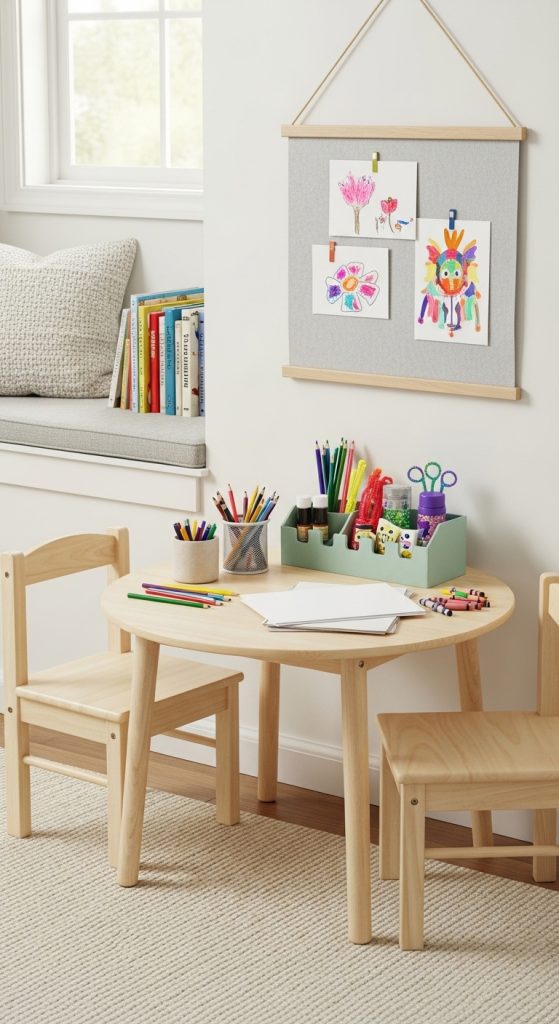
Step-by-Step How-To:
- Assess Room Size: Determine how much space is available for each activity.
- Choose Key Zones: Decide on reading, building, art, or imaginative play areas.
- Use Rugs or Mats: Define zones with small rugs or cushioned mats.
- Arrange Furniture Accordingly: Place tables, chairs, or storage units within each zone.
- Add Accessible Storage: Keep toys and supplies for each zone nearby in baskets or bins.
Materials Needed:
- Low-pile rugs or foam mats
- Small tables or activity desks
- Storage bins or baskets for each zone
- Cushions or floor seating
- Decorative labels or signs (optional)
Defined play zones make a small playroom functional, cozy, and visually organized. Children can enjoy different activities without chaos, and parents maintain an uncluttered, Pinterest-ready space.
5. Use Foldable or Convertible Furniture
Foldable or convertible furniture is a game-changer for small playrooms. Pieces like fold-out tables, collapsible chairs, or modular benches allow the room to adapt to multiple uses. During playtime, the furniture can provide activity surfaces; afterward, it can be folded away to maximize open floor space.
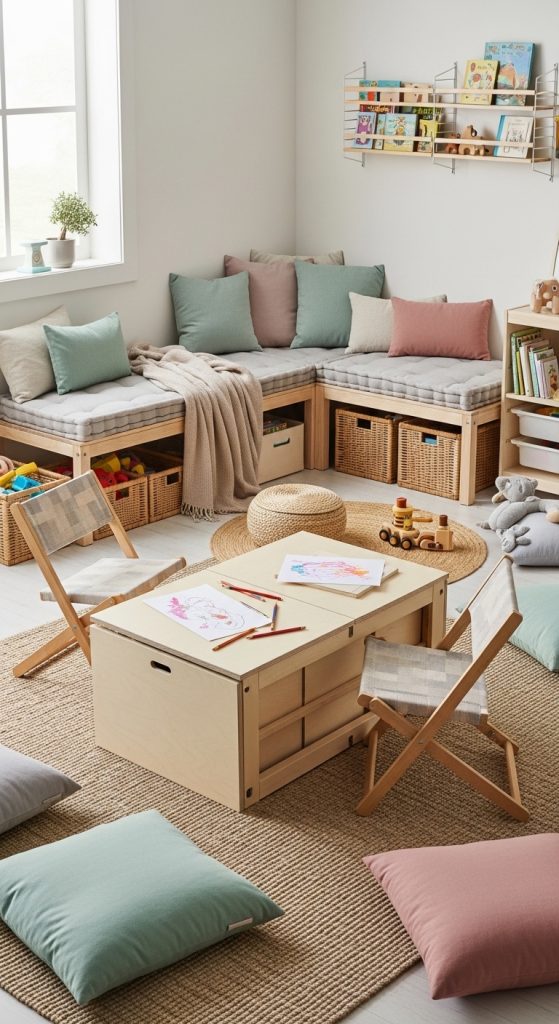
Step-by-Step How-To:
- Identify Flexible Furniture Needs: Determine if a table, chairs, or benches can serve multiple purposes.
- Select Convertible Pieces: Choose fold-out or stackable furniture suitable for children.
- Designate Storage Areas: Keep foldable items in easily accessible spots for quick setup.
- Add Cushions for Comfort: Ensure seating areas are soft and inviting.
- Style to Match Room Decor: Neutral colors and soft textures maintain a cozy aesthetic.
Materials Needed:
- Fold-out or stackable table and chairs
- Modular or collapsible benches
- Cushions or throw pillows
- Storage baskets for folded items
- Neutral or pastel decor accents
Convertible furniture maximizes space without sacrificing comfort or style. Small playrooms become versatile, functional, and cozy while remaining Pinterest-worthy.
6. Incorporate Wall Art and Decals
Wall décor is a simple way to add personality, color, and a playful touch without taking up floor space. Decals, framed prints, or murals can transform a small playroom into an imaginative, cozy, and visually engaging environment.
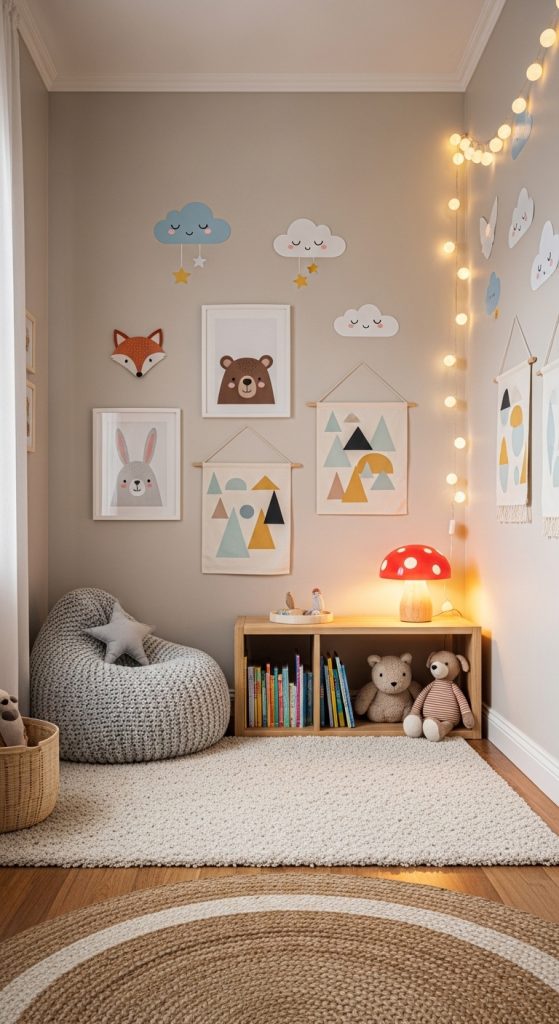
Step-by-Step How-To:
- Choose a Theme or Color Palette: Pick soft, neutral colors or playful pastels that complement existing furniture.
- Select Wall Art or Decals: Use removable decals for easy updates or framed prints for a lasting look.
- Position Strategically: Decorate above activity zones, reading nooks, or storage areas.
- Mix and Match Textures: Consider a combination of decals, framed prints, and fabric wall hangings for depth.
- Maintain Visual Balance: Avoid overcrowding walls; keep larger pieces at eye level for children.
Materials Needed:
- Removable wall decals or wallpaper
- Framed prints or artwork
- Small fabric wall hangings
- Painter’s tape (for alignment)
- Optional: LED string lights for accent
Wall art and decals enhance creativity and add warmth to small playrooms. They create a cozy, Pinterest-ready environment that feels intentional and playful.
7. Incorporate Soft, Comfortable Seating
A cozy playroom needs comfortable seating options for kids and parents alike. Soft seating areas like floor cushions, bean bags, or small upholstered chairs encourage relaxation and reading while adding warmth and texture to the room.
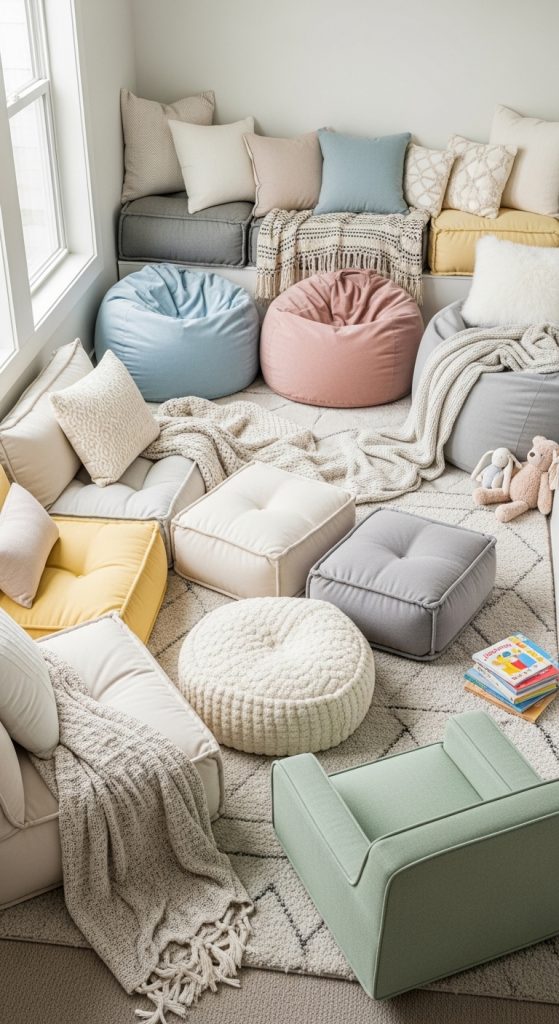
Step-by-Step How-To:
- Choose Kid-Friendly Seating: Select bean bags, floor cushions, or small chairs suitable for children.
- Add Comfort Elements: Layer with soft throws or pillows for warmth.
- Arrange for Interaction: Place seating near reading nooks or play zones to encourage engagement.
- Include Parent Seating (Optional): A small armchair or pouf allows parents to supervise comfortably.
- Use Neutral or Pastel Colors: Keeps the room feeling light and airy while coordinating with décor.
Materials Needed:
- Bean bags or floor cushions
- Small upholstered chairs
- Soft throws or blankets
- Decorative pillows
- Optional small pouf for parent seating
Soft seating adds comfort and functionality, making small playrooms cozy, inviting, and Pinterest-worthy while encouraging imaginative play and quiet reading.
8. Maximize Toy Storage with Baskets and Bins
Small playrooms can quickly become cluttered with toys, books, and art supplies. Using baskets and bins keeps everything organized while maintaining a cozy and functional environment. Baskets also make cleanup easier for kids, encouraging them to take responsibility for tidying their space.
Start by grouping similar items together—blocks, stuffed animals, books, and craft supplies. Use open baskets for frequently used toys and labeled bins for less-used items. Woven, fabric, or pastel-colored containers complement a cozy, Pinterest-ready playroom aesthetic. Stackable bins are ideal for utilizing vertical space in compact areas.
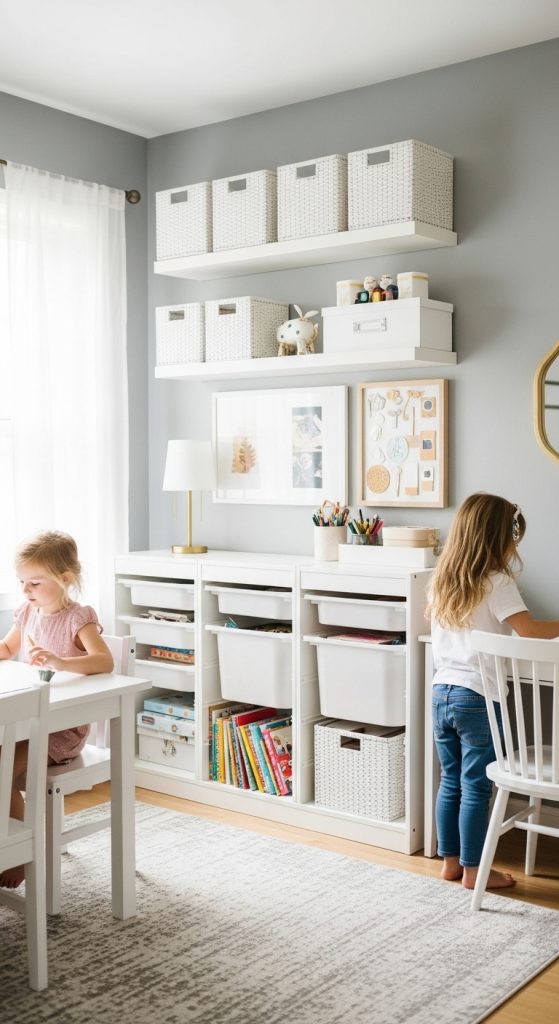
Step-by-Step How-To:
- Sort Toys and Supplies: Categorize items into similar groups.
- Choose Appropriate Baskets or Bins: Select sizes that fit shelves or floor spaces.
- Label Each Container: Help children easily identify where items belong.
- Use Stackable or Nesting Bins: Maximize vertical space and floor area.
- Arrange Accessibly: Place frequently used toys at child height and less-used items higher up.
Materials Needed:
- Woven, fabric, or plastic baskets
- Stackable storage bins
- Labels or tags
- Small shelves or cubbies for baskets
- Optional: decorative liners for baskets
Baskets and bins keep playrooms organized, functional, and visually appealing. Children can easily access their toys while parents enjoy a tidy, cozy, and Pinterest-worthy space.
9. Create a Reading Nook
A small reading nook encourages quiet time and fosters a love for books. Even in compact playrooms, a cozy corner with comfortable seating, soft lighting, and organized bookshelves creates a dedicated area for reading and relaxation.
Start by selecting a corner of the playroom and layering soft rugs, cushions, or bean bags. Add a low bookshelf or wall-mounted book display for easy access. Soft lighting, such as a small lamp or string lights, adds warmth and encourages children to spend time in the nook.
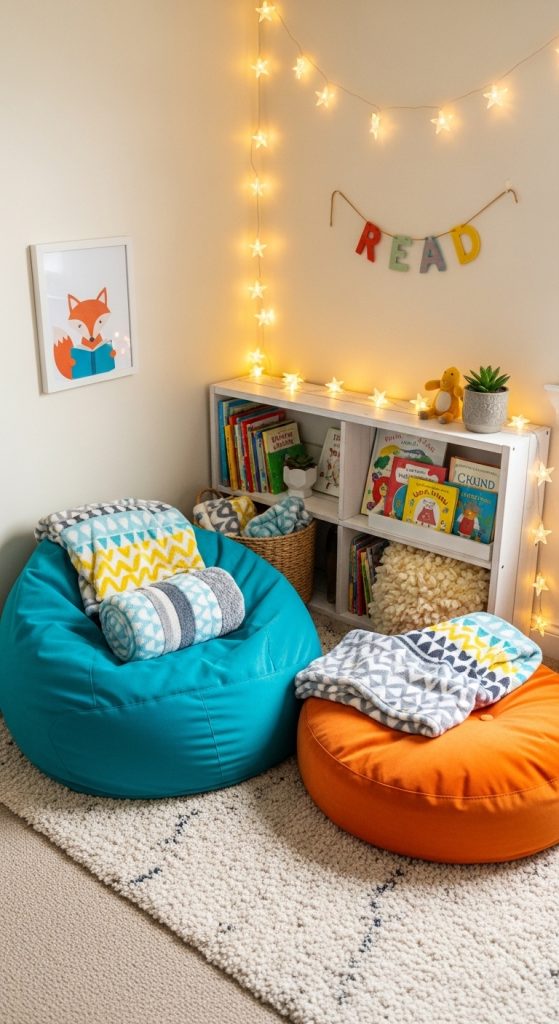
Step-by-Step How-To:
- Select a Corner: Find a small, quiet space for the reading area.
- Add Comfortable Seating: Use floor cushions, bean bags, or a small chair.
- Install Book Storage: Low shelves or wall-mounted displays keep books accessible.
- Layer Soft Textiles: Rugs, throws, and pillows enhance coziness.
- Include Lighting: Soft, warm lighting creates an inviting atmosphere.
Materials Needed:
- Bean bags, floor cushions, or small chair
- Low bookshelf or wall-mounted book display
- Soft rug or carpet
- Throw blankets and decorative pillows
- Small lamp or string lights
A reading nook provides a cozy, quiet retreat in a small playroom. It encourages reading, imagination, and relaxation while maintaining a Pinterest-worthy, organized aesthetic.
10. Add Playful, Whimsical Decor
Small playrooms benefit from playful and whimsical decorative elements that stimulate creativity. Wall decals, themed rugs, colorful storage, or hanging mobiles can make the space fun without overwhelming the room. Incorporating subtle whimsical touches keeps the environment cozy, visually appealing, and child-friendly.
Start with a neutral or pastel base and add one or two playful elements. Wall decals of animals, stars, or clouds create a sense of magic, while themed rugs define play areas. Hanging mobiles or banners add height and visual interest. Balance is key—avoid overcrowding to maintain an open, organized feel.
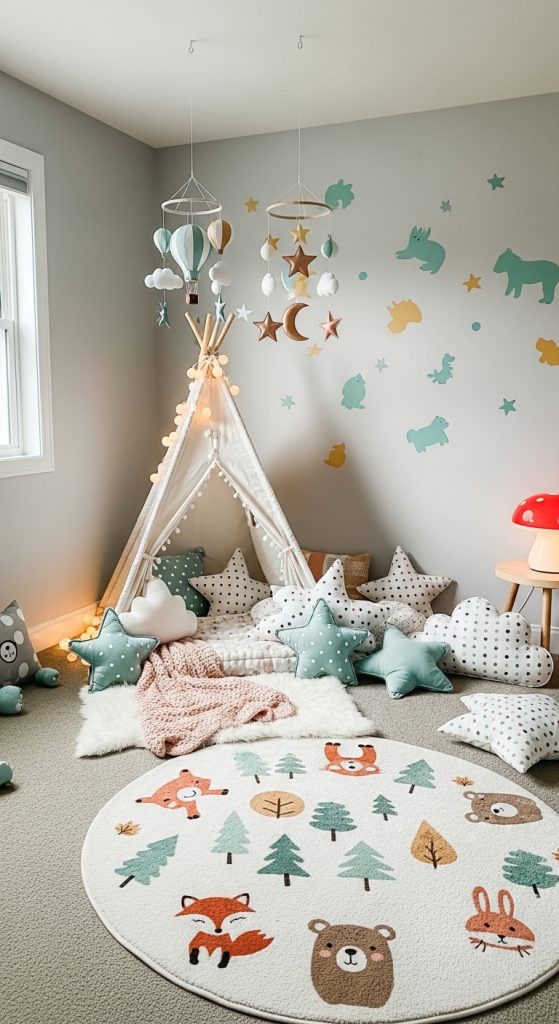
Step-by-Step How-To:
- Choose a Base Palette: Use neutral tones with subtle pops of color.
- Select One or Two Whimsical Features: Wall decals, mobiles, or themed rugs.
- Position Strategically: Decorate walls, play zones, or ceilings without cluttering the floor.
- Balance Decor with Functionality: Ensure play and storage areas remain accessible.
- Layer Textures and Materials: Mix wood, fabric, and soft textiles for depth and warmth.
Materials Needed:
- Removable wall decals or murals
- Themed or patterned rug
- Hanging mobiles or garlands
- Small decorative items (pillows, cushions, or bins)
- Soft textiles to complement whimsical elements
Whimsical décor brings fun and personality to a small playroom while maintaining cozy functionality. It keeps the room Pinterest-ready, playful, and inviting, ensuring children love spending time in their little haven.