
Easter is one of the most magical times of the year for young children. The season of pastel colors, cheerful bunnies, fluffy chicks, and vibrant Easter eggs provides the perfect backdrop for creative exploration. For kindergarten-aged children, engaging in Easter arts and crafts is not only fun but also essential for developing motor skills, hand-eye coordination, and creativity. At this age, children are naturally curious and love experimenting with colors, textures, and shapes. Introducing simple, guided crafts can help them express themselves, build confidence, and enjoy the holiday in a meaningful, interactive way.

Arts and crafts activities for kindergarteners are also a wonderful opportunity for parents, teachers, and caregivers to spend quality time with children. Unlike older children who may enjoy independent projects, younger kids often thrive when they have adult guidance to help them cut, glue, or assemble materials. This makes Easter craft time both a bonding experience and an educational moment, allowing children to explore early design concepts while celebrating a holiday full of joy and tradition.
One of the most exciting aspects of Easter crafts is the wide variety of projects that can be tailored to a child’s skill level. Simple crafts like handprint bunnies, cotton ball chicks, or decorated paper eggs allow children to achieve beautiful results without frustration. At the same time, slightly more advanced projects, such as creating suncatchers, bunny headbands, or mini Easter baskets, can encourage problem-solving, planning, and color coordination. The goal is to make every craft approachable, enjoyable, and age-appropriate, so that children feel proud of what they create.
Using affordable and accessible materials is key to keeping Easter crafting both practical and enjoyable. Dollar stores, craft supply shops, and even items from around the home—like construction paper, glue sticks, cotton balls, and markers—can be transformed into delightful Easter decorations. By choosing supplies that are inexpensive yet versatile, parents and teachers can organize multiple projects without spending a fortune, while ensuring children have enough materials to explore, experiment, and express their creativity freely.
Kindergarten Easter crafts are not just about decoration; they also serve educational purposes. Activities that involve cutting, gluing, stamping, or painting help develop fine motor skills, hand strength, and hand-eye coordination. Crafts that incorporate shapes, colors, patterns, or simple counting, such as creating a garland of Easter eggs or arranging chicks in a line, encourage early math and design skills. Moreover, group crafts teach social skills like sharing, cooperation, and taking turns—making holiday art a well-rounded developmental experience.
Beyond the educational benefits, Easter crafts inspire imagination. Children can invent their own characters, decorate eggs in unique patterns, or combine materials in new ways to create something truly original. Crafts become personalized keepsakes that families can display, share, or use in holiday celebrations. These handmade creations add warmth and personality to seasonal décor, making the holiday feel even more special.
In this guide, you will discover 20 creative and engaging Easter arts and crafts projects specifically designed for kindergarten-aged children. Each craft is simple, safe, and requires minimal supervision while providing maximum fun and learning opportunities. Every idea includes a detailed step-by-step guide, a materials list, and practical tips to make the project easy to follow and enjoyable. Whether you are a parent planning a weekend activity, a teacher preparing a classroom lesson, or a caregiver organizing a holiday play session, these crafts will keep young children entertained and inspired.
From playful bunnies and fluffy chicks to colorful eggs and wearable crafts, these projects are designed to combine fun, creativity, and early learning in one. The crafts encourage children to use scissors, glue, paint, and markers safely while creating something they can be proud of. Each activity is crafted with the kindergarten skill level in mind, allowing children to succeed and celebrate their creations. By the end of these 20 projects, you will have an array of festive, adorable Easter decorations and keepsakes made by the children themselves.
1. Peeps Chick Pops
Introduction
Peeps Chick Pops are a fun, edible craft that combines creativity with a tasty treat, perfect for kindergarteners during Easter. This activity allows children to design their own little chick pops using colorful Peeps marshmallow candies, lollipop sticks, and decorative elements. Kids love working with sweets because it makes crafting both hands-on and delicious, while parents or teachers can guide them through safe assembly and decoration.
This craft encourages fine motor development as children insert sticks into the Peeps, attach candy decorations, and carefully place googly eyes or other edible accents. It’s also a great opportunity to teach children about patterns, colors, and symmetry by arranging multiple pops in different designs.
The project is simple and affordable, as Peeps and candy supplies are widely available in stores, and the assembly doesn’t require cutting or complex steps. Finished Peeps Chick Pops make perfect Easter party favors, gifts for friends and family, or decorations for dessert tables. Children will enjoy seeing their creations displayed before they even get to enjoy eating them.

Materials Needed
- Peeps marshmallow chicks
- Lollipop sticks
- Mini chocolate chips or candy eyes
- Edible markers or icing pens
- Small candy decorations (optional)
- Paper plates for assembling
Step-by-Step Instructions
- Insert a lollipop stick into the bottom of each Peeps chick carefully.
- Use edible markers or icing pens to draw additional features such as a smiling mouth or wings.
- Attach mini chocolate chips or candy eyes as the chick’s eyes.
- Optional: Add small candy decorations for wings or embellishments.
- Place the completed chick pops on a paper plate or stand to display.
- Allow any icing to set before handling or serving.
Tips
Encourage children to create a “Peeps family” with multiple chicks in different colors and designs. These can also be used as cupcake toppers or Easter table decorations.
2. Paper Cup Bunny
Introduction
Paper Cup Bunnies are an easy and playful craft for kindergarteners, perfect for hands-on Easter activities. Using a simple paper cup as the base, children can transform it into a cute bunny by adding ears, a tail, and facial features. This craft encourages fine motor skill development through cutting, gluing, and decorating, while still being simple enough for young children to complete independently.
This craft is inexpensive and can be created with basic materials such as paper cups, construction paper, and markers. Children enjoy personalizing their bunnies with cotton tails, glitter, or stickers. The final products can be used as festive table decorations, gift holders, or part of a larger Easter display.
It’s also a fun way to introduce the concept of three-dimensional crafts to kindergarteners, as they learn how flat materials can transform a cylindrical cup into a bunny character.

Materials Needed
- Small paper cups
- White and pink construction paper
- Cotton balls
- Glue stick or craft glue
- Scissors (child-safe)
- Markers
- Googly eyes (optional)
Step-by-Step Instructions
- Cut two large bunny ears from white construction paper and two smaller pink inner ears.
- Glue the pink shapes onto the white ears.
- Attach the ears to the top rim of the paper cup.
- Glue a cotton ball at the back bottom for the tail.
- Draw eyes, a nose, and a mouth on the front of the cup using markers.
- Optional: Add stickers, glitter, or extra decoration.
- Let dry completely before displaying.
Tips
Children can make multiple bunnies in different colors and sizes to create a “bunny village.” The cups can also hold small Easter candies or treats.
3. Handprint Easter Tree
Introduction
Handprint Easter Trees are a wonderful craft that combines art, creativity, and the joy of springtime. Kindergarteners enjoy creating these trees because they use their own handprints as “leaves” or “branches,” making each tree unique and personal. This project is perfect for classroom displays or home decorations, as it showcases children’s individual creativity while producing a colorful, festive design.
This activity promotes fine motor skills through painting and gluing while encouraging color recognition and pattern creation. Children can add decorative eggs, bunnies, flowers, or stickers to enhance their trees, making the craft both tactile and visually stimulating.
Handprint Easter Trees are also ideal for group projects, allowing multiple children to contribute to a single large tree or make individual trees to display collectively. This fosters social skills, cooperation, and pride in sharing their work.

Materials Needed
- Construction paper (variety of colors)
- Paints (variety of pastel colors)
- Glue
- Scissors
- Markers
- Stickers or foam shapes for decoration
Step-by-Step Instructions
- Paint the child’s hand with a chosen color and press it onto construction paper multiple times to create the “leaves” or “branches” of the tree.
- Cut out a simple tree trunk from brown construction paper and glue it in place.
- Decorate the tree with small paper eggs, stickers, or foam shapes.
- Add extra details such as flowers or grass at the base using markers or cut paper.
- Let the craft dry completely before displaying.
Tips
Encourage children to create patterns with their handprints for added visual appeal. Grouping multiple trees together creates a festive Easter forest display.
4. Felt Bunny Bag
Introduction
Felt Bunny Bags are a creative and practical craft for kindergarteners, perfect for Easter treat collection or gift giving. Using soft felt material makes this craft easy to manipulate, and children enjoy assembling, decorating, and personalizing their own bunny bags. The process encourages fine motor development as they cut, glue, and attach decorations.
This craft is inexpensive and beginner-friendly, using materials available at Dollar stores or craft shops. Children can add cotton tails, googly eyes, and stickers to personalize their bunny bag, creating a fun combination of texture, color, and design. Once completed, these bags are both decorative and functional, serving as holders for candy, toys, or Easter eggs.
Felt Bunny Bags also introduce children to the concept of sewing alternatives, such as gluing or stapling felt pieces together, making it a versatile craft that blends art with a little hands-on engineering.

Materials Needed
- Felt sheets (white, pink, or other colors)
- Glue or glue gun (with adult supervision)
- Scissors
- Cotton balls
- Googly eyes
- Small Easter candies or eggs
- Ribbon (optional)
Step-by-Step Instructions
- Cut two large bunny ear shapes from white felt and two smaller pink inner ears.
- Glue the pink shapes onto the white ears.
- Attach ears to the top of the felt bag.
- Glue googly eyes and a cotton ball nose to the front of the bag.
- Decorate with stickers, glitter, or ribbon.
- Fill the bag with candies, toys, or eggs.
- Let dry completely before use.
Tips
Encourage children to make multiple bags in different colors and decorate each uniquely. These are great for Easter parties or gifts.
5. Egg Carton Chicks
Introduction
Egg Carton Chicks are a fantastic upcycling craft that turns a simple egg carton into adorable Easter decorations. Kindergarteners enjoy this craft because it is tactile, colorful, and easy to assemble. Children can explore painting, gluing, and assembling while learning about recycling and reusing materials creatively.
This craft promotes fine motor development, color recognition, and pattern-making skills. By decorating each chick differently, children can practice individuality and creativity. The activity is safe, inexpensive, and perfect for classrooms, home craft time, or small group sessions.
Egg Carton Chicks can be used for table decorations, classroom displays, or Easter-themed games. The lightweight and sturdy nature of egg cartons makes them ideal for young children to handle safely while constructing and decorating.

Materials Needed
- Egg carton
- Yellow paint
- Orange construction paper
- Googly eyes
- Glue
- Scissors (child-safe)
- Markers
Step-by-Step Instructions
- Cut individual egg cup sections from the egg carton.
- Paint each cup yellow and let dry completely.
- Cut small triangles from orange paper for beaks and attach to the front.
- Glue googly eyes above the beak.
- Optional: Add small feather decorations or glitter.
- Arrange the finished chicks in a group or nest.
Tips
Encourage children to make a variety of chick sizes for a “chick family.” Use these for playful Easter displays or educational sorting activities.
6. Popsicle Stick Bunny Craft
Introduction
Popsicle Stick Bunny Crafts are simple, fun, and perfect for kindergarteners who enjoy building and decorating. Using popsicle sticks as a base gives children a sturdy structure to create their bunnies while practicing fine motor skills like gluing and arranging shapes. This craft combines creativity, tactile learning, and imaginative play, making it ideal for Easter-themed activities in classrooms or at home.
Children can personalize their bunnies with colorful construction paper, cotton balls, markers, and other embellishments. The project allows for creative freedom while still being easy enough for young children to complete independently or with minimal guidance. It’s also inexpensive, as popsicle sticks and basic craft supplies are widely available at Dollar stores or craft shops.
Finished popsicle stick bunnies can be used as wall decorations, table ornaments, or playful holiday puppets. The project encourages experimentation with design and colors, helping children develop confidence and pride in their work.

Materials Needed
- Popsicle sticks (4–5 per bunny)
- White and pink construction paper
- Cotton balls
- Glue
- Markers
- Googly eyes (optional)
- Scissors (child-safe)
Step-by-Step Instructions
- Arrange 3–4 popsicle sticks side by side to form the bunny’s body. Glue them together.
- Cut two large ears from white construction paper and two smaller pink inner ears.
- Attach the ears to the top of the popsicle stick body.
- Glue a cotton ball at the bottom for the tail.
- Draw eyes, nose, and mouth with markers or glue on googly eyes.
- Let dry completely before displaying.
Tips
Encourage children to experiment with patterns, colors, or additional decorations. These bunnies can also be attached to sticks for Easter puppet play.
7. Pom-Pom Easter Chicks
Introduction
Pom-Pom Easter Chicks are a soft, fluffy, and colorful craft that kindergarteners love. Using yarn or store-bought pom-poms, children can assemble chicks in minutes, adding features like beaks, eyes, and feet. This craft is excellent for developing fine motor skills, hand-eye coordination, and color recognition while being fun and engaging.
Pom-Pom Chicks are versatile and inexpensive, making them ideal for classroom projects or at-home Easter activities. Children enjoy arranging the pom-poms, gluing them together, and adding tiny embellishments to bring their chicks to life. These crafts provide instant gratification, as children see their creations transform from simple balls into adorable characters.
Completed pom-pom chicks can be used in Easter displays, placed in baskets, or given as small gifts. The tactile nature of the project adds a sensory element, making it both educational and entertaining.

Materials Needed
- Yellow pom-poms (various sizes)
- Orange felt or paper for beaks and feet
- Googly eyes
- Glue
- Scissors (child-safe)
- Small decorations (optional)
Step-by-Step Instructions
- Select one large pom-pom for the body and a smaller pom-pom for the head.
- Glue the smaller pom-pom on top of the larger one.
- Cut small triangles from orange felt or paper for the beak and glue in place.
- Cut small feet and attach them at the bottom.
- Glue on googly eyes or draw them with markers.
- Optional: Add feathers or tiny accessories.
- Let dry completely before display.
Tips
Children can create families of chicks in different sizes and colors. This craft can also be turned into a counting or pattern activity for learning numbers.
8. Easter Bunny Mask
Introduction
Easter Bunny Masks are a wearable craft that combines art, creativity, and imaginative play. Kindergarteners love making and wearing these masks during Easter celebrations, parties, or photo sessions. The project allows children to explore colors, textures, and shapes while practicing fine motor skills like cutting, coloring, and gluing.
Masks can be customized with glitter, cotton balls, stickers, or construction paper. This craft encourages individual creativity and provides a sense of accomplishment when the mask is worn. It’s simple and safe for young children, making it perfect for classroom activities or home crafts.
Wearable crafts like this are also great for group activities, role-playing, or storytelling, enhancing social skills and confidence in young children. The finished masks add a festive touch to any Easter gathering.

Materials Needed
- White cardstock or construction paper
- Pink construction paper
- Cotton balls
- Elastic string or ribbon
- Glue
- Scissors (child-safe)
- Markers or crayons
Step-by-Step Instructions
- Cut a large oval from white cardstock for the mask base.
- Cut two bunny ear shapes from white construction paper and two smaller pink inner ears.
- Glue the pink shapes onto the white ears and attach to the mask base.
- Draw eyes, nose, and mouth with markers.
- Glue cotton balls on the cheeks for a fluffy look.
- Attach elastic string or ribbon to each side for wearing.
- Allow glue to dry completely before using.
Tips
Encourage children to decorate their masks with glitter, stickers, or patterns. Group masks can be used for fun Easter photo shoots or classroom performances.
9. Easter Egg Stamping
Introduction
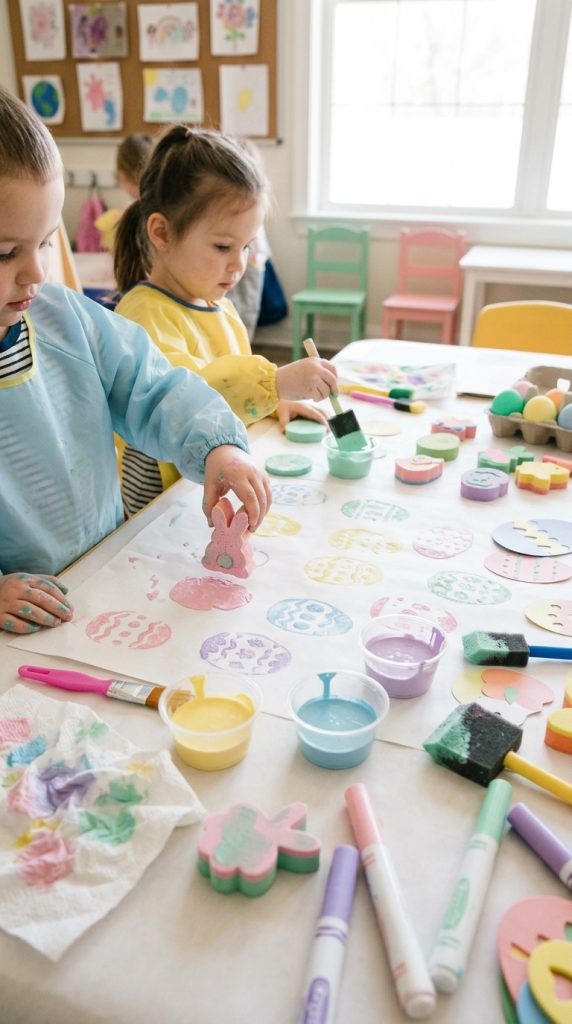
Easter Egg Stamping is a creative and mess-friendly craft that allows kindergarteners to decorate eggs using stamps, sponges, or cut shapes. This activity introduces children to printing techniques and pattern creation while encouraging color exploration. It’s perfect for young children because it requires minimal precision and allows for experimentation with various textures and designs.
Stamping activities strengthen hand muscles, develop fine motor coordination, and foster creativity. Children can experiment with different stamp patterns, colors, and layering techniques, making each egg unique. It’s a fun, educational activity that can be completed quickly while providing satisfying visual results.
Stamped Easter eggs can be used for classroom displays, greeting cards, or decorating gift bags. The craft is safe, inexpensive, and ideal for both individual and group activities.
Materials Needed
- Foam stamps or sponges
- Paints in pastel colors
- Paper or cardstock eggs
- Brushes (optional)
- Paper towels for cleanup
- Glue (optional)
Step-by-Step Instructions
- Cut egg shapes from cardstock or construction paper.
- Dip foam stamps or sponges into paint.
- Press the stamps onto the eggs in patterns or designs.
- Layer different colors or shapes for added effect.
- Let paint dry completely.
- Optional: Add stickers, glitter, or embellishments.
Tips
Encourage children to create a set of stamped eggs in repeating patterns or random designs. Display the eggs as a garland or in baskets for a festive touch.
10. Bunny Pom-Pom Magnets
Introduction
Bunny Pom-Pom Magnets are a small, cute, and functional craft perfect for kindergarteners. Children enjoy making fluffy bunny pom-poms and turning them into magnets that can decorate the fridge or classroom board. This project encourages fine motor skills, color exploration, and creativity while producing a useful finished product.
The craft is simple and affordable, using basic materials like yarn, felt, and small magnets. Children can experiment with different sizes, colors, and facial expressions. Finished magnets also make fun gifts for family members or friends.
This project combines tactile play with practical results, making it highly satisfying for young children. It is also a great way to introduce early crafting skills like gluing, assembling, and designing small objects.

Materials Needed
- Yarn (white or pastel colors)
- Small pom-pom maker or fork (optional)
- Felt for ears and facial features
- Glue
- Small magnets
- Scissors (child-safe)
Step-by-Step Instructions
- Create a pom-pom using yarn and a pom-pom maker or fork.
- Cut bunny ears from felt and attach to the top of the pom-pom.
- Glue on small felt pieces or draw eyes, nose, and mouth.
- Attach a small magnet to the back using glue.
- Let dry completely before placing on surfaces.
Tips
Children can make sets of magnets in various colors for classroom or home use. These also make fun, inexpensive Easter gifts.