
Curly hair in kids is beautiful, but it is also misunderstood and often handled incorrectly. Most people either over-style it, trying to force it into straight or overly controlled shapes, or they under-style it completely and let it become unstructured. Both approaches miss the real potential of curls. Curly hair doesn’t need to be fixed—it needs to be shaped in a way that respects its natural pattern.
The biggest challenge with kids’ curly hair is not styling itself, but managing balance between definition and comfort. Curls naturally have volume, movement, and personality. But without the right styling approach, they can also become tangled, frizzy, or uneven throughout the day. That’s why the goal is not to “control” curls, but to guide them into styles that stay neat without removing their natural texture.
Another common mistake is using the same approach as straight hair. Curly hair behaves differently. It shrinks, expands, and changes shape depending on humidity, movement, and product use. A hairstyle that looks perfect at the start of the day can lose its structure quickly if it isn’t designed for curl behavior. That’s why curly hair needs styles that work with volume, not against it.
Comfort is also a major factor, especially for kids. Tight hairstyles might look neat initially, but they often cause discomfort and don’t last long because curls resist being pulled too tightly. The best curly hairstyles are the ones that feel light, flexible, and secure without constant adjustment. If a child keeps touching or fixing their hair, the style is not working.
Another important point is curl definition. Well-defined curls automatically make even the simplest hairstyle look intentional. But definition doesn’t come from over-brushing or heavy styling—it comes from proper sectioning, moisture balance, and allowing curls to form naturally. When curls are respected, even basic ponytails or buns look elevated.
Face framing also plays a bigger role with curly hair than most people realize. Curls naturally create softness around the face, but strategic placement can enhance this effect. Whether it’s leaving curls loose at the front or shaping them into half-up styles, the goal is to make the face feel open and balanced, not hidden or overwhelmed.
Parents often struggle with time, especially in school mornings. Curly hair can feel like it takes longer to manage, but the truth is that the right styles actually reduce effort. Once a curl-friendly routine is understood, styling becomes faster because you stop fighting the hair and start working with its natural shape.
Accessories can also be helpful, but only when used correctly. Soft elastics, gentle clips, and curl-friendly bands can secure styles without breaking curl patterns. Harsh ties or overuse of tight bands can damage curl formation and lead to frizz. Less tension almost always produces better results.
In 2026, curly hairstyles for kids are shifting toward natural styling with structure. That means less heat, less forcing, and more focus on enhancing curl patterns with simple, practical styles. The goal is not perfection—it is consistency, comfort, and natural beauty that lasts through the day.
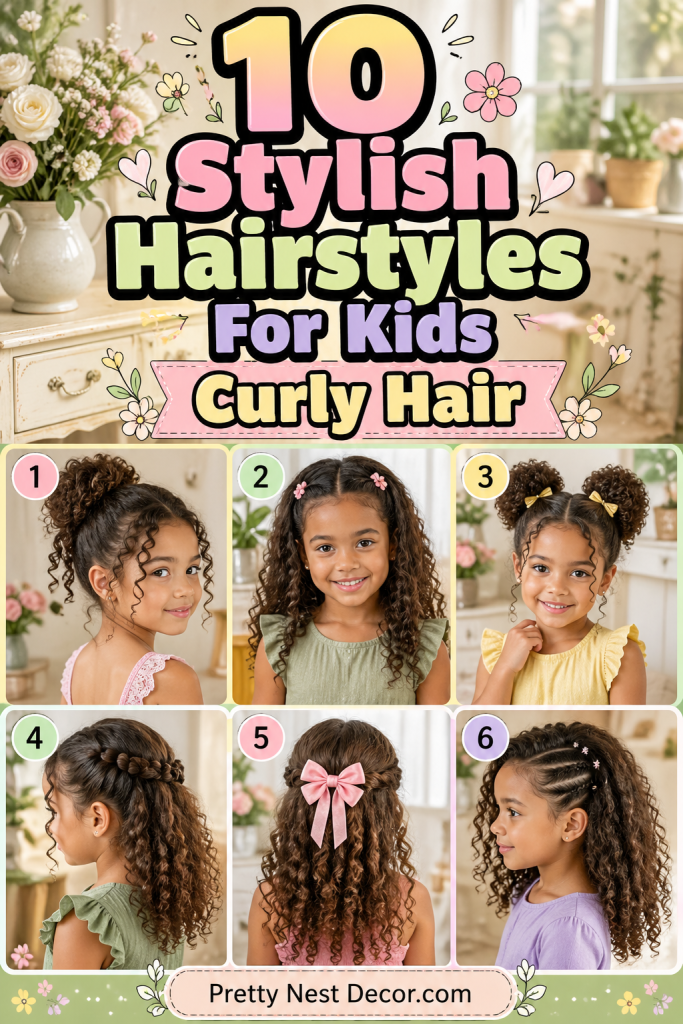
This guide focuses on hairstyles that actually work for curly hair in real life. Styles that respect curl texture, reduce frizz, and stay comfortable while still looking neat and cute for school, outings, and everyday wear.
Now let’s explore the styles that make curly hair easier to manage—and more beautiful—without overcomplicating it.
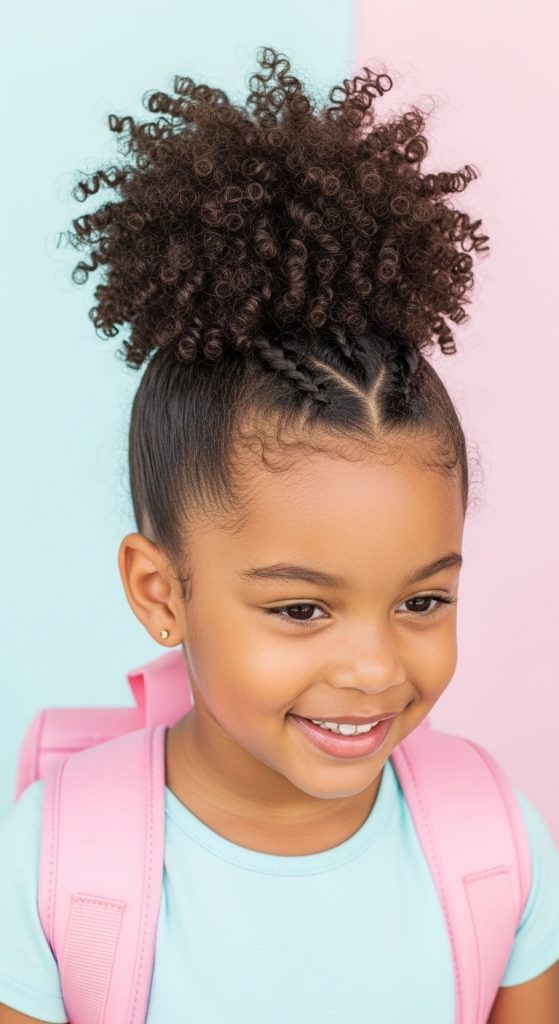
1. Defined High Puff Ponytail (Crown Volume Control Style)
What it is
The high puff ponytail is one of the most practical and visually strong hairstyles for kids with curly hair. Instead of flattening curls, it gathers them upward to create a natural puff at the crown. This style enhances volume while keeping the sides clean and controlled, making curls look intentional rather than unstructured.
It works because it embraces natural curl expansion instead of fighting it.
How to implement (practical steps)
Start with slightly damp or moisturized curls to reduce frizz.
Apply a lightweight leave-in conditioner or curl cream for definition.
Gently gather the hair upward toward the crown without brushing out the curls.
Secure it with a soft, stretchable band that won’t pull or break curls.
Adjust the puff so it sits evenly and naturally rounded at the top.
Use fingers to separate curls slightly for volume and shape.
Smooth the edges lightly with a soft brush or fingertips for a clean finish.
Best for (who should use it)
This works best for medium to tight curls and is ideal for school days, sports activities, or busy mornings when comfort and hold are important.
Pro tip
Do not over-smooth the curls before tying. Natural texture is what gives the puff its volume and shape.
Mistake to avoid
Do not pull the hair too tightly at the scalp. Excess tension flattens curls and causes discomfort throughout the day.
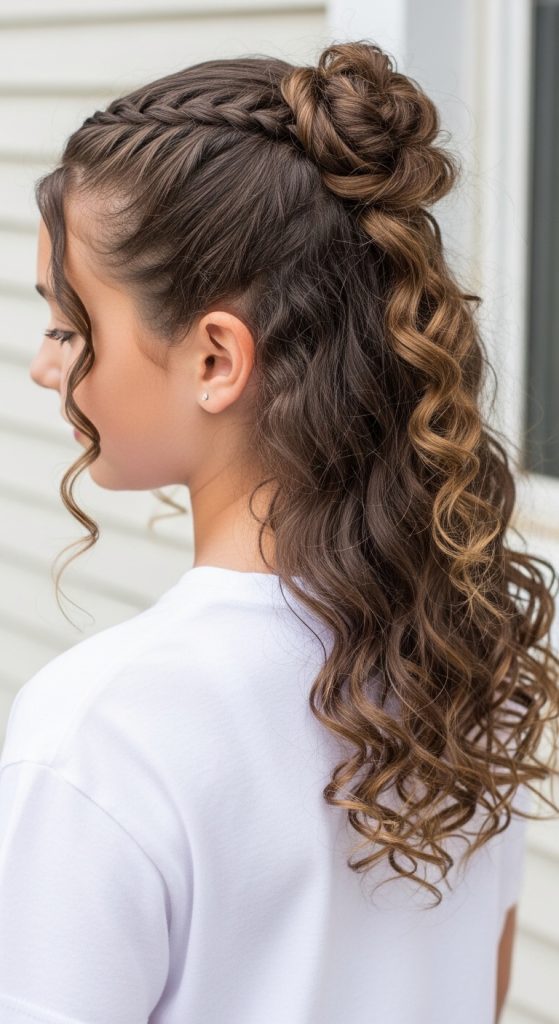
2. Half-Up Curly Crown Twist (Soft Structured Balance Style)
What it is
This hairstyle takes the top section of curly hair and gently twists it back, leaving the rest of the curls free. It creates a soft crown effect that keeps hair out of the face while still showing off natural curl volume.
It is a balance between control and freedom.
How to implement (practical steps)
Start with detangled, moisturized curls to maintain definition.
Take a section of hair from both sides of the front.
Gently twist each section backward toward the crown.
Join both twists at the back and secure them with a soft clip or elastic.
Let the remaining curls fall naturally down the back.
Adjust the crown area slightly for lift and softness.
Separate curls with fingers to maintain shape without frizz.
Best for (who should use it)
This works best for medium to long curly hair and is ideal for school, casual outings, or days when you want a neat but natural look.
Pro tip
Keep twists loose. Tight twisting disturbs curl patterns and reduces natural bounce.
Mistake to avoid
Do not over-section the hair. Large, heavy sections make the style look bulky and uneven.
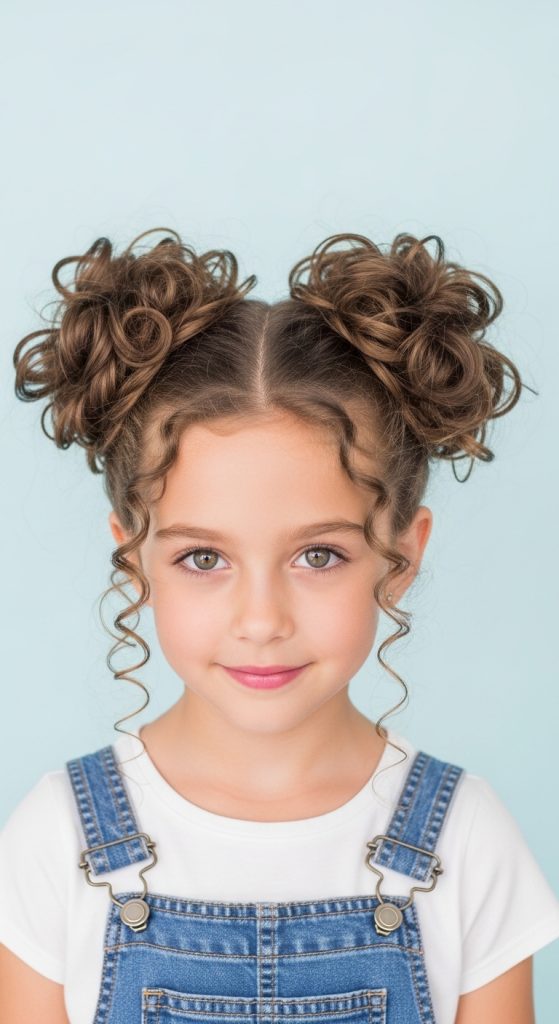
3. Curly Space Buns (Fun Balanced Double Volume Style)
What it is
Curly space buns are a playful hairstyle where hair is divided into two sections and shaped into buns on both sides of the head. For curly hair, the buns are not meant to be perfectly tight—they are soft, voluminous, and slightly messy, which enhances the natural curl pattern.
It is a fun, energetic style that works especially well for active days.
How to implement (practical steps)
Divide the hair evenly down the middle.
Moisturize curls lightly to keep them defined and reduce frizz.
Take one section and gather it toward the top or mid-side of the head.
Twist the curls loosely and wrap them into a bun shape.
Secure with a soft elastic or clip.
Repeat the same process on the other side.
Adjust both buns to ensure they are balanced but not identical in tightness.
Allow a few curls to fall naturally around the face for softness.
Best for (who should use it)
This works best for short to medium curly hair and is ideal for school, playtime, or casual outings where comfort and fun style matter.
Pro tip
Do not force curls into tight buns. Let their natural bounce build the shape instead of controlling it completely.
Mistake to avoid
Do not aim for perfect symmetry. Curly hair looks more natural and cute when each bun has its own slightly unique shape.
4. Curly Low Puff Bun (Neat School-Ready Control Style)
What it is
The curly low puff bun is a controlled yet natural hairstyle where curls are gathered at the nape of the neck and shaped into a soft bun. Unlike straight hair buns that rely on smoothness, this style keeps the curl texture visible, giving it volume and personality while still looking neat.
It is one of the most practical styles because it reduces tangling while protecting curl shape.
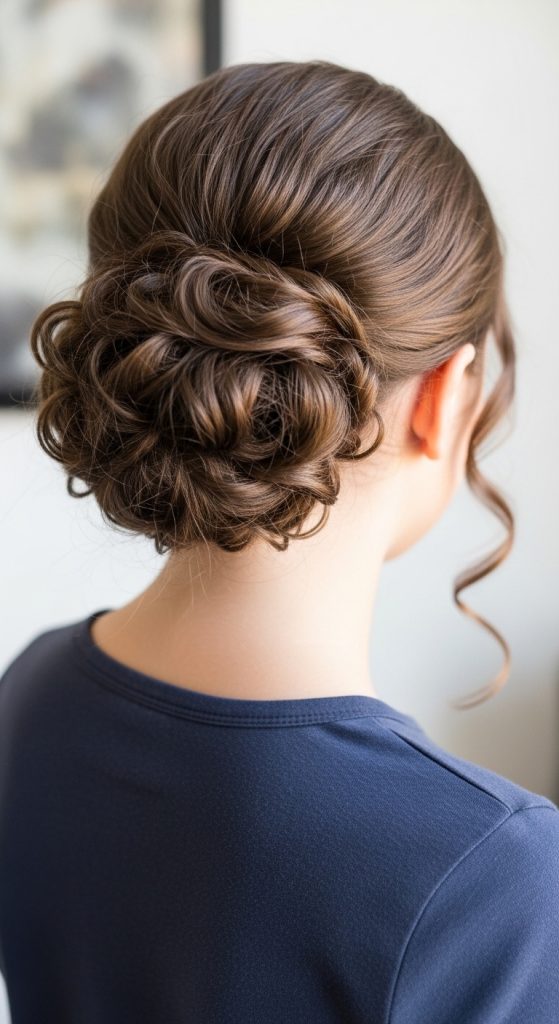
How to implement (practical steps)
Start with moisturized curls using a leave-in conditioner or curl cream.
Gently detangle using fingers or a wide-tooth comb—avoid brushing out curl pattern completely.
Gather all hair loosely at the nape of the neck.
Twist the curls gently without pulling too tightly.
Wrap the twisted hair into a soft bun shape.
Secure it with a soft elastic or large hair tie that won’t damage curls.
Tuck in loose ends slightly but allow some curls to remain visible for texture.
Smooth edges lightly without flattening the curl line.
Best for (who should use it)
This works best for medium to thick curly hair and is ideal for school, formal uniforms, or situations where hair needs to stay controlled for long hours.
Pro tip
Leave a few defined curls out around the bun. It makes the style look softer and prevents it from looking too strict.
Mistake to avoid
Do not brush curls into a straight base before styling. That destroys definition and creates frizz later in the day.
5. Curly Side Ponytail with Defined Front Curls (Soft Directional Style)
What it is
This hairstyle gathers curly hair to one side, creating a soft, flowing ponytail that highlights natural curl movement. The key feature is leaving defined curls at the front to frame the face, giving a balanced and stylish look without over-manipulating the hair.
It works because it uses direction and asymmetry to create visual interest.
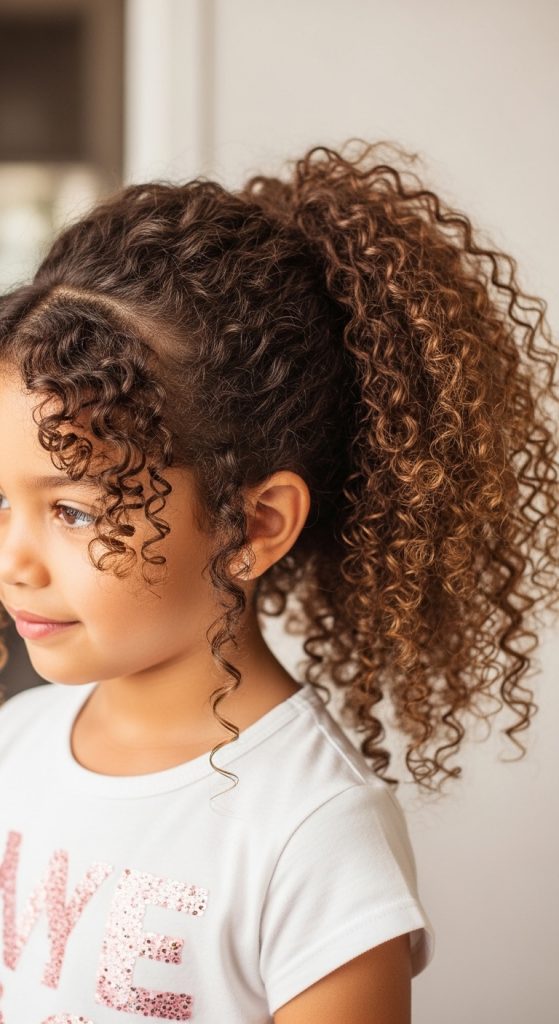
How to implement (practical steps)
Apply a light curl cream or water mist to refresh curls if needed.
Create a loose side part to guide the direction of the ponytail.
Take all curls gently toward one side without flattening them.
Secure the hair into a side ponytail at mid or low position using a soft elastic.
Separate a few front curls and define them with fingers for face framing.
Adjust the ponytail so curls sit naturally without being pulled tight.
Fluff the ponytail slightly to maintain volume and bounce.
Best for (who should use it)
This works best for medium to long curly hair and is ideal for casual outings, school days, or semi-dressy occasions.
Pro tip
Do not over-comb the curls before tying. The more natural the curl pattern, the better the final shape looks.
Mistake to avoid
Avoid placing the ponytail too high on curly hair—it can create uneven shrinkage and disrupt curl definition.
6. Half-Up Curly Top Knot (Balanced Volume Control Style)
What it is
The half-up curly top knot takes only the upper section of curly hair and shapes it into a small bun, while the rest of the curls are left free. It creates a controlled top section that keeps hair away from the face while allowing full curl volume at the back.
It is especially useful for managing thick curls without losing natural bounce.
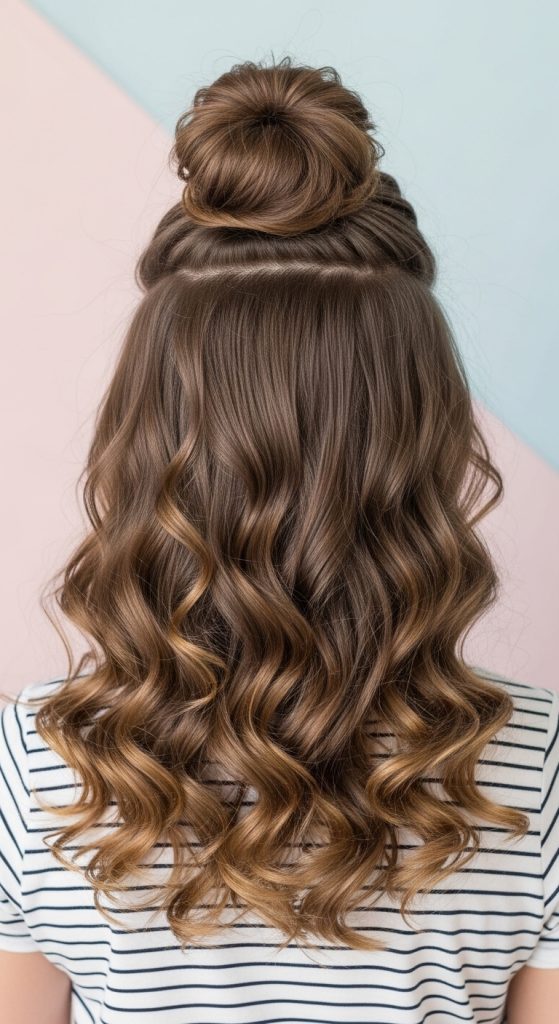
How to implement (practical steps)
Start with well-moisturized curls to reduce frizz.
Separate the top section of hair from temple to crown.
Gather this section gently without flattening the curls.
Twist it loosely into a small bun shape at the top or mid crown.
Secure it with a soft elastic or scrunchie.
Allow the remaining curls to fall naturally down the back.
Adjust the top knot slightly for volume and softness.
Pull a few curls around the hairline for a natural frame.
Best for (who should use it)
This works best for medium to thick curly hair and is ideal for school, hot weather, or active days when full hair control is not needed.
Pro tip
Keep the top knot loose. A tight knot flattens the crown and reduces the natural curly volume effect.
Mistake to avoid
Do not over-section the top half. Taking too much hair makes the bun heavy and uncomfortable.
7. Curly High Pony Puff with Defined Coil Ends (Volume Lift Style)
What it is
The curly high pony puff is a lifted hairstyle where curls are gathered high on the head to create a full, rounded puff. Instead of forcing curls into a straight ponytail shape, this style lets them expand naturally, creating height, volume, and bounce. The ends remain coiled and visible, which adds texture and personality.
It works because it uses natural shrinkage and volume instead of fighting it.
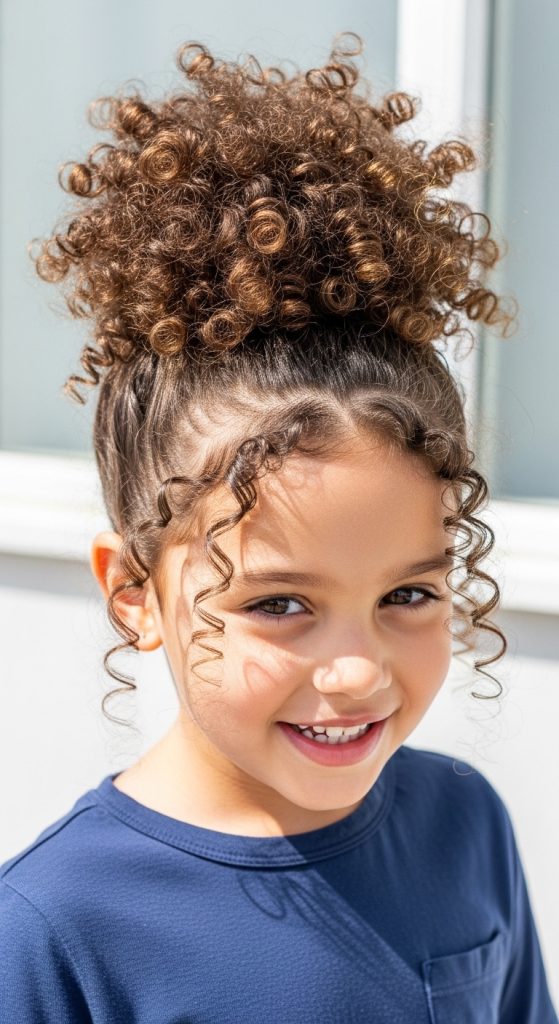
How to implement (practical steps)
Start with moisturized curls to maintain definition and reduce frizz.
Gently detangle using fingers or a wide-tooth comb, keeping curl pattern intact.
Apply a small amount of curl cream or gel for hold.
Flip the head slightly forward to gather hair evenly.
Bring all curls toward the crown area without flattening them.
Secure loosely with a soft elastic band designed for curly hair.
Adjust the puff so it forms a round, balanced shape at the top.
Separate a few curls at the front for soft face framing.
Best for (who should use it)
This works best for tight to medium curls and is ideal for school, sports days, or active routines where hair needs to stay secure but stylish.
Pro tip
Do not stretch curls too much when tying. The natural shrinkage is what gives the puff its full, rounded shape.
Mistake to avoid
Avoid brushing curls into straightness before tying. That removes definition and causes frizz later.
8. Curly Crown Twist Half-Up (Soft Face Framing Style)
What it is
The curly crown twist half-up style takes small sections from the front and twists them back to form a soft crown effect. The rest of the curls are left loose and natural. This creates a balanced look where the face is gently framed while the volume of curls remains visible.
It is one of the easiest ways to make curls look styled without losing their natural texture.
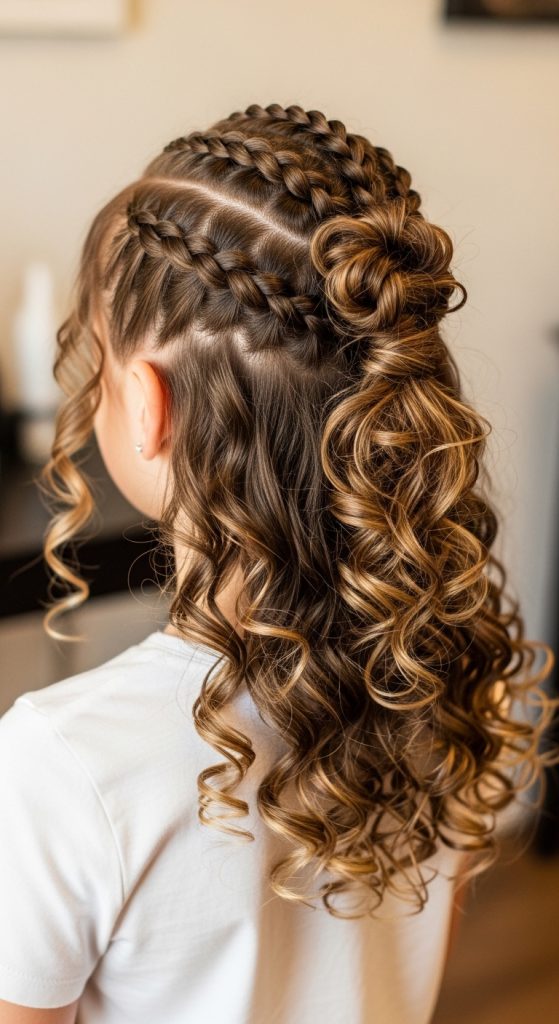
How to implement (practical steps)
Start with hydrated curls to maintain softness and shape.
Take a small section of hair from each side near the front.
Twist each section gently backward toward the back of the head.
Keep the twists loose so curls are not disrupted.
Join both twisted sections at the back and secure with a soft clip or elastic.
Let the rest of the curls fall freely down the back.
Adjust the crown area slightly to create soft lift.
Pull a few curls near the face for a natural frame.
Best for (who should use it)
This works best for medium to long curly hair and is ideal for school, casual outings, or semi-formal events.
Pro tip
Looser twists always look better with curls. Tight twists break curl patterns and reduce softness.
Mistake to avoid
Do not take large sections for the twists. Heavy sections make the crown bulky and uneven.
9. Curly Low Side Bun with Loose Tendrils (Soft Elegant Finish Style)
What it is
The curly low side bun is a relaxed yet elegant hairstyle where curls are gathered to one side and shaped into a soft bun at the nape or just below it. The defining feature is the loose tendrils left around the face, which soften the look and highlight natural curl texture.
It combines control with softness, making it ideal for both everyday and slightly dressed-up looks.
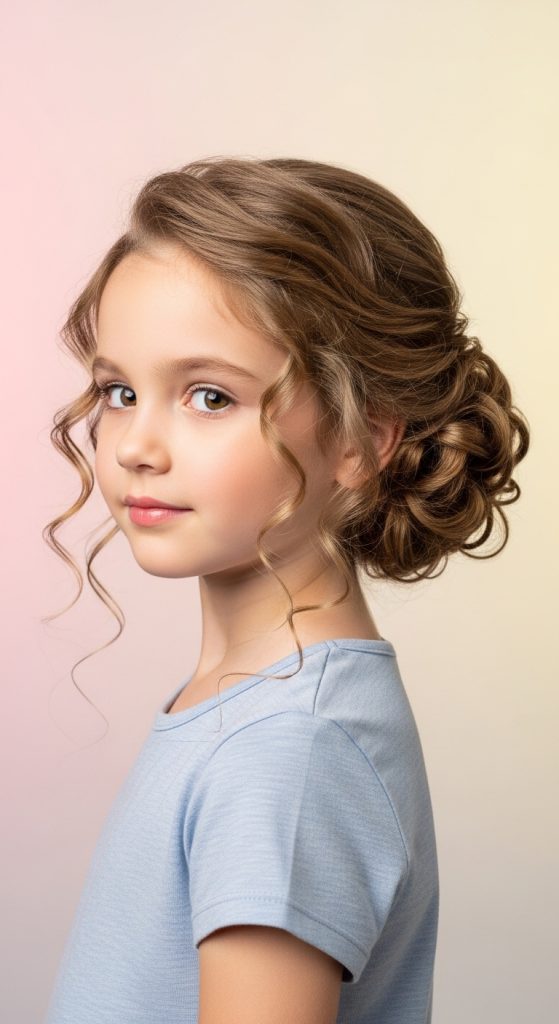
How to implement (practical steps)
Start with moisturized curls for better definition.
Create a soft side part to guide the direction of the bun.
Gather all curls toward one side at the nape or low back.
Twist gently to form a loose bun shape without flattening curls.
Secure with a soft elastic or pins that won’t disrupt curl pattern.
Allow a few curls to naturally fall around the face.
Adjust the bun so it stays soft and slightly textured.
Fluff the curls in the bun gently for volume.
Best for (who should use it)
This works best for medium to long curly hair and is ideal for school events, family gatherings, or casual elegant looks.
Pro tip
Letting natural curls form the tendrils is better than forcing them. Organic shape always looks more polished.
Mistake to avoid
Do not tighten the bun too much. Over-compression destroys curl bounce and makes the style look flat.
10. Defined Twist-Out Bantu Knot Style (Long-Lasting Curl Definition Look)
What it is
This hairstyle is a structured protective style that enhances natural curls by creating small sectioned knots across the head, then either leaving them as styled knots or taking them out later for defined curls (twist-out effect). For kids, it works beautifully because it keeps hair controlled, reduces tangling, and creates long-lasting curl definition.
It is not just a hairstyle—it is also a curl-shaping method.
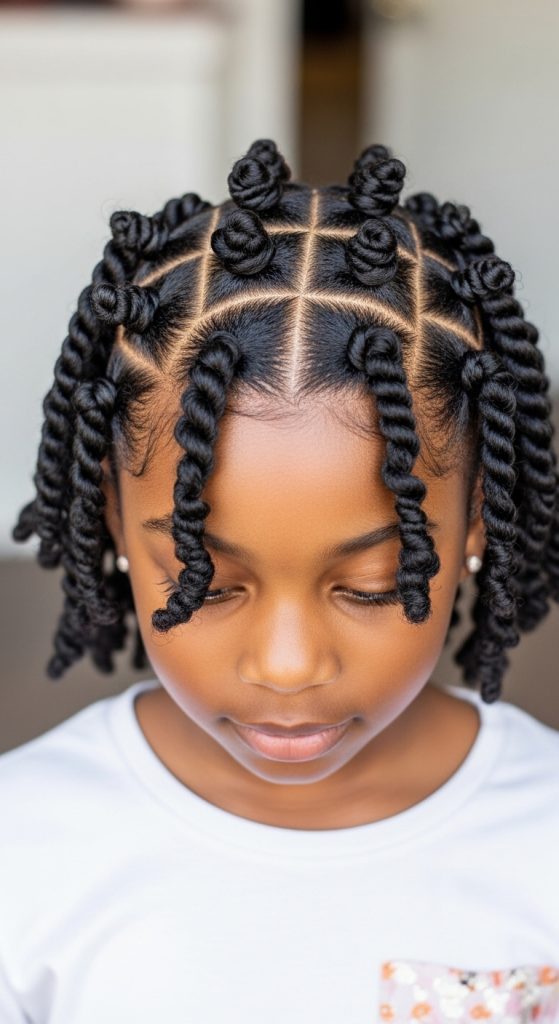
How to implement (practical steps)
Start with freshly washed or lightly damp hair.
Apply a leave-in conditioner or curl cream to keep hair soft and hydrated.
Divide the hair into small, even sections depending on thickness.
Take one section and twist it gently from root to end.
Wrap the twisted section into a small knot close to the scalp.
Secure it with a small soft band or pin.
Repeat the same process across the entire head in a neat pattern.
For a daily hairstyle, leave knots as they are.
For a curl-out look, remove knots after a few hours or overnight and separate curls gently with fingers.
Best for (who should use it)
This works best for tight to medium curls and is ideal for school routines, protective styling, or days when you want long-lasting definition with minimal daily effort.
Pro tip
The smaller and more even the sections, the more defined and uniform the curls will be when taken out.
Mistake to avoid
Do not twist on dry, unmoisturized hair. This causes frizz and breaks curl definition instead of enhancing it.