
A bedroom is never just four walls with a bed inside it. It is the most personal space in your entire home—the place where your day begins, where it ends, and where your mind finally slows down after everything else. In a world that feels constantly busy, overstimulated, and noisy, your bedroom quietly becomes your emotional reset button. And that is exactly why the way it looks and feels has a much deeper impact on your lifestyle than most people realize.
But here is something important: when people hear the phrase “luxury bedroom aesthetic,” they often imagine expensive furniture, designer decor, or perfectly staged hotel suites that feel impossible to recreate at home. This is where most people go wrong. Real luxury in interior design is not about how much you spend—it is about how intentionally your space is designed to support comfort, calmness, and visual harmony.

A cozy luxury bedroom does not feel crowded, rushed, or random. Instead, it feels soft, balanced, and effortlessly put together. When you walk into it, your body naturally relaxes. Your eyes are not overwhelmed by clutter. Your mind feels lighter. That feeling is not created by money—it is created by design choices.
If you have ever looked at Pinterest bedroom inspiration and thought, “Why doesn’t my room feel like that?” you are not alone. The difference usually comes down to small but powerful design principles that most people overlook. Things like lighting temperature, fabric layering, color harmony, furniture placement, and even how empty or full a surface looks can completely change the mood of a room.
For example, two bedrooms can have the exact same furniture—but one feels chaotic while the other feels like a luxury hotel suite. The difference is not the items themselves, but how they are styled, spaced, and combined. That is the real secret behind aesthetic interior design.
In this guide, we will go deep into 11 Cozy Bedroom Aesthetic Ideas for a Luxury Feel, but not in a superficial “list style” way. Instead, you will understand the thinking behind each idea—how it works, why it works, and how you can realistically apply it in your own space without needing a big budget or professional designer.
These ideas are built around real interior design principles used in modern luxury homes and boutique hotels. But they are simplified and adapted for everyday apartments and bedrooms, so you can actually use them in real life. Whether your room is large, small, shared, or limited in natural light, these concepts will help you transform it into a space that feels intentional and deeply comfortable.
You will learn how to create that soft, warm atmosphere that makes you want to stay in bed a little longer in the morning. You will understand how lighting alone can shift your bedroom from “ordinary” to “luxury retreat.” You will discover how layering textures—like bedding, curtains, rugs, and cushions—adds depth and richness without clutter. And you will see how small styling habits can make your space look instantly more expensive and well-designed.
If you have a small bedroom, these ideas become even more powerful. Small spaces require smarter design, not more decoration. When done correctly, a small cozy bedroom often feels more luxurious than a large empty one because everything is closer, softer, and more intentional. The goal is not to fill space—it is to create atmosphere.
Another important concept you will notice throughout these ideas is visual calmness. A luxury-feeling bedroom is never visually noisy. That means no unnecessary clutter, no harsh contrasts, and no random decorative overload. Instead, everything feels connected through a consistent color palette, soft lighting, and balanced spacing.
Think of your bedroom like a “mood environment” rather than just a functional room. Every detail—your bed setup, your lighting, your wall decor, your storage choices—either contributes to that mood or takes away from it. Once you start thinking this way, even small changes can have a huge impact.
In the sections ahead, you will explore practical, realistic, and aesthetic ideas that help you:
- Build a soft, cozy, hotel-inspired bedroom atmosphere
- Make your bed the visual centerpiece of luxury
- Use lighting as a design tool, not just a necessity
- Add warmth and texture without creating clutter
- Achieve a balanced, Pinterest-worthy aesthetic that still feels livable
The focus here is not perfection—it is transformation. Your bedroom does not need to look like a showroom. It needs to feel like a place where you can fully relax, recharge, and feel at ease in your own space.
By the end of these ideas, you will understand that a cozy luxury bedroom is not something you “buy”—it is something you build slowly and intentionally, through smart choices and attention to detail.
Let’s begin shaping that atmosphere step by step.
Idea 1: Layered Bedding for a Hotel-Luxury Feel 🛏️
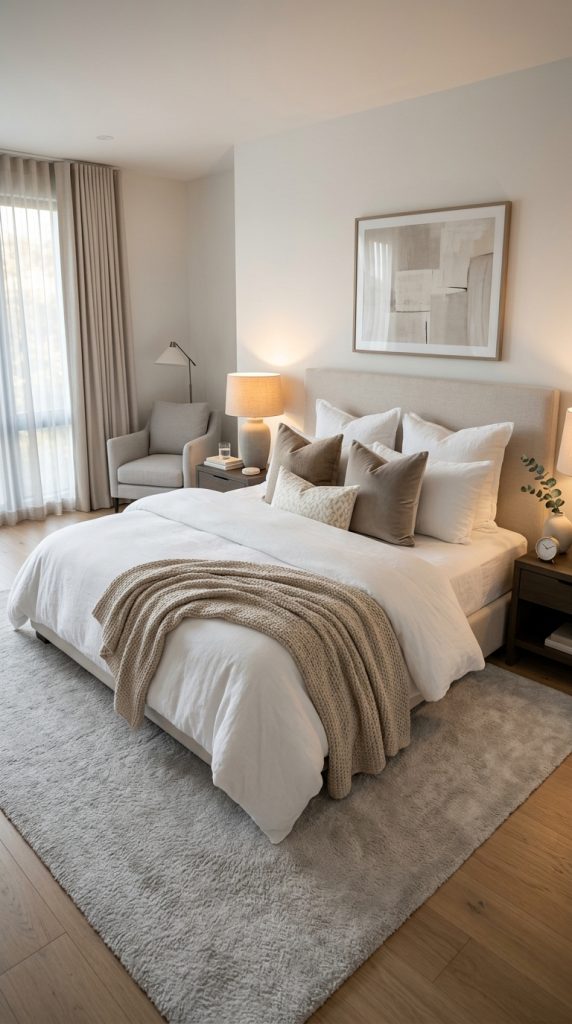
One of the fastest ways to transform a basic bedroom into a cozy luxury aesthetic is through layered bedding. In high-end hotels, the bed is never just a mattress with a simple sheet. It is carefully styled with multiple layers that create depth, softness, and visual richness. This is what makes hotel beds look instantly inviting and expensive—even when the furniture itself is simple.
What it is
Layered bedding means combining different textures and layers on your bed, such as fitted sheets, flat sheets, duvets, quilts, throws, and decorative pillows. The goal is not just comfort, but also creating a visually full and styled bed that becomes the focal point of the room.
How to implement it (practical steps)
Start with a neutral base—white, beige, or soft grey fitted sheets. Then build upward step by step:
- Add a soft flat sheet as your first layer for comfort and structure.
- Place a fluffy duvet or comforter on top for volume and warmth.
- Fold a light quilt or blanket at the foot of the bed to add texture contrast.
- Add 2–4 decorative pillows in different sizes for a styled look.
- Finish with a soft throw blanket casually draped for a relaxed aesthetic.
If you have a small bedroom, this trick is especially powerful because your bed becomes the visual centerpiece, making the entire room feel more styled and intentional.
Best for
- Small bedrooms that need a strong focal point
- People wanting a hotel-style luxury look
- Cozy aesthetic lovers
- Minimal rooms that feel “unfinished”
Pro tip
Stick to a 2–3 color palette (for example: white, beige, and soft brown). This keeps the bed looking calm and expensive instead of messy or overly colorful. Texture matters more than color variety.
Mistake to avoid
Avoid overloading your bed with too many pillows or random colors. Instead of looking luxurious, it starts to look cluttered and loses that calm hotel feel.
Idea 2: Warm Layered Lighting for a Soft, Cozy Atmosphere 💡
Lighting is one of the most powerful elements in bedroom design, yet it is often ignored. Even the most beautifully decorated room can feel cold and flat if the lighting is harsh or poorly planned. Luxury bedrooms always rely on layered, warm lighting to create mood, depth, and softness.
What it is
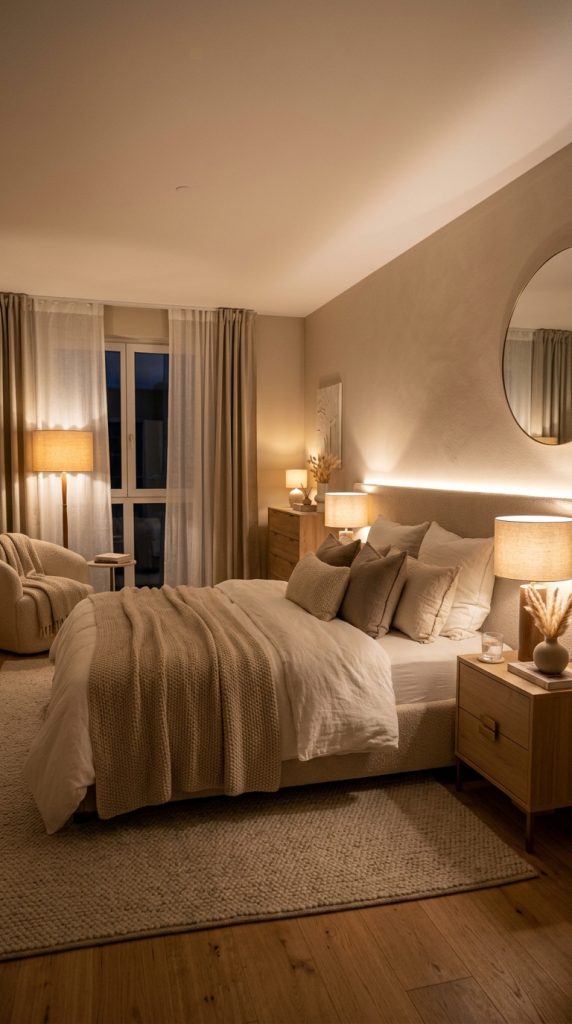
Layered lighting means using multiple light sources at different heights and intensities instead of relying on one bright ceiling light. This includes ambient lighting, task lighting, and accent lighting—all working together to create a cozy and balanced atmosphere.
How to implement it (practical steps)
Start by replacing harsh white ceiling lights with warm-toned lighting:
- Use warm white bulbs (2700K–3000K) instead of bright daylight bulbs.
- Add bedside lamps on nightstands for soft, focused lighting.
- Use floor lamps in corners to remove dark shadows and create depth.
- Install LED strip lights behind the bed headboard for a subtle glow effect.
- Add small fairy lights or table lamps for evening ambiance.
If you have a small bedroom, layered lighting is even more important because it helps the space feel larger, warmer, and more inviting instead of flat and boxy.
Best for
- Bedrooms with harsh overhead lighting
- Small rooms needing depth and warmth
- Cozy aesthetic or Pinterest-style interiors
- Evening relaxation spaces
Pro tip
Always aim for multiple soft light sources instead of one strong light. The more layers you add, the more “luxury hotel” your bedroom will feel.
Mistake to avoid
Avoid using only one bright white light in the center of the room. It flattens the space visually and removes the cozy atmosphere completely.
Idea 3: Neutral Color Palette for a Calm Luxury Aesthetic 🎨
Color plays a huge role in how a bedroom feels emotionally. Luxury and cozy bedrooms almost always follow a neutral, soft color palette because it creates visual calmness and makes the space feel more expensive and balanced.
What it is
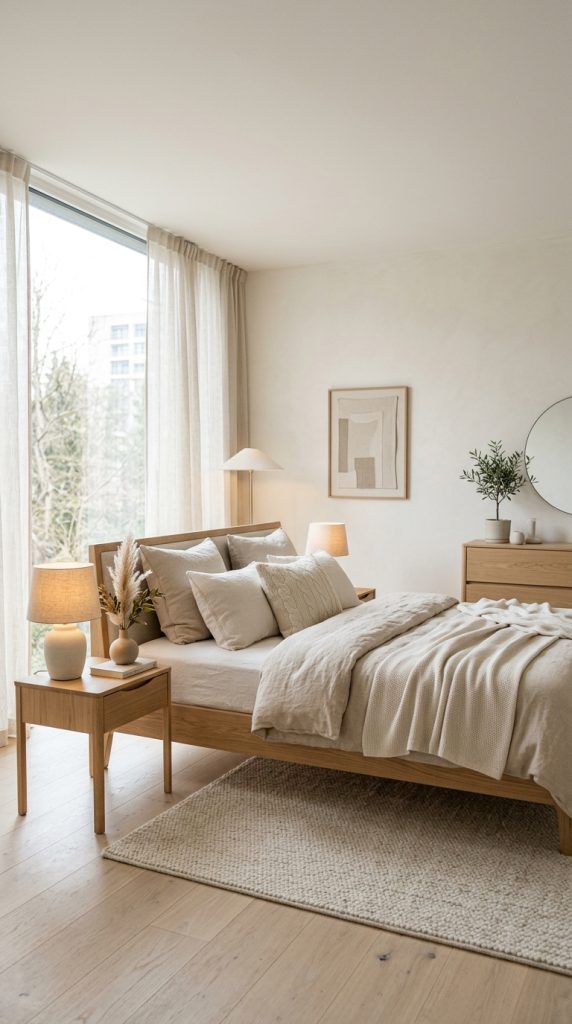
A neutral color palette uses soft, muted tones like white, cream, beige, taupe, soft grey, and warm earth tones. These colors do not compete with each other visually—they blend smoothly, creating a peaceful and cohesive environment.
How to implement it (practical steps)
Start by identifying the dominant colors in your bedroom:
- Choose a main base color (white, cream, or light beige for walls or bedding).
- Add a secondary soft tone like light grey, dusty pink, or warm brown.
- Use a third accent color sparingly (like muted gold, sage green, or black details).
- Keep furniture and textiles in matching warm tones instead of mixing bright colors.
- Replace loud patterns with soft textures like linen, cotton, or wool.
If you have a small bedroom, a neutral palette helps the room feel larger because the eye flows smoothly without visual interruption.
Best for
- Minimalist bedroom styles
- Small apartments or compact rooms
- Cozy, aesthetic, Pinterest-inspired spaces
- People who prefer calm environments
Pro tip
Focus on texture instead of color contrast. For example, combine beige linen bedding, a soft wool throw, and a cotton rug. This keeps the room visually interesting without breaking the calm aesthetic.
Mistake to avoid
Avoid mixing too many bold colors or high-contrast combinations. It disrupts the peaceful luxury feel and makes the room feel visually chaotic instead of relaxing.
Idea 4: Statement Headboard Styling for a Luxury Focal Point 🛏️✨
In luxury bedrooms, the bed is never just a bed—it is the centerpiece of the entire room, and the headboard is what gives it identity. A well-styled headboard instantly makes even a simple bedroom feel expensive, intentional, and designed. Without it, the room often feels unfinished, no matter how nice the furniture is.
What it is
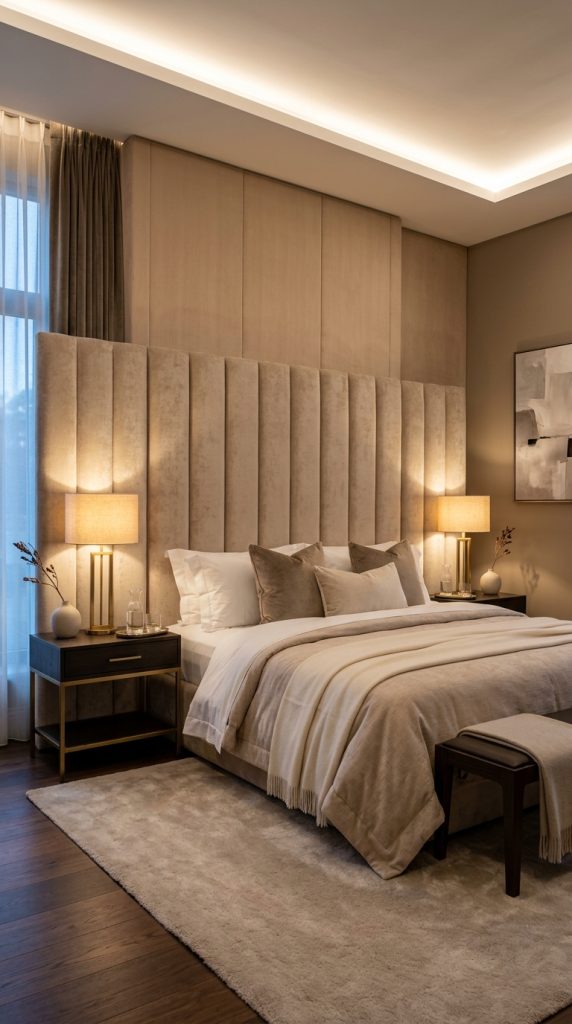
A statement headboard is a visually strong or styled backdrop behind your bed that anchors the room. It can be upholstered, wooden, padded, or even creatively DIY—what matters most is that it creates a clear focal point and adds depth to the sleeping area.
How to implement it (practical steps)
You don’t need a designer bed frame to achieve this look. You can build it in simple, realistic ways:
- Choose an upholstered headboard in neutral tones like beige, cream, or soft grey for a hotel-style look.
- If you are on a budget, create a DIY padded wall panel using foam boards and fabric behind the bed.
- Add wall-mounted art or framed prints above the bed if you don’t have a physical headboard.
- Use wood paneling or textured wallpaper behind the bed for a modern luxury effect.
- Keep the surrounding wall clean so the headboard remains the focal point.
If you have a small bedroom, a well-defined headboard area creates structure and makes the room feel more organized and intentional instead of visually scattered.
Best for
- Bedrooms that feel plain or incomplete
- Small rooms needing a strong focal point
- Hotel-style luxury aesthetic lovers
- Minimalist interiors that need depth
Pro tip
Match your headboard tone with your bedding palette. This creates visual harmony and makes the bed look like one complete, styled unit instead of separate pieces.
Mistake to avoid
Avoid overly busy or colorful headboards in small rooms. They break the calm aesthetic and make the space feel visually heavy instead of luxurious.
Idea 5: Soft Textures Layering for Instant Cozy Luxury 🤍
Luxury is not always about what you see—it is also about what you feel. One of the biggest secrets in high-end bedroom design is texture layering. This is what makes a room feel warm, soft, and inviting instead of flat and lifeless.
What it is
Texture layering means combining different materials in your bedroom to create depth and comfort. Instead of relying on patterns or bold colors, you use fabric variety—like linen, cotton, wool, velvet, and knits—to create visual richness.
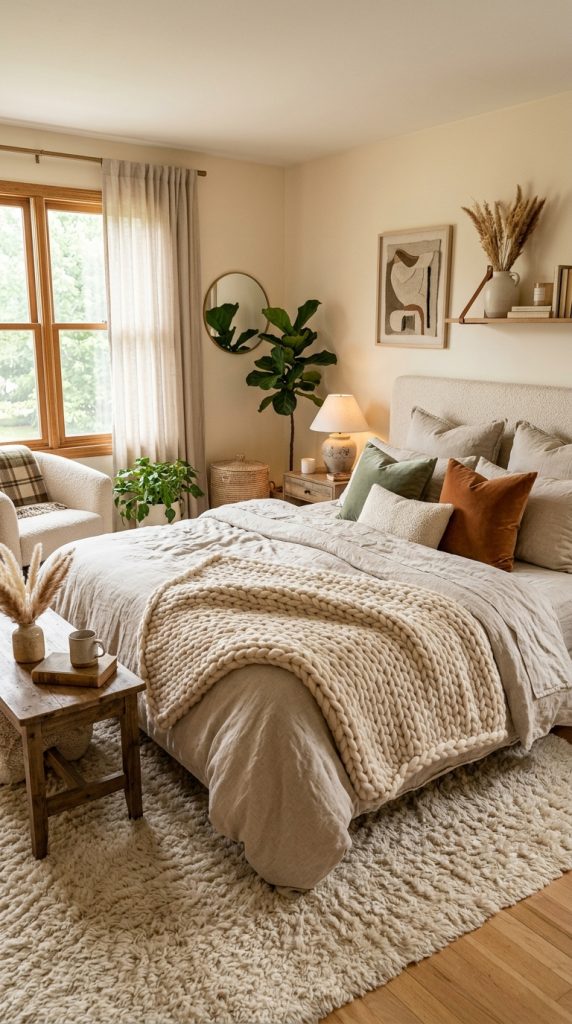
How to implement it (practical steps)
Start by building your bedroom like a “texture story”:
- Use linen or cotton bedding as your base for a soft, breathable feel.
- Add a chunky knit throw blanket at the end of the bed for coziness.
- Include velvet or textured cushions for a luxury touch.
- Place a soft rug (shaggy or woven) beside the bed to warm up the floor.
- Use curtains in thick fabric like linen blend or blackout cotton to frame the room.
If you have a small bedroom, textures are more important than decoration because they add depth without cluttering visual space.
Best for
- Cozy aesthetic bedrooms
- Cold or plain-looking rooms
- Minimalist spaces that feel “too empty”
- Small bedrooms needing warmth
Pro tip
Stick to neutral tones but mix multiple textures. This creates a rich, layered luxury look without overwhelming the eyes with color.
Mistake to avoid
Avoid using only one type of fabric everywhere (for example, all cotton or all silk). It makes the room feel flat and reduces the cozy, dimensional effect.
Idea 6: Nightstand Styling for a Clean, Luxury Hotel Look 🌙
Nightstands are small, but they have a surprisingly big impact on how “finished” and luxurious a bedroom feels. In many low-aesthetic rooms, the nightstand becomes a clutter zone—chargers, random items, water bottles, and scattered objects. Luxury bedrooms do the opposite: they keep nightstands intentional, minimal, and styled.
What it is
Nightstand styling is the art of organizing and decorating your bedside table in a clean, balanced way that feels functional yet aesthetic. It is about removing visual noise while adding a few carefully chosen decorative elements.
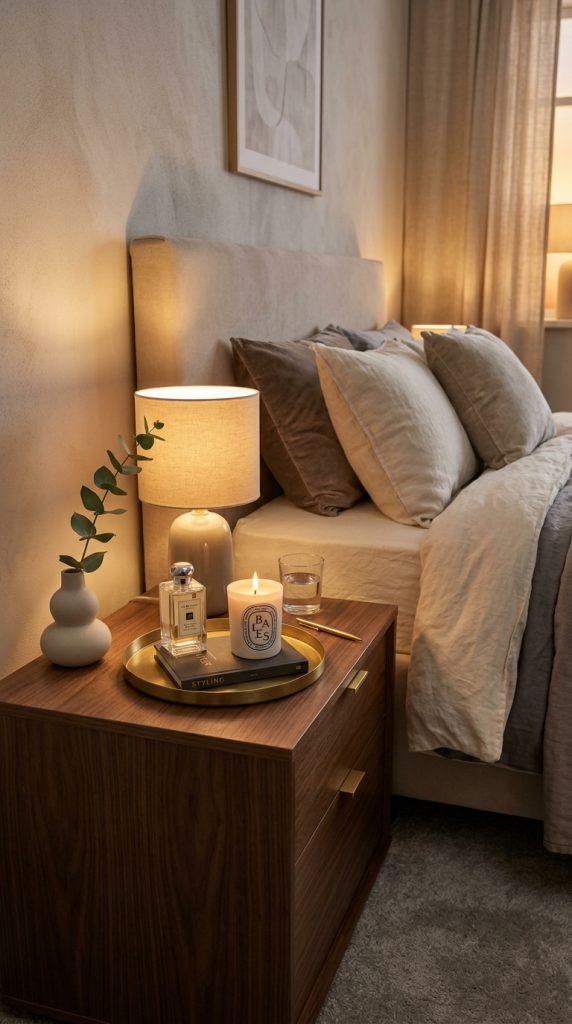
How to implement it (practical steps)
Start by clearing everything off your nightstand completely. Then rebuild it with purpose:
- Keep only 2–4 essential items on the surface.
- Add a small table lamp with warm lighting for ambiance.
- Include a small tray or dish for jewelry, glasses, or essentials.
- Place a mini plant or vase with dried flowers for softness.
- Add one book or magazine stack for a styled touch.
If you have a small bedroom, a clean nightstand reduces visual clutter and instantly makes the entire room feel more expensive and organized.
Best for
- Small bedrooms
- Minimalist aesthetic lovers
- People wanting a hotel-inspired room
- Clutter-prone spaces
Pro tip
Use a “rule of three” approach—lamp, decor item, and functional item. This keeps the styling balanced and visually pleasing without overcrowding.
Mistake to avoid
Avoid over-decorating your nightstand with too many items. It quickly destroys the luxury feel and makes the space look messy instead of intentional.
Idea 7: Ambient Wall Lighting for a Soft Luxury Glow ✨
One of the most underrated secrets in luxury bedroom design is ambient wall lighting. This is the kind of lighting you don’t immediately notice—but you definitely feel it. It removes harsh shadows, softens the entire room, and creates that calm “hotel suite” atmosphere that looks expensive without trying too hard.
What it is
Ambient wall lighting refers to indirect light sources placed on or near walls to create a soft glow instead of direct brightness. Unlike ceiling lights that flood the room, ambient lighting gently spreads light across surfaces, adding depth and warmth.
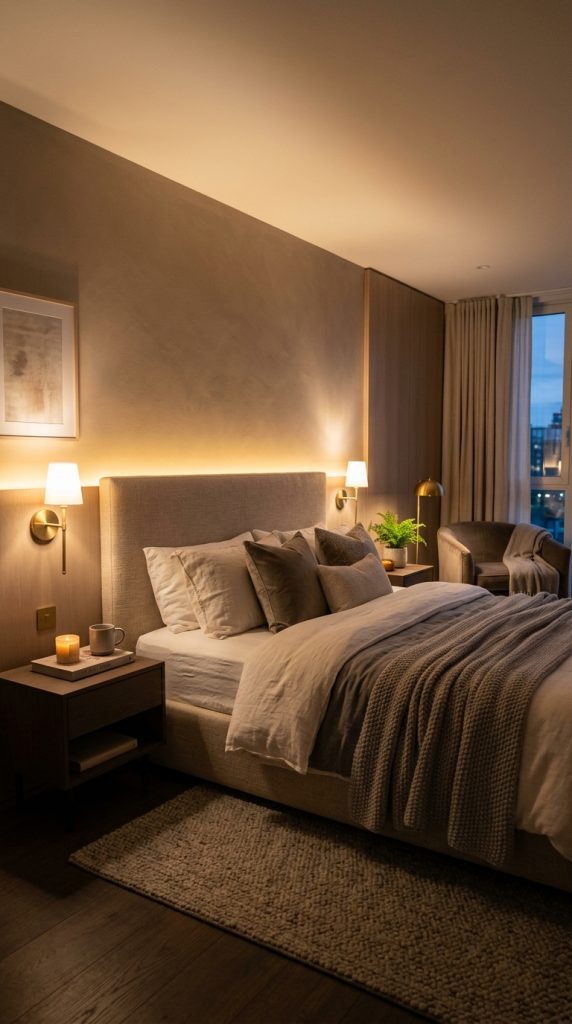
How to implement it (practical steps)
You don’t need a full renovation to achieve this effect. Simple additions can completely change your bedroom mood:
- Install wall sconces on either side of the bed for a symmetrical luxury look.
- Use LED strip lights behind the headboard to create a floating glow effect.
- Place hidden lighting behind curtains or mirrors to soften harsh edges.
- Add warm-toned fairy lights along a wall or shelf for a cozy aesthetic.
- Use dimmable bulbs so you can control brightness depending on mood.
If you have a small bedroom, ambient lighting is especially powerful because it visually expands the space by eliminating sharp shadows and making walls feel softer and farther away.
Best for
- Cozy luxury bedroom aesthetics
- Small or dark rooms
- Pinterest-inspired interiors
- Evening relaxation environments
Pro tip
Always layer ambient lighting with other light sources. A mix of ceiling, bedside, and wall lighting creates a dimensional glow that feels like a high-end boutique hotel.
Mistake to avoid
Avoid using only bright overhead lighting. It flattens the room and removes the soft, dreamy atmosphere that defines luxury interiors.
Idea 8: Minimal Clutter-Free Surfaces for Visual Calm 🧼
Luxury bedrooms always feel calm—not because they are empty, but because they are visually controlled. One of the biggest reasons a room feels cheap or messy is cluttered surfaces. Even a beautifully decorated bedroom loses its charm if every table, shelf, or corner is overloaded.
What it is
This idea focuses on keeping surfaces like nightstands, dressers, and desks clean, intentional, and minimal so that the room feels open, balanced, and stress-free.
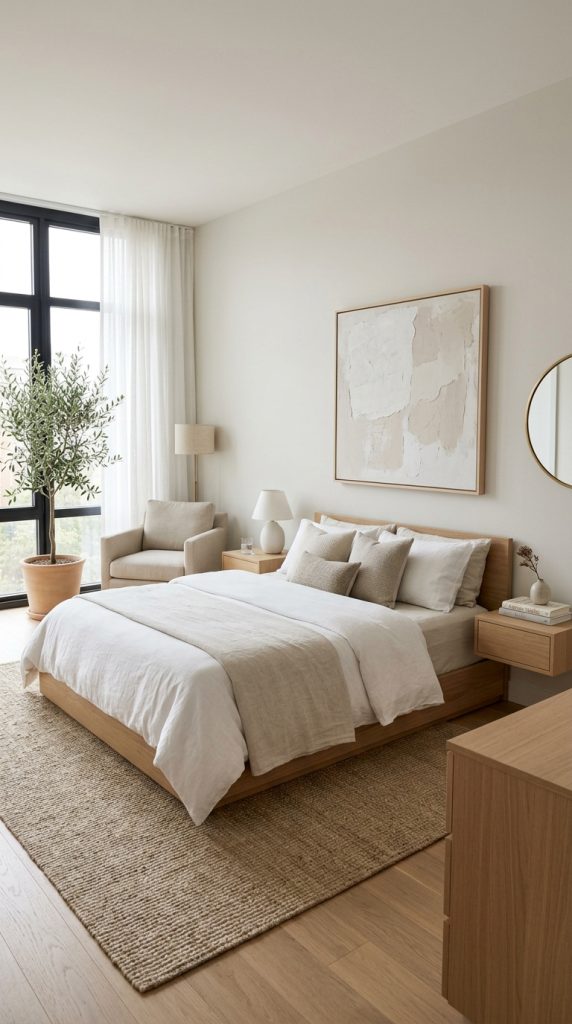
How to implement it (practical steps)
Start by identifying every flat surface in your bedroom:
- Clear everything off your nightstand, dresser, and desk.
- Keep only essential or aesthetic items (2–3 max per surface).
- Use storage trays or small organizers to group tiny items neatly.
- Hide daily clutter like chargers and cosmetics in drawers or boxes.
- Choose decor pieces that are functional + aesthetic, like lamps or candles.
If you have a small bedroom, clutter control is even more important because every visible object impacts how spacious the room feels.
Best for
- Small bedrooms
- Minimalist lifestyle lovers
- People struggling with visual clutter
- Calm, aesthetic interiors
Pro tip
Think of each surface as a “mini display.” Instead of filling it, style it intentionally like a hotel room or luxury showroom.
Mistake to avoid
Avoid the habit of “temporary placing.” Items placed without intention always turn into long-term clutter and break the luxury aesthetic.
Idea 9: Elegant Curtain Styling to Frame the Room 🌙
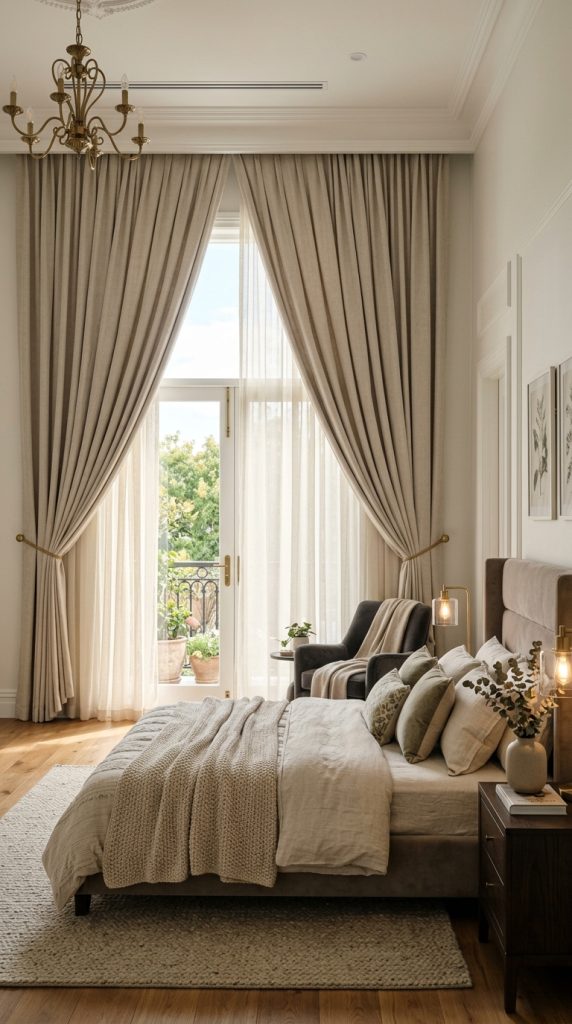
Curtains are often treated as a basic necessity, but in luxury bedroom design, they are a major aesthetic element. The right curtains can make your room feel taller, softer, and more elegant instantly.
What it is
Curtain styling involves choosing and placing curtains in a way that enhances height, light control, and overall room aesthetics. It’s about framing windows like a design feature, not just covering them.
How to implement it (practical steps)
Start by upgrading both placement and fabric choice:
- Hang curtains closer to the ceiling, not just above the window frame, to create height illusion.
- Choose floor-length curtains that lightly touch or “puddle” on the floor for a luxury feel.
- Use light-filtering fabrics like linen or sheer layers for softness.
- Stick to neutral tones (white, beige, soft grey) for a calm aesthetic.
- Layer sheer + blackout curtains for both function and elegance.
If you have a small bedroom, this trick makes your walls look taller and your windows more dramatic, which immediately improves perceived space.
Best for
- Small bedrooms needing height illusion
- Luxury and hotel-style aesthetics
- Rooms with natural light
- Cozy, soft interior designs
Pro tip
Extend curtain rods slightly beyond the window frame. This makes windows look wider and allows more light to enter when curtains are open.
Mistake to avoid
Avoid short curtains that stop above the floor—they visually cut the wall and make the room feel smaller and less refined.
Idea 10: Cozy Reading Corner or Bedroom Nook for a Luxury Lifestyle 📚✨
A luxury bedroom is not just about how it looks—it’s also about how it feels to live in. One of the most effective ways to elevate both comfort and aesthetics is by creating a dedicated cozy corner inside your bedroom. This small addition instantly makes your space feel more thoughtful, functional, and high-end.
What it is
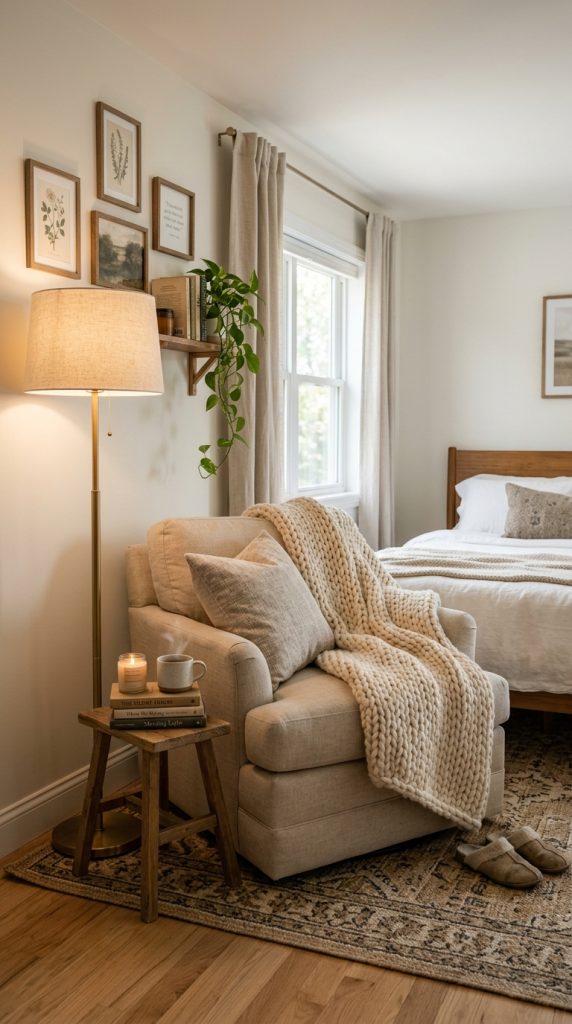
A cozy reading corner (or bedroom nook) is a small, styled area inside your room designed specifically for relaxation. It can be used for reading, journaling, scrolling quietly, or simply unwinding with soft lighting. Think of it as a “mini retreat” inside your bedroom.
How to implement it (practical steps)
You don’t need a large room to create this—just one unused corner is enough:
- Place a comfortable accent chair, bean bag, or floor cushion in a quiet corner.
- Add a small side table for books, tea, or decor items.
- Use a soft floor rug to define the space visually.
- Install a warm floor lamp or table lamp for cozy lighting.
- Add soft textures like a throw blanket and cushion for comfort.
- Optionally include a small shelf or basket for books and magazines.
If you have a small bedroom, this corner becomes a visual luxury feature that breaks monotony and makes your space feel more curated and intentional.
Best for
- Small bedrooms needing extra function
- Cozy aesthetic lovers
- Readers, students, or work-from-home users
- Anyone wanting a “Pinterest-style” bedroom vibe
Pro tip
Keep the color palette consistent with your bedroom. A matching nook feels like a natural extension of the room instead of a separate cluttered corner.
Mistake to avoid
Avoid overcrowding the nook with too many decorative items. It should feel open, calm, and breathable—not like a storage zone.
Idea 11: Personal Styling Touches That Make the Bedroom Feel Truly Yours 🌸💖
Even the most beautifully designed bedroom can feel empty if it lacks personality. Luxury is not just about aesthetics—it is also about emotional connection. The final step in creating a cozy luxury bedroom is adding personal styling elements that reflect who you are, while still keeping the space elegant and balanced.
What it is
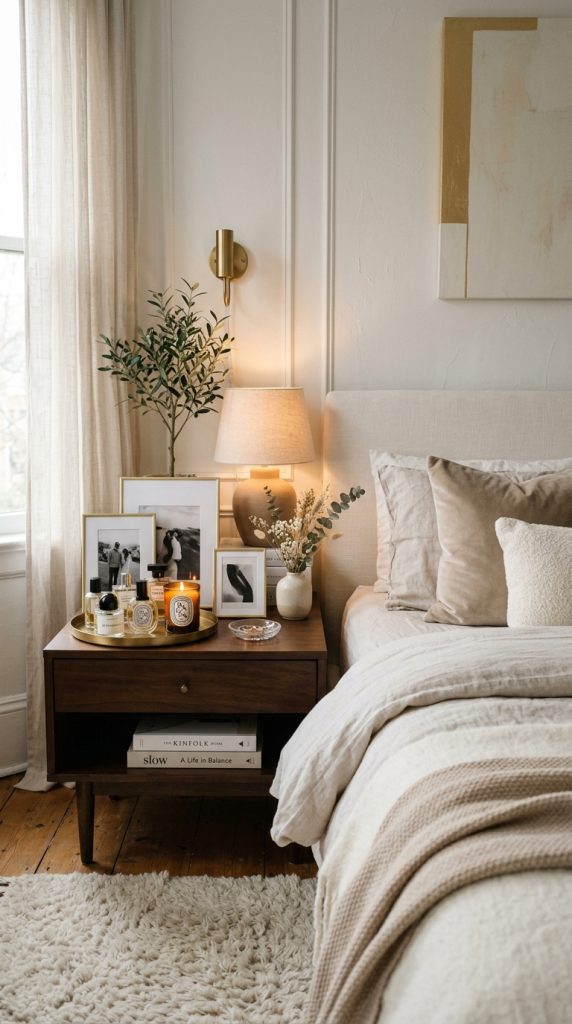
Personal styling refers to carefully chosen decor items that reflect your personality, memories, or lifestyle—without breaking the clean, aesthetic look of the room. This is what turns a “nice room” into your room.
How to implement it (practical steps)
Start by selecting meaningful but minimal items:
- Display framed photos in neutral or monochrome frames instead of cluttered picture walls.
- Add a small tray with meaningful items like candles, perfumes, or jewelry.
- Use books you actually love as decor pieces on shelves or nightstands.
- Include one or two statement decor items (like a vase, sculpture, or art piece).
- Add soft personal touches like a favorite blanket or sentimental gift item.
If you have a small bedroom, the key is moderation. Personal items should enhance the space—not overwhelm it.
Best for
- Anyone wanting a personalized bedroom aesthetic
- Cozy luxury style lovers
- Minimalist yet emotional interior design
- Small bedrooms needing identity
Pro tip
Curate instead of collect. Choose a few meaningful items and style them intentionally rather than displaying everything you own.
Mistake to avoid
Avoid turning your bedroom into a memory dump or display shelf. Too many personal items create visual clutter and reduce the calm luxury feeling.
Final Note (Bringing It All Together)
When you combine all 11 ideas—from layered bedding and warm lighting to textures, curtains, and personal styling—you are not just decorating a bedroom anymore. You are designing a lifestyle space that supports rest, comfort, and emotional balance.
A cozy luxury bedroom is never about perfection. It is about intention, softness, and visual calmness. Even small changes—like better lighting, cleaner surfaces, or improved bedding—can completely transform how your space feels every day.
If your bedroom currently feels ordinary, cluttered, or unfinished, these ideas show you exactly how to shift it into something that feels warm, aesthetic, and deeply comforting—without needing a big budget or professional designer.
Because in the end, true luxury is not loud. It is quiet, soft, and felt the moment you walk into the room.