
A small living room can feel like a challenge at first, especially when you want it to look stylish, modern, and “expensive” without having a big budget or a large space to work with. Many people assume that luxury interiors are only possible in big houses with high ceilings and designer furniture, but that is not true at all. In fact, some of the most beautiful and expensive-looking living rooms are actually small spaces that are designed smartly, not expensively.
The real secret behind an “expensive-looking” living room is not the size of the room—it is how well the space is planned, styled, and balanced. When you walk into a luxury apartment or a high-end hotel lounge, what you immediately notice is not clutter or randomness. Instead, you see clean lines, intentional furniture placement, soft lighting, and a calm visual flow. Everything feels purposeful, even if the space itself is not very large.
In small living rooms, every detail becomes more visible. This means your furniture arrangement, color choices, lighting, and even the smallest decor items have a big impact on the overall look. If even one element feels off, the entire room can feel cramped or messy. But when everything is done right, even the smallest living room can look like it belongs in a luxury interior design magazine.
This is where smart design thinking comes in. Instead of trying to “fill” the space, the goal is to elevate it visually. Luxury design is not about adding more things—it is about choosing fewer, better things and arranging them in a way that feels open, elegant, and balanced.
For example, a small living room can instantly look more expensive simply by adjusting the lighting. Warm, layered lighting creates depth and softness that makes the space feel cozy yet refined. Similarly, choosing a neutral color palette can make the room feel larger and more cohesive, while clutter-free surfaces give the impression of a well-designed, high-end space.
Another important concept is proportion. In small living rooms, oversized furniture or too many decorative items can easily overwhelm the space. On the other hand, carefully chosen pieces that match the scale of the room can make everything feel more spacious and intentional. This is why luxury interiors often feel “simple” at first glance—they are actually highly curated.
Texture also plays a huge role in creating an expensive look. Soft fabrics, layered textiles, natural materials, and subtle contrasts can make even a simple sofa or coffee table look high-end. You do not need designer furniture; you need smart combinations that create visual richness without clutter.
If your living room feels small, cramped, or plain, it does not mean it cannot look luxurious. It simply means it needs the right design approach. Small spaces actually have an advantage—they force you to be more intentional, more minimal, and more creative with your choices. And when done correctly, they often end up looking more polished than larger, unfocused rooms.
In this guide, we will explore 11 Small Living Room Ideas That Look Expensive, focusing on practical, realistic, and visually impactful strategies that you can apply in any home. These ideas are not about expensive renovations or luxury furniture shopping. Instead, they are about understanding how interior design principles work and using them to your advantage.
You will learn how to:
- Make a small living room feel bigger and brighter
- Use lighting to create a luxury hotel-like atmosphere
- Choose furniture that looks elegant without overcrowding the space
- Style your room in a way that feels intentional and curated
- Add small details that elevate the entire aesthetic
Each idea is designed to help you shift your living room from “basic and functional” to “modern, stylish, and expensive-looking,” even if you are working with a tight budget or limited space.
Because at the end of the day, an expensive-looking living room is not about how much you spend—it is about how well you understand your space and how intentionally you design it.
Idea 1: Neutral Color Palette That Instantly Looks High-End 🎨✨
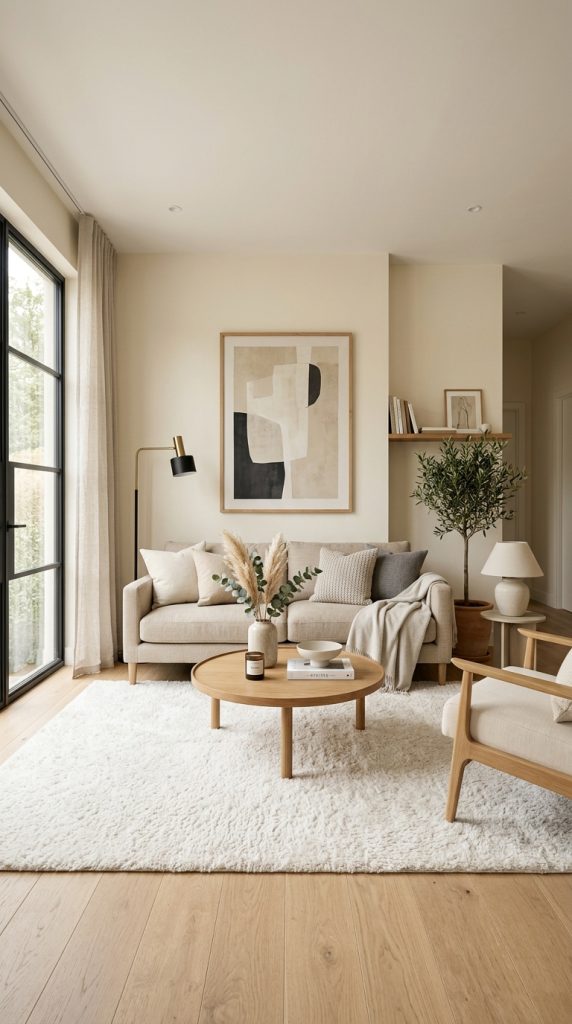
One of the strongest visual signals of an expensive living room is a carefully controlled color palette. In small spaces especially, color can either elevate the room or completely overwhelm it. Luxury interiors almost always rely on neutrals because they create calmness, cohesion, and visual space—three things that immediately make a room feel more expensive.
What it is
A neutral color palette uses soft, muted tones like white, ivory, beige, taupe, warm grey, and soft brown. Instead of loud contrasts or random colors, everything flows together smoothly, creating a clean and intentional look. This is the foundation of most high-end hotel lounges and designer apartments.
How to implement it (practical steps)
Start by simplifying your room visually:
- Choose a base color for walls such as white, cream, or light beige to open up the space.
- Select furniture in soft, matching tones instead of mixing too many colors.
- Add a secondary accent tone like warm grey or soft brown for depth.
- Use decor items (cushions, rugs, curtains) in subtle variations of the same palette.
- Avoid overly bright or saturated colors that break visual harmony.
If you have a small living room, this approach makes it feel significantly larger because the eye moves smoothly without interruption.
Best for
- Small apartments and compact living rooms
- Minimalist and modern aesthetic lovers
- People who want a luxury hotel-style look
- Spaces that feel visually cluttered or chaotic
Pro tip
Instead of using bold colors, play with texture differences inside the same color family. For example, combine beige linen cushions, a wool rug, and a matte coffee table. This creates richness without visual noise.
Mistake to avoid
Avoid mixing too many unrelated colors. Even if each item looks beautiful individually, together they can make the room feel disjointed and less expensive.
Idea 2: Smart Furniture Scaling for a Balanced Luxury Look 🛋️
In small living rooms, furniture size is just as important as furniture style. One of the biggest reasons a room feels cramped or “cheap” is because the furniture is either too large or poorly proportioned. Luxury spaces always follow one rule: everything should fit the room, not fight it.
What it is
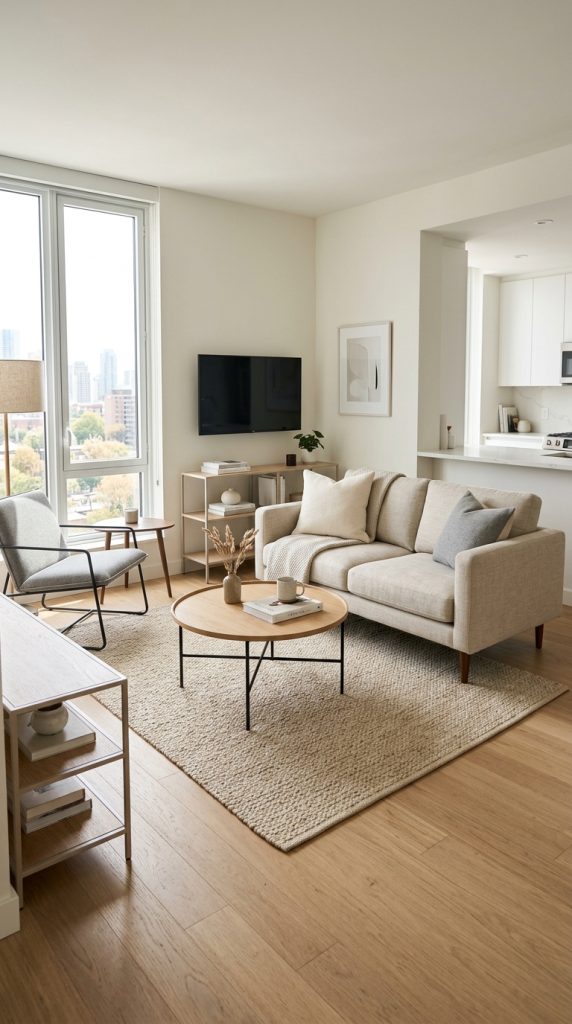
Smart furniture scaling means choosing pieces that match the size of your living room while maintaining comfort and visual balance. Instead of bulky sofas or oversized tables, you focus on slim, well-proportioned, and multi-functional furniture.
How to implement it (practical steps)
Start by evaluating your current furniture:
- Replace oversized sofas with a compact 2-seater or L-shaped slim sofa.
- Choose a glass or lightweight coffee table instead of heavy wooden ones to reduce visual weight.
- Use open-leg furniture designs (sofas and chairs with visible legs) to create a sense of space underneath.
- Avoid filling the room with too many chairs—stick to essential seating only.
- Keep furniture slightly spaced apart instead of pushing everything tightly together.
If you have a small living room, even a few centimeters of visual breathing space between furniture pieces can make the room feel significantly more expensive.
Best for
- Small and narrow living rooms
- Apartments with limited square footage
- Minimal and modern interior styles
- People upgrading from bulky old furniture
Pro tip
Always leave visible floor space. Luxury interiors never feel “fully packed.” That negative space is what creates elegance and openness.
Mistake to avoid
Avoid choosing furniture just because it looks stylish in large showroom setups. Many pieces that look great in big rooms can overwhelm small spaces completely.
Idea 3: Layered Lighting to Create Depth and Warm Luxury 💡🌙
Lighting is one of the most powerful design tools in any living room, especially small ones. You can have simple furniture and still make the space look expensive if your lighting is done correctly. On the other hand, even expensive furniture can look flat and cheap under poor lighting.
What it is
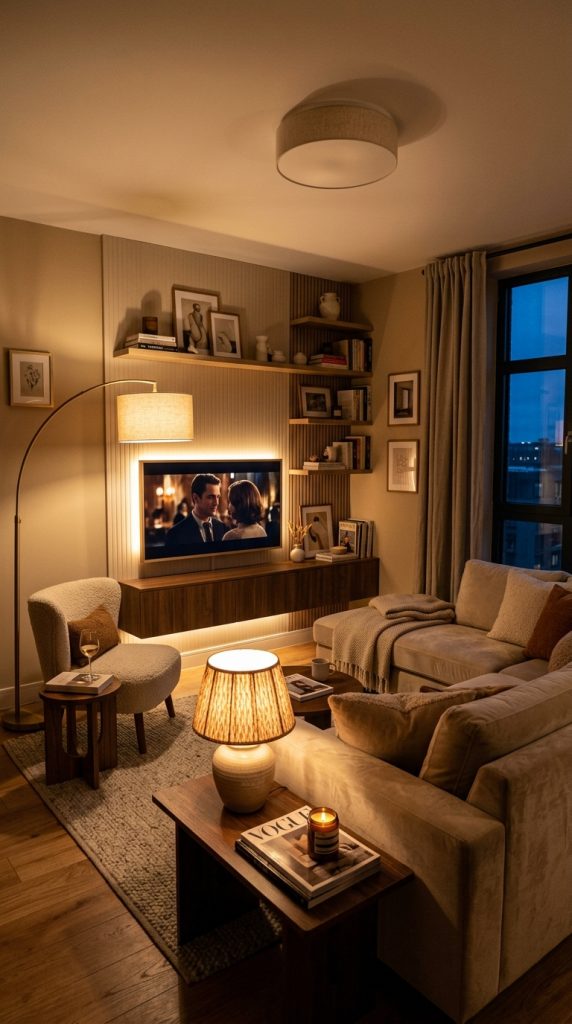
Layered lighting means using multiple light sources at different levels instead of relying on a single ceiling light. This includes ambient lighting, task lighting, and accent lighting working together to create depth, mood, and softness.
How to implement it (practical steps)
Start by replacing harsh single-source lighting:
- Use warm white bulbs (2700K–3000K) instead of bright white lights.
- Add a floor lamp in a corner to soften shadows and add height.
- Place a table lamp on a side table or console for cozy glow zones.
- Use LED strip lighting behind shelves or TV units for subtle depth.
- If possible, install dimmable lighting to adjust mood throughout the day.
If you have a small living room, layered lighting creates the illusion of depth, making the space feel larger and more dynamic instead of flat.
Best for
- Small living rooms with limited natural light
- Cozy, luxury, and modern aesthetics
- Evening relaxation spaces
- Apartments that feel visually flat or dull
Pro tip
Combine warm lighting with reflective surfaces like mirrors or glass decor. This multiplies light and enhances the “expensive” glow effect.
Mistake to avoid
Avoid using only one bright overhead light. It flattens the entire room and removes the cozy, layered atmosphere that defines luxury interiors.
Idea 4: Statement Coffee Table Styling for a Designer Look ☕✨
In a small living room, every surface matters—and the coffee table is often the visual center of the space. In expensive-looking interiors, this one piece is never random. It is styled with intention, balance, and restraint. A well-styled coffee table can make your entire living room feel like it belongs in a luxury apartment even if everything else is simple.
What it is
Statement coffee table styling is the art of turning a basic table into a curated design moment. Instead of cluttering it with random objects, you arrange a few intentional decor pieces that create balance, texture, and visual interest.
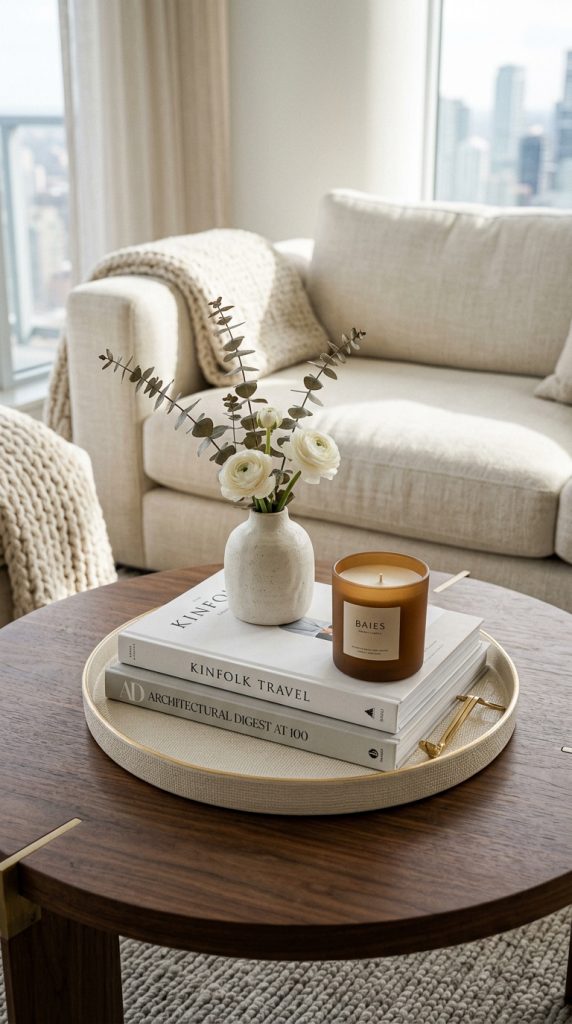
How to implement it (practical steps)
Start by completely clearing your coffee table. Then rebuild it with purpose:
- Place a stack of 2–3 aesthetic books (neutral covers work best).
- Add a decor tray to group smaller items and keep things organized.
- Include a scented candle or small sculpture as a focal point.
- Add a small plant or fresh flowers for natural softness.
- Leave some empty space intentionally so the table doesn’t feel crowded.
If you have a small living room, this technique is powerful because it adds luxury detail without adding bulk or clutter.
Best for
- Small living rooms needing a focal point
- Minimalist and modern interiors
- People who want a Pinterest-style aesthetic
- Spaces that feel plain or unfinished
Pro tip
Follow the “rule of balance”—mix one tall item, one medium item, and one small item. This creates a visually pleasing composition without overthinking it.
Mistake to avoid
Avoid overloading the coffee table with too many decorative pieces. It quickly shifts from “luxury styling” to clutter, which makes the room feel smaller and less refined.
Idea 5: Vertical Design Tricks to Make the Room Feel Taller 🏢✨
One of the easiest ways to make a small living room look expensive is by creating the illusion of height. Luxury interiors often feel spacious not because they are large, but because they draw the eye upward using smart vertical design techniques.
What it is
Vertical design is the use of height-focused elements—like tall curtains, vertical shelves, and upward lighting—to make the ceiling appear higher and the room feel more open and elegant.
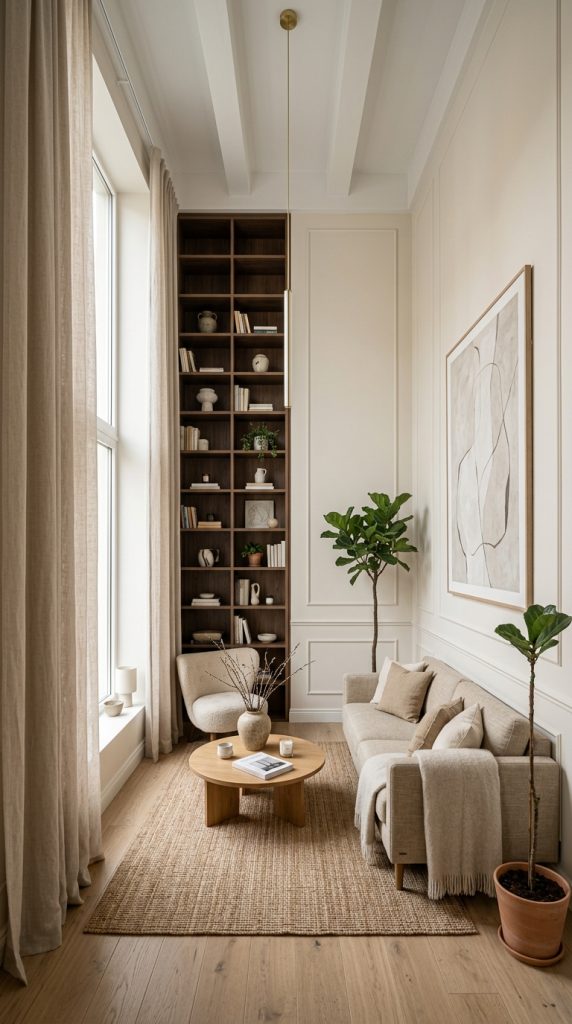
How to implement it (practical steps)
Start by shifting your design focus upward:
- Hang curtains close to the ceiling, not just above the window frame.
- Use long, floor-touching curtains in soft neutral fabrics.
- Add tall bookshelves or vertical storage units instead of wide, bulky ones.
- Use vertical wall art or framed prints arranged in stacked layouts.
- Place tall floor lamps or plants in corners to draw the eye upward.
If you have a small living room, these tricks immediately reduce the “boxy” feeling and make the space feel taller and more luxurious.
Best for
- Rooms with low ceilings
- Small apartments
- Modern minimalist interiors
- Spaces that feel cramped or closed in
Pro tip
Always extend visual lines vertically. Even something as simple as tall curtains or a vertical mirror can completely change the perceived proportions of your room.
Mistake to avoid
Avoid cutting visual height with short curtains or low-hanging wall decor. These elements make the ceiling feel lower and the room feel smaller.
Idea 6: Hidden Storage Solutions for a Clean Luxury Space 📦🛋️
Nothing destroys a luxury aesthetic faster than visible clutter. Even a beautifully designed room can feel cheap if storage is messy or exposed. In small living rooms, smart storage is not optional—it is essential for maintaining a clean, high-end look.
What it is
Hidden storage refers to furniture and design choices that allow you to store items out of sight while keeping the room visually clean and minimal. It removes clutter from view, which instantly elevates the space.
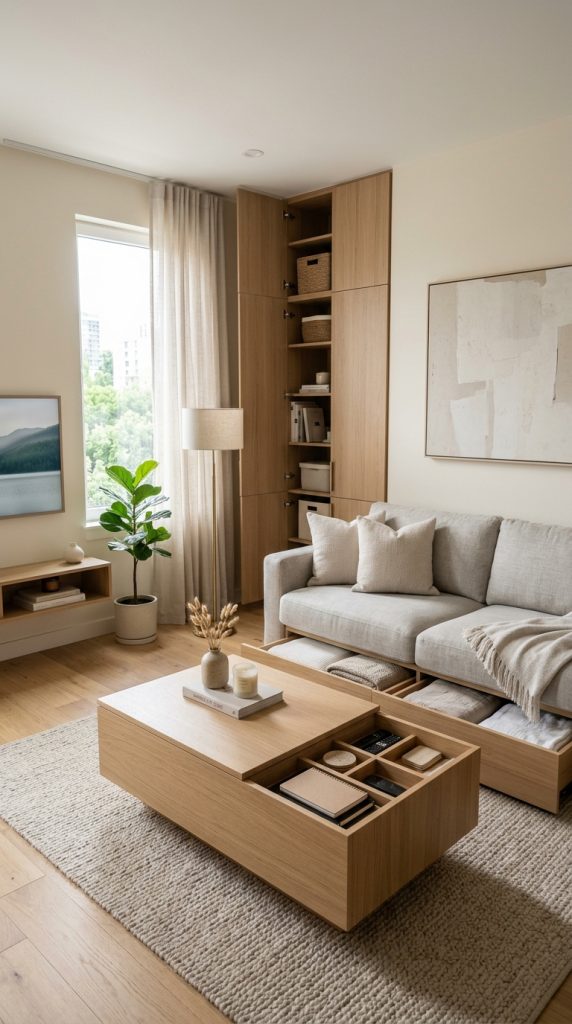
How to implement it (practical steps)
Start by identifying clutter hotspots in your living room (remotes, blankets, cables, magazines):
- Use a coffee table with built-in storage for remotes and small items.
- Choose a sofa with hidden compartments or storage underneath.
- Add decorative baskets inside shelves or corners for quick organization.
- Use wall-mounted cabinets instead of open shelving for a cleaner look.
- Hide cables using cord organizers or cable management boxes.
If you have a small living room, hidden storage is one of the fastest ways to make it feel more expensive because visual clutter disappears completely.
Best for
- Small apartments
- Minimalist living rooms
- Families or shared spaces
- Anyone struggling with visible clutter
Pro tip
Keep “daily use items” accessible but invisible. Luxury spaces are not empty—they are just extremely well organized behind the scenes.
Mistake to avoid
Avoid using open storage as a dumping space. If open shelves are messy, they do the opposite of luxury—they highlight chaos instead of design.
Idea 7: Mirrors for Instant Space Expansion and Luxury Reflection 🪞✨
Mirrors are one of the most powerful design tools for small living rooms because they don’t just decorate a space—they completely change how it is perceived. In luxury interiors, mirrors are used strategically to double light, add depth, and create visual openness without changing the actual size of the room.
What it is
Mirror design in interiors refers to the intentional placement of reflective surfaces to enhance brightness and create the illusion of a larger, more open living room. When used correctly, mirrors make small spaces feel airy, expensive, and well-designed.
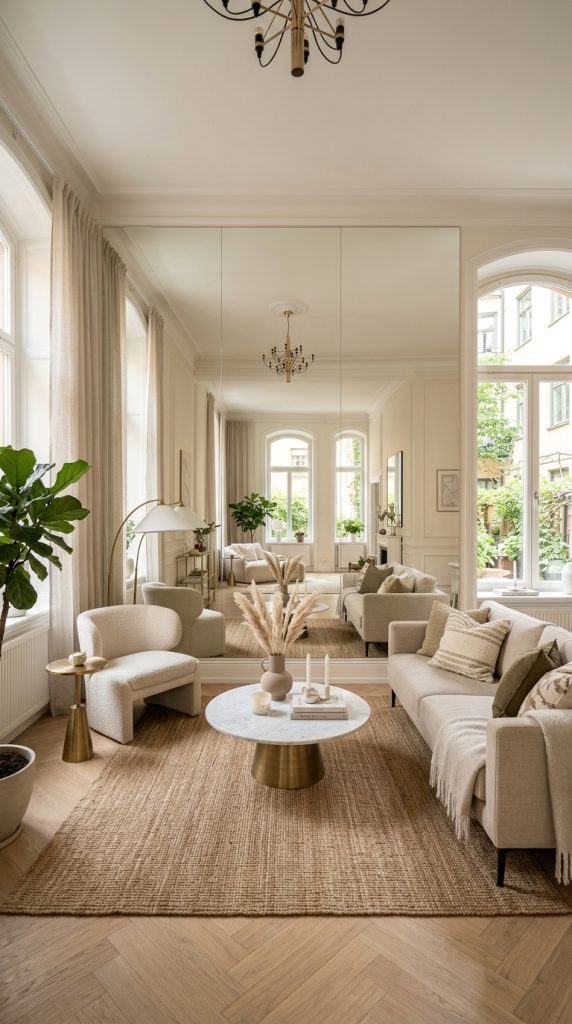
How to implement it (practical steps)
Start by identifying the darkest or most visually closed areas in your living room:
- Place a large mirror opposite or near a window to reflect natural light.
- Use a floor-length mirror behind or beside the sofa to expand visual depth.
- Add mirror panels or framed mirrors as wall art instead of heavy decor.
- Choose round or oversized mirrors for a softer, luxury aesthetic.
- Position mirrors so they reflect something beautiful (plants, lighting, or open space).
If you have a small living room, mirrors create a “second dimension” effect that makes the space feel twice as large visually.
Best for
- Small or narrow living rooms
- Dark apartments with limited sunlight
- Modern and luxury aesthetic interiors
- Spaces needing visual expansion
Pro tip
Always check what your mirror reflects. In luxury design, mirrors are used to reflect light and beauty—not clutter or messy corners.
Mistake to avoid
Avoid placing too many small mirrors randomly. Instead of looking elegant, it can create visual confusion and reduce the luxury effect.
Idea 8: Minimal Decor Strategy for an Expensive, Clean Look 🧼✨
Luxury living rooms are never overloaded. They feel calm because every object has a purpose and nothing is unnecessary. In small spaces especially, less is not just more—it is essential for creating an expensive aesthetic.
What it is
Minimal decor strategy means using fewer but more intentional decorative items to maintain a clean, balanced, and visually calm environment. Instead of filling every corner, you carefully select pieces that enhance the space.
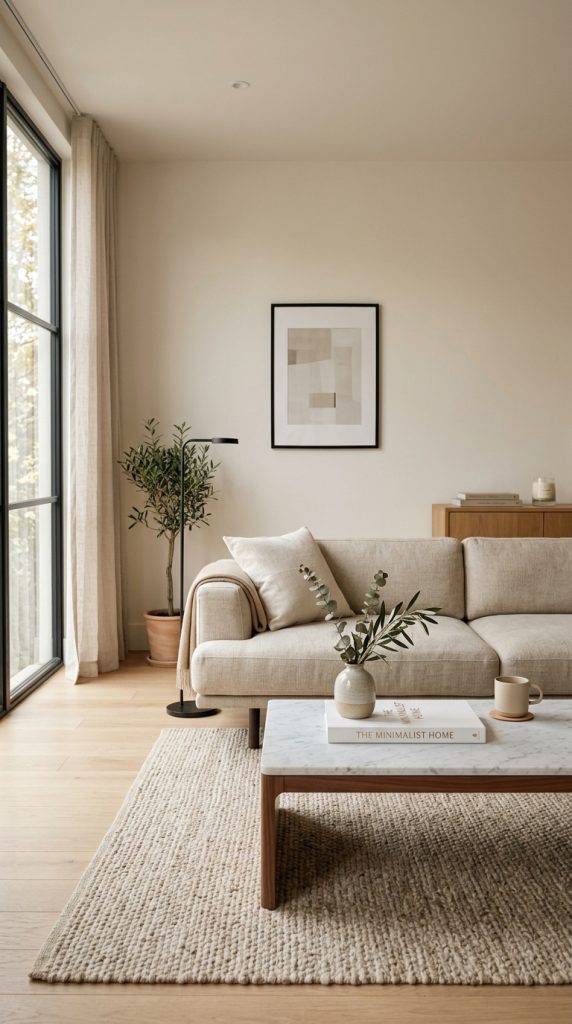
How to implement it (practical steps)
Start by editing your current decor:
- Remove duplicate or unnecessary decorative items.
- Keep only 2–3 decor pieces per surface or shelf.
- Choose neutral-toned decor items that match your overall palette.
- Focus on statement pieces instead of small scattered items.
- Leave intentional empty space to allow the room to “breathe.”
If you have a small living room, minimal decor instantly makes it feel more expensive because the eye is not overwhelmed.
Best for
- Small apartments and compact living rooms
- Minimalist lifestyle lovers
- People struggling with cluttered decor
- Modern luxury interiors
Pro tip
Think of your room like a curated gallery, not a storage space. Every item should feel like it belongs there intentionally.
Mistake to avoid
Avoid the temptation to fill empty spaces just because they exist. In luxury design, empty space is part of the aesthetic.
Idea 9: Layered Rugs for Depth and Designer Styling 🧶✨
Rugs are often underestimated, but in luxury interiors, they play a huge role in defining space and adding warmth. In small living rooms, rugs are not just floor coverings—they are design anchors that create zones, texture, and depth.
What it is
Layered rug styling means using one or more rugs in a coordinated way to define areas, add softness, and create a more expensive, styled look. It is a common technique in high-end interior design.
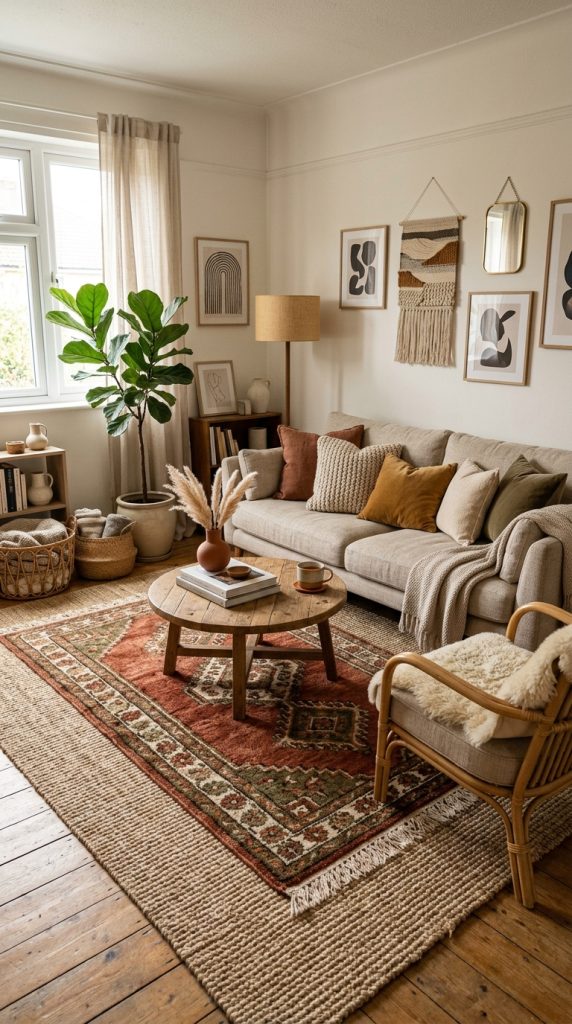
How to implement it (practical steps)
Start by choosing a base rug:
- Use a large neutral rug (beige, grey, or cream) as your base layer.
- Add a smaller textured rug on top (like jute, wool, or patterned soft tones).
- Position rugs under key furniture like sofas or coffee tables to define zones.
- Keep edges aligned slightly imperfectly for a relaxed, designer feel.
- Match rug tones with your furniture palette for cohesion.
If you have a small living room, rugs help visually separate areas without adding physical walls.
Best for
- Small living rooms needing structure
- Cozy and boho-luxury interiors
- Open-plan apartments
- Spaces with hard flooring (tile, wood, etc.)
Pro tip
Mix textures, not loud patterns. A soft layered rug combination adds luxury depth without visual chaos.
Mistake to avoid
Avoid using too many bold patterned rugs together. It creates visual noise and reduces the calm, expensive feel.
Idea 10: Smart Lighting Zones for a Designer Living Room Glow 💡✨
Lighting can completely change the personality of a small living room. In fact, in luxury interiors, lighting is often more important than furniture. A well-lit room feels bigger, warmer, and more expensive—even if the furniture is simple. That’s why high-end designers always focus on creating lighting zones instead of relying on a single ceiling light.
What it is
Smart lighting zones mean dividing your living room into different light areas using multiple light sources. Instead of one harsh overhead light, you build layers of ambient, task, and accent lighting to create depth, mood, and luxury atmosphere.
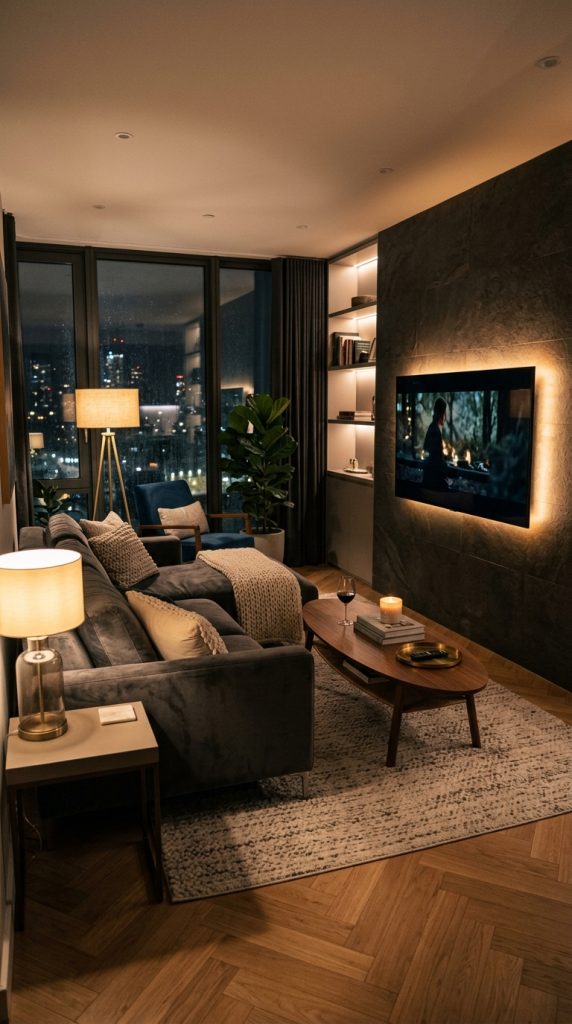
How to implement it (practical steps)
Start by breaking your room into “light zones”:
- Use a soft ceiling light or recessed lighting for general brightness.
- Add a floor lamp in a corner to create height and warm shadows.
- Place a table lamp on a side table or console for cozy seating glow.
- Install LED strip lighting behind shelves or TV units for a modern luxury effect.
- Use warm white bulbs (2700K–3000K) for a soft hotel-style ambiance.
- Add dimmable lights so you can adjust mood depending on time of day.
If you have a small living room, layered lighting reduces harshness and makes the space feel deeper and more expensive.
Best for
- Small apartments and compact living rooms
- Evening cozy and luxury aesthetics
- Modern minimalist interiors
- Spaces that feel flat or dull
Pro tip
Place lights at different heights (floor, table, wall). This creates visual layers that instantly make the room feel professionally designed.
Mistake to avoid
Avoid relying only on bright white ceiling lights. They flatten the entire space and remove warmth, making even a beautiful room feel basic.
Idea 11: Personal Styling Details That Make It Feel Like a Luxury Home 🌿✨
A truly expensive-looking living room is not just clean or well-lit—it feels personal, curated, and intentional. This final layer of design is what transforms a nice room into a space that feels like a luxury home. It’s about adding small, meaningful details that reflect your personality without creating clutter.
What it is
Personal styling refers to carefully chosen decor pieces that add character and warmth while still maintaining a minimal, high-end aesthetic. It is the final touch that makes the space feel lived-in but still elegant.
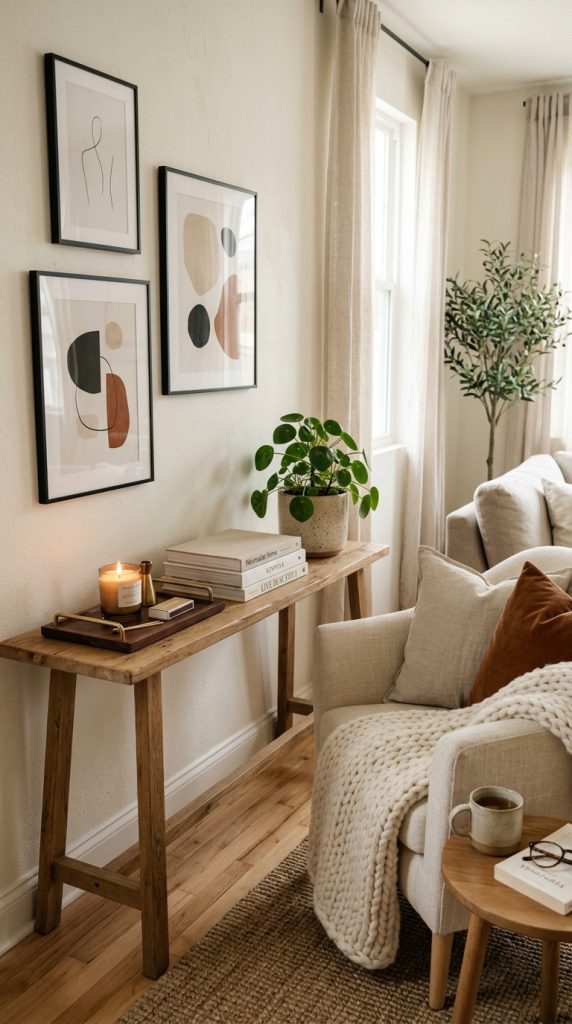
How to implement it (practical steps)
Start by selecting a few intentional items:
- Add one or two framed art pieces or prints with neutral tones.
- Use a styled tray with candles, books, or a small vase on tables.
- Include a single statement plant (real or high-quality faux) for freshness.
- Display a few carefully chosen books instead of random clutter.
- Add soft personal touches like a throw blanket or textured cushions.
- Keep surfaces curated, not full—every item should have space around it.
If you have a small living room, these small touches add depth without overwhelming the space.
Best for
- Small modern apartments
- Pinterest-style aesthetic lovers
- Minimal yet cozy interiors
- Anyone wanting a “designer feel” on a budget
Pro tip
Think “curated, not crowded.” Luxury styling is about choosing fewer items but placing them with intention and space around them.
Mistake to avoid
Avoid turning your living room into a display of random objects. Too many personal items break the visual calm and make the space feel smaller.
Final Conclusion: Turning a Small Living Room into an Expensive-Looking Space ✨🏡
A small living room is not a limitation—it is an opportunity to design smarter, cleaner, and more intentionally. The key to achieving an expensive-looking space is not buying luxury furniture, but understanding how space, light, color, and balance work together.
When you combine all these ideas—neutral color palettes, smart furniture scaling, layered lighting, mirrors, minimal decor, hidden storage, rugs, and personal styling—you create a space that feels bigger, calmer, and far more refined than its actual size.
The real secret of luxury interiors is simple:
everything feels intentional, nothing feels random.
Even the smallest living room can look like a high-end apartment when you focus on:
- Visual balance instead of clutter
- Soft lighting instead of harsh brightness
- Cohesive colors instead of mixed chaos
- Space instead of overcrowding
- Quality styling instead of quantity of items
If your living room currently feels small, basic, or unfinished, you don’t need a full renovation. You just need the right design mindset and a few smart adjustments. Over time, even small changes will completely transform how your space feels every day.
Because in the end, an expensive-looking home is not about how much you spend—it is about how thoughtfully you design the life you live inside it.